Mrs. A. Vinothini Sylvia,
Assistant Professor,
Annammal College of Education for Women
Thoothukudi.
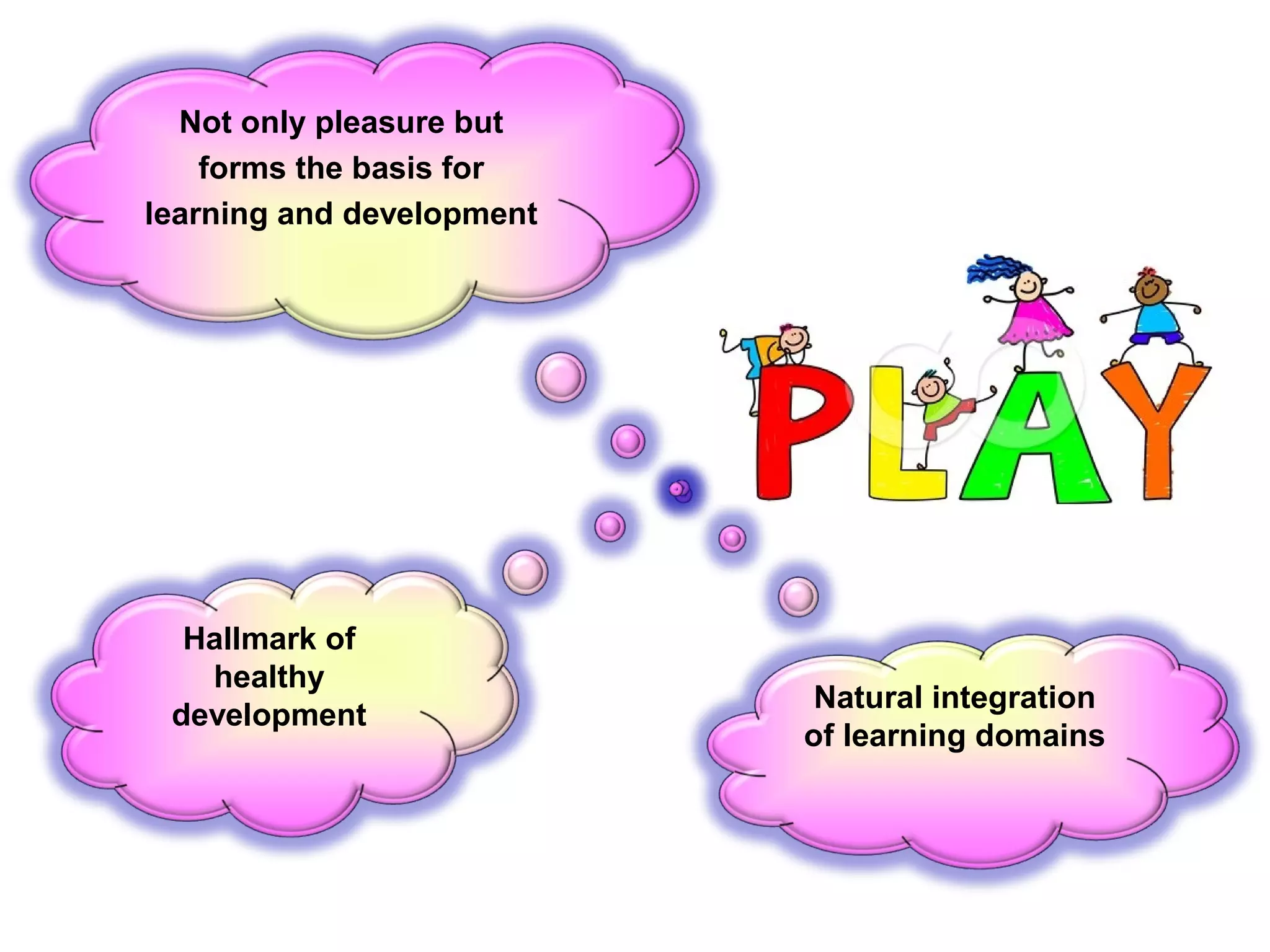
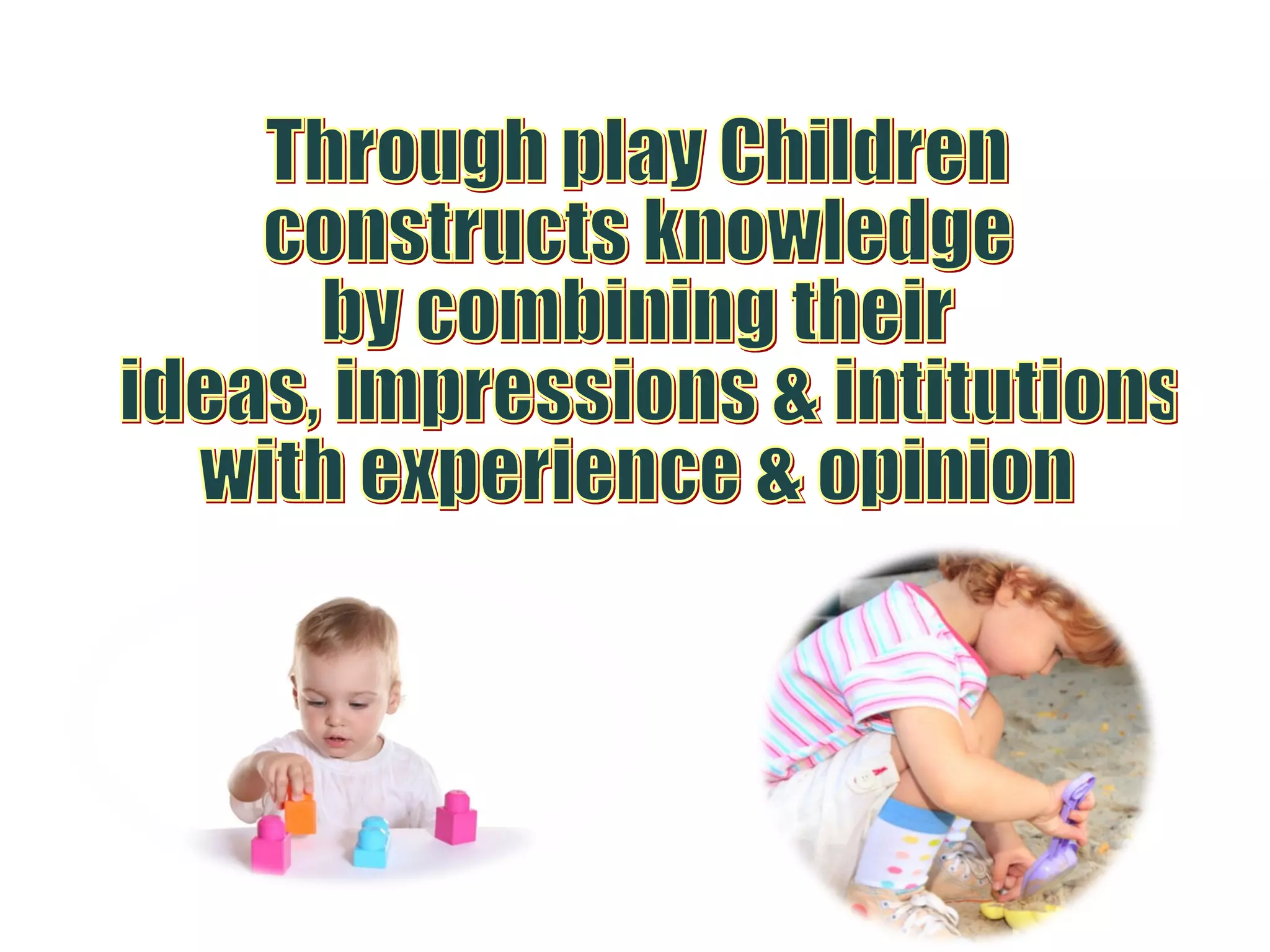
Not only pleasure but
forms the basis for
learning and development

Hallmark of
healthy
development

Natural integration
of learning domains
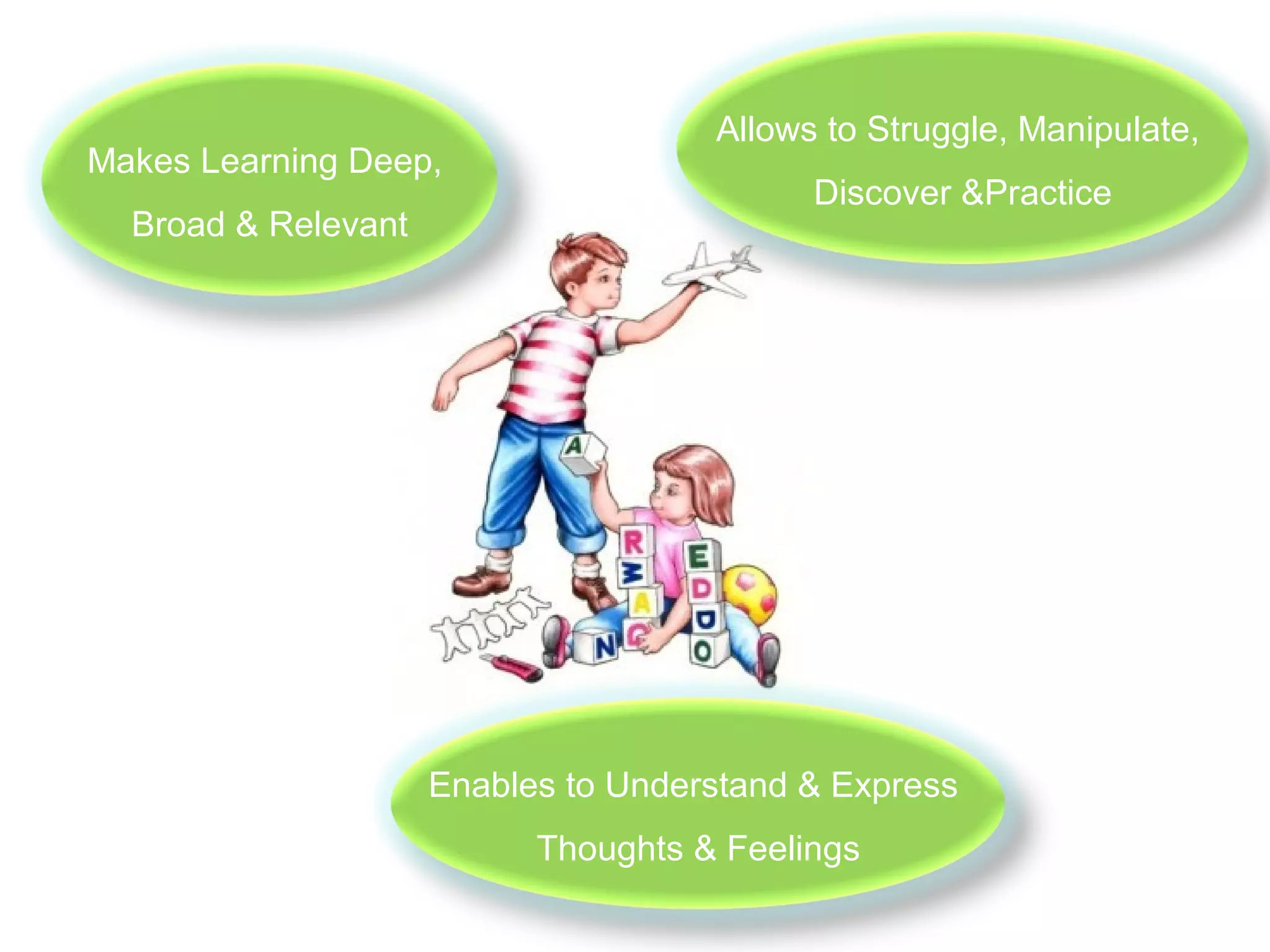
Makes Learning Deep,
Broad & Relevant

Allows to Struggle, Manipulate,
Discover &Practice

Enables to Understand & Express
Thoughts & Feelings
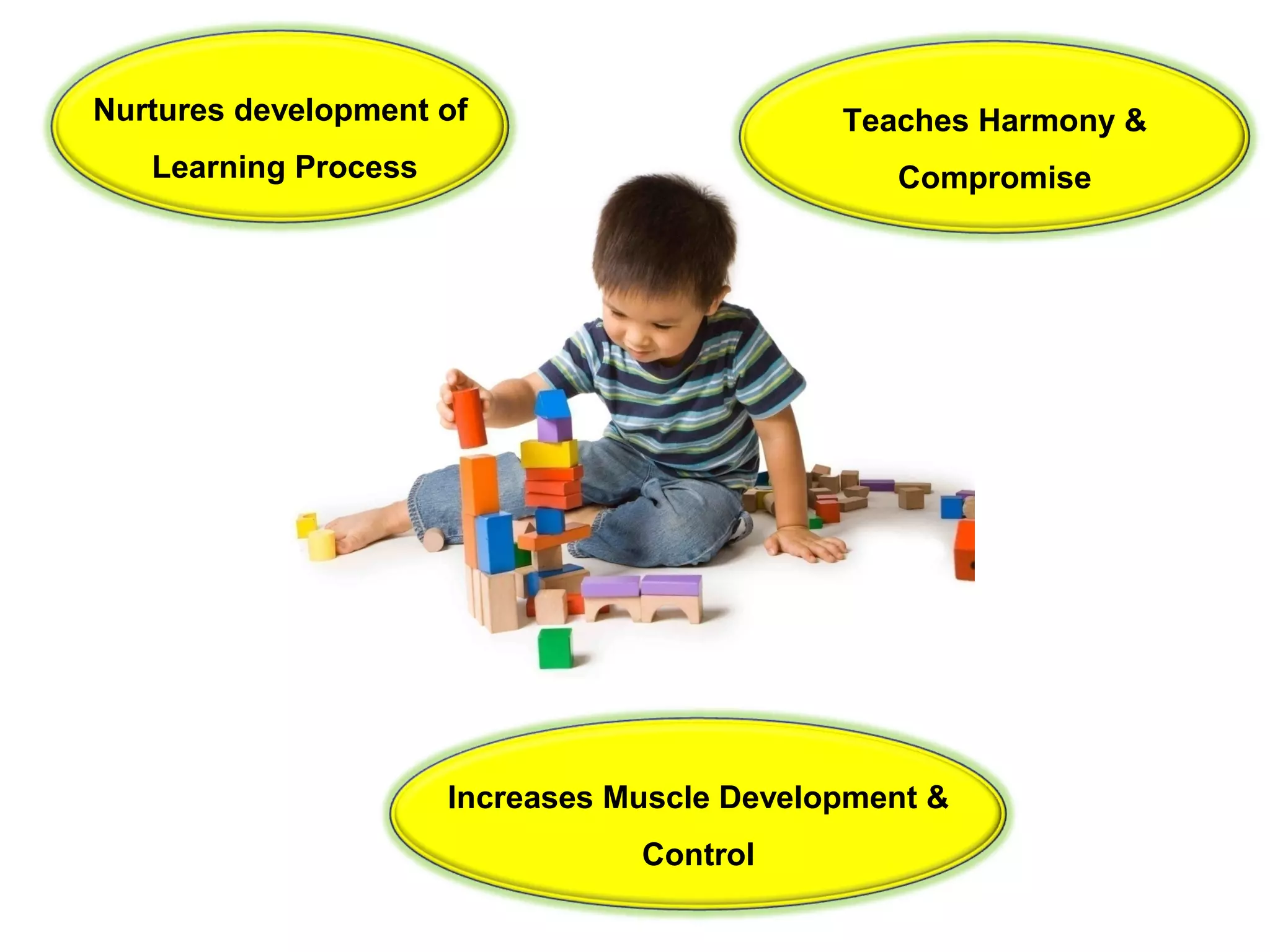
Nurtures development of

Teaches Harmony &

Learning Process

Compromise

Increases Muscle Development &
Control
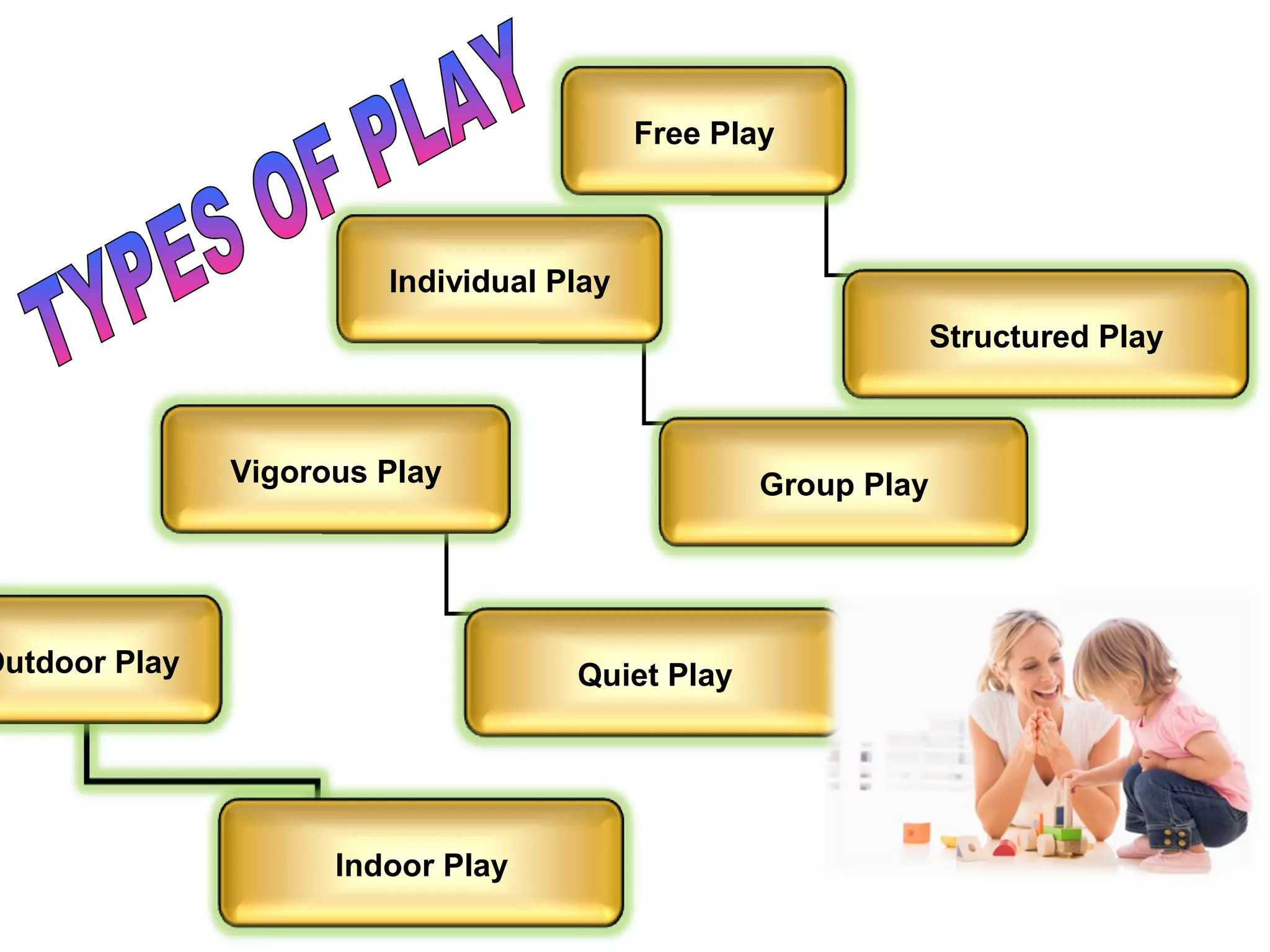
Free Play

Individual Play
Structured Play

Vigorous Play

Outdoor Play

Group Play

Quiet Play

Indoor Play
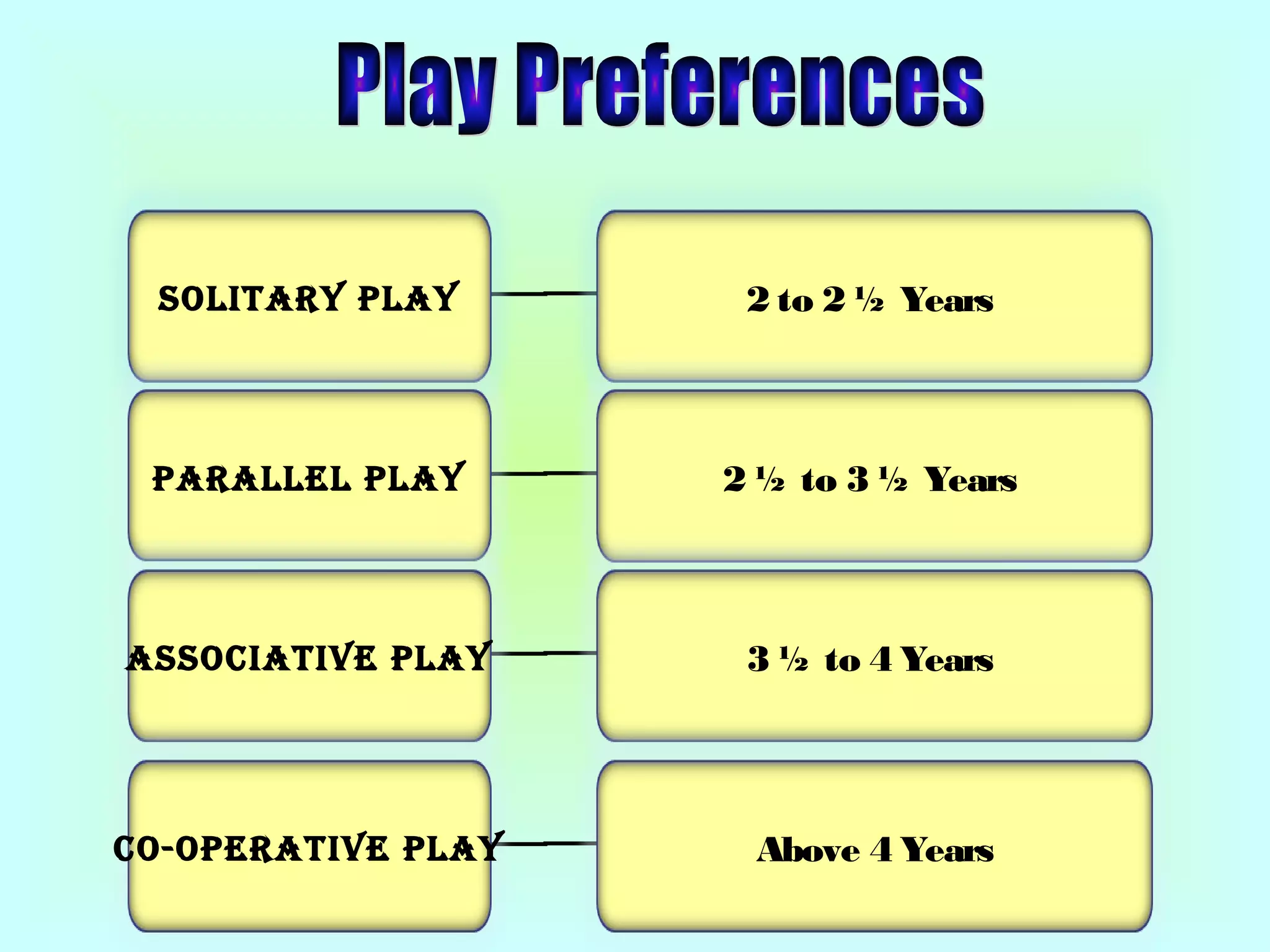
Solitary Play

2 to 2 ½ Years

Parallel Play

2 ½ to 3 ½ Years

aSSociative Play

3 ½ to 4 Years

co-oPerative Play

Above 4 Years
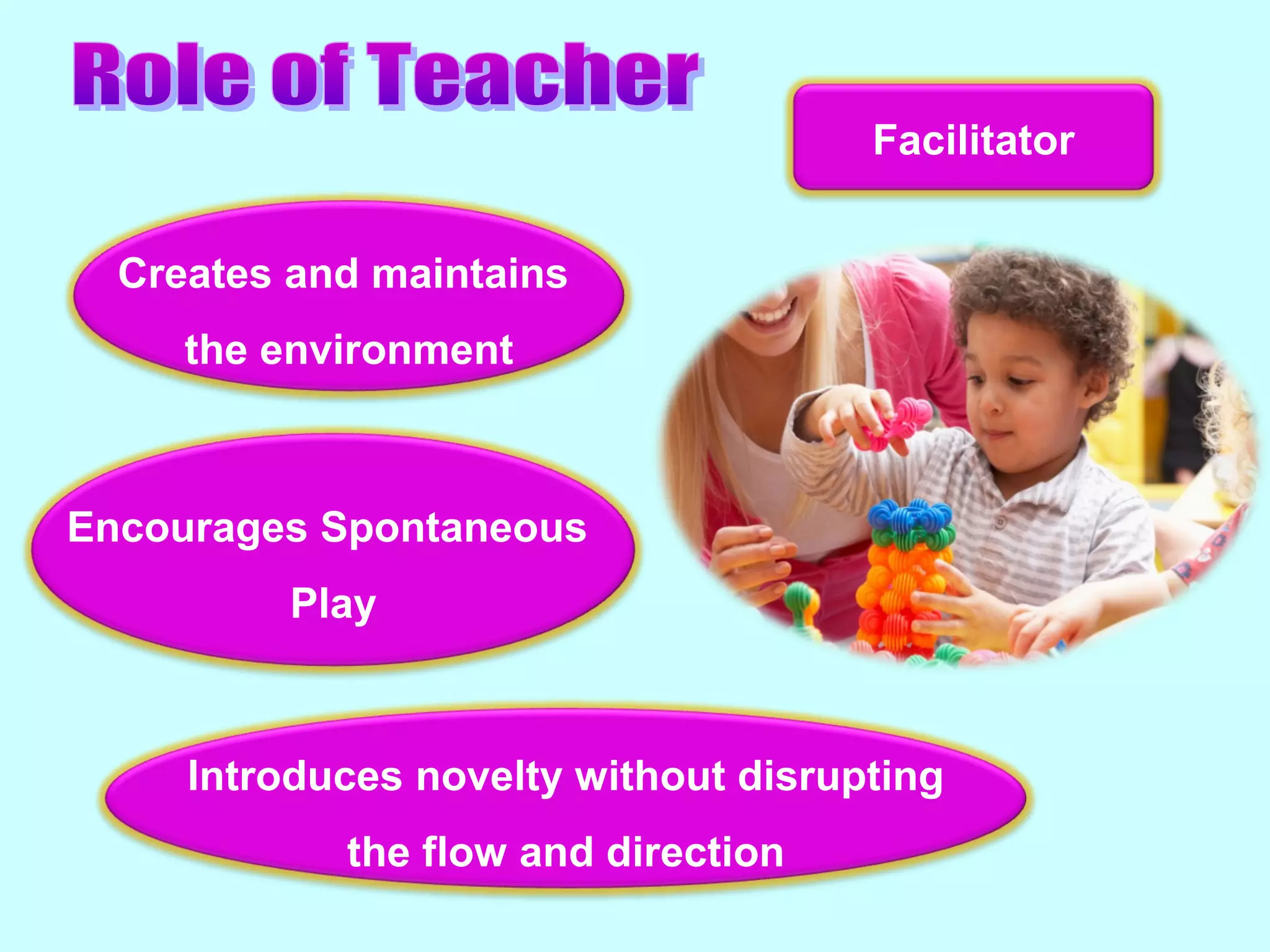
Facilitator
Creates and maintains
the environment

Encourages Spontaneous
Play

Introduces novelty without disrupting
the flow and direction
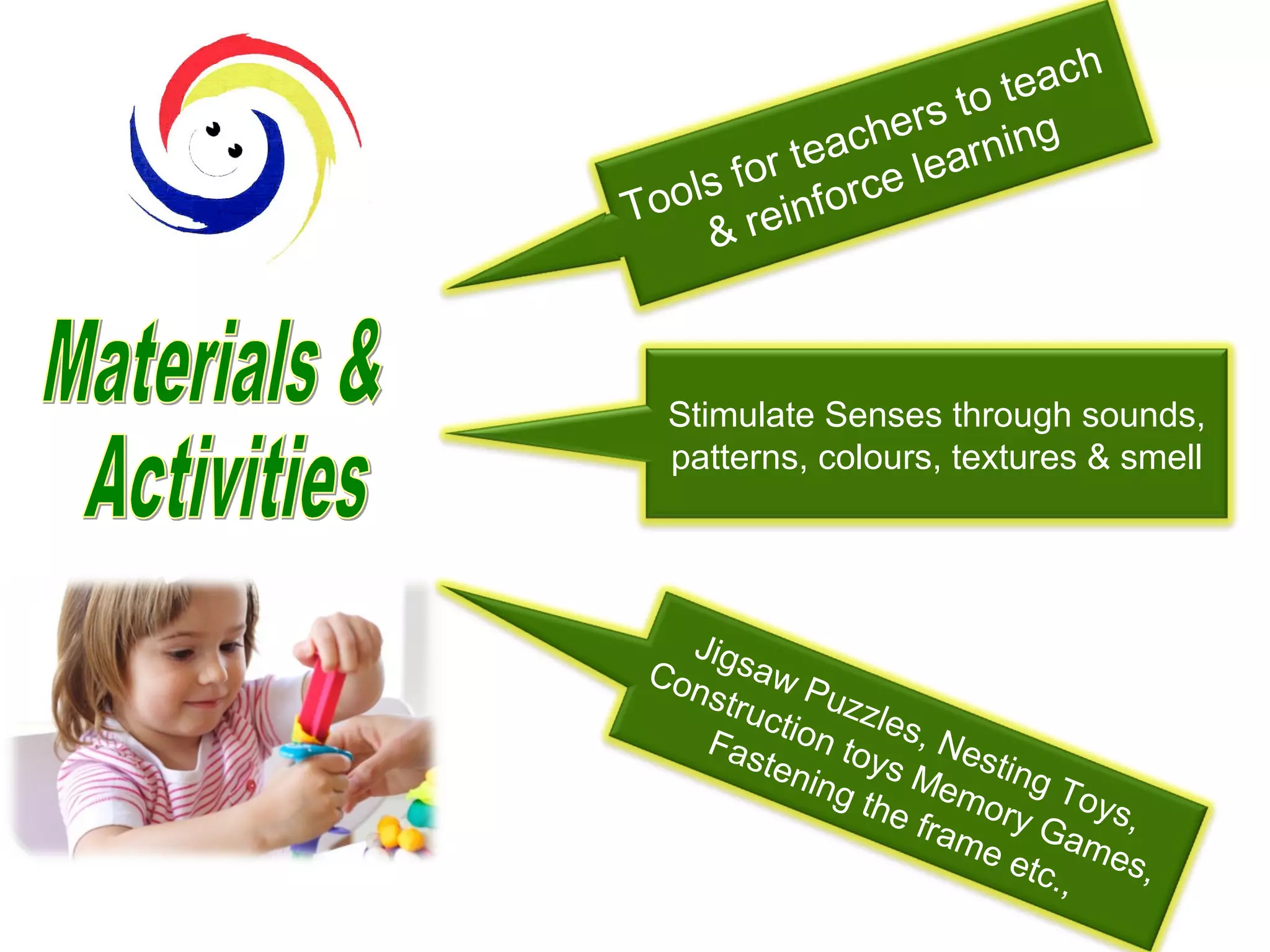
h
teac
to
ers ing
each learn
for t rce
ls
Too reinfo
&

Stimulate Senses through sounds,
patterns, colours, textures & smell

Jig
Con saw P
stru
u
ctio zzles,
Fas n to
N
ys M estin
ten
ing
em g Toy
the
o
fram ry Ga s,
m
ee
tc., es,
• If play serves educational goals it is no longer play.

• Ensure that children have sufficient time and
adequate resources for extended free play.

• Educators should find a way to devote time and
interest to facilitate spontaneous play.
Play Way Technique - An Effective Learning Tool

Play Way Technique - An Effective Learning Tool

  • 1.
    Mrs. A. VinothiniSylvia, Assistant Professor, Annammal College of Education for Women Thoothukudi.
  • 3.
    Not only pleasurebut forms the basis for learning and development Hallmark of healthy development Natural integration of learning domains
  • 5.
    Makes Learning Deep, Broad& Relevant Allows to Struggle, Manipulate, Discover &Practice Enables to Understand & Express Thoughts & Feelings
  • 6.
    Nurtures development of TeachesHarmony & Learning Process Compromise Increases Muscle Development & Control
  • 8.
    Free Play Individual Play StructuredPlay Vigorous Play Outdoor Play Group Play Quiet Play Indoor Play
  • 9.
    Solitary Play 2 to2 ½ Years Parallel Play 2 ½ to 3 ½ Years aSSociative Play 3 ½ to 4 Years co-oPerative Play Above 4 Years
  • 10.
    Facilitator Creates and maintains theenvironment Encourages Spontaneous Play Introduces novelty without disrupting the flow and direction
  • 11.
    h teac to ers ing each learn fort rce ls Too reinfo & Stimulate Senses through sounds, patterns, colours, textures & smell Jig Con saw P stru u ctio zzles, Fas n to N ys M estin ten ing em g Toy the o fram ry Ga s, m ee tc., es,
  • 12.
    • If playserves educational goals it is no longer play. • Ensure that children have sufficient time and adequate resources for extended free play. • Educators should find a way to devote time and interest to facilitate spontaneous play.