
Biochemical
Report Analysis
By:- Pradeep, Abhimanyu and Shiv
Case Study-1
• A 44 year old woman had complaint of flu-like
symptoms (fever, nausea etc.), fatigue, loss of
appetite, slight yellow skin & eyes color.
• She was first treated with antibiotics but fever
was persistent.
• Docter advised for Liver Function Test
• No family history of serious disease.
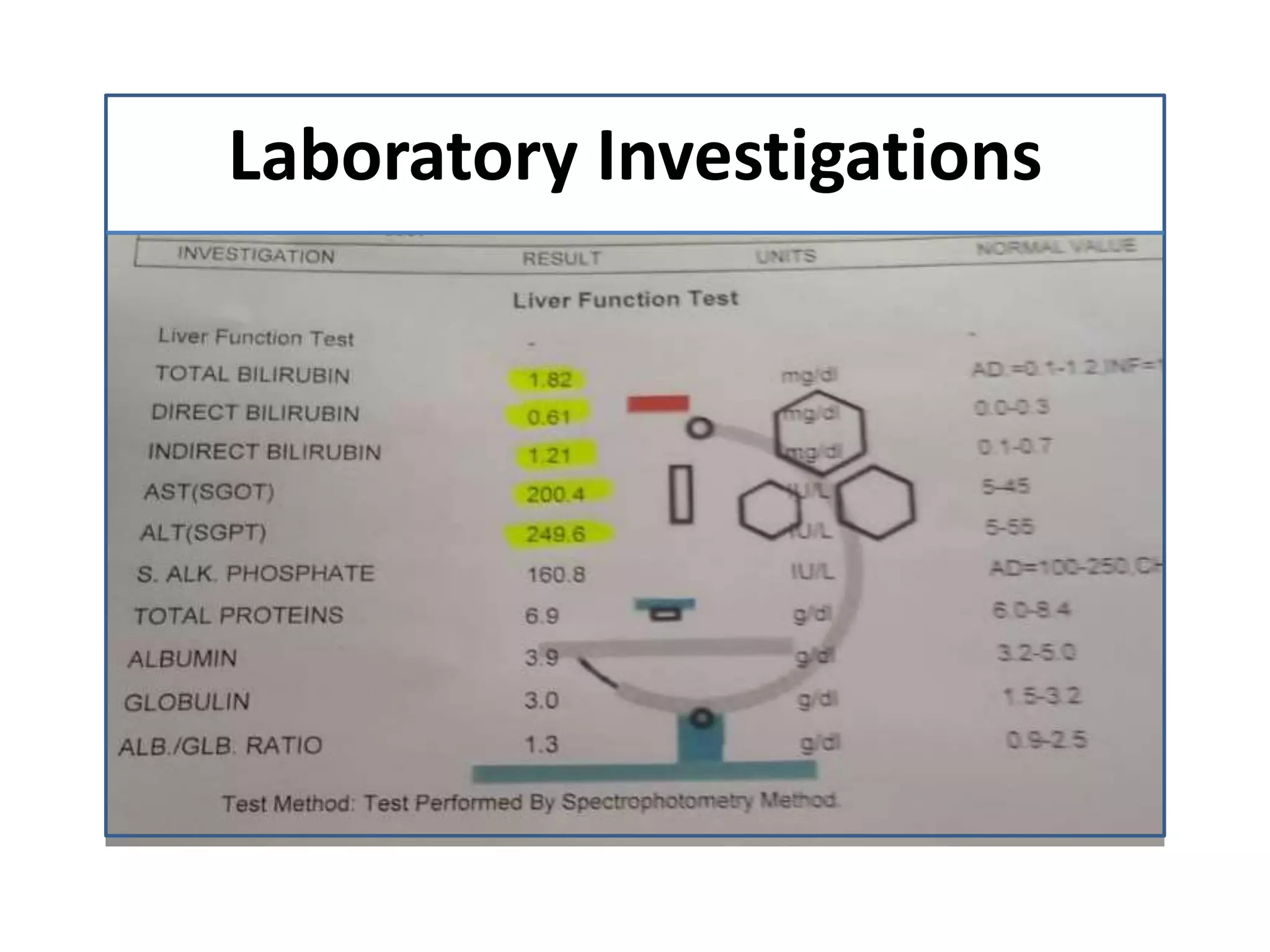
Laboratory Investigations
Interpretation
• AST (SGOT=200.4) & ALT (SGPT=249.6)
levels
• Liver Cirrhosis = AST/ALT >1
– AST & ALT levels increase around 4-5 times from the
upper reference limit.
– But here AST/ALT is <1, so it is not a case of Liver
cirrhosis
• Viral Hepatitis = AST/ALT <1
– Viral hepatitis is associated with acute hepatic necrosis
– Generally tenfold to fortyfold increase in AST & ALT
levels from the upper reference limit can reach upto 100
folds.
Interpretation
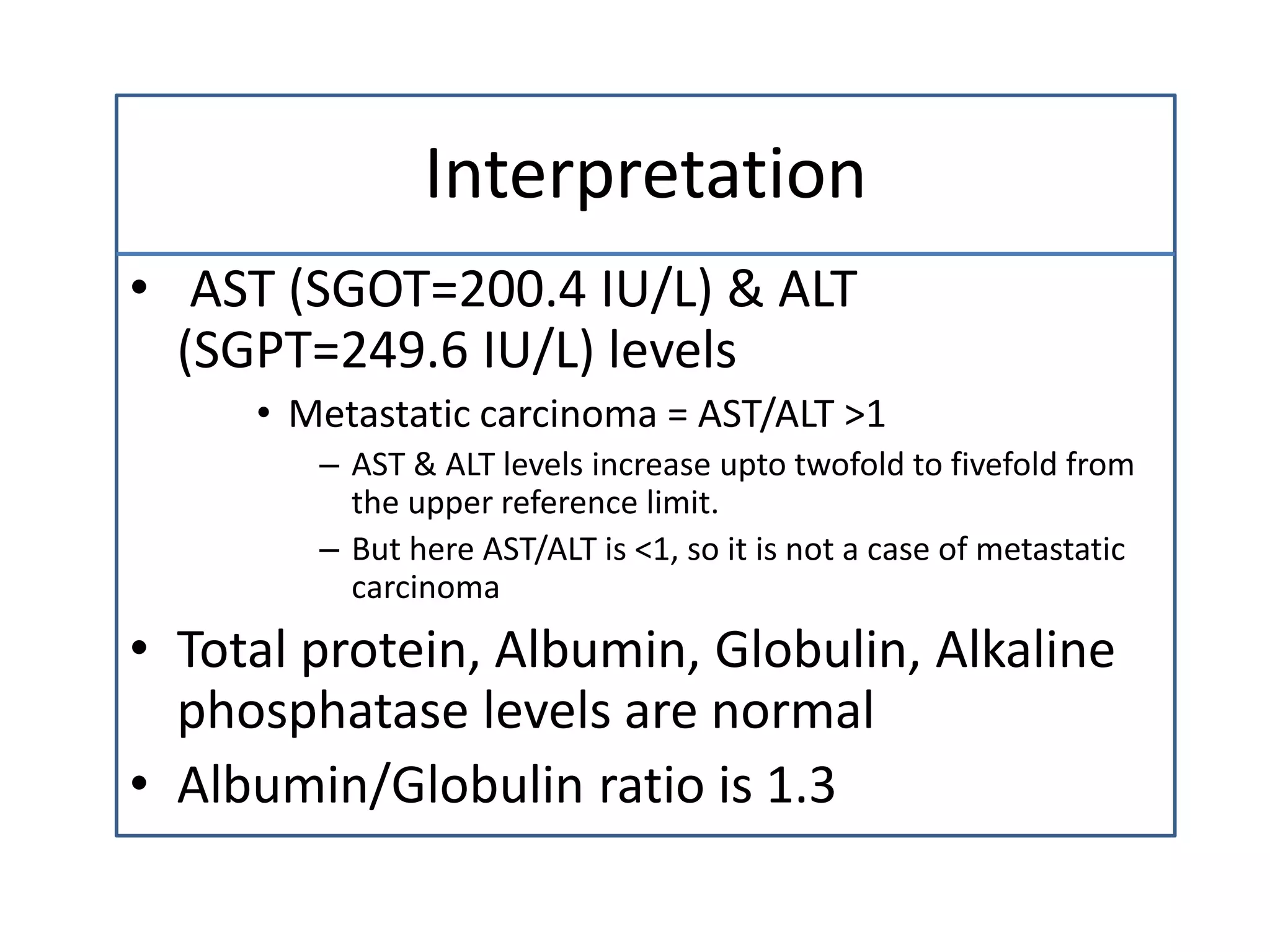
• AST (SGOT=200.4 IU/L) & ALT
(SGPT=249.6 IU/L) levels
• Metastatic carcinoma = AST/ALT >1
– AST & ALT levels increase upto twofold to fivefold from
the upper reference limit.
– But here AST/ALT is <1, so it is not a case of metastatic
carcinoma
• Total protein, Albumin, Globulin, Alkaline
phosphatase levels are normal
• Albumin/Globulin ratio is 1.3
Interpretation
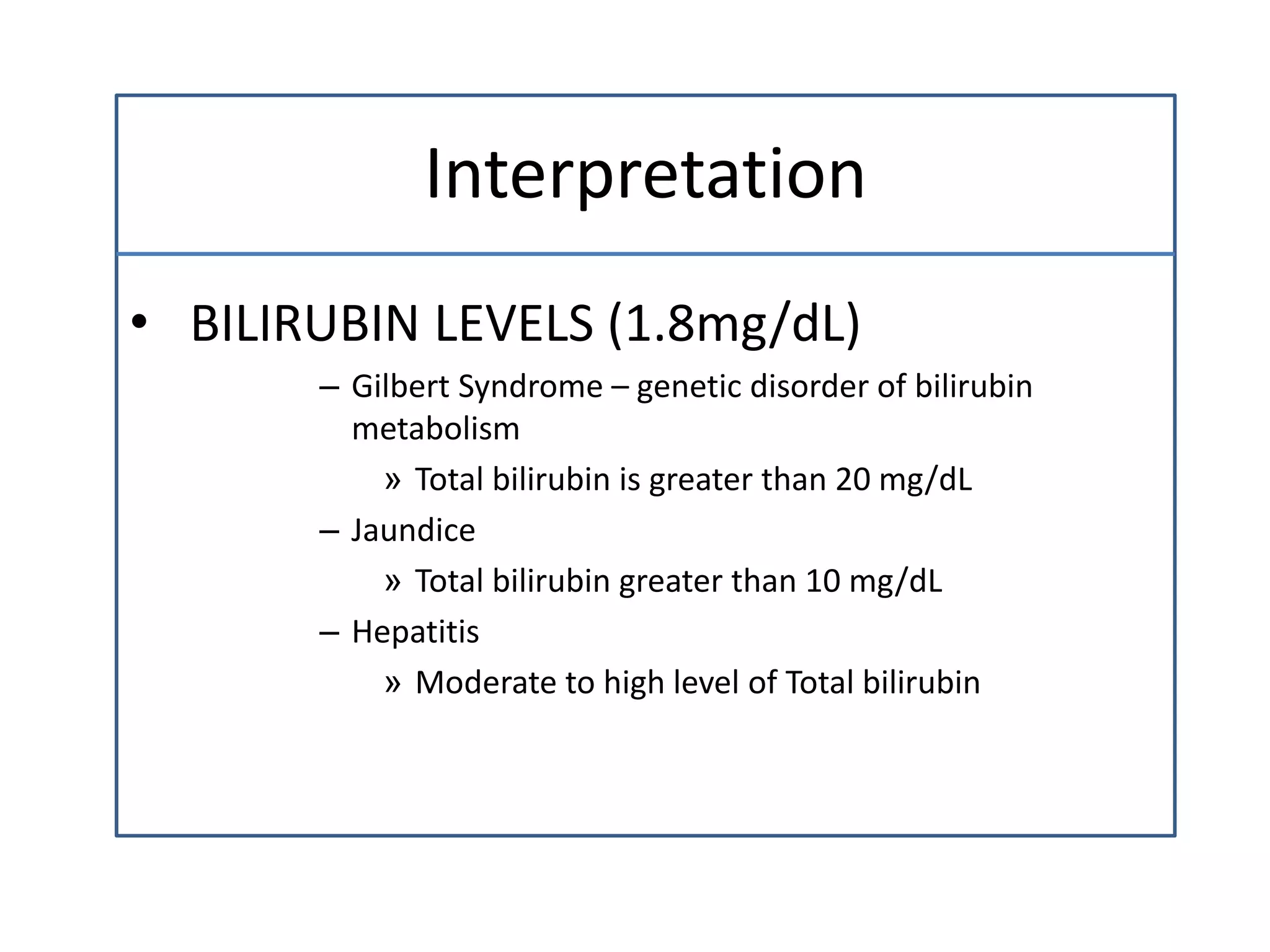
• BILIRUBIN LEVELS (1.8mg/dL)
– Gilbert Syndrome – genetic disorder of bilirubin
metabolism
» Total bilirubin is greater than 20 mg/dL
– Jaundice
» Total bilirubin greater than 10 mg/dL
– Hepatitis
» Moderate to high level of Total bilirubin
Conclusion
• AST & ALT levels are 5 times higher than the
upper reference range and AST/ALT ratio is
less than 1.
• Bilirubin is also moderately high.
• Albumin/Globulin ratio is greater than 1
• Less than 1 in case of acute heaptitis
• So, it is a case of acute hepatic necrosis
representing the very initial stage of viral
infection in liver.
Case Study-2
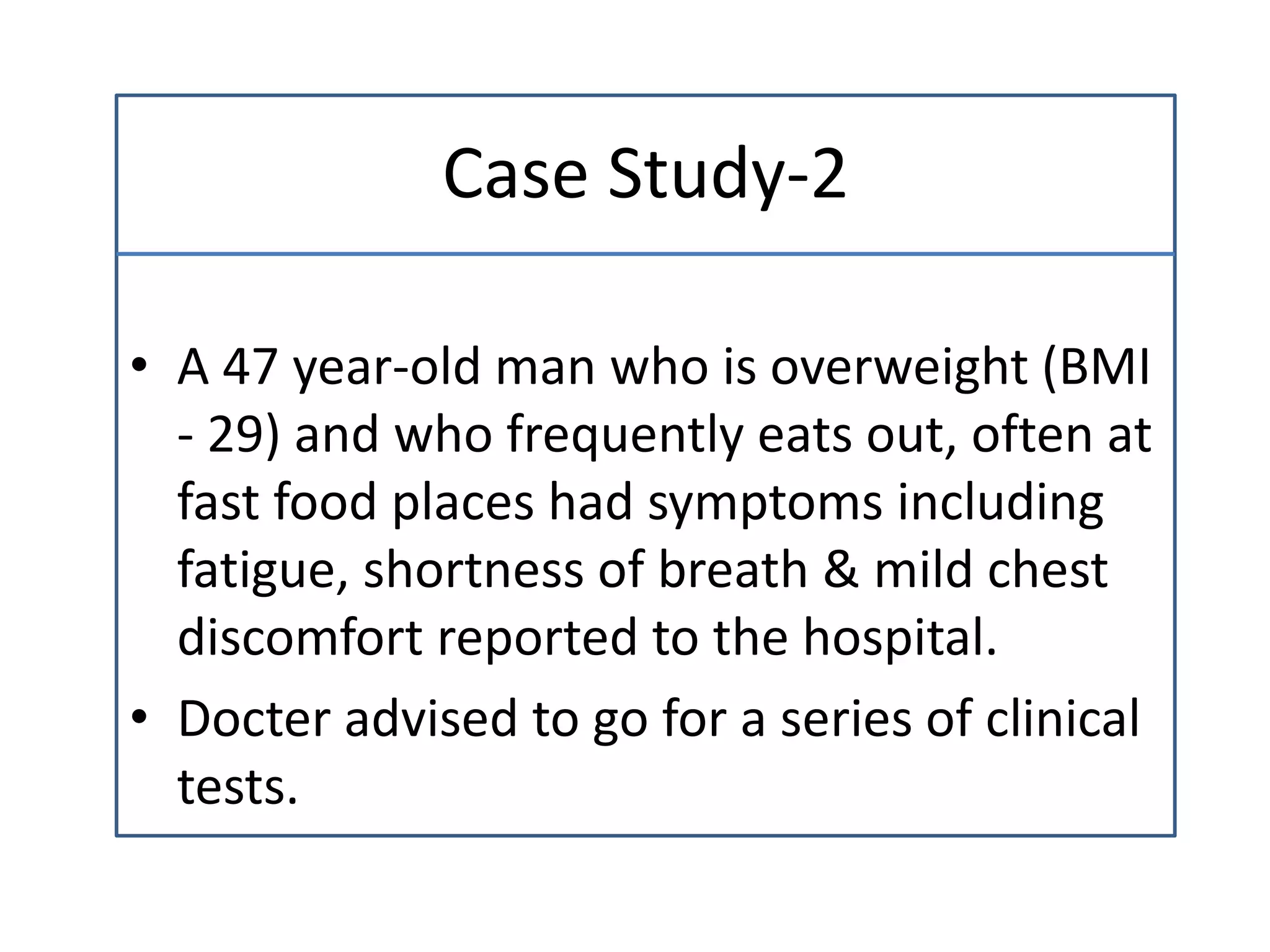
• A 47 year-old man who is overweight (BMI
- 29) and who frequently eats out, often at
fast food places had symptoms including
fatigue, shortness of breath & mild chest
discomfort reported to the hospital.
• Docter advised to go for a series of clinical
tests.
Laboratory Investigations
Interpretation
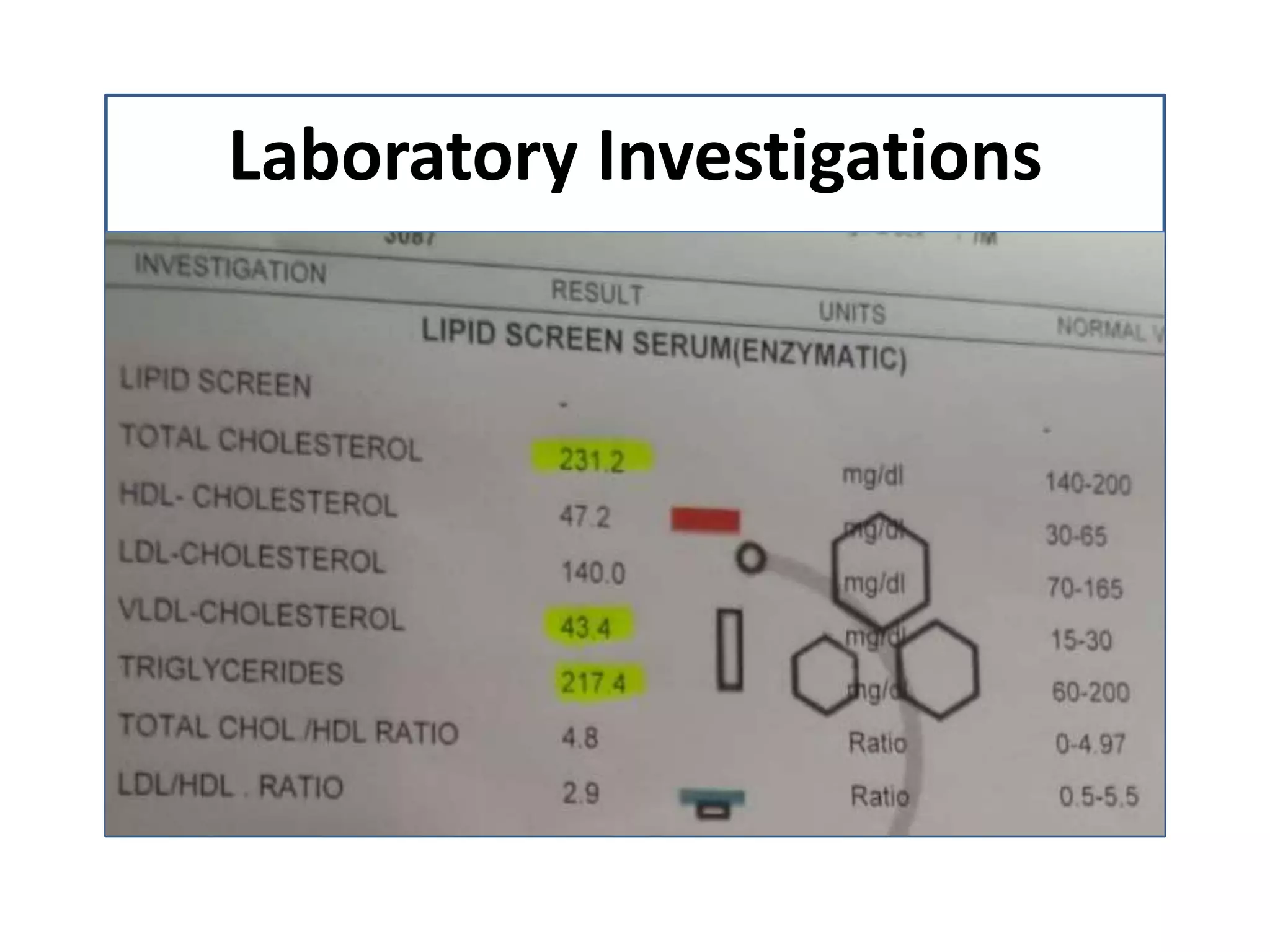
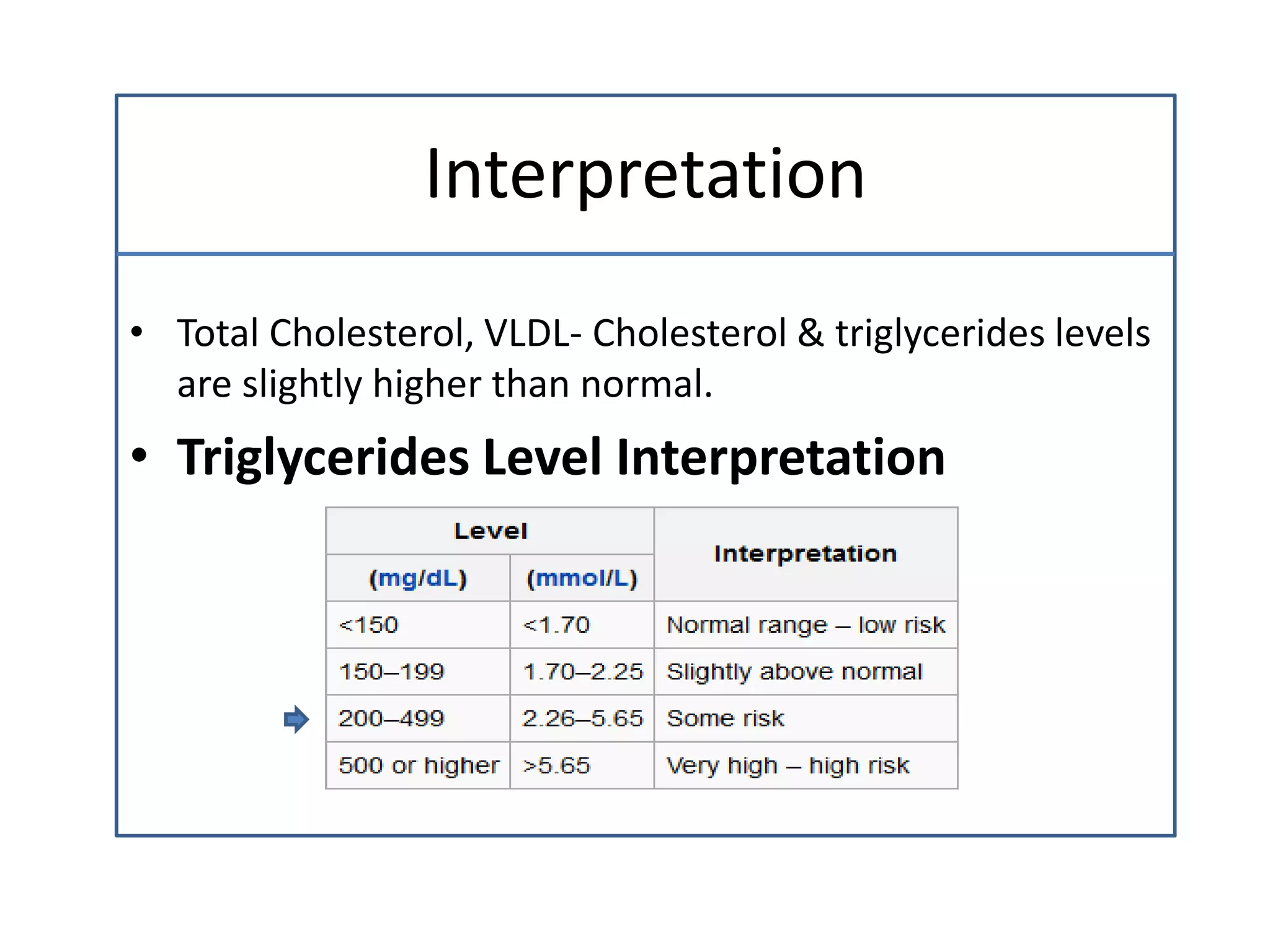
• Total Cholesterol, VLDL- Cholesterol & triglycerides levels
are slightly higher than normal.
• Triglycerides Level Interpretation
Interpretation
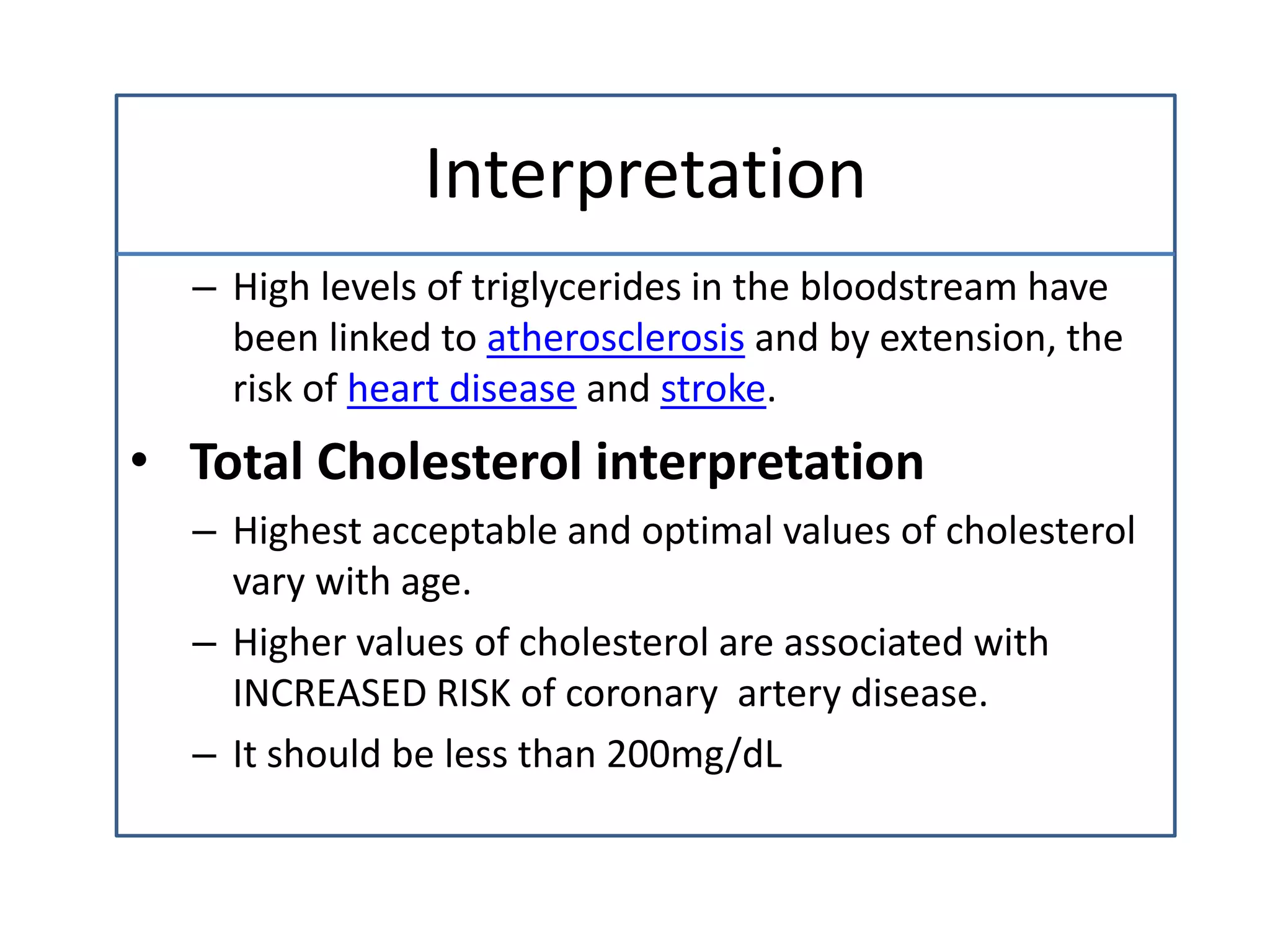
– High levels of triglycerides in the bloodstream have
been linked to atherosclerosis and by extension, the
risk of heart disease and stroke.
• Total Cholesterol interpretation
– Highest acceptable and optimal values of cholesterol
vary with age.
– Higher values of cholesterol are associated with
INCREASED RISK of coronary artery disease.
– It should be less than 200mg/dL
Interpretation
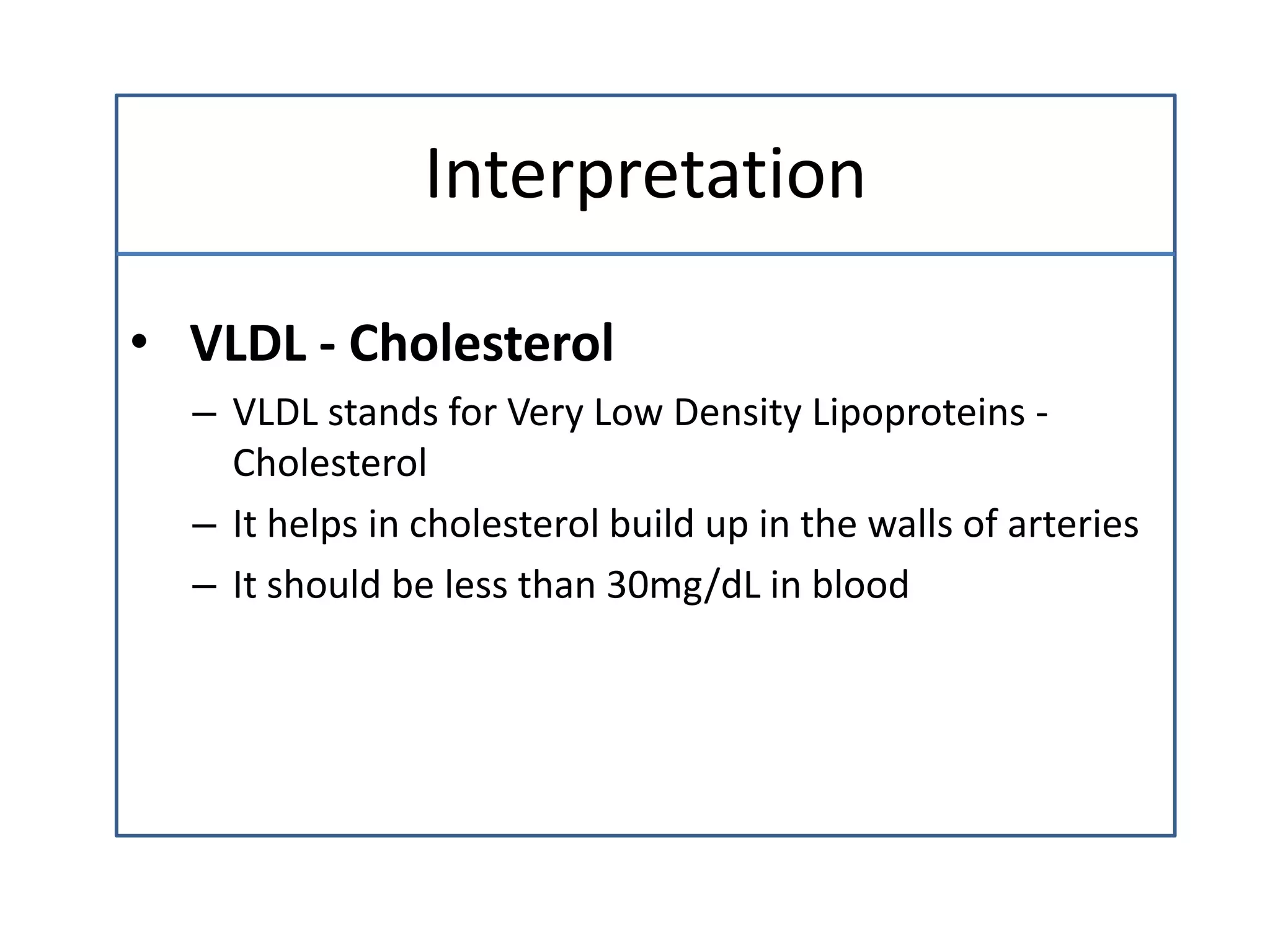
• VLDL - Cholesterol
– VLDL stands for Very Low Density Lipoproteins -
Cholesterol
– It helps in cholesterol build up in the walls of arteries
– It should be less than 30mg/dL in blood
Conclusion
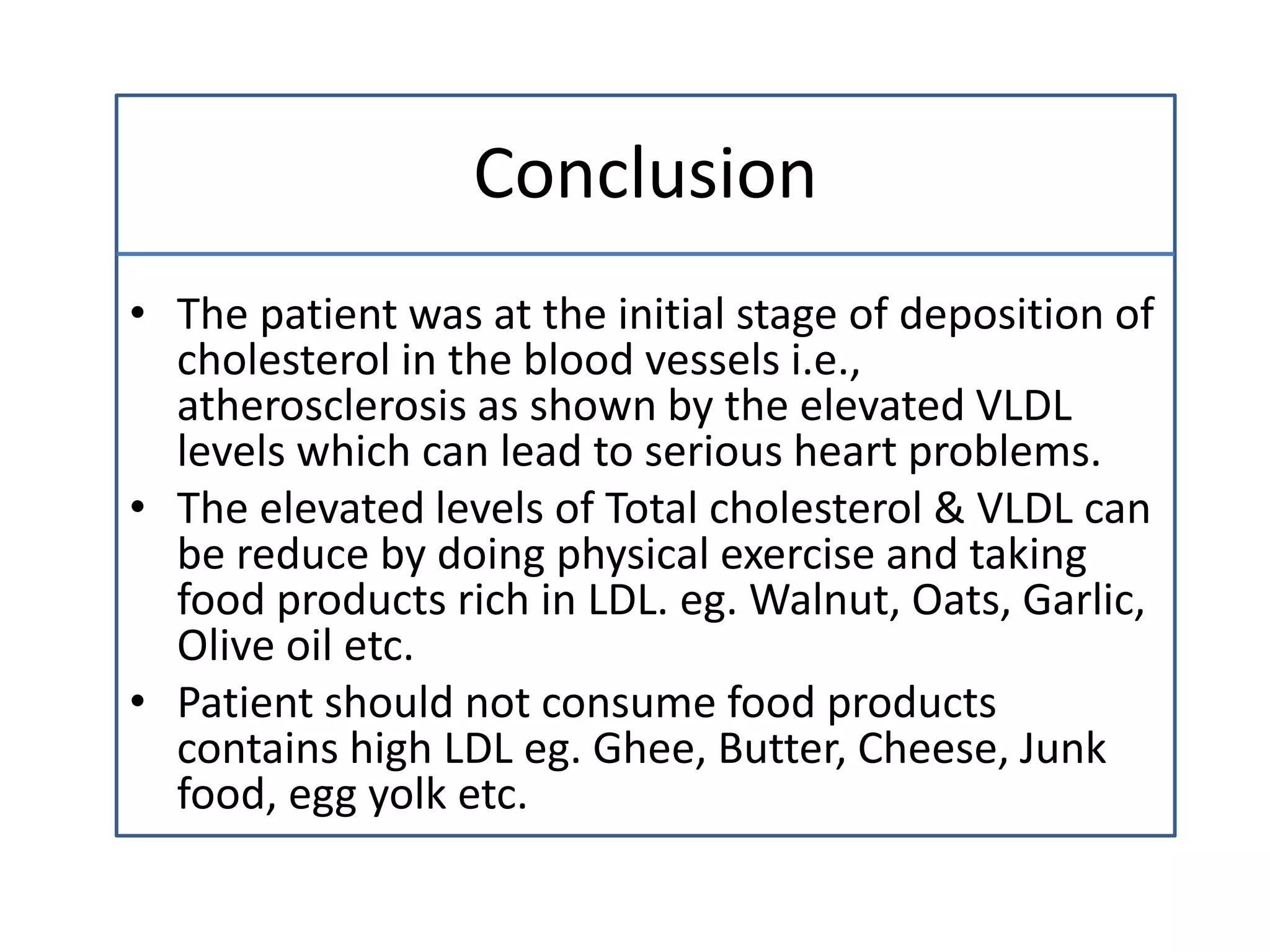
• The patient was at the initial stage of deposition of
cholesterol in the blood vessels i.e.,
atherosclerosis as shown by the elevated VLDL
levels which can lead to serious heart problems.
• The elevated levels of Total cholesterol & VLDL can
be reduce by doing physical exercise and taking
food products rich in LDL. eg. Walnut, Oats, Garlic,
Olive oil etc.
• Patient should not consume food products
contains high LDL eg. Ghee, Butter, Cheese, Junk
food, egg yolk etc.
References
• https://en.wikipedia.org/wiki/Bilirubin
• http://www.healthline.com/health/hepati
tis#Symptoms4
• http://www.medscape.com/viewarticle/41
2587
Thank You !!!

Liver function test &amp; cholesterol

  • 1.
  • 2.
    Case Study-1 • A44 year old woman had complaint of flu-like symptoms (fever, nausea etc.), fatigue, loss of appetite, slight yellow skin & eyes color. • She was first treated with antibiotics but fever was persistent. • Docter advised for Liver Function Test • No family history of serious disease.
  • 3.
  • 4.
    Interpretation • AST (SGOT=200.4)& ALT (SGPT=249.6) levels • Liver Cirrhosis = AST/ALT >1 – AST & ALT levels increase around 4-5 times from the upper reference limit. – But here AST/ALT is <1, so it is not a case of Liver cirrhosis • Viral Hepatitis = AST/ALT <1 – Viral hepatitis is associated with acute hepatic necrosis – Generally tenfold to fortyfold increase in AST & ALT levels from the upper reference limit can reach upto 100 folds.
  • 5.
    Interpretation • AST (SGOT=200.4IU/L) & ALT (SGPT=249.6 IU/L) levels • Metastatic carcinoma = AST/ALT >1 – AST & ALT levels increase upto twofold to fivefold from the upper reference limit. – But here AST/ALT is <1, so it is not a case of metastatic carcinoma • Total protein, Albumin, Globulin, Alkaline phosphatase levels are normal • Albumin/Globulin ratio is 1.3
  • 6.
    Interpretation • BILIRUBIN LEVELS(1.8mg/dL) – Gilbert Syndrome – genetic disorder of bilirubin metabolism » Total bilirubin is greater than 20 mg/dL – Jaundice » Total bilirubin greater than 10 mg/dL – Hepatitis » Moderate to high level of Total bilirubin
  • 7.
    Conclusion • AST &ALT levels are 5 times higher than the upper reference range and AST/ALT ratio is less than 1. • Bilirubin is also moderately high. • Albumin/Globulin ratio is greater than 1 • Less than 1 in case of acute heaptitis • So, it is a case of acute hepatic necrosis representing the very initial stage of viral infection in liver.
  • 8.
    Case Study-2 • A47 year-old man who is overweight (BMI - 29) and who frequently eats out, often at fast food places had symptoms including fatigue, shortness of breath & mild chest discomfort reported to the hospital. • Docter advised to go for a series of clinical tests.
  • 9.
  • 10.
    Interpretation • Total Cholesterol,VLDL- Cholesterol & triglycerides levels are slightly higher than normal. • Triglycerides Level Interpretation
  • 11.
    Interpretation – High levelsof triglycerides in the bloodstream have been linked to atherosclerosis and by extension, the risk of heart disease and stroke. • Total Cholesterol interpretation – Highest acceptable and optimal values of cholesterol vary with age. – Higher values of cholesterol are associated with INCREASED RISK of coronary artery disease. – It should be less than 200mg/dL
  • 12.
    Interpretation • VLDL -Cholesterol – VLDL stands for Very Low Density Lipoproteins - Cholesterol – It helps in cholesterol build up in the walls of arteries – It should be less than 30mg/dL in blood
  • 13.
    Conclusion • The patientwas at the initial stage of deposition of cholesterol in the blood vessels i.e., atherosclerosis as shown by the elevated VLDL levels which can lead to serious heart problems. • The elevated levels of Total cholesterol & VLDL can be reduce by doing physical exercise and taking food products rich in LDL. eg. Walnut, Oats, Garlic, Olive oil etc. • Patient should not consume food products contains high LDL eg. Ghee, Butter, Cheese, Junk food, egg yolk etc.
  • 14.
  • 15.