• CASE STUDY OF
• LIVER FUNCTION TESTS
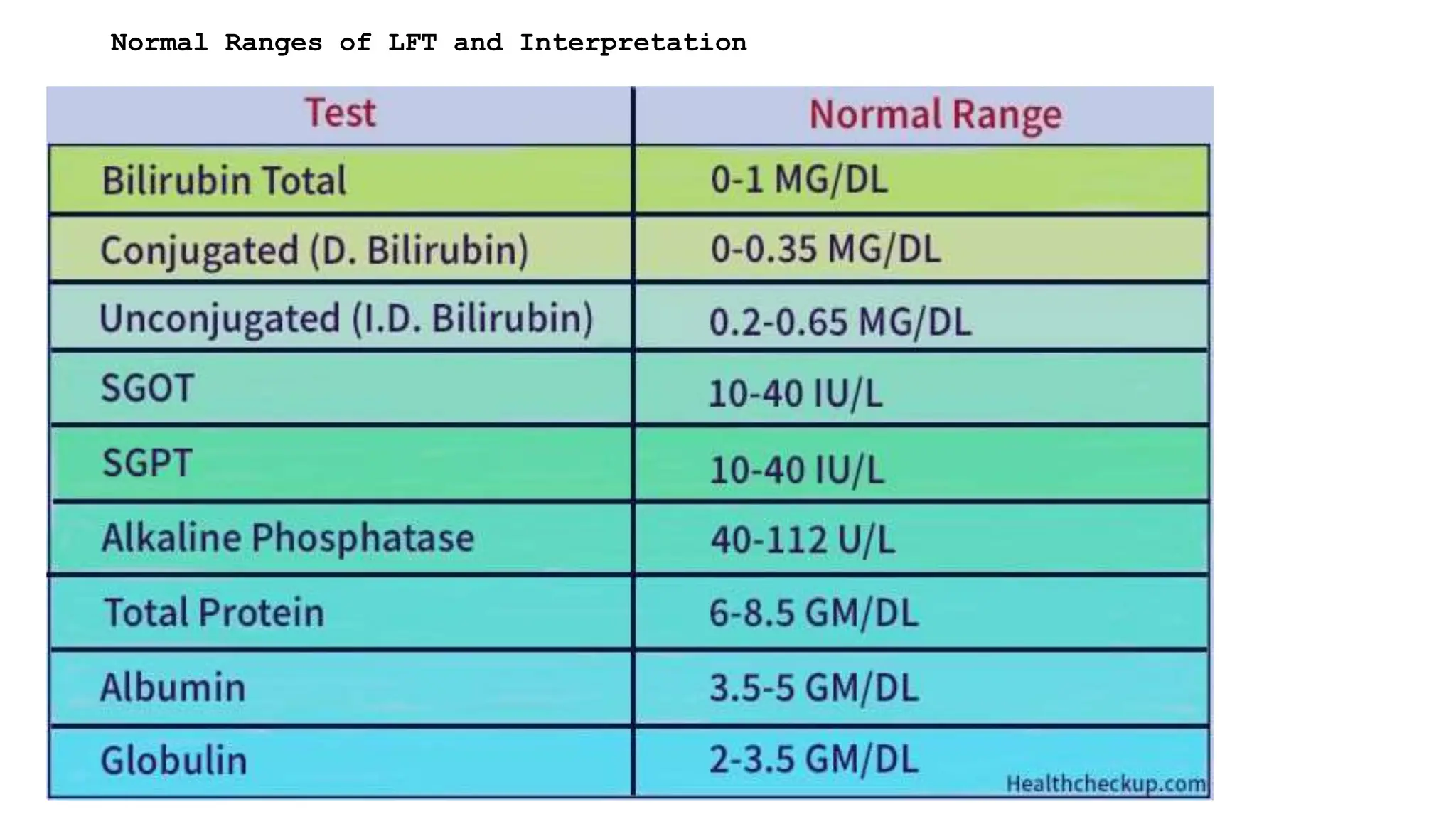
Normal Ranges of LFT and Interpretation
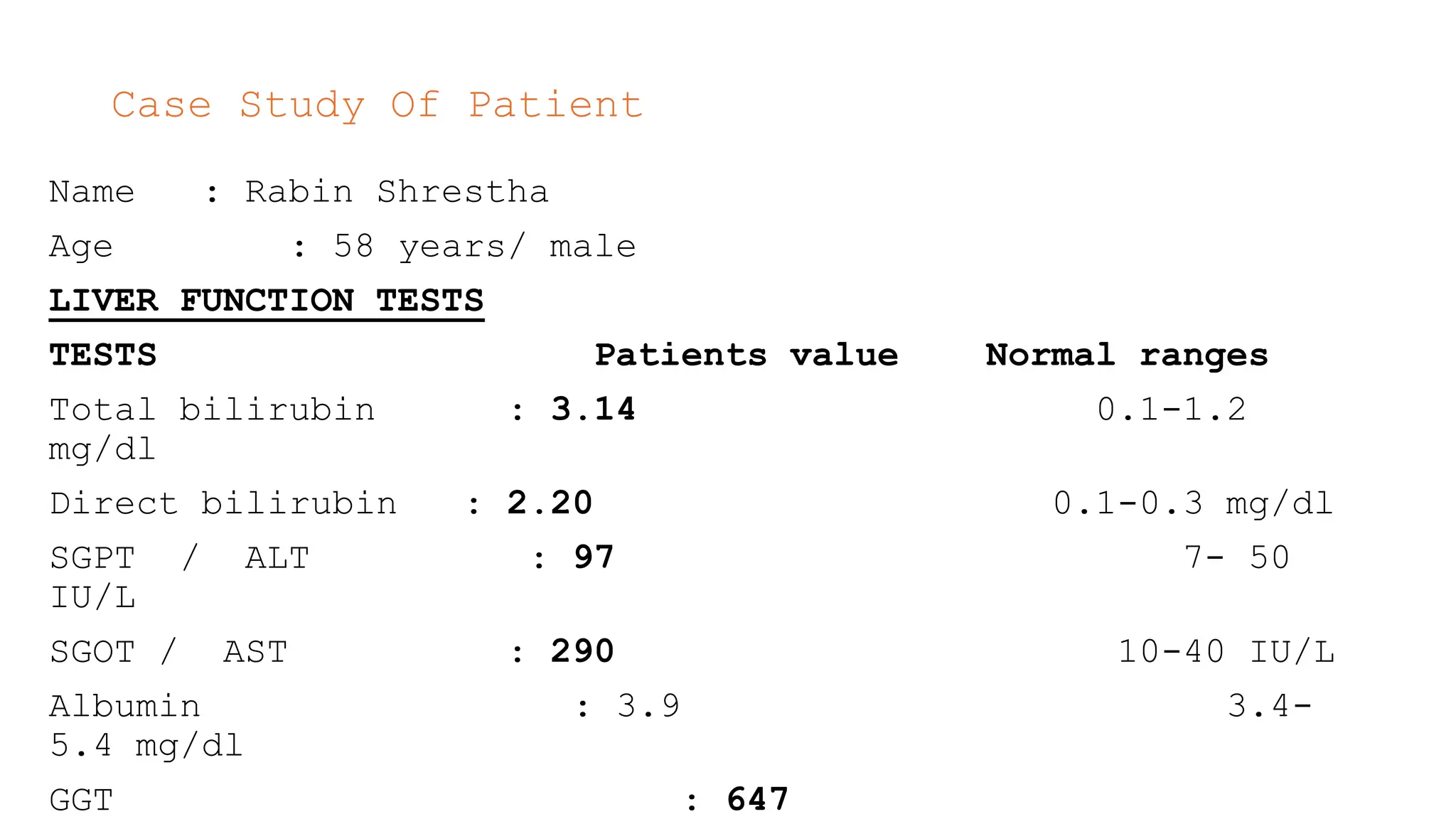
Case Study Of Patient
Name : Rabin Shrestha
Age : 58 years/ male
LIVER FUNCTION TESTS
TESTS Patients value Normal ranges
Total bilirubin : 3.14 0.1-1.2
mg/dl
Direct bilirubin : 2.20 0.1-0.3 mg/dl
SGPT / ALT : 97 7- 50
IU/L
SGOT / AST : 290 10-40 IU/L
Albumin : 3.9 3.4-
5.4 mg/dl
GGT : 647
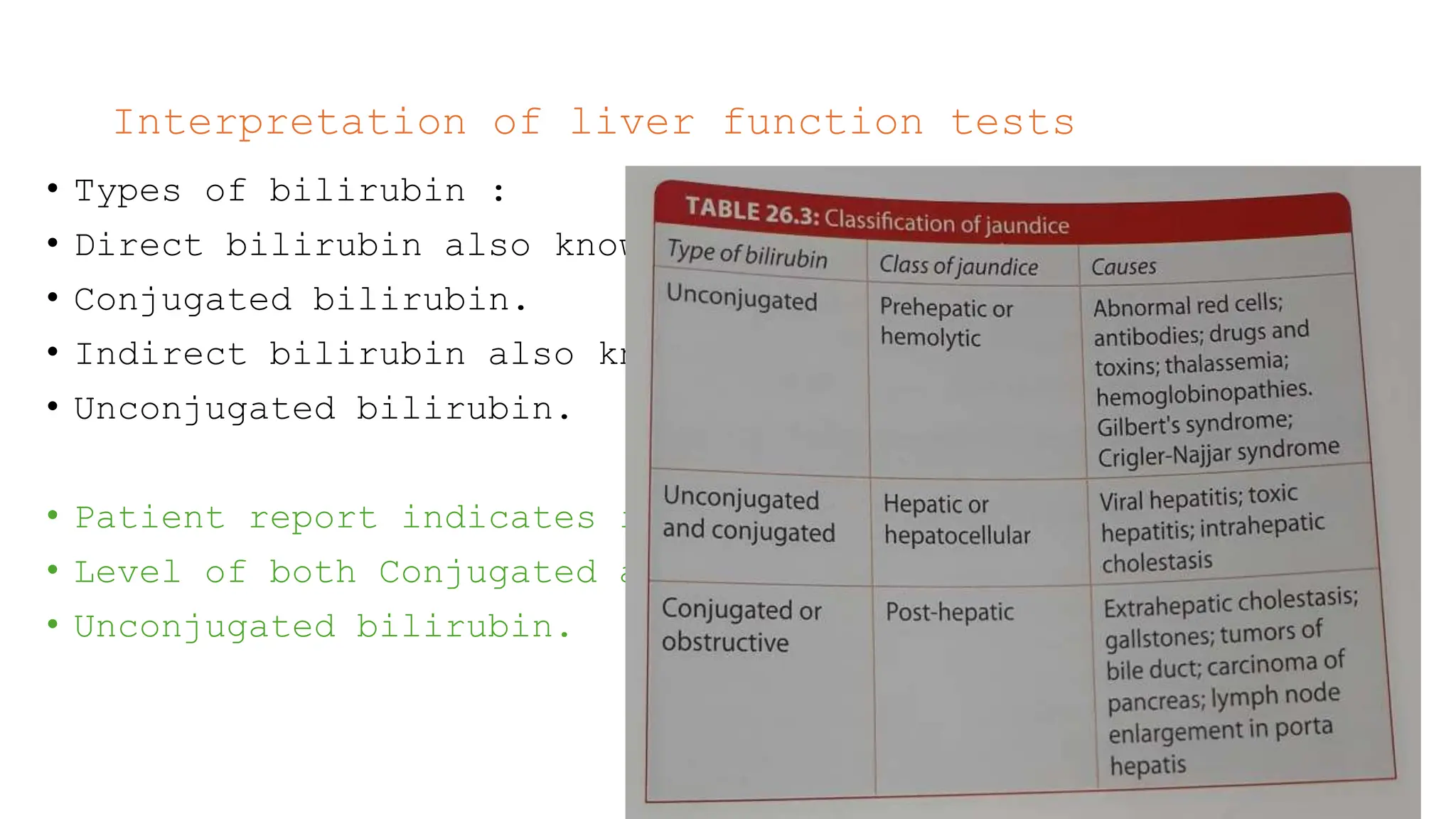
Interpretation of liver function tests
• Types of bilirubin :
• Direct bilirubin also known as
• Conjugated bilirubin.
• Indirect bilirubin also known as
• Unconjugated bilirubin.
• Patient report indicates increased
• Level of both Conjugated and
• Unconjugated bilirubin.
AST and ALT levels
• These are the enzymes indicating hepatocellular damage.
• The levels of ALT in serum are elevated in all liver
diseases.
• Very high levels (more than 1000 units) are seen in acute
hepatitis (viral&toxic)
• Elevation of ALT is more in cases of hepatic disease in
compare to AST.
• But AST may be more than ALT in alcoholics liver
disease.
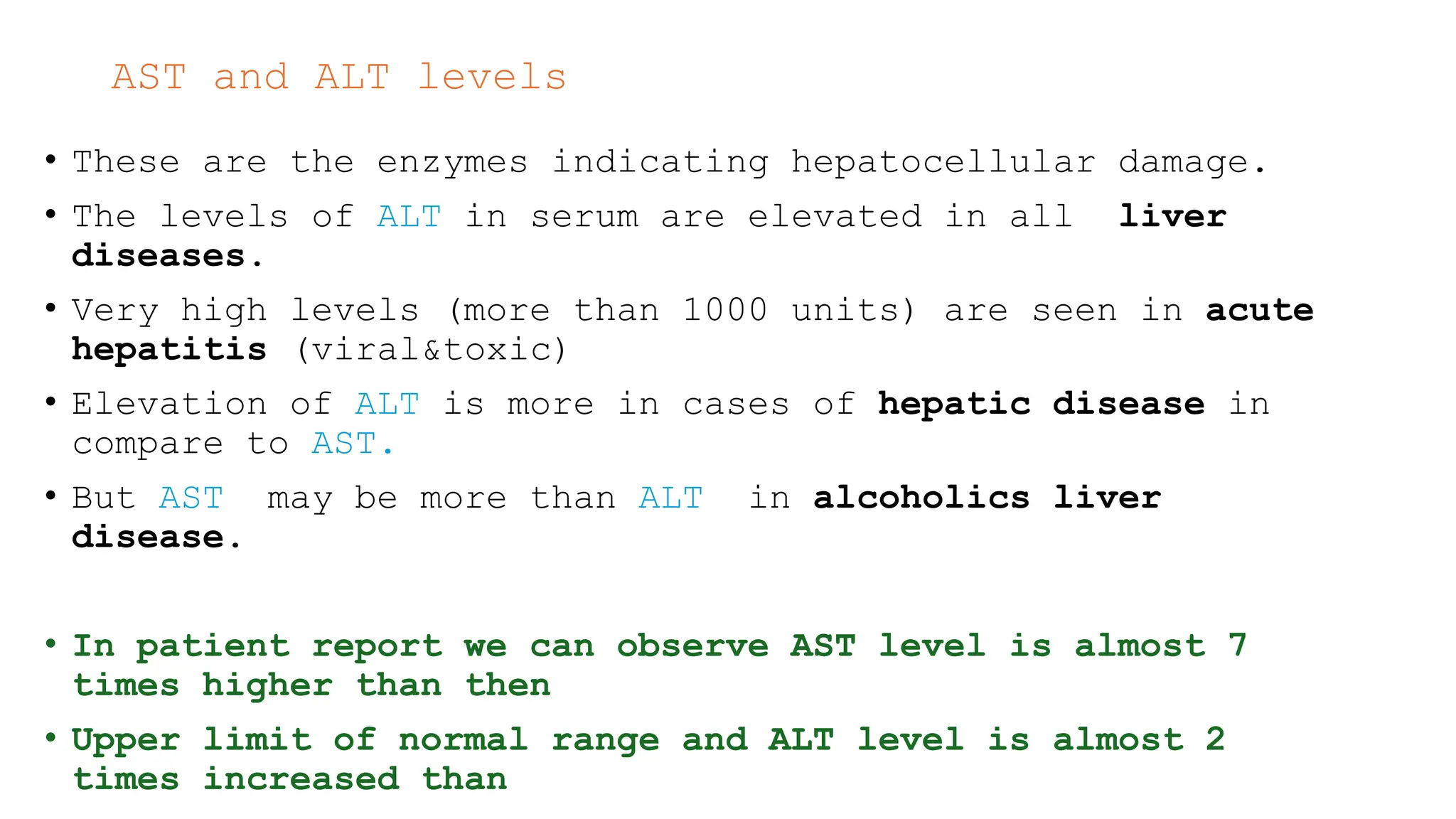
• In patient report we can observe AST level is almost 7
times higher than then
• Upper limit of normal range and ALT level is almost 2
times increased than
Gamma Glutamyl Transferase
(GGT)
• GGT is clinically important because of its sensitivity to
detect alcohol abuse.
• Elevated levels of GGT are observed in chronic alcoholism
, pancreatic disease ,
Myocardial infraction , renal failure, chronic obstructive
pulmonary disease.
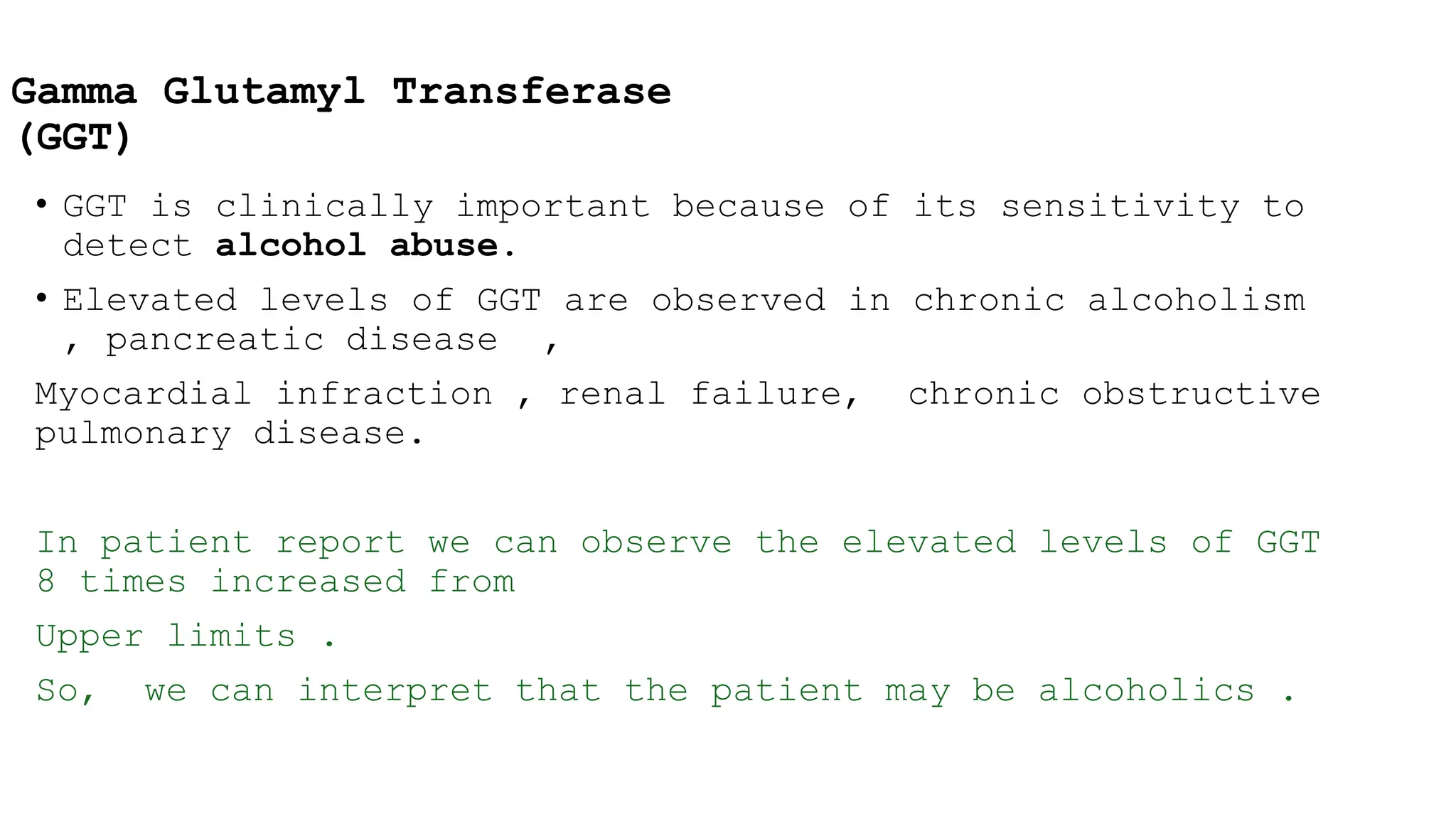
In patient report we can observe the elevated levels of GGT
8 times increased from
Upper limits .
So, we can interpret that the patient may be alcoholics .
Alkaline Phosphatase (ALP)
• Very high levels of ALP are noticed in patients with
cholestasis or hepatic or
• Hepatic carcinoma.
• In parenchyma diseases of liver, mild Elevation of ALP
is noticed .
• Very high levels of ALP (10-12 times of upper limit may
be noticed in extra hepatic obstruction caused by gall
stones .
• High levels of ALP (10- 25 times of Upper limit ) are
seen in bone disease where osteoblastic activity is
enhanced .
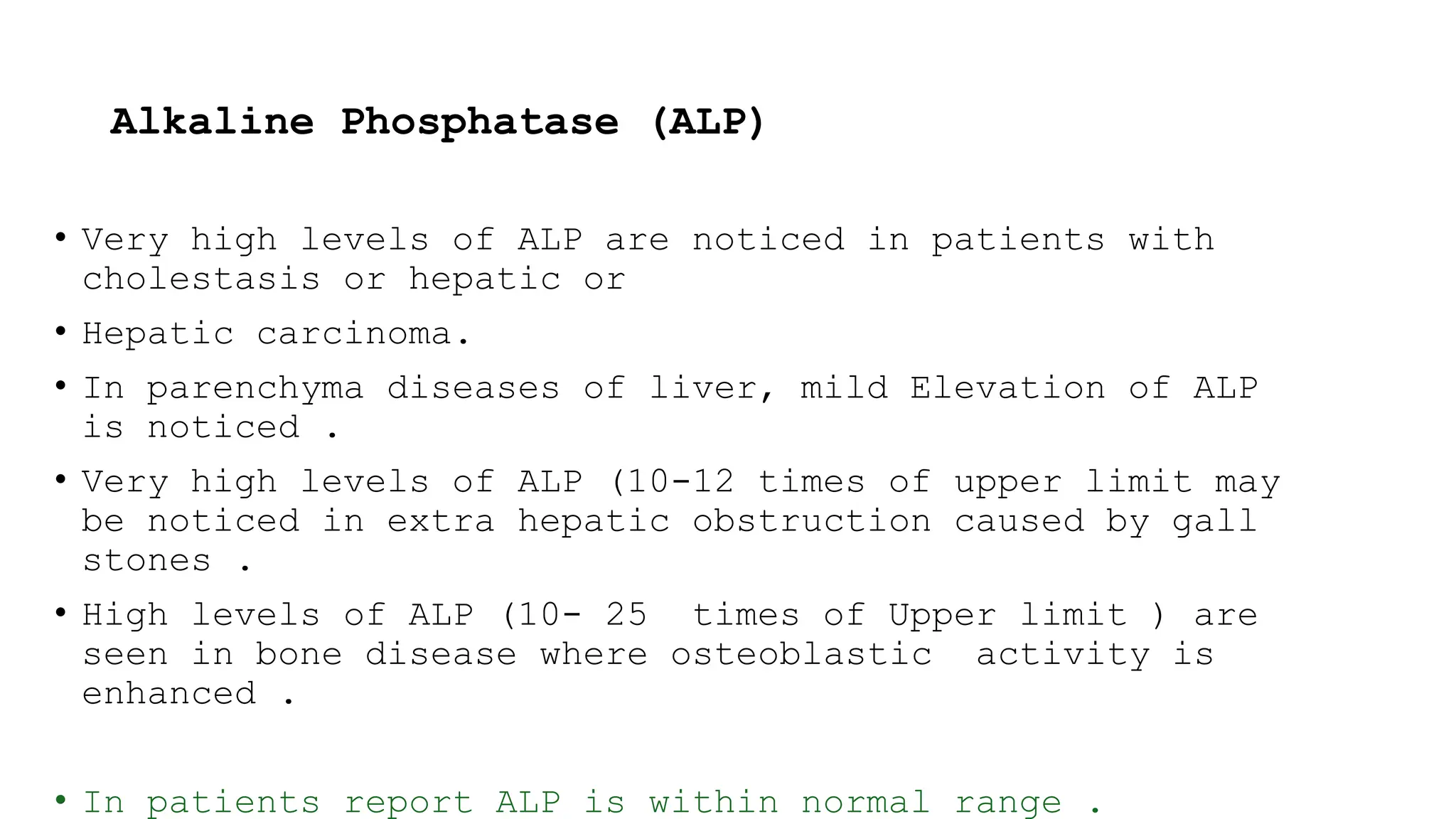
• In patients report ALP is within normal range .
• Conclusion : In this case we can interpret that
the patient may be alcoholics so, he is
suffering from alcoholic liver disease .
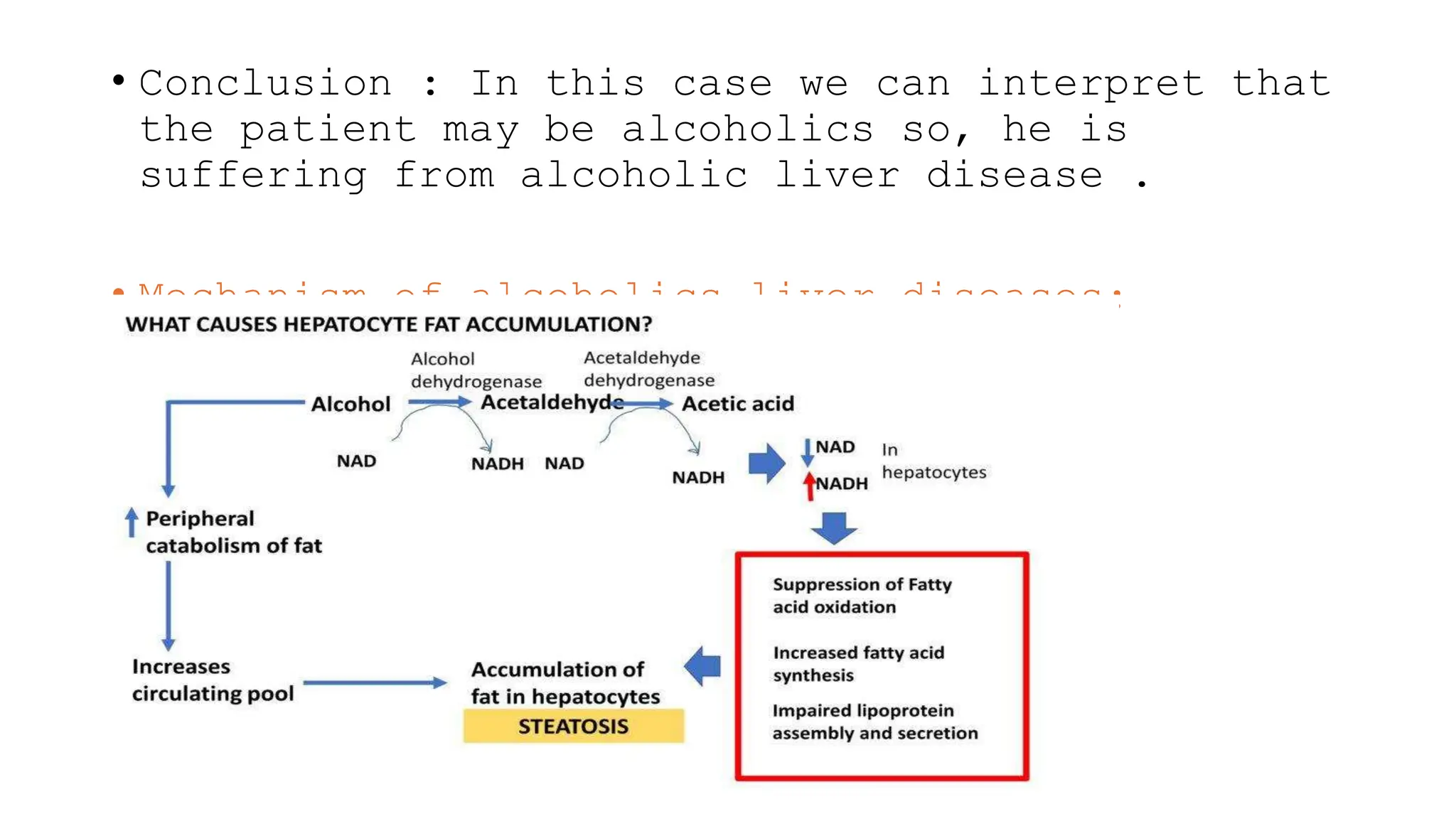
• Mechanism of alcoholics liver diseases:
THANK YOU

Case study of liver function test , different liver functiontest with its normal limits , clinical significance

  • 1.
    • CASE STUDYOF • LIVER FUNCTION TESTS
  • 2.
    Normal Ranges ofLFT and Interpretation
  • 3.
    Case Study OfPatient Name : Rabin Shrestha Age : 58 years/ male LIVER FUNCTION TESTS TESTS Patients value Normal ranges Total bilirubin : 3.14 0.1-1.2 mg/dl Direct bilirubin : 2.20 0.1-0.3 mg/dl SGPT / ALT : 97 7- 50 IU/L SGOT / AST : 290 10-40 IU/L Albumin : 3.9 3.4- 5.4 mg/dl GGT : 647
  • 4.
    Interpretation of liverfunction tests • Types of bilirubin : • Direct bilirubin also known as • Conjugated bilirubin. • Indirect bilirubin also known as • Unconjugated bilirubin. • Patient report indicates increased • Level of both Conjugated and • Unconjugated bilirubin.
  • 5.
    AST and ALTlevels • These are the enzymes indicating hepatocellular damage. • The levels of ALT in serum are elevated in all liver diseases. • Very high levels (more than 1000 units) are seen in acute hepatitis (viral&toxic) • Elevation of ALT is more in cases of hepatic disease in compare to AST. • But AST may be more than ALT in alcoholics liver disease. • In patient report we can observe AST level is almost 7 times higher than then • Upper limit of normal range and ALT level is almost 2 times increased than
  • 6.
    Gamma Glutamyl Transferase (GGT) •GGT is clinically important because of its sensitivity to detect alcohol abuse. • Elevated levels of GGT are observed in chronic alcoholism , pancreatic disease , Myocardial infraction , renal failure, chronic obstructive pulmonary disease. In patient report we can observe the elevated levels of GGT 8 times increased from Upper limits . So, we can interpret that the patient may be alcoholics .
  • 7.
    Alkaline Phosphatase (ALP) •Very high levels of ALP are noticed in patients with cholestasis or hepatic or • Hepatic carcinoma. • In parenchyma diseases of liver, mild Elevation of ALP is noticed . • Very high levels of ALP (10-12 times of upper limit may be noticed in extra hepatic obstruction caused by gall stones . • High levels of ALP (10- 25 times of Upper limit ) are seen in bone disease where osteoblastic activity is enhanced . • In patients report ALP is within normal range .
  • 8.
    • Conclusion :In this case we can interpret that the patient may be alcoholics so, he is suffering from alcoholic liver disease . • Mechanism of alcoholics liver diseases:
  • 9.