WHAT IS CREATININE
CLEARANCE?
Dr. Haji Bahadar,PharmD, PhD
Assistant Professor, KMU-IPMS
Topics
 What is creatinine?
 Why is it important to check blood creatinine
levels?
 What is creatinine clearance?
 How creatinine clearance can be measured ?
What is creatinine?
 Creatinine is a chemical waste molecule that is
generated from muscle metabolism.
 Creatinine is produced from creatine, a
molecule of major importance for energy
production in muscles.
 Creatinine is transported through the
bloodstream to the kidneys. The kidneys filter
out the creatinine.
Creatine
 Creatine is a nitrogenous organic acid that
occurs naturally in vertebrates. Its main role is to
facilitate recycling of adenosine
triphosphate (ATP), the energy currency of the
cell, primarily in muscle and brain tissue.
Creatine is not an essential nutrient as it is
naturally produced in the human body from
the amino acids glycine and arginine.
 Creatine, synthesized in the liver and kidney, is
transported through the blood and taken up by
tissues with high energy demands, such as the
brain and skeletal muscle.
Why is it important to check blood creatinine
levels?
 The kidneys maintain the blood creatinine in a
normal range ( male: 0.6 to 1.2 milligrams (mg)
per deciliter (dL). Creatinine is a reliable
indicator of kidney function. Elevated
creatinine level show impaired kidney function
or kidney disease.
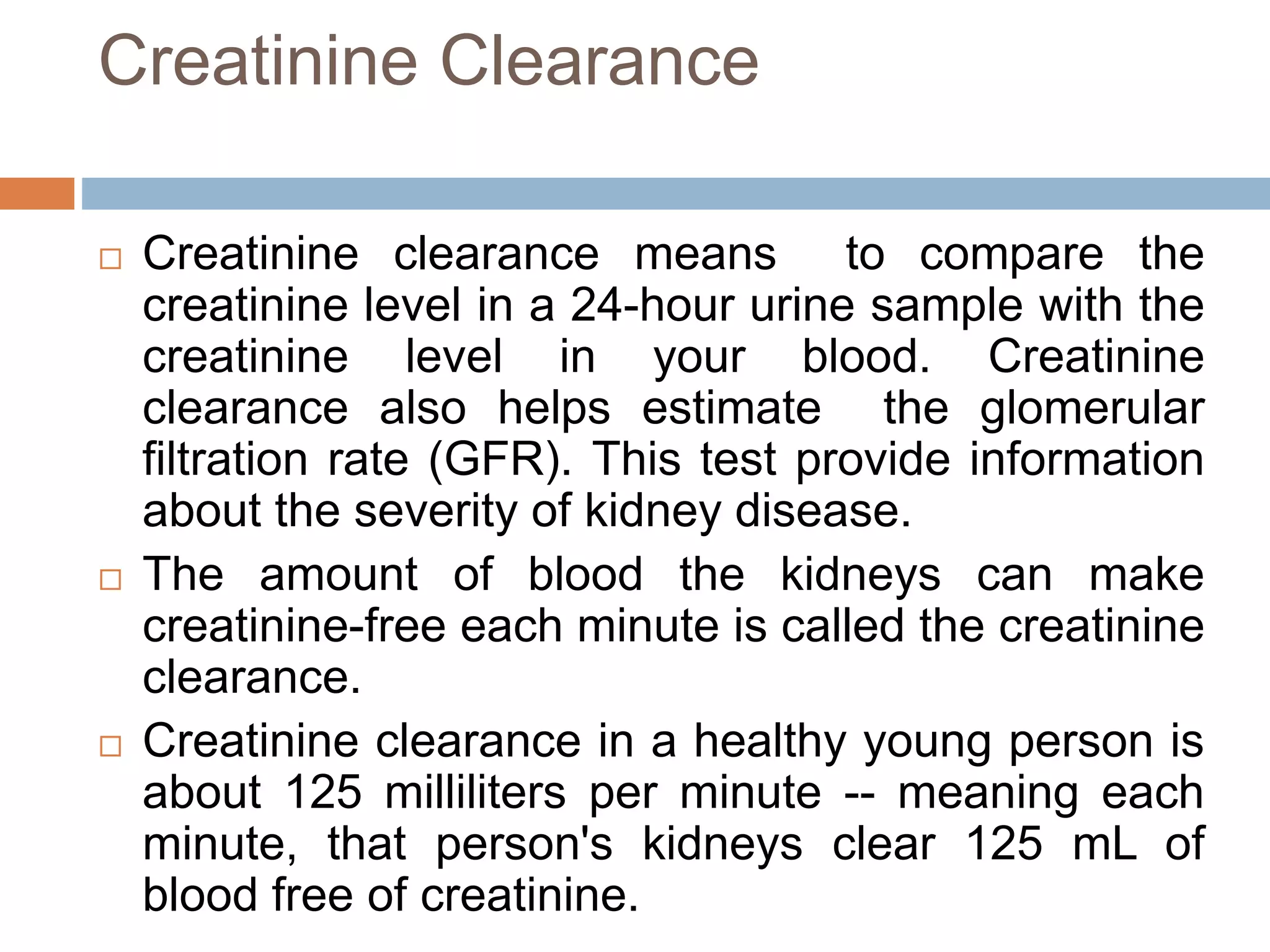
Creatinine Clearance
 Creatinine clearance means to compare the
creatinine level in a 24-hour urine sample with the
creatinine level in your blood. Creatinine
clearance also helps estimate the glomerular
filtration rate (GFR). This test provide information
about the severity of kidney disease.
 The amount of blood the kidneys can make
creatinine-free each minute is called the creatinine
clearance.
 Creatinine clearance in a healthy young person is
about 125 milliliters per minute -- meaning each
minute, that person's kidneys clear 125 mL of
blood free of creatinine.
How creatinine clearance can be measured
?
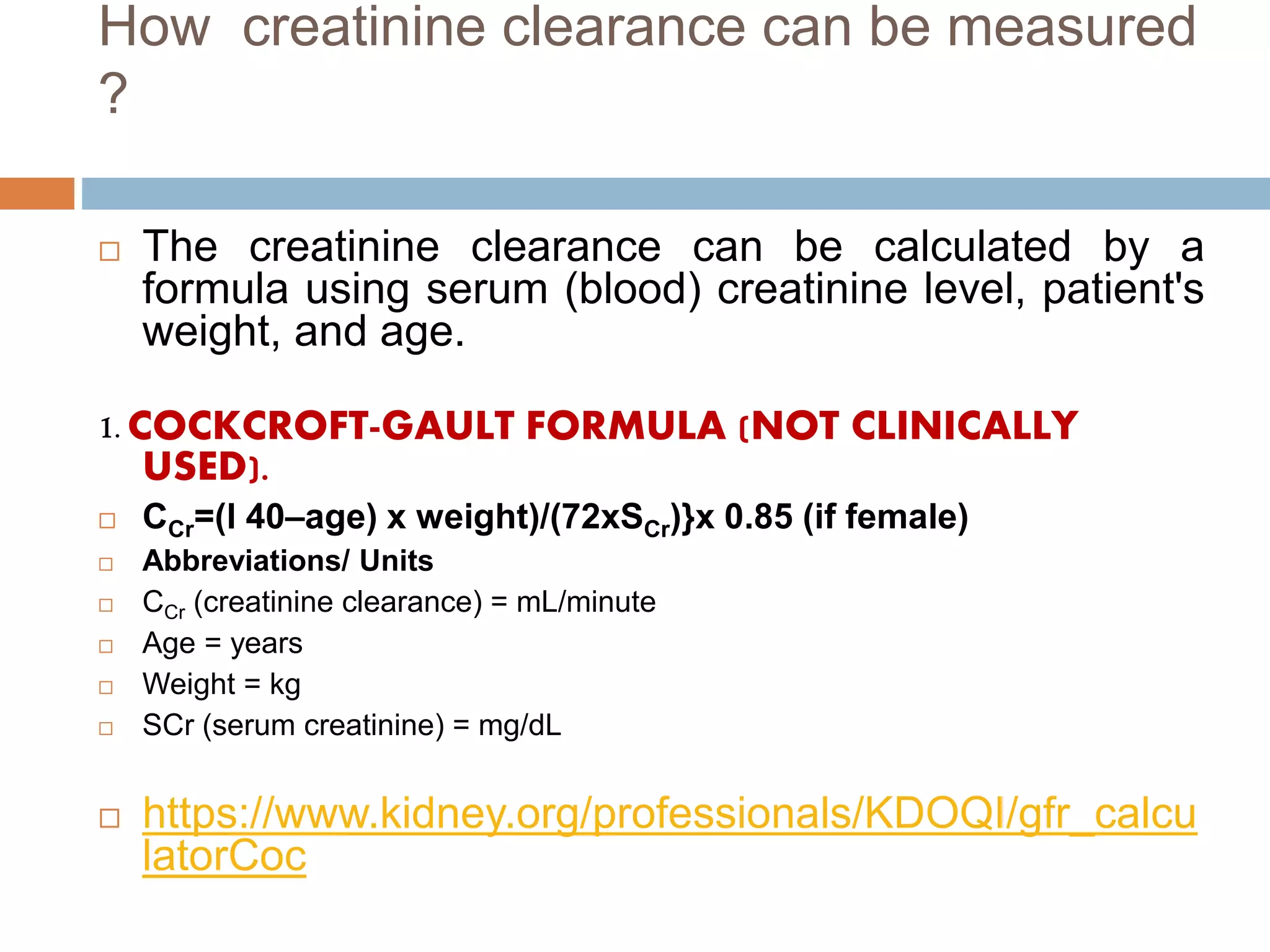
 The creatinine clearance can be calculated by a
formula using serum (blood) creatinine level, patient's
weight, and age.
1. COCKCROFT-GAULT FORMULA (NOT CLINICALLY
USED).
 CCr=(l 40–age) x weight)/(72xSCr)}x 0.85 (if female)
 Abbreviations/ Units
 CCr (creatinine clearance) = mL/minute
 Age = years
 Weight = kg
 SCr (serum creatinine) = mg/dL
 https://www.kidney.org/professionals/KDOQI/gfr_calcu
latorCoc
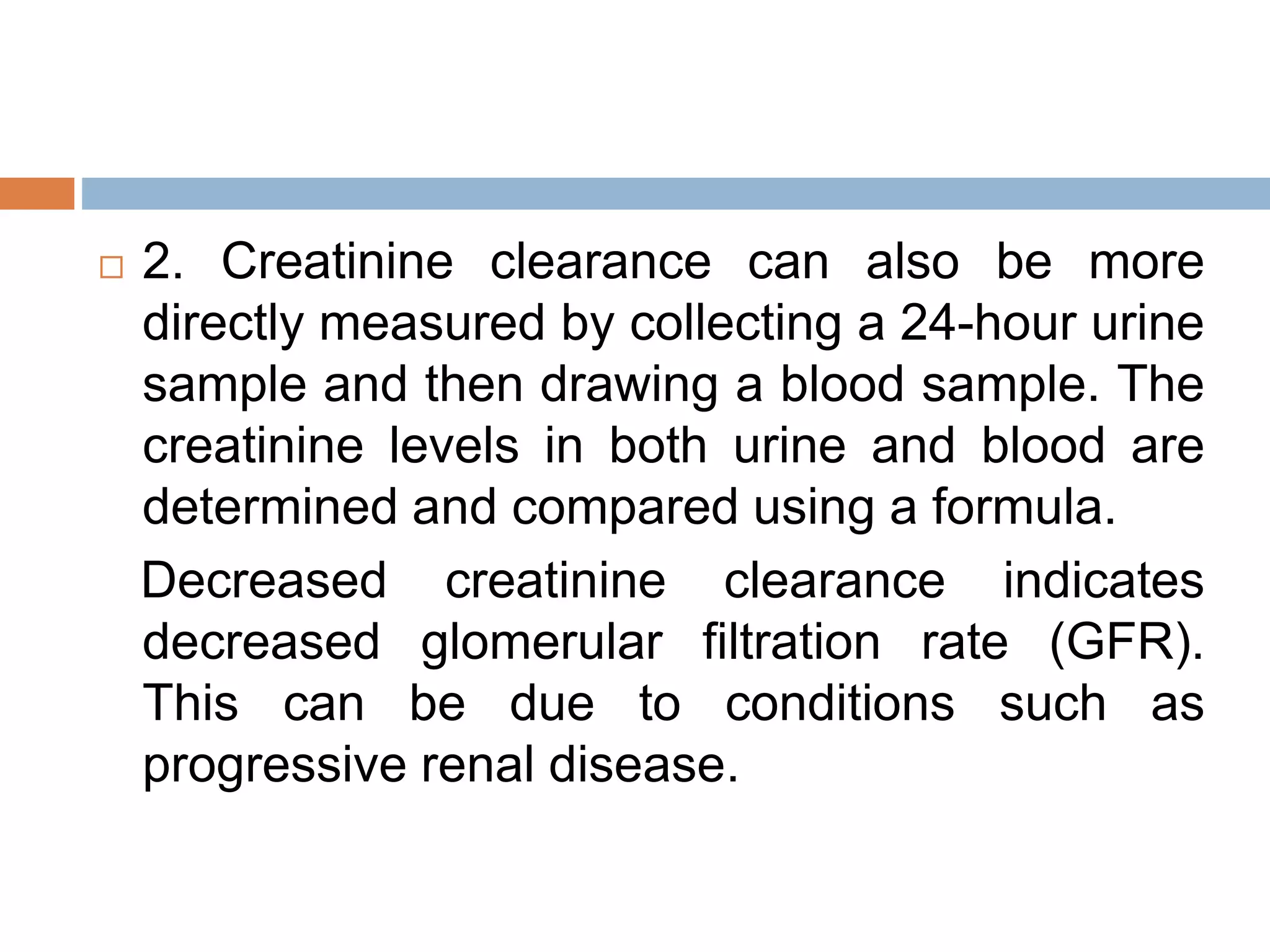
 2. Creatinine clearance can also be more
directly measured by collecting a 24-hour urine
sample and then drawing a blood sample. The
creatinine levels in both urine and blood are
determined and compared using a formula.
Decreased creatinine clearance indicates
decreased glomerular filtration rate (GFR).
This can be due to conditions such as
progressive renal disease.
Thank you

Creatinine clearance

  • 1.
    WHAT IS CREATININE CLEARANCE? Dr.Haji Bahadar,PharmD, PhD Assistant Professor, KMU-IPMS
  • 2.
    Topics  What iscreatinine?  Why is it important to check blood creatinine levels?  What is creatinine clearance?  How creatinine clearance can be measured ?
  • 3.
    What is creatinine? Creatinine is a chemical waste molecule that is generated from muscle metabolism.  Creatinine is produced from creatine, a molecule of major importance for energy production in muscles.  Creatinine is transported through the bloodstream to the kidneys. The kidneys filter out the creatinine.
  • 4.
    Creatine  Creatine isa nitrogenous organic acid that occurs naturally in vertebrates. Its main role is to facilitate recycling of adenosine triphosphate (ATP), the energy currency of the cell, primarily in muscle and brain tissue. Creatine is not an essential nutrient as it is naturally produced in the human body from the amino acids glycine and arginine.  Creatine, synthesized in the liver and kidney, is transported through the blood and taken up by tissues with high energy demands, such as the brain and skeletal muscle.
  • 7.
    Why is itimportant to check blood creatinine levels?  The kidneys maintain the blood creatinine in a normal range ( male: 0.6 to 1.2 milligrams (mg) per deciliter (dL). Creatinine is a reliable indicator of kidney function. Elevated creatinine level show impaired kidney function or kidney disease.
  • 8.
    Creatinine Clearance  Creatinineclearance means to compare the creatinine level in a 24-hour urine sample with the creatinine level in your blood. Creatinine clearance also helps estimate the glomerular filtration rate (GFR). This test provide information about the severity of kidney disease.  The amount of blood the kidneys can make creatinine-free each minute is called the creatinine clearance.  Creatinine clearance in a healthy young person is about 125 milliliters per minute -- meaning each minute, that person's kidneys clear 125 mL of blood free of creatinine.
  • 9.
    How creatinine clearancecan be measured ?  The creatinine clearance can be calculated by a formula using serum (blood) creatinine level, patient's weight, and age. 1. COCKCROFT-GAULT FORMULA (NOT CLINICALLY USED).  CCr=(l 40–age) x weight)/(72xSCr)}x 0.85 (if female)  Abbreviations/ Units  CCr (creatinine clearance) = mL/minute  Age = years  Weight = kg  SCr (serum creatinine) = mg/dL  https://www.kidney.org/professionals/KDOQI/gfr_calcu latorCoc
  • 10.
     2. Creatinineclearance can also be more directly measured by collecting a 24-hour urine sample and then drawing a blood sample. The creatinine levels in both urine and blood are determined and compared using a formula. Decreased creatinine clearance indicates decreased glomerular filtration rate (GFR). This can be due to conditions such as progressive renal disease.
  • 12.