JOINT PROBABILITY
Joint Probability
is the likelihood of more than
one event occurring at the same
time.
Two types of Joint Probability
• Mutually Exclusive Events (without
common outcomes)
• Non-Mutually Exclusive Events (with
common outcomes)
Mutually Exclusive Events
Examples:
• Turning left and turning right are Mutually
Exclusive (you can't do both at the same time)
• Tossing a coin: Heads and Tails are Mutually
Exclusive (can't happen at the same time)
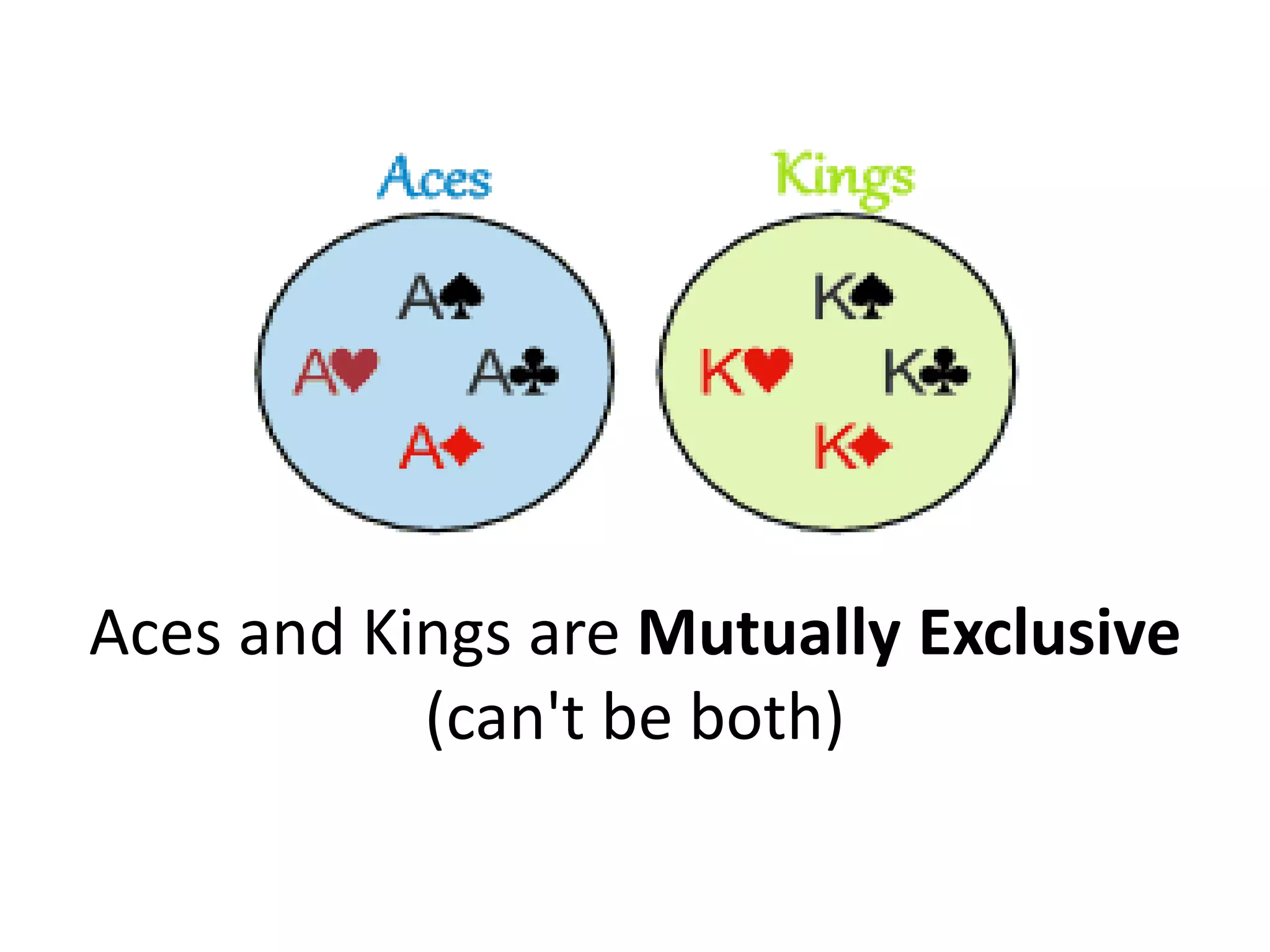
• Cards: Kings and Aces are Mutually Exclusive
(can’t be both)
Aces and Kings are Mutually Exclusive
(can't be both)
When two events (call them "A" and "B")
are Mutually Exclusive it is impossible for
them to happen together:
P(A and B) = 0
"The probability of A and B
together equals 0 (impossible)"
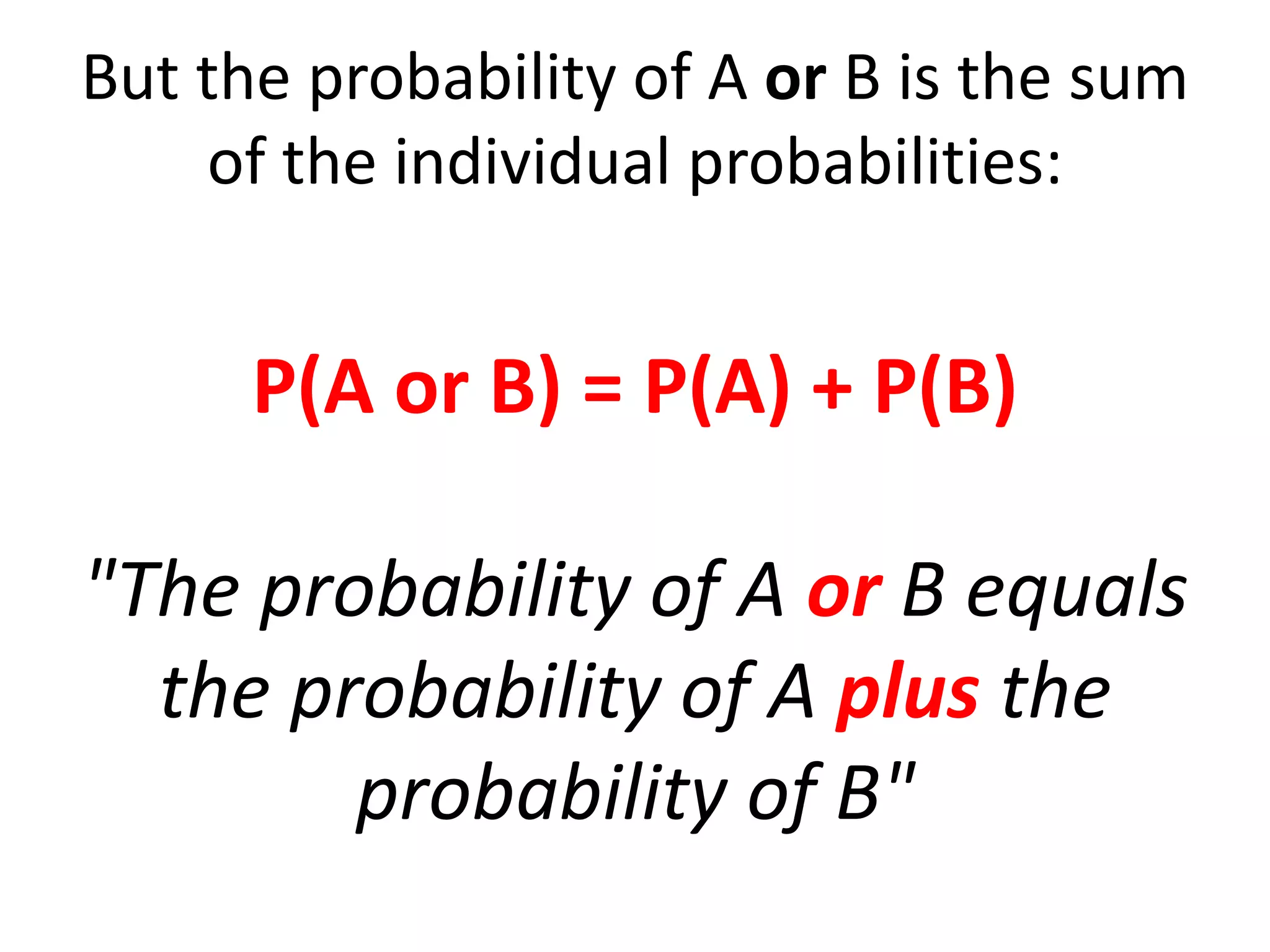
But the probability of A or B is the sum
of the individual probabilities:
P(A or B) = P(A) + P(B)
"The probability of A or B equals
the probability of A plus the
probability of B"
Example: A Deck of Cards
In a Deck of 52 Cards:
• the probability of a King is 1/13,
so
P(King)=1/13
• the probability of an Ace is also
1/13, so
P(Ace)=1/13
When we combine those two
Events:
• The probability of a card being a
King and an Ace is 0 (Impossible)
• The probability of a card being a
King or an Ace is (1/13) + (1/13)
= 2/13
Which is written like this:
•P(King and Ace) = 0
•P(King or Ace) = (1/13)
+ (1/13) = 2/13
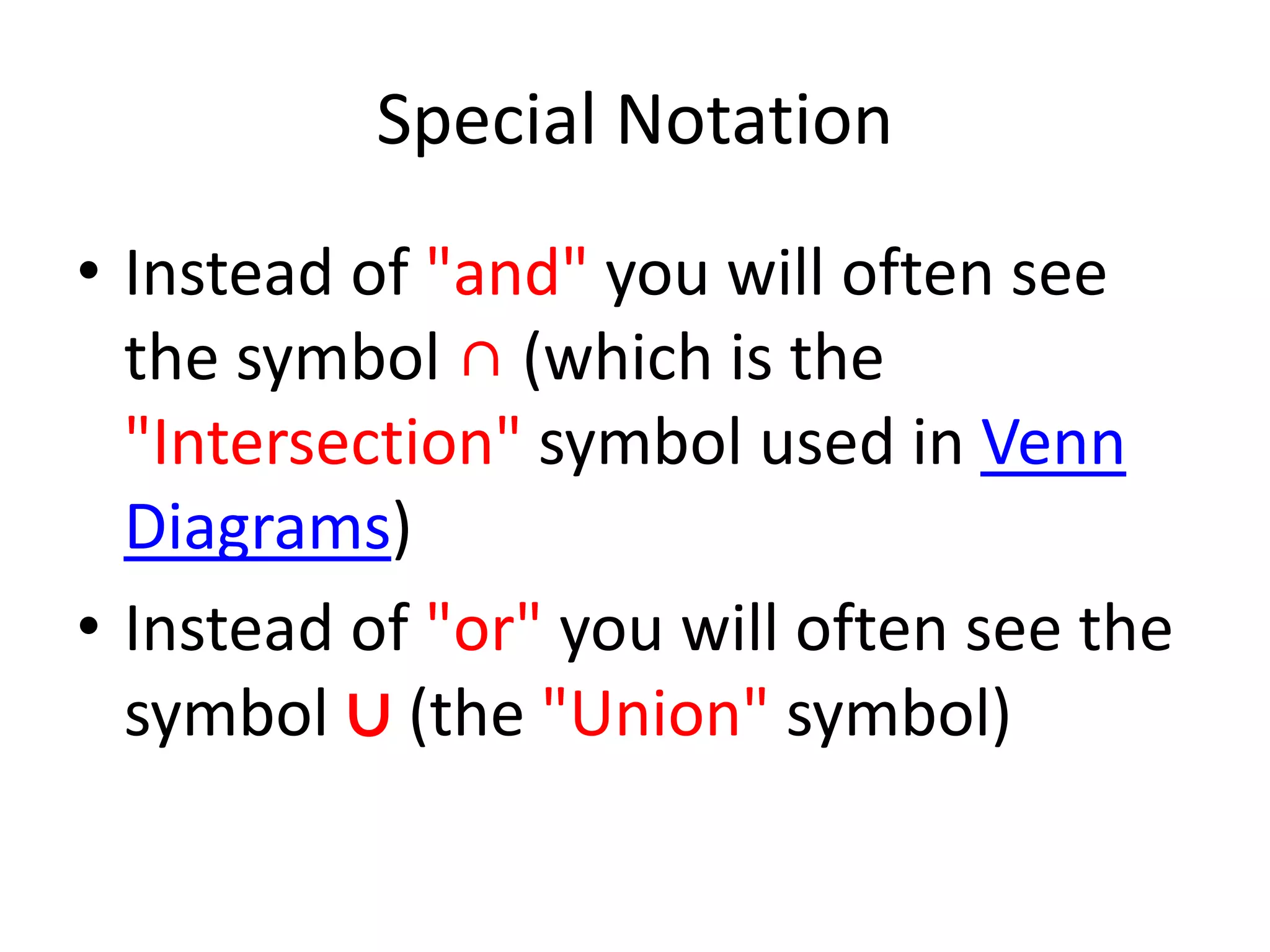
Special Notation
• Instead of "and" you will often see
the symbol ∩ (which is the
"Intersection" symbol used in Venn
Diagrams)
• Instead of "or" you will often see the
symbol ∪ (the "Union" symbol)
Remembering
To help you remember, think:
• "Or has more ... than And"
• Also ∪ is like a cup which holds more than ∩
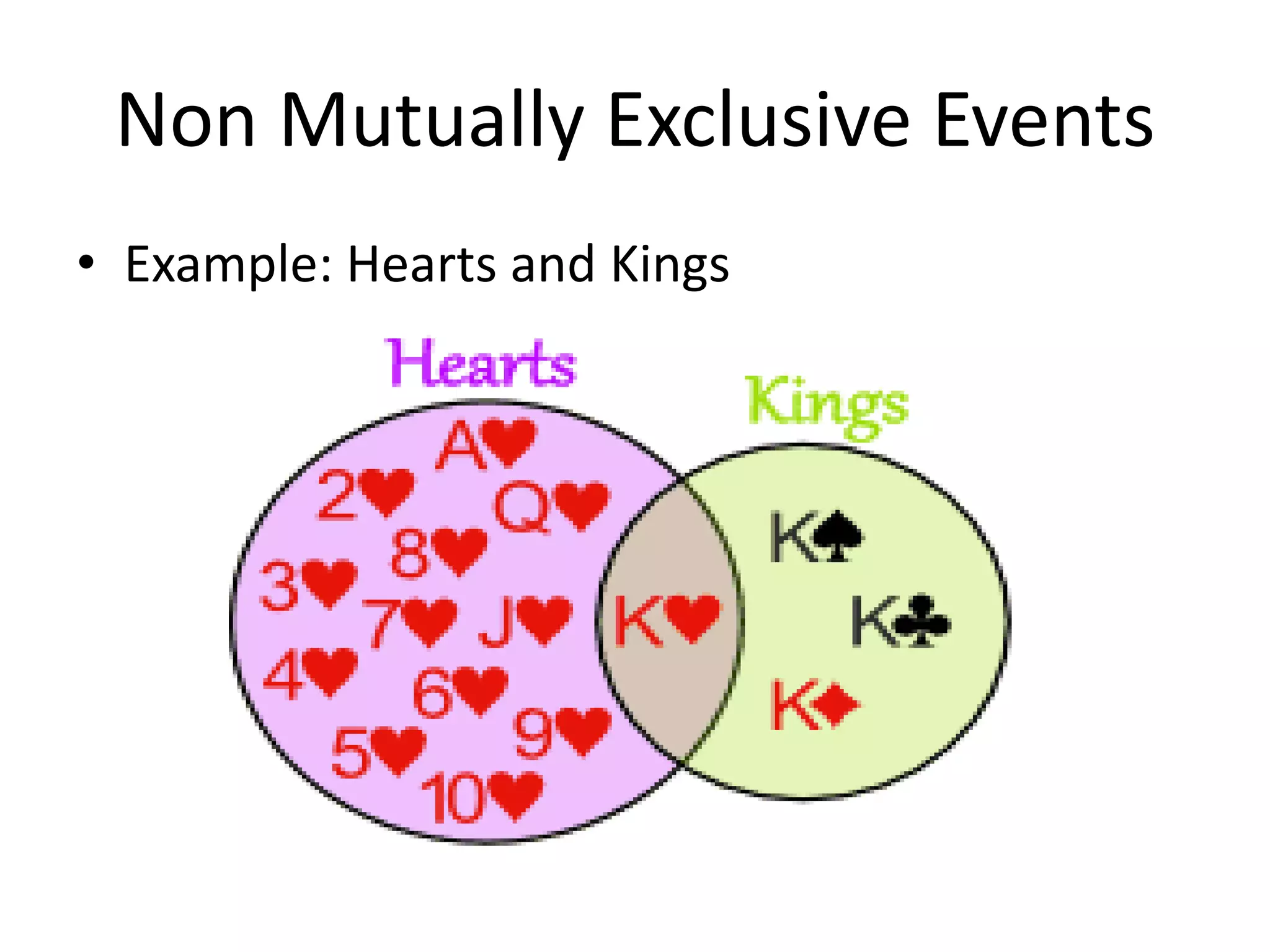
Non Mutually Exclusive Events
• Example: Hearts and Kings
• Hearts and Kings together is only the
King of Hearts:
• Hearts or Kings is:
all the Hearts (13 of them)
all the Kings (4 of them)
But that counts the King of Hearts twice!
So we correct our answer, by
subtracting the extra "and" part:
16 Cards = 13 Hearts + 4 Kings − the 1
extra King of Hearts
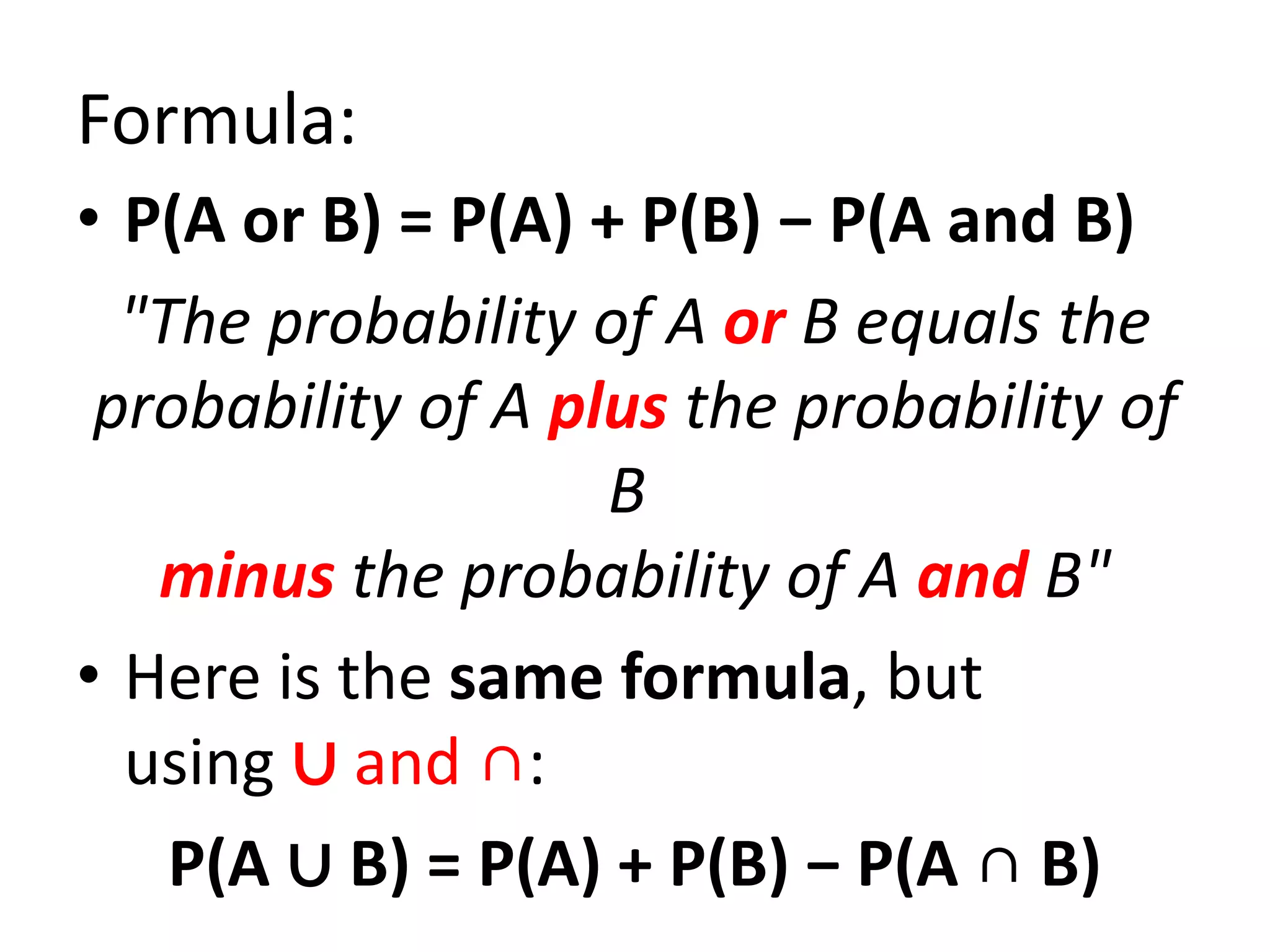
Formula:
• P(A or B) = P(A) + P(B) − P(A and B)
"The probability of A or B equals the
probability of A plus the probability of
B
minus the probability of A and B"
• Here is the same formula, but
using ∪ and ∩:
P(A ∪ B) = P(A) + P(B) − P(A ∩ B)
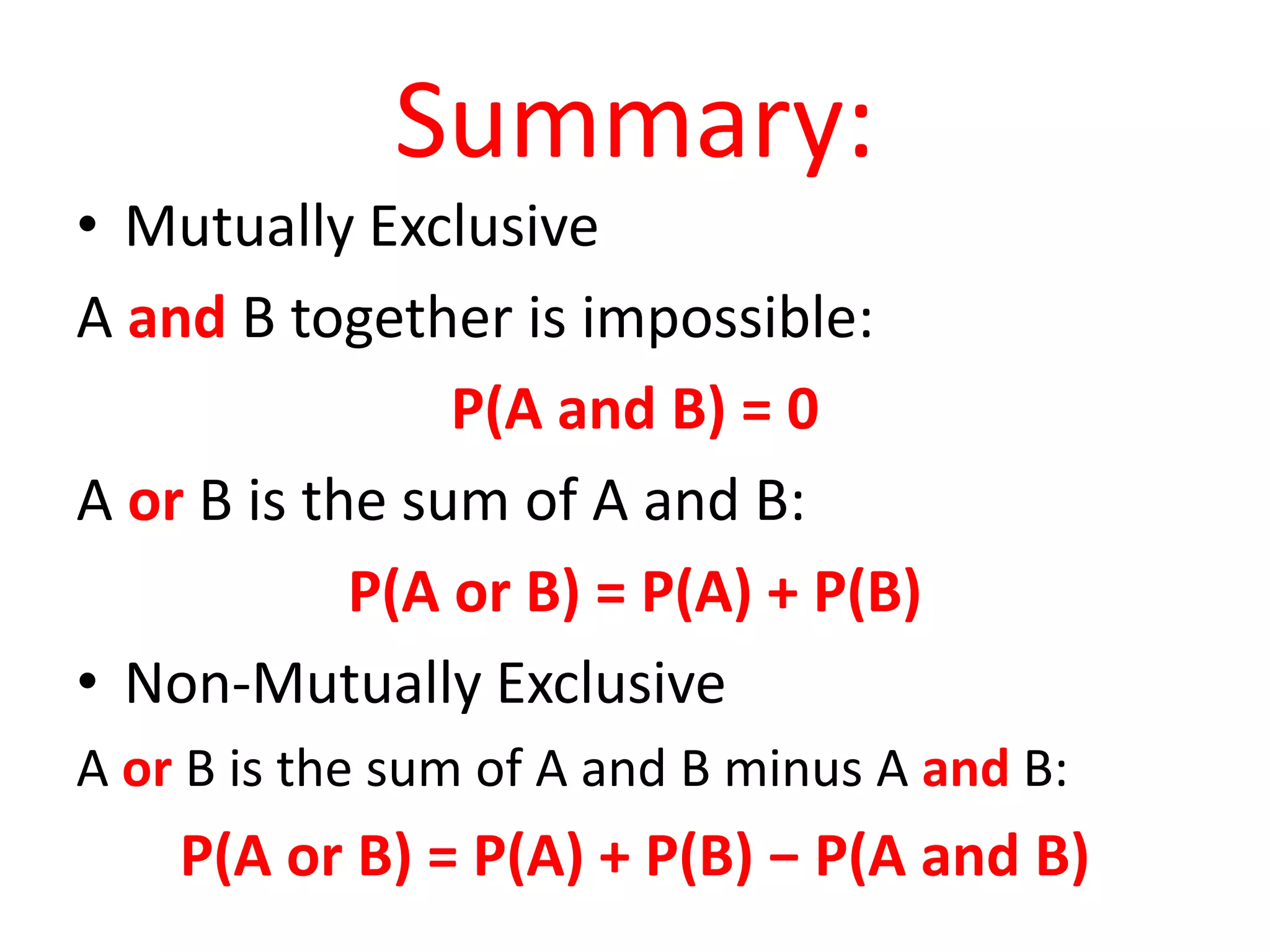
Summary:
• Mutually Exclusive
A and B together is impossible:
P(A and B) = 0
A or B is the sum of A and B:
P(A or B) = P(A) + P(B)
• Non-Mutually Exclusive
A or B is the sum of A and B minus A and B:
P(A or B) = P(A) + P(B) − P(A and B)

Joint probability

  • 1.
  • 2.
    Joint Probability is thelikelihood of more than one event occurring at the same time.
  • 3.
    Two types ofJoint Probability • Mutually Exclusive Events (without common outcomes) • Non-Mutually Exclusive Events (with common outcomes)
  • 4.
    Mutually Exclusive Events Examples: •Turning left and turning right are Mutually Exclusive (you can't do both at the same time) • Tossing a coin: Heads and Tails are Mutually Exclusive (can't happen at the same time) • Cards: Kings and Aces are Mutually Exclusive (can’t be both)
  • 5.
    Aces and Kingsare Mutually Exclusive (can't be both)
  • 6.
    When two events(call them "A" and "B") are Mutually Exclusive it is impossible for them to happen together: P(A and B) = 0 "The probability of A and B together equals 0 (impossible)"
  • 7.
    But the probabilityof A or B is the sum of the individual probabilities: P(A or B) = P(A) + P(B) "The probability of A or B equals the probability of A plus the probability of B"
  • 8.
    Example: A Deckof Cards In a Deck of 52 Cards: • the probability of a King is 1/13, so P(King)=1/13 • the probability of an Ace is also 1/13, so P(Ace)=1/13
  • 9.
    When we combinethose two Events: • The probability of a card being a King and an Ace is 0 (Impossible) • The probability of a card being a King or an Ace is (1/13) + (1/13) = 2/13
  • 10.
    Which is writtenlike this: •P(King and Ace) = 0 •P(King or Ace) = (1/13) + (1/13) = 2/13
  • 11.
    Special Notation • Insteadof "and" you will often see the symbol ∩ (which is the "Intersection" symbol used in Venn Diagrams) • Instead of "or" you will often see the symbol ∪ (the "Union" symbol)
  • 12.
    Remembering To help youremember, think: • "Or has more ... than And" • Also ∪ is like a cup which holds more than ∩
  • 13.
    Non Mutually ExclusiveEvents • Example: Hearts and Kings
  • 14.
    • Hearts andKings together is only the King of Hearts: • Hearts or Kings is: all the Hearts (13 of them) all the Kings (4 of them) But that counts the King of Hearts twice!
  • 15.
    So we correctour answer, by subtracting the extra "and" part: 16 Cards = 13 Hearts + 4 Kings − the 1 extra King of Hearts
  • 16.
    Formula: • P(A orB) = P(A) + P(B) − P(A and B) "The probability of A or B equals the probability of A plus the probability of B minus the probability of A and B" • Here is the same formula, but using ∪ and ∩: P(A ∪ B) = P(A) + P(B) − P(A ∩ B)
  • 17.
    Summary: • Mutually Exclusive Aand B together is impossible: P(A and B) = 0 A or B is the sum of A and B: P(A or B) = P(A) + P(B) • Non-Mutually Exclusive A or B is the sum of A and B minus A and B: P(A or B) = P(A) + P(B) − P(A and B)