Downloaded 480 times
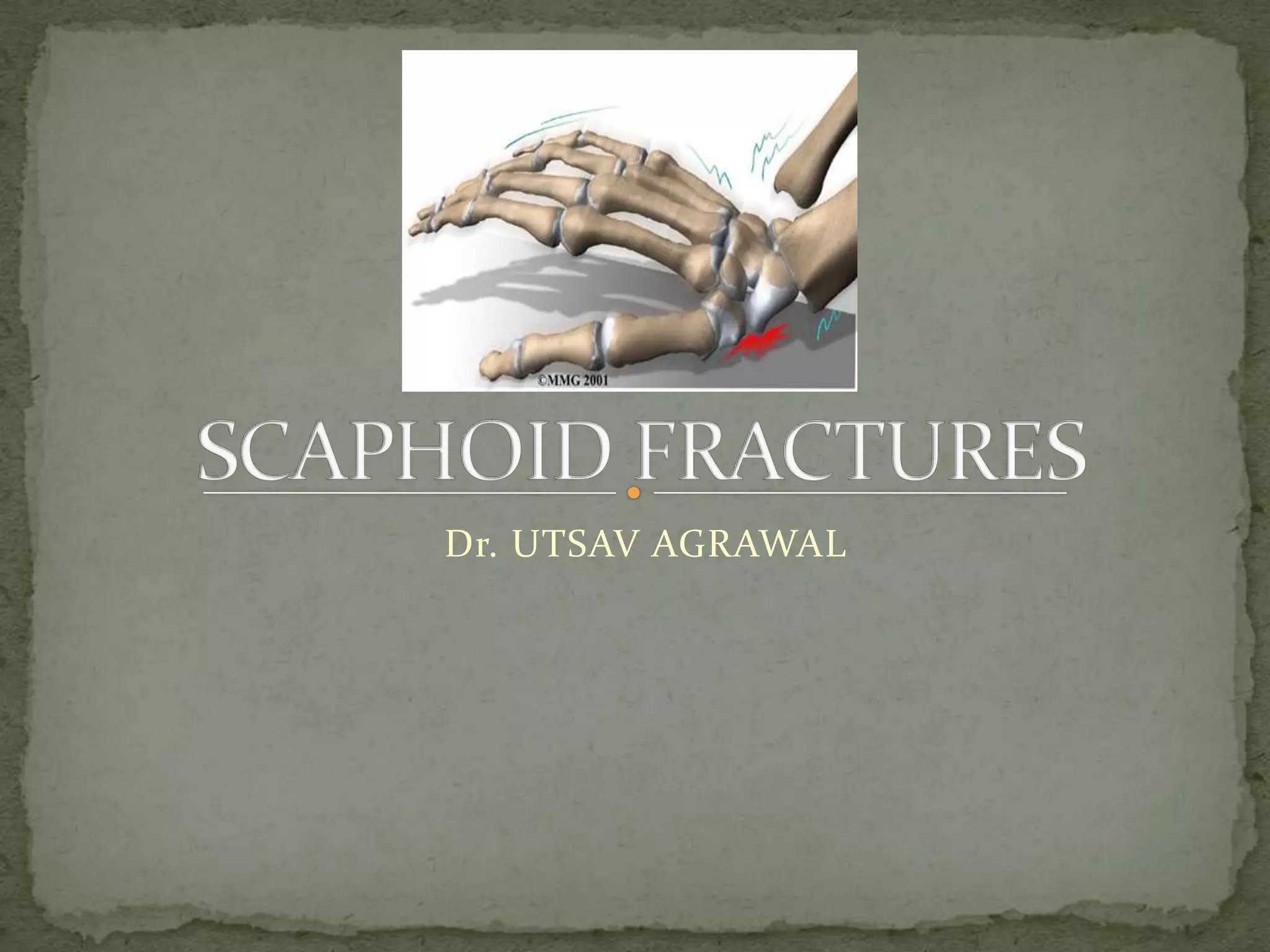
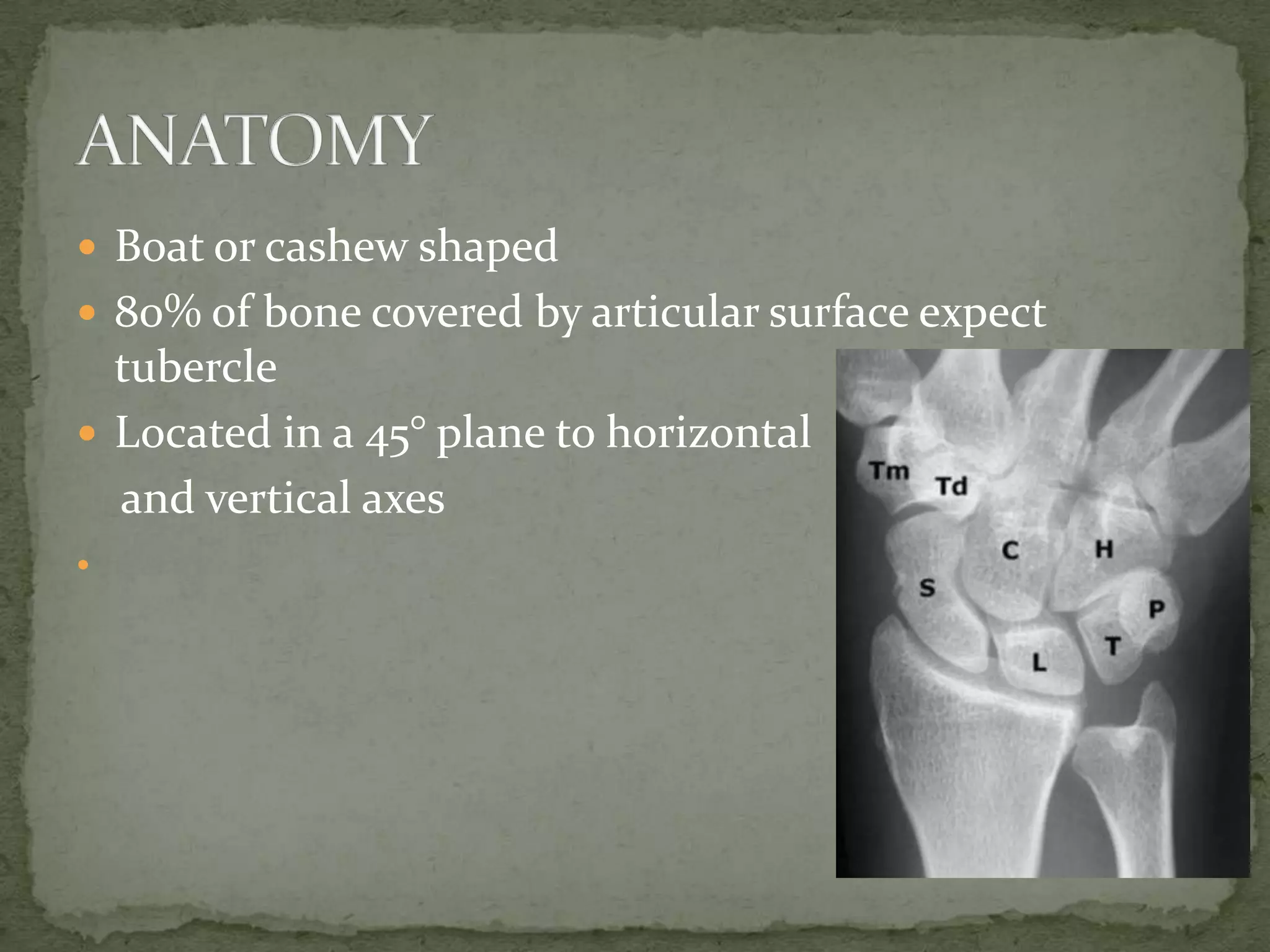
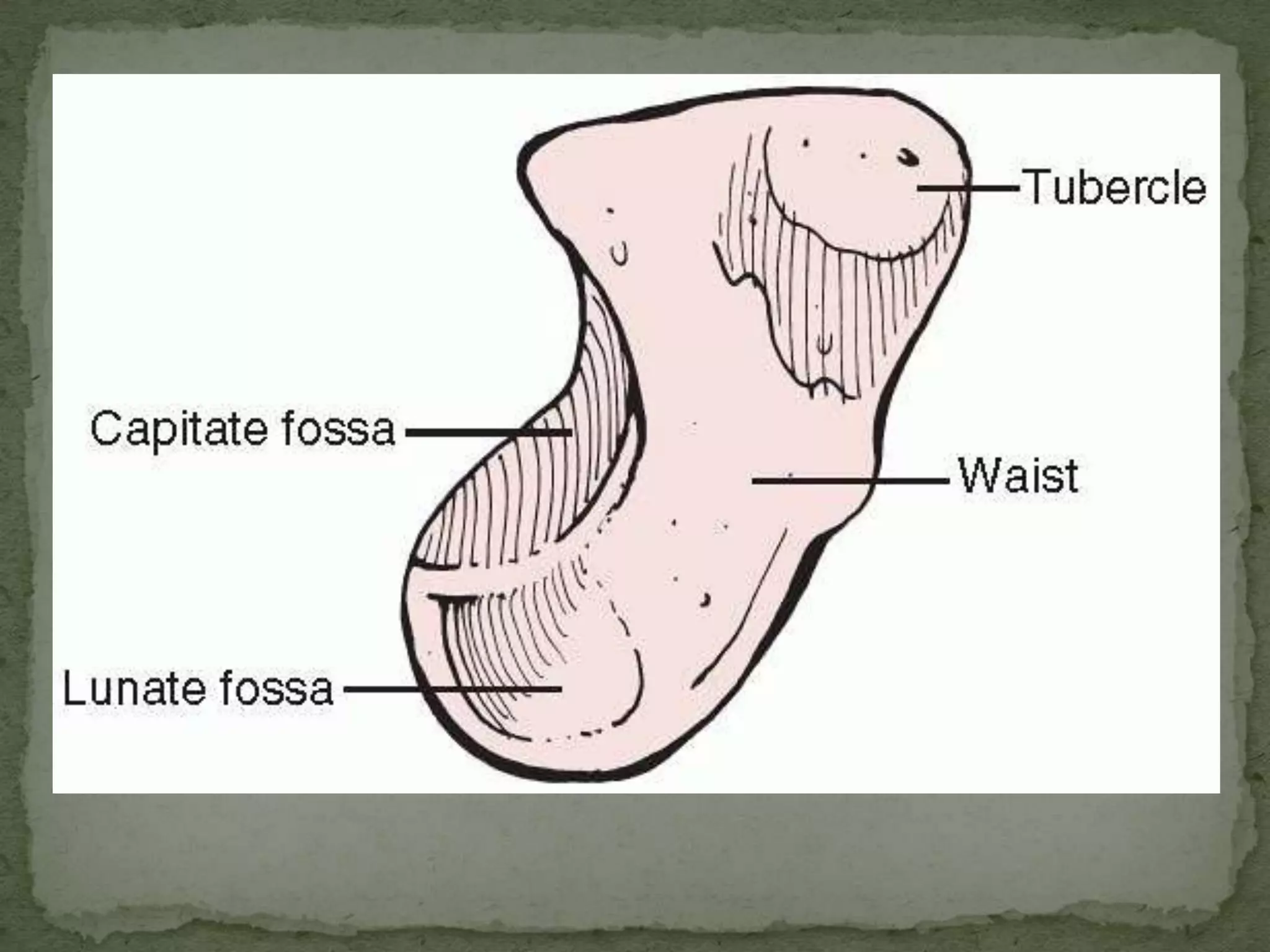
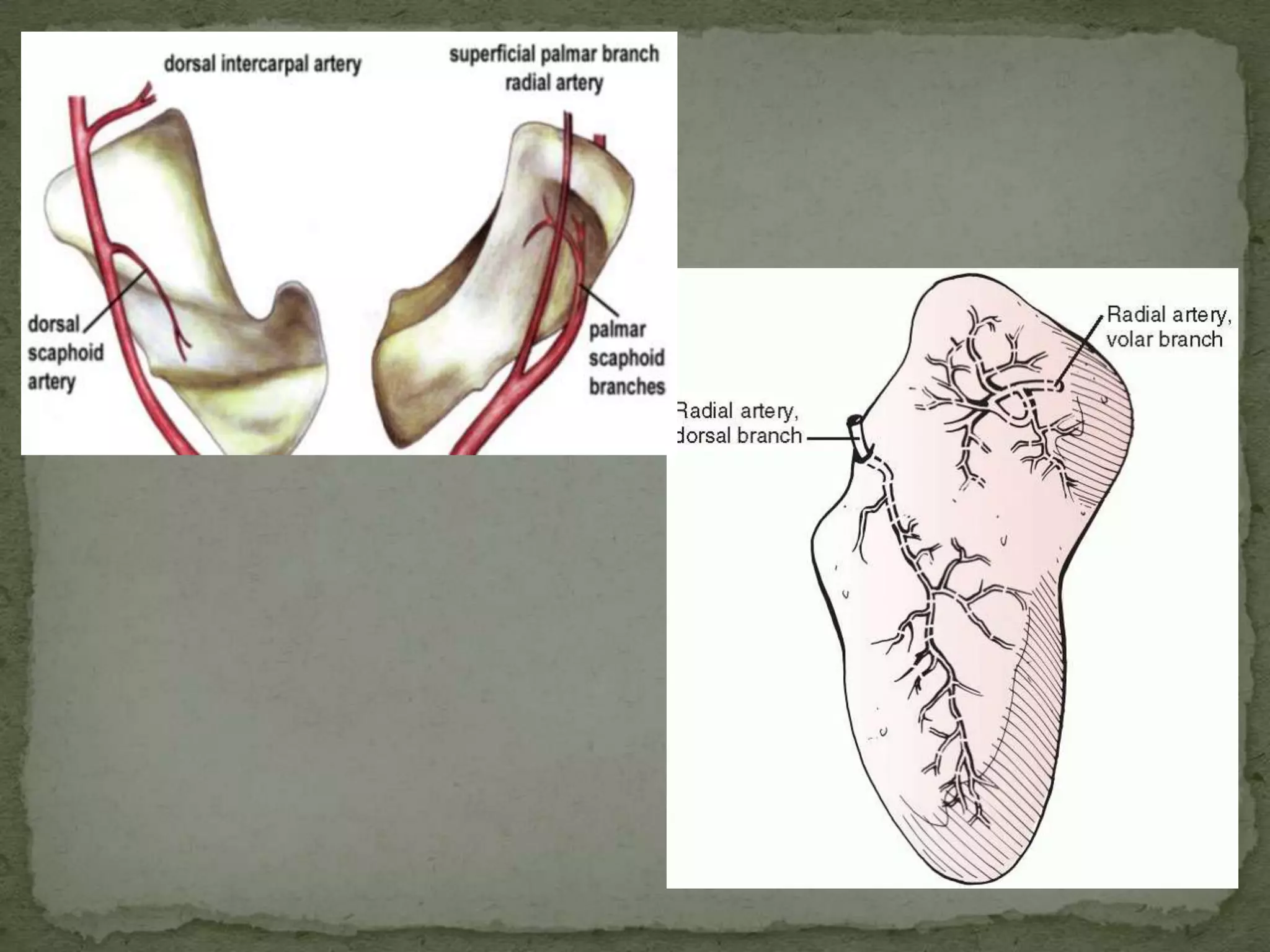
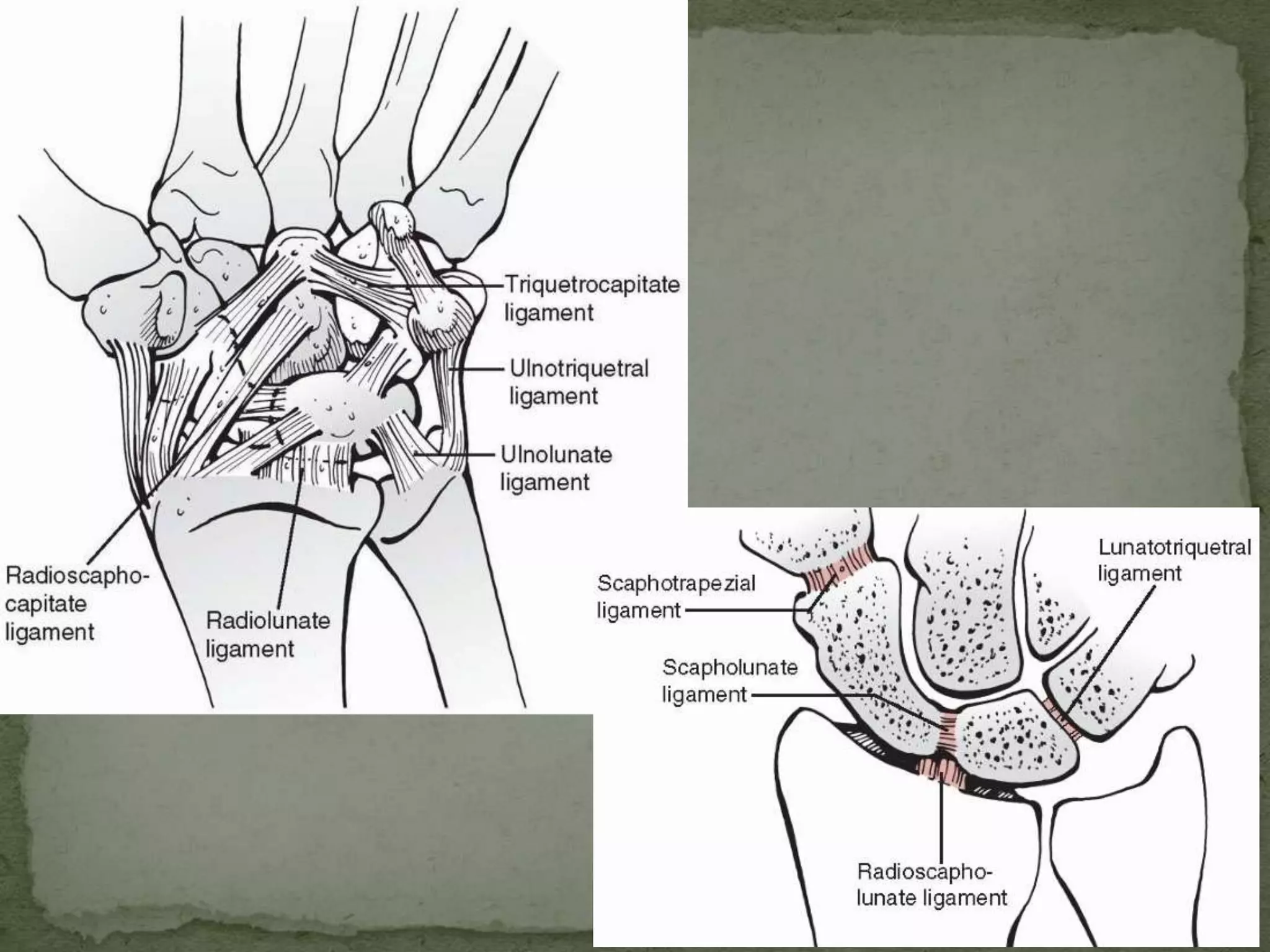
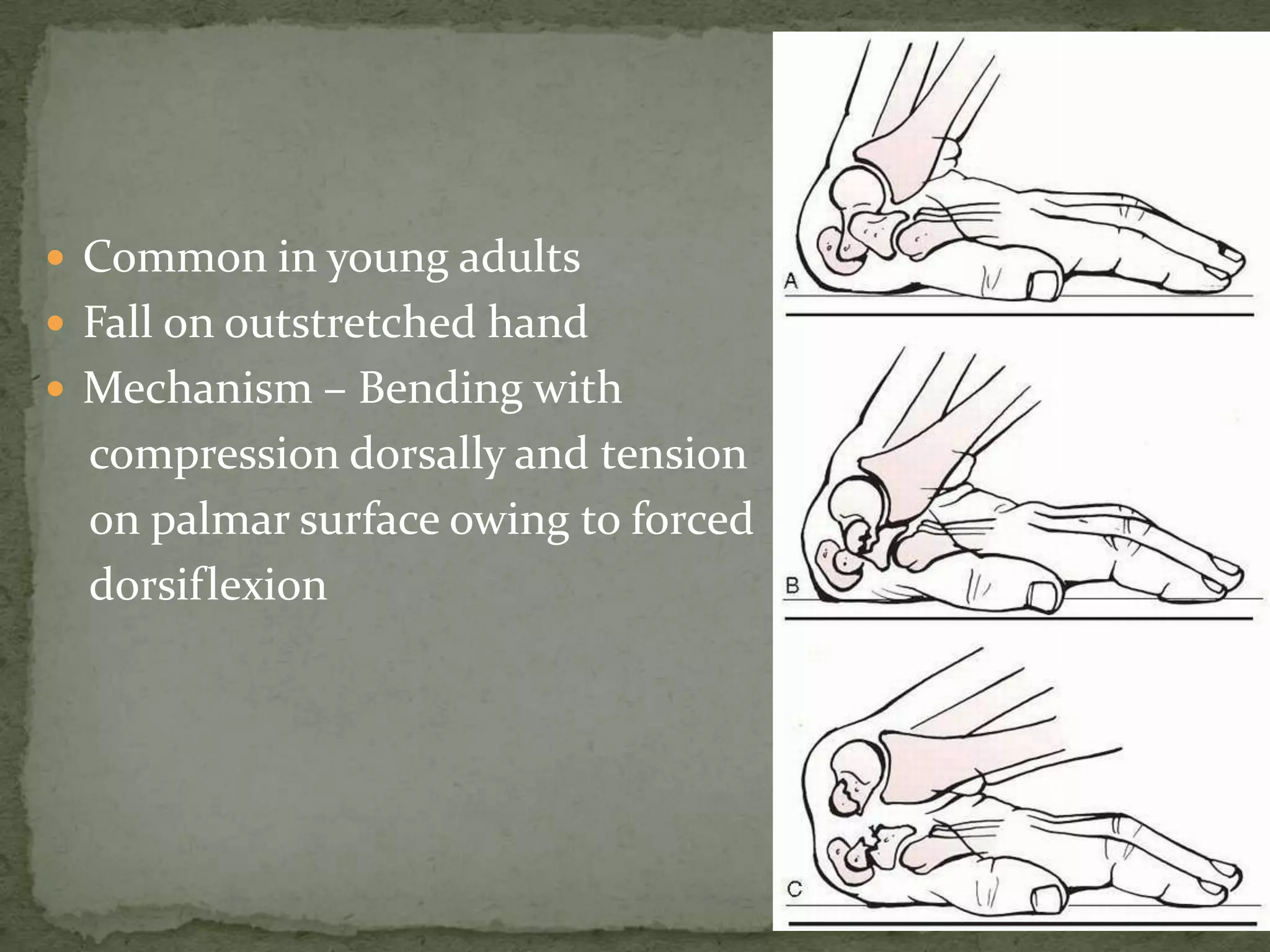
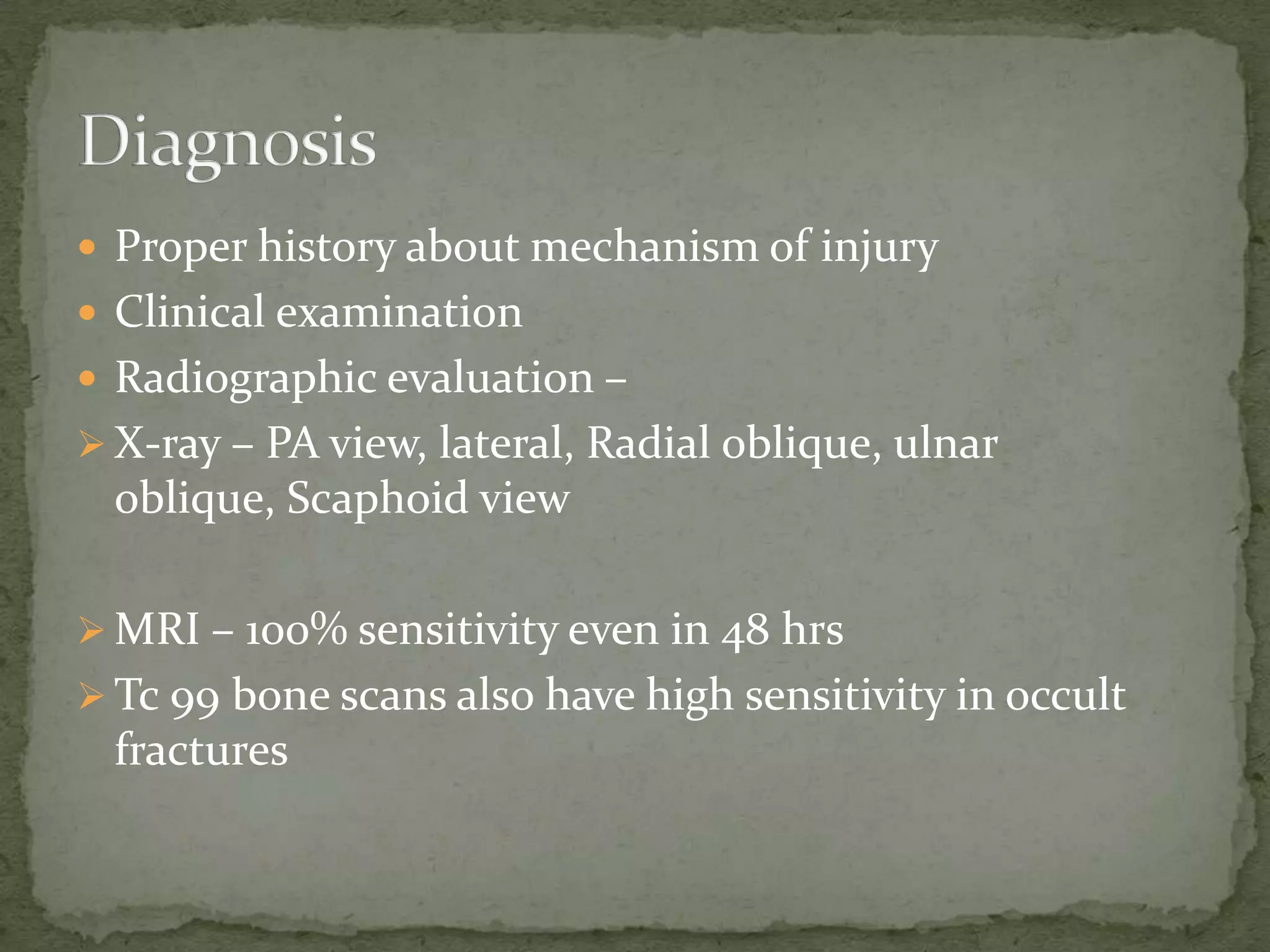
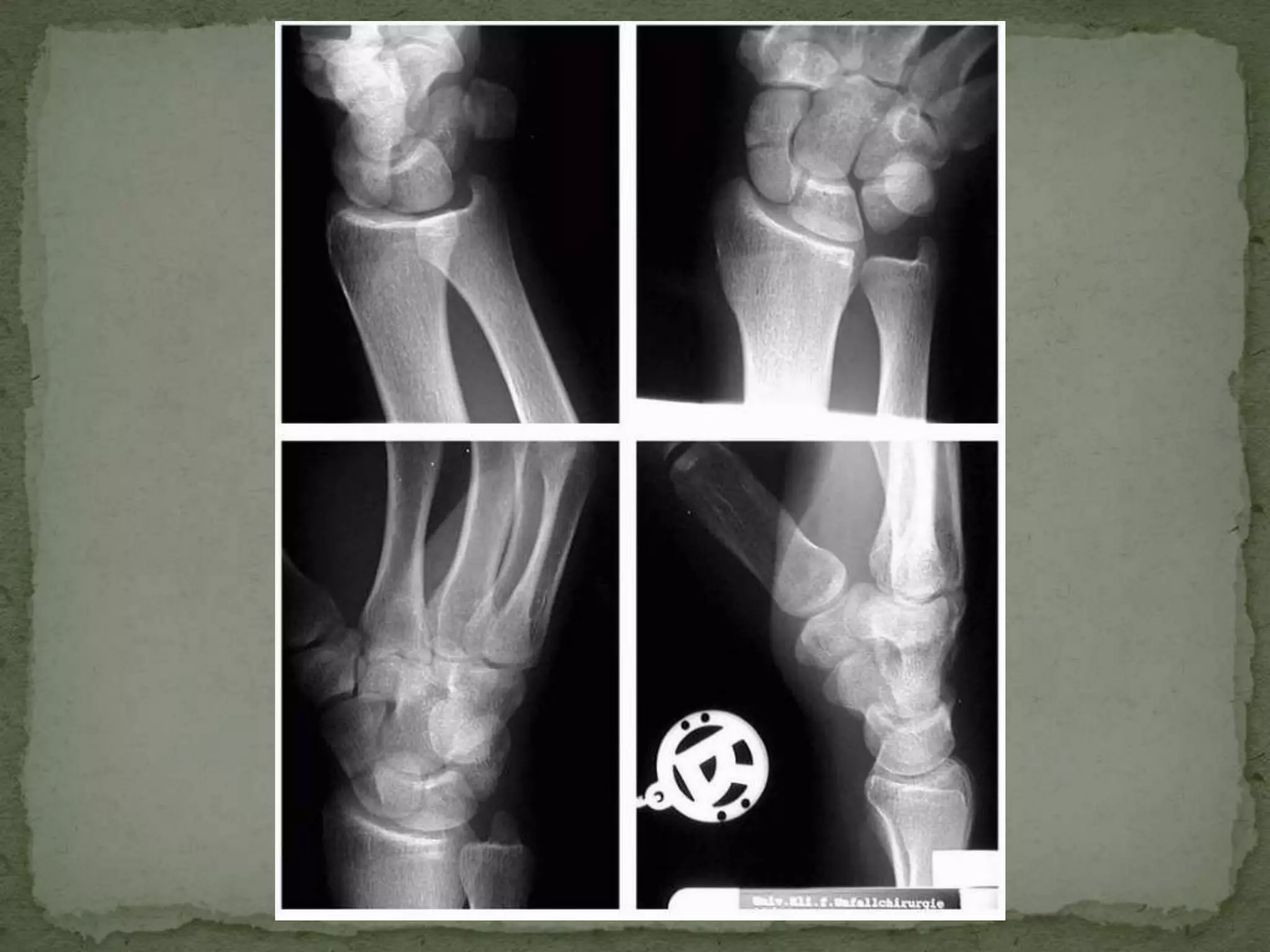
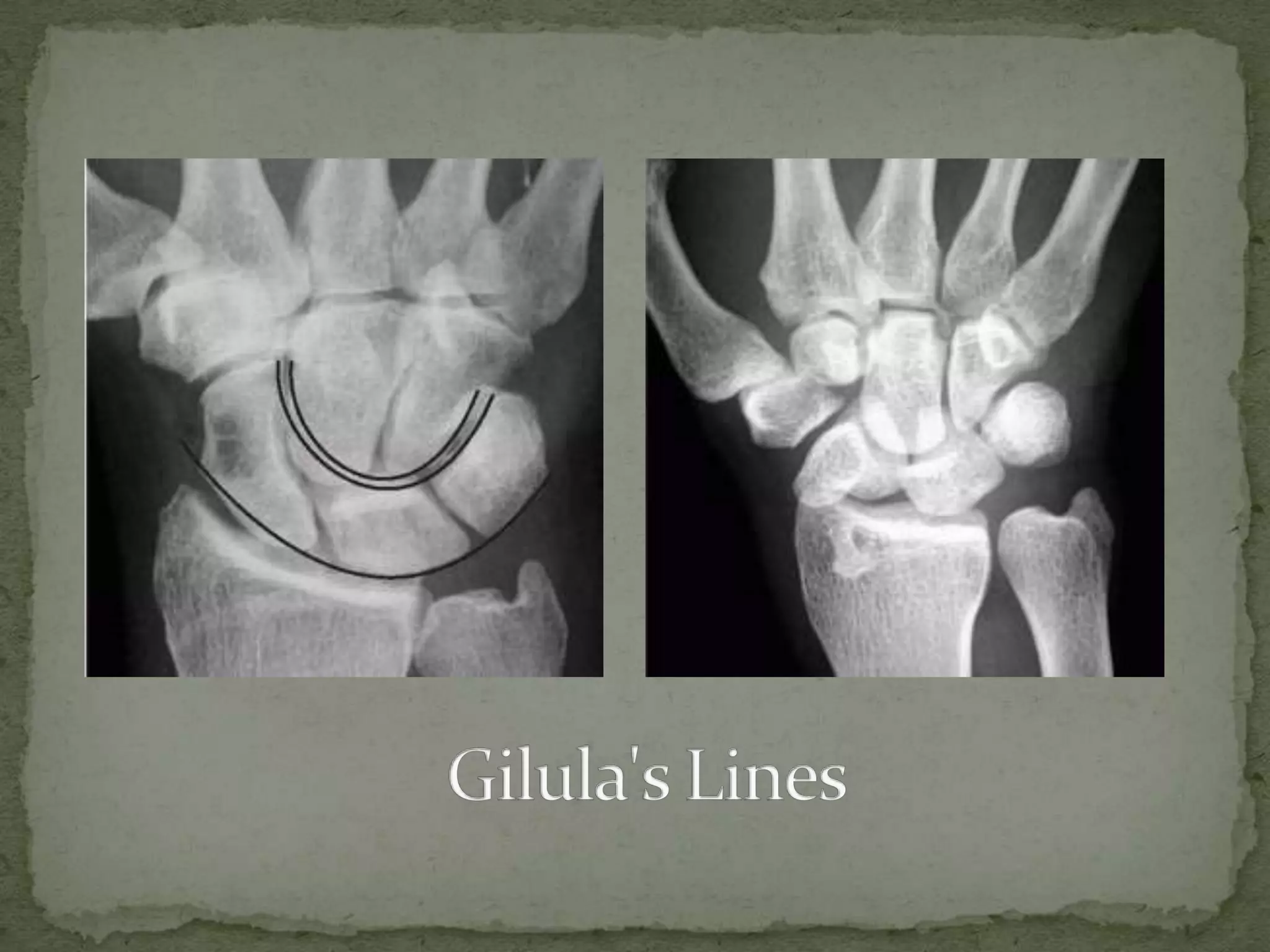
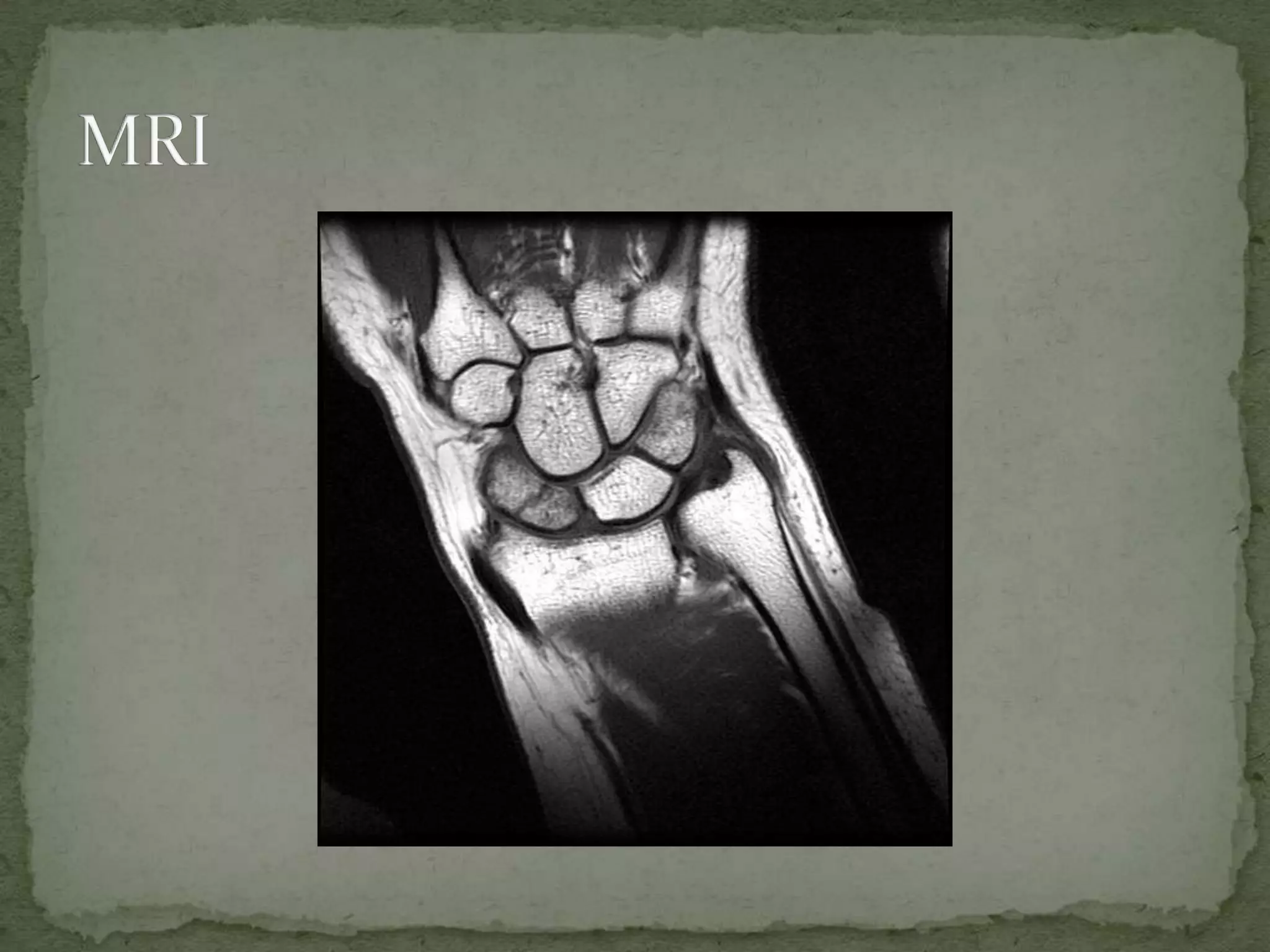
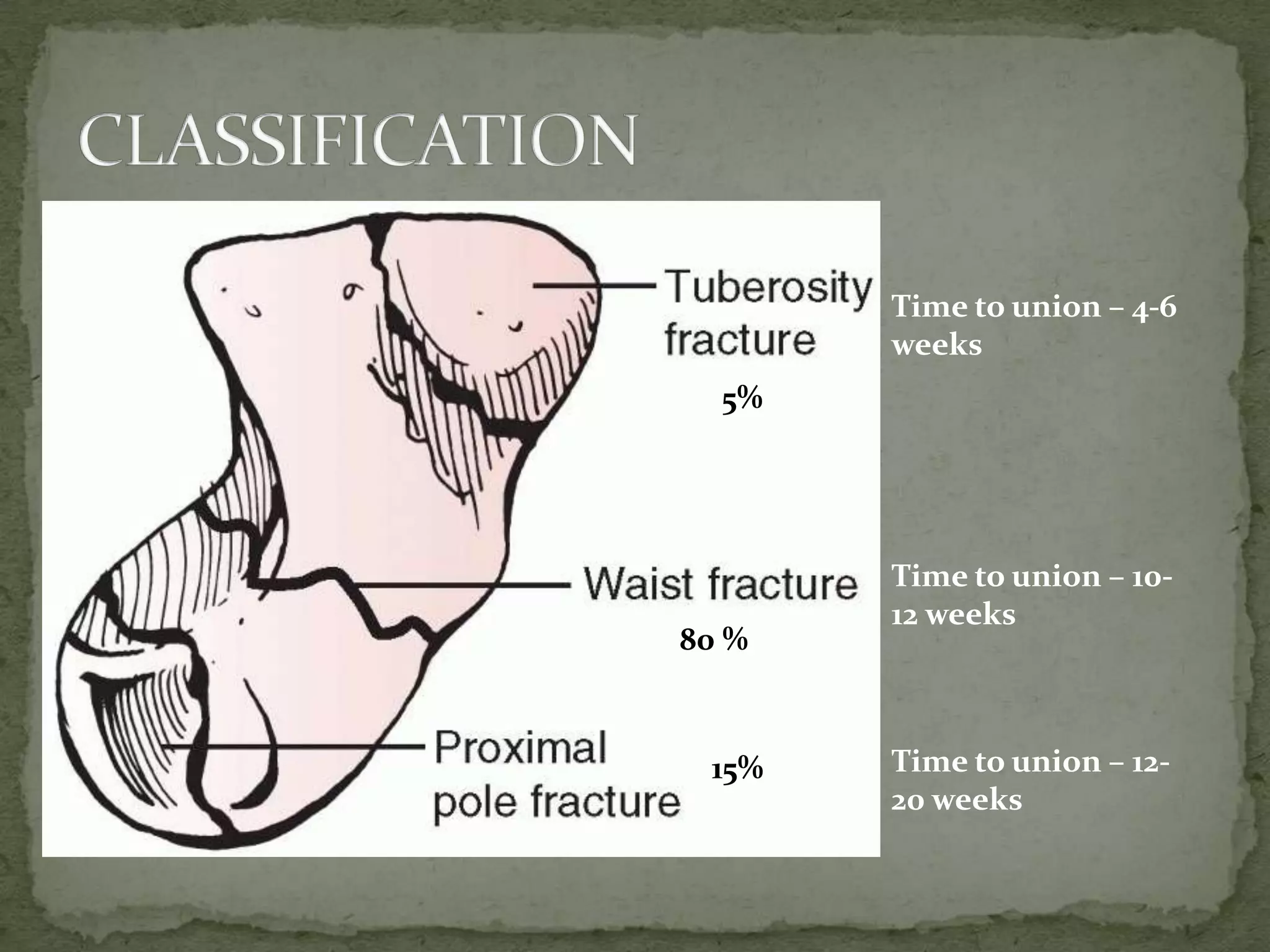
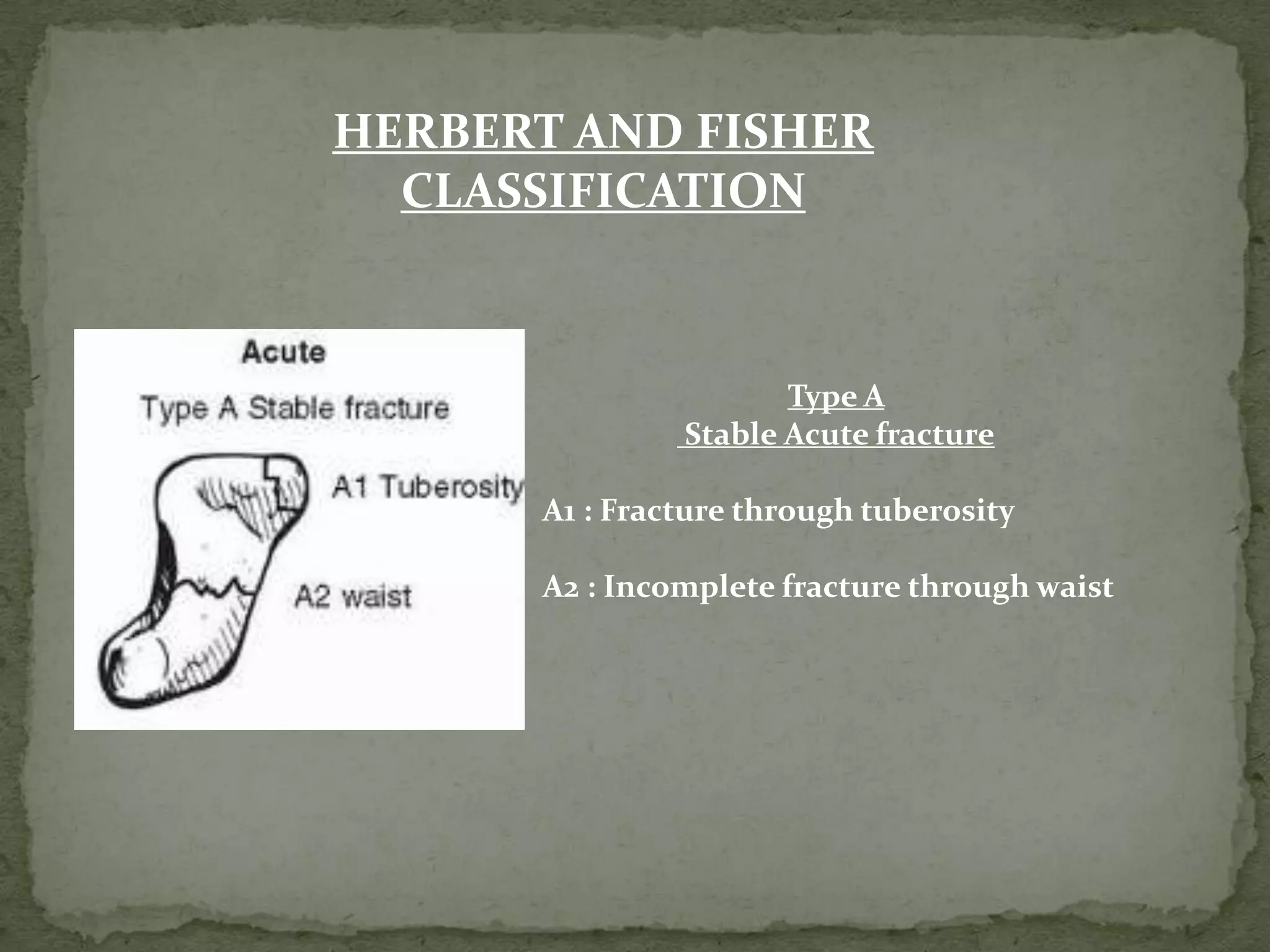
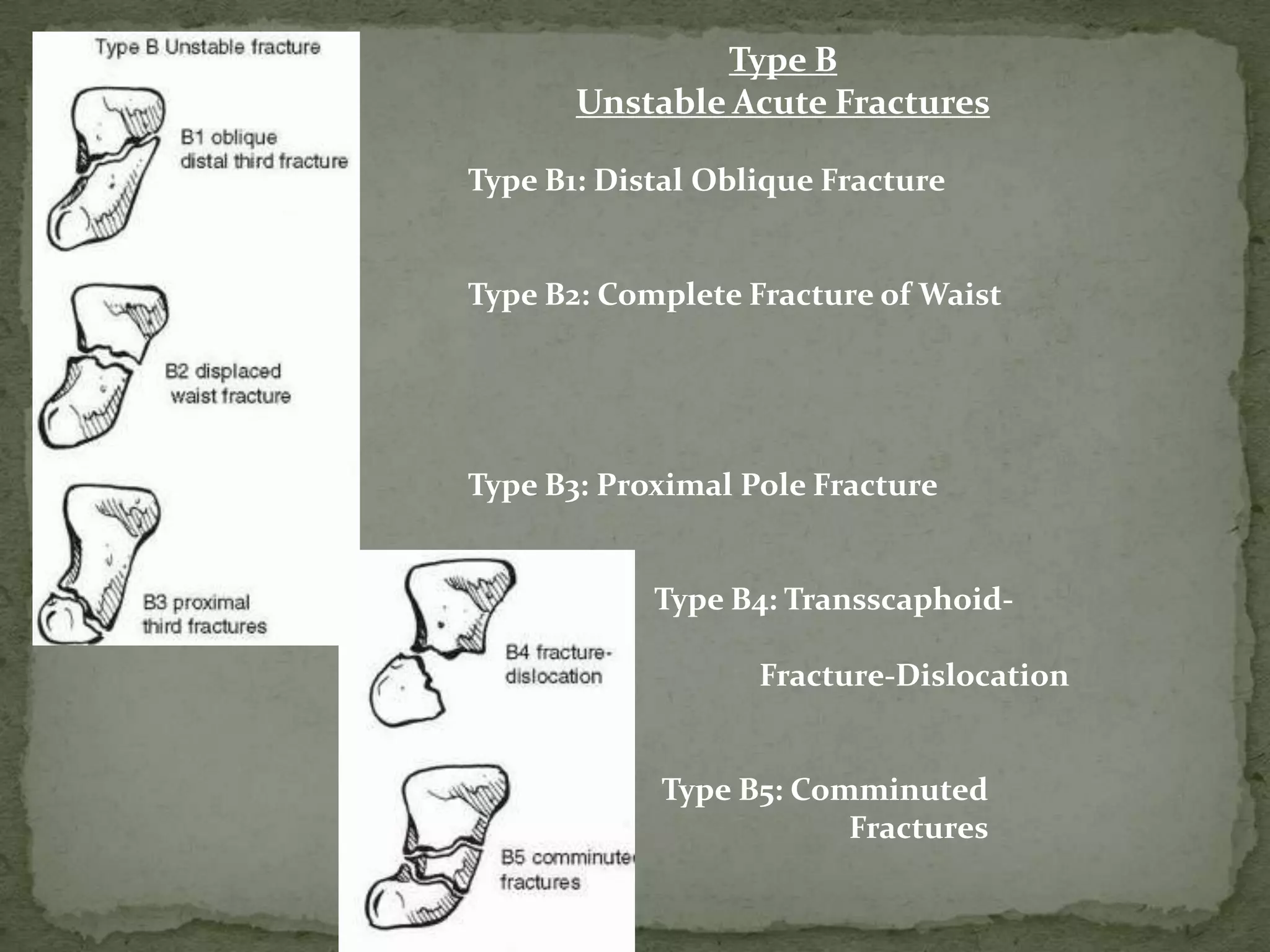
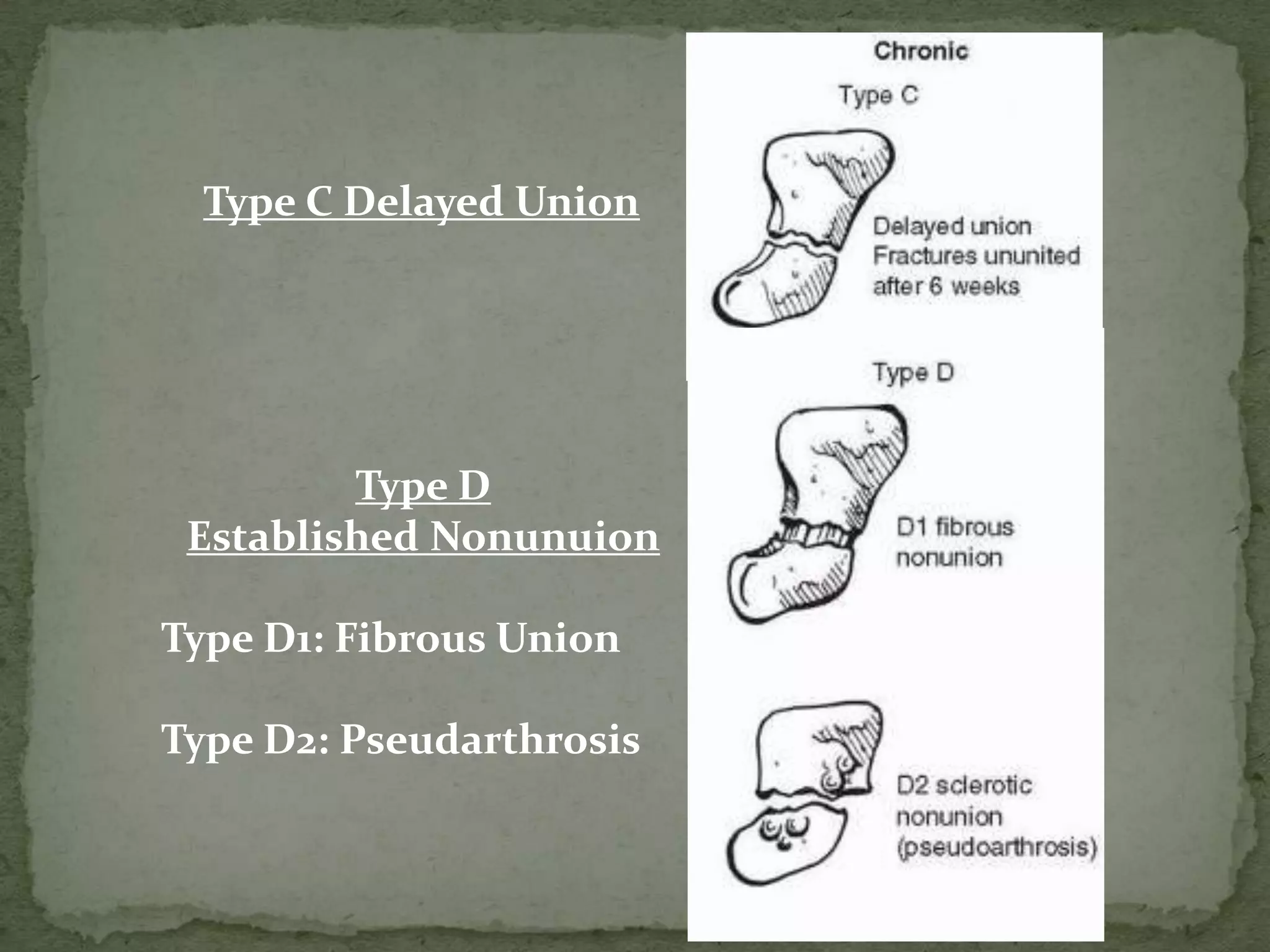
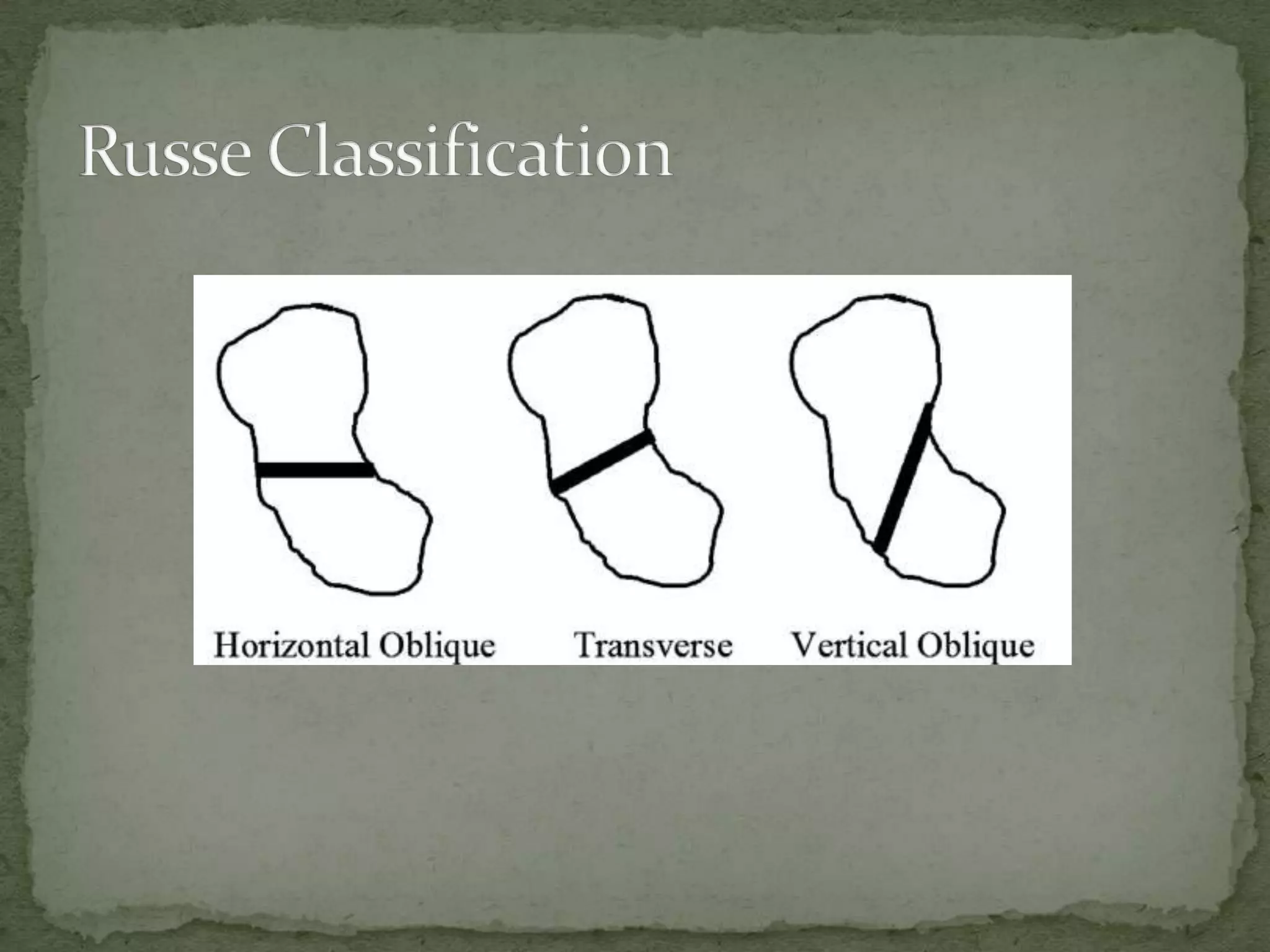
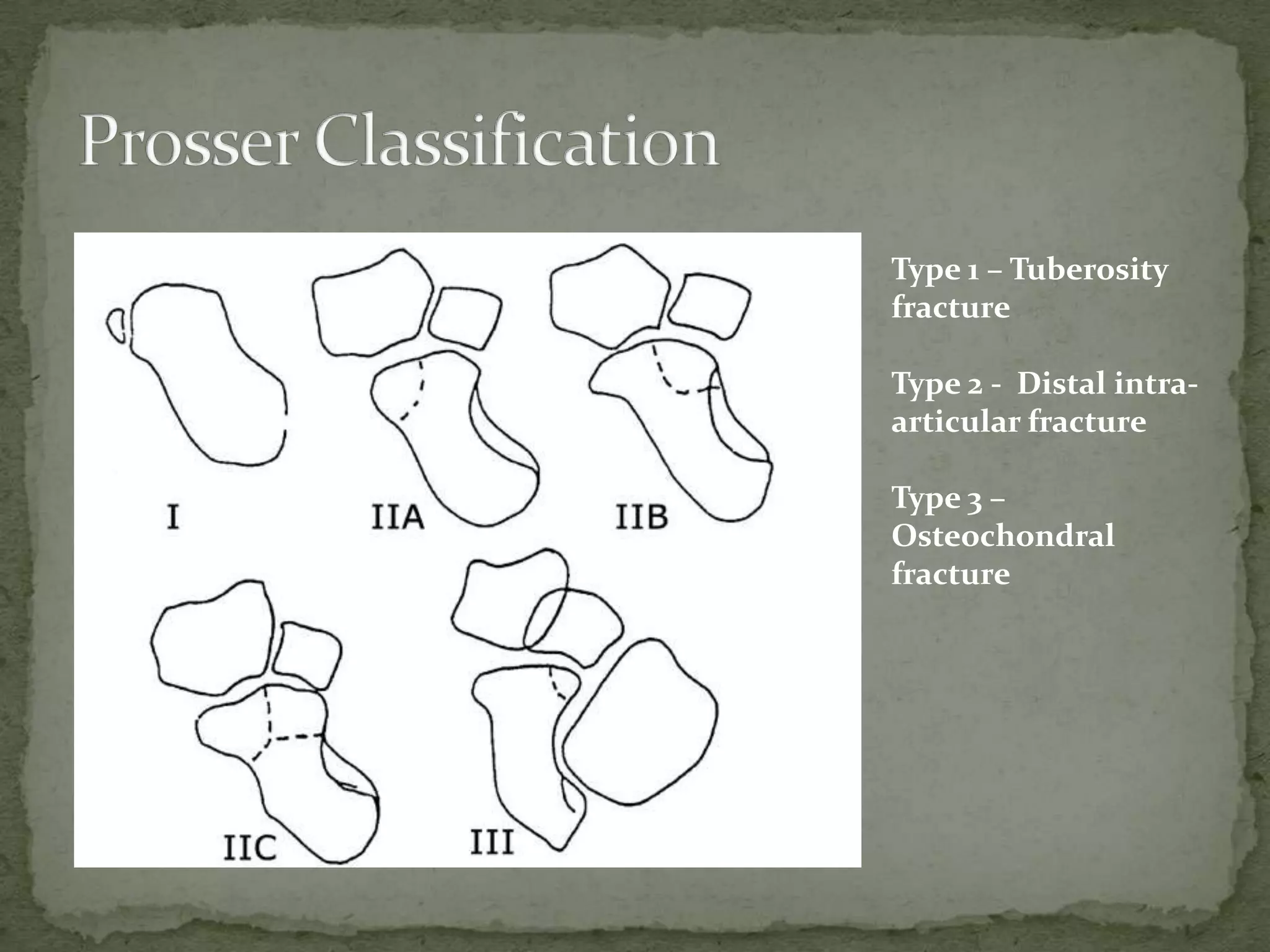
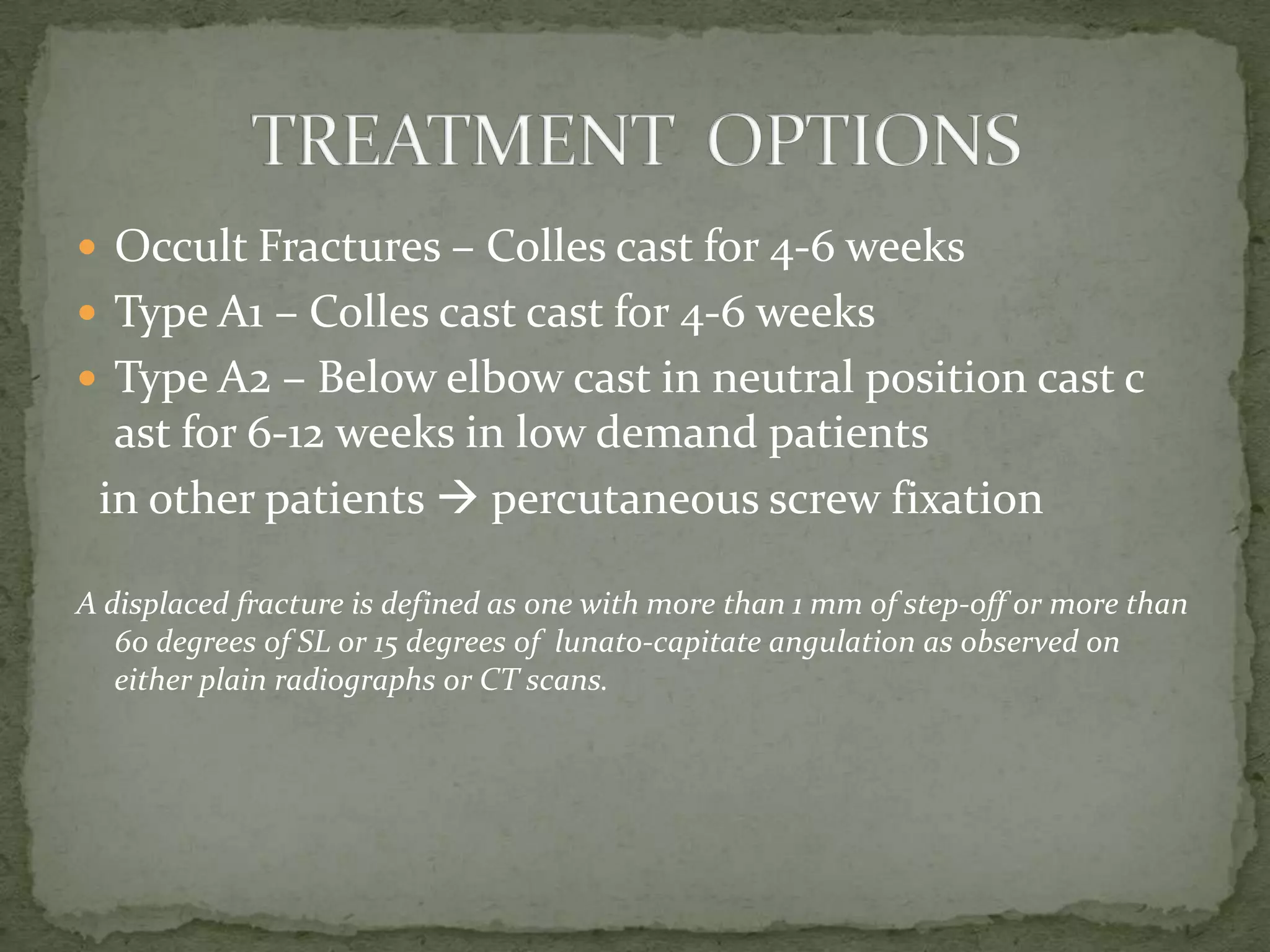
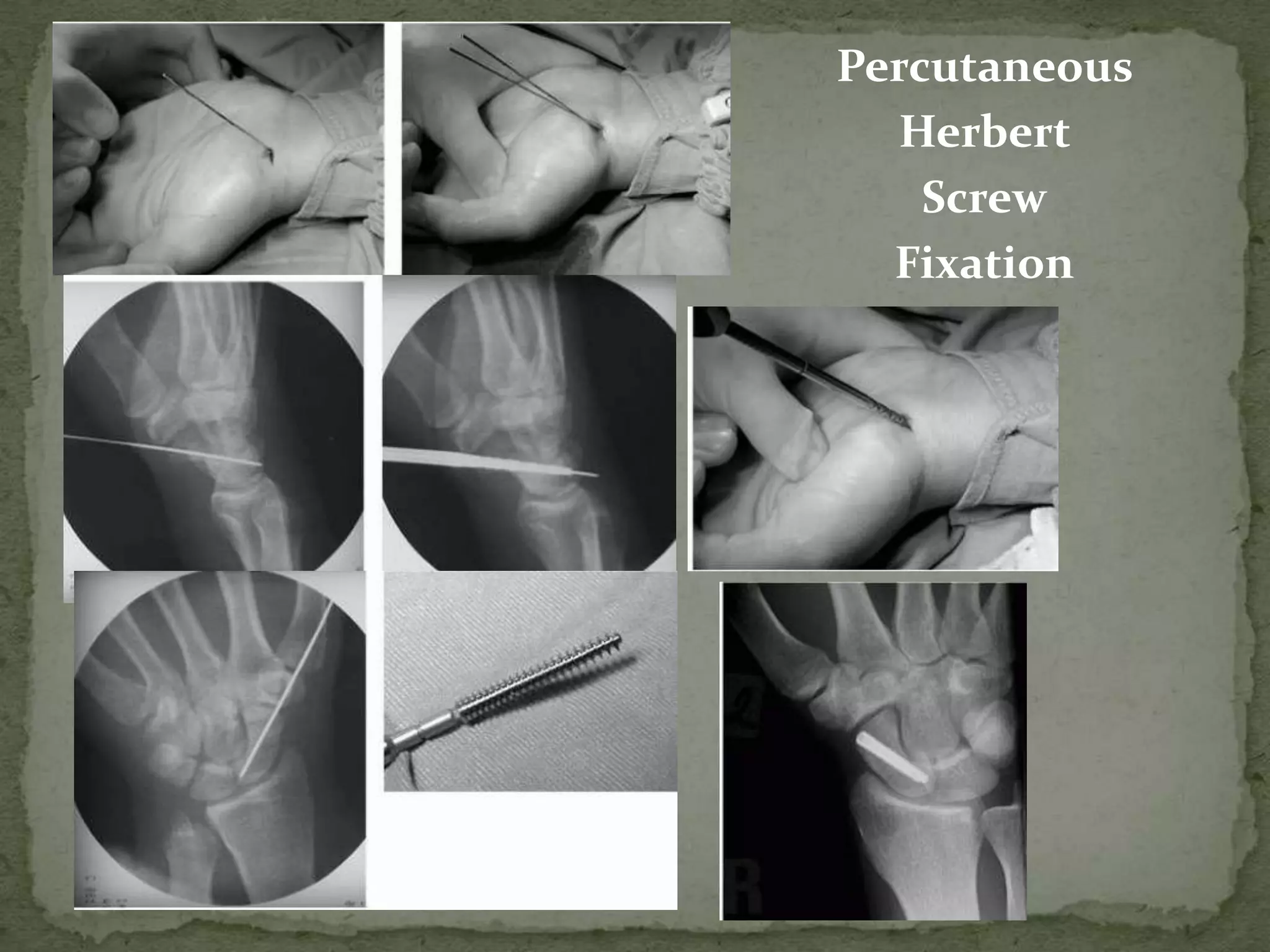
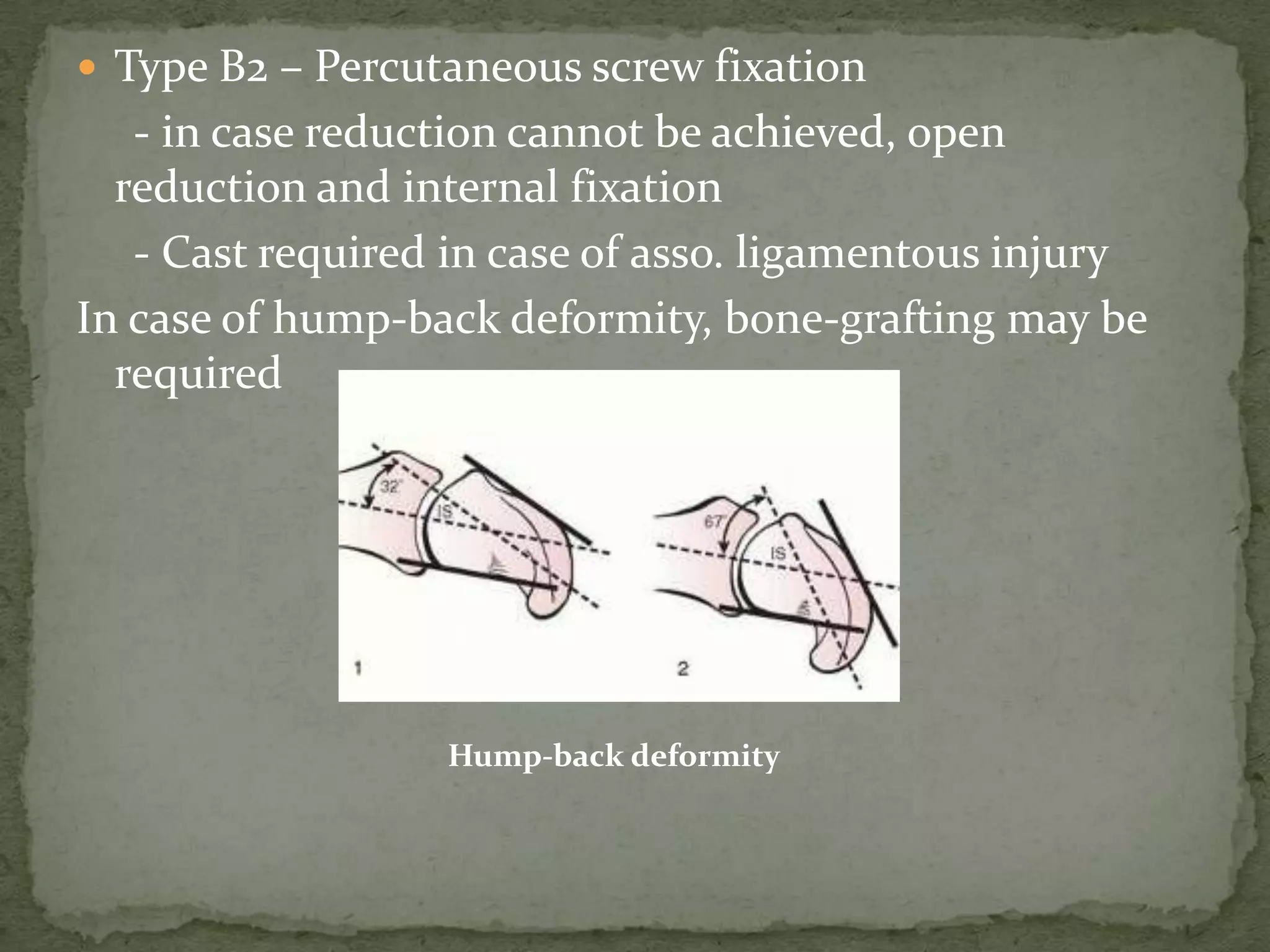
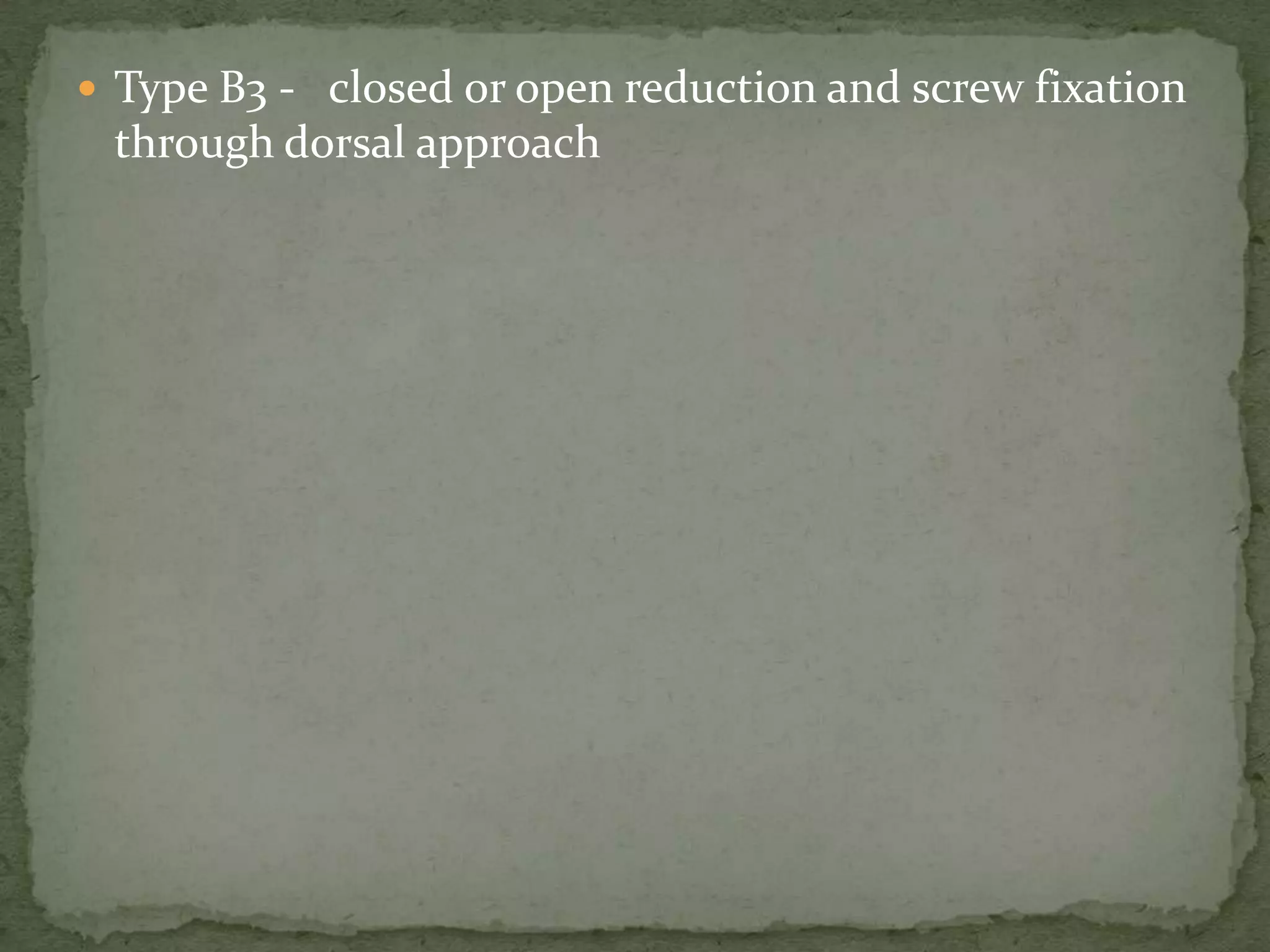
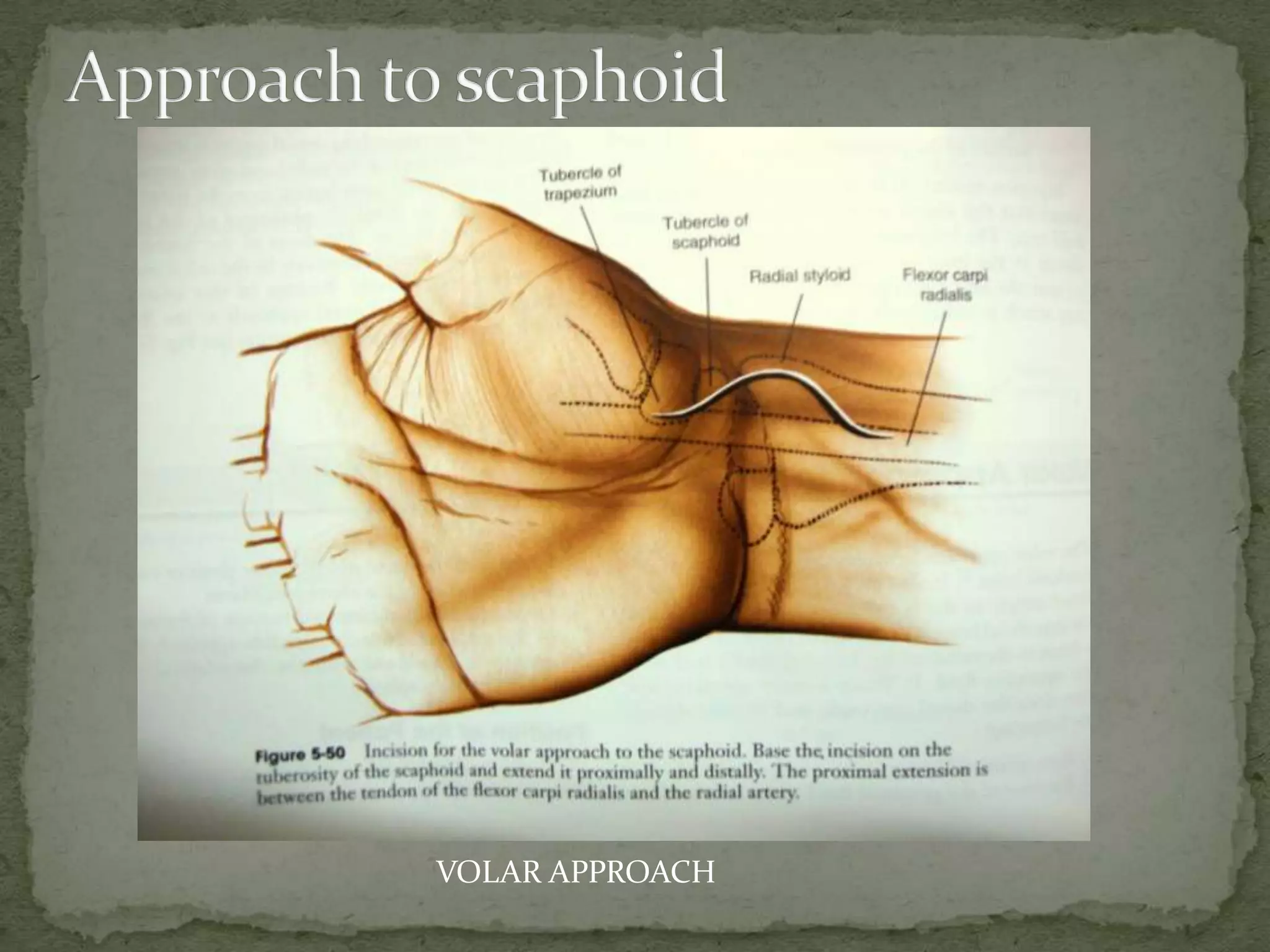
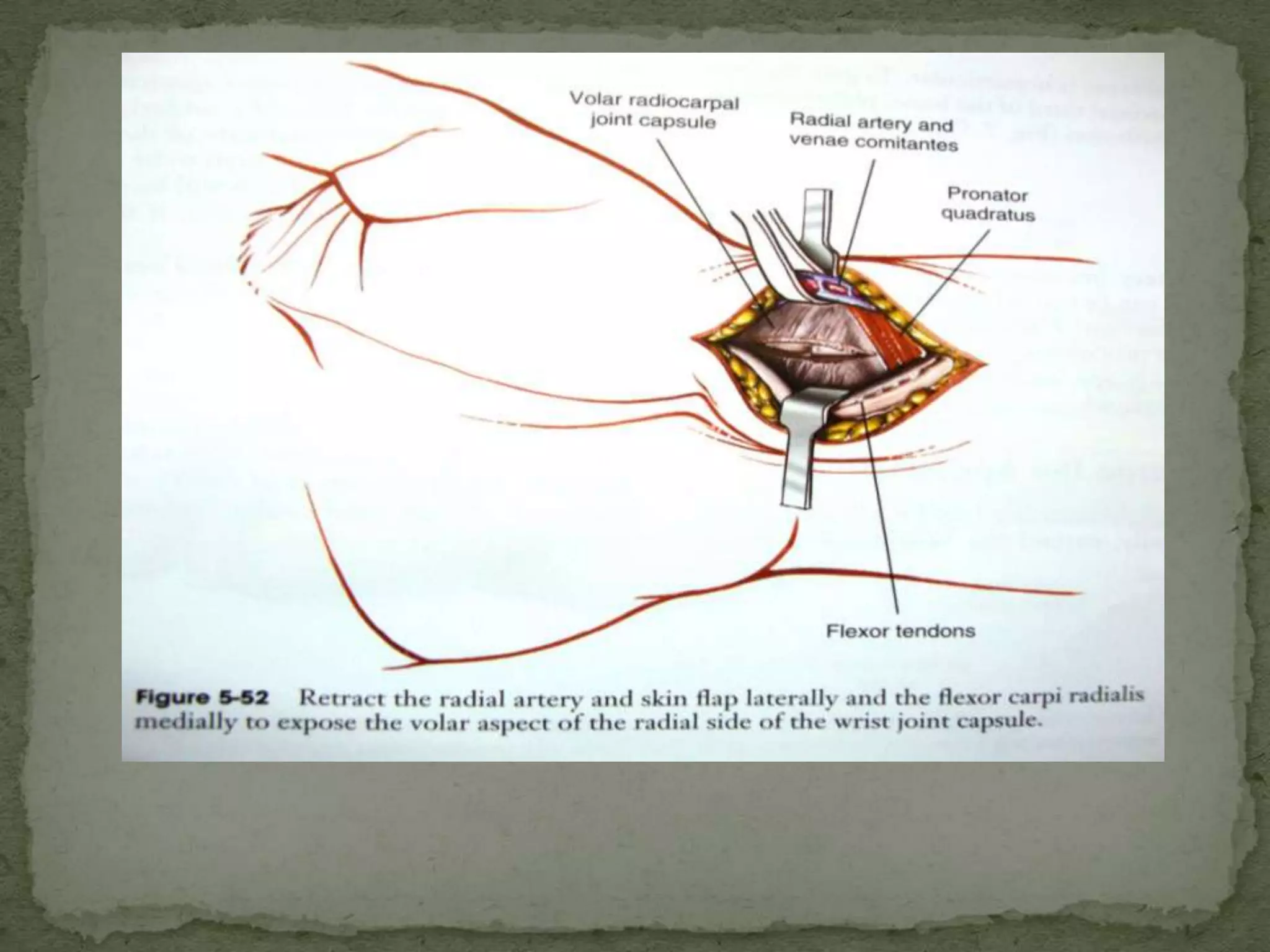
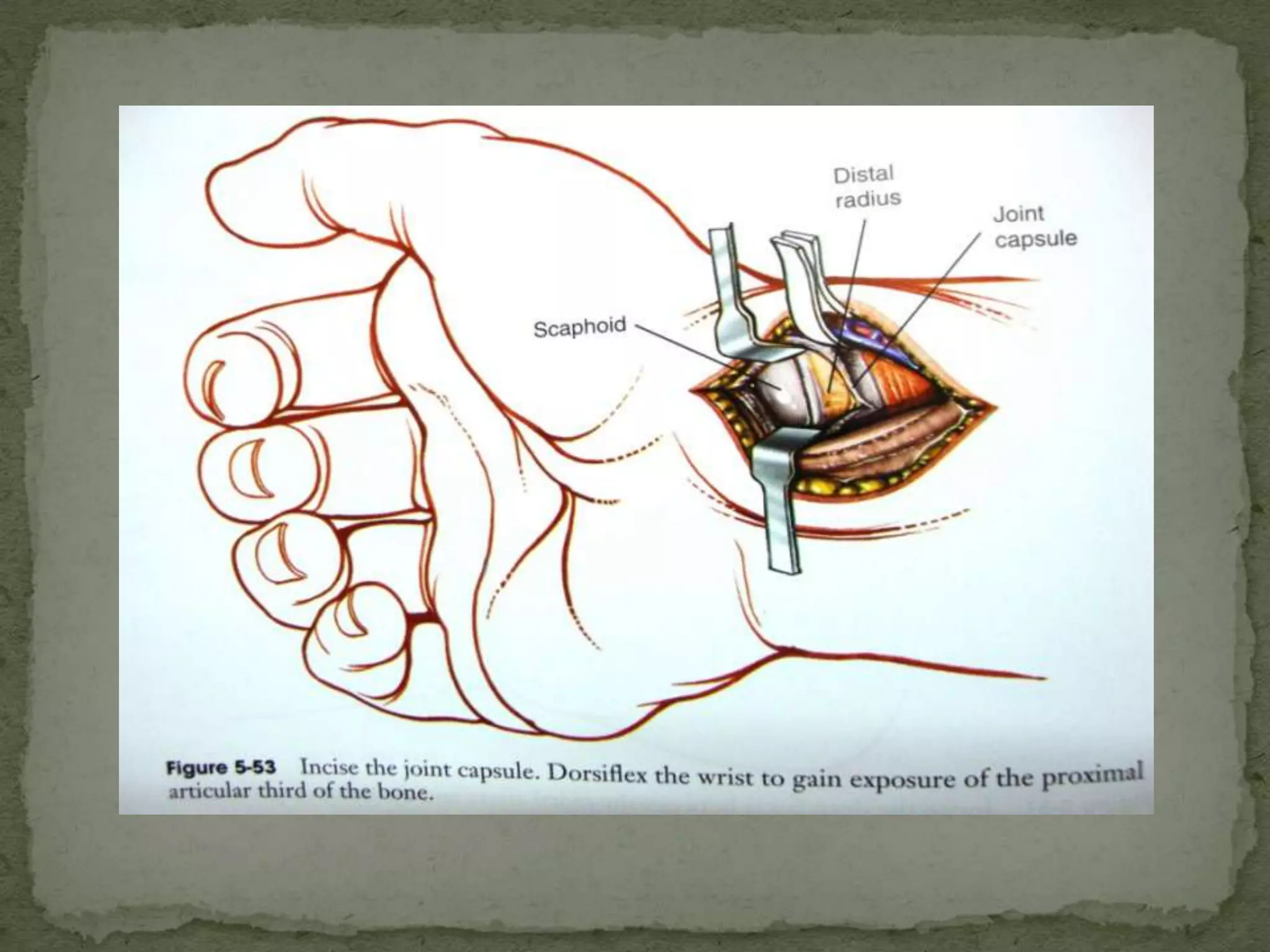
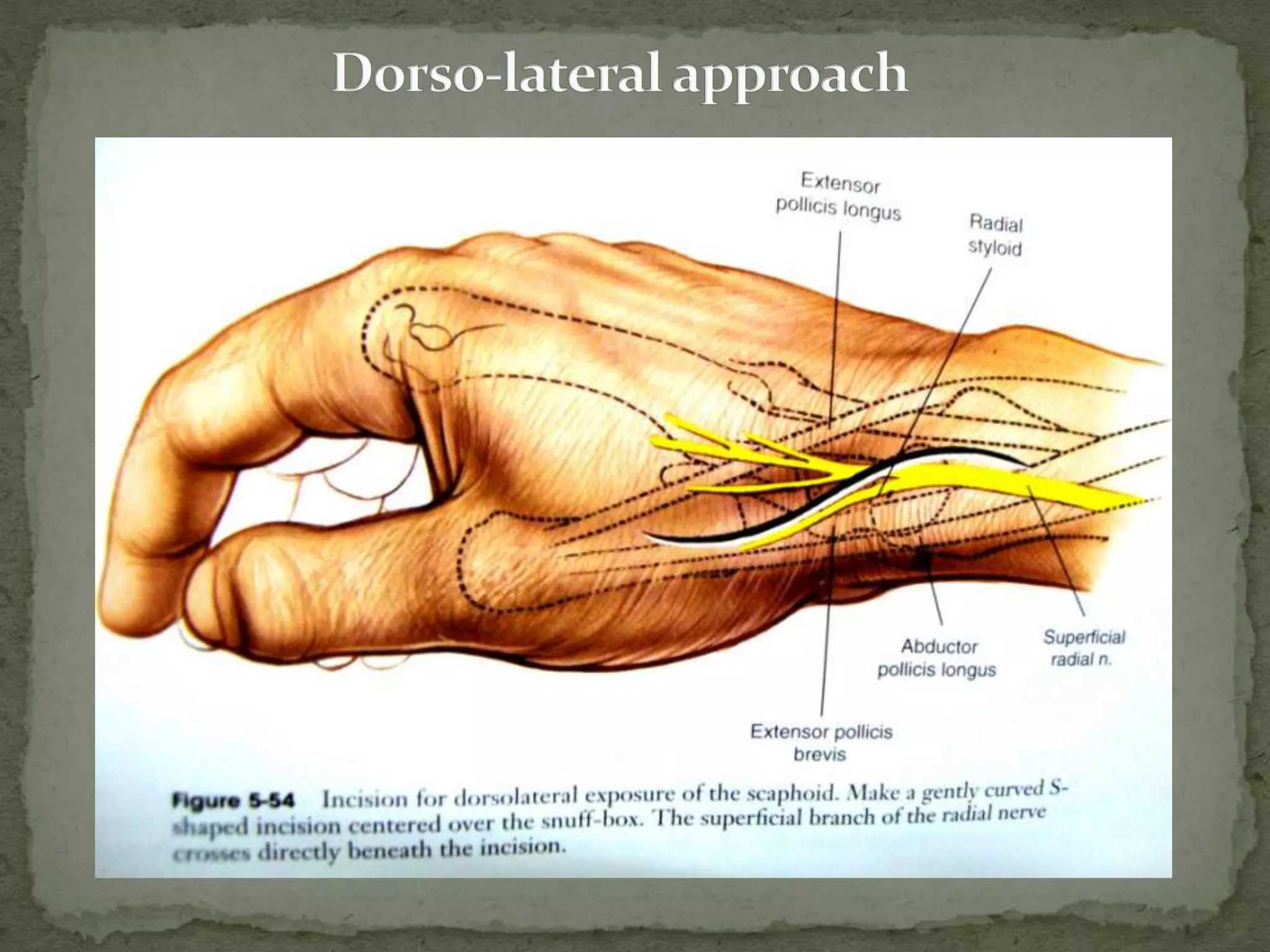
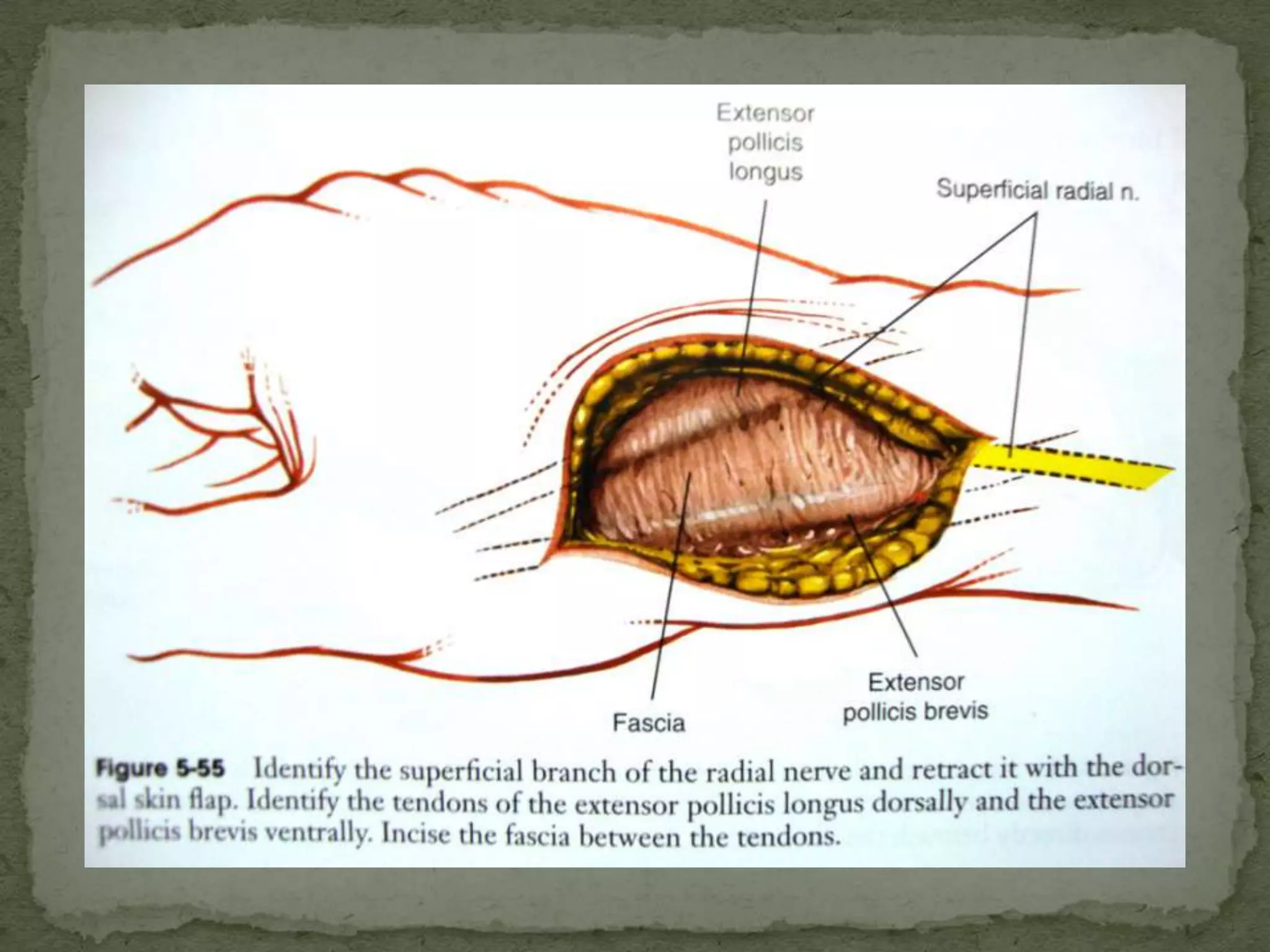
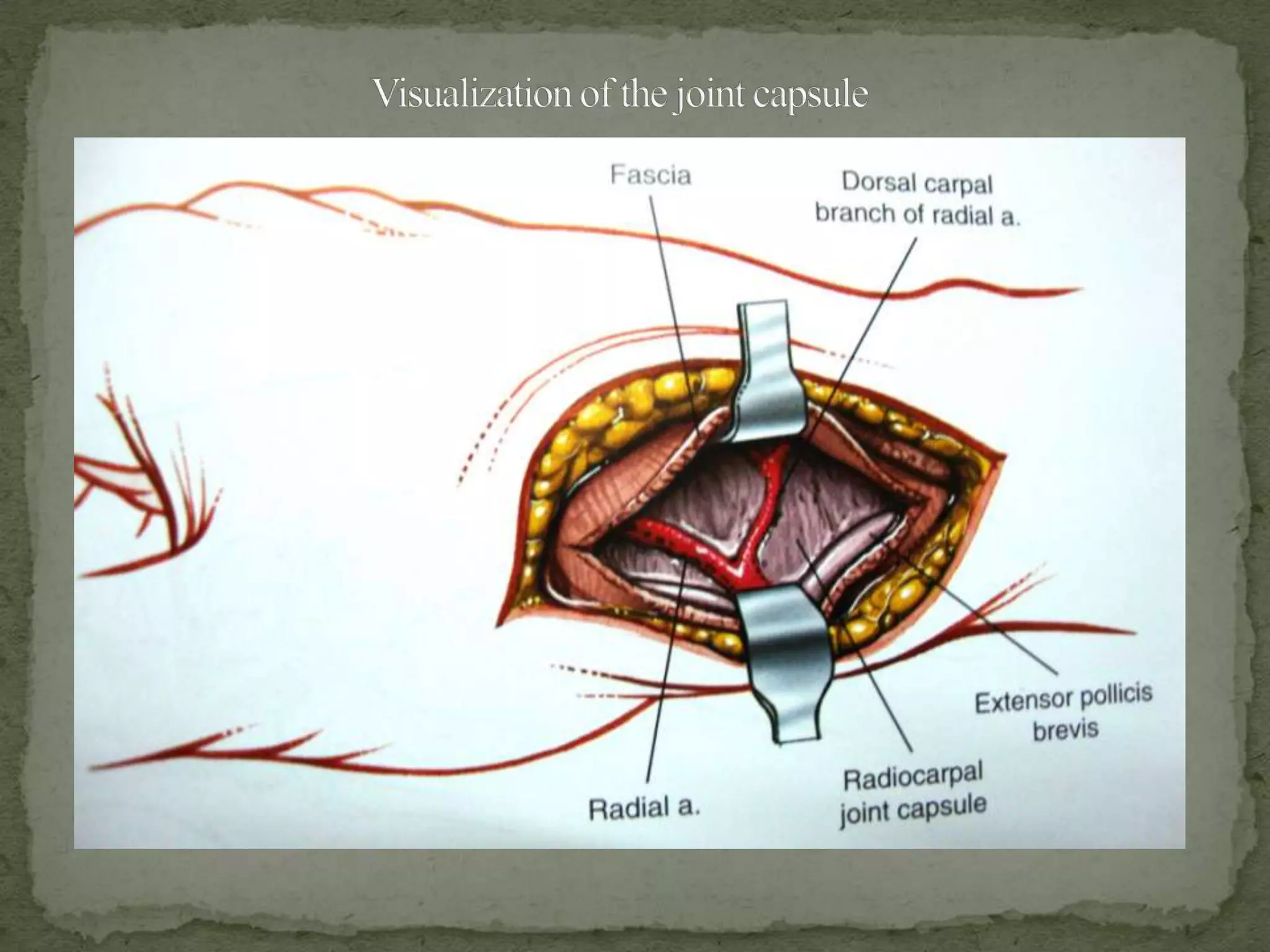
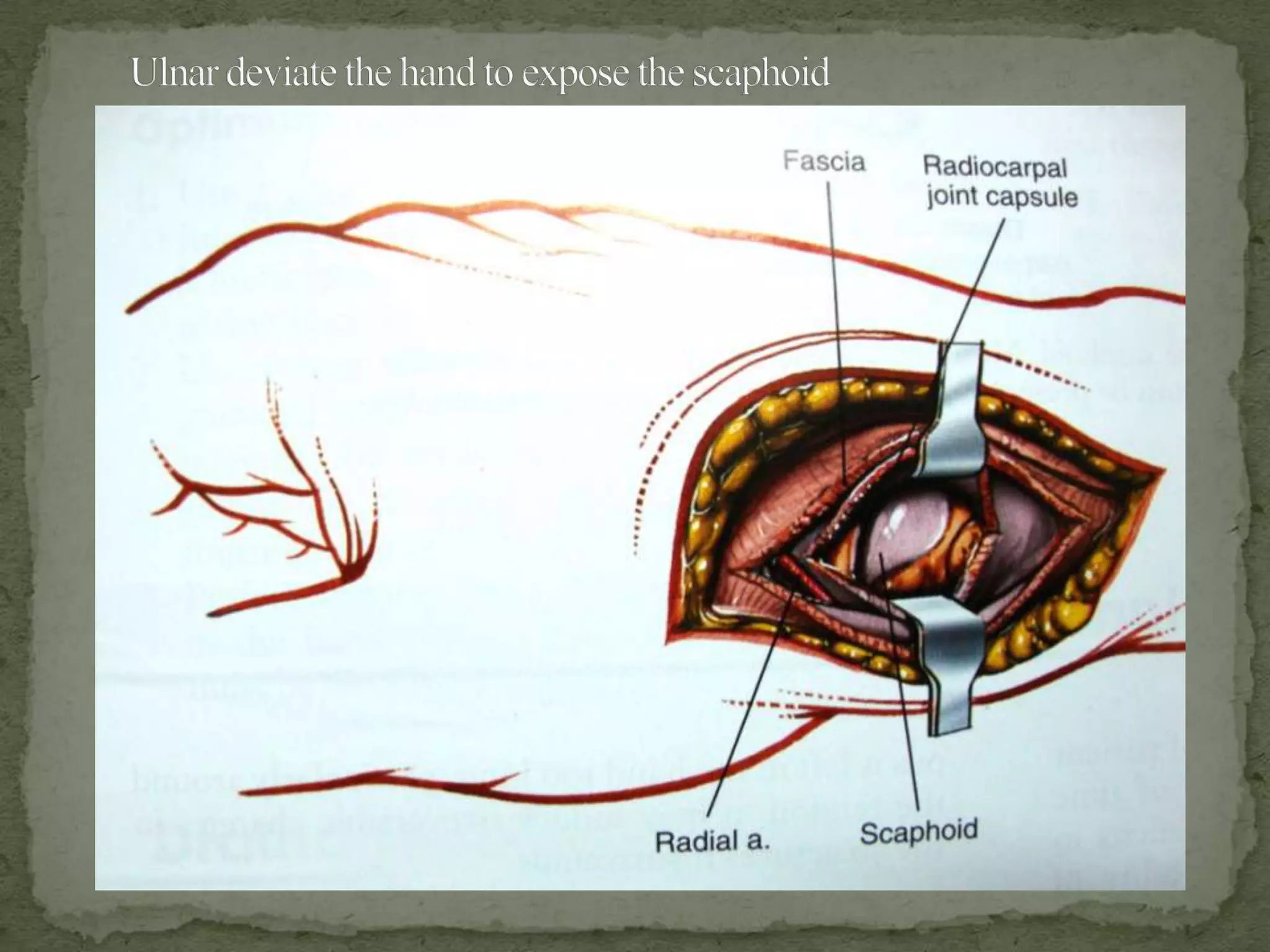
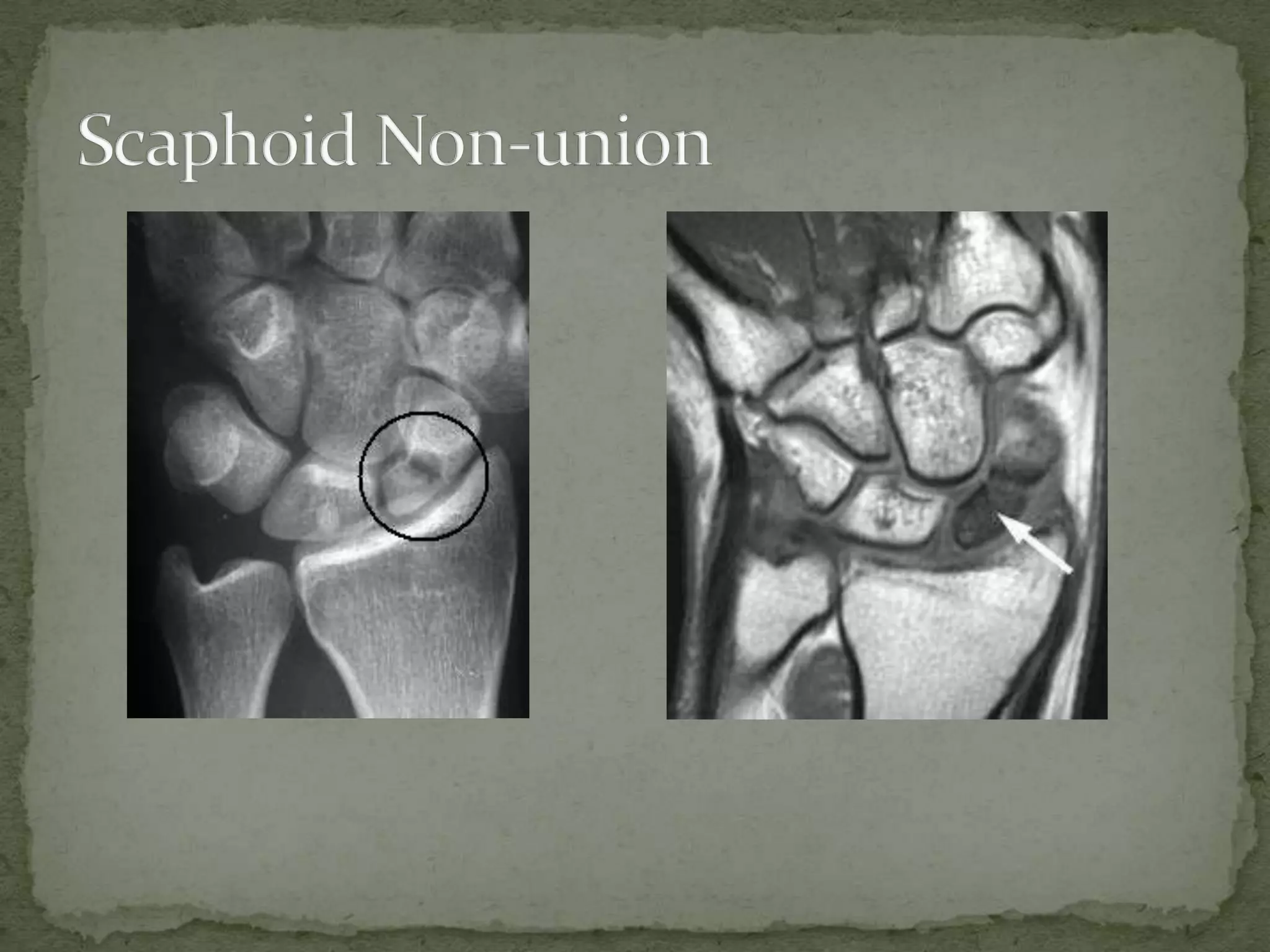
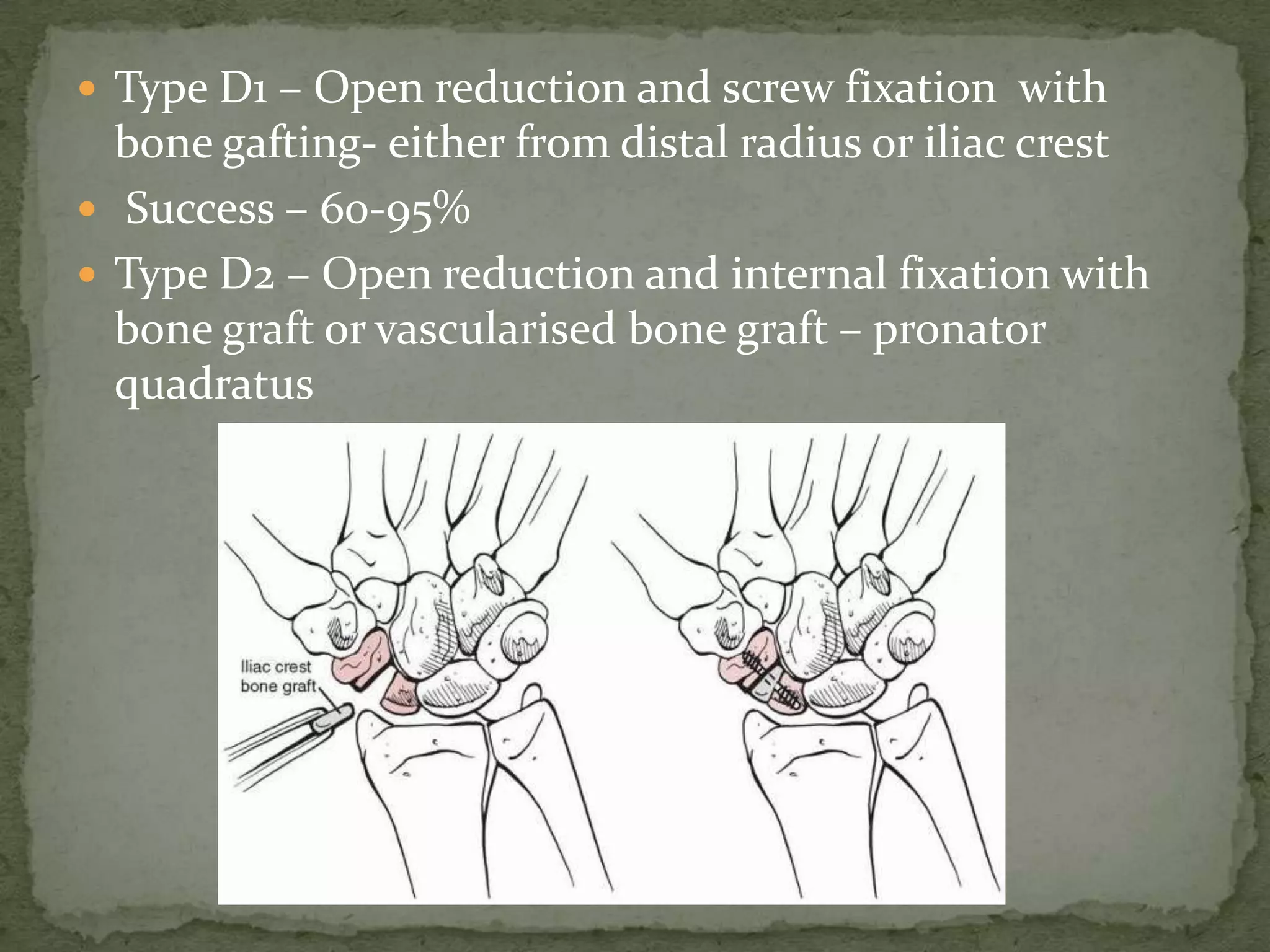
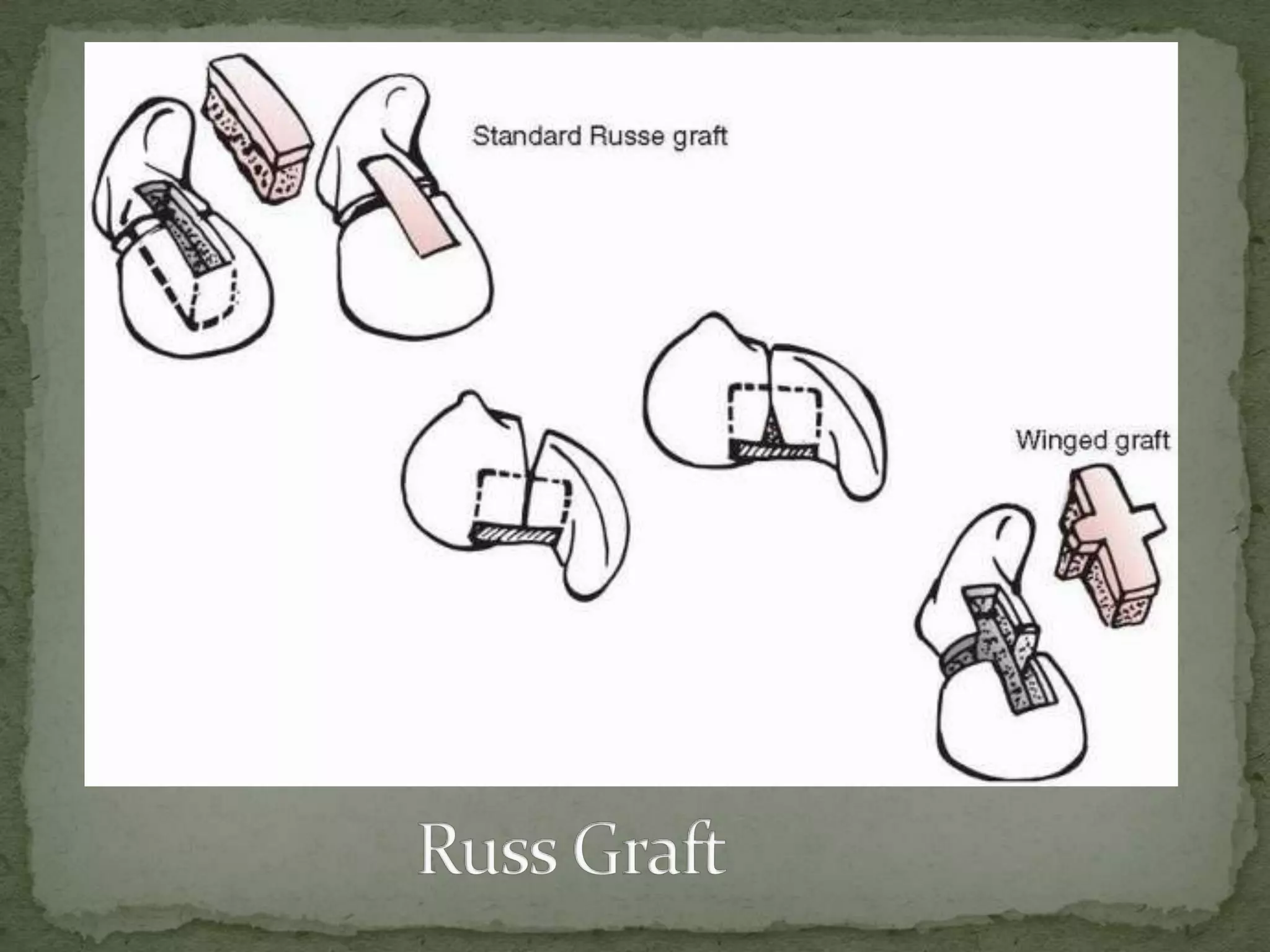
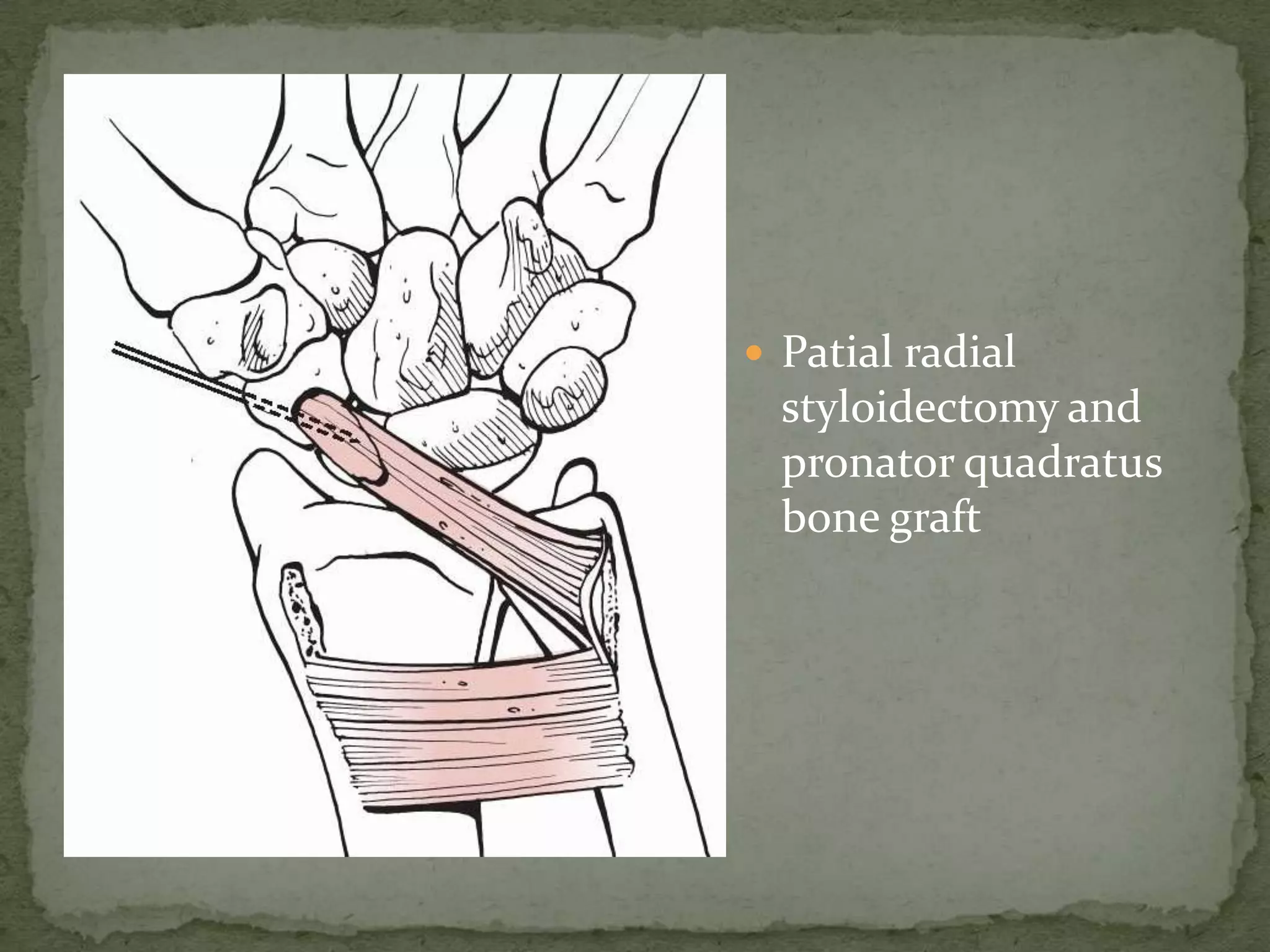
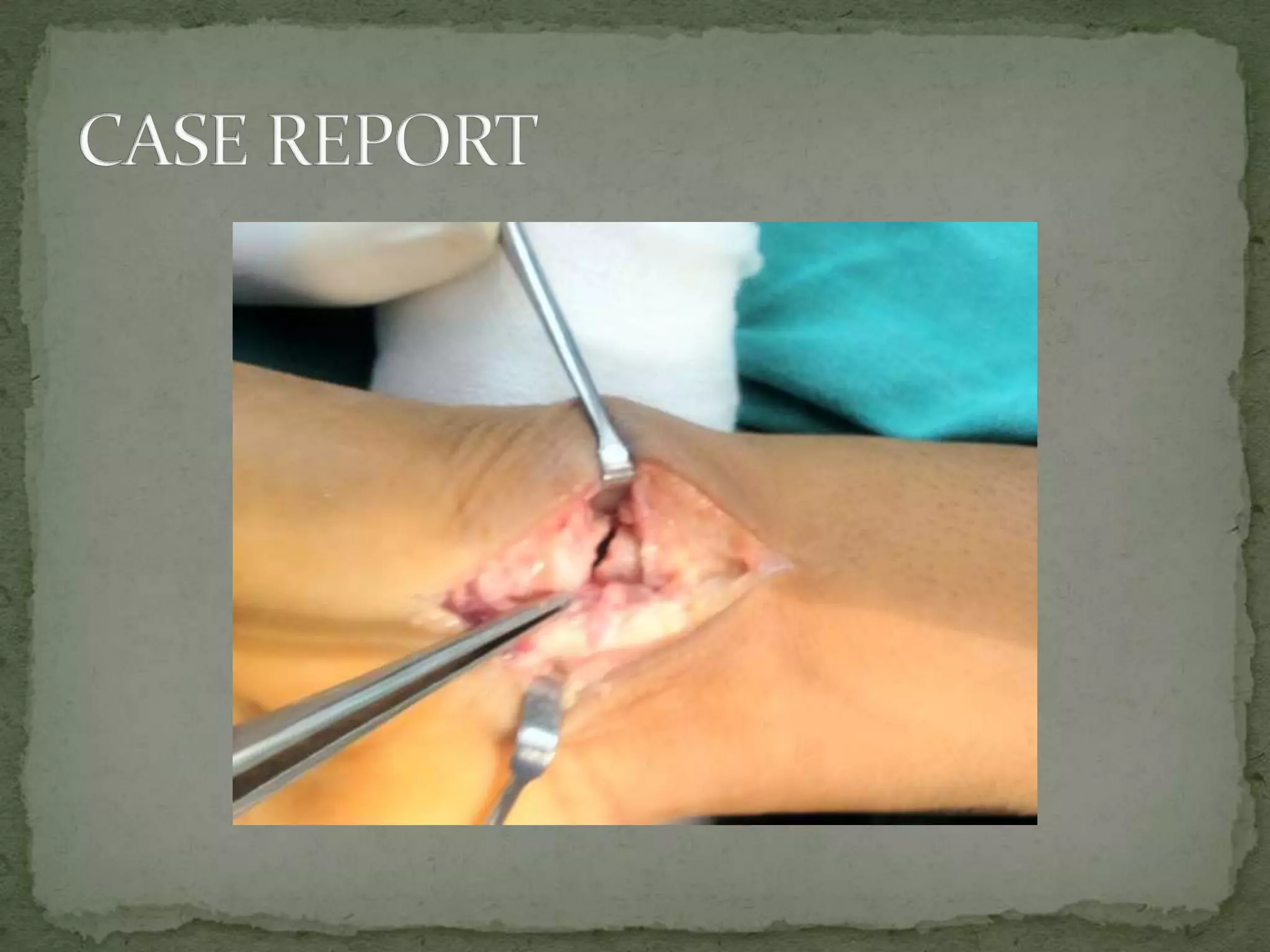
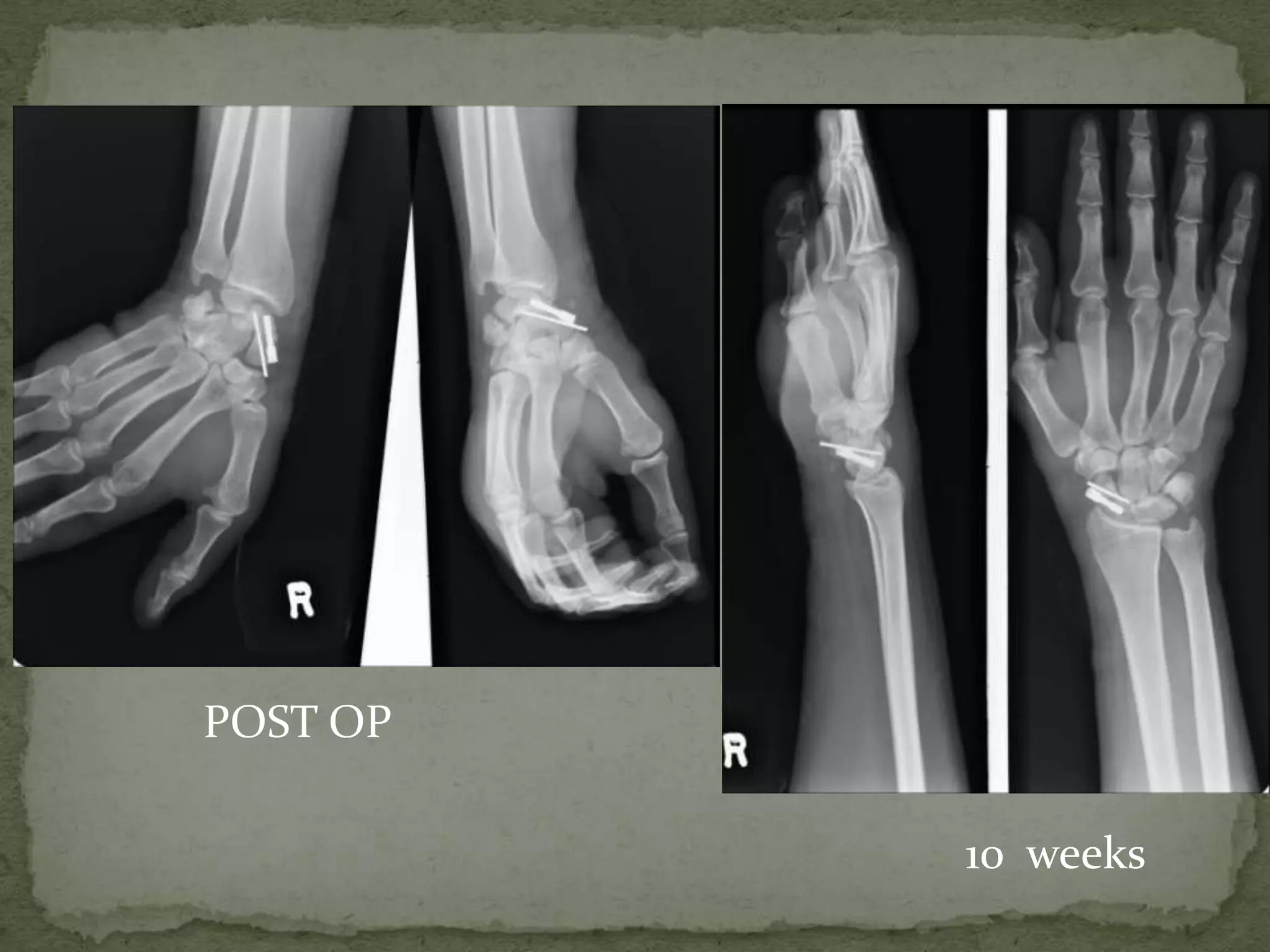

This document discusses the anatomy, classification, clinical presentation, diagnosis, and treatment of scaphoid fractures. Some key points: - The scaphoid bone has a boat or cashew shape and accounts for 70% of carpal fractures. - Scaphoid fractures are commonly caused by a fall on an outstretched hand and result from forced dorsiflexion. - Diagnosis involves history, clinical exam, and imaging like X-rays, MRI, or bone scans. - Fractures are classified by the Herbert and Fisher system into stable or unstable acute fractures, delayed unions, and nonunions. - Treatment depends on the type but may include casting


