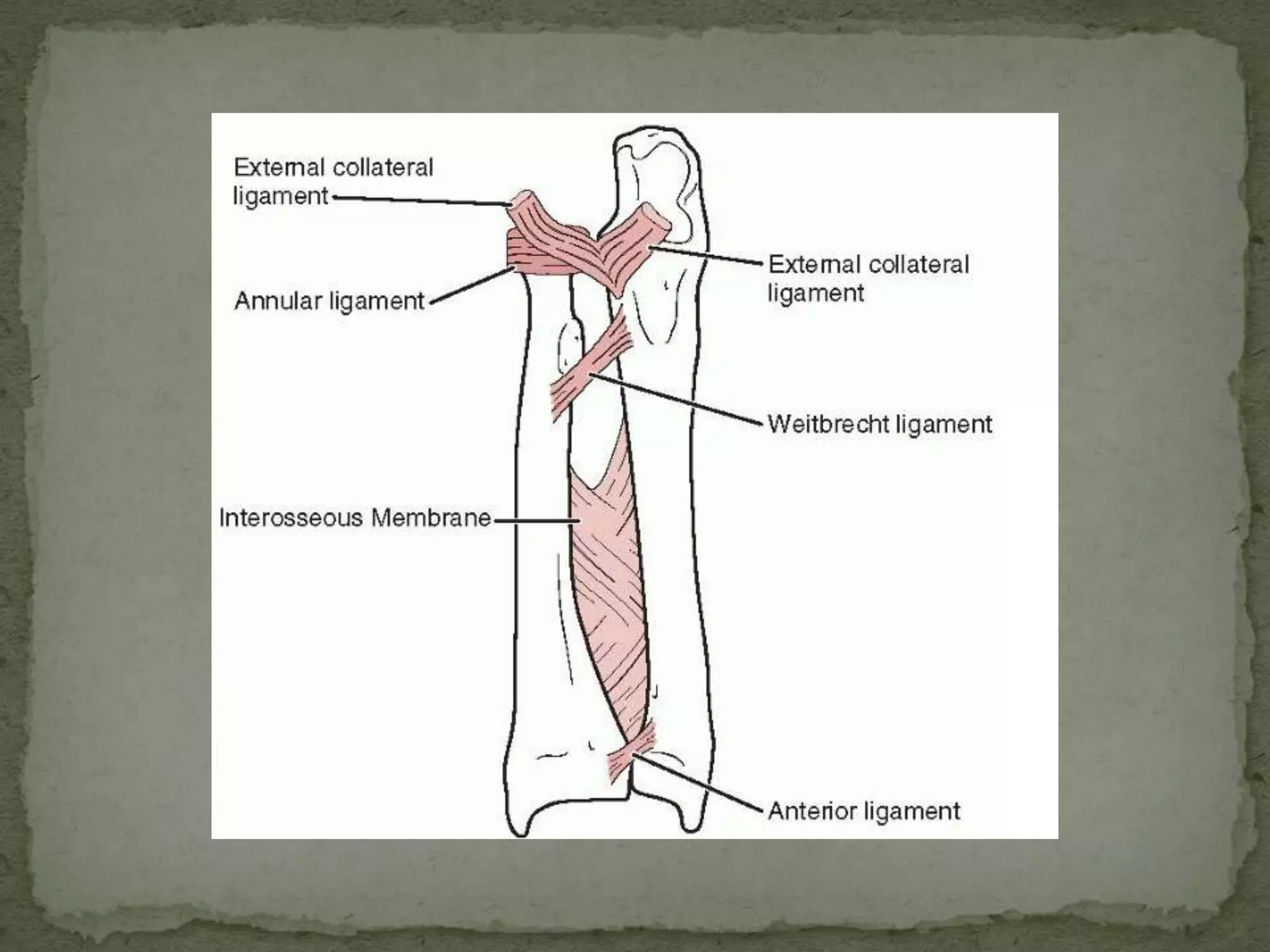

 Described by Giovanni Batista Monteggia in
1814 as “traumatic lesion distinguished by a
fracture of the proximal third of the ulna and
an anterior dislocation of the proximal
epiphysis of the radius”
 Bado classified the fracture and coined the
term in 1967
 It a combination of fracture of ulna with
dislocation of the proximal radius with or
without fracture of radius
 More commonly seen in 4-10 yrs
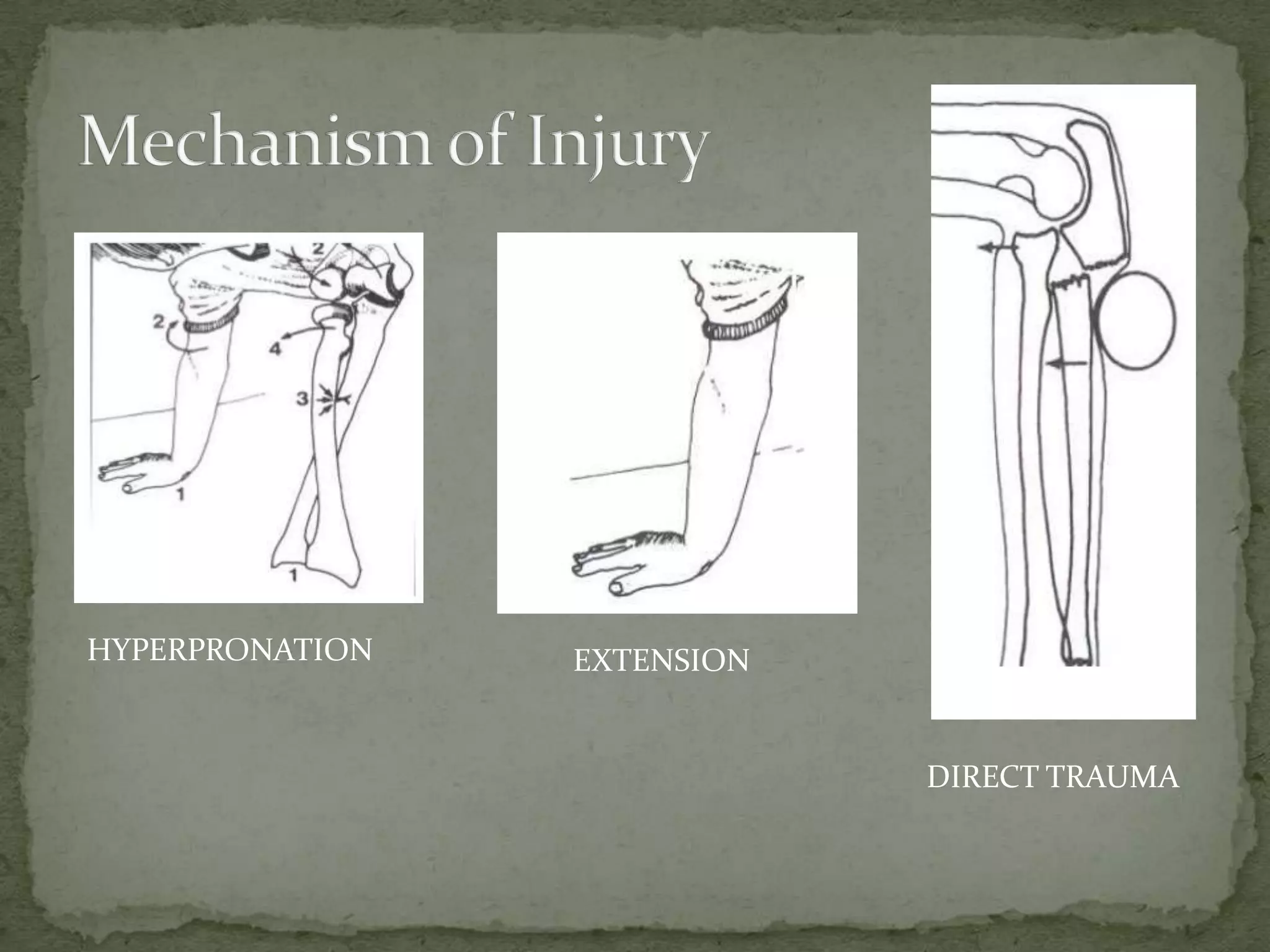
HYPERPRONATION EXTENSION
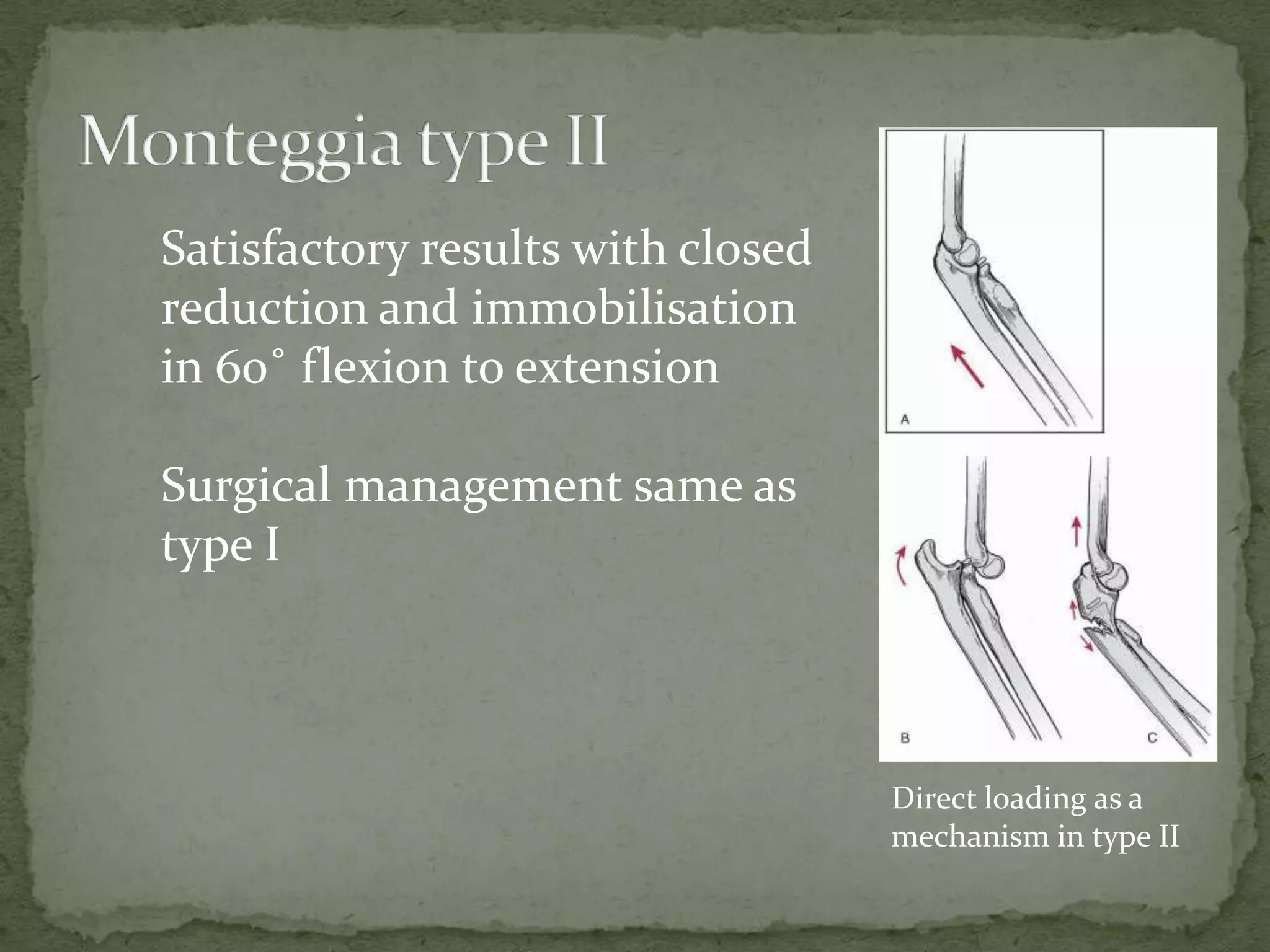
DIRECT TRAUMA
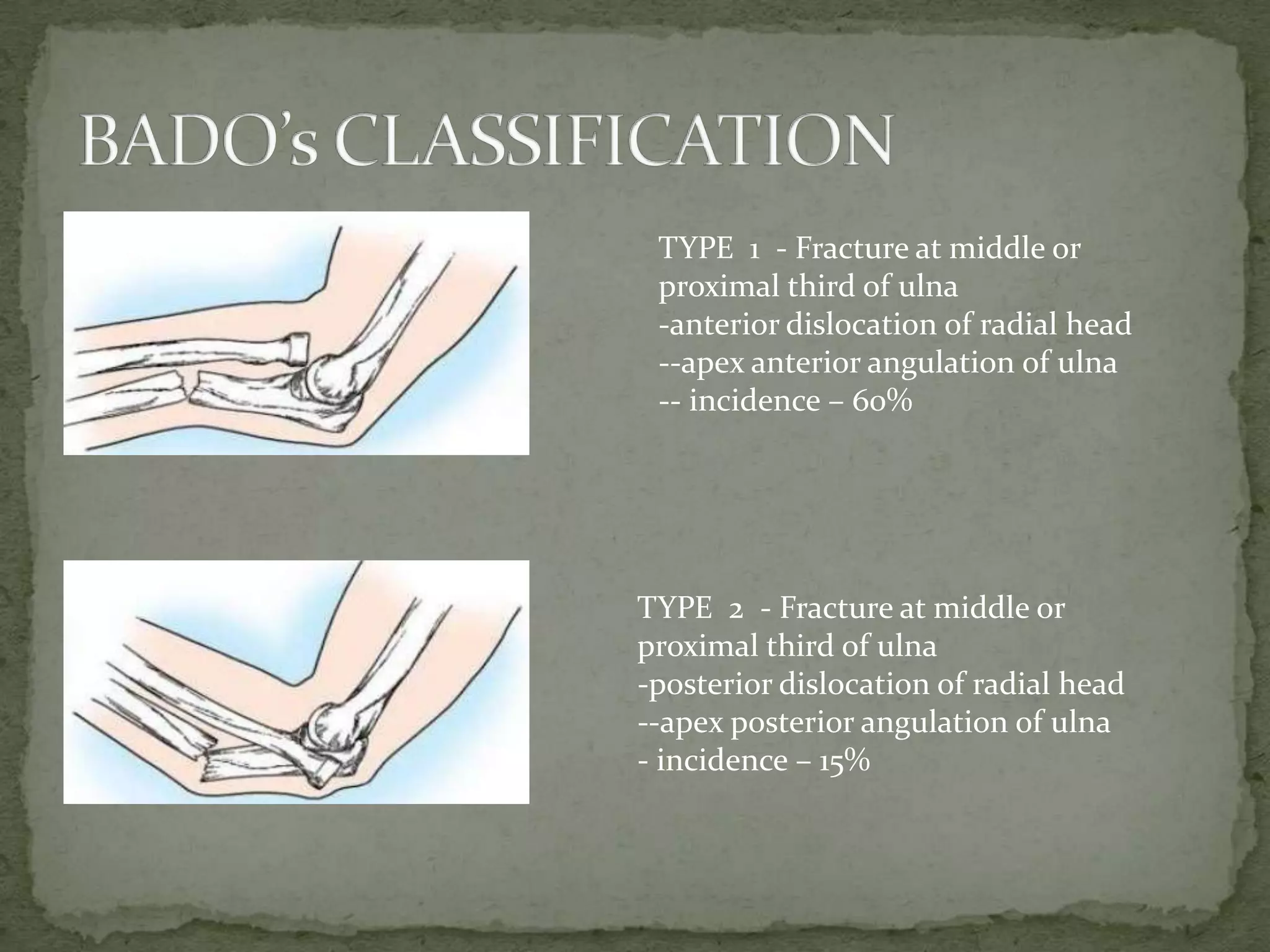
TYPE 1 - Fracture at middle or
proximal third of ulna
-anterior dislocation of radial head
--apex anterior angulation of ulna
-- incidence – 60%
TYPE 2 - Fracture at middle or
proximal third of ulna
-posterior dislocation of radial head
--apex posterior angulation of ulna
- incidence – 15%
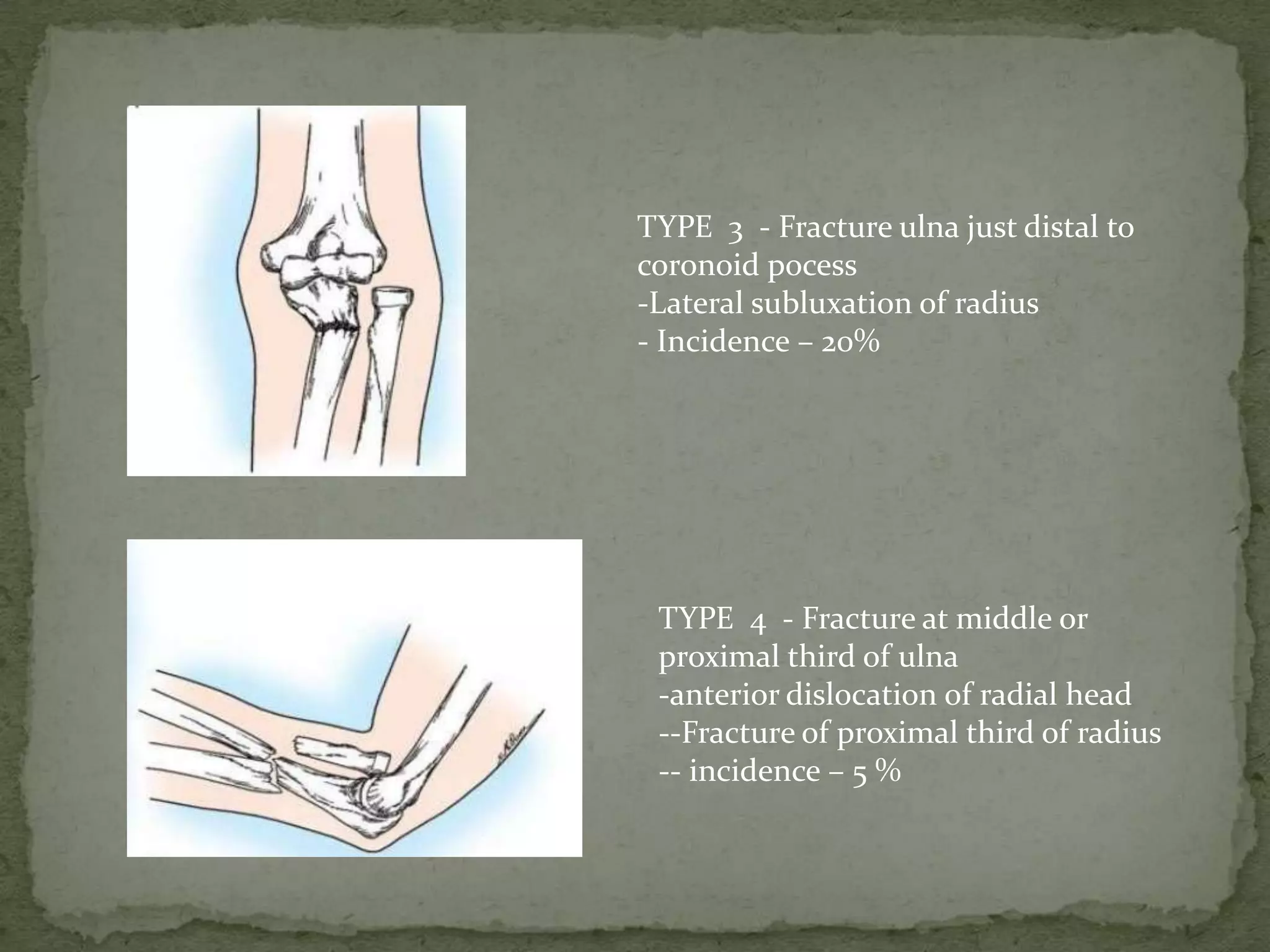
TYPE 3 - Fracture ulna just distal to
coronoid pocess
-Lateral subluxation of radius
- Incidence – 20%
TYPE 4 - Fracture at middle or
proximal third of ulna
-anterior dislocation of radial head
--Fracture of proximal third of radius
-- incidence – 5 %
 similar mechanisms of injury, radiographic
appearance, or treatment methods
 Type I equivalents - isolated anterior dislocations of
the radial head without ulnar fracture
 Type II equivalents to include fractures of the proximal
radial epiphysis or radial neck AND Posterior
dislocation of the elbow
 Type III equivalentUlnar fracture with displaced
fracture of the lateral condyle
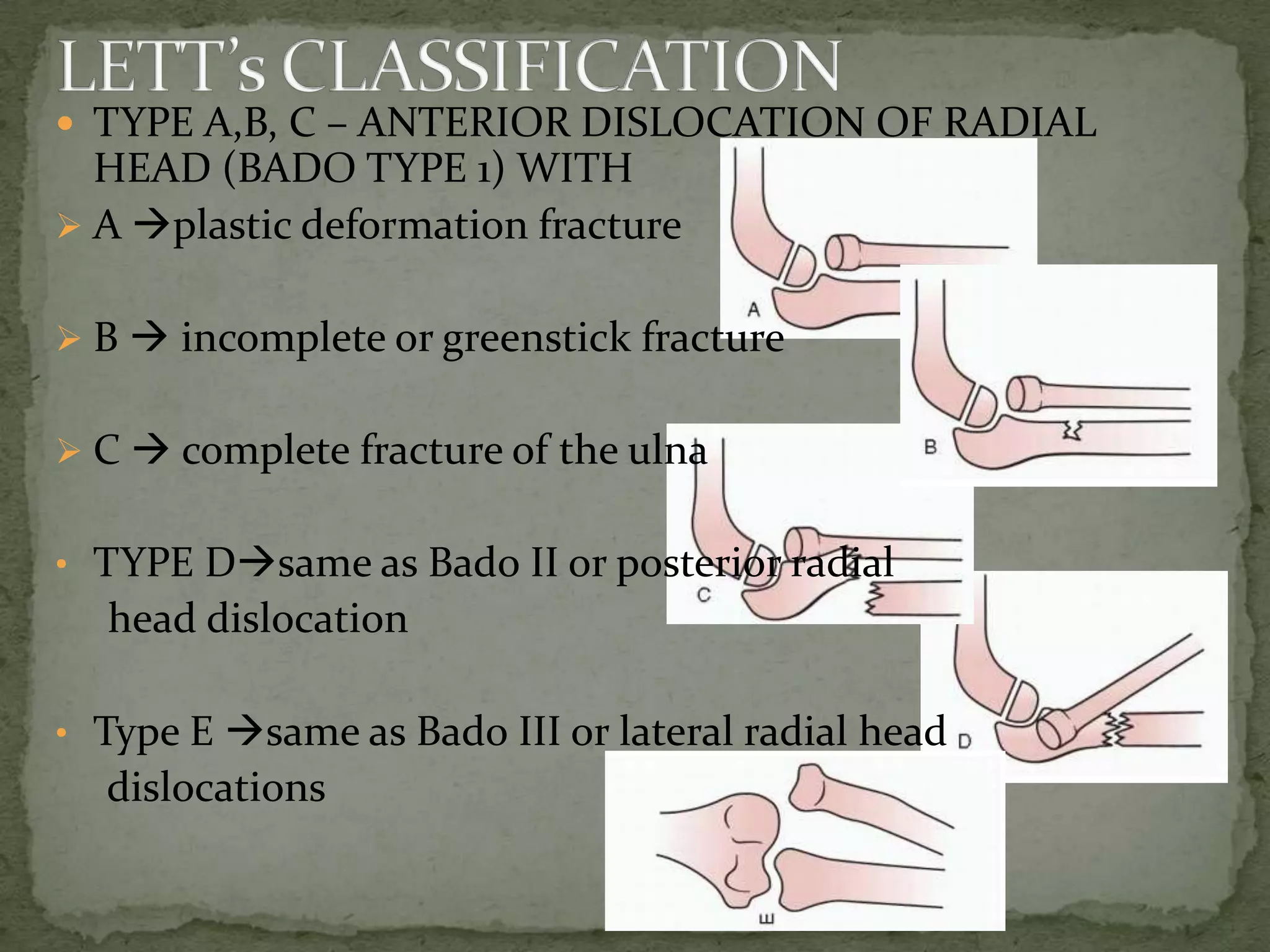
 TYPE A,B, C – ANTERIOR DISLOCATION OF RADIAL
HEAD (BADO TYPE 1) WITH
 A plastic deformation fracture
 B  incomplete or greenstick fracture
 C  complete fracture of the ulna
• TYPE Dsame as Bado II or posterior radial
head dislocation
• Type E same as Bado III or lateral radial head
dislocations
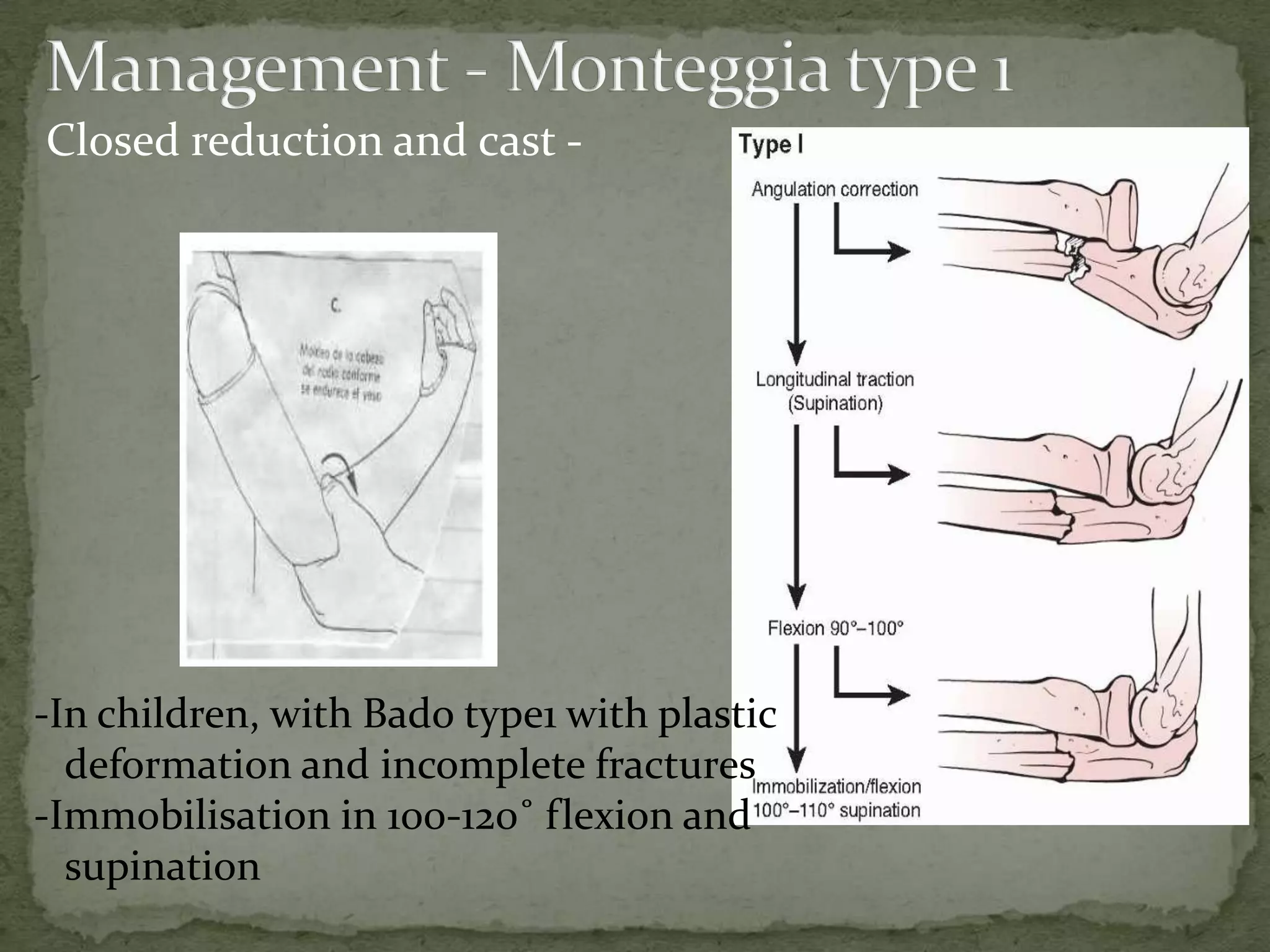
Closed reduction and cast -
-In children, with Bado type1 with plastic
deformation and incomplete fractures
-Immobilisation in 100-120˚ flexion and
supination
In case of
failure to obtain and maintain ulnar fracture reduction
and,
 In complete transverse or short oblique fractures
 Using flexible nail or k-wires
 failure of radial head reduction
 Due to soft tissue interposition
 More common in type III
Satisfactory results with closed
reduction and immobilisation
in 60˚ flexion to extension
Surgical management same as
type I
Direct loading as a
mechanism in type II
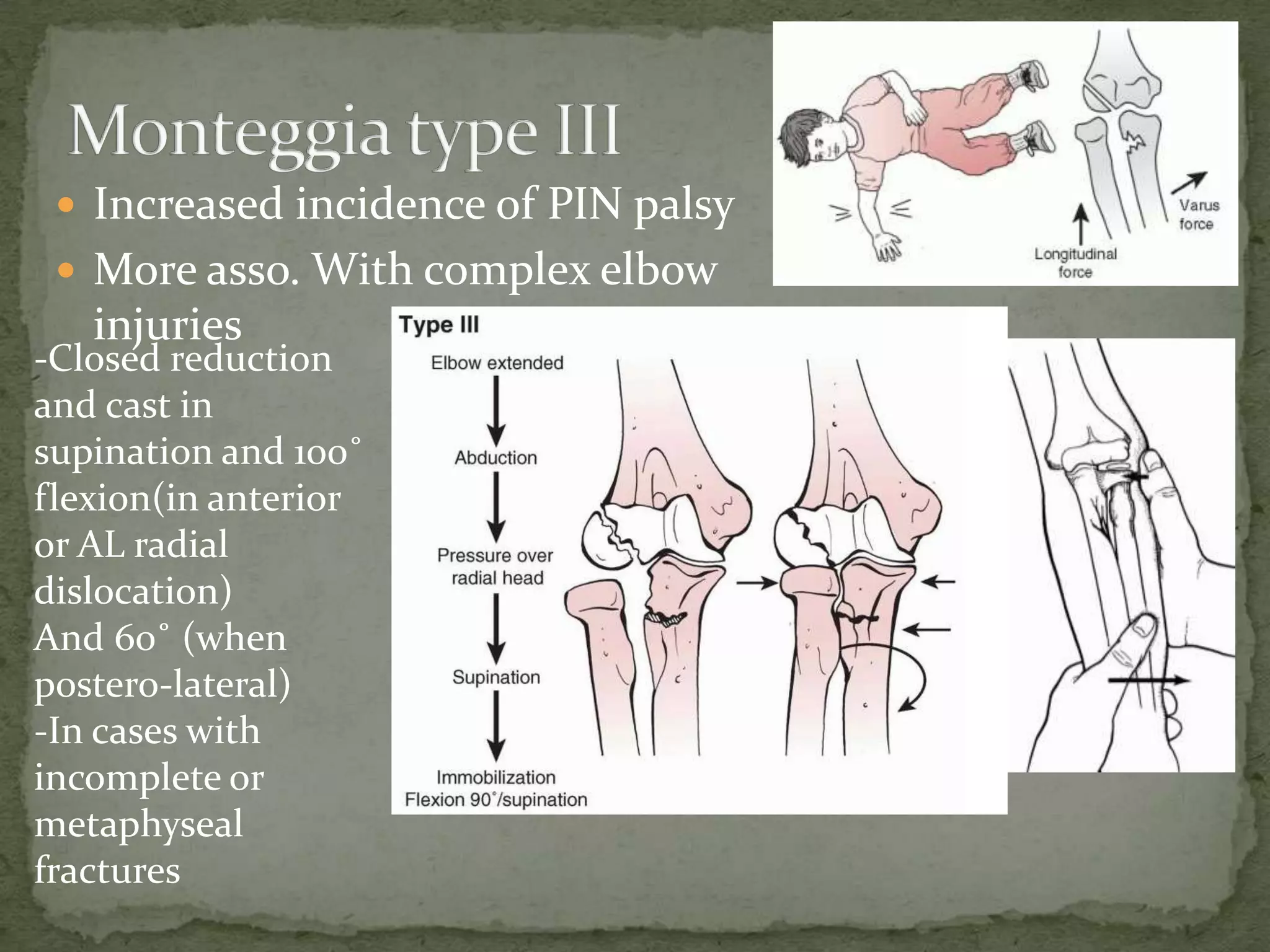
 Increased incidence of PIN palsy
 More asso. With complex elbow
injuries
-Closed reduction
and cast in
supination and 100˚
flexion(in anterior
or AL radial
dislocation)
And 60˚ (when
postero-lateral)
-In cases with
incomplete or
metaphyseal
fractures
In case of
• Failed closed reduction
• Unstable reduction
 Open reduction and removal of interposing soft tissue,
and fixation – intramedullary nails or plate
 COMPARTMENT SYNDROME
 MALUNION
 BONY ANKYLOSIS
 NON-UNION
 INFECTION
 PERI-ARTICULAR OSSIFICATION-around radial
head and myositis ossificans
 RADIO-ULNAR SYNOSTOSIS
 NEUROVASCULAR COMPLICATION – PIN
 RECURRANT RADIAL HEAD DISLOCATION
 Criteria for surgical repair
(i) normal concave radial head articular surface convex
capitellum,
(ii) when there is progressive deformity and,
(iii) normal shape and contour of the ulna and radius
(deformity of either correctable by osteotomy)
• Best when corrected within 6 months of injury
• Better outcome upto 10 yrs of age
i) annular ligament repair or reconstruction(Bell-
Tawse),
ii) ulnar osteotomy alone62 or in combination with
ligament reconstruction,and
iii) radial osteotomy
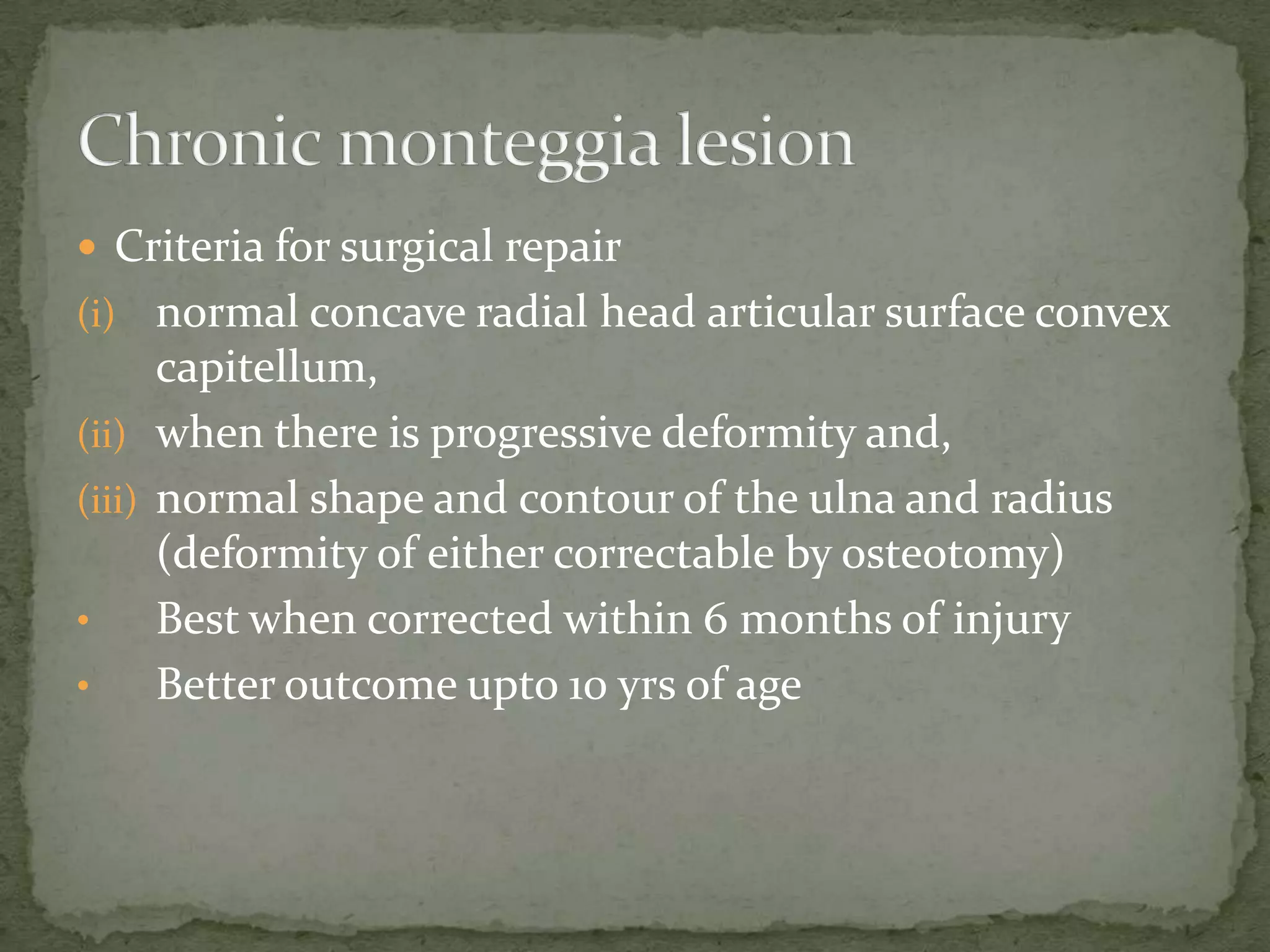
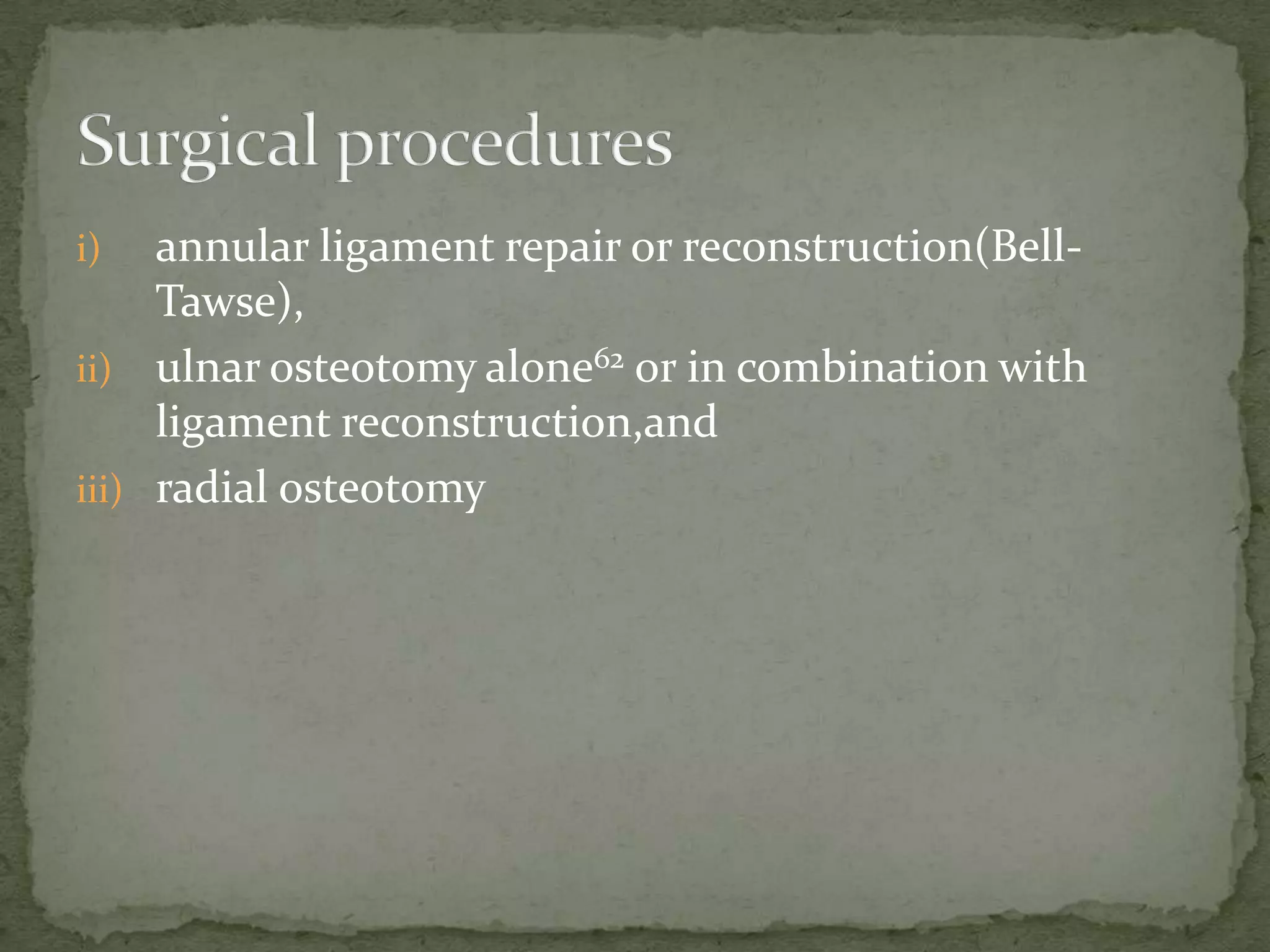
GALLEAZI FRACTURE
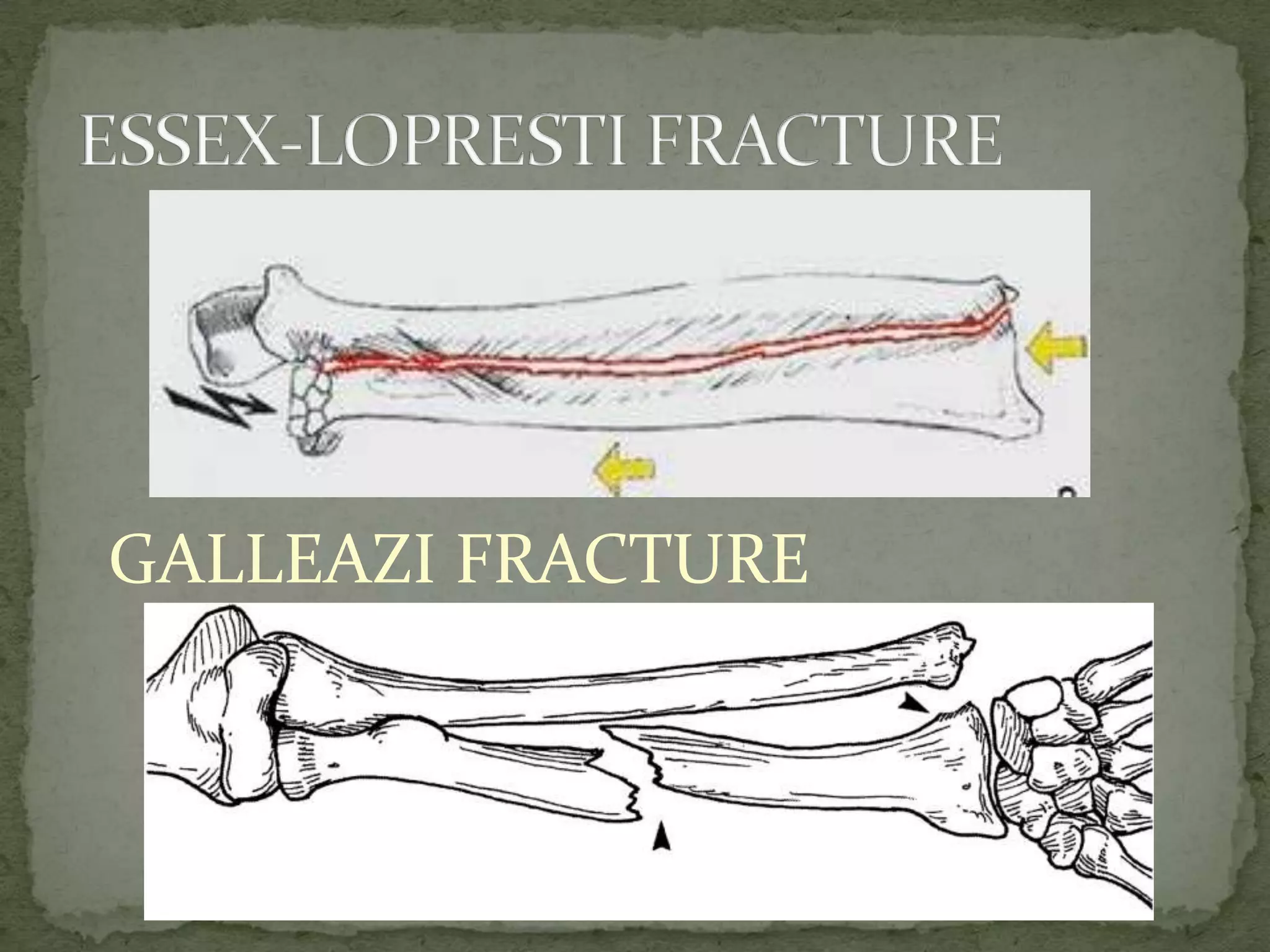
FRACTURE OLECRANON WOTH ANTERIOR
DISLOCATION OF RADIUS
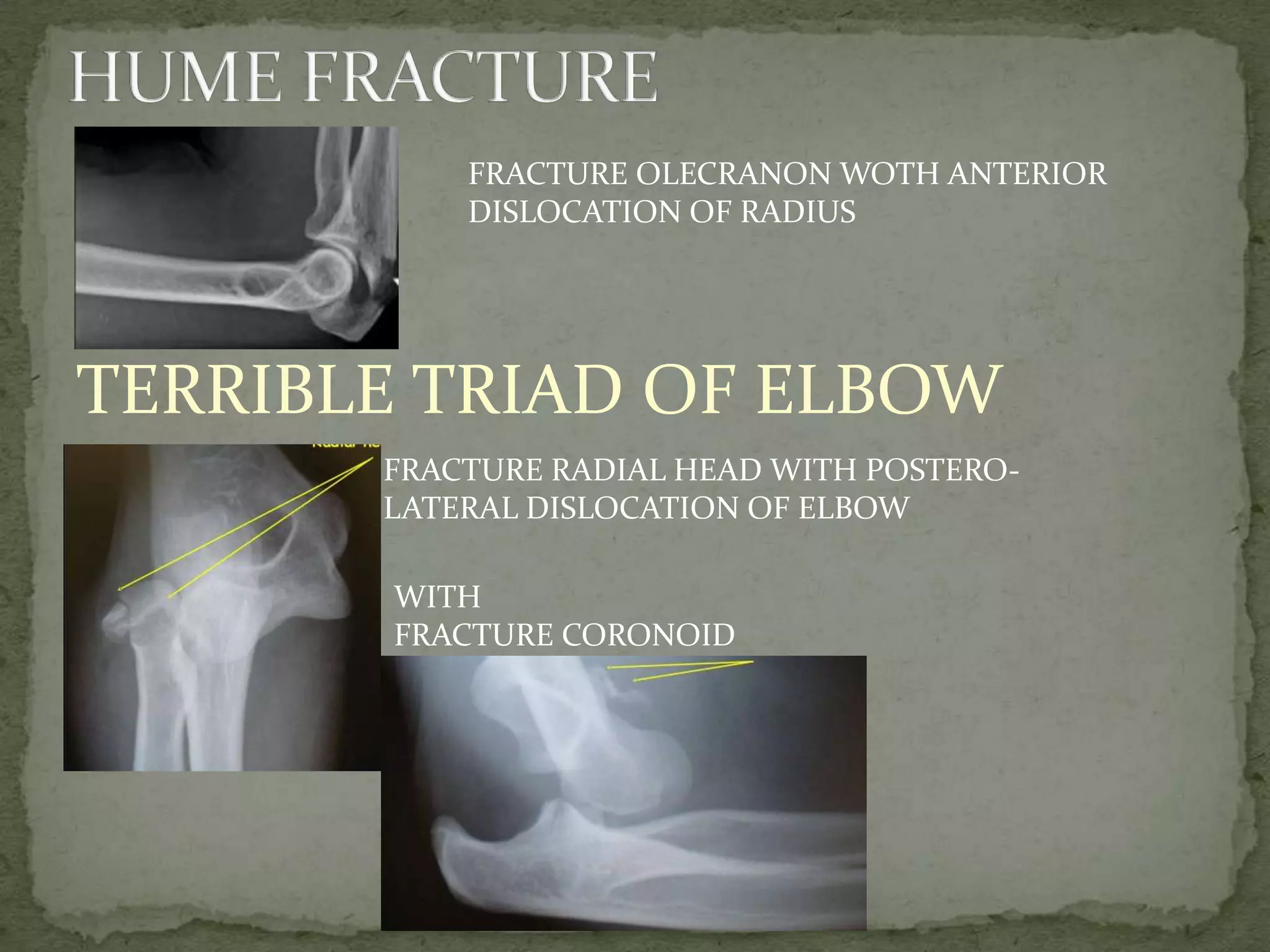
TERRIBLE TRIAD OF ELBOW
FRACTURE RADIAL HEAD WITH POSTERO-
LATERAL DISLOCATION OF ELBOW
WITH
FRACTURE CORONOID
Monteggia fracture dislocation_UTSAV

Monteggia fracture dislocation_UTSAV

  • 2.
     Described byGiovanni Batista Monteggia in 1814 as “traumatic lesion distinguished by a fracture of the proximal third of the ulna and an anterior dislocation of the proximal epiphysis of the radius”  Bado classified the fracture and coined the term in 1967  It a combination of fracture of ulna with dislocation of the proximal radius with or without fracture of radius  More commonly seen in 4-10 yrs
  • 3.
  • 6.
    TYPE 1 -Fracture at middle or proximal third of ulna -anterior dislocation of radial head --apex anterior angulation of ulna -- incidence – 60% TYPE 2 - Fracture at middle or proximal third of ulna -posterior dislocation of radial head --apex posterior angulation of ulna - incidence – 15%
  • 7.
    TYPE 3 -Fracture ulna just distal to coronoid pocess -Lateral subluxation of radius - Incidence – 20% TYPE 4 - Fracture at middle or proximal third of ulna -anterior dislocation of radial head --Fracture of proximal third of radius -- incidence – 5 %
  • 8.
     similar mechanismsof injury, radiographic appearance, or treatment methods  Type I equivalents - isolated anterior dislocations of the radial head without ulnar fracture  Type II equivalents to include fractures of the proximal radial epiphysis or radial neck AND Posterior dislocation of the elbow  Type III equivalentUlnar fracture with displaced fracture of the lateral condyle
  • 9.
     TYPE A,B,C – ANTERIOR DISLOCATION OF RADIAL HEAD (BADO TYPE 1) WITH  A plastic deformation fracture  B  incomplete or greenstick fracture  C  complete fracture of the ulna • TYPE Dsame as Bado II or posterior radial head dislocation • Type E same as Bado III or lateral radial head dislocations
  • 11.
    Closed reduction andcast - -In children, with Bado type1 with plastic deformation and incomplete fractures -Immobilisation in 100-120˚ flexion and supination
  • 12.
    In case of failureto obtain and maintain ulnar fracture reduction and,  In complete transverse or short oblique fractures  Using flexible nail or k-wires  failure of radial head reduction  Due to soft tissue interposition  More common in type III
  • 13.
    Satisfactory results withclosed reduction and immobilisation in 60˚ flexion to extension Surgical management same as type I Direct loading as a mechanism in type II
  • 14.
     Increased incidenceof PIN palsy  More asso. With complex elbow injuries -Closed reduction and cast in supination and 100˚ flexion(in anterior or AL radial dislocation) And 60˚ (when postero-lateral) -In cases with incomplete or metaphyseal fractures
  • 15.
    In case of •Failed closed reduction • Unstable reduction  Open reduction and removal of interposing soft tissue, and fixation – intramedullary nails or plate
  • 16.
     COMPARTMENT SYNDROME MALUNION  BONY ANKYLOSIS  NON-UNION  INFECTION  PERI-ARTICULAR OSSIFICATION-around radial head and myositis ossificans  RADIO-ULNAR SYNOSTOSIS  NEUROVASCULAR COMPLICATION – PIN  RECURRANT RADIAL HEAD DISLOCATION
  • 17.
     Criteria forsurgical repair (i) normal concave radial head articular surface convex capitellum, (ii) when there is progressive deformity and, (iii) normal shape and contour of the ulna and radius (deformity of either correctable by osteotomy) • Best when corrected within 6 months of injury • Better outcome upto 10 yrs of age
  • 18.
    i) annular ligamentrepair or reconstruction(Bell- Tawse), ii) ulnar osteotomy alone62 or in combination with ligament reconstruction,and iii) radial osteotomy
  • 19.
  • 20.
    FRACTURE OLECRANON WOTHANTERIOR DISLOCATION OF RADIUS TERRIBLE TRIAD OF ELBOW FRACTURE RADIAL HEAD WITH POSTERO- LATERAL DISLOCATION OF ELBOW WITH FRACTURE CORONOID