SHOULDER ARTHROSCOPY
Setup, Positioning And Portals
DR SAMEER
ASHAR
ASSISTANT PROFESSOR
ORTHOPAEDICS
DEPARTMENT
G.G.GOVT.HOSPITAL
JAMNAGAR
INDIA
HISTORICAL DEVELOPMENTS
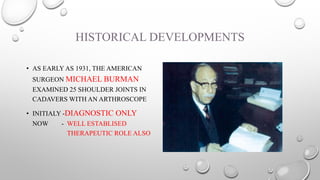
• AS EARLY AS 1931, THE AMERICAN
SURGEON MICHAEL BURMAN
EXAMINED 25 SHOULDER JOINTS IN
CADAVERS WITH AN ARTHROSCOPE
• INITIALY -DIAGNOSTIC ONLY
NOW - WELL ESTABLISED
THERAPEUTIC ROLE ALSO
INDICATIONS
• ROTATOR CUFF LESIONS
• SHOULDER INSTABILITIES
• LABRAL LESIONS
• LIMITATIONS OF MOTION
• BICEPS TENDON
• SUB ACROMIAN IMPINGEMENT
• AC JOINT PAIN
• INFECTION
• LOCKING
• LOOSE BODY
• CHRONIC PAIN
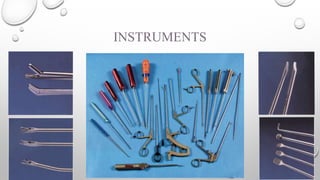
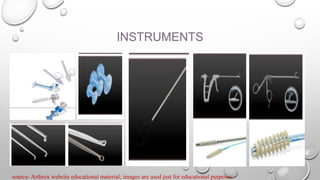
INSTRUMENTS
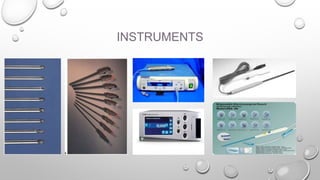
INSTRUMENTS
INSTRUMENTS
source- Arthrex website educational material; images are used just for educational purposes
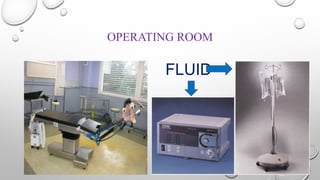
OPERATING ROOM
FLUID
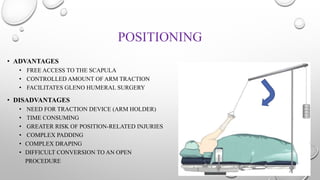
POSITIONING
• ADVANTAGES
• FREE ACCESS TO THE SCAPULA
• CONTROLLED AMOUNT OF ARM TRACTION
• FACILITATES GLENO HUMERAL SURGERY
• DISADVANTAGES
• NEED FOR TRACTION DEVICE (ARM HOLDER)
• TIME CONSUMING
• GREATER RISK OF POSITION-RELATED INJURIES
• COMPLEX PADDING
• COMPLEX DRAPING
• DIFFICULT CONVERSION TO AN OPEN
PROCEDURE
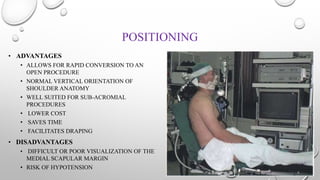
POSITIONING
• ADVANTAGES
• ALLOWS FOR RAPID CONVERSION TO AN
OPEN PROCEDURE
• NORMAL VERTICAL ORIENTATION OF
SHOULDER ANATOMY
• WELL SUITED FOR SUB-ACROMIAL
PROCEDURES
• LOWER COST
• SAVES TIME
• FACILITATES DRAPING
• DISADVANTAGES
• DIFFICULT OR POOR VISUALIZATION OF THE
MEDIAL SCAPULAR MARGIN
• RISK OF HYPOTENSION
CONTROL OF BLEEDING
Arthroscopic pump
• Constant flow is maintained and pressure OF 60-70 MM HG
• Chances of extravasation and increase compartment pressure is high
• Be aware of the system you use regarding pressure mechanisms
1 ml of 1;1000 epinephrine in each 3000 ml bag of irrigation fluid if not
contraindicated
Most effective method is hypotensive anaesthesia
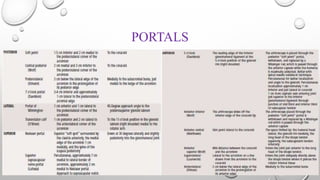
PORTALS
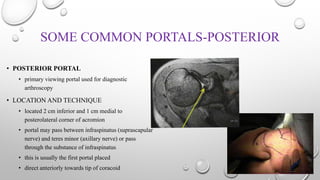
SOME COMMON PORTALS-POSTERIOR
• POSTERIOR PORTAL
• primary viewing portal used for diagnostic
arthroscopy
• LOCATION AND TECHNIQUE
• located 2 cm inferior and 1 cm medial to
posterolateral corner of acromion
• portal may pass between infraspinatus (suprascapular
nerve) and teres minor (axillary nerve) or pass
through the substance of infraspinatus
• this is usually the first portal placed
• direct anteriorly towards tip of coracoid
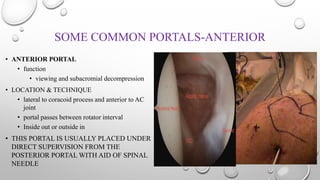
SOME COMMON PORTALS-ANTERIOR
• ANTERIOR PORTAL
• function
• viewing and subacromial decompression
• LOCATION & TECHNIQUE
• lateral to coracoid process and anterior to AC
joint
• portal passes between rotator interval
• Inside out or outside in
• THIS PORTAL IS USUALLY PLACED UNDER
DIRECT SUPERVISION FROM THE
POSTERIOR PORTAL WITH AID OF SPINAL
NEEDLE
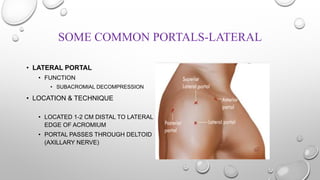
SOME COMMON PORTALS-LATERAL
• LATERAL PORTAL
• FUNCTION
• SUBACROMIAL DECOMPRESSION
• LOCATION & TECHNIQUE
• LOCATED 1-2 CM DISTAL TO LATERAL
EDGE OF ACROMIUM
• PORTAL PASSES THROUGH DELTOID
(AXILLARY NERVE)
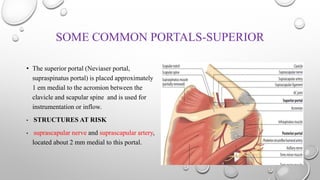
SOME COMMON PORTALS-SUPERIOR
• The superior portal (Neviaser portal,
supraspinatus portal) is placed approximately
1 em medial to the acromion between the
clavicle and scapular spine and is used for
instrumentation or inflow.
• STRUCTURES AT RISK
• suprascapular nerve and suprascapular artery,
located about 2 mm medial to this portal.
OTHER PORTALS
• Anterior superior portal.
This portal is established just anterior to the biceps tendon.
• Anterior inferior portal.
This portal is placed just proximal to the subscapularis tendon.
Structures at risk from the anterior portals are- The cephalic vein and
The musculocutaneousnerve.
• Posterior subacromial portal
• Anterior subacromial portal
COMPLICATIONS
POSITION AND
DISTRACTION
• Lateral- pressure injury to ulnar
nerve in arm and peroneal
nerve in leg
• Beach chair-hypotension and
CVA
• Traction- more than 8 kg of
weight and
more than 450 of
abduction can cause
nerve palsy
PORTAL RELATED
• Cartilage lesions
• Nerve lesions
• Axilary- too posterior portal
• Supra scapular-too medial
portal
• Musculo-cutaneous- keep
anterior portals lateral to
coracoid
TECHNIQUE RELATED
• Cuff tear
• Glenoid injury
• Acromian fracture
• Hardware breakage
• Infection
• Post operative haemarthrosis
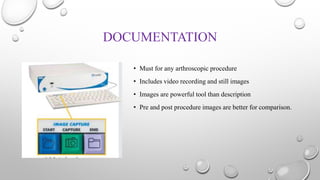
DOCUMENTATION
• Must for any arthroscopic procedure
• Includes video recording and still images
• Images are powerful tool than description
• Pre and post procedure images are better for comparison.
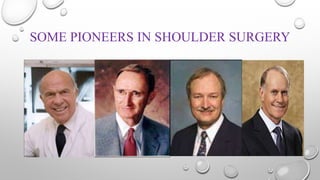
SOME PIONEERS IN SHOULDER SURGERY
THANK YOU

Shoulder arthroscopy

  • 1.
    SHOULDER ARTHROSCOPY Setup, PositioningAnd Portals DR SAMEER ASHAR ASSISTANT PROFESSOR ORTHOPAEDICS DEPARTMENT G.G.GOVT.HOSPITAL JAMNAGAR INDIA
  • 3.
    HISTORICAL DEVELOPMENTS • ASEARLY AS 1931, THE AMERICAN SURGEON MICHAEL BURMAN EXAMINED 25 SHOULDER JOINTS IN CADAVERS WITH AN ARTHROSCOPE • INITIALY -DIAGNOSTIC ONLY NOW - WELL ESTABLISED THERAPEUTIC ROLE ALSO
  • 4.
    INDICATIONS • ROTATOR CUFFLESIONS • SHOULDER INSTABILITIES • LABRAL LESIONS • LIMITATIONS OF MOTION • BICEPS TENDON • SUB ACROMIAN IMPINGEMENT • AC JOINT PAIN • INFECTION • LOCKING • LOOSE BODY • CHRONIC PAIN
  • 5.
  • 6.
  • 7.
    INSTRUMENTS source- Arthrex websiteeducational material; images are used just for educational purposes
  • 8.
  • 9.
    POSITIONING • ADVANTAGES • FREEACCESS TO THE SCAPULA • CONTROLLED AMOUNT OF ARM TRACTION • FACILITATES GLENO HUMERAL SURGERY • DISADVANTAGES • NEED FOR TRACTION DEVICE (ARM HOLDER) • TIME CONSUMING • GREATER RISK OF POSITION-RELATED INJURIES • COMPLEX PADDING • COMPLEX DRAPING • DIFFICULT CONVERSION TO AN OPEN PROCEDURE
  • 10.
    POSITIONING • ADVANTAGES • ALLOWSFOR RAPID CONVERSION TO AN OPEN PROCEDURE • NORMAL VERTICAL ORIENTATION OF SHOULDER ANATOMY • WELL SUITED FOR SUB-ACROMIAL PROCEDURES • LOWER COST • SAVES TIME • FACILITATES DRAPING • DISADVANTAGES • DIFFICULT OR POOR VISUALIZATION OF THE MEDIAL SCAPULAR MARGIN • RISK OF HYPOTENSION
  • 11.
    CONTROL OF BLEEDING Arthroscopicpump • Constant flow is maintained and pressure OF 60-70 MM HG • Chances of extravasation and increase compartment pressure is high • Be aware of the system you use regarding pressure mechanisms 1 ml of 1;1000 epinephrine in each 3000 ml bag of irrigation fluid if not contraindicated Most effective method is hypotensive anaesthesia
  • 12.
  • 13.
    SOME COMMON PORTALS-POSTERIOR •POSTERIOR PORTAL • primary viewing portal used for diagnostic arthroscopy • LOCATION AND TECHNIQUE • located 2 cm inferior and 1 cm medial to posterolateral corner of acromion • portal may pass between infraspinatus (suprascapular nerve) and teres minor (axillary nerve) or pass through the substance of infraspinatus • this is usually the first portal placed • direct anteriorly towards tip of coracoid
  • 14.
    SOME COMMON PORTALS-ANTERIOR •ANTERIOR PORTAL • function • viewing and subacromial decompression • LOCATION & TECHNIQUE • lateral to coracoid process and anterior to AC joint • portal passes between rotator interval • Inside out or outside in • THIS PORTAL IS USUALLY PLACED UNDER DIRECT SUPERVISION FROM THE POSTERIOR PORTAL WITH AID OF SPINAL NEEDLE
  • 15.
    SOME COMMON PORTALS-LATERAL •LATERAL PORTAL • FUNCTION • SUBACROMIAL DECOMPRESSION • LOCATION & TECHNIQUE • LOCATED 1-2 CM DISTAL TO LATERAL EDGE OF ACROMIUM • PORTAL PASSES THROUGH DELTOID (AXILLARY NERVE)
  • 16.
    SOME COMMON PORTALS-SUPERIOR •The superior portal (Neviaser portal, supraspinatus portal) is placed approximately 1 em medial to the acromion between the clavicle and scapular spine and is used for instrumentation or inflow. • STRUCTURES AT RISK • suprascapular nerve and suprascapular artery, located about 2 mm medial to this portal.
  • 17.
    OTHER PORTALS • Anteriorsuperior portal. This portal is established just anterior to the biceps tendon. • Anterior inferior portal. This portal is placed just proximal to the subscapularis tendon. Structures at risk from the anterior portals are- The cephalic vein and The musculocutaneousnerve. • Posterior subacromial portal • Anterior subacromial portal
  • 18.
    COMPLICATIONS POSITION AND DISTRACTION • Lateral-pressure injury to ulnar nerve in arm and peroneal nerve in leg • Beach chair-hypotension and CVA • Traction- more than 8 kg of weight and more than 450 of abduction can cause nerve palsy PORTAL RELATED • Cartilage lesions • Nerve lesions • Axilary- too posterior portal • Supra scapular-too medial portal • Musculo-cutaneous- keep anterior portals lateral to coracoid TECHNIQUE RELATED • Cuff tear • Glenoid injury • Acromian fracture • Hardware breakage • Infection • Post operative haemarthrosis
  • 19.
    DOCUMENTATION • Must forany arthroscopic procedure • Includes video recording and still images • Images are powerful tool than description • Pre and post procedure images are better for comparison.
  • 20.
    SOME PIONEERS INSHOULDER SURGERY
  • 21.