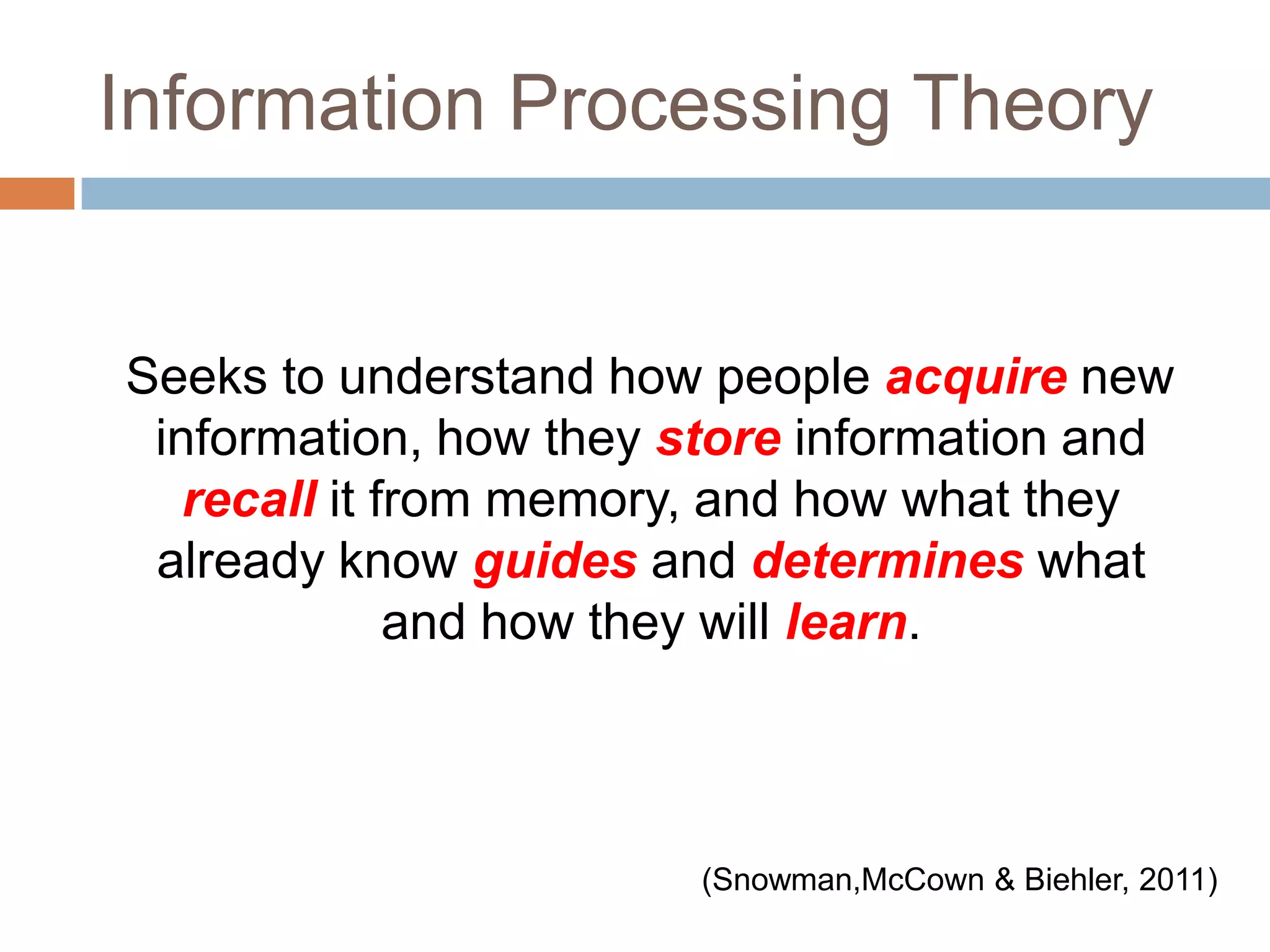
Information Processing Theory   Seeks to understand how people acquire new information, how they store information and recall it from memory, and how what they  already know guides and determines what and how they will learn.(Snowman,McCown & Biehler, 2011)
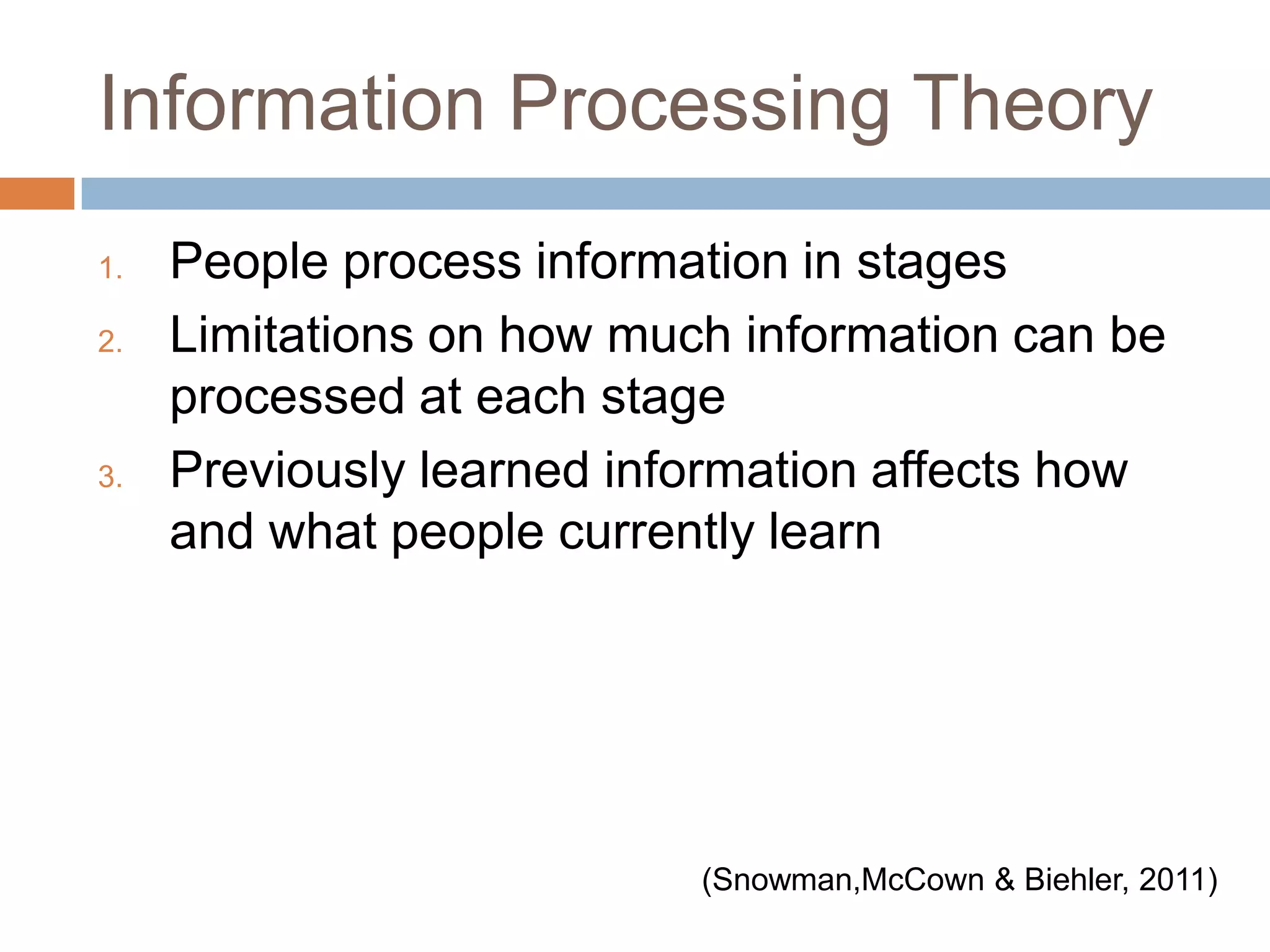
Information Processing TheoryPeople process information in stagesLimitations on how much information can be processed at each stagePreviously learned information affects how and what people currently learn(Snowman,McCown & Biehler, 2011)
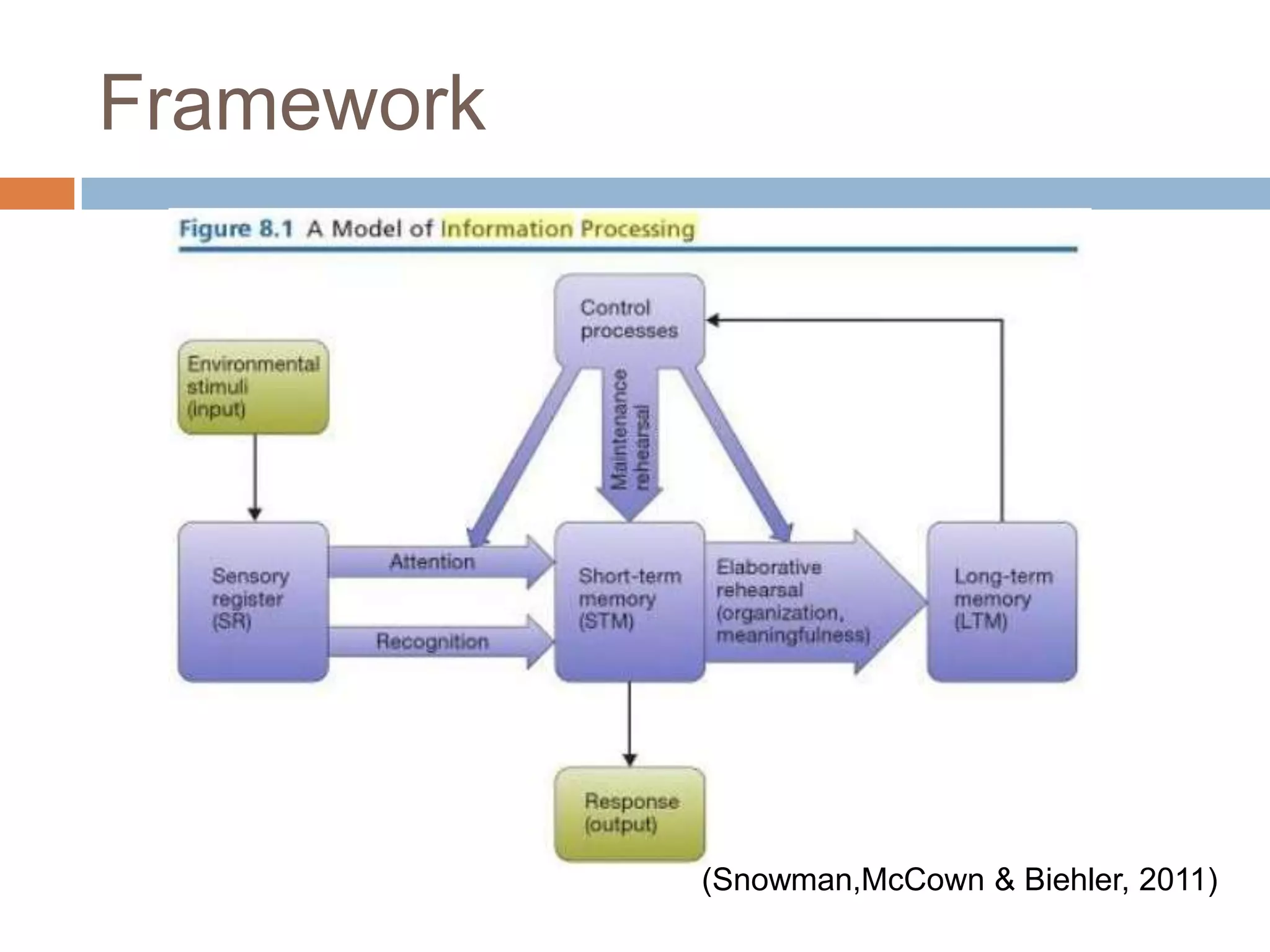
Framework(Snowman,McCown & Biehler, 2011)
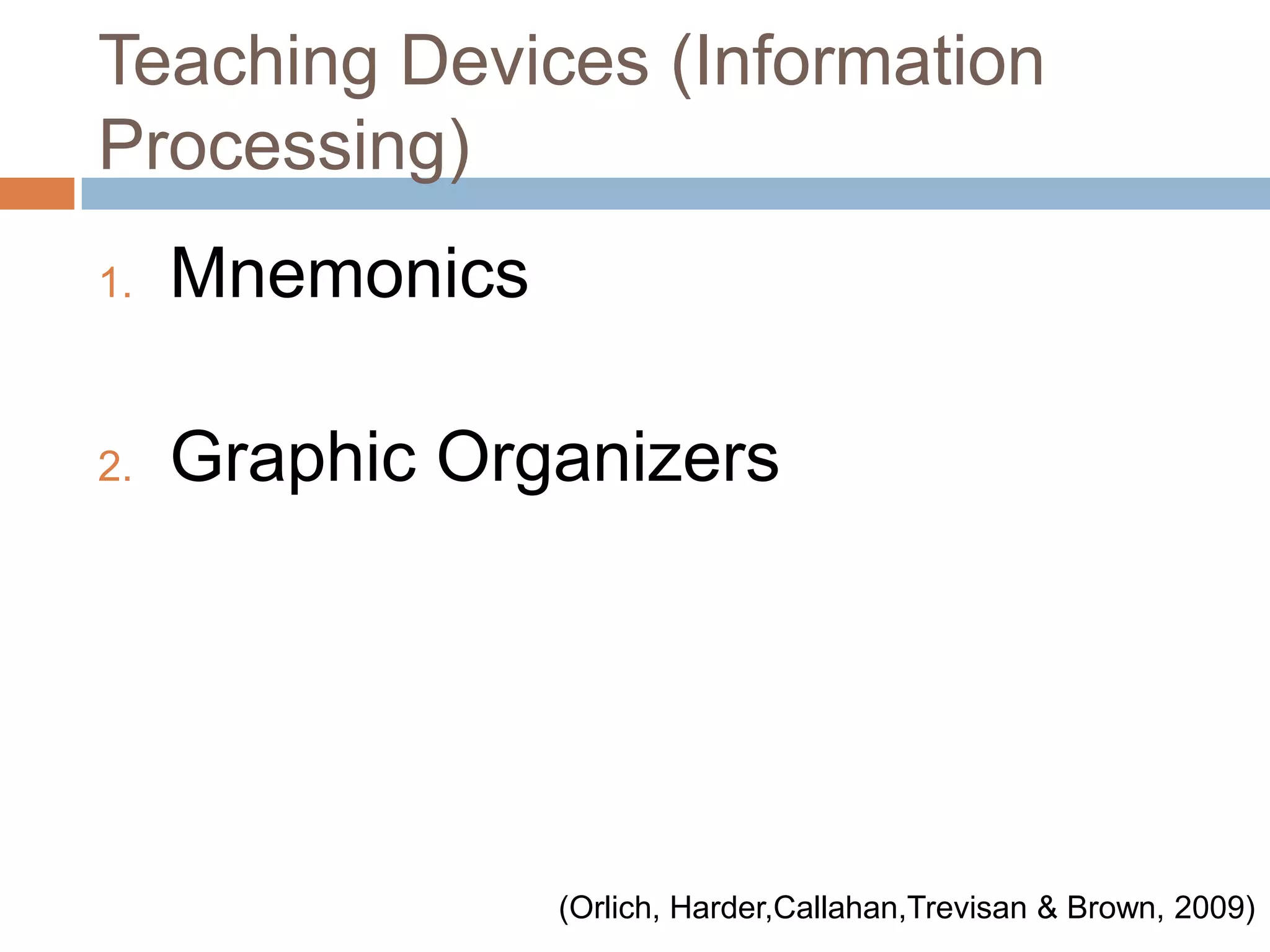
Teaching Devices (Information Processing)MnemonicsGraphic Organizers(Orlich, Harder,Callahan,Trevisan & Brown, 2009)
MnemonicsThe use of memory-aiding device 		(Orlich, Harder,Callahan,Trevisan &Brown, 2009)Mnemonics teach ways to organise material more efficiently by using rhymes, mental images, spatial location etcIt aids the information retrieval process which involves the “search” and “decision” processes for finding desired material and assessing its correctness.(Sukumar, Gowda N, 2008)
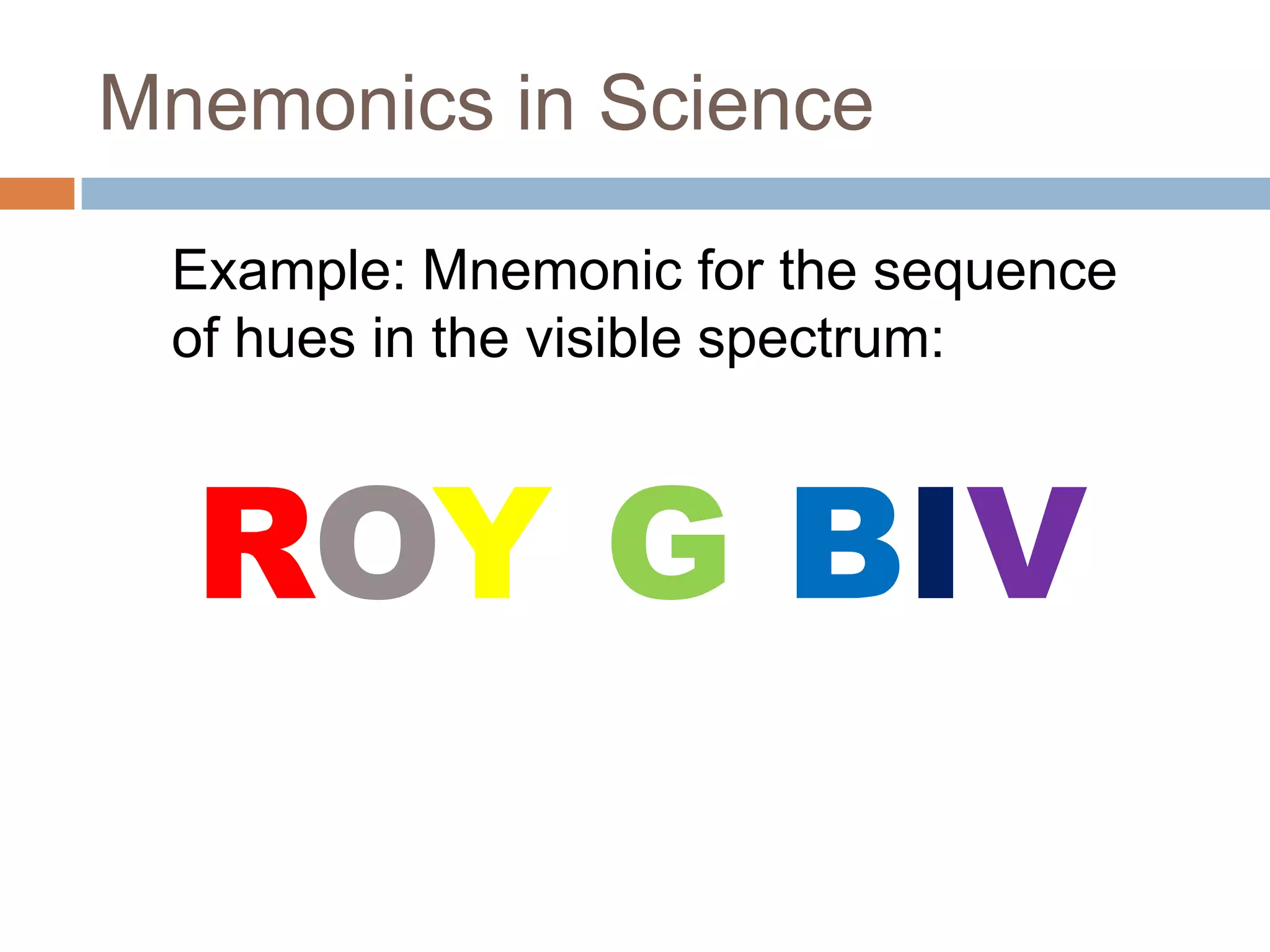
Mnemonics in ScienceExample: Mnemonic for the sequence of hues in the visible spectrum:ROYGBIV
Graphic OrganizersGraphic Organizers improve students’ creative, analytical and critical thinking skills  as it help students of all ages to process information.Presenting information in both visual and verbal from improves recall and recognition.Graphic organizers ability to show relationships clearly builds upon and increase a student’s prediction on her background knowledge (schema)(Housel, 2008)
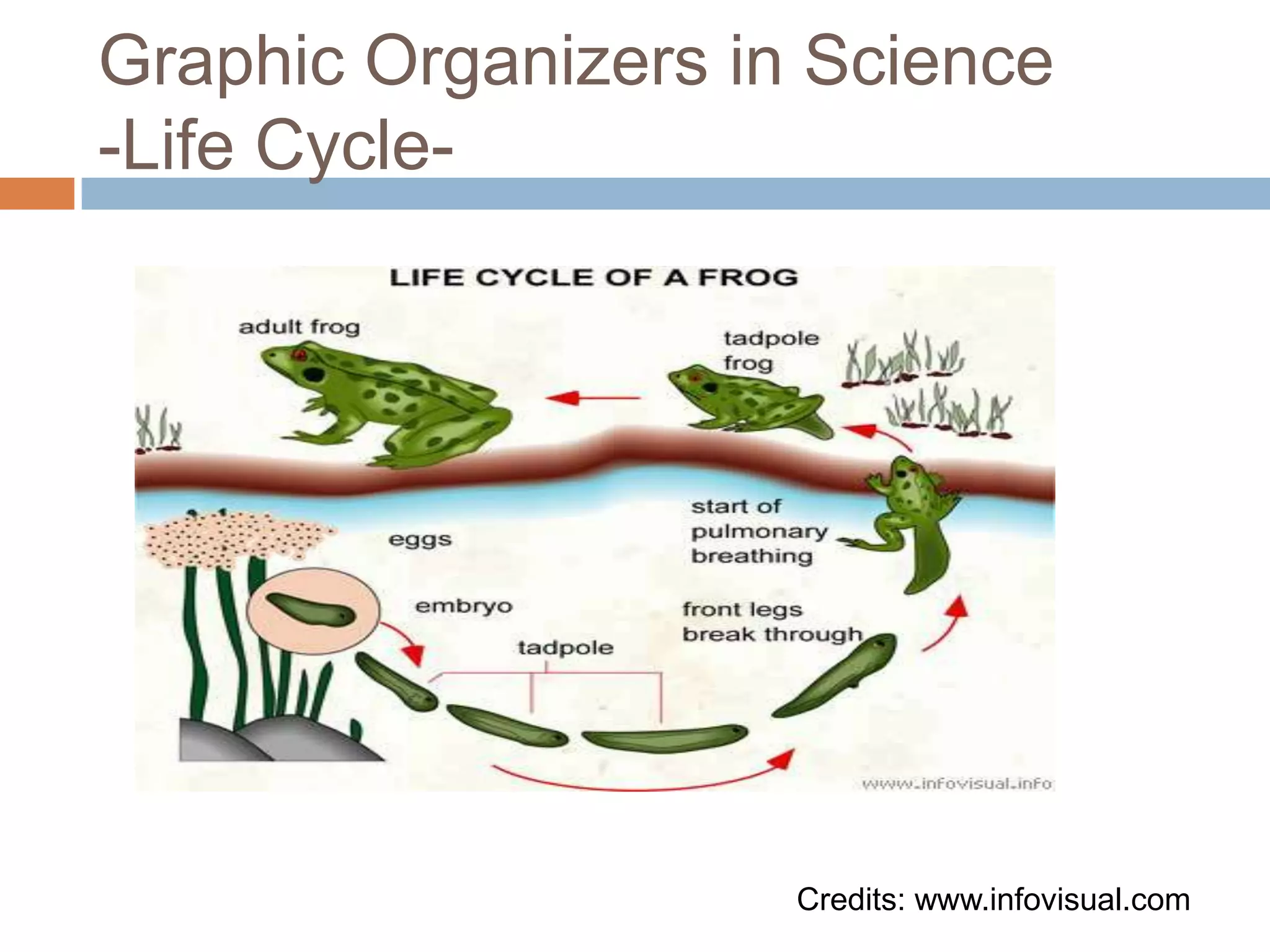
Graphic Organizers in Science-Life Cycle-Credits: www.infovisual.com
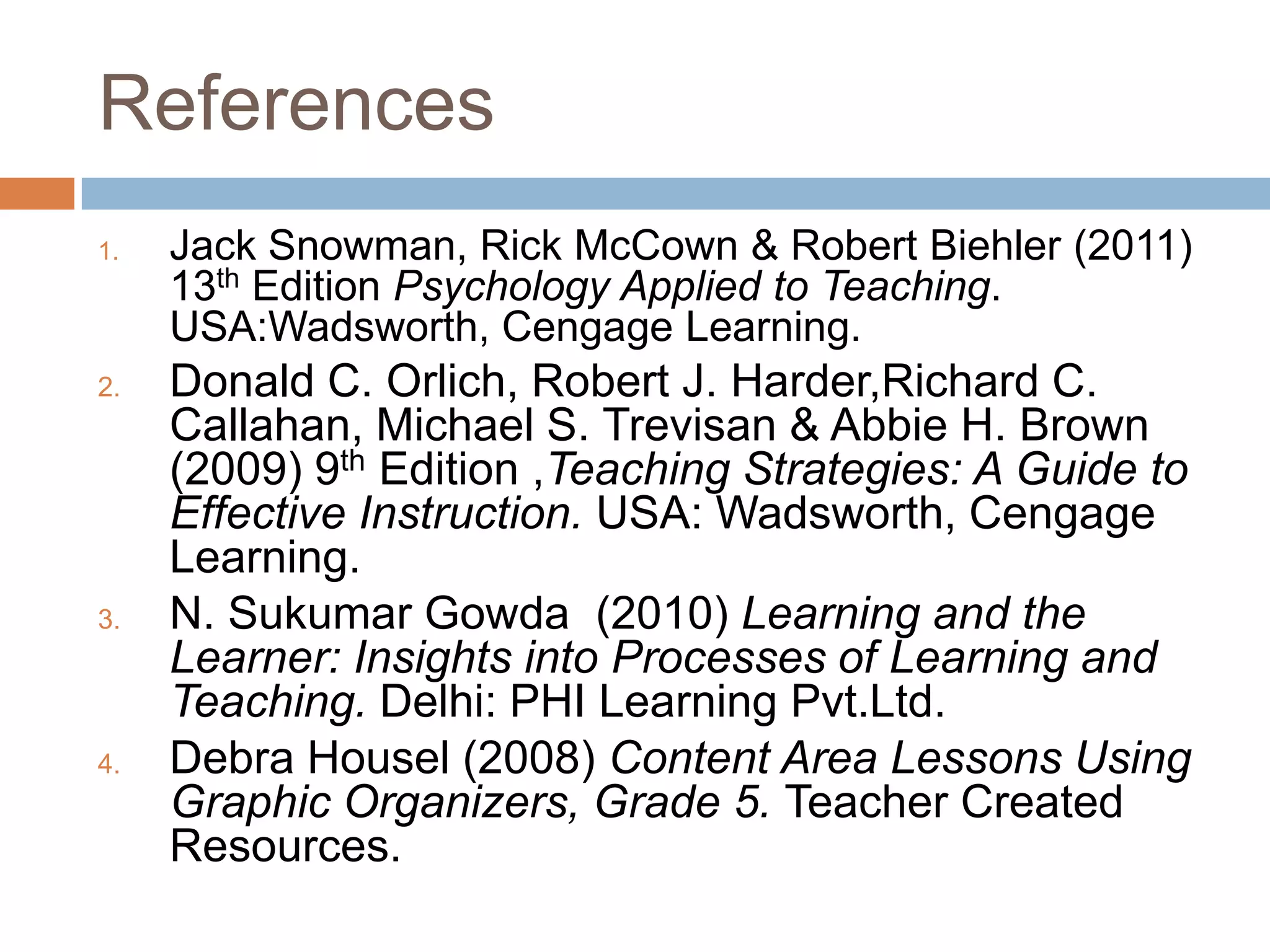
ReferencesJack Snowman, Rick McCown & Robert Biehler (2011) 13th Edition Psychology Applied to Teaching. USA:Wadsworth, Cengage Learning.Donald C. Orlich, Robert J. Harder,Richard C. Callahan, Michael S. Trevisan & Abbie H. Brown (2009) 9th Edition ,Teaching Strategies: A Guide to Effective Instruction. USA: Wadsworth, Cengage Learning.N. SukumarGowda  (2010) Learning and the Learner: Insights into Processes of Learning and Teaching. Delhi: PHI Learning Pvt.Ltd.Debra Housel (2008) Content Area Lessons Using Graphic Organizers, Grade 5. Teacher Created Resources.

YusoffGulam Information Processing Theory

  • 1.
    Information Processing Theory Seeks to understand how people acquire new information, how they store information and recall it from memory, and how what they already know guides and determines what and how they will learn.(Snowman,McCown & Biehler, 2011)
  • 2.
    Information Processing TheoryPeopleprocess information in stagesLimitations on how much information can be processed at each stagePreviously learned information affects how and what people currently learn(Snowman,McCown & Biehler, 2011)
  • 3.
  • 4.
    Teaching Devices (InformationProcessing)MnemonicsGraphic Organizers(Orlich, Harder,Callahan,Trevisan & Brown, 2009)
  • 5.
    MnemonicsThe use ofmemory-aiding device (Orlich, Harder,Callahan,Trevisan &Brown, 2009)Mnemonics teach ways to organise material more efficiently by using rhymes, mental images, spatial location etcIt aids the information retrieval process which involves the “search” and “decision” processes for finding desired material and assessing its correctness.(Sukumar, Gowda N, 2008)
  • 6.
    Mnemonics in ScienceExample:Mnemonic for the sequence of hues in the visible spectrum:ROYGBIV
  • 7.
    Graphic OrganizersGraphic Organizersimprove students’ creative, analytical and critical thinking skills as it help students of all ages to process information.Presenting information in both visual and verbal from improves recall and recognition.Graphic organizers ability to show relationships clearly builds upon and increase a student’s prediction on her background knowledge (schema)(Housel, 2008)
  • 8.
    Graphic Organizers inScience-Life Cycle-Credits: www.infovisual.com
  • 9.
    ReferencesJack Snowman, RickMcCown & Robert Biehler (2011) 13th Edition Psychology Applied to Teaching. USA:Wadsworth, Cengage Learning.Donald C. Orlich, Robert J. Harder,Richard C. Callahan, Michael S. Trevisan & Abbie H. Brown (2009) 9th Edition ,Teaching Strategies: A Guide to Effective Instruction. USA: Wadsworth, Cengage Learning.N. SukumarGowda (2010) Learning and the Learner: Insights into Processes of Learning and Teaching. Delhi: PHI Learning Pvt.Ltd.Debra Housel (2008) Content Area Lessons Using Graphic Organizers, Grade 5. Teacher Created Resources.