Module 11Information ProcessingGroup 2: Allie Hymas, Anna Goode, Heather Durney, Kiyo Olive & Sammie Martin
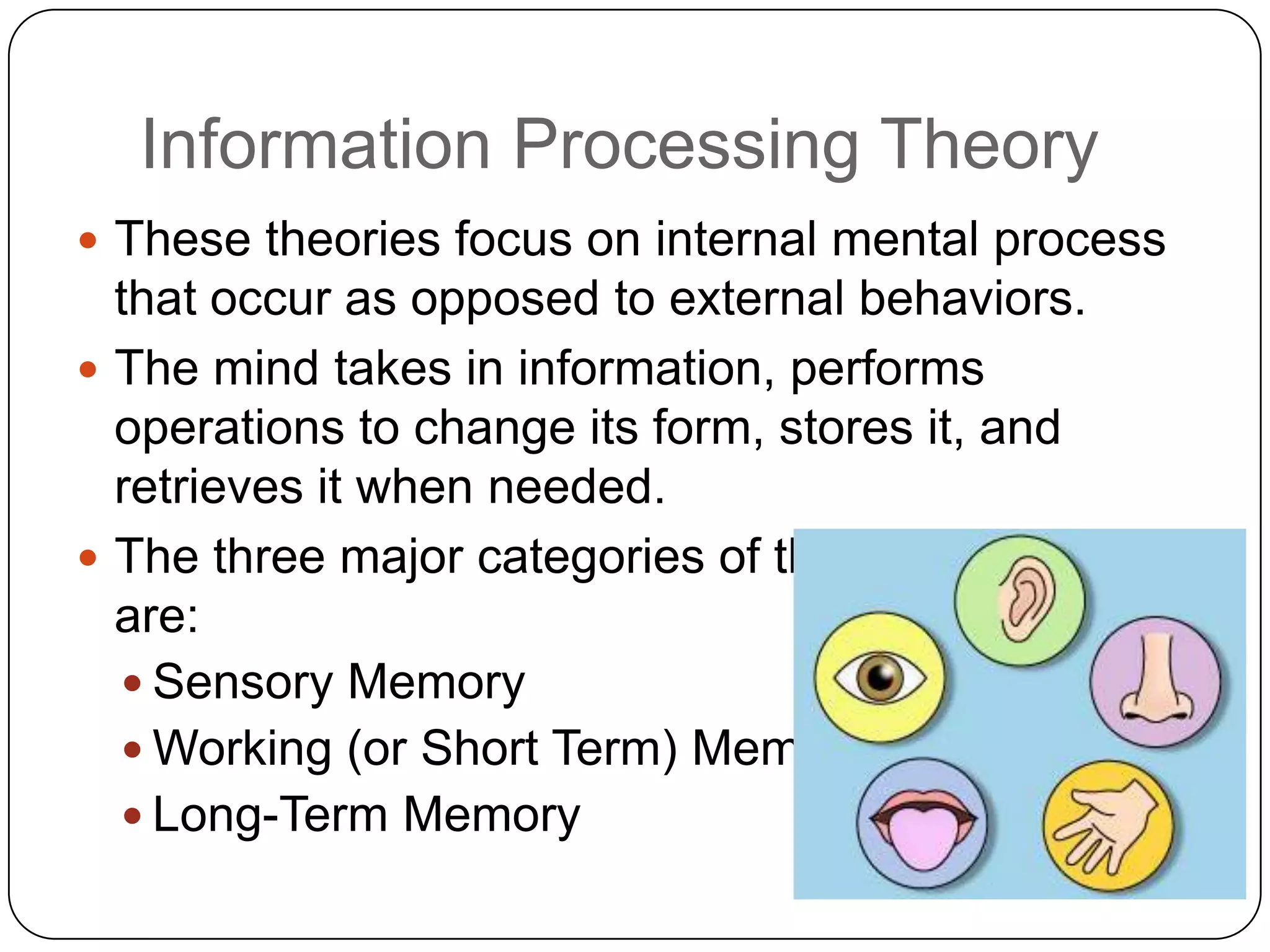
Information Processing TheoryThese theories focus on internal mental process that occur as opposed to external behaviors.  The mind takes in information, performs operations to change its form, stores it, and retrieves it when needed.  The three major categories of these functions are:Sensory MemoryWorking (or Short Term) MemoryLong-Term Memory
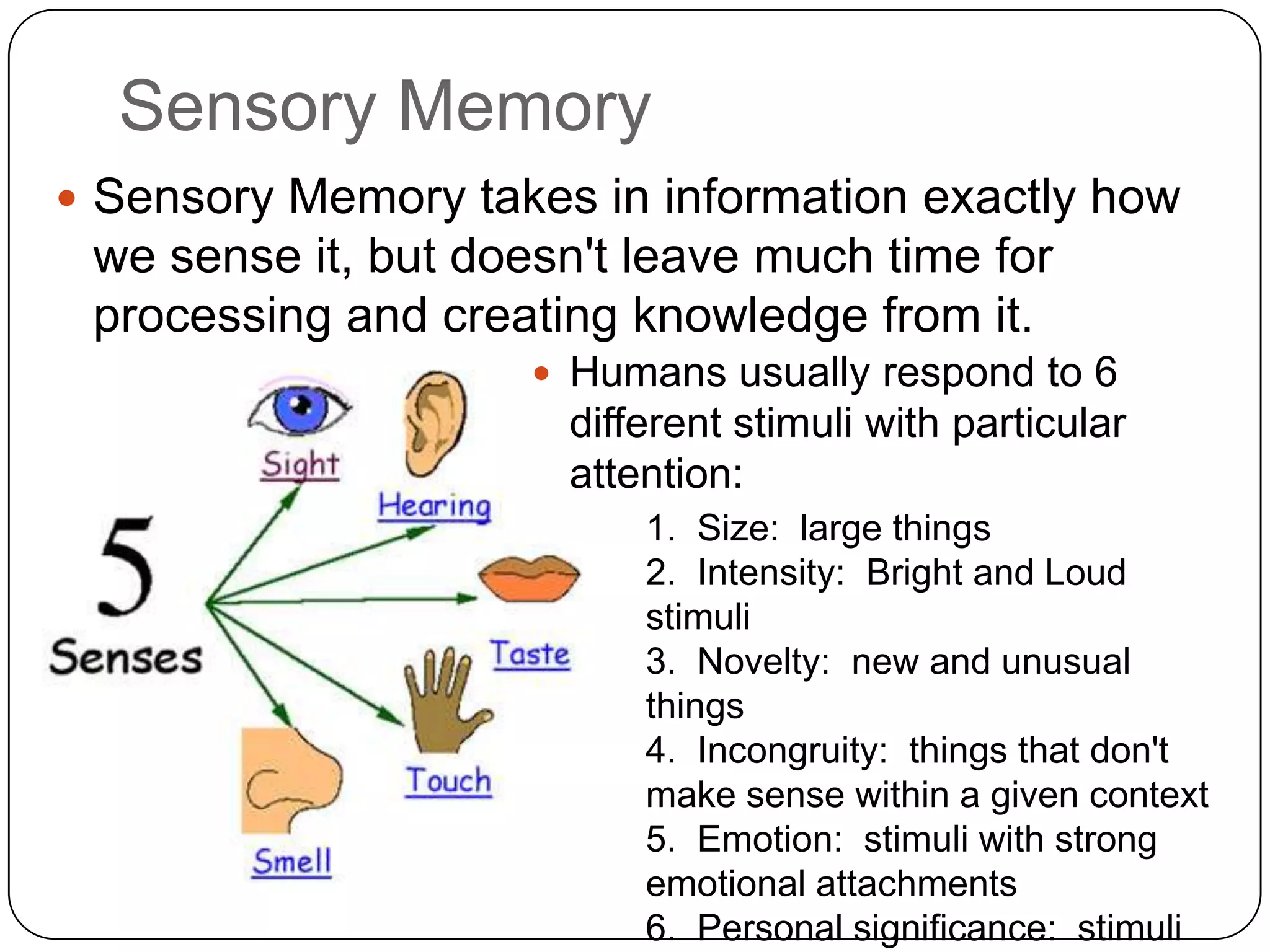
Sensory MemorySensory Memory takes in information exactly how we sense it, but doesn't leave much time for processing and creating knowledge from it.  Humans usually respond to 6 different stimuli with particular attention:1.  Size:  large things2.  Intensity:  Bright and Loud stimuli3.  Novelty:  new and unusual things4.  Incongruity:  things that don't make sense within a given context5.  Emotion:  stimuli with strong emotional attachments6.  Personal significance:  stimuli personally important to us
http://www.eyecanlearn.com/elves_%20memory.htm
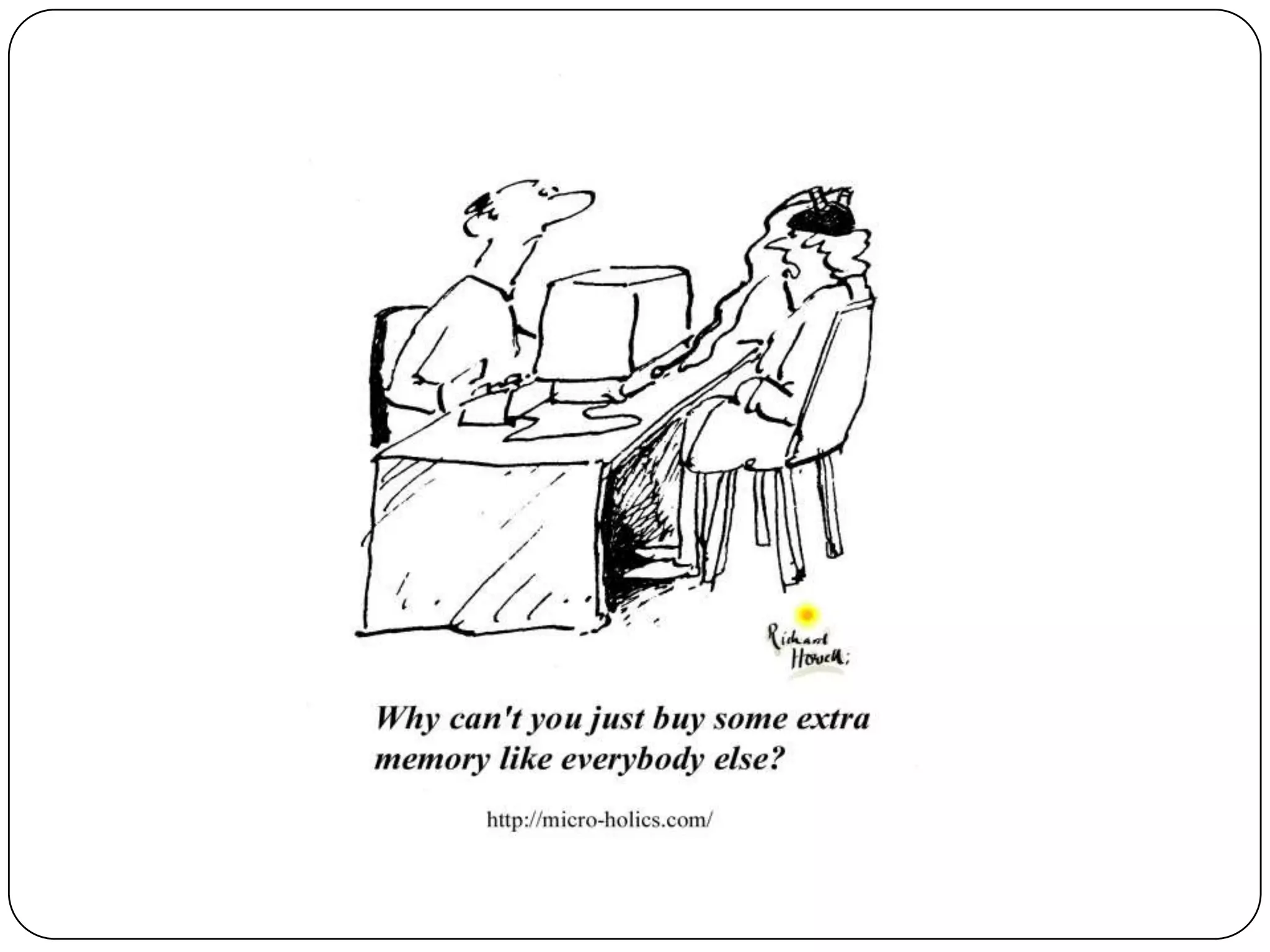
Working memoryOnce we pay attention to a stimulus, we transfer this information to our working memory, where the information is put to use.Central executive-  acts as a supervisor, deems what is important and what strategies to use to process informationWorking memory holds five to nine chunks of data at time.Working memory can include processes that are outside its conscious awareness, some information is more readily available than others, and our capacity for storing information in working memory varies.
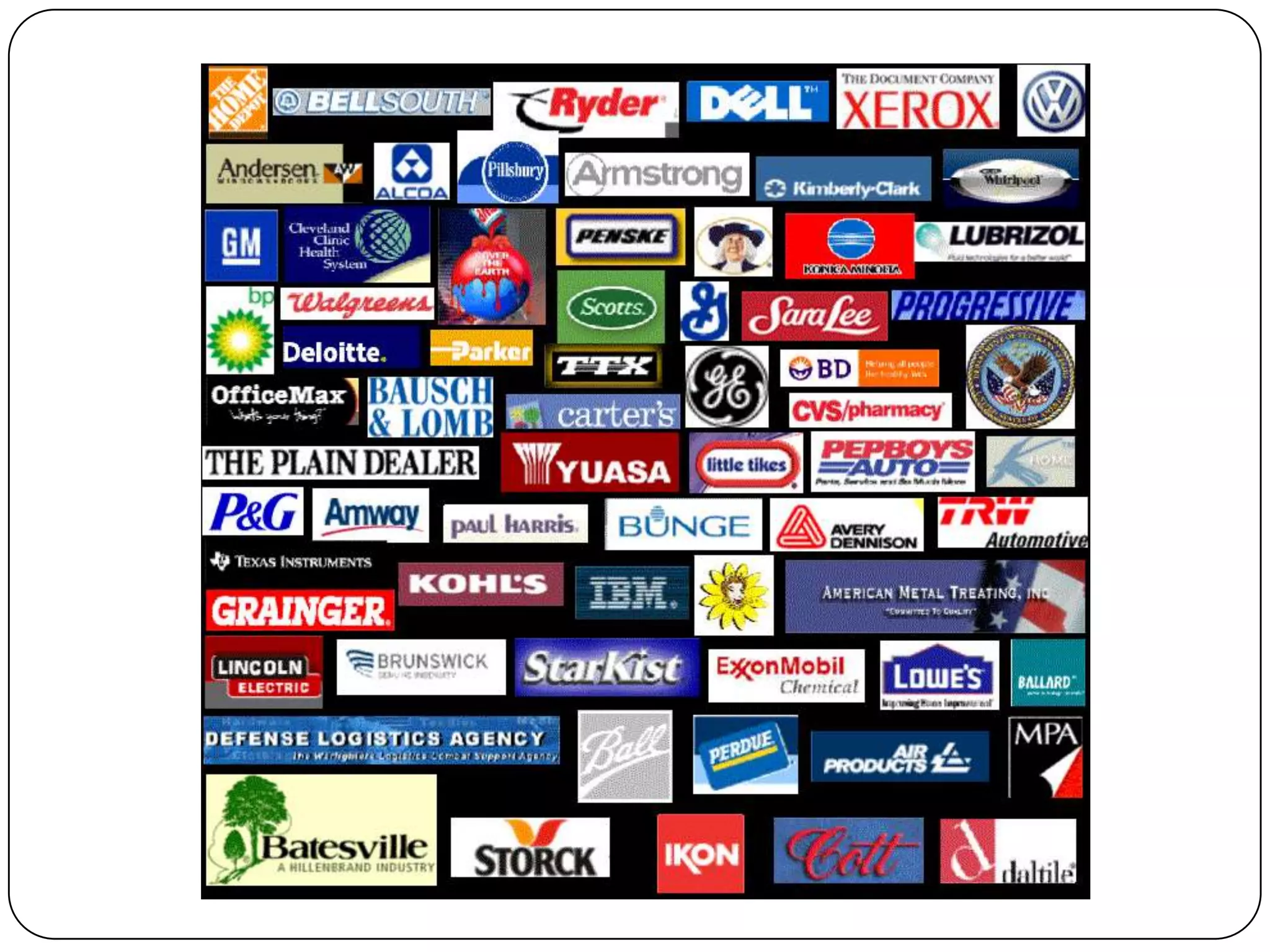
Working memoryInformation in working memory is typically lost within 5 to 20 seconds, but it stays longer if we are constantly using it. Automatic and effortful processingMnemonic devicesChunking: Grouping individual bits of information in meaningful wayGirl, cat, pants, apple, pizza, swimming pool, ball, computer, moon, cow, jungleCouch, apple, chair, mom, dad, table, orange, lamp, sister, grapes, brother, rug
Long term memoryTypes of KnowledgeExplicit: information we are consciously aware of such as facts learned at schoolImplicit: information we are not aware of such as routines and proceduresHow to drink out of a big kid cup?
Long term memoryHow memories are stored Network Theory: Information is stored in propositions; you can find multiple propositions within a single thoughtSchema Theory: Information is stored in preexisting frameworksWhy do we sometimes have a harder time remembering things that are important than we do remembering things that are not as important?
Long term memoryForget it? Encoding Failure: the information never made it to the long-term memoryStorage Decay: we lose information very quickly at first but the curve levels offRetrieval Failure: we know we learned the information, but can’t remember exactly what it was
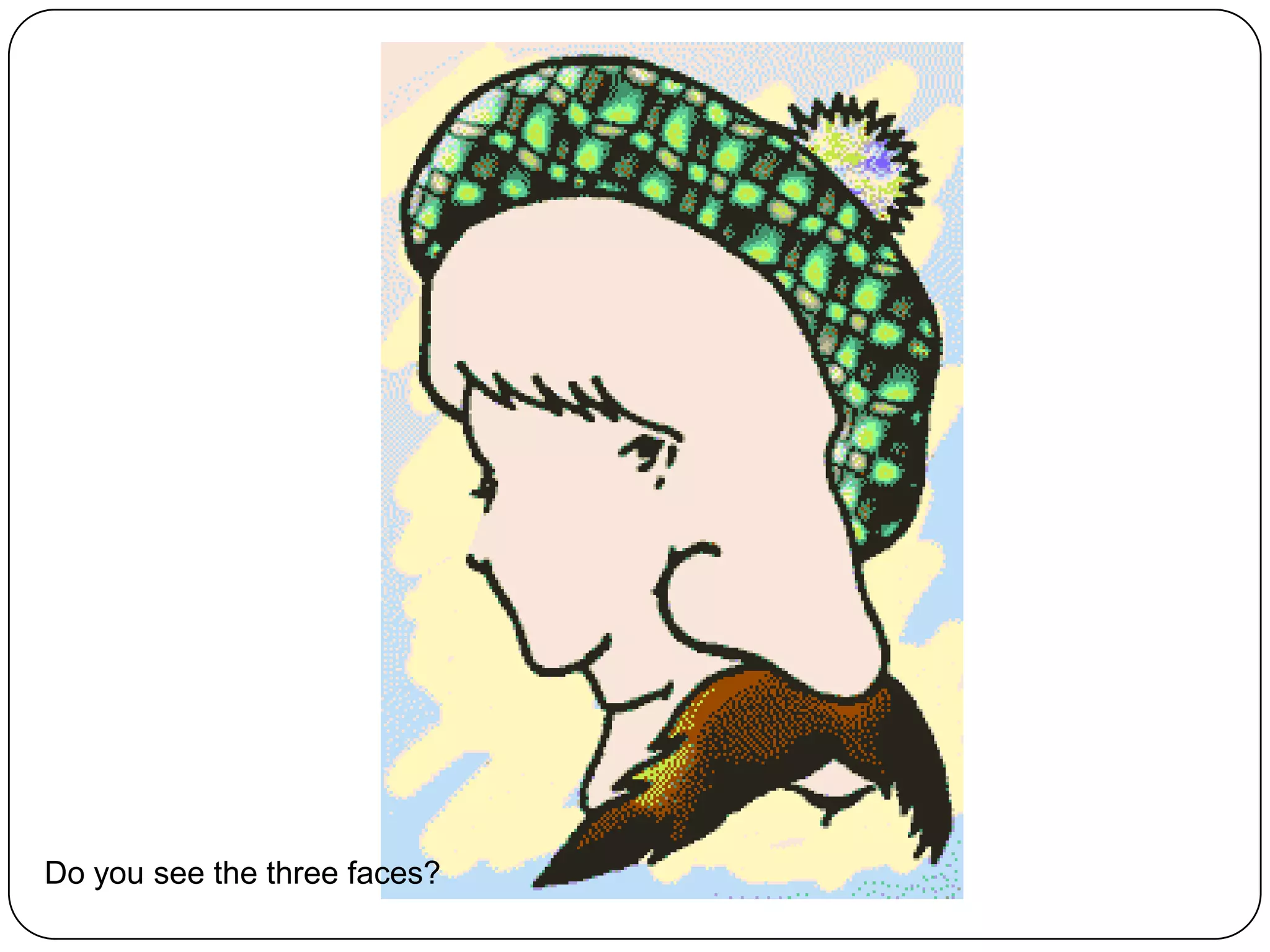
Do you see the three faces?
Individual Differences in Information ProcessingSensory information processing:Younger children process information more slowly than older childrenSelective attention increases with age, the older the better we are at focusing Girls may have advantage over boys at remembering items on listWorking information processing:Young children have less working memory capacity than older children, developmental differencesOlder individuals process information faster and therefore can retrieve before it decaysYoung children may be learning information for the first timeThe more types of knowledge you gain the better you can understand, organize, retain new information
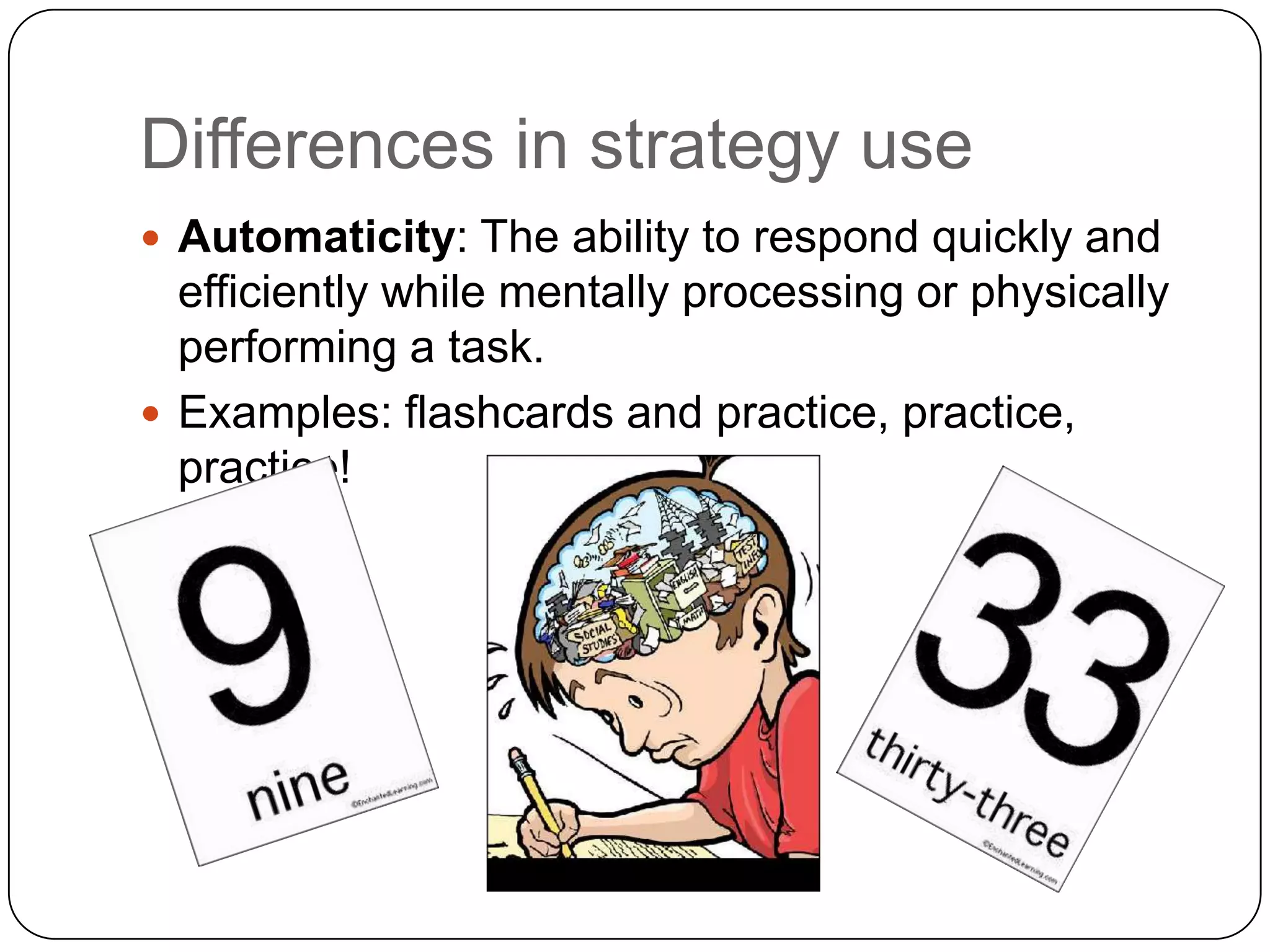
Differences in strategy useAutomaticity: The ability to respond quickly and efficiently while mentally processing or physically performing a task. Examples: flashcards and practice, practice, practice!
Application to teaching1. Plan for attention (level)2. Use attention signals3. Keep student’s attention engaged4. Respect attentional limits
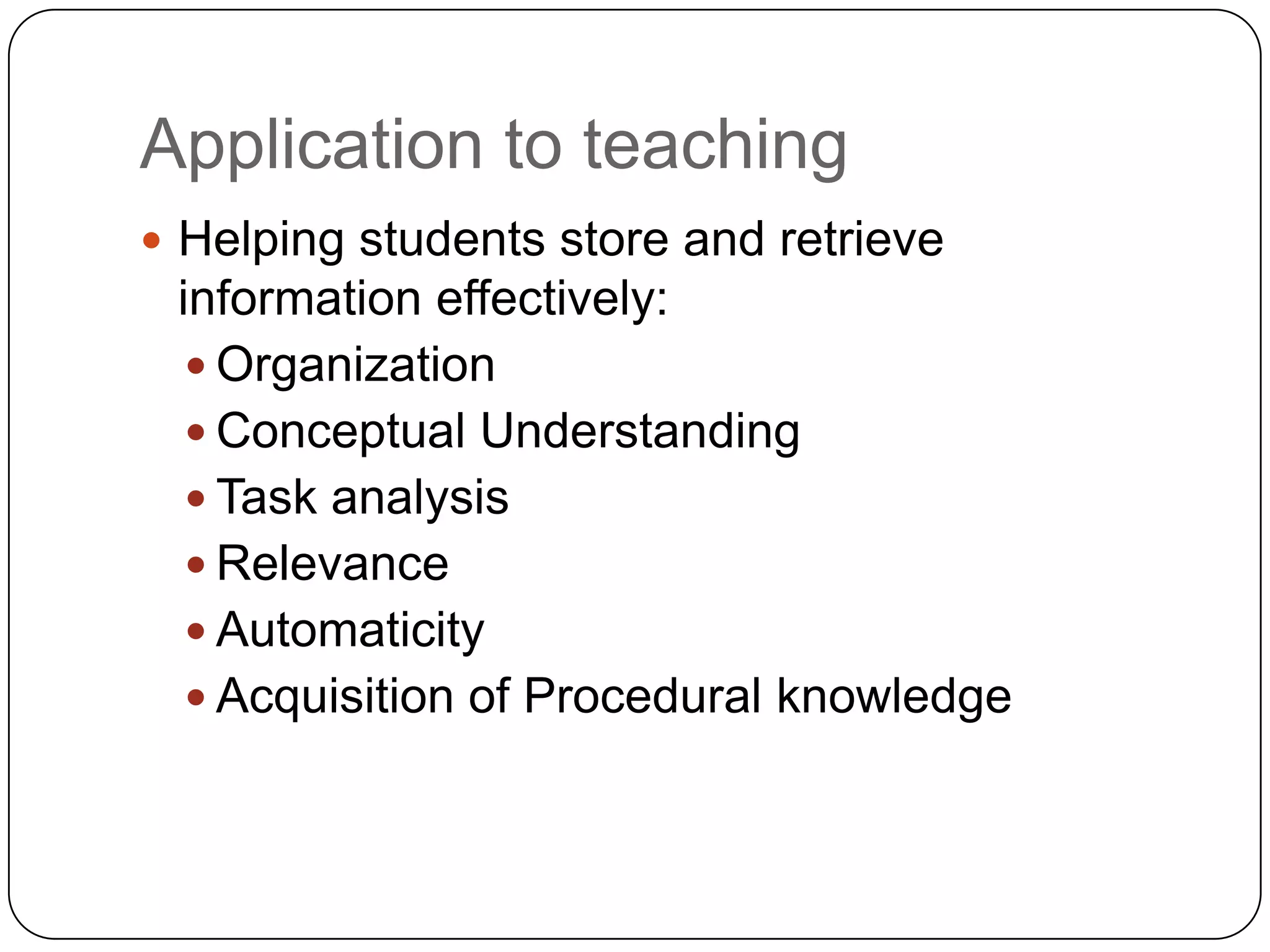
Application to teachingHelping students store and retrieve information effectively:OrganizationConceptual UnderstandingTask analysisRelevanceAutomaticityAcquisition of Procedural knowledge

Information processing

  • 1.
    Module 11Information ProcessingGroup2: Allie Hymas, Anna Goode, Heather Durney, Kiyo Olive & Sammie Martin
  • 2.
    Information Processing TheoryThesetheories focus on internal mental process that occur as opposed to external behaviors.  The mind takes in information, performs operations to change its form, stores it, and retrieves it when needed.  The three major categories of these functions are:Sensory MemoryWorking (or Short Term) MemoryLong-Term Memory
  • 3.
    Sensory MemorySensory Memorytakes in information exactly how we sense it, but doesn't leave much time for processing and creating knowledge from it.  Humans usually respond to 6 different stimuli with particular attention:1.  Size:  large things2.  Intensity:  Bright and Loud stimuli3.  Novelty:  new and unusual things4.  Incongruity:  things that don't make sense within a given context5.  Emotion:  stimuli with strong emotional attachments6.  Personal significance:  stimuli personally important to us
  • 4.
  • 5.
    Working memoryOnce wepay attention to a stimulus, we transfer this information to our working memory, where the information is put to use.Central executive- acts as a supervisor, deems what is important and what strategies to use to process informationWorking memory holds five to nine chunks of data at time.Working memory can include processes that are outside its conscious awareness, some information is more readily available than others, and our capacity for storing information in working memory varies.
  • 7.
    Working memoryInformation inworking memory is typically lost within 5 to 20 seconds, but it stays longer if we are constantly using it. Automatic and effortful processingMnemonic devicesChunking: Grouping individual bits of information in meaningful wayGirl, cat, pants, apple, pizza, swimming pool, ball, computer, moon, cow, jungleCouch, apple, chair, mom, dad, table, orange, lamp, sister, grapes, brother, rug
  • 9.
    Long term memoryTypesof KnowledgeExplicit: information we are consciously aware of such as facts learned at schoolImplicit: information we are not aware of such as routines and proceduresHow to drink out of a big kid cup?
  • 10.
    Long term memoryHowmemories are stored Network Theory: Information is stored in propositions; you can find multiple propositions within a single thoughtSchema Theory: Information is stored in preexisting frameworksWhy do we sometimes have a harder time remembering things that are important than we do remembering things that are not as important?
  • 11.
    Long term memoryForgetit? Encoding Failure: the information never made it to the long-term memoryStorage Decay: we lose information very quickly at first but the curve levels offRetrieval Failure: we know we learned the information, but can’t remember exactly what it was
  • 12.
    Do you seethe three faces?
  • 13.
    Individual Differences inInformation ProcessingSensory information processing:Younger children process information more slowly than older childrenSelective attention increases with age, the older the better we are at focusing Girls may have advantage over boys at remembering items on listWorking information processing:Young children have less working memory capacity than older children, developmental differencesOlder individuals process information faster and therefore can retrieve before it decaysYoung children may be learning information for the first timeThe more types of knowledge you gain the better you can understand, organize, retain new information
  • 14.
    Differences in strategyuseAutomaticity: The ability to respond quickly and efficiently while mentally processing or physically performing a task. Examples: flashcards and practice, practice, practice!
  • 16.
    Application to teaching1.Plan for attention (level)2. Use attention signals3. Keep student’s attention engaged4. Respect attentional limits
  • 17.
    Application to teachingHelpingstudents store and retrieve information effectively:OrganizationConceptual UnderstandingTask analysisRelevanceAutomaticityAcquisition of Procedural knowledge