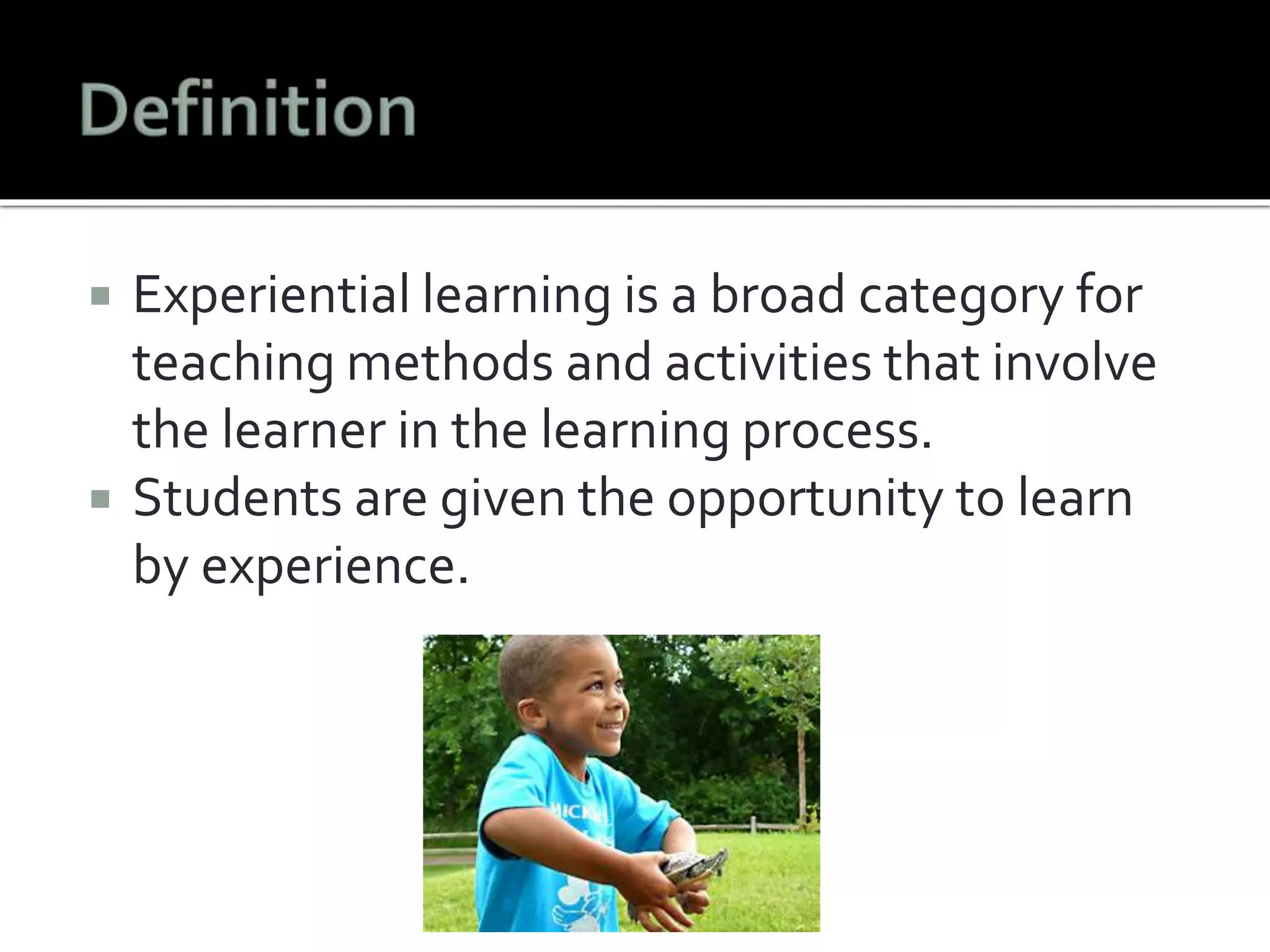
 Experiential learning is a broad category for 
teaching methods and activities that involve 
the learner in the learning process. 
 Students are given the opportunity to learn 
by experience.
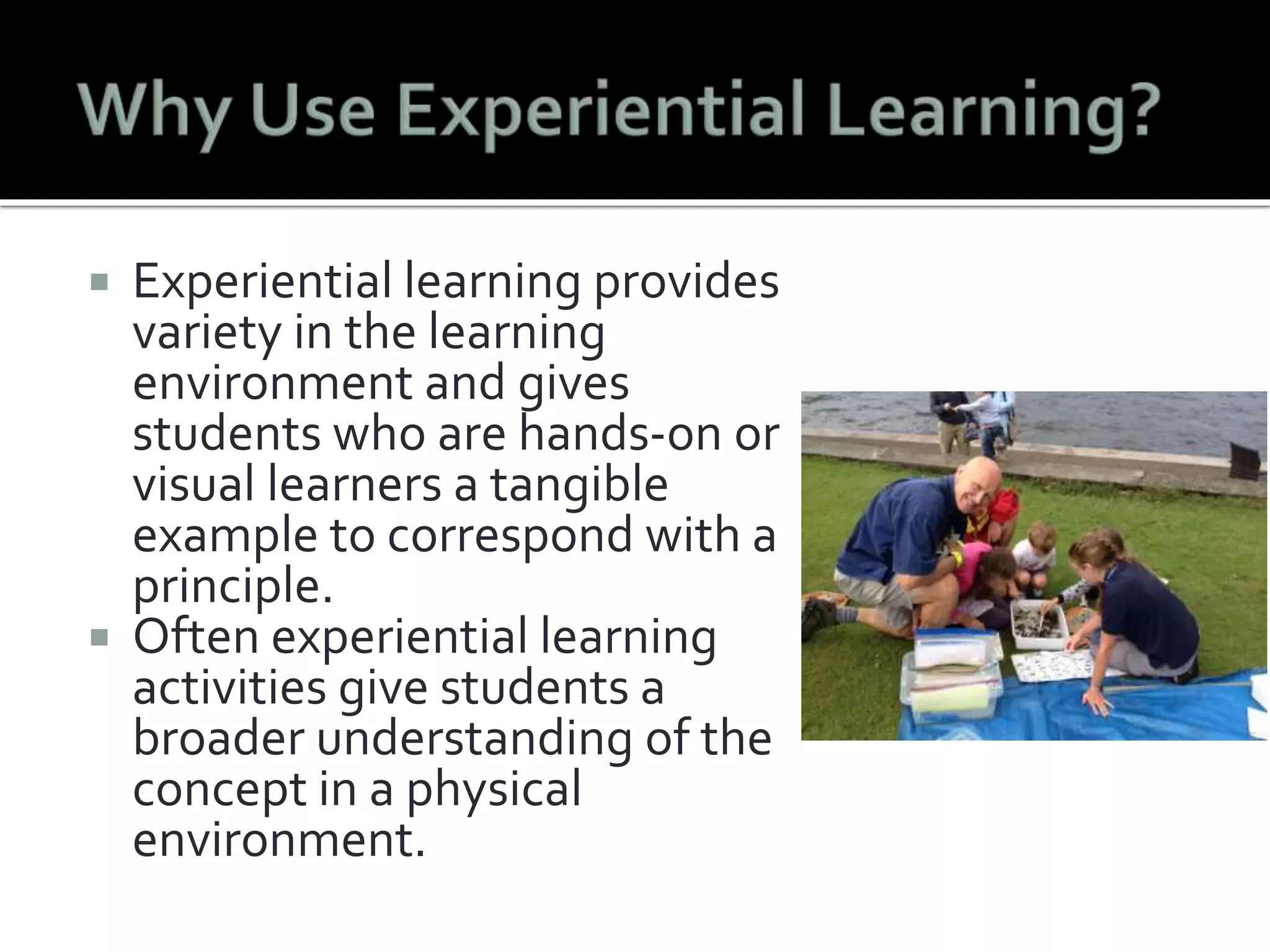
 Experiential learning provides 
variety in the learning 
environment and gives 
students who are hands-on or 
visual learners a tangible 
example to correspond with a 
principle. 
 Often experiential learning 
activities give students a 
broader understanding of the 
concept in a physical 
environment.
 60 percent of people are visual learners. 
 In a California study, Children who attended 
outdoor school programs significantly 
improved their science scores by 27 percent. 
 Students who participate in experiential 
learning are more likely to remember what 
they’ve been taught.
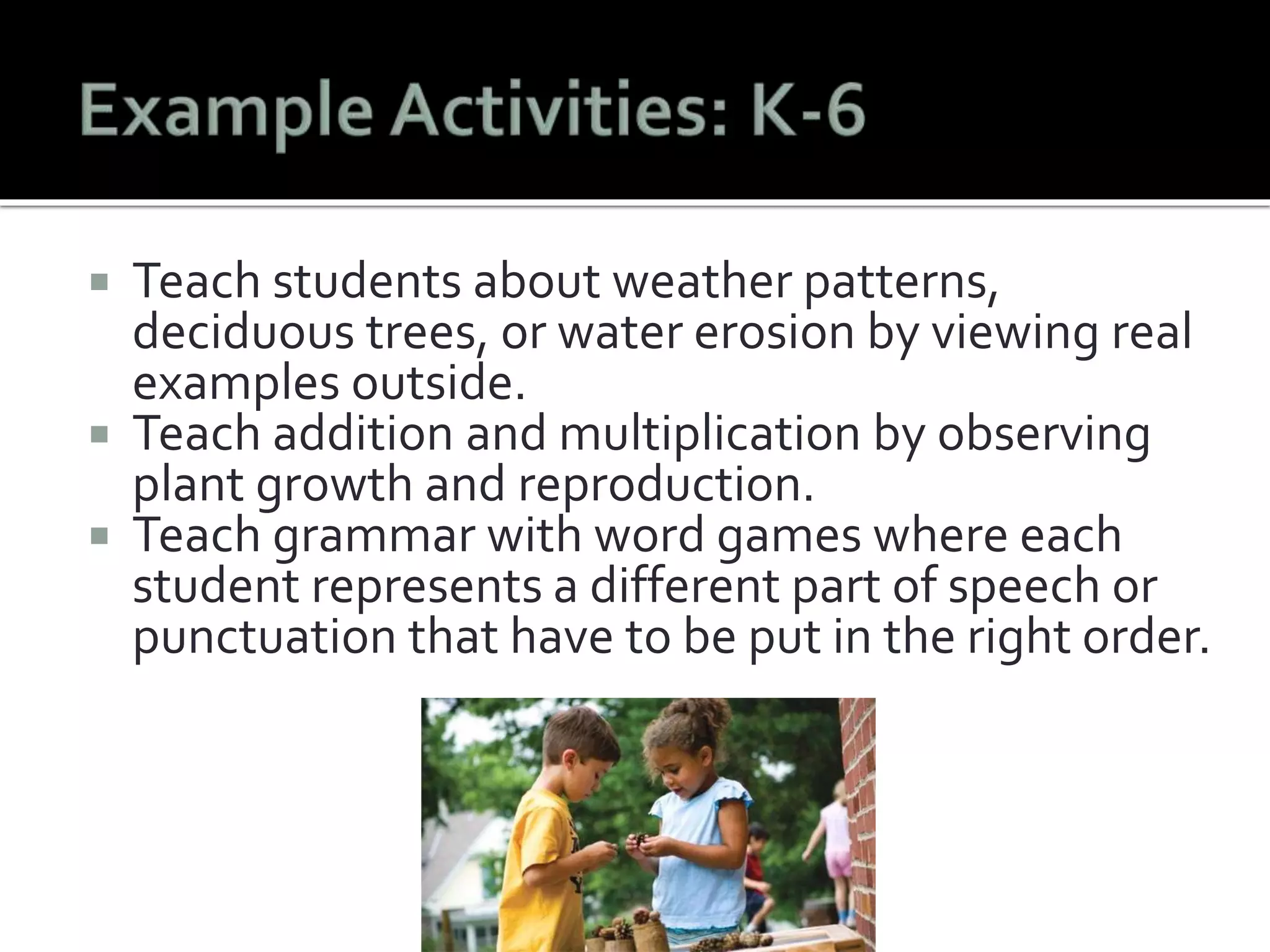
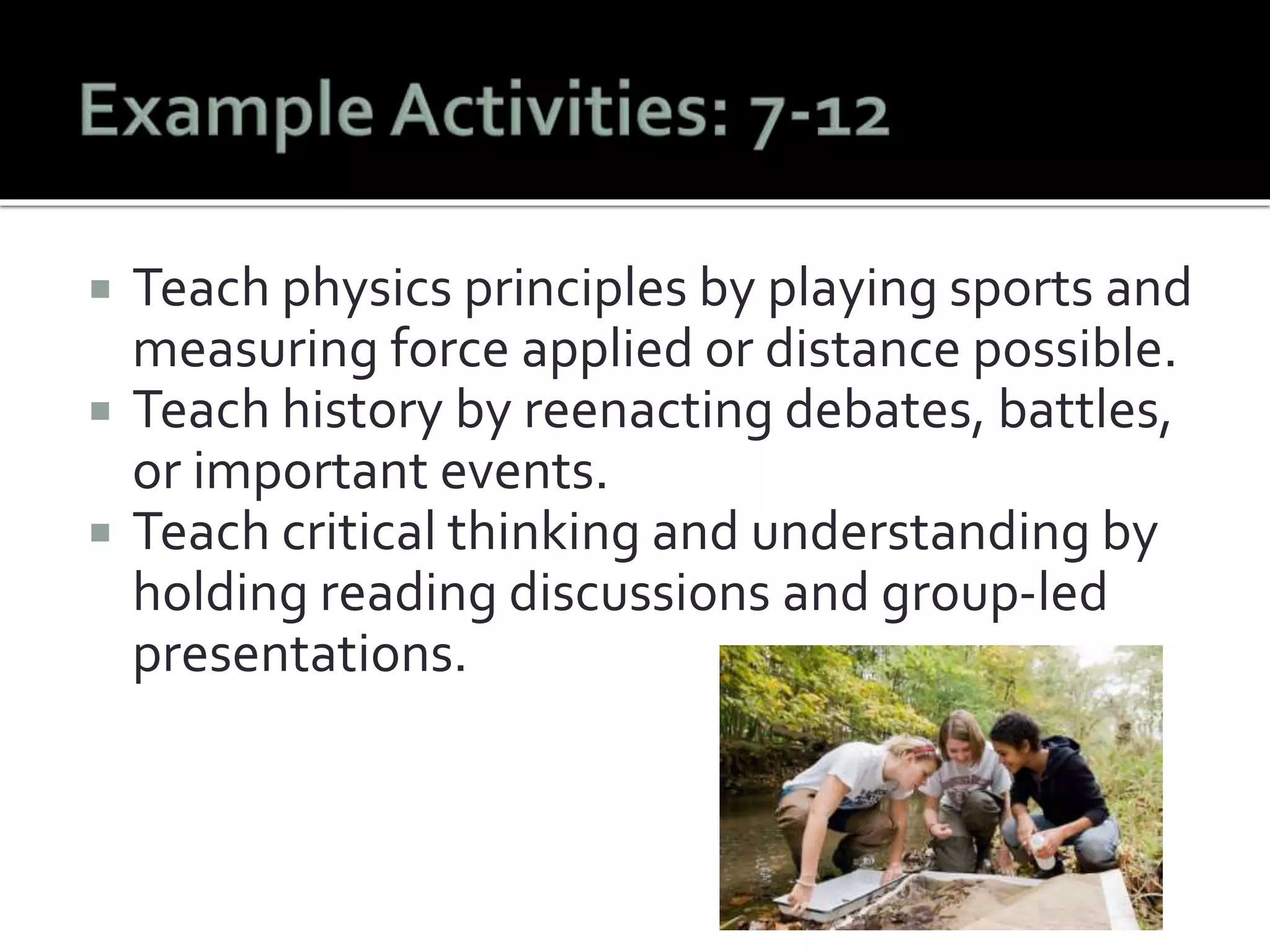
 Teach students about weather patterns, 
deciduous trees, or water erosion by viewing real 
examples outside. 
 Teach addition and multiplication by observing 
plant growth and reproduction. 
 Teach grammar with word games where each 
student represents a different part of speech or 
punctuation that have to be put in the right order.
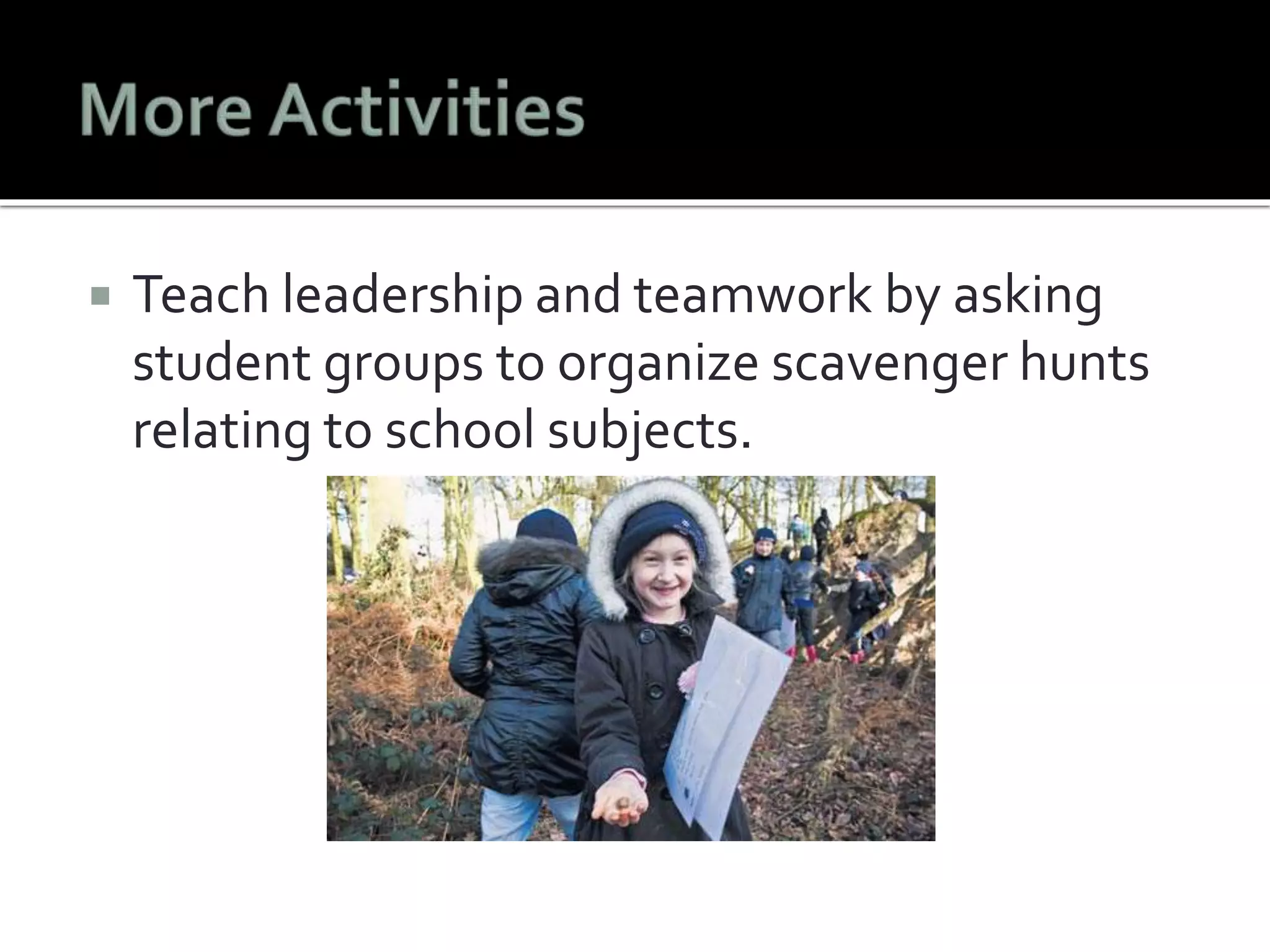
 Teach leadership and teamwork by asking 
student groups to organize scavenger hunts 
relating to school subjects.
 Teach physics principles by playing sports and 
measuring force applied or distance possible. 
 Teach history by reenacting debates, battles, 
or important events. 
 Teach critical thinking and understanding by 
holding reading discussions and group-led 
presentations.
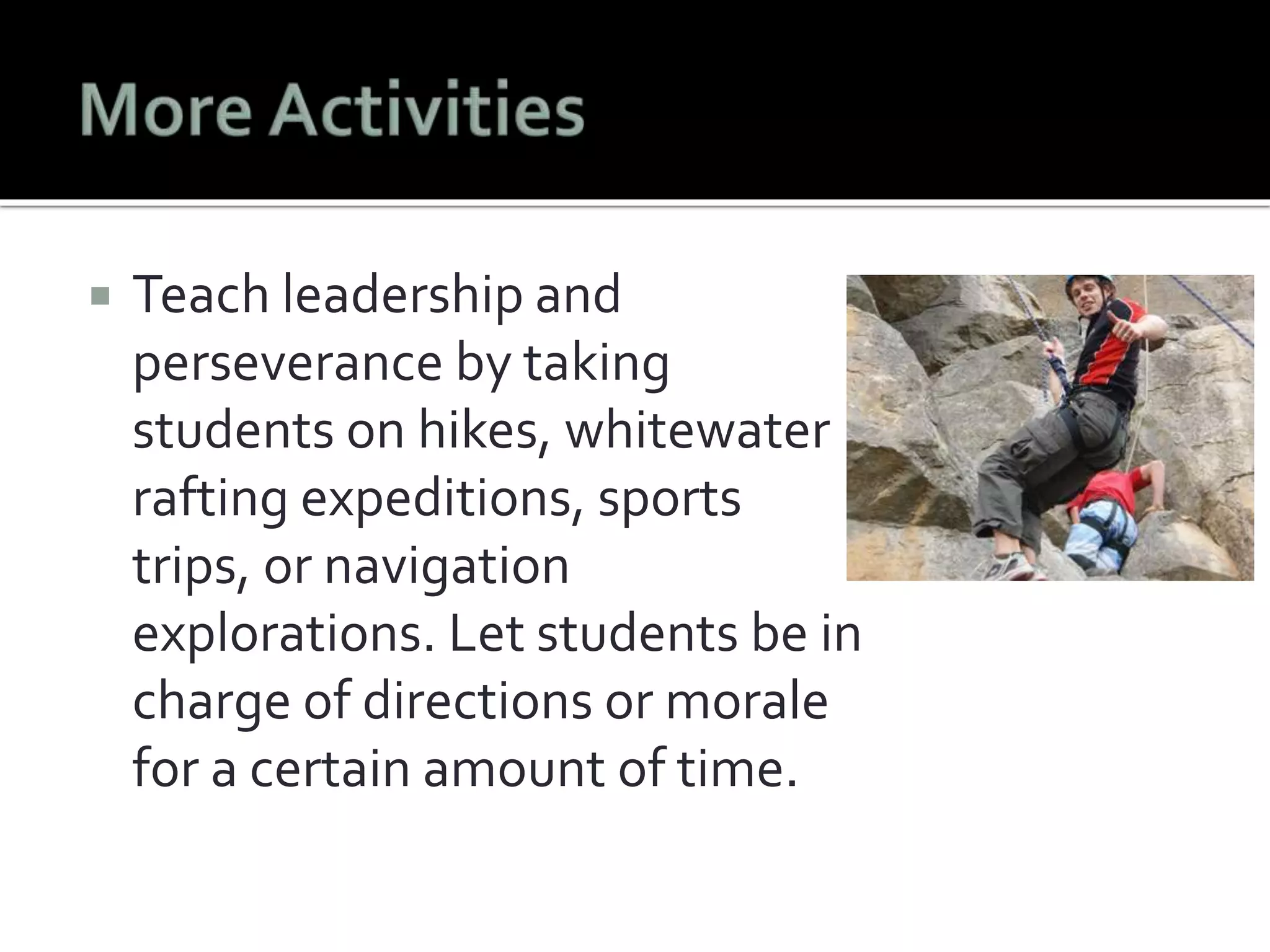
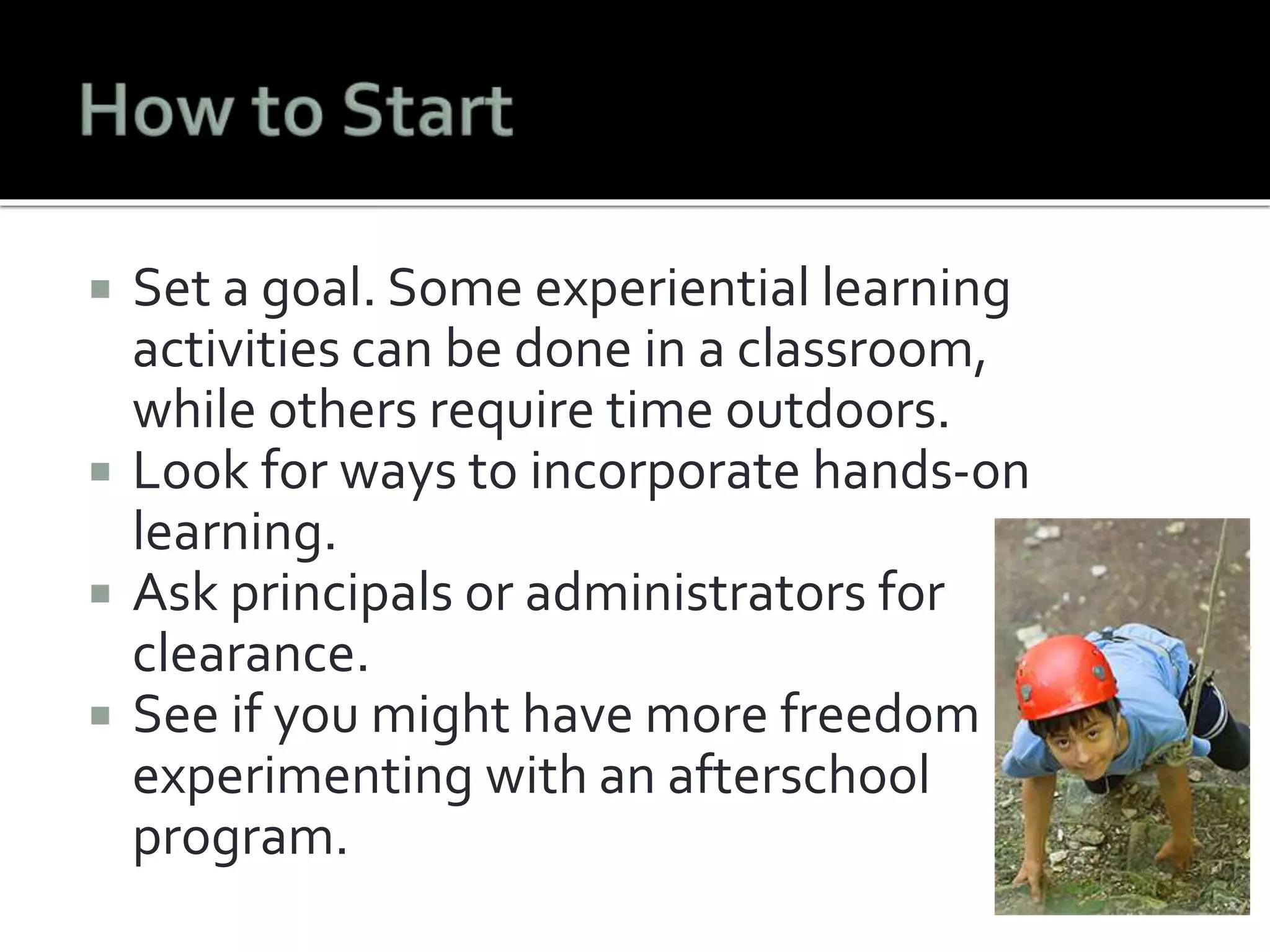
 Teach leadership and 
perseverance by taking 
students on hikes, whitewater 
rafting expeditions, sports 
trips, or navigation 
explorations. Let students be in 
charge of directions or morale 
for a certain amount of time.
 Set a goal. Some experiential learning 
activities can be done in a classroom, 
while others require time outdoors. 
 Look for ways to incorporate hands-on 
learning. 
 Ask principals or administrators for 
clearance. 
 See if you might have more freedom 
experimenting with an afterschool 
program.
 Logan River Academy actively involves students 
in experiential learning. We have found that 
students learn best when given chances to 
expand their knowledge. 
 Logan River Academy is a residential treatment 
center for students age 12 to 18. 
 To learn more about the education and 
accommodations available at Logan River 
Academy, check out our Facebook page, 
website, or Google+.

What is Experiential Learning?

  • 2.
     Experiential learningis a broad category for teaching methods and activities that involve the learner in the learning process.  Students are given the opportunity to learn by experience.
  • 3.
     Experiential learningprovides variety in the learning environment and gives students who are hands-on or visual learners a tangible example to correspond with a principle.  Often experiential learning activities give students a broader understanding of the concept in a physical environment.
  • 4.
     60 percentof people are visual learners.  In a California study, Children who attended outdoor school programs significantly improved their science scores by 27 percent.  Students who participate in experiential learning are more likely to remember what they’ve been taught.
  • 5.
     Teach studentsabout weather patterns, deciduous trees, or water erosion by viewing real examples outside.  Teach addition and multiplication by observing plant growth and reproduction.  Teach grammar with word games where each student represents a different part of speech or punctuation that have to be put in the right order.
  • 6.
     Teach leadershipand teamwork by asking student groups to organize scavenger hunts relating to school subjects.
  • 7.
     Teach physicsprinciples by playing sports and measuring force applied or distance possible.  Teach history by reenacting debates, battles, or important events.  Teach critical thinking and understanding by holding reading discussions and group-led presentations.
  • 8.
     Teach leadershipand perseverance by taking students on hikes, whitewater rafting expeditions, sports trips, or navigation explorations. Let students be in charge of directions or morale for a certain amount of time.
  • 9.
     Set agoal. Some experiential learning activities can be done in a classroom, while others require time outdoors.  Look for ways to incorporate hands-on learning.  Ask principals or administrators for clearance.  See if you might have more freedom experimenting with an afterschool program.
  • 10.
     Logan RiverAcademy actively involves students in experiential learning. We have found that students learn best when given chances to expand their knowledge.  Logan River Academy is a residential treatment center for students age 12 to 18.  To learn more about the education and accommodations available at Logan River Academy, check out our Facebook page, website, or Google+.