Brandi W.
EME 2040
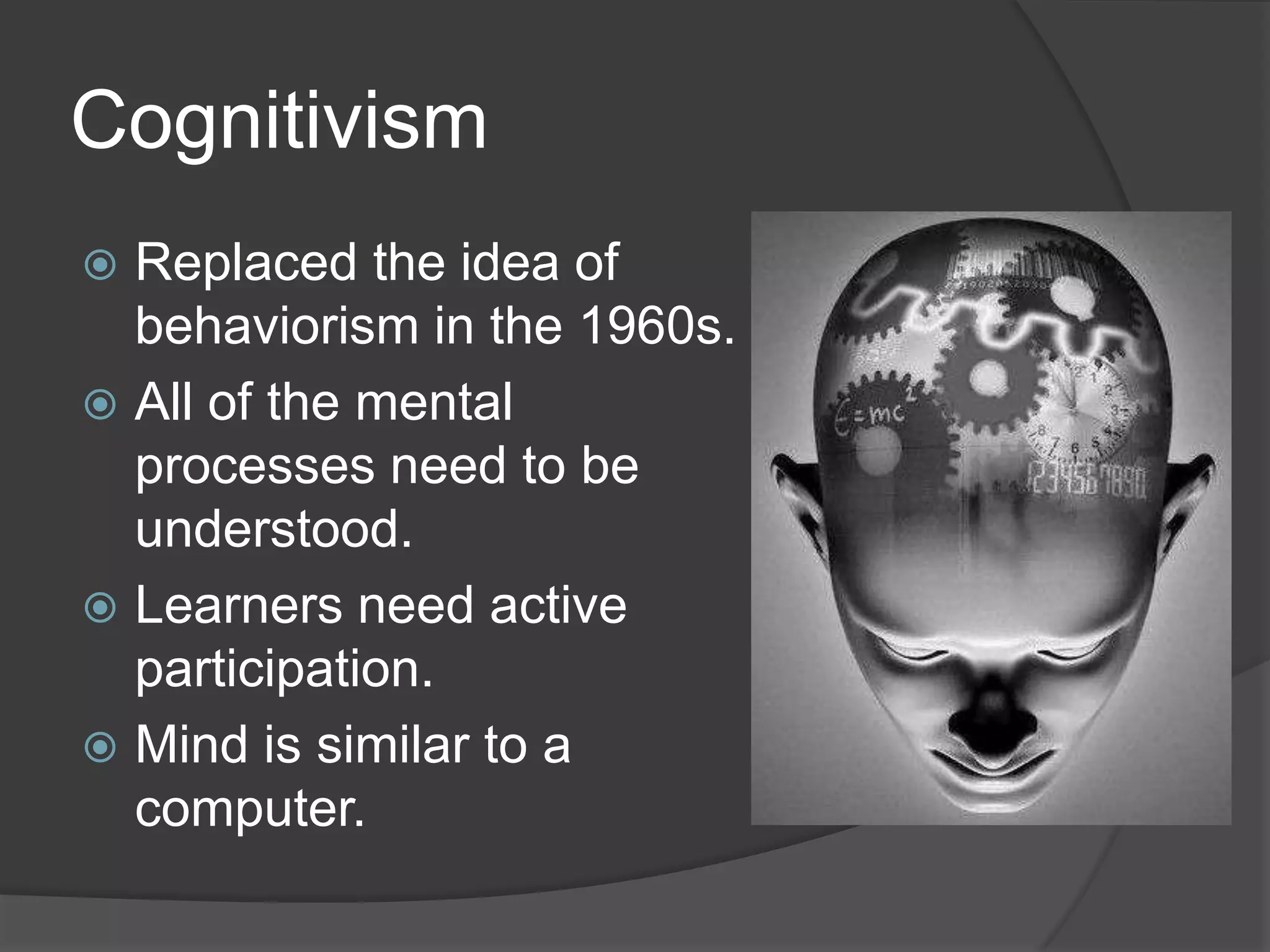
Cognitivism
 Replaced the idea of
behaviorism in the 1960s.
 All of the mental
processes need to be
understood.
 Learners need active
participation.
 Mind is similar to a
computer.
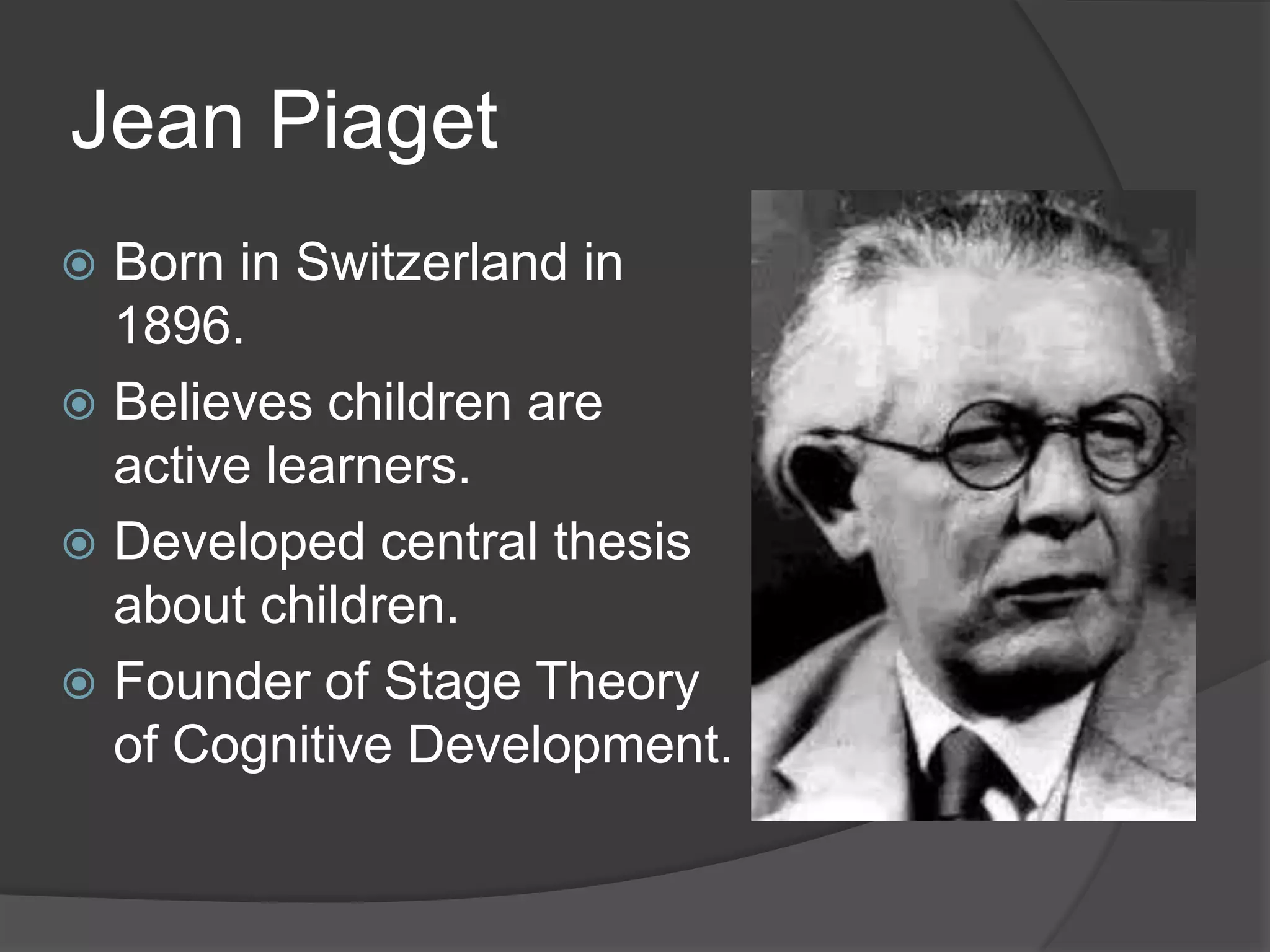
Jean Piaget
 Born in Switzerland in
1896.
 Believes children are
active learners.
 Developed central thesis
about children.
 Founder of Stage Theory
of Cognitive Development.
Central Thesis About
Children
 Develop self-centric theories about their
environment.
 Theories based on personal
interactions.
 Schemes used to gain information from
their environment
 Depth of cognitive structure grows as
the child grows.
* Schema: actions and responses to make
things happen
Cognitive Learning Theory
 Sensorimotor: (birth-2yrs old)
- Learning through sense and motor
actions
 Preoperational: (2-6/7yrs old)
- Use of symbols and images to learn
- imagination develops
Cognitive Learning Theory
 Concrete Operational: (6/7-11/12yrs old)
- Begin to think logically
- See other’s points of views
 Formal Operational: (11/12yrs old-adult)
- Thinking abstractly
- Understands cause and effect
- Establishes own beliefs and morals
During a Childs
development
 While learning children develop:
- Adaptation: Cognitive understanding
- Assimilation: New knowledge as
they experience new things
- Accommodation: Uses information
in life to change their knowledge base
- to help make sense of
environment
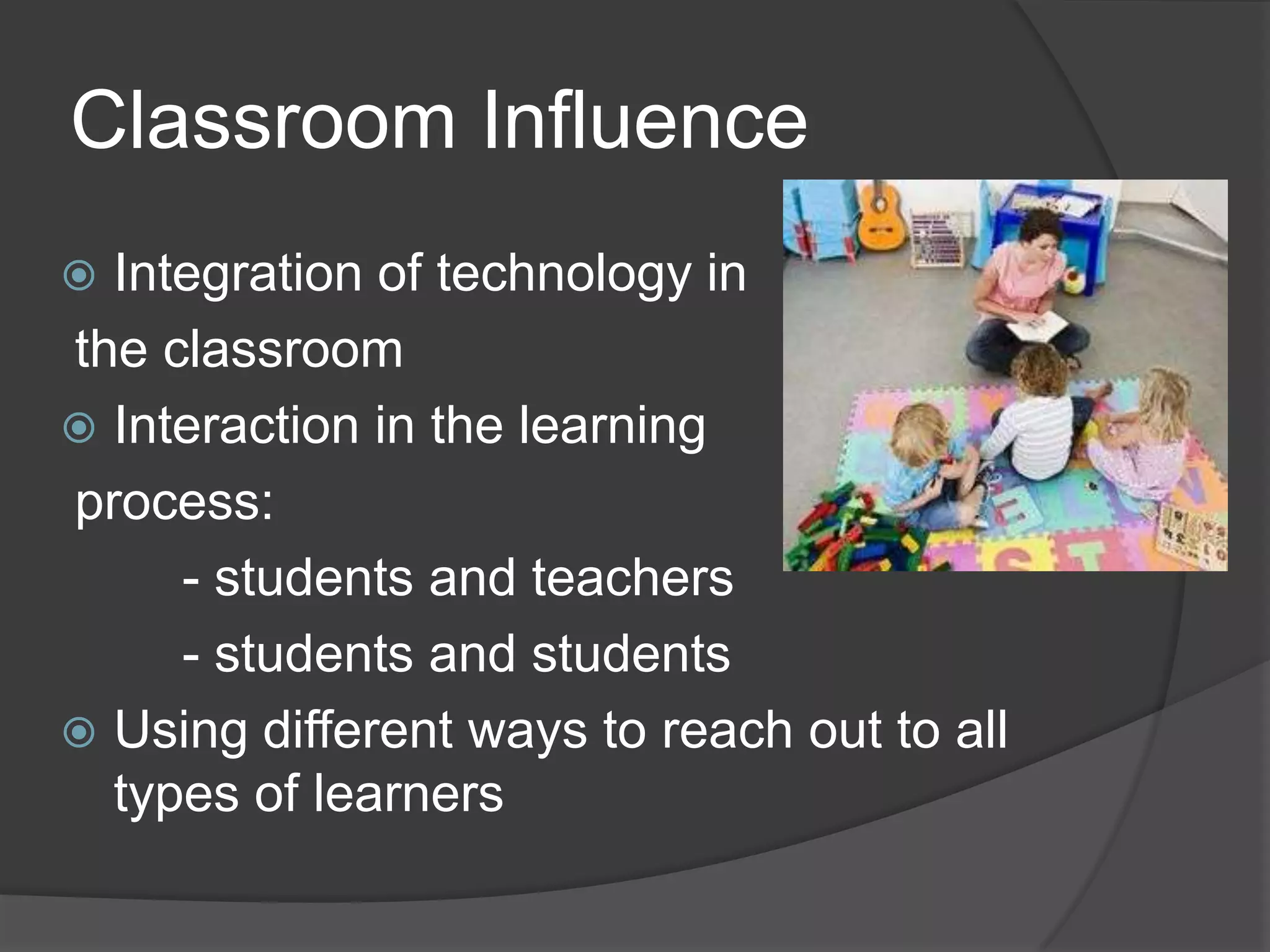
Classroom Influence
 Integration of technology in
the classroom
 Interaction in the learning
process:
- students and teachers
- students and students
 Using different ways to reach out to all
types of learners
Credits
 http://www.learning-
theories.com/cognitivism.html
 http://e-
learningactive.blogspot.com/2013/07/learning-
theory-cognitivism.html (image)
 http://www.nndb.com/people/359/000094077/
 http://www.ehow.com/info_7943130_classroo
m-using-piaget-learning-theories.html (image)
 “Teachers Discovering Computers Integrating
Technology in a Connected World” Shelly,
Gunter, Gunter

Cognitive learning theory

  • 1.
  • 2.
    Cognitivism  Replaced theidea of behaviorism in the 1960s.  All of the mental processes need to be understood.  Learners need active participation.  Mind is similar to a computer.
  • 3.
    Jean Piaget  Bornin Switzerland in 1896.  Believes children are active learners.  Developed central thesis about children.  Founder of Stage Theory of Cognitive Development.
  • 4.
    Central Thesis About Children Develop self-centric theories about their environment.  Theories based on personal interactions.  Schemes used to gain information from their environment  Depth of cognitive structure grows as the child grows. * Schema: actions and responses to make things happen
  • 5.
    Cognitive Learning Theory Sensorimotor: (birth-2yrs old) - Learning through sense and motor actions  Preoperational: (2-6/7yrs old) - Use of symbols and images to learn - imagination develops
  • 6.
    Cognitive Learning Theory Concrete Operational: (6/7-11/12yrs old) - Begin to think logically - See other’s points of views  Formal Operational: (11/12yrs old-adult) - Thinking abstractly - Understands cause and effect - Establishes own beliefs and morals
  • 7.
    During a Childs development While learning children develop: - Adaptation: Cognitive understanding - Assimilation: New knowledge as they experience new things - Accommodation: Uses information in life to change their knowledge base - to help make sense of environment
  • 8.
    Classroom Influence  Integrationof technology in the classroom  Interaction in the learning process: - students and teachers - students and students  Using different ways to reach out to all types of learners
  • 9.
    Credits  http://www.learning- theories.com/cognitivism.html  http://e- learningactive.blogspot.com/2013/07/learning- theory-cognitivism.html(image)  http://www.nndb.com/people/359/000094077/  http://www.ehow.com/info_7943130_classroo m-using-piaget-learning-theories.html (image)  “Teachers Discovering Computers Integrating Technology in a Connected World” Shelly, Gunter, Gunter