Click to edit
Master title style
Click to edit
Master subtitle style
Yeast Chromosome Structure
and Function
• In eukaryotes, the genetic material is packed in the cell
nucleus and divided between a set of different
chromosomes.
• The DNA had been found to be associated with proteins
that packaged the DNA in the cell nucleus.
• how the DNA is packaged in the structure collectively called
chromatin.
• In 1974 the nucleosome discovered and thought to be a
fundamental unit for chromatin organization (Kornberg and
Lorch, 1999).
Chromatin Structure
• The nucleus of Saccharomyces cerevisiae contain16
chromosomes.
• Each of which carries a centromere and two telomeres.
• The repeat unit of chromatin is made from the core
nucleosome,
• which in yeast contains 146 bp of DNA wrapped around
the histone octamer that consists of two molecules of each
core histones H2A, H2B, H3, and H4 .
• As in higher eukaryotes, nucleosomal arrays fold into a 30-
nm fiber.
• A single linker histone H1 gene, HHO1, has been found
in yeast that are structurally related to the normal
histones but are functionally distinct.
• The distances between nucleosomes are not constant
and may vary.(20–90 bp)
• There are heterochromatic regions that suppress
transcription from resident genes.
• In such regions, additional proteins bind to the
nucleosomes, which leads to gene silencing.
• Chromosome compaction is changed at mitosis (or
meiosis), when cohesin and condensin proteins bind to
chromatin, thereby inducing a more condensed form
of DNA called chromosomes during cell division.
Modification of Chromatin
Structure
• Two main principles are involve in the modification of
chromatin structure.
1. Modification of the histones by various enzymatic
activities (chromatin modifying complexes).
2. Temporary reorganization of the local nucleosome
structure by chromatin-remodeling complexes.
Histone Acetylation
• Histone modifications can occur post-translationally at
many sites along with basic proteins.
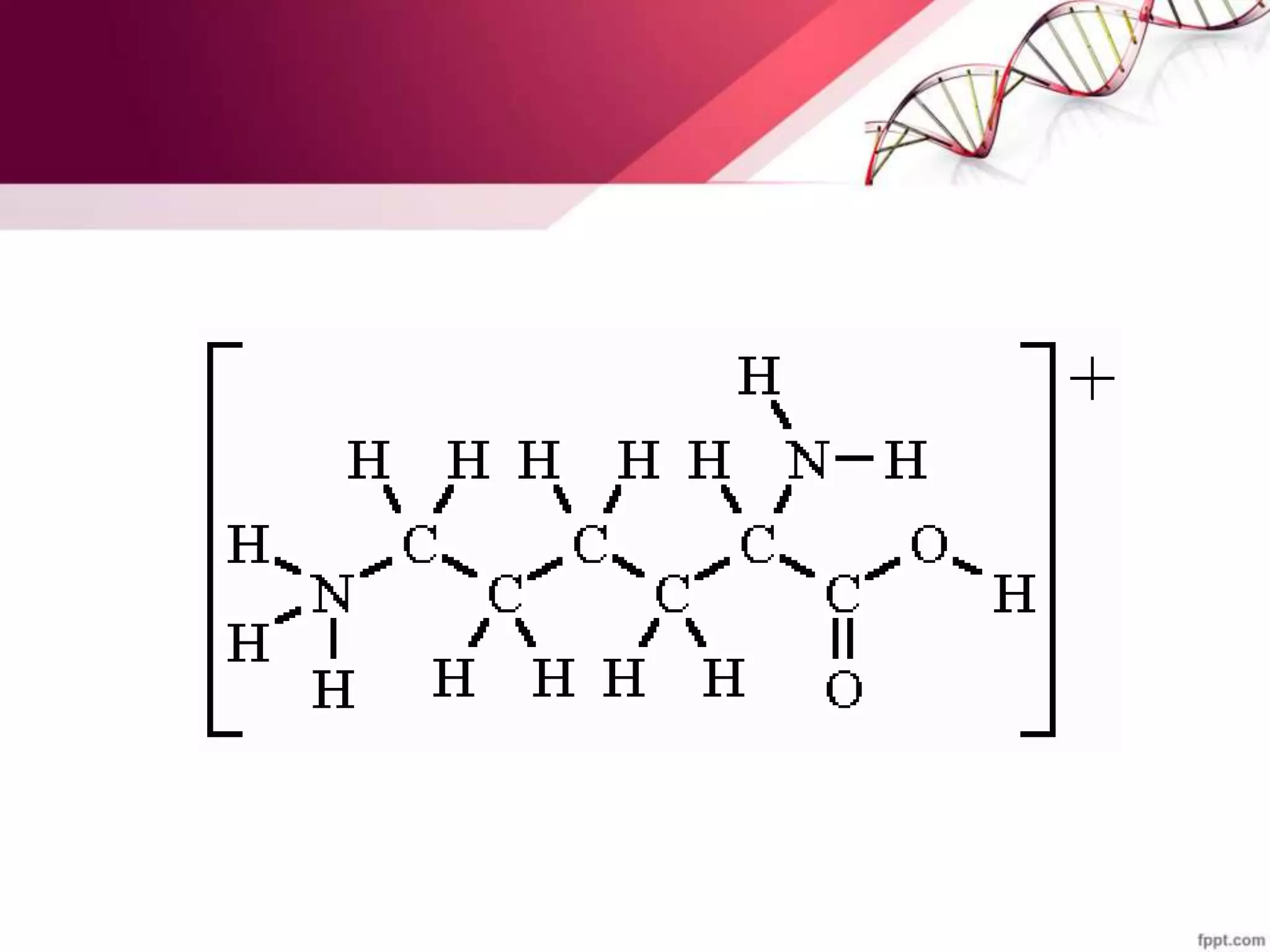
• Preferred targets for acetylation are the NH3 groups of
lysine residues.
• Acetylation were among the first modifications that
became recognized, because these modifications reduce
the number of positive charges in histones
Histone Deacetylation
• The removal of acetyl residues is achieved by histone
deacetylases (HDACs).
• Several HDACs have been isolated from yeast that catalyze
the deacetylation reaction.
• HDAC families include the HDAC I class and
Histone Methylation
• Histone methylation is chemically more stable. The modification adds
methyl groups either to a lysine NH3 group, which (according to its
structure) can be mono-, di-, or trimethylated
• Or to an arginine residue, which can accommodate two methyl
groups.
• Histone methylation is carried out by histone methyltransferases
(HMTs) that use S-adenosylmethionine (SAM) as coenzyme
• Unlike acetylation, the charge of the methylated histones will not
change.
• However, similar to acetylation, methylated residues will recruit
additional factors binding to them through a number of protein
domains.
• As a consequence, these factors lead to remodeling of chromatin
structure, thus inducing complex patterns of gene expression.
Centromeres
• The centromeric DNA sequences in all yeast chromosomes
share a common substructure which extends from 200 bp
to 200 kb.
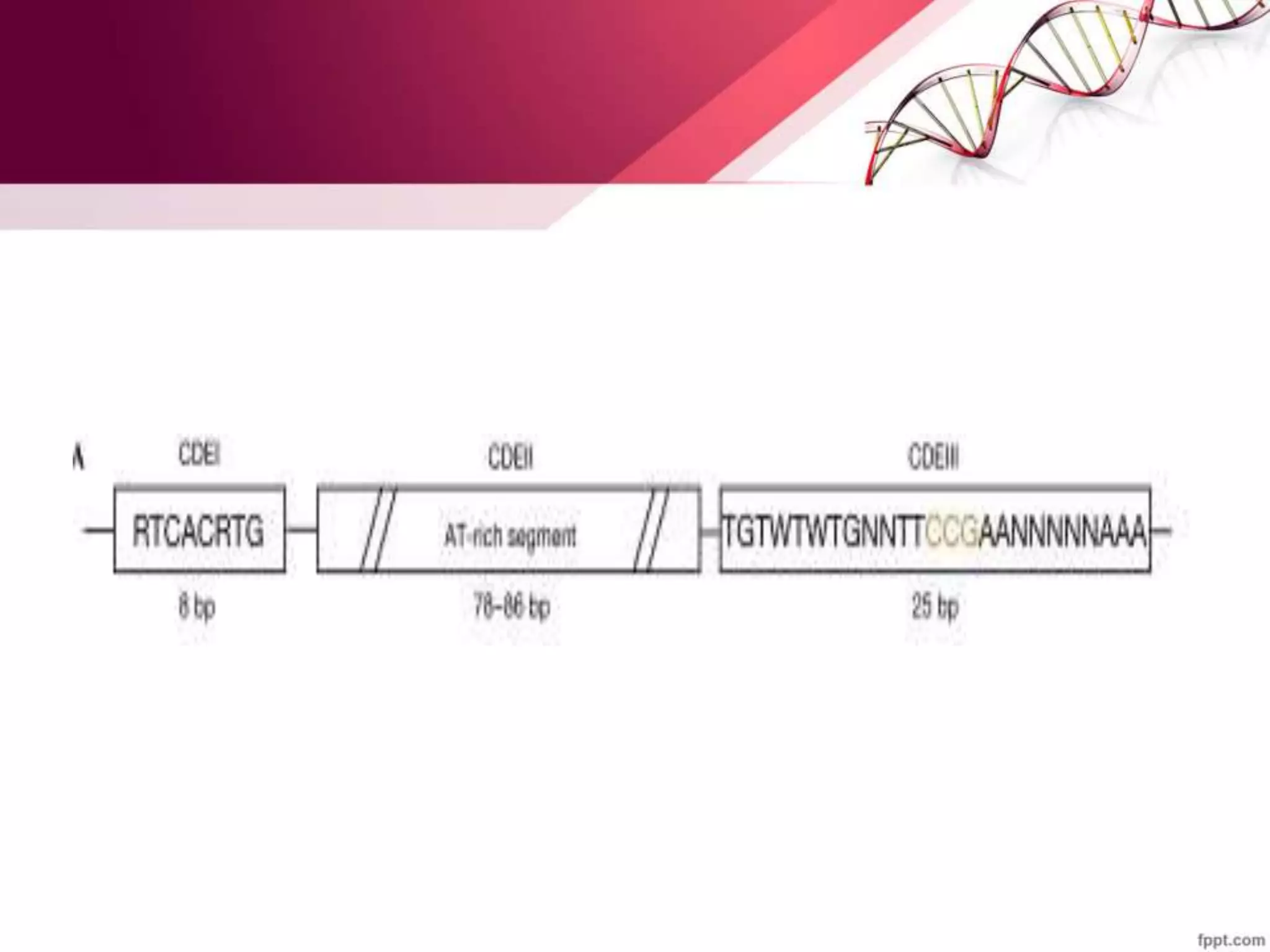
• The centromere sequences from S. cerevisiae can be
subdivided into three distinct regions, which differ in base
composition.
• The central part containing the consensus sequence
AAWTWARTCACRTGATAWAWWT (centromere DNA element
I (CDEI)) represents the binding site for a basic helix–loop–
helix (bHLH) DNA binding protein, the centromere-binding
factor (Cbf1p).
Origins of Replication
• As early as in 1979, the laboratory of Ron Davis isolated
and characterized a yeast chromosomal replicator that
turned out to be a comparably short segment of DNA.
• Such sequences functioning as autonomous replication
origins (autonomous replication sequences (ARSs)) – also
suitable for autonomously replicating yeast plasmid
vectors.
• These sites were found not only to be present within the
centromeric regions, but also to occur in similar copies
along all yeast chromosomes at about 30 kb intervals.
• Chromosomal ARS and centromere (CEN) elements were
observed to bind specifically to the yeast nuclear scaffold
(Amati and Gasser, 1988).
• In contrast to the complex and highly conserved replicators
present in prokaryotes and viruses, under study in Bruce
Stillman’s laboratory no conserved sequences have been
detected in the sequences that autonomously replicate in
yeast with the exception of a single 11-bp element called
the ARS consensus sequence (ACS).
• This element was found to be essential, but not sufficient,
for replicator function.
Telomeres
• Telomeres are specialized DNA sequences that enable
complete replication of chromosome ends and prevent
their degradation in the cell.
• Later, analysis of telomeric sequences by Louis and
coworkers in conjunction with the yeast genome
sequencing project revealed that all yeast chromosomes
share characteristic telomeric and subtelomeric structures.
• Telomeric (TG1–3/C1–3A) repeats, some 300 nucleotides
in length, are found at all telomere ends.
• Thirty-one of 32 of the yeast chromosome ends contain the
X core sub telomeric elements (400 bp) and 21 of 32 of the
chromosome ends carry an additional Y dash element.
• There are two Y dash classes, 5.2 and 6.7 kb in length, both
of which include an open reading frame (ORF) for an RNA
helicase,
• which is a catalytic inhibitor of telomerase in yeast.
• Y dash elements show a high degree of conservation, but
vary among different strains.

Yeast chromosome structure and function

  • 1.
    Click to edit Mastertitle style Click to edit Master subtitle style
  • 2.
    Yeast Chromosome Structure andFunction • In eukaryotes, the genetic material is packed in the cell nucleus and divided between a set of different chromosomes. • The DNA had been found to be associated with proteins that packaged the DNA in the cell nucleus. • how the DNA is packaged in the structure collectively called chromatin. • In 1974 the nucleosome discovered and thought to be a fundamental unit for chromatin organization (Kornberg and Lorch, 1999).
  • 3.
    Chromatin Structure • Thenucleus of Saccharomyces cerevisiae contain16 chromosomes. • Each of which carries a centromere and two telomeres. • The repeat unit of chromatin is made from the core nucleosome, • which in yeast contains 146 bp of DNA wrapped around the histone octamer that consists of two molecules of each core histones H2A, H2B, H3, and H4 . • As in higher eukaryotes, nucleosomal arrays fold into a 30- nm fiber.
  • 4.
    • A singlelinker histone H1 gene, HHO1, has been found in yeast that are structurally related to the normal histones but are functionally distinct. • The distances between nucleosomes are not constant and may vary.(20–90 bp) • There are heterochromatic regions that suppress transcription from resident genes. • In such regions, additional proteins bind to the nucleosomes, which leads to gene silencing. • Chromosome compaction is changed at mitosis (or meiosis), when cohesin and condensin proteins bind to chromatin, thereby inducing a more condensed form of DNA called chromosomes during cell division.
  • 5.
    Modification of Chromatin Structure •Two main principles are involve in the modification of chromatin structure. 1. Modification of the histones by various enzymatic activities (chromatin modifying complexes). 2. Temporary reorganization of the local nucleosome structure by chromatin-remodeling complexes.
  • 6.
    Histone Acetylation • Histonemodifications can occur post-translationally at many sites along with basic proteins. • Preferred targets for acetylation are the NH3 groups of lysine residues. • Acetylation were among the first modifications that became recognized, because these modifications reduce the number of positive charges in histones
  • 7.
    Histone Deacetylation • Theremoval of acetyl residues is achieved by histone deacetylases (HDACs). • Several HDACs have been isolated from yeast that catalyze the deacetylation reaction. • HDAC families include the HDAC I class and
  • 8.
    Histone Methylation • Histonemethylation is chemically more stable. The modification adds methyl groups either to a lysine NH3 group, which (according to its structure) can be mono-, di-, or trimethylated • Or to an arginine residue, which can accommodate two methyl groups. • Histone methylation is carried out by histone methyltransferases (HMTs) that use S-adenosylmethionine (SAM) as coenzyme • Unlike acetylation, the charge of the methylated histones will not change. • However, similar to acetylation, methylated residues will recruit additional factors binding to them through a number of protein domains. • As a consequence, these factors lead to remodeling of chromatin structure, thus inducing complex patterns of gene expression.
  • 10.
    Centromeres • The centromericDNA sequences in all yeast chromosomes share a common substructure which extends from 200 bp to 200 kb. • The centromere sequences from S. cerevisiae can be subdivided into three distinct regions, which differ in base composition. • The central part containing the consensus sequence AAWTWARTCACRTGATAWAWWT (centromere DNA element I (CDEI)) represents the binding site for a basic helix–loop– helix (bHLH) DNA binding protein, the centromere-binding factor (Cbf1p).
  • 12.
    Origins of Replication •As early as in 1979, the laboratory of Ron Davis isolated and characterized a yeast chromosomal replicator that turned out to be a comparably short segment of DNA. • Such sequences functioning as autonomous replication origins (autonomous replication sequences (ARSs)) – also suitable for autonomously replicating yeast plasmid vectors. • These sites were found not only to be present within the centromeric regions, but also to occur in similar copies along all yeast chromosomes at about 30 kb intervals.
  • 13.
    • Chromosomal ARSand centromere (CEN) elements were observed to bind specifically to the yeast nuclear scaffold (Amati and Gasser, 1988). • In contrast to the complex and highly conserved replicators present in prokaryotes and viruses, under study in Bruce Stillman’s laboratory no conserved sequences have been detected in the sequences that autonomously replicate in yeast with the exception of a single 11-bp element called the ARS consensus sequence (ACS). • This element was found to be essential, but not sufficient, for replicator function.
  • 14.
    Telomeres • Telomeres arespecialized DNA sequences that enable complete replication of chromosome ends and prevent their degradation in the cell. • Later, analysis of telomeric sequences by Louis and coworkers in conjunction with the yeast genome sequencing project revealed that all yeast chromosomes share characteristic telomeric and subtelomeric structures. • Telomeric (TG1–3/C1–3A) repeats, some 300 nucleotides in length, are found at all telomere ends. • Thirty-one of 32 of the yeast chromosome ends contain the X core sub telomeric elements (400 bp) and 21 of 32 of the chromosome ends carry an additional Y dash element.
  • 15.
    • There aretwo Y dash classes, 5.2 and 6.7 kb in length, both of which include an open reading frame (ORF) for an RNA helicase, • which is a catalytic inhibitor of telomerase in yeast. • Y dash elements show a high degree of conservation, but vary among different strains.