
SITE-DIRECTED MUTAGENESIS
Presented By…
Fizza Mehwish
DEPARTMENT OF BIOTECHNOLOGY
UNIVERSITY OF SCIENCE & TECHNOLOGY, BANNU
CONTENTS
• Mutagenesis
• Types of Mutagenesis
1. Random Mutagenesis
2. Site-directed Mutagenesis
• History
• Types Of Site-directed Mutagenesis
1. Oligonucleotide Site-directed Mutagenesis
2. Cassette Mutagenesis
3. PCR Site-directed Mutagenesis
• Applications
MUTAGENESIS
Mutagenesis is a process by which the genetic
information of an organism is changed by the
production of a mutation.
• A mutation is a change in a DNA sequence.
Mutations can result from DNA copying mistakes
made during cell division, exposure to ionizing
radiation, exposure to chemicals called mutagens,
or infection by viruses.
TYPES OF MUTAGENESIS
1.Random Mutagenesis..
When an organism exposed to physical or
chemical mutagen, mutations are induced randomly In all genes of
the organism. Hence, this process of generating mutations is known as
Random Mutagenesis.
2.Site-Directed Mutagenesis..
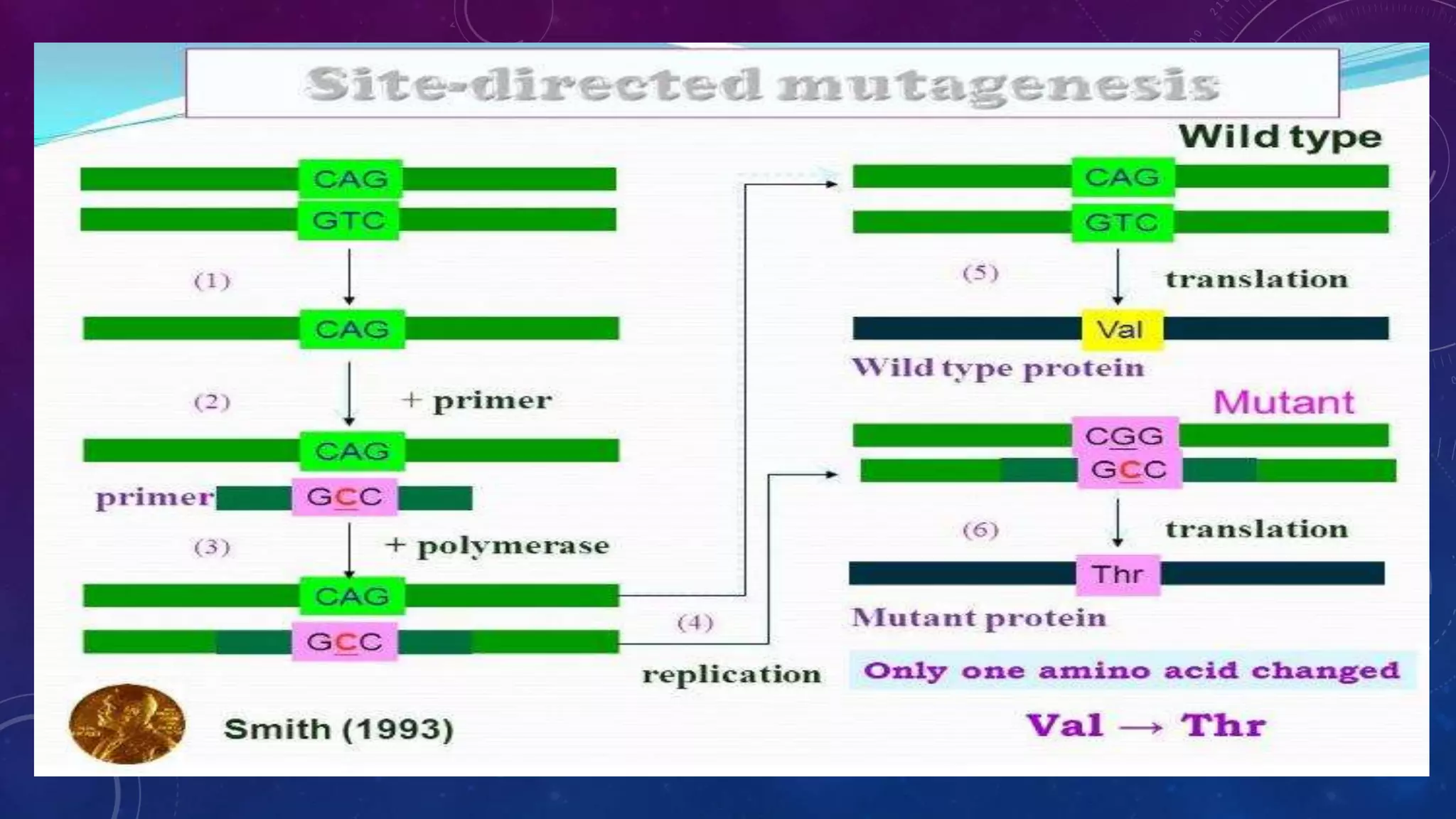
Site-directed mutagenesis is a molecular
biology method that is used to make specific and intentional changes
to the DNA sequence of a gene.
HISTORY
• Site-directed mutagenesis was achieved in 1974 in the
laboratory of Charles Weissmann using a nucleotide
analogue N4-hydroxycytidine, which induces transition
of GC to AT.
• Hutchison later produced with his collaborator Michael
Smith in 1978 a more flexible approach to site-directed
mutagenesis by using oligonucleotides in a primer
extension method with DNA polymerase.
TYPES OF SITE-DIRECTED
MUTAGENESIS
OLIGONUCLEOTIDE SITE-DIRECTED
MUTAGENESIS
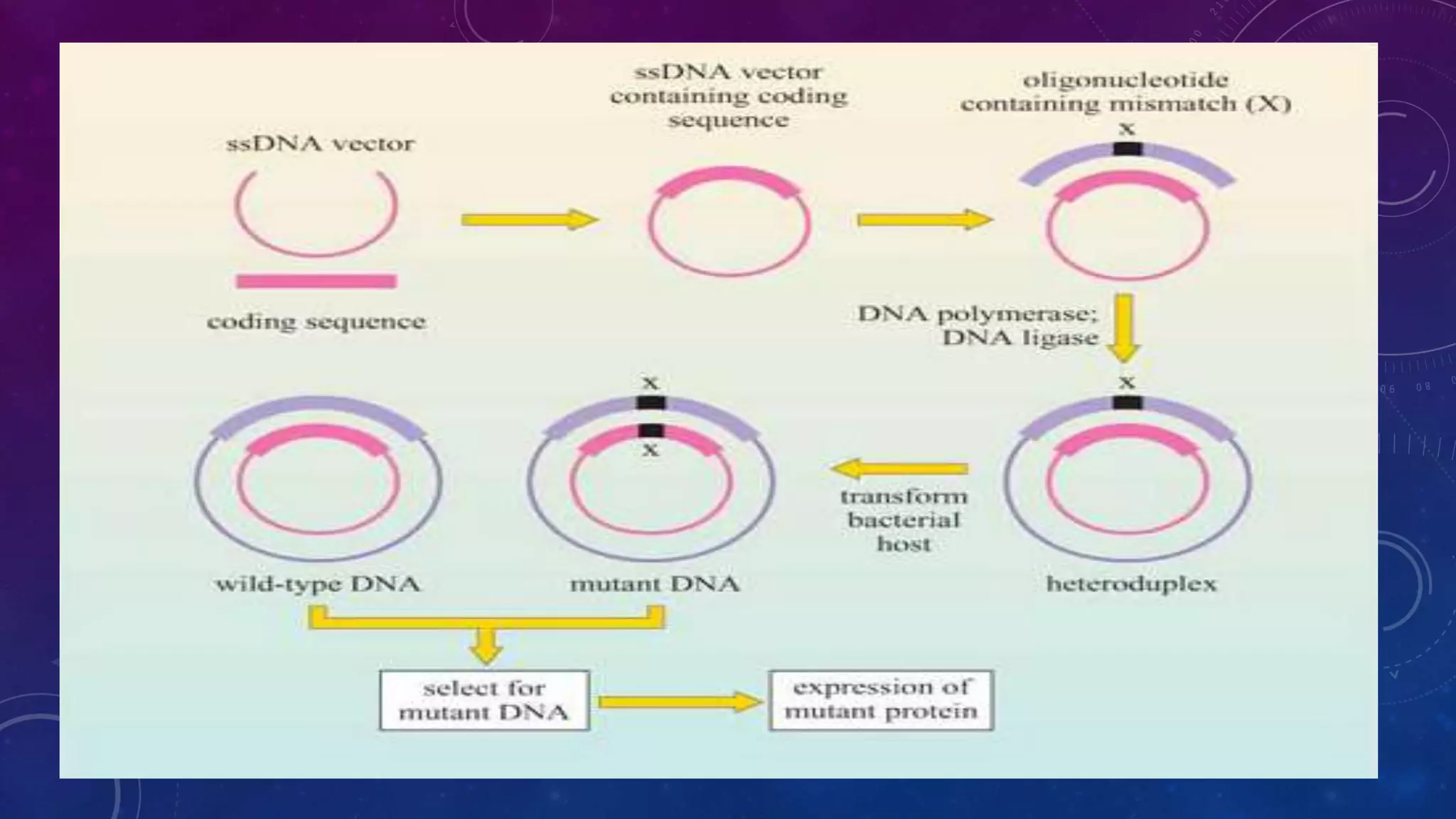
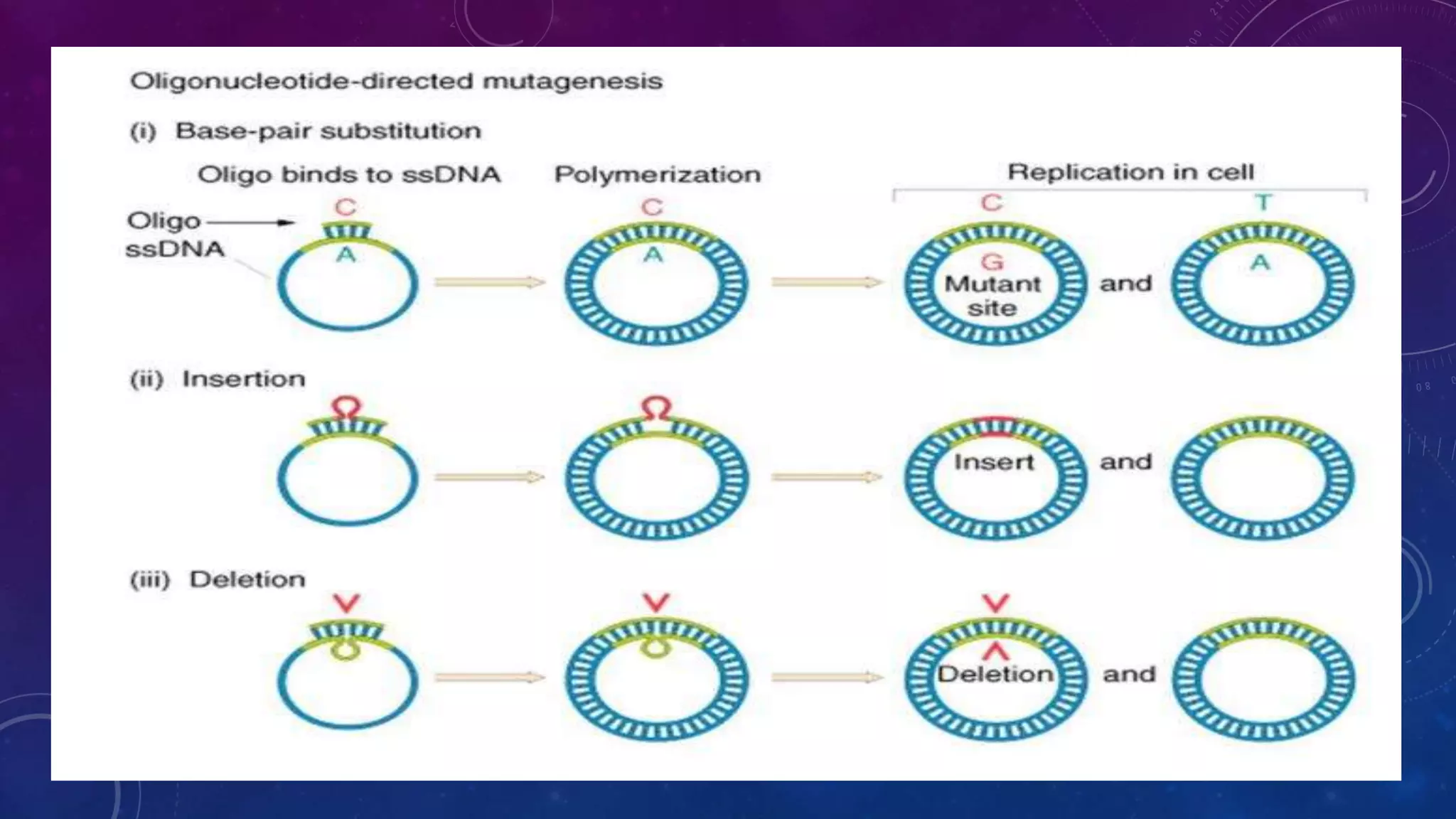
• The synthetic primer contain the desired mutation and is
complementary to the template DNA around the mutation site so
it can hybridize with the DNA in the gene of interest.
• The single stranded primer (10-25 nucleotides) is then extended
using the DNA polymerase which copies rest of gene.
• The gene thus copied contains the mutated site, and is then
introduced in a host cell as a vector (plasmid) and then cloned.
• Finally mutated is then selected by screening and selection
method .
CASSETTE MUTAGENESIS
Cassette mutagenesis is a type of site-directed mutagenesis that uses a
short, double-stranded oligonucleotide sequence to replace a fragment of
target DNA.
• It uses complementary restriction enzyme digest ends on the target DNA
and gene cassette to achieve specificity.
• It is different from method that use single nucleotide mutation, in that a
single gene cassette can contain multiple mutations.
• Cassette Mutagenesis also does not involve Primer extension by DNA
polymerase.
• In Cassette Mutagenesis, a synthetic double stranded oligonucleotide
‘Cassette’ containing the desired mutations is docked between two
restriction enzyme sites on a Plasmid vector.
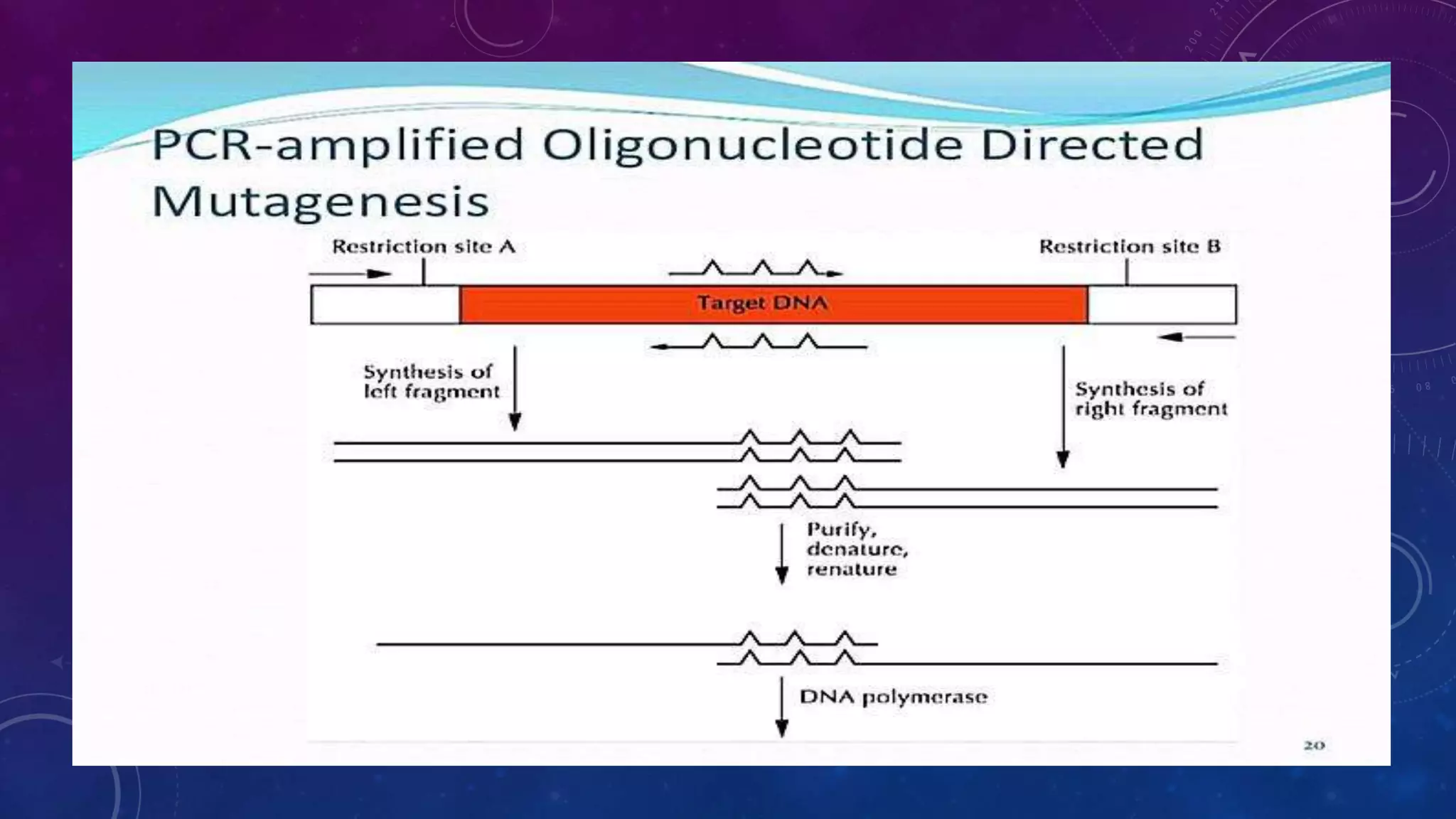
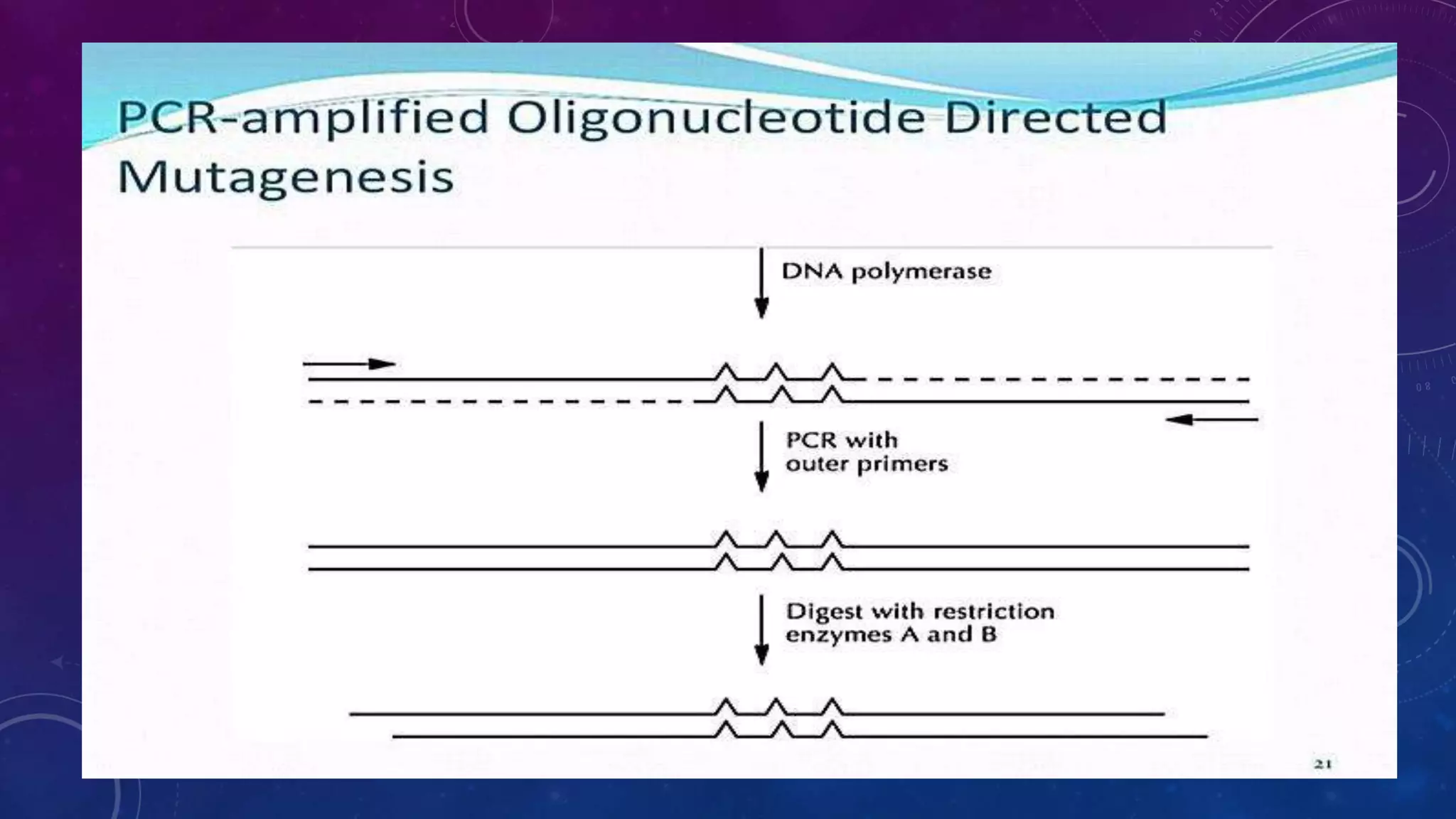
PCR SITE-DIRECTED MUTAGENESIS
PCR Site-directed Mutagenesis method, thus allow specific mutations to be
incorporated in any double stranded plasmid, eliminating the need of single
stranded rescue.
• PCR in Site-directed Mutagenesis Accomplishes strand Separation by using a
denaturing step to separate the complimentary strands and allowing efficient
polymerization of PCR mutated primers.
• The following reactions take place during PCR-based site-directed
mutagenesis:
1. In the denaturation step, high temperature breaks the hydrogen bonds
between the double-stranded DNA template, separating the strands.
2. During the annealing step, the mutagenic oligonucleotides bind to
complementary nucleobases on one strand. The other oligonucleotides bind
to the complementary nucleobases on the opposite strand.
CONTINUE…..
3. In the extension step, new daughter strands are synthesized by the
enzyme DNA polymerase, extending the primers.
4. At the end of the extension step, the resulting two complementary
daughter strands possess the mutations derived from the mutagenic
primers and serve as templates in the subsequent PCR cycle, in addition to
the original template
Steps of PCR
based Site-
directed
Mutagenesis
APPLICATIONS
• Desired Products Production:
Site-directed Mutagenesis is used to generate
mutations that produce our desired protein or protein having desired
function.
• Investigative tools:
Specific mutations in DNA allow the function and
properties of a DNA sequence to be figure out.
• Research:
Allow researchers to study the impact of change or mutation
within a generation.
COMMERCIAL APPLICATION
Proteins may be engineered to produce mutant forms that
are tailored for a specific application.
• For example, commonly used laundry detergent may
contain Subtilisin, whose wild type form has a methionine
that can be oxidized by bleach, hence, reducing the activity
of the protein in this process.
• The methionine may be replaced by alanine or other
residues, making it resistant to Oxidization thereby
keeping the protein active in the presence of bleach.
Thanks….

SITE-DIRECTED MUTAGENESIS.pptx

  • 1.
    SITE-DIRECTED MUTAGENESIS Presented By… FizzaMehwish DEPARTMENT OF BIOTECHNOLOGY UNIVERSITY OF SCIENCE & TECHNOLOGY, BANNU
  • 2.
    CONTENTS • Mutagenesis • Typesof Mutagenesis 1. Random Mutagenesis 2. Site-directed Mutagenesis • History • Types Of Site-directed Mutagenesis 1. Oligonucleotide Site-directed Mutagenesis 2. Cassette Mutagenesis 3. PCR Site-directed Mutagenesis • Applications
  • 3.
    MUTAGENESIS Mutagenesis is aprocess by which the genetic information of an organism is changed by the production of a mutation. • A mutation is a change in a DNA sequence. Mutations can result from DNA copying mistakes made during cell division, exposure to ionizing radiation, exposure to chemicals called mutagens, or infection by viruses.
  • 4.
    TYPES OF MUTAGENESIS 1.RandomMutagenesis.. When an organism exposed to physical or chemical mutagen, mutations are induced randomly In all genes of the organism. Hence, this process of generating mutations is known as Random Mutagenesis. 2.Site-Directed Mutagenesis.. Site-directed mutagenesis is a molecular biology method that is used to make specific and intentional changes to the DNA sequence of a gene.
  • 6.
    HISTORY • Site-directed mutagenesiswas achieved in 1974 in the laboratory of Charles Weissmann using a nucleotide analogue N4-hydroxycytidine, which induces transition of GC to AT. • Hutchison later produced with his collaborator Michael Smith in 1978 a more flexible approach to site-directed mutagenesis by using oligonucleotides in a primer extension method with DNA polymerase.
  • 7.
  • 8.
    OLIGONUCLEOTIDE SITE-DIRECTED MUTAGENESIS • Thesynthetic primer contain the desired mutation and is complementary to the template DNA around the mutation site so it can hybridize with the DNA in the gene of interest. • The single stranded primer (10-25 nucleotides) is then extended using the DNA polymerase which copies rest of gene. • The gene thus copied contains the mutated site, and is then introduced in a host cell as a vector (plasmid) and then cloned. • Finally mutated is then selected by screening and selection method .
  • 11.
    CASSETTE MUTAGENESIS Cassette mutagenesisis a type of site-directed mutagenesis that uses a short, double-stranded oligonucleotide sequence to replace a fragment of target DNA. • It uses complementary restriction enzyme digest ends on the target DNA and gene cassette to achieve specificity. • It is different from method that use single nucleotide mutation, in that a single gene cassette can contain multiple mutations. • Cassette Mutagenesis also does not involve Primer extension by DNA polymerase. • In Cassette Mutagenesis, a synthetic double stranded oligonucleotide ‘Cassette’ containing the desired mutations is docked between two restriction enzyme sites on a Plasmid vector.
  • 13.
    PCR SITE-DIRECTED MUTAGENESIS PCRSite-directed Mutagenesis method, thus allow specific mutations to be incorporated in any double stranded plasmid, eliminating the need of single stranded rescue. • PCR in Site-directed Mutagenesis Accomplishes strand Separation by using a denaturing step to separate the complimentary strands and allowing efficient polymerization of PCR mutated primers. • The following reactions take place during PCR-based site-directed mutagenesis: 1. In the denaturation step, high temperature breaks the hydrogen bonds between the double-stranded DNA template, separating the strands. 2. During the annealing step, the mutagenic oligonucleotides bind to complementary nucleobases on one strand. The other oligonucleotides bind to the complementary nucleobases on the opposite strand.
  • 14.
    CONTINUE….. 3. In theextension step, new daughter strands are synthesized by the enzyme DNA polymerase, extending the primers. 4. At the end of the extension step, the resulting two complementary daughter strands possess the mutations derived from the mutagenic primers and serve as templates in the subsequent PCR cycle, in addition to the original template
  • 17.
    Steps of PCR basedSite- directed Mutagenesis
  • 18.
    APPLICATIONS • Desired ProductsProduction: Site-directed Mutagenesis is used to generate mutations that produce our desired protein or protein having desired function. • Investigative tools: Specific mutations in DNA allow the function and properties of a DNA sequence to be figure out. • Research: Allow researchers to study the impact of change or mutation within a generation.
  • 19.
    COMMERCIAL APPLICATION Proteins maybe engineered to produce mutant forms that are tailored for a specific application. • For example, commonly used laundry detergent may contain Subtilisin, whose wild type form has a methionine that can be oxidized by bleach, hence, reducing the activity of the protein in this process. • The methionine may be replaced by alanine or other residues, making it resistant to Oxidization thereby keeping the protein active in the presence of bleach.
  • 20.