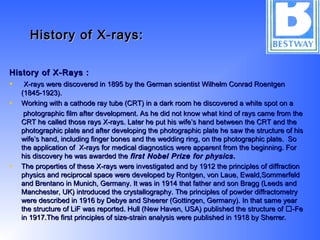
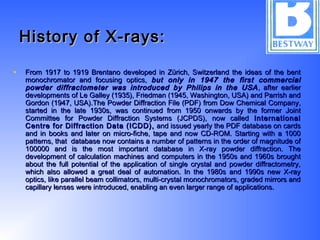
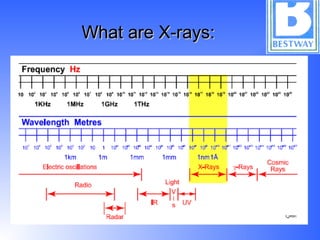
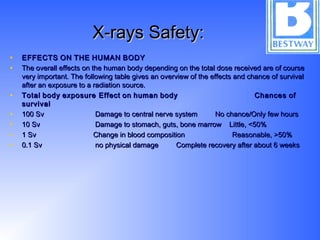
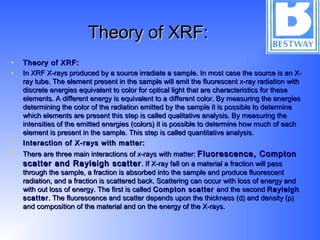
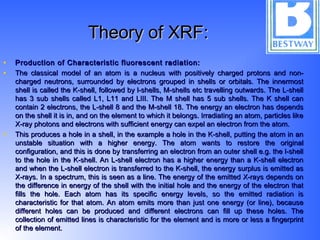
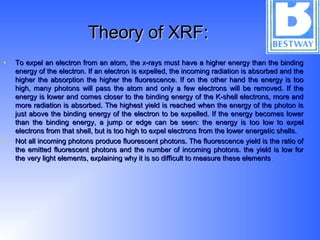
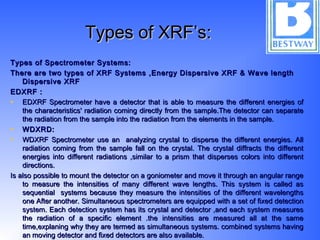
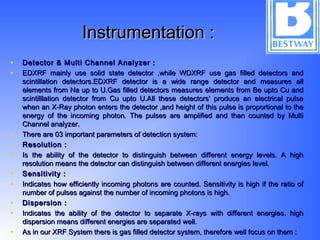
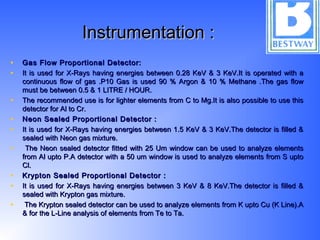
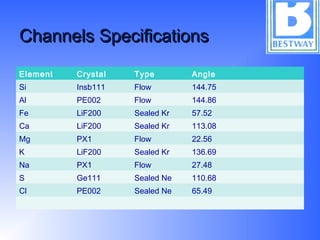
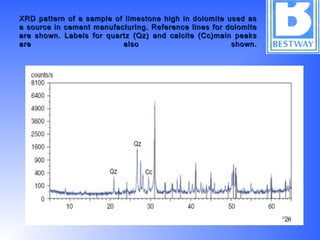
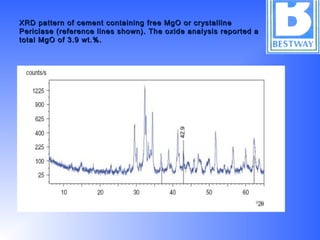
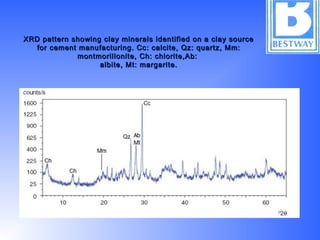
XRF & XRD analysis techniques are used to analyze materials. X-rays were discovered in 1895 by Wilhelm Conrad Roentgen. Over time, scientists developed an understanding of X-ray diffraction and how to use it for crystallography. By the mid-20th century, powder diffractometry techniques and databases had been established. X-rays are electromagnetic waves or photon beams with wavelengths between 0.01 to 10 nm, corresponding to energies from 0.125 to 125 keV. They can be hazardous due to their ionizing properties, requiring safety precautions as they are invisible, travel in straight lines at the speed of light, and can cause serious injury.