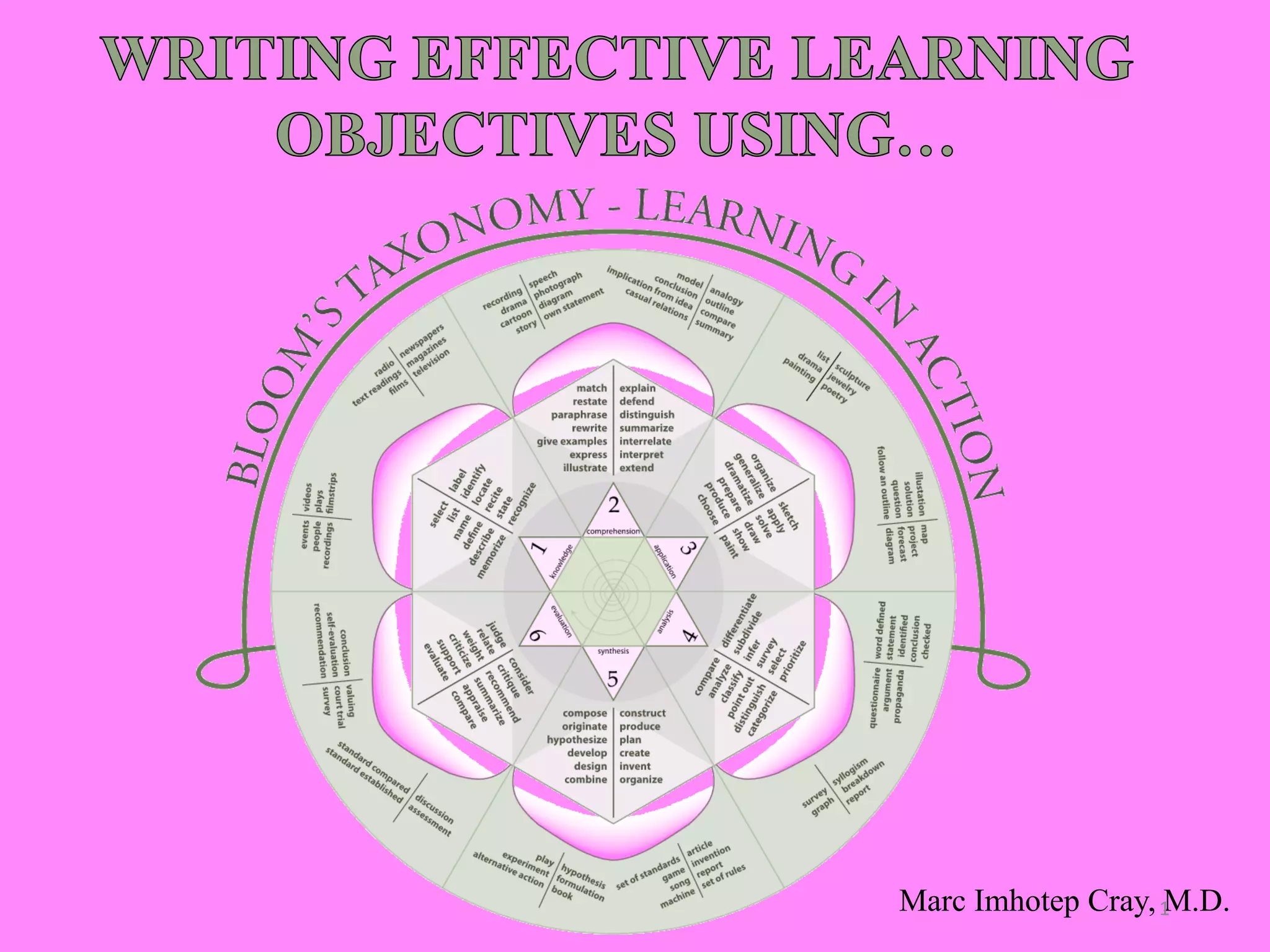
Marc Imhotep Cray, M.D. Marc Imhotep Cray, M.D.1
Marc Imhotep Cray, M.D.
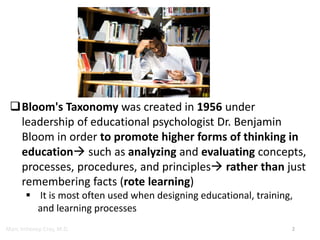
Bloom's Taxonomy was created in 1956 under
leadership of educational psychologist Dr. Benjamin
Bloom in order to promote higher forms of thinking in
education such as analyzing and evaluating concepts,
processes, procedures, and principles rather than just
remembering facts (rote learning)
 It is most often used when designing educational, training,
and learning processes
2
3
The Three Domains of Learning
 The committee identified three domains of
educational activities or learning (Bloom, et
al. 1956):
 Cognitive: mental skills (knowledge)
 Affective: growth in feelings or emotional areas
(attitude or self)
 Psychomotor: manual or physical skills (skills)
4
 Instructional designers, trainers, and educators
refer to these three categories as KSA
 Knowledge [cognitive],
 Skills [psychomotor], and
 Attitudes [affective])
Domains may be thought of
as categories
5
The Cognitive Domain
Involves knowledge and development of intellectual
skills (Bloom, 1956) includes recall or recognition
of specific facts, procedural patterns, and concepts
that serve in development of intellectual abilities
and skills
There are six major categories of cognitive
processes starting from simplest to most
complex
 Knowledge
 Comprehension
 Application
 Analysis
 Synthesis
 Evaluation
NB: Categories can be thought of as
degrees of difficulties. That is, first
ones must normally be mastered
before next one can take place.
LowertoHigher
6
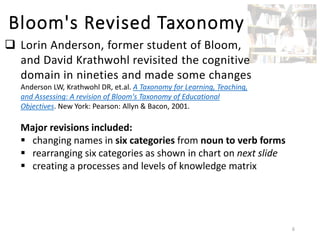
 Lorin Anderson, former student of Bloom,
and David Krathwohl revisited the cognitive
domain in nineties and made some changes
Anderson LW, Krathwohl DR, et.al. A Taxonomy for Learning, Teaching,
and Assessing: A revision of Bloom's Taxonomy of Educational
Objectives. New York: Pearson: Allyn & Bacon, 2001.
Bloom's Revised Taxonomy
Major revisions included:
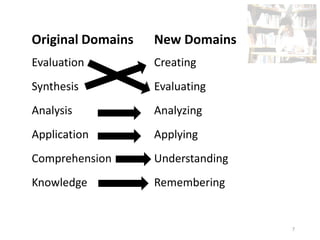
 changing names in six categories from noun to verb forms
 rearranging six categories as shown in chart on next slide
 creating a processes and levels of knowledge matrix
7
Original Domains
Evaluation
Synthesis
Analysis
Application
Comprehension
Knowledge
New Domains
Creating
Evaluating
Analyzing
Applying
Understanding
Remembering
8
Processes &
Levels of Knowledge Matrix
The
Knowledge
Dimension
Remember Understand Apply Analyze Evaluate Create
Facts
Concepts
Processes
Procedures
Principles
Metacognitive
9
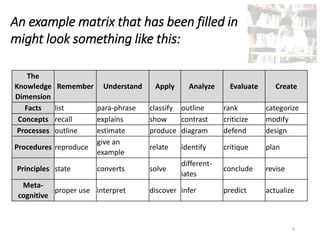
An example matrix that has been filled in
might look something like this:
The
Knowledge
Dimension
Remember Understand Apply Analyze Evaluate Create
Facts list para-phrase classify outline rank categorize
Concepts recall explains show contrast criticize modify
Processes outline estimate produce diagram defend design
Procedures reproduce
give an
example
relate identify critique plan
Principles state converts solve
different-
iates
conclude revise
Meta-
cognitive
proper use interpret discover infer predict actualize
Marc Imhotep Cray, M.D. 10
Further study:
Writing Learning Objectives Using Bloom's Taxonomy, A Tutorial by Dr. Cray

Writing Effective Learning Objectives Using Bloom's Taxonomy_Ppt

  • 1.
    Marc Imhotep Cray,M.D. Marc Imhotep Cray, M.D.1
  • 2.
    Marc Imhotep Cray,M.D. Bloom's Taxonomy was created in 1956 under leadership of educational psychologist Dr. Benjamin Bloom in order to promote higher forms of thinking in education such as analyzing and evaluating concepts, processes, procedures, and principles rather than just remembering facts (rote learning)  It is most often used when designing educational, training, and learning processes 2
  • 3.
    3 The Three Domainsof Learning  The committee identified three domains of educational activities or learning (Bloom, et al. 1956):  Cognitive: mental skills (knowledge)  Affective: growth in feelings or emotional areas (attitude or self)  Psychomotor: manual or physical skills (skills)
  • 4.
    4  Instructional designers,trainers, and educators refer to these three categories as KSA  Knowledge [cognitive],  Skills [psychomotor], and  Attitudes [affective]) Domains may be thought of as categories
  • 5.
    5 The Cognitive Domain Involvesknowledge and development of intellectual skills (Bloom, 1956) includes recall or recognition of specific facts, procedural patterns, and concepts that serve in development of intellectual abilities and skills There are six major categories of cognitive processes starting from simplest to most complex  Knowledge  Comprehension  Application  Analysis  Synthesis  Evaluation NB: Categories can be thought of as degrees of difficulties. That is, first ones must normally be mastered before next one can take place. LowertoHigher
  • 6.
    6  Lorin Anderson,former student of Bloom, and David Krathwohl revisited the cognitive domain in nineties and made some changes Anderson LW, Krathwohl DR, et.al. A Taxonomy for Learning, Teaching, and Assessing: A revision of Bloom's Taxonomy of Educational Objectives. New York: Pearson: Allyn & Bacon, 2001. Bloom's Revised Taxonomy Major revisions included:  changing names in six categories from noun to verb forms  rearranging six categories as shown in chart on next slide  creating a processes and levels of knowledge matrix
  • 7.
  • 8.
    8 Processes & Levels ofKnowledge Matrix The Knowledge Dimension Remember Understand Apply Analyze Evaluate Create Facts Concepts Processes Procedures Principles Metacognitive
  • 9.
    9 An example matrixthat has been filled in might look something like this: The Knowledge Dimension Remember Understand Apply Analyze Evaluate Create Facts list para-phrase classify outline rank categorize Concepts recall explains show contrast criticize modify Processes outline estimate produce diagram defend design Procedures reproduce give an example relate identify critique plan Principles state converts solve different- iates conclude revise Meta- cognitive proper use interpret discover infer predict actualize
  • 10.
    Marc Imhotep Cray,M.D. 10 Further study: Writing Learning Objectives Using Bloom's Taxonomy, A Tutorial by Dr. Cray