WRITING YOUR ABSTRACT....
Abstracts
What are they?
Why do we need
them?
What do you
need to include in
yours?
??????
???
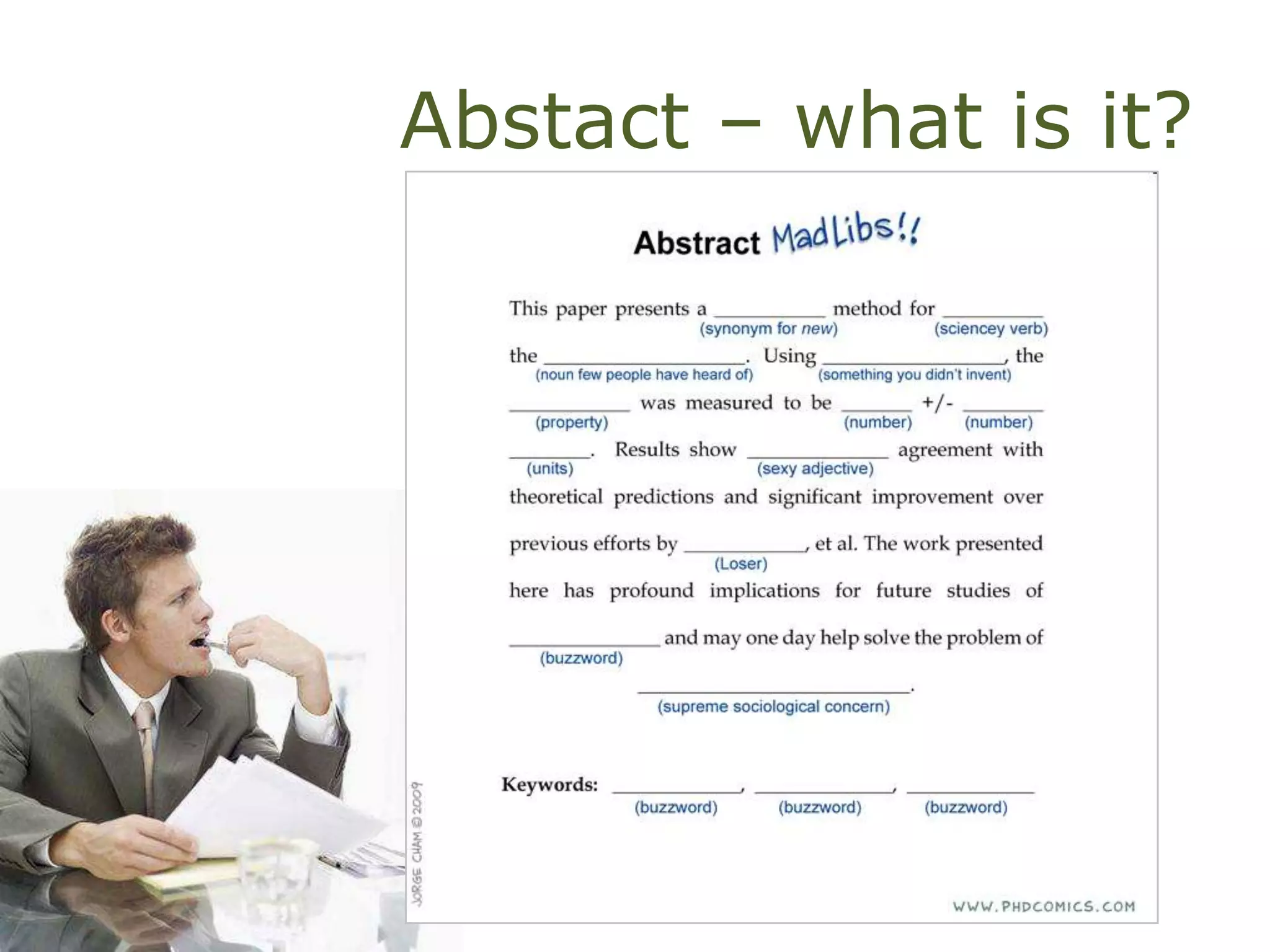
Abstact – what is it?
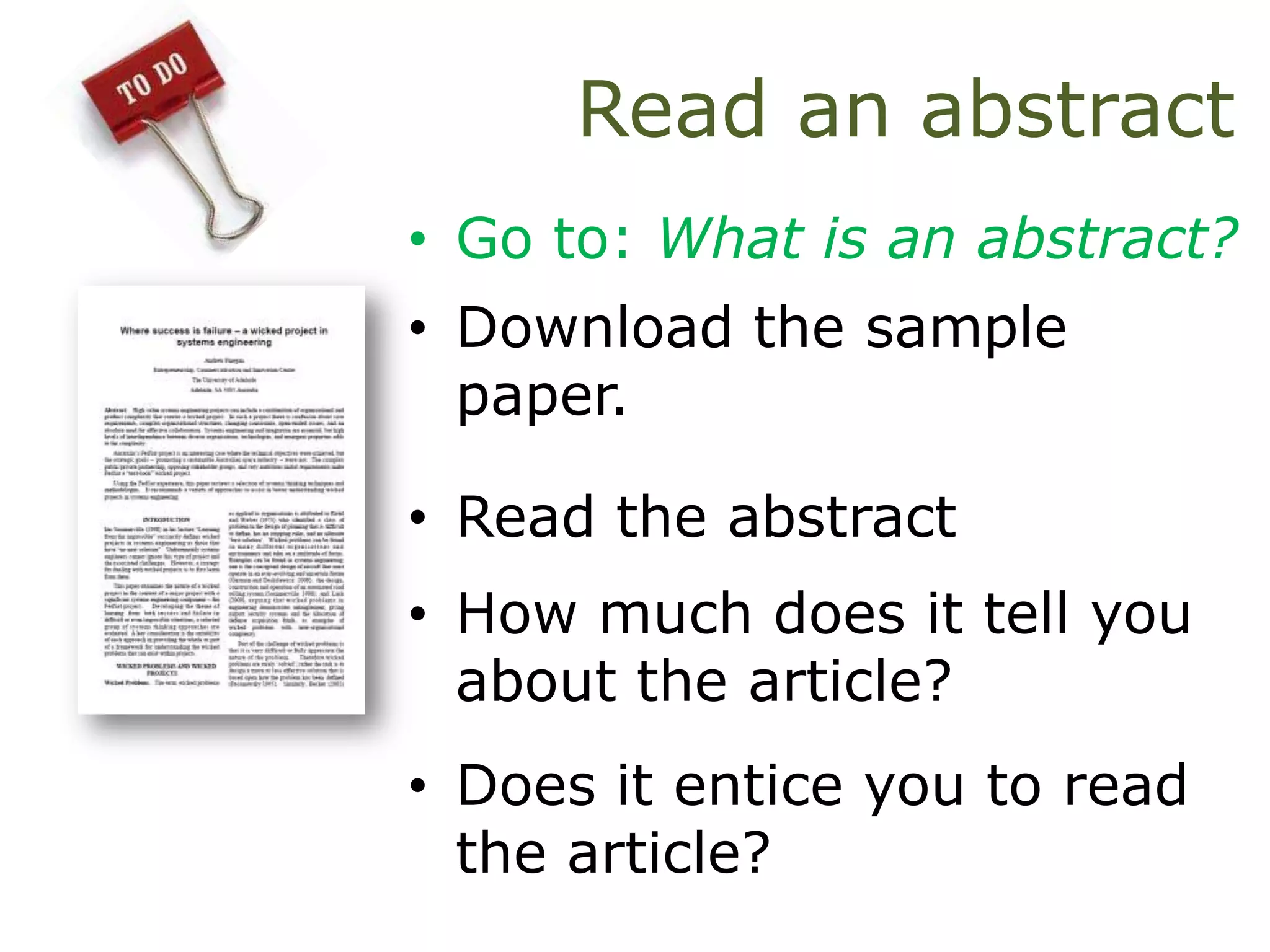
• Go to: What is an abstract?
• Download the sample
paper.
• Read the abstract
• How much does it tell you
about the article?
• Does it entice you to read
the article?
Read an abstract
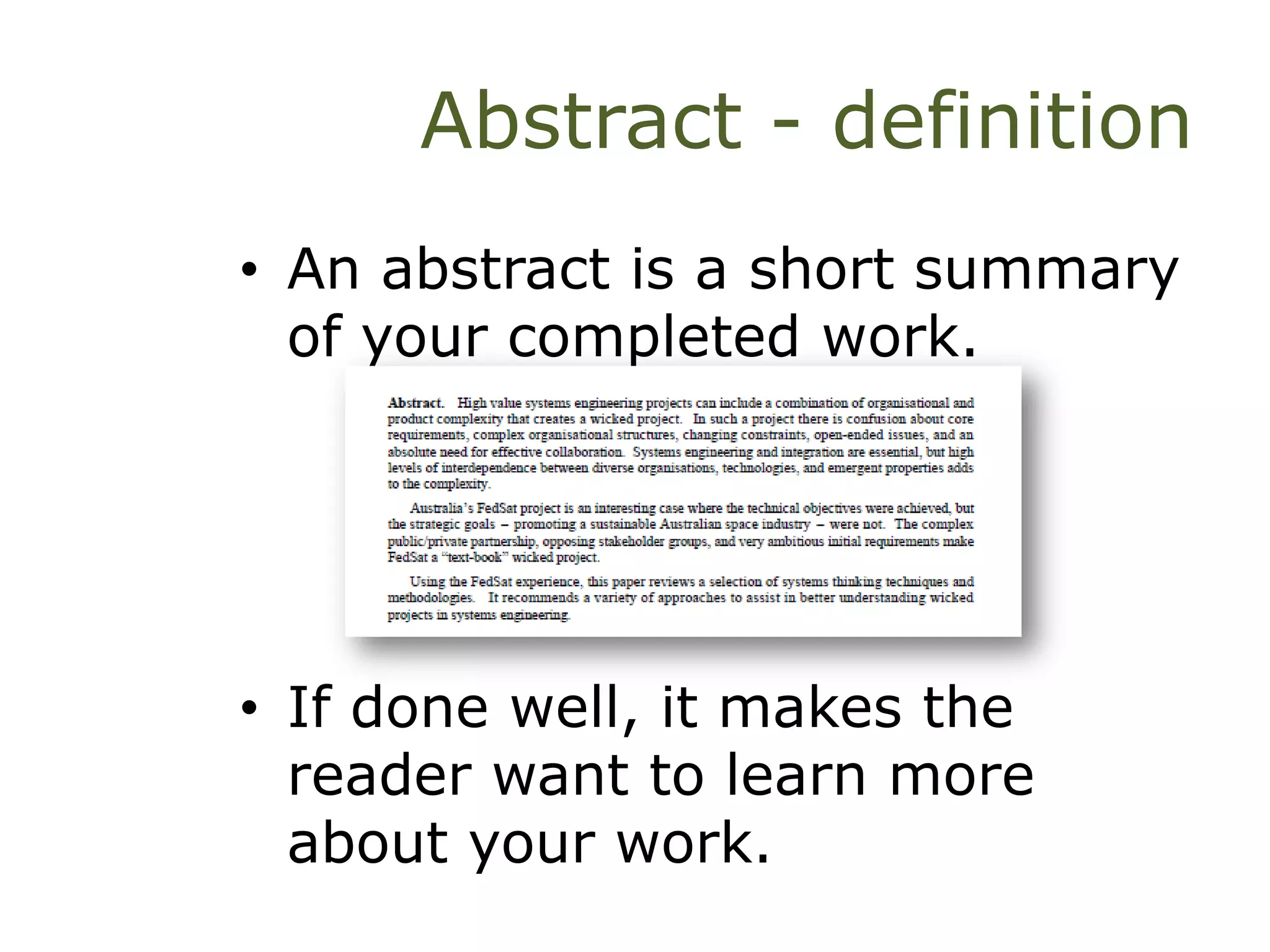
Abstract - definition
• An abstract is a short summary
of your completed work.
• If done well, it makes the
reader want to learn more
about your work.
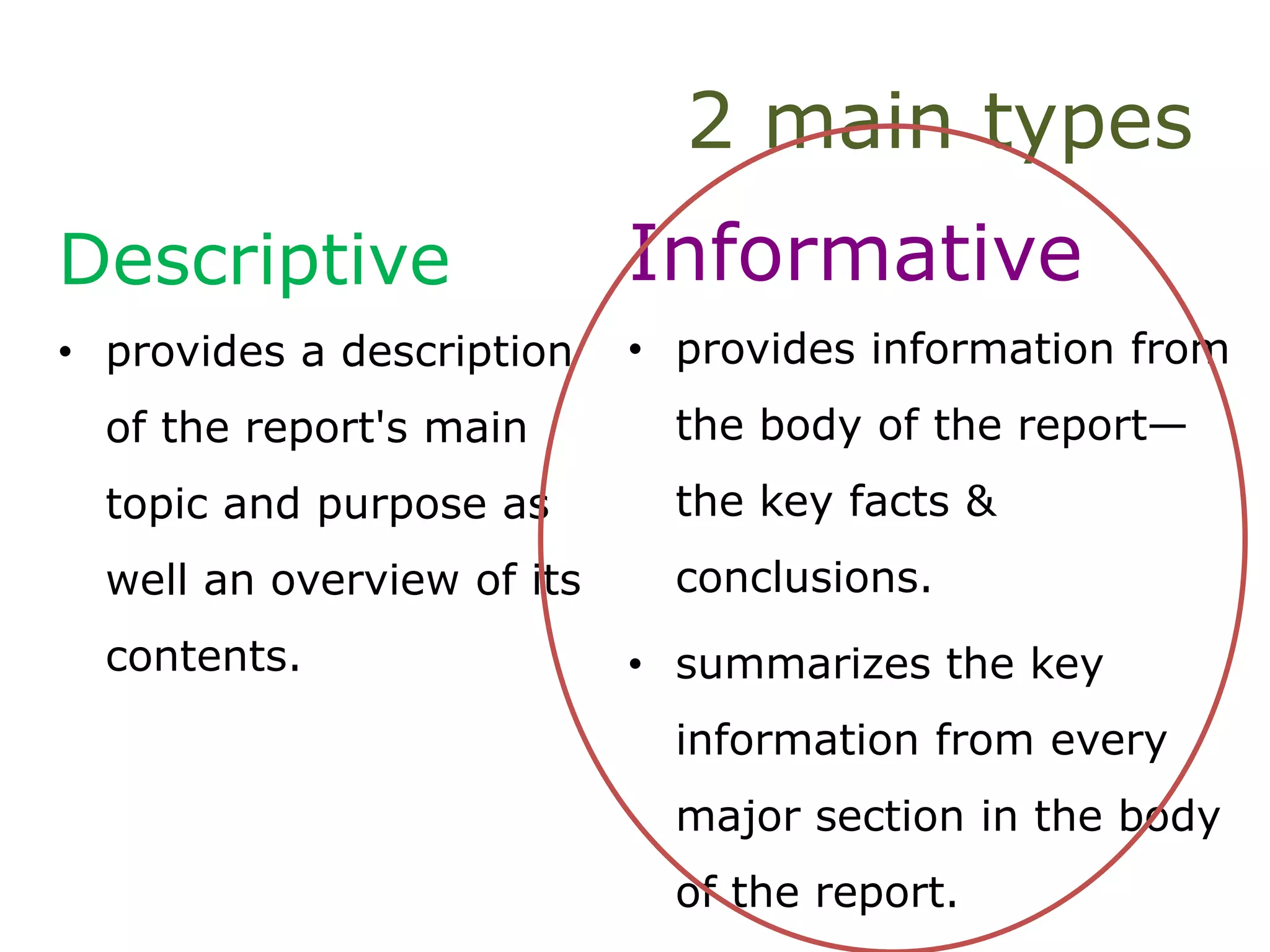
2 main types
Descriptive
• provides a description
of the report's main
topic and purpose as
well an overview of its
contents.
Informative
• provides information from
the body of the report—
the key facts &
conclusions.
• summarizes the key
information from every
major section in the body
of the report.
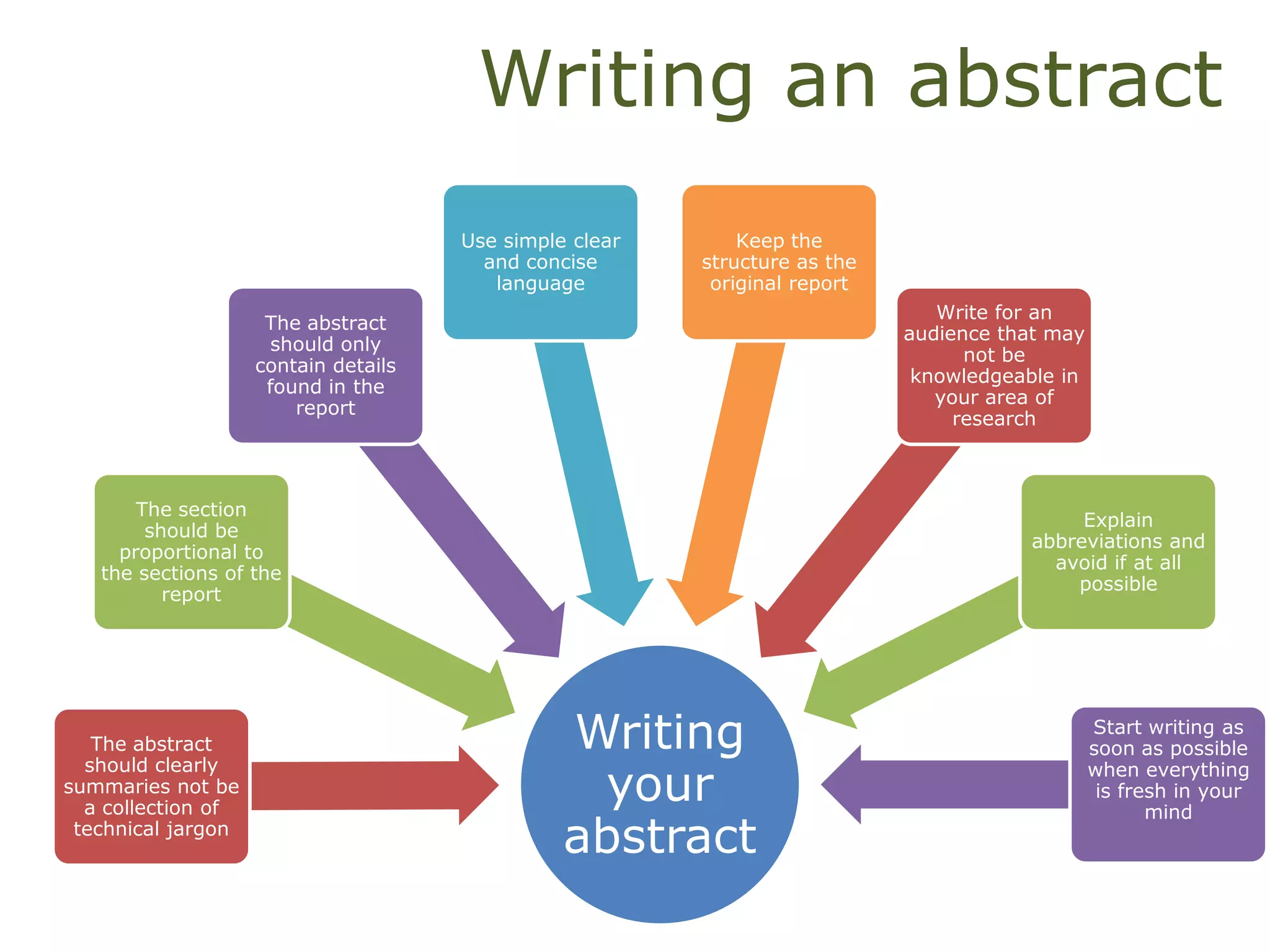
Writing an abstract
Writing
your
abstract
The abstract
should clearly
summaries not be
a collection of
technical jargon
The section
should be
proportional to
the sections of the
report
The abstract
should only
contain details
found in the
report
Use simple clear
and concise
language
Keep the
structure as the
original report
Write for an
audience that may
not be
knowledgeable in
your area of
research
Explain
abbreviations and
avoid if at all
possible
Start writing as
soon as possible
when everything
is fresh in your
mind
Keep in mind
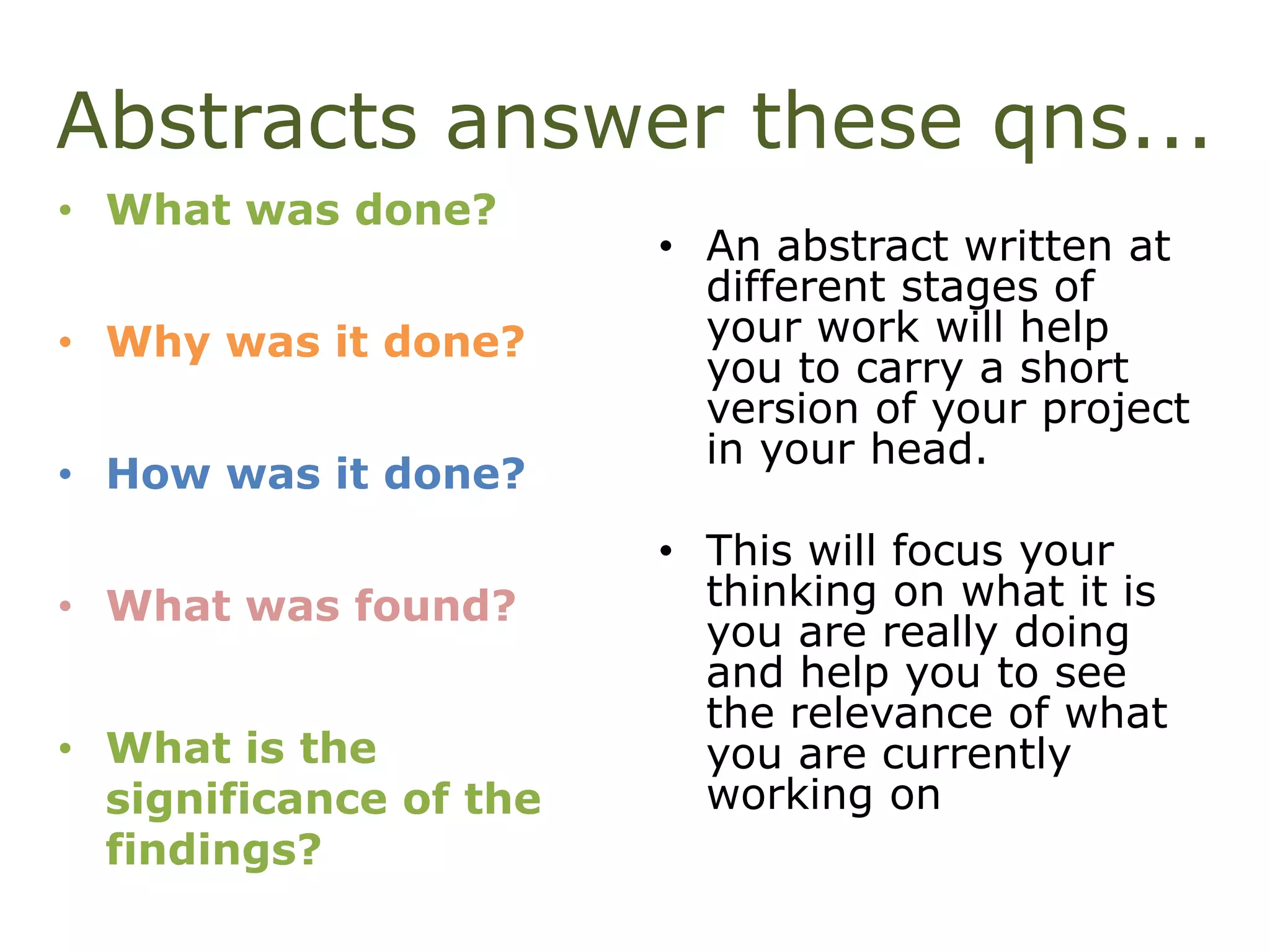
Abstracts answer these qns...
• What was done?
• Why was it done?
• How was it done?
• What was found?
• What is the
significance of the
findings?
• An abstract written at
different stages of
your work will help
you to carry a short
version of your project
in your head.
• This will focus your
thinking on what it is
you are really doing
and help you to see
the relevance of what
you are currently
working on
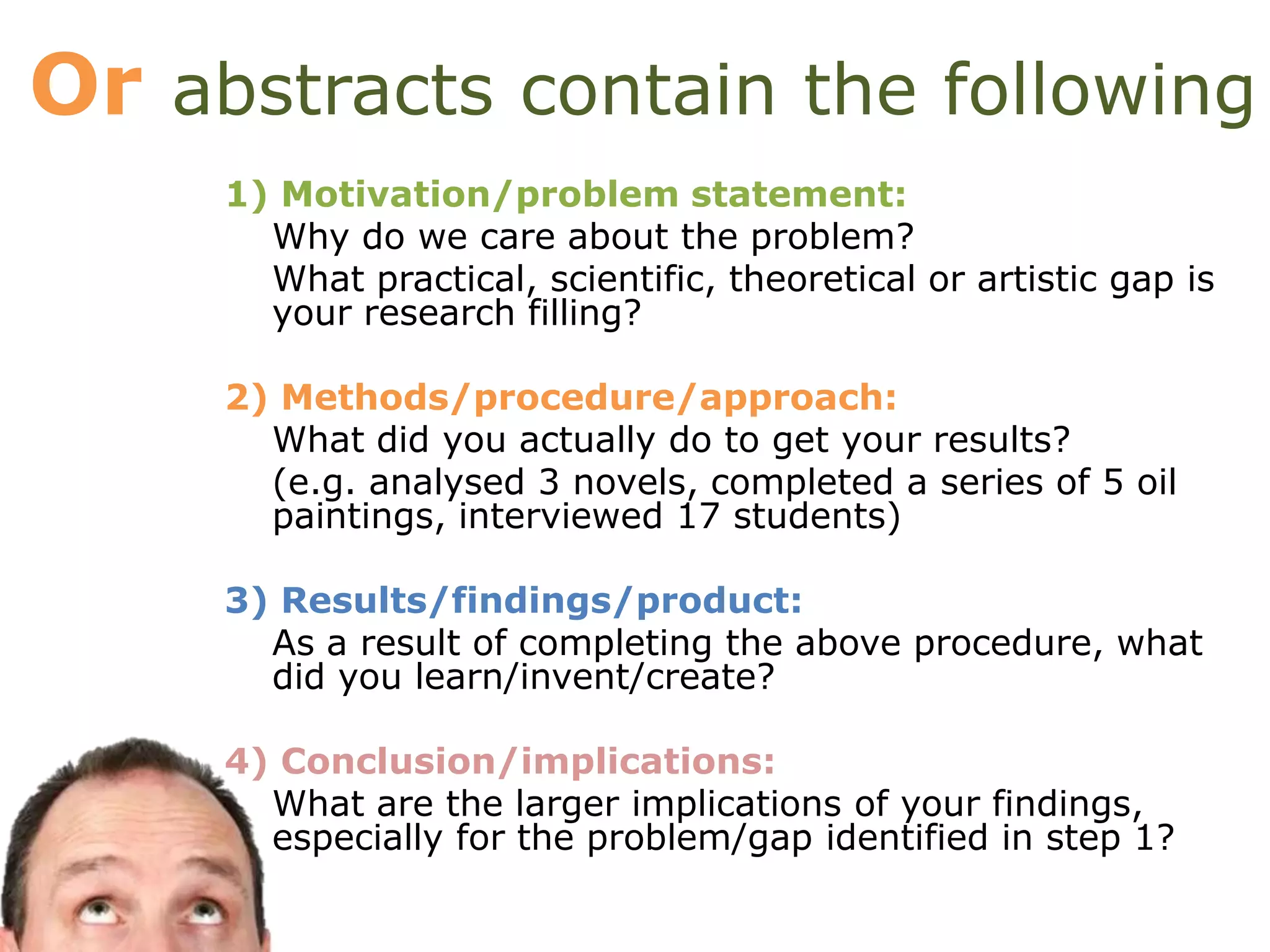
Or abstracts contain the following
1) Motivation/problem statement:
Why do we care about the problem?
What practical, scientific, theoretical or artistic gap is
your research filling?
2) Methods/procedure/approach:
What did you actually do to get your results?
(e.g. analysed 3 novels, completed a series of 5 oil
paintings, interviewed 17 students)
3) Results/findings/product:
As a result of completing the above procedure, what
did you learn/invent/create?
4) Conclusion/implications:
What are the larger implications of your findings,
especially for the problem/gap identified in step 1?
Identify the structure used
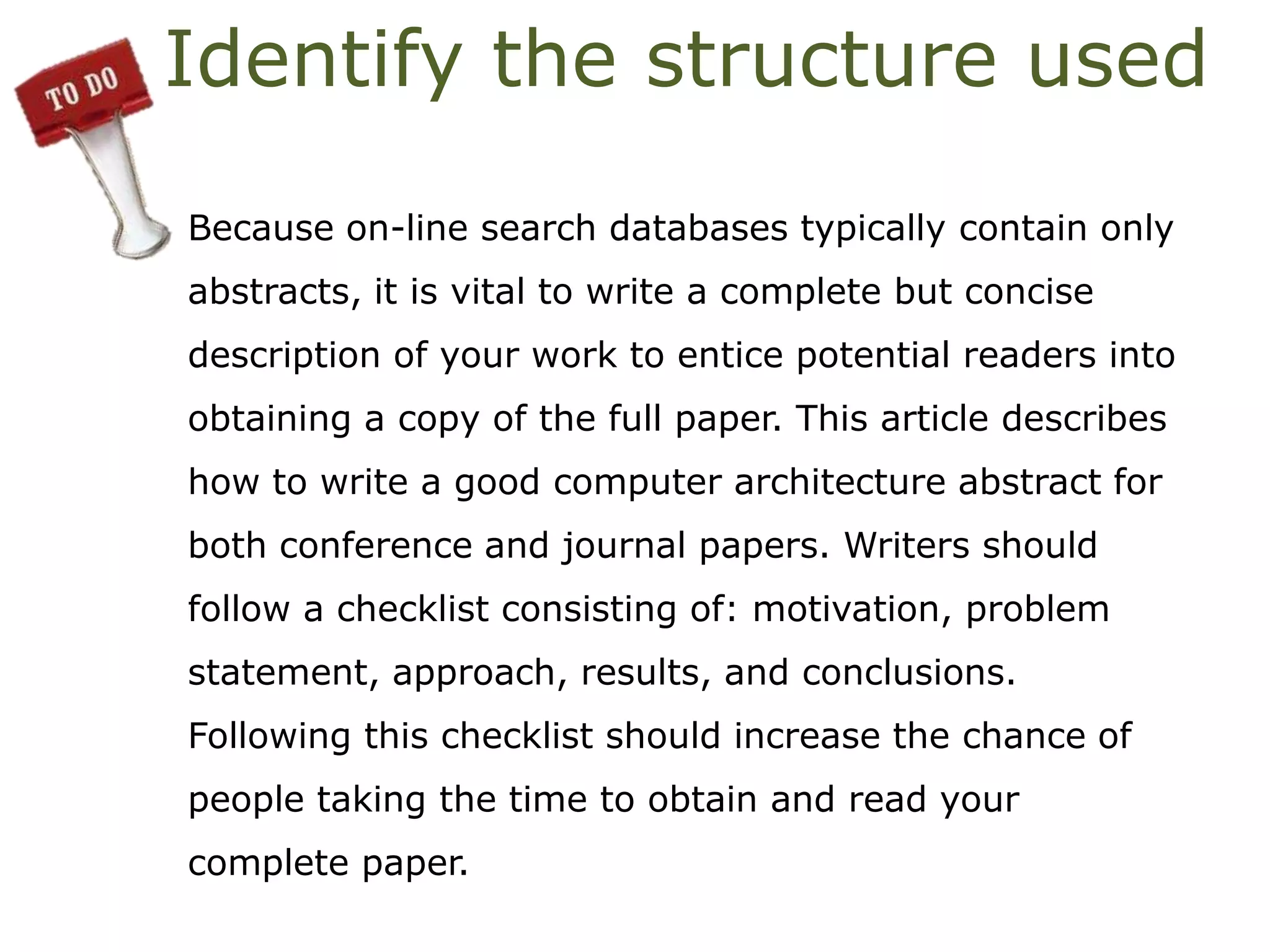
Because on-line search databases typically contain only
abstracts, it is vital to write a complete but concise
description of your work to entice potential readers into
obtaining a copy of the full paper. This article describes
how to write a good computer architecture abstract for
both conference and journal papers. Writers should
follow a checklist consisting of: motivation, problem
statement, approach, results, and conclusions.
Following this checklist should increase the chance of
people taking the time to obtain and read your
complete paper.
Identify the structure used
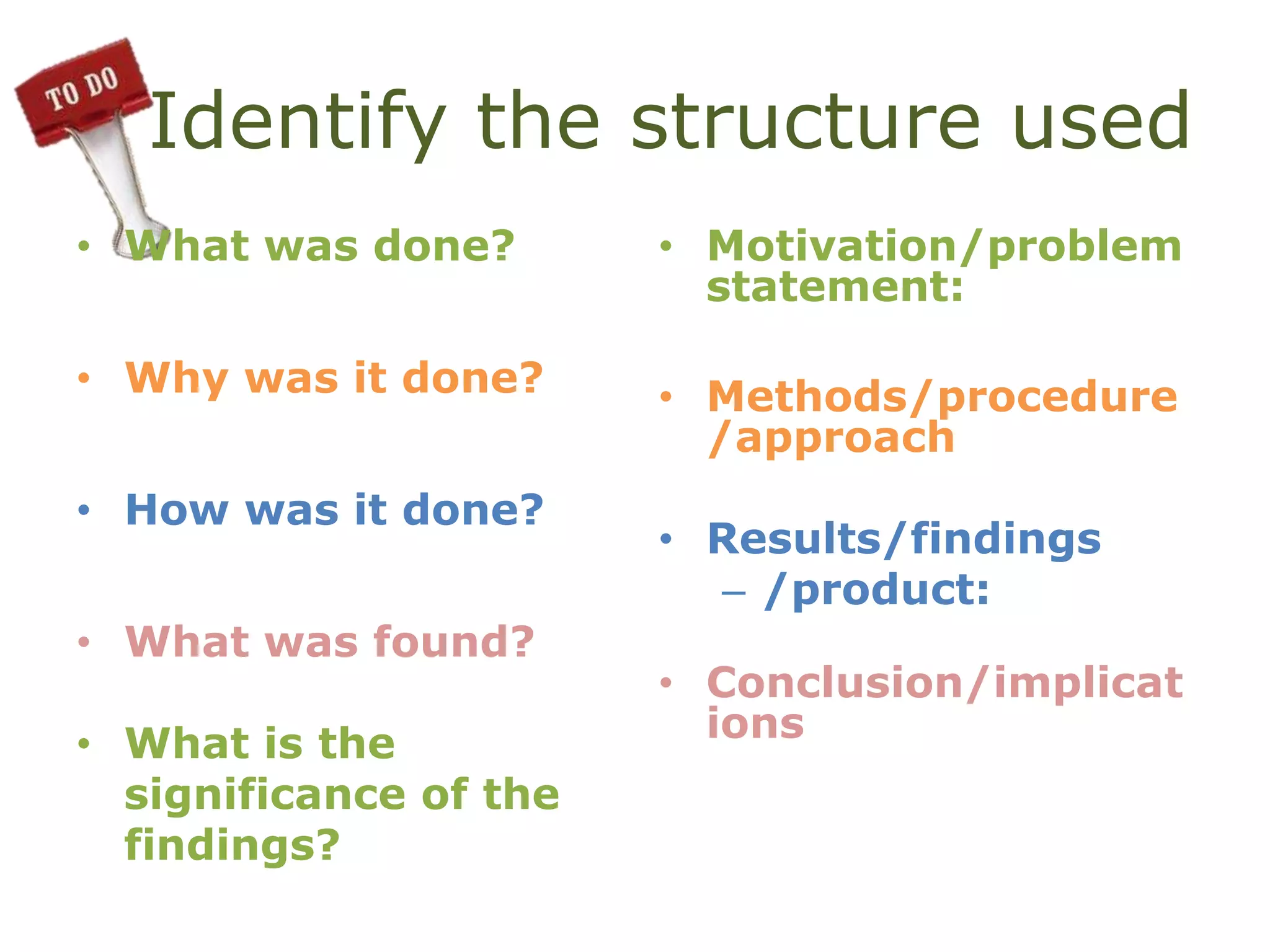
• What was done?
• Why was it done?
• How was it done?
• What was found?
• What is the
significance of the
findings?
• Motivation/problem
statement:
• Methods/procedure
/approach
• Results/findings
– /product:
• Conclusion/implicat
ions
Have a go.....
Write a first draft of your lit
review abstract
Use:
• Either the resources about
abstracts. OR
• The structures covered in the
slideshow
Post in your project diary.

Writing an abstract

  • 1.
  • 2.
    Abstracts What are they? Whydo we need them? What do you need to include in yours? ?????? ???
  • 3.
  • 4.
    • Go to:What is an abstract? • Download the sample paper. • Read the abstract • How much does it tell you about the article? • Does it entice you to read the article? Read an abstract
  • 5.
    Abstract - definition •An abstract is a short summary of your completed work. • If done well, it makes the reader want to learn more about your work.
  • 6.
    2 main types Descriptive •provides a description of the report's main topic and purpose as well an overview of its contents. Informative • provides information from the body of the report— the key facts & conclusions. • summarizes the key information from every major section in the body of the report.
  • 7.
    Writing an abstract Writing your abstract Theabstract should clearly summaries not be a collection of technical jargon The section should be proportional to the sections of the report The abstract should only contain details found in the report Use simple clear and concise language Keep the structure as the original report Write for an audience that may not be knowledgeable in your area of research Explain abbreviations and avoid if at all possible Start writing as soon as possible when everything is fresh in your mind
  • 8.
  • 9.
    Abstracts answer theseqns... • What was done? • Why was it done? • How was it done? • What was found? • What is the significance of the findings? • An abstract written at different stages of your work will help you to carry a short version of your project in your head. • This will focus your thinking on what it is you are really doing and help you to see the relevance of what you are currently working on
  • 10.
    Or abstracts containthe following 1) Motivation/problem statement: Why do we care about the problem? What practical, scientific, theoretical or artistic gap is your research filling? 2) Methods/procedure/approach: What did you actually do to get your results? (e.g. analysed 3 novels, completed a series of 5 oil paintings, interviewed 17 students) 3) Results/findings/product: As a result of completing the above procedure, what did you learn/invent/create? 4) Conclusion/implications: What are the larger implications of your findings, especially for the problem/gap identified in step 1?
  • 11.
    Identify the structureused Because on-line search databases typically contain only abstracts, it is vital to write a complete but concise description of your work to entice potential readers into obtaining a copy of the full paper. This article describes how to write a good computer architecture abstract for both conference and journal papers. Writers should follow a checklist consisting of: motivation, problem statement, approach, results, and conclusions. Following this checklist should increase the chance of people taking the time to obtain and read your complete paper.
  • 12.
    Identify the structureused • What was done? • Why was it done? • How was it done? • What was found? • What is the significance of the findings? • Motivation/problem statement: • Methods/procedure /approach • Results/findings – /product: • Conclusion/implicat ions
  • 13.
    Have a go..... Writea first draft of your lit review abstract Use: • Either the resources about abstracts. OR • The structures covered in the slideshow Post in your project diary.