BY :WARDA AZIZ
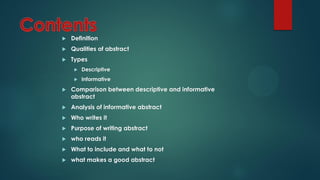
 Definition
 Qualities of abstract
 Types
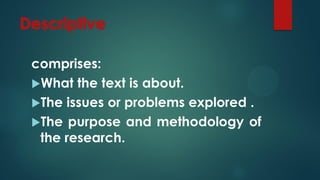
 Descriptive
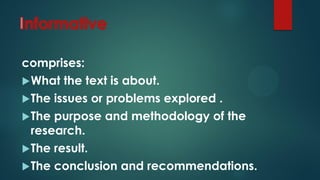
 Informative
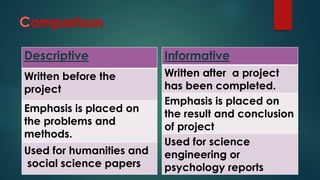
 Comparison between descriptive and informative
abstract
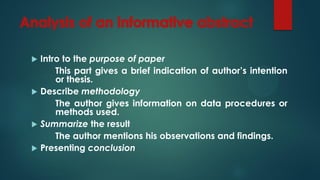
 Analysis of informative abstract
 Who writes it
 Purpose of writing abstract
 who reads it
 What to include and what to not
 what makes a good abstract
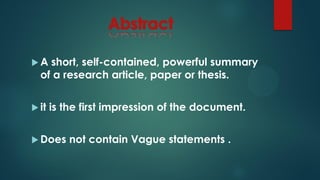
 A short, self-contained, powerful summary
of a research article, paper or thesis.
 it is the first impression of the document.
 Does not contain Vague statements .
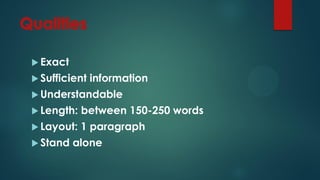
 Exact
 Sufficient information
 Understandable
 Length: between 150-250 words
 Layout: 1 paragraph
 Stand alone
Two types

Descriptive
Informative
comprises:
What the text is about.
The issues or problems explored .
The purpose and methodology of
the research.
comprises:
What the text is about.
The issues or problems explored .
The purpose and methodology of the
research.
The result.
The conclusion and recommendations.
Descriptive
Written before the
project
Emphasis is placed on
the problems and
methods.
Used for humanities and
social science papers
Informative
Written after a project
has been completed.
Emphasis is placed on
the result and conclusion
of project
Used for science
engineering or
psychology reports
 Intro to the purpose of paper
This part gives a brief indication of author’s intention
or thesis.
 Describe methodology
The author gives information on data procedures or
methods used.
 Summarize the result
The author mentions his observations and findings.
 Presenting conclusion
 The author of the paper; having first hand
knowledge.
 Professional writers , who abstract books and
articles for a wide audience.
To persuade the reader to see the full text.
To help readers decide if the article is
relevant or not .
To answer a call of paper in a conference .
To make it possible for your piece of
research to appear in online publication
database .
 Same field professionals , looking
for further information.
 Teachers having to evaluate future
specialist’s achievements.
 Students charting research in a
given area.
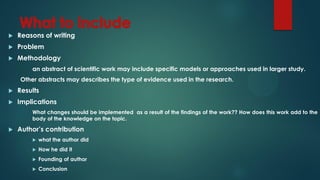
 Reasons of writing
 Problem
 Methodology
an abstract of scientific work may include specific models or approaches used in larger study.
Other abstracts may describes the type of evidence used in the research.
 Results
 Implications
What changes should be implemented as a result of the findings of the work?? How does this work add to the
body of the knowledge on the topic.
 Author’s contribution
 what the author did
 How he did it
 Founding of author
 Conclusion
 Fake information
 Reference to other work
 Quotations
 Lengthy explanations
 Unexplained abbreviations
 Tables and maps
 donot include bibliography or citations
 Use only one well-developed abstract that is coherent
and concise.
 Covers all the essential academic elements .
 Do not include referencing.
 In publications , it is found at the beginning of the text,
but tin academic assignments it is placed on a separate
preliminary page.
 "A good quality abstract should accurately reflect the
purpose and content of your project

Abstract writting

  • 1.
  • 2.
     Definition  Qualitiesof abstract  Types  Descriptive  Informative  Comparison between descriptive and informative abstract  Analysis of informative abstract  Who writes it  Purpose of writing abstract  who reads it  What to include and what to not  what makes a good abstract
  • 3.
     A short,self-contained, powerful summary of a research article, paper or thesis.  it is the first impression of the document.  Does not contain Vague statements .
  • 4.
     Exact  Sufficientinformation  Understandable  Length: between 150-250 words  Layout: 1 paragraph  Stand alone
  • 5.
  • 6.
    comprises: What the textis about. The issues or problems explored . The purpose and methodology of the research.
  • 7.
    comprises: What the textis about. The issues or problems explored . The purpose and methodology of the research. The result. The conclusion and recommendations.
  • 8.
    Descriptive Written before the project Emphasisis placed on the problems and methods. Used for humanities and social science papers Informative Written after a project has been completed. Emphasis is placed on the result and conclusion of project Used for science engineering or psychology reports
  • 9.
     Intro tothe purpose of paper This part gives a brief indication of author’s intention or thesis.  Describe methodology The author gives information on data procedures or methods used.  Summarize the result The author mentions his observations and findings.  Presenting conclusion
  • 10.
     The authorof the paper; having first hand knowledge.  Professional writers , who abstract books and articles for a wide audience.
  • 11.
    To persuade thereader to see the full text. To help readers decide if the article is relevant or not . To answer a call of paper in a conference . To make it possible for your piece of research to appear in online publication database .
  • 12.
     Same fieldprofessionals , looking for further information.  Teachers having to evaluate future specialist’s achievements.  Students charting research in a given area.
  • 13.
     Reasons ofwriting  Problem  Methodology an abstract of scientific work may include specific models or approaches used in larger study. Other abstracts may describes the type of evidence used in the research.  Results  Implications What changes should be implemented as a result of the findings of the work?? How does this work add to the body of the knowledge on the topic.  Author’s contribution  what the author did  How he did it  Founding of author  Conclusion
  • 14.
     Fake information Reference to other work  Quotations  Lengthy explanations  Unexplained abbreviations  Tables and maps  donot include bibliography or citations
  • 15.
     Use onlyone well-developed abstract that is coherent and concise.  Covers all the essential academic elements .  Do not include referencing.  In publications , it is found at the beginning of the text, but tin academic assignments it is placed on a separate preliminary page.  "A good quality abstract should accurately reflect the purpose and content of your project