Open and Online:
connections,
community & reality
Catherine Cronin
@catherinecronin
&
Sheila McNeill
@sheilmcn
#openeducationwk
University of Sussex
14th March 2014
CCBY-SA2.0cogdog
Who’s here?
Are you...
a - Lecturer
b - Learning technologist
c - Librarian
d - Student support
e - Researcher
f - Other / bit of everything
Key questions:
•  What makes education ‘open’?
•  How are digital identities enacted in open vs.
bounded online spaces?
•  How are power relationships between educators
and students negotiated in different online spaces?
•  How might we close the gap between the ideals
and the messy realities of being networked
learners, educators and researchers?
“I don’t think education is
about centralized
instruction anymore; rather,
it is the process [of]
establishing oneself as a
node in a broad network of
distributed creativity.”
– Joi Ito @joi
Quote: Joi Ito Image: CC BY-NC-SA 2.0 yobink
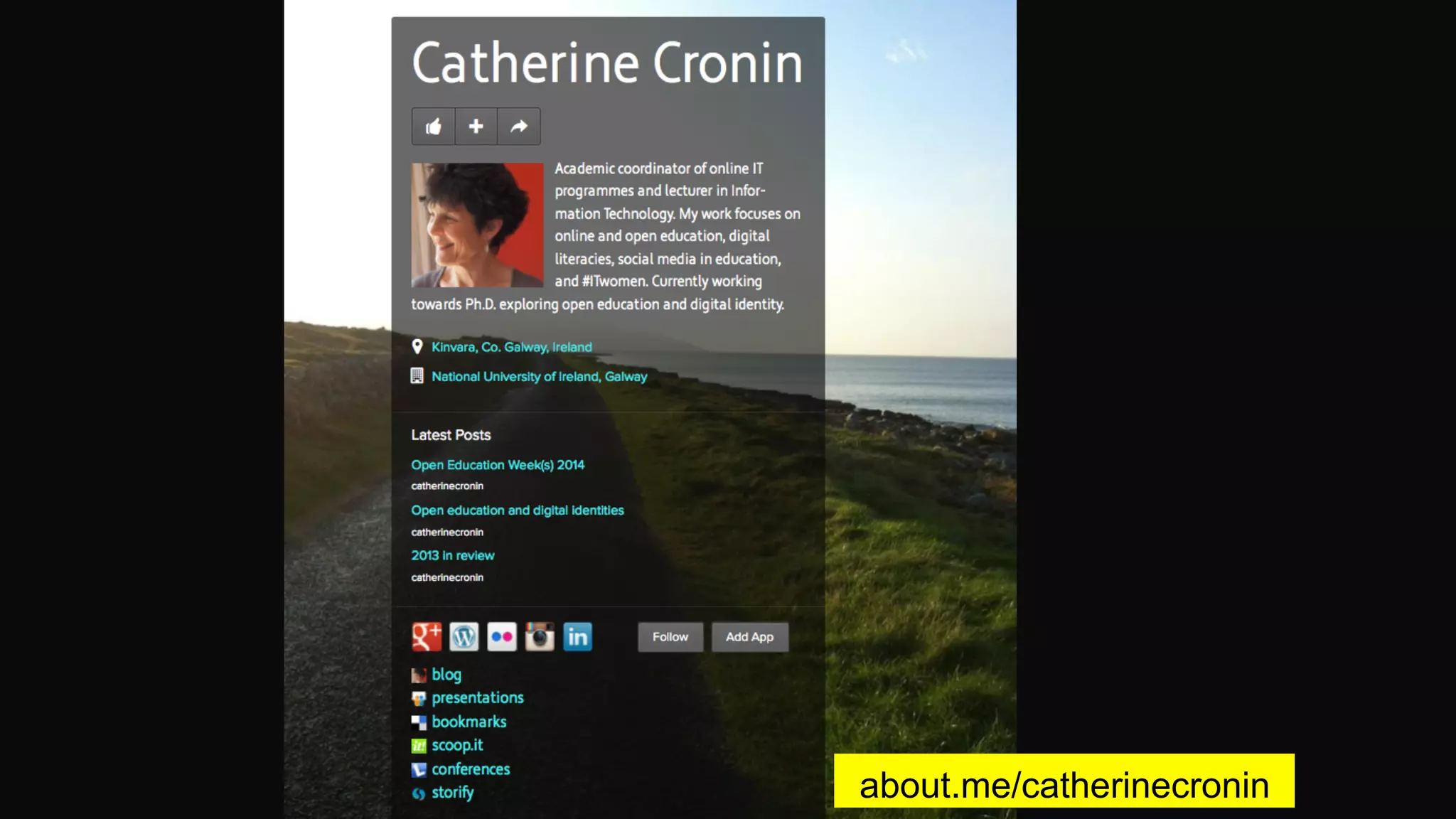
about.me/catherinecronin
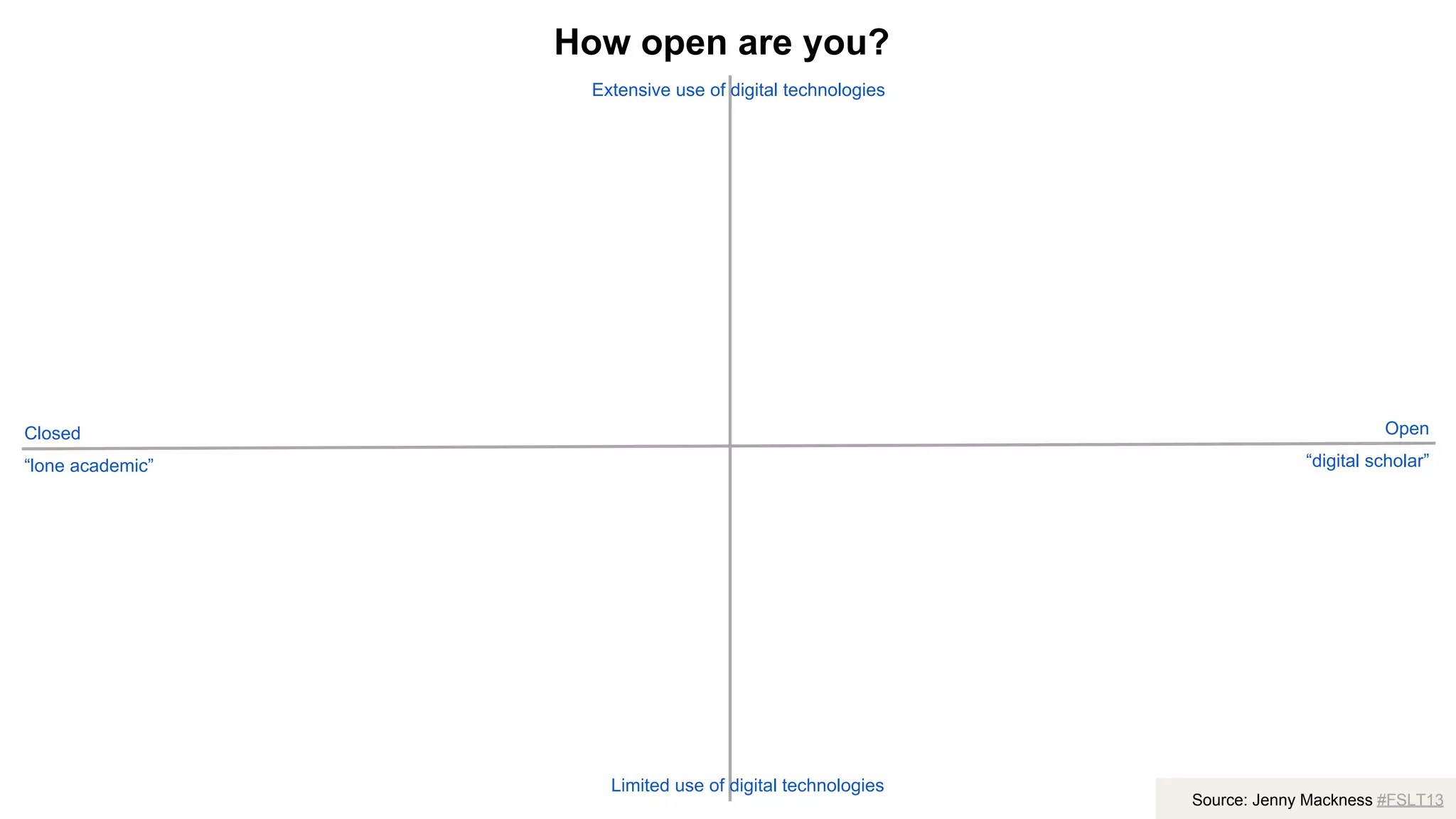
How open are you?
Extensive use of digital technologies
Limited use of digital technologies
Closed
“lone academic”
Open
“digital scholar”
Source: Jenny Mackness #FSLT13
At its best openness is an ethos
not a license. It's an approach to
teaching and learning that
builds a community of learners
online and off.
-  Jim Groom
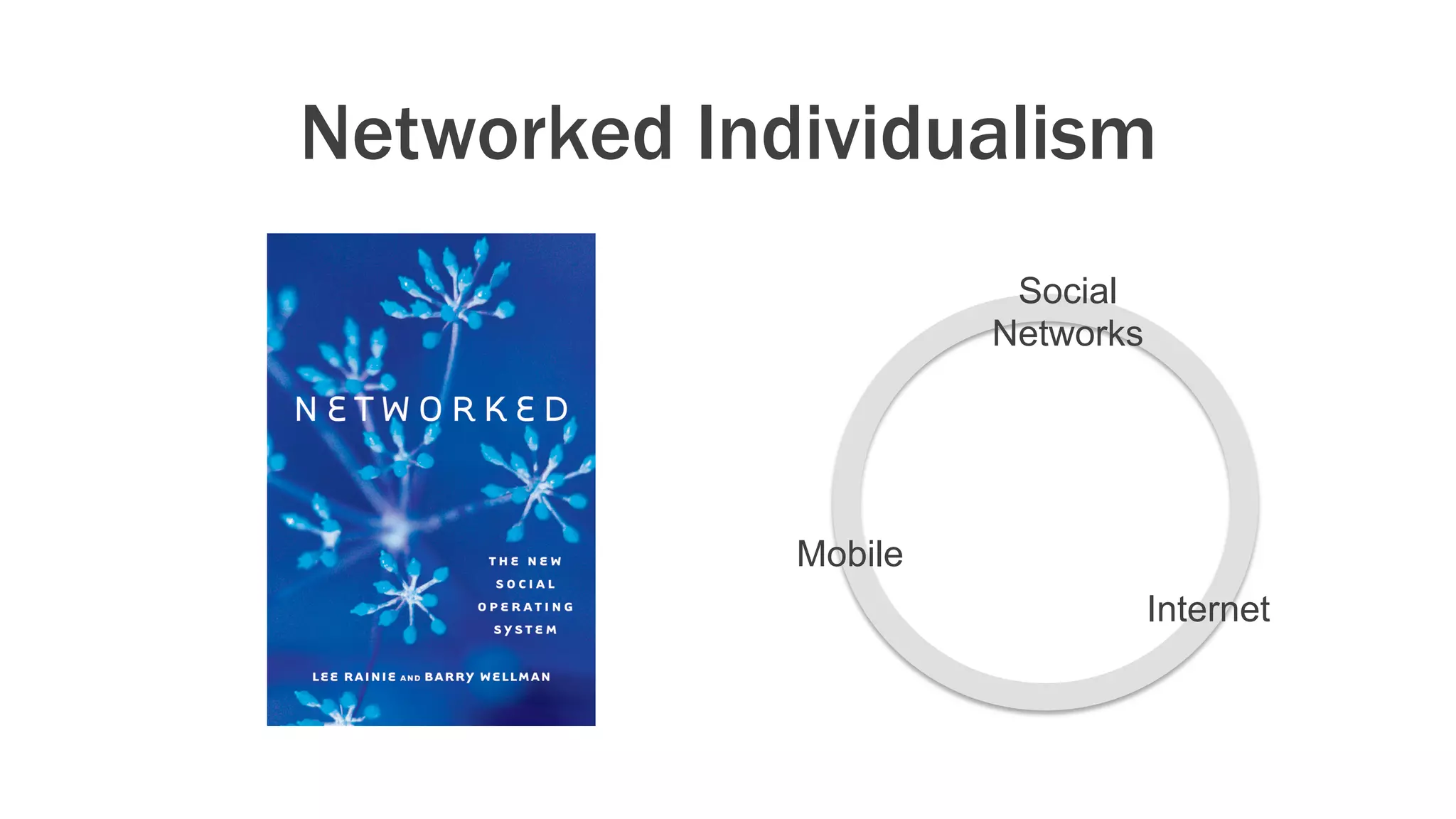
Social
Networks
Internet
Mobile
Networked Individualism
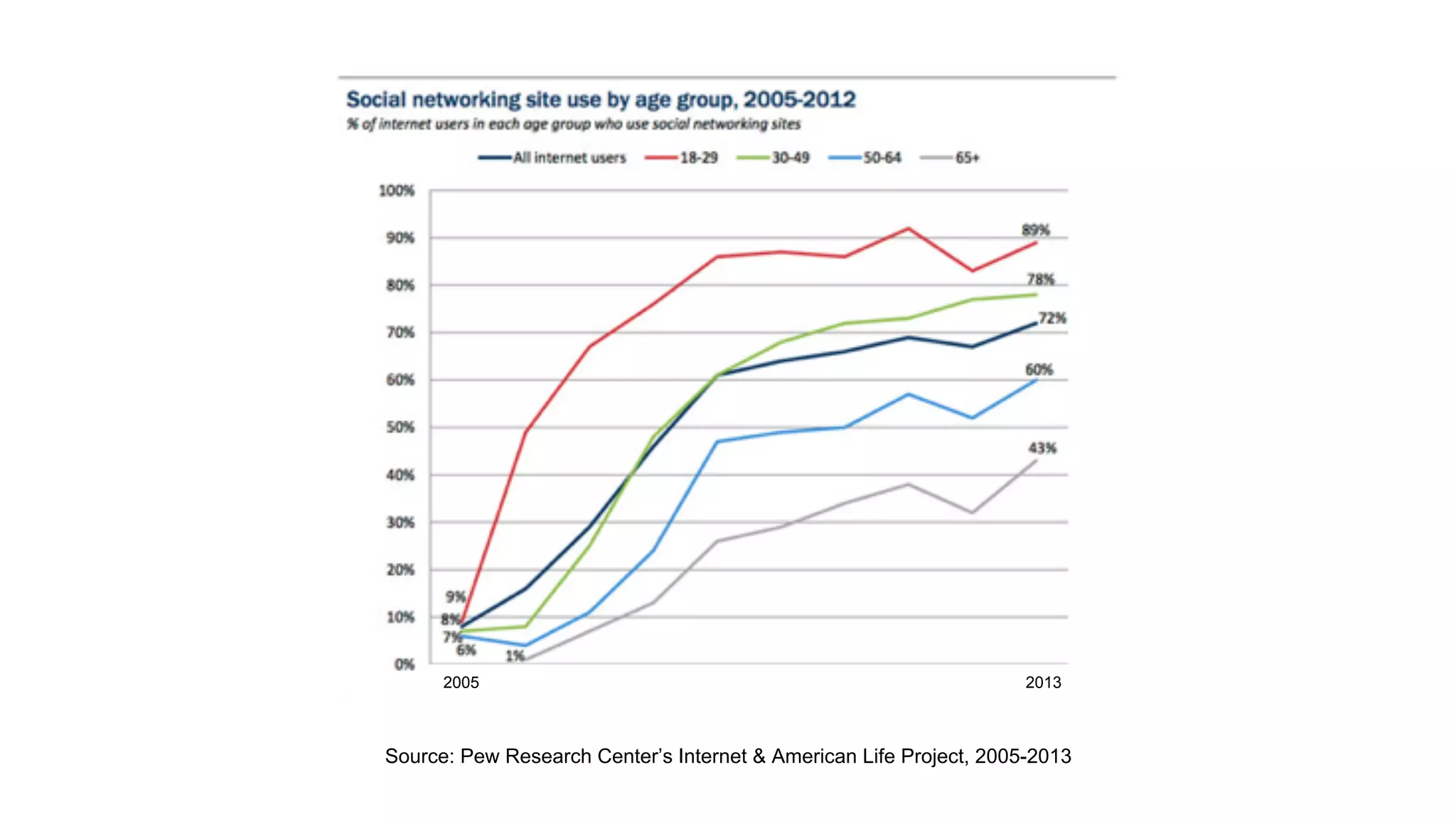
Source: Pew Research Center’s Internet & American Life Project, 2005-2013
2005 2013
Image CC BY-NC-SA 2.0 Alec Couros
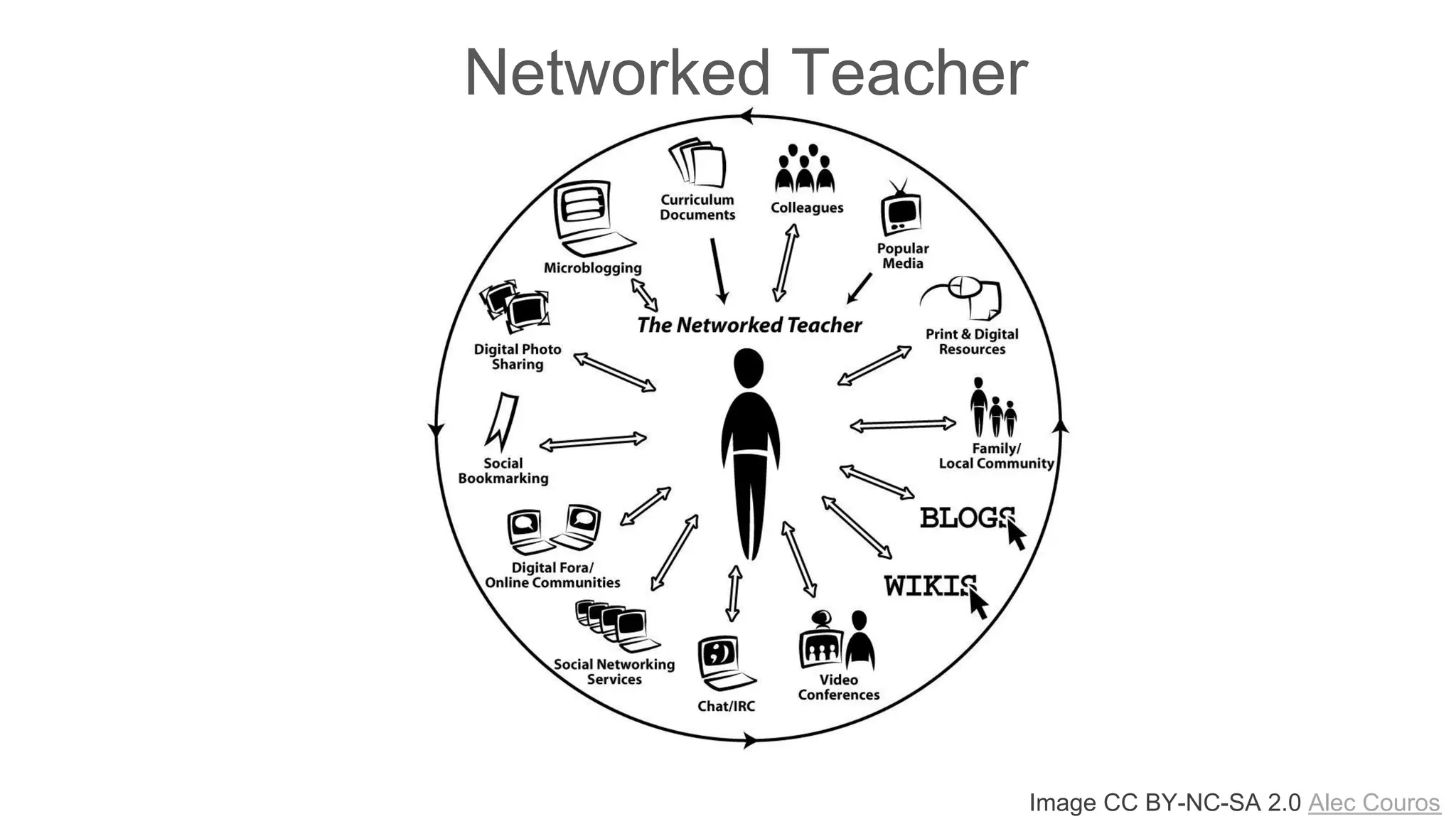
Networked Teacher
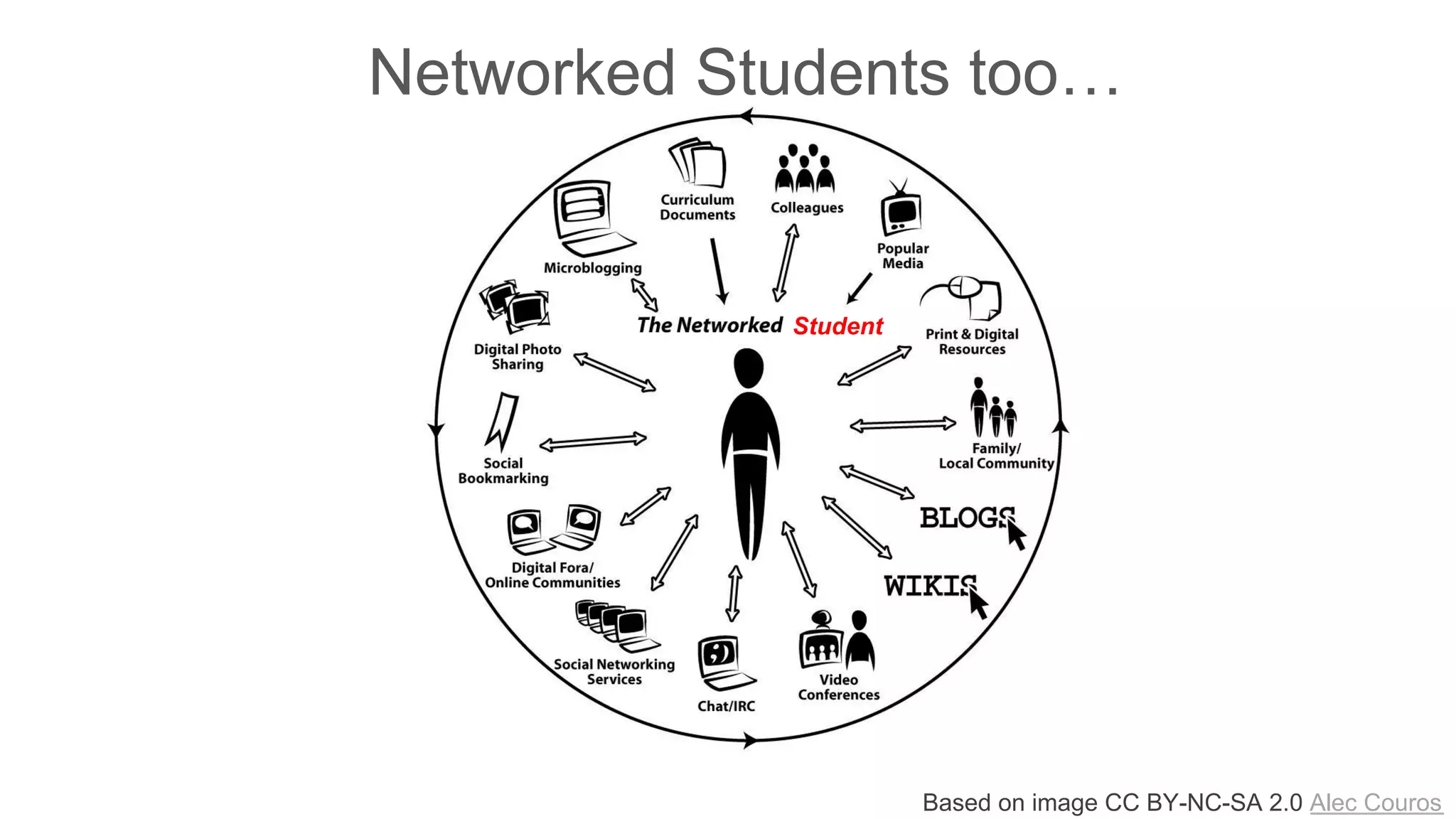
Networked Students too…
Student
Based on image CC BY-NC-SA 2.0 Alec Couros
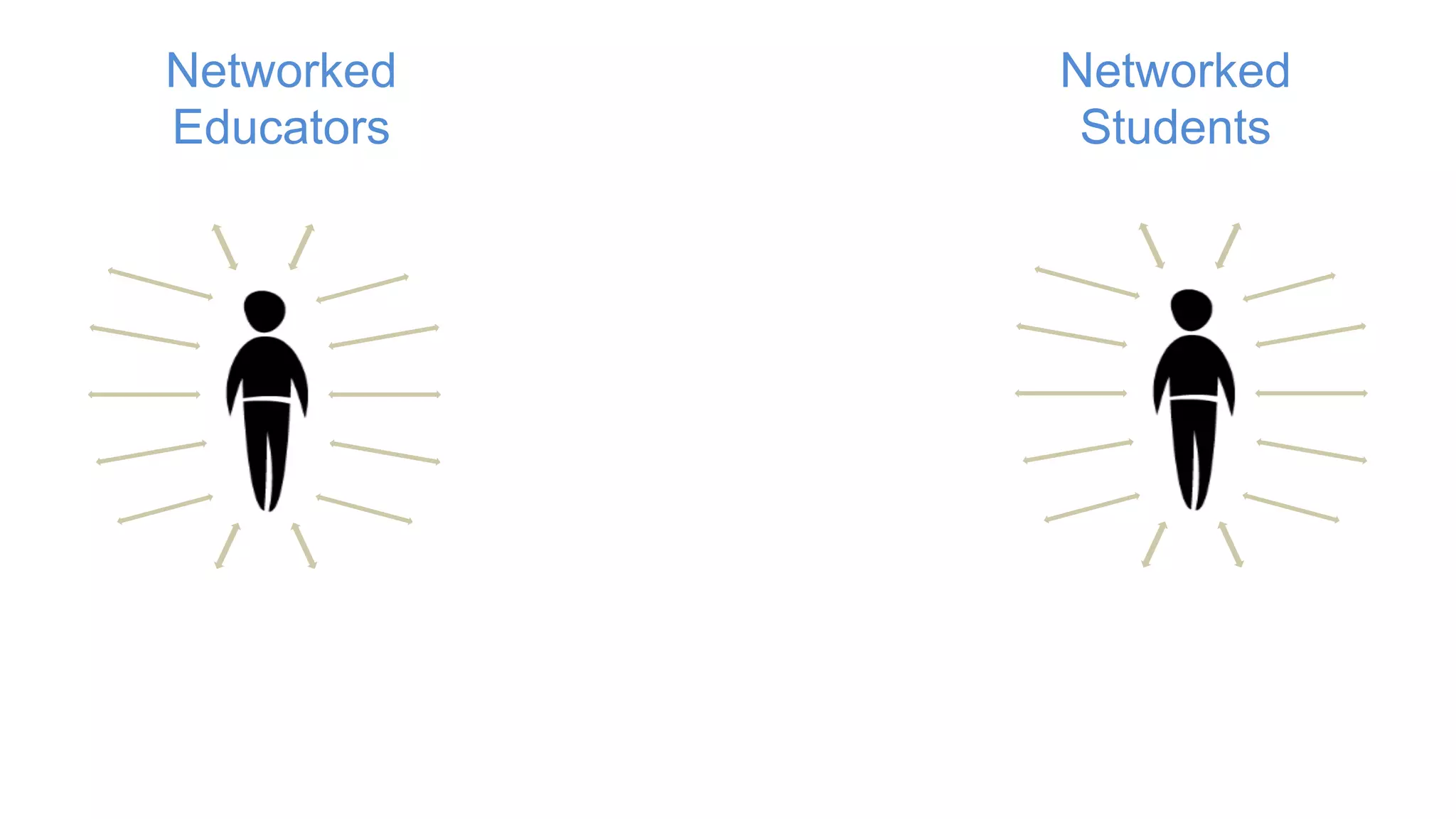
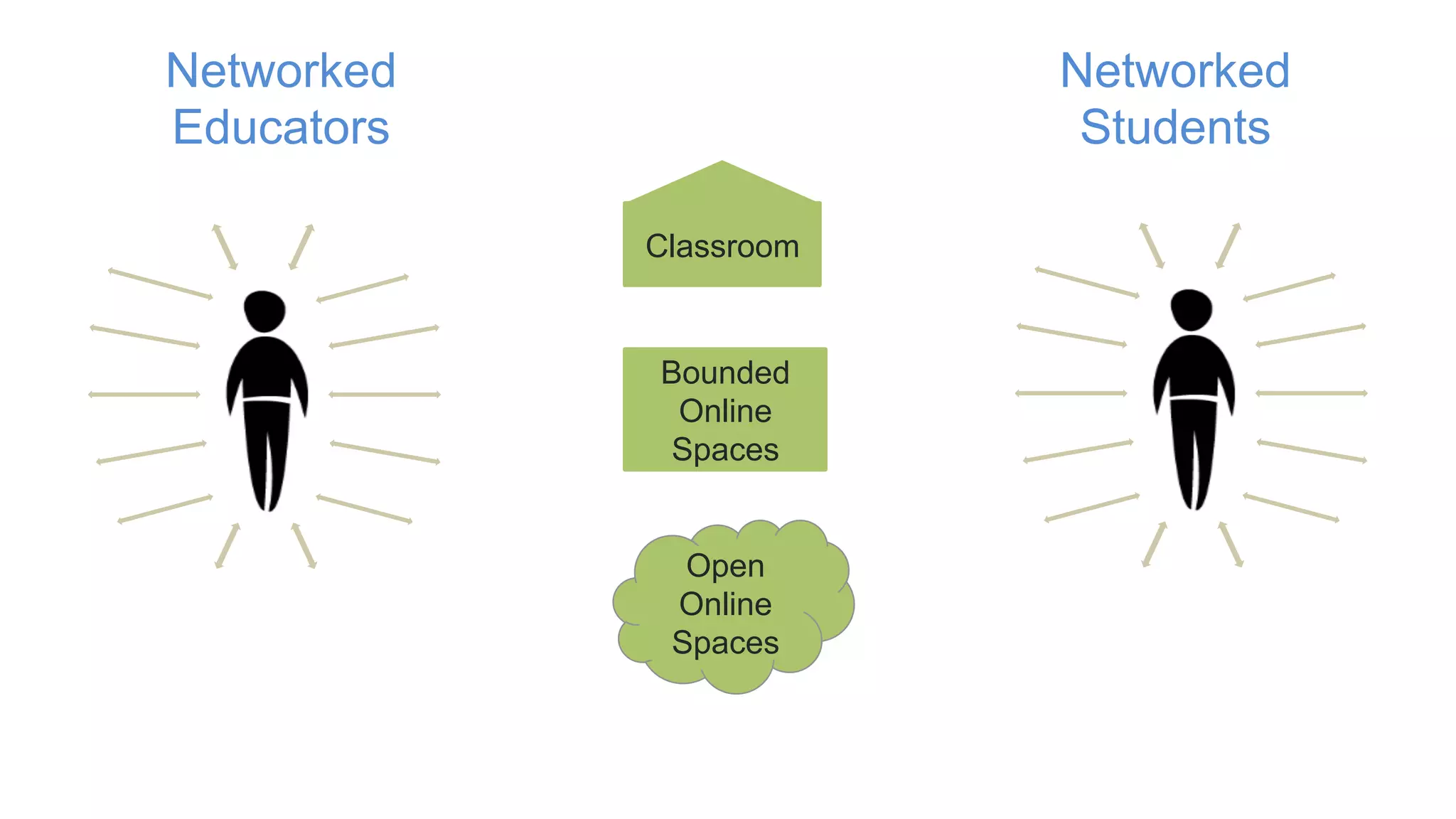
Networked
Educators
Networked
Students
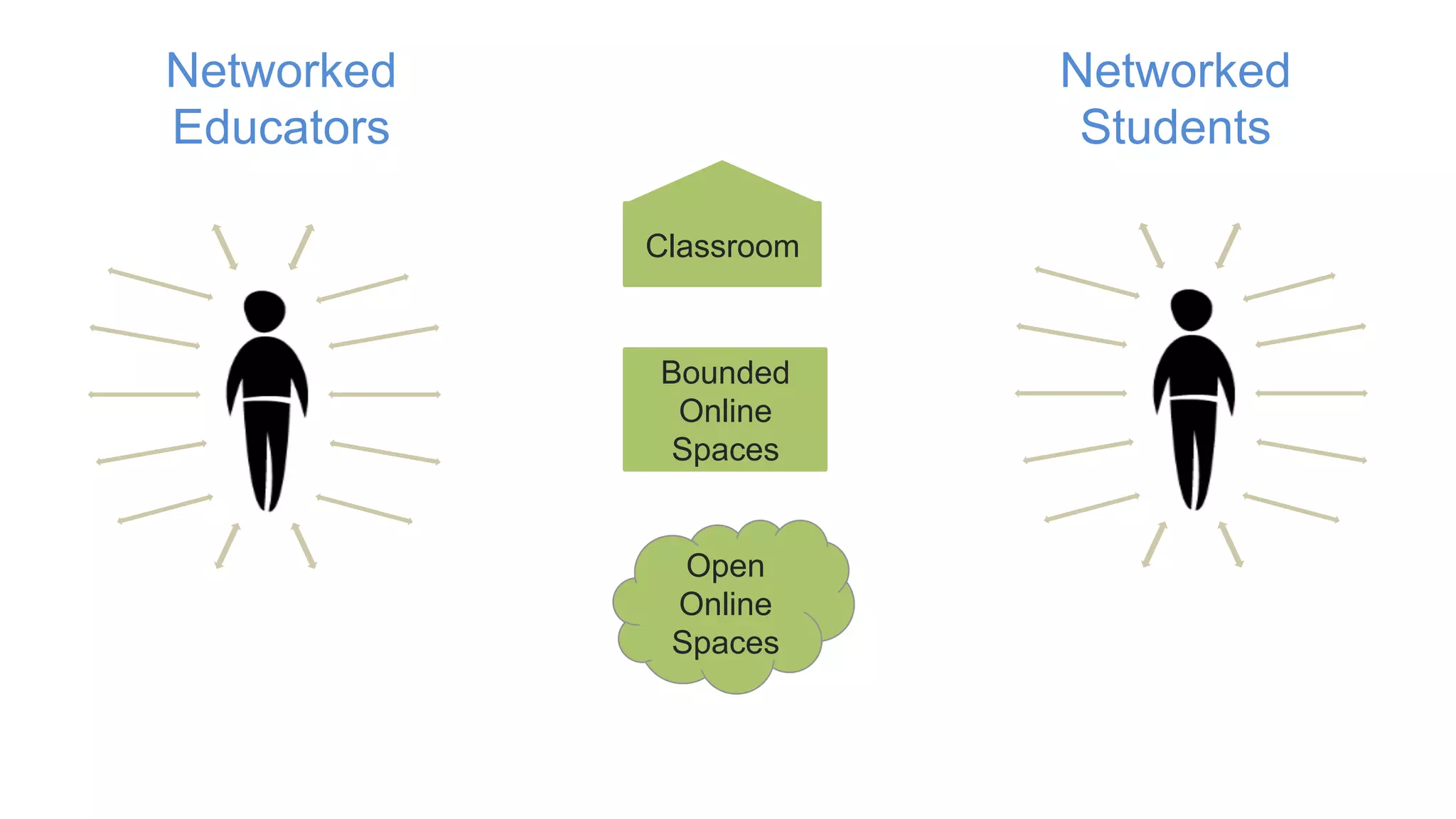
Networked
Educators
Networked
Students
Classroom
Bounded
Online
Spaces
Open
Online
Spaces
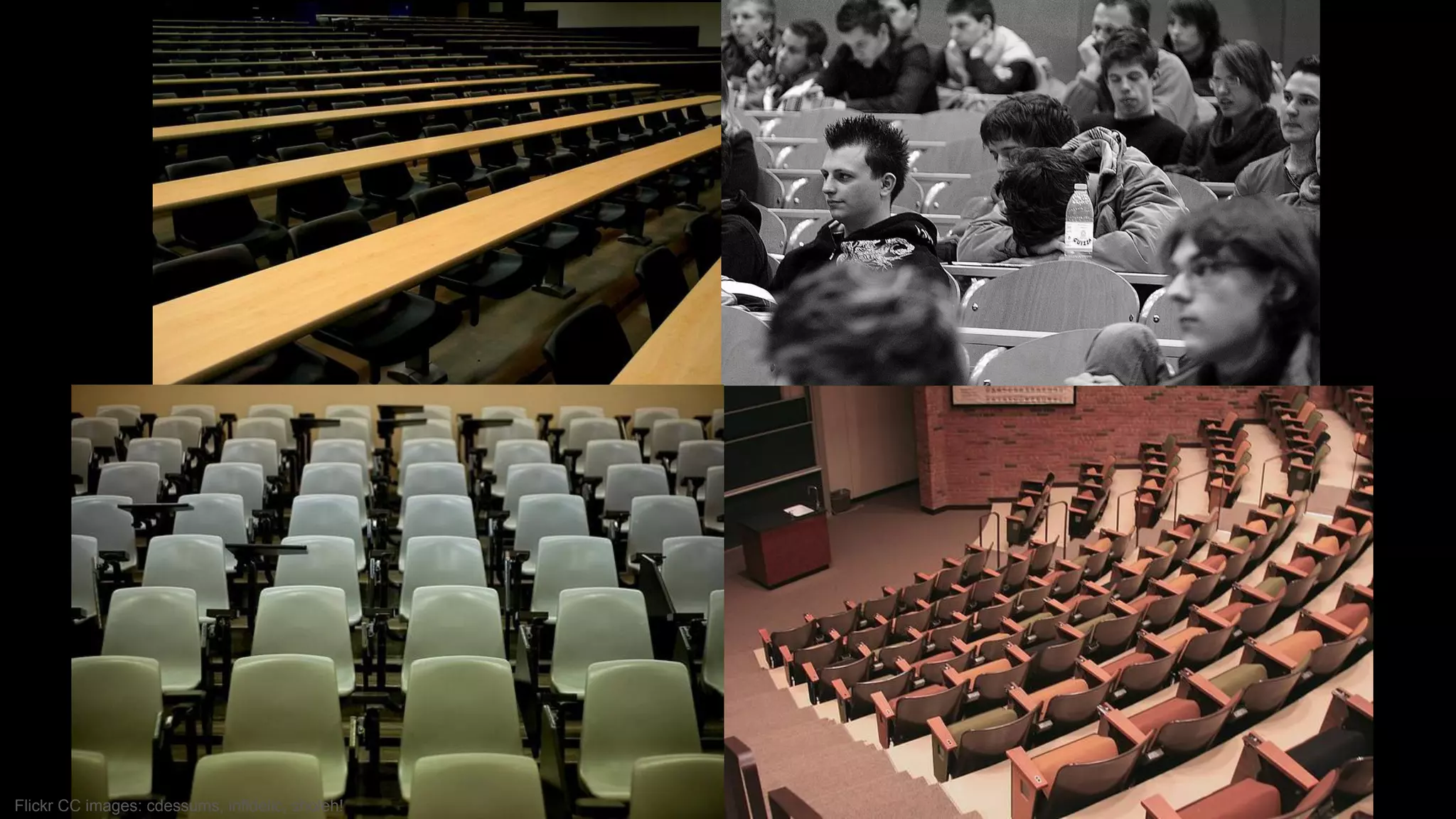
Flickr CC images: cdessums, infidelic, sholeh!
Individuals with abundant access to ICTs
who have habits of effective use of these
technologies in information-seeking and
problem-solving activities are unable to
make effective use of these technologies
in higher education settings.
David Wiley & John Hilton III (2009)
The Daily Divide
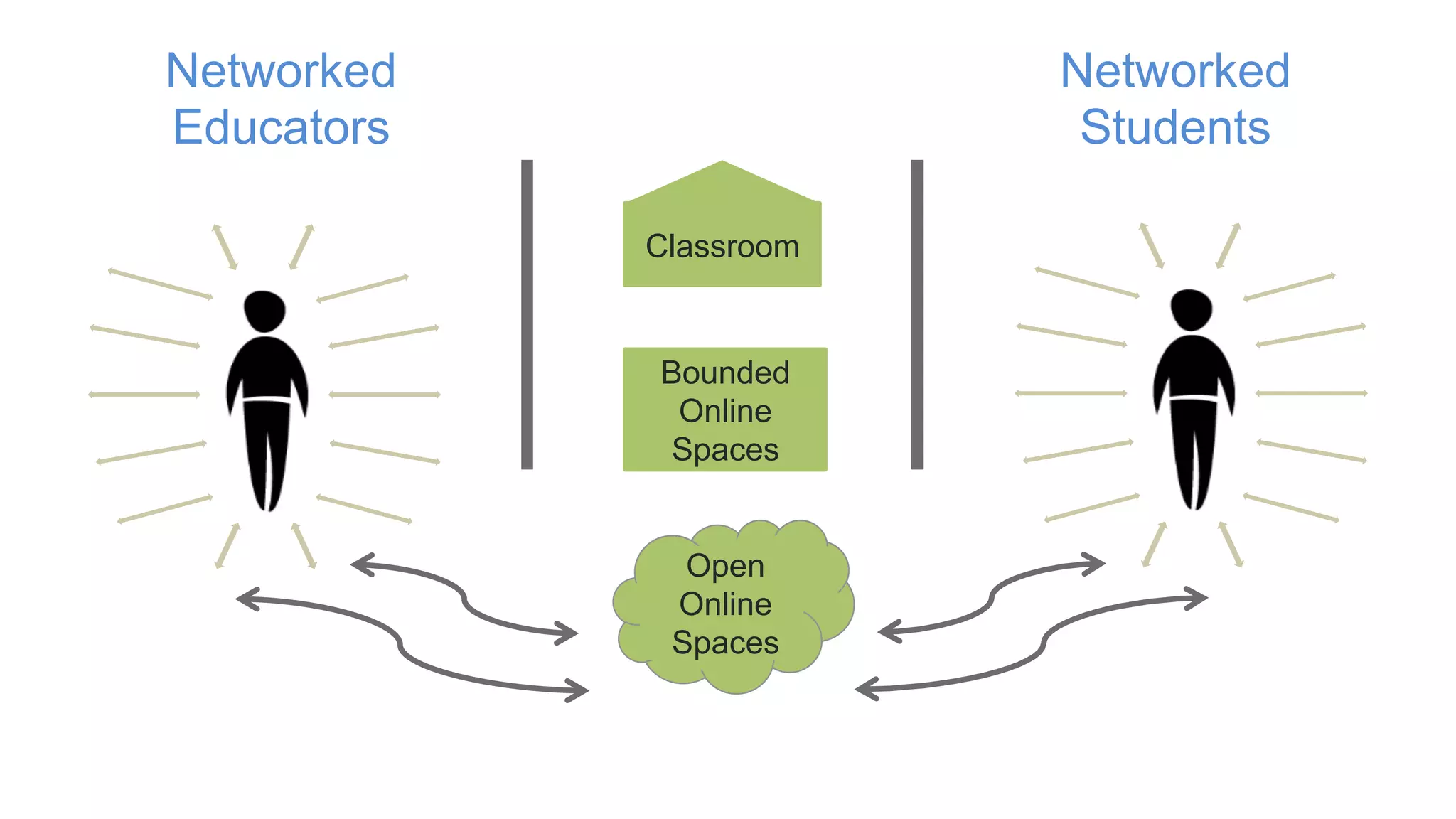
Networked
Educators
Networked
Students
Classroom
Bounded
Online
Spaces
Open
Online
Spaces
Networked
Students
Classroom
Bounded
Online
Spaces
Open
Online
Spaces
Networked
Educators
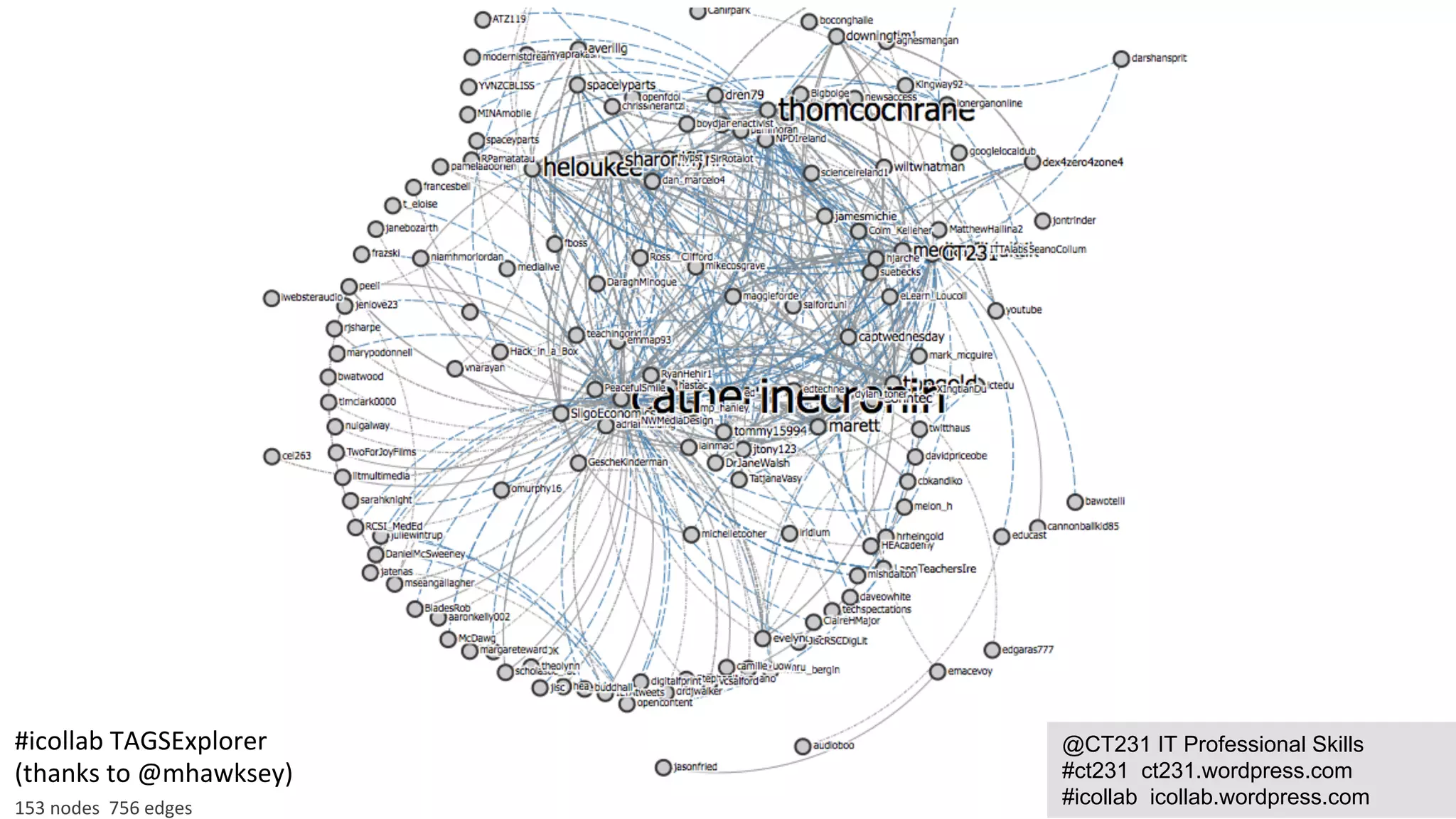
#icollab	
  TAGSExplorer	
  
(thanks	
  to	
  @mhawksey)	
  
153	
  nodes	
  	
  756	
  edges	
  
@CT231 IT Professional Skills
#ct231 ct231.wordpress.com
#icollab icollab.wordpress.com
“If institutions of learning are going to help
learners with the real challenges they face...
[they] will have to shift their focus from
imparting curriculum to supporting the
negotiation of productive identities
through landscapes of practices.”
CC BY-NC-SA
2.0 choconancy1
Etienne Wenger (2010)
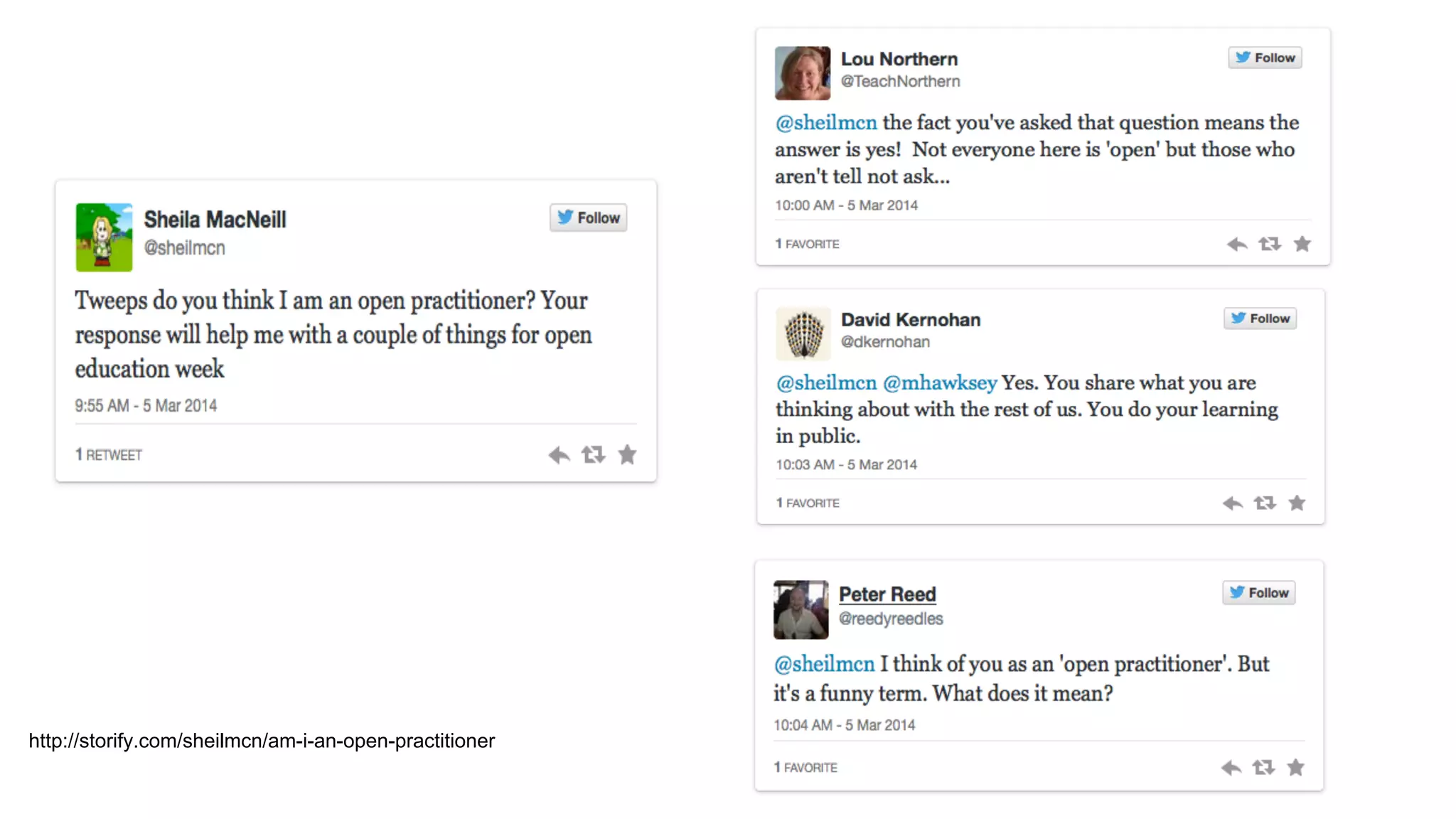
http://storify.com/sheilmcn/am-i-an-open-practitioner
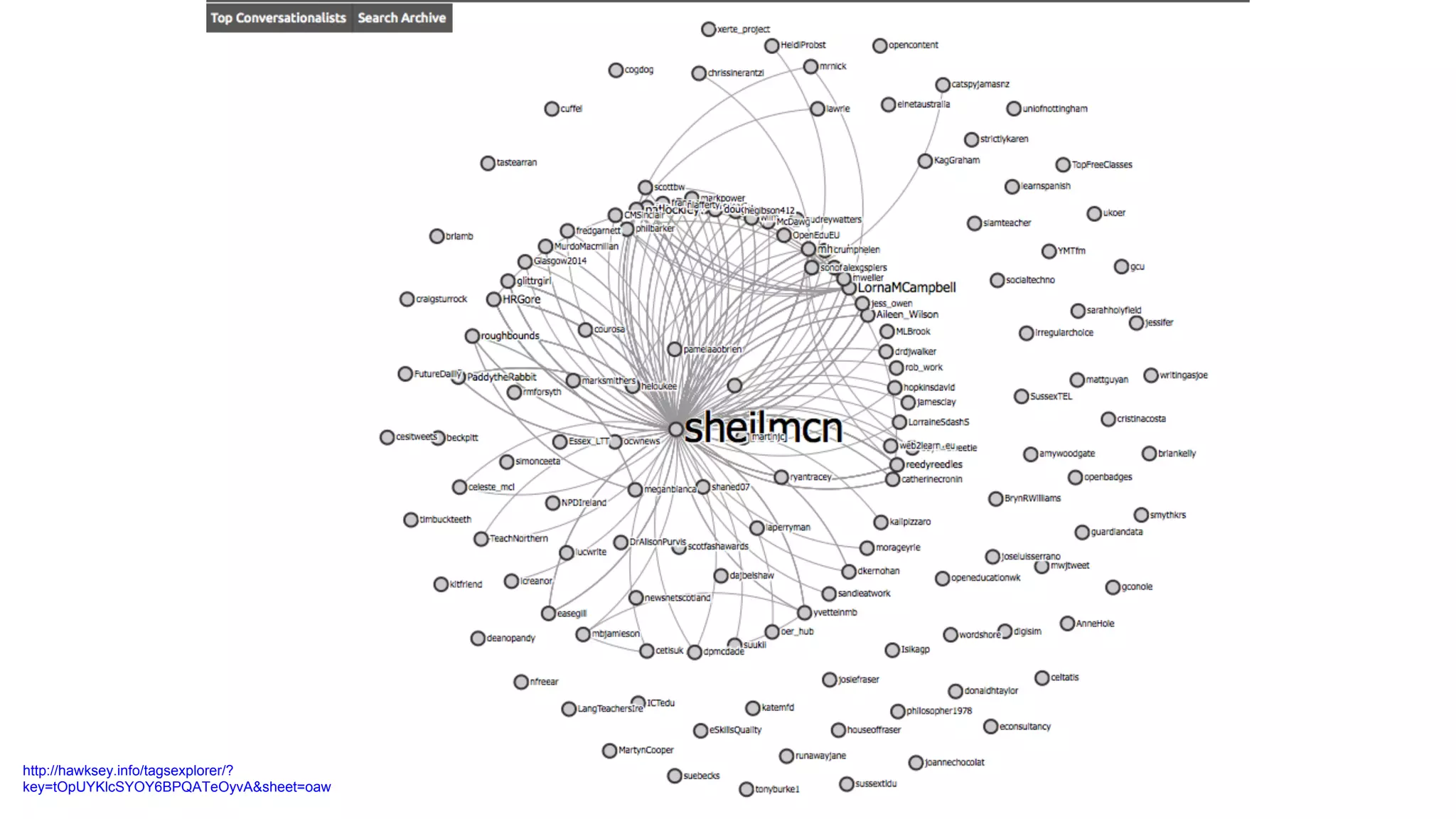
http://hawksey.info/tagsexplorer/?
key=tOpUYKlcSYOY6BPQATeOyvA&sheet=oaw
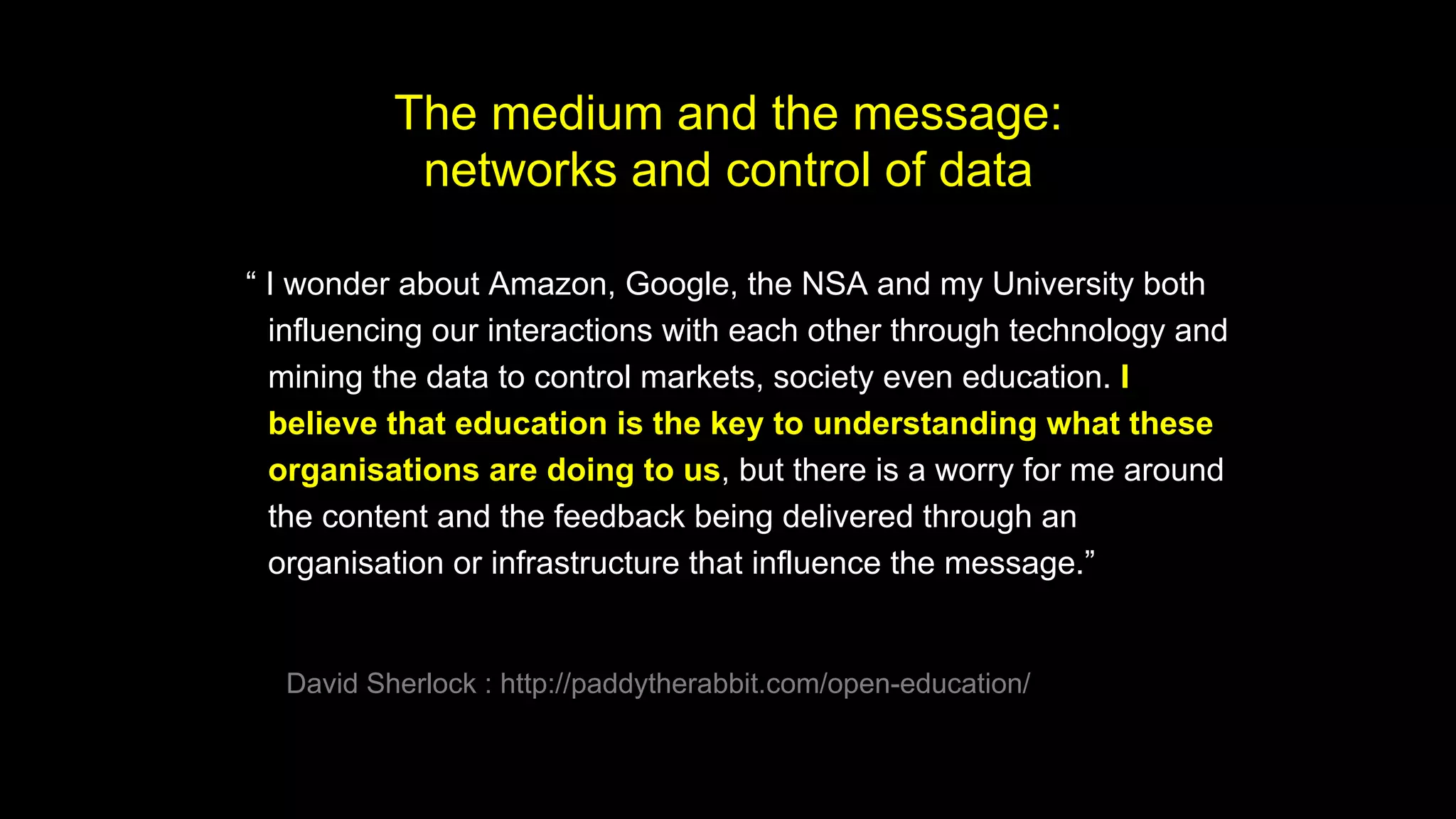
“ I wonder about Amazon, Google, the NSA and my University both
influencing our interactions with each other through technology and
mining the data to control markets, society even education. I
believe that education is the key to understanding what these
organisations are doing to us, but there is a worry for me around
the content and the feedback being delivered through an
organisation or infrastructure that influence the message.”
David Sherlock : http://paddytherabbit.com/open-education/
The medium and the message:
networks and control of data
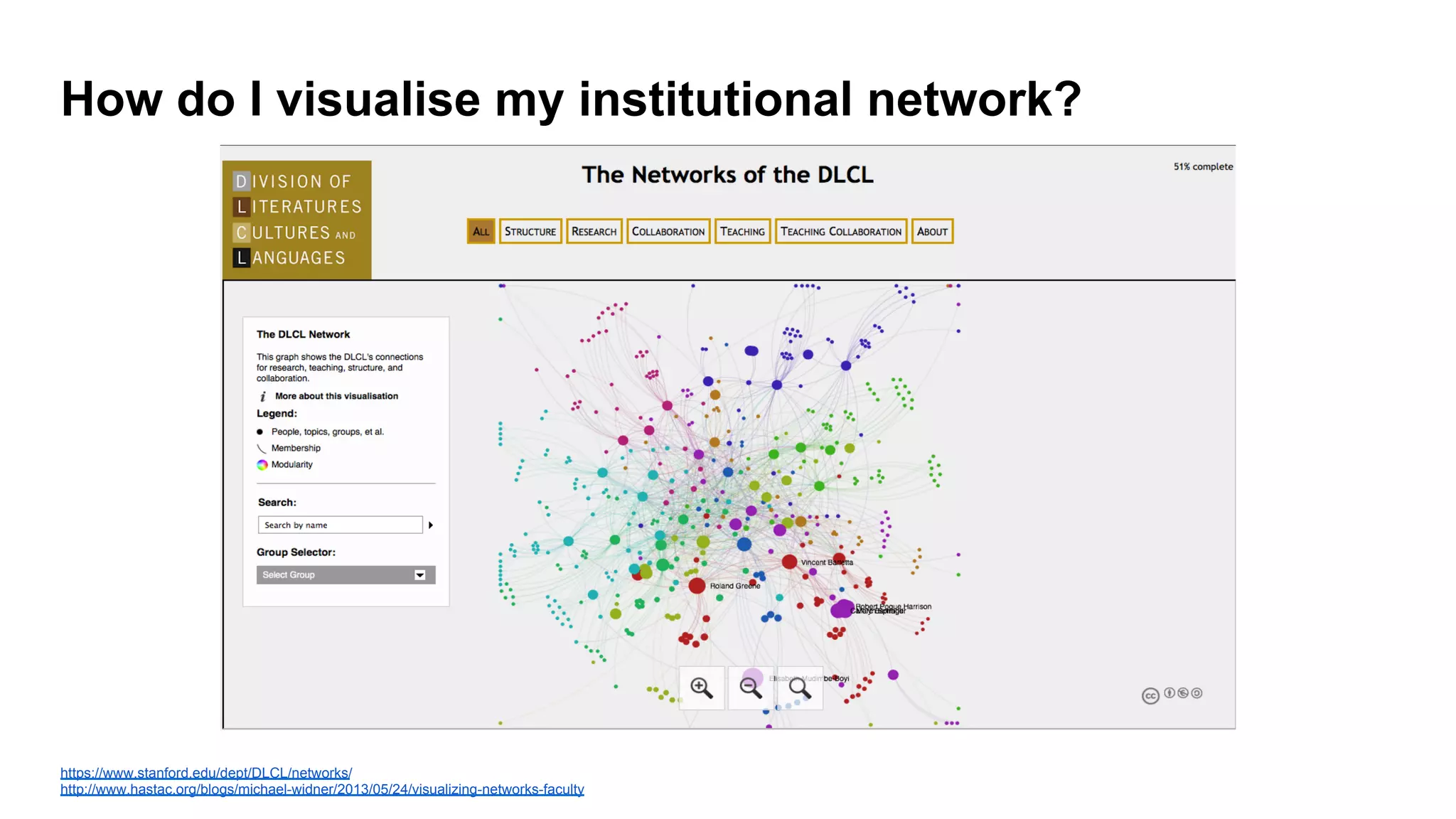
How do I visualise my institutional network?
https://www.stanford.edu/dept/DLCL/networks/
http://www.hastac.org/blogs/michael-widner/2013/05/24/visualizing-networks-faculty
Learners need to practice and experiment with different ways
of enacting their identities, and adopt subject positions
through different social technologies and media.
These opportunities can only be supported by academic
staff who are themselves engaged in digital practices and
questioning their own relationship with knowledge.
- Keri Facer & Neil Selwyn (2010)
We’d love to hear
your thoughts & questions.
Thank you!
Catherine Cronin
@catherinecronin
about.me/catherinecronin
&
Sheila McNeill
@sheilmcn
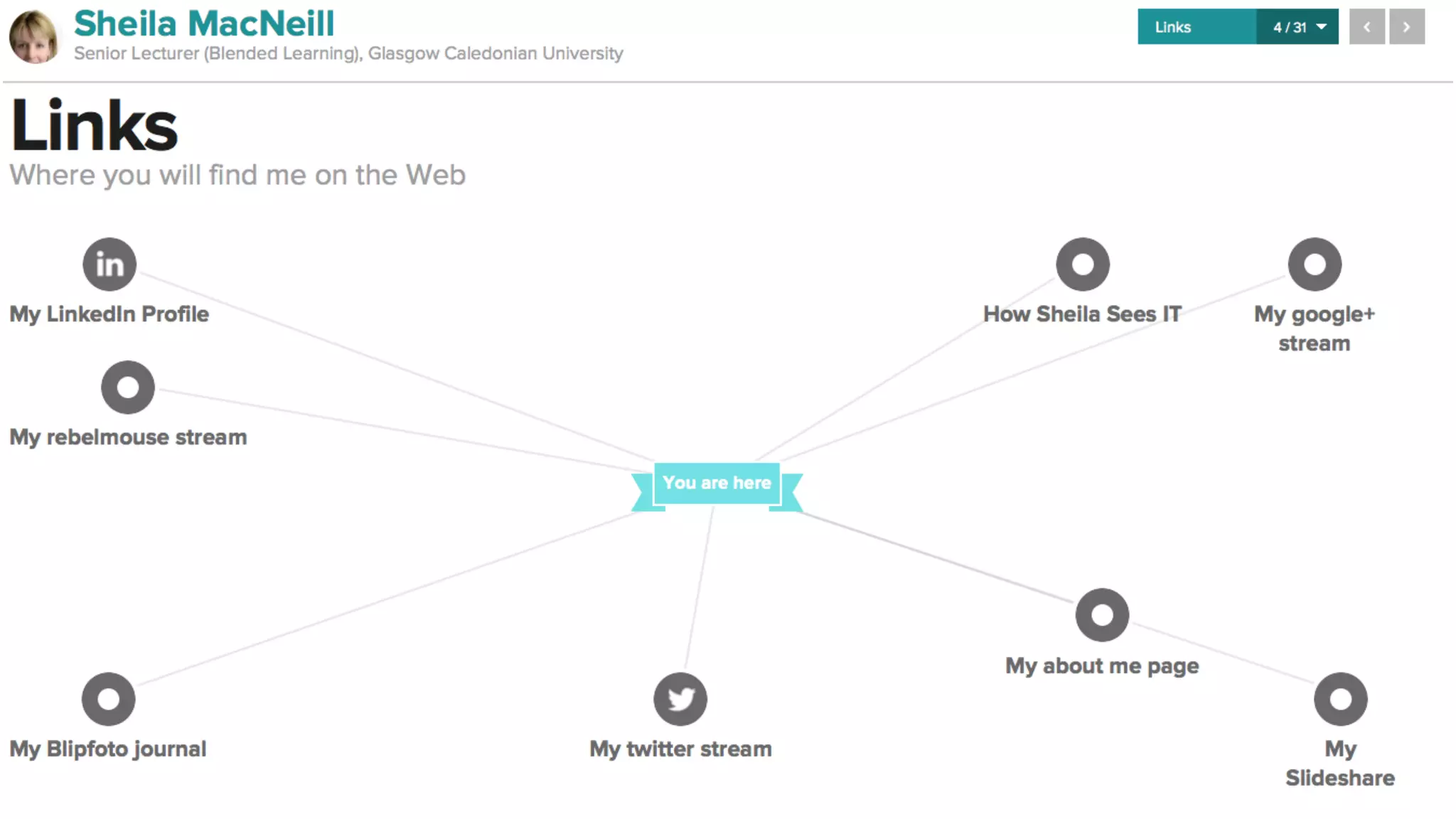
about.me/sheilmcn

Open and online: connections, community and reality