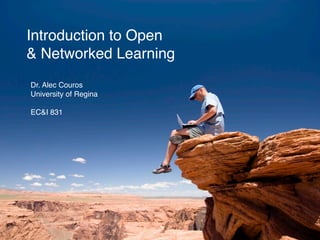
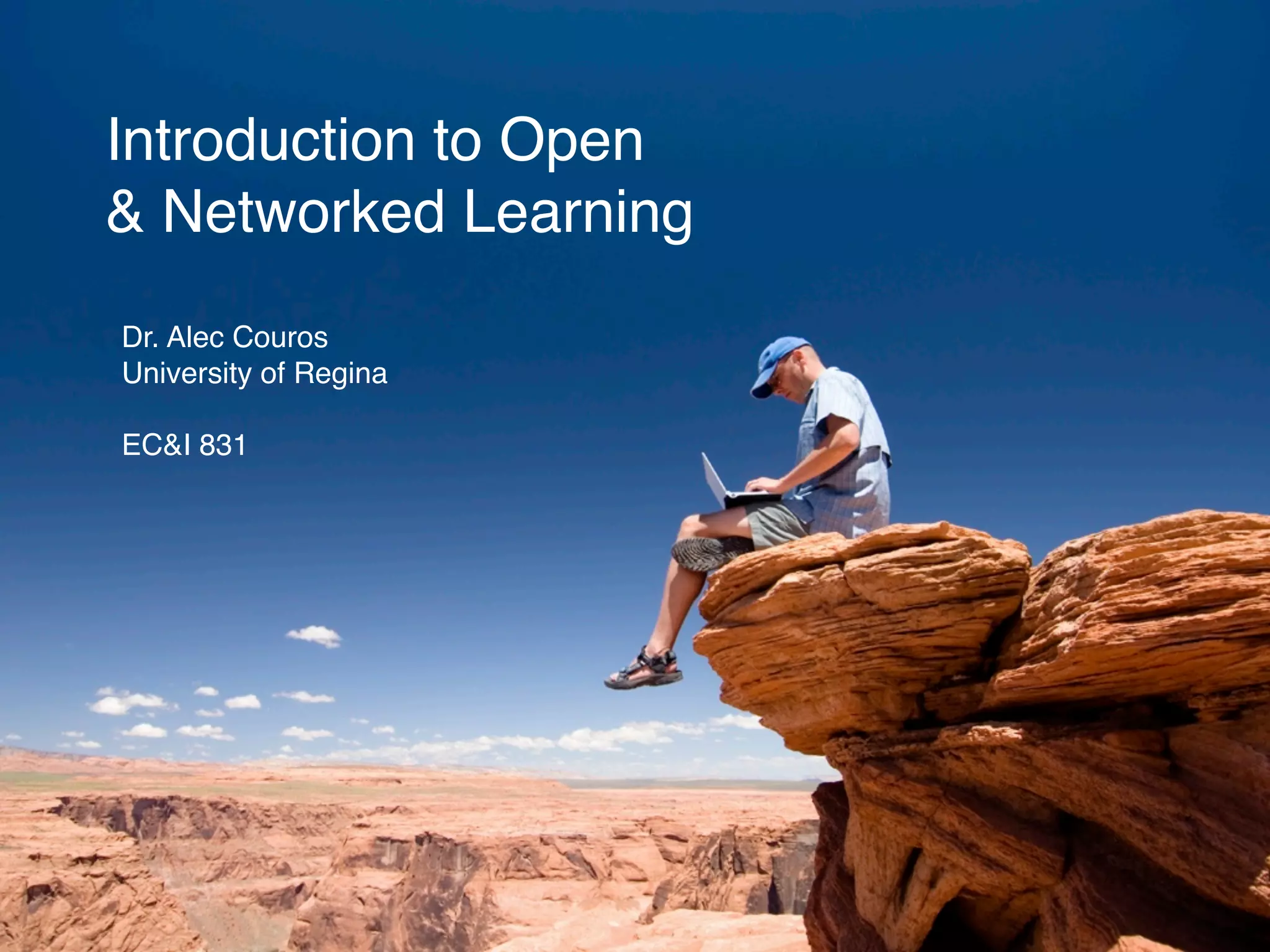
Introduction to Open
& Networked Learning
Dr. Alec Couros
University of Regina

EC&I 831
influences
“given enough eyeballs,
  all bugs are shallow”
    (Linusʼ Law, Raymond 1997)
“Open source software
communities are one of the most
     successful -- and least
 understood -- examples of high
 performance collaboration and
   community building on the
        Internet today.”
            (Kim, 2003)
“A key to transformation is for the
 teaching profession to establish
innovation networks that capture
the spirit and culture of hackers -
     the passion, the can-do,
        collective sharing.”
            (Hargreaves, 2003)
• philosophical stance
                   • power & control
                   • access
open(ness)         • design attributes
 (short version)

                      - privacy/publics
                      - audience
                      - transparency
                      - accountability
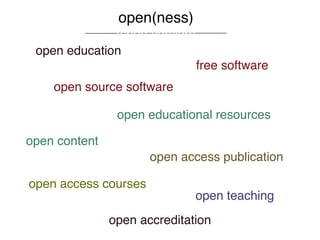
open(ness)
              (short version)
 open education
                                free software
    open source software

                open educational resources

open content
                      open access publication

open access courses
                              open teaching
               open accreditation
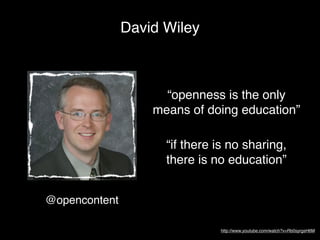
David Wiley


                     “openness is the only
                   means of doing education”

                     “if there is no sharing,
                     there is no education”


@opencontent

                               http://www.youtube.com/watch?v=Rb0syrgsH6M
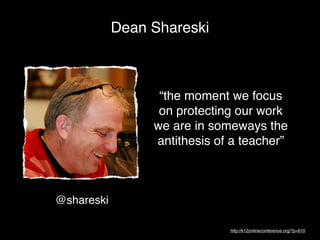
Dean Shareski


                  “the moment we focus
                  on protecting our work
                 we are in someways the
                 antithesis of a teacher”


@shareski

                              http://k12onlineconference.org/?p=610
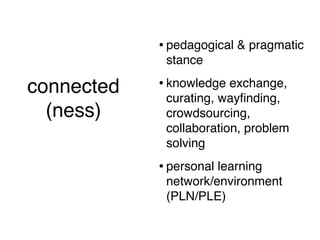
• pedagogical & pragmatic
                     stance

connected           • knowledge exchange,
                     curating, wayfinding,
  (ness)             crowdsourcing,
  (short version)    collaboration, problem
                     solving
                    • personal learning
                     network/environment
                     (PLN/PLE)
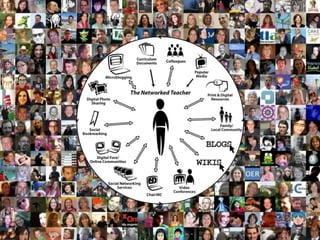
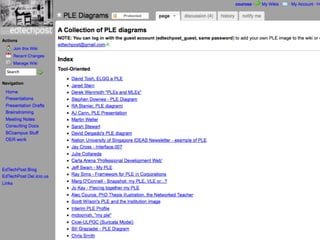
Personal Learning Environments

... systems that help learners take control of
and manage their own learning. This includes
providing support for learners to

 • set their own learning goals
 • manage their learning; managing both
   content and process

 • communicate with others in the process of
   learning


                           http://en.wikipedia.org/wiki/History_of_personal_learning_environments
Challenges
“An institution-controlled tool presents the user with a
fixed interface of controls (instruments) that the user
must learn to use effectively if they are to access the
service provided. It is a feature of the current Web
environment that the use of a large number of these
interfaces creates an obstructive user experience,
made worse by the lack of flexibility the user has for
integrating the different services they access. To
operate within this environment, the user must manage
a number of different dispositions and skills required for
different interfaces.
                                                          (Johnson et al, 2006)


                                http://en.wikipedia.org/wiki/History_of_personal_learning_environments
Challenges (continued)


“... the change from content that was developed by
expert and/or teachers towards possibilities and
challenges to make use of the bazaar of learning
opportunities and content leads to the necessity of
advanced self-organizing and searching in the Web - in
other words: media competent learners.

                                       (Schaffert & Hilzensauer, 2008)


                              http://en.wikipedia.org/wiki/History_of_personal_learning_environments
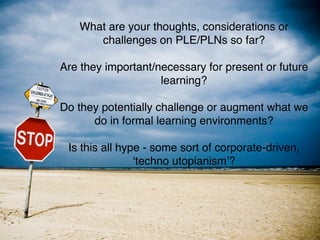
What are your thoughts, considerations or
      challenges on PLE/PLNs so far?

Are they important/necessary for present or future
                    learning?

Do they potentially challenge or augment what we
      do in formal learning environments?

 Is this all hype - some sort of corporate-driven,
                ʻtechno utopianismʼ?
context
“Tell me ... what it is I am
educating and what sort of world
we live in, and I will tell you what I
           am aiming at.”
              (Garforth, 1962)
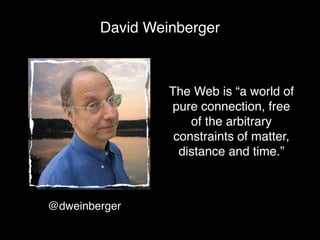
David Weinberger


                 The Web is “a world of
                 pure connection, free
                     of the arbitrary
                  constraints of matter,
                   distance and time.”


@dweinberger
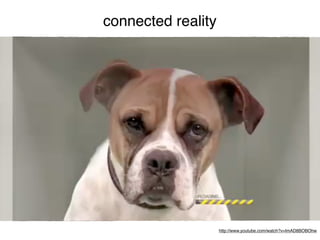
connected reality


                    http://www.youtube.com/watch?v=ImAD8BOBOhw
affordances ...
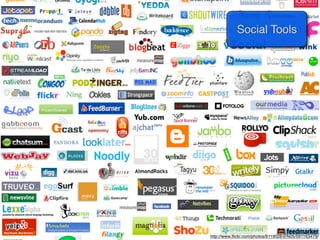
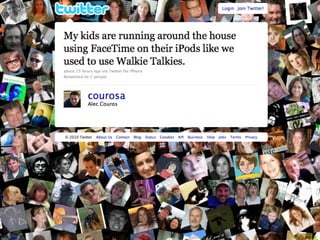
Social Tools


http://www.flickr.com/photos/9119028@N05/591163479/
@jonmott
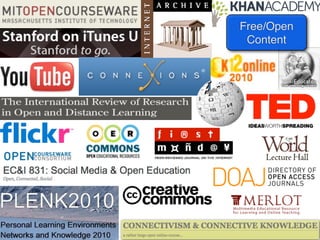
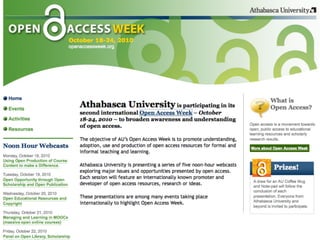
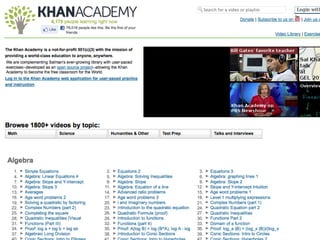
Free/Open
 Content
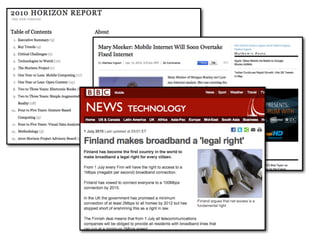
Access
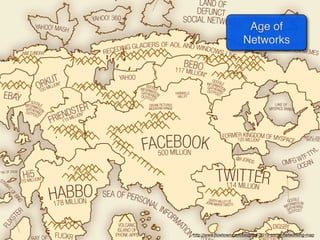
Age of
                       Networks


http://www.flowtown.com/blog/the-2010-social-networking-map
http://www.flickr.com/photos/scriptingnews/2699829038/sizes/l/
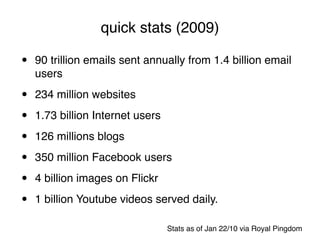
quick stats (2009)

•   90 trillion emails sent annually from 1.4 billion email
    users

•   234 million websites

•   1.73 billion Internet users

•   126 millions blogs

•   350 million Facebook users

•   4 billion images on Flickr

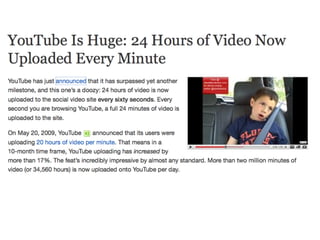
•   1 billion Youtube videos served daily.

                                  Stats as of Jan 22/10 via Royal Pingdom
Stats as of March 17/10 via Mashable
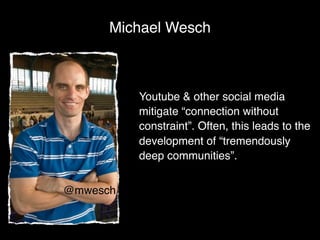
Michael Wesch


          Youtube & other social media
          mitigate “connection without
          constraint”. Often, this leads to the
          development of “tremendously
          deep communities”.


@mwesch
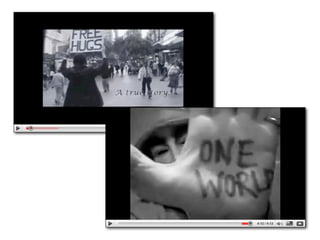
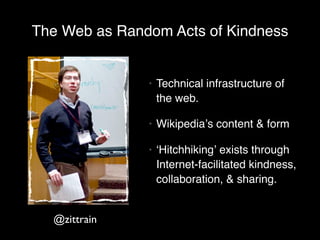
The Web as Random Acts of Kindness


               •   Technical infrastructure of
                   the web.

               •   Wikipediaʼs content & form

               •   ʻHitchhikingʼ exists through
                   Internet-facilitated kindness,
                   collaboration, & sharing.


  @zittrain
possibilities ...
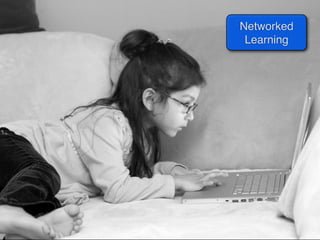
Networked
 Learning
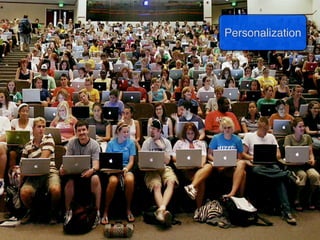
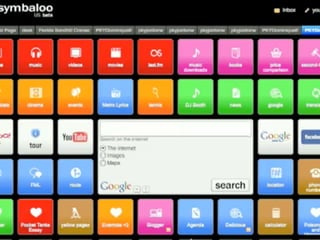
Personalization
http://www.flickr.com/photos/will-lion/3974469907/
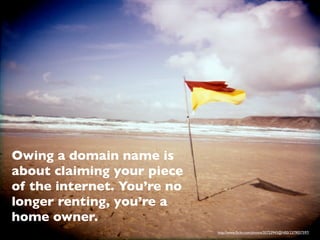
Owing a domain name is
about claiming your piece
of the internet. You’re no
longer renting, you’re a
home owner.
                             http://www.flickr.com/photos/35723943@N00/2379057597/
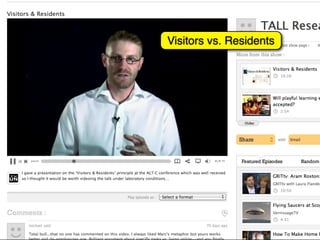
Visitors vs. Residents
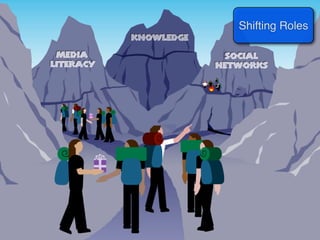
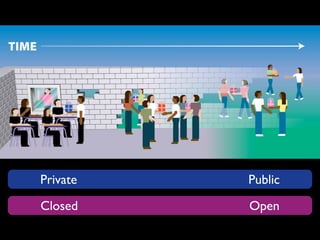
Shifting Roles
Private   Public

Closed    Open
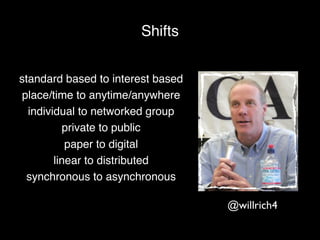
Shifts


standard based to interest based
 place/time to anytime/anywhere
  individual to networked group
           private to public
           paper to digital
        linear to distributed
  synchronous to asynchronous

                                   @willrich4
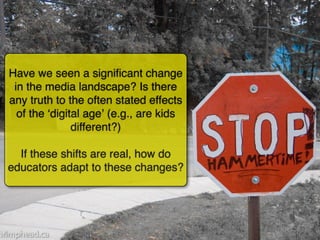
Have we seen a significant change
 in the media landscape? Is there
any truth to the often stated effects
  of the ʻdigital ageʼ (e.g., are kids
               different?)

  If these shifts are real, how do
educators adapt to these changes?
“Understanding how networks
work is one of the most important
 literacies of the 21st century.”
            (Rheingold, 2010)
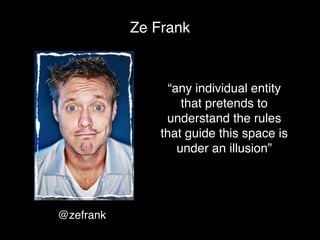
Ze Frank


                 “any individual entity
                    that pretends to
                understand the rules
               that guide this space is
                   under an illusion”


@zefrank
a few


affordances
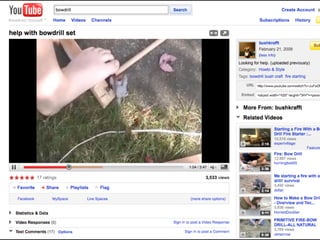
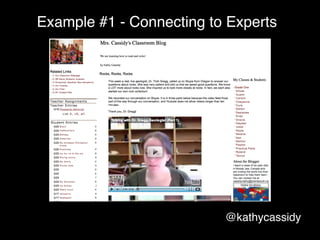
Example #1 - Connecting to Experts


                          @kathycassidy
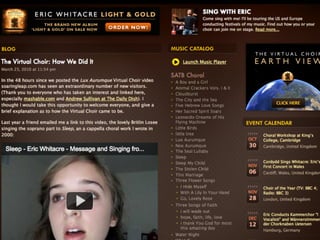
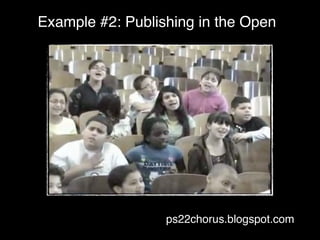
Example #2: Publishing in the Open


                  ps22chorus.blogspot.com
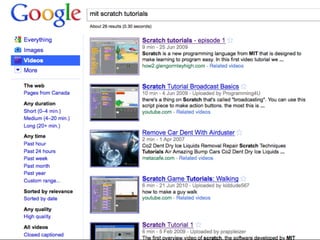
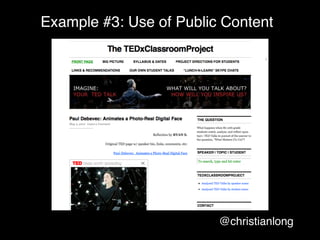
Example #3: Use of Public Content


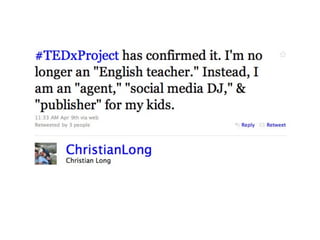
                         @christianlong
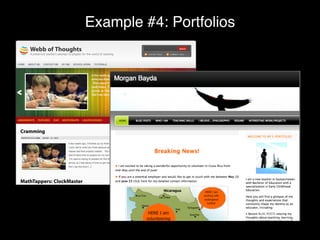
Example #4: Portfolios
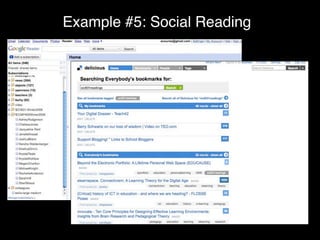
Example #5: Social Reading
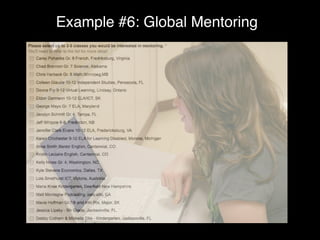
Example #6: Global Mentoring
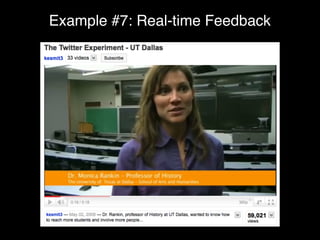
Example #7: Real-time Feedback
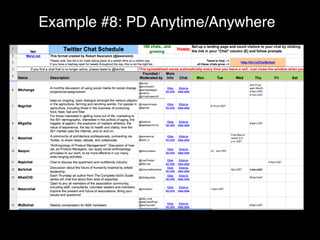
Example #8: PD Anytime/Anywhere
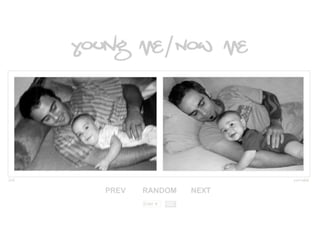
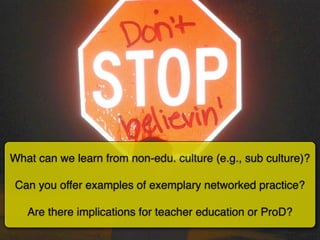
What can we learn from non-edu. culture (e.g., sub culture)?

 Can you offer examples of exemplary networked practice?

   Are there implications for teacher education or ProD?
Obsolescence never meant the end of anything,
           itʼs just the beginning.
                ~ Marshall McLuhan
web: couros.ca
  twitter: courosa
  google: couros
couros@gmail.com

Open & Networked Learning for #ECI831

  • 1.
    Introduction to Open &Networked Learning Dr. Alec Couros University of Regina EC&I 831
  • 2.
  • 3.
    “given enough eyeballs, all bugs are shallow” (Linusʼ Law, Raymond 1997)
  • 4.
    “Open source software communitiesare one of the most successful -- and least understood -- examples of high performance collaboration and community building on the Internet today.” (Kim, 2003)
  • 5.
    “A key totransformation is for the teaching profession to establish innovation networks that capture the spirit and culture of hackers - the passion, the can-do, collective sharing.” (Hargreaves, 2003)
  • 6.
    • philosophical stance • power & control • access open(ness) • design attributes (short version) - privacy/publics - audience - transparency - accountability
  • 7.
    open(ness) (short version) open education free software open source software open educational resources open content open access publication open access courses open teaching open accreditation
  • 8.
    David Wiley “openness is the only means of doing education” “if there is no sharing, there is no education” @opencontent http://www.youtube.com/watch?v=Rb0syrgsH6M
  • 9.
    Dean Shareski “the moment we focus on protecting our work we are in someways the antithesis of a teacher” @shareski http://k12onlineconference.org/?p=610
  • 10.
    • pedagogical &pragmatic stance connected • knowledge exchange, curating, wayfinding, (ness) crowdsourcing, (short version) collaboration, problem solving • personal learning network/environment (PLN/PLE)
  • 13.
    Personal Learning Environments ...systems that help learners take control of and manage their own learning. This includes providing support for learners to • set their own learning goals • manage their learning; managing both content and process • communicate with others in the process of learning http://en.wikipedia.org/wiki/History_of_personal_learning_environments
  • 14.
    Challenges “An institution-controlled toolpresents the user with a fixed interface of controls (instruments) that the user must learn to use effectively if they are to access the service provided. It is a feature of the current Web environment that the use of a large number of these interfaces creates an obstructive user experience, made worse by the lack of flexibility the user has for integrating the different services they access. To operate within this environment, the user must manage a number of different dispositions and skills required for different interfaces. (Johnson et al, 2006) http://en.wikipedia.org/wiki/History_of_personal_learning_environments
  • 15.
    Challenges (continued) “... thechange from content that was developed by expert and/or teachers towards possibilities and challenges to make use of the bazaar of learning opportunities and content leads to the necessity of advanced self-organizing and searching in the Web - in other words: media competent learners. (Schaffert & Hilzensauer, 2008) http://en.wikipedia.org/wiki/History_of_personal_learning_environments
  • 16.
    What are yourthoughts, considerations or challenges on PLE/PLNs so far? Are they important/necessary for present or future learning? Do they potentially challenge or augment what we do in formal learning environments? Is this all hype - some sort of corporate-driven, ʻtechno utopianismʼ?
  • 17.
  • 18.
    “Tell me ...what it is I am educating and what sort of world we live in, and I will tell you what I am aiming at.” (Garforth, 1962)
  • 19.
    David Weinberger The Web is “a world of pure connection, free of the arbitrary constraints of matter, distance and time.” @dweinberger
  • 20.
    connected reality http://www.youtube.com/watch?v=ImAD8BOBOhw
  • 21.
  • 22.
  • 23.
  • 24.
  • 27.
  • 30.
    Age of Networks http://www.flowtown.com/blog/the-2010-social-networking-map
  • 31.
  • 32.
  • 33.
    quick stats (2009) • 90 trillion emails sent annually from 1.4 billion email users • 234 million websites • 1.73 billion Internet users • 126 millions blogs • 350 million Facebook users • 4 billion images on Flickr • 1 billion Youtube videos served daily. Stats as of Jan 22/10 via Royal Pingdom
  • 34.
    Stats as ofMarch 17/10 via Mashable
  • 35.
    Michael Wesch Youtube & other social media mitigate “connection without constraint”. Often, this leads to the development of “tremendously deep communities”. @mwesch
  • 40.
    The Web asRandom Acts of Kindness • Technical infrastructure of the web. • Wikipediaʼs content & form • ʻHitchhikingʼ exists through Internet-facilitated kindness, collaboration, & sharing. @zittrain
  • 41.
  • 42.
  • 46.
  • 48.
  • 49.
    Owing a domainname is about claiming your piece of the internet. You’re no longer renting, you’re a home owner. http://www.flickr.com/photos/35723943@N00/2379057597/
  • 50.
  • 51.
  • 54.
    Private Public Closed Open
  • 55.
    Shifts standard based tointerest based place/time to anytime/anywhere individual to networked group private to public paper to digital linear to distributed synchronous to asynchronous @willrich4
  • 56.
    Have we seena significant change in the media landscape? Is there any truth to the often stated effects of the ʻdigital ageʼ (e.g., are kids different?) If these shifts are real, how do educators adapt to these changes?
  • 57.
    “Understanding how networks workis one of the most important literacies of the 21st century.” (Rheingold, 2010)
  • 58.
    Ze Frank “any individual entity that pretends to understand the rules that guide this space is under an illusion” @zefrank
  • 64.
  • 65.
    Example #1 -Connecting to Experts @kathycassidy
  • 66.
    Example #2: Publishingin the Open ps22chorus.blogspot.com
  • 67.
    Example #3: Useof Public Content @christianlong
  • 68.
  • 69.
  • 70.
  • 71.
  • 72.
    Example #8: PDAnytime/Anywhere
  • 73.
    What can welearn from non-edu. culture (e.g., sub culture)? Can you offer examples of exemplary networked practice? Are there implications for teacher education or ProD?
  • 74.
    Obsolescence never meantthe end of anything, itʼs just the beginning. ~ Marshall McLuhan
  • 75.
    web: couros.ca twitter: courosa google: couros couros@gmail.com