WORD PROCESSING 
SOFTWARE 
Presented by: 
Rahul Singh 
M Lis (Ist Sem) 
Pondicherry University
INTRODUCTION 
A word processor is an electronic device or computer 
Software application that, as directed by the user, 
performs word processing: 
The composition, editing, formatting and sometimes 
printing of any sort of written material. 
Word processing can also refer to advanced shorthand 
techniques, sometimes used in specialized contexts with a 
specially modified typewriter. 
The term was coined at IBM's Böblingen, West Germany 
Laboratory in the 1960s.
HISTORY 
The word processor emerged as a stand-alone office 
machine in the 1970s and 1980s, combining the keyboard 
text-entry and printing functions of an electric typewriter 
with a dedicated computer processor for the editing of text. 
Although features and designs varied among 
manufacturers and models, and new features were added as 
technology advanced, word processors typically featured a 
monochrome display and the ability to save documents 
on memory cards or diskettes. 
Later models introduced innovations such as spell-checking 
programs, improved formatting options, and dot-matrix 
printing.
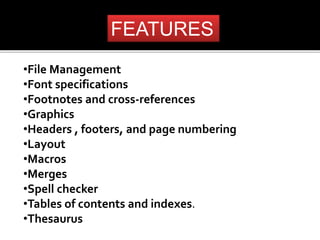
FEATURES 
•File Management 
•Font specifications 
•Footnotes and cross-references 
•Graphics 
•Headers , footers, and page numbering 
•Layout 
•Macros 
•Merges 
•Spell checker 
•Tables of contents and indexes. 
•Thesaurus
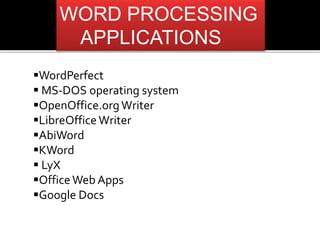
WORD PROCESSING 
APPLICATIONS 
WordPerfect 
 MS-DOS operating system 
OpenOffice.org Writer 
LibreOffice Writer 
AbiWord 
KWord 
 LyX 
Office Web Apps 
Google Docs
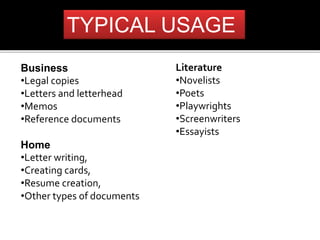
TYPICAL USAGE 
Business 
•Legal copies 
•Letters and letterhead 
•Memos 
•Reference documents 
Home 
•Letter writing, 
•Creating cards, 
•Resume creation, 
•Other types of documents 
Literature 
•Novelists 
•Poets 
•Playwrights 
•Screenwriters 
•Essayists
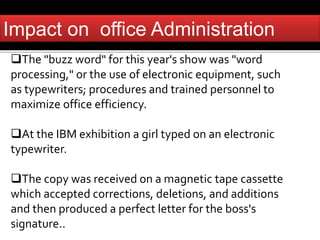
Impact on office Administration 
The "buzz word" for this year's show was "word 
processing," or the use of electronic equipment, such 
as typewriters; procedures and trained personnel to 
maximize office efficiency. 
At the IBM exhibition a girl typed on an electronic 
typewriter. 
The copy was received on a magnetic tape cassette 
which accepted corrections, deletions, and additions 
and then produced a perfect letter for the boss's 
signature..
MICROSOFT WORD 
Microsoft Word is a word processor developed by Microsoft. 
It was first released in 1983 under the name Multi-Tool Word for Xenix 
systems. 
Subsequent versions were later written for several other platforms 
including IBM PCs running DOS (1983), Apple Macintosh running 
Microsoft Windows (1989). 
 Commercial versions of Word are licensed as a standalone product or 
as a component of Microsoft Office, Windows RT or the discontinued 
Microsoft Works suite. 
Freeware editions of Word are Microsoft Word Viewer and Office 
Online, both of which have limited features.
Word processing software

Word processing software

  • 1.
    WORD PROCESSING SOFTWARE Presented by: Rahul Singh M Lis (Ist Sem) Pondicherry University
  • 2.
    INTRODUCTION A wordprocessor is an electronic device or computer Software application that, as directed by the user, performs word processing: The composition, editing, formatting and sometimes printing of any sort of written material. Word processing can also refer to advanced shorthand techniques, sometimes used in specialized contexts with a specially modified typewriter. The term was coined at IBM's Böblingen, West Germany Laboratory in the 1960s.
  • 3.
    HISTORY The wordprocessor emerged as a stand-alone office machine in the 1970s and 1980s, combining the keyboard text-entry and printing functions of an electric typewriter with a dedicated computer processor for the editing of text. Although features and designs varied among manufacturers and models, and new features were added as technology advanced, word processors typically featured a monochrome display and the ability to save documents on memory cards or diskettes. Later models introduced innovations such as spell-checking programs, improved formatting options, and dot-matrix printing.
  • 4.
    FEATURES •File Management •Font specifications •Footnotes and cross-references •Graphics •Headers , footers, and page numbering •Layout •Macros •Merges •Spell checker •Tables of contents and indexes. •Thesaurus
  • 5.
    WORD PROCESSING APPLICATIONS WordPerfect  MS-DOS operating system OpenOffice.org Writer LibreOffice Writer AbiWord KWord  LyX Office Web Apps Google Docs
  • 6.
    TYPICAL USAGE Business •Legal copies •Letters and letterhead •Memos •Reference documents Home •Letter writing, •Creating cards, •Resume creation, •Other types of documents Literature •Novelists •Poets •Playwrights •Screenwriters •Essayists
  • 7.
    Impact on officeAdministration The "buzz word" for this year's show was "word processing," or the use of electronic equipment, such as typewriters; procedures and trained personnel to maximize office efficiency. At the IBM exhibition a girl typed on an electronic typewriter. The copy was received on a magnetic tape cassette which accepted corrections, deletions, and additions and then produced a perfect letter for the boss's signature..
  • 8.
    MICROSOFT WORD MicrosoftWord is a word processor developed by Microsoft. It was first released in 1983 under the name Multi-Tool Word for Xenix systems. Subsequent versions were later written for several other platforms including IBM PCs running DOS (1983), Apple Macintosh running Microsoft Windows (1989).  Commercial versions of Word are licensed as a standalone product or as a component of Microsoft Office, Windows RT or the discontinued Microsoft Works suite. Freeware editions of Word are Microsoft Word Viewer and Office Online, both of which have limited features.