WHO laboratory manual for the
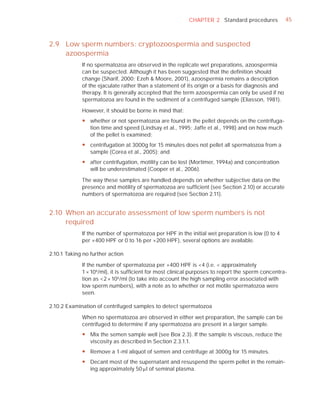
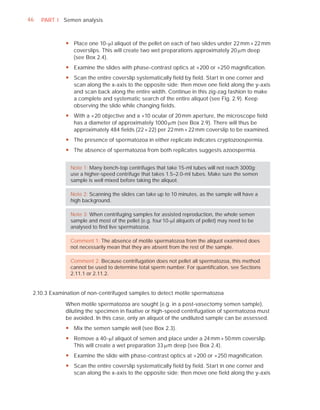
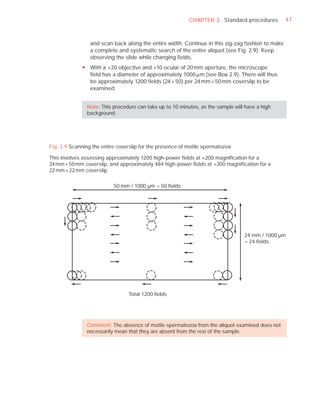
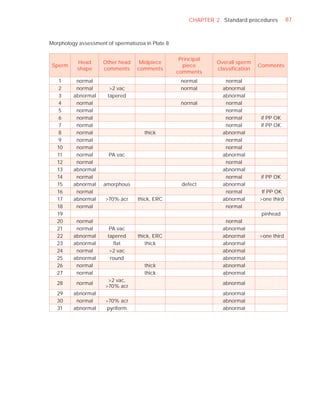
Examination and processing
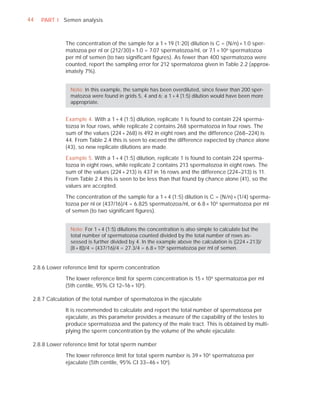
of human semen
FIFTH EDITION
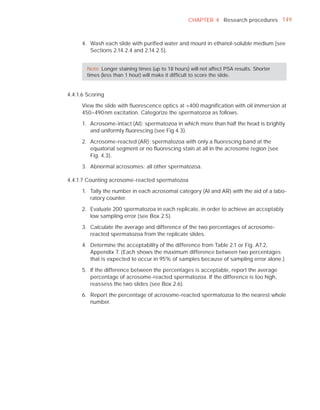
WHO laboratory manual for the
Examination and processing
of human semen
FIFTH EDITION
WHO Library Cataloguing-in-Publication Data
WHO laboratory manual for the examination and processing of human semen - 5th ed.
        Previous editions had different title : WHO laboratory manual for the examination of human
        semen and sperm-cervical mucus interaction.
        1.Semen - chemistry. 2.Semen - laboratory manuals. 3.Spermatozoa - laboratory manuals.
        4.Sperm count. 5.Sperm-ovum interactions - laboratory manuals. 6.Laboratory techniques
        and procedures - standards. 7.Quality control. I.World Health Organization.


        ISBN 978 92 4 154778 9                                            (NLM classification: QY 190)


© World Health Organization 2010

All rights reserved. Publications of the World Health Organization can be obtained from WHO Press, World
Health Organization, 20 Avenue Appia, 1211 Geneva 27, Switzerland (tel.: +41 22 791 3264; fax: +41 22 791
4857; e-mail: bookorders@who.int). Requests for permission to reproduce or translate WHO publications—
whether for sale or for noncommercial distribution—should be addressed to WHO Press, at the above address
(fax: +41 22 791 4806; e-mail: permissions@who.int).

The designations employed and the presentation of the material in this publication do not imply the expres-
sion of any opinion whatsoever on the part of the World Health Organization concerning the legal status of any
country, territory, city or area or of its authorities, or concerning the delimitation of its frontiers or boundaries.
Dotted lines on maps represent approximate border lines for which there may not yet be full agreement.

The mention of specific companies or of certain manufacturers’ products does not imply that they are
endorsed or recommended by the World Health Organization in preference to others of a similar nature that
are not mentioned. Errors and omissions excepted, the names of proprietary products are distinguished by
initial capital letters.

All reasonable precautions have been taken by the World Health Organization to verify the information con-
tained in this publication. However, the published material is being distributed without warranty of any kind,
either expressed or implied. The responsibility for the interpretation and use of the material lies with the reader.
In no event shall the World Health Organization be liable for damages arising from its use.

Printed in Switzerland.

Cover photo: courtesy of C. Brazil
iii


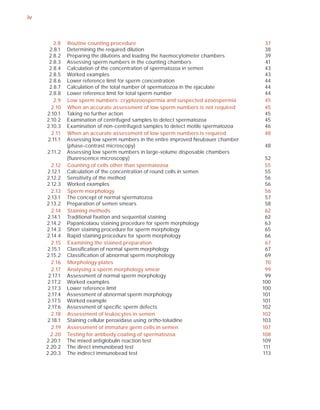
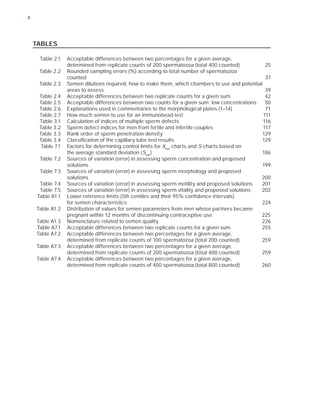
CONTENTS
Acknowledgements                                                          xi
Acronyms and abbreviations used in this manual                           xiii

Chapter 1     Background                                                  1
        1.1   Introduction                                                 1
        1.2   The fifth edition                                             1
        1.3   Scope of the manual                                          3


  PART I.     SEMEN ANALYSIS
Chapter 2     Standard procedures                                         7
        2.1   Introduction                                                7
        2.2   Sample collection                                          10
      2.2.1   Preparation                                                10
      2.2.2   Collection of semen for diagnostic or research purposes    11
      2.2.3   Sterile collection of semen for assisted reproduction      11
      2.2.4   Sterile collection of semen for microbiological analysis   11
      2.2.5   Collection of semen at home                                12
      2.2.6   Collection of semen by condom                              12
      2.2.7   Safe handling of specimens                                 13
        2.3   Initial macroscopic examination                            13
      2.3.1   Liquefaction                                               13
      2.3.2   Semen viscosity                                            14
      2.3.3   Appearance of the ejaculate                                15
      2.3.4   Semen volume                                               15
      2.3.5   Semen pH                                                   16
        2.4   Initial microscopic investigation                          17
      2.4.1   Thorough mixing and representative sampling of semen       17
      2.4.2   Making a wet preparation                                   18
      2.4.3   Aggregation of spermatozoa                                 19
      2.4.4   Agglutination of spermatozoa                               19
      2.4.5   Cellular elements other than spermatozoa                   21
        2.5   Sperm motility                                             21
      2.5.1   Categories of sperm movement                               22
      2.5.2   Preparing and assessing a sample for motility              22
      2.5.3   Worked examples                                            25
      2.5.4   Lower reference limit                                      26
        2.6   Sperm vitality                                             26
      2.6.1   Vitality test using eosin–nigrosin                         27
      2.6.2   Vitality test using eosin alone                            29
      2.6.3   Vitality test using hypo-osmotic swelling                  30
        2.7   Sperm numbers                                              32
      2.7.1   Types of counting chamber                                  34
      2.7.2   The improved Neubauer haemocytometer                       34
      2.7.3   Using the haemocytometer grid                              35
      2.7.4   Care of the counting chamber                               35
      2.7.5   Fixative for diluting semen                                36
      2.7.6   Importance of counting sufficient spermatozoa               36
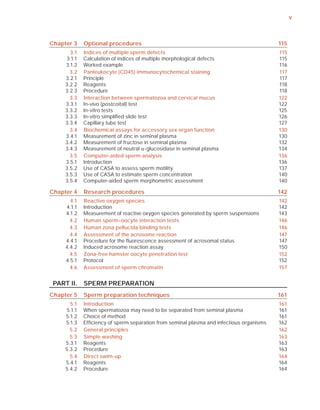
iv


        2.8    Routine counting procedure                                            37
      2.8.1    Determining the required dilution                                     38
      2.8.2    Preparing the dilutions and loading the haemocytometer chambers       39
      2.8.3    Assessing sperm numbers in the counting chambers                      41
      2.8.4    Calculation of the concentration of spermatozoa in semen              43
      2.8.5    Worked examples                                                       43
      2.8.6    Lower reference limit for sperm concentration                         44
      2.8.7    Calculation of the total number of spermatozoa in the ejaculate       44
      2.8.8    Lower reference limit for total sperm number                          44
        2.9    Low sperm numbers: cryptozoospermia and suspected azoospermia         45
       2.10    When an accurate assessment of low sperm numbers is not required      45
     2.10.1    Taking no further action                                              45
     2.10.2    Examination of centrifuged samples to detect spermatozoa              45
     2.10.3    Examination of non-centrifuged samples to detect motile spermatozoa   46
       2.11    When an accurate assessment of low sperm numbers is required          48
     2.11.1    Assessing low sperm numbers in the entire improved Neubauer chamber
               (phase-contrast microscopy)                                           48
     2.11.2    Assessing low sperm numbers in large-volume disposable chambers
               (fluorescence microscopy)                                               52
        2.12   Counting of cells other than spermatozoa                               55
      2.12.1   Calculation of the concentration of round cells in semen               55
     2.12.2    Sensitivity of the method                                              56
     2.12.3    Worked examples                                                        56
        2.13   Sperm morphology                                                       56
     2.13.1    The concept of normal spermatozoa                                      57
     2.13.2    Preparation of semen smears                                            58
        2.14   Staining methods                                                       62
      2.14.1   Traditional fixation and sequential staining                            62
     2.14.2    Papanicolaou staining procedure for sperm morphology                   63
     2.14.3    Shorr staining procedure for sperm morphology                          65
     2.14.4    Rapid staining procedure for sperm morphology                          66
        2.15   Examining the stained preparation                                      67
     2.15.1    Classification of normal sperm morphology                               67
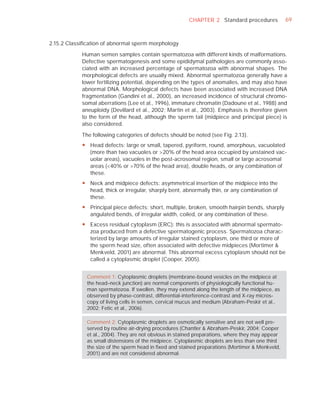
     2.15.2    Classification of abnormal sperm morphology                             69
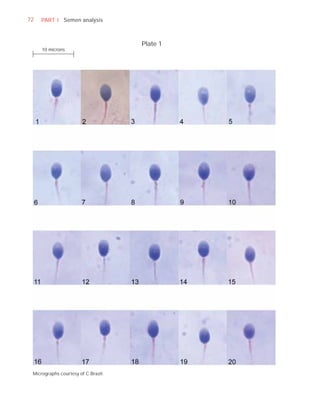
        2.16   Morphology plates                                                      70
        2.17   Analysing a sperm morphology smear                                     99
      2.17.1   Assessment of normal sperm morphology                                  99
      2.17.2   Worked examples                                                       100
      2.17.3   Lower reference limit                                                 100
      2.17.4   Assessment of abnormal sperm morphology                               101
      2.17.5   Worked example                                                        101
      2.17.6   Assessment of specific sperm defects                                   102
        2.18   Assessment of leukocytes in semen                                     102
     2.18.1    Staining cellular peroxidase using ortho-toluidine                    103
        2.19   Assessment of immature germ cells in semen                            107
       2.20    Testing for antibody coating of spermatozoa                           108
     2.20.1    The mixed antiglobulin reaction test                                  109
     2.20.2    The direct immunobead test                                            111
     2.20.3    The indirect immunobead test                                          113
v


Chapter 3    Optional procedures                                                          115
       3.1   Indices of multiple sperm defects                                            115
     3.1.1   Calculation of indices of multiple morphological defects                     115
     3.1.2   Worked example                                                               116
       3.2   Panleukocyte (CD45) immunocytochemical staining                              117
     3.2.1   Principle                                                                    117
     3.2.2   Reagents                                                                     118
     3.2.3   Procedure                                                                    118
       3.3   Interaction between spermatozoa and cervical mucus                           122
     3.3.1   In-vivo (postcoital) test                                                    122
     3.3.2   In-vitro tests                                                               125
     3.3.3   In-vitro simplified slide test                                                126
     3.3.4   Capillary tube test                                                          127
       3.4   Biochemical assays for accessory sex organ function                          130
     3.4.1   Measurement of zinc in seminal plasma                                        130
     3.4.2   Measurement of fructose in seminal plasma                                    132
     3.4.3   Measurement of neutral D-glucosidase in seminal plasma                       134
       3.5   Computer-aided sperm analysis                                                136
     3.5.1   Introduction                                                                 136
     3.5.2   Use of CASA to assess sperm motility                                         137
     3.5.3   Use of CASA to estimate sperm concentration                                  140
     3.5.4   Computer-aided sperm morphometric assessment                                 140

Chapter 4    Research procedures                                                          142
       4.1   Reactive oxygen species                                                      142
     4.1.1   Introduction                                                                 142
     4.1.2   Measurement of reactive oxygen species generated by sperm suspensions        143
       4.2   Human sperm–oocyte interaction tests                                         146
       4.3   Human zona pellucida binding tests                                           146
       4.4   Assessment of the acrosome reaction                                          147
     4.4.1   Procedure for the fluorescence assessment of acrosomal status                 147
     4.4.2   Induced acrosome reaction assay                                              150
       4.5   Zona-free hamster oocyte penetration test                                    152
     4.5.1   Protocol                                                                     152
       4.6   Assessment of sperm chromatin                                                157


 PART II.    SPERM PREPARATION
Chapter 5    Sperm preparation techniques                                                 161
       5.1   Introduction                                                                 161
     5.1.1   When spermatozoa may need to be separated from seminal plasma                161
     5.1.2   Choice of method                                                             161
     5.1.3   Efficiency of sperm separation from seminal plasma and infectious organisms   162
       5.2   General principles                                                           162
       5.3   Simple washing                                                               163
     5.3.1   Reagents                                                                     163
     5.3.2   Procedure                                                                    163
       5.4   Direct swim-up                                                               164
     5.4.1   Reagents                                                                     164
     5.4.2   Procedure                                                                    164
vi


            5.5    Discontinuous density gradients                                           165
          5.5.1    Reagents                                                                  165
          5.5.2    Procedure                                                                 166
            5.6    Preparing HIV-infected semen samples                                      166
            5.7    Preparing testicular and epididymal spermatozoa                           167
          5.7.1    Enzymatic method                                                          167
          5.7.2    Mechanical method                                                         167
          5.7.3    Processing sperm suspensions for intracytoplasmic sperm injection         167
            5.8    Preparing retrograde ejaculation samples                                  168
            5.9    Preparing assisted ejaculation samples                                    168

     Chapter 6     Cryopreservation of spermatozoa                                           169
            6.1    Introduction                                                              169
            6.2    Semen cryopreservation protocols                                          172
          6.2.1    Standard procedure                                                        172
          6.2.2    Modified freezing protocols for oligozoospermia and surgically retrieved
                   spermatozoa                                                               175
          6.2.3    Labelling of straws and records                                           176


     PART III.     QUALITY ASSURANCE
     Chapter 7     Quality assurance and quality control                                     179
            7.1    Controlling for quality in the andrology laboratory                       179
            7.2    The nature of errors in semen analysis                                    179
            7.3    Minimizing statistical sampling error                                     180
            7.4    The quality assurance programme                                           182
            7.5    Laboratory procedures manual                                              182
            7.6    Internal quality control                                                  182
          7.6.1    Purchased QC samples                                                      183
          7.6.2    Laboratory-made QC samples                                                183
          7.6.3    Stored samples (purchased or laboratory-made)                             183
          7.6.4    Fresh QC samples (laboratory-made)                                        184
            7.7    Statistical procedures for analysing and reporting within- and
                   among-technician systematic errors                                        185
           7.7.1   The Xbar chart                                                            185
          7.7.2    The S chart                                                               188
             7.8   QC for percentages                                                        189
             7.9   Assessing Xbar and S charts                                               189
          7.9.1    How to recognize out-of-control values                                    189
          7.9.2    Causes of out-of-control values                                           190
          7.9.3    Responses to out-of-control values                                        191
           7.10    Statistical procedures for analysing and reporting among-technician
                   variability                                                               191
         7.10.1    Comparing results from two or more technicians                            191
         7.10.2    Monitoring monthly means                                                  194
           7.11    External quality control and quality assurance                            194
         7.11.1    Assessment of EQC results                                                 196
         7.11.2    Responses to out-of-control results                                       197
           7.12    Frequency and priority of quality control                                 197
vii


      7.13   Training                                                                    198
    7.13.1   Practical hints when experiencing difficulty assessing sperm concentration   198
    7.13.2   Practical hints when experiencing difficulty assessing sperm morphology      200
    7.13.3   Practical hints when experiencing difficulty assessing sperm motility        200
    7.13.4   Practical hints when experiencing difficulty assessing sperm vitality        202


REFERENCES                                                                               205

APPENDICES
Appendix 1 Reference values and semen nomenclature                                       223
     A1.1    Reference values                                                            223
     A1.2    Nomenclature                                                                225

Appendix 2 Equipment and safety                                                          227
     A2.1    Basic supplies needed in an andrology laboratory                            227
     A2.2    Potential biohazards in an andrology laboratory                             230
     A2.3    Safety procedures for laboratory personnel                                  230
     A2.4    Safety procedures for laboratory equipment                                  232
     A2.5    Safety precautions when handling liquid nitrogen                            233

Appendix 3 Microscopy                                                                    234
     A3.1    Loading the sample                                                          234
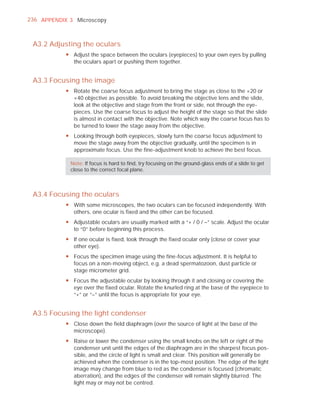
     A3.2    Adjusting the oculars                                                       236
     A3.3    Focusing the image                                                          236
     A3.4    Focusing the oculars                                                        236
     A3.5    Focusing the light condenser                                                236
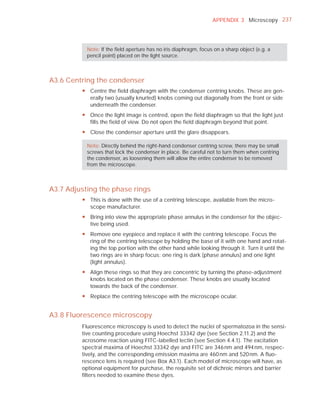
     A3.6    Centring the condenser                                                      237
     A3.7    Adjusting the phase rings                                                   237
     A3.8    Fluorescence microscopy                                                     237

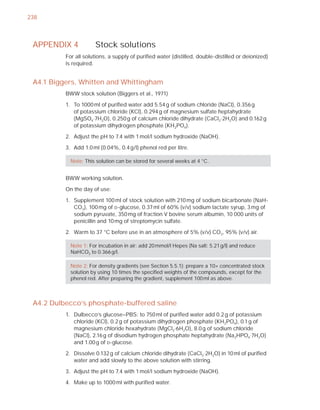
Appendix 4 Stock solutions                                                               238
     A4.1    Biggers, Whitten and Whittingham                                            238
     A4.2    Dulbecco’s phosphate-buffered saline                                        238
     A4.3    Earle’s medium                                                              239
     A4.4    Ham’s F-10 medium                                                           239
     A4.5    Hanks’ balanced salt solution                                               240
     A4.6    Human tubal fluid                                                            240
     A4.7    Krebs–Ringer medium                                                         240
     A4.8    Tris-buffered saline                                                        241
     A4.9    Tyrode’s solution                                                           241
    A4.10    Papanicolaou stain                                                          241

Appendix 5 Cervical mucus                                                                245
     A5.1    Introduction                                                                245
     A5.2    Collection and preservation of cervical mucus                               246
     A5.3    Evaluation of cervical mucus                                                247

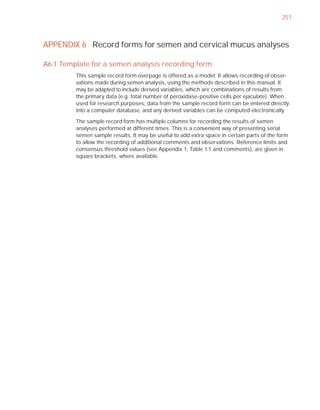
Appendix 6    Record forms for semen and cervical mucus analyses                         251
     A6.1    Template for a semen analysis recording form                                251
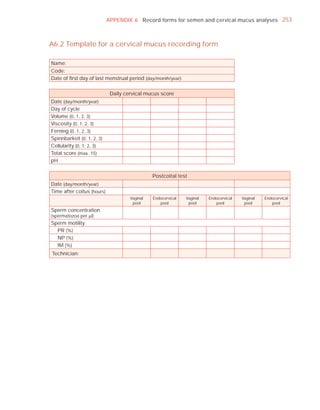
     A6.2    Template for a cervical mucus recording form                                253
viii


  Appendix 7 Sampling errors and quality control                                                   254
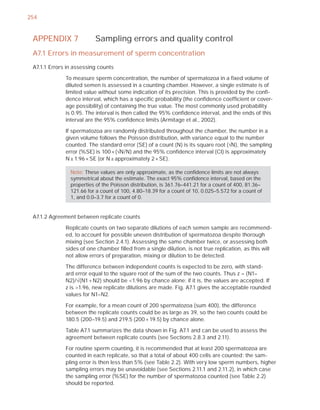
            A7.1    Errors in measurement of sperm concentration                                   254
            A7.2    The importance of understanding sampling errors                                256
            A7.3    Errors in measurement of percentages                                           257
            A7.4    Production of semen samples for quality control                                260
            A7.5    Preparation of a video-recording for internal quality control of analysis of
                    sperm motility                                                                 261
            A7.6    Preparation of diluted semen for internal quality control of determination
                    of sperm concentration                                                         265
            A7.7    Preparation of slides for internal quality control of assessment of sperm
                    morphology                                                                     268
            A7.8    Calibration of equipment                                                       269

  Appendix 8 National external quality control programmes for semen analysis                       271


  FIGURES

        Fig. 2.1    Variation in total number of spermatozoa and sperm concentration
                    over a one-and-a-half-year period                                                9
        Fig. 2.2    Non-specific aggregation of spermatozoa in semen                                 19
        Fig. 2.3    Schematic diagram of different extents of sperm agglutination                   20
        Fig. 2.4    Aids to assessing sperm motility                                                24
        Fig. 2.5    Eosin–nigrosin smear observed in brightfield optics                              28
        Fig. 2.6    Schematic representation of typical morphological changes of human
                    spermatozoa subjected to hypo-osmotic stress                                    32
        Fig. 2.7    The improved Neubauer haemocytometer                                            34
        Fig. 2.8    Which spermatozoa to count in the grid squares                                  36
        Fig. 2.9    Scanning the entire coverslip for the presence of motile spermatozoa            47
       Fig. 2.10    Morphologically “normal” spermatozoa                                            58
       Fig. 2.11    Semen smearing methods for sperm morphology                                     59
       Fig. 2.12    Preparing a normal semen smear                                                  60
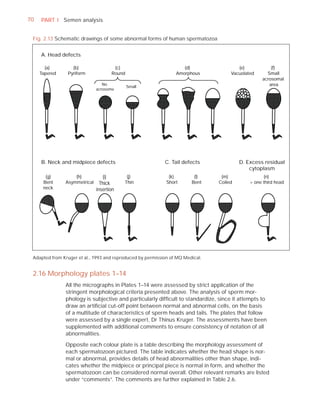
       Fig. 2.13    Schematic drawings of some abnormal forms of human spermatozoa                  70
       Fig. 2.14    Peroxidase-positive and -negative cells in human semen                         105
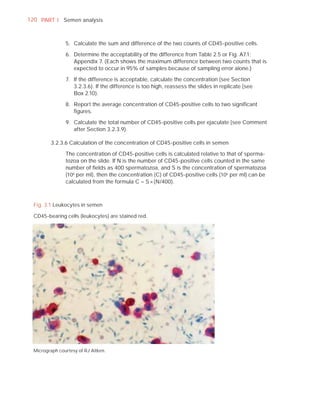
        Fig. 3.1    Leukocytes in semen                                                            120
        Fig. 3.2    The Kremer sperm penetration meter                                             128
        Fig. 3.3    Standard terminology for variables measured by CASA systems                    139
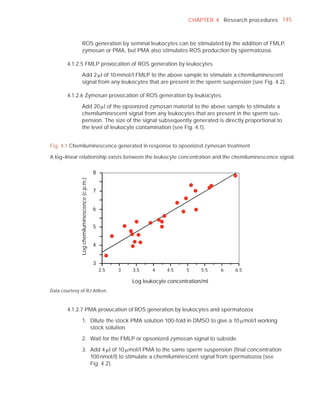
        Fig. 4.1    Chemiluminescence generated in response to opsonized zymosan treatment         145
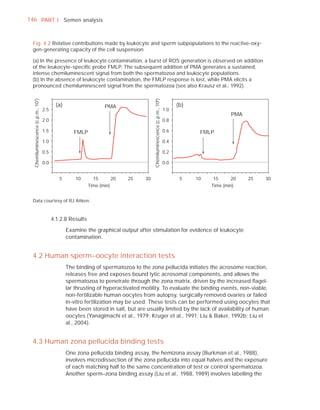
        Fig. 4.2    Relative contributions made by leukocyte and sperm subpopulations to
                    the reactive-oxygen-generating capacity of the cell suspension                 146
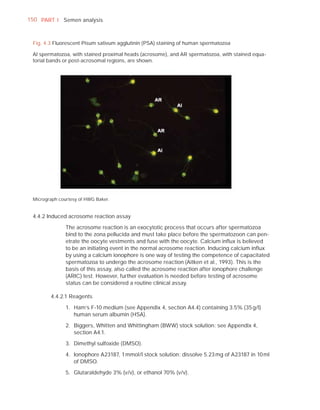
        Fig. 4.3    Fluorescent Pisum sativum agglutinin (PSA) staining of human spermatozoa       149
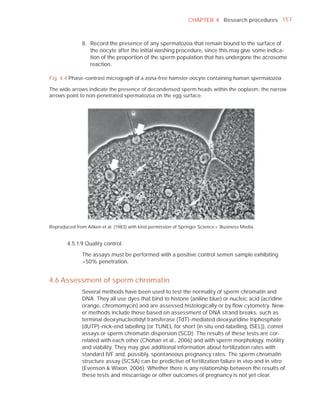
        Fig. 4.4    Phase-contrast micrograph of a zona-free hamster oocyte containing
                    human spermatozoa                                                              157
        Fig. 7.1    An Xbar chart for sperm concentration                                          187
        Fig. 7.2    An S chart for sperm concentration                                             189
        Fig. 7.3    A Bland–Altman plot of manual and CASA estimates of percentage
                    progressive sperm motility                                                     192
         Fig. 7.4   A Youden plot of estimates of the concentration of spermatozoa                 193
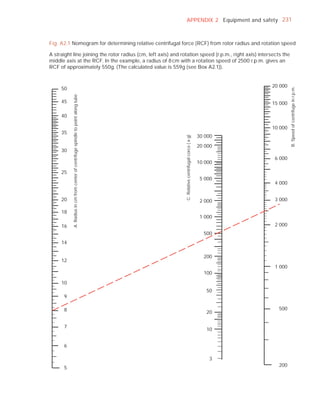
       Fig. A2.1    Nomogram for reading relative centrifugal force (RCF) from rotor radius
                    and rotation speed                                                             231
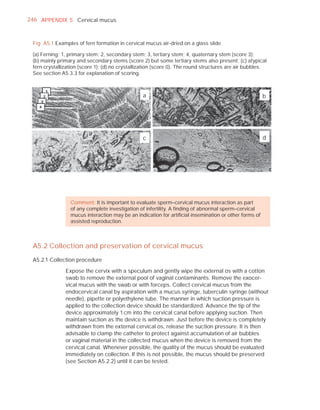
       Fig. A5.1    Examples of fern formation in cervical mucus air-dried on a glass slide        246
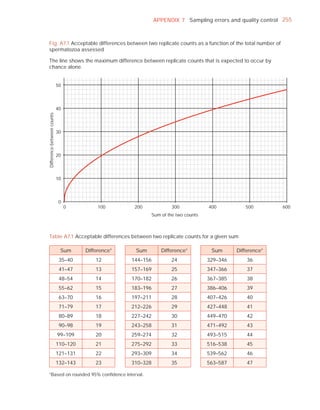
       Fig. A7.1    The acceptable differences between two replicate counts as a function
                    of the total number of spermatozoa assessed                                    255
ix


 Fig. A7.2   The acceptable differences between two replicate assessments of percentage as
             a function of the true percentage and the total number of spermatozoa assessed      258
 Fig. A7.3   Aid to assessing sperm motility                                                     263
 Fig. A7.4   View through an ocular with reticle (red grid)                                      264
 Fig. A7.5   View of the videotaped image of the stage micrometer on the monitor
             and the drawn overlay                                                               264


BOXES

  Box 2.1    Confirming the compatibility of semen collection vessels                             11
  Box 2.2    Preparation of bromelain                                                            14
  Box 2.3    Thorough mixing of semen                                                            18
  Box 2.4    Depth of wet preparations                                                           18
  Box 2.5    Errors in estimating percentages                                                    24
  Box 2.6    Comparison of replicate percentages                                                 25
  Box 2.7    Errors in estimating numbers                                                        36
  Box 2.8    Achieving 200 spermatozoa per replicate in the central three grids of
             the improved Neubauer chamber                                                       38
  Box 2.9    Volume observed per high-power field of a 20-Pm-deep wet preparation                 38
 Box 2.10    Comparison of replicate counts                                                      42
 Box 2.11    Achieving 200 spermatozoa per replicate in all nine grids of the improved
             Neubauer chamber                                                                     48
 Box 2.12    Achieving 200 spermatozoa per replicate in a 100-Pm-deep, large-volume
             disposable chamber                                                                   52
 Box 2.13    Volume observed per high-power field in a 100-Pm-deep, large-volume
             disposable chamber                                                                   54
 Box 2.14    Mounting media                                                                       63
  Box 3.1    Preparation of a wax–petroleum jelly mixture                                        123
  Box 3.2    Volume observed per high-power field in a 100-Pm-deep mucus preparation              124
  Box 4.1    Induction of ovulation in hamsters                                                  154
  Box 4.2    Preparation of glass pipettes                                                       155
  Box 6.1    Reasons for cryopreservation of spermatozoa                                         170
  Box 6.2    Risk assessment of cryopreservation and storage of human semen                      171
  Box 7.1    Terminology in quality assurance and quality control                                180
  Box 7.2    Determining the values for the warning and action control limits of an Xbar chart   186
  Box 7.3    Alternative method for calculating the Xbar control limits from the pooled
             standard deviation                                                                  187
  Box 7.4    Determining the values for the warning and action control limits of an S chart      188
  Box 7.5    Basic control rules for QC charts                                                   190
  Box 7.6    Assessing systematic differences among technicians                                  195
  Box 7.7    Main features of IQC procedures                                                     196
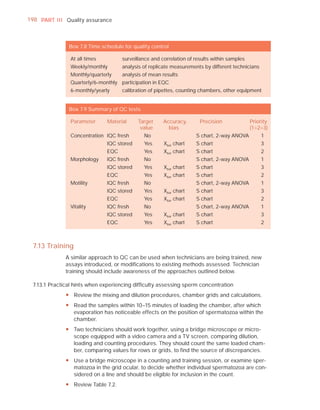
  Box 7.8    Time schedule for quality control                                                   198
  Box 7.9    Summary of QC tests                                                                 198
 Box A2.1    Calculating centrifugal forces                                                      230
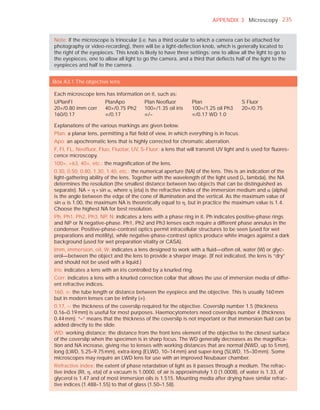
 Box A3.1    The objective lens                                                                  235
 Box A5.1    Determining the volume of mucus collected                                           247
 Box A5.2    Volume observed per high-power field in a 100-Pm-deep mucus preparation              249
x


    TABLES

      Table 2.1   Acceptable differences between two percentages for a given average,
                  determined from replicate counts of 200 spermatozoa (total 400 counted)          25
     Table 2.2    Rounded sampling errors (%) according to total number of spermatozoa
                  counted                                                                          37
     Table 2.3    Semen dilutions required, how to make them, which chambers to use and potential
                  areas to assess                                                                  39
     Table 2.4    Acceptable differences between two replicate counts for a given sum              42
     Table 2.5    Acceptable differences between two counts for a given sum: low concentrations    50
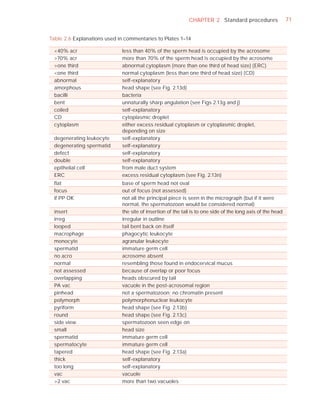
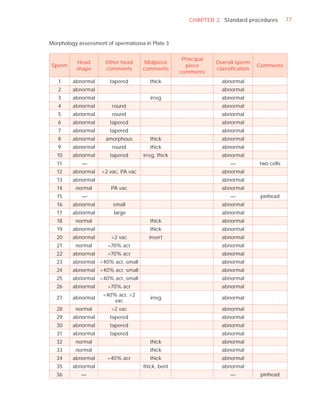
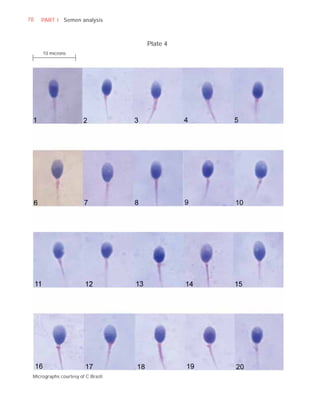
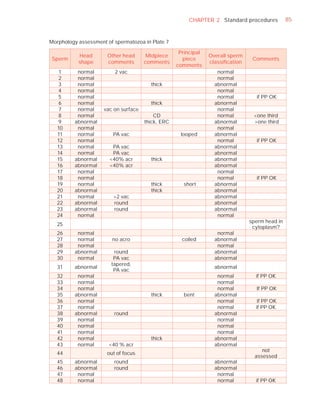
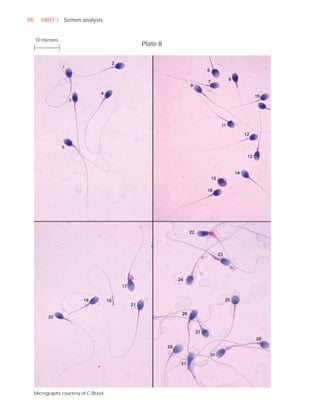
     Table 2.6    Explanations used in commentaries to the morphological plates (1–14)             71
     Table 2.7    How much semen to use for an immunobead test                                    111
     Table 3.1    Calculation of indices of multiple sperm defects                                116
     Table 3.2    Sperm defect indices for men from fertile and infertile couples                 117
     Table 3.3    Rank order of sperm penetration density                                         129
     Table 3.4    Classification of the capillary tube test results                                129
      Table 7.1   Factors for determining control limits for Xbar charts and S charts based on
                  the average standard deviation (Sbar)                                           186
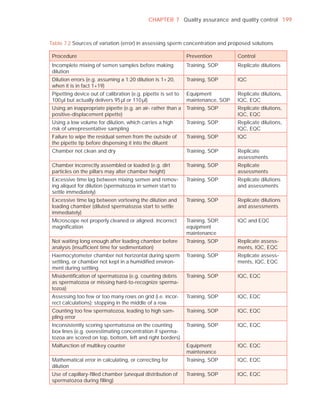
      Table 7.2   Sources of variation (error) in assessing sperm concentration and proposed
                  solutions                                                                       199
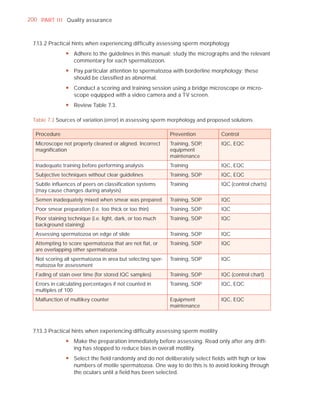
      Table 7.3   Sources of variation (error) in assessing sperm morphology and proposed
                  solutions                                                                       200
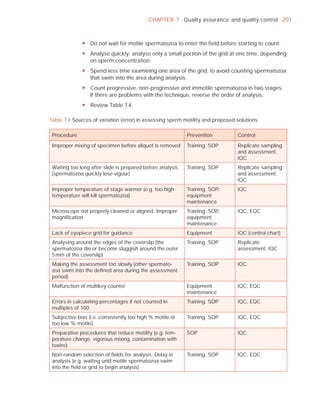
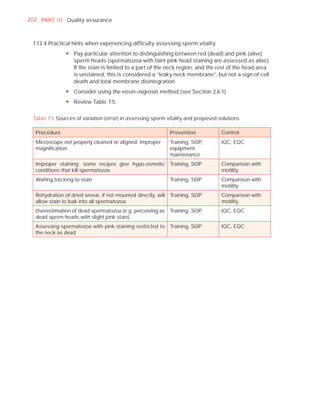
      Table 7.4   Sources of variation (error) in assessing sperm motility and proposed solutions 201
      Table 7.5   Sources of variation (error) in assessing sperm vitality and proposed solutions 202
     Table A1.1   Lower reference limits (5th centiles and their 95% confidence intervals)
                  for semen characteristics                                                       224
    Table A1.2    Distribution of values for semen parameters from men whose partners became
                  pregnant within 12 months of discontinuing contraceptive use                    225
    Table A1.3    Nomenclature related to semen quality                                           226
    Table A7.1    Acceptable differences between two replicate counts for a given sum             255
    Table A7.2    Acceptable differences between two percentages for a given average,
                  determined from replicate counts of 100 spermatozoa (total 200 counted)         259
    Table A7.3    Acceptable differences between two percentages for a given average,
                  determined from replicate counts of 200 spermatozoa (total 400 counted)         259
    Table A7.4    Acceptable differences between two percentages for a given average,
                  determined from replicate counts of 400 spermatozoa (total 800 counted)         260
xi


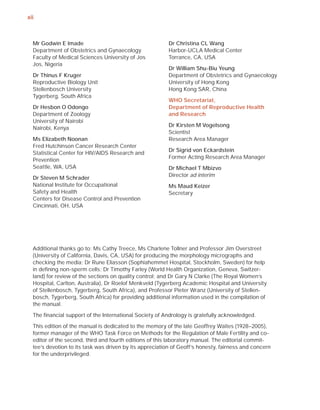
Acknowledgements
This publication was produced by the UNDP/UNFPA/WHO/World Bank Special Programme of
Research, Development and Research Training in Human Reproduction (HRP), WHO Depart-
ment of Reproductive Health and Research (RHR). The participation of the following individuals
in the preparation and editing of this manual is gratefully acknowledged:


Editor-in-chief                                       Dr Lars Björndahl
                                                      Andrology Centre,
Dr Trevor G Cooper
                                                      Karolinska University Hospital
Centre of Reproductive Medicine and
                                                      and Institute,
Andrology of the University,
                                                      Stockholm, Sweden
Münster, Germany
(WHO Collaborating Centre                             Ms Charlene Brazil
for Research in Male Reproduction)                    Center for Health and
                                                      the Environment
Editorial team
                                                      University of California
Dr John Aitken                                        Davis, CA, USA
Biological Sciences
                                                      Dr Christopher De Jonge
School of Life and Environmental Sciences
                                                      University of Minnesota
University Drive
                                                      Reproductive Medicine Center
Callaghan, New South Wales, Australia
                                                      Minneapolis, MN, USA
Dr Jacques Auger
                                                      Dr Gustavo F Doncel
Service de Biologie de la Réproduction
                                                      CONRAD
Pavillon Cassini Hôpital Cochin
                                                      Department of Obstetrics and
Paris, France
                                                      Gynecology Eastern Virginia
Dr HW Gordon Baker                                    Medical School
University of Melbourne                               Norfolk, VA, USA
Department of Obstetrics and
                                                      Dr Daniel Franken
Gynaecology
                                                      Department of Obstetrics and
Royal Women’s Hospital
                                                      Gynaecology
Carlton, Victoria, Australia
                                                      Tygerberg Hospital
Dr Chris LR Barratt                                   Tygerberg, South Africa
Division of Maternal and
                                                      Dr Trine B Haugen
Child Health Sciences
                                                      Faculty of Health Sciences
The Medical School
                                                      Oslo University College
Ninewells Hospital
                                                      Oslo, Norway
Dundee, Scotland
                                                      Dr Aucky Hinting
Dr Hermann M Behre
                                                      Andrology Unit,
Centre for Reproductive
                                                      Department of Biomedicine
Medicine and Andrology
                                                      School of Medicine
Martin-Luther-University
                                                      Airlangga University,
Halle, Germany
                                                      Surabaya, Indonesia
xii


  Mr Godwin E Imade                                      Dr Christina CL Wang
  Department of Obstetrics and Gynaecology               Harbor-UCLA Medical Center
  Faculty of Medical Sciences University of Jos          Torrance, CA, USA
  Jos, Nigeria
                                                         Dr William Shu-Biu Yeung
  Dr Thinus F Kruger                                     Department of Obstetrics and Gynaecology
  Reproductive Biology Unit                              University of Hong Kong
  Stellenbosch University                                Hong Kong SAR, China
  Tygerberg, South Africa
                                                         WHO Secretariat,
  Dr Hesbon O Odongo                                     Department of Reproductive Health
  Department of Zoology                                  and Research
  University of Nairobi
                                                         Dr Kirsten M Vogelsong
  Nairobi, Kenya
                                                         Scientist
  Ms Elizabeth Noonan                                    Research Area Manager
  Fred Hutchinson Cancer Research Center
                                                         Dr Sigrid von Eckardstein
  Statistical Center for HIV/AIDS Research and
                                                         Former Acting Research Area Manager
  Prevention
  Seattle, WA, USA                                       Dr Michael T Mbizvo
                                                         Director ad interim
  Dr Steven M Schrader
  National Institute for Occupational                    Ms Maud Keizer
  Safety and Health                                      Secretary
  Centers for Disease Control and Prevention
  Cincinnati, OH, USA


  Additional thanks go to: Ms Cathy Treece, Ms Charlene Tollner and Professor Jim Overstreet
  (University of California, Davis, CA, USA) for producing the morphology micrographs and
  checking the media; Dr Rune Eliasson (Sophiahemmet Hospital, Stockholm, Sweden) for help
  in defining non-sperm cells; Dr Timothy Farley (World Health Organization, Geneva, Switzer-
  land) for review of the sections on quality control; and Dr Gary N Clarke (The Royal Women’s
  Hospital, Carlton, Australia), Dr Roelof Menkveld (Tygerberg Academic Hospital and University
  of Stellenbosch, Tygerberg, South Africa), and Professor Pieter Wranz (University of Stellen-
  bosch, Tygerberg, South Africa) for providing additional information used in the compilation of
  the manual.

  The financial support of the International Society of Andrology is gratefully acknowledged.

  This edition of the manual is dedicated to the memory of the late Geoffrey Waites (1928–2005),
  former manager of the WHO Task Force on Methods for the Regulation of Male Fertility and co-
  editor of the second, third and fourth editions of this laboratory manual. The editorial commit-
  tee’s devotion to its task was driven by its appreciation of Geoff’s honesty, fairness and concern
  for the underprivileged.
xiii


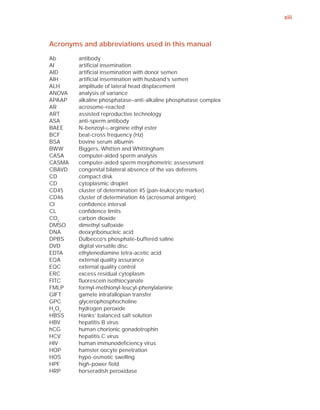
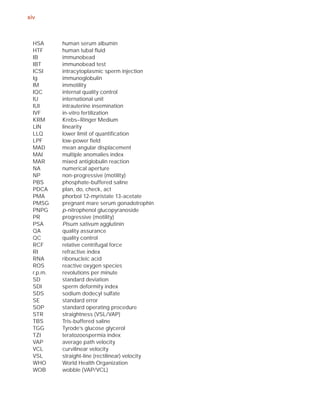
Acronyms and abbreviations used in this manual

Ab       antibody
AI       artificial insemination
AID      artificial insemination with donor semen
AIH      artificial insemination with husband’s semen
ALH      amplitude of lateral head displacement
ANOVA    analysis of variance
APAAP    alkaline phosphatase–anti-alkaline phosphatase complex
AR       acrosome-reacted
ART      assisted reproductive technology
ASA      anti-sperm antibody
BAEE     N-benzoyl-L-arginine ethyl ester
BCF      beat-cross frequency (Hz)
BSA      bovine serum albumin
BWW      Biggers, Whitten and Whittingham
CASA     computer-aided sperm analysis
CASMA    computer-aided sperm morphometric assessment
CBAVD    congenital bilateral absence of the vas deferens
CD       compact disk
CD       cytoplasmic droplet
CD45     cluster of determination 45 (pan-leukocyte marker)
CD46     cluster of determination 46 (acrosomal antigen)
CI       confidence interval
CL       confidence limits
CO2      carbon dioxide
DMSO     dimethyl sulfoxide
DNA      deoxyribonucleic acid
DPBS     Dulbecco’s phosphate-buffered saline
DVD      digital versatile disc
EDTA     ethylenediamine tetra-acetic acid
EQA      external quality assurance
EQC      external quality control
ERC      excess residual cytoplasm
FITC     fluorescein isothiocyanate
FMLP     formyl-methionyl-leucyl-phenylalanine
GIFT     gamete intrafallopian transfer
GPC      glycerophosphocholine
H 2 O2   hydrogen peroxide
HBSS     Hanks’ balanced salt solution
HBV      hepatitis B virus
hCG      human chorionic gonadotrophin
HCV      hepatitis C virus
HIV      human immunodeficiency virus
HOP      hamster oocyte penetration
HOS      hypo-osmotic swelling
HPF      high-power field
HRP      horseradish peroxidase
xiv


  HSA      human serum albumin
  HTF      human tubal fluid
  IB       immunobead
  IBT      immunobead test
  ICSI     intracytoplasmic sperm injection
  Ig       immunoglobulin
  IM       immotility
  IQC      internal quality control
  IU       international unit
  IUI      intrauterine insemination
  IVF      in-vitro fertilization
  KRM      Krebs–Ringer Medium
  LIN      linearity
  LLQ      lower limit of quantification
  LPF      low-power field
  MAD      mean angular displacement
  MAI      multiple anomalies index
  MAR      mixed antiglobulin reaction
  NA       numerical aperture
  NP       non-progressive (motility)
  PBS      phosphate-buffered saline
  PDCA     plan, do, check, act
  PMA      phorbol 12-myristate 13-acetate
  PMSG     pregnant mare serum gonadotrophin
  PNPG     p-nitrophenol glucopyranoside
  PR       progressive (motility)
  PSA      Pisum sativum agglutinin
  QA       quality assurance
  QC       quality control
  RCF      relative centrifugal force
  RI       refractive index
  RNA      ribonucleic acid
  ROS      reactive oxygen species
  r.p.m.   revolutions per minute
  SD       standard deviation
  SDI      sperm deformity index
  SDS      sodium dodecyl sulfate
  SE       standard error
  SOP      standard operating procedure
  STR      straightness (VSL/VAP)
  TBS      Tris-buffered saline
  TGG      Tyrode’s glucose glycerol
  TZI      teratozoospermia index
  VAP      average path velocity
  VCL      curvilinear velocity
  VSL      straight-line (rectilinear) velocity
  WHO      World Health Organization
  WOB      wobble (VAP/VCL)
1


CHAPTER 1 Background

1.1 Introduction
          The WHO laboratory manual for the examination of human semen and sperm–
          cervical mucus interaction was first published in 1980, in response to a growing
          need for the standardization of procedures for the examination of human semen.
          It has since been updated three times, and translated into a number of languages.
          Over the past 30 years, the manual has been recognized as providing global
          standards and has been used extensively by research and clinical laboratories
          throughout the world.

          Despite this success, it has become apparent that some recommendations from
          previous editions of the manual needed to be revised in light of new evidence, and
          that some concepts needed more explanation and supporting evidence. Prompted
          by these considerations, WHO established an editorial committee to review all the
          methods described in the manual, with a view to endorsing, changing or updat-
          ing them. In many instances, this proved difficult, as insufficient data had been
          obtained using the methods described in the manual. In some cases, single well-
          accredited laboratories were obtaining consistent results, but these had not been
          confirmed by others. For these situations, the editorial committee developed a
          consensus position after evaluating the pertinent literature.

          Additional recommendations were received from technicians and scientists, nota-
          bly regarding the need for more detail for many of the methods described. Lack of
          detail in previous editions has meant that some laboratories have preferred to use
          methods described elsewhere, or have developed their own versions of methods,
          while still claiming to perform semen analysis according to the WHO manual. In
          order to make global comparisons easier, this edition of the manual therefore
          includes much greater detail, and the rationale is explained when alternative meth-
          ods of analysis are presented. It is recommended that, when reporting results in
          published articles, laboratories should indicate which specific method was used
          when they refer to this manual.


1.2 The fifth edition
          The fifth edition comprises three parts: semen analysis (Chapters 2–4), sperm
          preparation (Chapters 5 and 6) and quality assurance (Chapter 7). Part I, dealing
          with semen analysis, resembles that in previous editions, but is divided into three
          chapters: standard methods, which are robust routine procedures for determining
          semen quality; optional tests, which may be used in certain situations or by choice
          of the laboratory; and research tests, which are not currently regarded as routine.
          As semen culture is not normally performed in an andrology laboratory, this is
          mentioned only in the section on sterile collection of semen. The section on sperm
          preparation extends beyond the ejaculate to include spermatozoa obtained from
          the testis and epididymis. Interspersed with bulleted methodological instructions
          are Notes (explanations of methodology), Comments (interpretation of results) and
          Boxes (containing additional explanatory material).
2   CHAPTER 1 Background


           The main features of this fifth edition are outlined below.
           y The chapters on semen analysis include details of all working solutions, proce-
             dures, calculations and interpretation, so that any given methodology is essen-
             tially complete, with minimal cross-referencing to other parts of the manual.
           y The section on sperm preparation has been expanded, and a chapter on
             cryopreservation of spermatozoa has been added. Procedures related to the
             analysis of cervical mucus have been divided between the chapter on optional
             procedures and an appendix on characteristics of mucus.
           y There are fewer appendices than in earlier editions, and they are restricted to
             specialized or only rarely needed information.
           y Assessment of sperm numbers. The semen dilutions and the areas of the
             counting chamber used to assess the number of spermatozoa in a semen sam-
             ple have been changed to allow 200 spermatozoa per replicate to be counted.
             The importance of sampling errors, and the certainty of the numerical results
             obtained, is emphasized. The editorial committee considered that total sperm
             number per ejaculate provides a more accurate assessment of testicular func-
             tion than does sperm concentration, but for this semen volume has to be
             measured accurately.
           y Assessment of azoospermia. Although superficially simple, the diagnosis of
             azoospermia is confounded by many factors, including large errors associ-
             ated with counting few spermatozoa, the large number of microscopic fields
             to be analysed and difficulties in examining debris-laden sperm pellets.
             Recommended changes include examining fixed, uncentrifuged samples and
             indicating the sensitivity of the counting methods employed. However, cen-
             trifugation methods necessary for accumulating sufficient numbers of cells
             for therapeutic procedures, and methods for the detection of motile sperma-
             tozoa in unfixed samples for assessment of post-vasectomy semen, are also
             included.
           y Assessment of sperm motility. A major change from previous editions is in the
             categorization of sperm motility. It is now recommended that spermatozoa
             should be categorized as progressively motile, non-progressively motile and
             immotile (instead of grades a, b, c or d).
           y Assessment of sperm morphology. Some laboratories assess only normal
             forms, while others consider the type, location and extent of abnormality to be
             more important. Whether these or differential or semiquantitative assessments
             increase the value of semen analysis remains contentious. Evidence supporting
             the relationship between the percentage of normal forms (as defined by strict
             categorization or computer-aided assessment of morphology) and fertilization
             rates in vivo justifies trying to determine a morphologically distinct subpopu-
             lation of spermatozoa within semen. In this edition, more and better-quality
             micrographs of spermatozoa considered normal and borderline are included,
             accompanied by explanations of why each spermatozoon has been classified
             the way it has. This should help in training technicians to categorize spermato-
             zoa consistently. Recent data from a fertile population have allowed reference
             values for the percentage of morphologically normal forms to be given.
CHAPTER 1 Background              3


         y Quality control. This chapter has been completely rewritten. Rigorous quality
           assurance for semen analysis is necessary for analytical methods to be robust.
           Hints and suggestions are given on how to improve laboratory performance
           when quality control results are unsatisfactory.
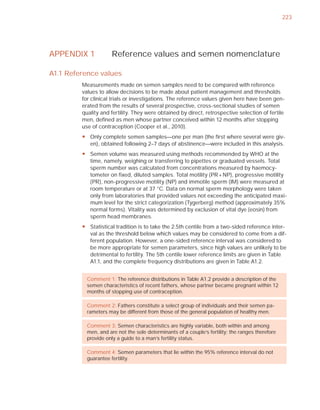
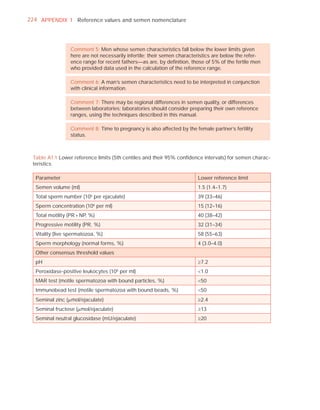
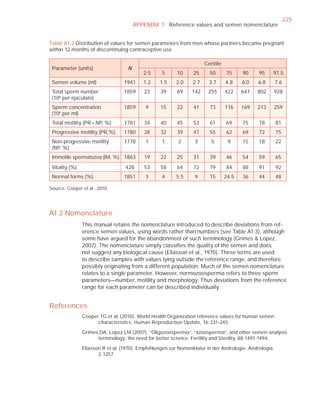
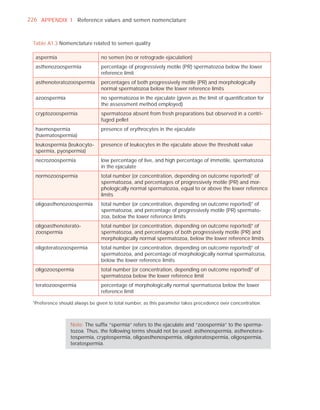
         y Reference ranges and reference limits. Data characterizing the semen quality
           of fertile men, whose partners had a time to pregnancy of 12 months or less,
           provided the reference ranges for this manual. Raw data from between about
           400 and 1900 semen samples, from recent fathers in eight countries on three
           continents, were used to generate the reference ranges. Conventional statisti-
           cal tradition is to take the 2.5th centile from a two-sided reference interval as
           the threshold below which values may be considered to come from a differ-
           ent population. However, a one-sided reference interval was considered to be
           more appropriate for semen, since high values of any parameter are unlikely
           to be detrimental to fertility. The 5th centile is given as the lower reference
           limit, and the complete distribution for each semen parameter is also given in
           Appendix 1.


1.3 Scope of the manual
         The methods described here are intended as guidelines to improve the quality of
         semen analysis and comparability of results. They should not necessarily be taken
         as obligatory by local, national or global laboratory accreditation bodies. Semen
         analysis may be useful in both clinical and research settings, for investigating male
         fertility status as well as monitoring spermatogenesis during and following male
         fertility regulation.
PART I.

Semen analysis
7


CHAPTER 2 Standard procedures

2.1 Introduction
          During ejaculation, semen is produced from a concentrated suspension of sper-
          matozoa, stored in the paired epididymides, mixed with, and diluted by, fluid
          secretions from the accessory sex organs. It is emitted in several boluses. Com-
          parison of pre- and post-vasectomy semen volumes reveals that about 90% of
          semen volume is made up of secretions from the accessory organs (Weiske,
          1994), mainly the prostate and seminal vesicles, with minor contributions from the
          bulbourethral (Cowper’s) glands and epididymides.

          Semen has two major quantifiable attributes:
          y the total number of spermatozoa: this reflects sperm production by the testes
            and the patency of the post-testicular duct system;
          y the total fluid volume contributed by the various accessory glands: this reflects
            the secretory activity of the glands.

          The nature of the spermatozoa (their vitality, motility and morphology) and the
          composition of seminal fluid are also important for sperm function.

          During sexual intercourse, the initial, sperm-rich prostatic fraction of the ejacu-
          lated semen may come into contact with cervical mucus extending into the vagina
          (Sobrero & MacLeod, 1962), with the rest of the fluid remaining as a pool in the
          vagina. In contrast, in the laboratory setting, the entire ejaculate is collected in one
          container, where spermatozoa are trapped in a coagulum developed from proteins
          of seminal vesicular origin. This coagulum is subsequently liquefied by the action
          of prostatic proteases, during which time its osmolality rises (Björndahl & Kvist,
          2003; Cooper et al., 2005).

          There is some evidence that the quality of semen specimens varies depending on
          how the ejaculate is produced. Ejaculates produced by masturbation and col-
          lected into containers in a room near the laboratory can be of lower quality than
          those recovered from non-spermicidal condoms used during intercourse at home
          (Zavos & Goodpasture, 1989). This difference may reflect a different form of sexual
          arousal, since the time spent producing a sample by masturbation—reflecting
          the extent of seminal emission before ejaculation—also influences semen quality
          (Pound et al., 2002).

          Under given conditions of collection, semen quality depends on factors that usu-
          ally cannot be modified, such as sperm production by the testes, accessory organ
          secretions and recent (particularly febrile) illness, as well as other factors, such as
          abstention time, that should be recorded and taken into account in interpreting the
          results.

          The results of laboratory measurements of semen quality will depend on:
          y Whether a complete sample is collected. During ejaculation the first semen
            fractions voided are mainly sperm-rich prostatic fluids, whereas later fractions
            are dominated by seminal vesicular fluid (Björndahl & Kvist, 2003). Therefore,
8   PART I Semen analysis


               losing the first (sperm-rich) portion of the ejaculate has more influence on the
               results of semen analysis than does losing the last portion.
            y The activity of the accessory sex glands, the fluids of which dilute the concen-
              trated epididymal spermatozoa at ejaculation (Eliasson, 2003). Sperm concen-
              tration is not a direct measure of testicular sperm output, as it is influenced
              by the functioning of other reproductive organs; however, the total number of
              sperm ejaculated (sperm concentration multiplied by semen volume) is. For
              example, sperm concentrations in semen from young and old men may be the
              same, but total sperm numbers may differ, as both the volume of seminal fluid
              and total sperm output decrease with age, at least in some populations (Ng et
              al., 2004).
            y The time since the last sexual activity. In the absence of ejaculation, sperma-
              tozoa accumulate in the epididymides, then overflow into the urethra and are
              flushed out in urine (Cooper et al., 1993; De Jonge et al., 2004). Sperm vitality
              and chromatin are unaffected by increased length of abstinence (Tyler et al.,
              1982b; De Jonge et al., 2004) unless epididymal function is disturbed (Correa-
              Perez et al., 2004).
            y The penultimate abstinence period. As the epididymides are not completely
              emptied by one ejaculation (Cooper et al., 1993), some spermatozoa remain
              from the time of the previous ejaculation. This influences the range of age and
              quality of spermatozoa in the ejaculate (Tyler et al., 1982a). The extent of this
              influence is difficult to ascertain and it is rarely taken into account.
            y The size of the testis, which influences the total number of spermatozoa per
              ejaculate (Handelsman et al., 1984; WHO, 1987; Behre et al., 2000; Andersen et
              al., 2000). Testicular size reflects the level of spermatogenic activity, which also
              affects sperm morphology (Holstein et al., 2003).


              Comment: The large biological variation in semen quality (Castilla et al., 2006) re-
              flects the many factors listed above, and requires that all measurements on semen
              be precise.


            These variable, and largely uncontrollable, factors explain the well-known intra-
            individual variation in semen composition (Baker & Kovacs, 1985; Alvarez et al.,
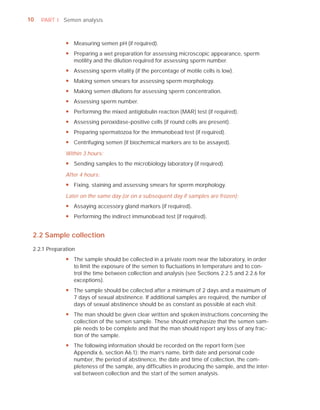
            2003). Fig. 2.1 shows the variations over time in semen composition, as assessed
            by WHO-recommended methods, of five healthy young volunteers participating
            in the placebo arm of a male hormonal contraception study. Such variablility has
            consequences for the interpretation of semen analyses:
            y It is impossible to characterize a man’s semen quality from evaluation of a sin-
              gle semen sample.
            y It is helpful to examine two or three samples to obtain baseline data (Poland et
              al., 1985; Berman et al., 1996; Carlsen et al., 2004; Castilla et al., 2006; Keel,
              2006).

            While measurements made on the whole population of ejaculated spermatozoa
            cannot define the fertilizing capacity of the few that reach the site of fertilization,
            semen analysis nevertheless provides essential information on the clinical status
CHAPTER 2 Standard procedures                 9


                                   of an individual. All aspects of semen collection and analysis must be done by
                                   properly standardized procedures if the results are to provide valid, useful infor-
                                   mation. The tests described in this chapter are accepted procedures that consti-
                                   tute the essential steps in semen evaluation.

Fig. 2.1 Variation in total number of spermatozoa and sperm concentration over a one-and-a-half-year
period


                         300                                        1                                 250
                                                                                                                                              1
                         200                                                                          200

                         100                                                                          150
                                                                                                      100
                           0
                         200                                        2                                 50

                         100                                                                            0
                                                                                                      250
                                                                                                                                              2
                           0
                         200                                                                          200


                                                                         Concentration (106 per ml)
                                                                    3
                                                                                                      150
                         100
                                                                                                      100
                           0
                                                                                                      50
    Total number (106)


                         600                                        4
                                                                                                        0
                         500                                                                          100
                                                                                                                                              3
                         400                                                                          50
                         300                                                                            0
                                                                                                      200
                                                                                                                                              4
                         200
                                                                                                      150
                         100
                                                                                                      100
                           0
                                                                                                      50
                         200                                        5
                                                                                                       0
                         100                                                                          50
                                                                                                                                                  5
                          0                                                                            0
                               0    60 120 180 240 300 360 420 480 540                                      0   60 120 180 240 300 360 420 480 540
                                                 Day                                                                        Day

Data courtesy of Schering Plough and Bayer Schering Pharma AG.


                                   Semen analysis involves the following steps (which are described in detail in sub-
                                   sequent sections).

                                   In the first 5 minutes:
                                   y Placing the specimen container on the bench or in an incubator (37 °C) for
                                     liquefaction.

                                   Between 30 and 60 minutes:
                                   y Assessing liquefaction and appearance of the semen.
                                   y Measuring semen volume.
10   PART I Semen analysis


              y Measuring semen pH (if required).
              y Preparing a wet preparation for assessing microscopic appearance, sperm
                motility and the dilution required for assessing sperm number.
              y Assessing sperm vitality (if the percentage of motile cells is low).
              y Making semen smears for assessing sperm morphology.
              y Making semen dilutions for assessing sperm concentration.
              y Assessing sperm number.
              y Performing the mixed antiglobulin reaction (MAR) test (if required).
              y Assessing peroxidase-positive cells (if round cells are present).
              y Preparing spermatozoa for the immunobead test (if required).
              y Centrifuging semen (if biochemical markers are to be assayed).
              Within 3 hours:
              y Sending samples to the microbiology laboratory (if required).
              After 4 hours:
              y Fixing, staining and assessing smears for sperm morphology.
              Later on the same day (or on a subsequent day if samples are frozen):
              y Assaying accessory gland markers (if required).
              y Performing the indirect immunobead test (if required).


 2.2 Sample collection
 2.2.1 Preparation
              y The sample should be collected in a private room near the laboratory, in order
                to limit the exposure of the semen to fluctuations in temperature and to con-
                trol the time between collection and analysis (see Sections 2.2.5 and 2.2.6 for
                exceptions).
              y The sample should be collected after a minimum of 2 days and a maximum of
                7 days of sexual abstinence. If additional samples are required, the number of
                days of sexual abstinence should be as constant as possible at each visit.
              y The man should be given clear written and spoken instructions concerning the
                collection of the semen sample. These should emphasize that the semen sam-
                ple needs to be complete and that the man should report any loss of any frac-
                tion of the sample.
              y The following information should be recorded on the report form (see
                Appendix 6, section A6.1): the man’s name, birth date and personal code
                number, the period of abstinence, the date and time of collection, the com-
                pleteness of the sample, any difficulties in producing the sample, and the inter-
                val between collection and the start of the semen analysis.
CHAPTER 2 Standard procedures                11


2.2.2 Collection of semen for diagnostic or research purposes
             y The sample should be obtained by masturbation and ejaculated into a clean,
               wide-mouthed container made of glass or plastic, from a batch that has been
               confirmed to be non-toxic for spermatozoa (see Box 2.1).
             y The specimen container should be kept at ambient temperature, between
               20 °C and 37 °C, to avoid large changes in temperature that may affect the
               spermatozoa after they are ejaculated into it. It must be labelled with the man’s
               name and identification number, and the date and time of collection.
             y The specimen container is placed on the bench or in an incubator (37 °C) while
               the semen liquefies.
             y Note in the report if the sample is incomplete, especially if the first, sperm-rich
               fraction may be missing. If the sample is incomplete, a second sample should
               be collected, again after an abstinence period of 2–7 days.

               Box 2.1 Confirming the compatibility of semen collection vessels

               Select several semen samples with high sperm concentration and good sperm
               motility. Place half of each specimen in a container known to be non-toxic (control)
               and the other half in the container being tested. Assess sperm motility (see Sec-
               tion 2.5) at hourly intervals in replicate at room temperature or at 37 °C for 4 hours.
               If there are no differences at each time point between control and test assessments
               (P>0.05 as judged by a paired t-test), the test containers can be considered to be
               non-toxic to spermatozoa and to meet semen collection requirements.


2.2.3 Sterile collection of semen for assisted reproduction

             This is performed as for diagnostic collection (see Section 2.2.2) but the specimen
             containers, pipette tips and pipettes for mixing must be sterile.

2.2.4 Sterile collection of semen for microbiological analysis

             In this situation, microbiological contamination from non-semen sources (e.g.
             commensal organisms from the skin) must be avoided. The specimen containers,
             pipette tips and pipettes for mixing must be sterile.

             The man should:
             y Pass urine.
             y Wash hands and penis with soap, to reduce the risk of contamination of the
               specimen with commensal organisms from the skin.
             y Rinse away the soap.
             y Dry hands and penis with a fresh disposable towel.
             y Ejaculate into a sterile container.


               Note: The time between collection of the semen sample and the start of the investi-
               gation by the microbiological laboratory should not exceed 3 hours.
12   PART I Semen analysis


 2.2.5 Collection of semen at home
             y A sample may be collected at home in exceptional circumstances, such as a
               demonstrated inability to produce a sample by masturbation in the clinic or the
               lack of adequate facilities near the laboratory.
             y The man should be given clear written and spoken instructions concerning
               the collection and transport of the semen sample. These should emphasize
               that the semen sample needs to be complete, i.e. all the ejaculate is collected,
               including the first, sperm-rich portion, and that the man should report any loss
               of any fraction of the sample. It should be noted in the report if the sample is
               incomplete.
             y The man should be given a pre-weighed container, labelled with his name and
               identification number.
             y The man should record the time of semen production and deliver the sample to
               the laboratory within 1 hour of collection.
             y During transport to the laboratory, the sample should be kept between 20 °C
               and 37 °C.
             y The report should note that the sample was collected at home or another loca-
               tion outside the laboratory.

 2.2.6 Collection of semen by condom
             y A sample may be collected in a condom during sexual intercourse only in
               exceptional circumstances, such as a demonstrated inability to produce a
               sample by masturbation.
             y Only special non-toxic condoms designed for semen collection should be
               used; such condoms are available commercially.
             y The man should be given information from the manufacturer on how to use the
               condom, close it, and send or transport it to the laboratory.
             y The man should record the time of semen production and deliver the sample to
               the laboratory within 1 hour of collection.
             y During transport to the laboratory, the sample should be kept between 20 °C
               and 37 °C.
             y The report should note that the sample was collected by means of a special
               condom during sexual intercourse at home or another location outside the
               laboratory.


               Note: Ordinary latex condoms must not be used for semen collection because they
               contain agents that interfere with the motility of spermatozoa (Jones et al., 1986).

               Comment 1: Coitus interruptus is not a reliable means of semen collection,
               because the first portion of the ejaculate, which contains the highest number of
               spermatozoa, may be lost. Moreover, there may be cellular and bacteriological con-
               tamination of the sample, and the low pH of the vaginal fluid could adversely affect
               sperm motility.
CHAPTER 2 Standard procedures               13


               Comment 2: If a man cannot provide a semen sample, the postcoital test (see Sec-
               tion 3.3.1) may provide some information about his spermatozoa.


2.2.7 Safe handling of specimens

             Semen samples may contain dangerous infectious agents (e.g. human immu-
             nodeficiency virus (HIV), hepatitis viruses or herpes simplex virus) and should
             therefore be handled as a biohazard. If the sample is to be processed for bio-
             assay, intra-uterine insemination (IUI), in-vitro fertilization (IVF) or intracytoplasmic
             sperm injection (ICSI) (see Section 5.1), or if semen culture is to be performed (see
             Section 2.2.4), sterile materials and techniques must be used. Safety guidelines
             as outlined in Appendix 2 should be strictly followed; good laboratory practice is
             fundamental to laboratory safety (WHO, 2004).


2.3 Initial macroscopic examination
             Semen analysis should begin with a simple inspection soon after liquefaction,
             preferably at 30 minutes, but no longer than 1 hour after ejaculation, to prevent
             dehydration or changes in temperature from affecting semen quality.

2.3.1 Liquefaction

             Immediately after ejaculation into the collection vessel, semen is typically a semi-
             solid coagulated mass. Within a few minutes at room temperature, the semen
             usually begins to liquefy (become thinner), at which time a heterogeneous mixture
             of lumps will be seen in the fluid. As liquefaction continues, the semen becomes
             more homogeneous and quite watery, and in the final stages only small areas of
             coagulation remain. The complete sample usually liquefies within 15 minutes at
             room temperature, although rarely it may take up to 60 minutes or more. If com-
             plete liquefaction does not occur within 60 minutes, this should be recorded.
             Semen samples collected at home or by condom will normally have liquefied by
             the time they arrive in the laboratory.

             Normal liquefied semen samples may contain jelly-like granules (gelatinous bod-
             ies) which do not liquefy; these do not appear to have any clinical significance.
             The presence of mucus strands, however, may interfere with semen analysis.


               Note 1: Liquefaction can be recognized both macroscopically, as described above,
               and microscopically. Immobilized spermatozoa gain the ability to move as the se-
               men liquefies. If immobilized spermatozoa are observed on microscopic examina-
               tion, more time must be allowed for the liquefaction process to be completed.

               Note 2: During liquefaction, continuous gentle mixing or rotation of the sample
               container on a two-dimensional shaker, either at room temperature or in an incuba-
               tor set at 37 °C, can help to produce a homogeneous sample.

               Note 3: If the semen does not liquefy within 30 minutes, do not proceed with se-
               men analysis but wait for another 30 minutes. If liquefaction has not occurred within
               60 minutes, proceed as in Section 2.3.1.1.
14   PART I Semen analysis


        2.3.1.1 Delayed liquefaction

              Occasionally samples may not liquefy, making semen evaluation difficult. In these
              cases, additional treatment, mechanical mixing or enzymatic digestion may be
              necessary.

              1. Some samples can be induced to liquefy by the addition of an equal volume of
                 physiological medium (e.g. Dulbecco’s phosphate-buffered saline; see Appen-
                 dix 4, section A4.2), followed by repeated pipetting.

              2. Inhomogeneity can be reduced by repeated (6–10 times) gentle passage
                 through a blunt gauge 18 (internal diameter 0.84 mm) or gauge 19 (internal
                 diameter 0.69 mm) needle attached to a syringe.

              3. Digestion by bromelain, a broad-specificity proteolytic enzyme (EC 3.4.22.32),
                 may help to promote liquefaction (see Box 2.2).

               Box 2.2 Preparation of bromelain

                Prepare 10 IU/ml bromelain in Dulbecco’s phosphate-buffered saline (see Appen-
                dix 4, section A4.2); it is difficult to dissolve but, with mixing, most should dissolve
                within 15–20 minutes. Dilute semen 1 + 1 (1:2) with the 10 IU/ml bromelain, stir with
                a pipette tip, and incubate at 37 °C for 10 minutes. Mix the sample well before
                further analysis.


                Comment: These treatments may affect seminal plasma biochemistry, sperm motil-
                ity and sperm morphology, and their use must be recorded. The 1 + 1 (1:2) dilution
                of semen with bromelain must be accounted for when calculating sperm concentra-
                tion.


 2.3.2 Semen viscosity

              After liquefaction, the viscosity of the sample can be estimated by gently aspirat-
              ing it into a wide-bore (approximately 1.5 mm diameter) plastic disposable pipette,
              allowing the semen to drop by gravity and observing the length of any thread. A
              normal sample leaves the pipette in small discrete drops. If viscosity is abnormal,
              the drop will form a thread more than 2 cm long.

              Alternatively, the viscosity can be evaluated by introducing a glass rod into the
              sample and observing the length of the thread that forms upon withdrawal of the
              rod. The viscosity should be recorded as abnormal when the thread exceeds 2 cm.

              In contrast to a partially unliquefied sample, a viscous semen specimen exhib-
              its homogeneous stickiness and its consistency will not change with time. High
              viscosity can be recognized by the elastic properties of the sample, which adheres
              strongly to itself when attempts are made to pipette it. The methods to reduce
              viscosity are the same as those for delayed liquefaction (see Section 2.3.1.1).
CHAPTER 2 Standard procedures              15


              Comment: High viscosity can interfere with determination of sperm motility, sperm
              concentration, detection of antibody-coated spermatozoa and measurement of
              biochemical markers.


2.3.3 Appearance of the ejaculate

             A normal liquefied semen sample has a homogeneous, grey-opalescent appear-
             ance. It may appear less opaque if the sperm concentration is very low; the colour
             may also be different, i.e. red-brown when red blood cells are present (haemo-
             spermia), or yellow in a man with jaundice or taking certain vitamins or drugs.

2.3.4 Semen volume

             The volume of the ejaculate is contributed mainly by the seminal vesicles and
             prostate gland, with a small amount from the bulbourethral glands and epididy-
             mides. Precise measurement of volume is essential in any evaluation of semen,
             because it allows the total number of spermatozoa and non-sperm cells in the
             ejaculate to be calculated.

             The volume is best measured by weighing the sample in the vessel in which it is
             collected.
             y Collect the sample in a pre-weighed, clean, disposable container.
             y Weigh the vessel with semen in it.
             y Subtract the weight of the container.
             y Calculate the volume from the sample weight, assuming the density of semen
               to be 1 g/ml (Auger et al., 1995). (Semen density varies between 1.043 and
               1.102 g/ml (Huggins et al., 1942; Brazil et al., 2004a; Cooper et al., 2007).)


              Note: Empty specimen containers may have different weights, so each container
              should be individually pre-weighed. The weight may be recorded on the container
              before it is given to the client. Use a permanent marker pen on the vessel itself or
              on a label. If a label is used for recording the weight, it should be attached before
              the empty container is weighed.


             Alternatively, the volume can be measured directly.
             y Collect the sample directly into a modifed graduated glass measuring cylinder
               with a wide mouth. These can be obtained commercially.
             y Read the volume directly from the graduations (0.1 ml accuracy).


              Note: Measuring volume by aspirating the sample from the specimen container into
              a pipette or syringe, or decanting it into a measuring cylinder, is not recommended,
              because not all the sample will be retrieved and the volume will therefore be un-
              derestimated. The volume lost can be between 0.3 and 0.9 ml (Brazil et al., 2004a;
              Iwamoto et al., 2006; Cooper et al., 2007).
16   PART I Semen analysis


                Comment 1: Low semen volume is characteristic of obstruction of the ejaculatory
                duct or congenital bilateral absence of the vas deferens (CBAVD) (de la Taille et
                al., 1998; Daudin et al., 2000; von Eckardstein et al., 2000; Weiske et al., 2000), a
                condition in which the seminal vesicles are also poorly developed.

                Comment 2: Low semen volume can also be the result of collection problems (loss
                of a fraction of the ejaculate), partial retrograde ejaculation or androgen deficiency.

                Comment 3: High semen volume may reflect active exudation in cases of active
                inflammation of the accessory organs.


        2.3.4.1 Lower reference limit

              The lower reference limit for semen volume is 1.5 ml (5th centile, 95% confidence
              interval (CI) 1.4–1.7).

 2.3.5 Semen pH

              The pH of semen reflects the balance between the pH values of the different
              accessory gland secretions, mainly the alkaline seminal vesicular secretion and
              the acidic prostatic secretion. The pH should be measured after liquefaction at a
              uniform time, preferably after 30 minutes, but in any case within 1 hour of ejacula-
              tion since it is influenced by the loss of CO2 that occurs after production.

              For normal samples, pH paper in the range 6.0 to 10.0 should be used.
              y Mix the semen sample well (see Box 2.3).
              y Spread a drop of semen evenly onto the pH paper.
              y Wait for the colour of the impregnated zone to become uniform (<30 seconds).
              y Compare the colour with the calibration strip to read the pH.


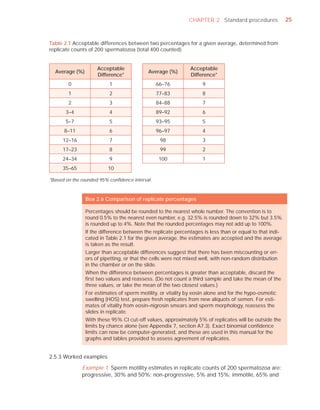
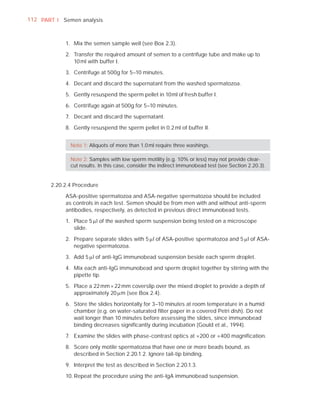
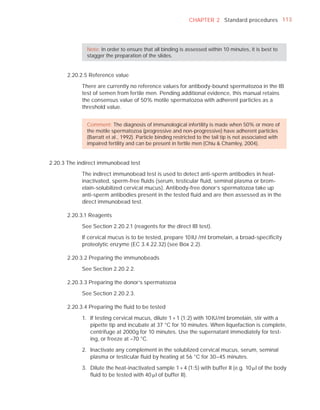
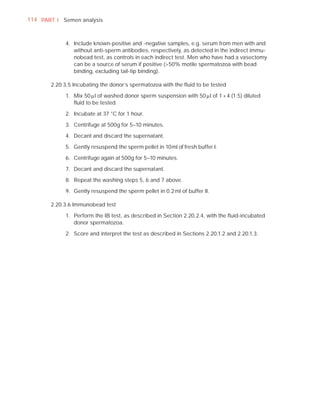
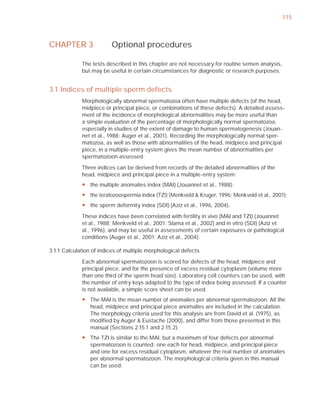
                Note: The accuracy of the pH paper should be checked against known standards.


              For viscous samples, the pH of a small aliquot of the semen can be measured
              using a pH meter designed for measurement of viscous solutions (Haugen & Grot-
              mol, 1998).

        2.3.5.1 Reference values

              There are currently few reference values for the pH of semen from fertile men.
              Pending more data, this manual retains the consensus value of 7.2 as a lower
              threshold value.
CHAPTER 2 Standard procedures               17


              Comment 1: If the pH is less than 7.0 in a semen sample with low volume and low
              sperm numbers, there may be ejaculatory duct obstruction or congenital bilateral
              absence of the vas deferens (de la Taille et al., 1998; Daudin et al., 2000; von Eck-
              ardstein et al., 2000; Weiske et al., 2000), a condition in which seminal vesicles are
              also poorly developed.

              Comment 2: Semen pH increases with time, as natural buffering decreases, so high
              pH values may provide little clinically useful information.


2.4 Initial microscopic investigation
            A phase-contrast microscope is recommended for all examinations of unstained
            preparations of fresh semen (see Appendix 3 for how to set up a microscope). An
            initial microscopic examination of the sample involves scanning the preparation at
            a total magnification of ×100 (i.e. a combination of a ×10 objective lens with a ×10
            ocular lens).

            This provides an overview of the sample, to reveal:
            y mucus strand formation;
            y sperm aggregation or agglutination;
            y the presence of cells other than spermatozoa, e.g. epithelial cells, “round cells”
              (leukocytes and immature germ cells) and isolated sperm heads or tails.

            The preparation should then be observed at ×200 or ×400 total magnification (i.e.
            a combination of a ×20 or a ×40 objective with a ×10 ocular). This permits:
            y assessment of sperm motility (see Section 2.5);
            y determination of the dilution required for accurate assessment of sperm
              number (see Section 2.8).

2.4.1 Thorough mixing and representative sampling of semen

            The nature of the liquefied ejaculate makes taking a representative sample of
            semen for analysis problematical. If the sample is not well mixed, analysis of two
            separate aliquots may show marked differences in sperm motility, vitality, con-
            centration and morphology. To be certain of obtaining reproducible data, the
            sample should be thoroughly mixed before aliquots are taken for assessment
            (see Box 2.3), and results for replicate aliquots should agree before the values are
            accepted. Agreement between replicates is determined for sperm numbers by
            the Poisson distribution (see Boxes 2.7 and 2.10, and Tables 2.4 and 2.5) and for
            percentages by the binomial distribution (see Boxes 2.5 and 2.6, and Table 2.1).
18   PART I Semen analysis


               Box 2.3 Thorough mixing of semen

               Before removing an aliquot of semen for assessment, mix the sample well in the
               original container, but not so vigorously that air bubbles are created. This can be
               achieved by aspirating the sample 10 times into a wide-bore (approximately 1.5 mm
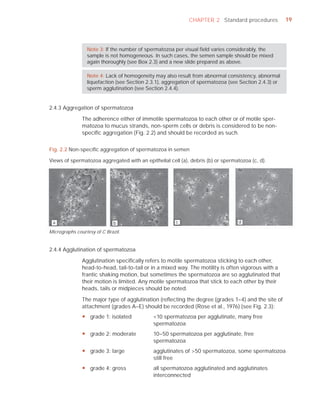
               diameter) disposable plastic pipette (sterile when necessary). Do not mix with a
               vortex mixer at high speed as this will damage spermatozoa.


 2.4.2 Making a wet preparation
             y Mix the semen sample well (see Box 2.3).
             y Remove an aliquot of semen immediately after mixing, allowing no time for the
               spermatozoa to settle out of suspension.
             y Remix the semen sample before removing replicate aliquots.
             The volume of semen and the dimensions of the coverslip must be standardized,
             so that the analyses are carried out on a preparation of fixed depth of about 20 Pm
             (see Box 2.4), which allows the spermatozoa to swim freely:
             y Place a standard volume of semen, e.g. 10 Pl, onto a clean glass slide.
             y Cover it with a coverslip, e.g. 22 mm × 22 mm for 10 Pl, to provide a chamber
               approximately 20 Pm deep (see Box 2.4). The weight of the coverslip spreads
               the sample.
             y Take care to avoid the formation and trapping of air bubbles between the cov-
               erslip and the slide.
             y Assess the freshly made wet preparation as soon as the contents are no longer
               drifting.

               Box 2.4 Depth of wet preparations

               The depth of a preparation (D, Pm) is obtained by dividing the volume of the
               sample (V, Pl = mm3) by the area over which it is spread (A, mm2): D = V/A. Thus,
               a volume of 10 Pl of semen delivered onto a clean glass slide and covered with a
               22 mm × 22 mm coverslip (area 484 mm2) provides a chamber of depth of 20.7 Pm;
               a 6.5 Pl sample covered with an 18 mm × 18 mm coverslip (area 324 mm2) provides
               a depth of 20.1 Pm; an 11 Pl sample covered by a 21 mm × 26 mm coverslip (area
               546 mm2) provides a depth of 20.1 Pm. Occasionally, a deeper chamber may be
               required: a 40 Pl sample covered by a 24 mm × 50 mm coverslip (area 1200 mm2)
               provides a depth of 33.3 Pm.


               Note 1: A chamber depth of less than 20 Pm constrains the rotational movement of
               spermatozoa (Le Lannou et al., 1992; Kraemer et al., 1998).

               Note 2: If the chamber is too deep, it will be difficult to assess spermatozoa as they
               move in and out of focus.
CHAPTER 2 Standard procedures              19


                 Note 3: If the number of spermatozoa per visual field varies considerably, the
                 sample is not homogeneous. In such cases, the semen sample should be mixed
                 again thoroughly (see Box 2.3) and a new slide prepared as above.

                 Note 4: Lack of homogeneity may also result from abnormal consistency, abnormal
                 liquefaction (see Section 2.3.1), aggregation of spermatozoa (see Section 2.4.3) or
                 sperm agglutination (see Section 2.4.4).


2.4.3 Aggregation of spermatozoa

               The adherence either of immotile spermatozoa to each other or of motile sper-
               matozoa to mucus strands, non-sperm cells or debris is considered to be non-
               specific aggregation (Fig. 2.2) and should be recorded as such.


Fig. 2.2 Non-specific aggregation of spermatozoa in semen

Views of spermatozoa aggregated with an epithelial cell (a), debris (b) or spermatozoa (c, d).


 a                           b                         c                          d

Micrographs courtesy of C Brazil.


2.4.4 Agglutination of spermatozoa

               Agglutination specifically refers to motile spermatozoa sticking to each other,
               head-to-head, tail-to-tail or in a mixed way. The motility is often vigorous with a
               frantic shaking motion, but sometimes the spermatozoa are so agglutinated that
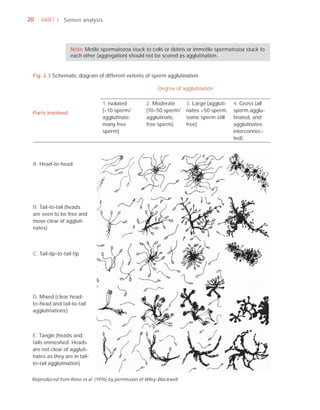
               their motion is limited. Any motile spermatozoa that stick to each other by their
               heads, tails or midpieces should be noted.

               The major type of agglutination (reflecting the degree (grades 1–4) and the site of
               attachment (grades A–E) should be recorded (Rose et al., 1976) (see Fig. 2.3):
               y grade 1: isolated           <10 spermatozoa per agglutinate, many free
                                             spermatozoa
               y grade 2: moderate           10–50 spermatozoa per agglutinate, free
                                             spermatozoa
               y grade 3: large              agglutinates of >50 spermatozoa, some spermatozoa
                                             still free
               y grade 4: gross              all spermatozoa agglutinated and agglutinates
                                             interconnected
20   PART I Semen analysis


                   Note: Motile spermatozoa stuck to cells or debris or immotile spermatozoa stuck to
                   each other (aggregation) should not be scored as agglutination.


 Fig. 2.3 Schematic diagram of different extents of sperm agglutination

                                                           Degree of agglutination

                                 1. Isolated         2. Moderate        3. Large (aggluti-   4. Gross (all
 Parts involved                  (<10 sperm/         (10–50 sperm/      nates >50 sperm,     sperm agglu-
                                 agglutinate,        agglutinate,       some sperm still     tinated, and
                                 many free           free sperm)        free)                agglutinates
                                 sperm)                                                      interconnec-
                                                                                             ted)


 A. Head-to-head


 B. Tail-to-tail (heads
 are seen to be free and
 move clear of aggluti-
 nates)


 C. Tail-tip-to-tail-tip


 D. Mixed (clear head-
 to-head and tail-to-tail
 agglutinations)


 E. Tangle (heads and
 tails enmeshed. Heads
 are not clear of aggluti-
 nates as they are in tail-
 to-tail agglutination)


 Reproduced from Rose et al. (1976) by permission of Wiley-Blackwell.
CHAPTER 2 Standard procedures             21


              Comment 1: The presence of agglutination is not sufficient evidence to deduce an
              immunological cause of infertility, but is suggestive of the presence of anti-sperm
              antibodies; further testing is required (see Section 2.20).

              Comment 2: Severe agglutination can affect the assessment of sperm motility and
              concentration.


2.4.5 Cellular elements other than spermatozoa

            The ejaculate contains cells other than spermatozoa, some of which may be
            clinically relevant. These include epithelial cells from the genitourinary tract, as
            well as leukocytes and immature germ cells, the latter two collectively referred
            to as “round cells” (Johanisson et al., 2000). They can be identified by examin-
            ing a stained smear at ×1000 magnification (see Section 2.12, Plates 13 and 14,
            and Section 2.19). These cells can be more precisely identified and quantified by
            detecting peroxidase activity (see Section 2.18) or the antigen CD45 (see Section
            3.2). Their concentration can be estimated as for spermatozoa, from wet prepara-
            tions (see Section 2.18.1.5) or from the ratio of these cells to the number of sper-
            matozoa on the stained smear and the sperm concentration (see Section 2.12.1).


2.5 Sperm motility
            The extent of progressive sperm motility (see Section 2.5.1) is related to pregnancy
            rates (Jouannet et al., 1988; Larsen et al., 2000; Zinaman et al., 2000). Methods
            of motility assessment involving computer-aided sperm analysis (CASA) are
            described in Section 3.5.2.

            Sperm motility within semen should be assessed as soon as possible after liq-
            uefaction of the sample, preferably at 30 minutes, but in any case within 1 hour,
            following ejaculation, to limit the deleterious effects of dehydration, pH or changes
            in temperature on motility.
            y Mix the semen sample well (see Box 2.3).
            y Remove an aliquot of semen immediately after mixing, allowing no time for the
              spermatozoa to settle out of suspension.
            y Remix the semen sample before removing a replicate aliquot.
            y For each replicate, prepare a wet preparation approximately 20 Pm deep (see
              Section 2.4.2).
            y Wait for the sample to stop drifting (within 60 seconds).
            y Examine the slide with phase-contrast optics at ×200 or ×400 magnification.
            y Assess approximately 200 spermatozoa per replicate for the percentage of dif-
              ferent motile categories.
            y Compare the replicate values to check if they are acceptably close. If so, pro-
              ceed with calculations; if not, prepare new samples.
22   PART I Semen analysis


                Note 1: The procedure may be performed at room temperature or at 37 °C with a
                heated microscope stage, but should be standardized for each laboratory. If sperm
                motility is to be assessed at 37 °C, the sample should be incubated at this temper-
                ature and the preparation made with prewarmed slides and coverslips.

                Note 2: The use of an eyepiece reticle with grid (see Fig. 2.4a) is recommended to
                limit the area viewed; this allows the same area of the slide to be assessed dur-
                ing both stages of scoring. Assess progressive motility first, then non-progressive
                motility and immotility (see Section 2.5.1). Limiting the area, and thus the number of
                spermatozoa assessed, ensures that several areas of the preparation are examined
                for motility.


 2.5.1 Categories of sperm movement

              A simple system for grading motility is recommended that distinguishes spermato-
              zoa with progressive or non-progressive motility from those that are immotile. The
              motility of each spermatozoon is graded as follows:
              y Progressive motility (PR): spermatozoa moving actively, either linearly or in a
                large circle, regardless of speed.
              y Non-progressive motility (NP): all other patterns of motility with an absence of
                progression, e.g. swimming in small circles, the flagellar force hardly displacing
                the head, or when only a flagellar beat can be observed.
              y Immotility (IM): no movement.


                Comment 1: The previous edition of this manual recommended that progres-
                sively motile spermatozoa should be categorized as rapid or slow, with a speed
                of >25 Pm/sec at 37 °C defining “grade a” spermatozoa. However, it is difficult for
                technicians to define the forward progression so accurately without bias (Cooper &
                Yeung, 2006).

                Comment 2: When discussing sperm motility, it is important to specify total motility
                (PR + NP) or progressive motility (PR).


 2.5.2 Preparing and assessing a sample for motility
              y If motility is to be assessed at 37 °C, turn the stage warmer on 10 minutes in
                advance, to allow the temperature to stabilize.
              y Prepare a wet preparation 20 Pm deep (see Section 2.4.2).
              y Examine the slide with phase-contrast optics at ×200 or ×400 magnification.
              y Wait for the sample to stop drifting.
              y Look for spermatozoa in an area at least 5 mm from the edge of the coverslip
                (see Fig. 2.4b), to prevent observation of effects of drying on motility.
CHAPTER 2 Standard procedures              23


y Systematically scan the slide to avoid repeatedly viewing the same area.
  Change fields often. Avoid choosing fields on the basis of the number of motile
  sperm seen (field choice should be random).
y Start scoring a given field at a random instant. Do not wait for spermatozoa to
  swim into the field or grid to begin scoring.
y Assess the motility of all spermatozoa within a defined area of the field. This
  is most easily achieved by using an eyepiece reticle (see Fig. 2.4a). Select the
  portion of the field or grid to be scored from the sperm concentration, i.e. score
  only the top row of the grid if the sperm concentration is high; score the entire
  grid if the sperm concentration is low.
y Scan and count quickly to avoid overestimating the number of motile sperm-
  atozoa. The goal is to count all motile spermatozoa in the grid section instantly;
  avoid counting both those present initially plus those that swim into the
  grid section during scoring, which would bias the result in favour of motile
  spermatozoa.
y Initially scan the grid section being scored for PR cells (see Section 2.5.1).
  Next count NP spermatozoa and finally IM spermatozoa in the same grid sec-
  tion. With experience, it may be possible to score all three categories of sperm
  movement at one time, and to score larger areas of the grid.
y Tally the number of spermatozoa in each motility category with the aid of a
  laboratory counter.
y Evaluate at least 200 spermatozoa in a total of at least five fields in each repli-
  cate, in order to achieve an acceptably low sampling error (see Box 2.5).
y Calculate the average percentage and difference between the two percent-
  ages for the most frequent motility grade (PR, NP or IM) in the replicate wet
  preparations.
y Determine the acceptability of the difference from Table 2.1 or Fig. A7.2,
  Appendix 7. (Each shows the maximum difference between two percentages
  that is expected to occur in 95% of samples because of sampling error alone.)
y If the difference between the percentages is acceptable, report the average
  percentage for each motility grade (PR, NP and IM). If the difference is too
  high, take two new aliquots from the semen sample, make two new prepara-
  tions and repeat the assessment (see Box 2.6).
y Report the average percentage for each motility grade to the nearest whole
  number.


  Note 1: Assess only intact spermatozoa (defined as having a head and a tail; see
  Section 2.7.3), since only intact spermatozoa are counted for sperm concentration.
  Do not count motile pinheads.
24   PART I Semen analysis


                  Note 2: If spermatozoa are being scored in two stages (i.e. PR first, followed by NP
                  and IM from the same area) and a count of 200 spermatozoa is achieved before
                  all motility categories from that area have been scored, counting must continue
                  beyond 200 spermatozoa until all categories have been counted, in order to avoid
                  bias towards the motility category scored first.

                  Note 3: It is common to overestimate sperm motility, but this can often be avoided
                  by reversing the order of analysis (NP and IM first), using an eyepiece reticle, and
                  being aware of, and avoiding, to the extent possible, potential sources of bias (see
                  Section 7.13.3).

                  Note 4: On rare occasions, with inhomogeneous samples, even a third set of repli-
                  cates may provide unacceptable differences. In this case, calculate the mean of all
                  replicates and note this in the report.


 Fig. 2.4 Aids to assessing sperm motility

 (a) An eyepiece reticle makes it easier to count motile and immotile spermatozoa. (b) Systematic
 selection of fields for assessment of sperm motility, at least 5 mm from the edges of the coverslip.

            (a)                                    (b)
                                                                     >5 mm


                  Box 2.5 Errors in estimating percentages

                  How certain your estimate of a percentage is depends not only on the number (N) of
                  spermatozoa counted but also on the true, but unknown, percentage (p) (binomial
                  distribution). The approximate standard error (SE) is —((p(100–p))/N) for percentages
                  between 20 and 80. Outside this range, a more appropriate method to use is the
                  angular transformation (arc sin square root), z = sin–1—(p/100), with a standard devia-
                  tion of 1/(2—N) radians, which depends only on the number of spermatozoa counted
                  and not the true percentage.
CHAPTER 2 Standard procedures                25


Table 2.1 Acceptable differences between two percentages for a given average, determined from
replicate counts of 200 spermatozoa (total 400 counted)


                     Acceptable                               Acceptable
  Average (%)                              Average (%)
                     Difference*                              Difference*
        0                 1                     66–76              9
        1                 2                     77–83              8
        2                 3                     84–88              7
       3–4                4                     89–92              6
       5–7                5                     93–95              5
      8–11                6                     96–97              4
     12–16                7                      98                3
     17–23                8                      99                2
     24–34                9                     100                1
     35–65                10

*Based on the rounded 95% confidence interval.


                Box 2.6 Comparison of replicate percentages

                Percentages should be rounded to the nearest whole number. The convention is to
                round 0.5% to the nearest even number, e.g. 32.5% is rounded down to 32% but 3.5%
                is rounded up to 4%. Note that the rounded percentages may not add up to 100%.
                If the difference between the replicate percentages is less than or equal to that indi-
                cated in Table 2.1 for the given average, the estimates are accepted and the average
                is taken as the result.
                Larger than acceptable differences suggest that there has been miscounting or err-
                ors of pipetting, or that the cells were not mixed well, with non-random distribution
                in the chamber or on the slide.
                When the difference between percentages is greater than acceptable, discard the
                first two values and reassess. (Do not count a third sample and take the mean of the
                three values, or take the mean of the two closest values.)
                For estimates of sperm motility, or vitality by eosin alone and for the hypo-osmotic
                swelling (HOS) test, prepare fresh replicates from new aliquots of semen. For esti-
                mates of vitality from eosin–nigrosin smears and sperm morphology, reassess the
                slides in replicate.
                With these 95% CI cut-off values, approximately 5% of replicates will be outside the
                limits by chance alone (see Appendix 7, section A7.3). Exact binomial confidence
                limits can now be computer-generated, and these are used in this manual for the
                graphs and tables provided to assess agreement of replicates.


2.5.3 Worked examples

              Example 1. Sperm motility estimates in replicate counts of 200 spermatozoa are:
              progressive, 30% and 50%; non-progressive, 5% and 15%; immotile, 65% and
26   PART I Semen analysis


              35%. The most common category is immotile, with an average of 50% and a dif-
              ference of 30%. From Table 2.1, it is seen that for an average of 50%, a difference
              of up to 10% would be expected to occur by chance alone. As the observed dif-
              ference exceeds this, the results are discarded and two fresh slides are prepared
              and the sperm motility re-estimated.

              Example 2. Sperm motility estimates in replicate counts of 200 spermatozoa are:
              progressive, 37% and 28%; non-progressive, 3% and 6%; immotile 60% and
              66%. The most common category is immotile, with an average of 63% and a dif-
              ference of 6%. From Table 2.1, it is seen that for an average of 63%, a difference
              of up to 10% would be expected to occur by chance alone. As the observed dif-
              ference is less than this, the results are accepted and the mean values reported:
              PR 32%, NP 4%, IM 63%.

 2.5.4 Lower reference limit

              The lower reference limit for total motility (PR + NP) is 40% (5th centile, 95% CI
              38–42).

              The lower reference limit for progressive motility (PR) is 32% (5th centile, 95% CI
              31–34).


                Comment: The total number of progressively motile spermatozoa in the ejaculate
                is of biological significance. This is obtained by multiplying the total number of
                spermatozoa in the ejaculate (see Section 2.8.7) by the percentage of progressively
                motile cells.


 2.6 Sperm vitality
              Sperm vitality, as estimated by assessing the membrane integrity of the cells, may
              be determined routinely on all samples, but is especially important for samples
              with less than about 40% progressively motile spermatozoa. This test can provide
              a check on the motility evaluation, since the percentage of dead cells should not
              exceed (within sampling error) the percentage of immotile spermatozoa. The per-
              centage of viable cells normally exceeds that of motile cells.

              The percentage of live spermatozoa is assessed by identifying those with an intact
              cell membrane, from dye exclusion or by hypotonic swelling. The dye exclusion
              method is based on the principle that damaged plasma membranes, such as
              those found in non-vital (dead) cells, allow entry of membrane-impermeant stains.
              The hypo-osmotic swelling test presumes that only cells with intact membranes
              (live cells) will swell in hypotonic solutions. Examples of each test are described
              below.

              Sperm vitality should be assessed as soon as possible after liquefaction of the
              semen sample, preferably at 30 minutes, but in any case within 1 hour of ejacula-
              tion, to prevent observation of deleterious effects of dehydration or of changes in
              temperature on vitality.
CHAPTER 2 Standard procedures               27


                Comment 1: It is clinically important to know whether immotile spermatozoa are
                alive or dead. Vitality results should be assessed in conjunction with motility results
                from the same semen sample.

                Comment 2: The presence of a large proportion of vital but immotile cells may be
                indicative of structural defects in the flagellum (Chemes & Rawe, 2003); a high per-
                centage of immotile and non-viable cells (necrozoospermia) may indicate epididy-
                mal pathology (Wilton et al., 1988; Correa-Perez et al., 2004).


2.6.1 Vitality test using eosin–nigrosin

              This one-step staining technique uses nigrosin to increase the contrast between
              the background and the sperm heads, which makes them easier to discern. It also
              permits slides to be stored for re-evaluation and quality-control purposes (Björn-
              dahl et al., 2003).

       2.6.1.1 Preparing the reagents

              1. Eosin Y: dissolve 0.67 g of eosin Y (colour index 45380) and 0.9 g of sodium
                 chloride (NaCl) in 100 ml of purified water with gentle heating.

              2. Eosin–nigrosin: add 10 g of nigrosin (colour index 50420) to the 100 ml of eosin
                 Y solution.

              3. Boil the suspension, then allow to cool to room temperature.

              4. Filter through filter paper (e.g. 90 g/m2) to remove coarse and gelatinous pre-
                 cipitates and store in a sealed dark-glass bottle.

       2.6.1.2 Procedure

              1. Mix the semen sample well (see Box 2.3).

              2. Remove a 50-Pl aliquot of semen and mix with an equal volume of eosin–
                 nigrosin suspension, e.g. in a porcelain spot plate well or test-tube, and wait for
                 30 seconds.

              3. Remix the semen sample before removing a replicate aliquot and mixing with
                 eosin–nigrosin and treating as in step 2 above.

              4. For each suspension make a smear on a glass slide (see Section 2.13.2) and
                 allow it to dry in air.

              5. Examine immediately after drying, or later after mounting with a permanent
                 non-aqueous mounting medium (see Section 2.14.2.5).

              6. Examine each slide with brightfield optics at ×1000 magnification and oil
                 immersion.

              7. Tally the number of stained (dead) or unstained (vital) cells with the aid of a
                 laboratory counter.
28   PART I Semen analysis


               8. Evaluate 200 spermatozoa in each replicate, in order to achieve an acceptably
                  low sampling error (see Box 2.5).

               9. Calculate the average and difference of the two percentages of vital cells from
                  the replicate slides.

               10. Determine the acceptability of the difference from Table 2.1 or Fig. A7.2,
                   Appendix 7. (Each shows the maximum difference between two percentages
                   that is expected to occur in 95% of samples because of sampling error alone.)

               11. If the difference between the percentages is acceptable, report the average
                   percentage of vital spermatozoa. If the difference is too high, make two new
                   preparations from two fresh aliquots of the semen sample and repeat the
                   assessment (see Box 2.6).

               12. Report the average percentage of vital spermatozoa to the nearest whole
                   number.

 Fig. 2.5 Eosin–nigrosin smear observed in brightfield optics

 Spermatozoa with red (D1) or dark pink (D2) heads are considered dead (membrane-damaged),
 whereas spermatozoa with white heads (L) or light pink heads are considered alive (membrane-
 intact).


 Micrograph courtesy of TG Cooper.


        2.6.1.3 Scoring

               1. The nigrosin provides a dark background that makes it easier to discern faintly
                  stained spermatozoa.
CHAPTER 2 Standard procedures              29


              2. With brightfield optics, live spermatozoa have white heads and dead sperma-
                 tozoa have heads that are stained red or dark pink (see Fig. 2.5). Spermatozoa
                 with a faint pink head are assessed as alive.

              3. If the stain is limited to only a part of the neck region, and the rest of the head
                 area is unstained, this is considered a “leaky neck membrane”, not a sign of
                 cell death and total membrane disintegration. These cells should be assessed
                 as alive.

       2.6.1.4 Lower reference limit

              The lower reference limit for vitality (membrane-intact spermatozoa) is 58%
              (5th centile, 95% CI 55–63).


                Comment: The total number of membrane-intact spermatozoa in the ejaculate is of
                biological significance. This is obtained by multiplying the total number of sperma-
                tozoa in the ejaculate (see Section 2.8.7) by the percentage of membrane-intact
                cells.


2.6.2 Vitality test using eosin alone

              This method is simple and rapid, but the wet preparations cannot be stored for
              quality control purposes.

       2.6.2.1 Preparing the reagents

              1. NaCl, 0.9% (w/v): dissolve 0.9 g of NaCl in 100 ml purified water.

              2. Eosin Y, 0.5% (w/v): dissolve 0.5 g of eosin Y (colour index 45380) in 100 ml of
                 0.9% NaCl.


                Note: Some commercially available eosin solutions are hypotonic aqueous solu-
                tions that will stress the spermatozoa and give false-positive results (Björndahl et
                al., 2004). If using such a solution, add 0.9 g of NaCl to 100 ml of solution to raise
                the osmolality.


       2.6.2.2 Procedure

              1. Mix the semen sample well (see Box 2.3).

              2. Remove an aliquot of 5 Pl of semen and combine with 5 Pl of eosin solution on
                 a microscope slide. Mix with a pipette tip, swirling the sample on the slide.

              3. Cover with a 22 mm × 22 mm coverslip and leave for 30 seconds.

              4. Remix the semen sample, remove a replicate aliquot, mix with eosin and treat
                 as in steps 2 and 3 above.

              5. Examine each slide, preferably with negative-phase-contrast optics (positive-
                 phase-contrast makes faint pink heads difficult to discern) at ×200 or ×400
                 magnification.
30   PART I Semen analysis


              6. Tally the number of stained (dead) and unstained (vital) cells with the aid of a
                 laboratory counter.

              7. Evaluate 200 spermatozoa in each replicate, in order to achieve an acceptably
                 low sampling error (see Box 2.5).

              8. Calculate the average and difference of the two percentages of vital cells from
                 the replicate preparations.

              9. Determine the acceptability of the difference from Table 2.1 or Fig. A7.2,
                 Appendix 7. (Each shows the maximum difference between two percentages
                 that is expected to occur in 95% of samples because of sampling error alone.)

              10. If the difference between the percentages is acceptable, report the average
                  percentage vitality. If the difference is too high, make two new preparations
                  from two new aliquots of semen and repeat the assessment (see Box 2.6).

              11. Report the average percentage of vital spermatozoa to the nearest whole
                  number.

        2.6.2.3 Scoring

              1. Live spermatozoa have white or light pink heads and dead spermatozoa have
                 heads that are stained red or dark pink.

              2. If the stain is limited to only a part of the neck region, and the rest of the head
                 area is unstained, this is considered a “leaky neck membrane”, not a sign of
                 cell death and total membrane disintegration. These cells should be assessed
                 as alive.

              3. If it is difficult to discern the pale pink stained head, use nigrosin to increase
                 the contrast of the background (see Section 2.6.1).

        2.6.2.4 Lower reference limit

              The lower reference limit for vitality (membrane-intact spermatozoa) is 58%
              (5th centile, 95% CI 55–63).


                Comment: The total number of membrane-intact spermatozoa in the ejaculate is of
                biological significance. This is obtained by multiplying the total number of sperma-
                tozoa in the ejaculate (see Section 2.8.7) by the percentage of membrane-intact
                cells.


 2.6.3 Vitality test using hypo-osmotic swelling

              As an alternative to dye exclusion, the hypo-osmotic swelling (HOS) test may be
              used to assess vitality (Jeyendran et al., 1984). This is useful when staining of
              spermatozoa must be avoided, e.g. when choosing spermatozoa for ICSI. Sperm-
              atozoa with intact membranes swell within 5 minutes in hypo-osmotic medium and
              all flagellar shapes are stabilized by 30 minutes (Hossain et al., 1998).
CHAPTER 2 Standard procedures             31


     Thus, use:
     y 30 minutes incubation for routine diagnostics; but
     y 5 minutes incubation when spermatozoa are to be processed for therapeutic
       use.

2.6.3.1 Preparing the reagents

     1. Swelling solution for diagnostic purposes: dissolve 0.735 g of sodium citrate
        dihydrate and 1.351 g of D-fructose in 100 ml of purified water. Freeze 1-ml aliq-
        uots of this solution at –20 °C.

     2. For therapeutic use: dilute the medium to be used 1 + 1 (1:2) with sterile, puri-
        fied water.

2.6.3.2 Procedure

     1. Thaw the frozen swelling solution and mix well before use.

     2. Warm 1 ml of swelling solution or 1 ml of 1 + 1 (1:2) diluted medium in a closed
        microcentrifuge tube at 37 °C for 5 minutes.

     3. Mix the semen sample well (see Box 2.3).

     4. Remove a 100-Pl aliquot of semen and add to the swelling solution. Mix gently
        by drawing it in and out of the pipette.

     5. Incubate at 37 °C for exactly 5 minutes or 30 minutes (see above), then transfer
        a 10-Pl aliquot to a clean slide and cover with a 22 mm × 22 mm coverslip.

     6. Remix the semen sample, remove a replicate aliquot, mix with swelling solu-
        tion, incubate and prepare a replicate slide, as above.

     7. Examine each slide with phase-contrast optics at ×200 or ×400 magnification.

     8. Tally the number of unswollen (dead) and swollen (vital) cells with the aid of a
        laboratory counter.

     9. Evaluate 200 spermatozoa in each replicate, in order to achieve an acceptably
        low sampling error (see Box 2.5).

     10. Calculate the average and difference of the two percentages of vital cells from
         the replicate preparations.

     11. Determine the acceptability of the difference from Table 2.1 or Fig. A7.2,
         Appendix 7. (Each shows the maximum difference between two percentages
         that is expected to occur in 95% of samples because of sampling error alone.)

     12. If the difference between the percentages is acceptable, report the average
         percentage vitality. If the difference is too high, make two new preparations
         from two new aliquots of semen and repeat the assessment (see Box 2.6).

     13. Report the average percentage of vital spermatozoa to the nearest whole
         number.
32   PART I Semen analysis


         2.6.3.3 Scoring

                 1. Swollen spermatozoa are identified by changes in the shape of the cell, as indi-
                    cated by coiling of the tail (Fig. 2.6).

                 2. Live cells are distinguished by evidence of swelling of the sperm tail; score all
                    forms of swollen tails as live spermatozoa.

 Fig. 2.6 Schematic representation of typical morphological changes in human spermatozoa sub-
 jected to hypo-osmotic stress

 (a) No change. (b)–(g) Various types of tail changes. Swelling in tail is indicated by the grey area.


           (a)           (b)           (c)            (d)          (e)            (f)           (g)


 Reproduced from Jeyendran RS, Van der Ven HH, Perez-Pelaez M, Crabo BG, Zaneveld LJD. (1984) Journal of
 Reproduction and Fertility, 70: 219–228. © Society for Reproduction and Fertility (1984). Reproduced by permission.


         2.6.3.4 Lower reference limit

                 HOS test values approximate those of the eosin test (Carreras et al., 1992).

                 The lower reference limit for vitality (membrane-intact spermatozoa) is 58% (5th
                 centile, 95% CI 55–63).


                   Comment: The total number of membrane-intact spermatozoa in the ejaculate is of
                   biological significance. This is obtained by multiplying the total number of sperma-
                   tozoa in the ejaculate (see Section 2.8.7) by the percentage of membrane-intact
                   cells.


 2.7 Sperm numbers
                 The total number of spermatozoa per ejaculate and the sperm concentration are
                 related to both time to pregnancy (Slama et al., 2002) and pregnancy rates (WHO,
                 1996; Zinaman et al., 2000) and are predictors of conception (Bonde et al., 1998;
CHAPTER 2 Standard procedures            33


Larsen et al., 2000). More data correlating total sperm numbers with reproductive
outcome are warranted.

The number of spermatozoa in the ejaculate is calculated from the concentra-
tion of spermatozoa, which is measured during semen evalulation. For normal
ejaculates, when the male tract is unobstructed and the abstinence time short, the
total number of spermatozoa in the ejaculate is correlated with testicular volume
(Handelsman et al., 1984; WHO, 1987; Andersen et al., 2000; Behre et al., 2000)
and thus is a measure of the capability of the testes to produce spermatozoa
(MacLeod & Wang, 1979) and the patency of the male tract. The concentration of
spermatozoa in the semen, while related to fertilization and pregnancy rates, is
influenced by the volume of the secretions from the seminal vesicles and prostate
(Eliasson, 1975) and is not a specific measure of testicular function.


 Comment 1: The terms “total sperm number” and “sperm concentration” are not
 synonymous. Sperm concentration refers to the number of spermatozoa per unit
 volume of semen and is a function of the number of spermatozoa emitted and the
 volume of fluid diluting them. Total sperm number refers to the total number of
 spermatozoa in the entire ejaculate and is obtained by multiplying the sperm con-
 centration by the semen volume.

 Comment 2: The generalization that total sperm number reflects testicular sperm
 productivity may not hold for electro-ejaculates from men with spinal cord injury,
 those with androgen deficiency, or for samples collected after prolonged absti-
 nence or partial retrograde ejaculation.

 Comment 3: The term “sperm density” (mass per unit volume) should not be used
 when sperm concentration (number per unit volume) is meant.


Determination of sperm number comprises the following steps (which are
described in detail in subsequent sections).
y Examining a well-mixed, undiluted preparation of liquefied semen on a glass
  slide under a coverslip, to determine the appropriate dilution and appropriate
  chambers to use (see Section 2.8.1). This is usually the wet preparation (see
  Section 2.4.2) used for evaluation of motility.
y Mixing semen and preparing dilutions with fixative.
y Loading the haemocytometer chamber and allowing spermatozoa to settle in a
  humid chamber.
y Assessing the samples within 10–15 minutes (after which evaporation has
  noticeable effects on sperm position within the chamber).
y Counting at least 200 spermatozoa per replicate.
y Comparing replicate counts to see if they are acceptably close. If so, proceed-
  ing with calculations; if not, preparing new dilutions.
y Calculating the concentration in spermatozoa per ml.
y Calculating the total number of spermatozoa per ejaculate.
34   PART I Semen analysis


 2.7.1 Types of counting chamber

                The use of 100-Pm-deep haemocytometer chambers is recommended. Dilution
                factors for the improved Neubauer haemocytometer chamber are given here. Oth-
                er deep haemocytometer chambers may be used, but they will have different vol-
                umes and grid patterns and will require different factors for calculation. Disposable
                chambers are available for determining sperm concentration (Seaman et al., 1996;
                Mahmoud et al., 1997; Brazil et al., 2004b), but they may produce different results
                from those of the improved Neubauer haemocytometer. Shallow chambers that fill
                by capillary action may not have a uniform distribution of spermatozoa because of
                streaming (Douglas-Hamilton et al., 2005a, 2005b). It may be possible to correct
                for this (Douglas-Hamilton et al., 2005a) but it is not advised (Björndahl & Barratt,
                2005). The validity of these alternative counting chambers must be established by
                checking chamber dimensions (see Appendix 7, section A7.8), comparing results
                with the improved Neubauer haemocytometer method, and obtaining satisfactory
                performance as shown by an external quality-control programme. For accurate
                assessment of low sperm concentrations, large-volume counting chambers may
                be necessary (see Section 2.11.2).

 2.7.2 The improved Neubauer haemocytometer

                The improved Neubauer haemocytometer has two separate counting chambers,
                each of which has a microscopic 3 mm × 3 mm pattern of gridlines etched on
                the glass surface. It is used with a special thick coverslip (thickness number 4,
                0.44 mm), which lies over the grids and is supported by glass pillars 0.1 mm above
                the chamber floor. Each counting area is divided into nine 1 mm × 1 mm grids.
                These grids are referred to by the numbers shown in Fig. 2.7.


 Fig. 2.7 The improved Neubauer haemocytometer

 Sketches of the inscribed area showing: all nine grids in one chamber of the haemocytometer (left
 panel); the central grid (number 5) of 25 large squares (middle panel); and a micrograph of part of a
 filled chamber (right panel), showing one of the 25 squares of the central grid (the circled square in
 the middle panel) bounded by triple lines and containing 16 smaller squares.


     1
     1           2
                 2           3
                             3


     4           5           6
                             6


     7
     7           8
                 8           9
                             9

 Micrograph courtesy of C Brazil.
CHAPTER 2 Standard procedures              35


            With a depth of 100 Pm, each grid holds 100 nl. Four of these grids (nos 1, 3, 7 and 9)
            contain four rows of four squares, each holding 6.25 nl; two grids (nos 2 and 8)
            contain four rows of five squares, each of 5 nl; two grids (nos 4 and 6) contain five
            rows of four squares, each of 5 nl; and the central grid (number 5) contains five
            rows of five squares, each of 4 nl (Fig. 2.7, middle panel). Each of the 25 squares
            of the central grid (number 5) is subdivided into 16 smaller squares (Fig. 2.7, right
            panel). Thus, grids 1, 2, 3, 7, 8 and 9 each have four rows holding 25 nl per row,
            while grids 4, 5 and 6 each have five rows holding 20 nl per row.

            Depending on the dilution and the number of spermatozoa counted, different
            areas of the chamber are used for determining sperm concentration. For 1 + 19
            (1:20) and 1 + 4 (1:5) dilutions, rows from grid number 5 are assessed and, when
            necessary, from grids numbers 4 and 6 (see Section 2.8). For 1 + 1 (1:2) dilutions,
            all nine grids can be assessed if necessary to achieve a count of 200 spermatozoa
            (see Section 2.11.1).

2.7.3 Using the haemocytometer grid
            y Count only whole spermatozoa (with heads and tails).
            y Whether or not a spermatozoon is counted is determined by the location of
              its head; the orientation of its tail is unimportant. The boundary of a square is
              indicated by the middle line of the three; thus, a spermatozoon is counted if
              most of its head lies between the two inner lines, but not if most of its head lies
              between the two outer lines (Fig. 2.8, left panel).
            y To avoid counting the same spermatozoon in adjacent squares, a spermato-
              zoon with its head on the line dividing two adjacent squares should be counted
              only if that line is one of two perpendicular boundary lines. For example, cells
              may be counted if most of the sperm head lies on the lower or left centre
              boundaries, which form an “L” shape (see Fig. 2.8, middle panel), but not if it
              lies on the upper or right centre boundary line (Fig. 2.8, right panel).


              Note: If there are many headless sperm tails (pinheads) or heads without tails, their
              presence should be recorded in the report. If considered necessary, their concen-
              tration can be assessed in the same way as for spermatozoa (see Section 2.8), or
              their prevalence relative to spermatozoa can be determined from stained prepara-
              tions (see Section 2.17.6).


2.7.4 Care of the counting chamber

            Haemocytometer counting chambers must be used with the special thick cover-
            slips (thickness number 4, 0.44 mm).
            y Clean the haemocytometer chamber and coverslip with water and dry well with
              tissue after use, as any dried residue can inhibit loading. Rubbing the grid sur-
              face will remove any residual spermatozoa from the previous sample.
            y Soak reusable chambers and coverslips overnight in disinfectant (see
              Appendix 2, section A2.4) to avoid contamination with potentially infectious
              agents in semen.
36   PART I Semen analysis


 Fig. 2.8 Which spermatozoa to count in the grid squares

 The middle of the three lines defines the square’s boundary (black line, left panel). All spermatozoa
 within the central square are counted, as well as those with their heads between the two inner lines
 (white circles), but not those whose heads lie between the outer two lines (black circles). A sper-
 matozoon with most of its head lying on the central line is counted only if that line is the lower or
 left-hand line of the square (white circles, middle panel) but not if it is the upper or right hand line of
 the square (black circles, right panel).


 Micrographs courtesy of C Brazil.


 2.7.5 Fixative for diluting semen

                1. Dissolve 50 g of sodium bicarbonate (NaHCO 3 ) and 10 ml of 35% (v/v) formalin
                   in 1000 ml of purified water.

                2. If desired, add 0.25 g of trypan blue (colour index 23859) or 5 ml of saturated
                   (>4 mg/ml) gentian violet (colour index 42555) to highlight the sperm heads.

                3. Store at 4 °C. If crystals form in the solution, pass it through a 0.45-Pm filter
                   before use.

 2.7.6 Importance of counting sufficient spermatozoa

                To reduce sampling errors, a critical number of spermatozoa have to be counted
                (preferably a total of at least 400, from replicate counts of approximately 200) (see
                Box 2.7 and Table 2.2).

                 Box 2.7 Errors in estimating numbers

                  The precision of the estimate of sperm number depends on the number of sperma-
                  tozoa counted. In a Poisson distribution, the standard error (SE) of a count (N) is its
                  square root (—N) and the 95% confidence interval (CI) for the number of sperma-
                  tozoa in the volume of semen is approximately N ± 1.96 × —N (or N ± approximately
                  2 × —N).
                  If 100 spermatozoa are counted, the SE is 10 (—100), and the 95% CI is 80–120
                  (100 ± 20). If 200 spermatozoa are counted, the SE is 14 (—200), and the 95% CI is
                  172–228 (200 ± 28). If 400 spermatozoa are counted, the SE is 20 (—400) and the
                  95% CI is 360–440 (400 ± 40).
                  The sampling errors can be conveniently expressed as a percentage of the count
                  (100×(—N/N)). These are shown in Table 2.2.
CHAPTER 2 Standard procedures              37


                 Note: These values are only approximate, as confidence intervals are not always
                 symmetrical around the estimate. The exact 95% confidence intervals, based on
                 the properties of the Poisson distribution, are 361–441 for a count of 400, 81.4–121
                 for a count of 100, 4.80–18.4 for a count of 10, 0.03–5.57 for a count of 1, and
                 0.00–3.70 for a count of 0.


Table 2.2 Rounded sampling errors (%) according to total number of spermatozoa counted

                 Sampling                        Sampling                         Sampling
  Total ( N)                        Total ( N)                      Total ( N)
                 error (%)                       error (%)                        error (%)
      1             100                25            20                 85           10.8
      2            70.7                30           18.3                90           10.5
      3            57.7                35           16.9                95           10.3
      4             50                 40           15.8               100            10
      5            44.7                45           14.9               150            8.2
      6            40.8                50           14.1               200            7.1
      7            37.8                55           13.5               250            6.3
      8            35.4                60           12.9               300            5.8
      9            33.3                65           12.4               350            5.3
     10            31.6                70            12                400             5
     15            25.8                75           11.5               450            4.7
     20            22.4                80           11.2               500            4.5


                 Comment 1: Counting too few spermatozoa will produce an uncertain result (see
                 Appendix 7, section A7.1), which may have consequences for diagnosis and thera-
                 py (see Appendix 7, section A7.2). This may be unavoidable when spermatozoa are
                 taken for therapeutic purposes and sperm numbers are low (see Section 5.1).

                 Comment 2: When semen volume is small and fewer spermatozoa are counted
                 than recommended, the precision of the values obtained will be significantly re-
                 duced. If fewer than 200 spermatozoa are counted per replicate, report the sam-
                 pling error as given in Table 2.2.


2.8 Routine counting procedure
               The dilutions 1 + 4 (1:5) and 1 + 19 (1:20) are appropriate for a range of sperm con-
               centrations, yielding about 200 spermatozoa in one or all of the haemocytometer
               grid numbers 4, 5 and 6 (see Table 2.3 and Box 2.8).
38   PART I Semen analysis


               Box 2.8 Achieving 200 spermatozoa per replicate in the central three grids of the
               improved Neubauer chamber

                If there are 100 spermatozoa per high-power field (HPF) of 4 nl (see Box 2.9) in the
                initial wet preparation, there are theoretically 25 per nl (25 000 per Pl or 25 000 000
                per ml). As the central grid (number 5) of the improved Neubauer chamber holds
                100 nl, there would be 2500 spermatozoa within it. Diluting the sample 1 + 4 (1:5)
                would reduce the background and the sperm number to about 500 per grid, which
                is sufficient for an acceptably low sampling error.
                If there are 10 spermatozoa per HPF of the wet preparation, there would be 2.5 per
                nl and 250 per central grid. Diluting the sample 1 + 1 (1:2) as suggested would re-
                duce the background and the sperm number to about 125 per grid; this would give
                375 in the three grids numbered 4, 5 and 6—again, this is sufficient for an accept-
                ably low sampling error.


                Note: These calculated concentrations can only be rough estimates because so
                few spermatozoa are counted and volumes may not be accurate. The concentra-
                tions estimated from the undiluted preparations can be between 30% and 130% of
                the concentrations derived from diluted samples in counting chambers.


 2.8.1 Determining the required dilution

              The dilution of semen required to allow sperm number to be measured accurately
              is assessed from an undiluted semen preparation. This is usually the wet prepara-
              tion (see Section 2.4.2) used for evaluation of motility.
              y Examine one of the wet preparations, made as described in Section 2.4.2, to
                estimate the number of spermatozoa per HPF (×200 or ×400).
              y One HPF is equivalent to approximately 16 nl (at ×200) or 4 nl (at ×400) (see
                Box 2.9).
              y If spermatozoa are observed, count them, determine the necessary dilution
                from Table 2.3, and proceed as in Section 2.8.2.
              y If no spermatozoa are observed, examine the replicate wet preparation. If no
                spermatozoa are found in the second preparation, proceed as in Section 2.9.

               Box 2.9 Volume observed per high-power field of a 20-Pm-deep wet preparation

                The volume of semen observed in each microscopic field depends on the area of
                the field (Sr2, where S is approximately 3.142 and r is the radius of the microscopic
                field) and the depth of the chamber (20.7 Pm for the wet preparation). The diameter
                of the microscopic field can be measured with a stage micrometer or can be esti-
                mated by dividing the diameter of the aperture of the ocular lens by the magnifica-
                tion of the objective lens.
                With a ×40 objective and a ×10 ocular of aperture 20 mm, the microscope field
                has a diameter of approximately 500 Pm (20 mm/40). In this case, r = 250 Pm,
                r2 = 62 500 Pm2, Sr2 = 196 375 Pm2 and the volume is 4 064 962 Pm3 or about 4 nl.
                With a ×20 objective and a ×10 ocular of aperture 20 mm, the microscope field
                has a diameter of approximately 1000 Pm (20 mm/20). In this case, r = 500 Pm,
                r2 = 250 000 Pm2, Sr2 = 785 500 Pm2 and the volume is 16 259 850 Pm3 or about 16 nl.
CHAPTER 2 Standard procedures               39


Table 2.3 Semen dilutions required, how to make them, which chambers to use and potential areas to
assess

  Spermatozoa         Spermatozoa          Dilution      Semen     Fixative                   Area to be
                                                                                Chamber
  per ×400 field       per ×200 field        required       (Pl)       (Pl)                     assessed
      >101                 >404          1:20 (1 + 19)     50        950        Improved     Grids 5, 4, 6
                                                                                Neubauer
     16–100               64–400          1:5 (1 + 4)      50        200        Improved     Grids 5, 4, 6
                                                                                Neubauer
      2–15                 8–60           1:2 (1 + 1)      50         50        Improved     Grids 5, 4, 6
                                                                                Neubauer
       <2                   <8            1:2 (1 + 1)      50         50        Improved      All 9 grids
                                                                                Neubauer
                                                                                    or            or
                                                                              large-volume   Entire slide


                  Note 1: White-blood-cell pipettes and automatic pipettes that rely on air displace-
                  ment are not accurate enough for making volumetric dilutions of viscous semen;
                  use positive-displacement pipettes.

                  Note 2: For diagnostic purposes, semen samples for analysis should be not less
                  than 50 Pl in volume, to avoid pipetting errors associated with small volumes.

                  Note 3: If there are too few spermatozoa per field of view at the recommended dilu-
                  tion, prepare another, lower, dilution. If there are too many overlapping spermatozoa
                  per field of view at the recommended dilution, prepare another, higher, dilution.

                  Note 4: If a 1 + 19 (1:20) dilution is inadequate, use 1 + 49 (1:50).

                  Comment 1: If the number of spermatozoa in the initial wet preparation is low
                  (<4 per ×400 HPF: approximately 1 × 10⁶/ml) an accurate sperm number may not
                  be required (see Section 2.10).

                  Comment 2: For accurate assessment of low sperm concentrations (<2 per ×400
                  HPF: < approximately 0.5 × 10⁶/ml), it is recommended to use all nine grids of the
                  improved Neubauer chamber (see Section 2.11.1) or a large-volume disposable
                  chamber with fluorescence detection (see Section 2.11.2).


2.8.2 Preparing the dilutions and loading the haemocytometer chambers
              y Make the haemocytometer surface slightly damp by breathing on it.
              y Secure the coverslip on the counting chambers by pressing it firmly onto the
                chamber pillars. Iridescence (multiple Newton’s rings) between the two glass
                surfaces confirms the correct positioning of the coverslip. The more lines there
                are, the better the fit; only one or two lines may indicate problems with varia-
                tion in chamber depth.
40   PART I Semen analysis


             y Use a positive-displacement pipette to dispense the appropriate amount of
               fixative (see Table 2.3) into two dilution vials.
             y Mix the semen sample well (see Box 2.3).
             y Aspirate the appropriate volume of semen immediately after mixing, allowing
               no time for the spermatozoa to settle out of suspension (see Table 2.3).
             y Wipe the semen off the outside of the pipette tip, taking care not to touch the
               opening of the tip.
             y Dispense the semen into the fixative and rinse the pipette tip by aspirating and
               expressing the fixative.
             y Mix the semen sample well again, and prepare the replicate dilution following
               the steps above.
             y Mix the first dilution thoroughly by vortexing for 10 seconds at maximum
               speed. Immediately remove approximately 10 Pl of fixed suspension, to avoid
               settling of the spermatozoa.
             y Touch the pipette tip carefully against the lower edge of one of the chambers at
               the V-shaped groove.
             y Depress the plunger of the pipette slowly, allowing the chamber to fill by capil-
               lary action. The coverslip should not be moved during filling, and the chamber
               should not be overfilled (when the coverslip may be seen to move) or under-
               filled (when air occupies some of the chamber area).
             y Mix the second dilution, as above, and immediately remove a second 10-Pl
               aliquot. Load the second chamber of the haemocytometer following the steps
               above.
             y Store the haemocytometer horizontally for at least 4 minutes at room tempera-
               ture in a humid chamber (e.g. on water-saturated filter paper in a covered Petri
               dish) to prevent drying out. The immobilized cells will sediment onto the grid
               during this time.


               Note 1: Some chambers are constructed with ground-glass pillars; in these, New-
               ton’s rings will not appear. Apply about 1.5 Pl of water to each ground-glass pillar to
               hold the coverslip in place (Brazil et al., 2004a), taking care not to introduce water
               into the counting area.

               Note 2: The use of haemocytometer clamps to hold the coverslip in place will en-
               sure a constant depth (Christensen et al., 2005).

               Note 3: In very viscous samples, semen can aggregate within the dilution fluid if
               mixing is delayed by 5–10 seconds. In these cases, vortex the diluted sample for 10
               seconds immediately after adding the semen to the fixative.
CHAPTER 2 Standard procedures                41


2.8.3 Assessing sperm numbers in the counting chambers

            Sperm number should be assessed in both chambers of the haemocytometer. If
            the two values agree sufficiently, the aliquots taken can be considered representa-
            tive of the sample (see Section 2.4.1).
            y Examine the haemocytometer with phase-contrast optics at ×200 or ×400
              magnification.
            y Count at least 200 spermatozoa in each replicate, in order to achieve an
              acceptably low sampling error (see Box 2.7 and Table 2.2).
            y First assess the central grid (number 5 in Fig. 2.7) of one side of the improved
              Neubauer chamber, row by row.
            y Continue counting until at least 200 spermatozoa have been observed and a
              complete row (of five large squares) has been examined. Counting must be
              done by complete rows; do not stop in the middle of a row. If 200 spermatozoa
              are not observed in the five rows of the central grid, continue counting in the
              rows (of 4 large squares) of the two adjacent grids (nos 4 and 6 in Fig. 2.7).
            y Make a note of the number of rows assessed to reach at least 200 spermato-
              zoa. The same number of rows will be counted from the other chamber of the
              haemocytometer.
            y Tally the number of spermatozoa and rows with the aid of a laboratory counter.
            y Switch to the second chamber of the haemocytometer and perform the rep-
              licate count on the same number of rows (the same volume) as the first repli-
              cate, even if this yields fewer than 200 spermatozoa.
            y Calculate the sum and difference of the two numbers.
            y Determine the acceptability of the difference from Table 2.4 or Fig. A7.1,
              Appendix 7. (Each shows the maximum difference between the counts that is
              expected to occur in 95% of samples because of sampling error alone.)
            y If the difference is acceptable, calculate the concentration (see Section
              2.8.4). If the difference is too high, prepare two new dilutions as described in
              Section 2.8.2 and repeat replicate counts (see Box 2.10).
            y Report the average sperm concentration to two significant figures.
            y Calculate the total number of spermatozoa per ejaculate (see Section 2.8.7).


              Note 1: If fewer than 200 spermatozoa are found in grids 4, 5 and 6, do not con-
              tinue to count in grids 1, 2, 3, 7, 8 or 9, since the volume of each row in these grids
              differs from that of the rows in grids 4, 5 and 6 (see Section 2.7.2). In this case,
              prepare and assess two lower dilutions. If a 1 + 1 (1:2) dilution is necessary, proceed
              as in Section 2.11.

              Note 2: Assessing the same chamber twice or assessing both chambers filled from
              a single dilution is not true replication, as this will not allow detection of errors of
              sampling, mixing and dilution.
42   PART I Semen analysis


             Table 2.4 Acceptable differences between two replicate counts for a given sum


                                  Acceptable                               Acceptable
                   Sum                                        Sum
                                  Difference*                              Difference*
                 144–156              24                     329–346            36
                 157–169              25                     347–366            37
                 170–182              26                     367–385            38
                 183–196              27                     386–406            39
                 197–211              28                     407–426            40
                 212–226              29                     427–448            41
                 227–242              30                     449–470            42
                 243–258              31                     471–492            43
                 259–274              32                     493–515            44
                 275–292              33                     516–538            45
                 293–309              34                     539–562            46
                 310–328              35                     563–587            47

             *Based on the rounded 95% confidence interval.


              Box 2.10 Comparison of replicate counts

              The difference between independent counts is expected to be zero, with a stan-
              dard error equal to the square root of the sum of the two counts. Thus (N1–N2)/
              (—(N1 + N2)) should be <1.96 by chance alone for a 95% confidence limit.
              If the difference between the counts is less than or equal to that indicated in
              Tables 2.4 or 2.5 for the given sum, the estimates are accepted and the concentra-
              tion is calculated from their mean.
              Larger differences suggest that miscounting has occurred, or there were errors of
              pipetting, or the cells were not well mixed, resulting in non-random distribution in
              the chamber or on the slide.
              When the difference between the counts is greater than acceptable, discard the first
              two values, and prepare and assess two fresh dilutions of semen. (Do not count
              a third sample and take the mean of the three values, or take the mean of the two
              closest values.)
              This applies to counts of spermatozoa and peroxidase-positive cells (see Section
              2.18). For CD45-positive cells (see Section 3.2) and immature germ cells (see Sec-
              tion 2.19), the stained preparations should be reassessed.
              With these 95% CI cut-off values, approximately 5% of replicates will be outside
              the limits by chance alone.


              Note: On rare occasions, with inhomogeneous samples, even a third set of repli-
              cates may provide unacceptable differences. In this case, calculate the mean of all
              replicates and note this in the report.
CHAPTER 2 Standard procedures              43


2.8.4 Calculation of the concentration of spermatozoa in semen

            It is recommended to calculate and report on the concentration of spermatozoa in
            semen. Although concentration is not a specific measure of testicular function, it is
            related to fertilization and pregnancy rates.

            The concentration of spermatozoa in semen is their number (N) divided by the
            volume in which they were found, i.e. the volume of the total number (n) of rows
            examined for the replicates (20 nl each for grids 4, 5 and 6), multiplied by the dilu-
            tion factor. That is, C = (N/n) × (1/20) × dilution factor.

            For 1 + 4 (1:5) dilutions, using grids 4, 5 and 6, the concentration
            C = (N/n) × (1/20) × 5 spermatozoa per nl = (N/n) × (1/4) spermatozoa/nl (or 106 per
            ml of semen).

            For 1 + 19 (1:20) dilutions, using grids 4, 5 and 6, the concentration
            C = (N/n) × (1/20) × 20 spermatozoa per nl = (N/n) spermatozoa/nl (or 106 per ml
            of semen).

            For 1:50 (1 + 49) dilutions, using grids 4, 5 and 6, the concentration
            C = (N/n) × (1/20) × 50 spermatozoa per nl = (N/n) × 2.5 spermatozoa/nl (or 106 per
            ml of semen).

2.8.5 Worked examples

            Example 1. With a 1 + 19 (1:20) dilution, replicate 1 is found to contain 201 sper-
            matozoa in seven rows, while replicate 2 contains 245 spermatozoa in seven rows.
            The sum of the values (201 + 245) is 446 in 14 rows and the difference (245–201) is
            44. From Table 2.4 this is seen to exceed the difference expected by chance alone
            (41), so new replicate dilutions are made.

            Example 2. With a 1 + 19 (1:20) dilution, replicate 1 is found to contain 220 sperma-
            tozoa in four rows, while replicate 2 contains 218 spermatozoa in four rows. The
            sum of the values (220 + 218) is 438 in eight rows and the difference (220–218) is 2.
            From Table 2.4 this is seen to be less than that found by chance alone (41), so the
            values are accepted.

            The concentration of the samples for a 1 + 19 (1:20) dilution is C = (N/n) × 1.0 sper-
            matozoa per nl, i.e. (438/8) × 1.0 = 54.75 spermatozoa/nl, or 55 × 106 spermatozoa
            per ml of semen (to two significant figures).


              Note: For 1 + 19 (1:20) dilutions and grids 4, 5 and 6, the concentration is easy to
              calculate. The total number of spermatozoa counted divided by the total number of
              rows assessed equals the sperm concentration in 106/ml. In the example above the
              calculation is (220 + 218)/(4 + 4) = 438/8 = 55 × 106 spermatozoa per ml of semen.


            Example 3. With a 1 + 19 (1:20) dilution, replicate 1 is found to contain 98 sperma-
            tozoa in 15 rows (grids 5, 4 and 6), while replicate 2 contains 114 spermatozoa in
            15 rows (grids 5, 4 and 6). The sum of the values (98 + 114) is 212 in 30 rows and
            the difference (114–98) is 16. From Table 2.4 this is seen to be less than that found
            by chance alone (29), so the values are accepted.
44   PART I Semen analysis


              The concentration of the sample for a 1 + 19 (1:20) dilution is C = (N/n) × 1.0 sper-
              matozoa per nl or (212/30) × 1.0 = 7.07 spermatozoa/nl, or 7.1 × 10⁶ spermatozoa
              per ml of semen (to two significant figures). As fewer than 400 spermatozoa were
              counted, report the sampling error for 212 spermatozoa given in Table 2.2 (approx-
              imately 7%).


                Note: In this example, the sample has been overdiluted, since fewer than 200 sper-
                matozoa were found in grids 5, 4 and 6; a 1 + 4 (1:5) dilution would have been more
                appropriate.


              Example 4. With a 1 + 4 (1:5) dilution, replicate 1 is found to contain 224 sperma-
              tozoa in four rows, while replicate 2 contains 268 spermatozoa in four rows. The
              sum of the values (224 + 268) is 492 in eight rows and the difference (268–224) is
              44. From Table 2.4 this is seen to exceed the difference expected by chance alone
              (43), so new replicate dilutions are made.

              Example 5. With a 1 + 4 (1:5) dilution, replicate 1 is found to contain 224 sperma-
              tozoa in eight rows, while replicate 2 contains 213 spermatozoa in eight rows. The
              sum of the values (224 + 213) is 437 in 16 rows and the difference (224–213) is 11.
              From Table 2.4 this is seen to be less than that found by chance alone (41), so the
              values are accepted.

              The concentration of the sample for a 1 + 4 (1:5) dilution is C = (N/n) × (1/4) sperma-
              tozoa per nl or (437/16)/4 = 6.825 spermatozoa/nl, or 6.8 × 10 6 spermatozoa per ml
              of semen (to two significant figures).


                Note: For 1 + 4 (1:5) dilutions the concentration is also simple to calculate but the
                total number of spermatozoa counted divided by the total number of rows as-
                sessed is further divided by 4. In the example above the calculation is ((224 + 213)/
                (8 + 8))/4 = (437/16)/4 = 27.3/4 = 6.8 × 10⁶ spermatozoa per ml of semen.


 2.8.6 Lower reference limit for sperm concentration

              The lower reference limit for sperm concentration is 15 × 106 spermatozoa per ml
              (5th centile, 95% CI 12–16 × 106 ).

 2.8.7 Calculation of the total number of spermatozoa in the ejaculate

              It is recommended to calculate and report the total number of spermatozoa per
              ejaculate, as this parameter provides a measure of the capability of the testes to
              produce spermatozoa and the patency of the male tract. This is obtained by multi-
              plying the sperm concentration by the volume of the whole ejaculate.

 2.8.8 Lower reference limit for total sperm number

              The lower reference limit for total sperm number is 39 × 106 spermatozoa per
              ejaculate (5th centile, 95% CI 33–46 × 106 ).
CHAPTER 2 Standard procedures            45


2.9 Low sperm numbers: cryptozoospermia and suspected
    azoospermia
             If no spermatozoa are observed in the replicate wet preparations, azoospermia
             can be suspected. Although it has been suggested that the definition should
             change (Sharif, 2000; Ezeh & Moore, 2001), azoospermia remains a description
             of the ejaculate rather than a statement of its origin or a basis for diagnosis and
             therapy. It is generally accepted that the term azoospermia can only be used if no
             spermatozoa are found in the sediment of a centrifuged sample (Eliasson, 1981).

             However, it should be borne in mind that:
             y whether or not spermatozoa are found in the pellet depends on the centrifuga-
               tion time and speed (Lindsay et al., 1995; Jaffe et al., 1998) and on how much
               of the pellet is examined;
             y centrifugation at 3000g for 15 minutes does not pellet all spermatozoa from a
               sample (Corea et al., 2005); and
             y after centrifugation, motility can be lost (Mortimer, 1994a) and concentration
               will be underestimated (Cooper et al., 2006).

             The way these samples are handled depends on whether subjective data on the
             presence and motility of spermatozoa are sufficient (see Section 2.10) or accurate
             numbers of spermatozoa are required (see Section 2.11).


2.10 When an accurate assessment of low sperm numbers is not
     required
             If the number of spermatozoa per HPF in the initial wet preparation is low (0 to 4
             per ×400 HPF or 0 to 16 per ×200 HPF), several options are available.

2.10.1 Taking no further action

             If the number of spermatozoa per ×400 HPF is <4 (i.e. < approximately
             1 × 10⁶ /ml), it is sufficient for most clinical purposes to report the sperm concentra-
             tion as <2 × 10⁶ /ml (to take into account the high sampling error associated with
             low sperm numbers), with a note as to whether or not motile spermatozoa were
             seen.

2.10.2 Examination of centrifuged samples to detect spermatozoa

             When no spermatozoa are observed in either wet preparation, the sample can be
             centrifuged to determine if any spermatozoa are present in a larger sample.
             y Mix the semen sample well (see Box 2.3). If the sample is viscous, reduce the
               viscosity as described in Section 2.3.1.1.
             y Remove a 1-ml aliquot of semen and centrifuge at 3000g for 15 minutes.
             y Decant most of the supernatant and resuspend the sperm pellet in the remain-
               ing approximately 50 Pl of seminal plasma.
46   PART I Semen analysis


             y Place one 10-Pl aliquot of the pellet on each of two slides under 22 mm × 22 mm
               coverslips. This will create two wet preparations approximately 20 Pm deep
               (see Box 2.4).
             y Examine the slides with phase-contrast optics at ×200 or ×250 magnification.
             y Scan the entire coverslip systematically field by field. Start in one corner and
               scan along the x-axis to the opposite side; then move one field along the y-axis
               and scan back along the entire width. Continue in this zig-zag fashion to make
               a complete and systematic search of the entire aliquot (see Fig. 2.9). Keep
               observing the slide while changing fields.
             y With a ×20 objective and a ×10 ocular of 20 mm aperture, the microscope field
               has a diameter of approximately 1000 Pm (see Box 2.9). There will thus be
               approximately 484 fields (22 × 22) per 22 mm × 22 mm coverslip to be examined.
             y The presence of spermatozoa in either replicate indicates cryptozoospermia.
             y The absence of spermatozoa from both replicates suggests azoospermia.


               Note 1: Many bench-top centrifuges that take 15-ml tubes will not reach 3000g:
               use a higher-speed centrifuge that takes 1.5–2.0-ml tubes. Make sure the semen
               sample is well mixed before taking the aliquot.

               Note 2: Scanning the slides can take up to 10 minutes, as the sample will have a
               high background.

               Note 3: When centrifuging samples for assisted reproduction, the whole semen
               sample and most of the pellet (e.g. four 10-Pl aliquots of pellet) may need to be
               analysed to find live spermatozoa.

               Comment 1: The absence of motile spermatozoa from the aliquot examined does
               not necessarily mean that they are absent from the rest of the sample.

               Comment 2: Because centrifugation does not pellet all spermatozoa, this method
               cannot be used to determine total sperm number. For quantification, see Sections
               2.11.1 or 2.11.2.


 2.10.3 Examination of non-centrifuged samples to detect motile spermatozoa

             When motile spermatozoa are sought (e.g. in a post-vasectomy semen sample),
             diluting the specimen in fixative or high-speed centrifugation of spermatozoa must
             be avoided. In this case, only an aliquot of the undiluted sample can be assessed.
             y Mix the semen sample well (see Box 2.3).
             y Remove a 40-Pl aliquot of semen and place under a 24 mm × 50 mm coverslip.
               This will create a wet preparation 33 Pm deep (see Box 2.4).
             y Examine the slide with phase-contrast optics at ×200 or ×250 magnification.
             y Scan the entire coverslip systematically field by field. Start in one corner and
               scan along the x-axis to the opposite side; then move one field along the y-axis
CHAPTER 2 Standard procedures          47


                 and scan back along the entire width. Continue in this zig-zag fashion to make
                 a complete and systematic search of the entire aliquot (see Fig. 2.9). Keep
                 observing the slide while changing fields.
             y With a ×20 objective and ×10 ocular of 20 mm aperture, the microscope
               field has a diameter of approximately 1000 Pm (see Box 2.9). There will thus
               be approximately 1200 fields (24 × 50) per 24 mm × 50 mm coverslip to be
               examined.


                Note: This procedure can take up to 10 minutes, as the sample will have a high
                background.


Fig. 2.9 Scanning the entire coverslip for the presence of motile spermatozoa

This involves assessing approximately 1200 high-power fields at ×200 magnification for a
24 mm × 50 mm coverslip, and approximately 484 high-power fields at ×200 magnification for a
22 mm × 22 mm coverslip.

                           50 mm / 1000 µm = 50 fields


                                                                                  24 mm / 1000 µm
                                                                                  = 24 fields


                                 Total 1200 fields


                Comment: The absence of motile spermatozoa from the aliquot examined does not
                necessarily mean that they are absent from the rest of the sample.
48   PART I Semen analysis


 2.11 When an accurate assessment of low sperm numbers is required
             This section describes methods for determining low sperm concentrations that
             avoid centrifugation. The alternative to pelleting the spermatozoa is to use a low
             dilution of semen and to examine larger volumes.

             A precision of 20% is considered acceptable when dealing with lower limits
             of quantification (LLQ) (Shah et al., 2000). Examining the entire central grid
             (number 5 in Fig. 2.7) of the improved Neubauer chamber, when filled with 1 + 1
             (1:2) diluted semen, can theoretically detect a concentration of 250 000 sperma-
             tozoa per ml with a sampling error of 20%. When all nine grids are examined, a
             sperm concentration as low as 27 800 per ml can be estimated. Large-volume
             disposable chambers holding 25 Pl can be used to measure a concentration of
             1000 spermatozoa per ml with the same sampling error (Cooper et al., 2006).
             For semen diluted 1 + 1 (1:2), as recommended here, these values correspond to
             sperm concentrations in undiluted semen of 500 000 per ml, 55 600 per ml and
             2000 per ml, respectively. However, semen samples diluted so little can present a
             large amount of background. Scanning large chambers can take 10–20 minutes,
             but rapid detection of spermatozoa can be facilitated by use of a fluorescent dye
             (see Section 2.11.2).

 2.11.1 Assessing low sperm numbers in the entire improved Neubauer chamber (phase-contrast
 microscopy)

             To reduce sampling errors, a critical number of spermatozoa (preferably a total of
             at least 400 from replicate counts of approximately 200) have to be counted (see
             Box 2.7 and Table 2.2).
             y Mix the semen sample well (see Box 2.3).
             y Remove an aliquot of semen and dilute 1 + 1 (1:2) with fixative (see Section
               2.7.5), taking the precautions given in Section 2.8.2.
             y The dilution 1 + 1 (1:2) for samples with fewer than two spermatozoa per HPF in
               the initial wet preparation (Table 2.3) is appropriate for a range of sperm con-
               centrations, yielding about 200 spermatozoa in the haemocytometer (see Box
               2.11). Between one and nine grids will need to be assessed.

              Box 2.11 Achieving 200 spermatozoa per replicate in all nine grids of the im-
              proved Neubauer chamber

               If there are 2 spermatozoa per HPF of 4 nl in the initial wet preparation, there are
               theoretically 0.5 spermatozoa per nl (500 spermatozoa per Pl or 500 000 spermato-
               zoa per ml).
               As all 9 grids of the improved Neubauer chamber together hold 900 nl, there would
               be 450 spermatozoa in them. Diluting the sample 1 + 1 (1:2), as suggested, would
               reduce the background and the sperm number to 225 per chamber, sufficient for an
               acceptably low sampling error.
CHAPTER 2 Standard procedures              49


       Note: This value can only be a rough estimate because so few spermatozoa are
       counted and volumes may be inaccurate.


2.11.1.1 Procedure

     1. Dilute two aliquots of the semen sample 1 + 1 (1:2) with fixative, as above.

     2. Fill each chamber of the haemocytometer with the replicate dilutions, one repli-
        cate per chamber.

     3. Store the haemocytometer horizontally for at least 4 minutes at room tempera-
        ture in a humid chamber (e.g. on water-saturated filter paper in a covered Petri
        dish) to prevent drying out. The immobilized cells will sediment onto the grid
        during this time.

     4. Examine the haemocytometer with phase-contrast optics at ×200 or ×400
        magnification.

     5. Count at least 200 spermatozoa in each replicate, in order to achieve an
        acceptably low sampling error (see Box 2.7 and Table 2.2).

     6. Examine one chamber grid by grid, and continue counting until at least 200
        spermatozoa have been observed and a complete grid has been examined.
        Counting must be done by complete grids; do not stop in the middle of a grid.

     7. Make a note of the number of grids assessed to reach at least 200 spermato-
        zoa. The same number of grids will be counted from the other chamber of the
        haemocytometer.

     8. Tally the number of spermatozoa and grids with the aid of a laboratory counter.

     9. Switch to the second chamber of the haemocytometer and perform the repli-
        cate count on the same number of grids (the same volume) as the first repli-
        cate, even if this yields fewer than 200 spermatozoa.

     10. Calculate the sum and difference of the two numbers.

     11. Determine the acceptability of the difference from Table 2.5 (which extends
         Table 2.4 to lower sperm numbers) or Fig. A7.1, Appendix 7. (Each shows the
         maximum difference between two counts that is expected to occur in 95% of
         samples because of sampling error alone).

     12. If the difference is acceptable, calculate the concentration (see Section
         2.11.1.2). If the difference is too high, make two new preparations as described
         above and repeat replicate counts (see Box 2.10).

     13. Report the average sperm concentration to two significant figures.

     14. Calculate the total number of spermatozoa per ejaculate (see Section 2.11.1.5).
50   PART I Semen analysis


 Table 2.5 Acceptable differences between two counts for a given sum: low concentrations


      Sum        Acceptable             Sum       Acceptable             Sum         Acceptable
                 difference*                      difference*                        difference*
      35–40          12               144–156          24              329–346            36
      41–47          13               157–169          25              347–366            37
      48–54          14               170–182          26              367–385            38
      55–62          15               183–196          27              386–406            39
      63–70          16               197–211          28              407–426            40
      71–79          17               212–226          29              427–448            41
      80–89          18               227–242          30              449–470            42
      90–98          19               243–258          31              471–492            43
     99–109          20               259–274          32              493–515            44
     110–120         21               275–292          33              516–538            45
     121–131         22               293–309          34              539–562            46
     132–143         23               310–328          35              563–587            47

 *Based on the rounded 95% confidence interval.


         2.11.1.2 Calculation of low concentrations of spermatozoa in semen

               The concentration of spermatozoa in semen is their number (N) divided by the
               volume in which they were found, i.e. the volume of the total number (n) of grids
               examined for the replicates (where the volume of a grid is 100 nl), multiplied by the
               dilution factor. That is, C = (N/n) × (1/100) × dilution factor.

               For a 1 + 1 (1:2) dilution, the concentration C = (N/n) × (1/100) × 2 spermatozoa per
               nl = (N/n) × (1/50) spermatozoa/nl.

               When all nine grids are assessed in each chamber of the haemocytometer, the
               total number of spermatozoa is divided by the total volume of both chambers
               (1.8 Pl), and multiplied by the dilution factor (2), to obtain the concentration in sper-
               matozoa per Pl (thousands per ml of semen).

         2.11.1.3 Sensitivity of the method

               If there are fewer than 200 spermatozoa in each chamber, the sampling error
               will exceed 5%. When fewer than 400 spermatozoa are found in both chambers,
               report the sampling error for the number of cells counted (see Table 2.2).

               If fewer than 25 spermatozoa are counted in each chamber, the concentration
               will be <56 000 spermatozoa per ml; this is the lower limit of quantification for a
               sampling error of 20% when all nine grids of the improved Neubauer chamber are
               assessed and a 1 + 1 (1:2) dilution is used (Cooper et al., 2006). Report the number
               of spermatozoa observed with the comment “Too few spermatozoa counted for
               accurate determination of concentration (<56 000/ml)”.
CHAPTER 2 Standard procedures               51


        Comment: The absence of spermatozoa from the aliquot examined does not nec-
        essarily mean that they are absent from the rest of the sample.


2.11.1.4 Worked examples

      Example 1. With a 1 + 1 (1:2) dilution, replicate 1 is found to contain 200 sperma-
      tozoa in two grids, while replicate 2 contains 250 spermatozoa in two grids. The
      sum of the values (200 + 250) is 450 in four grids and the difference (250–200) is
      50. From Table 2.5 this is seen to exceed the difference expected by chance alone
      (42), so the results are discarded and two new replicate dilutions are made.

      Example 2. With a 1 + 1 (1:2) dilution, replicate 1 is found to contain 210 spermato-
      zoa in three grids, while replicate 2 contains 200 spermatozoa in three grids. The
      sum of the values (210 + 200) is 410 in six grids and the difference (210–200) is 10.
      From Table 2.5 this is seen to be less than that found by chance alone (40), so the
      values are accepted.

      The concentration of spermatozoa in the sample for a 1 + 1 (1:2) dilution is C =
      (N/n) × (1/50) spermatozoa per nl or (410/6)/50 = 1.37 spermatozoa/nl, or 1.4 × 10 6
      spermatozoa per ml of semen (to two significant figures).

      Example 3. With a 1 + 1 (1:2) dilution, replicate 1 is found to contain 120 sperma-
      tozoa in all nine grids, while replicate 2 contains 140 spermatozoa in all nine grids.
      The sum of the values (120 + 140) is 260 in 18 grids and the difference (140–120) is
      20. From Table 2.5 this is seen to be less than that found by chance alone (32), so
      the values are accepted.

      When all nine grids are assessed in each chamber (a total of 1.8 Pl), the concentra-
      tion of spermatozoa in the sample for a 1 + 1 (1:2) dilution is C = (N/1.8) × 2 sper-
      matozoa per Pl = (260/1.8) × 2 = 288.8 spermatozoa/Pl, or 290 × 103 spermatozoa
      per ml of semen (to two significant figures). As fewer than 400 spermatozoa were
      counted, report the sampling error for 260 spermatozoa as given in Table 2.2
      (approximately 6%).

      Example 4. With a 1 + 1 (1:2) dilution, replicate 1 was found to contain 10 sper-
      matozoa in all nine grids, while replicate 2 contained 8 spermatozoa in all nine
      grids. As fewer than 25 spermatozoa were counted, the concentration is <56 000/
      ml; report that “18 spermatozoa were seen in the replicates, too few for accurate
      determination of concentration (<56 000/ml)”.

      Example 5. With a 1 + 1 (1:2) dilution, no spermatozoa are found in either repli-
      cate. As fewer than 25 spermatozoa were counted, the concentration is <56 000/
      ml; report that “No spermatozoa were seen in the replicates, too few for accurate
      determination of concentration (<56 000/ml)”.

2.11.1.5 Calculation of the total number of spermatozoa in the ejaculate

      It is recommended to calculate and report the total sperm number per ejaculate,
      as this parameter provides a measure of the capability of the testes to produce
      spermatozoa and the patency of the male tract. This is obtained by multiplying the
      sperm concentration by the volume of the whole ejaculate.
52   PART I Semen analysis


 2.11.2 Assessing low sperm numbers in large-volume disposable slides (fluorescence
 microscopy)

             The use of large-volume, 100-Pm-deep chambers can increase the sensitivity of
             the concentration assessment (Cooper et al., 2006). The large-volume slide has
             two 100-Pm-deep chambers, each holding 25 Pl. To reduce sampling errors, a
             critical number of spermatozoa (preferably a total of at least 400 from replicate
             counts of approximately 200) have to be counted (see Box 2.7 and Table 2.2).
             y Mix the semen sample well (see Box 2.3).
             y Remove an aliquot of semen and dilute 1 + 1 (1:2) with fixative (see Section
               2.7.5) containing Hoechst 33342 bisbenzimide fluorochrome (1 mg/l), taking the
               precautions given in Section 2.8.2.

             The dilution 1 + 1 (1:2) for samples with fewer than 2 spermatozoa at the initial
             evaluation (Table 2.3) is appropriate for a range of sperm concentrations, yielding
             about 200 spermatozoa within the entire chamber (see Box 2.12).

               Box 2.12 Achieving 200 spermatozoa per replicate in a 100-Pm-deep, large-vol-
               ume disposable chamber

               If there is only 1 spermatozoon per HPF of 4 nl in the initial wet preparation, there
               are theoretically 0.25 spermatozoa per nl (250 per Pl or 250 000 per ml).
               The large-volume chamber holds 25 Pl, so there would be 6250 spermatozoa within
               it. Diluting the sample 1 + 1 (1:2) as suggested would reduce the background and
               the sperm number to 3125 per chamber, sufficient for an acceptably low sampling
               error.


               Note: This value can only be a rough estimate because so few spermatozoa are
               counted and the volumes may be inaccurate.


        2.11.2.1 Procedure

             1. Dilute two aliquots of the semen sample 1 + 1 (1:2) with fixative, as above.

             2. Fill each chamber of the slide with 25 Pl of the replicate dilutions, one replicate
                per chamber.

             3. Store the slide horizontally for 10–15 minutes in the dark at room temperature in
                a humid chamber (e.g. on water-saturated filter paper in a covered Petri dish) to
                prevent drying out. The dye will bind to the sperm heads and the immobilized
                cells will settle on the chamber floor during this time.

             4. Examine the slide with fluorescence optics using a relevant dichroic mirror and
                barrier filter at ×250 magnification.

             5. Count at least 200 spermatozoa in each replicate, in order to achieve an
                acceptably low sampling error (see Box 2.7 and Table 2.2).

             6. Examine one chamber systematically field by field. Start in one corner and
                scan along the x-axis to the opposite side; then move one field along the y-axis
CHAPTER 2 Standard procedures             53


         and scan back along the entire width. Continue in this zig-zag fashion (see
         Fig. 2.9). Keep observing the slide while changing fields. Continue counting
         until at least 200 spermatozoa have been observed.

     7. Make a note of the number of fields assessed to reach at least 200 spermato-
        zoa. The same number of fields will be counted from the other chamber.

     8. Tally the number of spermatozoa and fields with the aid of a laboratory counter.

     9. Switch to the second chamber and perform the replicate count on the same
        number of fields (the same volume) as the first replicate, even if this yields
        fewer than 200 spermatozoa.

     10. Calculate the sum and difference of the two numbers.

     11. Determine the acceptability of the difference from Table 2.5 (which extends
         Table 2.4 to lower sperm numbers) or Fig. A7.1, Appendix 7. (Each shows the
         maximum difference between two counts that is expected to occur in 95% of
         samples because of sampling error alone).

     12. If the difference is acceptable, calculate the concentration (see Section
         2.11.2.2). If the difference is too high, make two new preparations and repeat
         the assessment (see Box 2.10).

     13. Report the average sperm concentration to two significant figures.

     14. Calculate the total number of spermatozoa per ejaculate (see Section 2.11.2.5).


       Note 1: Spermatozoa appear as bright fluorescent points (condensed nuclei) unlike
       leukocytes and non-sperm cells, which have a more diffuse fluorescence (indicating
       their larger nuclei) (Zinaman et al., 1996).

       Note 2: If uncertain about the source of a fluorescent signal, switch to phase-con-
       trast optics where the sperm tail can be seen.


2.11.2.2 Calculation of low concentrations of spermatozoa in semen

     The concentration of spermatozoa in semen is their number (N) divided by the
     volume of the total number (n) of microscopic fields examined (where the volume
     (v) of a field is calculated as in Box 2.13), multiplied by the dilution. That is,
     C = (N/n) × (1/v) × dilution factor.

     At ×250 magnification, the field volume is 80 nl (see Box 2.13), and for a 1 + 1
     (1:2) dilution, the concentration is C = (N/n) × (1/80) × 2 spermatozoa per nl =
     (N/n) × (1/40) spermatozoa/nl (106 spermatozoa per ml of semen).

     At ×400 magnification, the field volume is 20 nl (see Box 2.13), and for a 1 + 1
     (1:2) dilution, the concentration is C = (N/n) × (1/20) × 2 spermatozoa per nl =
     (N/n) × (1/10) spermatozoa/nl (106 spermatozoa per ml of semen).

     When the entire area of both chambers has been assessed, the total number of
     spermatozoa is divided by the total volume of both chambers (50 Pl), multiplied by
     the dilution factor (2), to obtain the concentration in spermatozoa/Pl (thousands
     per ml of semen).
54   PART I Semen analysis


               Box 2.13 Volume observed per high-power field in a 100-Pm-deep, large-volume
               disposable chamber

                The volume of semen in each microscopic field depends on the area of the field
                (Sr2, where S is approximately 3.142 and r is the radius of the microscopic field) and
                the depth of the chamber (here 100 Pm).
                The diameter of the microscopic field can be measured with a stage micrometer or
                can be estimated by dividing the diameter of the aperture of the ocular lens by the
                magnification of the objective lens.
                With a ×40 objective and a ×10 ocular of aperture 20 mm, the microscope field
                has a diameter of approximately 500 Pm (20 mm/40). In this case, r = 250 Pm, r2 =
                62 500 Pm2, Sr2 = 196 375 Pm2 and the volume is 19 637 500 Pm3 or about 20 nl.
                With a ×25 objective and a ×10 ocular of aperture 25 mm, the microscope field
                has a diameter of approximately 1000 Pm (25 mm/25). In this case, r = 500 Pm, r2 =
                250 000 Pm2, Sr2 = 785 500 Pm2 and the volume is 78 550 000 Pm3 or about 80 nl.


        2.11.2.3 Sensitivity of the method

              If there are fewer than 200 spermatozoa in each chamber, the sampling error
              will exceed 5%. When fewer than 400 spermatozoa are found in both replicates,
              report the sampling error for the number of cells counted (see Table 2.2).

              If fewer than 25 spermatozoa are counted in each chamber, the concentration will
              be <2000 spermatozoa/ml (this is the lower limit of quantification for a sampling
              error of 20% when the entire chamber (25 Pl) is assessed and a 1 + 1 (1:2) dilu-
              tion is used) (Cooper et al., 2006). Report the number of spermatozoa observed
              with the comment “Too few spermatozoa counted for accurate determination of
              concentration (<2000/ml)”.


                Comment: The absence of spermatozoa from the aliquot examined does not nec-
                essarily mean that they are absent from the rest of the sample.


        2.11.2.4 Worked examples

              Example 1. With a 1 + 1 (1:2) dilution, replicate 1 is found to contain 210 sperma-
              tozoa in 300 fields, while replicate 2 contains 300 spermatozoa in 300 fields. The
              sum of the values (210 + 300) is 510 in 600 fields and the difference (300–210) is
              90. From Table 2.5 this is seen to exceed the difference expected by chance alone
              (44), so the results are discarded and two new replicate dilutions are made.

              Example 2. With a 1 + 1 (1:2) dilution, replicate 1 is found to contain 200 sperma-
              tozoa in 400 fields, while replicate 2 contains 230 spermatozoa in 400 fields. The
              sum of the values (200 + 230) is 430 in 800 fields and the difference (230–200) is
              30. From Table 2.5 this is seen to be less than that found by chance alone (41), so
              the values are accepted.

              The concentration of spermatozoa in the sample, for a 1 + 1 (1:2) dilution is C =
              (N/n) × (2/v) spermatozoa per nl. If v = 20 nl (×400 magnification, see Box 2.13),
              C = (430/800) × (2/20) = 0.0538 spermatozoa/nl or 54 000 spermatozoa per ml
              of semen (to two significant figures).
CHAPTER 2 Standard procedures              55


             Example 3. With a 1 + 1 (1:2) dilution, replicate 1 is found to contain 50 spermato-
             zoa in the whole chamber, while replicate 2 contains 70 spermatozoa in the whole
             chamber. The sum of the values (50 + 70) is 120 in the two chambers and the
             difference (70–50) is 20. From Table 2.5 this is seen to be less than that found by
             chance alone (21), so the values are accepted.

             When the entire area of both chambers has been assessed (a total of 50 Pl), the
             concentration of the sample, for a 1 + 1 (1:2) dilution, is C = (N/50) × 2 spermatozoa
             per Pl = (120/50) × 2 = 4.8 spermatozoa/Pl or 4800 spermatozoa per ml of semen
             (to two significant figures). As fewer than 400 spermatozoa were counted, report
             the sampling error for 120 spermatozoa given in Table 2.2 (approximately 10%).

             Example 4. With a 1 + 1 (1:2) dilution, replicate 1 is found to contain 20 spermato-
             zoa in the whole chamber, while replicate 2 contains 18 spermatozoa in the whole
             chamber. As fewer than 25 spermatozoa were counted, the concentration will be
             <2000 spermatozoa/ml. Report that “38 spermatozoa were seen in the replicates,
             too few for accurate determination of concentration (<2000/ml)”.

             Example 5. With a 1 + 1 (1:2) dilution, no spermatozoa are found in either replicate.
             As fewer than 25 spermatozoa were counted, the concentration will be <2000
             spermatozoa/ml. Report that “No spermatozoa were seen in the replicates, too
             few for accurate determination of concentration (<2000/ml)”.

       2.11.2.5 Calculation of the total numbers of spermatozoa in the ejaculate

             It is recommended to calculate and report the total sperm number per ejaculate,
             as this parameter provides a measure of the capability of the testes to produce
             spermatozoa and the patency of the male tract. This is obtained by multiplying the
             sperm concentration by the volume of the whole ejaculate.


2.12 Counting of cells other than spermatozoa
             The presence of non-sperm cells in semen may be indicative of testicular dam-
             age (immature germ cells), pathology of the efferent ducts (ciliary tufts) or inflam-
             mation of the accessory glands (leukocytes). The number of non-sperm cells in
             semen (epithelial cells, “round cells” (germ cells and leukocytes) or isolated sperm
             heads and tails) can be estimated in fixed wet preparations by the use of a haemo-
             cytometer in the same way as for spermatozoa (see Section 2.8.3). However,
             semen that has been diluted adequately for counting spermatozoa will normally be
             too dilute for accurate estimation of non-sperm cells, unless high concentrations
             are present. The prevalence of round cells relative to spermatozoa can be asssed
             from slides (see Section 2.12.1). Alternatively, their concentration can be assessed
             during the estimation of peroxidase-positive cells (see Section 2.18.1.5).

2.12.1 Calculation of the concentration of round cells in semen

             The concentration of round cells is calculated relative to that of spermatozoa by
             assessing fixed and stained semen smears made from undiluted semen (see Sec-
             tion 2.13.2). If N is the number of round cells counted in the same number of fields
             as 400 spermatozoa, and S is the concentration of spermatozoa (106 per ml), then
56   PART I Semen analysis


              the concentration (C) of round cells (106 per ml) can be calculated from the formula
              C = S × (N/400).

 2.12.2 Sensitivity of the method

              If there are fewer round cells than spermatozoa in the sample (i.e. <400), the sam-
              pling error will exceed 5%. In this case, report the sampling error for the number of
              cells counted (see Table 2.2). If fewer than 25 round cells are counted, report the
              number of round cells observed with the comment “Too few for accurate determi-
              nation of concentration”.

 2.12.3 Worked examples

              Example 1. In replicate 1 there are 21 round cells per 200 spermatozoa, while in
              replicate 2 there are 39 round cells per 200 spermatozoa. The sum of the val-
              ues (21 + 39) is 60 and the difference (39–21) is 18. From Table 2.5 this is seen to
              exceed the difference expected by chance alone (15), so the results are discarded
              and new assessments are made.

              Example 2. In replicate 1 there are 24 round cells per 200 spermatozoa, while in
              replicate 2 there are 36 round cells per 200 spermatozoa. The sum of the values
              (24 + 36) is 60 and the difference (36–24) is 12. From Table 2.5 this is seen to be
              less than that found by chance alone (15), so the values are accepted.

              For 60 round cells per 400 spermatozoa and a sperm concentration of 70 × 106
              cells per ml, the round cell concentration is C = S × (N/400) cells per ml =
              70 × 106 × (60/400) = 10.5 × 10⁶ cells per ml, or 10 × 106 cells per ml (to two signifi-
              cant figures). As fewer than 400 cells were counted, report the sampling error for
              60 cells, as given in Table 2.2 (approximately 13%).


                Comment 1: If the estimate of round cell concentration exceeds 1 × 10⁶ per ml, their
                nature should be assessed by peroxidase activity (see Section 2.18) or leukocyte
                markers (see Section 3.2) and their concentration measured accurately. It may be
                possible to identify immature germ cells in well-stained preparations (see Sec-
                tion 2.19).

                Comment 2: The total number of round cells in the ejaculate may reflect the sever-
                ity of the inflammatory or spermatogenic condition. This is obtained by multiplying
                the concentration of round cells by the volume of the whole ejaculate.


 2.13 Sperm morphology
              Determination of sperm morphology comprises the following steps (which are
              described in detail in subsequent sections).
              y Preparing a smear of semen on a slide (see Section 2.13.2).
              y Air-drying, fixing and staining the slide (see Section 2.14).
CHAPTER 2 Standard procedures              57


            y Mounting the slide with a coverslip if the slide is to be kept for a long time (see
              Sections 2.14.2.4 and 2.14.2.5).
            y Examining the slide with brightfield optics at ×1000 magnification with oil
              immersion (see Sections 2.15 and 2.16).
            y Assessing approximately 200 spermatozoa per replicate for the percentage
              of normal forms (see Section 2.15.1) or of normal and abnormal forms (see
              Section 2.15.2).
            y Comparing replicate values to see if they are acceptably close: if so, proceed-
              ing with calculations; if not, re-reading the slides.

2.13.1 The concept of normal spermatozoa

            The variable morphology of human spermatozoa makes assessment difficult, but
            observations on spermatozoa recovered from the female reproductive tract, espe-
            cially in postcoital endocervical mucus (Fredricsson & Björk, 1977; Menkveld et al.,
            1990) and also from the surface of the zona pellucida (Menkveld et al., 1991; Liu &
            Baker, 1992a) (see Fig. 2.10), have helped to define the appearance of potentially
            fertilizing (morphologically normal) spermatozoa. By the strict application of cer-
            tain criteria of sperm morphology, relationships between the percentage of normal
            forms and various fertility endpoints (time-to-pregnancy (TTP), pregnancy rates in
            vivo and in vitro) have been established (Eggert-Kruse et al., 1996; Jouannet et al.,
            1988; Toner et al., 1995; Coetzee et al., 1998; Menkveld et al., 2001; Van Waart et
            al., 2001; Garrett et al., 2003; Liu et al., 2003), which may be useful for the progno-
            sis of fertility.

            The underlying philosophy of the classification system described here is to limit
            what is identified as normal to the potentially fertilizing subpopulation of sper-
            matozoa prevalent in endocervical mucus. Using these guidelines, the range of
            percentage normal values for both fertile and infertile men is likely to be 0–30%,
            with few samples exceeding 25% normal spermatozoa (Menkveld et al., 2001).
            This low value will inevitably produce low thresholds; indeed reference limits and
            thresholds of 3–5% normal forms have been found in studies of in-vitro fertilization
            (Coetzee et al., 1998), intrauterine insemination (Van Waart et al., 2001) and in-vivo
            fertility (Van der Merwe et al., 2005).

            The human zona pellucida also selects a subpopulation of morphologically similar
            spermatozoa, but such “zona-preferred” spermatozoa display a wider range of
            forms (Liu et al., 1990; Garrett et al., 1997). The percentage of motile spermatozoa
            in semen from fathers displaying “zona-preferred” morphology is also low (8–25%)
            (Liu et al., 2003).
58   PART I Semen analysis


 Fig. 2.10 Morphologically “normal” spermatozoa

 (a, b) Shorr-stained spermatozoa recovered from the zona pellucida in vitro. (c) Papanicolaou-
 stained spermatozoa recovered from endocervical mucus after intercourse. Very few defects on
 the sperm head, midpiece or principal piece are observed. Tails may be curved but not sharply
 angulated.

                                            a                                         c


                                            b


 (a, b) Reproduced from Liu et al. (2003) by permission of the European Society of Human Reproduction and
 Embryology. (c) Reproduced from Menkveld & Kruger (1990) by permission.


 2.13.2 Preparation of semen smears

                Rapid addition of fixative to semen does not permit adequate visualization of sper-
                matozoa, as they are obscured by denatured seminal proteins. For morphological
                analysis, it is customary to prepare semen smears that are air-dried before fixation
                and staining. However, such a process leads to morphological artefacts, since air-
                drying of semen smears is associated with:
                y changes in sperm dimensions: dried, fixed and stained spermatozoa are small-
                  er than live spermatozoa visualized in semen (Katz et al., 1986);
                y expansion of immature sperm heads (Soler et al., 2000); and
                y loss of osmotically sensitive cytoplasmic droplets (Abraham-Peskir et al., 2002;
                  Cooper et al., 2004), although large amounts of excess residual cytoplasm are
                  retained.

                Two or more smears should be made from the fresh semen sample in case there
                are problems with staining or one slide is broken. Assessment is performed in
                replicate, preferably on each of the two slides, because there may be significant
                between-slide variation in sperm morphology.
                y Mix the semen sample well (see Box 2.3).
CHAPTER 2 Standard procedures              59


                y Remove an aliquot immediately, allowing no time for the spermatozoa to settle
                  out of suspension.
                y Remix the semen sample before removing replicate aliquots.
                y Different smearing methods may be used in different conditions (Fig. 2.11).


Fig. 2.11 Semen smearing methods for sperm morphology

(a) “Feathering” method for undiluted semen. The semen drop (S) spreads along the back edge
of the angled slide and is pulled forwards over the slide to form the smear. (b) Pipette method for
washed samples. A drop of the sperm suspension (SS) is spread over the surface of the slide by
pushing the horizontal pipette (P).

          (a)                                                     (b)
                                                                                            P


                                     S                                  SS


       2.13.2.1 Normal semen samples

                In this procedure an aliquot of semen is smeared over the whole surface of the
                slide by the feathering technique (see Figs. 2.11a, 2.12).

                1. Clean both surfaces of the frosted slides by rubbing vigorously with lint-free
                   tissue paper.

                2. Label the frosted portion with identifying information (e.g. identification
                   number, date) using a pencil with medium-hard lead (HB or No. 2).

                3. Apply a 5–10-Pl aliquot of semen, depending on sperm concentration, to the
                   end of the slide. Use a second slide to pull the drop of semen along the surface
                   of the slide (Figs. 2.11a, 2.12). If the dragging slide is non-frosted, the edges of
                   both ends of the slide can be used to make four different smears.

                4. Allow the slides to dry in air and stain them as described in Section 2.14.


                  Note 1: Pencil lead is stable in fixatives and stains, whereas ink and some perma-
                  nent markers are not.

                  Note 2: Do not let the droplet of semen remain on the end of the slide for more than
                  a couple of seconds before smearing.
60   PART I Semen analysis


                  Note 3: Be sure to use the slide ahead of the droplet to “pull” the semen across the
                  slide; do not use the slide to “push” the semen from behind.


                The quality of the smear (minimal overlap of spermatozoa on the slide) depends
                on:
                y the volume of semen and the sperm concentration: the fewer the spermatozoa,
                  the less likely they are to overlap one another;
                y the angle of the dragging slide (Hotchkiss 1945): the smaller the angle, the thin-
                  ner the smear;
                y the speed of smearing (Eliasson 1971): the more rapid the movement, the
                  thicker the smear.

                Start with a volume of 10 Pl, an angle of 45° and a smear of about 1 second. These
                parameters can then be varied, if necessary, to reduce overlap of spermatozoa on
                the slide (Menkveld et al., 1990). Feathering works well when semen viscosity is
                low, but is often unsuitable for extremely viscous semen (see Fig. 2.12 and Section
                2.13.2.3).


 Fig. 2.12 Preparing a normal semen smear

 To get the feel for the motion, place the dragging slide at an angle of 45° and move it into contact
 with the aliquot of semen (left panel), which runs along the edge of the slide (middle panel). Bring the
 dragging slide slowly back (over approximately 1 second) along the length of the slide to produce the
 smear (right panel).


 Photographs courtesy of C Brazil.


                With low sperm concentrations (<2 × 10⁶ /ml), viscous or debris-laden samples, or
                when computer-assisted morphology is to be done (see Section 3.5.4), different
                approaches may be needed.

         2.13.2.2 Samples with low sperm concentration

                If the concentration of spermatozoa is low (e.g. <2 × 10⁶ /ml), concentrate the
                sample:

                1. Centrifuge the sample at 600g for 10 minutes.

                2. Remove most of the supernatant.
CHAPTER 2 Standard procedures           61


     3. Resuspend the pellet in the remainder of the supernatant by gentle pipetting.

     4. Obtain the highest sperm concentration possible, not exceeding approximately
        50 × 106 /ml.

     5. Treat as a normal sample (see Section 2.13.2.1).


       Note: Centrifugation may affect sperm morphology and its use must be recorded.


2.13.2.3 Viscous semen samples

     Sometimes it is difficult to prepare good smears because the seminal plasma is
     highly viscous, resulting in smears of uneven thickness. Viscous samples can be
     treated in the same way as poorly liquefied samples (see Section 2.3.1.1) or by
     washing (see Section 2.13.2.4).


       Note: These procedures may affect sperm morphology and their use must be
       recorded.


2.13.2.4 Washing debris-laden or viscous semen samples and to reduce background for
computer-aided sperm morphometric assessment

     Debris and a large amount of particulate material (such as in viscous samples)
     may cause spermatozoa to lie with their heads on edge, making them difficult to
     categorize. These samples may be washed, as follows.

     1. Dilute an aliquot of semen (0.2–0.5 ml, depending on sperm concentration) to
        10 ml with normal saline (0.9 g of sodium chloride (NaCl) per 100 ml of purified
        water) at room temperature.

     2. Centrifuge at 800g for 10 minutes.

     3. Decant most of the supernatant.

     4. Resuspend the pellet in the remaining supernatant (typically 20–40 Pl) by gentle
        pipetting.

     5. Make a smear of the suspension by spreading 5–10 Pl of sperm suspension on
        a microscope slide with a Pasteur pipette (see Fig. 2.11b).

     6. Scan the slide with phase-contrast optics at ×400 magnification to ensure that
        the smear is evenly spread.

     7. Check that there are at least 40 spermatozoa per ×400 field with no clumping
        or overlapping.

     8. Allow the slides to dry in air and stain as described in Section 2.14.
62   PART I Semen analysis


                Note 1: If too many spermatozoa are overlapping on the slide, make another smear
                using a smaller aliquot of semen.

                Note 2: If the spermatozoa are too sparse on the slide, make another smear using a
                larger aliquot of semen.

                Note 3: Washing the sample may affect sperm morphology and the procedure must
                be recorded.

                Comment: Leaving the semen to liquefy for longer than 30 minutes before making
                the smears may reduce background staining.


 2.14 Staining methods
              Once the semen smears have been air-dried, they should be fixed and stained to
              highlight details of the spermatozoa. The use of the Papanicolaou, Shorr or Diff-
              Quik stain is recommended.

              With all three stains in brightfield optics, the head is stained pale blue in the acro-
              somal region and dark blue in the post-acrosomal region. The midpiece may show
              some red staining and the tail is stained blue or reddish. Excess residual cyto-
              plasm, usually located behind the head and around the midpiece, is stained pink
              or red (Papanicolaou stain) or reddish-orange (Shorr stain).


                Comment: Rapid staining methods, in which a drop of semen is added to fixative
                and stain already on the slide, are commercially available. These are not recom-
                mended, however, because without the even distribution of spermatozoa provided
                by the smearing technique, it is not possible to observe the details necessary for
                the morphological classification described here.


 2.14.1 Traditional fixation and sequential staining

              This involves the following steps:
              y ethanol                     to fix the cells; it also dehydrates them;
              y graded ethanol              to rehydrate the fixed smears gradually to permit
                                            water-soluble haematoxylin staining;
              y purified water              to rehydrate dried smears to permit water-soluble
                                            haematoxylin staining;
              y haematoxylin                to stain the nucleus blue;
              y tap water                   to remove unbound nuclear haematoxylin;
              y acidic ethanol              to remove non-specifically bound dye from the
                                            cytoplasm (destaining);
              y tap water                   to reduce acidity and return blue colour to the
                                            nucleus;
CHAPTER 2 Standard procedures                63


            y Scott’s solution             to return blue colour to the nucleus (if tap water is
                                           insufficient);
            y ethanol                      to dehydrate smears to permit ethanol-soluble
                                           Orange G/ EA-50 staining;
            y Orange G                     to stain the cytoplasm pink;
            y EA-50                        to stain the cytoplasm pink;
            y graded ethanol               to dehydrate the stained smears gradually to permit
                                           the use of ethanol-soluble mountants;
            y xylene                       to permit the use of ethanol-insoluble mountants
                                           (see Box 2.14).

             Box 2.14 Mounting media

              Slides can be viewed unmounted or mounted (without or with a coverslip attached).
              Mounting the slides permits long-term storage, so that they can be reassessed if nec-
              essary and used in an internal quality control programme. The refractive index (RI) of
              mountants after drying (1.50–1.55) is similar to that of glass (1.50–1.58), and the best
              optical quality comes with the use of immersion oil with a similar RI (1.52).

2.14.2 Papanicolaou staining procedure for sperm morphology

            The Papanicolaou stain gives good staining of spermatozoa and other cells. It
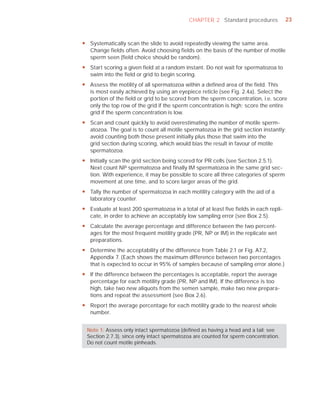
            stains the acrosomal and post-acrosomal regions of the head, excess residual
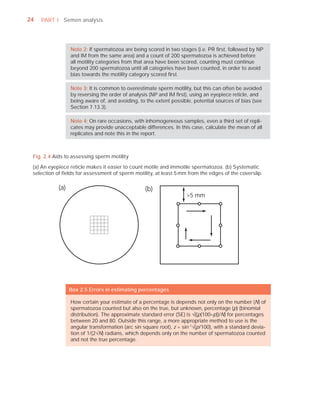
            cytoplasm, the midpiece and the principal piece. The modified staining technique
            described here has proved useful in the analysis of sperm morphology and in the
            examination of immature germ cells and non-sperm cells (see Plates 1–14). Rou-
            tine procedures have been modified to work without ether (as fixative) or xylene
            (for mounting) (ESHRE/NAFA, 2002) (see Section 2.14.2.4). Slides stained using
            the Papanicolaou procedure can be permanently mounted and stored for future
            use in internal quality control programmes. If stored in the dark, they should be
            stable for months or years.

            The following method was used to prepare the plates in this manual, from slides
            that were mounted in an ethanol-insoluble mountant.

      2.14.2.1 Reagents

            1. Papanicolaou constituent stains: commercially available or see Appendix 4,
               section A4.10.

            2. Acidic ethanol: add 1.0 ml of concentrated hydrochloric acid to 200 ml of
               70% (v/v) ethanol.

            3. Xylene:ethanol, 1 + 1 (1:2): mix equal parts of 100% ethanol and xylene.


              Note 1: Xylene is a health hazard and should be used in a fume cupboard.

              Note 2: Smears should be air-dried for at least 4 hours, but can be stored for up to
              1 week, before fixing and staining.
64   PART I Semen analysis


        2.14.2.2 Fixing the air-dried semen smear

             1. Immerse slides in 95% (v/v) ethanol for at least 15 minutes.

        2.14.2.3 Staining the fixed semen smear

             Sequentially immerse the slides in:

             1. Ethanol 80% (v/v)                      30 seconds
             2. Ethanol 50% (v/v)                      30 seconds
             3. Purified water                          30 seconds
             4. Harris’s haematoxylin                  4 minutes
             5. Purified water                          30 seconds
             6. Acidic ethanol                         4–8 dips*
             7. Running cold tap water                 5 minutes
             8. Ethanol 50% (v/v)                      30 seconds
             9. Ethanol 80% (v/v)                      30 seconds
             10. Ethanol 95% (v/v)                     At least 15 minutes
             11. G-6 orange stain                      1 minute
             12. Ethanol 95% (v/v)                     30 seconds
             13. Ethanol 95% (v/v)                     30 seconds
             14. Ethanol 95% (v/v)                     30 seconds
             15. EA-50 green stain                     1 minute
             16. Ethanol 95% (v/v)                     30 seconds
             17. Ethanol 95% (v/v)                     30 seconds
             18. Ethanol 100%                          15 seconds
             19. Ethanol 100%                          15 seconds

             *One dip corresponds to an immersion of about 1 second.


               Note 1: Ethanol fixation causes dehydration of the cells. Therefore smears taken
               directly from the fixation step in 95% ethanol to staining may need only 10 seconds
               in the 80% ethanol, whereas smears that have air-dried after fixation must remain
               longer (2–3 minutes) in the 50% ethanol.

               Note 2: In Step 6 above, start with 4 dips and continue until results are satisfactory.
               This is a critical step, as the duration of destaining dramatically alters the final stain
               intensity. If this step is omitted, spermatozoa and background will be dark. Increas-
               ing the number of dips will make spermatozoa and background fainter.

               Note 3: The slides can be viewed unmounted or mounted.
CHAPTER 2 Standard procedures             65


       2.14.2.4 Treating the stained semen smear before mounting

             There are two kinds of fluid for mounting the preparation: ethanol-soluble and
             ethanol-insoluble mountants.
             y Use ethanol-soluble mounting media directly on smears still moist with ethanol.
             y For ethanol-insoluble mounting media, take slides directly from step 19 above
               through the following steps (to be performed in a fume cupboard):

                1. Xylene:ethanol, 1 + 1 (1:2)     1 minute

                2. Xylene 100%                     1 minute

             Remove one slide at a time from the xylene staining container and allow it to drain
             for only 1–2 seconds, as the slide should be quite wet with xylene when mounting.

       2.14.2.5 Mounting the stained semen smears

             1. Add two or three small drops of mounting medium to the slide.

             2. Place a coverslip (24 mm × 50 mm or 24 mm × 60 mm are most convenient)
                directly on the smear.

             3. Position the coverslip so that contact with the mounting medium begins from
                one long side, in order to prevent air bubbles being trapped.

             4. If necessary, press gently on the top of the coverslip to help move bubbles to
                the edge of the slide.

             5. Wipe off excess xylene (if used) from underneath the slide.

             6. Allow the mounted smear to dry horizontally in a slide drying rack or on
                absorbant paper for 24 hours in a fume cupboard.

2.14.3 Shorr staining procedure for sperm morphology

             The Shorr stain provides similar percentages of normal forms as the Papanicolaou
             stain (Meschede et al., 1993).

       2.14.3.1 Reagents

             1. Harris haematoxylin: Papanicolaou No. 1.

             2. Shorr solution: buy readymade or prepare as follows. Dissolve 4 g of Shorr
                powder in 220 ml of warm 50% (v/v) ethanol. Allow to cool, add 2.0 ml of glacial
                acetic acid (in fume cupboard) and filter.

             3. Acetic ethanol: add 25 ml of glacial acetic acid to 75 ml of 95% (v/v) ethanol.

             4. Ammoniacal ethanol: add 5 ml of 25% (v/v) ammonium hydroxide to 95 ml of
                75% (v/v) ethanol.

       2.14.3.2 Fixing the air-dried semen smear

             Immerse slides in acetic ethanol or 75% (v/v) ethanol for 1 hour.
66   PART I Semen analysis


        2.14.3.3 Staining the fixed semen smear

             Sequentially immerse the slides in:

             1. Running tap water                     12–15 dips*

             2. Haematoxylin                          1–2 minutes

             3. Running tap water                     12–15 dips*

             4. Ammoniacal ethanol                    10 dips*

             5. Running tap water                     12–15 dips*

             6. Ethanol 50% (v/v)                     5 minutes

             7. Shorr stain                           3–5 minutes

             8. Ethanol 50% (v/v)                     5 minutes

             9. Ethanol 75% (v/v)                     5 minutes

             10. Ethanol 95% (v/v)                    5 minutes

             *One dip corresponds to an immersion of about 1 second.


               Note: The slides can be viewed unmounted or mounted.


        2.14.3.4 Mounting the stained semen smear

             See Sections 2.14.2.4 and 2.14.2.5.

 2.14.4 Rapid staining procedure for sperm morphology

             Rapid staining methods are particularly useful for clinical laboratories that need to
             provide results on the day of analysis. Several differential staining sets are avail-
             able (Kruger et al., 1987). Some smears stained by rapid procedures have high
             background staining and may be of lower quality than those stained with Papani-
             colaou stain.

        2.14.4.1 Reagents

             1. Diff-Quik rapid staining kit consisting of:

                     a)     fixative reagent (triarylmethane dye dissolved in methanol);
                     b)     staining solution 1 (eosinophilic xanthene);
                     c)     staining solution 2 (basophilic thiazine).

             2. Fixative: 1.8 mg of triarylmethane dissolved in 1000 ml of 95% (v/v) methanol,
                optional.

             3. Fixative: methanol 95% (v/v), optional.
CHAPTER 2 Standard procedures              67


       2.14.4.2 Fixing the air-dried semen smear

            Immerse slides in triarylmethane fixative (as provided in the Diff-Quik kit or
            prepared as above) for 15 seconds or 95% methanol alone for 1 hour. Drain the
            excess solution by placing slides vertically on absorbent paper.

      2.14.4.3 Staining the fixed semen smear

            Sequentially immerse the slides in:

            1. Rapid stain solution 1              10 seconds

            2. Rapid stain solution 2              5 seconds

            3. Running tap water                   10 to 15 times to remove excess stain
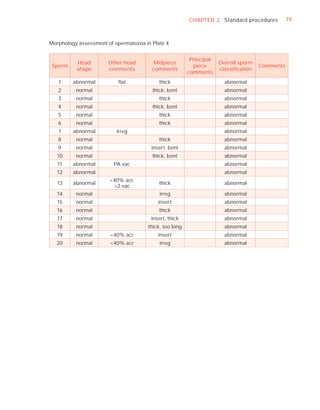
            Drain the excess solution at each step by placing slides vertically on absorbent
            paper.


              Note 1: The slides can be viewed unmounted or mounted.

              Note 2: If there is high background staining, an aliquot of the semen sample should
              be washed (see Section 2.13.2.4) and new slides prepared and stained. Washing
              may affect sperm morphology and its use must be recorded.


      2.14.4.4 Mounting the stained semen smear

            See Sections 2.14.2.4 and 2.14.2.5.


2.15 Examining the stained preparation
            With stained preparations, a ×100 oil-immersion brightfield objective and at least a
            ×10 eyepiece should be used. Clearer images are obtained when a fluid of similar
            refractive index (RI) to those of cells (approximately 1.5) and glass (1.50–1.58) is
            placed between the lens and the unmounted section or glass coverslip. This is
            usually immersion oil (RI 1.52). Mounting media have similar refractive indices
            (1.50–1.55: see Box 2.14).

2.15.1 Classification of normal sperm morphology

            Assessment of sperm morphology is associated with a number of difficulties relat-
            ed to lack of objectivity, variation in interpretation or poor performance in external
            quality-control assessments (see Section 7.13.2). The method recommended here
            is a simple normal/abnormal classification, with optional tallying of the location of
            abnormalities in abnormal spermatozoa. The criteria overpage should be applied
            when assessing the morphological normality of the spermatozoon (Kruger et al.,
            1986; Menkveld et al., 1990; Coetzee et al., 1998). The reference limit given (Sec-
            tion 2.17.3) is valid only when the technique described below is used.
68   PART I Semen analysis


             Spermatozoa consist of a head, neck, middle piece (midpiece), principal piece
             and endpiece. As the endpiece is difficult to see with a light microscope, the cell
             can be considered to comprise a head (and neck) and tail (midpiece and principal
             piece). For a spermatozoon to be considered normal, both its head and tail must
             be normal. All borderline forms should be considered abnormal.
             y The head should be smooth, regularly contoured and generally oval in shape.
               There should be a well-defined acrosomal region comprising 40–70% of the
               head area (Menkveld et al., 2001). The acrosomal region should contain no
               large vacuoles, and not more than two small vacuoles, which should not occu-
               py more than 20% of the sperm head. The post-acrosomal region should not
               contain any vacuoles.
             y The midpiece should be slender, regular and about the same length as the
               sperm head. The major axis of the midpiece should be aligned with the
               major axis of the sperm head. Residual cytoplasm is considered an anomaly
               only when in excess, i.e. when it exceeds one third of the sperm head size
               (Mortimer & Menkveld, 2001).
             y The principal piece should have a uniform calibre along its length, be thinner
               than the midpiece, and be approximately 45 Pm long (about 10 times the head
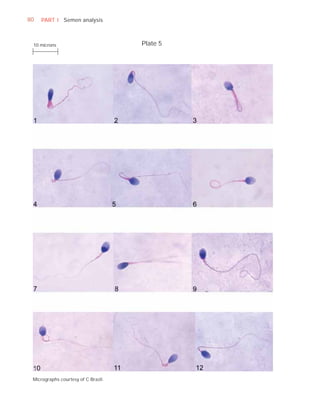
               length). It may be looped back on itself (see Fig. 2.10c), provided there is no
               sharp angle indicative of a flagellar break.


               Comment 1: With this technique, the form of the sperm head is more important
               than its dimensions, unless these are grossly abnormal.

               Comment 2: An eyepiece micrometer may be useful for distinguishing between
               normally and abnormally sized sperm heads.

               Comment 3: The head dimensions of 77 Papanicolaou-stained spermatozoa
               (stained by the procedure given in Section 2.14.2 and classified as normal by the
               criteria given here), measured by a computerized system (coefficient of variation
               for repeated measurements 2–7%) had the following dimensions: median length
               4.1 Pm, 95% CI 3.7–4.7; median width 2.8 Pm, 95% CI 2.5–3.2; median length-to-
               width ratio 1.5, 95% CI 1.3–1.8.

               Comment 4: The midpieces of 74 Papanicolaou-stained spermatozoa (stained
               by the procedure given in Section 2.14.2 and classified as normal by the criteria
               given here) and measured by the same computerized system had the following
               dimensions: median length 4.0 Pm, 95% CI 3.3–5.2; median width 0.6 Pm, 95% CI
               0.5–0.7.

               Comment 5: Coiled tails (>360°; see Fig. 2.13m) may indicate epididymal dysfunc-
               tion (Pelfrey et al., 1982).


             This assessment of normal sperm morphology can best be applied by learn-
             ing to recognize the subtle variations in shape of the entire spermatozoon (nor-
             mal/borderline sperm heads and tails; see Section 2.16, Plates 1–12 and their
             commentaries).
CHAPTER 2 Standard procedures             69


2.15.2 Classification of abnormal sperm morphology

            Human semen samples contain spermatozoa with different kinds of malformations.
            Defective spermatogenesis and some epididymal pathologies are commonly asso-
            ciated with an increased percentage of spermatozoa with abnormal shapes. The
            morphological defects are usually mixed. Abnormal spermatozoa generally have a
            lower fertilizing potential, depending on the types of anomalies, and may also have
            abnormal DNA. Morphological defects have been associated with increased DNA
            fragmentation (Gandini et al., 2000), an increased incidence of structural chromo-
            somal aberrations (Lee et al., 1996), immature chromatin (Dadoune et al., 1988) and
            aneuploidy (Devillard et al., 2002; Martin et al., 2003). Emphasis is therefore given
            to the form of the head, although the sperm tail (midpiece and principal piece) is
            also considered.

            The following categories of defects should be noted (see Fig. 2.13).
            y Head defects: large or small, tapered, pyriform, round, amorphous, vacuolated
              (more than two vacuoles or >20% of the head area occupied by unstained vac-
              uolar areas), vacuoles in the post-acrosomal region, small or large acrosomal
              areas (<40% or >70% of the head area), double heads, or any combination of
              these.
            y Neck and midpiece defects: asymmetrical insertion of the midpiece into the
              head, thick or irregular, sharply bent, abnormally thin, or any combination of
              these.
            y Principal piece defects: short, multiple, broken, smooth hairpin bends, sharply
              angulated bends, of irregular width, coiled, or any combination of these.
            y Excess residual cytoplasm (ERC): this is associated with abnormal spermato-
              zoa produced from a defective spermatogenic process. Spermatozoa charac-
              terized by large amounts of irregular stained cytoplasm, one third or more of
              the sperm head size, often associated with defective midpieces (Mortimer &
              Menkveld, 2001) are abnormal. This abnormal excess cytoplasm should not be
              called a cytoplasmic droplet (Cooper, 2005).


              Comment 1: Cytoplasmic droplets (membrane-bound vesicles on the midpiece at
              the head–neck junction) are normal components of physiologically functional hu-
              man spermatozoa. If swollen, they may extend along the length of the midpiece, as
              observed by phase-contrast, differential-interference-contrast and X-ray micros-
              copy of living cells in semen, cervical mucus and medium (Abraham-Peskir et al.,
              2002; Fetic et al., 2006).

              Comment 2: Cytoplasmic droplets are osmotically sensitive and are not well pre-
              served by routine air-drying procedures (Chantler & Abraham-Peskir, 2004; Cooper
              et al., 2004). They are not obvious in stained preparations, where they may appear
              as small distensions of the midpiece. Cytoplasmic droplets are less than one third
              the size of the sperm head in fixed and stained preparations (Mortimer & Menkveld,
              2001) and are not considered abnormal.
70   PART I Semen analysis


 Fig. 2.13 Schematic drawings of some abnormal forms of human spermatozoa


     A. Head defects

       (a)        (b)                 (c)                           (d)                 (e)           (f)
     Tapered    Pyriform             Round                       Amorphous           Vacuolated     Small
                                                                                                  acrosomal
                                 No
                                             Small                                                   area
                              acrosome


     B. Neck and midpiece defects                           C. Tail defects              D. Excess residual
                                                                                             cytoplasm
       (g)         (h)           (i)       (j)                (k)        (l)     (m)                (n)
      Bent     Asymmetrical     Thick     Thin               Short      Bent    Coiled       > one third head
      neck                    insertion


 Adapted from Kruger et al., 1993 and reproduced by permission of MQ Medical.


 2.16 Morphology plates 1–14
               All the micrographs in Plates 1–14 were assessed by strict application of the
               stringent morphological criteria presented above. The analysis of sperm mor-
               phology is subjective and particularly difficult to standardize, since it attempts to
               draw an artificial cut-off point between normal and abnormal cells, on the basis
               of a multitude of characteristics of sperm heads and tails. The plates that follow
               were assessed by a single expert, Dr Thinus Kruger. The assessments have been
               supplemented with additional comments to ensure consistency of notation of all
               abnormalities.

               Opposite each colour plate is a table describing the morphology assessment of
               each spermatozoon pictured. The table indicates whether the head shape is nor-
               mal or abnormal, provides details of head abnormalities other than shape, indi-
               cates whether the midpiece or principal piece is normal in form, and whether the
               spermatozoon can be considered normal overall. Other relevant remarks are listed
               under “comments”. The comments are further explained in Table 2.6.
CHAPTER 2 Standard procedures                   71


Table 2.6 Explanations used in commentaries to Plates 1–14

  <40% acr                   less than 40% of the sperm head is occupied by the acrosome
  >70% acr                   more than 70% of the sperm head is occupied by the acrosome
  >one third                 abnormal cytoplasm (more than one third of head size) (ERC)
  <one third                 normal cytoplasm (less than one third of head size) (CD)
  abnormal                   self-explanatory
  amorphous                  head shape (see Fig. 2.13d)
  bacilli                    bacteria
  bent                       unnaturally sharp angulation (see Figs 2.13g and j)
  coiled                     self-explanatory
  CD                         cytoplasmic droplet
  cytoplasm                  either excess residual cytoplasm or cytoplasmic droplet,
                             depending on size
  degenerating leukocyte     self-explanatory
  degenerating spermatid     self-explanatory
  defect                     self-explanatory
  double                     self-explanatory
  epithelial cell            from male duct system
  ERC                        excess residual cytoplasm (see Fig. 2.13n)
  flat                        base of sperm head not oval
  focus                      out of focus (not assessed)
  if PP OK                   not all the principal piece is seen in the micrograph (but if it were
                             normal, the spermatozoon would be considered normal)
  insert                     the site of insertion of the tail is to one side of the long axis of the head
  irreg                      irregular in outline
  looped                     tail bent back on itself
  macrophage                 phagocytic leukocyte
  monocyte                   agranular leukocyte
  spermatid                  immature germ cell
  no acro                    acrosome absent
  normal                     resembling those found in endocervical mucus
  not assessed               because of overlap or poor focus
  overlapping                heads obscured by tail
  PA vac                     vacuole in the post-acrosomal region
  pinhead                    not a spermatozoon; no chromatin present
  polymorph                  polymorphonuclear leukocyte
  pyriform                   head shape (see Fig. 2.13b)
  round                      head shape (see Fig. 2.13c)
  side view                  spermatozoon seen edge on
  small                      head size
  spermatid                  immature germ cell
  spermatocyte               immature germ cell
  tapered                    head shape (see Fig. 2.13a)
  thick                      self-explanatory
  too long                   self-explanatory
  vac                        vacuole
  >2 vac                     more than two vacuoles
72   PART I Semen analysis


                                     Plate 1
     10 microns


 Micrographs courtesy of C Brazil.
CHAPTER 2 Standard procedures       73


Morphology assessment of spermatozoa in Plate 1

                                                   Principal
          Head     Other head     Midpiece                     Overall sperm
 Sperm                                              piece                      Comments
          shape    comments      comments                      classification
                                                  comments
   1      normal                   normal                         normal        if PP OK
   2      normal                   normal                         normal        if PP OK
   3      normal                   normal                         normal        if PP OK
   4      normal                   normal                         normal        if PP OK
   5      normal                   normal                         normal        if PP OK
   6      normal                   normal                         normal        if PP OK
   7      normal                   normal                         normal        if PP OK
   8      normal                   normal                         normal        if PP OK
   9      normal                   normal                         normal        if PP OK
   10     normal                   normal                         normal        if PP OK
   11     normal                   normal                         normal        if PP OK
   12     normal                   normal                         normal        if PP OK
   13     normal                   normal                         normal        if PP OK
   14     normal                   normal                         normal        if PP OK
   15     normal                   normal                         normal        if PP OK
   16     normal                   normal                         normal        if PP OK
   17     normal                   normal                         normal        if PP OK
   18     normal                   normal                         normal        if PP OK
   19     normal                   normal                         normal        if PP OK
   20     normal                   normal                         normal        if PP OK
74   PART I Semen analysis


     10 microns
                                     Plate 2


 Micrographs courtesy of C Brazil.
CHAPTER 2 Standard procedures         75


Morphology assessment of spermatozoa in Plate 2

                                                   Principal
          Head      Other head     Midpiece                    Overall sperm
 Sperm                                              piece                      Comments
          shape     comments      comments                     classification
                                                  comments
   1     abnormal                    thick         double        abnormal
   2     abnormal                    irreg                       abnormal      side view
                                  bent, irreg,
   3     abnormal     pyriform                                   abnormal      >one third
                                     ERC
   4     abnormal                                                abnormal
   5     abnormal     pyriform                                   abnormal
   6     abnormal                                                abnormal
   7     abnormal                                                abnormal
   8     abnormal                    thick                       abnormal
   9     abnormal                    insert                      abnormal
   10    abnormal                                                abnormal
   11    abnormal                                                abnormal
   12    abnormal     pyriform                      bent         abnormal
                      >2 vac,
   13    abnormal                                                abnormal
                      PA vac
   14    abnormal                    thick                       abnormal
   15    abnormal     pyriform    thick, ERC                     abnormal      >one third
   16    abnormal     pyriform        ERC                        abnormal      >one third
   17     normal       PA vac                                    abnormal
   18    abnormal                 thick, insert                  abnormal
   19    abnormal                  abnormal                      abnormal
   20    abnormal                    thick                       abnormal
   21    abnormal                    thick                       abnormal
   22    abnormal                                                abnormal
   23    abnormal                                                abnormal
   24     normal       >2 vac        thick                       abnormal
   25    abnormal                 thick, bent                    abnormal
   26    abnormal                    thick                       abnormal
   27    abnormal    >70% acr        thick                       abnormal
   28    abnormal                    thick                       abnormal
   29    abnormal                    thick                       abnormal
   30    abnormal                    thick                       abnormal
   31    abnormal     pyriform       thick                       abnormal
   32    abnormal      small         thick                       abnormal
   33    abnormal      small         thick                       abnormal
   34    abnormal                    ERC                         abnormal      >one third
   35    abnormal                    thick                       abnormal
   36    abnormal                    thick                       abnormal
76    PART I Semen analysis


     10 microns
                                     Plate 3


 Micrographs courtesy of C Brazil.
CHAPTER 2 Standard procedures         77


Morphology assessment of spermatozoa in Plate 3


                                                     Principal
          Head        Other head      Midpiece                   Overall sperm
Sperm                                                 piece                      Comments
          shape       comments       comments                    classification
                                                    comments
   1     abnormal      tapered          thick                      abnormal
   2     abnormal                                                  abnormal
   3     abnormal                       irreg                      abnormal
   4     abnormal       round                                      abnormal
   5     abnormal       round                                      abnormal
   6     abnormal      tapered                                     abnormal
   7     abnormal      tapered                                     abnormal
   8     abnormal     amorphous         thick                      abnormal
   9     abnormal       round           thick                      abnormal
  10     abnormal      tapered       irreg, thick                  abnormal
  11        —                                                         —          two cells
  12     abnormal   >2 vac, PA vac                                 abnormal
  13     abnormal                                                  abnormal
  14      normal        PA vac                                     abnormal
  15        —                                                         —           pinhead
  16     abnormal        small                                     abnormal
  17     abnormal        large                                     abnormal
  18      normal                        thick                      abnormal
  19     abnormal                       thick                      abnormal
  20     abnormal       >2 vac         insert                      abnormal
  21      normal      >70% acr                                     abnormal
  22     abnormal     >70% acr                                     abnormal
  23     abnormal <40% acr, small                                  abnormal
  24     abnormal <40% acr. small                                  abnormal
  25     abnormal <40% acr, small                                  abnormal
  26     abnormal     >70% acr                                     abnormal
                     <40% acr, >2
  27     abnormal                       irreg                      abnormal
                         vac
  28      normal        >2 vac                                     abnormal
  29     abnormal      tapered                                     abnormal
  30     abnormal      tapered                                     abnormal
  31     abnormal      tapered                                     abnormal
  32      normal                        thick                      abnormal
  33      normal                        thick                      abnormal
  34     abnormal     <40% acr          thick                      abnormal
  35     abnormal                    thick, bent                   abnormal
  36        —                                                         —           pinhead
78   PART I Semen analysis


                                     Plate 4
     10 microns


 Micrographs courtesy of C Brazil.
CHAPTER 2 Standard procedures           79


Morphology assessment of spermatozoa in Plate 4


                                                         Principal
          Head         Other head        Midpiece                    Overall sperm
Sperm                                                     piece                      Comments
          shape        comments         comments                     classification
                                                        comments
   1     abnormal          flat             thick                       abnormal
   2      normal                        thick, bent                    abnormal
   3      normal                           thick                       abnormal
   4      normal                        thick, bent                    abnormal
   5      normal                           thick                       abnormal
   6      normal                           thick                       abnormal
   7     abnormal         irreg                                        abnormal
   8      normal                           thick                       abnormal
   9      normal                        insert, bent                   abnormal
   10     normal                        thick, bent                    abnormal
   11    abnormal        PA vac                                        abnormal
   12    abnormal                                                      abnormal
                       <40% acr,
   13    abnormal                          thick                       abnormal
                        >2 vac
   14     normal                           irreg                       abnormal
   15     normal                           insert                      abnormal
   16     normal                           thick                       abnormal
   17     normal                        insert, thick                  abnormal
   18     normal                      thick, too long                  abnormal
   19     normal        <40% acr           insert                      abnormal
  20      normal        <40% acr           irreg                       abnormal
80   PART I Semen analysis


 10 microns                          Plate 5


 Micrographs courtesy of C Brazil.
CHAPTER 2 Standard procedures        81


Morphology assessment of spermatozoa in Plate 5


                                                   Principal
          Head      Other head    Midpiece                     Overall sperm
Sperm                                               piece                      Comments
          shape     comments     comments                      classification
                                                  comments
   1     abnormal                   ERC                          abnormal      >one third
   2      normal                    bent           normal        abnormal
   3     abnormal    >70% acr                      looped        abnormal
   4      normal                    bent           normal        abnormal
   5      normal                    thick          looped        abnormal
   6     abnormal     PA vac                        coiled       abnormal
   7      normal                                                  normal
   8      normal                                   double        abnormal
   9     abnormal                                   coiled       abnormal
  10     abnormal                bent, insert       coiled       abnormal
  11      normal                    thick            bent        abnormal
  12      normal                    bent           normal        abnormal
82      PART I Semen analysis


     10 microns                      Plate 6


 Micrographs courtesy of C Brazil.
CHAPTER 2 Standard procedures               83


Morphology assessment of spermatozoa in Plate 6


                                                    Principal
          Head      Other head      Midpiece                    Overall sperm
Sperm                                                piece                         Comments
          shape     comments       comments                     classification
                                                   comments
   1      normal     <40% acr         thick         normal        abnormal
   2      normal                      thick                       abnormal
   3      normal                                                   normal
   4     abnormal                     thick                       abnormal
   5     abnormal     tapered                                     abnormal
                                                                                    abnormal
   6                                                            not classifiable
                                                                                  spermatozoon
   7     abnormal                     thick          coiled       abnormal
   8                                                                              epithelial cell
   9      normal                   thick, insert                  abnormal
   10    abnormal    <40% acr         thick                       abnormal
   11     normal                      thick                       abnormal
                                                                                  degenerating
   12
                                                                                  macrophage?
   13                                                                              polymorph
   14    abnormal     pyriform                                    abnormal
   15     normal                                                   normal
   16    abnormal    <40% acr                                     abnormal
   17    abnormal      round                        not seen      abnormal         free head?
   18    abnormal                     thick                       abnormal
   19     normal                                                   normal
   20     normal                                                   normal           If PP OK
   21    abnormal       fIat                                      abnormal
   22                                                                                 bacilli
   23     normal                      thick                       abnormal
   24     normal                      thick          coiled       abnormal
   25    abnormal    amorphous                                    abnormal
   26                                                                              spermatid
   27                                                                              polymorph
84   PART I Semen analysis


     10 microns                          Plate 7


     Micrographs courtesy of C Brazil.
CHAPTER 2 Standard procedures            85


Morphology assessment of spermatozoa in Plate 7

                                                    Principal
           Head       Other head       Midpiece                 Overall sperm
 Sperm                                               piece                       Comments
           shape      comments        comments                  classification
                                                   comments
   1       normal        2 vac                                     normal
   2       normal                                                  normal
   3       normal                       thick                     abnormal
   4       normal                                                  normal
   5       normal                                                  normal         if PP OK
   6       normal                       thick                     abnormal
   7       normal    vac on surface                                normal
   8       normal                         CD                       normal        <one third
   9      abnormal                    thick, ERC                  abnormal       >one third
   10      normal                                                  normal
   11      normal        PA vac                     looped        abnormal
   12      normal                                                  normal         if PP OK
   13      normal       PA vac                                    abnormal
   14      normal       PA vac                                    abnormal
   15     abnormal     <40% acr         thick                     abnormal
   16     abnormal     <40% acr                                   abnormal
   17      normal                                                  normal
   18      normal                                                  normal         if PP OK
   19      normal                       thick        short        abnormal
   20     abnormal                      thick                     abnormal
   21      normal        >2 vac                                   abnormal
   22     abnormal       round                                    abnormal
   23     abnormal       round                                    abnormal
   24      normal                                                  normal
                                                                                sperm head in
   25
                                                                                 cytoplasm?
   26      normal                                                  normal
   27      normal       no acro                      coiled       abnormal
   28      normal                                                  normal
   29     abnormal       round                                    abnormal
   30      normal        PA vac                                   abnormal
                        tapered,
   31     abnormal                                                abnormal
                         PA vac
   32      normal                                                  normal         if PP OK
   33      normal                                                  normal
   34      normal                                                  normal         If PP OK
   35     abnormal                      thick        bent         abnormal
   36      normal                                                  normal          if PP OK
   37      normal                                                  normal         if PP OK
   38     abnormal       round                                    abnormal
   39      normal                                                  normal
   40      normal                                                  normal
   41      normal                                                  normal
   42      normal                       thick                     abnormal
   43      normal      <40 % acr                                  abnormal
                                                                                     not
   44                 out of focus
                                                                                  assessed
   45     abnormal       round                                    abnormal
   46     abnormal       round                                    abnormal
   47      normal                                                  normal
   48      normal                                                  normal         if PP OK
86      PART I Semen analysis


     10 microns
                                         Plate 8


     Micrographs courtesy of C Brazil.
CHAPTER 2 Standard procedures         87


Morphology assessment of spermatozoa in Plate 8


                                                   Principal
          Head       Other head    Midpiece                    Overall sperm
 Sperm                                              piece                      Comments
          shape      comments     comments                     classification
                                                  comments
    1     normal                                   normal         normal
    2     normal       >2 vac                      normal        abnormal
    3    abnormal     tapered                                    abnormal
    4     normal                                   normal         normal
    5     normal                                                  normal
    6     normal                                                  normal        if PP OK
    7     normal                                                  normal        if PP OK
   8      normal                     thick                       abnormal
   9      normal                                                  normal
   10     normal                                                  normal
   11     normal       PA vac                                    abnormal
   12     normal                                                  normal
   13    abnormal                                                abnormal
   14     normal                                                  normal        if PP OK
   15    abnormal    amorphous                      defect       abnormal
   16     normal                                                  normal        If PP OK
   17    abnormal     >70% acr    thick, ERC                     abnormal      >one third
   18     normal                                                  normal
   19                                                                           pinhead
   20     normal                                                  normal
   21     normal       PA vac                                    abnormal
   22    abnormal     tapered     thick, ERC                     abnormal      >one third
   23    abnormal       flat          thick                       abnormal
   24     normal       >2 vac                                    abnormal
   25    abnormal      round                                     abnormal
   26     normal                     thick                       abnormal
   27     normal                     thick                       abnormal
                       >2 vac,
   28     normal                                                 abnormal
                      >70% acr
   29    abnormal                                                abnormal
   30     normal      >70% acr                                   abnormal
   31    abnormal      pyriform                                  abnormal
88   PART I Semen analysis


 10 microns
                                     Plate 9


 Micrographs courtesy of C Brazil.
CHAPTER 2 Standard procedures             89


Morphology assessment of spermatozoa in Plate 9


                                                          Principal
           Head        Other head        Midpiece                        Overall sperm
 Sperm                                                     piece                         Comments
           shape       comments         comments                         classification
                                                         comments
   1      abnormal                                          coiled         abnormal
   2                   overlapping                                                       not assessed
   3      abnormal      <40% acr                                           abnormal
   4       normal                                                           normal         if PP OK
   5       normal                                                           normal         if PP OK
   6       normal       >70% acr           insert                          abnormal
   7       normal                          insert                          abnormal
   8       normal       >70% acr           insert                          abnormal
   9      abnormal       PA vac                                            abnormal
   10      normal        >2 vac             thick                          abnormal
   11     abnormal                       thick, ERC                        abnormal       >one third
                                        thick, insert,
   12     abnormal                                                         abnormal       >one third
                                            ERC
   13      normal                                                           normal         if PP OK
   14     abnormal                          thick                          abnormal
   15      normal                                          normal           normal
   16     abnormal                                                         abnormal
                     tapered, 3 vac,
   17     abnormal                                                         abnormal
                         PA vac
   18      normal                                                           normal
   19     abnormal      vac >20%                                           abnormal
   20     abnormal       tapered                                           abnormal
   21      normal         PA vac                                           abnormal
   22     abnormal     amorphous                            bent           abnormal
   23     abnormal       tapered                           double          abnormal
   24     abnormal        PA vac                                           abnormal
   25      normal         >2 vac                                           abnormal
   26      normal                                                           normal         if PP OK
   27      normal                                                           normal
   28      normal                                                           normal         if PP OK
   29                  overlapping                                                       not assessed
   30                  overlapping                                                       not assessed
   31      normal                                                           normal         if PP OK
   32      normal                                                           normal         if PP OK
   33      normal                                                           normal         if PP OK
   34      normal                           thick        thick, coiled     abnormal
   35     abnormal    1 side not oval                                      abnormal
   36      normal       <40% acr                                           abnormal
   37                   overlapping                                                      not assessed
90   PART I Semen analysis


 10 microns
                                     Plate 10


 Micrographs courtesy of C Brazil.
CHAPTER 2 Standard procedures         91


Morphology assessment of spermatozoa in Plate 10
                                                    Principal
           Head       Other head     Midpiece                   Overall sperm
Sperm                                                piece                      Comments
           shape      comments      comments                    classification
                                                   comments
    1      normal                     insert                      abnormal
    2      normal                                                  normal         if PP OK
   3      abnormal     pyriform                                   abnormal
   4       normal                                                  normal
   5       normal                     thick                       abnormal
   6      abnormal     pyriform       ERC            bent         abnormal       >one third
   7       normal                                                  normal
   8       normal                                                  normal
   9       normal        3 vac                                    abnormal
   10     abnormal     tapered      thick, ERC                    abnormal       >one third
                       tapered,
   11     abnormal                                   bent         abnormal
                      <40% acr
  12                                                                             monocyte
  13                                                                             polymorph
  14                                                                             polymorph
  15                                                                             monocyte
  16      abnormal     tapered                                    abnormal
  17       normal                                                  normal         if PP OK
  18       normal                                                  normal
  19       normal                                                  normal
  20       normal                                                  normal         if PP OK
  21      abnormal    amorphous                                   abnormal
  22       normal                                                  normal         if PP OK
  23      abnormal     tapered        thick          bent         abnormal
  24                  overlapping                                               not assessed
  25      abnormal     tapered                                    abnormal
  26      abnormal    amorphous     thick, ERC                    abnormal       >one third
  27       normal                      thick                      abnormal
  28      abnormal    amorphous        thick                      abnormal
  29      abnormal      PA vac                                    abnormal
  30      abnormal                    thick                       abnormal
  31      abnormal                    thick          coiled       abnormal
  32       normal                     thick                       abnormal
  33                 overlapping                                                not assessed
  34                 overlapping                                                not assessed
                     amorphous,
  35      abnormal                    thick                       abnormal
                       no acro
  36       normal     <40% acr                                    abnormal
  37      abnormal     pyriform       thick         double        abnormal
  38       normal                                                  normal         if PP OK
  39       normal                     thick                       abnormal
  40      abnormal    <40% acr                                    abnormal
  41      abnormal                    thick          bent         abnormal
  42       normal                                                  normal         if PP OK
                       2 vac,
  43       normal                                                 abnormal
                      <40% acr
  44       normal                                                  normal
  45      abnormal                  thick, ECR                    abnormal       >one third
  46      abnormal                     thick                      abnormal
92    PART I Semen analysis


     10 microns
                                     Plate 11


 Micrographs courtesy of C Brazil.
CHAPTER 2 Standard procedures           93


Morphology assessment of spermatozoa in Plate 11

                                                     Principal
           Head        Other head       Midpiece                 Overall sperm
 Sperm                                                piece                      Comments
           shape       comments        comments                  classification
                                                    comments
   1     abnormal                         insert                   abnormal
   2     abnormal                         insert                   abnormal
   3      normal                           thick     looped        abnormal
   4      normal                                                    normal
                         >2 vac,
   5     abnormal                         thick                    abnormal
                        <40% acr
   6      normal                                     looped        abnormal
   7     abnormal                         insert                   abnormal
   8      normal                                     looped        abnormal
                        >70% acr,
   9     abnormal                                                  abnormal
                         tapered
   10    abnormal        tapered                                   abnormal
   11     normal                          thick                    abnormal
   12    abnormal        tapered                                   abnormal
   13     normal        <40% acr          thick                    abnormal
   14    abnormal        tapered       thick, ERC                  abnormal      >one third
   15    abnormal        tapered          thick                    abnormal
   16    abnormal        tapered                                   abnormal
   17    abnormal      amorphous          thick                    abnormal
   18     normal                                                    normal
   19     normal                                                   abnormal
   20    abnormal                                                  abnormal
   21    abnormal                                                  abnormal
   22     normal        >70% acr                     looped        abnormal
   23     normal                                                    normal
   24     normal                                                    normal
   25                                                                            polymorph
   26      normal                                                   normal
   27      normal                                                   normal
   28      normal       >70% acr                                   abnormal
   29                                                                            monocyte
   30                                                                            polymorph
   31                                                                            monocyte
   32                                                                            polymorph
   33                                                                            monocyte
94     PART I Semen analysis


     10 microns
                                     Plate 12


 Micrographs courtesy of C Brazil.
CHAPTER 2 Standard procedures         95


Morphology assessment of spermatozoa in Plate 12

                                                    Principal
           Head      Other head      Midpiece                   Overall sperm
 Sperm                                               piece                      Comments
           shape     comments       comments                    classification
                                                   comments
   1      normal      >70% acr                                    abnormal
   2     abnormal                                                 abnormal
   3     abnormal     >70% acr                                    abnormal
   4      normal                                                   normal         if PP OK
   5     abnormal                     thick                       abnormal
   6     abnormal     tapered                                     abnormal
   7                 not in focus       thick                                   not assessed
   8     abnormal                   thick, bent                   abnormal
                                                                                degenerating
   9
                                                                                 leukocyte
   10    abnormal                     thick                       abnormal
   11    abnormal       round                        coiled       abnormal
   12     normal                                                   normal
   13    abnormal      tapered         bent                       abnormal
   14    abnormal                     insert                      abnormal
   15                                                                            polymorph
   16    abnormal    amorphous                                    abnormal
   17    abnormal                                   coiled        abnormal
   18    abnormal                     thick          coiled       abnormal
   19     normal                                    double        abnormal
   20    abnormal                     thick                       abnormal
   21                overlapping                                                not assessed
   22    abnormal     pyriform                                    abnormal
   23     normal                                                   normal
   24    abnormal                                                 abnormal        pinhead
   25    abnormal    amorphous                       bent         abnormal
   26    abnormal    amorphous      thick, bent                   abnormal
   27     normal                       thick                      abnormal
   28     normal                                                   normal         if PP OK
   29    abnormal      tapered                                    abnormal
   30    abnormal       round                                     abnormal
   31     normal                       bent         overlap                     not assessed
   32     normal                    thick, bent                   abnormal
   33    abnormal                                                 abnormal
   34    abnormal                                                 abnormal
   35     normal                       bent                       abnormal
   36                                                                            polymorph
   37                                                                            polymorph
   38                                                                            polymorph
96     PART I Semen analysis


                                         Plate 13
     15 microns


     Micrographs courtesy of C Brazil.
CHAPTER 2 Standard procedures   97


Assessment of cells in Plate 13


  Cell      Cell type
     1      macrophage
     2      abnormal spermatozoon
     3      cytoplasm
     4      abnormal spermatozoon
     5      spermatocyte
     6      abnormal spermatozoon
     7      abnormal spermatozoon? Loose head on cytoplasm?
     8      cytoplasm
     9      dividing spermatid
    10      spermatocyte
    11      degenerating spermatid
    12      spermatid
    13      degenerating spermatid
    14      dividing spermatocyte
    15      cytoplasm
    16      degenerating spermatid
    17      dividing spermatocyte
    18      abnormal spermatozoon
    19      cytoplasm
    20      abnormal spermatozoon
    21      spermatid
    22      phagocytosing macrophage
    23      spermatocyte
    24      cytoplasm
98   PART I Semen analysis


 15 microns                          Plate 14


 Micrographs courtesy of C Brazil.
CHAPTER 2 Standard procedures              99


Assessment of cells in Plate 14


   Cell     Cell type
      1     macrophage
      2     abnormal spermatozoon
      3     (dividing) spermatid
      4     (dividing) spermatid
      5     cytoplasm
      6     not classifiable
      7     degenerating spermatid
      8     degenerating spermatid?
      9     degenerating spermatid
     10     degenerating spermatid
     11     macrophage
     12     degenerating spermatid
     13     degenerating spermatid
     14     degenerating spermatid
     15     degenerating spermatid
     16     macrophage


2.17 Analysing a sperm morphology smear
2.17.1 Assessment of normal sperm morphology

             It may be sufficient to determine the proportion of normal spermatozoa. With this
             morphology assessment paradigm, the functional regions of the spermatozoon
             are considered. It is unnecessary to distinguish all the variations in head size and
             shape or the various midpiece and principal piece defects.

             Morphological evaluation should be performed on every assessable spermatozo-
             on in several systematically selected areas of the slide, to prevent biased selection
             of particular spermatozoa.
             y Examine the slide using brightfield optics at ×1000 magnification with oil
               immersion.
             y Assess all spermatozoa in each field, moving from one microscopic field to
               another.
             y Evaluate at least 200 spermatozoa in each replicate, in order to achieve an
               acceptably low sampling error (see Box 2.5).
             y Tally the number of normal and abnormal spermatozoa with the aid of a labora-
               tory counter.
             y Repeat the assessment of at least 200 spermatozoa, preferably on the repli-
               cate slide, but alternatively on the same slide.
100 PART I Semen analysis


              y Compare the percentages of normal morphological forms from the two inde-
                pendent assessments.
              y Calculate the average and difference of the two percentages of normal forms
                from the replicate assessments.
              y Determine the acceptability of the difference from Table 2.1 or Fig. A7.2,
                Appendix 7. (Each shows the maximum difference between two percentages
                that is expected to occur in 95% of samples because of sampling error alone.)
              y If the difference between the percentages is acceptable, report the average
                percentage normal morphology. If the difference is too high, repeat the assess-
                ment on the same slides (see Box 2.6).
              y Report the average percentage of normal forms to the nearest whole number.


                Note 1: Assess only intact spermatozoa, defined as having a head and a tail (see
                Section 2.7.3), since only intact spermatozoa are counted for sperm concentration.
                Do not count immature germ (round) cells.

                Note 2: Do not assess overlapping spermatozoa and those lying with the head on
                edge; these cannot be analysed adequately. They should not be present in a good
                smear (see Section 2.13.2.1), but may occur when debris and a large amount of
                particulate material are present (such as in viscous semen: see Section 2.13.2.3).
                These samples should be washed (see Section 2.13.2.4) and the slides examined
                before staining.


 2.17.2 Worked examples

              Example 1. The percentages of spermatozoa with normal morphology in replicate
              counts of 200 spermatozoa are 18 and 9. The rounded average is 14% and the
              difference is 9%. From Table 2.1, it is seen that for an average of 14%, a differ-
              ence of up to 7% would be expected to occur by chance alone. As the observed
              difference exceeds this, the results are discarded and the slides reassessed in
              replicate.

              Example 2. The percentages of spermatozoa with normal morphology in replicate
              counts of 200 spermatozoa are 10 and 14. The rounded average is 12% and the
              difference is 4%. From Table 2.1, it is seen that for an average of 12%, a differ-
              ence of up to 7% would be expected to occur by chance alone. As the observed
              difference is less than this, the results are accepted and the mean value reported,
              namely 12% normal forms.

 2.17.3 Lower reference limit

              The lower reference limit for normal forms is 4% (5th centile, 95% CI 3.0–4.0).


                Comment: The total number of morphologically normal spermatozoa in the ejacu-
                late is of biological significance. This is obtained by multiplying the total number of
                spermatozoa in the ejaculate (see Section 2.8.7) by the percentage of normal forms.
CHAPTER 2 Standard procedures 101


2.17.4 Assessment of abnormal sperm morphology

            Categorizing all abnormal forms of spermatozoa may be of diagnostic or research
            benefit. If desired, note the nature of the defects and calculate the percentage of
            spermatozoa with defects of the head (%H), midpiece (%M) or principal piece
            (%P), and those with excess residual cytoplasm (%C).

            A multi-key counter can be used, with one key for normal, one for abnormal, and
            one for each of the four abnormal categories (H, M, P, C). Such a counter allows
            each spermatozoon to be counted only once, and each of its abnormalities to be
            scored separately.
            y From the final assessment of 400 spermatozoa, it is possible to obtain the
              percentage of normal and abnormal spermatozoa (the two figures should add
              up to 100%), as well as the percentage with each type of abnormality, i.e. %H,
              %M, %P and %C (these figures will not add up to 100%).
            y The percentage of spermatozoa in these abnormality classes is obtained by
              dividing the total number of abnormal spermatozoa with a specific defect by
              the total number of normal and abnormal spermatozoa scored ×100. These
              numbers can also be used to calculate multiple anomalies indices (see
              Section 3.1).

2.17.5 Worked example

            Example. Of 200 spermatozoa scored with a six-key counter for replicate 1, 42
            spermatozoa are scored as normal and 158 as abnormal. Of the 158 abnormal
            spermatozoa, 140 have head defects, 102 have midpiece defects, 30 have prin-
            cipal piece defects, and 44 have excess residual cytoplasm. Results from rep-
            licate 2 are 36 normal and 164 abnormal spermatozoa, of which 122 have head
            defects, 108 midpiece defects, 22 principal piece defects, and 36 excess residual
            cytoplasm.

            Only the normal category is compared for acceptability of replicates. Replicate 1
            has 21% normal sperm and replicate 2 has 18%. The mean of these values is
            19.5% (rounded up to 20%), and the difference 3%. From Table 2.1, it is seen that,
            for an average of 20%, a difference of up to 8% would be expected to occur by
            chance alone. As the observed difference is less than this, the results are accept-
            ed and the mean values reported: normal forms (42 + 36)/400 = 20%, abnormal
            heads (140 + 122)/400 = 66%, abnormal midpieces (102 + 108)/400 = 53%, abnor-
            mal principal pieces (30 + 22)/400 = 13%, and percentage with excess residual
            cytyoplasm (44 + 36)/400 = 20%.


              Note: These categories do not add up to 100% since each abnormality is tallied
              separately and some spermatozoa have multiple defects.

              Comment: A more detailed analysis of abnormal spermatozoa, with various indices
              combining the number of abnormalities in each region per abnormal spermatozoon,
              is given in Section 3.1.1.
102 PART I Semen analysis


 2.17.6 Assessment of specific sperm defects

             Occasionally, many spermatozoa will have a specific structural defect. For exam-
             ple, the acrosome may fail to develop, giving rise to the “small round-head defect”
             or “globozoospermia”. If the basal plate fails to attach to the nucleus at the oppo-
             site pole to the acrosome at spermiation, the heads are absorbed and only tails
             are found in semen (the pinhead defect).


               Note 1: Pinheads (free tails) are not counted as head defects, since they possess
               no chromatin or head structure anterior to the basal plate.

               Note 2: Because free tails (pinheads) and free heads are not counted as spermato-
               zoa (defined as having a head and tail, see Section 2.7.3), they are not considered
               to be sperm abnormalities.


             Men whose spermatozoa all display one of these defects are usually infertile. Such
             cases are rare, but it is critical that they are identified and correctly reported. Thus
             report the presence of specific sperm defects, e.g. free sperm heads, pinheads
             (free tails), heads lacking acrosomes.

             If there are many such defects, their prevalence relative to spermatozoa can be
             determined. If N is the number of cells with defects counted in the same number of
             fields as 400 spermatozoa, and S is the concentration of spermatozoa (106 per ml),
             then the concentration (C) of the defects (106 per ml) can be calculated from the
             formula C = S × (N/400).


 2.18 Assessment of leukocytes in semen
             Leukocytes, predominantly polymorphonuclear leukocytes (PMN, neutrophils),
             are present in most human ejaculates (Tomlinson et al., 1993; Johanisson et al.,
             2000). They can sometimes be differentiated from spermatids and spermatocytes
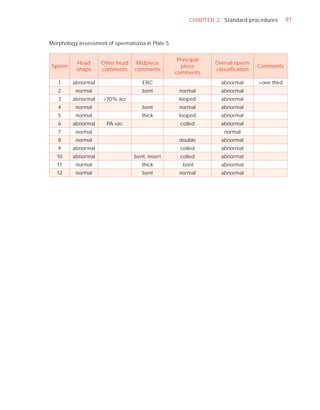
             in a semen smear stained with the Papanicolaou procedure (see Section 2.14.2).
             Differentiation is based on differences in staining coloration, and on nuclear size
             and shape (Johanisson et al., 2000) (see Plates 6, 10, 11, 12, 13 and 14). Polymor-
             phonuclear leukocytes can easily be confused morphologically with multinucle-
             ated spermatids, but stain a bluish colour, in contrast to the more pinkish colour
             of spermatids (Johanisson et al., 2000). Nuclear size may also help identification:
             monocyte nuclei exhibit a wide variation in size, from approximately 7 Pm for lym-
             phocytes to over 15 Pm for macrophages. These sizes are only guidelines, since
             degeneration and division affect the size of the nucleus.

             There are several other techniques for quantifying the leukocyte population in
             semen. As peroxidase-positive granulocytes are the predominant form of leuko-
             cytes in semen, routine assay of peroxidase activity is useful as an initial screening
             technique (Wolff, 1995; Johanisson et al., 2000) (see Section 2.18.1).

             Leukocytes can be further differentiated with more time-consuming and expen-
             sive immunocytochemical assays against common leukocyte and sperm antigens
             (Homyk et al., 1990; Eggert-Kruse et al., 1992) (see Section 3.2).
CHAPTER 2 Standard procedures 103


2.18.1 Staining cellular peroxidase using ortho-toluidine

             This test is quick and inexpensive, and is a useful initial screening for
             granulocytes.

       2.18.1.1 Principle

             Traditionally, leukocytes in human semen are counted after a histochemical proce-
             dure that identifies the peroxidase enzyme, which is characteristic of granulocytes
             (Fig. 2.14). This technique has the advantage of being relatively easy to perform,
             but it does not detect:
             y activated polymorphs which have released their granules;
             y other types of leukocyte, such as lymphocytes, macrophages and monocytes,
               which do not contain peroxidase.

             The test can be useful in distinguishing polymorphonuclear leukocytes from multi-
             nucleated spermatids, which are peroxidase-free (Johanisson et al., 2000). The
             assay below is based on Nahoum & Cardozo (1980). A kit for this is available
             commercially.

       2.18.1.2 Reagents

             1. Phosphate buffer, 67 mmol/l, pH 6.0: dissolve 9.47 g of sodium hydrogen phos-
                phate (Na 2HPO4 ) in 1000 ml of purified water and 9.08 g of potassium dihydro-
                gen phosphate (KH2PO4 ) in 1000 ml of purified water. Add one solution to the
                other (approximately 12 ml of Na 2HPO4 solution to 88 ml of KH 2PO4 solution)
                until the pH is 6.0.

             2. Saturated ammonium chloride (NH4Cl) solution: add 250 g of NH4Cl to 1000 ml
                of purified water.

             3. Disodium ethylenediamine tetra-acetic acid (Na 2EDTA) 148 mmol/l: dissolve
                50 g/l in phosphate buffer (pH 6.0) prepared in step 1.

             4. Substrate: dissolve 2.5 mg of o-toluidine in 10 ml of 0.9% (9 g/l) saline.

             5. Hydrogen peroxide (H2O2 ) 30% (v/v): as purchased.

             6. Working solution: to 9 ml o-toluidine substrate, add 1 ml of saturated NH4Cl
                solution, 1 ml of 148 mmol/l Na 2EDTA, and 10 Pl of 30% (v/v) H2O2 and mix well.
                This solution can be used up to 24 hours after preparation.


               Note: The International Agency for Research on Cancer (IARC, 1982) has stated
               that ortho-toluidine should be regarded, for practical purposes, as if it presented a
               carcinogenic risk to humans. Take suitable precautions (see Appendix 2).


       2.18.1.3 Procedure

             1. Mix the semen sample well (see Box 2.3).
104 PART I Semen analysis


            2. Remove a 0.1-ml aliquot of semen and mix with 0.9 ml of working solution
               (1 + 9 (1:10) dilution).

            3. Vortex the sperm suspension gently for 10 seconds and incubate at room tem-
               perature for 20–30 minutes. Alternatively, shake continuously with a tube-rocking
               system.

            4. Remix the semen sample before removing a replicate aliquot and mixing with
               working solution as above.

       2.18.1.4 Assessing peroxidase-positive cell number in the haemocytometer chambers

            1. After 20–30 minutes, mix the sperm suspensions again and fill each side of a
               haemocytometer with one of the replicate preparations.

            2. Store the haemocytometer horizontally for at least 4 minutes at room tempera-
               ture in a humid chamber (e.g. on water-saturated filter paper in a covered Petri
               dish) to prevent drying out and to allow the cells to settle.

            3. Examine the chamber with phase-contrast optics at ×200 or ×400
               magnification.

            4. Count at least 200 peroxidase-positive cells in each replicate, in order to
               achieve an acceptably low sampling error (see Box 2.7 and Table 2.2). Per-
               oxidase-positive cells are stained brown, while peroxidase-negative cells are
               unstained (see Fig. 2.14).

            5. Examine one chamber, grid by grid, and continue counting until at least 200
               peroxidase-positive cells have been observed and a complete grid has been
               examined. Counting must be done by complete grids; do not stop in the middle
               of a grid.

            6. Make a note of the number of grids assessed to reach at least 200 peroxidase-
               positive cells. The same number of grids will be counted from the other cham-
               ber of the haemocytometer.

            7. Tally the number of peroxidase-positive cells and grids with the aid of a labora-
               tory counter.

            8. Switch to the second chamber of the haemocytometer and perform the repli-
               cate count on the same number of grids as the first replicate, even if this yields
               fewer than 200 peroxidase-positive cells.

            9. Calculate the sum and difference of the two numbers of peroxidase-positive
               cells.

            10. Determine the acceptability of the difference from Table 2.5 or Fig. A7.1,
                Appendix 7. (Each shows the maximum difference between two counts that is
                expected to occur in 95% of samples because of sampling error alone.)

            11. If the difference is acceptable, calculate the concentration (see Section
                2.18.1.5). If the difference is too high, prepare two new dilutions and repeat
                the replicate count estimate (see Box 2.10).
CHAPTER 2 Standard procedures 105


              12. Report the average concentration of peroxidase-positive cells to two significant
                  figures.

              13. Calculate the total number of peroxidase-positive cells per ejaculate (see Com-
                  ments after Section 2.18.1.8).

Fig. 2.14 Peroxidase-positive and -negative cells in human semen

A peroxidase-positive granulocyte (P) (brown colour) and a peroxidase-negative round cell (N).
Scale bar 10 Pm.


Micrograph courtesy of TG Cooper.


       2.18.1.5 Calculation of the concentration of peroxidase-positive cells in semen

              The concentration of peroxidase-positive cells in semen is their number (N)
              divided by the volume of the total number (n) of grids examined for the replicates
              (where the volume of a grid is 100 nl), multiplied by the dilution factor.

              For a 1 + 9 (1:10) dilution, the concentration is C = (N/n) × (1/100) × 10 cells per nl =
              (N/n) × (1/10) cells per nl. Thus (N/n) is divided by 10 to obtain the concentration in
              peroxidase-positive cells per nl (106 cells per ml).

              When all nine grids in each chamber of the haemocytometer are assessed, the
              total number of peroxidase-positive cells can be divided by the total volume of
              both chambers (1.8 Pl), and multiplied by the dilution factor (10), to obtain the con-
              centration in cells per Pl (thousand cells per ml).


                Note: This procedure can be used to calculate round cell concentration when the
                total number of round cells counted (peroxidase-positive and -negative) is used for
                N in the calculation.
106 PART I Semen analysis


       2.18.1.6 Sensitivity of the method

             If there are fewer than 200 peroxidase-positive cells in the chamber, the sampling
             error will exceed 5%. When fewer than 400 peroxidase-positive cells are found
             in all grids of both chambers, report the sampling error for the number of cells
             counted (see Table 2.2).

             If fewer than 25 peroxidase-positive cells are counted in each chamber, the con-
             centration will be <277 000 cells per ml; this is the lower limit of quantification for
             a sampling error of 20% when all nine grids of the improved Neubauer chamber
             are assessed and a 1 + 9 (1:10) dilution is used (Cooper et al., 2006). Report the
             number of peroxidase-positive cells observed with the comment “Too few cells for
             accurate determination of concentration (<277 000/ml)”.


               Comment: The absence of peroxidase-positive cells from the aliquot examined
               does not necessarily mean that they are absent from the rest of the sample.


       2.18.1.7 Worked examples

             Example 1. With a 1 + 9 (1:10) dilution, replicate 1 is found to contain 60 peroxi-
             dase-positive cells in nine grids, while replicate 2 contains 90 peroxidase-positive
             cells in nine grids. The sum of the values (60 + 90) is 150 in 18 grids and the differ-
             ence (90–60) is 30. From Table 2.5 this is seen to exceed the difference expected
             by chance alone (24), so the results are discarded and new replicates are made.

             Example 2. With a 1 + 9 (1:10) dilution, replicate 1 is found to contain 204 peroxi-
             dase-positive cells in five grids, while replicate 2 contains 198 peroxidase-positive
             cells in five grids. The sum of the values (204 + 198) is 402 in 10 grids and the
             difference (204–198) is 6. From Table 2.5 this is seen to be less than that found by
             chance alone (39), so the values are accepted.

             The concentration of peroxidase-positive cells in the sample, for a 1 + 9 (1:10) dilu-
             tion, is C = (N/n) × (1/10) cells per nl or (402/10)/10 = 4.02 cells/nl, or 4.0 × 10 6 cells
             per ml (to two significant figures).

             Example 3. With a 1 + 9 (1:10) dilution, replicate 1 is found to contain 144 peroxi-
             dase-positive cells in nine grids, while replicate 2 contains 162 peroxidase-positive
             cells in nine grids. The sum of the values (144 + 162) is 306 in 18 grids and the
             difference (162–144) is 18. From Table 2.5 this is seen to be less than that found by
             chance alone (34), so the values are accepted.

             When all nine grids are assessed in each chamber, the concentration of the
             sample, for a 1 + 9 (1:10) dilution, is C = (N/1.8) × 10 cells per Pl = (306/1.8) × 10 =
             1700 cells per Pl or 1.7 × 10⁶ cells per ml (to two significant figures). As fewer than
             400 cells were counted, report the sampling error for 306 cells given in Table 2.2
             (approximately 6%).

             Example 4. With a 1 + 9 (1:10) dilution, no peroxidase-positive cells are found in
             either replicate. As fewer than 25 peroxidase-positive cells are found in all nine
             grids, the concentration is <277 000 per ml; report that “No peroxidase-positive
             cells were seen in the samples. Too few cells for accurate determination of con-
             centration (<277 000/ml)”.
CHAPTER 2 Standard procedures 107


     2.18.1.8 Reference value

          There is currently no reference range for peroxidase-positive cells in semen from
          fertile men. Pending additional evidence, this manual retains the consensus value
          of 1.0 × 10⁶ peroxidase-positive cells per ml as a threshold value.


            Comment 1: The total number of peroxidase-positive cells in the ejaculate may
            reflect the severity of an inflammatory condition (Wolff, 1995). This is obtained by
            multiplying the concentration of peroxidase-positive cells by the volume of the
            whole ejaculate.

            Comment 2: Reports of cut-off values for peroxidase-positive cells in fertile men
            vary from 0.5 × 10⁶ to 1.0 × 10⁶ PMN leukocytes per ml or from 1 × 10⁶ to 2 × 10⁶ total
            leukocytes per ml (Wolff, 1995). Previous editions of this manual have taken 1 × 10⁶
            leukocytes per ml as the threshold for leukocytospermia. Some have found this value
            too low (Wolff, 1995), while others consider it too high (Sharma et al., 2001; Punab
            et al., 2003), depending on the endpoint examined (semen quality, results of in-vitro
            fertilization, presence of bacteria, sperm response to reactive oxygen species).

            Comment 3: Excessive numbers of leukocytes in the ejaculate (leukocytospermia,
            pyospermia) may be associated with infection and poor sperm quality.

            Comment 4: Leukocyte-dependent damage to spermatozoa depends on the total
            leukocyte number in the ejaculate and the number of leukocytes relative to the
            number of spermatozoa.

            Comment 5: Leukocytes can impair sperm motility and DNA integrity through an
            oxidative attack (see Section 4.1). However, whether the level of leukocytic infiltra-
            tion observed is damaging depends on factors that are impossible to infer from a
            semen sample, such as the reason for, timing and anatomical location of the infiltra-
            tion, as well as the nature of the leukocytes involved and whether they are in an
            activated state (Tomlinson et al., 1993; Aitken & Baker, 1995; Rossi & Aitken, 1997).


2.19 Assessment of immature germ cells in semen
          Germ cells include round spermatids and spermatocytes, but rarely spermatogo-
          nia. They can be detected in stained semen smears, but may be difficult to distin-
          guish from inflammatory cells when the cells are degenerating.

          Spermatids and spermatocytes can usually be differentiated from leukocytes in
          a semen smear stained by the Papanicolaou procedure (Johanisson et al., 2000)
          (see Section 2.14.2). Identification can be based on staining coloration, nuclear
          size and shape (see Plates 6, 10, 11, 12, 13 and 14), absence of intracellular peroxi-
          dase (see Section 2.18), and lack of leukocyte-specific antigens (see Section 3.2).
          Multinucleated spermatids can easily be confused morphologically with polymor-
          phonuclear leukocytes but stain a pinkish colour, in contrast to the more bluish
          PMN leukocytes (Johanisson et al., 2000). Round spermatids may be identified
          with stains specific for the developing acrosome (Couture et al., 1976), lectins (see
          Section 4.4.1) or specific antibodies (Homyk et al., 1990; Ezeh et al., 1998).
108 PART I Semen analysis


            Nuclear size may also help in identification: spermatogonia (very rarely seen in
            semen) have a nucleus of approximately 8 Pm, spermatocytes have a nucleus
            of approximately 10 Pm, and spermatids have a nucleus of approximately 5 Pm.
            These sizes are only guidelines, since degeneration and division affect the size of
            the nucleus.


 2.20 Testing for antibody coating of spermatozoa
            If spermatozoa demonstrate agglutination (i.e. motile spermatozoa stick to each
            other head-to-head, tail-to-tail or in a mixed way) (see Section 2.4.4), the presence
            of sperm antibodies may be the cause.


              Comment 1: Sperm antibodies can be present without sperm agglutination; equally,
              agglutination can be caused by factors others than sperm antibodies.

              Comment 2: The mere presence of sperm antibodies is insufficient for a diagnosis
              of sperm autoimmunity. It is necessary to demonstrate that the antibodies interfere
              severely with sperm function; this is usually done by a sperm–mucus penetration
              test (see Section 3.3). Antibodies can also interfere with zona binding and the acro-
              some reaction.


            Anti-sperm antibodies (ASAs) in semen belong almost exclusively to two immu-
            noglobulin classes: IgA and IgG. IgM antibodies, because of their larger size, are
            rarely found in semen. IgA antibodies may have greater clinical importance than
            IgG antibodies (Kremer & Jager, 1980). Both classes can be detected on sperm
            cells or in biological fluids in related screening tests.
            y Tests for antibodies on spermatozoa (“direct tests”). Two direct tests are
              described here: the mixed antiglobulin reaction (MAR) test (for review see
              Bronson et al., 1984) and the immunobead (IB) test (Bronson et al., 1982;
              Clarke et al., 1982, 1985). The MAR test is performed on a fresh semen sample
              while the IB test uses washed spermatozoa. The results from the two tests do
              not always agree (MacMillan & Baker, 1987; Scarselli et al., 1987; Meinertz &
              Bronson, 1988; Hellstrom et al., 1989), but IB test results are well correlated
              with the results of the immobilization test that detects antibodies in serum. The
              experimental protocols for the IB and MAR tests vary, but for both the sperm/
              bead preparation is examined with a microscope. The beads adhere to the
              motile and immotile spermatozoa that have surface-bound antibodies; the per-
              centage of motile spermatozoa with bound beads is recorded.
            y Tests for anti-sperm antibodies in sperm-free fluids, i.e. seminal plasma, blood
              serum and solubilized cervical mucus (“indirect” tests). In these tests, the dilut-
              ed, heat-inactivated fluid suspected of containing ASAs is incubated with anti-
              body-free donor spermatozoa that have been washed free of seminal fluid. Any
              ASAs in the suspect fluid will bind specifically to the donor spermatozoa, which
              are then assessed in a direct test, as above. For reliable results, it is important
              to allow sufficient time for the sperm–antibody interaction, since it may take up
              to 10 minutes for the mixed agglutination to become visible. However, it should
              be borne in mind that sperm motility declines with time, and the tests depend
              on the presence of motile spermatozoa.
CHAPTER 2 Standard procedures 109


               Note 1: The two ASA tests described here are commercially available. Both depend
               on the presence of motile spermatozoa. If there are insufficient motile spermatozoa,
               indirect tests on seminal plasma or blood serum can be used.

               Note 2: Cytotoxic antibodies that kill all spermatozoa or inhibit sperm motility can-
               not be detected with these assays.


2.20.1 The mixed antiglobulin reaction test

             The mixed antiglobulin reaction (MAR) test is an inexpensive, quick and sensitive
             screening test (Rajah et al., 1992), but it provides less information than the direct
             immunobead test (see Section 2.20.2).

             In the MAR test, a “bridging” antibody (anti-IgG or anti-IgA) is used to bring the
             antibody-coated beads into contact with unwashed spermatozoa in semen bear-
             ing surface IgG or IgA. The direct IgG and IgA MAR tests are performed by mixing
             fresh, untreated semen separately with latex particles (beads) or treated red blood
             cells coated with human IgG or IgA. To the suspensions is added a monospecific
             anti-human-IgG or anti-human-IgA. The formation of mixed agglutinates between
             particles and motile spermatozoa indicates the presence of IgG or IgA antibodies
             on the spermatozoa. (Agglutination between beads serves as a positive control for
             antibody–antigen recognition.)

       2.20.1.1 Procedure

             1. Mix the semen sample well (see Box 2.3).

             2. Remove replicate aliquots of 3.5 Pl of semen and place on separate micro-
                scope slides.

             3. Include one slide with 3.5 Pl of ASA-positive semen and one with 3.5 Pl of ASA-
                negative semen as controls in each direct test. This semen should be from
                men with and without anti-sperm antibodies, respectively, as shown in previ-
                ous direct MAR tests. Alternatively, positive spermatozoa can be produced by
                incubation in serum known to contain antibodies (see Section 2.20.3).

             4. Add 3.5 Pl of IgG-coated latex particles (beads) to each droplet of test and
                control semen, and mix by stirring with the pipette tip.

             5. Add 3.5 Pl of antiserum against human IgG to each semen-bead mixture, and
                mix by stirring with the pipette tip.

             6. Cover the suspension with a coverslip (22 mm × 22 mm) to provide a depth of
                approximately 20 Pm (see Box 2.4).

             7. Store the slide horizontally for 3 minutes at room temperature in a humid
                chamber (e.g. on water-saturated filter paper in a covered Petri dish) to prevent
                drying out.

             8. Examine the wet preparation with phase-contrast optics at ×200 or ×400 mag-
                nification after 3 minutes and again after 10 minutes.
110 PART I Semen analysis


            9. Repeat the procedure using IgA- instead of IgG-coated beads and anti-IgA
               instead of anti-IgG antibodies.

       2.20.1.2 Scoring

            If spermatozoa have antibodies on their surface, the latex beads will adhere to
            them. The motile spermatozoa will initially be seen moving around with a few or
            even a group of particles attached. Eventually the agglutinates become so mas-
            sive that the movement of the spermatozoa is severely restricted. Sperm that do
            not have coating antibodies will be seen swimming freely between the particles.

            The goal of the assay is to determine the percentage of motile spermatozoa that
            have beads attached to them. A common problem occurs with NP spermatozoa
            that are close to beads, but are not attached. Whether the beads are bound can
            often be verified by lightly tapping the coverslip with a small pipette tip: the move-
            ment of beads in concert with active spermatozoa is indicative of positive binding.

            1. Score only motile spermatozoa and determine the percentage of motile sper-
               matozoa that have two or more latex particles attached. Ignore tail-tip binding.

            2. Evaluate at least 200 motile spermatozoa in each replicate, in order to achieve
               an acceptably low sampling error (see Box 2.5).

            3. Calculate the percentage of motile spermatozoa that has particles attached.

            4. Record the class (IgG or IgA) and the site of binding of the latex particles to the
               spermatozoa (head, midpiece, principal piece). Ignore tail-tip binding.


              Note 1: If 100% of motile spermatozoa are bead-bound at 3 minutes, take this as
              the test result; do not read again at 10 minutes.

              Note 2: If less than 100% of motile spermatozoa are bead-bound at 3 minutes,
              read the slide again at 10 minutes.

              Note 3: If spermatozoa are immotile at 10 minutes, take the value at 3 minutes as
              the result.


       2.20.1.3 Reference value

            There are currently no reference values for antibody-bound spermatozoa in the
            MAR test of semen from fertile men. Pending additional evidence, this manual
            retains the consensus value of 50% motile spermatozoa with adherent particles as
            a threshold value.


              Comment: Sperm penetration into the cervical mucus and in-vivo fertilization tend
              to be significantly impaired when 50% or more of the motile spermatozoa have an-
              tibody bound to them (Abshagen et al., 1998). Particle binding restricted to the tail
              tip is not associated with impaired fertility and can be present in fertile men (Chiu &
              Chamley, 2004).
CHAPTER 2 Standard procedures 111


2.20.2 The direct immunobead test

            This assay is more time-consuming than the MAR test but provides information
            about antibodies on spermatozoa that have been removed from possible masking
            components in seminal plasma.

            In the direct immunobead (IB) test, beads coated with covalently-bound rabbit
            anti-human immunoglobulins against IgG or IgA are mixed directly with washed
            spermatozoa. The binding of beads with anti-human IgG or IgA to motile sper-
            matozoa indicates the presence of IgG or IgA antibodies on the surface of the
            spermatozoa.

      2.20.2.1 Reagents

            1. Dulbecco’s glucose–phosphate-buffered saline (PBS)–bovine serum albumin
               (BSA) or Tyrode’s–BSA solution: see Appendix 4, sections A4.2 and A4.9.

            2. Buffer I: add 0.3 g of Cohn Fraction V BSA to 100 ml of Dulbecco’s PBS or
               Tyrode’s medium.

            3. Buffer II: add 5 g of Cohn Fraction V BSA to 100 ml of Dulbecco’s PBS or
               Tyrode’s medium.

            4. Filter all solutions through 0.45-Pm filters and warm to 25–35 °C before use.

      2.20.2.2 Preparing the immunobeads

            1. For each immunobead type (IgG, IgA), add 0.2 ml of stock bead suspension to
               10 ml of buffer I in separate centrifuge tubes.

            2. Centrifuge at 500g or 600g for 5–10 minutes.

            3. Decant and discard the supernatant from the washed immunobeads.

            4. Gently resuspend the beads in 0.2 ml of buffer II.

      2.20.2.3 Preparing the spermatozoa

            The amount of semen required for these assays is determined from the sperm con-
            centration and motility, as shown in Table 2.7.


Table 2.7 How much semen to use for an immunobead test
 Sperm concentration      Sperm motility     Volume of semen required
      (106 /ml)             (PR) (%)                    (ml)
        >50                    —                         0.2
       21–50                  >40                        0.4
       21–50                 <40>10                      0.8
       10–20                  >40                        1.0
       10–20                 <40>10                      2.0
        <10>5                  >10                       >2.0
112 PART I Semen analysis


            1. Mix the semen sample well (see Box 2.3).

            2. Transfer the required amount of semen to a centrifuge tube and make up to
               10 ml with buffer I.

            3. Centrifuge at 500g for 5–10 minutes.

            4. Decant and discard the supernatant from the washed spermatozoa.

            5. Gently resuspend the sperm pellet in 10 ml of fresh buffer I.

            6. Centrifuge again at 500g for 5–10 minutes.

            7. Decant and discard the supernatant.

            8. Gently resuspend the sperm pellet in 0.2 ml of buffer II.


              Note 1: Aliquots of more than 1.0 ml require three washings.

              Note 2: Samples with low sperm motility (e.g. 10% or less) may not provide clear-
              cut results. In this case, consider the indirect immunobead test (see Section 2.20.3).


       2.20.2.4 Procedure

            ASA-positive spermatozoa and ASA-negative spermatozoa should be included
            as controls in each test. Semen should be from men with and without anti-sperm
            antibodies, respectively, as detected in previous direct immunobead tests.

            1. Place 5 Pl of the washed sperm suspension being tested on a microscope
               slide.

            2. Prepare separate slides with 5 Pl of ASA-positive spermatozoa and 5 Pl of ASA-
               negative spermatozoa.

            3. Add 5 Pl of anti-IgG immunobead suspension beside each sperm droplet.

            4. Mix each anti-IgG immunobead and sperm droplet together by stirring with the
               pipette tip.

            5. Place a 22 mm × 22 mm coverslip over the mixed droplet to provide a depth of
               approximately 20 Pm (see Box 2.4).

            6. Store the slides horizontally for 3–10 minutes at room temperature in a humid
               chamber (e.g. on water-saturated filter paper in a covered Petri dish). Do not
               wait longer than 10 minutes before assessing the slides, since immunobead
               binding decreases significantly during incubation (Gould et al., 1994).

            7. Examine the slides with phase-contrast optics at ×200 or ×400 magnification.

            8. Score only motile spermatozoa that have one or more beads bound, as
               described in Section 2.20.1.2. Ignore tail-tip binding.

            9. Interpret the test as described in Section 2.20.1.3.

            10. Repeat the procedure using the anti-IgA immunobead suspension.
CHAPTER 2 Standard procedures 113


              Note: In order to ensure that all binding is assessed within 10 minutes, it is best to
              stagger the preparation of the slides.


      2.20.2.5 Reference value

            There are currently no reference values for antibody-bound spermatozoa in the IB
            test of semen from fertile men. Pending additional evidence, this manual retains
            the consensus value of 50% motile spermatozoa with adherent particles as a
            threshold value.


              Comment: The diagnosis of immunological infertility is made when 50% or more of
              the motile spermatozoa (progressive and non-progressive) have adherent particles
              (Barratt et al., 1992). Particle binding restricted to the tail tip is not associated with
              impaired fertility and can be present in fertile men (Chiu & Chamley, 2004).


2.20.3 The indirect immunobead test

            The indirect immunobead test is used to detect anti-sperm antibodies in heat-
            inactivated, sperm-free fluids (serum, testicular fluid, seminal plasma or brom-
            elain-solubilized cervical mucus). Antibody-free donor’s spermatozoa take up
            anti-sperm antibodies present in the tested fluid and are then assessed as in the
            direct immunobead test.

      2.20.3.1 Reagents

            See Section 2.20.2.1 (reagents for the direct IB test).

            If cervical mucus is to be tested, prepare 10 IU /ml bromelain, a broad-specificity
            proteolytic enzyme (EC 3.4.22.32) (see Box 2.2).

      2.20.3.2 Preparing the immunobeads

            See Section 2.20.2.2.

      2.20.3.3 Preparing the donor’s spermatozoa

            See Section 2.20.2.3.

      2.20.3.4 Preparing the fluid to be tested

            1. If testing cervical mucus, dilute 1 + 1 (1:2) with 10 IU/ml bromelain, stir with a
               pipette tip and incubate at 37 °C for 10 minutes. When liquefaction is complete,
               centrifuge at 2000g for 10 minutes. Use the supernatant immediately for test-
               ing, or freeze at –70 °C.

            2. Inactivate any complement in the solublized cervical mucus, serum, seminal
               plasma or testicular fluid by heating at 56 °C for 30–45 minutes.

            3. Dilute the heat-inactivated sample 1 + 4 (1:5) with buffer II (e.g. 10 Pl of the body
               fluid to be tested with 40 Pl of buffer II).
114 PART I Semen analysis


            4. Include known-positive and -negative samples, e.g. serum from men with and
               without anti-sperm antibodies, respectively, as detected in the indirect immu-
               nobead test, as controls in each indirect test. Men who have had a vasectomy
               can be a source of serum if positive (>50% motile spermatozoa with bead
               binding, excluding tail-tip binding).

       2.20.3.5 Incubating the donor’s spermatozoa with the fluid to be tested

            1. Mix 50 Pl of washed donor sperm suspension with 50 Pl of 1 + 4 (1:5) diluted
               fluid to be tested.

            2. Incubate at 37 °C for 1 hour.

            3. Centrifuge at 500g for 5–10 minutes.

            4. Decant and discard the supernatant.

            5. Gently resuspend the sperm pellet in 10 ml of fresh buffer I.

            6. Centrifuge again at 500g for 5–10 minutes.

            7. Decant and discard the supernatant.

            8. Repeat the washing steps 5, 6 and 7 above.

            9. Gently resuspend the sperm pellet in 0.2 ml of buffer II.

       2.20.3.6 Immunobead test

            1. Perform the IB test, as described in Section 2.20.2.4, with the fluid-incubated
               donor spermatozoa.

            2. Score and interpret the test as described in Sections 2.20.1.2 and 2.20.1.3.
115


CHAPTER 3                Optional procedures

             The tests described in this chapter are not necessary for routine semen analysis,
             but may be useful in certain circumstances for diagnostic or research purposes.


3.1 Indices of multiple sperm defects
             Morphologically abnormal spermatozoa often have multiple defects (of the head,
             midpiece or principal piece, or combinations of these defects). A detailed assess-
             ment of the incidence of morphological abnormalities may be more useful than
             a simple evaluation of the percentage of morphologically normal spermatozoa,
             especially in studies of the extent of damage to human spermatogenesis (Jouan-
             net et al., 1988; Auger et al., 2001). Recording the morphologically normal sper-
             matozoa, as well as those with abnormalities of the head, midpiece and principal
             piece, in a multiple-entry system gives the mean number of abnormalities per
             spermatozoon assessed.

             Three indices can be derived from records of the detailed abnormalities of the
             head, midpiece and principal piece in a multiple-entry system:
             y the multiple anomalies index (MAI) (Jouannet et al., 1988);
             y the teratozoospermia index (TZI) (Menkveld & Kruger, 1996; Menkveld et al., 2001);
             y the sperm deformity index (SDI) (Aziz et al., 1996, 2004).
             These indices have been correlated with fertility in vivo (MAI and TZI) (Jouannet
             et al., 1988; Menkveld et al., 2001; Slama et al., 2002) and in vitro (SDI) (Aziz et
             al., 1996), and may be useful in assessments of certain exposures or pathological
             conditions (Auger et al., 2001; Aziz et al., 2004).

3.1.1 Calculation of indices of multiple morphological defects

             Each abnormal spermatozoon is scored for defects of the head, midpiece and
             principal piece, and for the presence of excess residual cytoplasm (volume more
             than one third of the sperm head size). Laboratory cell counters can be used, with
             the number of entry keys adapted to the type of index being assessed. If a counter
             is not available, a simple score sheet can be used.
             y The MAI is the mean number of anomalies per abnormal spermatozoon. All the
               head, midpiece and principal piece anomalies are included in the calculation.
               The morphology criteria used for this analysis are from David et al. (1975), as
               modified by Auger & Eustache (2000), and differ from those presented in this
               manual (Sections 2.15.1 and 2.15.2).
             y The TZI is similar to the MAI, but a maximum of four defects per abnormal
               spermatozoon is counted: one each for head, midpiece, and principal piece
               and one for excess residual cytoplasm, whatever the real number of anomalies
               per abnormal spermatozoon. The morphological criteria given in this manual
               can be used.
116 PART I Semen analysis


                 y The SDI is the number of defects divided by the total number of spermatozoa
                   (not only the abnormal spermatozoa). It incorporates several categories of
                   head anomaly but only one for each midpiece and principal piece defect. The
                   morphological criteria given in this manual can be used.


 Table 3.1 Calculation of indices of multiple sperm defects


                                                                          MAI          TZI*           SDI
  Maximum value                                                                        4.00           3.00
  Denominator                                                        abnormal       abnormal       all sperm
                                                                      sperm          sperm
  (A) No. of spermatozoa counted                                          200          200            200
     normal spermatozoa (N)                                               46            46             46
     normal spermatozoa (%)                                               23            23             23
  (B) No. of spermatozoa with defects (200–46)                            154          154            154
  (1) No. of head defects (MAI, SDI) or number of
                                                                          284          154            212
      spermatozoa with >1 head defect (TZI)
  (2) No. of midpiece defects (MAI) or number of
                                                                          54            52             52
      spermatozoa with >1 midpiece defect (TZI, SDI)
  (3) No. of principal piece defects (MAI) or number of
                                                                          54            46             46
      spermatozoa with >1 principal piece defect (TZI, SDI)
  (4) No. of spermatozoa with excess residual cytoplasm                   14            14             14
  (C) Total defects MAI: (1) + (2) + (3) = (C)                            392
  (D) Total defects TZI, SDI: (1) + (2) + (3) + (4) = (D)                              266            324
  Index calculation                                                       C/B          D/B            D/A
  Index value                                                             2.55         1.72           1.62

 *This description of the TZI is in accordance with that in the original paper (Menkveld et al., 2001) and the
 manual of the European Society of Human Reproduction and Embryology (ESHRE) and the Nordic Association
 for Andrology (NAFA) (ESHRE/NAFA, 2002), which give values ranging from 1 to 4. This is different from the
 description in the previous edition of this manual (WHO, 1999), in which excess residual cytoplasm was consid-
 ered a midpiece defect, and which gave TZI values ranging from 1 to 3.

 3.1.2. Worked example

                 Example. Of 200 spermatozoa scored with a six-key counter for replicate 1, 42
                 were scored as normal and 158 as abnormal. Of the 158 abnormal spermatozoa,
                 140 had head defects, 102 midpiece defects, 30 principal piece defects, and 44
                 excess residual cytoplasm. Results from replicate 2 were: 36 normal and 164
                 abnormal, of which 122 had head defects, 108 midpiece defects, 22 principal
                 piece defects, and 36 excess residual cytoplasm. To determine the TZI, divide the
                 total number of defects determined (140 + 102 + 30 + 44 + 122 + 108 + 22 + 36 = 604
                 abnormalities) by the number of abnormal spermatozoa (158 + 164 = 322), i.e.
                 TZI = 604/322 = 1.88.
CHAPTER 3 Optional procedures 117


                  Table 3.2 presents values for MAI and TZI for men attending infertility clinics and
                  men who had fathered a child within the last 3 years.


Table 3.2 Sperm defect indices for men from fertile and infertile couples

                                    Infertile couples                     Fertile couples
                              MAI1                 TZI2             MAI3                TZI2
    Mean                      1.94                 1.81             1.58                1.51
    SD                        0.37                 0.3              0.2                 0.2
    Minimum                   1.12                 1.26             1.04                1.17
    Maximum                   3.9                  2.64             2.38                2.07
    Centiles
         5                    1.44                                  1.27
         10                   1.51                 1.74             1.34                1.33
         25                   1.67                                  1.44
         50                   1.88                 1.81             1.58                1.54
         75                   2.14                                  1.72
         90                   2.44                                  1.86
         95                   2.65                                  1.94
    N                         4930                 103              994                 107
1
 Unpublished data from J Auger, Paris, using David morphological classification (David et al., 1975,
modified by Auger & Eustache, 2000).
2
    Menkveld et al., 2001.
3
 Jørgensen et al., 2001, using David morphological classification (David et al., 1975; modified by
Auger & Eustache, 2000).


3.2 Panleukocyte (CD45) immunocytochemical staining
                  Polymorphonuclear leukocytes that have released their granules, and other spe-
                  cies of leukocyte, such as lymphocytes, macrophages or monocytes, which do not
                  contain peroxidase, cannot be detected by the o-toluidine test for cellular peroxidase
                  (see Section 2.18.1), but can be detected by immunocytochemical means. Immu-
                  nocytochemical staining is more expensive and time-consuming than assessing
                  granulocyte peroxidase activity, but is useful for distinguishing between leuko-
                  cytes and germ cells.

3.2.1 Principle

                  All classes of human leukocytes express a specific antigen (CD45) that can be
                  detected with an appropriate monoclonal antibody. By changing the nature of the
                  primary antibody, this general procedure can be adapted to allow detection of dif-
                  ferent types of leukocyte, such as macrophages, monocytes, neutrophils, B-cells
                  or T-cells, should they be the focus of interest.
118 PART I Semen analysis


 3.2.2 Reagents

             1. Dulbecco’s phosphate-buffered saline (DPBS): see Appendix 4, section A4.2.

             2. Tris-buffered saline (TBS), pH 8.2; see Appendix 4, section A4.8.

             3. Tetramisole-HCl (levamisole) 1.0 mol/l: dissolve 2.4 g levamisole in 10 ml of puri-
                fied water.

             4. Substrate: to 9.7 ml of TBS (pH 8.2) add 2 mg of naphthol AS-MX phosphate,
                0.2 ml of dimethylformamide and 0.1 ml of 1.0 mol/l levamisole. Just before use,
                add 10 mg of Fast Red TR salt and filter (0.45-Pm pore size).

             5. Fixative: acetone alone or acetone/methanol/formaldehyde: to 95 ml of acetone
                add 95 ml of absolute methanol and 10 ml of 37% (v/v) formaldehyde.

             6. Primary antibody: a mouse monoclonal antibody against the common leuko-
                cyte antigen, encoded CD45.

             7. Secondary antibody: anti-mouse rabbit immunoglobulins.The dilution used will
                depend on the antibody titre and source.

             8. Alkaline phosphatase–anti-alkaline phosphatase complex (APAAP).

             9. Harris’s haematoxylin staining mixture (as counterstain): see Appendix 4,
                section A4.10.

 3.2.3 Procedure

       3.2.3.1 Preparing the semen

             1. Mix the semen sample well (see Box 2.3).

             2. Mix an aliquot of approximately 0.5 ml with five volumes of DPBS.
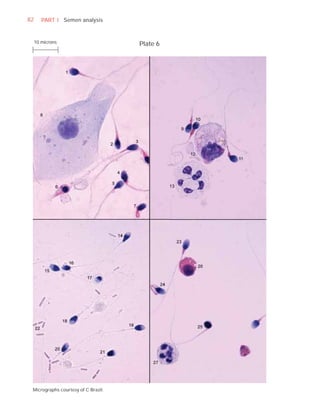
             3. Centrifuge at 500g for 5 minutes, remove the supernatant and suspend the
                sperm pellet in five times its volume of DPBS.
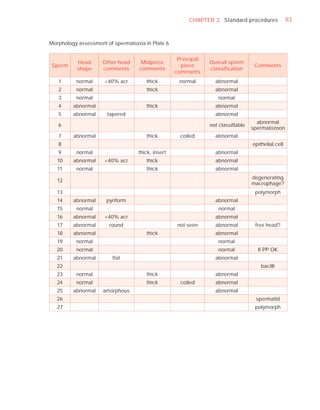
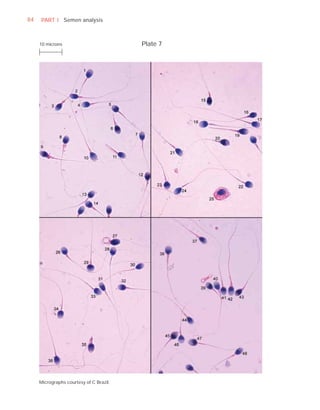
             4. Centrifuge at 500g for 5 minutes.

             5. Repeat this procedure once more and resuspend the pellet in DPBS to approx-
                imately 50 × 106 spermatozoa per ml.

       3.2.3.2 Preparing the sperm smears

             1. Make replicate smears on clean glass slides (see Section 2.13.2) from 5-Pl
                aliquots of the suspension and allow them to air-dry.

             2. Fix the air-dried cells in absolute acetone for 10 minutes or in acetone/ethanol/
                formaldehyde for 90 seconds.

             3. Wash twice with TBS and allow the slides to drain.

             4. The slides can then be stained immediately or wrapped in aluminium foil and
                stored at –70 °C for later analysis.
CHAPTER 3 Optional procedures 119


3.2.3.3 Incubating with antibodies

      1. On each slide, mark an area of fixed cells (a circle of about 1 cm diameter) with
         a grease pencil (delimiting pen) and cover the area with 10 Pl of primary mono-
         clonal antibody.

     2. Store the slide horizontally for 30 minutes at room temperature in a humid
        chamber (e.g. on water-saturated filter paper in a covered Petri dish) to prevent
        drying out.

     3. Wash the slides twice with TBS and allow them to drain.

     4. Cover the same area of the smear with 10 Pl of secondary antibody and incu-
        bate for 30 minutes in a humid chamber at room temperature.

     5. Wash twice with TBS and allow the slides to drain.

     6. Add 10 Pl of APAAP to the same area.

     7. Incubate for 1 hour in a humid chamber at room temperature.

     8. Wash twice in TBS and allow the slides to drain.

     9. Incubate with 10 Pl of naphthol phosphate substrate for 20 minutes in a humid
        chamber at room temperature.


        Note: In order to intensify the reaction product, staining with the secondary anti-
        body and APAAP can be repeated, with a 15-minute incubation period for each
        reagent.


3.2.3.4 Counterstaining and mounting

      1. Once the slides have developed a reddish colour, wash with TBS.

      2. Counterstain for a few seconds with haematoxylin; wash in tap water and
         mount in an aqueous mounting medium (see Sections 2.14.2.4 and 2.14.2.5).

3.2.3.5 Assessing CD45-positive cell numbers

      1. Examine the entire stained area of the slide with brightfield optics at ×200 or
         ×400 magnification. CD45-positive cells (leukocytes) are stained red (see
         Fig. 3.1).

      2. Score separately CD45-positive cells and spermatozoa until at least 200 sper-
         matozoa have been observed in each replicate, in order to achieve an accept-
         ably low sampling error (see Box 2.7 and Table 2.2).

      3. Tally the number of CD45-positive cells and spermatozoa with the aid of a
         laboratory counter.

      4. Assess the second smear in the same way (until 200 spermatozoa have been
         counted).
120 PART I Semen analysis


                5. Calculate the sum and difference of the two counts of CD45-positive cells.

                6. Determine the acceptability of the difference from Table 2.5 or Fig. A7.1;
                   Appendix 7. (Each shows the maximum difference between two counts that is
                   expected to occur in 95% of samples because of sampling error alone.)

                7. If the difference is acceptable, calculate the concentration (see Section
                   3.2.3.6). If the difference is too high, reassess the slides in replicate (see
                   Box 2.10).

                8. Report the average concentration of CD45-positive cells to two significant
                   figures.

                9. Calculate the total number of CD45-positive cells per ejaculate (see Comment
                   after Section 3.2.3.9).

         3.2.3.6 Calculation of the concentration of CD45-positive cells in semen

                The concentration of CD45-positive cells is calculated relative to that of sperma-
                tozoa on the slide. If N is the number of CD45-positive cells counted in the same
                number of fields as 400 spermatozoa, and S is the concentration of spermatozoa
                (106 per ml), then the concentration (C) of CD45-positive cells (106 per ml) can be
                calculated from the formula C = S × (N/400).


  Fig. 3.1 Leukocytes in semen

  CD45-bearing cells (leukocytes) are stained red.


  Micrograph courtesy of RJ Aitken.
CHAPTER 3 Optional procedures 121


3.2.3.7 Sensitivity of the method

      If there are fewer CD45-positive cells than spermatozoa in the sample (i.e. <400),
      the sampling error will exceed 5%. In this case, report the sampling error for the
      number of cells counted (see Table 2.2).

      If fewer than 25 CD45-positive cells are counted, report the number of CD45-
      positive cells observed with the comment “Too few for accurate determination of
      concentration”.

3.2.3.8 Worked examples

      Example 1. In replicate 1 there are 20 CD45-positive cells per 200 spermatozoa,
      while in replicate 2 there are 40 CD45-positive cells per 200 spermatozoa. The
      sum of the values (20 + 40) is 60 and the difference (40–20) is 20. From Table 2.5
      this is seen to exceed the difference expected by chance alone (15), so the results
      are discarded and new assessments are made.

      Example 2. In replicate 1 there are 25 CD45-positive cells per 200 spermatozoa
      and in replicate 2 there are 35 CD45-positive cells per 200 spermatozoa. The sum
      of the values (25 + 35) is 60 and the difference (35–25) is 10. From Table 2.5 this is
      seen to be less than that found by chance alone (15), so the values are accepted.

      For 60 CD45-positive cells per 400 spermatozoa and a sperm concentration of
      70 × 106 cells per ml, the CD45-positive cell concentration is C = S × (N/400) cells
      per ml = 70 × 106 × (60/400) = 10.5 × 10⁶ cells per ml, or 10 × 106 cells per ml (to two
      significant figures). As fewer than 400 cells were counted, report the sampling
      error for 60 cells given in Table 2.2 (approximately 13%).

3.2.3.9 Reference value

      There are currently no reference values for CD45-positive cells in semen from
      fertile men. The consensus threshold value of 1.0 × 10⁶ cells per ml for peroxidase-
      positive cells (see Section 2.18.1.8) implies a higher concentration of total leuko-
      cytes, since not all leukocytes are peroxidase-positive granulocytes.


        Comment: The total leukocyte number (total number of leukocytes in the ejaculate)
        may reflect the severity of an inflammatory condition (Wolff, 1995). The total number
        of CD45-positive cells in the ejaculate is obtained by multiplying the CD45-positive
        cell concentration by the total volume of the ejaculate.
122 PART I Semen analysis


 3.3 Interaction between spermatozoa and cervical mucus
               Cervical mucus is receptive to spermatozoa for a limited time during the menstrual
               cycle (at mid-cycle), when the estrogen-influenced mucus favours sperm penetra-
               tion. The length of time during which spermatozoa can penetrate cervical mucus
               varies considerably among women, and may vary in the same individual from one
               cycle to another.


                 Note: See Appendix 5 for details of collection, storage and evaluation of the char-
                 acteristics of cervical mucus.

                 Comment: When a man cannot provide a semen sample, the postcoital test (see
                 Section 3.3.1) can provide some information about his spermatozoa.


 3.3.1 In-vivo (postcoital) test

         3.3.1.1 Purpose

               The aims of a postcoital test are to determine the number of active spermatozoa in
               the cervical mucus and to evaluate sperm survival (Sobrero & MacLeod, 1962) and
               sperm behaviour some hours after coitus (the reservoir role of mucus) (Moghissi,
               1976). This information may be used to assess the significance of a positive sperm
               antibody test in the male or female partner.

         3.3.1.2 Timing

               Postcoital tests should be performed as close as possible to, but before, the time
               of ovulation, as determined by clinical criteria, e.g. usual cycle length, basal body
               temperature, cervical mucus changes, vaginal cytology, serum or urinary luteiniz-
               ing hormone or estrogen assays, and ovarian ultrasound examination. It is impor-
               tant that the mucus is evaluated in the laboratory at a standard time—between 9
               and 14 hours after coitus.

         3.3.1.3 Instructions for couples

               In preparation for the postcoital test, the couples should be told the most suitable
               day for the test, and be instructed:

               1. to abstain from intercourse, and the man from masturbation, for 2 days before
                  the test;

               2. to have vaginal intercourse the night before the test date;

               3. to not use any vaginal lubricants during intercourse and the woman should not
                  douche after intercourse (taking a shower, but not a full bath, is permitted);

               4. that the woman should report to the clinic for the test the following morning.
CHAPTER 3 Optional procedures 123


3.3.1.4 Procedure

     1. Insert a non-lubricated speculum into the vagina.

     2. With a tuberculin syringe (without needle), pipette or polyethylene tube,
        aspirate as much as possible of the seminal fluid pool in the posterior vaginal
        fornix.

     3. With a different syringe or catheter, aspirate as much mucus as possible from
        the endocervical canal.

     4. Place the mucus sample on a slide and flatten it by applying a coverslip
        (22 mm × 22 mm). The depth of this preparation can be standardized by sup-
        porting the coverslip with silicone grease or a wax–petroleum jelly mixture (see
        Box 3.1) containing glass beads of 100 Pm diameter (Drobnis et al., 1988).

     5. Examine the preparation with phase-contrast optics at ×400 magnification.


       Note: For reliable results it is crucial that the mucus sample is of good quality and
       free of blood contaminants.


       Box 3.1 Preparation of a wax–petroleum jelly mixture

       Prepare a wax–petroleum jelly mixture ahead of time. It can be stored at room tem-
       perature until ready for use. Melt wax (48–66 °C melting point) in a beaker and mix
       in petroleum jelly (approximately one part wax to two parts jelly) with a glass rod.
       Once the mixture is homogeneous, let it cool down slightly. While it is still warm,
       draw it into a 3-ml or 5-ml syringe (without a needle). Once the mixture has solidi-
       fied, load the syringe with an 18-gauge, blunt-end needle.


3.3.1.5 The vaginal pool semen sample

     Spermatozoa are usually killed in the vagina within 2 hours. Examine a wet prepa-
     ration of the vaginal pool sample (see Section 2.4.2) to ensure that semen has
     been deposited in the vagina.

3.3.1.6 The cervical mucus sample

     The number of spermatozoa in the lower part of the cervical canal depends on
     the length of time since intercourse. Some 2–3 hours after coitus there is a large
     accumulation of spermatozoa in the lower part of the cervical canal.

     The estimate of the number of spermatozoa in the cervical mucus is traditionally
     based on the number counted per high-power microscope field (see Box 3.2).
     The concentration of spermatozoa within the mucus should be expressed as the
     number of spermatozoa per Pl.
124 PART I Semen analysis


              Box 3.2 Volume observed per high-power field in a 100-Pm-deep mucus preparation

               The volume of mucus in each microscope field depends on the area of the field
               (Sr2, where S is approximately 3.142 and r is the radius of the microscope field) and
               the depth of the chamber (here 100 Pm). The diameter of the microscope field can
               be measured with a stage micrometer or can be estimated by dividing the diameter
               of the aperture of the ocular lens by the magnification of the objective lens.
               With a ×40 objective and a ×10 ocular of aperture 20 mm, the microscope field
               has a diameter of approximately 500 Pm (20 mm/40). In this case r = 250 Pm, r2 =
               62 500 Pm2, Sr2 = 196 375 Pm2 and the volume is 19 637 500 Pm3 or about 20 nl.


             Thus, a count of 10 spermatozoa per ×400 HPF in a 100-Pm-deep preparation is
             equivalent to approximately 10 spermatozoa per 20 nl of mucus or 500 spermatozoa
             per Pl. However, as the total number of cells counted is low, the sampling error is
             high. Report the sampling error for 10 cells given in Table 2.2 (approximately 32%).
             Sperm motility in cervical mucus is graded as follows:
             y PR = progressive motility;
             y NP = non-progressive motility;
             y IM = immotile spermatozoa.
             The most important indicator of normal cervical function is the presence of any
             spermatozoa with progressive motility.

       3.3.1.7 Interpretation
             y The test is negative if no spermatozoa are found in the mucus.
             y The presence of any spermatozoa with progressive motility in endocervical
               mucus 9–14 hours after intercourse argues against significant cervical factors,
               and sperm autoimmunity in the male or female, as possible causes of infertility
               (Oei et al., 1995).
             y When NP spermatozoa exhibiting a shaking phenomenon are seen, there may
               be sperm antibodies either in the mucus or on the spermatozoa.


               Note: If the initial result is negative or abnormal, the postcoital test should be
               repeated.

               Comment 1: If no spermatozoa are found in the vaginal pool sample, the couple
               should be asked to confirm that intravaginal ejaculation occurred.

               Comment 2: A negative test may be due to incorrect timing. A test performed too
               early or too late in the menstrual cycle may be negative in a fertile woman. In some
               women, the test may be positive for only 1 or 2 days during the entire menstrual
               cycle. When ovulation cannot be predicted with a reasonable degree of accuracy,
               it may be necessary to repeat the postcoital test several times during a cycle or to
               perform repeated tests in vitro.
CHAPTER 3 Optional procedures 125


                Comment 3: Repeated negative postcoital tests in cycles with optimal timing are
                required to establish cervical factors as a possible cause of infertility.


3.3.2 In-vitro tests

              A detailed assessment of sperm–cervical mucus interaction may be undertaken
              using in-vitro penetration tests. These tests are usually performed after a negative
              postcoital test, and are most informative when carried out with cross-over testing
              using donor semen and donor cervical mucus as controls. They may also be used
              to assess the significance of a positive sperm antibody test in the male or female
              partner.
              y When the purpose of the sperm–cervical mucus interaction test is to compare
                the quality of various cervical mucus specimens, a single sample of normo-
                zoospermic semen should be used.
              y When the purpose is to evaluate the quality of several semen specimens, the
                same sample of good quality, mid-cycle cervical mucus should be used.


                Note: See Appendix 5 for details of collection, storage and evaluation of the char-
                acteristics of cervical mucus.

                Comment 1: Donor cervical mucus can be obtained at mid-cycle from women who
                are scheduled for artificial insemination or oocyte retrieval for assisted reproduc-
                tion. The cervical mucus should be collected prior to insemination, in natural cycles
                or in cycles in which ovulation has been induced by treatment with gonadotrophins.

                Comment 2: Women can be given ethinyl estradiol for 7–10 days to produce estro-
                genized mucus for testing (see Appendix 5, section A5.2.1).

                Comment 3: Women who are receiving clomifene for induction of ovulation should
                not be used as cervical mucus donors, because of the possible effects of this anti-
                estrogen on the cervix.


              y Mid-cycle human cervical mucus should be used.
              y In-vitro tests should be done within 1 hour of semen collection, to prevent
                dehydration or changes in temperature affecting semen quality.
              y The pH of cervical mucus from the endocervical canal should be measured
                with pH paper, range 6.0–10.0, in situ or immediately following collection. If the
                pH is measured in situ, care should be taken to measure it correctly, since the
                pH of exocervical mucus is always lower than that of mucus in the endocervical
                canal. Care should also be taken to avoid contamination with secretions of the
                vagina, which have a low pH.
              y Spermatozoa are susceptible to changes in pH of the cervical mucus. Acidic
                mucus immobilizes spermatozoa, whereas alkaline mucus may enhance motil-
                ity. Excessive alkalinity of the cervical mucus (pH>8.5) may adversely affect
                the viability of spermatozoa. The optimum pH value for sperm migration and
                survival in the cervical mucus is between 7.0 and 8.5, the pH range of normal,
126 PART I Semen analysis


                  mid-cycle cervical mucus. While a pH value between 6.0 and 7.0 may be com-
                  patible with sperm penetration, motility is often impaired below pH 6.5 and
                  sperm–cervical mucus tests are often not performed if the pH of mucus is less
                  than 7.0.


                 Note: Surrogate gels, such as bovine cervical mucus or synthetic gels, cannot be
                 regarded as equivalent to human cervical mucus for in-vitro testing of sperm–cervi-
                 cal mucus interaction. However, the use of these materials does provide information
                 on sperm motility within viscous media (Neuwinger et al., 1991; Ivic et al., 2002).


 3.3.3 In-vitro simplified slide test

        3.3.3.1 Procedure

               1. Place a drop of cervical mucus on a slide and flatten it by applying a coverslip
                  (22 mm × 22 mm). The depth of this preparation can be standardized by sup-
                  porting the coverslip with silicone grease or a wax–petroleum jelly mixture (see
                  Box 3.1) containing glass beads of 100-Pm diameter (Drobnis et al., 1988).

               2. Deposit a drop of semen at each side of the coverslip and in contact with its
                  edge, so that the semen moves under the coverslip by capillary forces. In this
                  way, clear interfaces are obtained between the cervical mucus and the semen.

               3. Store the slide horizontally for 30 minutes at 37 °C in a humid chamber (e.g. on
                  water-saturated filter paper in a covered Petri dish) to prevent drying out.

               4. Examine the interface with phase-contrast optics at ×400 magnification.

        3.3.3.2 Observations

               Observe whether the following features are present:

               1. Within a few minutes, finger-like projections (phalanges) of seminal fluid devel-
                  op and penetrate into the mucus. This is a physical property of the fluids, and
                  can occur even in azoospermic samples (Perloff & Steinberger, 1963; Moghissi
                  et al., 1964).

               2. Most spermatozoa penetrate the phalangeal canal before entering the mucus.
                  In many instances, a single spermatozoon appears to lead a column of sper-
                  matozoa into the mucus.

               3. Once in the cervical mucus, the spermatozoa fan out and appear to move at
                  random. Some return to the seminal plasma, but most migrate deep into the
                  cervical mucus until they meet resistance from cellular debris or leukocytes.

               4. Spermatozoa progress into the mucus for 500 Pm (i.e. about 10 sperm lengths)
                  from the semen–mucus interface or more.

               5. Spermatozoa are motile (note the approximate percentage of motile spermato-
                  zoa and whether they are progressively motile).
CHAPTER 3 Optional procedures 127


       3.3.3.3 Interpretation

             Interpretation of the simplified slide test is subjective, because it is impossible
             to standardize the size and shape of the semen–mucus interface in a plain slide
             preparation. Consequently, it gives only a qualitative assessment of sperm–mucus
             interaction. Nevertheless, a number of useful observations can be made.

             1. Normal result: spermatozoa penetrate into the mucus phase and more than
                90% are motile with definite progression. This suggests that there is no prob-
                lem with sperm–cervical mucus interaction.

             2. Poor result: spermatozoa penetrate into the mucus phase, but most do not
                progress further than 500 Pm (i.e. about 10 sperm lengths) from the semen–
                mucus interface. This suggests that there is a problem with sperm–cervical
                mucus interaction.

             3. Abnormal result: either: (1) spermatozoa penetrate into the mucus phase, but
                rapidly become either immotile or show a “shaking” movement, or (2) sperma-
                tozoa do not penetrate the semen–mucus interface. Phalanges may or may
                not be formed, but the spermatozoa congregate along the semen side of the
                interface. This suggests the presence of anti-sperm antibodies in the mucus or
                on the surface of the spermatozoa.


                Comment: When an abnormal result is obtained using samples of the couple’s se-
                men and mucus, cross-over testing using donor semen and donor cervical mucus
                can identify whether the semen or the cervical mucus is responsible for the abnor-
                mal result.


3.3.4 Capillary tube test

             The capillary tube test was originally designed by Kremer (1965), and various
             modifications have since been proposed. The test measures the ability of sperma-
             tozoa to penetrate a column of cervical mucus in a capillary tube. The procedure
             recommended here is based on the original test.

       3.3.4.1 Equipment

             Various types of capillary tube have been used but flat capillary tubes, 5 cm long
             and with a 0.3-mm internal diameter viewing path, are recommended.

             A Kremer sperm penetration meter (Fig. 3.2) can be constructed in the laboratory
             as follows.

             1. Glue onto a glass slide three reservoirs cut from small, plastic test tubes
                (radius about 3.5 mm).

             2. Glue a second glass slide onto the first. The second slide should be 1.5 cm
                shorter and positioned at a distance of 5 mm from the reservoirs. This con-
                struction prevents creeping of seminal fluid between the capillary tube and the
                glass slide.

             3. Attach a centimetre scale to the slides.
128 PART I Semen analysis


 Fig. 3.2 The Kremer sperm penetration meter

                                                                   5 mm
                                                                            R
                                                                           Reservoir


                                                                       1       0
                            6       5           4     3       2


                 Seal                   Mucus                              Semen


        3.3.4.2 Procedure

              1. Introduce approximately 100 Pl of liquefied semen, obtained not later than 1
                 hour after ejaculation, into each of the semen reservoirs.

              2. Aspirate cervical mucus into each capillary tube, making sure that no air bub-
                 bles are introduced.

              3. Seal one end of each tube with a capillary tube sealant, modelling clay or
                 similar material. Enough sealant should be applied so that the mucus column
                 protrudes slightly out of the open end of the tube.

              4. Place the open end of the capillary tube on the slide so that it projects about
                 0.5 cm into the reservoir containing the semen sample.

              5. Store the device horizontally for 2 hours at 37 °C in a humid chamber (e.g. on
                 water-saturated filter paper in a covered Petri dish) to prevent drying out of the
                 semen and mucus.

              6. Examine the capillary tube with phase-contrast optics at ×100 magnification,
                 as outlined in Section 3.3.4.3.

              7. Return the device to the 37 °C incubator and inspect the capillary tubes again
                 after 24 hours for the presence of progressing spermatozoa.

        3.3.4.3 Observations

              After 2 hours, assess migration distance, penetration density, migration reduction
              and presence of spermatozoa with forward motility.

              1. Migration distance: record the distance from the end of the capillary tube in the
                 semen reservoir to the furthest spermatozoon in the tube.

              2. Penetration density: measure this at 1 and 4.5 cm from the end of the capillary
                 tube in the semen reservoir. At each point, record the mean number of sperma-
                 tozoa per low-power field (×100 LPF).
CHAPTER 3 Optional procedures 129


                The mean number is obtained from estimates on five adjacent low-power fields,
                and is expressed as a penetration density rank, as given in Table 3.3. For the
                classification of the test, the highest sperm penetration density rank is recorded,
                whether at 1 or 4.5 cm.

Table 3.3 Rank order of sperm penetration density

      Mean number of sperm per LPF                        Rank order
                       0                                       1
                      0–5                                      2
                      6–10                                     3
                     11–20                                     4
                     21–50                                     5
                    51–100                                     6
                     >100                                      7


                3. Migration reduction: this is calculated as the decrease in penetration density
                   at 4.5 cm compared with that at 1 cm. It is expressed as the difference in rank
                   order.

                    Example 1. Penetration density at 1 cm is 51–100 per LPF and at 4.5 cm is 6–10.
                    The migration reduction value is 3 (rank order 6 to rank order 3) (Table 3.3).

                    Example 2. Penetration density at 1 cm is 21–50 per LPF and at 4.5 cm is
                    51–100. The migration reduction value is zero because the penetration density
                    has, in fact, increased (from rank order 5 to rank order 6) (Table 3.3).

                4. Spermatozoa with forward motility: determine the presence in the cervical
                   mucus of spermatozoa with forward motility at 2 and 24 hours

          3.3.4.4 Interpretation

                The results are classified as negative, poor or good according to Table 3.4.


3.4 Biochemical assays for accessory sex organ function
Table 3.4 Classification of the capillary tube test results

 Migration          Highest penetration         Migration reduction         Duration of     Classification
 distance           density (number of          from 1 to 4.5 cm            progressive
 (cm)               spermatozoa per             (decrease in rank           movements in
                    LPF at 1 or 4.5 cm)         order number)               mucus (hours)
     1                        0                         —                        —            Negative
     <3        or            <10          or            >3             or         2             Poor
    4.5       and            >50          and           <3            and       >24             Good
 All other combinations of test results                                                          Fair
130 PART I Semen analysis


             Poor-quality semen may result from testicular production of abnormal sperma-
             tozoa, or from post-testicular damage to spermatozoa in the epididymis or the
             ejaculate from abnormal accessory gland secretions. Secretions from accessory
             glands can be measured to assess gland function, e.g. citric acid, zinc, J-glutamyl
             transpeptidase and acid phosphatase for the prostate; fructose and prostaglan-
             dins for the seminal vesicles; free L-carnitine, glycerophosphocholine (GPC) and
             neutral D-glucosidase for the epididymis.

             An infection can sometimes cause a decrease in the secretion of these markers,
             but the total amount of markers present may still be within the normal range. An
             infection can also cause irreversible damage to the secretory epithelium, so that
             even after treatment secretion may remain low (Cooper et al., 1990a; von der
             Kammer et al., 1991).
             y Secretory capacity of the prostate. The amount of zinc, citric acid (Möllering &
               Gruber, 1966) or acid phosphatase (Heite & Wetterauer, 1979) in semen gives
               a reliable measure of prostate gland secretion, and there are good correlations
               between these markers. A spectrophotometric assay for zinc is described in
               Section 3.4.1.
             y Secretory capacity of the seminal vesicles. Fructose in semen reflects the
               secretory function of the seminal vesicles. A spectrophotometric method for its
               estimation is described in Section 3.4.2.
             y Secretory capacity of the epididymis. L-Carnitine, GPC and neutral D-glucosi-
               dase are epididymal markers used clinically. Neutral D-glucosidase has been
               shown to be more specific and sensitive for epididymal disorders than L-carni-
               tine and GPC (Cooper et al., 1990a). There are two isoforms of D-glucosidase
               in the seminal plasma: the major, neutral form originates solely from the epidi-
               dymis, and the minor, acidic form, mainly from the prostate. A simple spectro-
               photometric assay for neutral D-glucosidase is described in Section 3.4.3.


               Comment: The total content of any accessory gland secretion in the ejaculate
               reflects the overall secretory function of that gland (Eliasson, 1975). This is obtained
               by multiplying the accessory gland marker concentration by the volume of the
               whole ejaculate.


 3.4.1 Measurement of zinc in seminal plasma

       3.4.1.1 Background

             A kit for measurement of serum zinc by spectrophotometric assay is commercially
             available and can be adapted for semen. The method described below is based
             on that of Johnsen & Eliasson (1987), modified for the use of a 96-well plate reader
             with sensitivity 4 Pmol/l (Cooper et al., 1991). The volumes of semen and rea-
             gents can be proportionally adjusted for spectrophotometers using 3-ml or 1-ml
             cuvettes. The appropriate corrections must be made in calculating the results.
CHAPTER 3 Optional procedures 131


3.4.1.2 Principle

      The compound 2-(5-bromo-2-pyridylazo)-5-(N-propyl-N-sulfopropylamino)-phe-
      nol (5-Br-PAPS) binds with zinc, producing a change in colour.

      5-Br-PAPS + Zn2+ o 5-Br-PAPS–Zn complex, which absorbs light of wavelength
      560 nm.

3.4.1.3 Reagents

      1. A kit for the estimation of zinc in serum is commercially available. Use only
         colour reagent A (2 × 60 ml bottles) and colour reagent B (1 × 30 ml bottle).

      2. Zinc standard (100 Pmol/l): dissolve 0.144 g of zinc sulfate ZnSO4.7H2O in 50 ml
         of purified water and dilute this 100 times by adding 1 ml to 99 ml of purified
         water. Store frozen at –20 °C.

      3. Standard curve: dilute the 100 Pmol/l zinc standard, prepared in step 2, with
         purified water to yield five additional standards of 80, 60, 40, 20 and 10 Pmol/l.

      4. Colour reagent: mix 4 parts of colour reagent A with 1 part of colour reagent B
         (about 25 ml is needed for one 96-well plate). This chromogen solution is stable
         for 2 days at room temperature or 1 week at 4 °C.

      5. Frozen internal quality-control pools of seminal plasma (see Section 3.4.1.4,
         step 1).

3.4.1.4 Procedure

      1. Centrifuge the semen sample remaining after semen analysis for 10 minutes at
         1000g. Decant and store the sperm-free seminal plasma at –20 °C until analy-
         sis. Sperm-free seminal plasma can be pooled with other samples to provide a
         standard for internal quality control in future assays.

      2. Thaw the sperm-free seminal plasma and mix well on a vortex mixer. Also thaw
         and mix an aliquot of pooled seminal plasma for internal quality control.

      3. Prepare dilutions of each sample of seminal plasma in replicate: to 300 Pl of
         purified water in each of two 1.5-ml tubes, add 5 Pl of seminal plasma (with a
         positive displacement pipette) and mix by vortexing for 5 seconds.

      4. Add replicate 40-Pl aliquots of the diluted seminal plasma samples from step
         3 to a 96-well plate. Include replicate blanks (40 Pl of purified water) and 40-Pl
         replicates of each of the standards.

      5. Add 200 Pl of colour reagent to each well and mix for 5 minutes on a 96-well
         plate shaker.

      6. Read the plate at 560 nm wavelength, using the water blank to set the zero.

3.4.1.5 Calculation

      1. Read the concentration of zinc in the sample from the standard curve (mmol/l)
         by comparing the absorbance values.
132 PART I Semen analysis


             2. Reject results that are above the top standard, and re-assay these samples at
                greater dilution (use purified water to dilute).

             3. Multiply the results by the dilution factor of 61 (5 Pl of seminal plasma diluted
                with 300 Pl of water) to obtain the concentration of zinc (mmol/l) in undiluted
                seminal plasma.

             4. Replicates should agree within 10%, i.e. (difference between estimates/mean
                of estimates) × 100 ”10%. If they do not, repeat the assay on two new aliquots
                of seminal plasma.

             5. Multiply the zinc concentration by the whole volume of semen (ml) to obtain the
                total zinc content (Pmol) of the ejaculate.

       3.4.1.6 Lower reference limit

             The lower reference limit for zinc is 2.4 Pmol per ejaculate (Cooper et al., 1991 and
             unpublished data from TG Cooper).

 3.4.2 Measurement of fructose in seminal plasma

       3.4.2.1 Background

             The method described below is based on that of Karvonen & Malm (1955), modi-
             fied for use with a 96-well plate reader with sensitivity 74 Pmol/l (Cooper et al.,
             1990a). The volumes of semen and reagents can be proportionally adjusted for
             spectrophotometers using 3-ml or 1-ml cuvettes. The appropriate corrections
             must be made in calculating the results.

       3.4.2.2 Principle

             Under the influence of heat and low pH, fructose forms a coloured complex with
             indole.
                               heat + acid
             Fructose + indole               complex, which absorbs light of wavelength 470 nm.

       3.4.2.3 Reagents

             A kit for the estimation of fructose in seminal plasma is commercially available.
             Alternatively, prepare the following reagents.

             1. Deproteinizing agent 1 (63 Pmol/l ZnSO4 ): dissolve 1.8 g of ZnSO4.7H2O in
                100 ml of purified water.

             2. Deproteinizing agent 2 (1 mol/l NaOH): dissolve 0.4 g of NaOH in 100 ml of puri-
                fied water.

             3. Colour reagent (indole 2 Pmol/l in benzoate preservative 16 Pmol/l): dissolve
                200 mg of benzoic acid in 90 ml of purified water by shaking it in a water bath
                at 60 °C. Dissolve 25 mg of indole in this and make up to 100 ml with purified
                water. Filter (0.45-Pm pore size) and store at 4 °C.

             4. Fructose standard (2.24 mmol/l): dissolve 40 mg of D-fructose in 100 ml of puri-
                fied water. Store at 4 °C or freeze in aliquots.
CHAPTER 3 Optional procedures 133


      5. Standard curve: dilute the 2.24 mmol/l standard with purified water to yield four
         additional standards of 1.12, 0.56, 0.28 and 0.14 mmol/l.

      6. Frozen internal quality-control pools of seminal plasma (see Section 3.4.2.4,
         step 1).

3.4.2.4 Procedure

      1. Centrifuge the semen sample remaining after semen analysis for 10 minutes at
         1000g. Decant and store the sperm-free seminal plasma at –20 °C until analy-
         sis. Sperm-free seminal plasma can be pooled with other samples to provide a
         standard for internal quality control in future assays.

      2. Thaw the sperm-free seminal plasma and mix well on a vortex mixer. Also thaw
         and mix an aliquot of pooled seminal plasma for internal quality control.

      3. Prepare dilutions of each seminal plasma sample in replicate: to 50 Pl of puri-
         fied water in each of two 1.5-ml tubes, add 5 Pl of seminal plasma (with a posi-
         tive displacement pipette) and mix.

      4. Deproteinize: to the 55 Pl of diluted sample add 12.5 Pl of 63 Pmol/l ZnSO4 and
         12.5 Pl of 0.1 mol/l NaOH and mix. Allow to stand for 15 minutes at room tem-
         perature, then centrifuge at 8000g for 5 minutes.

      5. Transfer 50 Pl of supernatant from each sample to a test tube. Include replicate
         blanks (50 Pl of water) and 50-Pl replicates of each standard.

      6. Add 50 Pl of indole reagent to each tube and mix.

      7. Add 0.5 ml of concentrated (32% v/v) hydrochloric acid (HCl) to each sample,
         cover with self-sealing, mouldable laboratory film and mix carefully in a fume
         cupboard.

      8. Heat for 20 minutes at 50 °C in a water bath. Mix and cool in ice-water for 15
         minutes.

      9. Carefully transfer 250 Pl with a positive-displacement pipette to a 96-well plate
         in a fume cupboard.

      10. Seal the 96-well plate with transparent adhesive laboratory film to protect the
          spectrophotometer from the acid.

      11. Read the plate at 470 nm wavelength, using the water blank to set the zero.

3.4.2.5 Calculation

      1. Read the concentration of fructose in the sample from the standard curve
         (mmol/l) by comparing absorbance values.

      2. Reject results that are above the top standard, and re-assay these samples at
         greater dilution (use purified water to dilute).

      3. Multiply the results for each sample by the dilution factor of 16 (5 Pl of seminal
         plasma diluted with 75 Pl of water and deproteinizing agents) to obtain the con-
         centration of fructose (mmol/l) in undiluted seminal plasma.
134 PART I Semen analysis


             4. Replicates should agree within 10%, i.e. (difference between estimates/mean
                of estimates) × 100 ”10%. If they do not, repeat the assay on two new aliquots
                of semen.

             5. Multiply the fructose concentration by the whole volume of semen (ml) to
                obtain the total fructose content (Pmol) of the ejaculate.

       3.4.2.6 Lower reference limit

             The lower reference limit for fructose is 13 Pmol per ejaculate (Cooper et al., 1991
             and unpublished data from TG Cooper).


               Comment: Low fructose in semen is characteristic of ejaculatory duct obstruction,
               bilateral congenital absence of the vas deferens (de la Taille et al., 1998; Daudin et
               al., 2000; von Eckardstein et al., 2000), partial retrograde ejaculation and androgen
               deficiency.


 3.4.3 Measurement of neutral D-glucosidase in seminal plasma

       3.4.3.1 Background

             Seminal plasma contains both a neutral D-glucosidase isoenzyme, which origi-
             nates in the epididymis, and an acid isoenzyme contributed by the prostate. The
             latter can be selectively inhibited by sodium dodecyl sulfate (SDS) (Paquin et al.,
             1984) to permit measurement of the neutral D-glucosidase, which reflects epidi-
             dymal function. Accounting for non-glucosidase-related substrate breakdown, by
             using the inhibitor castanospermine, makes the assay more sensitive. The method
             described below is for use with a 96-well plate reader with sensitivity 1.9 mU/ml
             (Cooper et al., 1990b). The volumes of semen and reagents can be proportionally
             adjusted for spectrophotometers with 3-ml or 1-ml cuvettes. The appropriate cor-
             rections must be made in calculating the results.

       3.4.3.2 Principle

             Glucosidase converts the synthetic glucopyranoside substrate to p-nitrophenol,
             which turns yellow on addition of sodium carbonate.

                                   D-glucosidase                       Na 2CO3
             p-nitrophenol-                           p-nitrophenol               complex, which
             D-glucopyranoside                                                    absorbs light of
                                                                                  wavelength 405 nm

       3.4.3.3 Reagents

             A kit for the estimation of epididymal neutral D-glucosidase in semen is commer-
             cially available. Only kits including SDS and castanospermine are recommended for
             measurement of this enzyme in semen. Alternatively, prepare the following reagents.

             1. Buffer 1 (0.2 mol/l phosphate, pH 6.8): dissolve 4.56 g K 2HPO4.3H2O in 100 ml
                of purified water. Dissolve 2.72 g of KH2PO4 in a separate 100 ml aliquot of
                purified water. Mix approximately equal volumes of each until the pH is 6.8.
CHAPTER 3 Optional procedures 135


     2. Buffer 2: dissolve 1 g of SDS in 100 ml of buffer 1. SDS will precipitate on stor-
        age at 4 °C, but redissolves on gentle warming.

     3. Colour reagent 1 (for stopping the reaction, 0.1 mol/l sodium carbonate): dis-
        solve 6.20 g of Na2CO3.H2O in 500 ml of water.

     4. Colour reagent 2: dissolve 0.1 g of SDS in 100 ml of colour reagent 1.

     5. Substrate p-nitrophenol glucopyranoside (PNPG) (5 mg/ml): dissolve 0.1 g of
        PNPG in 20 ml of buffer 2 and warm the solution on a hotplate at about 50 °C
        with stirring for about 10 minutes. A few crystals may remain undissolved. The
        solution should be kept at 37 °C during use. Make a fresh solution for each
        assay.

     6. Glucosidase inhibitor for semen blanks (castanospermine, 10 mmol/l): dissolve
        18.9 mg of castanospermine in 10 ml of purified water. Dilute this 10-fold in
        purified water to give a 1 mmol/l working solution. Freeze approximately 1-ml
        aliquots at –20 °C.

     7. Standard curve of product p-nitrophenol (PNP) (5 mmol/l): dissolve 69.5 mg of
        PNP in 100 ml of purified water, warming the solution if necessary. Store at 4 °C
        in the dark in an aluminium foil-covered or brown glass bottle. Make up a fresh
        standard solution every 3 months.

     8. Prepare a standard curve (within the last hour of incubation): place 400 Pl of
        5 mmol/l stock PNP in a 10-ml volumetric flask and make up to 10 ml with col-
        our reagent 2 (200 Pmol/l). Dilute the 200 Pmol/l standard with colour reagent 2
        to yield four additional standards of 160, 120, 80 and 40 Pmol/l PNP.

     9. Frozen internal quality-control pools of seminal plasma (see Section 3.4.3.4,
        step 1).

3.4.3.4 Procedure

     1. Centrifuge the semen sample remaining after analysis for 10 minutes at 1000g.
        Decant and store the sperm-free seminal plasma at –20 °C until analysis.
        Sperm-free seminal plasma can be pooled with other samples to provide a
        quality control pool as an internal standard for future assays.

     2. Thaw the sperm-free seminal plasma and mix well on a vortex mixer. Also thaw
        and mix an aliquot of pooled seminal plasma for internal quality control.

     3. Place replicate samples of 15 Pl of seminal plasma in each of two 1.5-ml tubes
        using a positive displacement pipette. Include replicate blanks (15 Pl of water)
        and quadruplicate 15-Pl internal quality-control samples from semen pools.

     4. To two of the internal quality-control samples add 8 Pl of 1 mmol/l castanosper-
        mine to provide the seminal plasma blank value.

     5. Add 100 Pl of PNPG substrate solution, at about 37 °C, to each tube.

     6. Vortex each tube and incubate at 37 °C for 2 hours (exact temperature and
        time control are crucial).
136 PART I Semen analysis


              7. Stop incubation after 2 hours by adding 1 ml of colour reagent 1 and mix.

              8. Transfer 250 Pl of samples and standards to the 96-well plate.

              9. Read the plate in a 96-well plate reader at 405 nm wavelength within 60 min-
                 utes, using the water blank to set the zero.

        3.4.3.5 Calculation

              1. Read the concentration of PNP produced by the sample from the standard
                 curve (Pmol/l) by comparing absorbance values.

              2. Reject samples that lie above the top standard and re-assay these samples
                 after dilution (use buffer 1 to dilute).

              3. Multiply by the correction factor (0.6194; see Note) to obtain the activity of
                 neutral glucosidase in undiluted seminal plasma (IU/l).

              4. Subtract the activity (IU/l) of the castanospermine seminal plasma blank from
                 each sample to obtain the corrected (glucosidase-related) activity.

              5. Replicates should agree within 10%, i.e. (difference between estimates/mean
                 of estimates) × 100 ”10%. If they do not, repeat the assay on two new aliquots
                 of seminal plasma.

              6. Multiply the corrected glucosidase activity by the whole volume of semen (ml)
                 to obtain the glucosidase activity (mU) of the ejaculate.


                Note: One international unit (IU) of glucosidase activity is defined as the production
                of 1 Pmol of product (PNP) per minute at 37 °C. In this assay the activity is derived
                from 15 Pl of seminal plasma in a total volume of 1.115 Pl over 120 minutes, so the
                correction factor is (1115/15)/120 = 0.6194.


        3.4.3.6 Reference limit

              The lower reference limit for neutral D-glucosidase is 20 mU per ejaculate (Cooper
              et al., 1991 and unpublished data from TG Cooper).


 3.5 Computer-aided sperm analysis
 3.5.1 Introduction

              Until recently, it was not feasible to measure sperm concentration by computer-
              aided sperm analysis (CASA) because of difficulties in distinguishing spermatozoa
              from particulate debris (ESHRE, 1998). However, advances in technology, par-
              ticularly in the use of fluorescent DNA stains and tail-detection algorithms, may
              now allow sperm concentration—and hence the concentration of progressively
              motile spermatozoa—to be determined (Zinaman et al., 1996; Garrett et al., 2003).
              Provided that adequate care is taken in preparing specimens and using the instru-
              ment, CASA can now be used for some routine diagnostic applications. Quality-
              control procedures are necessary to establish and maintain a high standard of
              instrument operation (see Chapter 7).
CHAPTER 3 Optional procedures 137


            Several manufacturers produce CASA systems. These machines are capable of
            measuring sperm motility and kinematics, and some can also be used to estimate
            sperm concentration. A few have semi-automated morphology modules. CASA,
            including assessment of motility, concentration and morphology, has two advan-
            tages over manual methods: it has high precision and it provides quantitative data
            on the kinematic parameters of spermatozoa (forward progression and hyperacti-
            vated motility, characteristic of capacitated cells).

            Some studies have suggested that CASA estimates of concentration and move-
            ment characteristics of progressively motile spermatozoa are significantly related
            to fertilization rates in vitro and in vivo, as well as to time to conception (Liu et al.,
            1991a; Barratt et al., 1993; Irvine et al., 1994; Krause, 1995; Donnelly et al., 1998;
            Larsen et al., 2000; Garrett et al., 2003; Shibahara et al., 2004). The use of CASA
            to measure sperm motility and concentration is described in Sections 3.5.2 and
            3.5.3, respectively, while Section 3.5.4 contains a commentary on the status of
            computer-aided morphological analysis.

3.5.2 Use of CASA to assess sperm motility

            CASA machines are best used for kinematic analysis of spermatozoa, as they can
            detect motile cells. Estimates of percentage motility may be unreliable, as they
            depend on determining the number of immotile spermatozoa, and debris may be
            confused with immotile spermatozoa.

            Many factors affect the performance of CASA instruments, e.g. sample prepa-
            ration, frame rate, sperm concentration and counting-chamber depth (Davis &
            Katz, 1992; Mortimer, 1994a, b; Kraemer et al., 1998). Nevertheless, reliable and
            reproducible results can be obtained if appropriate procedures are followed (Davis
            & Katz, 1992). Guidelines on the use of CASA (Mortimer et al., 1995; ESHRE, 1998)
            should be consulted.

            In using CASA to obtain movement parameters, the tracks of at least 200 motile
            spermatozoa per specimen should be analysed. This implies that many more
            spermatozoa will need to be detected. If the spermatozoa are to be categorized
            by type of motion, or if other analyses of variability within a specimen are planned,
            the tracks of at least 200, and if possible 400, motile spermatozoa will be needed.
            The number of spermatozoa analysed in each specimen should be standardized.

            The CASA instrument should be linked to computer software that permits data
            organization and statistical analysis. The distributions of many of the movement
            parameters are not Gaussian; the median, rather than the mean, is therefore more
            appropriate as a summary of the central tendency of each variable. The measure-
            ments on single spermatozoa may need to be mathematically transformed before
            certain statistical analyses are done.

       3.5.2.1 Procedure

            Each CASA instrument must be correctly set up for its anticipated use in order to
            ensure optimum performance. The manufacturers indicate suitable settings, but
            users should check that the instrument is performing to the required degree of
            repeatability and reliability. Use of appropriate quality control materials, e.g. video
138 PART I Semen analysis


            recordings, is essential (see Appendix 7, section A7.5). Several authors have dis-
            cussed CASA settings in a general context (Davis & Katz, 1992; Mortimer, 1994b;
            ESHRE, 1998).

       3.5.2.2 Preparing the samples

            Semen samples for CASA should be collected and prepared as outlined in Chap-
            ter 2. The CASA system must maintain the specimen at 37 °C, because sperm
            motion is sensitive to temperature. Motility characteristics and sperm concentra-
            tion can be assessed in undiluted semen. Sperm motility can be assessed on
            samples with sperm concentrations between 2 × 10⁶ per ml and 50 × 106 per ml
            (Garrett et al., 2003).

            In samples with high sperm concentrations (i.e. greater than 50 × 10 6 per ml), colli-
            sions may occur with high frequency and are likely to induce errors. Such samples
            should be diluted, preferably with seminal plasma from the same man.

            1. Centrifuge a portion of the sample at 16 000g for 6 minutes to produce sperm-
               free seminal plasma.

            2. Dilute the original semen sample with the sperm-free seminal plasma to bring
               the concentration below 50 × 106 per ml.

            Disposable counting chambers, 20 Pm deep, give reliable results. This is a dual-
            chamber system; both chambers should be filled and assessed. Several repre-
            sentative fields should be examined: reading six fields per chamber (12 fields in
            total) usually gives reliable results. At least 200 spermatozoa should be assessed
            in each chamber. The same principles of quality control apply as for standard
            estimations of motility (see Section 2.5.2). Samples can be analysed either directly
            or from a video recording. Analysing video-recordings (from videotape, CD-ROM
            or DVD) allows better standardization and implementation of quality assurance
            procedures (see Appendix 7, section A7.5). The manufacturer will usually recom-
            mend the type of recording device to be used and the illumination setting needed
            for maximum contrast between sperm heads and background.

            There is some disagreement regarding the time for which spermatozoa should be
            followed to achieve accurate results, but a minimum of 1 second should be suf-
            ficient for the basic CASA measurements (Mortimer, 1994b).

       3.5.2.3 CASA terminology

            Some standard terminology for variables measured by CASA systems is illustrated
            in Fig. 3.3.

            1. VCL, curvilinear velocity (Pm/s). Time-averaged velocity of a sperm head along
               its actual curvilinear path, as perceived in two dimensions in the microscope. A
               measure of cell vigour.

            2. VSL, straight-line (rectilinear) velocity (Pm/s). Time-averaged velocity of a
               sperm head along the straight line between its first detected position and its
               last.
CHAPTER 3 Optional procedures 139


Fig. 3.3 Standard terminology for variables measured by CASA systems

                                                                VCL
                  Curvilinear
                  path


                                                    VAP
                            ALH


   Average
   path
                                                                                          MAD


                                              VSL

                                         Straight-line path


             3. VAP, average path velocity (Pm/s). Time-averaged velocity of a sperm head
                along its average path. This path is computed by smoothing the curvilinear tra-
                jectory according to algorithms in the CASA instrument; these algorithms vary
                between instruments, so values may not be comparable among systems.

             4. ALH, amplitude of lateral head displacement (Pm). Magnitude of lateral dis-
                placement of a sperm head about its average path. It can be expressed as a
                maximum or an average of such displacements. Different CASA instruments
                compute ALH using different algorithms, so values may not be comparable
                among systems.

             5. LIN, linearity. The linearity of a curvilinear path, VSL/VCL.

             6. WOB, wobble. A measure of oscillation of the actual path about the average
                path, VAP/VCL.

             7. STR, straightness. Linearity of the average path, VSL/VAP.

             8. BCF, beat-cross frequency (Hz). The average rate at which the curvilinear path
                crosses the average path.

             9. MAD, mean angular displacement (degrees). The time-averaged absolute val-
                ues of the instantaneous turning angle of the sperm head along its curvilinear
                trajectory.


               Note: Different CASA instruments use different mathematical algorithms to com-
               pute many of these movement variables. The comparability of measurements
               across all instruments is not yet known.
140 PART I Semen analysis


 3.5.3 Use of CASA to estimate sperm concentration

             The use of fluorescent DNA stains with CASA allows the concentration of motile
             sperm and percentage motility to be determined accurately, but scrupulous
             adherence to technique is required (Garrett et al., 2003). For example, if dispos-
             able chambers are used, it is important to assess the sample at several different
             distances from the site of loading the chamber as the distribution of spermatozoa
             throughout the chamber will be non-uniform (Douglas-Hamilton et al., 2005b).
             Validation against a haemocytometer is essential.

             Sperm concentrations of between 2 × 10⁶ per ml and 50 × 106 per ml can be
             measured (Garrett et al., 2003). Samples with a sperm concentration higher than
             50 × 106 per ml will need to be diluted (see Section 3.5.2.2).


               Comment: The CASA instrument detects and counts fluorescent sperm heads.
               Without microscopic evaluation, there is no way of knowing if the spermatozoa are
               intact (i.e. the head is attached to a tail).


 3.5.4 Computer-aided sperm morphometric assessment

             Image analysis has the potential to bring about major advances in quantification,
             objectivity and reproducibility in the assessment of sperm morphology. Commer-
             cial systems are available for quantifying the morphology of the sperm head and
             midpiece, and possibly the principal piece. However, tail defects affecting motility
             can be more directly assessed by using CASA to measure motility and motion.
             CASA systems generally classify the sperm head and midpiece as normal or
             abnormal and give the mean and standard deviation or median for head and mid-
             piece dimensions, head ellipticity and regularity, and a stain-dependent measure-
             ment of the acrosome area.

             Automated systems have the potential for greater objectivity, precision and repro-
             ducibility than manual systems (Menkveld et al., 1990). Precision and reproduc-
             ibility can be less than 7% (Garrett & Baker, 1995), which is superior to manual
             evaluation by an experienced technician. The reproducibility and accuracy of
             the results of computer-aided sperm morphometric assessment (CASMA) can,
             however, be compromised by methodological inconsistencies, such as focus,
             illumination, sample preparation and staining (Lacquet et al., 1996; Menkveld et
             al., 1997) and by technical difficulties in correctly differentiating sperm heads from
             seminal debris, particularly when sperm concentration is low (Garrett & Baker,
             1995; Menkveld et al., 1997; Coetzee et al., 1999a, b). The nature of automated
             evaluation means that there is no way to compensate for preparation defects and
             artefacts. Thus small differences in background shading relative to cell staining
             can result in incorrect classification or an inability to identify the cell as a sperma-
             tozoon, with a consequent bias in the results.

             As with manual morphology assessment, procedures and instruments must be
             standardized and quality control maintained to ensure comparable and reliable
             results. Semen may be treated as in Section 2.13.2.4 to reduce background for
CHAPTER 3 Optional procedures 141


CASMA recordings. If the sperm concentration is low (<2 × 10 6 per ml), samples
will need to be concentrated by centrifugation, as described in Section 2.13.2.2.


  Note: Centrifugation may affect sperm morphology and its use must be recorded.


Two studies have reported significant relationships between CASMA results and
fertility endpoints. Coetzee et al. (1999c) found automated normal sperm mor-
phology outcomes to be significant predictors of both fertilization rates in vitro
and pregnancy. Garrett et al. (2003) found that the percentage of spermatozoa in
semen that exhibited head morphology characteristic of those that are bound to
the zona pellucida (“zona-preferred”, %Z) together with straight-line velocity (VSL)
in semen were significantly and independently related to natural pregnancy rates
in a large group of subfertile couples. The relationships of both %Z and VSL with
fertility appeared to be continuous, and no threshold value was identified above
which there was no further increase in pregnancy rate. More studies of fertility
outcomes in large populations are required to refine the application of CASA to
measuring sperm morphology.

Automated systems may have a role in providing data for quality control systems,
but more research is needed to demonstrate their benefit for clinics.
142


 CHAPTER 4                Research procedures
              When tests of sperm function are to be performed, it is critical that the sperma-
              tozoa are separated from the seminal plasma within 1 hour of ejaculation, to limit
              any damage to spermatozoa from products of non-sperm cells. As our knowledge
              of the molecular mechanisms regulating sperm function increases, so too will
              opportunities for the development of new diagnostic tests. For example, recent
              data emphasize the importance of nuclear DNA compaction and integrity in deter-
              mining the functional competence of human spermatozoa. Emerging evidence
              suggests associations between DNA integrity and chromatin organization in sper-
              matozoa and fertility (Sakkas et al., 1998; Aitken & Krausz, 2001; Virro et al., 2004).

              Similarly, advances in our understanding of the signal transduction pathways regu-
              lating sperm function will have implications for the development of diagnostic tests
              capable of generating detailed information on the precise nature of the processes
              that are defective in the spermatozoa of infertile men. In order to gain deeper
              insights into the biological basis of male infertility, a battery of functional tests has
              been developed aimed at assessing the competence of human spermatozoa to
              fulfil the fundamental processes essential to conception: binding to the zona pellu-
              cida, acrosomal exocytosis, and fusion with the vitelline membrane of the oocyte.


 4.1 Reactive oxygen species
 4.1.1 Introduction

              The excessive generation of reactive oxygen species (ROS) and the presence of
              high activities of cytoplasmic enzymes, such as creatine phosphokinase, may
              reflect abnormal spermatozoa with excess residual cytoplasm in the midpiece
              (Rao et al., 1989; Gomez et al., 1996; Aitken et al., 2004).

              Reactive oxygen species are metabolites of oxygen and include the superox-
              ide anion, hydrogen peroxide, hydroxyl and hydroperoxyl radicals, and nitric
              oxide. When present in excess, they can initiate pathological changes by induc-
              ing oxidative damage to cellular lipids, proteins and DNA (Griveau & Le Lannou,
              1997; Aitken et al., 2003; Henkel et al., 2004). Most cells are equipped with either
              enzymatic antioxidant systems (superoxide dismutase, glutathione peroxidase and
              catalase) or non-enzymatic antioxidant systems (uric acid, ascorbic acid, D-toco-
              pherol), and when these defences are overwhelmed, sperm function is impaired
              (Agarwal et al., 2004).

              In the human ejaculate, reactive oxygen species are produced by both sperma-
              tozoa (Aitken & Clarkson, 1987; Alvarez et al., 1987; Iwasaki & Gagnon, 1992) and
              leukocytes (Aitken & West, 1990). Seminal plasma possesses free radical anti-
              oxidant scavengers and antioxidant enzymes, which may be deficient in some
              men (Jones et al., 1979; Smith et al., 1996). Thus the removal of seminal plasma
              during the preparation of spermatozoa for assisted conception (see Chapter 5)
              may render these cells vulnerable to oxidative attack. High ROS production may
              cause peroxidative damage and loss of sperm function, as well as DNA damage in
              both the nuclear and mitochondrial genomes (Sawyer et al., 2003). Sperm sur-
CHAPTER 4 Research procedures 143


            vival assays are frequently used to assess the quality of human spermatozoa. The
            results of such assays are highly correlated with the lipid peroxidation status of the
            spermatozoa (Gomez et al., 1998).

            A chemiluminescent procedure, employing probes such as luminol or lucigenin,
            may be used to measure ROS production and the redox activity of human
            spermatozoa.

4.1.2 Measurement of reactive oxygen species generated by sperm suspensions

      4.1.2.1 Principle

            In this procedure, a sensitive luminometer is used to measure low amounts of light
            generated by human spermatozoa in the presence of a chemiluminescent probe,
            such as luminol. The methodology described employs a mixture of luminol and
            horseradish peroxidase to make sensitive measurements of hydrogen peroxide
            generation. Other probes (e.g. lucigenin) can also be used to monitor the produc-
            tion of ROS by washed human ejaculates (Aitken et al., 1992; McKinney et al.,
            1996).

            Signals generated in response to the probe formyl-methionyl-leucyl-phenylalanine
            (FMLP) are specific for the leukocyte population, since there are no FMLP recep-
            tors on the surface of human spermatozoa (Krausz et al., 1992). Responses can
            be calibrated with suspensions containing known numbers of polymorphonuclear
            leukocytes (see Fig. 4.1).


              Comment 1: The precise activity measured by these probes is still open to question
              (Aitken et al., 2004) but the data generated reflect the function of the spermatozoa
              (Zorn et al., 2003; Said et al., 2004).

              Comment 2: A single leukocyte can generate at least 100 times more ROS than a
              spermatozoon. A low level of leukocyte contamination can therefore have a major
              influence on the chemiluminescent signals generated by a sperm suspension.


      4.1.2.2 Reagents

            1. Hanks’ balanced salt solution (HBSS), without phenol red: see Appendix 4,
               section A4.5.

            2. Krebs–Ringer medium (KRM), without phenol red: see Appendix 4, section
               A4.7.

            3. Luminol, 25 mmol/l: dissolve 29 mg of luminol (5-amino-2,3-dehydro-1,
               4-phthalazinedione) in 10 ml of dimethyl sulfoxide (DMSO).

            4. Horseradish peroxidase (HRP) (type VI, 310 IU/mg protein): dissolve 5 mg
               (1550 IU) in 1 ml of KRM.

            5. FMLP (leukocyte-specific probe, 10 mmol/l): dissolve 44 mg of FMLP in 10 ml of
               DMSO.
144 PART I Semen analysis


            6. Phorbol 12-myristate 13-acetate (PMA), 1 mmol/l stock solution: dissolve
               6.2 mg of PMA in 10 ml of DMSO. Dilute 1 mmol/l PMA 100-fold in DMSO to
               give a 10 Pmol/l working solution.

            7. Zymosan.

            8. Gelatin: 0.1% (1 g/l) in HBSS.

       4.1.2.3 Opsonization of zymosan

            1. Suspend 500 mg of zymosan in 10 ml of HBSS.

            2. Vortex vigorously.

            3. Boil for 20 minutes in a beaker, covered to prevent evaporation.

            4. Centrifuge at 500g for 5 minutes.

            5. Wash the pellet with 10 ml of HBSS.

            6. Repeat the wash.

            7. Resuspend the pellet in 5 ml of fresh human serum by gentle pipetting.

            8. Incubate for 20 minutes.

            9. Centrifuge at 500g for 5 minutes.

            10. Wash the pellet with 10 ml of HBSS.

            11. Repeat the wash.

            12. Resuspend the pellet to a concentration of 50 mg/ml in 10 ml of HBSS + 0.1%
                (1 g/l) gelatin by gentle pipetting.

            13. Store at –20 ºC until needed.

       4.1.2.4 Detecting spontaneous generation of ROS

            1. Mix the semen sample well (see Box 2.3) and remove a volume containing at
               least 10 × 106 spermatozoa for assessment for ROS.

            2. Wash the spermatozoa (see Section 5.3) in KRM and adjust to 10 × 106 sperma-
               tozoa per ml.

            3. Pipette 400 Pl of the washed spermatozoa suspension suspended in KRM
               without phenol red into a disposable luminometer container. Take care not to
               create air bubbles.

            4. Add 4 Pl of 25 mmol/l luminol.

            5. Add 8 Pl of horseradish peroxidase (1550 IU/ml) solution.

            6. Monitor the chemiluminescent signal in the luminometer at 37 °C for about 5
               minutes until it has stabilized.
CHAPTER 4 Research procedures 145


                ROS generation by seminal leukocytes can be stimulated by the addition of FMLP,
                zymosan or PMA, but PMA also stimulates ROS production by spermatozoa.

        4.1.2.5 FMLP provocation of ROS generation by leukocytes

                Add 2 Pl of 10 mmol/l FMLP to the above sample to stimulate a chemiluminescent
                signal from any leukocytes that are present in the sperm suspension (see Fig. 4.2).

        4.1.2.6 Zymosan provocation of ROS generation by leukocytes

                Add 20 Pl of the opsonized zymosan material to the above sample to stimulate a
                chemiluminescent signal from any leukocytes that are present in the sperm sus-
                pension. The size of the signal subsequently generated is directly proportional to
                the level of leukocyte contamination (see Fig. 4.1).


Fig. 4.1 Chemiluminescence generated in response to opsonized zymosan treatment

A log–linear relationship exists between the leukocyte concentration and the chemiluminescence signal.

                                               8
              Log chemiluminescence (c.p.m.)


                                               7


                                               6


                                               5


                                               4


                                               3
                                                   2.5   3   3.5    4     4.5     5     5.5   6   6.5

                                                             Log leukocyte concentration/ml
Data courtesy of RJ Aitken.


        4.1.2.7 PMA provocation of ROS generation by leukocytes and spermatozoa

                1. Dilute the stock PMA solution 100-fold in DMSO to give a 10 Pmol/l working
                   stock solution.

                2. Wait for the FMLP or opsonized zymosan signal to subside.

                3. Add 4 Pl of 10 Pmol/l PMA to the same sperm suspension (final concentration
                   100 nmol/l) to stimulate a chemiluminescent signal from spermatozoa (see
                   Fig. 4.2).
146 PART I Semen analysis


 Fig. 4.2 Relative contributions made by leukocyte and sperm subpopulations to the reactive-oxy-
 gen-generating capacity of the cell suspension

 (a) In the presence of leukocyte contamination, a burst of ROS generation is observed on addition
 of the leukocyte-specific probe FMLP. The subsequent addition of PMA generates a sustained,
 intense chemiluminescent signal from both the spermatozoa and leukocyte populations.
 (b) In the absence of leukocyte contamination, the FMLP response is lost, while PMA elicits a
 pronounced chemiluminescent signal from the spermatozoa (see also Krausz et al., 1992).
  Chemiluminescence (c.p.m., 107)


                                                                                        Chemiluminescence (c.p.m., 106)
                                            (a)                    PMA                                                          (b)
                                    2.5                                                                                   1.0
                                                                                                                                                   PMA
                                    2.0                                                                                   0.8

                                    1.5              FMLP                                                                 0.6          FMLP
                                    1.0                                                                                   0.4

                                    0.5                                                                                   0.2

                                    0.0                                                                                   0.0


                                             5        10      15       20   25     30                                            5    10    15     20    25   30
                                                            Time (min)                                                                     Time (min)


 Data courtesy of RJ Aitken.


                                          4.1.2.8 Results

                                                  Examine the graphical output after stimulation for evidence of leukocyte
                                                  contamination.


 4.2 Human sperm–oocyte interaction tests
                                                  The binding of spermatozoa to the zona pellucida initiates the acrosome reaction,
                                                  releases free and exposes bound lytic acrosomal components, and allows the
                                                  spermatozoa to penetrate through the zona matrix, driven by the increased flagel-
                                                  lar thrusting of hyperactivated motility. To evaluate the binding events, non-viable,
                                                  non-fertilizable human oocytes from autopsy, surgically removed ovaries or failed
                                                  in-vitro fertilization may be used. These tests can be performed using oocytes that
                                                  have been stored in salt, but are usually limited by the lack of availability of human
                                                  oocytes (Yanagimachi et al., 1979; Kruger et al., 1991; Liu & Baker, 1992b; Liu et
                                                  al., 2004).


 4.3 Human zona pellucida binding tests
                                                  One zona pellucida binding assay, the hemizona assay (Burkman et al., 1988),
                                                  involves microdissection of the zona pellucida into equal halves and the exposure
                                                  of each matching half to the same concentration of test or control spermatozoa.
                                                  Another sperm–zona binding assay (Liu et al., 1988, 1989) involves labelling the
CHAPTER 4 Research procedures 147


            test sample spermatozoa with a fluorescent dye (e.g. fluorescein) and a control
            sperm sample with another dye (e.g. rhodamine). The number of spermatozoa
            from the test and control samples bound to the same intact zona are counted and
            reported as a ratio. Results from both zona binding tests have been shown to be
            correlated with fertilization rates in vitro (Liu & Baker, 2003).

            It may be clinically useful to evaluate the number of bound spermatozoa in cases
            of low or failed in-vitro fertilization, idiopathic infertility and teratozoospermia
            (Franken et al., 1989; Liu & Baker, 1992a, 2004). The binding of few or no sperma-
            tozoa to the zona pellucida usually indicates a sperm defect.


4.4 Assessment of the acrosome reaction
            The physiological acrosome reaction occurs at the zona pellucida after sperm
            binding. The zona pellucida-induced acrosome reaction can be assessed on
            spermatozoa removed from the surface of the zona pellucida or exposed to disag-
            gregated human zona pellucida proteins (Liu & Baker, 1994, 1996; Franken et al.,
            2000). In cases of teratozoospermia and oligozoospermia, some men may have
            otherwise normal semen analyses, but spermatozoa that display disordered zona
            pellucida-induced acrosome reactions. Others may have spermatozoa that exhibit
            normal zona pellucida binding but have a poor zona pellucida-induced acrosome
            reaction (Liu et al., 2004). These tests are limited by the restricted availability of
            human zonae pellucidae. Zonae from other primates cannot be used as surrogates
            because of their restricted binding specificity (Bedford, 1977; Liu et al., 1991b;
            Oehninger et al., 1993). Other stimuli, such as calcium ionophores, will induce
            the acrosome reaction but the results are not related to those obtained from the
            zona pellucida-induced acrosome reaction (Liu & Baker, 1996). Acrosomal status
            after induction of the acrosome reaction can be assessed by microscopy or flow
            cytometry (Fenichel et al., 1989; Henley et al., 1994; Cooper & Yeung, 1998) with
            fluorescently labelled lectins, such as Pisum sativum (pea agglutinin) (see Section
            4.4.1) or Arachis hypogaea (peanut lectin), or monoclonal antibodies against the
            acrosome antigen CD46 (Cross, 1995).

4.4.1 Procedure for the fluorescence assessment of acrosomal status

            The method was originally developed by Cross et al. (1986) and subsequently
            modified by Liu & Baker (1988). The modified procedure is simpler, reproducible
            and produces very clear images (Fig. 4.3). It is preferable to use a highly motile
            sperm preparation free from contaminants such as leukocytes, germ cells and
            dead spermatozoa. Thus either the sample should be washed (see Section 5.3),
            or swim-up (see Section 5.4) or density-gradient preparations (see Section 5.5)
            should be made, depending on the quality of the sample.

      4.4.1.1 Reagents

            1. Pisum sativum agglutinin (PSA) labelled with fluorescein isothiocyanate (FITC)
               (PSA–FITC).

            2. Phosphate-buffered saline (PBS), pH 7.4.
148 PART I Semen analysis


            3. NaCl, 0.9% (9 g/l): dissolve 0.9g of NaCl in 100 ml of purified water.

            4. Ethanol 95% (v/v).

            5. PSA stock solution: dilute 2 mg of PSA–FITC in 4 ml of PBS. Store 0.5-ml
               aliquots at –20 °C.

            6. PSA working solution: dilute 0.5 ml of PSA stock solution in 10 ml of PBS and
               store at 4 °C. This solution is stable for up to 4 weeks.

       4.4.1.2 Simple washing of spermatozoa

            1. Mix the semen sample well (see Box 2.3) and remove an aliquot of about 0.2 ml.

            2. Dilute to 10 ml with 0.9% (9 g/l) saline.

            3. Centrifuge at 800g for 10 minutes.

            4. Tip off and discard all but 20–40 Pl of the supernatant.

            5. Resuspend the sperm pellet in the remaining supernatant by gentle pipetting.

            6. Repeat the washing procedure.

       4.4.1.3 Treating purified sperm preparations

            1. Dilute swim-up (see Section 5.4) or once-washed density-gradient prepara-
               tions (see Section 5.5) to 10 ml with saline.

            2. Centrifuge at 800g for 10 minutes.

            3. Tip off and discard all but 20–40 Pl of the supernatant.

            4. Resuspend the sperm pellet in the remaining supernatant by gentle pipetting.

       4.4.1.4 Preparing a smear

            1. Prepare replicate sperm smears about 1 cm long from about 5 Pl of suspension.

            2. Inspect the wet smears by phase-contrast microscopy (×400).

            3. Ensure that the spermatozoa are evenly distributed on the slides without
               clumping.

            4. Allow the slides to air dry.

            5. Fix in 95% (v/v) ethanol for 30 minutes.

            6. Allow to air dry.

       4.4.1.5 Staining with PSA–FITC

            1. Pour 10 ml of PSA–FITC working solution into a vertical staining jar.

            2. Immerse the fixed and air-dried slides in the PSA–FITC stain.

            3. Allow to stain for more than 1 hour at 4 °C.
CHAPTER 4 Research procedures 149


      4. Wash each slide with purified water and mount in ethanol-soluble medium (see
         Sections 2.14.2.4 and 2.14.2.5).


        Note: Longer staining times (up to 18 hours) will not affect PSA results. Shorter
        times (less than 1 hour) will make it difficult to score the slide.


4.4.1.6 Scoring

      View the slide with fluorescence optics at ×400 magnification with oil immersion at
      450–490 nm excitation. Categorize the spermatozoa as follows.

      1. Acrosome-intact (AI): spermatozoa in which more than half the head is brightly
         and uniformly fluorescing (see Fig 4.3).

      2. Acrosome-reacted (AR): spermatozoa with only a fluorescing band at the
         equatorial segment or no fluorescing stain at all in the acrosome region (see
         Fig. 4.3).

      3. Abnormal acrosomes: all other spermatozoa.

4.4.1.7 Counting acrosome-reacted spermatozoa

      1. Tally the number in each acrosomal category (AI and AR) with the aid of a labo-
         ratory counter.

      2. Evaluate 200 spermatozoa in each replicate, in order to achieve an acceptably
         low sampling error (see Box 2.5).

      3. Calculate the average and difference of the two percentages of acrosome-
         reacted spermatozoa from the replicate slides.

      4. Determine the acceptability of the difference from Table 2.1 or Fig. A7.2,
         Appendix 7. (Each shows the maximum difference between two percentages
         that is expected to occur in 95% of samples because of sampling error alone.)

      5. If the difference between the percentages is acceptable, report the average
         percentage of acrosome-reacted spermatozoa. If the difference is too high,
         reassess the two slides (see Box 2.6).

      6. Report the percentage of acrosome-reacted spermatozoa to the nearest whole
         number.
150 PART I Semen analysis


 Fig. 4.3 Fluorescent Pisum sativum agglutinin (PSA) staining of human spermatozoa

 AI spermatozoa, with stained proximal heads (acrosome), and AR spermatozoa, with stained equa-
 torial bands or post-acrosomal regions, are shown.


 Micrograph courtesy of HWG Baker.


 4.4.2 Induced acrosome reaction assay

               The acrosome reaction is an exocytotic process that occurs after spermatozoa
               bind to the zona pellucida and must take place before the spermatozoon can pen-
               etrate the oocyte vestments and fuse with the oocyte. Calcium influx is believed
               to be an initiating event in the normal acrosome reaction. Inducing calcium influx
               by using a calcium ionophore is one way of testing the competence of capacitated
               spermatozoa to undergo the acrosome reaction (Aitken et al., 1993). This is the
               basis of this assay, also called the acrosome reaction after ionophore challenge
               (ARIC) test. However, further evaluation is needed before testing of acrosome
               status can be considered a routine clinical assay.

        4.4.2.1 Reagents

               1. Ham’s F-10 medium (see Appendix 4, section A4.4) containing 3.5% (35 g/l)
                  human serum albumin (HSA).

               2. Biggers, Whitten and Whittingham (BWW) stock solution: see Appendix 4,
                  section A4.1.

               3. Dimethyl sulfoxide (DMSO).

               4. Ionophore A23187, 1 mmol/l stock solution: dissolve 5.23 mg of A23187 in 10 ml
                  of DMSO.

               5. Glutaraldehyde 3% (v/v), or ethanol 70% (v/v).
CHAPTER 4 Research procedures 151


4.4.2.2 Procedure

     1. Allow 30–60 minutes for complete liquefaction of the fresh semen.

     2. Prepare the Ham’s F-10–HSA capacitation-inducing medium fresh for each
        assay.

     3. Warm the medium to 37 °C before use, preferably in a 5% (v/v) CO2 -in-air
        incubator.

     4. Prepare a highly motile sperm population, free from contaminants such as leu-
        kocytes, germ cells and dead spermatozoa, by density-gradient centrifugation
        (see Section 5.5) using fresh Ham’s F-10 HSA medium.

     5. Prepare control and replicate experimental tubes, each containing approxi-
        mately 1 ml of suspension with 1 × 10⁶ motile spermatozoa.

     6. Incubate the sperm suspensions for 3 hours at 37 °C in an atmosphere of 5%
        (v/v) CO2 in air to induce capacitation (loosen the cap of the tube to allow gas
        exchange). If a CO2 incubator is not available, use a Hepes-buffered medium
        (see Appendix 4, section A4.1, Note 1), cap the tubes tightly and incubate at
        37 °C.

     7. Add 10 Pl of A23187 stock solution (1 mmol/l) to the replicate experimental
        tubes to yield a final concentration of 10 Pmol/l.

     8. Add 10 Pl of DMSO to the control tube.

     9. Incubate all the tubes at 37 °C for 15 minutes.

     10. Remove a small aliquot from each tube for motility determination.

     11. Stop the reaction by adding 100 Pl of 3% (v/v) glutaraldehyde or 70% (v/v)
         ethanol.

     12. Transfer the fixed spermatozoa to precleaned microscope slides and dry in air.

     13. Stain the spermatozoa using fluorescent labels (see Section 4.4.1.5).

     14. Evaluate by fluorescence microscopy at ×400 magnification with oil immersion
         at 450–490 nm excitation.

     15. Assess the percentage of acrosome-reacted spermatozoa in the experimental
         samples (test %AR) and the control samples (control %AR).

4.4.2.3 Scoring

     1. The acrosome reaction after ionophore challenge (ARIC) is the test %AR minus
        the control %AR.

     2. The normal difference is approximately 15% AR.

     3. Values under 10% AR are considered abnormal.

     4. Values between 10% AR and 15% AR suggest that sperm function may be
        abnormal.

     5. Control values above 15% indicate a spontaneous and premature AR.
152 PART I Semen analysis


        4.4.2.4 Quality control

              1. A positive control sample (semen from a man whose spermatozoa have previ-
                 ously responded well to ionophore (>15% AR)) should be run each time the test
                 is performed.

              2. Each time a new batch of stain is prepared, perform a cross-over test with the
                 old stain, using positive-control spermatozoa with a known response, to ensure
                 that the stain has been made properly.


 4.5 Zona-free hamster oocyte penetration test
              The fusion of human spermatozoa to the hamster oocyte is functionally the same
              as that with the human vitelline membrane, since it is initiated by the plasma mem-
              brane overlying the equatorial segment of acrosome-reacted human spermatozoa.
              The hamster oocyte penetration (HOP) test, or sperm penetration assay, differs
              from the physiological situation in that the zona pellucida is absent. A standard
              protocol for this test is given below.


                  Comment: The conventional hamster oocyte test depends on the occurrence of
                  spontaneous acrosome reactions in populations of spermatozoa incubated for
                  prolonged periods in vitro. Since this procedure is less efficient than the biological
                  process and may involve different mechanisms, false-negative results (men whose
                  spermatozoa fail in the hamster oocyte test but successfully fertilize human oocytes
                  in vitro or in vivo) have frequently been recorded (WHO, 1986). Despite this poten-
                  tially confounding limitation, the test provides information on the fusinogenic nature
                  of capacitated sperm head membranes.


              Two of the key intracellular signals that initiate the acrosome reaction following
              sperm–zona pellucida interaction are an influx of calcium and cytoplasmic alka-
              linization. As both can be generated artificially with a divalent cation ionophore
              (Aitken et al., 1993), an alternative method using ionophore-stimulated spermato-
              zoa is also described.

 4.5.1 Protocol

        4.5.1.1 Reagents

              1. BWW stock solution: see Appendix 4, section A4.1.

              2. Hyaluronidase (300–500 IU/mg).

              3. Trypsin type I (10 000 BAEE U/mg).

              4. Wax (melting point 48–66 °C).

              5. Petroleum jelly.

              6. Mineral oil.

              7. Zona-free hamster oocytes: these can be purchased commercially or obtained
                 by superovulation of hamsters (see Box 4.1).
CHAPTER 4 Research procedures 153


      8. Dimethyl sulfoxide (DMSO).

      9. Ionophore (for alternative protocol) 1 mmol/l stock solution: dissolve 5.23 mg of
         the divalent cation ionophore A23187 in 10 ml DMSO.

4.5.1.2 Standard protocol not incorporating ionophore challenge

      1. Mix the semen sample well (see Box 2.3).

      2. Prepare semen samples by density-gradient centrifugation (see Section 5.5) or
         swim-up (see Section 5.4).

      3. Remove most of the supernatant from the pellet.

      4. Dislodge the pellet by gentle pipetting and establish the concentration of sper-
         matozoa in the pellet (see Sections 2.7 and 2.8).

      5. Dilute the pellet to approximately 10 × 106 spermatozoa per ml in approximately
         0.5 ml of medium.

      6. Incline the tube at an angle of 45° to the horizontal to increase the surface area.

      7. Incubate the sperm suspensions for 18–24 hours at 37 °C in an atmosphere
         of 5% (v/v) CO2 in air to induce capacitation (loosen the cap of the tube to
         allow gas exchange). If a CO2 incubator is not available, use a Hepes-buffered
         medium (see Appendix 4, section A4.1, Note 1), cap the tubes tightly and incu-
         bate at 37 °C.

      8. Return the tubes to the vertical position for 20 minutes to allow settling of any
         immotile cells after capacitation.

      9. Aspirate motile spermatozoa from the top third of the supernatant, being care-
         ful not to disturb the dead spermatozoa at the interface, and transfer them to a
         new tube.

      10. Adjust the concentration to 3.5 × 10⁶ motile spermatozoa per ml of medium.

      11. With a positive-displacement pipette, aspirate known volumes (50–150 Pl) of
          sperm suspension and slowly dispense them into a small Petri dish. With a
          plastic disposable pipette, cover the droplet with prewarmed mineral oil equili-
          brated in CO2, being careful not to disturb the sperm suspension. Add enough
          oil to surround and just cover each droplet of spermatozoa.

4.5.1.3 Alternative protocol incorporating a calcium (Ca2+) ionophore

      1. Prepare a highly motile sperm population by density-gradient centrifugation, as
         described in Section 5.5.

      2. Aspirate the pellet at the bottom of the 80% density-gradient medium fraction
         and transfer it into 8 ml of BWW.

      3. Centrifuge at 500g for 5 minutes.

      4. Decant most of the supernatant from the pellet and dislodge the pellet by gen-
         tle pipetting.
154 PART I Semen analysis


             5. Establish the concentration of spermatozoa in the pellet (see Sections 2.7 and
                2.8) and dilute to approximately 5 × 10⁶ motile spermatozoa per ml of fresh
                BWW.

             6. Add 1.25 and 2.5 Pl of A23187 stock solution (1 mmol/l) to separate 1-ml
                aliquots of sperm suspension, to achieve two final concentrations of 1.25 and
                2.5 Pmol/l, respectively.

             7. Incubate the spermatozoa with the ionophore for 3 hours at 37 °C.

             8. Centrifuge the cells at 500g for 5 minutes.

             9. Decant most of the supernatant from the pellet and dislodge the pellet by gen-
                tle pipetting.

             10. Assess the percentage of motile spermatozoa.

             11. Dilute to approximately 3.5 × 10⁶ motile spermatozoa per ml of fresh BWW.
                 Valid results can still be obtained using concentrations as low as 1 × 10 6 motile
                 spermatozoa per ml (Aitken & Elton, 1986).

             12. Disperse spermatozoa under mineral oil, as described in 4.5.1.2, step 11.


               Note: The dose–response curve for ionophore treatment varies between individuals,
               so it is preferable to test both ionophore concentrations.


              Box 4.1 Induction of ovulation in hamsters

               Ensure that all legal requirements for injecting living animals are satisfied. Pre-
               pare solutions of the appropriate dose of pregnant mare’s serum gonadotrophin
               (PMSG) and human chorionic gonadotrophin (hCG). Dispense into small vials.
               Store at –20 °C until use. Inject immature hamsters, or mature hamsters on day 1
               of the estrous cycle, intraperitoneally (i.p.) with 30 IU of PMSG. After 48–72 hours,
               inject them with 40 IU of hCG i.p. Grasp the animal’s back and pull the abdominal
               skin taut over its belly with one hand; with the other deliver the hormone into the
               abdominal cavity (just above the hip joints) from a 1-ml syringe through a 21-gauge
               needle. Change needles between animals to ensure easy penetration of the skin
               and minimal discomfort to the animals.


       4.5.1.4 Collecting the ovaries

             1. Recover the oocytes within 18 hours after the injection of hCG by sacrificing
                the animals according to methods approved by the relevant animal care and
                use committee.

             2. Place the hamsters on their back and dampen the abdominal fur with 95% (v/v)
                ethanol.

             3. Grasp the skin with toothed forceps and cut through the skin and muscle with
                scissors to expose the uterus and ovaries.

             4. Wipe the forceps and scissors free of fur with 95% (v/v) ethanol.

             5. Push the intestines out of the abdominal cavity to expose the uterine horns.
CHAPTER 4 Research procedures 155


     6. Grasp one uterine horn with the forceps and lift it out of the abdominal cavity to
        expose the oviduct, ovary and ovarian ligament.

     7. Hold the most distal portion of the uterine horn with the forceps and cut
        through the tip of the uterus just beneath the forceps. Cut off the ovary and
        place it in warm (37 °C) BWW in a small Petri dish.

     8. Collect the second ovary in the same way.

4.5.1.5 Collecting the cumulus masses

     1. Examine the ovaries by transillumination in a dissecting microscope to locate
        the cumulus cells containing the oocytes in the swollen portion of the oviduct.

     2. Hold the oviduct with forceps and puncture the swollen area with a 21-gauge
        needle. The cumulus mass will pour out of the puncture hole.

     3. Tease out the cumulus mass with the needle. Squeeze the oviduct with the
        forceps to remove all the cumulus mass.

4.5.1.6 Recovering and treating the oocytes

     1. Gather the cumulus cells with needle and forceps and place the cells in a
        watchglass dish, spot plate or other shallow container containing 0.1% (1 g/l)
        hyaluronidase (300–500 IU/ml) in warm, CO2 -equilibrated BWW.

     2. Incubate the container, covered with aluminium foil to protect the cells from
        light, for 10 minutes at room temperature. Observe the separation of the cumu-
        lus cells in a dissecting microscope.

     3. Use a flame-drawn glass pipette (see Box 4.2) to transfer freed oocytes from
        the hyaluronidase to the warm equilibrated BWW.

     4. Rinse the recovered oocytes twice in BWW by transferring them into fresh
        drops of warm, equilibrated BWW. This can be done in a glass multi-well dish
        or spot plate. Rinse the pipette with BWW between each oocyte transfer.

     5. Treat the oocytes with 0.1% (1 g/l) trypsin (10 000 IU/ml) for approximately
        1 minute at room temperature to remove the zonae pellucidae. Observe the
        digestion of the zona in a dissecting microscope and remove the oocytes as
        soon as the zona has dissolved.

     6. Wash the oocytes three times more with BWW.

     7. Warm the isolated oocytes to 37 °C and introduce them into the sperm suspen-
        sions. Alternatively, they may be stored at 4 °C for up to 24 hours before use.

       Box 4.2 Preparation of glass pipettes

       Rotate a glass capillary tube or Pasteur pipette just above a Bunsen burner flame,
       holding the ends of the glass tube with both hands and rolling it back and forth over
       the flame to ensure even heating of the glass. Just as the glass starts to melt, pull
       your hands apart quickly to stretch it. Snap off the thread-like strand of glass to the
       desired width (approximately 1 mm) of the pipette opening. Attach the non-drawn-
       out end of the pipette to a 1-ml syringe with tubing.
156 PART I Semen analysis


       4.5.1.7 Co-incubation of gametes

            1. Dispense the zona-free hamster oocytes into several droplets, with about five
               oocytes per drop (i.e. for 20 oocytes per semen sample prepare four aliquots of
               five oocytes per drop).

            2. Load groups of about five oocytes into the glass pipette with little medium so
               as not to dilute the sperm suspensions too much.

            3. Insert the pipette tip directly into the centre of one droplet of sperm suspen-
               sion and slowly dispense the oocytes. Maintain positive pressure to prevent the
               mineral oil from entering the pipette and take care not to introduce air bubbles
               into the sperm suspension.

            4. Wipe any excess oil from the pipette tip after removal from the sperm
               suspension.

            5. Repeat step 3 until all oocytes have been transferred to the sperm
               suspensions.

            6. Rinse the pipette thoroughly in BWW after each egg transfer to prevent cross-
               contamination of spermatozoa.

            7. Incubate the gametes for 3 hours at 37 °C in an atmosphere of 5% (v/v) CO2 in
               air.

            8. Recover the oocytes from the oil droplets. Take care to wipe any oil from the tip
               of the pipette before transferring the oocytes to BWW.

            9. Wash the oocytes free of loosely adherent spermatozoa with the flame-drawn
               Pasteur pipette, by rinsing in BWW.

       4.5.1.8 Analysing the oocytes

            1. Place four pillars of wax–petroleum jelly mixture (see Box 3.1) in a rectangu-
               lar pattern to support the coverslip (22 mm × 22 mm, thickness number 1.5,
               0.17 mm) at its corners.

            2. Place a small droplet of oocyte-containing BWW in the centre of the four
               pillars.

            3. Lower the coverslip over the wax pillars and gently press it down, to begin to
               flatten the oocytes. A well-flattened oocyte is required for optimal observation
               of decondensed sperm heads.

            4. If necessary, add more BWW to flood the slide to prevent squashing of the
               oocytes.

            5. Examine the preparation by phase-contrast microscopy at ×200 magnification.

            6. Count the number of decondensed sperm heads with an attached or closely
               associated tail (see Fig. 4.4).

            7. Record the percentage of eggs penetrated by at least one spermatozoon and
               the number of spermatozoa per penetrated egg.
CHAPTER 4 Research procedures 157


               8. Record the presence of any spermatozoa that remain bound to the surface of
                  the oocyte after the initial washing procedure, since this may give some indica-
                  tion of the proportion of the sperm population that has undergone the acrosome
                  reaction.

Fig. 4.4 Phase-contrast micrograph of a zona-free hamster oocyte containing human spermatozoa

The wide arrows indicate the presence of decondensed sperm heads within the ooplasm; the narrow
arrows point to non-penetrated spermatozoa on the egg surface.


Reproduced from Aitken et al. (1983) with kind permission of Springer Science + Business Media.


        4.5.1.9 Quality control

               The assays must be performed with a positive control semen sample exhibiting
               >50% penetration.


4.6 Assessment of sperm chromatin
               Several methods have been used to test the normality of sperm chromatin and
               DNA. They all use dyes that bind to histone (aniline blue) or nucleic acid (acridine
               orange, chromomycin) and are assessed histologically or by flow cytometry. New-
               er methods include those based on assessment of DNA strand breaks, such as
               terminal deoxynucleotidyl transferase (TdT)-mediated deoxyuridine triphosphate
               (dUTP)-nick-end labelling (or TUNEL for short (in situ end-labelling, ISEL)), comet
               assays or sperm chromatin dispersion (SCD). The results of these tests are cor-
               related with each other (Chohan et al., 2006) and with sperm morphology, motility
               and viability. They may give additional information about fertilization rates with
               standard IVF and, possibly, spontaneous pregnancy rates. The sperm chromatin
               structure assay (SCSA) can be predictive of fertilization failure in vivo and in vitro
               (Evenson & Wixon, 2006). Whether there is any relationship between the results of
               these tests and miscarriage or other outcomes of pregnancy is not yet clear.
PART II.

Sperm preparation
161


CHAPTER 5                Sperm preparation techniques

5.1 Introduction
            Spermatozoa may need to be separated from seminal plasma for a variety of pur-
            poses, such as diagnostic tests of function and therapeutic recovery for insemina-
            tion and assisted reproductive technologies (ART). If tests of sperm function are
            to be performed, it is critical that the spermatozoa are separated from the seminal
            plasma within 1 hour of ejaculation, to limit any damage from products of non-
            sperm cells.


              Comment 1: Counting too few spermatozoa will produce an uncertain result (see
              Appendix 7, section A7.1.1) which may have consequences for diagnosis and
              therapy (see Appendix 7, section A7.2). This may be unavoidable when spermato-
              zoa are required for therapeutic purposes and few are available.

              Comment 2: When smaller semen volumes are taken and fewer spermatozoa are
              counted than recommended, the precision of the values obtained will be signifi-
              cantly reduced. When fewer than 400 spermatozoa are counted, report the sam-
              pling error for the number of cells counted (see Table 2.2).


5.1.1 When spermatozoa may need to be separated from seminal plasma

            Although seminal plasma helps spermatozoa penetrate cervical mucus (Overstreet
            et al., 1980), some of its components (e.g. prostaglandins, zinc) are obstacles to
            the achievement of pregnancy when natural barriers are bypassed in ART, such as
            intrauterine insemination (IUI) or in-vitro fertilization (IVF). The separation of human
            spermatozoa from seminal plasma to yield a final preparation containing a high
            percentage of morphologically normal and motile cells, free from debris, non-germ
            cells and dead spermatozoa, is important for clinical practice. Diluting semen with
            culture media and centrifuging is still used for preparing normozoospermic speci-
            mens for IUI (Boomsma et al., 2004). However, density-gradient centrifugation and
            direct swim-up are generally preferred for specimens with one or more abnormali-
            ties in semen parameters (see e.g. Morshedi et al., 2003). Glass-wool columns are
            reported to be as effective as density gradients for the separation of spermatozoa
            from semen with suboptimal characteristics (Rhemrev et al., 1989; Johnson et al.,
            1996).

5.1.2 Choice of method

            The choice of sperm preparation technique is dictated by the nature of the semen
            sample (see Canale et al., 1994). For example, the direct swim-up technique is
            often used when the semen samples are considered to be largely normal, whereas
            in cases of severe oligozoospermia, teratozoospermia or asthenozoospermia,
            density gradients are usually preferred because of the greater total number of
            motile spermatozoa recovered. Density gradients can also be altered to optimize
            handling of specific properties of individual samples: the total volume of gradi-
            ent material can be reduced, limiting the distance that the spermatozoa migrate
162 PART I I Sperm preparation


             and maximizing total motile sperm recovery, or the centrifugation time can be
             increased for specimens with high viscosity.

             Each laboratory should determine the centrifugal force and centrifugation time
             necessary to form a manageable sperm pellet. When sperm numbers are extreme-
             ly low, it may be necessary to modify the centrifugal force or the time, in order
             to increase the chances of recovering the maximum number of spermatozoa.
             Modifications to recommended times and centrifugal forces should be rigorously
             tested prior to clinical implementation. The most suitable method of preparation
             can be identified from the functional capacity of the prepared spermatozoa, as
             determined, for example, by the zona-free hamster oocyte penetration test (see
             Section 4.5).

 5.1.3 Efficiency of sperm separation from seminal plasma and infectious organisms

             The efficiency of a sperm selection technique is usually expressed as the abso-
             lute sperm number, the total number of motile spermatozoa, or the recovery of
             morphologically normal motile spermatozoa. Swim-up generally produces a lower
             recovery of motile spermatozoa (<20%) than does density-gradient centrifugation
             (>20%) (but see Ng et al., 1992). Swim-up and density-gradient centrifugation also
             produce different levels of contamination with seminal components in the final
             sperm preparation. Using the prostatic secretion zinc as a marker of soluble semi-
             nal components, Björndahl et al. (2005) demonstrated time-dependent diffusion of
             zinc from semen into the overlaying swim-up medium. The final zinc concentration
             in swim-up preparations was greater than that after density-gradient preparation.

             Semen samples may contain harmful infectious agents, and technicians should han-
             dle them as a biohazard with extreme care. Sperm preparation techniques cannot
             be considered 100% effective in removing infectious agents from semen (see Sec-
             tion 5.6). Safety guidelines, as outlined in Appendix 2, should be strictly observed.
             Good laboratory practice is fundamental to laboratory safety (WHO, 2004).


 5.2 General principles
             Three simple sperm preparation techniques are described in the following sec-
             tions. For all of them, the culture medium suggested is a balanced salt solution
             supplemented with protein and containing a buffer appropriate for the environ-
             mental conditions in which the spermatozoa will be processed. For assisted
             reproduction procedures, such as intracytoplasmic sperm injection (ICSI), in-vitro
             fertilization (IVF), artificial insemination (AI) or gamete intrafallopian transfer (GIFT),
             it is imperative that the human serum albumin is highly purified and free from
             viral, bacterial and prion contamination. Albumins specifically designed for such
             procedures are commercially available. If the incubator contains only atmospheric
             air and the temperature is 37 °C, the medium should be buffered with Hepes or a
             similar buffer, and the caps of the tubes should be tightly closed. If the incubator
             atmosphere is 5% (v/v) CO2 in air and the temperature is 37 °C, then the medium
             is best buffered with sodium bicarbonate or a similar buffer, and the caps of the
             test-tubes should be loose to allow gas exchange. Adherence to this will ensure
             that the culture pH is compatible with sperm survival. The final disposition of the
CHAPTER 5 Sperm preparation techniques 163


            processed spermatozoa will determine which buffered medium is appropriate. For
            example, sperm function assays in general will require a medium that supports
            sperm capacitation, and typically contains sodium bicarbonate (25 mmol/l).

            Semen should be collected in a sterile manner (see Section 2.2.3). Sterile tech-
            niques and materials are essential when applying a sperm preparation technique
            for therapeutic applications.


5.3 Simple washing
            This simple washing procedure provides the highest yield of spermatozoa and
            is adequate if semen samples are of good quality. It is often used for preparing
            spermatozoa for IUI.

5.3.1 Reagents

            1. BWW, Earle’s, Ham’s F-10 or human tubal fluid (HTF) (commercially available or
               see Appendix 4, sections A4.1, A4.3, A4.4 and A4.6) supplemented preferably
               with human serum albumin (HSA), or serum, as described below.

            2. HSA, highly purified and free from viral, bacterial and prion contamination and
               endotoxins.

            3. HSA supplement: to 50 ml of medium add 300 mg of HSA, 1.5 mg of sodium
               pyruvate, 0.18 ml of sodium lactate (60% (v/v) syrup) and 100 mg of sodium
               bicarbonate.

            4. Serum supplement: to 46 ml of medium add 4 ml of heat-inactivated (56 °C for
               20 minutes) client’s serum, 1.5 mg of sodium pyruvate, 0.18 ml of sodium lactate
               (60% (v/v) syrup) and 100 mg of sodium bicarbonate.

5.3.2 Procedure

            1. Mix the semen sample well (see Box 2.3).

            2. Dilute the entire semen sample 1 + 1 (1:2) with supplemented medium to pro-
               mote removal of seminal plasma.

            3. Transfer the diluted suspension into multiple centrifuge tubes, with preferably
               not more than 3 ml per tube.

            4. Centrifuge at 300–500g for 5–10 minutes.

            5. Carefully aspirate and discard the supernatants.

            6. Resuspend the combined sperm pellets in 1 ml of supplemented medium by
               gentle pipetting.

            7. Centrifuge again at 300–500g for 3–5 minutes.

            8. Carefully aspirate and discard the supernatant.

            9. Resuspend the sperm pellet, by gentle pipetting, in a volume of supplemented
               medium appropriate for final disposition, e.g. insemination, so that concentra-
               tion and motility can be determined (see Sections 2.5 and 2.7).
164 PART I I Sperm preparation


                  Note: The number of washings to remove seminal plasma can be reduced by using
                  fewer tubes and increasing the volume in each tube. If this is done, the centrifugal
                  force and duration of centrifugation should be increased, to ensure complete pellet-
                  ing of spermatozoa, e.g. 500–600g for 8–10 minutes.


 5.4 Direct swim-up
             Spermatozoa may be selected by their ability to swim out of seminal plasma and
             into culture medium. This is known as the “swim-up” technique. The semen should
             preferably not be diluted and centrifuged prior to swim-up, because this can result
             in peroxidative damage to the sperm membranes (Aitken & Clarkson, 1988). Thus,
             a direct swim-up of spermatozoa from semen is the preferred method for sepa-
             rating out motile spermatozoa (see e.g. Mortimer, 1994a, b). The direct swim-up
             technique can be performed either by layering culture medium over the liquefied
             semen or by layering liquefied semen under the culture medium. Motile sperma-
             tozoa then swim into the culture medium. This procedure gives a lower yield of
             spermatozoa than washing, but selects them for their motility and is useful where
             the percentage of motile spermatozoa in semen is low, e.g. for IVF and ICSI.

 5.4.1 Reagents

             1. BWW, Earle’s, Ham’s F-10 or HTF (Appendix 4, sections A4.1, A4.3, A4.4 and
                A4.6) supplemented preferably with HSA, or serum, as described below.

             2. HSA, highly purified and free from viral, bacterial and prion contamination and
                endotoxins.

             3. HSA supplement: to 50 ml of medium add 300 mg of HSA, 1.5 mg of sodium
                pyruvate, 0.18 ml of sodium lactate (60% (v/v) syrup) and 100 mg of sodium
                bicarbonate.

             4. Serum supplement: to 46 ml of medium add 4 ml of heat-inactivated (56 °C for
                20 minutes) client’s serum, 1.5 mg of sodium pyruvate, 0.18 ml of sodium lactate
                (60% (v/v) syrup) and 100 mg of sodium bicarbonate.

 5.4.2 Procedure

             1. Mix the semen sample well (see Box 2.3).

             2. Place 1 ml of semen in a sterile 15-ml conical centrifuge tube, and gently layer
                1.2 ml of supplemented medium over it. Alternatively, pipette the semen care-
                fully under the supplemented culture medium.

             3. Incline the tube at an angle of about 45°, to increase the surface area of the
                semen–culture medium interface, and incubate for 1 hour at 37 °C.

             4. Gently return the tube to the upright position and remove the uppermost 1 ml of
                medium. This will contain highly motile sperm cells.

             5. Dilute this with 1.5–2.0 ml of supplemented medium.
CHAPTER 5 Sperm preparation techniques 165


            6. Centrifuge at 300–500g for 5 minutes and discard the supernatant.

            7. Resuspend the sperm pellet in 0.5 ml of supplemented medium for assessment
               of sperm concentration, total motility and progressive motility (see Sections 2.5
               and 2.7).

            8. The specimen may be used directly for therapeutic or research purposes.


5.5 Discontinuous density gradients
            Discontinuous density gradients can provide the best selection of good-quality
            spermatozoa, giving good separation from other cell types and debris. It is easier to
            standardize than the swim-up technique, and thus results are more consistent. This
            technique is used to recover and prepare spermatozoa for use in IVF and ICSI.

            This method uses centrifugation of seminal plasma over density gradients consist-
            ing of colloidal silica coated with silane, which separates cells by their density. In
            addition, motile spermatozoa swim actively through the gradient material to form a
            soft pellet at the bottom of the tube. A simple two-step discontinuous density-gra-
            dient preparation method is most widely applied, typically with a 40% (v/v) density
            top layer and an 80% (v/v) density lower layer. Sperm preparation using density-
            gradient centrifugation usually results in a fraction of highly motile spermatozoa,
            free from debris, contaminating leukocytes, non-germ cells and degenerating
            germ cells.

            A number of commercial products are available for making density gradients
            suitable for semen processing. These products should be used according to the
            manufacturers’ recommendations. Any departure from procedural recommen-
            dations should be evidence-based. Most density-gradient media contain high
            relative molecular mass components that have inherently low osmolality, so they
            are usually prepared in medium that is iso-osmotic with female reproductive tract
            fluids.

5.5.1 Reagents

            1. BWW, Earle’s, Ham’s F-10 or HTF (see Appendix 4, sections A4.1, A4.3, A4.4
               and A4.6), supplemented preferably with HSA, or serum, as described below.

            2. HSA, highly purified and free from viral, bacterial and prion contamination and
               endotoxins.

            3. HSA supplement: to 50 ml of medium add 300 mg of HSA, 1.5 mg of sodium
               pyruvate, 0.18 ml of sodium lactate (60% (v/v) syrup) and 100 mg of sodium
               bicarbonate.

            4. Serum supplement: to 46 ml of medium add 4 ml of heat-inactivated (56 °C for
               30-45 minutes) patient’s serum, 1.5 mg of sodium pyruvate, 0.18 ml of sodium
               lactate (60% (v/v) syrup) and 100 mg of sodium bicarbonate.

            5. Isotonic density-gradient medium: to 10 ml of 10× concentrated culture medi-
               um (commercially available or see Appendix 4, sections A4.1, A4.3, A4.4 and
               A4.6), add 90 ml of density-gradient medium, 300 mg of HSA, 3 mg of sodium
               pyruvate, 0.37 ml of sodium lactate (60% (v/v) syrup) and 200 mg of sodium
               bicarbonate.
166 PART I I Sperm preparation


             6. Gradient 80% (v/v): to 40 ml of isotonic gradient medium add 10 ml of supple-
                mented medium.

             7. Gradient 40% (v/v): to 20 ml of isotonic gradient medium add 30 ml of supple-
                mented medium.


               Note: Although these isotonic density-gradient media are often referred to as
               100%, 80% and 40% (v/v), they are really 90%, 72% and 36% (v/v).


 5.5.2 Procedure

             1. Prepare the density-gradient medium in a test-tube by layering 1 ml of 40%
                (v/v) density-gradient medium over 1 ml of 80% (v/v) density-gradient medium.

             2. Mix the semen sample well (see Box 2.3).

             3. Place 1 ml of semen above the density-gradient media and centrifuge at
                300–400g for 15–30 minutes. More than one tube per semen sample may be
                used, if necessary.

             4. Remove most of the supernatant from the sperm pellet.

             5. Resuspend the sperm pellet in 5 ml of supplemented medium by gentle pipet-
                ting (to aid removal of contaminating density-gradient medium) and centrifuge
                at 200g for 4–10 minutes.

             6. Repeat the washing procedure (steps 4 and 5 above).

             7. Resuspend the final pellet in supplemented medium by gentle pipetting so that
                concentration and motility can be determined (see Sections 2.5 and 2.7).


 5.6 Preparing HIV-infected semen samples
             If the human immunodeficiency virus (HIV) is present in semen, viral RNA and
             proviral DNA can be found free in seminal plasma and in non-sperm cells. As HIV
             receptors (CD4, CCR5, CXCR4) are expressed only by non-sperm cells, a combi-
             nation of density-gradient centrifugation followed by swim-up has been proposed
             as a way of preventing infection of uninfected female partners (Gilling-Smith et al.,
             2006; Savasi et al., 2007). These procedures were developed to separate virus-
             infected non-sperm cells and seminal plasma (in the density-gradient supernatant)
             from HIV-free, motile spermatozoa in the swim-up (from the density-gradient pel-
             let). Prepared samples should be tested by reverse transcription polymerase chain
             reaction (RT-PCR) before use, and only HIV-free samples used for ART. While
             results so far are encouraging, there is as yet insufficient evidence of the elimina-
             tion of risk of HIV infection through sperm preparation.


               Note: This technique should be used only in secure facilities to minimize the risk of
               cross-contamination of HIV-free samples (Gilling-Smith et al., 2005).
CHAPTER 5 Sperm preparation techniques 167


5.7 Preparing testicular and epididymal spermatozoa
            Spermatozoa recovered from testicular tissue and the epididymis require special
            preparation.

            The typical indication for epididymal aspiration is obstructive azoospermia rather
            than testicular dysfunction. Consequently, relatively large numbers of spermato-
            zoa can be harvested for therapeutic purposes. Epididymal aspirates can often
            be obtained with minimal contamination from red blood cells and non-germ cells,
            making the isolation and selection of motile epididymal spermatozoa relatively
            straightforward. If large numbers of epididymal spermatozoa are obtained, densi-
            ty-gradient centrifugation is an effective method of preparing them for subsequent
            use (see Section 5.5). If sperm numbers are low, a simple wash can be performed
            (see Section 5.3).

            Testicular spermatozoa can be retrieved by open biopsy (with or without micro-
            dissection) or by percutaneous needle biopsy. Testicular specimens are invari-
            ably contaminated with non-germ cells and large numbers of red blood cells, so
            additional steps are needed to isolate a clean preparation of spermatozoa. In order
            to free the seminiferous tubule-bound elongated spermatids (“testicular spermato-
            zoa”), enzymatic or mechanical methods are needed. Testicular spermatozoa are
            prepared for ICSI, since sperm numbers are low and their motility is poor.

5.7.1 Enzymatic method

            1. Incubate the testicular tissue with collagenase (e.g. 0.8 mg of Clostridium histo-
               lyticum, type 1A per ml of medium) for 1.5–2 hours at 37 °C, vortexing every 30
               minutes.

            2. Centrifuge at 100g for 10 minutes and examine the pellet.

5.7.2 Mechanical method

            1. Macerate the testicular tissue in culture medium with glass coverslips until a
               fine slurry of dissociated tissue is produced.

            2. Alternatively, strip the cells from the seminiferous tubules using fine needles
               (attached to disposable tuberculin syringes) bent parallel to the base of the
               culture dish.

5.7.3 Processing sperm suspensions for intracytoplasmic sperm injection

            1. Wash the specimens obtained by adding 1.5 ml of culture medium.

            2. Centrifuge at 300g for 8–10 minutes.

            3. Remove the supernatant and resuspend the pellet in 0.5 ml of fresh culture
               medium.

            4. Estimate the motility and number of spermatozoa in the pellet. (Some speci-
               mens with a low number of spermatozoa may need to be resuspended in a
               lower volume of medium.)
168 PART I I Sperm preparation


             5. Place a 5–10 Pl droplet of culture medium in a culture dish.

             6. Cover it with mineral oil (pre-equilibrated with CO 2 ).

             7. Introduce 5–10 Pl of the sperm suspension into the culture medium.

             8. Carefully aspirate the motile spermatozoa found at the interface between the
                culture medium and oil with an ICSI pipette.

             9. Transfer them to a droplet of viscous solution, e.g. polyvinylpyrrolidone (7–10%
                (100 g/l) in medium).


 5.8 Preparing retrograde ejaculation samples
             In some men, semen passes into the bladder at ejaculation, resulting in aspermia,
             or no apparent ejaculate. Confirmation of this situation is obtained by examining
             a sample of post-ejaculatory urine for the presence of spermatozoa. If pharmaco-
             logical treatment is not possible or not successful, spermatozoa may be retrieved
             from the urine. Alkalinization of the urine by ingestion of sodium bicarbonate, for
             example, will increase the chance that any spermatozoa passing into the urine will
             retain their motility characteristics (Mahadevan et al., 1981).

             At the laboratory, the man should be asked to:
             y urinate without completely emptying the bladder;
             y produce an ejaculate by masturbation into a specimen container;
             y urinate again into a second specimen vessel containing culture medium
               (to alkalinize the urine further).

             Both the ejaculate, if any, and urine samples should be analysed. Because a
             large volume of urine may be produced, it is often necessary to concentrate the
             specimen by centrifugation (500g for 8 minutes) The retrograde specimen, once
             concentrated, and the antegrade specimen, if produced, can be most effectively
             processed using the density-gradient preparation method (see Section 5.5).


 5.9 Preparing assisted ejaculation samples
             Semen from men with disturbed ejaculation, or who cannot ejaculate, may be
             collected by direct vibratory stimulation of the penis or rectal electrical stimula-
             tion of the accessory organs. Ejaculates from men with spinal cord injury will
             frequently have high sperm concentrations, decreased sperm motility and red and
             white blood cell contamination. Specimens obtained by electro-ejaculation can be
             processed most effectively by density-gradient centrifugation (see Section 5.5).
             Regardless of the method of preparation, these types of ejaculates will often con-
             tain a high percentage of immotile sperm cells.
169


CHAPTER 6             Cryopreservation of spermatozoa

6.1 Introduction
          Cryopreservation of spermatozoa is an important part of the work of many semen
          analysis laboratories, particularly those associated with infertility clinics.

          The history of human sperm cryobiology dates from the late 1940s. The discovery
          that glycerol protected spermatozoa against damage from freezing led to the use
          of human spermatozoa stored on dry ice at –79 °C (Polge et al., 1949; Bunge &
          Sherman, 1953; Bunge et al., 1954). Subsequently, liquid nitrogen was used and
          semen cryopreservation developed rapidly in many countries with the establish-
          ment of commercial sperm banks or coordinated national services (Perloff et al.,
          1964; David et al., 1980; Clarke et al., 1997; Leibo et al., 2002).

          A variety of cryopreservation protocols are now used with different cryoprotect-
          ants and freezing procedures. Cell survival after freezing and thawing depends
          largely on minimization of intracellular ice crystal formation. This is done by using
          appropriate cryoprotectants and applying rates of cooling and warming that mini-
          mize the amount of intracellular water subject to ice formation (Sherman, 1990;
          Keel & Webster, 1993; Watson, 1995). If the spermatozoa spend significant periods
          of time above –130 °C (the glassy transition temperature), particularly during the
          thawing process, recrystallization can occur, with growth of potentially damaging
          intracellular ice crystals.

          Human spermatozoa tolerate a range of cooling and warming rates. They are
          not very sensitive to damage caused by rapid initial cooling (cold shock), pos-
          sibly because of high membrane fluidity from the unsaturated fatty acids in the
          lipid bilayer (Clarke et al., 2003). They may also be more resistant than other cells
          to cryopreservation damage because of their low water content (about 50%).
          However, cryopreservation does have an adverse effect on human sperm func-
          tion, particularly motility. On average, only about 50% of the motile spermatozoa
          survive freezing and thawing (Keel & Webster, 1993). Optimizing the cryopreserva-
          tion process will minimize this damage and may increase pregnancy rates (Woods
          et al., 2004).

          Pregnancy rates after artificial insemination with cryopreserved donor semen are
          often related to sperm quality after thawing, timing of insemination and, particu-
          larly, recipient factors such as age, previous pregnancy with donor insemination,
          and ovulatory and uterine tubal disorders (Le Lannou & Lansac, 1993). If semen
          is stored under appropriate conditions, there is no obvious deterioration in sperm
          quality with time; children have been born following fertilization using semen
          stored for over 28 years (Feldschuh et al., 2005; Clarke et al., 2006).

          Spermatozoa may be stored for a variety of reasons (see Box 6.1). In some cases,
          the cryopreservation procedure may need to be modified (see Section 6.2.2).
170 PART I I Sperm preparation


              Box 6.1 Reasons for cryopreservation of spermatozoa

               Donor semen
               Semen from healthy donors known or presumed to be fertile may be stored for
               future use. These donors may be recruited by a clinic or sperm bank and their
               spermatozoa used anonymously. Alternatively, the recipients may know the donors.
               Donor spermatozoa can be used for AI, IUI, IVF or ICSI:
               •   for the partner of an infertile man with no live spermatozoa or elongated sper-
                   matids suitable for ICSI, or where treatment has failed or is too costly;
               •   to prevent transmission of an inherited disorder;
               •   to prevent fetal haemolytic anaemia from blood group incompatibility;
               •   after recurrent miscarriage, where donor insemination may result in a success-
                   ful pregnancy;
               •   for women who wish to conceive, but do not have a male partner.
               Local and national legislation regarding genetic and infection screening should
               always be complied with.
               Fertility preservation
               Semen may be obtained and stored before a man undergoes a procedure or expo-
               sure that might prevent or impair his fertility, such as:
               •   vasectomy (in case of a future change in marital situation or desire for more
                   children);
               •   treatment with cytotoxic agents or radiotherapy, which is likely to impair sper-
                   matogenesis permanently (Meseguer et al., 2006; Schmidt et al., 2004);
               •   active duty in a dangerous occupation, e.g. in military forces, in countries
                   where posthumous procreation is acceptable.
               Infertility treatment
               Spermatozoa may be stored for treatment of the man’s partner by artificial insemi-
               nation by husband’s semen (AIH), IUI, IVF or ICSI, in cases of:
               •   severe oligozoospermia or intermittent presence of motile spermatozoa in the
                   semen (as backup for ICSI) (Bourne et al., 1995);
               •   treatment of infertility that may not persist, such as surgery for genital tract ob-
                   struction or gonadotrophin treatment for hypothalamo-pituitary hypogonadism;
               •   the need for special collection, such as assisted ejaculation for patients with
                   spinal cord injury, spermatozoa from retrograde ejaculation in urine, or surgical
                   collection from the genital tract;
               •   men who are unable to provide fresh semen on the day of an ART procedure.
               Minimizing infectious disease transmission
               For men with HIV controlled by antiretroviral therapy, samples with an undetectable
               viral load may be stored for IUI, IVF or ICSI, to attempt conception while reducing
               the risk of transmission of HIV to the female partner.


               Note 1: For fertility preservation or infertility treatment, enough normal specimens
               should be stored for 10 or more inseminations, to ensure a good chance of preg-
               nancy. With abnormal semen, pooling of multiple samples for AIH has not been
               proven to be useful.
CHAPTER 6 Cryopreservation of spermatozoa 171


  Note 2: As only a single spermatozoon is needed for ICSI of each oocyte, cryo-
  preservation of any live spermatozoa is worthwhile.

  Note 3: Storage of semen collected before a potentially sterilizing procedure often
  has significant psychological value, because it gives the hope of future paternity.
  For men about to undergo therapy with alkylating agents or radiotherapy, the
  semen must be collected before the therapy starts, because of the risk of muta-
  genesis in the spermatozoa. All males requiring chemo- or radiotherapy, including
  adolescents (Kamischke et al., 2004), should be offered the possibility of storage of
  spermatozoa.


The cryopreservation and subsequent storage of human spermatozoa is a highly
complex process that places a special responsibility and potential liability on the
laboratory staff. A comprehensive risk assessment is recommended (see Box 6.2).

 Box 6.2 Risk assessment of cryopreservation and storage of human semen

  In assessing the risks associated with cryopreservation and storage of semen, the
  following issues should be considered.
  Resources
  •   Physical security of the vessels, specimens and storage room, to reduce risk
      of loss by theft or fire, or failure of cryopreservation straws, ampoules and ves-
      sels, or liquid nitrogen supply.
  •   Suitability of equipment for proposed use.
  •   System of containment and removal of nitrogen.
  Staff safety and protection
  •   Personal protective equipment.
  •   Alarm systems for detection of low liquid nitrogen and low atmospheric oxygen
      levels.
  Risk of cross-contamination
  To reduce the risk of cross-contamination with infectious agents between samples
  in storage (e.g. transmission of HIV, or hepatitis B or C via a cryopreservation ves-
  sel), consider:
  •   type of storage container: vials or straws and method of sealing straws (heat or
      polymer);
  •   nature of storage: liquid nitrogen or vapour phase;
  •   protocol and method of storage of high-risk samples (samples known or sus-
      pected to contain viruses).
  Security of frozen samples
  •   Split samples and store at different sites to reduce risk of total loss.
  •   Double-check identity of samples at each step.
  •   Use robust labelling and identifying codes.
  •   Have procedures for regular audit of use of material and samples remaining in
      storage.

  Sources: Tedder, 1995; Mortimer, 2004; Gilling-Smith et al., 2005; Tomlinson, 2005.
172 PART I I Sperm preparation


               Note 1: Storage in the vapour phase rather than in liquid nitrogen itself may reduce
               the chances of cross-contamination. However, large temperature gradients can
               exist in vapour storage vessels, depending on the shape, sample load and type of
               sample containers. In extreme cases, a temperature of less than –100 °C cannot
               be achieved (Tomlinson, 2005). If vapour phase storage is used, care is needed to
               ensure that the temperature of the samples does not go above –130 °C (the glassy
               transformation temperature) as this may result in damage to the spermatozoa (see
               Clarke, 1999).

               Note 2: Secure straws made from heat-sealable ionomeric resin are available for
               storage in liquid nitrogen. These are leak-proof, bacteria- and virus-proof, and me-
               chanically resistant at –196 °C (Mortimer, 2004; Gilling-Smith et al., 2005; Tomlin-
               son, 2005).


 6.2 Semen cryopreservation protocols
             Several freezing and sperm bank management protocols are available (Mortimer,
             2004; Wolf, 1995). Several cryoprotectants are available commercially. Details of a
             commonly used cryoprotectant, glycerol-egg-yolk-citrate (GEYC), and machine-
             controlled or vapour freezing are given below.

 6.2.1 Standard procedure

        6.2.1.1 Preparing the GEYC cryoprotectant

             1. To 65 ml of sterile purified water add 1.5 g of glucose and 1.3 g of sodium
                citrate tribasic dihydrate.

             2. Add 15 ml of glycerol and mix thoroughly.

             3. Add 1.3 g of glycine. When dissolved, filter the solution through a 0.45-Pm pore
                filter.

             4. Add 20 ml of fresh egg yolk (preferably obtained from specific pathogen-free
                eggs): wash the egg and remove the shell. Pierce the membrane surrounding
                the yolk and take up into a syringe (approximately 10 ml of yolk will be obtained
                per egg).

             5. Place the whole suspension in a water-bath at 56 °C for 40 minutes with occa-
                sional swirling.

             6. Check the pH of the solution. If it is outside the range 6.8–7.2, discard the
                solution and prepare a new one, in case incorrect ingredients or amounts were
                added.

             7. Bacterial culture for sterility testing can be performed at this stage.

             8. Testing for sperm toxicity can be performed at this stage.

             9. Dispense the solution in 2-ml aliquots in a sterile work cabinet and store at
                –70 °C.
CHAPTER 6 Cryopreservation of spermatozoa 173


      10. Use within 3 months.

      Cryoprotectants similar to GEYC are commercially available.

6.2.1.2 Adding cryoprotectant to semen

      1. Thaw the cryoprotectant, warm to room temperature and mix. Initial warming to
         37 °C may be beneficial.

      2. High concentrations of glycerol are detrimental to spermatozoa. It is thus
         vital to take special care when adding and mixing the cryoprotectant with the
         semen.

      3. Add one volume of GEYC to two volumes of semen, either drop by drop with
         swirling, or by gentle pipetting up and down, or gradually in five additions with
         gentle mixing over approximately 10 minutes at room temperature.

      4. After the GEYC has been added, incubate the mixture at 30–35 °C for 5
         minutes.

6.2.1.3 Filling semen straws

      1. Plastic 0.5-ml straws are popular because of their heat transfer properties and
         ease of storage. Plastic vials may be used for storing larger volumes.

      2. Aspirate the semen–GEYC mixture into 0.5 ml plastic semen straws or place in
         cryovials. Straws can be filled with a manifold on a vacuum device or an adap-
         tor that fits over the end of the straw.

6.2.1.4 Sealing semen straws

      Straws with an upper plug of dry polyvinyl alcohol powder held between two sec-
      tions of cotton wool automatically seal when the semen makes contact with and
      polymerizes the powder.

      1. Leave a 1-cm air space at the lower end by tapping the straw on the side of the
         container.

      2. Close this end by dipping in sterile polyvinyl alcohol sealing powder and plac-
         ing the straws in water to a depth of 1 cm.

      3. Heat-sealing the straws may be preferable, as the powder seals may be perme-
         able to infectious agents.

      4. Alternatively, the samples may be stored in plastic vials or ampoules. They
         should be filled to not more than 90% of their capacity.

      5. Wipe the outside of the container dry and then sterilize with 70% (v/v) alcohol
         or other microbial decontaminant.

6.2.1.5 Cooling and freezing the semen in programmable freezers

      Programmable freezers are available that control the injection of liquid nitrogen
      vapour into the freezing chamber.
174 PART I I Sperm preparation


             1. Place the straws or cryovials in a programmable freezer and follow the manu-
                facturer’s instructions to activate the programme.

             2. A common programme is to cool the straws at 1.5 °C per minute from 20 °C
                to –6 °C and then at 6 °C per minute to –100 °C. This takes about 40 minutes.
                The machine will then hold the chamber at –100 °C for 30 minutes to allow for
                delays before the straws are transferred to liquid nitrogen.

             3. Other, more complicated, procedures may be used, depending on experience
                in individual laboratories (Pérez-Sánchez et al., 1994).

        6.2.1.6 Cooling and freezing the semen manually

             Manual methods are less controllable than programmable freezers but can give
             adequate results. There are many alternatives to this procedure.

             1. Place the straws in a refrigerator freezer (–20 °C) for 30 minutes, then on dry
                ice (–79 °C) for 30 minutes before placing in liquid nitrogen (–196 °C).

             2. The straws may be moved from the –20 °C freezer into another freezer at
                –70 °C, or into a basket or goblet in a mixture of liquid nitrogen vapour and air
                in the neck of a small liquid nitrogen container at –80 °C to –100 °C for 10–15
                minutes, before being placed in liquid nitrogen. They can also be placed on a
                rack 10–20 cm above liquid nitrogen in a large container, and left for 1 hour to
                develop a temperature gradient above the liquid nitrogen.

        6.2.1.7 Storage of frozen semen

             1. Place the frozen straws in plastic storage tubes (mini-goblets) and insert these
                in larger storage goblets.

             2. Place cryovials in clips on metal canes or in storage boxes that fit into the stor-
                age tanks, preferably in the vapour phase, because cryovial lids do not provide
                a complete seal.

             3. Store the goblets with the straws or wands in liquid nitrogen vacuum (Dewar)
                flasks or tanks.

        6.2.1.8 Transport of frozen semen

             Frozen spermatozoa can be transported in commercially available dry shipper
             tanks cooled with liquid nitrogen. Depending on the size of the shipper, suitably
             low temperatures can be maintained for several days to several weeks, as the
             liquid nitrogen evaporates.


               Note: Ensure that local, national and international regulations on shipping liquid
               nitrogen and human biological samples are complied with.


        6.2.1.9 Thawing of frozen semen

             1. Before use, remove as many straws as required from the liquid nitrogen or
                vapour tank and place them on tissue paper or in a rack to allow them to reach
CHAPTER 6 Cryopreservation of spermatozoa 175


                room temperature (this takes about 6 minutes). Cryovials take longer to thaw
                (10–20 minutes).

             2. Within 10 minutes, cut off the end of the straw with sterile scissors and load
                the insemination device (for therapeutic use) or expel the contents to determine
                post-thaw motility (for checking the freezing process).

             3. More rapid thawing may be better if the freezing process is rapid (Verheyen et
                al., 1993).

             4. Removing cryoprotectant by sequential dilution in small-volume steps avoids
                undue osmotic stresses (Gao et al., 1995) and may improve pregnancy results.

6.2.2 Modified freezing protocols for oligozoospermic samples and surgically retrieved
spermatozoa
             y Semen that contains only a few motile spermatozoa, and sperm suspensions
               obtained from the genital tract, can be stored for subsequent ICSI.
             y If necessary, centrifuge the semen at 1500g for 10 minutes to concentrate the
               spermatozoa into a minimum volume of about 0.4 ml. Add GEYC and process
               as described above.
             y Epididymal fluid, testicular extracts or other sperm suspensions processed in
               the laboratory by swim-up or centrifugation on density gradients (see Sections
               5.4 and 5.5) and resuspended in a sperm preparation medium with Hepes
               buffer and human serum albumin 4 mg/ml can be cryopreserved with Tyrode’s
               glucose glycerol (TGG) cryoprotectant, or a commercial cryoprotectant con-
               taining human albumin.

       6.2.2.1 Modified cryoprotectant (TGG)

             1. To 40 ml of sterile Tyrode’s solution (see Appendix 4, section A4.9) add 5 ml of
                sterile human albumin stock (100 mg/ml), 0.9 g of glucose and 5 ml of glycerol.
                Filter the solution through a 0.45-Pm pore filter.

             2. Store in 2-ml aliquots at –70 °C.

       6.2.2.2 Procedure

             1. If the sample volume is greater than 2.0 ml, and if few motile spermatozoa are
                present, centrifuge at 1500g for 5 minutes at room temperature.

             2. Aspirate the supernatant to leave about 1.0 ml and resuspend the spermatozoa
                in it. Determine the percentage of motile spermatozoa (PR + NP); if very few
                motile spermatozoa are present, estimate the number of motile cells under
                each coverslip.

             3. Thaw a 2-ml aliquot of TGG.

             4. Add one volume of TGG to one volume of final sperm preparation, gradually,
                with mixing.
176 PART I I Sperm preparation


              5. Package in straws or cryovials and freeze as above. If any straws are not full,
                 cap the mini-goblet to prevent the straws from floating when frozen.

 6.2.3 Labelling of straws and records

              A robust coding system for labelling straws or vials is essential. Use the code in
              all laboratory data sheets and computer databases to maintain the anonymity of
              donors. Keep the key to the code with the identity of the donor separately and
              securely. There are many potential coding systems; the important requirement
              is to have a unique code for each donor or storage client. The following coding
              system works satisfactorily.
              y Each new anonymous donor is allocated a two letter code (AA, AB, AC ... BA ...
                etc., ending with ZZ, after which a new method is needed).
              y A three-letter code system is used for patients and known donors: AAA, AAB,
                etc.
              y Each specimen from a particular donor is indicated by a number following his
                personal code. For example, the eighth donation given by donor BT is labelled
                BT-8.
              y The letter code and specimen number should be written on each straw or vial
                using a black indelible marker. Alternatively, use a printed label designed for
                use in liquid nitrogen.
              y The mini-goblet in which the straws are stored should also contain a marker
                stick with the code and specimen number.
              y Colour-coding of goblets, mini-goblets, straws and sealing powder is also use-
                ful for rapid identification.
              y As the stored spermatozoa are used the tally of straws or vials is adjusted in
                the database.


                Note: All procedures involving the identity of donor or patient samples, including
                receipt of samples, preparation and labelling of straws, placement in tanks and
                thawing of straws for use or discarding, should be double-checked by two people
                and evidence of this checking witnessed in the laboratory records. Ideally a techni-
                cian should process only one semen sample at any given time.
PART III.

Quality assurance
179


CHAPTER 7             Quality assurance and quality control

7.1 Controlling for quality in the andrology laboratory
          Andrology laboratories need to produce reliable results for appropriate diagnostic
          and health care decisions. Since semen analysis is highly complex and procedur-
          ally difficult to standardize, quality control (QC) is essential to detect and correct
          systematic errors and high variability of results. The large discrepancies between
          assessments of sperm concentration and morphology in different laboratories
          (Neuwinger et al., 1990; Matson, 1995; Cooper et al., 1999, 2002) underline the
          need for improved QC and standardization.

          Whatever its size, each laboratory should implement a quality assurance (QA) pro-
          gramme, based on standardized methods and procedures, to ensure that results
          are both accurate and precise (De Jonge, 2000; Mortimer & Mortimer, 2005). In
          some countries, QA programmes are required by law, in others, by accreditation
          bodies or health insurance systems. In certain settings, the available resources
          may not permit full implementation of the procedures described here. Neverthe-
          less, the fundamental parameters of sperm concentration, morphology and motil-
          ity should always be monitored by internal quality control and, where possible, by
          external quality control.

          There are several books describing quality control (e.g. Wheeler & Chambers,
          1992; Wheeler, 1993) and some specializing in laboratory quality control that
          provide a more in-depth description of the QC process (e.g. Cembrowski & Carey,
          1989; Carey & Lloyd, 1995; Westgard, 2002). QC activities performed within one
          laboratory are referred to as internal quality control (IQC) (see Section 7.6). Exter-
          nal quality control (EQC) is the evaluation of results from several laboratories for
          the same samples (see Section 7.11).


7.2 The nature of errors in semen analysis
          The management of QC procedures requires an understanding of the source and
          magnitude of measurement errors. Any measurement has a degree of error, the
          magnitude of which is described by a confidence interval with an upper and a
          lower limit. A precise measurement is one in which the limits lie close together;
          a result is accurate when it is close to the true value. There are two classes of
          error: random and systematic. Random errors, which affect precision, arise from
          chance differences in readings or sampling, and can be assessed from repeated
          measurements by the same observer and equipment. Systematic errors (some-
          times referred to as bias) are more insidious, since they arise from factors that
          alter the result in one direction only, and thus cannot be detected from repeated
          measurements.

          Even when the sample is well mixed, the random distribution of spermatozoa in
          semen, or in fixative or medium, accounts for much of the lack of precision of
          the results of semen analysis. The assessment of sperm concentration, motility,
          vitality and morphology involves counting a limited number of spermatozoa, which
          are presumed to be representative of the whole sample. The sampling variation
          created by selecting either a fixed volume (for estimating concentration) or a fixed
          number of spermatozoa (for classifying motility, morphology or vitality) is a random
180 PART I I I Quality assurance


                error commonly referred to as the statistical or sampling error. Some terminology
                in this area is given in Box 7.1. Further errors may be introduced when the sample
                is mixed or aliquots are removed; these can be minimized by improving technique
                (see Section 7.13).

                The aim of quality control in routine semen analysis is to monitor the extent of
                both random and systematic errors and reduce it where possible. All these errors
                need to be minimized for the results to be believable and of use to clinicians and
                researchers.


  7.3 Minimizing statistical sampling error
                While sampling error can be reduced by assessing greater numbers of spermato-
                zoa (see Table 2.2 and Boxes 2.5 and 2.7), a balance must be struck between the
                gain in statistical precision, the actual time required to gain it, and the possible
                loss of accuracy in the technician’s work due to fatigue. Using 95% confidence
                intervals for assessing the acceptability of replicates means that, for about 5%
                of samples, differences greater than 1.96 × standard error will occur as a result of
                chance variation alone, and the measurement will have been repeated unneces-
                sarily. This additional work may be acceptable; alternatively, wider limits (2.6 ×
                or 3 × standard error) could be chosen to reduce the frequency of this event (to
                approximately 1% and 0.2%, respectively).

   Box 7.1 Terminology in quality assurance and quality control

   accuracy                        Closeness of the agreement of a test result with the true value.
   assigned value                  Estimate of true value, often derived from the mean of results
                                   from a number of laboratories (target value, consensus value,
                                   conventional true value).
   bias                            The deviation of a test result from the assigned value. Repro-
                                   ducible inaccuracies that are consistently in the same direction
                                   (systematic error).
   binomial distribution           A theoretical distribution used to model events falling into two
                                   categories, e.g. motile/immotile, viable/non-viable.
   Bland–Altman plot               A plot of the difference between a series of paired observations
                                   against their mean value.
   common cause variation          A source of natural variation that affects all individual values of
                                   the process being studied.
   95% confidence interval          An interval calculated from observed data that includes the true
                                   value in 95% of replicates (mean ± 1.96 × SE or N ± 1.96 × —N for
                                   counts).
   consensus value                 see assigned value.
   conventional true value         see assigned value.
   control chart                   A time-sequence chart showing a series of individual measure-
                                   ments, together with a central line and control limits.
   control limits                  The maximum allowable variation of a process due to common
                                   causes alone. Variation beyond a control limit is evidence that
                                   special causes may be affecting the process.
   drift                           Successive small changes in values leading to a change in ac-
                                   curacy with time.
CHAPTER 7 Quality assurance and quality control 181


external quality control        Quality tests performed by an external body that makes compari-
                                sons between different laboratories for several procedures. Useful
                                for detecting systematic variation and assessing accuracy.
good laboratory practice (GLP) A set of principles that provides a framework within which laboratory
                               studies are planned, performed, monitored, recorded, reported and
                               archived.
in control                      A process is in control when all values are within expected control
                                limits.
internal quality control        Quality tests measuring the variability in a procedure that exists
                                within a laboratory. Such tests evaluate the precision of day-to-day
                                operations. Useful for detecting random variation (assessing preci-
                                sion).
ISO                             International Organization for Standardization. A body that sets
                                international standards, including for laboratory quality.
manufactured QC samples         Commercially available samples, manufactured and analysed (as-
                                sayed) according to manufacturing guidelines.
out of control                  A process is out of control when a measured value exceeds expect-
                                ed control limits, or is within control limits but shows a significant
                                trend in values. A process that is out of control must be evaluated.
PDCA                            Plan, do, check, act (Shewhart cycle).
Poisson distribution            A theoretical distribution used to model counts.
precision                       Closeness of agreement between replicate measurements. Com-
                                monly expressed as imprecision (drift; within-, between-, inter- /run,
                                batch, assay, or laboratory variation). Measurements of precision are
                                not affected by bias (see also sampling error).
precision error                 see sampling error.
random error                    see sampling error.
S chart                         A control chart of standard deviations of measured values against
                                time. It is used to monitor process uniformity and measurement
                                precision.
sampling error                  The error involved in counting a limited number of spermatozoa; it is
                                inversely proportional to the square root of the number counted. The
                                sampling error (%SE) is the standard error of a count (—N) expressed
                                as a percentage of the count (100 × (—N/N)). (random error, precision
                                error, statistical sampling error).
Shewhart cycle                  see PDCA.
special cause variation         A source of variation that is large, intermittent or unpredictable,
                                affecting only some of the individual values of the process being
                                studied (random variation).
standard operating procedures Set of instructions for how processes and methods should be car-
                              ried out.
statistical sampling error      see sampling error.
systematic error                see bias.
target value                    see assigned value.
variation                       The difference between individual results of a process. The cause of
                                variation (error) can be common or special.
Xbar chart                      A control chart showing means of measured values against time. It
                                is used to monitor process variability and detect changes from the
                                target values (assessing accuracy).
Youden plot                     A graph of values from one sample plotted against another.
182 PART I I I Quality assurance


  7.4 The quality assurance programme
              The best way to achieve acceptable results is to develop and implement a con-
              tinuous QA programme. A QA programme monitors and evaluates, on a regular
              basis, the quality and appropriateness of the data and services that the laboratory
              provides. Management, administration, statistical analysis, and preventive and
              corrective action form the core of the QA plan. Continuous monitoring not only
              detects and corrects problems, but also helps prevent them.

              The QA programme should be described in a quality manual (QM) containing
              standard operating procedures (SOPs) and a detailed set of instructions for the
              different processes and methods used in the laboratory. Linked to these instruc-
              tions are a number of forms and documents, such as referral notes, laboratory
              worksheet report forms, and information leaflets to clients and referring clini-
              cians. The QM describes the organizational structure of the laboratory, listing the
              required skills (training) needed in different positions (job descriptions), as well as
              schedules for meetings between testing personnel and supervisors, and plans for
              continuous education, development and training of staff.


  7.5 Laboratory procedures manual
              The written SOPs should be strictly followed by all laboratory technicians. They
              are also useful for training and are an important reference for non-routine pro-
              cedures and for troubleshooting processes that are not producing acceptable
              results.

              These protocols include referral notes, patient information procedures, schedules
              of patient appointments, performance of assays, reporting of analytical results,
              training of new laboratory staff members, testing and monitoring of equipment,
              use of control charts and procedures to follow when values on these charts indi-
              cate a problem (out-of-control assays). SOPs should cover procedures for check-
              ing that all equipment is in proper operating condition, including routine checking
              of operation, a schedule and log of calibration, and documentation on the main-
              tenance of scientific equipment, such as microscopes, centrifuges, pipettes,
              balances, freezers, refrigerators and emergency equipment (e.g. eye washes and
              showers). The basic method is to keep a log book for each piece of equipment, in
              which all adjustments and calibrations are recorded. These records are useful if a
              laboratory procedure starts producing out-of-control results.


  7.6 Internal quality control
              Internal quality control (IQC) monitors precision and indicates, through results
              outside the control limits, when the assay may be faulty. The QC procedure used
              depends on the assessment to be controlled, since different assessments are
              sensitive to different types of errors. Assessments that involve dilution, pipetting
              and reuse of chambers require regular testing, whereas an assessment of a fixed
              slide or videotape may be tested less often, as there are fewer steps where errors
              can occur.
CHAPTER 7 Quality assurance and quality control 183


            A practical way to implement IQC is to include IQC materials in the laboratory’s
            regular workload and to monitor the results for these materials using quality con-
            trol charts. In this way, IQC becomes part of the laboratory routine and is con-
            ducted according to local or regional standards. It is important that QC samples
            are analysed as part of routine laboratory work and not treated in a special way,
            which could provide a more precise and accurate result than that for routine sam-
            ples. The types of IQC material used to monitor within- and between-technician
            variation can be purchased or made in the laboratory; there are advantages and
            disadvantages of each approach.

7.6.1 Purchased QC samples

            Commercially available IQC samples are provided with a mean and known extent
            of variation established for that product. The advantage of these is that both accu-
            racy and precision can be evaluated. The variation in semen analysis results in
            the laboratory can be compared with the variation associated with samples from
            the approved source. With such samples, the laboratory should establish its own
            control chart for assessing precision and should use the manufacturer’s recom-
            mended range for evaluating accuracy (Westgard, 2002). The disadvantages of
            purchased IQC samples are their cost and the fact that they are not universally
            available. A note should be made of how the target values given by the manu-
            facturer were obtained (multiple assessments, computer-aided sperm analysis,
            consensus values, trimmed means, etc.).

7.6.2 Laboratory-made QC samples

            The advantages of laboratory-produced IQC samples are the reduced costs and
            the fact that the samples can be generated specifically for the laboratory’s partic-
            ular needs. Many samples, covering a broad range of results, can be prepared and
            stored for long periods. Their disadvantage is that the target values are unknown.
            It is recommended, and sometimes required, that there be control samples for
            evaluating an average range of values (e.g. sperm concentration 50 × 10 6 per ml) as
            well as a critical range of values (e.g. sperm concentrations <15 × 106 per ml).

7.6.3 Stored samples (purchased or laboratory-made)

            Stored semen samples can be used in IQC programmes for assessing sperm
            concentration, sperm motility, sperm morphology and sperm vitality. These have
            the advantage that the target value is known (for purchased samples), or provided
            (by EQC programmes) or estimated from multiple assessments (for laboratory-
            produced material), so that systematic errors can be detected from repeated
            measurements.

      7.6.3.1 Sperm concentration

            Semen samples of varying sperm concentrations can be diluted and stored.
            Several specimens may be pooled to achieve a certain concentration or a larger
            volume of diluted suspension, but sperm agglutination may occur.

            See Appendix 7, section A7.6, for instructions on preparing and storing non-agglu-
            tinated sperm suspensions for IQC of measurement of sperm concentration.
184 PART I I I Quality assurance


        7.6.3.2 Sperm morphology and vitality

              For morphology, slides of air-dried, fixed semen smears (see Section 2.13.2.1) or
              fixed and stained semen smears (see Section 2.14), and for vitality, eosin–nigrosin
              smears (see Section 2.6.1) can be used. Smears should be chosen from the
              laboratory’s routine samples, with identifying codes masked. Samples should
              be prepared from semen of good, medium and poor quality. The slides can be
              reused; once they begin to deteriorate, new ones should be prepared. It is best to
              use a range of slides to eliminate the possibility of technicians becoming familiar
              with certain slides, which may result in biased analyses.

              See Appendix 7, section A7.7, on how to prepare slides for QC of morphology
              assessment. If slides are prepared and stored properly, they remain stable for
              many months or even years. Different slide sets can be alternated or overlapped
              with each other during transition from one QC set to another.

        7.6.3.3 Sperm motility

              Video-recorded specimens on tape, CD or DVD, from the clinic, from EQC distri-
              butions, or specifically made, can be used for QC. Video-recordings should be
              of a magnification similar to that observed in the microscope when actual speci-
              mens are analysed. The use of a television camera and screen for all daily routine
              assessments, at the same magnification and contrast as the video-recordings,
              increases the validity of video-recordings for QC.

              See Appendix 7, section A7.5, on how to make video recordings for QC of motility
              measurements.

  7.6.4 Fresh QC samples (laboratory-made)

              A simple method of IQC is for one or more technicians to make replicate measure-
              ments on separate aliquots of a semen sample. The replicate assessments should
              be performed in the same way as routine semen analyses. This form of QC can be
              applied to assessments of sperm concentration, sperm motility, sperm morphol-
              ogy and sperm vitality. The subjective nature of assessments of agglutination and
              aggregation, and the variability of the mixed antiglobulin reaction test (Bohring &
              Krause, 1999), together with the need for live gametes and positive controls, make
              QC for these assays difficult.

              The IQC of measurement of sperm motility in fresh samples presents special
              problems, since motility may decline over time, and thus needs to be assessed
              first—and at about the same time—by all the technicians. Slide and coverslip prep-
              arations for motility are stable for only a few minutes, so fixed-depth chambers,
              which are stable for 30 minutes, can also be used. Use of a bridge microscope, or
              a microscope with a video camera linked to a screen, allows several technicians to
              assess the same field from the same preparation at the same time. An acetate grid
              can be placed over the monitor to mimic the ocular grid used during live motility
              analysis (see Appendix 7, section A7.5).
CHAPTER 7 Quality assurance and quality control 185


              Laboratories using CASA systems should follow the manufacturers’ procedures
              for conducting quality control. This often involves replaying stored images of mov-
              ing spermatozoa that are marked as swimming at certain velocities.


7.7    Statistical procedures for analysing and reporting within- and
       among-technician systematic errors
              The creation and interpretation of control charts are an integral part of quality
              assurance in the laboratory. Which QC systems are used depends on the nature of
              the problem and of the material available.

7.7.1 The Xbar chart

              The Xbar chart is designed primarily to detect results that are very different from the
              target value, or an overall increase in variation. Systematic errors can be detected
              by sequential measurement of the same samples. Repeated measurements are
              made on a sample and the mean values plotted against time. Stored samples
              need to be used as the procedure depends on knowing the true or target value,
              which may be provided by the manufacturer (purchased samples), or an EQC pro-
              gramme, or estimated (from multiple assessments of the material).


                Comment: The Xbar chart is less sensitive than the S chart in detecting whether
                technicians are producing highly variable results (see Section 7.7.2). To check vari-
                ability, the range of values for each QC sample can be monitored on an S chart in a
                similar way to the Xbar chart, with warning and action limits set accordingly.


       7.7.1.1 Calculating the control limits of the X bar chart

              A series of QC samples from the same IQC preparation is measured sequentially.
              After the first 10 samples have been analysed, the control limits are calculated for
              each technician. These depict the range for repeated measurements on a sample,
              for a specific procedure performed by the same analysts. The estimates of the
              mean and the standard deviation are recomputed after every 10 samples and the
              control limits updated using the new values for Xbar and Sbar, provided there have
              been no problems with QC. Before the QC samples run out, a new pool should
              be prepared and the first 10 samples of the new batch analysed together with the
              remaining samples of the old batch to establish the new control limits. The factors
              used to compute the control limits are given in Table 7.1 and worked examples are
              shown in Boxes 7.2 and 7.3.
186 PART I I I Quality assurance


  Table 7.1 Factors for determining control limits for Xbar charts and S charts based on the average
  standard deviation (Sbar)

                               Xbar control limits                                   Sbar control limits
      No. of        SD        Warning         Action         Lower                 Lower                Upper            Upper
   technicians   estimate      limit           limit         action               warning              warning         action limit
       (n)          (cn)        (A2)            (A3)      limit (s0.999)        limit (s0.975)       limit (s0.025)      (s0.001)
        2          1.253        1.772         2.659          0.002                 0.039                2.809              4.124
        3          1.128        1.303         1.954          0.036                 0.180                2.167              2.966
        4          1.085        1.085         1.628          0.098                 0.291                1.916              2.527
        5          1.064        0.952         1.427          0.160                 0.370                1.776              2.286
        6          1.051        0.858         1.287          0.215                 0.428                1.684              2.129
        7          1.042        0.788         1.182          0.263                 0.473                1.618              2.017
        8          1.036        0.733         1.099          0.303                 0.509                1.567              1.932
        9          1.032        0.688         1.032          0.338                 0.539                1.527              1.864
       10          1.028        0.650         0.975          0.368                 0.563                1.495              1.809


                 Box 7.2 Determining the values for the warning and action control limits of an Xbar
                 chart

                  The table below shows the sperm concentrations measured by four technicians on
                  10 QC samples from the same IQC preparation, together with the calculated mean
                  and standard deviation for each sample.

                  Sample:          1      2          3        4            5         6           7         8          9      10
                                                                                          6
                                                     Sperm concentration (10 per ml)
                  Technician A:    38     35         40       34           38        36          44        43         39     43
                  Technician B:    42     36         42       40           40        40          43        43         46     40
                  Technician C:    38     43         40       51           38        33          39        45         35     39
                  Technician D:    34     36         36       37           36        39          42        43         46     34

                  Mean             38.0 37.5         39.5     40.5         38.0      37.0        42.0      43.5       41.5   39.0
                  SD               3.27 3.70         2.52     7.42         1.63      3.16        2.16      1.00       5.45   3.74

                  For the 10 QC samples, the average of the means (Xbar) is:
                  (38.0 + 37.5 + ... + 39.0)/10 = 39.7, and the average of the SDs (Sbar) is:
                  (3.27 + 3.70 +... + 3.74)/10 = 3.40.
                  The values of the coefficients A2,n and A3,n (see Table 7.1) for n = 4 are 1.085 and
                  1.628, respectively. Thus the warning control limits (two standard errors from the
                  mean) are given by:
                  Xbar ± A2,n × Sbar = 39.7 ± (1.085 × 3.40) = 39.7 ± 3.7, or 36.0 and 43.3 × 10⁶ per ml.
                  Similarly, the action control limits (three standard errors from the mean) are given by:
                  Xbar ± A3,n × Sbar = 39.7 ± (1.628 × 3.40) = 39.7 ± 5.5, or 34.2 and 45.2 × 10⁶ per ml.
CHAPTER 7 Quality assurance and quality control 187


                                                 Box 7.3 Alternative method for calculating the Xbar control limits from the pooled
                                                 standard deviation

                                                 The estimate of between-technician standard deviation can also be obtained by
                                                 multiplying Sbar by cn (= 1.085 for sample size 4 (Table 7.1)) to give 3.69. This is
                                                 close to the directly computed value of 3.84 of the pooled standard deviation,
                                                 s = —((s12 + s22 + … + s102)/10), where si is the standard deviation of the ith QC
                                                 sample. This result can be used to compute the warning and action control limits
                                                 directly, at 2 and 3 standard errors (s/—n) either side of the mean. In this example,
                                                 these warning limits are 35.8 and 43.5 × 10⁶ per ml, and the action limits are 33.9 and
                                                 45.5 × 10⁶ per ml, respectively—very close to those obtained using Sbar, A2,n and A3,n.


                                         7.7.1.2 Plotting the Xbar chart

                                               Each technician should analyse the IQC samples and contribute to the IQC control
                                               chart. Once an assay procedure is in place with acceptable variation, IQC samples
                                               should be analysed routinely and results compared with the established values.
                                               This is done by plotting the mean values measured for the IQC samples in each
                                               assay on the control chart and observing if they lie outside the variability (error)
                                               determined for the method in the laboratory. See Fig. 7.1 for an example.

                                               Xbar charts can be constructed, and warning and action limits set, for the assess-
                                               ment of sperm motility, morphology and vitality, following the steps outlined for
                                               sperm concentration, with the difference that percentages are assessed (see Sec-
                                               tion 7.8).


Fig. 7.1 An Xbar chart for sperm concentration

The mean values for sequential measurements ( ) are plotted on a graph showing the previously
measured target value (Xbar) and the warning and action limits.


                                    50
                                                                                                                              Control limits
Mean sperm concentration (106/ml)


                                                                                                                              Action
                                                                                                                              Warning

                                    40                                                                                        Xbar


                                                                                                                              Warning
                                                                                                                              Action


                                    30
                                         0       1       2       3         4      5        6     7       8       9       10
                                                                               QC sample
188 PART I I I Quality assurance


  7.7.2 The S chart

               This chart detects whether technicians are producing highly variable results.
               Repeated measurements are done and the standard deviations plotted against
               time. Since the QC samples are all from the same stored pool, no differences
               between samples are expected, so any significant differences between tech-
               nicians would suggest systematic bias in the assessment by one or more
               technicians.

         7.7.2.1 Calculating the S chart control limits

               Control limits are added to the S chart in the same way as for Xbar charts. However,
               since the distribution of the standard deviation is not symmetrical, the warning
               and action limits are chosen in such a way that the probability that a new obser-
               vation falls outside the control limits is the same as for the Xbar chart if there are
               no changes in accuracy or precision. Thus, the warning and action limits will be
               crossed in 5% and 0.2%, respectively, of future samples as a result of random
               variation alone. These limits are determined from the F2 distribution, and the fac-
               tors sD,n used to multiply the average standard deviation Sbar are given in Table 7.1.
               A worked example is shown in Box 7.4. Results that fall below the lower limits on
               the S chart suggest unexpectedly small variation, which may indicate a genuine
               improvement in the level of agreement between technicians, or possible collusion.

                Box 7.4 Determining the vaues for the warning and action control limits of an S
                chart

                 Using the results from Box 7.2, the average sample standard deviation Sbar is
                 3.40 × 10⁶ per ml.
                 The values for sD,n for n = 4 are read from Table 7.1 to give:
                 the lower action limit      Sbar × s0.999,4 = 3.40 × 0.098 = 0.33 × 10⁶ per ml,
                 the lower warning limit     Sbar × s0.975,4 = 3.40 × 0.291 = 0.99 × 10⁶ per ml,
                 the upper warning limit     Sbar × s0.025,4 = 3.40 × 1.916 = 6.51 × 10⁶ per ml, and
                 the upper action limit      Sbar × s0.001,4 = 3.40 × 2.527 = 8.59 × 10⁶ per ml.


         7.7.2.2 Plotting the S chart

               Subsequent values for standard deviation are plotted on the control chart to deter-
               mine whether they lie outside the variability (error) determined for the method in
               the laboratory. See Fig. 7.2 for an example.

               S charts can be constructed, and warning and action limits set, for the assess-
               ment of sperm motility, morphology and vitality, following the steps outlined for
               sperm concentration, with the difference that percentages are assessed (see
               Section 7.8).
CHAPTER 7 Quality assurance and quality control 189


Fig. 7.2 An S chart for sperm concentration

The standard deviations for sequential measurements ( ) are plotted on a graph showing the previ-
ously measured mean value (Sbar) and the warning and action limits.
                                  10
                                                                                                                    Control limits
SD sperm concentration (106/ml)


                                                                                                                    Action
                                  8

                                                                                                                    Warning
                                   6


                                   4
                                                                                                                    Sbar

                                   2
                                                                                                                    Warning

                                   0                                                                                Action
                                       0    1       2      3       4      5        6     7       8       9     10
                                                                       QC sample


7.8 QC for percentages
                                           When spermatozoa are classified into two or more classes (such as normal or
                                           abnormal morphology, progressive or non-progressive motility, alive or dead),
                                           the standard error of the estimated percentage within a class depends on the true,
                                           but unknown, percentage as well as the number of spermatozoa counted (N).
                                           The common approximate estimation of standard error of a proportion, p, is
                                           —(p(100–p)/N) for values in the range 20% to 80%. Outside this range, a more
                                           appropriate method to use is the angular transformation (arc sin square root),
                                           z = sin-1—(p/100), for which the standard deviation is 1/(2—N) radians, i.e. depend-
                                           ent only on the number of spermatozoa counted and not the true percentage (see
                                           Kuster et al., 2004).

                                           While the standard deviation of individual readings should be close to these val-
                                           ues, the average standard deviation (Sbar) will exceed 2.5%, because of the addi-
                                           tional variation between technicians. In this case the goal will be to reduce Sbar.


7.9 Assessing Xbar and S charts
                                           The technicians and laboratory supervisor should review the control charts togeth-
                                           er. If the control values are not acceptable, a systematic evaluation of the entire
                                           procedure should be conducted to determine the possible sources of variation.

7.9.1 How to recognize out-of-control values

                                           There are basic guidelines for monitoring quality control of procedures. The QC
                                           charts should be examined in the light of these guidelines, and action taken when
                                           indicated. There are various rules for declaring a method to be out of control,
                                           including the following:
190 PART I I I Quality assurance


               y A single point lies outside the 3 SD control limits. This is the simplest rule, and
                 appears to be universally adopted. It may indicate a sudden large shift in the
                 process.
               y Two out of three consecutive points lie outside the action control limits.
               y Four out of five consecutive points lie outside the warning control limits.
               y Two consecutive results lie above the upper, or below the lower, warning con-
                 trol limits.
               y Two consecutive results lie one above the upper, and one below the lower,
                 warning control limit.
               y Eight consecutive points are on the same side of the centre line. This rule is
                 attractive because it is simple to apply and is sensitive to gradual shifts or
                 trends that the first rule might miss.

               In practice, use of the first and last of these rules is generally accepted. If the QC
               sample is “rejected”, the sensitivity of the alarm to the different types of error
               (random or systematic) should direct the investigation into possible causes
               (see Box 7.5). The laboratory supervisor should review the QC results regularly.

                Box 7.5 Basic control rules for QC charts

                 Control rule                                                 Error indicated
                 One result outside action limits                             Random
                 Two out of three points outside the action control limits    Systematic
                 Four out of five points outside the warning control limits    Systematic
                 Two consecutive results, both above or both below the
                 upper/lower warning limits                                   Systematic
                 Two consecutive results, one above and one below the
                 upper/lower warning limit                                    Random
                 Eight consecutive results, all above or all below the mean   Systematic


  7.9.2 Causes of out-of-control values

               Signals from the QC procedure must be carefully assessed and any procedural
               errors identified. Possible errors include:
               y inadequate mixing of sample (common with viscous and agglutinated
                 samples);
               y technician stress (e.g. erratic sampling or recording error);
               y poor technique (e.g. careless pipetting or handling during slide or chamber
                 preparation) (see Section 7.13);
               y inadequate training (e.g. systematic differences in the identification of sperma-
                 tozoa for counting, the classification of normal morphology, the assessment
                 of pink and white sperm heads or coiled sperm tails for sperm vitality, and the
                 detection of motile spermatozoa; biases from consistent calculation errors)
                 (see Section 7.13);
CHAPTER 7 Quality assurance and quality control 191


             y instrument variation (e.g. worn or uncalibrated automatic pipettes, which may
               reduce reproducibility during sampling and dilution; misaligned microscopes,
               which may reduce optical clarity and prevent proper scoring of vitality or
               morphology; inaccurate balances or measuring cylinders) (see Appendix 7,
               section A7.8);
             y deterioration of the QC samples;
             y change in equipment, particularly pipettes and counting chambers;
             y change in procedures or laboratory environment.

7.9.3 Responses to out-of-control values

             When results are outside control limits, the probable cause and the corrective
             action taken should be recorded. If the problem is not obvious, reanalyse the QC
             samples to check if the first result was unusual. If the QC result remains outside
             control limits, the cause must be found and corrected before further assays are
             performed.

             To do this:
             y Create a flowchart of the entire process, step by step. The SOP and Tables
               7.2–7.5 can aid this process.
             y From the flow chart, identify areas of potential variation, deduce possible caus-
               es and develop a plan to reduce the variation.
             y Collect more data, make new control charts and review them to determine if
               the variability is acceptable for the procedure. This sequence of identifying a
               problem, developing and testing a hypothesis, and re-evaluating the process is
               known as the Shewhart or PDCA (plan, do, check, act) cycle.


7.10 Statistical procedures for analysing and reporting among-
     technician variability
             QC procedures based on the assessment of fresh semen samples are similar to
             those for stored samples and allow the variability within and among technicians
             to be assessed. However, as the true value is not known, the Xbar chart cannot be
             used, and systematic error (technician bias) cannot be estimated. Here, the pri-
             mary QC procedures are the S chart for assessing variability among technicians,
             and two-way analysis of variance (ANOVA) for assessing systematic differences
             among technicians after every five or 10 QC samples.

7.10.1 Comparing results from two or more technicians

             Results from two or more technicians can be compared in several ways.
             y Plotting the difference between two estimates against their mean (Bland &
               Altman, 1986). A comparison of estimates by two technicians of sperm con-
               centration from the same sample should produce a pattern similar to that in
               Fig. 7.3, where estimates of sperm motility by a technician and a computer are
               compared.
192 PART I I I Quality assurance


  Fig. 7.3 A Bland–Altman plot of manual and CASA estimates of percentage progressive sperm motility

  The graph plots the difference between results with the two methods (manual – CASA) against the
  mean ((manual + CASA)/2).

                   30


                   20


                   10
  Difference (%)


                    0


                   -10


                   -20


                   -30
                         0       10         20        30         40        50         60        70         80

                                                             Mean (%)
  Data courtesy of HWG Baker.


                             y Calculating the mean and SD of the differences (paired comparisons). As the
                               same sample is analysed by both technicians, the difference between means
                               should be zero. Any significant difference from zero, as assessed by a paired
                               t-test, reveals bias (systematic difference) between the two technicians.
                             y Plotting results from two samples against each other (Youden plots). A com-
                               parison of estimates of concentration by several technicians, each examining
                               two separate specimens, should produce a pattern similar to that in Fig. 7.4.
                               For each technician (for IQC) or each centre (for EQC), the values for the two
                               specimens are plotted against each other. The dotted horizontal and vertical
                               lines indicate the 95% confidence limits of results from experienced techni-
                               cians (IQC) or reference laboratories (EQC). The area defined by the intersec-
                               tion of these lines is the target window into which the values should fall. This
                               plot reveals random errors when the value for one sample is in the correct
                               range but the value for the other sample is not (marked 1) and systematic
                               errors when both sample estimates are too high (top right panel, marked 2) or
                               too low (lower left panel, marked 2). Random errors most likely contribute to
                               one sample being too low and the other too high (marked 3).
CHAPTER 7 Quality assurance and quality control 193


Fig. 7.4 A Youden plot of estimates of the concentration of spermatozoa

Results from analyses of two samples (A, B) by several technicians, plotted against each other. The
results for each technician (or laboratory in EQC) can be shown by different symbols and colours.
Results in panels marked o are likely to be due to systematic errors, while those in panels marked n
and p are likely to be due to random errors.


                                               Target range of Sample A

                         30


                         25
 Sample B (106 per ml)


                         20
                                  Target window
                         15


                         10
                                                                                                          Target range of
                                                                                                          Sample B
                          5


                          0
                              0            5           10         15           20        25          30
                                                       Sample A (106 per ml)


                                   y Two-way analysis of variance. This technique is described in many statistical
                                     textbooks (e.g. Armitage et al., 2002) and is available in computer programs,
                                     together with statistical tests for the significance of differences between tech-
                                     nicians. As with the paired comparison above, differences between all techni-
                                     cians’ estimates should be zero. Thus, the differences from the average value
                                     are computed for every sample for each technician, and the mean and stand-
                                     ard deviation of these differences are computed for each technician. Bias is
                                     indicated for technicians for whom the absolute value of the difference is more
                                     than 3 standard errors from the mean difference.

                                   A formal statistical test for differences between technicians is based on the F-test
                                   from the two-way analysis of variance table, which can be obtained directly from
                                   most statistics computer programs. The error root mean square ( ) is the square
                                   root of the residual, or error, mean square from the analysis of variance table.
                                   Mean differences greater than about 2.5 standard errors are unlikely to result from
                                   chance variation alone (<1.2%). Whether the differences between technicians are
                                   significant or not, it is necessary to review the technicians’ means or mean differ-
                                   ences to identify which are greater than expected. Not all computer packages pro-
194 PART I I I Quality assurance


              vide the standard error of the differences between technicians, which may have
              to be computed separately. Substantial differences between technicians should
              prompt a review of all procedures to identify how consistency can be improved.

              The worked example in Box 7.6 illustrates how to compute the standard error of
              the differences among technicians in sperm concentration directly, and assess
              whether these are greater than would be expected from chance variation alone.
              When performing computations directly from the observations, a sufficient number
              of decimal places must be kept to avoid rounding errors.

  7.10.2 Monitoring monthly means

              While the primary IQC procedures are based on assessment of differences among
              and within technicians, additional information may be obtained by monitoring
              trends in results of semen analysis.

              The mean values of each variable for all the patients examined over a certain
              period (e.g. monthly) can be plotted on an Xbar chart, with warning and action
              limits 2 and 3 standard errors either side of the mean. The standard error can be
              estimated from the standard deviation of the original observations divided by the
              square root of the number of semen analyses in each interval, or directly from the
              observed distribution of the mean. The control limits should be determined using
              at least 6 months’ observations, and should be revised regularly. There should be
              at least 20 results for each mean; a small laboratory may have to pool results from
              more than 1 month. Refinements to the method include monitoring monthly means
              of patients with normal values and the use of cumulative sum (CUSUM) charts for
              the rapid detection of any systematic departures from the mean
              (Barnett, 1979).

              Deviations from the expected values may reflect different client characteristics
              (time-dependent changes in the men being analysed; a change in the number of
              repeat tests on the same men; changes in the pattern of referral of men with dif-
              ferent types of infertility) or technical factors (changes in technicians, laboratory
              supplies, seasonal temperature variations, etc.).


  7.11 External quality control and quality assurance
              External quality control (EQC) is an integral part of the complete QC process
              (Cekan et al., 1995) that monitors assay results, while external quality assurance
              (EQA) monitors all laboratory procedures relating to collecting and reporting data
              to ensure that laboratory processes are under control. EQC allows a laboratory to
              compare its results with those of others. It permits different methods to be evalu-
              ated and compared on a scale not possible in a single laboratory.

              EQC and IQC are complementary processes. EQC may reveal problems with
              accuracy that may not be apparent from IQC if control samples are not adequately
              masked or selected. EQC has the advantage that it allows a laboratory to moni-
              tor the accuracy and stability of its methods (Plaut & Westgard, 2002). However,
              as EQC samples are clearly of external origin, they are liable to be handled in a
              special way; this should be guarded against so that they are processed as far as
              possible in the same way as routine samples.
CHAPTER 7 Quality assurance and quality control 195


Box 7.6 Assessing systematic differences among technicians

The table below shows sperm concentrations estimated by three technicians on five QC samples.
Sperm concentration (106 per ml)
 Sample                       1            2            3          4          5
 Technician A                108          45           100        50          92
 Technician B                103          47           102        50          96
 Technician C                104          46           89         41          88
 Sample mean                 105          46            97        47          92

The differences from the sample mean (dij) are computed by subtracting the semen sample mean
from each observation:
 Sample                        1          2             3          4          5
 Technician A                 3.0       –1.0           3.0        3.0        0.0
 Technician B                –2.0        1.0           5.0        3.0        4.0
 Technician C                –1.0        0.0          –8.0       –6.0       –4.0

The mean, mj = 6i dij /n, and standard deviation, sj = —(6i dij2/(n – 1)), of these differences are com-
puted for each technician, where n is the number of semen samples.
                     Mean (mj )      SD (sj )      Mean/standard error (mj /se(mj ))
 Technician A          1.600         1.949                      1.836
 Technician B          2.200         2.775                      1.773
 Technician C         –3.800         3.347                     –2.539

For technician C, the mean difference from the sample mean is –3.8 × 10⁶ per ml, or
5.7 (–3.8 – (1.6 + 2.2)/2) × 106 per ml less than the average of the other two technicians. To assess
whether the degree of underestimation is compatible with chance variation, the error root mean
square, = —(6j sj2/(t–1)), where t is the number of technicians, is computed from the standard
deviations of the technicians’ differences. In this example, = 3.369 × 10⁶ per ml. The standard
error of each technician’s mean difference is given by se(mj) = —((1–1/t)/n), or 1.230 × 10⁶ per ml.
The absolute value of technician C’s mean difference (3.8 × 10⁶ per ml) is greater than 3 standard
errors, and is therefore significantly different from the expected value of zero (assuming no sys-
tematic differences between the technicians).
A formal statistical test of differences between technicians is based on the F-test from the two-
way analysis of variance for technicians and QC samples. The analysis of variance table, using
the above sperm concentrations, is given below.
 Source                Sum of       Degrees of        Mean      F-ratio    P-value
                      squares        freedom         square
 QC samples            9807.6            4          2451.90     216.03     <0.001
 Technicians            109.2            2             54.60      4.81      0.042
 Error                   90.8            8             11.35
 Total                10007.6           14

The error root mean square is —11.35 = 3.369 × 10⁶ per ml, the same as that obtained above.
As expected, the differences between QC samples are very large (P < 0.001) since they are taken
from different fresh semen samples. The F-test for differences between technicians (F = 4.81 with
2 and 8 degrees of freedom, P = 0.042) is significant at the 0.05 level and suggests that these
differences are greater than would be expected from random variation alone.
196 PART I I I Quality assurance


                Box 7.7 Main features of IQC procedures

                Procedure            Errors detected              QC material    No. of technicians

                Xbar chart           bias, overall variability,   stored         individual, several
                                     accuracy
                S chart              bias/precision               stored/fresh   several
                Two-way ANOVA        bias/precision               stored/fresh   several
                Bland–Altman         bias/precision               stored/fresh   two
                Paired tests         bias/precision               stored/fresh   two
                Youden plots         bias/precision               stored/fresh   several


              EQC encompasses peer comparison and proficiency testing programmes in which
              specimens presumed to be identical are sent to all participating laboratories for
              analysis (Cembrowski & Carey, 1989). Laboratories submit their results to a central
              facility where the data are examined for outliers, and means and standard devia-
              tions are calculated to characterize the performance of the participating laborato-
              ries. A list of national EQC programmes for semen analysis is given in Appendix 8.

  7.11.1 Assessment of EQC results

              EQC schemes provide laboratories with information on both their results and those
              from other participating laboratories. It should be ascertained whether specified
              target values were obtained from accurate measurement, from multiple haemocy-
              tometer counts of sperm concentration, from computer-aided analysis of sperm
              motility, and if results obtained from a group of well-controlled reference laborato-
              ries or are trimmed means of all participating centres. Results are often presented
              graphically, such as in a bar chart. If the same EQC sample is used on several
              occasions, the bias and variability for the laboratory’s results on this sample will
              also be reported.

              When two samples are provided for analysis, a Youden plot is often constructed
              in which the values for each sample are plotted on the x and y axes (see Fig. 7.4).
              The extent to which centres differ in their assessment is clearly seen from the
              scatter and distribution of the plotted values. Additional data can be visualized,
              for example, by using different symbols or colours to indicate the use of different
              methods (counting chambers, stains or assessment criteria) or different centres.

              When more than two samples are distributed, various aspects of bias (the differ-
              ence from the designated value) may be given. These include:
              y the bias index score (BIS): bias divided by a chosen coefficient of varia-
                tion × 100, which can be positive or negative;
              y the variance index score (VIS): this is similar to the BIS but is always positive;
              y the mean running BIS or VIS scores (MRBIS, MRVIS), which help ascertain
                trends.
CHAPTER 7 Quality assurance and quality control 197


             A low MRBIS and low MRVIS indicate that results are close to designated values;
             a low MRBIS but high MRVIS could indicate random error; and a high MRBIS and
             high MRVIS indicate systematic errors. Results reported as successful/unsuc-
             cessful or as ranks are useful for laboratory inspection and certification.

             A simple way to monitor performance is to plot the laboratory’s results (on the
             y-axis) against the target value (on the x-axis) for each parameter. This shows
             clearly how close to the line of identity the laboratory’s values fall. Alternatively,
             differences from the target values can be shown on a Bland–Altman plot (see
             Fig. 7.3).

7.11.2 Responses to out-of-control results

             The essential information derived from EQC programmes relates to the bias or
             accuracy of laboratories and laboratory methods. The desired outcome is for
             laboratories to maintain or improve the accuracy of their methods (Plaut & West-
             gard, 2002). Laboratories with results that are persistently higher or lower than the
             assigned value or mean of the EQC scheme need to reappraise their methods.
             A wide variation in EQC results is usually associated with wide variation in IQC
             results and indicates inconsistencies in the assessment procedures from sample
             to sample. Technical procedures should be carefully reassessed to ensure that
             they conform to the recommendations in this manual.

             Appropriate actions include those discussed for IQC (see Section 7.9.3) with
             retraining and retesting. Tables 7.2–7.5 also indicate potential sources of variation
             in sperm analysis and proposed solutions. Exchange of scientific staff between
             laboratories is often helpful and the training of technicians in laboratories with
             good EQC results can be beneficial. A consultant from a laboratory with good
             EQC results will often be able to see where methods could be changed to improve
             reproducibility.


7.12 Frequency and priority of quality control
             The QC samples should be analysed routinely. The frequency of analysis may
             be determined by national or local recommendations or mandated by labora-
             tory licensing laws or accreditation agencies. Some regulations require that QC
             samples are analysed each day that patient sperm concentrations are assessed;
             otherwise between 1% and 5% of samples should be for IQC.

             QC samples should be used:
             y to monitor newly employed and existing staff;
             y whenever new laboratory equipment, supplies, procedures, or batches of IQC
               samples are introduced.

             Box 7.8 contains a general guide to scheduling of QC; in practice, the schedule
             will depend on the workload in the laboratory. Box 7.9 indicates the priority of the
             different QC protocols; some procedures may not be feasible for laboratories with
             limited funding.
198 PART I I I Quality assurance


                Box 7.8 Time schedule for quality control

                 At all times         surveillance and correlation of results within samples
                 Weekly/monthly       analysis of replicate measurements by different technicians
                 Monthly/quarterly    analysis of mean results
                 Quarterly/6-monthly participation in EQC
                 6-monthly/yearly     calibration of pipettes, counting chambers, other equipment


                Box 7.9 Summary of QC tests

                 Parameter      Material     Target     Accuracy,       Precision              Priority
                                              value       bias                                 (1>2>3)
                 Concentration IQC fresh       No                     S chart, 2-way ANOVA          1
                                IQC stored     Yes      Xbar chart    S chart                       3
                                EQC            Yes      Xbar chart    S chart                       2
                 Morphology     IQC fresh      No                     S chart, 2-way ANOVA          1
                                IQC stored     Yes      Xbar chart    S chart                       3
                                EQC            Yes      Xbar chart    S chart                       2
                 Motility       IQC fresh      No                     S chart, 2-way ANOVA          1
                                IQC stored     Yes      Xbar chart    S chart                       3
                                EQC            Yes      Xbar chart    S chart                       2
                 Vitality       IQC fresh      No                     S chart, 2-way ANOVA          1
                                IQC stored     Yes      Xbar chart    S chart                       3
                                EQC            Yes      Xbar chart    S chart                       2


  7.13 Training
               A similar approach to QC can be used when technicians are being trained, new
               assays introduced, or modifications to existing methods assessed. Technician
               training should include awareness of the approaches outlined below.

  7.13.1 Practical hints when experiencing difficulty assessing sperm concentration
               y Review the mixing and dilution procedures, chamber grids and calculations.
               y Read the samples within 10–15 minutes of loading the chamber, after which
                 evaporation has noticeable effects on the position of spermatozoa within the
                 chamber.
               y Two technicians should work together, using a bridge microscope or micro-
                 scope equipped with a video camera and a TV screen, comparing dilution,
                 loading and counting procedures. They should count the same loaded cham-
                 ber, comparing values for rows or grids, to find the source of discrepancies.
               y Use a bridge microscope in a counting and training session, or examine sper-
                 matozoa in the grid ocular, to decide whether individual spermatozoa are con-
                 sidered on a line and should be eligible for inclusion in the count.
               y Review Table 7.2.
CHAPTER 7 Quality assurance and quality control 199


Table 7.2 Sources of variation (error) in assessing sperm concentration and proposed solutions

 Procedure                                                     Prevention         Control
 Incomplete mixing of semen samples before making              Training, SOP      Replicate dilutions
 dilution
 Dilution errors (e.g. assuming a 1:20 dilution is 1+ 20,      Training, SOP      IQC
 when it is in fact 1+19)
 Pipetting device out of calibration (e.g. pipette is set to   Equipment          Replicate dilutions,
 100 µl but actually delivers 95 µl or 110 µl)                 maintenance, SOP   IQC, EQC
 Using an inappropriate pipette (e.g. an air- rather than a    Training, SOP      Replicate dilutions,
 positive-displacement pipette)                                                   IQC, EQC
 Using a low volume for dilution, which carries a high         Training, SOP      Replicate dilutions,
 risk of unrepresentative sampling                                                IQC, EQC
 Failure to wipe the residual semen from the outside of        Training, SOP      IQC
 the pipette tip before dispensing it into the diluent
 Chamber not clean and dry                                     Training, SOP      Replicate
                                                                                  assessments
 Chamber incorrectly assembled or loaded (e.g. dirt            Training, SOP      Replicate
 particles on the pillars may alter chamber height)                               assessments
 Excessive time lag between mixing semen and remov-            Training, SOP      Replicate dilutions
 ing aliquot for dilution (spermatozoa in semen start to                          and assessments
 settle immediately)
 Excessive time lag between vortexing the dilution and         Training, SOP      Replicate dilutions
 loading chamber (diluted spermatozoa start to settle                             and assessments
 immediately)
 Microscope not properly cleaned or aligned. Incorrect         Training, SOP,     IQC and EQC
 magnification                                                  equipment
                                                               maintenance
 Not waiting long enough after loading chamber before          Training, SOP      Replicate assess-
 analysis (insufficient time for sedimentation)                                    ments, IQC, EQC
 Haemocytometer chamber not horizontal during sperm            Training, SOP      Replicate assess-
 settling, or chamber not kept in a humidified environ-                            ments, IQC, EQC
 ment during settling
 Misidentification of spermatozoa (e.g. counting debris         Training, SOP      IQC, EQC
 as spermatozoa or missing hard-to-recognize sperma-
 tozoa)
 Assessing too few or too many rows on grid (i.e. incor-       Training, SOP      IQC, EQC
 rect calculations); stopping in the middle of a row
 Counting too few spermatozoa, leading to high sam-            Training, SOP      IQC, EQC
 pling error
 Inconsistently scoring spermatozoa on the counting            Training, SOP      IQC, EQC
 box lines (e.g. overestimating concentration if sperma-
 tozoa are scored on top, bottom, left and right borders)
 Malfunction of multikey counter                               Equipment          IQC. EQC
                                                               maintenance
 Mathematical error in calculating, or correcting for          Training, SOP      IQC, EQC
 dilution
 Use of capillary-filled chamber (unequal distribution of       Training, SOP      IQC, EQC
 spermatozoa during filling)
200 PART I I I Quality assurance


  7.13.2 Practical hints when experiencing difficulty assessing sperm morphology
                y Adhere to the guidelines in this manual: study the micrographs and the relevant
                  commentary for each spermatozoon.
                y Pay particular attention to spermatozoa with borderline morphology; these
                  should be classified as abnormal.
                y Conduct a scoring and training session using a bridge microscope or micro-
                  scope equipped with a video camera and a TV screen.
                y Review Table 7.3.

  Table 7.3 Sources of variation (error) in assessing sperm morphology and proposed solutions

   Procedure                                                 Prevention         Control
   Microscope not properly cleaned or aligned. Incorrect     Training, SOP,     IQC, EQC
   magnification                                              equipment
                                                             maintenance
   Inadequate training before performing analysis            Training           IQC, EQC
   Subjective techniques without clear guidelines            Training, SOP      IQC, EQC
   Subtle influences of peers on classification systems        Training           IQC (control charts)
   (may cause changes during analysis)
   Semen inadequately mixed when smear was prepared          Training, SOP      IQC
   Poor smear preparation (i.e. too thick or too thin)       Training, SOP      IQC
   Poor staining technique (i.e. light, dark, or too much    Training, SOP      IQC
   background staining)
   Assessing spermatozoa on edge of slide                    Training, SOP      IQC
   Attempting to score spermatozoa that are not flat, or      Training, SOP      IQC
   are overlapping other spermatozoa
   Not scoring all spermatozoa in area but selecting sper-   Training, SOP      IQC
   matozoa for assessment
   Fading of stain over time (for stored IQC samples)        Training, SOP      IQC (control chart)
   Errors in calculating percentages if not counted in       Training, SOP      IQC, EQC
   multiples of 100
   Malfunction of multikey counter                           Equipment          IQC, EQC
                                                             maintenance


  7.13.3 Practical hints when experiencing difficulty assessing sperm motility
                y Make the preparation immediately before assessing. Read only after any drift-
                  ing has stopped to reduce bias in overall motility.
                y Select the field randomly and do not deliberately select fields with high or low
                  numbers of motile spermatozoa. One way to do this is to avoid looking through
                  the oculars until a field has been selected.
CHAPTER 7 Quality assurance and quality control 201


              y Do not wait for motile spermatozoa to enter the field before starting to count.
              y Analyse quickly; analyse only a small portion of the grid at one time, depending
                on sperm concentration.
              y Spend less time examining one area of the grid, to avoid counting spermatozoa
                that swim into the area during analysis.
              y Count progressive, non-progressive and immotile spermatozoa in two stages.
                If there are problems with the technique, reverse the order of analysis.
              y Review Table 7.4.

Table 7.4 Sources of variation (error) in assessing sperm motility and proposed solutions

 Procedure                                                  Prevention          Control

 Improper mixing of specimen before aliquot is removed      Training, SOP       Replicate sampling
                                                                                and assessment,
                                                                                IQC
 Waiting too long after slide is prepared before analysis   Training, SOP       Replicate sampling
 (spermatozoa quickly lose vigour)                                              and assessment,
                                                                                IQC
 Improper temperature of stage warmer (e.g. too high        Training, SOP,      IQC
 temperature will kill spermatozoa)                         equipment
                                                            maintenance
 Microscope not properly cleaned or aligned. Improper       Training, SOP,      IQC, EQC
 magnification                                               equipment
                                                            maintenance
 Lack of eyepiece grid for guidance                         Equipment           IQC (control chart)
 Analysing around the edges of the coverslip (the           Training, SOP       Replicate
 spermatozoa die or become sluggish around the outer                            assessment, IQC
 5 mm of the coverslip)
 Making the assessment too slowly (other spermato-          Training, SOP       IQC
 zoa swim into the defined area during the assessment
 period)
 Malfunction of multikey counter                            Equipment           IQC, EQC
                                                            maintenance
 Errors in calculating percentages if not counted in        Training, SOP       IQC, EQC
 multiples of 100
 Subjective bias (i.e. consistently too high % motile or    Training, SOP       IQC, EQC
 too low % motile)
 Preparative procedures that reduce motility (e.g. tem-     SOP                 IQC
 perature change, vigorous mixing, contamination with
 toxins)
 Non-random selection of fields for analysis. Delay in       Training, SOP       IQC, EQC
 analysis (e.g. waiting until motile spermatozoa swim
 into the field or grid to begin analysis)
202 PART I I I Quality assurance


  7.13.4 Practical hints when experiencing difficulty assessing sperm vitality
                y Pay particular attention to distinguishing between red (dead) and pink (alive)
                  sperm heads (spermatozoa with faint pink head staining are assessed as alive).
                  If the stain is limited to a part of the neck region, and the rest of the head area
                  is unstained, this is considered a “leaky neck membrane”, but not a sign of cell
                  death and total membrane disintegration.
                y Consider using the eosin–nigrosin method (see Section 2.6.1).
                y Review Table 7.5.

  Table 7.5 Sources of variation (error) in assessing sperm vitality and proposed solutions

   Procedure                                                   Prevention          Control
   Microscope not properly cleaned or aligned. Improper        Training, SOP,      IQC, EQC
   magnification                                                equipment
                                                               maintenance
   Improper staining: some recipes give hypo-osmotic           Training, SOP       Comparison with
   conditions that kill spermatozoa                                                motility
   Waiting too long to stain                                   Training, SOP       Comparison with
                                                                                   motility
   Rehydration of dried smear, if not mounted directly, will   Training, SOP       Comparison with
   allow stain to leak into all spermatozoa                                        motility
   Overestimation of dead spermatozoa (e.g. perceiving as      Training, SOP,      IQC, EQC
   dead sperm heads with slight pink stain)
   Assessing spermatozoa with pink staining restricted to      Training, SOP       IQC, EQC
   the neck as dead
References
205


REFERENCES
      Abraham-Peskir JV et al. (2002). Response of midpiece vesicles on human sperm to
            osmotic stress. Human Reproduction, 17:375-382.

      Abshagen K et al. (1998). Influence of sperm surface antibodies on spontaneous pregnancy
            rates. Fertility and Sterility, 70:355-356.

      Agarwal A et al. (2004). Role of antioxidants in treatment of male infertility: an overview of
            the literature. Reproductive Biomedicine Online, 8:616-627.

      Aitken RJ, Baker HW (1995). Seminal leukocytes: passengers, terrorists or good
             Samaritans? Human Reproduction, 10:1736-1739.

      Aitken RJ, Clarkson JS (1987). Cellular basis of defective sperm function and its association
             with the genesis of reactive oxygen species by human spermatozoa. Journal of
             Reproduction and Fertility, 81:459-469.

      Aitken RJ, Clarkson JS (1988). Significance of reactive oxygen species and antioxidants
             in defining the efficacy of sperm preparation techniques. Journal of Andrology,
             9:367-376.

      Aitken RJ, Elton RA (1986). Application of a Poisson-gamma model to study the influence
             of gamete concentration on sperm–oocyte fusion in the zona-free hamster egg
             penetration test. Journal of Reproduction and Fertility, 78:733-739.

      Aitken RJ, Krausz CG (2001). Oxidative stress, DNA damage and the Y chromosome.
             Reproduction, 122:497-506.

      Aitken RJ, West KM (1990). Analysis of the relationship between reactive oxygen species
             production and leucocyte infiltration in fractions of human semen separated on
             Percoll gradients. International Journal of Andrology, 13:433-451.

      Aitken RJ et al. (1983). Methods for assessing the functional capacity of human
             spermatozoa; their role in the selection of patients for in-vitro fertilization.
             In: Beier H, Lindner H, eds, Fertilization of the human egg in vitro: Biological basis
             and clinical application. Berlin, Springer: 147-168.

      Aitken RJ et al. (1992). Reactive oxygen species and human spermatozoa: analysis
             of the cellular mechanisms involved in luminol- and lucigenin-dependent
             chemiluminescence. Journal of Cellular Physiology, 151:466-477.

      Aitken RJ et al. (1993). Analysis of the response of human spermatozoa to A23187
             employing a novel technique for assessing the acrosome reaction. Journal of
             Andrology, 14:132-141.

      Aitken RJ et al. (2003). Oxidative stress in the male germ line and its role in the aetiology of
             male infertility and genetic disease. Reproductive Biomedicine Online, 7:65-70.

      Aitken RJ et al. (2004). Shedding light on chemiluminescence: the application of
             chemiluminescence in diagnostic andrology. Journal of Andrology, 25:455-465.

      Alvarez C et al. (2003). Biological variation of seminal parameters in healthy subjects.
             Human Reproduction, 18:2082-2088.

      Alvarez JG et al. (1987). Spontaneous lipid peroxidation and production of hydrogen
             peroxide and superoxide in human spermatozoa. Superoxide dismutase as major
             enzyme protectant against oxygen toxicity. Journal of Andrology, 8:338-348.

      Andersen AG et al. (2000). High frequency of sub-optimal semen quality in an unselected
            population of young men. Human Reproduction, 15:366-372.

      Armitage P et al. (2002). Statistical methods in medical research. Oxford, Blackwell Science.
206 References


            Auger J, Eustache F (2000). Standardisation de la classification morphologique des
                   spermatozoides humains selon la méthode de David modifieé. Andrologia,
                   10:358-373.

            Auger J et al. (1995). Decline in semen quality among fertile men in Paris during the past 20
                   years. New England Journal of Medicine, 332:281-285.

            Auger J et al. (2001). Sperm morphological defects related to environment, lifestyle and
                   medical history of 1001 male partners of pregnant women from four European cities.
                   Human Reproduction, 16:2710-2717.

            Aziz N et al. (1996). The sperm deformity index: a reliable predictor of the outcome of
                   oocyte fertilization in vitro. Fertility and Sterility, 66:1000-1008.

            Aziz N et al. (2004). Novel association between sperm reactive oxygen species production,
                   sperm morphological defects, and the sperm deformity index. Fertility and Sterility,
                   81:349-354.

            Baker HW, Kovacs GT (1985). Spontaneous improvement in semen quality: regression
                   towards the mean. International Journal of Andrology, 8:421-426.

            Barnett RN (1979). Clinical laboratory statistics, 2nd ed. Boston, Little, Brown.

            Barratt CLR et al. (1992). The poor prognostic value of low to moderate levels of sperm
                    surface-bound antibodies. Human Reproduction, 7:95-98.

            Barratt CLR et al. (1993). Prognostic significance of computerized motility analysis for
                    in-vivo fertility. Fertility and Sterility, 60:520-525.

            Bedford JM (1977). Sperm/egg interaction: the specificity of human spermatozoa.
                  Anatomical Record, 188:477-487.

            Behre HM et al. (2000). Diagnosis of male infertility and hypogonadism. In: Nieschlag
                  E, Behre HM, eds. Andrology, male reproductive health and dysfunction. Berlin,
                  Springer: 92.

            Berman NG et al. (1996). Methodological issues in the analysis of human sperm
                  concentration data. Journal of Andrology, 17:68-73.

            Biggers JD et al. (1971). The culture of mouse embryos in vitro. In: Daniel JC, ed. Methods
                   in mammalian embryology. San Francicso, WH Freeman: 86-116.

            Björndahl L, Barratt CL (2005). Semen analysis: setting standards for the measurement of
                   sperm numbers. Journal of Andrology, 26:11.

            Björndahl L, Kvist U (2003). Sequence of ejaculation affects the spermatozoon as a carrier
                   and its message. Reproductive Biomedicine Online, 7:440-448.

            Björndahl L et al. (2003). Evaluation of the one-step eosin-nigrosin staining technique for
                   human sperm vitality assessment. Human Reproduction, 18:813-816.

            Björndahl L et al. (2004). Why the WHO recommendations for eosin–nigrosin staining
                   techniques for human sperm vitality assessment must change. Journal of
                   Andrology, 25:671-678.

            Björndahl L et al. (2005). Contamination by seminal plasma factors during sperm selection.
                   Journal of Andrology, 26:170-173.

            Bland JM, Altman DG (1986). Statistical methods for assessing agreement between two
                   methods of clinical measurement. Lancet, 1:307-310.

            Bohring C, Krause W (1999). The intra- and inter-assay variation of the indirect mixed
                   antiglobulin reaction test: is a quality control suitable? Human Reproduction,
                   14:1802-1805.
References 207


Bonde JP et al. (1998). Relation between semen quality and fertility: a population-based
      study of 430 first-pregnancy planners. Lancet, 352:1172-1177.

Boomsma CM et al. (2004). Semen preparation techniques for intrauterine insemination.
     Cochrane Database of Systematic Reviews, CD004507.

Bourne H et al. (1995). Sperm preparation for intracytoplasmic injection: methods and
      relationship to fertilization results. Reproduction, Fertility, Development, 7:177-183.

Brazil C et al. (2004a). Standardized methods for semen evaluation in a multicenter
        research study. Journal of Andrology, 25:635-644.

Brazil C et al. (2004b). Quality control of laboratory methods for semen evaluation in a
        multicenter research study. Journal of Andrology, 25:645-656.

Bronson RA et al. (1982). Detection of sperm specific antibodies on the spermatozoa
      surface by immunobead binding. Archives of Andrology, 9:61.

Bronson RA et al. (1984). Sperm antibodies: their role in infertility. Fertility and Sterility,
      42:171-183.

Bunge RGT, Sherman JK (1953). Fertilizing capacity of frozen human spermatozoa. Nature,
      172:767-768.

Bunge RG et al. (1954). Clinical use of frozen semen: report of four cases. Fertility and
      Sterility, 5:520-529.

Burkman LJ et al. (1988). The hemizona assay (HZA): development of a diagnostic test
      for the binding of human spermatozoa to human hemizona pellucida to predict
      fertilization potential. Fertility and Sterility, 49:688-697.

Canale D et al. (1994). Inter- and intra-individual variability of sperm morphology after
       selection with three different techniques: layering, swimup from pellet and Percoll.
       Journal of Endocrinological Investigation, 17:729-732.

Carey RG, Lloyd RC (1995). Measuring quality improvement in healthcare: a guide to
       statistical process control applications. New York, Quality Resources.

Carlsen E et al. (2004). Effects of ejaculatory frequency and season on variations in semen
       quality. Fertility and Sterility, 82:358-366.

Carreras A et al. (1992). Sperm plasma membrane integrity measurement: a combined
       method. Andrologia, 24:335-340.

Castilla JA et al. (2006). Influence of analytical and biological variation on the clinical
        interpretation of seminal parameters. Human Reproduction, 21:847-851.

Cekan SZ et al. (1995). Principles of external quality assessment: a laboratory manual.
      Geneva, World Health Organization.

Cembrowski GS, Carey RN (1989). Laboratory quality management. Chicago, ASCP Press.

Chantler E, Abraham-Peskir JV (2004). Significance of midpiece vesicles and functional
       integrity of the membranes of human spermatozoa after osmotic stress. Andrologia,
       36:87-93.

Chemes HE, Rawe YV (2003). Sperm pathology: a step beyond descriptive morphology.
     Origin, characterization and fertility potential of abnormal sperm phenotypes in
     infertile men. Human Reproduction Update, 9:405-428.

Chiu WW, Chamley LW (2004). Clinical associations and mechanisms of action of
      antisperm antibodies. Fertility and Sterility, 82:529-535.
208 References


            Chohan KR et al. (2006). Comparison of chromatin assays for DNA fragmentation
                  evaluation in human sperm. Journal of Andrology, 27:53-59.

            Christensen P et al. (2005). Discrepancies in the determination of sperm concentration
                   using Bürker-Türk, Thoma and Makler counting chambers. Theriogenology,
                   63:992-1003.

            Clarke GN (1999). Sperm cryopreservation: is there a significant risk of cross-
                   contamination? Human Reproduction 14:2941-2943.

            Clarke GN et al. (1982). Immunoglobulin class of sperm-bound antibodies in semen. In:
                   Bratanov K, ed. Immunology of reproduction. Sofia, Bulgarian Academy of Sciences
                   Press: 482-485.

            Clarke GN et al. (1985). Detection of sperm antibodies in semen using the Immunobead
                   test: a survey of 813 consecutive patients. American Journal of Reproductive
                   Immunology and Microbiology, 7:118-123.

            Clarke GN et al. (1997). Artificial insemination and in-vitro fertilization using donor
                   spermatozoa: a report on 15 years of experience. Human Reproduction,
                   12:722-726.

            Clarke GN et al. (2003). Improved sperm cryopreservation using cold cryoprotectant.
                   Reproduction, Fertility, Development, 15:377-381.

            Clarke GN et al. (2006). Recovery of human sperm motility and ability to interact with the
                   human zona pellucida after more than 28 years of storage in liquid nitrogen. Fertility
                   and Sterility, 86:721-722.

            Coetzee K et al. (1998). Predictive value of normal sperm morphology: a structured
                  literature review. Human Reproduction Update, 4:73-82.

            Coetzee K et al. (1999a). Repeatability and variance analysis on multiple computer-assisted
                  (IVOS) sperm morphology readings. Andrologia, 31:163-168.

            Coetzee K et al. (1999b). Assessment of interlaboratory and intralaboratory sperm
                  morphology readings with the use of a Hamilton Thorne Research integrated visual
                  optical system semen analyzer. Fertility and Sterility, 71:80-84.

            Coetzee K et al. (1999c). Clinical value of using an automated sperm morphology analyzer
                  (IVOS). Fertility and Sterility, 71:222-225.

            Cooper TG (2005). Cytoplasmic droplets: the good, the bad or just confusing? Human
                  Reproduction, 20:9-11.

            Cooper TG, Yeung CH (1998). A flow cytometric technique using peanut agglutinin for
                  evaluating acrosomal loss from human spermatozoa. Journal of Andrology,
                  19:542-550.

            Cooper TG, Yeung CH (2006). Computer-aided evaluation of assessment of “grade a”
                  spermatozoa by experienced technicians. Fertility and Sterility, 85:220-224.

            Cooper TG et al. (1990a). The influence of inflammation of the human male genital tract on
                  secretion of the seminal markers D-glucosidase, glycerophosphocholine, carnitine,
                  fructose and citric acid. International Journal of Andrology, 13:329-335.

            Cooper TG et al. (1990b). Improvement in the assessment of human epididymal function by
                  the use of inhibitors in the assay of D-glucosidase in seminal plasma. International
                  Journal of Andrology, 13:297-305.

            Cooper TG et al. (1991). Variations in semen parameters from fathers. Human
                  Reproduction, 6:859-866.
References 209


Cooper TG et al. (1993). Effects of multiple ejaculations after extended periods of sexual
      abstinence on total, motile and normal sperm numbers, as well as accessory gland
      secretions, from healthy normal and oligozoospermic men. Human Reproduction,
      8:1251-1258.

Cooper TG et al. (1999). Experience with external quality control in spermatology. Human
      Reproduction, 14:765-769.

Cooper TG et al. (2002). Semen analysis and external quality control schemes for semen
      analysis need global standardization. International Journal of Andrology,
      25:306-311.

Cooper TG et al. (2004). Cytoplasmic droplets are normal structures of human spermatozoa
      but are not well preserved by routine procedures for assessing sperm morphology.
      Human Reproduction, 19:2283-2288.

Cooper TG et al. (2005). Changes in osmolality during liquefaction of human semen.
      International Journal of Andrology, 28:58-60.

Cooper TG et al. (2006). Azoospermia: virtual reality or possible to quantify? Journal of
      Andrology, 27:483-490.

Cooper TG et al. (2007). Ejaculate volume is seriously underestimated when semen is
      pipetted or decanted into cylinders from the collection vessel. Journal of Andrology,
      28:1-4.

Cooper TG et al. (2010). World Health Organization reference values for human semen
      characteristics. Human Reproduction Update, 16:231-245.

Corea M et al. (2005). The diagnosis of azoospermia depends on the force of centrifugation.
      Fertility and Sterility, 83:920-922.

Correa-Perez JR et al. (2004). Clinical management of men producing ejaculates
       characterized by high levels of dead sperm and altered seminal plasma factors
       consistent with epididymal necrospermia. Fertility and Sterility, 81:1148-1150.

Couture M et al. (1976). Improved staining method for differentiating immature germ cells
      from white blood cells in human seminal fluid. Andrologia, 8:61-66.

Cross NL (1995). Methods for evaluating the acrosomal status of human sperm. In: Fenichel
       P, Parinaud J, eds. Human sperm acrosome reaction. Paris, John Libbey Eurotext
       (Colloques INSERM): 277-285.

Cross NL et al. (1986). Two simple methods for detecting acrosome-reacted human sperm.
       Gamete Research, 15:213-226.

Dadoune JP et al. (1988). Correlation between defects in chromatin condensation of human
      spermatozoa stained by aniline blue and semen characteristics. Andrologia,
      20:211-217.

Daudin M et al. (2000). Congenital bilateral absence of the vas deferens: clinical
      characteristics, biological parameters, cystic fibrosis transmembrane conductance
      regulator gene mutations, and implications for genetic counseling. Fertility and
      Sterility, 74:1164-1174.

David G et al. (1975). Anomalies morphologiques du spermatozoide humain. I. Propositions
       pour un système de classification. Journal de Gynécologie, Obstétrique et Biologie
       de la Réproduction, 4(Suppl. 1):17-36.

David G et al. (1980). The success of A.I.D. and semen characteristics: study of 1489 cycles
       and 192 ejaculates. International Journal of Andrology, 3:613-619.
210 References


            Davis RO, Katz DF (1992). Standardization and comparability of CASA instruments. Journal
                   of Andrology, 13:81-86.

            De Jonge C (2000). Commentary: forging a partnership between total quality management
                  and the andrology laboratory. Journal of Andrology, 21:203-205.

            De Jonge C et al. (2004). Influence of the abstinence period on human sperm quality.
                  Fertility and Sterility, 82:57-65.

            de la Taille A et al. (1998). Correlation of genitourinary abnormalities, spermiogram and
                    CFTR genotype in patients with bilateral agenesis of the vas deferens. Progress in
                    Urology, 8:370-376.

            Devillard F et al. (2002). Polyploidy in large-headed sperm: FISH study of three cases.
                    Human Reproduction, 17:1292-1298.

            Donnelly ET et al. (1998). In-vitro fertilization and pregnancy rates: the influence of sperm
                   motility and morphology on IVF outcome. Fertility and Sterility, 70:305-314.

            Douglas-Hamilton DH et al. (2005a). Particle distribution in low-volume capillary-loaded
                  chambers. Journal of Andrology, 26:107-114.

            Douglas-Hamilton DH et al. (2005b). Capillary-loaded particle fluid dynamics: effect on
                  estimation of sperm concentration. Journal of Andrology, 26:115-122.

            Drobnis EZ et al. (1988). Hamster sperm penetration of the zona pellucida: kinematic
                   analysis and mechanical implications. Developmental Biology, 130:311-323.

            Eggert-Kruse W et al. (1989). Prognostic value of in-vitro sperm penetration into hormonally
                   standardized human cervical mucus. Fertility and Sterility, 51:317-323.

            Eggert-Kruse W et al. (1992). Differentiation of round cells in semen by means of
                   monoclonal antibodies and relationship with male fertility. Fertility and Sterility,
                   58:1046-1055.

            Eggert-Kruse W et al. (1993). The pH as an important determinant of sperm-mucus
                   interaction. Fertility and Sterility, 59:617-628.

            Eggert-Kruse W et al. (1996). Sperm morphology assessment using strict criteria and male
                   fertility under in-vivo conditions of conception. Human Reproduction, 11:139-146.

            Eliasson R (1971). Standards for investigation of human semen. Andrologia, 3:49-64.

            Eliasson R (1975). Analysis of semen. In: Behrman SJ, Kistner RW, eds. Progress in
                   Infertility, 2nd ed. New York, Little, Brown: 691-713.

            Eliasson R (1981). Analysis of semen. In: Burger H, de Kretser D, eds. The testis. New York,
                   Raven Press: 381-399.

            Eliasson R (2003). Basic semen analysis. In: Matson P, ed. Current topics in andrology.
                   Perth, Ladybrook Publishing: 35-89.

            Eliasson R et al. (1970). Empfehlungen zur Nomenklatur in der Andrologie. Andrologia,
                   2:1257.

            ESHRE (1998). Guidelines on the application of CASA technology in the analysis of
                 spermatozoa. Human Reproduction, 13:142-145.

            ESHRE/NAFA (2002). Manual on basic semen analysis (ESHRE Monographs #2). Oxford,
                 Oxford University Press.

            Evenson DP, Wixon R (2006). Clinical aspects of sperm DNA fragmentation detection and
                  male infertility. Theriogenology, 65:979-991.
References 211


Ezeh UI, Moore HM (2001). Redefining azoospermia and its implications. Fertility and
      Sterility, 75:213-214.

Ezeh UI et al. (1998). Correlation of testicular pathology and sperm extraction in
      azoospermic men with ejaculated spermatids detected by immunofluorescent
      localization. Human Reproduction, 13:3061-3065.

Feldschuh J et al. (2005). Successful sperm storage for 28 years. Fertility and Sterility,
       84:1017.

Fenichel P et al. (1989). Evaluation of the human sperm acrosome reaction using a
       monoclonal antibody, GB24, and fluorescence-activated cell sorter. Journal of
       Reproduction and Fertility, 87:699-706.

Fetic S et al. (2006). Relationship of cytoplasmic droplets to motility, migration in mucus,
        and volume regulation of human spermatozoa. Journal of Andrology, 27:294-301.

Franken DR et al. (1989). The hemizona assay (HZA): a predictor of human sperm fertilizing
      potential in in-vitro fertilization (IVF) treatment. Journal of In Vitro Fertilization and
      Embryo Transfer, 6:44-50.

Franken DR et al. (2000). Physiological induction of the acrosome reaction in human sperm:
      validation of a microassay using minimal volumes of solubilized, homologous zona
      pellucida. Journal of Assisted Reproduction and Genetics, 17:374-378.

Fredricsson B, Björk G (1977). Morphology of postcoital spermatozoa in the cervical
       secretion and its clinical significance. Fertility and Sterility, 28:841-845.

Gandini L et al. (2000). Study of apoptotic DNA fragmentation in human spermatozoa.
      Human Reproduction, 15:830-839.

Gao DY et al. (1995). Prevention of osmotic injury to human spermatozoa during addition
      and removal of glycerol. Human Reproduction, 10:1109-1122.

Garrett C, Baker HWG (1995). A new fully automated system for the morphometric analysis
       of human sperm heads. Fertility and Sterility, 63:1306-1317.

Garrett C et al. (1997). Selectivity of the human sperm–zona pellucida binding process to
       sperm head morphometry. Fertility and Sterility, 67:362-371.

Garrett C et al. (2003). Automated semen analysis: “zona pellucida preferred” sperm
       morphometry and straight-line velocity are related to pregnancy rate in subfertile
       couples. Human Reproduction, 18:1643-1649.

Gilling-Smith C et al. (2005). Laboratory safety during assisted reproduction in patients with
        blood-borne viruses. Human Reproduction, 20:1433-1438.

Gilling-Smith C et al. (2006). HIV and reproductive care—a review of current practice.
        British Journal of Gynaecology, 113:869-878.

Gomez E et al. (1996). Development of an image analysis system to monitor the retention of
     residual cytoplasm by human spermatozoa: correlation with biochemical markers of
     the cytoplasmic space, oxidative stress, and sperm function. Journal of Andrology,
     17:276-287.

Gomez E et al. (1998). Evaluation of a spectrophotometric assay for the measurement of
     malondialdehyde and 4-hydroxyalkenals in human spermatozoa: relationships with
     semen quality and sperm function. International Journal of Andrology, 21:81-94.

Gould JE et al. (1994). Sperm-immunobead binding decreases with in-vitro incubation.
       Fertility and Sterility, 62:167-171.
212 References


            Grimes DA, Lopez LM (2007). “Oligozoospermia,” “azoospermia,” and other semen-analysis
                  terminology: the need for better science. Fertility and Sterility, 88:1491-1494.

            Griveau JF, Le Lannou D (1997). Reactive oxygen species and human spermatozoa:
                   physiology and pathology. International Journal of Andrology, 20:61-69.

            Handelsman DJ et al. (1984). Testicular function in potential sperm donors: normal ranges
                  and the effects of smoking and varicocele. International Journal of Andrology,
                  7:369-382.

            Haugen TB, Grotmol T (1998). pH of human semen. International Journal of Andrology,
                  21:105-108.

            Heite H-J, Wetterauer W (1979). Acid phosphatase in seminal fluid: method of estimation
                   and diagnostic significance. Andrologia, 11:113-122.

            Hellstrom WJG et al. (1989). A comparison of the usefulness of SpermMar and
                    Immunobead tests for the detection of antisperm antibodies. Fertility and Sterility,
                    52:1027-1031.

            Henkel R et al. (2004). Influence of deoxyribonucleic acid damage on fertilization and
                   pregnancy. Fertility and Sterility, 81:965-972.

            Henley N et al. (1994). Flow cytometric evaluation of the acrosome reaction of human
                   spermatozoa: a new method using a photoactivated supravital stain. International
                   Journal of Andrology, 17:78-84.

            Holstein AF et al. (2003). Understanding spermatogenesis is a prerequisite for treatment.
                   Reproductive Biology and Endocrinology, 1:107.

            Homyk M et al. (1990). Differential diagnosis of immature germ cells in semen utilizing
                 monoclonal antibody MHS-10 to the intra-acrosomal antigen SP-10. Fertility and
                 Sterility, 53:323-330.

            Hossain AM et al. (1998). Time course of hypo-osmotic swellings of human spermatozoa:
                  evidence of ordered transition between swelling subtypes. Human Reproduction,
                  13:1578-1583.

            Hotchkiss RS (1945). Fertility in men. London, William Heineman Medical Books.

            Huggins C et al. (1942). Chemical composition of human semen and of the secretions of the
                  prostate and seminal vesicles. American Journal of Physiology, 136:467-473.

            IARC (1982). Chemicals, industrial processes and industries associated with cancer in
                   humans. Lyon, International Agency for Research on Cancer (IARC Monographs on
                   the Evaluation of Carcinogenic Risks to Humans, Suppl. 4): 169-170.

            Insler V et al. (1972). The cervical score. A simple semiquantitative method for monitoring of
                    the menstrual cycle. International Journal of Gynaecology and Obstetrics,
                    10:223-228.

            Irvine DS et al. (1994). A prospective clinical study of the relationship between the
                    computer-assisted assessment of human semen quality and the achievement of
                    pregnancy in vivo. Human Reproduction, 9:2324-2334.

            Ivic A et al. (2002). Critical evaluation of methylcellulose as an alternative medium in sperm
                    migration tests. Human Reproduction, 17:143-149.

            Iwamoto T et al. (2006). Semen quality of 324 fertile Japanese men. Human Reproduction,
                  21:760-765.

            Iwasaki A, Gagnon C (1992). Formation of reactive oxygen species in spermatozoa of
                   infertile patients. Fertility and Sterility, 57:409-416.
References 213


Jaffe TM et al. (1998). Sperm pellet analysis: a technique to detect the presence of sperm in
       men considered to have azoospermia by routine semen analysis. Journal of Urology,
       159:1548-1550.

Jeyendran RS et al. (1984). Development of an assay to assess the functional integrity of
      the human sperm membrane and its relationship to the other semen characteristics.
      Journal of Reproduction and Fertility, 70:219-228.

Johanisson E et al. (2000). Evaluation of “round cells” in semen analysis: a comparative
       study. Human Reproduction Update, 6:404-412.

Johnsen O, Eliasson R (1987). Evaluation of a commercially available kit for the colorimetric
      determination of zinc in human seminal plasma. International Journal of Andrology,
      10:435-440.

Johnson DE et al. (1996). Glass wool column filtration versus mini-Percoll gradient for
      processing poor quality semen samples. Fertility and Sterility, 66:459-462.

Jones DM et al. (1986). Immobilization of sperm by condoms and their components. Clinical
      Reproduction and Fertility, 4:367-372.

Jones R et al. (1979). Peroxidative breakdown of phospholipids by human spermatozoa,
      spermicidal properties of fatty acid peroxides and protective action of seminal
      plasma. Fertility and Sterility, 31:531-537.

Jørgensen N et al. (2001). Regional differences in semen quality in Europe. Human
      Reproduction, 16:1012-1019.

Jouannet P et al. (1988). Male factors and the likelihood of pregnancy in infertile couples.
      I. Study of sperm characteristics. International Journal of Andrology, 11:379-394.

Kamischke A et al. (2004). Cryopreservation of sperm from adolescents and adults with
      malignancies. Journal of Andrology, 25:586-592.

Karvonen MJ, Malm M (1955). Colorimetric determination of fructose with indol.
      Scandinavian Journal of Clinical Laboratory Investigation, 7:305-307.

Katz DF et al. (1986). Morphometric analysis of spermatozoa in the assessment of human
       male fertility. Journal of Andrology, 7:203-210.

Keel BA (2006). Within- and between-subject variation in semen parameters in infertile men
       and normal semen donors. Fertility and Sterility, 85:128-134.

Keel BA, Webster BW (1993). Semen cryopreservation methodology and results. In: Barratt
       CLR, Cooke ID, eds. Donor insemination. Cambridge, Cambridge University Press:
       71-96.

Kraemer M et al. (1998). Factors influencing human sperm kinematic measurements by the
      Celltrak computer-assisted sperm analysis system. Human Reproduction,
      13:611-619.

Krause W (1995). Computer-assisted sperm analysis system: comparison with routine
      evaluation and prognostic value in male fertility and assisted reproduction. Human
      Reproduction, 10 (Suppl. 1): 60-66.

Krausz C et al. (1992). Development of a technique for monitoring the contamination of
       human semen samples with leucocytes. Fertility and Sterility, 57:1317-1325.

Kremer J (1965). A simple sperm penetration test. International Journal of Fertility,
      10:209-215.

Kremer J, Jager S (1980). Characteristics of anti-spermatozoal antibodies responsible for
      the shaking phenomenon, with special regard to immunoglobulin class and antigen-
      reactive sites. International Journal of Andrology, 3:143-152.
214 References


            Kruger TF et al. (1986). Sperm morphologic features as a prognostic factor in in-vitro
                   fertilization. Fertility and Sterility, 46:1118-1123.

            Kruger TF et al. (1987). A quick, reliable staining technique for human sperm morphology.
                   Archives of Andrology, 18:275-277.

            Kruger TF et al. (1991). Hemizona assay: use of fresh versus salt-stored human oocytes
                   to evaluate sperm binding potential to the zona pellucida. Journal of In Vitro
                   Fertilization and Embryo Transfer, 8:154-156.

            Kruger TF et al. (1993). The self teaching programme for strict sperm morphology. Bellville,
                   South Africa, MQ Medical.

            Kuster CE et al. (2004). Determining sample size for the morphological assessment of
                   sperm. Theriogenology, 61:691-703.

            Lacquet FA et al. (1996). Slide preparation and staining procedures for reliable results using
                  computerized morphology. Archives of Andrology, 36:133-138.

            Larsen L et al. (2000). Computer-assisted semen analysis parameters as predictors for
                   fertility of men from the general population. The Danish First Pregnancy Planner
                   Study Team. Human Reproduction, 15:1562-1567.

            Le Lannou D, Lansac J (1993). Artificial procreation with frozen donor semen: the French
                  experience of CECOS. In: Barratt CLR, Cooke ID, eds. Donor insemination.
                  Cambridge, Cambridge University Press: 152-169.

            Le Lannou D et al. (1992). Effects of chamber depth on the motion pattern of human
                  spermatozoa in semen or in capacitating medium. Human Reproduction,
                  7:1417-1421.

            Lee JD et al. (1996). Analysis of chromosome constitution of human spermatozoa with
                   normal and aberrant head morphologies after injection into mouse oocytes. Human
                   Reproduction, 11:1942-1946.

            Leibo SP et al. (2002). Cryopreservation of human spermatozoa. In: Vayena E et al., eds.
                   Current practices and controversies in assisted reproduction. Geneva, World Health
                   Organization: 152-165.

            Lentner C (1981). Geigy scientific tables. Vol. 1:Units of measurement, body fluids,
                   composition of the body, nutrition. Basle, Ciba-Geigy: 50.

            Lindsay KS et al. (1995). Classification of azoospermic samples. Lancet, 345:1642.

            Liu DY, Baker HWG (1988). The proportion of human sperm with poor morphology but
                    normal intact acrosomes detected with Pisum sativum agglutinin correlates with
                    fertilization in vitro. Fertility and Sterility, 50:288-293.

            Liu DY, Baker HWG (1992a). Morphology of spermatozoa bound to the zona pellucida of
                    human oocytes that failed to fertilize in vitro. Journal of Reproduction and Fertility,
                    94:71-84.

            Liu DY, Baker HW (1992b). Tests of human sperm function and fertilization in vitro. Fertility
                    and Sterility, 58:465-483.

            Liu DY, Baker HWG (1994). Disordered acrosome reaction of spermatozoa bound to the
                    zona pellucida: a newly discovered sperm defect causing infertility with reduced
                    sperm–zona pellucida penetration and reduced fertilization in vitro. Human
                    Reproduction, 9:1694-1700.

            Liu DY, Baker HWG (1996). Relationship between the zonae pellucida (ZP) and ionophore
                    A23187-induced acrosome reaction with the ability of sperm to penetrate the ZP in
                    men with normal sperm-ZP binding. Fertility and Sterility, 66:312-315.
References 215


Liu DY, Baker HWG (2003). Disordered zona pellucida induced acrosome reaction and
        failure of in-vitro fertilization in patients with unexplained infertility. Fertility and
        Sterility, 79:74-80.

Liu DY, Baker HW (2004). High frequency of defective sperm–zona pellucida interaction in
        oligozoospermic infertile men. Human Reproduction, 19:228-233.

Liu DY et al. (1988). A human sperm–zona pellucida binding test using oocytes that failed to
       fertilize in vitro. Fertility and Sterility, 50:782-788.

Liu DY et al. (1989). A sperm–zona pellucida binding test and in vitro fertilization. Fertility
       and Sterility, 52:281-287.

Liu DY et al. (1990). Use of oocytes that failed to be fertilized in vitro to study human
       sperm–oocyte interactions: comparison of sperm–oolemma and sperm–zona
       pellucida binding, and relationship with results of IVF. Reproduction, Fertility,
       Development, 2:641-650.

Liu DY et al. (1991a). Relationship between sperm motility assessed with the Hamilton
       Thorn motility analyzer and fertilization rates in vitro. Journal of Andrology,
       12:231-239.

Liu DY et al. (1991b). Horse and marmoset sperm bind to the zona pellucida of salt stored
       human oocytes. Fertility and Sterility, 56:764-767.

Liu DY et al. (2003). Low proportions of sperm can bind to the zona pellucida of human
       oocytes. Human Reproduction, 18:2382-2389.

Liu DY et al. (2004). Clinical application of sperm–oocyte interaction tests in in-vitro
       fertilization—embryo transfer and intracytoplasmic sperm injection programs.
       Fertility and Sterility, 82:1251-1263.

MacLeod J, Wang Y (1979). Male fertility potential in terms of semen quality: a review of the
     past, a study of the present. Fertility and Sterility, 31:103-116.

MacMillan RA, Baker HW (1987). Comparison of latex and polyacrylamide beads for
      detecting sperm antibodies. Clinical Reproduction and Fertility, 5:203-209.

Mahadevan M et al. (1981). Noninvasive method of semen collection for successful artificial
     insemination in a case of retrograde ejaculation. Fertility and Sterility, 36:243-247.

Mahmoud AM et al. (1997). The performance of 10 different methods for the estimation of
     sperm concentration. Fertility and Sterility, 68:340-345.

Martin RH et al. (2003). A comparison of the frequency of sperm chromosome
       abnormalities in men with mild, moderate, and severe oligozoospermia. Biology of
       Reproduction, 69:535-539.

Matson PL (1995). External quality assessment for semen analysis and sperm antibody
      detection: results of a pilot scheme. Human Reproduction, 10:620-625.

McKinney KA et al. (1996). Reactive oxygen species generation in human sperm: luminol
      and lucigenin chemiluminescence probe. Archives of Andrology, 36:119-125.

Meinertz H, Bronson R (1988). Detection of antisperm antibodies on the surface of motile
       spermatozoa. Comparison of the immunobead binding technique (IBT) and the
       mixed antiglobulin reaction (MAR). American Journal of Reproductive Immunology
       and Microbiology, 18:120-123.

Menkveld R, Kruger TF (1990). Basic semen analysis. In: Acosta AA et al., eds. Human
      spermatozoa in assisted reproduction. Baltimore, Williams & Wilkins: 68-84.
216 References


            Menkveld R, Kruger TF (1996). Evaluation of sperm morphology by light microscopy. In:
                  Acosta AA, Kruger TF, eds. Human spermatozoa in assisted reproduction, 2nd ed.
                  London, Parthenon Publishing: 89-107.

            Menkveld R et al. (1990). The evaluation of morphological characteristics of human
                  spermatozoa according to stricter criteria. Human Reproduction, 5:586-592.

            Menkveld R et al. (1991). Sperm selection capacity of the human zona pellucida. Molecular
                  Reproduction and Development, 30:346-352.

            Menkveld R et al. (1997). Effects of different staining and washing procedures on the results
                  of human sperm morphology by manual and computerized methods. Andrologia,
                  29:1-7.

            Menkveld R et al. (2001). Semen parameters, including WHO and strict criteria morphology,
                  in a fertile and subfertile population: an effort towards standardization of in-vivo
                  thresholds. Human Reproduction, 16:1165-1171.

            Meschede D et al. (1993). Influence of three different preparation techniques on the results
                 of human sperm morphology analysis. International Journal of Andrology,
                 16:362-369.

            Meseguer M et al. (2006). Sperm cryopreservation in oncological patients: a 14-year follow-
                 up study. Fertility and Sterility, 85:640-645.

            Moghissi KS (1976). Post-coital test: physiological basis, technique and interpretation.
                  Fertility and Sterility, 27:117-129.

            Moghissi KS et al. (1964). Mechanism of sperm migration. Fertility and Sterility, 15:15-23.

            Möllering H, Gruber W (1966). Determination of citrate with citrate lyase. Analytical
                   Biochemistry, 17:369-376.

            Morshedi M et al. (2003). Efficacy and pregnancy outcome of two methods of semen
                  preparation for intrauterine insemination: a prospective randomized study. Fertility
                  and Sterility, 79 (Suppl. 3): 1625-1632.

            Mortimer D (1994a). Practical laboratory andrology. Oxford, Oxford University Press.

            Mortimer D (1994b). Laboratory standards in routine clinical andrology. Reproductive
                  Medicine Review, 3:97-111.

            Mortimer D (2004). Current and future concepts and practices in human sperm
                  cryobanking. Reproductive Biomedicine Online, 9:134-151.

            Mortimer D, Menkveld R (2001). Sperm morphology assessment—historical perspectives
                  and current opinions. Journal of Andrology, 22:192-205.

            Mortimer D, Mortimer S (2005). Quality and risk management in the IVF laboratory.
                  Cambridge, Cambridge University Press.

            Mortimer D et al. (1995). Workshop report: clinical CASA—the quest for consensus.
                  Reproduction, Fertility and Development, 7:951-959.

            Nahoum CRD, Cardozo D (1980). Staining for volumetric count of leukocytes in semen and
                 prostate-vesicular fluid. Fertility and Sterility, 34:68-69.

            Neuwinger J et al. (1990). External quality control in the andrology laboratory: an
                  experimental multicenter trial. Fertility and Sterility, 54:308-314.

            Neuwinger J et al. (1991). Hyaluronic acid as a medium for human sperm migration tests.
                  Human Reproduction, 6:396-400.
References 217


Ng FL et al. (1992). Comparison of Percoll, mini-Percoll and swim-up methods for sperm
       preparation from abnormal semen samples. Human Reproduction, 7:261-266.

Ng KK et al. (2004). Sperm output of older men. Human Reproduction, 19:1811-1815.

Oehninger S et al. (1993). The specificity of human spermatozoa/zona pellucida interaction
      under hemi-zona assay conditions. Molecular Reproduction and Development,
      35:57-61.

Oei SG et al. (1995). When is the post-coital test normal? A critical appraisal. Human
      Reproduction, 10:1711-1714.

Overstreet JW et al. (1980). In-vitro capacitation of human spermatozoa after passage
       through a column of cervical mucus. Fertility and Sterility, 34:604-606.

Paquin R et al. (1984). Similar biochemical properties of human seminal plasma and
       epididymal D1,4-glucosidase. Journal of Andrology, 5:277-282.

Pelfrey RJ et al., (1982). Abnormalities of sperm morphology in cases of persistent infertility
        after vasectomy reversal. Fertility and Sterility, 38:112-114.

Pérez-Sánchez F et al. (1994). Improvement in quality of cryopreserved human
       spermatozoa by swim-up before freezing. International Journal of Andrology,
       17:115-120.

Perloff WH, Steinberger E (1963). In-vitro penetration of cervical mucus by spermatozoa.
        Fertility and Sterility, 14:231-236.

Perloff WH et al. (1964). Conception with human spermatozoa frozen by nitrogen vapor
        technique. Fertility and Sterility, 15:501-504.

Plaut DA, Westgard JOW (2002). QC external quality assessment. In: Westgard JO, ed.
       Basic QC practices: training in statistical quality control for healthcare laboratories.
       Madison, WI, QC Publishing: 125-163.

Poland ML et al. (1985). Variation of semen measures within normal men. Fertility and
       Sterility, 44:396-400.

Polge C et al. (1949). Revival of spermatozoa after vitrification and dehydration at low
       temperatures. Nature, 164:626-627.

Pound N et al. (2002). Duration of sexual arousal predicts semen parameters for
      masturbatory ejaculates. Physiology and Behavior, 76:685-689.

Punab M et al. (2003). The limit of leucocytospermia from the microbiological viewpoint.
      Andrologia, 35:271-278.

Quinn P et al. (1985). Improved pregnancy rate in human in-vitro fertilization with the use of
       a medium based on the composition of human tubal fluid. Fertility and Sterility,
       44:493-498.

Rajah SV et al. (1992). Comparison of mixed antiglobulin reaction and direct immunobead
       test for detection of sperm-bound antibodies in subfertile males. Fertility and
       Sterility, 57:1300-1303.

Rao B et al. (1989). Lipid peroxidation in human spermatozoa as related to midpiece
       abnormalities and motility. Gamete Research, 24:127-134.

Rhemrev J et al. (1989). Human sperm selection by glass wool filtration and two-layer
      discontinuous Percoll gradient centrifugation. Fertility and Sterility, 51:685-690.

Rose NR et al. (1976). Techniques for detection of iso- and auto-antibodies to human
      spermatozoa. Clinical and Experimental Immunology, 23:175-199.
218 References


            Rossi AG, Aitken RJ (1997). Interactions between leukocytes and the male reproductive
                   system. The unanswered questions. Advances in Experimental Medicine and
                   Biology, 424:245-252.

            Said TM et al. (2004). Human sperm superoxide anion generation and correlation with
                  semen quality in patients with male infertility. Fertility and Sterility, 82:871-877.

            Sakkas D et al. (1998). Sperm nuclear DNA damage and altered chromatin structure: effect
                  on fertilization and embryo development. Human Reproduction, 13(Suppl. 4):11-19.

            Savasi V et al. (2007). Safety of sperm washing and ART outcome in 741 HIV-1-
                   serodiscordant couples. Human Reproduction, 22:772-777.

            Sawyer DE et al. (2003). Quantitative analysis of gene-specific DNA damage in human
                  spermatozoa. Mutation Research, 529:21-34.

            Scarselli G et al. (1987). Approach to immunological male infertility: a comparison between
                   MAR test and direct immunobead test. Acta Europea Fertilitatis, 18:55-57.

            Schmidt KL et al. (2004). Assisted reproduction in male cancer survivors: fertility treatment
                  and outcome in 67 couples. Human Reproduction, 19:2806-2810.

            Seaman EK et al. (1996). Accuracy of semen counting chambers as determined by the use
                 of latex beads. Fertility and Sterility, 66:662-665.

            Shah VP et al. (2000). Bioanalytical method validation—a revisit with a decade of progress.
                  Pharmacological Research, 17:1551-1557.

            Sharif K (2000). Reclassification of azoospermia: the time has come? Human Reproduction,
                    15:237-238.

            Sharma RK et al. (2001). Relationship between seminal white blood cell counts and
                  oxidative stress in men treated at an infertility clinic. Journal of Andrology,
                  22:575-583.

            Sherman JK (1990). Cryopreservation of human semen. In: Keel BA, Webster BW, eds. CRC
                  handbook of the laboratory diagnosis and treatment of infertility. Boca Raton, CRC
                  Press: 229-259.

            Shibahara H et al. (2004). Prediction of pregnancy by intrauterine insemination using CASA
                  estimates and strict criteria in patients with male factor infertility. International
                  Journal of Andrology, 27:63-68.

            Slama R et al. (2002). Time to pregnancy and semen parameters: a cross-sectional study
                  among fertile couples from four European cities. Human Reproduction, 17:503-515.

            Smith R et al. (1996). Total antioxidant capacity of human seminal plasma. Human
                   Reproduction, 11:1655-1660.

            Sobrero AJ, MacLeod J (1962). The immediate postcoital test. Fertility and Sterility,
                  13:184-189.

            Soler C et al. (2000). Objective evaluation of the morphology of human epididymal sperm
                   heads. International Journal of Andrology, 23:77-84.

            Tedder RS (1995). Hepatitis B transmission from contaminated cryopreservation tank.
                   Lancet, 346:137-140.

            Tomlinson M (2005). Managing risk associated with cryopreservation. Human
                   Reproduction, 20:1751-1756.
References 219


Tomlinson MJ et al. (1993). Prospective study of leukocytes and leukocyte subpopulations
       in semen suggests they are not a cause of male infertility. Fertility and Sterility,
       60:1069-1075.

Toner JP et al. (1995). Value of sperm morphology assessed by strict criteria for prediction
       of the outcome of artificial (intrauterine) insemination. Andrologia, 27:143-148.

Tyler JP et al. (1982a). Studies of human seminal parameters with frequent ejaculation.
        I. Clinical characteristics. Clinical Reproduction and Fertility, 1:273-285.

Tyler JP et al. (1982b). Studies of human seminal parameters with frequent ejaculation
        II. Spermatozoal vitality and storage. Clinical Reproduction and Fertility, 1:287-293.

Van der Merwe FH et al. (2005). The use of semen parameters to identify the subfertile male
       in the general population. Gynecologic and Obstetric Investigation, 59:86-91.

Van Waart J et al. (2001). Predictive value of normal sperm morphology in intrauterine
      insemination (IUI): a structured literature review. Human Reproduction Update,
      7:495-500.

Verheyen G et al. (1993). Effect of freezing method, thawing temperature and post-thaw
      dilution/washing on motility (CASA) and morphology characteristics of high-quality
      human sperm. Human Reproduction, 8:1678-1684.

Virro MR et al. (2004). Sperm chromatin structure assay (SCSA) parameters are related to
       fertilization, blastocyst development, and ongoing pregnancy in in-vitro fertilization
       and intracytoplasmic sperm injection cycles. Fertility and Sterility, 81:1289-1295.

von der Kammer H et al. (1991). The evaluation of markers of prostatic function. Urological
       Research, 19:343-347.

von Eckardstein S et al. (2000). Seminal plasma characteristics as indicators of cystic
      fibrosis transmembrane conductance regulator (CFTR) gene mutations in men with
      obstructive azoospermia. Fertility and Sterility, 73:1226-1231.

Watson PF (1995). Recent developments and concepts in the cryopreservation of
      spermatozoa and the assessment of their post-thawing function. Reproduction
      Fertility and Development, 7:871-891.

Weiske WH (1994). Minimal invasive Vasektomie mittels Fulgurationstechnik. Erfahrungen
      bei 1000 Patienten in 12 Jahren. Urologe, B34:448-452.

Weiske WH et al. (2000). Clinical findings in congenital absence of the vasa deferentia.
      Andrologia, 32:13-18.

Westgard JO (2002). Foreword to the second edition. In: Westgard JO, ed. Basic QC
      practices: training in statistical quality control for healthcare laboratories. Madison,
      WI, QC Publishing.

Wheeler DJ (1993). Understanding variation: the key to managing chaos. Knoxville, TN, SPC
      Press.

Wheeler DJ, Chambers DS (1992). Understanding statistical process control, 2nd ed.
      Knoxville, TN, SPC Press.

WHO (1986). Consultation on the zona-free hamster oocyte penetration test and the
      diagnosis of male fertility. International Journal of Andrology, (Suppl. 6).

WHO (1987). (prepared by Comhaire F et al.) Towards more objectivity in diagnosis and
      management of male infertility. International Journal of Andrology, (Suppl. 7): 22-24.
220 References


            WHO (1996). Task Force for the Regulation of Male Fertility. Contraceptive efficacy of
                  testosterone-induced azoospermia and oligozoospermia in normal men. Fertility and
                  Sterility, 65:821-829.

            WHO (1999). Laboratory manual for the examination of human semen and sperm–cervical
                  mucus interaction, 4th ed. Cambridge, Cambridge University Press.

            WHO (2004). Laboratory biosafety manual, 3rd ed. Geneva, World Health Organization
                  (http://whqlibdoc.who.int/publications/2004/9241546506.pdf, last accessed
                  25 February 2010).

            Wilton LJ et al. (1988). Human male infertility caused by degeneration and death of sperms
                   in the epididymis. Fertility and Sterility, 49:1051-1058.

            Wolf DP (1995). Semen cryopreservation. In: Keye WR et al., eds. Infertility evaluation and
                  treatment. Philadelphia, WB Saunders: 686-695.

            Wolff H (1995). The biologic significance of white blood cells in semen. Fertility and Sterility,
                   63:1143-1157.

            Woods EJ et al. (2004). Fundamental cryobiology of reproductive cells and tissues.
                  Cryobiology, 48:146-156.

            Yanagimachi R et al. (1979). Retention of biologic characteristics of zona pellucida in highly
                  concentrated salt solution: the use of salt stored eggs for assessing the fertilizing
                  capacity of spermatozoa. Fertility and Sterility, 31:562-574.

            Zavos PM, Goodpasture JC (1989). Clinical improvements of specific seminal deficiencies
                  via intercourse with a seminal collection device versus masturbation. Fertility and
                  Sterility, 51:190-193.

            Zinaman MJ et al. (1996). Evaluation of computer-assisted semen analysis (CASA) with
                  IDENT stain to determine sperm concentration. Journal of Andrology, 17:288-292.

            Zinaman MJ et al. (2000). Semen quality and human fertility: a prospective study with
                  healthy couples. Journal of Andrology, 21:145-153.

            Zorn B et al. (2003). Seminal reactive oxygen species as predictors of fertilization,
                   embryo quality and pregnancy rates after conventional in-vitro fertilization and
                   intracytoplasmic sperm injection. International Journal of Andrology, 26:279-285.
Appendices
223


APPENDIX 1            Reference values and semen nomenclature

A1.1 Reference values
         Measurements made on semen samples need to be compared with reference
         values to allow decisions to be made about patient management and thresholds
         for clinical trials or investigations. The reference values given here have been gen-
         erated from the results of several prospective, cross-sectional studies of semen
         quality and fertility. They were obtained by direct, retrospective selection of fertile
         men, defined as men whose partner conceived within 12 months after stopping
         use of contraception (Cooper et al., 2010).
         y Only complete semen samples—one per man (the first where several were giv-
           en), obtained following 2–7 days of abstinence—were included in this analysis.
         y Semen volume was measured using methods recommended by WHO at the
           time, namely, weighing or transferring to pipettes or graduated vessels. Total
           sperm number was calculated from concentrations measured by haemocy-
           tometer on fixed, diluted samples. Total motility (PR + NP), progressive motility
           (PR), non-progressive motility (NP) and immotile sperm (IM) were measured at
           room temperature or at 37 °C. Data on normal sperm morphology were taken
           only from laboratories that provided values not exceeding the anticipated maxi-
           mum level for the strict categorization (Tygerberg) method (approximately 35%
           normal forms). Vitality was determined by exclusion of vital dye (eosin) from
           sperm head membranes.
         y Statistical tradition is to take the 2.5th centile from a two-sided reference inter-
           val as the threshold below which values may be considered to come from a dif-
           ferent population. However, a one-sided reference interval was considered to
           be more appropriate for semen parameters, since high values are unlikely to be
           detrimental to fertility. The 5th centile lower reference limits are given in Table
           A1.1, and the complete frequency distributions are given in Table A1.2.


           Comment 1: The reference distributions in Table A1.2 provide a description of the
           semen characteristics of recent fathers, whose partner became pregnant within 12
           months of stopping use of contraception.

           Comment 2: Fathers constitute a select group of individuals and their semen pa-
           rameters may be different from those of the general population of healthy men.

           Comment 3: Semen characteristics are highly variable, both within and among
           men, and are not the sole determinants of a couple’s fertility; the ranges therefore
           provide only a guide to a man’s fertility status.

           Comment 4: Semen parameters that lie within the 95% reference interval do not
           guarantee fertility.
224 APPENDIX 1 Reference values and semen nomenclature


                 Comment 5: Men whose semen characteristics fall below the lower limits given
                 here are not necessarily infertile; their semen characteristics are below the refer-
                 ence range for recent fathers—as are, by definition, those of 5% of the fertile men
                 who provided data used in the calculation of the reference range.

                 Comment 6: A man’s semen characteristics need to be interpreted in conjunction
                 with clinical information.

                 Comment 7: There may be regional differences in semen quality, or differences
                 between laboratories; laboratories should consider preparing their own reference
                 ranges, using the techniques described in this manual.

                 Comment 8: Time to pregnancy is also affected by the female partner’s fertility
                 status.


 Table A1.1 Lower reference limits (5th centiles and their 95% confidence intervals) for semen charac-
 teristics

  Parameter                                                              Lower reference limit
  Semen volume (ml)                                                      1.5 (1.4–1.7)
                           6
  Total sperm number (10 per ejaculate)                                  39 (33–46)
                               6
  Sperm concentration (10 per ml)                                        15 (12–16)
  Total motility (PR + NP, %)                                            40 (38–42)
  Progressive motility (PR, %)                                           32 (31–34)
  Vitality (live spermatozoa, %)                                         58 (55–63)
  Sperm morphology (normal forms, %)                                     4 (3.0–4.0)
  Other consensus threshold values
  pH                                                                     t7.2
  Peroxidase-positive leukocytes (106 per ml)                            1.0
  MAR test (motile spermatozoa with bound particles, %)                  50
  Immunobead test (motile spermatozoa with bound beads, %)               50
  Seminal zinc (Pmol/ejaculate)                                          t2.4
  Seminal fructose (Pmol/ejaculate)                                      t13
  Seminal neutral glucosidase (mU/ejaculate)                             t20
225
                                        APPENDIX 1 Reference values and semen nomenclature


Table A1.2 Distribution of values for semen parameters from men whose partners became pregnant
within 12 months of discontinuing contraceptive use

                                                                      Centile
 Parameter (units)                  N
                                           2.5     5      10     25     50      75     90     95    97.5
 Semen volume (ml)                1941     1.2    1.5    2.0    2.7     3.7     4.8    6.0    6.8       7.6
 Total sperm number               1859     23     39      69    142    255      422    647   802        928
 (106 per ejaculate)
 Sperm concentration              1859      9     15      22     41     73      116    169   213        259
 (106 per ml)
 Total motility (PR + NP, %)      1781     34     40      45     53     61      69     75     78        81
 Progressive motility (PR,%)      1780     28     32      39     47     55      62     69     72        75
 Non-progressive motility         1778      1      1      2      3       5       9     15     18        22
 (NP, %)
 Immotile spermatozoa (IM, %) 1863         19     22      25     31     39      46     54     59        65
 Vitality (%)                      428     53     58      64     72     79      84     88     91        92
 Normal forms (%)                 1851      3      4     5.5     9      15      24.5   36     44        48

Source: Cooper et al., 2010.


A1.2 Nomenclature
                This manual retains the nomenclature introduced to describe deviations from ref-
                erence semen values, using words rather than numbers (see Table A1.3), although
                some have argued for the abandonment of such terminology (Grimes  Lopez,
                2007). The nomenclature simply classifies the quality of the semen and does
                not suggest any biological cause (Eliasson et al., 1970). These terms are used
                to describe samples with values lying outside the reference range, and therefore
                possibly originating from a different population. Much of the semen nomenclature
                relates to a single parameter. However, normozoospermia refers to three sperm
                parameters—number, motility and morphology. Thus deviations from the reference
                range for each parameter can be described individually.


References
                Cooper TG et al. (2010). World Health Organization reference values for human semen
                      characteristics. Human Reproduction Update, 16:231-245.

                Grimes DA, Lopez LM (2007). “Oligozoospermia”, “azoospermia”, and other semen-analysis
                      terminology: the need for better science. Fertility and Sterility, 88:1491-1494.

                Eliasson R et al. (1970). Empfehlungen zur Nomenklatur in der Andrologie. Andrologia,
                       2:1257.
226 APPENDIX 1 Reference values and semen nomenclature


 Table A1.3 Nomenclature related to semen quality

  aspermia                      no semen (no or retrograde ejaculation)
  asthenozoospermia             percentage of progressively motile (PR) spermatozoa below the lower
                                reference limit
  asthenoteratozoospermia       percentages of both progressively motile (PR) and morphologically
                                normal spermatozoa below the lower reference limits
  azoospermia                   no spermatozoa in the ejaculate (given as the limit of quantification for
                                the assessment method employed)
  cryptozoospermia              spermatozoa absent from fresh preparations but observed in a centri-
                                fuged pellet
  haemospermia                  presence of erythrocytes in the ejaculate
  (haematospermia)
  leukospermia (leukocyto-      presence of leukocytes in the ejaculate above the threshold value
  spermia, pyospermia)
  necrozoospermia               low percentage of live, and high percentage of immotile, spermatozoa
                                in the ejaculate
  normozoospermia               total number (or concentration, depending on outcome reported)* of
                                spermatozoa, and percentages of progressively motile (PR) and mor-
                                phologically normal spermatozoa, equal to or above the lower reference
                                limits
  oligoasthenozoospermia        total number (or concentration, depending on outcome reported)* of
                                spermatozoa, and percentage of progressively motile (PR) spermato-
                                zoa, below the lower reference limits
  oligoasthenoterato-           total number (or concentration, depending on outcome reported)* of
  zoospermia                    spermatozoa, and percentages of both progressively motile (PR) and
                                morphologically normal spermatozoa, below the lower reference limits
  oligoteratozoospermia         total number (or concentration, depending on outcome reported)* of
                                spermatozoa, and percentage of morphologically normal spermatozoa,
                                below the lower reference limits
  oligozoospermia               total number (or concentration, depending on outcome reported)* of
                                spermatozoa below the lower reference limit
  teratozoospermia              percentage of morphologically normal spermatozoa below the lower
                                reference limit

 *Preference should always be given to total number, as this parameter takes precedence over concentration.


                  Note: The suffix “spermia” refers to the ejaculate and “zoospermia” to the sperma-
                  tozoa. Thus, the following terms should not be used: asthenospermia, asthenotera-
                  tospermia, cryptospermia, oligoasthenospermia, oligoteratospermia, oligospermia,
                  teratospermia.
227


APPENDIX 2                Equipment and safety

A2.1 Basic supplies needed in an andrology laboratory
             Below is a list of the supplies and equipment needed in an andrology laboratory to
             perform the basic tests described in this manual.

             Consult the published scientific literature referenced in this manual or elsewhere if
             you require assistance in finding a source of any of the following supplies.

A2.1.1 The laboratory should have the following general equipment and supplies:
             y balance;
             y benches with impermeable work surfaces;
             y containers:
                – for disposal of sharp objects;
                – for hazardous waste;
             y copy of Laboratory biosafety manual (WHO, 2004);
             y deep freezer;
             y disinfectant or sodium hypochlorite, 0.1% (v/v) and 1% (v/v) in purified water;
             y disinfectant soap or antiseptic skin cleanser;
             y disposable gloves;
             y eye-wash solution or eye-rinse;
             y first-aid kit;
             y fume cupboard for storage of, and for working with, toxic reagents, chemicals
               or dyes;
             y refrigerator;
             y shower.

A2.1.2 The following supplies and equipment are needed for semen analysis:
             y capillary tubes and sealant (for mucus penetration assay);
             y CASA machine (optional);
             y centrifuges:
                – bench centrifuge capable of achieving 300–500g (for routine sperm han-
                  dling and for urine), 1000g (for semen markers) and 2000g (for viscous
                  samples);
                – higher-speed centrifuge reaching 3000g (for preparing suspected
                  azoospermic samples) or microcentrifuge reaching 16 000g (for obtaining
                  sperm-free seminal plasma) (see Box A2.1);
             y cryoconservation equipment (optional);
228 APPENDIX 2 Equipment and safety


            y condoms: spermicide-free, non-toxic (optional);
            y dilution vials;
            y dissecting microscope (optional; for collecting hamster oocytes);
            y filter paper, 90 g/m2 (for filtering stains);
            y fluorescence microscope and objectives (optional; for high-sensitivity sperm
              concentration measurements and acrosome reaction tests);
            y haemocytometers: improved Neubauer or alternative, 100 Pm deep, with thick
              coverslip (thickness number 4, 0.44 mm);
            y incubator (37 °C), preferably with 5% (v/v) CO2 (optional);
            y laboratory film: self-sealing, mouldable;
            y laboratory multi-key counter (six or nine keys);
            y large-volume counting chamber (optional; for assessing low sperm
              concentrations);
            y luminometer (optional; for ROS assay);
            y microscope slides:
               – with ground glass or textured writing surface and coverslips (thickness
                 number 1.5, 0.16–0.19 mm);
               – plain slides for pulling a drop of semen over another slide to make semen
                 smears;
            y pen/pencils:
               – for writing on frosted glass slides; a pencil with lead of softness HB
                 (American rating number 2) is adequate;
               – a wax/grease pencil (delimiting pen—optional; for limiting the area of anti-
                 body solution on a slide);
               – permanent marker pen;
            y pH (ISFET) electrode (optional; for viscous semen samples);
            y pH paper (range 6–10);
            y phase-contrast microscope (for estimation of sperm concentration, motility,
              morphology) with at least a 50-watt light source and the following accessories
              (see Appendix 3):
               – ×10, ×20 (or ×25), ×40 (or ×63) positive-phase objectives, ×100 oil-immer-
                 sion objective;
               – ×40 negative-phase objective (optional; for eosin vitality test);
               – wide-field ×10 (or ×12.5) eyepiece (ocular);
               – eyepiece reticle (for judging area of field scanned for motility);
               – stage micrometer (for sperm morphology measurement);
APPENDIX 2 Equipment and safety 229


                – England finder (glass slide with grid—optional; for QC assessment);
                – heated stage (optional; for measurement of sperm velocity);
            y pipettes and pipette tips:
                – Pasteur pipettes with latex droppers, or plastic disposable transfer pipettes,
                  or automatic pipettes for mixing semen;
                – air-displacement pipettes;
                – positive-displacement pipettes to measure 10–100 Pl;
            y record forms for results of semen and mucus analysis (see Appendix 6);
            y sample mixers:
                – two-dimensional shaker or rotating wheel for mixing semen (optional);
                – vortex mixer for diluted semen;
            y sealing tape for 96-well plates (optional; for fructose assay);
            y semen collection container:
                –   disposable wide-mouth containers with lids;
                –   autoclavable glass collection cylinders;
            y slide chambers, disposable (optional; for QC motility sample preparation);
            y spectrophotometer (optional; for semen biochemistry assays);
            y spot plate, porcelain or borosilicate glass (for eosin–nigrosin test);
            y time generator (optional; for QC sample preparation);
            y tissue paper: lint-free;
            y warming plate: bench-top (optional; for prewarming slides for motility
              assessment).

A2.1.3 The following chemicals may be required:
            y antibodies (CD45 for leukocytes);
            y antifoaming agent (optional; for QC sample preparation);
            y cellular peroxidase kit (optional);
            y cryoprotective media (optional);
            y density-gradient media (for sperm preparation);
            y fructose assay kit (optional);
            y glutaraldehyde (optional; for the HOP test);
            y mineral oil (optional; for the HOP test);
            y neutral D-glucosidase assay kit (optional);
            y Papanicolaou stain;
230 APPENDIX 2 Equipment and safety


            y petroleum jelly (optional; for HOP test);
            y rapid staining kit (optional; for sperm morphology);
            y wax (melting point 48–66 °C) (optional; for HOP test);
            y zinc assay kit (optional).

             Box A2.1 Calculating centrifugal forces

              The force to which spermatozoa are subjected during centrifugation (relative cen-
              trifugal force, RCF) depends on the speed of rotation (N, revolutions per minute,
              r.p.m.) and the distance from the centre of the rotor to the point at which the force
              is to be measured (usually the bottom of the centrifuge tube) (radius, R, cm). RCF
              is calculated from the formula: 1.118 × 10⁻⁵ × R × N2. For example, with a rotor radius
              of 8.6 cm, centrifugation at 5000 r.p.m. will produce a force of 2404g; with a rotor
              radius of 13.5 cm, centrifugation at 3900 r.p.m. will produce 2296g. Fig. A2.1 is a
              nomogram for determining RCF from the rotor radius and the speed of rotation.


 A2.2 Potential biohazards in an andrology laboratory
            Human body fluids, such as semen, are potentially infectious and should be
            handled and disposed of with special care. For the andrology laboratory, the most
            important infectious microorganisms that may be found in semen are HIV and
            hepatitis B and C viruses (HBV and HCV). Laboratory personnel should treat all
            biological samples as potentially infectious and should use appropriate caution in
            handling them.


 A2.3 Safety procedures for laboratory personnel
            y All laboratory personnel who work with human samples should be immunized
              against hepatitis B.
            y No-one should eat, drink, smoke, apply cosmetics or store food in the andrology
              laboratory.
            y Pipetting by mouth should not be permitted. Mechanical pipetting devices
              should always be used for the manipulation of liquids.
            y All laboratory staff should wear a laboratory coat or disposable gown in the
              laboratory and remove it upon leaving. Laboratory personnel should wear dis-
              posable gloves (rubber, latex or vinyl, with or without powder), especially when
              handling fresh or frozen semen or seminal plasma or other biological samples
              and any containers that have come into contact with them. Gloves must be
              removed and discarded when staff leave the laboratory or use the telephone or
              computer. They must not be reused.
            y Personnel should wash their hands regularly, especially before leaving the labo-
              ratory, after handling specimens and after removing gowns and gloves.
            y Staff should take precautions to prevent accidental wounds from sharp instru-
              ments that may be contaminated with semen, and avoid contact of semen with
              open skin, cuts, abrasions or lesions.
APPENDIX 2 Equipment and safety 231


Fig. A2.1 Nomogram for determining relative centrifugal force (RCF) from rotor radius and rotation speed

A straight line joining the rotor radius (cm, left axis) and rotation speed (r.p.m., right axis) intersects the
middle axis at the RCF. In the example, a radius of 8 cm with a rotation speed of 2500 r.p.m. gives an
RCF of approximately 550g. (The calculated value is 559g (see Box A2.1)).


                                                                                                                                   20 000
     50


                                                                                                                                            B. Speed of centrifuge in r.p.m.
           A. Radius in cm from center of centrifuge spindle to point along tube


     45                                                                                                                            15 000

     40

                                                                                                                                   10 000
     35
                                                                                                                          30 000


                                                                                   C. Relative centrifugal corce ( x g)
                                                                                                                          20 000
     30
                                                                                                                                    6 000
                                                                                                                          10 000
     25
                                                                                                                           5 000
                                                                                                                                    4 000


     20                                                                                                                    2 000    3 000

     18
                                                                                                                           1 000
     16                                                                                                                             2 000
                                                                                                                            500
     14

                                                                                                                            200
     12
                                                                                                                                    1 000
                                                                                                                            100
     10
                                                                                                                             50
      9

      8                                                                                                                              500
                                                                                                                             20

      7
                                                                                                                             10


      6

                                                                                                                              3
                                                                                                                                     200
      5
232 APPENDIX 2 Equipment and safety


            y Measures should be taken to prevent, and where necessary contain, spillages
              of semen or blood or urine samples.
            y All sharp objects (needles, blades, etc.) should be placed in a marked con-
              tainer after use. This container should be sealed before it becomes full and dis-
              posed of in the same way as other dangerous laboratory items.
            y All potentially hazardous items (gloves, semen containers) should be collected
              and disposed of appropriately.
            y Face masks or surgical masks should be worn by all staff performing proce-
              dures that could potentially create aerosols or droplets, e.g. vortexing and cen-
              trifuging of open containers. The last drops of semen specimens should not be
              forcibly expelled from pipettes, because this can cause droplets or aerosols to
              form.
            y Staff should wear protective safety goggles, insulated gloves and closed shoes
              when necessary, e.g. when using liquid nitrogen (see section A2.5).


 A2.4 Safety procedures for laboratory equipment
            Work surfaces and non-disposable vessels that have come into contact with
            semen or other biological samples should be sterilized or disinfected. The follow-
            ing procedures must be performed:

            Daily, on completing the analyses:
            y Wash the work space with disinfectant, e.g. sodium hypochlorite 0.1% (1 g/l) or
              similar disinfectant, wait at least 1 hour (or overnight), then rinse off disinfect-
              ant with water.
            y Soak the counting chambers and coverslips in sodium hypochlorite 0.1% (1 g/l)
              or similar disinfectant overnight. Rinse off disinfectant with water.

            After a spill:
            y If the outside of a specimen container becomes contaminated, wash with dis-
              infectant, e.g. sodium hypochlorite 0.1% (1 g/l) or similar disinfectant, then rinse
              with water.
            y Immediately after any spills occur, wash the bench top with disinfectant e.g.
              sodium hypochlorite 1.0% (10 g/l) or similar disinfectant, wait at least 4 hours,
              then rinse off disinfectant with water.

            When necessary, heat inactivation of HIV in semen collection vessels can be
            achieved by:
            y Dry heat sterilization for at least 2 hours at 170 °C (340 °F). Cover with foil
              before heating and allow to cool before handling.
            y Steam sterilization (autoclaving) for at least 20 minutes at 121 °C (250 °F) at
              101 kPa (15 psi or 1 atmosphere) above atmospheric pressure.
            y Continuous boiling for 20–30 minutes.
APPENDIX 2 Equipment and safety 233


A2.5 Safety precautions when handling liquid nitrogen
         y Liquid nitrogen is dangerous. Always handle it carefully, use only approved
           tanks and do not attempt to seal containers. Use tongs to withdraw objects
           immersed in liquid nitrogen.
         y Protect eyes with a face shield or safety goggles. Protect hands with loose-
           fitting dry leather or insulated gloves. Protect feet with closed shoes.
         y When liquid nitrogen is spilled on a surface it tends to cover it completely, and
           therefore cools a large area. Objects that are soft and pliable at room tempera-
           ture usually become hard and brittle at the temperature of liquid nitrogen.
         y The extremely low temperature can cause serious injury. A spill on the skin can
           produce an effect similar to a burn. The gas issuing from the liquid is extremely
           cold. Delicate tissues, such as those of the eyes, can be damaged by even a
           brief exposure to the gas, which may not affect the skin of the face or hands.
         y Stand clear of boiling and splashing liquid nitrogen, and its issuing cold gas.
           Boiling and splashing always occur when a warm container is charged, or
           when objects are inserted into the liquid. Always perform these operations
           slowly to minimize boiling and splashing.
         y Avoid touching uninsulated pipes. Never allow any unprotected part of the
           body to touch pipes or vessels containing liquid nitrogen. The extremely cold
           metal may stick fast and the flesh will be torn when attempts are made to
           detach it.
         y Work in well-ventilated areas. A small amount of liquid nitrogen forms a large
           amount of gas (at room temperature it is nine times its liquid volume). If nitro-
           gen gas evaporates from the liquid in a closed room, the percentage of oxygen
           in the air may become low and create a risk of asphyxiation. Oxygen detectors,
           which trigger an alarm when the oxygen level falls below 17% (v/v), are avail-
           able and should be used where liquid nitrogen is stored.
         y Use only tubes and straws especially made for freezing in liquid nitrogen. Care
           should always be taken because even these can explode as they become
           warm.


Reference
         WHO (2004). Laboratory biosafety manual, 3rd ed. Geneva, World Health Organization
               (http://whqlibdoc.who.int/publications/2004/9241546506.pdf, last accessed
               25 February 2010).
234


 APPENDIX 3           Microscopy
          The best source of information for a particular microscope is the manufacturer’s
          manual, which should include a diagram identifying all the parts. If such a manual
          is not available, it may be possible to obtain information on microscope set-up and
          use from an Internet search.

          For the semen evaluations described in this manual, a phase-contrast microscope
          is recommended. The microscope, with at least a 50-watt light source, should
          preferably be binocular (have two eyepieces), with a phase condenser, and should
          be equipped with ×10, ×20 (or ×25) and ×40 (or ×63) phase objectives (for general
          assessment, motility, vitality, and counting of spermatozoa and non-sperm cells),
          and a brightfield ×100 oil-immersion objective (for assessment of morphology and
          vitality). A negative-phase lens may be needed for vitality measurements and some
          CASA equipment, and a fluorescence lens is required for fluorescence microscopy.
          y The quality and price of objective lenses vary considerably (see Box A3.1). The
            more expensive objectives offer a better image, but lower-quality objectives may
            be adequate.
          y Eyepiece reticles (reticules, graticules, eyepiece micrometers) are glass discs
            with scales of known dimensions, usually 5 mm or 10 mm, or grids of various
            forms, inscribed on them. Some oculars have permanently mounted reticles;
            others can be unscrewed to allow a reticle to be inserted. They are available in
            different diameters, and should match exactly the diameter of the ocular. They
            may be calibrated with a stage micrometer to determine sperm dimensions.
            They are also used to limit the area of the field assessed for sperm motility. The
            one shown in Fig. 2.4(a) and Fig. A7.4(a) is a 5 mm × 5 mm grid, which is a good
            size for motility assessment at both ×20 and ×40 magnification. Some techni-
            cians prefer this to a 10 mm × 10 mm grid for estimating concentration or apprais-
            ing morphology.
          y A stage micrometer is a modified microscope slide with a scale etched on its
            surface, usually 1 mm divided into 10-Pm subdivisions. It can be used to cali-
            brate the eyepiece micrometer or reticle grid, and to measure dimensions, e.g.
            for motility analyses (see Fig. A7.5).

          The procedure described below will ensure the best possible image from the micro-
          scope. If the light pathway is properly aligned and adjusted, the image will be clear,
          crisp and unlikely to cause eye strain. The following procedures need to be per-
          formed when using a new microscope or whenever images are of poor quality.


 A3.1 Loading the sample
          y Place 10 Pl of semen (or other volume, see Box 2.4) on a microscope slide, cover
            with a 22 mm × 22 mm coverslip (thickness number 1.5, 0.17 mm) (or other dimen-
            sion, see Box 2.4) and place the slide on the stage. You can also use a stage
            micrometer instead of a semen slide, to adjust the microscope.
          y Turn on the light and adjust it to the intensity that gives maximum contrast while
            being comfortable for your eyes.
          y Select the ×10 positive-phase objective lens. Rotate the condenser wheel to
            correspond to the power of the chosen objective lens.
APPENDIX 3 Microscopy 235


Note: If the microscope is trinocular (i.e. has a third ocular to which a camera can be attached for
photography or video-recording), there will be a light-deflection knob, which is generally located to
the right of the eyepieces. This knob is likely to have three settings: one to allow all the light to go to
the eyepieces, one to allow all light to go the camera, and a third that deflects half of the light to the
eyepieces and half to the camera.


Box A3.1 The objective lens

Each microscope lens has information on it, such as:
UPlanFl                PlanApo            Plan Neofluor          Plan                   S Fluor
20×/0.80 imm corr      40×/0.75 Ph2       100×/1.35 oil iris    100×/1.25 oil Ph3      20×/0.75
160/0.17               f/0.17             f/–                   f/0.17 WD 1.0

Explanations of the various markings are given below.
Plan: a planar lens, permitting a flat field of view, in which everything is in focus.
Apo: an apochromatic lens that is highly corrected for chromatic aberration.
F, Fl, FL, Neofluor, Fluo, Fluotar, UV, S-Fluor: a lens that will transmit UV light and is used for fluores-
cence microscopy.
100×, ×63, 40×, etc.: the magnification of the lens.
0.30, 0.50, 0.80, 1.30, 1.40, etc.: the numerical aperture (NA) of the lens. This is an indication of the
light-gathering ability of the lens. Together with the wavelength of the light used (O lambda), the NA
determines the resolution (the smallest distance between two objects that can be distinguished as
separate). NA = K × sin D, where K (eta) is the refractive index of the immersion medium and D (alpha)
is the angle between the edge of the cone of illumination and the vertical. As the maximum value of
sin D is 1.00, the maximum NA is theoretically equal to K, but in practice the maximum value is 1.4.
Choose the highest NA for best resolution.
Ph, Ph1, Ph2, Ph3, NP, N: indicates a lens with a phase ring in it. Ph indicates positive-phase rings
and NP or N negative-phase. Ph1, Ph2 and Ph3 lenses each require a different phase annulus in the
condenser. Positive-phase-contrast optics permit intracellular structures to be seen (used for wet
preparations and motility), while negative-phase-contrast optics produce white images against a dark
background (used for wet preparation vitality or CASA).
Imm, immersion, oil, W: indicates a lens designed to work with a fluid—often oil, water (W) or glyc-
erol—between the object and the lens to provide a sharper image. (If not indicated, the lens is “dry”
and should not be used with a liquid.)
Iris: indicates a lens with an iris controlled by a knurled ring.
Corr: indicates a lens with a knurled correction collar that allows the use of immersion media of differ-
ent refractive indices.
160, f: the tube length or distance between the eyepiece and the objective. This is usually 160 mm
but in modern lenses can be infinity (f).
0.17, –: the thickness of the coverslip required for the objective. Coverslip number 1.5 (thickness
0.16–0.19 mm) is useful for most purposes. Haemocytometers need coverslips number 4 (thickness
0.44 mm). “–” means that the thickness of the coverslip is not important or that immersion fluid can be
added directly to the slide.
WD: working distance; the distance from the front lens element of the objective to the closest surface
of the coverslip when the specimen is in sharp focus. The WD generally decreases as the magnifica-
tion and NA increase, giving rise to lenses with working distances that are normal (NWD, up to 5 mm),
long (LWD, 5.25–9.75 mm), extra-long (ELWD, 10–14 mm) and super-long (SLWD, 15–30 mm). Some
microscopes may require an LWD lens for use with an improved Neubauer chamber.
Refractive index: the extent of phase retardation of light as it passes through a medium. The refrac-
tive index (RI, K, eta) of a vacuum is 1.0000, of air is approximately 1.0 (1.0008), of water is 1.33, of
glycerol is 1.47 and of most immersion oils is 1.515. Mounting media after drying have similar refrac-
tive indices (1.488–1.55) to that of glass (1.50–1.58).
236 APPENDIX 3 Microscopy


 A3.2 Adjusting the oculars
            y Adjust the space between the oculars (eyepieces) to your own eyes by pulling
              the oculars apart or pushing them together.


 A3.3 Focusing the image
            y Rotate the coarse focus adjustment to bring the stage as close to the ×20 or
              ×40 objective as possible. To avoid breaking the objective lens and the slide,
              look at the objective and stage from the front or side, not through the eye-
              pieces. Use the coarse focus to adjust the height of the stage so that the slide
              is almost in contact with the objective. Note which way the coarse focus has to
              be turned to lower the stage away from the objective.
            y Looking through both eyepieces, slowly turn the coarse focus adjustment to
              move the stage away from the objective gradually, until the specimen is in
              approximate focus. Use the fine-adjustment knob to achieve the best focus.

              Note: If focus is hard to find, try focusing on the ground-glass ends of a slide to get
              close to the correct focal plane.


 A3.4 Focusing the oculars
            y With some microscopes, the two oculars can be focused independently. With
              others, one ocular is fixed and the other can be focused.
            y Adjustable oculars are usually marked with a “+ / 0 / –” scale. Adjust the ocular
              to “0” before beginning this process.
            y If one ocular is fixed, look through the fixed ocular only (close or cover your
              other eye).
            y Focus the specimen image using the fine-focus adjustment. It is helpful to
              focus on a non-moving object, e.g. a dead spermatozoon, dust particle or
              stage micrometer grid.
            y Focus the adjustable ocular by looking through it and closing or covering the
              eye over the fixed ocular. Rotate the knurled ring at the base of the eyepiece to
              “+” or “–” until the focus is appropriate for your eye.


 A3.5 Focusing the light condenser
            y Close down the field diaphragm (over the source of light at the base of the
              microscope).
            y Raise or lower the condenser using the small knobs on the left or right of the
              condenser unit until the edges of the diaphragm are in the sharpest focus pos-
              sible, and the circle of light is small and clear. This position will generally be
              achieved when the condenser is in the top-most position. The edge of the light
              image may change from blue to red as the condenser is focused (chromatic
              aberration), and the edges of the condenser will remain slightly blurred. The
              light may or may not be centred.
APPENDIX 3 Microscopy 237


           Note: If the field aperture has no iris diaphragm, focus on a sharp object (e.g. a
           pencil point) placed on the light source.


A3.6 Centring the condenser
         y Centre the field diaphragm with the condenser centring knobs. These are gen-
           erally two (usually knurled) knobs coming out diagonally from the front or side
           underneath the condenser.
         y Once the light image is centred, open the field diaphragm so that the light just
           fills the field of view. Do not open the field diaphragm beyond that point.
         y Close the condenser aperture until the glare disappears.

           Note: Directly behind the right-hand condenser centring screw, there may be small
           screws that lock the condenser in place. Be careful not to turn them when centring
           the condenser, as loosening them will allow the entire condenser to be removed
           from the microscope.


A3.7 Adjusting the phase rings
         y This is done with the use of a centring telescope, available from the micro-
           scope manufacturer.
         y Bring into view the appropriate phase annulus in the condenser for the objec-
           tive being used.
         y Remove one eyepiece and replace it with the centring telescope. Focus the
           ring of the centring telescope by holding the base of it with one hand and rotat-
           ing the top portion with the other hand while looking through it. Turn it until the
           two rings are in sharp focus: one ring is dark (phase annulus) and one light
           (light annulus).
         y Align these rings so that they are concentric by turning the phase-adjustment
           knobs located on the phase condenser. These knobs are usually located
           towards the back of the condenser.
         y Replace the centring telescope with the microscope ocular.


A3.8 Fluorescence microscopy
         Fluorescence microscopy is used to detect the nuclei of spermatozoa in the sensi-
         tive counting procedure using Hoechst 33342 dye (see Section 2.11.2) and the
         acrosome reaction using FITC-labelled lectin (see Section 4.4.1). The excitation
         spectral maxima of Hoechst 33342 dye and FITC are 346 nm and 494 nm, respec-
         tively, and the corresponding emission maxima are 460 nm and 520 nm. A fluo-
         rescence lens is required (see Box A3.1). Each model of microscope will have, as
         optional equipment for purchase, the requisite set of dichroic mirrors and barrier
         filters needed to examine these dyes.
238


 APPENDIX 4           Stock solutions
          For all solutions, a supply of purified water (distilled, double-distilled or deionized)
          is required.


 A4.1 Biggers, Whitten and Whittingham
          BWW stock solution (Biggers et al., 1971)

          1. To 1000 ml of purified water add 5.54 g of sodium chloride (NaCl), 0.356 g
             of potassium chloride (KCl), 0.294 g of magnesium sulfate heptahydrate
             (MgSO4.7H2O), 0.250 g of calcium chloride dihydrate (CaCl2.2H2O) and 0.162 g
             of potassium dihydrogen phosphate (KH2PO4 ).

          2. Adjust the pH to 7.4 with 1 mol/l sodium hydroxide (NaOH).

          3. Add 1.0 ml (0.04%, 0.4 g/l) phenol red per litre.

            Note: This solution can be stored for several weeks at 4 °C.


          BWW working solution.

          On the day of use:

          1. Supplement 100 ml of stock solution with 210 mg of sodium bicarbonate (NaH-
             CO3 ), 100 mg of D-glucose, 0.37 ml of 60% (v/v) sodium lactate syrup, 3 mg of
             sodium pyruvate, 350 mg of fraction V bovine serum albumin, 10 000 units of
             penicillin and 10 mg of streptomycin sulfate.

          2. Warm to 37 °C before use in an atmosphere of 5% (v/v) CO2, 95% (v/v) air.

            Note 1: For incubation in air: add 20 mmol/l Hepes (Na salt: 5.21 g/l) and reduce
            NaHCO3 to 0.366 g/l.

            Note 2: For density gradients (see Section 5.5.1): prepare a 10× concentrated stock
            solution by using 10 times the specified weights of the compounds, except for the
            phenol red. After preparing the gradient, supplement 100 ml as above.


 A4.2 Dulbecco’s phosphate-buffered saline
          1. Dulbecco’s glucose–PBS: to 750 ml of purified water add 0.2 g of potassium
             chloride (KCl), 0.2 g of potassium dihydrogen phosphate (KH 2PO4 ), 0.1 g of
             magnesium chloride hexahydrate (MgCl 2.6H2O), 8.0 g of sodium chloride
             (NaCl), 2.16 g of disodium hydrogen phosphate heptahydrate (Na 2HPO4.7H2O)
             and 1.00 g of D-glucose.

          2. Dissolve 0.132 g of calcium chloride dihydrate (CaCl2.2H2O) in 10 ml of purified
             water and add slowly to the above solution with stirring.

          3. Adjust the pH to 7.4 with 1 mol/l sodium hydroxide (NaOH).

          4. Make up to 1000 ml with purified water.
APPENDIX 4 Stock solutions 239


           Note 1: To prevent precipitation, add CaCl2 separately, slowly and with stirring.

           Note 2: If required, add 0.3 g of bovine serum albumin (BSA) (essential fatty acid
           free) per 100 ml before use.


A4.3 Earle’s medium
         1. To 750 ml of purified water add 6.8 g of sodium chloride (NaCl), 2.2 g of sodium
            bicarbonate (NaHCO3 ), 0.14 g of sodium dihydrogen phosphate monohydrate
            (NaH2PO4.H2O), 0.4 g of potassium chloride (KCl), 0.20 g of magnesium sulfate
            heptahydrate (MgSO4.7H2O) and 1.0 g of D-glucose.

         2. Dissolve 0.20 g of anhydrous calcium chloride (CaCl2 ) slowly in the above solu-
            tion with stirring.

         3. Adjust the pH to 7.4 with 1 mol/l hydrochloric acid (HCl) or 1 mol/l sodium
            hydroxide (NaOH).

         4. Make up to 1000 ml with purified water.

           Note 1: For incubation in air: add 20 mmol/l Hepes (Na salt: 5.21 g/l) and reduce
           NaHCO3 to 0.366 g/l.

           Note 2: For density gradients (see Section 5.5.1): prepare a 10× concentrated
           stock solution by using 10 times the specified weights of the compounds, except
           for the bicarbonate. After preparing the gradient, supplement 100 ml with 0.22 g of
           NaHCO3.


A4.4 Ham’s F-10 medium
         1. To 750 ml of purified water add 7.4 g of sodium chloride (NaCl), 1.2 g of sodium
            bicarbonate (NaHCO3 ), 0.285 g of potassium chloride (KCl), 0.154 g of sodium
            monosodium phosphate (Na 2HPO4 ), 0.153 g of magnesium sulfate heptahydrate
            (MgSO4.7H2O), 0.083 g of potassium dihydrogen phosphate (KH2PO4 ), 0.044 g
            of calcium chloride dihydrate (CaCl 2.2H2O) and 1.1 g of D-glucose.

         2. Adjust the pH to 7.4 with 1 mol/l sodium hydroxide (NaOH).

         3. Make up to 1000 ml with purified water.

           Note 1: For incubation in air: add 20 mmol/l Hepes (Na salt: 5.21 g/l) and reduce
           NaHCO3 to 0.366 g/l.

           Note 2: For density gradients (see Section 5.5.1): prepare a 10× concentrated stock
           solution by increasing the weights of the compounds 10-fold, except for the bicar-
           bonate. After preparing the gradient, supplement 100 ml with 0.12 g NaHCO3.
240 APPENDIX 4 Stock solutions


 A4.5 Hanks’ balanced salt solution
            1. To 750 ml of purified water add 8.0 g of sodium chloride (NaCl), 0.4 g of potas-
               sium chloride (KCl), 0.35 g of sodium bicarbonate (NaHCO 3 ), 0.185 g of calcium
               chloride dihydrate (CaCl2.2H2O), 0.1 g of magnesium chloride hexahydrate
               (MgCl2.6H2O), 0.1 g of magnesium sulfate heptahydrate (MgSO4.7H2O), 0.06 g
               of potassium dihydrogen phosphate (KH2PO4 ), 0.048 g of sodium dihydrogen
               phosphate (NaH2PO4 ) and 1.0 g of D-glucose.

            2. Adjust the pH to 7.4 with 1 mol/l sodium hydroxide (NaOH).

            3. Make up to 1000 ml with purified water.


 A4.6 Human tubal fluid
            Original formulation (Quinn et al., 1985):

            1. To 750 ml of purified water add 5.931 g of sodium chloride (NaCl), 0.35 g
               of potassium chloride (KCl), 0.05 g of magnesium sulfate heptahydrate
               (MgSO4.7H2O), 0.05 g of potassium dihydrogen phosphate (KH2PO4 ), 2.1 g of
               sodium bicarbonate (NaHCO3 ), 0.5 g of D-glucose, 0.036 g of sodium pyruvate,
               0.3 g of calcium chloride dihydrate (CaCl2.2H2O) and 4.0 g of sodium DL-lactate
               (60% (v/v) syrup).

            2. To 1 ml of the above medium add 10 Pg phenol red, 100 U penicillin and 50 Pg
               streptomycin sulfate.

            3. Adjust the pH to 7.4 with 1 mol/l hydrochloric acid (HCl).

            4. Make up to 1000 ml with purified water.

              Note 1: For incubation in air: add 20 mmol/l Hepes (Na salt: 5.21 g/l) and reduce
              NaHCO3 to 0.366 g/l.

              Note 2: For density gradients (see Section 5.5.1): prepare a 10× concentrated stock
              solution by using 10 times the specified weights of the compounds, except for the
              bicarbonate, pyruvate and lactate. After preparing the gradient, supplement 100 ml
              with 0.21 g of NaHCO3, 0.0036 g of sodium pyruvate and 0.4 g of sodium lactate.


 A4.7 Krebs–Ringer medium
            Krebs–Ringer medium (KRM) without phenol red:

            1. To 750 ml of purified water add 6.9 g of sodium chloride (NaCl), 2.1 g of sodium
               bicarbonate (NaHCO3 ), 0.35 g of potassium chloride (KCl), 0.32 g of calcium
               chloride dihydrate (CaCl2.2H2O), 0.18 g of sodium dihydrogen phosphate dihy-
               drate (NaH2PO4.2H2O), 0.1 g of magnesium chloride hexahydrate (MgCl2.6H2O)
               and 0.9 g of D-glucose.

            2. Adjust the pH to 7.4 with 1 mol/l sodium hydroxide (NaOH).

            3. Make up to 1000 ml with purified water.
APPENDIX 4 Stock solutions 241


A4.8 Tris-buffered saline
            1. To 750 ml of purified water add 6.055 g of Tris base and 8.52 g of sodium chlo-
               ride (NaCl).

            2. Adjust the pH to 8.2 with 1 mol/l hydrochloric acid (HCl).

            3. Make up to 1000 ml with purified water.

              Note: A 10× concentrated stock solution can be made by using 10 times the speci-
              fied weights of the compounds. For use, dilute 10-fold with purified water and
              adjust the pH with 1 mol/l HCl.


A4.9 Tyrode’s solution
            1. To 750 ml of purified water add 0.2 g of anhydrous calcium chloride (CaCl2 ),
               0.2 g of potassium chloride (KCl), 0.05 g of disodium hydrogen phosphate
               (Na 2HPO4 ), 0.2 g of magnesium chloride hexahydrate (MgCl2.6H2O), 8.0 g of
               sodium chloride (NaCl), 1.0 g of sodium bicarbonate (NaHCO 3 ) and 1.0 g of
               D -glucose.

            2. Adjust the pH to 7.4 with 1 mol/l hydrochloric acid (HCl) or 1 mol/l sodium
               hydroxide (NaOH).

            3. Make up to 1000 ml with purified water.

            4. If required, add 0.3 g of BSA (essential fatty acid free) per 100 ml before use.


A4.10 Papanicolaou stain
            Commercially available stains are usually satisfactory, but the stain can be pre-
            pared in the laboratory.

              Note: Check the acidity of the purified water before preparing the different grades
              of ethanol. The pH should be 7.0.


EA-36 (equivalent to EA-50)

      Constituents

            1. Eosin Y (colour index 45380)                                   10 g

            2. Bismarck brown Y (colour index 21000)                          10 g

            3. Light-green SF, yellowish (colour index 42095)                 10 g

            4. Purified water                                                  300 ml

            5. Ethanol 95% (v/v)                                              2000 ml

            6. Phosphotungstic acid                                           4g

            7. Saturated aqueous lithium carbonate (1.3 g /100 ml)           0.5 ml
242 APPENDIX 4 Stock solutions


       Stock solutions

             Prepare separate 10% (100 g/l) solutions of each of the stains as follows:

             1. Dissolve 10 g of eosin Y in 100 ml of purified water.

             2. Dissolve 10 g of Bismarck brown Y in 100 ml of purified water.

             3. Dissolve 10 g of light-green SF in 100 ml of purified water.

       Preparation

             1. To prepare 2 litres of stain, mix 50 ml of eosin Y stock solution with 10 ml of
                the Bismarck brown Y stock solution and add 12.5 ml of light-green SF stock
                solution.

             2. Make up to 2000 ml with 95% (v/v) ethanol.

             3. Add 4 g of phosphotungstic acid.

             4. Add 0.5 ml of saturated lithium carbonate solution.

             5. Mix well and store at room temperature in dark-brown tightly capped bottles.

               Note 1: The solution is stable for 2–3 months.

               Note 2: Pass through a 0.45-Pm filter before use.


 Orange G6

       Constituents

             1. Orange G crystals (colour index 16230)          10 g

             2. Purified water                                   100 ml

             3. 95% (v/v) ethanol                               1000 ml

             4. Phosphotungstic acid                            0.15 g

       Stock solution number 1 (orange G6, 10% (100 g/l) solution)

             1. Dissolve 10 g of Orange G crystals in 100 ml of purified water.

             2. Shake well. Allow to stand in a dark-brown or aluminium-foil-covered stoppered
                bottle at room temperature for 1 week before using.

       Stock solution number 2 (orange G6, 0.5% solution)

             1. To 50 ml of stock solution number 1 add 950 ml of 95% (v/v) ethanol.

             2. Add 0.15 g of phosphotungstic acid.

             3. Mix well. Store in dark-brown or aluminium-foil-covered stoppered bottles at
                room temperature.
APPENDIX 4 Stock solutions 243


              Note 1: Filter before use.

              Note 2: The solution is stable for 2–3 months.


Harris’s haematoxylin without acetic acid

       Constituents

            1. Haematoxylin (dark crystals; colour index 75290)

            2. Ethanol 95% (v/v)

            3. Aluminium ammonium sulfate dodecahydrate (AlNH4 (SO4 ) 2.12H2O)

            4. Mercuric oxide (HgO)

      Preparation

            1. Dissolve 160 g of aluminium ammonium sulfate dodecahydrate in 1600 ml of
               purified water by heating.

            2. Dissolve 8 g of haematoxylin crystals in 80 ml of 95% (v/v) ethanol.

            3. Add the haematoxylin solution to the aluminium ammonium sulfate solution.

            4. Heat the mixture to 95 °C.

            5. Remove the mixture from the heat and slowly add 6 g of mercuric oxide while
               stirring.

              Note: The solution will be dark purple in colour.


            6. Immediately plunge the container into a cold waterbath.

            7. When the solution is cold, filter.

            8. Store in dark-brown or aluminium-foil-covered bottles at room temperature.

            9. Allow to stand for 48 hours before using.

            10. Dilute the required amount with an equal amount of purified water.

            11. Filter again.
244 APPENDIX 4 Stock solutions


 Scott’s tap water substitute solution

                Note: Scott’s solution is used only when the ordinary tap water is insufficient to
                return blue color to the nucleus; it should be changed frequently, e.g. after rinsing
                20 to 25 slides.


        Constituents

              1. Sodium bicarbonate (NaHCO3 ) 3.5 g

              2. Magnesium sulphate heptahydrate (MgSO4.7H2O) 20.0 g

              3. Several crystals of thymol (if required as preservative)

              4. Purified water 1000 ml

 Acid ethanol solution

        Constituents

              1. Ethanol 99.5% (v/v) 300 ml

              2. Concentrated hydrochloric acid (HCl) 2.0 ml

              3. Purified water 100 ml


 References
              Biggers JD et al. (1971). The culture of mouse embryos in vitro. In: Daniel JC, ed. Methods
                     in mammalian embryology. San Francisco, WH Freeman: 86-116.

              Quinn P et al. (1985). Improved pregnancy rate in human in-vitro fertilization with the use of
                     a medium based on the composition of human tubal fluid. Fertility and Sterility,
                     44:493-498.
245


APPENDIX 5           Cervical mucus

A5.1 Introduction
         Spermatozoa within cervical mucus are suspended in a fluid medium. The interac-
         tion of spermatozoa with the secretions of the female reproductive tract is of criti-
         cal importance for their survival and functioning. There is at present no practical
         method of evaluating the effects of human uterine and tubal fluids on spermato-
         zoa. However, cervical mucus is readily available for sampling and study.

         The epithelium of the human cervix comprises different types of secretory cells,
         and the nature and abundance of secretory granules vary in different parts of
         the cervix. Secretions from these cells contribute to the cervical mucus. Ovarian
         hormones regulate the secretion of cervical mucus: 17E-estradiol stimulates the
         production of copious amounts of watery mucus and progesterone inhibits the
         secretory activity of the epithelial cells. The amount of cervical mucus secreted
         shows cyclical variations. In women of reproductive age with a normal menstrual
         cycle, the daily mucus production varies from 500 Pl at mid-cycle to less than
         100 Pl at other times. Small amounts of endometrial, tubal and possibly follicular
         fluids may also contribute to the cervical mucus pool. In addition, leukocytes and
         cellular debris from the uterine and cervical epithelia are present.

         Cervical mucus is a heterogeneous secretion containing over 90% water. It exhib-
         its a number of rheological properties:
         y Viscosity (consistency) is influenced by the molecular arrangement and by the
           protein and ionic concentrations of the cervical mucus. Mucus varies during
           the cycle from highly viscous (often cellular) just before menstruation to watery
           at mid-cycle just before ovulation. By the time ovulation is completed, the vis-
           cosity of the mucus has already begun to increase again.
         y Spinnbarkeit is the term used to describe the fibrosity, the “threadability”, or
           the elasticity characteristics of cervical mucus.
         y Ferning refers to the degree and pattern of crystallization observed when cervi-
           cal mucus is dried on a glass surface (see Fig. A5.1).

         Cervical mucus is a hydrogel comprising a high-viscosity component and a low-
         viscosity component made up of electrolytes, organic compounds and soluble
         proteins. The high-viscosity component is a macromolecular network of mucin,
         which influences the rheological properties of the mucus. Cervical mucin is a
         fibrillar system consisting of subunits made of a peptide core and oligosaccharide
         side-chains. Cyclical alteration in the constituents of cervical mucus influences
         the ability of spermatozoa to penetrate and survive. Spermatozoa can penetrate
         human cervical mucus from approximately the ninth day of a normal 28-day cycle;
         penetrability increases gradually to reach a peak just before ovulation. Sperm
         penetration then begins to diminish before large changes in mucus properties
         are apparent. Individual variations in timing and degree of sperm penetrability are
         common. Motile spermatozoa may be guided by strands of cervical mucus to the
         cervical crypts, where they may be retained and released slowly into the uterus
         and Fallopian tubes.
246 APPENDIX 5 Cervical mucus


 Fig. A5.1 Examples of fern formation in cervical mucus air-dried on a glass slide

 (a) Ferning: 1, primary stem; 2, secondary stem; 3, tertiary stem; 4, quaternary stem (score 3);
 (b) mainly primary and secondary stems (score 2) but some tertiary stems also present; (c) atypical
 fern crystallization (score 1); (d) no crystallization (score 0). The round structures are air bubbles.
 See section A5.3.3 for explanation of scoring.


                                                 a                                                     b


                                                 c                                                     d


                 Comment: It is important to evaluate sperm–cervical mucus interaction as part
                 of any complete investigation of infertility. A finding of abnormal sperm–cervical
                 mucus interaction may be an indication for artificial insemination or other forms of
                 assisted reproduction.


 A5.2 Collection and preservation of cervical mucus
 A5.2.1 Collection procedure

               Expose the cervix with a speculum and gently wipe the external os with a cotton
               swab to remove the external pool of vaginal contaminants. Remove the exocer-
               vical mucus with the swab or with forceps. Collect cervical mucus from the
               endocervical canal by aspiration with a mucus syringe, tuberculin syringe (without
               needle), pipette or polyethylene tube. The manner in which suction pressure is
               applied to the collection device should be standardized. Advance the tip of the
               device approximately 1 cm into the cervical canal before applying suction. Then
               maintain suction as the device is withdrawn. Just before the device is completely
               withdrawn from the external cervical os, release the suction pressure. It is then
               advisable to clamp the catheter to protect against accumulation of air bubbles
               or vaginal material in the collected mucus when the device is removed from the
               cervical canal. Whenever possible, the quality of the mucus should be evaluated
               immediately on collection. If this is not possible, the mucus should be preserved
               (see Section A5.2.2) until it can be tested.
APPENDIX 5 Cervical mucus 247


            When cervical mucus is to be collected other than at mid-cycle, its production
            can be increased by the administration of 20–80 Pg of ethinyl estradiol each day
            for 7–10 days before collection. This procedure will produce a more hydrated,
            and therefore less viscous, mucus secretion (Eggert-Kruse et al., 1989). While
            this approach may be useful in assessing sperm–mucus interaction in vitro, it will
            not necessarily reflect the in-vivo situation for the couple when hormones are not
            administered.

A5.2.2 Storage and preservation

            Mucus can be preserved either in the original collection device or in small test-
            tubes sealed with a stopper or with self-sealing laboratory film to avoid dehydra-
            tion. Care should be taken to minimize the air space in the storage container. The
            samples should be preserved in a refrigerator at 4 °C for up to 5 days. If possible,
            mucus specimens should be used within 2 days of collection; the interval between
            collection and use should always be noted. Rheological and sperm penetration
            tests should not be performed on mucus specimens that have been frozen and
            thawed.


A5.3 Evaluation of cervical mucus
            Evaluation of the properties of cervical mucus includes assessment of spinn-
            barkeit, ferning (crystallization), viscosity and pH. Appendix 6 contains a sample
            form for scoring and recording these cervical mucus properties according to the
            system devised by Moghissi (1976), based on an original proposal by Insler et al.
            (1972). The score is derived from the volume of cervical mucus collected (see Sec-
            tion A5.3.1) and the four variables (see Sections A5.3.2 to A5.3.5) describing its
            characteristics and appearance. The pH of the mucus is not included in the total
            cervical mucus score, but should be measured as an important determinant of
            sperm–mucus interaction (Eggert-Kruse et al., 1993). The maximum score is 15. A
            score greater than 10 is usually indicative of good cervical mucus favouring sperm
            penetration; a score of less than 10 may mean that the cervical mucus is unfavour-
            able to sperm penetration.

A5.3.1 Volume

            The viscosity of mucus makes accurate measurement of volume difficult. It can be
            estimated from the length of the mucus within catheter tubing of known diameter
            (see Box A5.1).

                Box A5.1 Determining the volume of mucus collected

                The volume of a mucus preparation (V, Pl = mm3) is obtained by multiplying the
                cross-sectional area of the tubing (A, mm2) by the length (L, mm) containing mucus:
                V = A × L. The cross-sectional area A = Sr2, where S is approximately 3.142 and r is
                the radius of the tubing. Thus a 10 cm (100 mm) length of mucus in 2 mm diameter
                tubing (A = 3.142 × 1 × 1 = 3.142 mm2) has a volume of A × L = 3.142 × 100 = 314 mm3
                = 314 Pl or 0.31 ml.
248 APPENDIX 5 Cervical mucus


              Volume is scored as follows:

                       0 = 0 ml
                       1 = 0.01–0.10 ml or approximately 0.1 ml
                       2 = 0.11–0.29 ml or approximtely 0.2 ml
                       3 = 0.3 ml or approximately 0.3 ml or more

 A5.3.2 Viscosity (consistency)

              The viscosity of cervical mucus is the most important factor influencing sperm
              penetration. There is little resistance to sperm migration through the cervical
              mucus in mid-cycle, but viscous mucus—such as that observed during the luteal
              phase—forms a more formidable barrier.

              Viscosity is scored as follows:

                       0 = thick, highly viscous, premenstrual mucus
                       1 = mucus of intermediate viscosity
                       2 = mildly viscous mucus
                       3 = watery, minimally viscous, mid-cycle (preovulatory) mucus

 A5.3.3 Ferning

              Ferning (see Fig. A5.1) is scored by examination of cervical mucus that has been
              air-dried on glass microscope slides. Such preparations reveal various patterns of
              crystallization, which may have a fern-like appearance. Depending on the com-
              position of the mucus, the “ferns” may have only a primary stem, or the stem may
              branch once, twice or three times to produce secondary, tertiary and quaternary
              stems. Several fields around the preparation should be observed, and the score
              expressed as the highest degree of ferning that is typical of the specimen.

              Fern types can be very variable, depending on, for example, the thickness of the
              preparation and the number of cells present. A preparation may display more than
              one stage of ferning: sometimes all stages can be found in one preparation.

              Ferning is scored as follows:

                       0 = no crystallization
                       1 = atypical fern formation
                       2 = primary and secondary stem ferning
                       3 = tertiary and quaternary stem ferning

 A5.3.4 Spinnbarkeit

              Place a drop of cervical mucus on a microscope slide and touch it with a cov-
              erslip or a second slide held crosswise; then gently lift the coverslip or second
              slide. Estimate the length of the cervical mucus thread stretched between the two
              surfaces.
APPENDIX 5 Cervical mucus 249


              Spinnbarkeit is scored as follows:

                     0 = 1 cm
                     1 = 1–4 cm
                     2 = 5–8 cm
                     3 = 9 cm or more

A5.3.5 Cellularity

              It is recommended that all cell counts be expressed in cells per Pl. An estimate
              of the number of leukocytes and other cells in the cervical mucus is traditionally
              based on the number counted per high-power microscope field (HPF) (see Box
              A5.2).

               Box A5.2 Volume observed per high-power field in a 100-Pm-deep mucus
               preparation

                The volume of mucus observed in each microscope field depends on the area of
                the field (Sr2, where S is approximately 3.142 and r is the radius of the microscopic
                field) and the depth of the chamber (here 100 Pm). The diameter of the microscope
                field can be measured with a stage micrometer or can be estimated by dividing
                the diameter of the aperture of the ocular lens by the magnification of the objective
                lens.
                With a × 40 objective and a × 10 ocular of aperture 20 mm, the microscope field
                has a diameter of approximately 500 Pm (20 mm / 40). In this case, r = 250 Pm, r2 =
                62 500 Pm2, Sr2 = 196 375 Pm2 and the volume is 19 637 500 Pm3 or about 20 nl.


              Thus, a count of 10 cells per HPF is approximately equivalent to 10 cells per 20 nl,
              or 500 cells per Pl. As the number of cells counted is low, the sampling error is
              high; a replicate count of 10 has a sampling error of 22% (see Table 2.2), so the
              value could lie anywhere between 280 and 720 cells per Pl.

              The rank scores for cells are:

                     0 = 20 cells per HPF or 1000 cells per Pl
                     1 = 11–20 cells per HPF or 501–1000 cells per Pl
                     2 = 1–10 cells per HPF or 1–500 cells per Pl
                     3 = 0 cells

A5.3.6 pH

              The pH of cervical mucus from the endocervical canal should be measured with
              pH paper, range 6.0–10.0, in situ or immediately following collection. If the pH is
              measured in situ, care should be taken to avoid touching the exocervical mucus,
              which always has a pH lower (more acidic) than that of mucus in the endocervi-
              cal canal. Care should also be taken to avoid contamination with secretions of the
              vagina, which have a low pH.

              Spermatozoa are susceptible to changes in pH of the cervical mucus. Acid mucus
              immobilizes spermatozoa, whereas alkaline mucus may enhance motility. Exces-
250 APPENDIX 5 Cervical mucus


            sive alkalinity of the cervical mucus (pH greater than 8.5), however, may adversely
            affect the viability of spermatozoa. The optimum pH value for sperm migration
            and survival in the cervical mucus is between 7.0 and 8.5, which is the normal pH
            range of mid-cycle cervical mucus. Although a pH value between 6.0 and 7.0 may
            be compatible with sperm penetration, motility is often impaired below pH 6.5
            and sperm–cervical mucus interaction tests are often not performed if the pH of
            mucus is below 7.0.

            In some cases cervical mucus may be substantially more acidic. This can be due
            to abnormal secretions, the presence of a bacterial infection, or contamination
            with vaginal fluid.


 References
            Eggert-Kruse W et al. (1989). Prognostic value of in-vitro sperm penetration into hormonally
                   standardized human cervical mucus. Fertility and Sterility, 51:317–323.

            Eggert-Kruse W et al. (1993). The pH as an important determinant of sperm–mucus
                   interaction. Fertility and Sterility, 59:617–628.

            Insler V et al. (1972). The cervical score. A simple semiquantitative method for monitoring of
                    the menstrual cycle. International Journal of Gynaecology and Obstetrics,
                    10:223–228.

            Moghissi KS (1976) Postcoital test: physiological basis, technique and interpretation.
                  Fertility and Sterility, 27:117–129.
251


APPENDIX 6 Record forms for semen and cervical mucus analyses

A6.1 Template for a semen analysis recording form
         This sample record form overpage is offered as a model. It allows recording of obser-
         vations made during semen analysis, using the methods described in this manual. It
         may be adapted to include derived variables, which are combinations of results from
         the primary data (e.g. total number of peroxidase-positive cells per ejaculate). When
         used for research purposes, data from the sample record form can be entered directly
         into a computer database, and any derived variables can be computed electronically.

         The sample record form has multiple columns for recording the results of semen
         analyses performed at different times. This is a convenient way of presenting serial
         semen sample results. It may be useful to add extra space in certain parts of the form
         to allow the recording of additional comments and observations. Reference limits and
         consensus threshold values (see Appendix 1, Table 1.1 and comments), are given in
         square brackets, where available.
252 APPENDIX 6 Record forms for semen and cervical mucus analyses


  Name:
  Code:
  Date (day/month/year)
  Collection (1, at laboratory; 2, at home)
  Collection time (hour : minute)
  Sample delivered (hour : minute)
  Analysis begun (hour : minute)
  Patient
  Abstinence time (days)
  Medication
  Difficulties in collection
  Semen
  Treatment (e.g. bromelain)
  Complete sample? (1, complete; 2, incomplete)
  Appearance (1, normal; 2, abnormal)
  Viscosity (1, normal; 2, abnormal)
  Liquefaction (1, normal; 2, abnormal) (minutes)
  Agglutination (1–4, A–E)
  pH [t7.2]
  Volume (ml) [t1.5]
  Spermatozoa
  Total number (106 per ejaculate) [t39]
  Concentration (106 per ml) [t15]
  Error (%) if fewer than 400 cells counted
  Vitality (% alive) [t58]
  Total motile PR + NP (%) [t40]
  Progressive PR (%) [t32]
  Non-progressive NP (%)
  Immotile IM (%)
  Normal forms (%) [t4]
  Abnormal heads (%)
  Abnormal midpieces (%)
  Abnormal principal pieces (%)
  Excess residual cytoplasm (%)
  Direct MAR-test IgG (%) (3 or 10 minute) [50]
  Direct MAR-test IgA (%) (3 or 10 minute) [50]
  Direct IB-test IgG (% with beads) [50]
  Direct IB-test IgA (% with beads) [50]
  Non-sperm cells
  Peroxidase-positive cells, concentration (106 per ml) [1.0]
  Accessory gland function
  Zinc (µmol per ejaculate) [t2.4]
  Fructose (µmol per ejaculate) [t13]
  D-Glucosidase (neutral) (mU/ejaculate) [t20]
  Technician:
APPENDIX 6 Record forms for semen and cervical mucus analyses 253


A6.2 Template for a cervical mucus recording form

Name:
Code:
Date of first day of last menstrual period (day/month/year):

                             Daily cervical mucus score
Date (day/month/year)
Day of cycle
Volume (0, 1, 2, 3)
Viscosity (0, 1, 2, 3)
Ferning (0, 1, 2, 3)
Spinnbarkeit (0, 1, 2, 3)
Cellularity (0, 1, 2, 3)
Total score (max. 15)
pH

                                               Postcoital test
Date (day/month/year)
Time after coitus (hours)
                                     Vaginal   Endocervical   Vaginal   Endocervical   Vaginal   Endocervical
                                      pool        pool         pool        pool         pool        pool
Sperm concentration
(spermatozoa per Pl)
Sperm motility
  PR (%)
  NP (%)
  IM (%)
Technician:
254


 APPENDIX 7               Sampling errors and quality control
 A7.1 Errors in measurement of sperm concentration
 A7.1.1 Errors in assessing counts

              To measure sperm concentration, the number of spermatozoa in a fixed volume of
              diluted semen is assessed in a counting chamber. However, a single estimate is of
              limited value without some indication of its precision. This is provided by the confi-
              dence interval, which has a specific probability (the confidence coefficient or cover-
              age possibility) of containing the true value. The most commonly used probability
              is 0.95. The interval is then called the 95% confidence interval, and the ends of this
              interval are the 95% confidence limits (Armitage et al., 2002).

              If spermatozoa are randomly distributed throughout the chamber, the number in a
              given volume follows the Poisson distribution, with variance equal to the number
              counted. The standard error (SE) of a count (N) is its square root (—N), the sampling
              error (%SE) is 100 × (—N/N) and the 95% confidence interval (CI) is approximately
              N ± 1.96 × SE (or N ± approximately 2 × SE).

                Note: These values are only approximate, as the confidence limits are not always
                symmetrical about the estimate. The exact 95% confidence interval, based on the
                properties of the Poisson distribution, is 361.76–441.21 for a count of 400, 81.36–
                121.66 for a count of 100, 4.80–18.39 for a count of 10, 0.025–5.572 for a count of
                1, and 0.0–3.7 for a count of 0.


 A7.1.2 Agreement between replicate counts

              Replicate counts on two separate dilutions of each semen sample are recommend-
              ed, to account for possible uneven distribution of spermatozoa despite thorough
              mixing (see Section 2.4.1). Assessing the same chamber twice, or assessing both
              sides of one chamber filled from a single dilution, is not true replication, as this will
              not allow errors of preparation, mixing or dilution to be detected.

              The difference between independent counts is expected to be zero, with stand-
              ard error equal to the square root of the sum of the two counts. Thus z = (N1–
              N2)/—(N1 + N2) should be 1.96 by chance alone; if it is, the values are accepted. If
              z is 1.96, new replicate dilutions are made. Fig. A7.1 gives the acceptable rounded
              values for N1–N2.

              For example, for a mean count of 200 spermatozoa (sum 400), the difference
              between the replicate counts could be as large as 39, so the two counts could be
              180.5 (200–19.5) and 219.5 (200 + 19.5) by chance alone.

              Table A7.1 summarizes the data shown in Fig. A7.1 and can be used to assess the
              agreement between replicate counts (see Sections 2.8.3 and 2.11).

              For routine sperm counting, it is recommended that at least 200 spermatozoa are
              counted in each replicate, so that a total of about 400 cells are counted; the sam-
              pling error is then less than 5% (see Table 2.2). With very low sperm numbers, higher
              sampling errors may be unavoidable (see Sections 2.11.1 and 2.11.2), in which case
              the sampling error (%SE) for the number of spermatozoa counted (see Table 2.2)
              should be reported.
APPENDIX 7 Sampling errors and quality control 255


Fig. A7.1 Acceptable differences between two replicate counts as a function of the total number of
spermatozoa assessed

The line shows the maximum difference between replicate counts that is expected to occur by
chance alone.


                            50


                            40
Difference between counts


                            30


                            20


                            10


                             0
                                 0         100       200               300            400          500        600
                                                              Sum of the two counts


Table A7.1 Acceptable differences between two replicate counts for a given sum

                             Sum      Difference*    Sum          Difference*          Sum      Difference*
                             35–40        12        144–156           24              329–346       36
                             41–47        13        157–169           25              347–366       37
                             48–54        14        170–182           26              367–385       38
                             55–62        15        183–196           27              386–406       39
                             63–70        16        197–211           28              407–426       40
                             71–79        17        212–226           29              427–448       41
                             80–89        18        227–242           30              449–470       42
                             90–98        19        243–258           31              471–492       43
                            99–109        20        259–274           32              493–515       44
                            110–120       21        275–292           33              516–538       45
                            121–131       22        293–309           34              539–562       46
                            132–143       23        310–328           35              563–587       47

*Based on rounded 95% confidence interval.
256 APPENDIX 7 Sampling errors and quality control


 A7.2 The importance of understanding sampling errors
             This manual places great emphasis on counting a sufficient number of spermato-
             zoa and getting replicate estimates to agree within certain limits. This is necessary
             because these procedures increase the certainty that the concentrations or total
             counts generated are close to the true (but unknown) values. If too few spermato-
             zoa are counted, the concentration calculated will be imprecise. If it is not possible
             to count a total of at least 400 spermatozoa, this should be stated on the report
             form and the error involved noted (see Table 2.2).

             Precision is best achieved by counting in deep chambers, with large grid areas
             that contain large numbers of spermatozoa, rather than in shallow chambers with
             small grids containing few spermatozoa. To facilitate counting, the semen should
             be diluted sufficiently in fixative so that there is little overlap of non-motile cells.
             The example below illustrates the difference between chambers in achieving an
             accurate measurement for a semen sample with a low concentration of sperm.

             For a low-volume chamber with a 1 mm × 1 mm grid filled with undiluted
             spermatozoa:
             y If the true sperm concentration is 1 × 10⁶ per ml there are 1000 spermatozoa
               per Pl or 1 spermatozoon per nl.
             y In a 10-Pm-deep chamber with a 1 mm × 1 mm grid on the floor, there will be 10
               spermatozoa in the entire 10 nl grid.
             y The error associated with counting only 10 spermatozoa is 32% and the 95%
               confidence interval 10 ± 1.96 × —N (= 10 ± 6.2) (see Table 2.2).
             y This large confidence interval means that the true count could be between 4
               spermatozoa (10 – 6) and 16 spermatozoa (10 + 6) in the total 10-nl volume.
             y Thus, the estimate of the concentration is between 400 000 and 1 600 000
               spermatozoa per ml of semen.
             y In practice, this means that the best estimate for a 50-Pl volume is that it con-
               tains between 20 000 and 80 000 spermatozoa.
             y If two replicate preparations had been examined, the corresponding values
               for the 20 spermatozoa observed would be, from the 22% error, a confidence
               interval of 20 ± 8.8, actual numbers of 11 (20 – 9) or 29 (20 + 9) in the total 20 nl
               volume, an estimate of the true value ranging from 550 000 spermatozoa/ml to
               1 450 000 spermatozoa/ml semen and between 27 500 and 72 500 spermato-
               zoa per 50-Pl aliquot.

             For a large-volume chamber with nine 1 mm × 1 mm grids filled with 1 + 1 (1:2)
             diluted semen:
             y If the true sperm concentration is 1 × 10⁶ per ml and a dilution of 1 + 1 (1:2) is
               made (see Section 2.8), there will be 500 000 spermatozoa per ml, 500 sper-
               matozoa per Pl or 0.5 spermatozoa per nl.
             y In a 100-Pm-deep chamber with several 1 mm × 1 mm grids on the floor (100 nl
               per grid) there will be 200 spermatozoa in four grids (400 nl), 400 in the two
               replicates (800 nl).
APPENDIX 7 Sampling errors and quality control 257


             y The error associated with counting 400 spermatozoa is 5% and the 95% confi-
               dence interval 400 ± 1.96 × —N (= 400 ± 39) (see Table 2.2).
             y This confidence interval means that the true count could be between 360 sper-
               matozoa (400–40) and 440 spermatozoa (400 + 40) in the total volume of 800 nl
               of 1 + 1 (1:2) diluted semen.
             y Thus, the estimate of the concentration is between 900 000 and 1 100 000
               spermatozoa per ml of undiluted semen.
             y In practice, this means that a 50-Pl volume contains between 45 000 and
               55 000 spermatozoa.


A7.3 Errors in measurement of percentages
A7.3.1 Errors in assessing percentages

             When spermatozoa are classified into two classes (such as normal or abnormal
             morphology, motile or immotile, alive or dead, acrosome-reacted or not, fused
             with zona-free hamster eggs or not), the percentages follow the binomial distribu-
             tion. For this distribution, the standard error of the estimated percentage (p) within
             a class depends on the true, but unknown, percentage, as well as on the number
             of spermatozoa counted (N). The standard error is —(p(100–p)/N), and an approxi-
             mate confidence interval can be constructed from the normal distribution. This is a
             good approximation for values in the range 20–80%.
             y If 100 spermatozoa are counted, and the percentage with normal morphology
               is 20%, the standard error of the estimated percentage of normal spermatozoa
               is —(20(100–20)/100) = —((20 × 80)/100) = —(1600/100) = 4%. The 95% confi-
               dence limit is ± 1.96 × 4% or ± 7.8%, and the corresponding confidence interval
               12.2–27.8%.
             y If 200 spermatozoa are counted, the standard error is —(20(100–20)/200)
               = —((20 × 80)/200) = —(1600/200) = 2.8%. The 95% confidence limit is
               ± 1.96 × 2.8% or ± 5.5%, and the corresponding confidence interval
               14.5–25.5%.
             y If 400 spermatozoa are counted, the standard error is —(20(100–20)/400) =
               —((20 × 80)/400) = —(1600/400) = 2.0%. The 95% confidence limit is ± 1.96 × 2%
               or ± 3.9% and the corresponding confidence interval 16.1–23.9%.

            Outside the range 20–80%, it is more appropriate to use the angular transforma-
            tion (arc sin square root) z = sin –1—(p/100). This has the property that the standard
            deviation of z is 1/(2—N) and thus depends only on the number of spermatozoa
            counted and not the true (but unknown) percentage. An alternative is to compute
            exact binomial confidence limits using one of several widely available statistical
            software packages.

A7.3.2 Agreement between replicate percentages

             It is recommended that replicate assessments of percentages (p1 and p2 ) are
             made on N spermatozoa in each sample and compared. The limit of expected dif-
258 APPENDIX 7 Sampling errors and quality control


                                       ference d (where d = |p1 – p2|) is 1.96(—(2p(100–p)/N) where p = (p1 + p2 )/2. The dif-
                                       ference between independent assessments is expected to be zero, with standard
                                       error dependent on the estimated percentage and the total number of spermato-
                                       zoa counted.

                                       The large statistical errors associated with counting fewer than 200 spermatozoa
                                       per replicate are apparent in Fig. A7.2, which shows the exact 95% confidence
                                       intervals for agreement between percentages for replicate counts of 100, 200 and
                                       400 spermatozoa (i.e. total sperm numbers of 200, 400 and 800). It also shows
                                       that the error is symmetrical around 50%, with a maximum at 50% and minima at
                                       0% and 100%.

 Fig. A7.2 The acceptable differences between two replicate assessments of percentage as a func-
 tion of the true percentage and the total number of spermatozoa assessed

 The lines show the differences that are expected to occur by chance alone (95% confidence limits)
 for replicate estimated percentages from 100 (total 200: top, solid line), 200 (total 400: middle, dot-
 ted line) and 400 (total 800: lower, dashed line) spermatozoa.

                              16

                              14
                                                                                                                     2×100
                              12
  Difference in percentages


                              10
                                                                                                                     2×200
                               8

                               6                                                                                     2×400

                               4

                               2

                               0
                                   0    5        10       15        20       25        30       35        40       45        50
                                                                              or
                               100     95        90       85        80       75        70       65        60       55        50
                                                                     Average percentage


                                       The acceptable differences between replicates can be read from this graph. For
                                       a total of 200 spermatozoa (100 per replicate) and a true percentage of 5% (or
                                       95%), the upper 95% confidence limit for the difference is 6.6%. On average,
                                       19 of 20 repeated assessments of the same sample will be between 2.42% and
                                       9.00%; one in 20 will give a result outside these limits by chance alone. For a total
                                       of 800 spermatozoa (400 per replicate: dashed line) and a true percentage of 5%
                                       (or 95%), the upper 95% confidence limit for the difference is 3.1%, and the 95%
                                       confidence limits are 3.1% and 7.6%. Similarly, if a total of 400 spermatozoa is
                                       counted (200 per replicate; dotted line), for a true value of 20% (or 80%) the upper
                                       95% confidence limit is 8.1%, with limits 16.2% and 24.3%.
APPENDIX 7 Sampling errors and quality control 259


Tables A7.2, A7.3 and A7.4 present data on the acceptable differences between
replicates (those occurring by chance alone) for a range of percentages estimated
from different numbers of total sperm counted. These may be more useful than the
graph (Fig. A7.2) for assessing the agreement between replicate percentages of
spermatozoa that are morphologically normal, motile, viable or acrosome-reacted.

Table A7.2 Acceptable differences between two percentages for a given average,
determined from replicate counts of 100 spermatozoa (total 200 counted)


  Average (%)        Difference*            Average (%)   Difference*
        0                 2                   67–74           13
        1                 3                   75–80           12
        2                 4                   81–84           11
        3                 5                   85–87           10
        4                 6                   88–90           9
       5–6                7                   91–93           8
       7–9                8                   94–95           7
     10–12                9                     96            6
     13–15               10                     97            5
      16-19              11                     98            4
     20–25               12                     99            3
     26–33               13                    100            2
     34–66               14

*Based on rounded 95% confidence interval.


Table A7.3 Acceptable differences between two percentages for a given average,
determined from replicate counts of 200 spermatozoa (total 400 counted)


  Average (%)        Difference*            Average (%)   Difference*
        0                 1                   66–76           9
        1                 2                   77–83           8
        2                 3                   84–88           7
       3–4                4                   89–92           6
       5–7                5                   93–95           5
      8–11                6                   96–97           4
     12–16                7                     98            3
     17–23                8                     99            2
     24–34                9                    100            1
     35–65               10

*Based on rounded 95% confidence interval.
260 APPENDIX 7 Sampling errors and quality control


             Table A7.4 Acceptable differences between two percentages for a given average,
             determined from replicate counts of 400 spermatozoa (total 800 counted)


                Average (%)       Difference*            Average (%)     Difference*
                     0                 0                   70–81              6
                    1–3                2                   82–88              5
                    4–6                3                   89–93              4
                   7–11                4                   94–96              3
                  12–18                5                   97–99              2
                  19–30                6                    100               0
                  31–69                7

             *Based on rounded 95% confidence interval.


 A7.4 Production of semen samples for quality control
             Quality control specimens should ideally be representative of the range of semen
             samples processed in the laboratory. If only a small number of QC samples are to
             be analysed, they should be those most relevant to the main activity in the labo-
             ratory. For example, in the laboratory of an infertility service, clinically significant
             ranges (concentration 15 × 10 6 to 50 × 106 per ml, progressive motility 30–50%, and
             normal morphology below 5%) could be chosen.
             y Aliquots of pooled semen samples can be stored frozen, or at 4 °C with a pre-
               servative, and analysed at intervals for sperm concentration.
             y Spermatozoa may not survive cryopreservation sufficiently well to be a useful
               source of internal and external QC materials for motility and sperm antibody
               tests.
             y Video tapes, CDs and DVDs can also be used for sperm motility.
             y Photographs, video tapes, CDs and DVDs can be used for sperm morphology.
             y Video-recordings are particularly useful for training in motility and morphology
               assessment, but their use should complement, not replace, replicate assess-
               ments of semen specimens.
             y Stained semen slides can be used for morphology quality control. Fixed
               smears can also be stored and used to monitor staining. Stained slides may
               deteriorate with time, depending on the quality of the fixing or staining proce-
               dure. However, slides stained using the Papanicolaou procedure described in
               this manual, and stored in the dark at room temperature, should last for months
               or even years.
             y Sperm antibody-positive serum may be used for QC of indirect immunobead
               tests, but is not recommended for use in direct immunobead tests.
APPENDIX 7 Sampling errors and quality control 261


A7.5 Preparation of a video-recording for internal quality control of
     analysis of sperm motility
            This protocol describes how to prepare a video-recording to be used for quality
            control of manual motility assessment procedures.
            y Record at least five and up to 10 fields to mimic the multiple fields assessed for
              motility analysis during semen evaluation and to allow at least 400 spermato-
              zoa to be assessed.
            y The video-recording should contain images from several different semen
              samples, covering the range of motilities typically seen during routine semen
              evaluation.
            y The videotape can simply have five fields of a few different semen specimens;
              in other cases, a more complex recording may be needed, for example for
              standardization between laboratories or in a multicentre study. In this case,
              more semen samples might be used, and the samples could be repeated ran-
              domly throughout the videotape. Repeated samples allow intra-technician pre-
              cision to be estimated.

A7.5.1 Additional equipment

            In addition to the routine equipment for estimating motility, the preparation of
            recordings for quality control requires:
            y a video-recorder or computer with a CD-RW or DVD-RW drive;
            y a marking device for coding the video-recording, such as a slide with numbers
              etched on its surface (an England finder) or time generator.

A7.5.2 Procedure
            y If several semen samples are available, the entire video-recording can be pre-
              pared at one session; otherwise, samples can be recorded as they become
              available.
            y If motility is typically assessed at room temperature, the recordings should be
              done at room temperature. Likewise, if motility is typically assessed at 37 °C,
              then the recordings should be made at the same temperature.

              Note: If recording is to be done at 37 °C, the stage warmer should be turned on and
              allowed to reach a stable temperature at least 10 minutes before use.


            y Prepare a recording of sufficient fields to ensure that 400 spermatozoa are
              recorded from several different semen samples.
            y For specimens with low semen concentration, more than 10 fields may be nec-
              essary to give adequate numbers of spermatozoa for scoring. Video-recording
              of 10 fields will take several minutes.
            y The video-recording can be done when either a slide with coverslip or a fixed
              20-Pm-deep chamber is used for the analysis.
262 APPENDIX 7 Sampling errors and quality control


               Note 1: When disposable counting chamber slides are used, motility will be stable
               for a longer period of time than when slides and coverslips are used. This will allow
               10 (or more) fields to be recorded from the same preparation.

               Note 2: When slides and coverslips are used, it may be necessary to use several
               during the video-recording to avoid a noticeable decline in motility over time.


             y Identify several semen samples with a range of motility values.
             y Each specimen should have a unique code on the video-recording. The cod-
               ing can vary from simply marking each specimen, to marking each field of
               each specimen. For example, the first specimen marker could be at the begin-
               ning of the first field, with no other coding until the second specimen appears.
               Alternatively, the coding could include markings of each individual field, i.e. the
               first field of the first specimen would be marked 01-01, the second field of the
               first specimen would be marked 01-02, etc. This more elaborate marking sys-
               tem helps the technicians track where they are during analysis.

               Note 1: It is useful to have short blank sections on the video-recording between
               fields or between specimens. This allows the technician to recognize the beginning
               of the new segment.

               Note 2: The easiest way to get a blank segment when recording is to cover the light
               source.

               Note 3: This can also be done before pausing the video-recorder; the “pause”
               should always be used rather than the “stop” button, as the “stop” button may
               cause noise or static on the videotape.


             y Record an image of a stage micrometer for 10 seconds at the magnification
               that will be used for recording the samples. The magnification should provide
               an image on the monitor similar to that used for visual microscopic analysis.
               The stage micrometer image gives a permanent record of the magnification,
               which permits calibration of the screen-overlapping acetate grid for use during
               analysis of the videotape or calibration of a CASA instrument.
             y Record the coding image for the first specimen for 5–7 seconds. At the end of
               this time, block the light source for 3 seconds to give a blank image to serve as
               a marker; then pause the recording.
             y Identify the first semen specimen to be used for recording. Place 10 Pl of well-
               mixed semen on a glass slide and cover with a 22 mm × 22 mm coverslip, or
               load a fixed slide chamber with 7 Pl of well-mixed semen. Allow the sample to
               settle for a few seconds (at 37 °C if required) until drifting has stopped. Record
               10 (or more) fields, following the pattern shown in Fig. A7.3. For CASA QC, the
               sperm concentration should not exceed 50 × 10 6 per ml; more concentrated
               samples may have to be diluted in homologous seminal plasma (see Section
               3.5.2).
APPENDIX 7 Sampling errors and quality control 263


              y Choose the first field near the upper left section of the coverslip or chamber, at
                least 5 mm from the edge. Record the field for 15 seconds, keeping the micro-
                scope and the stage as still as possible. After 15 seconds, record a 3-second
                blank and pause the recording. If individual fields are being coded, change the
                code number and record an image containing only the code number for 5–7
                seconds.
              y Following the pattern shown in Fig. A7.3, locate a second motile field on the
                slide or chamber, and record this field for 15 seconds. Again, record a 3-sec-
                ond blank at the end of the 15 seconds. Pause the recording and, if desired,
                change the code number to indicate the third field. Continue recording in this
                way until a total of at least 400 spermatozoa (10 fields or more, depending on
                the concentration) have been captured. After recording the final field and a
                3-second blank, stop the recording.
              y Prepare a second sample. Record the coding image for specimen two for 5–7
                seconds, followed by a 3-second blank.
              y Record the second sample according to the steps above, recording 10 or more
                fields for 15 seconds each, with a blank in between each field and a blank at
                the end of the final field.
              y Repeat this process until the desired number of specimens have been
                video-recorded.

Fig. A7.3 Aid to assessing sperm motility

Systematic scanning of fields for video-recording of sperm motility at least 5 mm from the edges of
the coverslip.


                                             5 mm


                Note: If a more complex IQC motility video-recording, containing randomly repeat-
                ed specimens, is desired, either a second recorder or a computer equipped with
                specialized video-editing software is required. In this case, each specimen should
                be video-recorded separately, with only the fields marked. The specimen number
                should not be recorded, as this will change as the specimen is repeated on the
                recording. If a computer equipped with video-editing software is available, images
                from each specimen can be digitized and combined as desired on a DVD.
264 APPENDIX 7 Sampling errors and quality control


 A7.5.3 Analysis of the video-recording
               y Draw an acetate grid overlay and place it over the video monitor to be used
                 during analysis of the video-recording, as detailed below. This will mimic the
                 grid used in the eyepiece during microscopic analysis (see Fig. A7.4a).

 Fig. A7.4 View through an ocular with reticle (red grid)

                   (a) ocular alone                         (b) view of stage micrometer


                                                                 100     25
                                                                 µm      µm


               y Place the stage micrometer on the microscope stage at the magnification used
                 for motility analysis. Looking through the ocular with reticle (see Fig. A7.4),
                 measure the size of the grid sections using the stage micrometer. In this exam-
                 ple the reticle grid is 125 Pm × 125 Pm and each square is 25 Pm × 25 Pm (Fig.
                 A7.4b). Make a note of these measurements.
               y Play the recording through the video monitor and pause at the image of the
                 micrometer (Fig. A7.5a).
               y Tape an acetate sheet over the screen and draw a square the size of one
                 square in the eyepiece reticle grid, as measured above (see Fig. A7.5b).
               y Complete the image of the entire eyepiece reticle grid (25 squares) (Fig. A7.5c).
               y To analyse the video-recording, secure the acetate grid overlay over the video
                 monitor. The analysis should be done on a standardized section of the grid
                 overlay, e.g. the top two rows or the middle three rows.
               y Score replicate assessments of 200 spermatozoa for each recorded segment.


  Fig. A7.5 View of the videotaped image of the stage micrometer on the monitor and the drawn overlay;
          see text for explanation

                  (a)                               (b)                               (c)


                                                 25 µm
APPENDIX 7 Sampling errors and quality control 265


A7.6 Preparation of diluted semen for internal quality control of
     determination of sperm concentration
A7.6.1 General considerations
            y Some steps of the procedure for determining sperm concentration in semen
              can be monitored using diluted, preserved semen samples prepared in the
              laboratory.
            y The IQC samples should be representative of the range of concentrations nor-
              mally seen in the laboratory during routine semen evaluation.
            y Dilute the semen in a preservative, and place aliquots in storage vials. These
              can be refrigerated and used later for counting.
            y Take care when preparing the suspensions to mix the specimen thoroughly, to
              ensure that vials prepared from the same specimen contain identical concen-
              trations of spermatozoa. In this way, differences in counts on the IQC samples
              can be attributed to problems in the counting procedure.
            y Dilute the preserved IQC samples again before assessing the concentration
              using a haemocytometer. Use the final dilution that is used in the laboratory
              during routine counting. This ensures that the concentration of background
              debris and other non-sperm cells will be similar to that seen during routine
              evaluation. For example, if the semen is initially diluted with an equal volume
              of preservative, an additional 1 + 9 (1:10) dilution would yield a final dilution of
              1:20.
            y When a preserved sample with low sperm concentration is desired, it is better
              to start with a low concentration semen specimen rather than making a large
              dilution of a more concentrated specimen. This will ensure that the background
              is similar to that observed during routine semen analysis.
            y Swim-up sperm preparations lack the debris, loose heads and cell fragment
              contamination seen during routine semen evaluation, and are best used only
              for monitoring the counting of similarly selected sperm suspensions.
            y The number of sperm suspensions for IQC prepared at one time will depend on
              the number of technicians and the frequency of counting.
            y Preserved diluted semen kept under refrigeration should be stable for at least 4
              months.

A7.6.2 Reagents

            Any of three preservatives may be used:
            y Formalin: 10% (v/v) formaldehyde. To 27 ml of purified water add 10 ml of 37%
              (v/v) formaldehyde.
            y Azide (Jørgensen et al., 2001): 3 mol/l sodium azide (NaN3 ). Dissolve 19.5 g of
              NaN3 in 100 ml of purified water.
            y Agglutination-preventing solution (APSIS) (Brazil et al., 2004). To 100 ml of
              purified water add 1.0 g bovine serum albumin (BSA), 2.0 g of polyvinylpyrro-
              lidone (PVP), 0.90 g of sodium chloride (NaCl), 0.1 ml of detergent Triton X-100,
266 APPENDIX 7 Sampling errors and quality control


                 0.004 ml of silicone antifoaming agent and 0.10 g of sodium azide. Mix thor-
                 oughly and pass through a 0.45-Pm filter to eliminate debris. Store at 4 °C.

                Note: The bactericide sodium azide can be omitted from APSIS to make the solu-
                tion non-toxic. However, such solutions should be discarded if contaminated.


 A7.6.3 Additional supplies

              In addition to the routine equipment for estimating sperm concentration, the
              preparation of QC samples requires:
              y cryovials or other small tubes with tight-fitting lids for storage;
              y permanent markers for labelling tubes.

 A7.6.4 Procedure

              1. Identify semen samples of the approximate desired concentration. The volume
                 of preserved semen required will vary according to the needs of the laboratory;
                 either use the entire volume of semen available or prepare 4 ml of diluted sperm
                 suspension for each concentration.

              2. As soon as possible after collecting the semen, dilute it with preservative. If
                 APSIS is used for dilution and preservation, the longer the time before dilution,
                 the greater the chance of crystal formation following dilution. These crystals
                 can interfere with loading the chamber and counting sperm.

              3. Transfer the volume of semen required to a 15-ml centrifuge tube. For each ml
                 of semen, add either 100 Pl of 10% (v/v) formalin, 10 Pl of 3 mol/l azide, or 1 ml
                 of APSIS.

              4. Label all vials to be used for storage of the samples with identifying informa-
                 tion and the date of preparation. Lids or tops should be removed and the vials
                 placed in a rack to permit quick and easy filling.

              5. Make sure that the diluted, preserved semen is thoroughly mixed throughout
                 the allocation process, to ensure that all vials contain similar sperm concentra-
                 tions. Even minor delays after mixing can allow the spermatozoa to begin to
                 settle, altering the concentration in the aliquots. One way to ensure constant
                 mixing is to place the centrifuge tube of diluted semen in a rack, and then mix
                 the semen continuously with one hand using a plastic transfer pipette, while
                 removing the aliquots using a pipette in the other hand.

              6. Depending on the needs of the laboratory, each vial should contain 0.5–1.0 ml.
                 Storing the samples in 0.5-ml aliquots allows several counts to be made from
                 each vial.

              7. Once the preserved sperm suspension has been distributed to all the vials,
                 they should be tightly capped. Depending on the type of vial used, the lid can
                 be sealed with a strip of self-sealing laboratory film. This is not necessary if
                 cryovials are used.

              8. Repeat the entire process for the remaining semen samples.

              9. Store the vials at 4 °C.
APPENDIX 7 Sampling errors and quality control 267


              Note: The concentration of the IQC solutions should be determined after the dilu-
              tions have been prepared, and should not be assumed from the original semen
              concentration. Once the preserved sperm suspensions have been prepared, a vial
              can be removed as needed and assessed (see Sections 2.7 and 2.8). The results
              can be charted using the procedure described in Section 7.7. All counts should be
              done using the counting method typically used in the laboratory. The section below
              describes the procedure using the haemocytometer.


A7.6.5 Using the stored IQC samples
            y The preserved solutions must be further diluted before counting; the dilution
              will depend on the preservative used.
            y The initial dilution of semen with formalin and azide is minimal, so does not
              need be taken into account. Semen preserved in APSIS is initially diluted two-
              fold (i.e. 1 + 1 (1:2)) and this must be taken into account in the final calculation
              of concentration.
            y For suspensions diluted in APSIS from semen with an original concentration
              above 25 × 106 per ml, counting is best accomplished using a further 1 + 9 (1:10)
              dilution. This can be obtained by adding 50 Pl of preserved sperm suspension
              to 450 Pl of purified water. This yields a final semen dilution of 1:20. Do not
              use APSIS as diluent, because this will interfere with the sperm settling on the
              haemocytometer grid.
            y For the following steps, all pipettes should be preset to the appropriate volume
              and preloaded with a clean tip for quick removal of the aliquot immediately
              after mixing.
            y A dilution vial should be prepared with the appropriate volume of water
              (i.e. 450 Pl if making a 1:10 dilution as suggested above). The contents of the
              semen storage vial should be well mixed on a vortex mixer for approximately
              30 seconds at maximum speed. A 50-Pl aliquot should then be transferred to
              the dilution vial containing water. The dilution vial should then be vortexed for
              20 seconds at maximum speed. The haemocytometer should be loaded with
              10 Pl of suspension, and the spermatozoa counted as described in Sections
              2.8.2 and 2.8.3.
            y If the original semen sample used to prepare the preserved semen had a low
              concentration of spermatozoa, the dilution for counting will need to be adjusted
              accordingly. For example, if the original semen concentration was in the range
              of 4–25 × 106 per ml, to create a final dilution of 1:5 as in the laboratory, the
              appropriate additional dilution of APSIS-preserved semen would be 2:5 (2 + 3:
              since the semen has already been diluted 1 + 1 (1:2) with APSIS). This can be
              achieved by diluting 50 Pl of the preserved semen with 75 Pl of purified water.
            y Preserved sperm suspensions stored in the refrigerator should be stable for
              at least 4 months, at which time new solutions should be prepared. It is desir-
              able to have a period of overlap, during which the old and new preparations are
              both run, to monitor the transition period.
268 APPENDIX 7 Sampling errors and quality control


 A7.7 Preparation of slides for internal quality control of assessment of
      sperm morphology
 A7.7.1 General considerations
              y Smears can be prepared in the laboratory for use in internal quality control of
                morphology staining and analysis.
              y Multiple smears can be prepared from each of several different semen sam-
                ples, representing the range of morphology scored in the laboratory.
              y The smears can be fixed and stored for later use in monitoring the staining and
                analysis procedures.
              y Stained smears can be used individually or in replicate for QC of the morphol-
                ogy analysis procedure.
              y Use of replicates allows intra-technician precision to be determined. These QC
                slides are also useful when comparing results from different technicians within
                a laboratory, or when comparing analyses between laboratories.
              y Papanicolaou-stained and mounted smears, stored in the dark at room tem-
                perature, should be stable for many months or even years.
              y The semen must be mixed thoroughly throughout the entire process of smear
                preparation, to ensure that all the smears prepared from a particular semen
                sample are identical. Any major variation detected during analysis can be
                presumed to be a result of the process being monitored (i.e. the morphology
                analysis procedure) and not caused by inadequate mixing of the semen during
                slide preparation.

 A7.7.2 Procedure

              1. Transfer the semen from the specimen container into a 15-ml centrifuge tube.
                 This will allow easier and more thorough mixing during the slide preparation
                 process.

              2. Clean both surfaces of frosted glass slides by rubbing vigorously with lint-free
                 paper tissues.

              3. Label the frosted slides with identifying information (e.g. identification number
                 and date) using an HB (number 2) lead pencil. Pencil markings are stable
                 through fixation and Papanicolaou staining of slides; ink markings from pens
                 and some permanent markers are not.

              4. Attach a clean tip to the pipette and set the volume to 10 Pl (or the volume rou-
                 tinely used in the laboratory for preparation of morphology smears).

              5. The semen must be thoroughly mixed during the entire process, to ensure that
                 all smears are as similar as possible. After mixing, even minor delays before
                 removing the aliquot can allow the sperm to begin to settle, altering the popula-
                 tion of spermatozoa delivered to the slide.

              6. Mix the sample well in the centrifuge tube by aspirating it 10 times into a wide-
                 bore (approximately 1.5 mm diameter) pipette equilibrated to the temperature of
APPENDIX 7 Sampling errors and quality control 269


                  the sample. This process should be vigorous enough to mix the semen, yet not
                  so vigorous that it creates bubbles.

             7. Immediately after mixing, without allowing time for the spermatozoa to settle
                out of suspension, place 10 Pl of semen on the clear end of one of the cleaned
                slides. It is important not to let the drop of semen remain on the slide for more
                than a couple of seconds before smearing.

             8. Smear the aliquot of semen over the surface of the slide using the feathering
                technique (see Section 2.13.2). In this procedure, the edge of a second slide is
                used to drag the drop of semen along the surface of the slide. Be sure to use
                the slide to “pull” the semen across the slide: do not use the slide to “push” the
                semen from behind. Care must be taken not to make the smears too thick, or
                there will be overlapping or clumped spermatozoa and more background stain.
                The separation of the spermatozoa on the slide depends on the volume of
                semen and the sperm concentration, the angle of the dragging slide (the small-
                er the angle, the thinner the smear) (Hotchkiss, 1945) and the speed of smear-
                ing (the more rapid the movement, the thicker the smear) (Eliasson, 1971).

             9. Repeat steps 6–8 for the remaining slides, making only one slide after each
                mixing to ensure the spermatozoa do not settle before the aliquot is removed.
                If there is a pause of more than a couple of seconds after mixing, the semen
                should be remixed before the aliquot is removed.

             10. Once the technique is established and the preparation is going smoothly, it
                 may be possible to make two or three slides after each mixing. The aliquots
                 should all be removed immediately after mixing, and the two or three smears
                 made as quickly as possible, within a few seconds.


A7.8 Calibration of equipment
             y Pipettes, counting chambers and other equipment should be calibrated at
               6-monthly or yearly intervals.

A7.8.1 Balances
             y Balances should be checked regularly with internal calibrators, and by external
               calibration at the time of regular laboratory maintenance service.
             y Calibrate balances by weighing external standard weights (e.g. 1, 2, 5 and 10 g
               to cover the range of semen weights).
             y Repeat measurements 10 times and calculate the mean, SD and coefficient of
               variation (CV) (= 100 × SD/mean).
             y Check the accuracy (that the stipulated weight falls within 2 SD of the meas-
               ured mean).

A7.8.2 Pipettes
             y Calibrate pipettes by aspirating purified water up to the graduation mark and
               dispensing into tared weighing boats.
             y Calculate the anticipated volume from the weight of water pipetted assuming a
               density of 1 g/ml.
270 APPENDIX 7 Sampling errors and quality control


               Note: The density of water decreases with temperature (Lentner, 1981). It is
               0.9982 g/ml at 20 °C, 0.9956 g/ml at 30 °C and 0.9922 g/ml at 40 °C. For purposes
               of calibration, however, an assumed value of 1.0 g/ml is adequate.


             y Repeat measurements 10 times and calculate the mean, SD and CV (= 100 × SD/
               mean).
             y Check the accuracy (that the stipulated volume falls within 2 SD of the measured
               mean).

 A7.8.3 Depths of chambers
             y Measure the depth of counting chambers using the Vernier scale on the fine focus
               of a microscope. Focus first on the chamber grid and then on an ink mark on the
               underside of the coverslip. Measure the number of graduation marks between the
               two points.
             y Repeat the measurement 10 times and calculate the mean, SD and CV
               (= 100 × SD/mean).
             y Check the accuracy (that the stipulated depth falls within 2 SD of the measured
               mean).

 A7.8.4 Incubators
             y The temperature of incubators and warm stages should be checked with ther-
               mometers that are, in turn, regularly calibrated.
             y CO2 gas mixtures should be checked daily with the incubator readout, or by other
               gas analyser systems, weekly to monthly, and by gas sampling at the time of
               servicing.

 A7.8.5 pH paper
             y This should be checked against known pH standards.

 A7.8.6 Other equipment
             y Other laboratory equipment and reagents, such as pH meters, should also be
               checked against standards at 3- to 6-month intervals.


 References
             Armitage P et al. (2002). Statistical methods in medical research. Oxford, Blackwell Science.
             Brazil C et al. (2004). Quality control of laboratory methods for semen evaluation in a
                     multicenter research study. Journal of Andrology, 25:645-656.
             Eliasson R (1971). Standards for investigation of human semen. Andrologia, 3:49-64.
             Hotchkiss RS (1945). Fertility in man. London, William Heineman Medical Books.
             Jørgensen N et al. (2001). Regional differences in semen quality in Europe. Human
                   Reproduction, 16:1012-1019.
             Lentner C (1981). Geigy scientific tables. Vol. 1: Units of measurement, body fluids,
                    composition of the body, nutrition. Basel, Ciba-Geigy.
271


APPENDIX 8         National external quality control programmes
                   for semen analysis

       Australia: Fertility Society of Australia, External Quality Assurance Schemes for
       Reproductive Medicine, PO Box 1101, West Leederville, Western Australia 6901,
       Australia

       Denmark: Dansk Institut for Ekstern Kvalitetssikring for Laboratorieri, Sundheds-
       sektoren, DEKS 54MI, Herler Universitets sygehns, Herler Ringvej 75, 2730 Herlor,
       Denmark

       Germany: QuaDeGA, Centrum für Reproduktionsmedizin und Andrologie der Uni-
       versitätsklinikum, Domagkstrasse 11, D-48129 Münster, Germany

       Italy: Valutazione Esterna di Qualità, Gruppo Controllo Qualità Analitico Azienda
       Ospedaliero-Universitaria di Bologna, Policlinico Sant’Orsola-Malpighi, Bologna,
       Italy

       Scandinavia: NAFA (Nordic Association for Andrology), Andrology Unit, Repro-
       ductive Medicine Centre, Karolinska Hospital, PO Box 140, SE-171 76 Stockholm,
       Sweden

       Spain: Centro de Estudio e Investigación de la Fertilidad (CEIFER), Granada, Spain

       United Kingdom: UKNEQAS Schemes for Andrology, Department of Reproductive
       Medicine, St Mary’s Hospital, Manchester M13 0JH, United Kingdom

       United States of America: American Association of Bioanalysts Proficiency Testing
       Service, 205 West Levee, Brownsville, Texas 78520-5596, USA
This manual is offered as a resource for scientists, technicians and managers
undertaking semen analysis in clinical and research laboratories. The fifth edition
provides updated, evidence-based, detailed protocols for routine, optional and
research assays, with the goal of improving the quality and standardization of semen
analysis and enhancing the comparability of results from different laboratories.

Features of the new edition
• An easy-to-use format that includes detailed information on each procedure;
• Additional material to explain methodology and aid in the interpretation of results;
• Numerous detailed micrographs showing examples of various sperm abnormalities;
• Sections on sperm preparation and cryopreservation;
• Evidence-based reference ranges and reference limits for various semen
  characteristics.


                                                                     ISBN 978 92 4 154778 9

WHO Human Semen Analysis 5th ed

  • 1.
    WHO laboratory manualfor the Examination and processing of human semen FIFTH EDITION
  • 2.
    WHO laboratory manualfor the Examination and processing of human semen FIFTH EDITION
  • 3.
    WHO Library Cataloguing-in-PublicationData WHO laboratory manual for the examination and processing of human semen - 5th ed. Previous editions had different title : WHO laboratory manual for the examination of human semen and sperm-cervical mucus interaction. 1.Semen - chemistry. 2.Semen - laboratory manuals. 3.Spermatozoa - laboratory manuals. 4.Sperm count. 5.Sperm-ovum interactions - laboratory manuals. 6.Laboratory techniques and procedures - standards. 7.Quality control. I.World Health Organization. ISBN 978 92 4 154778 9 (NLM classification: QY 190) © World Health Organization 2010 All rights reserved. Publications of the World Health Organization can be obtained from WHO Press, World Health Organization, 20 Avenue Appia, 1211 Geneva 27, Switzerland (tel.: +41 22 791 3264; fax: +41 22 791 4857; e-mail: bookorders@who.int). Requests for permission to reproduce or translate WHO publications— whether for sale or for noncommercial distribution—should be addressed to WHO Press, at the above address (fax: +41 22 791 4806; e-mail: permissions@who.int). The designations employed and the presentation of the material in this publication do not imply the expres- sion of any opinion whatsoever on the part of the World Health Organization concerning the legal status of any country, territory, city or area or of its authorities, or concerning the delimitation of its frontiers or boundaries. Dotted lines on maps represent approximate border lines for which there may not yet be full agreement. The mention of specific companies or of certain manufacturers’ products does not imply that they are endorsed or recommended by the World Health Organization in preference to others of a similar nature that are not mentioned. Errors and omissions excepted, the names of proprietary products are distinguished by initial capital letters. All reasonable precautions have been taken by the World Health Organization to verify the information con- tained in this publication. However, the published material is being distributed without warranty of any kind, either expressed or implied. The responsibility for the interpretation and use of the material lies with the reader. In no event shall the World Health Organization be liable for damages arising from its use. Printed in Switzerland. Cover photo: courtesy of C. Brazil
  • 4.
    iii CONTENTS Acknowledgements xi Acronyms and abbreviations used in this manual xiii Chapter 1 Background 1 1.1 Introduction 1 1.2 The fifth edition 1 1.3 Scope of the manual 3 PART I. SEMEN ANALYSIS Chapter 2 Standard procedures 7 2.1 Introduction 7 2.2 Sample collection 10 2.2.1 Preparation 10 2.2.2 Collection of semen for diagnostic or research purposes 11 2.2.3 Sterile collection of semen for assisted reproduction 11 2.2.4 Sterile collection of semen for microbiological analysis 11 2.2.5 Collection of semen at home 12 2.2.6 Collection of semen by condom 12 2.2.7 Safe handling of specimens 13 2.3 Initial macroscopic examination 13 2.3.1 Liquefaction 13 2.3.2 Semen viscosity 14 2.3.3 Appearance of the ejaculate 15 2.3.4 Semen volume 15 2.3.5 Semen pH 16 2.4 Initial microscopic investigation 17 2.4.1 Thorough mixing and representative sampling of semen 17 2.4.2 Making a wet preparation 18 2.4.3 Aggregation of spermatozoa 19 2.4.4 Agglutination of spermatozoa 19 2.4.5 Cellular elements other than spermatozoa 21 2.5 Sperm motility 21 2.5.1 Categories of sperm movement 22 2.5.2 Preparing and assessing a sample for motility 22 2.5.3 Worked examples 25 2.5.4 Lower reference limit 26 2.6 Sperm vitality 26 2.6.1 Vitality test using eosin–nigrosin 27 2.6.2 Vitality test using eosin alone 29 2.6.3 Vitality test using hypo-osmotic swelling 30 2.7 Sperm numbers 32 2.7.1 Types of counting chamber 34 2.7.2 The improved Neubauer haemocytometer 34 2.7.3 Using the haemocytometer grid 35 2.7.4 Care of the counting chamber 35 2.7.5 Fixative for diluting semen 36 2.7.6 Importance of counting sufficient spermatozoa 36
  • 5.
    iv 2.8 Routine counting procedure 37 2.8.1 Determining the required dilution 38 2.8.2 Preparing the dilutions and loading the haemocytometer chambers 39 2.8.3 Assessing sperm numbers in the counting chambers 41 2.8.4 Calculation of the concentration of spermatozoa in semen 43 2.8.5 Worked examples 43 2.8.6 Lower reference limit for sperm concentration 44 2.8.7 Calculation of the total number of spermatozoa in the ejaculate 44 2.8.8 Lower reference limit for total sperm number 44 2.9 Low sperm numbers: cryptozoospermia and suspected azoospermia 45 2.10 When an accurate assessment of low sperm numbers is not required 45 2.10.1 Taking no further action 45 2.10.2 Examination of centrifuged samples to detect spermatozoa 45 2.10.3 Examination of non-centrifuged samples to detect motile spermatozoa 46 2.11 When an accurate assessment of low sperm numbers is required 48 2.11.1 Assessing low sperm numbers in the entire improved Neubauer chamber (phase-contrast microscopy) 48 2.11.2 Assessing low sperm numbers in large-volume disposable chambers (fluorescence microscopy) 52 2.12 Counting of cells other than spermatozoa 55 2.12.1 Calculation of the concentration of round cells in semen 55 2.12.2 Sensitivity of the method 56 2.12.3 Worked examples 56 2.13 Sperm morphology 56 2.13.1 The concept of normal spermatozoa 57 2.13.2 Preparation of semen smears 58 2.14 Staining methods 62 2.14.1 Traditional fixation and sequential staining 62 2.14.2 Papanicolaou staining procedure for sperm morphology 63 2.14.3 Shorr staining procedure for sperm morphology 65 2.14.4 Rapid staining procedure for sperm morphology 66 2.15 Examining the stained preparation 67 2.15.1 Classification of normal sperm morphology 67 2.15.2 Classification of abnormal sperm morphology 69 2.16 Morphology plates 70 2.17 Analysing a sperm morphology smear 99 2.17.1 Assessment of normal sperm morphology 99 2.17.2 Worked examples 100 2.17.3 Lower reference limit 100 2.17.4 Assessment of abnormal sperm morphology 101 2.17.5 Worked example 101 2.17.6 Assessment of specific sperm defects 102 2.18 Assessment of leukocytes in semen 102 2.18.1 Staining cellular peroxidase using ortho-toluidine 103 2.19 Assessment of immature germ cells in semen 107 2.20 Testing for antibody coating of spermatozoa 108 2.20.1 The mixed antiglobulin reaction test 109 2.20.2 The direct immunobead test 111 2.20.3 The indirect immunobead test 113
  • 6.
    v Chapter 3 Optional procedures 115 3.1 Indices of multiple sperm defects 115 3.1.1 Calculation of indices of multiple morphological defects 115 3.1.2 Worked example 116 3.2 Panleukocyte (CD45) immunocytochemical staining 117 3.2.1 Principle 117 3.2.2 Reagents 118 3.2.3 Procedure 118 3.3 Interaction between spermatozoa and cervical mucus 122 3.3.1 In-vivo (postcoital) test 122 3.3.2 In-vitro tests 125 3.3.3 In-vitro simplified slide test 126 3.3.4 Capillary tube test 127 3.4 Biochemical assays for accessory sex organ function 130 3.4.1 Measurement of zinc in seminal plasma 130 3.4.2 Measurement of fructose in seminal plasma 132 3.4.3 Measurement of neutral D-glucosidase in seminal plasma 134 3.5 Computer-aided sperm analysis 136 3.5.1 Introduction 136 3.5.2 Use of CASA to assess sperm motility 137 3.5.3 Use of CASA to estimate sperm concentration 140 3.5.4 Computer-aided sperm morphometric assessment 140 Chapter 4 Research procedures 142 4.1 Reactive oxygen species 142 4.1.1 Introduction 142 4.1.2 Measurement of reactive oxygen species generated by sperm suspensions 143 4.2 Human sperm–oocyte interaction tests 146 4.3 Human zona pellucida binding tests 146 4.4 Assessment of the acrosome reaction 147 4.4.1 Procedure for the fluorescence assessment of acrosomal status 147 4.4.2 Induced acrosome reaction assay 150 4.5 Zona-free hamster oocyte penetration test 152 4.5.1 Protocol 152 4.6 Assessment of sperm chromatin 157 PART II. SPERM PREPARATION Chapter 5 Sperm preparation techniques 161 5.1 Introduction 161 5.1.1 When spermatozoa may need to be separated from seminal plasma 161 5.1.2 Choice of method 161 5.1.3 Efficiency of sperm separation from seminal plasma and infectious organisms 162 5.2 General principles 162 5.3 Simple washing 163 5.3.1 Reagents 163 5.3.2 Procedure 163 5.4 Direct swim-up 164 5.4.1 Reagents 164 5.4.2 Procedure 164
  • 7.
    vi 5.5 Discontinuous density gradients 165 5.5.1 Reagents 165 5.5.2 Procedure 166 5.6 Preparing HIV-infected semen samples 166 5.7 Preparing testicular and epididymal spermatozoa 167 5.7.1 Enzymatic method 167 5.7.2 Mechanical method 167 5.7.3 Processing sperm suspensions for intracytoplasmic sperm injection 167 5.8 Preparing retrograde ejaculation samples 168 5.9 Preparing assisted ejaculation samples 168 Chapter 6 Cryopreservation of spermatozoa 169 6.1 Introduction 169 6.2 Semen cryopreservation protocols 172 6.2.1 Standard procedure 172 6.2.2 Modified freezing protocols for oligozoospermia and surgically retrieved spermatozoa 175 6.2.3 Labelling of straws and records 176 PART III. QUALITY ASSURANCE Chapter 7 Quality assurance and quality control 179 7.1 Controlling for quality in the andrology laboratory 179 7.2 The nature of errors in semen analysis 179 7.3 Minimizing statistical sampling error 180 7.4 The quality assurance programme 182 7.5 Laboratory procedures manual 182 7.6 Internal quality control 182 7.6.1 Purchased QC samples 183 7.6.2 Laboratory-made QC samples 183 7.6.3 Stored samples (purchased or laboratory-made) 183 7.6.4 Fresh QC samples (laboratory-made) 184 7.7 Statistical procedures for analysing and reporting within- and among-technician systematic errors 185 7.7.1 The Xbar chart 185 7.7.2 The S chart 188 7.8 QC for percentages 189 7.9 Assessing Xbar and S charts 189 7.9.1 How to recognize out-of-control values 189 7.9.2 Causes of out-of-control values 190 7.9.3 Responses to out-of-control values 191 7.10 Statistical procedures for analysing and reporting among-technician variability 191 7.10.1 Comparing results from two or more technicians 191 7.10.2 Monitoring monthly means 194 7.11 External quality control and quality assurance 194 7.11.1 Assessment of EQC results 196 7.11.2 Responses to out-of-control results 197 7.12 Frequency and priority of quality control 197
  • 8.
    vii 7.13 Training 198 7.13.1 Practical hints when experiencing difficulty assessing sperm concentration 198 7.13.2 Practical hints when experiencing difficulty assessing sperm morphology 200 7.13.3 Practical hints when experiencing difficulty assessing sperm motility 200 7.13.4 Practical hints when experiencing difficulty assessing sperm vitality 202 REFERENCES 205 APPENDICES Appendix 1 Reference values and semen nomenclature 223 A1.1 Reference values 223 A1.2 Nomenclature 225 Appendix 2 Equipment and safety 227 A2.1 Basic supplies needed in an andrology laboratory 227 A2.2 Potential biohazards in an andrology laboratory 230 A2.3 Safety procedures for laboratory personnel 230 A2.4 Safety procedures for laboratory equipment 232 A2.5 Safety precautions when handling liquid nitrogen 233 Appendix 3 Microscopy 234 A3.1 Loading the sample 234 A3.2 Adjusting the oculars 236 A3.3 Focusing the image 236 A3.4 Focusing the oculars 236 A3.5 Focusing the light condenser 236 A3.6 Centring the condenser 237 A3.7 Adjusting the phase rings 237 A3.8 Fluorescence microscopy 237 Appendix 4 Stock solutions 238 A4.1 Biggers, Whitten and Whittingham 238 A4.2 Dulbecco’s phosphate-buffered saline 238 A4.3 Earle’s medium 239 A4.4 Ham’s F-10 medium 239 A4.5 Hanks’ balanced salt solution 240 A4.6 Human tubal fluid 240 A4.7 Krebs–Ringer medium 240 A4.8 Tris-buffered saline 241 A4.9 Tyrode’s solution 241 A4.10 Papanicolaou stain 241 Appendix 5 Cervical mucus 245 A5.1 Introduction 245 A5.2 Collection and preservation of cervical mucus 246 A5.3 Evaluation of cervical mucus 247 Appendix 6 Record forms for semen and cervical mucus analyses 251 A6.1 Template for a semen analysis recording form 251 A6.2 Template for a cervical mucus recording form 253
  • 9.
    viii Appendix7 Sampling errors and quality control 254 A7.1 Errors in measurement of sperm concentration 254 A7.2 The importance of understanding sampling errors 256 A7.3 Errors in measurement of percentages 257 A7.4 Production of semen samples for quality control 260 A7.5 Preparation of a video-recording for internal quality control of analysis of sperm motility 261 A7.6 Preparation of diluted semen for internal quality control of determination of sperm concentration 265 A7.7 Preparation of slides for internal quality control of assessment of sperm morphology 268 A7.8 Calibration of equipment 269 Appendix 8 National external quality control programmes for semen analysis 271 FIGURES Fig. 2.1 Variation in total number of spermatozoa and sperm concentration over a one-and-a-half-year period 9 Fig. 2.2 Non-specific aggregation of spermatozoa in semen 19 Fig. 2.3 Schematic diagram of different extents of sperm agglutination 20 Fig. 2.4 Aids to assessing sperm motility 24 Fig. 2.5 Eosin–nigrosin smear observed in brightfield optics 28 Fig. 2.6 Schematic representation of typical morphological changes of human spermatozoa subjected to hypo-osmotic stress 32 Fig. 2.7 The improved Neubauer haemocytometer 34 Fig. 2.8 Which spermatozoa to count in the grid squares 36 Fig. 2.9 Scanning the entire coverslip for the presence of motile spermatozoa 47 Fig. 2.10 Morphologically “normal” spermatozoa 58 Fig. 2.11 Semen smearing methods for sperm morphology 59 Fig. 2.12 Preparing a normal semen smear 60 Fig. 2.13 Schematic drawings of some abnormal forms of human spermatozoa 70 Fig. 2.14 Peroxidase-positive and -negative cells in human semen 105 Fig. 3.1 Leukocytes in semen 120 Fig. 3.2 The Kremer sperm penetration meter 128 Fig. 3.3 Standard terminology for variables measured by CASA systems 139 Fig. 4.1 Chemiluminescence generated in response to opsonized zymosan treatment 145 Fig. 4.2 Relative contributions made by leukocyte and sperm subpopulations to the reactive-oxygen-generating capacity of the cell suspension 146 Fig. 4.3 Fluorescent Pisum sativum agglutinin (PSA) staining of human spermatozoa 149 Fig. 4.4 Phase-contrast micrograph of a zona-free hamster oocyte containing human spermatozoa 157 Fig. 7.1 An Xbar chart for sperm concentration 187 Fig. 7.2 An S chart for sperm concentration 189 Fig. 7.3 A Bland–Altman plot of manual and CASA estimates of percentage progressive sperm motility 192 Fig. 7.4 A Youden plot of estimates of the concentration of spermatozoa 193 Fig. A2.1 Nomogram for reading relative centrifugal force (RCF) from rotor radius and rotation speed 231 Fig. A5.1 Examples of fern formation in cervical mucus air-dried on a glass slide 246 Fig. A7.1 The acceptable differences between two replicate counts as a function of the total number of spermatozoa assessed 255
  • 10.
    ix Fig. A7.2 The acceptable differences between two replicate assessments of percentage as a function of the true percentage and the total number of spermatozoa assessed 258 Fig. A7.3 Aid to assessing sperm motility 263 Fig. A7.4 View through an ocular with reticle (red grid) 264 Fig. A7.5 View of the videotaped image of the stage micrometer on the monitor and the drawn overlay 264 BOXES Box 2.1 Confirming the compatibility of semen collection vessels 11 Box 2.2 Preparation of bromelain 14 Box 2.3 Thorough mixing of semen 18 Box 2.4 Depth of wet preparations 18 Box 2.5 Errors in estimating percentages 24 Box 2.6 Comparison of replicate percentages 25 Box 2.7 Errors in estimating numbers 36 Box 2.8 Achieving 200 spermatozoa per replicate in the central three grids of the improved Neubauer chamber 38 Box 2.9 Volume observed per high-power field of a 20-Pm-deep wet preparation 38 Box 2.10 Comparison of replicate counts 42 Box 2.11 Achieving 200 spermatozoa per replicate in all nine grids of the improved Neubauer chamber 48 Box 2.12 Achieving 200 spermatozoa per replicate in a 100-Pm-deep, large-volume disposable chamber 52 Box 2.13 Volume observed per high-power field in a 100-Pm-deep, large-volume disposable chamber 54 Box 2.14 Mounting media 63 Box 3.1 Preparation of a wax–petroleum jelly mixture 123 Box 3.2 Volume observed per high-power field in a 100-Pm-deep mucus preparation 124 Box 4.1 Induction of ovulation in hamsters 154 Box 4.2 Preparation of glass pipettes 155 Box 6.1 Reasons for cryopreservation of spermatozoa 170 Box 6.2 Risk assessment of cryopreservation and storage of human semen 171 Box 7.1 Terminology in quality assurance and quality control 180 Box 7.2 Determining the values for the warning and action control limits of an Xbar chart 186 Box 7.3 Alternative method for calculating the Xbar control limits from the pooled standard deviation 187 Box 7.4 Determining the values for the warning and action control limits of an S chart 188 Box 7.5 Basic control rules for QC charts 190 Box 7.6 Assessing systematic differences among technicians 195 Box 7.7 Main features of IQC procedures 196 Box 7.8 Time schedule for quality control 198 Box 7.9 Summary of QC tests 198 Box A2.1 Calculating centrifugal forces 230 Box A3.1 The objective lens 235 Box A5.1 Determining the volume of mucus collected 247 Box A5.2 Volume observed per high-power field in a 100-Pm-deep mucus preparation 249
  • 11.
    x TABLES Table 2.1 Acceptable differences between two percentages for a given average, determined from replicate counts of 200 spermatozoa (total 400 counted) 25 Table 2.2 Rounded sampling errors (%) according to total number of spermatozoa counted 37 Table 2.3 Semen dilutions required, how to make them, which chambers to use and potential areas to assess 39 Table 2.4 Acceptable differences between two replicate counts for a given sum 42 Table 2.5 Acceptable differences between two counts for a given sum: low concentrations 50 Table 2.6 Explanations used in commentaries to the morphological plates (1–14) 71 Table 2.7 How much semen to use for an immunobead test 111 Table 3.1 Calculation of indices of multiple sperm defects 116 Table 3.2 Sperm defect indices for men from fertile and infertile couples 117 Table 3.3 Rank order of sperm penetration density 129 Table 3.4 Classification of the capillary tube test results 129 Table 7.1 Factors for determining control limits for Xbar charts and S charts based on the average standard deviation (Sbar) 186 Table 7.2 Sources of variation (error) in assessing sperm concentration and proposed solutions 199 Table 7.3 Sources of variation (error) in assessing sperm morphology and proposed solutions 200 Table 7.4 Sources of variation (error) in assessing sperm motility and proposed solutions 201 Table 7.5 Sources of variation (error) in assessing sperm vitality and proposed solutions 202 Table A1.1 Lower reference limits (5th centiles and their 95% confidence intervals) for semen characteristics 224 Table A1.2 Distribution of values for semen parameters from men whose partners became pregnant within 12 months of discontinuing contraceptive use 225 Table A1.3 Nomenclature related to semen quality 226 Table A7.1 Acceptable differences between two replicate counts for a given sum 255 Table A7.2 Acceptable differences between two percentages for a given average, determined from replicate counts of 100 spermatozoa (total 200 counted) 259 Table A7.3 Acceptable differences between two percentages for a given average, determined from replicate counts of 200 spermatozoa (total 400 counted) 259 Table A7.4 Acceptable differences between two percentages for a given average, determined from replicate counts of 400 spermatozoa (total 800 counted) 260
  • 12.
    xi Acknowledgements This publication wasproduced by the UNDP/UNFPA/WHO/World Bank Special Programme of Research, Development and Research Training in Human Reproduction (HRP), WHO Depart- ment of Reproductive Health and Research (RHR). The participation of the following individuals in the preparation and editing of this manual is gratefully acknowledged: Editor-in-chief Dr Lars Björndahl Andrology Centre, Dr Trevor G Cooper Karolinska University Hospital Centre of Reproductive Medicine and and Institute, Andrology of the University, Stockholm, Sweden Münster, Germany (WHO Collaborating Centre Ms Charlene Brazil for Research in Male Reproduction) Center for Health and the Environment Editorial team University of California Dr John Aitken Davis, CA, USA Biological Sciences Dr Christopher De Jonge School of Life and Environmental Sciences University of Minnesota University Drive Reproductive Medicine Center Callaghan, New South Wales, Australia Minneapolis, MN, USA Dr Jacques Auger Dr Gustavo F Doncel Service de Biologie de la Réproduction CONRAD Pavillon Cassini Hôpital Cochin Department of Obstetrics and Paris, France Gynecology Eastern Virginia Dr HW Gordon Baker Medical School University of Melbourne Norfolk, VA, USA Department of Obstetrics and Dr Daniel Franken Gynaecology Department of Obstetrics and Royal Women’s Hospital Gynaecology Carlton, Victoria, Australia Tygerberg Hospital Dr Chris LR Barratt Tygerberg, South Africa Division of Maternal and Dr Trine B Haugen Child Health Sciences Faculty of Health Sciences The Medical School Oslo University College Ninewells Hospital Oslo, Norway Dundee, Scotland Dr Aucky Hinting Dr Hermann M Behre Andrology Unit, Centre for Reproductive Department of Biomedicine Medicine and Andrology School of Medicine Martin-Luther-University Airlangga University, Halle, Germany Surabaya, Indonesia
  • 13.
    xii MrGodwin E Imade Dr Christina CL Wang Department of Obstetrics and Gynaecology Harbor-UCLA Medical Center Faculty of Medical Sciences University of Jos Torrance, CA, USA Jos, Nigeria Dr William Shu-Biu Yeung Dr Thinus F Kruger Department of Obstetrics and Gynaecology Reproductive Biology Unit University of Hong Kong Stellenbosch University Hong Kong SAR, China Tygerberg, South Africa WHO Secretariat, Dr Hesbon O Odongo Department of Reproductive Health Department of Zoology and Research University of Nairobi Dr Kirsten M Vogelsong Nairobi, Kenya Scientist Ms Elizabeth Noonan Research Area Manager Fred Hutchinson Cancer Research Center Dr Sigrid von Eckardstein Statistical Center for HIV/AIDS Research and Former Acting Research Area Manager Prevention Seattle, WA, USA Dr Michael T Mbizvo Director ad interim Dr Steven M Schrader National Institute for Occupational Ms Maud Keizer Safety and Health Secretary Centers for Disease Control and Prevention Cincinnati, OH, USA Additional thanks go to: Ms Cathy Treece, Ms Charlene Tollner and Professor Jim Overstreet (University of California, Davis, CA, USA) for producing the morphology micrographs and checking the media; Dr Rune Eliasson (Sophiahemmet Hospital, Stockholm, Sweden) for help in defining non-sperm cells; Dr Timothy Farley (World Health Organization, Geneva, Switzer- land) for review of the sections on quality control; and Dr Gary N Clarke (The Royal Women’s Hospital, Carlton, Australia), Dr Roelof Menkveld (Tygerberg Academic Hospital and University of Stellenbosch, Tygerberg, South Africa), and Professor Pieter Wranz (University of Stellen- bosch, Tygerberg, South Africa) for providing additional information used in the compilation of the manual. The financial support of the International Society of Andrology is gratefully acknowledged. This edition of the manual is dedicated to the memory of the late Geoffrey Waites (1928–2005), former manager of the WHO Task Force on Methods for the Regulation of Male Fertility and co- editor of the second, third and fourth editions of this laboratory manual. The editorial commit- tee’s devotion to its task was driven by its appreciation of Geoff’s honesty, fairness and concern for the underprivileged.
  • 14.
    xiii Acronyms and abbreviationsused in this manual Ab antibody AI artificial insemination AID artificial insemination with donor semen AIH artificial insemination with husband’s semen ALH amplitude of lateral head displacement ANOVA analysis of variance APAAP alkaline phosphatase–anti-alkaline phosphatase complex AR acrosome-reacted ART assisted reproductive technology ASA anti-sperm antibody BAEE N-benzoyl-L-arginine ethyl ester BCF beat-cross frequency (Hz) BSA bovine serum albumin BWW Biggers, Whitten and Whittingham CASA computer-aided sperm analysis CASMA computer-aided sperm morphometric assessment CBAVD congenital bilateral absence of the vas deferens CD compact disk CD cytoplasmic droplet CD45 cluster of determination 45 (pan-leukocyte marker) CD46 cluster of determination 46 (acrosomal antigen) CI confidence interval CL confidence limits CO2 carbon dioxide DMSO dimethyl sulfoxide DNA deoxyribonucleic acid DPBS Dulbecco’s phosphate-buffered saline DVD digital versatile disc EDTA ethylenediamine tetra-acetic acid EQA external quality assurance EQC external quality control ERC excess residual cytoplasm FITC fluorescein isothiocyanate FMLP formyl-methionyl-leucyl-phenylalanine GIFT gamete intrafallopian transfer GPC glycerophosphocholine H 2 O2 hydrogen peroxide HBSS Hanks’ balanced salt solution HBV hepatitis B virus hCG human chorionic gonadotrophin HCV hepatitis C virus HIV human immunodeficiency virus HOP hamster oocyte penetration HOS hypo-osmotic swelling HPF high-power field HRP horseradish peroxidase
  • 15.
    xiv HSA human serum albumin HTF human tubal fluid IB immunobead IBT immunobead test ICSI intracytoplasmic sperm injection Ig immunoglobulin IM immotility IQC internal quality control IU international unit IUI intrauterine insemination IVF in-vitro fertilization KRM Krebs–Ringer Medium LIN linearity LLQ lower limit of quantification LPF low-power field MAD mean angular displacement MAI multiple anomalies index MAR mixed antiglobulin reaction NA numerical aperture NP non-progressive (motility) PBS phosphate-buffered saline PDCA plan, do, check, act PMA phorbol 12-myristate 13-acetate PMSG pregnant mare serum gonadotrophin PNPG p-nitrophenol glucopyranoside PR progressive (motility) PSA Pisum sativum agglutinin QA quality assurance QC quality control RCF relative centrifugal force RI refractive index RNA ribonucleic acid ROS reactive oxygen species r.p.m. revolutions per minute SD standard deviation SDI sperm deformity index SDS sodium dodecyl sulfate SE standard error SOP standard operating procedure STR straightness (VSL/VAP) TBS Tris-buffered saline TGG Tyrode’s glucose glycerol TZI teratozoospermia index VAP average path velocity VCL curvilinear velocity VSL straight-line (rectilinear) velocity WHO World Health Organization WOB wobble (VAP/VCL)
  • 16.
    1 CHAPTER 1 Background 1.1Introduction The WHO laboratory manual for the examination of human semen and sperm– cervical mucus interaction was first published in 1980, in response to a growing need for the standardization of procedures for the examination of human semen. It has since been updated three times, and translated into a number of languages. Over the past 30 years, the manual has been recognized as providing global standards and has been used extensively by research and clinical laboratories throughout the world. Despite this success, it has become apparent that some recommendations from previous editions of the manual needed to be revised in light of new evidence, and that some concepts needed more explanation and supporting evidence. Prompted by these considerations, WHO established an editorial committee to review all the methods described in the manual, with a view to endorsing, changing or updat- ing them. In many instances, this proved difficult, as insufficient data had been obtained using the methods described in the manual. In some cases, single well- accredited laboratories were obtaining consistent results, but these had not been confirmed by others. For these situations, the editorial committee developed a consensus position after evaluating the pertinent literature. Additional recommendations were received from technicians and scientists, nota- bly regarding the need for more detail for many of the methods described. Lack of detail in previous editions has meant that some laboratories have preferred to use methods described elsewhere, or have developed their own versions of methods, while still claiming to perform semen analysis according to the WHO manual. In order to make global comparisons easier, this edition of the manual therefore includes much greater detail, and the rationale is explained when alternative meth- ods of analysis are presented. It is recommended that, when reporting results in published articles, laboratories should indicate which specific method was used when they refer to this manual. 1.2 The fifth edition The fifth edition comprises three parts: semen analysis (Chapters 2–4), sperm preparation (Chapters 5 and 6) and quality assurance (Chapter 7). Part I, dealing with semen analysis, resembles that in previous editions, but is divided into three chapters: standard methods, which are robust routine procedures for determining semen quality; optional tests, which may be used in certain situations or by choice of the laboratory; and research tests, which are not currently regarded as routine. As semen culture is not normally performed in an andrology laboratory, this is mentioned only in the section on sterile collection of semen. The section on sperm preparation extends beyond the ejaculate to include spermatozoa obtained from the testis and epididymis. Interspersed with bulleted methodological instructions are Notes (explanations of methodology), Comments (interpretation of results) and Boxes (containing additional explanatory material).
  • 17.
    2 CHAPTER 1 Background The main features of this fifth edition are outlined below. y The chapters on semen analysis include details of all working solutions, proce- dures, calculations and interpretation, so that any given methodology is essen- tially complete, with minimal cross-referencing to other parts of the manual. y The section on sperm preparation has been expanded, and a chapter on cryopreservation of spermatozoa has been added. Procedures related to the analysis of cervical mucus have been divided between the chapter on optional procedures and an appendix on characteristics of mucus. y There are fewer appendices than in earlier editions, and they are restricted to specialized or only rarely needed information. y Assessment of sperm numbers. The semen dilutions and the areas of the counting chamber used to assess the number of spermatozoa in a semen sam- ple have been changed to allow 200 spermatozoa per replicate to be counted. The importance of sampling errors, and the certainty of the numerical results obtained, is emphasized. The editorial committee considered that total sperm number per ejaculate provides a more accurate assessment of testicular func- tion than does sperm concentration, but for this semen volume has to be measured accurately. y Assessment of azoospermia. Although superficially simple, the diagnosis of azoospermia is confounded by many factors, including large errors associ- ated with counting few spermatozoa, the large number of microscopic fields to be analysed and difficulties in examining debris-laden sperm pellets. Recommended changes include examining fixed, uncentrifuged samples and indicating the sensitivity of the counting methods employed. However, cen- trifugation methods necessary for accumulating sufficient numbers of cells for therapeutic procedures, and methods for the detection of motile sperma- tozoa in unfixed samples for assessment of post-vasectomy semen, are also included. y Assessment of sperm motility. A major change from previous editions is in the categorization of sperm motility. It is now recommended that spermatozoa should be categorized as progressively motile, non-progressively motile and immotile (instead of grades a, b, c or d). y Assessment of sperm morphology. Some laboratories assess only normal forms, while others consider the type, location and extent of abnormality to be more important. Whether these or differential or semiquantitative assessments increase the value of semen analysis remains contentious. Evidence supporting the relationship between the percentage of normal forms (as defined by strict categorization or computer-aided assessment of morphology) and fertilization rates in vivo justifies trying to determine a morphologically distinct subpopu- lation of spermatozoa within semen. In this edition, more and better-quality micrographs of spermatozoa considered normal and borderline are included, accompanied by explanations of why each spermatozoon has been classified the way it has. This should help in training technicians to categorize spermato- zoa consistently. Recent data from a fertile population have allowed reference values for the percentage of morphologically normal forms to be given.
  • 18.
    CHAPTER 1 Background 3 y Quality control. This chapter has been completely rewritten. Rigorous quality assurance for semen analysis is necessary for analytical methods to be robust. Hints and suggestions are given on how to improve laboratory performance when quality control results are unsatisfactory. y Reference ranges and reference limits. Data characterizing the semen quality of fertile men, whose partners had a time to pregnancy of 12 months or less, provided the reference ranges for this manual. Raw data from between about 400 and 1900 semen samples, from recent fathers in eight countries on three continents, were used to generate the reference ranges. Conventional statisti- cal tradition is to take the 2.5th centile from a two-sided reference interval as the threshold below which values may be considered to come from a differ- ent population. However, a one-sided reference interval was considered to be more appropriate for semen, since high values of any parameter are unlikely to be detrimental to fertility. The 5th centile is given as the lower reference limit, and the complete distribution for each semen parameter is also given in Appendix 1. 1.3 Scope of the manual The methods described here are intended as guidelines to improve the quality of semen analysis and comparability of results. They should not necessarily be taken as obligatory by local, national or global laboratory accreditation bodies. Semen analysis may be useful in both clinical and research settings, for investigating male fertility status as well as monitoring spermatogenesis during and following male fertility regulation.
  • 20.
  • 22.
    7 CHAPTER 2 Standardprocedures 2.1 Introduction During ejaculation, semen is produced from a concentrated suspension of sper- matozoa, stored in the paired epididymides, mixed with, and diluted by, fluid secretions from the accessory sex organs. It is emitted in several boluses. Com- parison of pre- and post-vasectomy semen volumes reveals that about 90% of semen volume is made up of secretions from the accessory organs (Weiske, 1994), mainly the prostate and seminal vesicles, with minor contributions from the bulbourethral (Cowper’s) glands and epididymides. Semen has two major quantifiable attributes: y the total number of spermatozoa: this reflects sperm production by the testes and the patency of the post-testicular duct system; y the total fluid volume contributed by the various accessory glands: this reflects the secretory activity of the glands. The nature of the spermatozoa (their vitality, motility and morphology) and the composition of seminal fluid are also important for sperm function. During sexual intercourse, the initial, sperm-rich prostatic fraction of the ejacu- lated semen may come into contact with cervical mucus extending into the vagina (Sobrero & MacLeod, 1962), with the rest of the fluid remaining as a pool in the vagina. In contrast, in the laboratory setting, the entire ejaculate is collected in one container, where spermatozoa are trapped in a coagulum developed from proteins of seminal vesicular origin. This coagulum is subsequently liquefied by the action of prostatic proteases, during which time its osmolality rises (Björndahl & Kvist, 2003; Cooper et al., 2005). There is some evidence that the quality of semen specimens varies depending on how the ejaculate is produced. Ejaculates produced by masturbation and col- lected into containers in a room near the laboratory can be of lower quality than those recovered from non-spermicidal condoms used during intercourse at home (Zavos & Goodpasture, 1989). This difference may reflect a different form of sexual arousal, since the time spent producing a sample by masturbation—reflecting the extent of seminal emission before ejaculation—also influences semen quality (Pound et al., 2002). Under given conditions of collection, semen quality depends on factors that usu- ally cannot be modified, such as sperm production by the testes, accessory organ secretions and recent (particularly febrile) illness, as well as other factors, such as abstention time, that should be recorded and taken into account in interpreting the results. The results of laboratory measurements of semen quality will depend on: y Whether a complete sample is collected. During ejaculation the first semen fractions voided are mainly sperm-rich prostatic fluids, whereas later fractions are dominated by seminal vesicular fluid (Björndahl & Kvist, 2003). Therefore,
  • 23.
    8 PART I Semen analysis losing the first (sperm-rich) portion of the ejaculate has more influence on the results of semen analysis than does losing the last portion. y The activity of the accessory sex glands, the fluids of which dilute the concen- trated epididymal spermatozoa at ejaculation (Eliasson, 2003). Sperm concen- tration is not a direct measure of testicular sperm output, as it is influenced by the functioning of other reproductive organs; however, the total number of sperm ejaculated (sperm concentration multiplied by semen volume) is. For example, sperm concentrations in semen from young and old men may be the same, but total sperm numbers may differ, as both the volume of seminal fluid and total sperm output decrease with age, at least in some populations (Ng et al., 2004). y The time since the last sexual activity. In the absence of ejaculation, sperma- tozoa accumulate in the epididymides, then overflow into the urethra and are flushed out in urine (Cooper et al., 1993; De Jonge et al., 2004). Sperm vitality and chromatin are unaffected by increased length of abstinence (Tyler et al., 1982b; De Jonge et al., 2004) unless epididymal function is disturbed (Correa- Perez et al., 2004). y The penultimate abstinence period. As the epididymides are not completely emptied by one ejaculation (Cooper et al., 1993), some spermatozoa remain from the time of the previous ejaculation. This influences the range of age and quality of spermatozoa in the ejaculate (Tyler et al., 1982a). The extent of this influence is difficult to ascertain and it is rarely taken into account. y The size of the testis, which influences the total number of spermatozoa per ejaculate (Handelsman et al., 1984; WHO, 1987; Behre et al., 2000; Andersen et al., 2000). Testicular size reflects the level of spermatogenic activity, which also affects sperm morphology (Holstein et al., 2003). Comment: The large biological variation in semen quality (Castilla et al., 2006) re- flects the many factors listed above, and requires that all measurements on semen be precise. These variable, and largely uncontrollable, factors explain the well-known intra- individual variation in semen composition (Baker & Kovacs, 1985; Alvarez et al., 2003). Fig. 2.1 shows the variations over time in semen composition, as assessed by WHO-recommended methods, of five healthy young volunteers participating in the placebo arm of a male hormonal contraception study. Such variablility has consequences for the interpretation of semen analyses: y It is impossible to characterize a man’s semen quality from evaluation of a sin- gle semen sample. y It is helpful to examine two or three samples to obtain baseline data (Poland et al., 1985; Berman et al., 1996; Carlsen et al., 2004; Castilla et al., 2006; Keel, 2006). While measurements made on the whole population of ejaculated spermatozoa cannot define the fertilizing capacity of the few that reach the site of fertilization, semen analysis nevertheless provides essential information on the clinical status
  • 24.
    CHAPTER 2 Standardprocedures 9 of an individual. All aspects of semen collection and analysis must be done by properly standardized procedures if the results are to provide valid, useful infor- mation. The tests described in this chapter are accepted procedures that consti- tute the essential steps in semen evaluation. Fig. 2.1 Variation in total number of spermatozoa and sperm concentration over a one-and-a-half-year period 300 1 250 1 200 200 100 150 100 0 200 2 50 100 0 250 2 0 200 200 Concentration (106 per ml) 3 150 100 100 0 50 Total number (106) 600 4 0 500 100 3 400 50 300 0 200 4 200 150 100 100 0 50 200 5 0 100 50 5 0 0 0 60 120 180 240 300 360 420 480 540 0 60 120 180 240 300 360 420 480 540 Day Day Data courtesy of Schering Plough and Bayer Schering Pharma AG. Semen analysis involves the following steps (which are described in detail in sub- sequent sections). In the first 5 minutes: y Placing the specimen container on the bench or in an incubator (37 °C) for liquefaction. Between 30 and 60 minutes: y Assessing liquefaction and appearance of the semen. y Measuring semen volume.
  • 25.
    10 PART I Semen analysis y Measuring semen pH (if required). y Preparing a wet preparation for assessing microscopic appearance, sperm motility and the dilution required for assessing sperm number. y Assessing sperm vitality (if the percentage of motile cells is low). y Making semen smears for assessing sperm morphology. y Making semen dilutions for assessing sperm concentration. y Assessing sperm number. y Performing the mixed antiglobulin reaction (MAR) test (if required). y Assessing peroxidase-positive cells (if round cells are present). y Preparing spermatozoa for the immunobead test (if required). y Centrifuging semen (if biochemical markers are to be assayed). Within 3 hours: y Sending samples to the microbiology laboratory (if required). After 4 hours: y Fixing, staining and assessing smears for sperm morphology. Later on the same day (or on a subsequent day if samples are frozen): y Assaying accessory gland markers (if required). y Performing the indirect immunobead test (if required). 2.2 Sample collection 2.2.1 Preparation y The sample should be collected in a private room near the laboratory, in order to limit the exposure of the semen to fluctuations in temperature and to con- trol the time between collection and analysis (see Sections 2.2.5 and 2.2.6 for exceptions). y The sample should be collected after a minimum of 2 days and a maximum of 7 days of sexual abstinence. If additional samples are required, the number of days of sexual abstinence should be as constant as possible at each visit. y The man should be given clear written and spoken instructions concerning the collection of the semen sample. These should emphasize that the semen sam- ple needs to be complete and that the man should report any loss of any frac- tion of the sample. y The following information should be recorded on the report form (see Appendix 6, section A6.1): the man’s name, birth date and personal code number, the period of abstinence, the date and time of collection, the com- pleteness of the sample, any difficulties in producing the sample, and the inter- val between collection and the start of the semen analysis.
  • 26.
    CHAPTER 2 Standardprocedures 11 2.2.2 Collection of semen for diagnostic or research purposes y The sample should be obtained by masturbation and ejaculated into a clean, wide-mouthed container made of glass or plastic, from a batch that has been confirmed to be non-toxic for spermatozoa (see Box 2.1). y The specimen container should be kept at ambient temperature, between 20 °C and 37 °C, to avoid large changes in temperature that may affect the spermatozoa after they are ejaculated into it. It must be labelled with the man’s name and identification number, and the date and time of collection. y The specimen container is placed on the bench or in an incubator (37 °C) while the semen liquefies. y Note in the report if the sample is incomplete, especially if the first, sperm-rich fraction may be missing. If the sample is incomplete, a second sample should be collected, again after an abstinence period of 2–7 days. Box 2.1 Confirming the compatibility of semen collection vessels Select several semen samples with high sperm concentration and good sperm motility. Place half of each specimen in a container known to be non-toxic (control) and the other half in the container being tested. Assess sperm motility (see Sec- tion 2.5) at hourly intervals in replicate at room temperature or at 37 °C for 4 hours. If there are no differences at each time point between control and test assessments (P>0.05 as judged by a paired t-test), the test containers can be considered to be non-toxic to spermatozoa and to meet semen collection requirements. 2.2.3 Sterile collection of semen for assisted reproduction This is performed as for diagnostic collection (see Section 2.2.2) but the specimen containers, pipette tips and pipettes for mixing must be sterile. 2.2.4 Sterile collection of semen for microbiological analysis In this situation, microbiological contamination from non-semen sources (e.g. commensal organisms from the skin) must be avoided. The specimen containers, pipette tips and pipettes for mixing must be sterile. The man should: y Pass urine. y Wash hands and penis with soap, to reduce the risk of contamination of the specimen with commensal organisms from the skin. y Rinse away the soap. y Dry hands and penis with a fresh disposable towel. y Ejaculate into a sterile container. Note: The time between collection of the semen sample and the start of the investi- gation by the microbiological laboratory should not exceed 3 hours.
  • 27.
    12 PART I Semen analysis 2.2.5 Collection of semen at home y A sample may be collected at home in exceptional circumstances, such as a demonstrated inability to produce a sample by masturbation in the clinic or the lack of adequate facilities near the laboratory. y The man should be given clear written and spoken instructions concerning the collection and transport of the semen sample. These should emphasize that the semen sample needs to be complete, i.e. all the ejaculate is collected, including the first, sperm-rich portion, and that the man should report any loss of any fraction of the sample. It should be noted in the report if the sample is incomplete. y The man should be given a pre-weighed container, labelled with his name and identification number. y The man should record the time of semen production and deliver the sample to the laboratory within 1 hour of collection. y During transport to the laboratory, the sample should be kept between 20 °C and 37 °C. y The report should note that the sample was collected at home or another loca- tion outside the laboratory. 2.2.6 Collection of semen by condom y A sample may be collected in a condom during sexual intercourse only in exceptional circumstances, such as a demonstrated inability to produce a sample by masturbation. y Only special non-toxic condoms designed for semen collection should be used; such condoms are available commercially. y The man should be given information from the manufacturer on how to use the condom, close it, and send or transport it to the laboratory. y The man should record the time of semen production and deliver the sample to the laboratory within 1 hour of collection. y During transport to the laboratory, the sample should be kept between 20 °C and 37 °C. y The report should note that the sample was collected by means of a special condom during sexual intercourse at home or another location outside the laboratory. Note: Ordinary latex condoms must not be used for semen collection because they contain agents that interfere with the motility of spermatozoa (Jones et al., 1986). Comment 1: Coitus interruptus is not a reliable means of semen collection, because the first portion of the ejaculate, which contains the highest number of spermatozoa, may be lost. Moreover, there may be cellular and bacteriological con- tamination of the sample, and the low pH of the vaginal fluid could adversely affect sperm motility.
  • 28.
    CHAPTER 2 Standardprocedures 13 Comment 2: If a man cannot provide a semen sample, the postcoital test (see Sec- tion 3.3.1) may provide some information about his spermatozoa. 2.2.7 Safe handling of specimens Semen samples may contain dangerous infectious agents (e.g. human immu- nodeficiency virus (HIV), hepatitis viruses or herpes simplex virus) and should therefore be handled as a biohazard. If the sample is to be processed for bio- assay, intra-uterine insemination (IUI), in-vitro fertilization (IVF) or intracytoplasmic sperm injection (ICSI) (see Section 5.1), or if semen culture is to be performed (see Section 2.2.4), sterile materials and techniques must be used. Safety guidelines as outlined in Appendix 2 should be strictly followed; good laboratory practice is fundamental to laboratory safety (WHO, 2004). 2.3 Initial macroscopic examination Semen analysis should begin with a simple inspection soon after liquefaction, preferably at 30 minutes, but no longer than 1 hour after ejaculation, to prevent dehydration or changes in temperature from affecting semen quality. 2.3.1 Liquefaction Immediately after ejaculation into the collection vessel, semen is typically a semi- solid coagulated mass. Within a few minutes at room temperature, the semen usually begins to liquefy (become thinner), at which time a heterogeneous mixture of lumps will be seen in the fluid. As liquefaction continues, the semen becomes more homogeneous and quite watery, and in the final stages only small areas of coagulation remain. The complete sample usually liquefies within 15 minutes at room temperature, although rarely it may take up to 60 minutes or more. If com- plete liquefaction does not occur within 60 minutes, this should be recorded. Semen samples collected at home or by condom will normally have liquefied by the time they arrive in the laboratory. Normal liquefied semen samples may contain jelly-like granules (gelatinous bod- ies) which do not liquefy; these do not appear to have any clinical significance. The presence of mucus strands, however, may interfere with semen analysis. Note 1: Liquefaction can be recognized both macroscopically, as described above, and microscopically. Immobilized spermatozoa gain the ability to move as the se- men liquefies. If immobilized spermatozoa are observed on microscopic examina- tion, more time must be allowed for the liquefaction process to be completed. Note 2: During liquefaction, continuous gentle mixing or rotation of the sample container on a two-dimensional shaker, either at room temperature or in an incuba- tor set at 37 °C, can help to produce a homogeneous sample. Note 3: If the semen does not liquefy within 30 minutes, do not proceed with se- men analysis but wait for another 30 minutes. If liquefaction has not occurred within 60 minutes, proceed as in Section 2.3.1.1.
  • 29.
    14 PART I Semen analysis 2.3.1.1 Delayed liquefaction Occasionally samples may not liquefy, making semen evaluation difficult. In these cases, additional treatment, mechanical mixing or enzymatic digestion may be necessary. 1. Some samples can be induced to liquefy by the addition of an equal volume of physiological medium (e.g. Dulbecco’s phosphate-buffered saline; see Appen- dix 4, section A4.2), followed by repeated pipetting. 2. Inhomogeneity can be reduced by repeated (6–10 times) gentle passage through a blunt gauge 18 (internal diameter 0.84 mm) or gauge 19 (internal diameter 0.69 mm) needle attached to a syringe. 3. Digestion by bromelain, a broad-specificity proteolytic enzyme (EC 3.4.22.32), may help to promote liquefaction (see Box 2.2). Box 2.2 Preparation of bromelain Prepare 10 IU/ml bromelain in Dulbecco’s phosphate-buffered saline (see Appen- dix 4, section A4.2); it is difficult to dissolve but, with mixing, most should dissolve within 15–20 minutes. Dilute semen 1 + 1 (1:2) with the 10 IU/ml bromelain, stir with a pipette tip, and incubate at 37 °C for 10 minutes. Mix the sample well before further analysis. Comment: These treatments may affect seminal plasma biochemistry, sperm motil- ity and sperm morphology, and their use must be recorded. The 1 + 1 (1:2) dilution of semen with bromelain must be accounted for when calculating sperm concentra- tion. 2.3.2 Semen viscosity After liquefaction, the viscosity of the sample can be estimated by gently aspirat- ing it into a wide-bore (approximately 1.5 mm diameter) plastic disposable pipette, allowing the semen to drop by gravity and observing the length of any thread. A normal sample leaves the pipette in small discrete drops. If viscosity is abnormal, the drop will form a thread more than 2 cm long. Alternatively, the viscosity can be evaluated by introducing a glass rod into the sample and observing the length of the thread that forms upon withdrawal of the rod. The viscosity should be recorded as abnormal when the thread exceeds 2 cm. In contrast to a partially unliquefied sample, a viscous semen specimen exhib- its homogeneous stickiness and its consistency will not change with time. High viscosity can be recognized by the elastic properties of the sample, which adheres strongly to itself when attempts are made to pipette it. The methods to reduce viscosity are the same as those for delayed liquefaction (see Section 2.3.1.1).
  • 30.
    CHAPTER 2 Standardprocedures 15 Comment: High viscosity can interfere with determination of sperm motility, sperm concentration, detection of antibody-coated spermatozoa and measurement of biochemical markers. 2.3.3 Appearance of the ejaculate A normal liquefied semen sample has a homogeneous, grey-opalescent appear- ance. It may appear less opaque if the sperm concentration is very low; the colour may also be different, i.e. red-brown when red blood cells are present (haemo- spermia), or yellow in a man with jaundice or taking certain vitamins or drugs. 2.3.4 Semen volume The volume of the ejaculate is contributed mainly by the seminal vesicles and prostate gland, with a small amount from the bulbourethral glands and epididy- mides. Precise measurement of volume is essential in any evaluation of semen, because it allows the total number of spermatozoa and non-sperm cells in the ejaculate to be calculated. The volume is best measured by weighing the sample in the vessel in which it is collected. y Collect the sample in a pre-weighed, clean, disposable container. y Weigh the vessel with semen in it. y Subtract the weight of the container. y Calculate the volume from the sample weight, assuming the density of semen to be 1 g/ml (Auger et al., 1995). (Semen density varies between 1.043 and 1.102 g/ml (Huggins et al., 1942; Brazil et al., 2004a; Cooper et al., 2007).) Note: Empty specimen containers may have different weights, so each container should be individually pre-weighed. The weight may be recorded on the container before it is given to the client. Use a permanent marker pen on the vessel itself or on a label. If a label is used for recording the weight, it should be attached before the empty container is weighed. Alternatively, the volume can be measured directly. y Collect the sample directly into a modifed graduated glass measuring cylinder with a wide mouth. These can be obtained commercially. y Read the volume directly from the graduations (0.1 ml accuracy). Note: Measuring volume by aspirating the sample from the specimen container into a pipette or syringe, or decanting it into a measuring cylinder, is not recommended, because not all the sample will be retrieved and the volume will therefore be un- derestimated. The volume lost can be between 0.3 and 0.9 ml (Brazil et al., 2004a; Iwamoto et al., 2006; Cooper et al., 2007).
  • 31.
    16 PART I Semen analysis Comment 1: Low semen volume is characteristic of obstruction of the ejaculatory duct or congenital bilateral absence of the vas deferens (CBAVD) (de la Taille et al., 1998; Daudin et al., 2000; von Eckardstein et al., 2000; Weiske et al., 2000), a condition in which the seminal vesicles are also poorly developed. Comment 2: Low semen volume can also be the result of collection problems (loss of a fraction of the ejaculate), partial retrograde ejaculation or androgen deficiency. Comment 3: High semen volume may reflect active exudation in cases of active inflammation of the accessory organs. 2.3.4.1 Lower reference limit The lower reference limit for semen volume is 1.5 ml (5th centile, 95% confidence interval (CI) 1.4–1.7). 2.3.5 Semen pH The pH of semen reflects the balance between the pH values of the different accessory gland secretions, mainly the alkaline seminal vesicular secretion and the acidic prostatic secretion. The pH should be measured after liquefaction at a uniform time, preferably after 30 minutes, but in any case within 1 hour of ejacula- tion since it is influenced by the loss of CO2 that occurs after production. For normal samples, pH paper in the range 6.0 to 10.0 should be used. y Mix the semen sample well (see Box 2.3). y Spread a drop of semen evenly onto the pH paper. y Wait for the colour of the impregnated zone to become uniform (<30 seconds). y Compare the colour with the calibration strip to read the pH. Note: The accuracy of the pH paper should be checked against known standards. For viscous samples, the pH of a small aliquot of the semen can be measured using a pH meter designed for measurement of viscous solutions (Haugen & Grot- mol, 1998). 2.3.5.1 Reference values There are currently few reference values for the pH of semen from fertile men. Pending more data, this manual retains the consensus value of 7.2 as a lower threshold value.
  • 32.
    CHAPTER 2 Standardprocedures 17 Comment 1: If the pH is less than 7.0 in a semen sample with low volume and low sperm numbers, there may be ejaculatory duct obstruction or congenital bilateral absence of the vas deferens (de la Taille et al., 1998; Daudin et al., 2000; von Eck- ardstein et al., 2000; Weiske et al., 2000), a condition in which seminal vesicles are also poorly developed. Comment 2: Semen pH increases with time, as natural buffering decreases, so high pH values may provide little clinically useful information. 2.4 Initial microscopic investigation A phase-contrast microscope is recommended for all examinations of unstained preparations of fresh semen (see Appendix 3 for how to set up a microscope). An initial microscopic examination of the sample involves scanning the preparation at a total magnification of ×100 (i.e. a combination of a ×10 objective lens with a ×10 ocular lens). This provides an overview of the sample, to reveal: y mucus strand formation; y sperm aggregation or agglutination; y the presence of cells other than spermatozoa, e.g. epithelial cells, “round cells” (leukocytes and immature germ cells) and isolated sperm heads or tails. The preparation should then be observed at ×200 or ×400 total magnification (i.e. a combination of a ×20 or a ×40 objective with a ×10 ocular). This permits: y assessment of sperm motility (see Section 2.5); y determination of the dilution required for accurate assessment of sperm number (see Section 2.8). 2.4.1 Thorough mixing and representative sampling of semen The nature of the liquefied ejaculate makes taking a representative sample of semen for analysis problematical. If the sample is not well mixed, analysis of two separate aliquots may show marked differences in sperm motility, vitality, con- centration and morphology. To be certain of obtaining reproducible data, the sample should be thoroughly mixed before aliquots are taken for assessment (see Box 2.3), and results for replicate aliquots should agree before the values are accepted. Agreement between replicates is determined for sperm numbers by the Poisson distribution (see Boxes 2.7 and 2.10, and Tables 2.4 and 2.5) and for percentages by the binomial distribution (see Boxes 2.5 and 2.6, and Table 2.1).
  • 33.
    18 PART I Semen analysis Box 2.3 Thorough mixing of semen Before removing an aliquot of semen for assessment, mix the sample well in the original container, but not so vigorously that air bubbles are created. This can be achieved by aspirating the sample 10 times into a wide-bore (approximately 1.5 mm diameter) disposable plastic pipette (sterile when necessary). Do not mix with a vortex mixer at high speed as this will damage spermatozoa. 2.4.2 Making a wet preparation y Mix the semen sample well (see Box 2.3). y Remove an aliquot of semen immediately after mixing, allowing no time for the spermatozoa to settle out of suspension. y Remix the semen sample before removing replicate aliquots. The volume of semen and the dimensions of the coverslip must be standardized, so that the analyses are carried out on a preparation of fixed depth of about 20 Pm (see Box 2.4), which allows the spermatozoa to swim freely: y Place a standard volume of semen, e.g. 10 Pl, onto a clean glass slide. y Cover it with a coverslip, e.g. 22 mm × 22 mm for 10 Pl, to provide a chamber approximately 20 Pm deep (see Box 2.4). The weight of the coverslip spreads the sample. y Take care to avoid the formation and trapping of air bubbles between the cov- erslip and the slide. y Assess the freshly made wet preparation as soon as the contents are no longer drifting. Box 2.4 Depth of wet preparations The depth of a preparation (D, Pm) is obtained by dividing the volume of the sample (V, Pl = mm3) by the area over which it is spread (A, mm2): D = V/A. Thus, a volume of 10 Pl of semen delivered onto a clean glass slide and covered with a 22 mm × 22 mm coverslip (area 484 mm2) provides a chamber of depth of 20.7 Pm; a 6.5 Pl sample covered with an 18 mm × 18 mm coverslip (area 324 mm2) provides a depth of 20.1 Pm; an 11 Pl sample covered by a 21 mm × 26 mm coverslip (area 546 mm2) provides a depth of 20.1 Pm. Occasionally, a deeper chamber may be required: a 40 Pl sample covered by a 24 mm × 50 mm coverslip (area 1200 mm2) provides a depth of 33.3 Pm. Note 1: A chamber depth of less than 20 Pm constrains the rotational movement of spermatozoa (Le Lannou et al., 1992; Kraemer et al., 1998). Note 2: If the chamber is too deep, it will be difficult to assess spermatozoa as they move in and out of focus.
  • 34.
    CHAPTER 2 Standardprocedures 19 Note 3: If the number of spermatozoa per visual field varies considerably, the sample is not homogeneous. In such cases, the semen sample should be mixed again thoroughly (see Box 2.3) and a new slide prepared as above. Note 4: Lack of homogeneity may also result from abnormal consistency, abnormal liquefaction (see Section 2.3.1), aggregation of spermatozoa (see Section 2.4.3) or sperm agglutination (see Section 2.4.4). 2.4.3 Aggregation of spermatozoa The adherence either of immotile spermatozoa to each other or of motile sper- matozoa to mucus strands, non-sperm cells or debris is considered to be non- specific aggregation (Fig. 2.2) and should be recorded as such. Fig. 2.2 Non-specific aggregation of spermatozoa in semen Views of spermatozoa aggregated with an epithelial cell (a), debris (b) or spermatozoa (c, d). a b c d Micrographs courtesy of C Brazil. 2.4.4 Agglutination of spermatozoa Agglutination specifically refers to motile spermatozoa sticking to each other, head-to-head, tail-to-tail or in a mixed way. The motility is often vigorous with a frantic shaking motion, but sometimes the spermatozoa are so agglutinated that their motion is limited. Any motile spermatozoa that stick to each other by their heads, tails or midpieces should be noted. The major type of agglutination (reflecting the degree (grades 1–4) and the site of attachment (grades A–E) should be recorded (Rose et al., 1976) (see Fig. 2.3): y grade 1: isolated <10 spermatozoa per agglutinate, many free spermatozoa y grade 2: moderate 10–50 spermatozoa per agglutinate, free spermatozoa y grade 3: large agglutinates of >50 spermatozoa, some spermatozoa still free y grade 4: gross all spermatozoa agglutinated and agglutinates interconnected
  • 35.
    20 PART I Semen analysis Note: Motile spermatozoa stuck to cells or debris or immotile spermatozoa stuck to each other (aggregation) should not be scored as agglutination. Fig. 2.3 Schematic diagram of different extents of sperm agglutination Degree of agglutination 1. Isolated 2. Moderate 3. Large (aggluti- 4. Gross (all Parts involved (<10 sperm/ (10–50 sperm/ nates >50 sperm, sperm agglu- agglutinate, agglutinate, some sperm still tinated, and many free free sperm) free) agglutinates sperm) interconnec- ted) A. Head-to-head B. Tail-to-tail (heads are seen to be free and move clear of aggluti- nates) C. Tail-tip-to-tail-tip D. Mixed (clear head- to-head and tail-to-tail agglutinations) E. Tangle (heads and tails enmeshed. Heads are not clear of aggluti- nates as they are in tail- to-tail agglutination) Reproduced from Rose et al. (1976) by permission of Wiley-Blackwell.
  • 36.
    CHAPTER 2 Standardprocedures 21 Comment 1: The presence of agglutination is not sufficient evidence to deduce an immunological cause of infertility, but is suggestive of the presence of anti-sperm antibodies; further testing is required (see Section 2.20). Comment 2: Severe agglutination can affect the assessment of sperm motility and concentration. 2.4.5 Cellular elements other than spermatozoa The ejaculate contains cells other than spermatozoa, some of which may be clinically relevant. These include epithelial cells from the genitourinary tract, as well as leukocytes and immature germ cells, the latter two collectively referred to as “round cells” (Johanisson et al., 2000). They can be identified by examin- ing a stained smear at ×1000 magnification (see Section 2.12, Plates 13 and 14, and Section 2.19). These cells can be more precisely identified and quantified by detecting peroxidase activity (see Section 2.18) or the antigen CD45 (see Section 3.2). Their concentration can be estimated as for spermatozoa, from wet prepara- tions (see Section 2.18.1.5) or from the ratio of these cells to the number of sper- matozoa on the stained smear and the sperm concentration (see Section 2.12.1). 2.5 Sperm motility The extent of progressive sperm motility (see Section 2.5.1) is related to pregnancy rates (Jouannet et al., 1988; Larsen et al., 2000; Zinaman et al., 2000). Methods of motility assessment involving computer-aided sperm analysis (CASA) are described in Section 3.5.2. Sperm motility within semen should be assessed as soon as possible after liq- uefaction of the sample, preferably at 30 minutes, but in any case within 1 hour, following ejaculation, to limit the deleterious effects of dehydration, pH or changes in temperature on motility. y Mix the semen sample well (see Box 2.3). y Remove an aliquot of semen immediately after mixing, allowing no time for the spermatozoa to settle out of suspension. y Remix the semen sample before removing a replicate aliquot. y For each replicate, prepare a wet preparation approximately 20 Pm deep (see Section 2.4.2). y Wait for the sample to stop drifting (within 60 seconds). y Examine the slide with phase-contrast optics at ×200 or ×400 magnification. y Assess approximately 200 spermatozoa per replicate for the percentage of dif- ferent motile categories. y Compare the replicate values to check if they are acceptably close. If so, pro- ceed with calculations; if not, prepare new samples.
  • 37.
    22 PART I Semen analysis Note 1: The procedure may be performed at room temperature or at 37 °C with a heated microscope stage, but should be standardized for each laboratory. If sperm motility is to be assessed at 37 °C, the sample should be incubated at this temper- ature and the preparation made with prewarmed slides and coverslips. Note 2: The use of an eyepiece reticle with grid (see Fig. 2.4a) is recommended to limit the area viewed; this allows the same area of the slide to be assessed dur- ing both stages of scoring. Assess progressive motility first, then non-progressive motility and immotility (see Section 2.5.1). Limiting the area, and thus the number of spermatozoa assessed, ensures that several areas of the preparation are examined for motility. 2.5.1 Categories of sperm movement A simple system for grading motility is recommended that distinguishes spermato- zoa with progressive or non-progressive motility from those that are immotile. The motility of each spermatozoon is graded as follows: y Progressive motility (PR): spermatozoa moving actively, either linearly or in a large circle, regardless of speed. y Non-progressive motility (NP): all other patterns of motility with an absence of progression, e.g. swimming in small circles, the flagellar force hardly displacing the head, or when only a flagellar beat can be observed. y Immotility (IM): no movement. Comment 1: The previous edition of this manual recommended that progres- sively motile spermatozoa should be categorized as rapid or slow, with a speed of >25 Pm/sec at 37 °C defining “grade a” spermatozoa. However, it is difficult for technicians to define the forward progression so accurately without bias (Cooper & Yeung, 2006). Comment 2: When discussing sperm motility, it is important to specify total motility (PR + NP) or progressive motility (PR). 2.5.2 Preparing and assessing a sample for motility y If motility is to be assessed at 37 °C, turn the stage warmer on 10 minutes in advance, to allow the temperature to stabilize. y Prepare a wet preparation 20 Pm deep (see Section 2.4.2). y Examine the slide with phase-contrast optics at ×200 or ×400 magnification. y Wait for the sample to stop drifting. y Look for spermatozoa in an area at least 5 mm from the edge of the coverslip (see Fig. 2.4b), to prevent observation of effects of drying on motility.
  • 38.
    CHAPTER 2 Standardprocedures 23 y Systematically scan the slide to avoid repeatedly viewing the same area. Change fields often. Avoid choosing fields on the basis of the number of motile sperm seen (field choice should be random). y Start scoring a given field at a random instant. Do not wait for spermatozoa to swim into the field or grid to begin scoring. y Assess the motility of all spermatozoa within a defined area of the field. This is most easily achieved by using an eyepiece reticle (see Fig. 2.4a). Select the portion of the field or grid to be scored from the sperm concentration, i.e. score only the top row of the grid if the sperm concentration is high; score the entire grid if the sperm concentration is low. y Scan and count quickly to avoid overestimating the number of motile sperm- atozoa. The goal is to count all motile spermatozoa in the grid section instantly; avoid counting both those present initially plus those that swim into the grid section during scoring, which would bias the result in favour of motile spermatozoa. y Initially scan the grid section being scored for PR cells (see Section 2.5.1). Next count NP spermatozoa and finally IM spermatozoa in the same grid sec- tion. With experience, it may be possible to score all three categories of sperm movement at one time, and to score larger areas of the grid. y Tally the number of spermatozoa in each motility category with the aid of a laboratory counter. y Evaluate at least 200 spermatozoa in a total of at least five fields in each repli- cate, in order to achieve an acceptably low sampling error (see Box 2.5). y Calculate the average percentage and difference between the two percent- ages for the most frequent motility grade (PR, NP or IM) in the replicate wet preparations. y Determine the acceptability of the difference from Table 2.1 or Fig. A7.2, Appendix 7. (Each shows the maximum difference between two percentages that is expected to occur in 95% of samples because of sampling error alone.) y If the difference between the percentages is acceptable, report the average percentage for each motility grade (PR, NP and IM). If the difference is too high, take two new aliquots from the semen sample, make two new prepara- tions and repeat the assessment (see Box 2.6). y Report the average percentage for each motility grade to the nearest whole number. Note 1: Assess only intact spermatozoa (defined as having a head and a tail; see Section 2.7.3), since only intact spermatozoa are counted for sperm concentration. Do not count motile pinheads.
  • 39.
    24 PART I Semen analysis Note 2: If spermatozoa are being scored in two stages (i.e. PR first, followed by NP and IM from the same area) and a count of 200 spermatozoa is achieved before all motility categories from that area have been scored, counting must continue beyond 200 spermatozoa until all categories have been counted, in order to avoid bias towards the motility category scored first. Note 3: It is common to overestimate sperm motility, but this can often be avoided by reversing the order of analysis (NP and IM first), using an eyepiece reticle, and being aware of, and avoiding, to the extent possible, potential sources of bias (see Section 7.13.3). Note 4: On rare occasions, with inhomogeneous samples, even a third set of repli- cates may provide unacceptable differences. In this case, calculate the mean of all replicates and note this in the report. Fig. 2.4 Aids to assessing sperm motility (a) An eyepiece reticle makes it easier to count motile and immotile spermatozoa. (b) Systematic selection of fields for assessment of sperm motility, at least 5 mm from the edges of the coverslip. (a) (b) >5 mm Box 2.5 Errors in estimating percentages How certain your estimate of a percentage is depends not only on the number (N) of spermatozoa counted but also on the true, but unknown, percentage (p) (binomial distribution). The approximate standard error (SE) is —((p(100–p))/N) for percentages between 20 and 80. Outside this range, a more appropriate method to use is the angular transformation (arc sin square root), z = sin–1—(p/100), with a standard devia- tion of 1/(2—N) radians, which depends only on the number of spermatozoa counted and not the true percentage.
  • 40.
    CHAPTER 2 Standardprocedures 25 Table 2.1 Acceptable differences between two percentages for a given average, determined from replicate counts of 200 spermatozoa (total 400 counted) Acceptable Acceptable Average (%) Average (%) Difference* Difference* 0 1 66–76 9 1 2 77–83 8 2 3 84–88 7 3–4 4 89–92 6 5–7 5 93–95 5 8–11 6 96–97 4 12–16 7 98 3 17–23 8 99 2 24–34 9 100 1 35–65 10 *Based on the rounded 95% confidence interval. Box 2.6 Comparison of replicate percentages Percentages should be rounded to the nearest whole number. The convention is to round 0.5% to the nearest even number, e.g. 32.5% is rounded down to 32% but 3.5% is rounded up to 4%. Note that the rounded percentages may not add up to 100%. If the difference between the replicate percentages is less than or equal to that indi- cated in Table 2.1 for the given average, the estimates are accepted and the average is taken as the result. Larger than acceptable differences suggest that there has been miscounting or err- ors of pipetting, or that the cells were not mixed well, with non-random distribution in the chamber or on the slide. When the difference between percentages is greater than acceptable, discard the first two values and reassess. (Do not count a third sample and take the mean of the three values, or take the mean of the two closest values.) For estimates of sperm motility, or vitality by eosin alone and for the hypo-osmotic swelling (HOS) test, prepare fresh replicates from new aliquots of semen. For esti- mates of vitality from eosin–nigrosin smears and sperm morphology, reassess the slides in replicate. With these 95% CI cut-off values, approximately 5% of replicates will be outside the limits by chance alone (see Appendix 7, section A7.3). Exact binomial confidence limits can now be computer-generated, and these are used in this manual for the graphs and tables provided to assess agreement of replicates. 2.5.3 Worked examples Example 1. Sperm motility estimates in replicate counts of 200 spermatozoa are: progressive, 30% and 50%; non-progressive, 5% and 15%; immotile, 65% and
  • 41.
    26 PART I Semen analysis 35%. The most common category is immotile, with an average of 50% and a dif- ference of 30%. From Table 2.1, it is seen that for an average of 50%, a difference of up to 10% would be expected to occur by chance alone. As the observed dif- ference exceeds this, the results are discarded and two fresh slides are prepared and the sperm motility re-estimated. Example 2. Sperm motility estimates in replicate counts of 200 spermatozoa are: progressive, 37% and 28%; non-progressive, 3% and 6%; immotile 60% and 66%. The most common category is immotile, with an average of 63% and a dif- ference of 6%. From Table 2.1, it is seen that for an average of 63%, a difference of up to 10% would be expected to occur by chance alone. As the observed dif- ference is less than this, the results are accepted and the mean values reported: PR 32%, NP 4%, IM 63%. 2.5.4 Lower reference limit The lower reference limit for total motility (PR + NP) is 40% (5th centile, 95% CI 38–42). The lower reference limit for progressive motility (PR) is 32% (5th centile, 95% CI 31–34). Comment: The total number of progressively motile spermatozoa in the ejaculate is of biological significance. This is obtained by multiplying the total number of spermatozoa in the ejaculate (see Section 2.8.7) by the percentage of progressively motile cells. 2.6 Sperm vitality Sperm vitality, as estimated by assessing the membrane integrity of the cells, may be determined routinely on all samples, but is especially important for samples with less than about 40% progressively motile spermatozoa. This test can provide a check on the motility evaluation, since the percentage of dead cells should not exceed (within sampling error) the percentage of immotile spermatozoa. The per- centage of viable cells normally exceeds that of motile cells. The percentage of live spermatozoa is assessed by identifying those with an intact cell membrane, from dye exclusion or by hypotonic swelling. The dye exclusion method is based on the principle that damaged plasma membranes, such as those found in non-vital (dead) cells, allow entry of membrane-impermeant stains. The hypo-osmotic swelling test presumes that only cells with intact membranes (live cells) will swell in hypotonic solutions. Examples of each test are described below. Sperm vitality should be assessed as soon as possible after liquefaction of the semen sample, preferably at 30 minutes, but in any case within 1 hour of ejacula- tion, to prevent observation of deleterious effects of dehydration or of changes in temperature on vitality.
  • 42.
    CHAPTER 2 Standardprocedures 27 Comment 1: It is clinically important to know whether immotile spermatozoa are alive or dead. Vitality results should be assessed in conjunction with motility results from the same semen sample. Comment 2: The presence of a large proportion of vital but immotile cells may be indicative of structural defects in the flagellum (Chemes & Rawe, 2003); a high per- centage of immotile and non-viable cells (necrozoospermia) may indicate epididy- mal pathology (Wilton et al., 1988; Correa-Perez et al., 2004). 2.6.1 Vitality test using eosin–nigrosin This one-step staining technique uses nigrosin to increase the contrast between the background and the sperm heads, which makes them easier to discern. It also permits slides to be stored for re-evaluation and quality-control purposes (Björn- dahl et al., 2003). 2.6.1.1 Preparing the reagents 1. Eosin Y: dissolve 0.67 g of eosin Y (colour index 45380) and 0.9 g of sodium chloride (NaCl) in 100 ml of purified water with gentle heating. 2. Eosin–nigrosin: add 10 g of nigrosin (colour index 50420) to the 100 ml of eosin Y solution. 3. Boil the suspension, then allow to cool to room temperature. 4. Filter through filter paper (e.g. 90 g/m2) to remove coarse and gelatinous pre- cipitates and store in a sealed dark-glass bottle. 2.6.1.2 Procedure 1. Mix the semen sample well (see Box 2.3). 2. Remove a 50-Pl aliquot of semen and mix with an equal volume of eosin– nigrosin suspension, e.g. in a porcelain spot plate well or test-tube, and wait for 30 seconds. 3. Remix the semen sample before removing a replicate aliquot and mixing with eosin–nigrosin and treating as in step 2 above. 4. For each suspension make a smear on a glass slide (see Section 2.13.2) and allow it to dry in air. 5. Examine immediately after drying, or later after mounting with a permanent non-aqueous mounting medium (see Section 2.14.2.5). 6. Examine each slide with brightfield optics at ×1000 magnification and oil immersion. 7. Tally the number of stained (dead) or unstained (vital) cells with the aid of a laboratory counter.
  • 43.
    28 PART I Semen analysis 8. Evaluate 200 spermatozoa in each replicate, in order to achieve an acceptably low sampling error (see Box 2.5). 9. Calculate the average and difference of the two percentages of vital cells from the replicate slides. 10. Determine the acceptability of the difference from Table 2.1 or Fig. A7.2, Appendix 7. (Each shows the maximum difference between two percentages that is expected to occur in 95% of samples because of sampling error alone.) 11. If the difference between the percentages is acceptable, report the average percentage of vital spermatozoa. If the difference is too high, make two new preparations from two fresh aliquots of the semen sample and repeat the assessment (see Box 2.6). 12. Report the average percentage of vital spermatozoa to the nearest whole number. Fig. 2.5 Eosin–nigrosin smear observed in brightfield optics Spermatozoa with red (D1) or dark pink (D2) heads are considered dead (membrane-damaged), whereas spermatozoa with white heads (L) or light pink heads are considered alive (membrane- intact). Micrograph courtesy of TG Cooper. 2.6.1.3 Scoring 1. The nigrosin provides a dark background that makes it easier to discern faintly stained spermatozoa.
  • 44.
    CHAPTER 2 Standardprocedures 29 2. With brightfield optics, live spermatozoa have white heads and dead sperma- tozoa have heads that are stained red or dark pink (see Fig. 2.5). Spermatozoa with a faint pink head are assessed as alive. 3. If the stain is limited to only a part of the neck region, and the rest of the head area is unstained, this is considered a “leaky neck membrane”, not a sign of cell death and total membrane disintegration. These cells should be assessed as alive. 2.6.1.4 Lower reference limit The lower reference limit for vitality (membrane-intact spermatozoa) is 58% (5th centile, 95% CI 55–63). Comment: The total number of membrane-intact spermatozoa in the ejaculate is of biological significance. This is obtained by multiplying the total number of sperma- tozoa in the ejaculate (see Section 2.8.7) by the percentage of membrane-intact cells. 2.6.2 Vitality test using eosin alone This method is simple and rapid, but the wet preparations cannot be stored for quality control purposes. 2.6.2.1 Preparing the reagents 1. NaCl, 0.9% (w/v): dissolve 0.9 g of NaCl in 100 ml purified water. 2. Eosin Y, 0.5% (w/v): dissolve 0.5 g of eosin Y (colour index 45380) in 100 ml of 0.9% NaCl. Note: Some commercially available eosin solutions are hypotonic aqueous solu- tions that will stress the spermatozoa and give false-positive results (Björndahl et al., 2004). If using such a solution, add 0.9 g of NaCl to 100 ml of solution to raise the osmolality. 2.6.2.2 Procedure 1. Mix the semen sample well (see Box 2.3). 2. Remove an aliquot of 5 Pl of semen and combine with 5 Pl of eosin solution on a microscope slide. Mix with a pipette tip, swirling the sample on the slide. 3. Cover with a 22 mm × 22 mm coverslip and leave for 30 seconds. 4. Remix the semen sample, remove a replicate aliquot, mix with eosin and treat as in steps 2 and 3 above. 5. Examine each slide, preferably with negative-phase-contrast optics (positive- phase-contrast makes faint pink heads difficult to discern) at ×200 or ×400 magnification.
  • 45.
    30 PART I Semen analysis 6. Tally the number of stained (dead) and unstained (vital) cells with the aid of a laboratory counter. 7. Evaluate 200 spermatozoa in each replicate, in order to achieve an acceptably low sampling error (see Box 2.5). 8. Calculate the average and difference of the two percentages of vital cells from the replicate preparations. 9. Determine the acceptability of the difference from Table 2.1 or Fig. A7.2, Appendix 7. (Each shows the maximum difference between two percentages that is expected to occur in 95% of samples because of sampling error alone.) 10. If the difference between the percentages is acceptable, report the average percentage vitality. If the difference is too high, make two new preparations from two new aliquots of semen and repeat the assessment (see Box 2.6). 11. Report the average percentage of vital spermatozoa to the nearest whole number. 2.6.2.3 Scoring 1. Live spermatozoa have white or light pink heads and dead spermatozoa have heads that are stained red or dark pink. 2. If the stain is limited to only a part of the neck region, and the rest of the head area is unstained, this is considered a “leaky neck membrane”, not a sign of cell death and total membrane disintegration. These cells should be assessed as alive. 3. If it is difficult to discern the pale pink stained head, use nigrosin to increase the contrast of the background (see Section 2.6.1). 2.6.2.4 Lower reference limit The lower reference limit for vitality (membrane-intact spermatozoa) is 58% (5th centile, 95% CI 55–63). Comment: The total number of membrane-intact spermatozoa in the ejaculate is of biological significance. This is obtained by multiplying the total number of sperma- tozoa in the ejaculate (see Section 2.8.7) by the percentage of membrane-intact cells. 2.6.3 Vitality test using hypo-osmotic swelling As an alternative to dye exclusion, the hypo-osmotic swelling (HOS) test may be used to assess vitality (Jeyendran et al., 1984). This is useful when staining of spermatozoa must be avoided, e.g. when choosing spermatozoa for ICSI. Sperm- atozoa with intact membranes swell within 5 minutes in hypo-osmotic medium and all flagellar shapes are stabilized by 30 minutes (Hossain et al., 1998).
  • 46.
    CHAPTER 2 Standardprocedures 31 Thus, use: y 30 minutes incubation for routine diagnostics; but y 5 minutes incubation when spermatozoa are to be processed for therapeutic use. 2.6.3.1 Preparing the reagents 1. Swelling solution for diagnostic purposes: dissolve 0.735 g of sodium citrate dihydrate and 1.351 g of D-fructose in 100 ml of purified water. Freeze 1-ml aliq- uots of this solution at –20 °C. 2. For therapeutic use: dilute the medium to be used 1 + 1 (1:2) with sterile, puri- fied water. 2.6.3.2 Procedure 1. Thaw the frozen swelling solution and mix well before use. 2. Warm 1 ml of swelling solution or 1 ml of 1 + 1 (1:2) diluted medium in a closed microcentrifuge tube at 37 °C for 5 minutes. 3. Mix the semen sample well (see Box 2.3). 4. Remove a 100-Pl aliquot of semen and add to the swelling solution. Mix gently by drawing it in and out of the pipette. 5. Incubate at 37 °C for exactly 5 minutes or 30 minutes (see above), then transfer a 10-Pl aliquot to a clean slide and cover with a 22 mm × 22 mm coverslip. 6. Remix the semen sample, remove a replicate aliquot, mix with swelling solu- tion, incubate and prepare a replicate slide, as above. 7. Examine each slide with phase-contrast optics at ×200 or ×400 magnification. 8. Tally the number of unswollen (dead) and swollen (vital) cells with the aid of a laboratory counter. 9. Evaluate 200 spermatozoa in each replicate, in order to achieve an acceptably low sampling error (see Box 2.5). 10. Calculate the average and difference of the two percentages of vital cells from the replicate preparations. 11. Determine the acceptability of the difference from Table 2.1 or Fig. A7.2, Appendix 7. (Each shows the maximum difference between two percentages that is expected to occur in 95% of samples because of sampling error alone.) 12. If the difference between the percentages is acceptable, report the average percentage vitality. If the difference is too high, make two new preparations from two new aliquots of semen and repeat the assessment (see Box 2.6). 13. Report the average percentage of vital spermatozoa to the nearest whole number.
  • 47.
    32 PART I Semen analysis 2.6.3.3 Scoring 1. Swollen spermatozoa are identified by changes in the shape of the cell, as indi- cated by coiling of the tail (Fig. 2.6). 2. Live cells are distinguished by evidence of swelling of the sperm tail; score all forms of swollen tails as live spermatozoa. Fig. 2.6 Schematic representation of typical morphological changes in human spermatozoa sub- jected to hypo-osmotic stress (a) No change. (b)–(g) Various types of tail changes. Swelling in tail is indicated by the grey area. (a) (b) (c) (d) (e) (f) (g) Reproduced from Jeyendran RS, Van der Ven HH, Perez-Pelaez M, Crabo BG, Zaneveld LJD. (1984) Journal of Reproduction and Fertility, 70: 219–228. © Society for Reproduction and Fertility (1984). Reproduced by permission. 2.6.3.4 Lower reference limit HOS test values approximate those of the eosin test (Carreras et al., 1992). The lower reference limit for vitality (membrane-intact spermatozoa) is 58% (5th centile, 95% CI 55–63). Comment: The total number of membrane-intact spermatozoa in the ejaculate is of biological significance. This is obtained by multiplying the total number of sperma- tozoa in the ejaculate (see Section 2.8.7) by the percentage of membrane-intact cells. 2.7 Sperm numbers The total number of spermatozoa per ejaculate and the sperm concentration are related to both time to pregnancy (Slama et al., 2002) and pregnancy rates (WHO, 1996; Zinaman et al., 2000) and are predictors of conception (Bonde et al., 1998;
  • 48.
    CHAPTER 2 Standardprocedures 33 Larsen et al., 2000). More data correlating total sperm numbers with reproductive outcome are warranted. The number of spermatozoa in the ejaculate is calculated from the concentra- tion of spermatozoa, which is measured during semen evalulation. For normal ejaculates, when the male tract is unobstructed and the abstinence time short, the total number of spermatozoa in the ejaculate is correlated with testicular volume (Handelsman et al., 1984; WHO, 1987; Andersen et al., 2000; Behre et al., 2000) and thus is a measure of the capability of the testes to produce spermatozoa (MacLeod & Wang, 1979) and the patency of the male tract. The concentration of spermatozoa in the semen, while related to fertilization and pregnancy rates, is influenced by the volume of the secretions from the seminal vesicles and prostate (Eliasson, 1975) and is not a specific measure of testicular function. Comment 1: The terms “total sperm number” and “sperm concentration” are not synonymous. Sperm concentration refers to the number of spermatozoa per unit volume of semen and is a function of the number of spermatozoa emitted and the volume of fluid diluting them. Total sperm number refers to the total number of spermatozoa in the entire ejaculate and is obtained by multiplying the sperm con- centration by the semen volume. Comment 2: The generalization that total sperm number reflects testicular sperm productivity may not hold for electro-ejaculates from men with spinal cord injury, those with androgen deficiency, or for samples collected after prolonged absti- nence or partial retrograde ejaculation. Comment 3: The term “sperm density” (mass per unit volume) should not be used when sperm concentration (number per unit volume) is meant. Determination of sperm number comprises the following steps (which are described in detail in subsequent sections). y Examining a well-mixed, undiluted preparation of liquefied semen on a glass slide under a coverslip, to determine the appropriate dilution and appropriate chambers to use (see Section 2.8.1). This is usually the wet preparation (see Section 2.4.2) used for evaluation of motility. y Mixing semen and preparing dilutions with fixative. y Loading the haemocytometer chamber and allowing spermatozoa to settle in a humid chamber. y Assessing the samples within 10–15 minutes (after which evaporation has noticeable effects on sperm position within the chamber). y Counting at least 200 spermatozoa per replicate. y Comparing replicate counts to see if they are acceptably close. If so, proceed- ing with calculations; if not, preparing new dilutions. y Calculating the concentration in spermatozoa per ml. y Calculating the total number of spermatozoa per ejaculate.
  • 49.
    34 PART I Semen analysis 2.7.1 Types of counting chamber The use of 100-Pm-deep haemocytometer chambers is recommended. Dilution factors for the improved Neubauer haemocytometer chamber are given here. Oth- er deep haemocytometer chambers may be used, but they will have different vol- umes and grid patterns and will require different factors for calculation. Disposable chambers are available for determining sperm concentration (Seaman et al., 1996; Mahmoud et al., 1997; Brazil et al., 2004b), but they may produce different results from those of the improved Neubauer haemocytometer. Shallow chambers that fill by capillary action may not have a uniform distribution of spermatozoa because of streaming (Douglas-Hamilton et al., 2005a, 2005b). It may be possible to correct for this (Douglas-Hamilton et al., 2005a) but it is not advised (Björndahl & Barratt, 2005). The validity of these alternative counting chambers must be established by checking chamber dimensions (see Appendix 7, section A7.8), comparing results with the improved Neubauer haemocytometer method, and obtaining satisfactory performance as shown by an external quality-control programme. For accurate assessment of low sperm concentrations, large-volume counting chambers may be necessary (see Section 2.11.2). 2.7.2 The improved Neubauer haemocytometer The improved Neubauer haemocytometer has two separate counting chambers, each of which has a microscopic 3 mm × 3 mm pattern of gridlines etched on the glass surface. It is used with a special thick coverslip (thickness number 4, 0.44 mm), which lies over the grids and is supported by glass pillars 0.1 mm above the chamber floor. Each counting area is divided into nine 1 mm × 1 mm grids. These grids are referred to by the numbers shown in Fig. 2.7. Fig. 2.7 The improved Neubauer haemocytometer Sketches of the inscribed area showing: all nine grids in one chamber of the haemocytometer (left panel); the central grid (number 5) of 25 large squares (middle panel); and a micrograph of part of a filled chamber (right panel), showing one of the 25 squares of the central grid (the circled square in the middle panel) bounded by triple lines and containing 16 smaller squares. 1 1 2 2 3 3 4 5 6 6 7 7 8 8 9 9 Micrograph courtesy of C Brazil.
  • 50.
    CHAPTER 2 Standardprocedures 35 With a depth of 100 Pm, each grid holds 100 nl. Four of these grids (nos 1, 3, 7 and 9) contain four rows of four squares, each holding 6.25 nl; two grids (nos 2 and 8) contain four rows of five squares, each of 5 nl; two grids (nos 4 and 6) contain five rows of four squares, each of 5 nl; and the central grid (number 5) contains five rows of five squares, each of 4 nl (Fig. 2.7, middle panel). Each of the 25 squares of the central grid (number 5) is subdivided into 16 smaller squares (Fig. 2.7, right panel). Thus, grids 1, 2, 3, 7, 8 and 9 each have four rows holding 25 nl per row, while grids 4, 5 and 6 each have five rows holding 20 nl per row. Depending on the dilution and the number of spermatozoa counted, different areas of the chamber are used for determining sperm concentration. For 1 + 19 (1:20) and 1 + 4 (1:5) dilutions, rows from grid number 5 are assessed and, when necessary, from grids numbers 4 and 6 (see Section 2.8). For 1 + 1 (1:2) dilutions, all nine grids can be assessed if necessary to achieve a count of 200 spermatozoa (see Section 2.11.1). 2.7.3 Using the haemocytometer grid y Count only whole spermatozoa (with heads and tails). y Whether or not a spermatozoon is counted is determined by the location of its head; the orientation of its tail is unimportant. The boundary of a square is indicated by the middle line of the three; thus, a spermatozoon is counted if most of its head lies between the two inner lines, but not if most of its head lies between the two outer lines (Fig. 2.8, left panel). y To avoid counting the same spermatozoon in adjacent squares, a spermato- zoon with its head on the line dividing two adjacent squares should be counted only if that line is one of two perpendicular boundary lines. For example, cells may be counted if most of the sperm head lies on the lower or left centre boundaries, which form an “L” shape (see Fig. 2.8, middle panel), but not if it lies on the upper or right centre boundary line (Fig. 2.8, right panel). Note: If there are many headless sperm tails (pinheads) or heads without tails, their presence should be recorded in the report. If considered necessary, their concen- tration can be assessed in the same way as for spermatozoa (see Section 2.8), or their prevalence relative to spermatozoa can be determined from stained prepara- tions (see Section 2.17.6). 2.7.4 Care of the counting chamber Haemocytometer counting chambers must be used with the special thick cover- slips (thickness number 4, 0.44 mm). y Clean the haemocytometer chamber and coverslip with water and dry well with tissue after use, as any dried residue can inhibit loading. Rubbing the grid sur- face will remove any residual spermatozoa from the previous sample. y Soak reusable chambers and coverslips overnight in disinfectant (see Appendix 2, section A2.4) to avoid contamination with potentially infectious agents in semen.
  • 51.
    36 PART I Semen analysis Fig. 2.8 Which spermatozoa to count in the grid squares The middle of the three lines defines the square’s boundary (black line, left panel). All spermatozoa within the central square are counted, as well as those with their heads between the two inner lines (white circles), but not those whose heads lie between the outer two lines (black circles). A sper- matozoon with most of its head lying on the central line is counted only if that line is the lower or left-hand line of the square (white circles, middle panel) but not if it is the upper or right hand line of the square (black circles, right panel). Micrographs courtesy of C Brazil. 2.7.5 Fixative for diluting semen 1. Dissolve 50 g of sodium bicarbonate (NaHCO 3 ) and 10 ml of 35% (v/v) formalin in 1000 ml of purified water. 2. If desired, add 0.25 g of trypan blue (colour index 23859) or 5 ml of saturated (>4 mg/ml) gentian violet (colour index 42555) to highlight the sperm heads. 3. Store at 4 °C. If crystals form in the solution, pass it through a 0.45-Pm filter before use. 2.7.6 Importance of counting sufficient spermatozoa To reduce sampling errors, a critical number of spermatozoa have to be counted (preferably a total of at least 400, from replicate counts of approximately 200) (see Box 2.7 and Table 2.2). Box 2.7 Errors in estimating numbers The precision of the estimate of sperm number depends on the number of sperma- tozoa counted. In a Poisson distribution, the standard error (SE) of a count (N) is its square root (—N) and the 95% confidence interval (CI) for the number of sperma- tozoa in the volume of semen is approximately N ± 1.96 × —N (or N ± approximately 2 × —N). If 100 spermatozoa are counted, the SE is 10 (—100), and the 95% CI is 80–120 (100 ± 20). If 200 spermatozoa are counted, the SE is 14 (—200), and the 95% CI is 172–228 (200 ± 28). If 400 spermatozoa are counted, the SE is 20 (—400) and the 95% CI is 360–440 (400 ± 40). The sampling errors can be conveniently expressed as a percentage of the count (100×(—N/N)). These are shown in Table 2.2.
  • 52.
    CHAPTER 2 Standardprocedures 37 Note: These values are only approximate, as confidence intervals are not always symmetrical around the estimate. The exact 95% confidence intervals, based on the properties of the Poisson distribution, are 361–441 for a count of 400, 81.4–121 for a count of 100, 4.80–18.4 for a count of 10, 0.03–5.57 for a count of 1, and 0.00–3.70 for a count of 0. Table 2.2 Rounded sampling errors (%) according to total number of spermatozoa counted Sampling Sampling Sampling Total ( N) Total ( N) Total ( N) error (%) error (%) error (%) 1 100 25 20 85 10.8 2 70.7 30 18.3 90 10.5 3 57.7 35 16.9 95 10.3 4 50 40 15.8 100 10 5 44.7 45 14.9 150 8.2 6 40.8 50 14.1 200 7.1 7 37.8 55 13.5 250 6.3 8 35.4 60 12.9 300 5.8 9 33.3 65 12.4 350 5.3 10 31.6 70 12 400 5 15 25.8 75 11.5 450 4.7 20 22.4 80 11.2 500 4.5 Comment 1: Counting too few spermatozoa will produce an uncertain result (see Appendix 7, section A7.1), which may have consequences for diagnosis and thera- py (see Appendix 7, section A7.2). This may be unavoidable when spermatozoa are taken for therapeutic purposes and sperm numbers are low (see Section 5.1). Comment 2: When semen volume is small and fewer spermatozoa are counted than recommended, the precision of the values obtained will be significantly re- duced. If fewer than 200 spermatozoa are counted per replicate, report the sam- pling error as given in Table 2.2. 2.8 Routine counting procedure The dilutions 1 + 4 (1:5) and 1 + 19 (1:20) are appropriate for a range of sperm con- centrations, yielding about 200 spermatozoa in one or all of the haemocytometer grid numbers 4, 5 and 6 (see Table 2.3 and Box 2.8).
  • 53.
    38 PART I Semen analysis Box 2.8 Achieving 200 spermatozoa per replicate in the central three grids of the improved Neubauer chamber If there are 100 spermatozoa per high-power field (HPF) of 4 nl (see Box 2.9) in the initial wet preparation, there are theoretically 25 per nl (25 000 per Pl or 25 000 000 per ml). As the central grid (number 5) of the improved Neubauer chamber holds 100 nl, there would be 2500 spermatozoa within it. Diluting the sample 1 + 4 (1:5) would reduce the background and the sperm number to about 500 per grid, which is sufficient for an acceptably low sampling error. If there are 10 spermatozoa per HPF of the wet preparation, there would be 2.5 per nl and 250 per central grid. Diluting the sample 1 + 1 (1:2) as suggested would re- duce the background and the sperm number to about 125 per grid; this would give 375 in the three grids numbered 4, 5 and 6—again, this is sufficient for an accept- ably low sampling error. Note: These calculated concentrations can only be rough estimates because so few spermatozoa are counted and volumes may not be accurate. The concentra- tions estimated from the undiluted preparations can be between 30% and 130% of the concentrations derived from diluted samples in counting chambers. 2.8.1 Determining the required dilution The dilution of semen required to allow sperm number to be measured accurately is assessed from an undiluted semen preparation. This is usually the wet prepara- tion (see Section 2.4.2) used for evaluation of motility. y Examine one of the wet preparations, made as described in Section 2.4.2, to estimate the number of spermatozoa per HPF (×200 or ×400). y One HPF is equivalent to approximately 16 nl (at ×200) or 4 nl (at ×400) (see Box 2.9). y If spermatozoa are observed, count them, determine the necessary dilution from Table 2.3, and proceed as in Section 2.8.2. y If no spermatozoa are observed, examine the replicate wet preparation. If no spermatozoa are found in the second preparation, proceed as in Section 2.9. Box 2.9 Volume observed per high-power field of a 20-Pm-deep wet preparation The volume of semen observed in each microscopic field depends on the area of the field (Sr2, where S is approximately 3.142 and r is the radius of the microscopic field) and the depth of the chamber (20.7 Pm for the wet preparation). The diameter of the microscopic field can be measured with a stage micrometer or can be esti- mated by dividing the diameter of the aperture of the ocular lens by the magnifica- tion of the objective lens. With a ×40 objective and a ×10 ocular of aperture 20 mm, the microscope field has a diameter of approximately 500 Pm (20 mm/40). In this case, r = 250 Pm, r2 = 62 500 Pm2, Sr2 = 196 375 Pm2 and the volume is 4 064 962 Pm3 or about 4 nl. With a ×20 objective and a ×10 ocular of aperture 20 mm, the microscope field has a diameter of approximately 1000 Pm (20 mm/20). In this case, r = 500 Pm, r2 = 250 000 Pm2, Sr2 = 785 500 Pm2 and the volume is 16 259 850 Pm3 or about 16 nl.
  • 54.
    CHAPTER 2 Standardprocedures 39 Table 2.3 Semen dilutions required, how to make them, which chambers to use and potential areas to assess Spermatozoa Spermatozoa Dilution Semen Fixative Area to be Chamber per ×400 field per ×200 field required (Pl) (Pl) assessed >101 >404 1:20 (1 + 19) 50 950 Improved Grids 5, 4, 6 Neubauer 16–100 64–400 1:5 (1 + 4) 50 200 Improved Grids 5, 4, 6 Neubauer 2–15 8–60 1:2 (1 + 1) 50 50 Improved Grids 5, 4, 6 Neubauer <2 <8 1:2 (1 + 1) 50 50 Improved All 9 grids Neubauer or or large-volume Entire slide Note 1: White-blood-cell pipettes and automatic pipettes that rely on air displace- ment are not accurate enough for making volumetric dilutions of viscous semen; use positive-displacement pipettes. Note 2: For diagnostic purposes, semen samples for analysis should be not less than 50 Pl in volume, to avoid pipetting errors associated with small volumes. Note 3: If there are too few spermatozoa per field of view at the recommended dilu- tion, prepare another, lower, dilution. If there are too many overlapping spermatozoa per field of view at the recommended dilution, prepare another, higher, dilution. Note 4: If a 1 + 19 (1:20) dilution is inadequate, use 1 + 49 (1:50). Comment 1: If the number of spermatozoa in the initial wet preparation is low (<4 per ×400 HPF: approximately 1 × 10⁶/ml) an accurate sperm number may not be required (see Section 2.10). Comment 2: For accurate assessment of low sperm concentrations (<2 per ×400 HPF: < approximately 0.5 × 10⁶/ml), it is recommended to use all nine grids of the improved Neubauer chamber (see Section 2.11.1) or a large-volume disposable chamber with fluorescence detection (see Section 2.11.2). 2.8.2 Preparing the dilutions and loading the haemocytometer chambers y Make the haemocytometer surface slightly damp by breathing on it. y Secure the coverslip on the counting chambers by pressing it firmly onto the chamber pillars. Iridescence (multiple Newton’s rings) between the two glass surfaces confirms the correct positioning of the coverslip. The more lines there are, the better the fit; only one or two lines may indicate problems with varia- tion in chamber depth.
  • 55.
    40 PART I Semen analysis y Use a positive-displacement pipette to dispense the appropriate amount of fixative (see Table 2.3) into two dilution vials. y Mix the semen sample well (see Box 2.3). y Aspirate the appropriate volume of semen immediately after mixing, allowing no time for the spermatozoa to settle out of suspension (see Table 2.3). y Wipe the semen off the outside of the pipette tip, taking care not to touch the opening of the tip. y Dispense the semen into the fixative and rinse the pipette tip by aspirating and expressing the fixative. y Mix the semen sample well again, and prepare the replicate dilution following the steps above. y Mix the first dilution thoroughly by vortexing for 10 seconds at maximum speed. Immediately remove approximately 10 Pl of fixed suspension, to avoid settling of the spermatozoa. y Touch the pipette tip carefully against the lower edge of one of the chambers at the V-shaped groove. y Depress the plunger of the pipette slowly, allowing the chamber to fill by capil- lary action. The coverslip should not be moved during filling, and the chamber should not be overfilled (when the coverslip may be seen to move) or under- filled (when air occupies some of the chamber area). y Mix the second dilution, as above, and immediately remove a second 10-Pl aliquot. Load the second chamber of the haemocytometer following the steps above. y Store the haemocytometer horizontally for at least 4 minutes at room tempera- ture in a humid chamber (e.g. on water-saturated filter paper in a covered Petri dish) to prevent drying out. The immobilized cells will sediment onto the grid during this time. Note 1: Some chambers are constructed with ground-glass pillars; in these, New- ton’s rings will not appear. Apply about 1.5 Pl of water to each ground-glass pillar to hold the coverslip in place (Brazil et al., 2004a), taking care not to introduce water into the counting area. Note 2: The use of haemocytometer clamps to hold the coverslip in place will en- sure a constant depth (Christensen et al., 2005). Note 3: In very viscous samples, semen can aggregate within the dilution fluid if mixing is delayed by 5–10 seconds. In these cases, vortex the diluted sample for 10 seconds immediately after adding the semen to the fixative.
  • 56.
    CHAPTER 2 Standardprocedures 41 2.8.3 Assessing sperm numbers in the counting chambers Sperm number should be assessed in both chambers of the haemocytometer. If the two values agree sufficiently, the aliquots taken can be considered representa- tive of the sample (see Section 2.4.1). y Examine the haemocytometer with phase-contrast optics at ×200 or ×400 magnification. y Count at least 200 spermatozoa in each replicate, in order to achieve an acceptably low sampling error (see Box 2.7 and Table 2.2). y First assess the central grid (number 5 in Fig. 2.7) of one side of the improved Neubauer chamber, row by row. y Continue counting until at least 200 spermatozoa have been observed and a complete row (of five large squares) has been examined. Counting must be done by complete rows; do not stop in the middle of a row. If 200 spermatozoa are not observed in the five rows of the central grid, continue counting in the rows (of 4 large squares) of the two adjacent grids (nos 4 and 6 in Fig. 2.7). y Make a note of the number of rows assessed to reach at least 200 spermato- zoa. The same number of rows will be counted from the other chamber of the haemocytometer. y Tally the number of spermatozoa and rows with the aid of a laboratory counter. y Switch to the second chamber of the haemocytometer and perform the rep- licate count on the same number of rows (the same volume) as the first repli- cate, even if this yields fewer than 200 spermatozoa. y Calculate the sum and difference of the two numbers. y Determine the acceptability of the difference from Table 2.4 or Fig. A7.1, Appendix 7. (Each shows the maximum difference between the counts that is expected to occur in 95% of samples because of sampling error alone.) y If the difference is acceptable, calculate the concentration (see Section 2.8.4). If the difference is too high, prepare two new dilutions as described in Section 2.8.2 and repeat replicate counts (see Box 2.10). y Report the average sperm concentration to two significant figures. y Calculate the total number of spermatozoa per ejaculate (see Section 2.8.7). Note 1: If fewer than 200 spermatozoa are found in grids 4, 5 and 6, do not con- tinue to count in grids 1, 2, 3, 7, 8 or 9, since the volume of each row in these grids differs from that of the rows in grids 4, 5 and 6 (see Section 2.7.2). In this case, prepare and assess two lower dilutions. If a 1 + 1 (1:2) dilution is necessary, proceed as in Section 2.11. Note 2: Assessing the same chamber twice or assessing both chambers filled from a single dilution is not true replication, as this will not allow detection of errors of sampling, mixing and dilution.
  • 57.
    42 PART I Semen analysis Table 2.4 Acceptable differences between two replicate counts for a given sum Acceptable Acceptable Sum Sum Difference* Difference* 144–156 24 329–346 36 157–169 25 347–366 37 170–182 26 367–385 38 183–196 27 386–406 39 197–211 28 407–426 40 212–226 29 427–448 41 227–242 30 449–470 42 243–258 31 471–492 43 259–274 32 493–515 44 275–292 33 516–538 45 293–309 34 539–562 46 310–328 35 563–587 47 *Based on the rounded 95% confidence interval. Box 2.10 Comparison of replicate counts The difference between independent counts is expected to be zero, with a stan- dard error equal to the square root of the sum of the two counts. Thus (N1–N2)/ (—(N1 + N2)) should be <1.96 by chance alone for a 95% confidence limit. If the difference between the counts is less than or equal to that indicated in Tables 2.4 or 2.5 for the given sum, the estimates are accepted and the concentra- tion is calculated from their mean. Larger differences suggest that miscounting has occurred, or there were errors of pipetting, or the cells were not well mixed, resulting in non-random distribution in the chamber or on the slide. When the difference between the counts is greater than acceptable, discard the first two values, and prepare and assess two fresh dilutions of semen. (Do not count a third sample and take the mean of the three values, or take the mean of the two closest values.) This applies to counts of spermatozoa and peroxidase-positive cells (see Section 2.18). For CD45-positive cells (see Section 3.2) and immature germ cells (see Sec- tion 2.19), the stained preparations should be reassessed. With these 95% CI cut-off values, approximately 5% of replicates will be outside the limits by chance alone. Note: On rare occasions, with inhomogeneous samples, even a third set of repli- cates may provide unacceptable differences. In this case, calculate the mean of all replicates and note this in the report.
  • 58.
    CHAPTER 2 Standardprocedures 43 2.8.4 Calculation of the concentration of spermatozoa in semen It is recommended to calculate and report on the concentration of spermatozoa in semen. Although concentration is not a specific measure of testicular function, it is related to fertilization and pregnancy rates. The concentration of spermatozoa in semen is their number (N) divided by the volume in which they were found, i.e. the volume of the total number (n) of rows examined for the replicates (20 nl each for grids 4, 5 and 6), multiplied by the dilu- tion factor. That is, C = (N/n) × (1/20) × dilution factor. For 1 + 4 (1:5) dilutions, using grids 4, 5 and 6, the concentration C = (N/n) × (1/20) × 5 spermatozoa per nl = (N/n) × (1/4) spermatozoa/nl (or 106 per ml of semen). For 1 + 19 (1:20) dilutions, using grids 4, 5 and 6, the concentration C = (N/n) × (1/20) × 20 spermatozoa per nl = (N/n) spermatozoa/nl (or 106 per ml of semen). For 1:50 (1 + 49) dilutions, using grids 4, 5 and 6, the concentration C = (N/n) × (1/20) × 50 spermatozoa per nl = (N/n) × 2.5 spermatozoa/nl (or 106 per ml of semen). 2.8.5 Worked examples Example 1. With a 1 + 19 (1:20) dilution, replicate 1 is found to contain 201 sper- matozoa in seven rows, while replicate 2 contains 245 spermatozoa in seven rows. The sum of the values (201 + 245) is 446 in 14 rows and the difference (245–201) is 44. From Table 2.4 this is seen to exceed the difference expected by chance alone (41), so new replicate dilutions are made. Example 2. With a 1 + 19 (1:20) dilution, replicate 1 is found to contain 220 sperma- tozoa in four rows, while replicate 2 contains 218 spermatozoa in four rows. The sum of the values (220 + 218) is 438 in eight rows and the difference (220–218) is 2. From Table 2.4 this is seen to be less than that found by chance alone (41), so the values are accepted. The concentration of the samples for a 1 + 19 (1:20) dilution is C = (N/n) × 1.0 sper- matozoa per nl, i.e. (438/8) × 1.0 = 54.75 spermatozoa/nl, or 55 × 106 spermatozoa per ml of semen (to two significant figures). Note: For 1 + 19 (1:20) dilutions and grids 4, 5 and 6, the concentration is easy to calculate. The total number of spermatozoa counted divided by the total number of rows assessed equals the sperm concentration in 106/ml. In the example above the calculation is (220 + 218)/(4 + 4) = 438/8 = 55 × 106 spermatozoa per ml of semen. Example 3. With a 1 + 19 (1:20) dilution, replicate 1 is found to contain 98 sperma- tozoa in 15 rows (grids 5, 4 and 6), while replicate 2 contains 114 spermatozoa in 15 rows (grids 5, 4 and 6). The sum of the values (98 + 114) is 212 in 30 rows and the difference (114–98) is 16. From Table 2.4 this is seen to be less than that found by chance alone (29), so the values are accepted.
  • 59.
    44 PART I Semen analysis The concentration of the sample for a 1 + 19 (1:20) dilution is C = (N/n) × 1.0 sper- matozoa per nl or (212/30) × 1.0 = 7.07 spermatozoa/nl, or 7.1 × 10⁶ spermatozoa per ml of semen (to two significant figures). As fewer than 400 spermatozoa were counted, report the sampling error for 212 spermatozoa given in Table 2.2 (approx- imately 7%). Note: In this example, the sample has been overdiluted, since fewer than 200 sper- matozoa were found in grids 5, 4 and 6; a 1 + 4 (1:5) dilution would have been more appropriate. Example 4. With a 1 + 4 (1:5) dilution, replicate 1 is found to contain 224 sperma- tozoa in four rows, while replicate 2 contains 268 spermatozoa in four rows. The sum of the values (224 + 268) is 492 in eight rows and the difference (268–224) is 44. From Table 2.4 this is seen to exceed the difference expected by chance alone (43), so new replicate dilutions are made. Example 5. With a 1 + 4 (1:5) dilution, replicate 1 is found to contain 224 sperma- tozoa in eight rows, while replicate 2 contains 213 spermatozoa in eight rows. The sum of the values (224 + 213) is 437 in 16 rows and the difference (224–213) is 11. From Table 2.4 this is seen to be less than that found by chance alone (41), so the values are accepted. The concentration of the sample for a 1 + 4 (1:5) dilution is C = (N/n) × (1/4) sperma- tozoa per nl or (437/16)/4 = 6.825 spermatozoa/nl, or 6.8 × 10 6 spermatozoa per ml of semen (to two significant figures). Note: For 1 + 4 (1:5) dilutions the concentration is also simple to calculate but the total number of spermatozoa counted divided by the total number of rows as- sessed is further divided by 4. In the example above the calculation is ((224 + 213)/ (8 + 8))/4 = (437/16)/4 = 27.3/4 = 6.8 × 10⁶ spermatozoa per ml of semen. 2.8.6 Lower reference limit for sperm concentration The lower reference limit for sperm concentration is 15 × 106 spermatozoa per ml (5th centile, 95% CI 12–16 × 106 ). 2.8.7 Calculation of the total number of spermatozoa in the ejaculate It is recommended to calculate and report the total number of spermatozoa per ejaculate, as this parameter provides a measure of the capability of the testes to produce spermatozoa and the patency of the male tract. This is obtained by multi- plying the sperm concentration by the volume of the whole ejaculate. 2.8.8 Lower reference limit for total sperm number The lower reference limit for total sperm number is 39 × 106 spermatozoa per ejaculate (5th centile, 95% CI 33–46 × 106 ).
  • 60.
    CHAPTER 2 Standardprocedures 45 2.9 Low sperm numbers: cryptozoospermia and suspected azoospermia If no spermatozoa are observed in the replicate wet preparations, azoospermia can be suspected. Although it has been suggested that the definition should change (Sharif, 2000; Ezeh & Moore, 2001), azoospermia remains a description of the ejaculate rather than a statement of its origin or a basis for diagnosis and therapy. It is generally accepted that the term azoospermia can only be used if no spermatozoa are found in the sediment of a centrifuged sample (Eliasson, 1981). However, it should be borne in mind that: y whether or not spermatozoa are found in the pellet depends on the centrifuga- tion time and speed (Lindsay et al., 1995; Jaffe et al., 1998) and on how much of the pellet is examined; y centrifugation at 3000g for 15 minutes does not pellet all spermatozoa from a sample (Corea et al., 2005); and y after centrifugation, motility can be lost (Mortimer, 1994a) and concentration will be underestimated (Cooper et al., 2006). The way these samples are handled depends on whether subjective data on the presence and motility of spermatozoa are sufficient (see Section 2.10) or accurate numbers of spermatozoa are required (see Section 2.11). 2.10 When an accurate assessment of low sperm numbers is not required If the number of spermatozoa per HPF in the initial wet preparation is low (0 to 4 per ×400 HPF or 0 to 16 per ×200 HPF), several options are available. 2.10.1 Taking no further action If the number of spermatozoa per ×400 HPF is <4 (i.e. < approximately 1 × 10⁶ /ml), it is sufficient for most clinical purposes to report the sperm concentra- tion as <2 × 10⁶ /ml (to take into account the high sampling error associated with low sperm numbers), with a note as to whether or not motile spermatozoa were seen. 2.10.2 Examination of centrifuged samples to detect spermatozoa When no spermatozoa are observed in either wet preparation, the sample can be centrifuged to determine if any spermatozoa are present in a larger sample. y Mix the semen sample well (see Box 2.3). If the sample is viscous, reduce the viscosity as described in Section 2.3.1.1. y Remove a 1-ml aliquot of semen and centrifuge at 3000g for 15 minutes. y Decant most of the supernatant and resuspend the sperm pellet in the remain- ing approximately 50 Pl of seminal plasma.
  • 61.
    46 PART I Semen analysis y Place one 10-Pl aliquot of the pellet on each of two slides under 22 mm × 22 mm coverslips. This will create two wet preparations approximately 20 Pm deep (see Box 2.4). y Examine the slides with phase-contrast optics at ×200 or ×250 magnification. y Scan the entire coverslip systematically field by field. Start in one corner and scan along the x-axis to the opposite side; then move one field along the y-axis and scan back along the entire width. Continue in this zig-zag fashion to make a complete and systematic search of the entire aliquot (see Fig. 2.9). Keep observing the slide while changing fields. y With a ×20 objective and a ×10 ocular of 20 mm aperture, the microscope field has a diameter of approximately 1000 Pm (see Box 2.9). There will thus be approximately 484 fields (22 × 22) per 22 mm × 22 mm coverslip to be examined. y The presence of spermatozoa in either replicate indicates cryptozoospermia. y The absence of spermatozoa from both replicates suggests azoospermia. Note 1: Many bench-top centrifuges that take 15-ml tubes will not reach 3000g: use a higher-speed centrifuge that takes 1.5–2.0-ml tubes. Make sure the semen sample is well mixed before taking the aliquot. Note 2: Scanning the slides can take up to 10 minutes, as the sample will have a high background. Note 3: When centrifuging samples for assisted reproduction, the whole semen sample and most of the pellet (e.g. four 10-Pl aliquots of pellet) may need to be analysed to find live spermatozoa. Comment 1: The absence of motile spermatozoa from the aliquot examined does not necessarily mean that they are absent from the rest of the sample. Comment 2: Because centrifugation does not pellet all spermatozoa, this method cannot be used to determine total sperm number. For quantification, see Sections 2.11.1 or 2.11.2. 2.10.3 Examination of non-centrifuged samples to detect motile spermatozoa When motile spermatozoa are sought (e.g. in a post-vasectomy semen sample), diluting the specimen in fixative or high-speed centrifugation of spermatozoa must be avoided. In this case, only an aliquot of the undiluted sample can be assessed. y Mix the semen sample well (see Box 2.3). y Remove a 40-Pl aliquot of semen and place under a 24 mm × 50 mm coverslip. This will create a wet preparation 33 Pm deep (see Box 2.4). y Examine the slide with phase-contrast optics at ×200 or ×250 magnification. y Scan the entire coverslip systematically field by field. Start in one corner and scan along the x-axis to the opposite side; then move one field along the y-axis
  • 62.
    CHAPTER 2 Standardprocedures 47 and scan back along the entire width. Continue in this zig-zag fashion to make a complete and systematic search of the entire aliquot (see Fig. 2.9). Keep observing the slide while changing fields. y With a ×20 objective and ×10 ocular of 20 mm aperture, the microscope field has a diameter of approximately 1000 Pm (see Box 2.9). There will thus be approximately 1200 fields (24 × 50) per 24 mm × 50 mm coverslip to be examined. Note: This procedure can take up to 10 minutes, as the sample will have a high background. Fig. 2.9 Scanning the entire coverslip for the presence of motile spermatozoa This involves assessing approximately 1200 high-power fields at ×200 magnification for a 24 mm × 50 mm coverslip, and approximately 484 high-power fields at ×200 magnification for a 22 mm × 22 mm coverslip. 50 mm / 1000 µm = 50 fields 24 mm / 1000 µm = 24 fields Total 1200 fields Comment: The absence of motile spermatozoa from the aliquot examined does not necessarily mean that they are absent from the rest of the sample.
  • 63.
    48 PART I Semen analysis 2.11 When an accurate assessment of low sperm numbers is required This section describes methods for determining low sperm concentrations that avoid centrifugation. The alternative to pelleting the spermatozoa is to use a low dilution of semen and to examine larger volumes. A precision of 20% is considered acceptable when dealing with lower limits of quantification (LLQ) (Shah et al., 2000). Examining the entire central grid (number 5 in Fig. 2.7) of the improved Neubauer chamber, when filled with 1 + 1 (1:2) diluted semen, can theoretically detect a concentration of 250 000 sperma- tozoa per ml with a sampling error of 20%. When all nine grids are examined, a sperm concentration as low as 27 800 per ml can be estimated. Large-volume disposable chambers holding 25 Pl can be used to measure a concentration of 1000 spermatozoa per ml with the same sampling error (Cooper et al., 2006). For semen diluted 1 + 1 (1:2), as recommended here, these values correspond to sperm concentrations in undiluted semen of 500 000 per ml, 55 600 per ml and 2000 per ml, respectively. However, semen samples diluted so little can present a large amount of background. Scanning large chambers can take 10–20 minutes, but rapid detection of spermatozoa can be facilitated by use of a fluorescent dye (see Section 2.11.2). 2.11.1 Assessing low sperm numbers in the entire improved Neubauer chamber (phase-contrast microscopy) To reduce sampling errors, a critical number of spermatozoa (preferably a total of at least 400 from replicate counts of approximately 200) have to be counted (see Box 2.7 and Table 2.2). y Mix the semen sample well (see Box 2.3). y Remove an aliquot of semen and dilute 1 + 1 (1:2) with fixative (see Section 2.7.5), taking the precautions given in Section 2.8.2. y The dilution 1 + 1 (1:2) for samples with fewer than two spermatozoa per HPF in the initial wet preparation (Table 2.3) is appropriate for a range of sperm con- centrations, yielding about 200 spermatozoa in the haemocytometer (see Box 2.11). Between one and nine grids will need to be assessed. Box 2.11 Achieving 200 spermatozoa per replicate in all nine grids of the im- proved Neubauer chamber If there are 2 spermatozoa per HPF of 4 nl in the initial wet preparation, there are theoretically 0.5 spermatozoa per nl (500 spermatozoa per Pl or 500 000 spermato- zoa per ml). As all 9 grids of the improved Neubauer chamber together hold 900 nl, there would be 450 spermatozoa in them. Diluting the sample 1 + 1 (1:2), as suggested, would reduce the background and the sperm number to 225 per chamber, sufficient for an acceptably low sampling error.
  • 64.
    CHAPTER 2 Standardprocedures 49 Note: This value can only be a rough estimate because so few spermatozoa are counted and volumes may be inaccurate. 2.11.1.1 Procedure 1. Dilute two aliquots of the semen sample 1 + 1 (1:2) with fixative, as above. 2. Fill each chamber of the haemocytometer with the replicate dilutions, one repli- cate per chamber. 3. Store the haemocytometer horizontally for at least 4 minutes at room tempera- ture in a humid chamber (e.g. on water-saturated filter paper in a covered Petri dish) to prevent drying out. The immobilized cells will sediment onto the grid during this time. 4. Examine the haemocytometer with phase-contrast optics at ×200 or ×400 magnification. 5. Count at least 200 spermatozoa in each replicate, in order to achieve an acceptably low sampling error (see Box 2.7 and Table 2.2). 6. Examine one chamber grid by grid, and continue counting until at least 200 spermatozoa have been observed and a complete grid has been examined. Counting must be done by complete grids; do not stop in the middle of a grid. 7. Make a note of the number of grids assessed to reach at least 200 spermato- zoa. The same number of grids will be counted from the other chamber of the haemocytometer. 8. Tally the number of spermatozoa and grids with the aid of a laboratory counter. 9. Switch to the second chamber of the haemocytometer and perform the repli- cate count on the same number of grids (the same volume) as the first repli- cate, even if this yields fewer than 200 spermatozoa. 10. Calculate the sum and difference of the two numbers. 11. Determine the acceptability of the difference from Table 2.5 (which extends Table 2.4 to lower sperm numbers) or Fig. A7.1, Appendix 7. (Each shows the maximum difference between two counts that is expected to occur in 95% of samples because of sampling error alone). 12. If the difference is acceptable, calculate the concentration (see Section 2.11.1.2). If the difference is too high, make two new preparations as described above and repeat replicate counts (see Box 2.10). 13. Report the average sperm concentration to two significant figures. 14. Calculate the total number of spermatozoa per ejaculate (see Section 2.11.1.5).
  • 65.
    50 PART I Semen analysis Table 2.5 Acceptable differences between two counts for a given sum: low concentrations Sum Acceptable Sum Acceptable Sum Acceptable difference* difference* difference* 35–40 12 144–156 24 329–346 36 41–47 13 157–169 25 347–366 37 48–54 14 170–182 26 367–385 38 55–62 15 183–196 27 386–406 39 63–70 16 197–211 28 407–426 40 71–79 17 212–226 29 427–448 41 80–89 18 227–242 30 449–470 42 90–98 19 243–258 31 471–492 43 99–109 20 259–274 32 493–515 44 110–120 21 275–292 33 516–538 45 121–131 22 293–309 34 539–562 46 132–143 23 310–328 35 563–587 47 *Based on the rounded 95% confidence interval. 2.11.1.2 Calculation of low concentrations of spermatozoa in semen The concentration of spermatozoa in semen is their number (N) divided by the volume in which they were found, i.e. the volume of the total number (n) of grids examined for the replicates (where the volume of a grid is 100 nl), multiplied by the dilution factor. That is, C = (N/n) × (1/100) × dilution factor. For a 1 + 1 (1:2) dilution, the concentration C = (N/n) × (1/100) × 2 spermatozoa per nl = (N/n) × (1/50) spermatozoa/nl. When all nine grids are assessed in each chamber of the haemocytometer, the total number of spermatozoa is divided by the total volume of both chambers (1.8 Pl), and multiplied by the dilution factor (2), to obtain the concentration in sper- matozoa per Pl (thousands per ml of semen). 2.11.1.3 Sensitivity of the method If there are fewer than 200 spermatozoa in each chamber, the sampling error will exceed 5%. When fewer than 400 spermatozoa are found in both chambers, report the sampling error for the number of cells counted (see Table 2.2). If fewer than 25 spermatozoa are counted in each chamber, the concentration will be <56 000 spermatozoa per ml; this is the lower limit of quantification for a sampling error of 20% when all nine grids of the improved Neubauer chamber are assessed and a 1 + 1 (1:2) dilution is used (Cooper et al., 2006). Report the number of spermatozoa observed with the comment “Too few spermatozoa counted for accurate determination of concentration (<56 000/ml)”.
  • 66.
    CHAPTER 2 Standardprocedures 51 Comment: The absence of spermatozoa from the aliquot examined does not nec- essarily mean that they are absent from the rest of the sample. 2.11.1.4 Worked examples Example 1. With a 1 + 1 (1:2) dilution, replicate 1 is found to contain 200 sperma- tozoa in two grids, while replicate 2 contains 250 spermatozoa in two grids. The sum of the values (200 + 250) is 450 in four grids and the difference (250–200) is 50. From Table 2.5 this is seen to exceed the difference expected by chance alone (42), so the results are discarded and two new replicate dilutions are made. Example 2. With a 1 + 1 (1:2) dilution, replicate 1 is found to contain 210 spermato- zoa in three grids, while replicate 2 contains 200 spermatozoa in three grids. The sum of the values (210 + 200) is 410 in six grids and the difference (210–200) is 10. From Table 2.5 this is seen to be less than that found by chance alone (40), so the values are accepted. The concentration of spermatozoa in the sample for a 1 + 1 (1:2) dilution is C = (N/n) × (1/50) spermatozoa per nl or (410/6)/50 = 1.37 spermatozoa/nl, or 1.4 × 10 6 spermatozoa per ml of semen (to two significant figures). Example 3. With a 1 + 1 (1:2) dilution, replicate 1 is found to contain 120 sperma- tozoa in all nine grids, while replicate 2 contains 140 spermatozoa in all nine grids. The sum of the values (120 + 140) is 260 in 18 grids and the difference (140–120) is 20. From Table 2.5 this is seen to be less than that found by chance alone (32), so the values are accepted. When all nine grids are assessed in each chamber (a total of 1.8 Pl), the concentra- tion of spermatozoa in the sample for a 1 + 1 (1:2) dilution is C = (N/1.8) × 2 sper- matozoa per Pl = (260/1.8) × 2 = 288.8 spermatozoa/Pl, or 290 × 103 spermatozoa per ml of semen (to two significant figures). As fewer than 400 spermatozoa were counted, report the sampling error for 260 spermatozoa as given in Table 2.2 (approximately 6%). Example 4. With a 1 + 1 (1:2) dilution, replicate 1 was found to contain 10 sper- matozoa in all nine grids, while replicate 2 contained 8 spermatozoa in all nine grids. As fewer than 25 spermatozoa were counted, the concentration is <56 000/ ml; report that “18 spermatozoa were seen in the replicates, too few for accurate determination of concentration (<56 000/ml)”. Example 5. With a 1 + 1 (1:2) dilution, no spermatozoa are found in either repli- cate. As fewer than 25 spermatozoa were counted, the concentration is <56 000/ ml; report that “No spermatozoa were seen in the replicates, too few for accurate determination of concentration (<56 000/ml)”. 2.11.1.5 Calculation of the total number of spermatozoa in the ejaculate It is recommended to calculate and report the total sperm number per ejaculate, as this parameter provides a measure of the capability of the testes to produce spermatozoa and the patency of the male tract. This is obtained by multiplying the sperm concentration by the volume of the whole ejaculate.
  • 67.
    52 PART I Semen analysis 2.11.2 Assessing low sperm numbers in large-volume disposable slides (fluorescence microscopy) The use of large-volume, 100-Pm-deep chambers can increase the sensitivity of the concentration assessment (Cooper et al., 2006). The large-volume slide has two 100-Pm-deep chambers, each holding 25 Pl. To reduce sampling errors, a critical number of spermatozoa (preferably a total of at least 400 from replicate counts of approximately 200) have to be counted (see Box 2.7 and Table 2.2). y Mix the semen sample well (see Box 2.3). y Remove an aliquot of semen and dilute 1 + 1 (1:2) with fixative (see Section 2.7.5) containing Hoechst 33342 bisbenzimide fluorochrome (1 mg/l), taking the precautions given in Section 2.8.2. The dilution 1 + 1 (1:2) for samples with fewer than 2 spermatozoa at the initial evaluation (Table 2.3) is appropriate for a range of sperm concentrations, yielding about 200 spermatozoa within the entire chamber (see Box 2.12). Box 2.12 Achieving 200 spermatozoa per replicate in a 100-Pm-deep, large-vol- ume disposable chamber If there is only 1 spermatozoon per HPF of 4 nl in the initial wet preparation, there are theoretically 0.25 spermatozoa per nl (250 per Pl or 250 000 per ml). The large-volume chamber holds 25 Pl, so there would be 6250 spermatozoa within it. Diluting the sample 1 + 1 (1:2) as suggested would reduce the background and the sperm number to 3125 per chamber, sufficient for an acceptably low sampling error. Note: This value can only be a rough estimate because so few spermatozoa are counted and the volumes may be inaccurate. 2.11.2.1 Procedure 1. Dilute two aliquots of the semen sample 1 + 1 (1:2) with fixative, as above. 2. Fill each chamber of the slide with 25 Pl of the replicate dilutions, one replicate per chamber. 3. Store the slide horizontally for 10–15 minutes in the dark at room temperature in a humid chamber (e.g. on water-saturated filter paper in a covered Petri dish) to prevent drying out. The dye will bind to the sperm heads and the immobilized cells will settle on the chamber floor during this time. 4. Examine the slide with fluorescence optics using a relevant dichroic mirror and barrier filter at ×250 magnification. 5. Count at least 200 spermatozoa in each replicate, in order to achieve an acceptably low sampling error (see Box 2.7 and Table 2.2). 6. Examine one chamber systematically field by field. Start in one corner and scan along the x-axis to the opposite side; then move one field along the y-axis
  • 68.
    CHAPTER 2 Standardprocedures 53 and scan back along the entire width. Continue in this zig-zag fashion (see Fig. 2.9). Keep observing the slide while changing fields. Continue counting until at least 200 spermatozoa have been observed. 7. Make a note of the number of fields assessed to reach at least 200 spermato- zoa. The same number of fields will be counted from the other chamber. 8. Tally the number of spermatozoa and fields with the aid of a laboratory counter. 9. Switch to the second chamber and perform the replicate count on the same number of fields (the same volume) as the first replicate, even if this yields fewer than 200 spermatozoa. 10. Calculate the sum and difference of the two numbers. 11. Determine the acceptability of the difference from Table 2.5 (which extends Table 2.4 to lower sperm numbers) or Fig. A7.1, Appendix 7. (Each shows the maximum difference between two counts that is expected to occur in 95% of samples because of sampling error alone). 12. If the difference is acceptable, calculate the concentration (see Section 2.11.2.2). If the difference is too high, make two new preparations and repeat the assessment (see Box 2.10). 13. Report the average sperm concentration to two significant figures. 14. Calculate the total number of spermatozoa per ejaculate (see Section 2.11.2.5). Note 1: Spermatozoa appear as bright fluorescent points (condensed nuclei) unlike leukocytes and non-sperm cells, which have a more diffuse fluorescence (indicating their larger nuclei) (Zinaman et al., 1996). Note 2: If uncertain about the source of a fluorescent signal, switch to phase-con- trast optics where the sperm tail can be seen. 2.11.2.2 Calculation of low concentrations of spermatozoa in semen The concentration of spermatozoa in semen is their number (N) divided by the volume of the total number (n) of microscopic fields examined (where the volume (v) of a field is calculated as in Box 2.13), multiplied by the dilution. That is, C = (N/n) × (1/v) × dilution factor. At ×250 magnification, the field volume is 80 nl (see Box 2.13), and for a 1 + 1 (1:2) dilution, the concentration is C = (N/n) × (1/80) × 2 spermatozoa per nl = (N/n) × (1/40) spermatozoa/nl (106 spermatozoa per ml of semen). At ×400 magnification, the field volume is 20 nl (see Box 2.13), and for a 1 + 1 (1:2) dilution, the concentration is C = (N/n) × (1/20) × 2 spermatozoa per nl = (N/n) × (1/10) spermatozoa/nl (106 spermatozoa per ml of semen). When the entire area of both chambers has been assessed, the total number of spermatozoa is divided by the total volume of both chambers (50 Pl), multiplied by the dilution factor (2), to obtain the concentration in spermatozoa/Pl (thousands per ml of semen).
  • 69.
    54 PART I Semen analysis Box 2.13 Volume observed per high-power field in a 100-Pm-deep, large-volume disposable chamber The volume of semen in each microscopic field depends on the area of the field (Sr2, where S is approximately 3.142 and r is the radius of the microscopic field) and the depth of the chamber (here 100 Pm). The diameter of the microscopic field can be measured with a stage micrometer or can be estimated by dividing the diameter of the aperture of the ocular lens by the magnification of the objective lens. With a ×40 objective and a ×10 ocular of aperture 20 mm, the microscope field has a diameter of approximately 500 Pm (20 mm/40). In this case, r = 250 Pm, r2 = 62 500 Pm2, Sr2 = 196 375 Pm2 and the volume is 19 637 500 Pm3 or about 20 nl. With a ×25 objective and a ×10 ocular of aperture 25 mm, the microscope field has a diameter of approximately 1000 Pm (25 mm/25). In this case, r = 500 Pm, r2 = 250 000 Pm2, Sr2 = 785 500 Pm2 and the volume is 78 550 000 Pm3 or about 80 nl. 2.11.2.3 Sensitivity of the method If there are fewer than 200 spermatozoa in each chamber, the sampling error will exceed 5%. When fewer than 400 spermatozoa are found in both replicates, report the sampling error for the number of cells counted (see Table 2.2). If fewer than 25 spermatozoa are counted in each chamber, the concentration will be <2000 spermatozoa/ml (this is the lower limit of quantification for a sampling error of 20% when the entire chamber (25 Pl) is assessed and a 1 + 1 (1:2) dilu- tion is used) (Cooper et al., 2006). Report the number of spermatozoa observed with the comment “Too few spermatozoa counted for accurate determination of concentration (<2000/ml)”. Comment: The absence of spermatozoa from the aliquot examined does not nec- essarily mean that they are absent from the rest of the sample. 2.11.2.4 Worked examples Example 1. With a 1 + 1 (1:2) dilution, replicate 1 is found to contain 210 sperma- tozoa in 300 fields, while replicate 2 contains 300 spermatozoa in 300 fields. The sum of the values (210 + 300) is 510 in 600 fields and the difference (300–210) is 90. From Table 2.5 this is seen to exceed the difference expected by chance alone (44), so the results are discarded and two new replicate dilutions are made. Example 2. With a 1 + 1 (1:2) dilution, replicate 1 is found to contain 200 sperma- tozoa in 400 fields, while replicate 2 contains 230 spermatozoa in 400 fields. The sum of the values (200 + 230) is 430 in 800 fields and the difference (230–200) is 30. From Table 2.5 this is seen to be less than that found by chance alone (41), so the values are accepted. The concentration of spermatozoa in the sample, for a 1 + 1 (1:2) dilution is C = (N/n) × (2/v) spermatozoa per nl. If v = 20 nl (×400 magnification, see Box 2.13), C = (430/800) × (2/20) = 0.0538 spermatozoa/nl or 54 000 spermatozoa per ml of semen (to two significant figures).
  • 70.
    CHAPTER 2 Standardprocedures 55 Example 3. With a 1 + 1 (1:2) dilution, replicate 1 is found to contain 50 spermato- zoa in the whole chamber, while replicate 2 contains 70 spermatozoa in the whole chamber. The sum of the values (50 + 70) is 120 in the two chambers and the difference (70–50) is 20. From Table 2.5 this is seen to be less than that found by chance alone (21), so the values are accepted. When the entire area of both chambers has been assessed (a total of 50 Pl), the concentration of the sample, for a 1 + 1 (1:2) dilution, is C = (N/50) × 2 spermatozoa per Pl = (120/50) × 2 = 4.8 spermatozoa/Pl or 4800 spermatozoa per ml of semen (to two significant figures). As fewer than 400 spermatozoa were counted, report the sampling error for 120 spermatozoa given in Table 2.2 (approximately 10%). Example 4. With a 1 + 1 (1:2) dilution, replicate 1 is found to contain 20 spermato- zoa in the whole chamber, while replicate 2 contains 18 spermatozoa in the whole chamber. As fewer than 25 spermatozoa were counted, the concentration will be <2000 spermatozoa/ml. Report that “38 spermatozoa were seen in the replicates, too few for accurate determination of concentration (<2000/ml)”. Example 5. With a 1 + 1 (1:2) dilution, no spermatozoa are found in either replicate. As fewer than 25 spermatozoa were counted, the concentration will be <2000 spermatozoa/ml. Report that “No spermatozoa were seen in the replicates, too few for accurate determination of concentration (<2000/ml)”. 2.11.2.5 Calculation of the total numbers of spermatozoa in the ejaculate It is recommended to calculate and report the total sperm number per ejaculate, as this parameter provides a measure of the capability of the testes to produce spermatozoa and the patency of the male tract. This is obtained by multiplying the sperm concentration by the volume of the whole ejaculate. 2.12 Counting of cells other than spermatozoa The presence of non-sperm cells in semen may be indicative of testicular dam- age (immature germ cells), pathology of the efferent ducts (ciliary tufts) or inflam- mation of the accessory glands (leukocytes). The number of non-sperm cells in semen (epithelial cells, “round cells” (germ cells and leukocytes) or isolated sperm heads and tails) can be estimated in fixed wet preparations by the use of a haemo- cytometer in the same way as for spermatozoa (see Section 2.8.3). However, semen that has been diluted adequately for counting spermatozoa will normally be too dilute for accurate estimation of non-sperm cells, unless high concentrations are present. The prevalence of round cells relative to spermatozoa can be asssed from slides (see Section 2.12.1). Alternatively, their concentration can be assessed during the estimation of peroxidase-positive cells (see Section 2.18.1.5). 2.12.1 Calculation of the concentration of round cells in semen The concentration of round cells is calculated relative to that of spermatozoa by assessing fixed and stained semen smears made from undiluted semen (see Sec- tion 2.13.2). If N is the number of round cells counted in the same number of fields as 400 spermatozoa, and S is the concentration of spermatozoa (106 per ml), then
  • 71.
    56 PART I Semen analysis the concentration (C) of round cells (106 per ml) can be calculated from the formula C = S × (N/400). 2.12.2 Sensitivity of the method If there are fewer round cells than spermatozoa in the sample (i.e. <400), the sam- pling error will exceed 5%. In this case, report the sampling error for the number of cells counted (see Table 2.2). If fewer than 25 round cells are counted, report the number of round cells observed with the comment “Too few for accurate determi- nation of concentration”. 2.12.3 Worked examples Example 1. In replicate 1 there are 21 round cells per 200 spermatozoa, while in replicate 2 there are 39 round cells per 200 spermatozoa. The sum of the val- ues (21 + 39) is 60 and the difference (39–21) is 18. From Table 2.5 this is seen to exceed the difference expected by chance alone (15), so the results are discarded and new assessments are made. Example 2. In replicate 1 there are 24 round cells per 200 spermatozoa, while in replicate 2 there are 36 round cells per 200 spermatozoa. The sum of the values (24 + 36) is 60 and the difference (36–24) is 12. From Table 2.5 this is seen to be less than that found by chance alone (15), so the values are accepted. For 60 round cells per 400 spermatozoa and a sperm concentration of 70 × 106 cells per ml, the round cell concentration is C = S × (N/400) cells per ml = 70 × 106 × (60/400) = 10.5 × 10⁶ cells per ml, or 10 × 106 cells per ml (to two signifi- cant figures). As fewer than 400 cells were counted, report the sampling error for 60 cells, as given in Table 2.2 (approximately 13%). Comment 1: If the estimate of round cell concentration exceeds 1 × 10⁶ per ml, their nature should be assessed by peroxidase activity (see Section 2.18) or leukocyte markers (see Section 3.2) and their concentration measured accurately. It may be possible to identify immature germ cells in well-stained preparations (see Sec- tion 2.19). Comment 2: The total number of round cells in the ejaculate may reflect the sever- ity of the inflammatory or spermatogenic condition. This is obtained by multiplying the concentration of round cells by the volume of the whole ejaculate. 2.13 Sperm morphology Determination of sperm morphology comprises the following steps (which are described in detail in subsequent sections). y Preparing a smear of semen on a slide (see Section 2.13.2). y Air-drying, fixing and staining the slide (see Section 2.14).
  • 72.
    CHAPTER 2 Standardprocedures 57 y Mounting the slide with a coverslip if the slide is to be kept for a long time (see Sections 2.14.2.4 and 2.14.2.5). y Examining the slide with brightfield optics at ×1000 magnification with oil immersion (see Sections 2.15 and 2.16). y Assessing approximately 200 spermatozoa per replicate for the percentage of normal forms (see Section 2.15.1) or of normal and abnormal forms (see Section 2.15.2). y Comparing replicate values to see if they are acceptably close: if so, proceed- ing with calculations; if not, re-reading the slides. 2.13.1 The concept of normal spermatozoa The variable morphology of human spermatozoa makes assessment difficult, but observations on spermatozoa recovered from the female reproductive tract, espe- cially in postcoital endocervical mucus (Fredricsson & Björk, 1977; Menkveld et al., 1990) and also from the surface of the zona pellucida (Menkveld et al., 1991; Liu & Baker, 1992a) (see Fig. 2.10), have helped to define the appearance of potentially fertilizing (morphologically normal) spermatozoa. By the strict application of cer- tain criteria of sperm morphology, relationships between the percentage of normal forms and various fertility endpoints (time-to-pregnancy (TTP), pregnancy rates in vivo and in vitro) have been established (Eggert-Kruse et al., 1996; Jouannet et al., 1988; Toner et al., 1995; Coetzee et al., 1998; Menkveld et al., 2001; Van Waart et al., 2001; Garrett et al., 2003; Liu et al., 2003), which may be useful for the progno- sis of fertility. The underlying philosophy of the classification system described here is to limit what is identified as normal to the potentially fertilizing subpopulation of sper- matozoa prevalent in endocervical mucus. Using these guidelines, the range of percentage normal values for both fertile and infertile men is likely to be 0–30%, with few samples exceeding 25% normal spermatozoa (Menkveld et al., 2001). This low value will inevitably produce low thresholds; indeed reference limits and thresholds of 3–5% normal forms have been found in studies of in-vitro fertilization (Coetzee et al., 1998), intrauterine insemination (Van Waart et al., 2001) and in-vivo fertility (Van der Merwe et al., 2005). The human zona pellucida also selects a subpopulation of morphologically similar spermatozoa, but such “zona-preferred” spermatozoa display a wider range of forms (Liu et al., 1990; Garrett et al., 1997). The percentage of motile spermatozoa in semen from fathers displaying “zona-preferred” morphology is also low (8–25%) (Liu et al., 2003).
  • 73.
    58 PART I Semen analysis Fig. 2.10 Morphologically “normal” spermatozoa (a, b) Shorr-stained spermatozoa recovered from the zona pellucida in vitro. (c) Papanicolaou- stained spermatozoa recovered from endocervical mucus after intercourse. Very few defects on the sperm head, midpiece or principal piece are observed. Tails may be curved but not sharply angulated. a c b (a, b) Reproduced from Liu et al. (2003) by permission of the European Society of Human Reproduction and Embryology. (c) Reproduced from Menkveld & Kruger (1990) by permission. 2.13.2 Preparation of semen smears Rapid addition of fixative to semen does not permit adequate visualization of sper- matozoa, as they are obscured by denatured seminal proteins. For morphological analysis, it is customary to prepare semen smears that are air-dried before fixation and staining. However, such a process leads to morphological artefacts, since air- drying of semen smears is associated with: y changes in sperm dimensions: dried, fixed and stained spermatozoa are small- er than live spermatozoa visualized in semen (Katz et al., 1986); y expansion of immature sperm heads (Soler et al., 2000); and y loss of osmotically sensitive cytoplasmic droplets (Abraham-Peskir et al., 2002; Cooper et al., 2004), although large amounts of excess residual cytoplasm are retained. Two or more smears should be made from the fresh semen sample in case there are problems with staining or one slide is broken. Assessment is performed in replicate, preferably on each of the two slides, because there may be significant between-slide variation in sperm morphology. y Mix the semen sample well (see Box 2.3).
  • 74.
    CHAPTER 2 Standardprocedures 59 y Remove an aliquot immediately, allowing no time for the spermatozoa to settle out of suspension. y Remix the semen sample before removing replicate aliquots. y Different smearing methods may be used in different conditions (Fig. 2.11). Fig. 2.11 Semen smearing methods for sperm morphology (a) “Feathering” method for undiluted semen. The semen drop (S) spreads along the back edge of the angled slide and is pulled forwards over the slide to form the smear. (b) Pipette method for washed samples. A drop of the sperm suspension (SS) is spread over the surface of the slide by pushing the horizontal pipette (P). (a) (b) P S SS 2.13.2.1 Normal semen samples In this procedure an aliquot of semen is smeared over the whole surface of the slide by the feathering technique (see Figs. 2.11a, 2.12). 1. Clean both surfaces of the frosted slides by rubbing vigorously with lint-free tissue paper. 2. Label the frosted portion with identifying information (e.g. identification number, date) using a pencil with medium-hard lead (HB or No. 2). 3. Apply a 5–10-Pl aliquot of semen, depending on sperm concentration, to the end of the slide. Use a second slide to pull the drop of semen along the surface of the slide (Figs. 2.11a, 2.12). If the dragging slide is non-frosted, the edges of both ends of the slide can be used to make four different smears. 4. Allow the slides to dry in air and stain them as described in Section 2.14. Note 1: Pencil lead is stable in fixatives and stains, whereas ink and some perma- nent markers are not. Note 2: Do not let the droplet of semen remain on the end of the slide for more than a couple of seconds before smearing.
  • 75.
    60 PART I Semen analysis Note 3: Be sure to use the slide ahead of the droplet to “pull” the semen across the slide; do not use the slide to “push” the semen from behind. The quality of the smear (minimal overlap of spermatozoa on the slide) depends on: y the volume of semen and the sperm concentration: the fewer the spermatozoa, the less likely they are to overlap one another; y the angle of the dragging slide (Hotchkiss 1945): the smaller the angle, the thin- ner the smear; y the speed of smearing (Eliasson 1971): the more rapid the movement, the thicker the smear. Start with a volume of 10 Pl, an angle of 45° and a smear of about 1 second. These parameters can then be varied, if necessary, to reduce overlap of spermatozoa on the slide (Menkveld et al., 1990). Feathering works well when semen viscosity is low, but is often unsuitable for extremely viscous semen (see Fig. 2.12 and Section 2.13.2.3). Fig. 2.12 Preparing a normal semen smear To get the feel for the motion, place the dragging slide at an angle of 45° and move it into contact with the aliquot of semen (left panel), which runs along the edge of the slide (middle panel). Bring the dragging slide slowly back (over approximately 1 second) along the length of the slide to produce the smear (right panel). Photographs courtesy of C Brazil. With low sperm concentrations (<2 × 10⁶ /ml), viscous or debris-laden samples, or when computer-assisted morphology is to be done (see Section 3.5.4), different approaches may be needed. 2.13.2.2 Samples with low sperm concentration If the concentration of spermatozoa is low (e.g. <2 × 10⁶ /ml), concentrate the sample: 1. Centrifuge the sample at 600g for 10 minutes. 2. Remove most of the supernatant.
  • 76.
    CHAPTER 2 Standardprocedures 61 3. Resuspend the pellet in the remainder of the supernatant by gentle pipetting. 4. Obtain the highest sperm concentration possible, not exceeding approximately 50 × 106 /ml. 5. Treat as a normal sample (see Section 2.13.2.1). Note: Centrifugation may affect sperm morphology and its use must be recorded. 2.13.2.3 Viscous semen samples Sometimes it is difficult to prepare good smears because the seminal plasma is highly viscous, resulting in smears of uneven thickness. Viscous samples can be treated in the same way as poorly liquefied samples (see Section 2.3.1.1) or by washing (see Section 2.13.2.4). Note: These procedures may affect sperm morphology and their use must be recorded. 2.13.2.4 Washing debris-laden or viscous semen samples and to reduce background for computer-aided sperm morphometric assessment Debris and a large amount of particulate material (such as in viscous samples) may cause spermatozoa to lie with their heads on edge, making them difficult to categorize. These samples may be washed, as follows. 1. Dilute an aliquot of semen (0.2–0.5 ml, depending on sperm concentration) to 10 ml with normal saline (0.9 g of sodium chloride (NaCl) per 100 ml of purified water) at room temperature. 2. Centrifuge at 800g for 10 minutes. 3. Decant most of the supernatant. 4. Resuspend the pellet in the remaining supernatant (typically 20–40 Pl) by gentle pipetting. 5. Make a smear of the suspension by spreading 5–10 Pl of sperm suspension on a microscope slide with a Pasteur pipette (see Fig. 2.11b). 6. Scan the slide with phase-contrast optics at ×400 magnification to ensure that the smear is evenly spread. 7. Check that there are at least 40 spermatozoa per ×400 field with no clumping or overlapping. 8. Allow the slides to dry in air and stain as described in Section 2.14.
  • 77.
    62 PART I Semen analysis Note 1: If too many spermatozoa are overlapping on the slide, make another smear using a smaller aliquot of semen. Note 2: If the spermatozoa are too sparse on the slide, make another smear using a larger aliquot of semen. Note 3: Washing the sample may affect sperm morphology and the procedure must be recorded. Comment: Leaving the semen to liquefy for longer than 30 minutes before making the smears may reduce background staining. 2.14 Staining methods Once the semen smears have been air-dried, they should be fixed and stained to highlight details of the spermatozoa. The use of the Papanicolaou, Shorr or Diff- Quik stain is recommended. With all three stains in brightfield optics, the head is stained pale blue in the acro- somal region and dark blue in the post-acrosomal region. The midpiece may show some red staining and the tail is stained blue or reddish. Excess residual cyto- plasm, usually located behind the head and around the midpiece, is stained pink or red (Papanicolaou stain) or reddish-orange (Shorr stain). Comment: Rapid staining methods, in which a drop of semen is added to fixative and stain already on the slide, are commercially available. These are not recom- mended, however, because without the even distribution of spermatozoa provided by the smearing technique, it is not possible to observe the details necessary for the morphological classification described here. 2.14.1 Traditional fixation and sequential staining This involves the following steps: y ethanol to fix the cells; it also dehydrates them; y graded ethanol to rehydrate the fixed smears gradually to permit water-soluble haematoxylin staining; y purified water to rehydrate dried smears to permit water-soluble haematoxylin staining; y haematoxylin to stain the nucleus blue; y tap water to remove unbound nuclear haematoxylin; y acidic ethanol to remove non-specifically bound dye from the cytoplasm (destaining); y tap water to reduce acidity and return blue colour to the nucleus;
  • 78.
    CHAPTER 2 Standardprocedures 63 y Scott’s solution to return blue colour to the nucleus (if tap water is insufficient); y ethanol to dehydrate smears to permit ethanol-soluble Orange G/ EA-50 staining; y Orange G to stain the cytoplasm pink; y EA-50 to stain the cytoplasm pink; y graded ethanol to dehydrate the stained smears gradually to permit the use of ethanol-soluble mountants; y xylene to permit the use of ethanol-insoluble mountants (see Box 2.14). Box 2.14 Mounting media Slides can be viewed unmounted or mounted (without or with a coverslip attached). Mounting the slides permits long-term storage, so that they can be reassessed if nec- essary and used in an internal quality control programme. The refractive index (RI) of mountants after drying (1.50–1.55) is similar to that of glass (1.50–1.58), and the best optical quality comes with the use of immersion oil with a similar RI (1.52). 2.14.2 Papanicolaou staining procedure for sperm morphology The Papanicolaou stain gives good staining of spermatozoa and other cells. It stains the acrosomal and post-acrosomal regions of the head, excess residual cytoplasm, the midpiece and the principal piece. The modified staining technique described here has proved useful in the analysis of sperm morphology and in the examination of immature germ cells and non-sperm cells (see Plates 1–14). Rou- tine procedures have been modified to work without ether (as fixative) or xylene (for mounting) (ESHRE/NAFA, 2002) (see Section 2.14.2.4). Slides stained using the Papanicolaou procedure can be permanently mounted and stored for future use in internal quality control programmes. If stored in the dark, they should be stable for months or years. The following method was used to prepare the plates in this manual, from slides that were mounted in an ethanol-insoluble mountant. 2.14.2.1 Reagents 1. Papanicolaou constituent stains: commercially available or see Appendix 4, section A4.10. 2. Acidic ethanol: add 1.0 ml of concentrated hydrochloric acid to 200 ml of 70% (v/v) ethanol. 3. Xylene:ethanol, 1 + 1 (1:2): mix equal parts of 100% ethanol and xylene. Note 1: Xylene is a health hazard and should be used in a fume cupboard. Note 2: Smears should be air-dried for at least 4 hours, but can be stored for up to 1 week, before fixing and staining.
  • 79.
    64 PART I Semen analysis 2.14.2.2 Fixing the air-dried semen smear 1. Immerse slides in 95% (v/v) ethanol for at least 15 minutes. 2.14.2.3 Staining the fixed semen smear Sequentially immerse the slides in: 1. Ethanol 80% (v/v) 30 seconds 2. Ethanol 50% (v/v) 30 seconds 3. Purified water 30 seconds 4. Harris’s haematoxylin 4 minutes 5. Purified water 30 seconds 6. Acidic ethanol 4–8 dips* 7. Running cold tap water 5 minutes 8. Ethanol 50% (v/v) 30 seconds 9. Ethanol 80% (v/v) 30 seconds 10. Ethanol 95% (v/v) At least 15 minutes 11. G-6 orange stain 1 minute 12. Ethanol 95% (v/v) 30 seconds 13. Ethanol 95% (v/v) 30 seconds 14. Ethanol 95% (v/v) 30 seconds 15. EA-50 green stain 1 minute 16. Ethanol 95% (v/v) 30 seconds 17. Ethanol 95% (v/v) 30 seconds 18. Ethanol 100% 15 seconds 19. Ethanol 100% 15 seconds *One dip corresponds to an immersion of about 1 second. Note 1: Ethanol fixation causes dehydration of the cells. Therefore smears taken directly from the fixation step in 95% ethanol to staining may need only 10 seconds in the 80% ethanol, whereas smears that have air-dried after fixation must remain longer (2–3 minutes) in the 50% ethanol. Note 2: In Step 6 above, start with 4 dips and continue until results are satisfactory. This is a critical step, as the duration of destaining dramatically alters the final stain intensity. If this step is omitted, spermatozoa and background will be dark. Increas- ing the number of dips will make spermatozoa and background fainter. Note 3: The slides can be viewed unmounted or mounted.
  • 80.
    CHAPTER 2 Standardprocedures 65 2.14.2.4 Treating the stained semen smear before mounting There are two kinds of fluid for mounting the preparation: ethanol-soluble and ethanol-insoluble mountants. y Use ethanol-soluble mounting media directly on smears still moist with ethanol. y For ethanol-insoluble mounting media, take slides directly from step 19 above through the following steps (to be performed in a fume cupboard): 1. Xylene:ethanol, 1 + 1 (1:2) 1 minute 2. Xylene 100% 1 minute Remove one slide at a time from the xylene staining container and allow it to drain for only 1–2 seconds, as the slide should be quite wet with xylene when mounting. 2.14.2.5 Mounting the stained semen smears 1. Add two or three small drops of mounting medium to the slide. 2. Place a coverslip (24 mm × 50 mm or 24 mm × 60 mm are most convenient) directly on the smear. 3. Position the coverslip so that contact with the mounting medium begins from one long side, in order to prevent air bubbles being trapped. 4. If necessary, press gently on the top of the coverslip to help move bubbles to the edge of the slide. 5. Wipe off excess xylene (if used) from underneath the slide. 6. Allow the mounted smear to dry horizontally in a slide drying rack or on absorbant paper for 24 hours in a fume cupboard. 2.14.3 Shorr staining procedure for sperm morphology The Shorr stain provides similar percentages of normal forms as the Papanicolaou stain (Meschede et al., 1993). 2.14.3.1 Reagents 1. Harris haematoxylin: Papanicolaou No. 1. 2. Shorr solution: buy readymade or prepare as follows. Dissolve 4 g of Shorr powder in 220 ml of warm 50% (v/v) ethanol. Allow to cool, add 2.0 ml of glacial acetic acid (in fume cupboard) and filter. 3. Acetic ethanol: add 25 ml of glacial acetic acid to 75 ml of 95% (v/v) ethanol. 4. Ammoniacal ethanol: add 5 ml of 25% (v/v) ammonium hydroxide to 95 ml of 75% (v/v) ethanol. 2.14.3.2 Fixing the air-dried semen smear Immerse slides in acetic ethanol or 75% (v/v) ethanol for 1 hour.
  • 81.
    66 PART I Semen analysis 2.14.3.3 Staining the fixed semen smear Sequentially immerse the slides in: 1. Running tap water 12–15 dips* 2. Haematoxylin 1–2 minutes 3. Running tap water 12–15 dips* 4. Ammoniacal ethanol 10 dips* 5. Running tap water 12–15 dips* 6. Ethanol 50% (v/v) 5 minutes 7. Shorr stain 3–5 minutes 8. Ethanol 50% (v/v) 5 minutes 9. Ethanol 75% (v/v) 5 minutes 10. Ethanol 95% (v/v) 5 minutes *One dip corresponds to an immersion of about 1 second. Note: The slides can be viewed unmounted or mounted. 2.14.3.4 Mounting the stained semen smear See Sections 2.14.2.4 and 2.14.2.5. 2.14.4 Rapid staining procedure for sperm morphology Rapid staining methods are particularly useful for clinical laboratories that need to provide results on the day of analysis. Several differential staining sets are avail- able (Kruger et al., 1987). Some smears stained by rapid procedures have high background staining and may be of lower quality than those stained with Papani- colaou stain. 2.14.4.1 Reagents 1. Diff-Quik rapid staining kit consisting of: a) fixative reagent (triarylmethane dye dissolved in methanol); b) staining solution 1 (eosinophilic xanthene); c) staining solution 2 (basophilic thiazine). 2. Fixative: 1.8 mg of triarylmethane dissolved in 1000 ml of 95% (v/v) methanol, optional. 3. Fixative: methanol 95% (v/v), optional.
  • 82.
    CHAPTER 2 Standardprocedures 67 2.14.4.2 Fixing the air-dried semen smear Immerse slides in triarylmethane fixative (as provided in the Diff-Quik kit or prepared as above) for 15 seconds or 95% methanol alone for 1 hour. Drain the excess solution by placing slides vertically on absorbent paper. 2.14.4.3 Staining the fixed semen smear Sequentially immerse the slides in: 1. Rapid stain solution 1 10 seconds 2. Rapid stain solution 2 5 seconds 3. Running tap water 10 to 15 times to remove excess stain Drain the excess solution at each step by placing slides vertically on absorbent paper. Note 1: The slides can be viewed unmounted or mounted. Note 2: If there is high background staining, an aliquot of the semen sample should be washed (see Section 2.13.2.4) and new slides prepared and stained. Washing may affect sperm morphology and its use must be recorded. 2.14.4.4 Mounting the stained semen smear See Sections 2.14.2.4 and 2.14.2.5. 2.15 Examining the stained preparation With stained preparations, a ×100 oil-immersion brightfield objective and at least a ×10 eyepiece should be used. Clearer images are obtained when a fluid of similar refractive index (RI) to those of cells (approximately 1.5) and glass (1.50–1.58) is placed between the lens and the unmounted section or glass coverslip. This is usually immersion oil (RI 1.52). Mounting media have similar refractive indices (1.50–1.55: see Box 2.14). 2.15.1 Classification of normal sperm morphology Assessment of sperm morphology is associated with a number of difficulties relat- ed to lack of objectivity, variation in interpretation or poor performance in external quality-control assessments (see Section 7.13.2). The method recommended here is a simple normal/abnormal classification, with optional tallying of the location of abnormalities in abnormal spermatozoa. The criteria overpage should be applied when assessing the morphological normality of the spermatozoon (Kruger et al., 1986; Menkveld et al., 1990; Coetzee et al., 1998). The reference limit given (Sec- tion 2.17.3) is valid only when the technique described below is used.
  • 83.
    68 PART I Semen analysis Spermatozoa consist of a head, neck, middle piece (midpiece), principal piece and endpiece. As the endpiece is difficult to see with a light microscope, the cell can be considered to comprise a head (and neck) and tail (midpiece and principal piece). For a spermatozoon to be considered normal, both its head and tail must be normal. All borderline forms should be considered abnormal. y The head should be smooth, regularly contoured and generally oval in shape. There should be a well-defined acrosomal region comprising 40–70% of the head area (Menkveld et al., 2001). The acrosomal region should contain no large vacuoles, and not more than two small vacuoles, which should not occu- py more than 20% of the sperm head. The post-acrosomal region should not contain any vacuoles. y The midpiece should be slender, regular and about the same length as the sperm head. The major axis of the midpiece should be aligned with the major axis of the sperm head. Residual cytoplasm is considered an anomaly only when in excess, i.e. when it exceeds one third of the sperm head size (Mortimer & Menkveld, 2001). y The principal piece should have a uniform calibre along its length, be thinner than the midpiece, and be approximately 45 Pm long (about 10 times the head length). It may be looped back on itself (see Fig. 2.10c), provided there is no sharp angle indicative of a flagellar break. Comment 1: With this technique, the form of the sperm head is more important than its dimensions, unless these are grossly abnormal. Comment 2: An eyepiece micrometer may be useful for distinguishing between normally and abnormally sized sperm heads. Comment 3: The head dimensions of 77 Papanicolaou-stained spermatozoa (stained by the procedure given in Section 2.14.2 and classified as normal by the criteria given here), measured by a computerized system (coefficient of variation for repeated measurements 2–7%) had the following dimensions: median length 4.1 Pm, 95% CI 3.7–4.7; median width 2.8 Pm, 95% CI 2.5–3.2; median length-to- width ratio 1.5, 95% CI 1.3–1.8. Comment 4: The midpieces of 74 Papanicolaou-stained spermatozoa (stained by the procedure given in Section 2.14.2 and classified as normal by the criteria given here) and measured by the same computerized system had the following dimensions: median length 4.0 Pm, 95% CI 3.3–5.2; median width 0.6 Pm, 95% CI 0.5–0.7. Comment 5: Coiled tails (>360°; see Fig. 2.13m) may indicate epididymal dysfunc- tion (Pelfrey et al., 1982). This assessment of normal sperm morphology can best be applied by learn- ing to recognize the subtle variations in shape of the entire spermatozoon (nor- mal/borderline sperm heads and tails; see Section 2.16, Plates 1–12 and their commentaries).
  • 84.
    CHAPTER 2 Standardprocedures 69 2.15.2 Classification of abnormal sperm morphology Human semen samples contain spermatozoa with different kinds of malformations. Defective spermatogenesis and some epididymal pathologies are commonly asso- ciated with an increased percentage of spermatozoa with abnormal shapes. The morphological defects are usually mixed. Abnormal spermatozoa generally have a lower fertilizing potential, depending on the types of anomalies, and may also have abnormal DNA. Morphological defects have been associated with increased DNA fragmentation (Gandini et al., 2000), an increased incidence of structural chromo- somal aberrations (Lee et al., 1996), immature chromatin (Dadoune et al., 1988) and aneuploidy (Devillard et al., 2002; Martin et al., 2003). Emphasis is therefore given to the form of the head, although the sperm tail (midpiece and principal piece) is also considered. The following categories of defects should be noted (see Fig. 2.13). y Head defects: large or small, tapered, pyriform, round, amorphous, vacuolated (more than two vacuoles or >20% of the head area occupied by unstained vac- uolar areas), vacuoles in the post-acrosomal region, small or large acrosomal areas (<40% or >70% of the head area), double heads, or any combination of these. y Neck and midpiece defects: asymmetrical insertion of the midpiece into the head, thick or irregular, sharply bent, abnormally thin, or any combination of these. y Principal piece defects: short, multiple, broken, smooth hairpin bends, sharply angulated bends, of irregular width, coiled, or any combination of these. y Excess residual cytoplasm (ERC): this is associated with abnormal spermato- zoa produced from a defective spermatogenic process. Spermatozoa charac- terized by large amounts of irregular stained cytoplasm, one third or more of the sperm head size, often associated with defective midpieces (Mortimer & Menkveld, 2001) are abnormal. This abnormal excess cytoplasm should not be called a cytoplasmic droplet (Cooper, 2005). Comment 1: Cytoplasmic droplets (membrane-bound vesicles on the midpiece at the head–neck junction) are normal components of physiologically functional hu- man spermatozoa. If swollen, they may extend along the length of the midpiece, as observed by phase-contrast, differential-interference-contrast and X-ray micros- copy of living cells in semen, cervical mucus and medium (Abraham-Peskir et al., 2002; Fetic et al., 2006). Comment 2: Cytoplasmic droplets are osmotically sensitive and are not well pre- served by routine air-drying procedures (Chantler & Abraham-Peskir, 2004; Cooper et al., 2004). They are not obvious in stained preparations, where they may appear as small distensions of the midpiece. Cytoplasmic droplets are less than one third the size of the sperm head in fixed and stained preparations (Mortimer & Menkveld, 2001) and are not considered abnormal.
  • 85.
    70 PART I Semen analysis Fig. 2.13 Schematic drawings of some abnormal forms of human spermatozoa A. Head defects (a) (b) (c) (d) (e) (f) Tapered Pyriform Round Amorphous Vacuolated Small acrosomal No Small area acrosome B. Neck and midpiece defects C. Tail defects D. Excess residual cytoplasm (g) (h) (i) (j) (k) (l) (m) (n) Bent Asymmetrical Thick Thin Short Bent Coiled > one third head neck insertion Adapted from Kruger et al., 1993 and reproduced by permission of MQ Medical. 2.16 Morphology plates 1–14 All the micrographs in Plates 1–14 were assessed by strict application of the stringent morphological criteria presented above. The analysis of sperm mor- phology is subjective and particularly difficult to standardize, since it attempts to draw an artificial cut-off point between normal and abnormal cells, on the basis of a multitude of characteristics of sperm heads and tails. The plates that follow were assessed by a single expert, Dr Thinus Kruger. The assessments have been supplemented with additional comments to ensure consistency of notation of all abnormalities. Opposite each colour plate is a table describing the morphology assessment of each spermatozoon pictured. The table indicates whether the head shape is nor- mal or abnormal, provides details of head abnormalities other than shape, indi- cates whether the midpiece or principal piece is normal in form, and whether the spermatozoon can be considered normal overall. Other relevant remarks are listed under “comments”. The comments are further explained in Table 2.6.
  • 86.
    CHAPTER 2 Standardprocedures 71 Table 2.6 Explanations used in commentaries to Plates 1–14 <40% acr less than 40% of the sperm head is occupied by the acrosome >70% acr more than 70% of the sperm head is occupied by the acrosome >one third abnormal cytoplasm (more than one third of head size) (ERC) <one third normal cytoplasm (less than one third of head size) (CD) abnormal self-explanatory amorphous head shape (see Fig. 2.13d) bacilli bacteria bent unnaturally sharp angulation (see Figs 2.13g and j) coiled self-explanatory CD cytoplasmic droplet cytoplasm either excess residual cytoplasm or cytoplasmic droplet, depending on size degenerating leukocyte self-explanatory degenerating spermatid self-explanatory defect self-explanatory double self-explanatory epithelial cell from male duct system ERC excess residual cytoplasm (see Fig. 2.13n) flat base of sperm head not oval focus out of focus (not assessed) if PP OK not all the principal piece is seen in the micrograph (but if it were normal, the spermatozoon would be considered normal) insert the site of insertion of the tail is to one side of the long axis of the head irreg irregular in outline looped tail bent back on itself macrophage phagocytic leukocyte monocyte agranular leukocyte spermatid immature germ cell no acro acrosome absent normal resembling those found in endocervical mucus not assessed because of overlap or poor focus overlapping heads obscured by tail PA vac vacuole in the post-acrosomal region pinhead not a spermatozoon; no chromatin present polymorph polymorphonuclear leukocyte pyriform head shape (see Fig. 2.13b) round head shape (see Fig. 2.13c) side view spermatozoon seen edge on small head size spermatid immature germ cell spermatocyte immature germ cell tapered head shape (see Fig. 2.13a) thick self-explanatory too long self-explanatory vac vacuole >2 vac more than two vacuoles
  • 87.
    72 PART I Semen analysis Plate 1 10 microns Micrographs courtesy of C Brazil.
  • 88.
    CHAPTER 2 Standardprocedures 73 Morphology assessment of spermatozoa in Plate 1 Principal Head Other head Midpiece Overall sperm Sperm piece Comments shape comments comments classification comments 1 normal normal normal if PP OK 2 normal normal normal if PP OK 3 normal normal normal if PP OK 4 normal normal normal if PP OK 5 normal normal normal if PP OK 6 normal normal normal if PP OK 7 normal normal normal if PP OK 8 normal normal normal if PP OK 9 normal normal normal if PP OK 10 normal normal normal if PP OK 11 normal normal normal if PP OK 12 normal normal normal if PP OK 13 normal normal normal if PP OK 14 normal normal normal if PP OK 15 normal normal normal if PP OK 16 normal normal normal if PP OK 17 normal normal normal if PP OK 18 normal normal normal if PP OK 19 normal normal normal if PP OK 20 normal normal normal if PP OK
  • 89.
    74 PART I Semen analysis 10 microns Plate 2 Micrographs courtesy of C Brazil.
  • 90.
    CHAPTER 2 Standardprocedures 75 Morphology assessment of spermatozoa in Plate 2 Principal Head Other head Midpiece Overall sperm Sperm piece Comments shape comments comments classification comments 1 abnormal thick double abnormal 2 abnormal irreg abnormal side view bent, irreg, 3 abnormal pyriform abnormal >one third ERC 4 abnormal abnormal 5 abnormal pyriform abnormal 6 abnormal abnormal 7 abnormal abnormal 8 abnormal thick abnormal 9 abnormal insert abnormal 10 abnormal abnormal 11 abnormal abnormal 12 abnormal pyriform bent abnormal >2 vac, 13 abnormal abnormal PA vac 14 abnormal thick abnormal 15 abnormal pyriform thick, ERC abnormal >one third 16 abnormal pyriform ERC abnormal >one third 17 normal PA vac abnormal 18 abnormal thick, insert abnormal 19 abnormal abnormal abnormal 20 abnormal thick abnormal 21 abnormal thick abnormal 22 abnormal abnormal 23 abnormal abnormal 24 normal >2 vac thick abnormal 25 abnormal thick, bent abnormal 26 abnormal thick abnormal 27 abnormal >70% acr thick abnormal 28 abnormal thick abnormal 29 abnormal thick abnormal 30 abnormal thick abnormal 31 abnormal pyriform thick abnormal 32 abnormal small thick abnormal 33 abnormal small thick abnormal 34 abnormal ERC abnormal >one third 35 abnormal thick abnormal 36 abnormal thick abnormal
  • 91.
    76 PART I Semen analysis 10 microns Plate 3 Micrographs courtesy of C Brazil.
  • 92.
    CHAPTER 2 Standardprocedures 77 Morphology assessment of spermatozoa in Plate 3 Principal Head Other head Midpiece Overall sperm Sperm piece Comments shape comments comments classification comments 1 abnormal tapered thick abnormal 2 abnormal abnormal 3 abnormal irreg abnormal 4 abnormal round abnormal 5 abnormal round abnormal 6 abnormal tapered abnormal 7 abnormal tapered abnormal 8 abnormal amorphous thick abnormal 9 abnormal round thick abnormal 10 abnormal tapered irreg, thick abnormal 11 — — two cells 12 abnormal >2 vac, PA vac abnormal 13 abnormal abnormal 14 normal PA vac abnormal 15 — — pinhead 16 abnormal small abnormal 17 abnormal large abnormal 18 normal thick abnormal 19 abnormal thick abnormal 20 abnormal >2 vac insert abnormal 21 normal >70% acr abnormal 22 abnormal >70% acr abnormal 23 abnormal <40% acr, small abnormal 24 abnormal <40% acr. small abnormal 25 abnormal <40% acr, small abnormal 26 abnormal >70% acr abnormal <40% acr, >2 27 abnormal irreg abnormal vac 28 normal >2 vac abnormal 29 abnormal tapered abnormal 30 abnormal tapered abnormal 31 abnormal tapered abnormal 32 normal thick abnormal 33 normal thick abnormal 34 abnormal <40% acr thick abnormal 35 abnormal thick, bent abnormal 36 — — pinhead
  • 93.
    78 PART I Semen analysis Plate 4 10 microns Micrographs courtesy of C Brazil.
  • 94.
    CHAPTER 2 Standardprocedures 79 Morphology assessment of spermatozoa in Plate 4 Principal Head Other head Midpiece Overall sperm Sperm piece Comments shape comments comments classification comments 1 abnormal flat thick abnormal 2 normal thick, bent abnormal 3 normal thick abnormal 4 normal thick, bent abnormal 5 normal thick abnormal 6 normal thick abnormal 7 abnormal irreg abnormal 8 normal thick abnormal 9 normal insert, bent abnormal 10 normal thick, bent abnormal 11 abnormal PA vac abnormal 12 abnormal abnormal <40% acr, 13 abnormal thick abnormal >2 vac 14 normal irreg abnormal 15 normal insert abnormal 16 normal thick abnormal 17 normal insert, thick abnormal 18 normal thick, too long abnormal 19 normal <40% acr insert abnormal 20 normal <40% acr irreg abnormal
  • 95.
    80 PART I Semen analysis 10 microns Plate 5 Micrographs courtesy of C Brazil.
  • 96.
    CHAPTER 2 Standardprocedures 81 Morphology assessment of spermatozoa in Plate 5 Principal Head Other head Midpiece Overall sperm Sperm piece Comments shape comments comments classification comments 1 abnormal ERC abnormal >one third 2 normal bent normal abnormal 3 abnormal >70% acr looped abnormal 4 normal bent normal abnormal 5 normal thick looped abnormal 6 abnormal PA vac coiled abnormal 7 normal normal 8 normal double abnormal 9 abnormal coiled abnormal 10 abnormal bent, insert coiled abnormal 11 normal thick bent abnormal 12 normal bent normal abnormal
  • 97.
    82 PART I Semen analysis 10 microns Plate 6 Micrographs courtesy of C Brazil.
  • 98.
    CHAPTER 2 Standardprocedures 83 Morphology assessment of spermatozoa in Plate 6 Principal Head Other head Midpiece Overall sperm Sperm piece Comments shape comments comments classification comments 1 normal <40% acr thick normal abnormal 2 normal thick abnormal 3 normal normal 4 abnormal thick abnormal 5 abnormal tapered abnormal abnormal 6 not classifiable spermatozoon 7 abnormal thick coiled abnormal 8 epithelial cell 9 normal thick, insert abnormal 10 abnormal <40% acr thick abnormal 11 normal thick abnormal degenerating 12 macrophage? 13 polymorph 14 abnormal pyriform abnormal 15 normal normal 16 abnormal <40% acr abnormal 17 abnormal round not seen abnormal free head? 18 abnormal thick abnormal 19 normal normal 20 normal normal If PP OK 21 abnormal fIat abnormal 22 bacilli 23 normal thick abnormal 24 normal thick coiled abnormal 25 abnormal amorphous abnormal 26 spermatid 27 polymorph
  • 99.
    84 PART I Semen analysis 10 microns Plate 7 Micrographs courtesy of C Brazil.
  • 100.
    CHAPTER 2 Standardprocedures 85 Morphology assessment of spermatozoa in Plate 7 Principal Head Other head Midpiece Overall sperm Sperm piece Comments shape comments comments classification comments 1 normal 2 vac normal 2 normal normal 3 normal thick abnormal 4 normal normal 5 normal normal if PP OK 6 normal thick abnormal 7 normal vac on surface normal 8 normal CD normal <one third 9 abnormal thick, ERC abnormal >one third 10 normal normal 11 normal PA vac looped abnormal 12 normal normal if PP OK 13 normal PA vac abnormal 14 normal PA vac abnormal 15 abnormal <40% acr thick abnormal 16 abnormal <40% acr abnormal 17 normal normal 18 normal normal if PP OK 19 normal thick short abnormal 20 abnormal thick abnormal 21 normal >2 vac abnormal 22 abnormal round abnormal 23 abnormal round abnormal 24 normal normal sperm head in 25 cytoplasm? 26 normal normal 27 normal no acro coiled abnormal 28 normal normal 29 abnormal round abnormal 30 normal PA vac abnormal tapered, 31 abnormal abnormal PA vac 32 normal normal if PP OK 33 normal normal 34 normal normal If PP OK 35 abnormal thick bent abnormal 36 normal normal if PP OK 37 normal normal if PP OK 38 abnormal round abnormal 39 normal normal 40 normal normal 41 normal normal 42 normal thick abnormal 43 normal <40 % acr abnormal not 44 out of focus assessed 45 abnormal round abnormal 46 abnormal round abnormal 47 normal normal 48 normal normal if PP OK
  • 101.
    86 PART I Semen analysis 10 microns Plate 8 Micrographs courtesy of C Brazil.
  • 102.
    CHAPTER 2 Standardprocedures 87 Morphology assessment of spermatozoa in Plate 8 Principal Head Other head Midpiece Overall sperm Sperm piece Comments shape comments comments classification comments 1 normal normal normal 2 normal >2 vac normal abnormal 3 abnormal tapered abnormal 4 normal normal normal 5 normal normal 6 normal normal if PP OK 7 normal normal if PP OK 8 normal thick abnormal 9 normal normal 10 normal normal 11 normal PA vac abnormal 12 normal normal 13 abnormal abnormal 14 normal normal if PP OK 15 abnormal amorphous defect abnormal 16 normal normal If PP OK 17 abnormal >70% acr thick, ERC abnormal >one third 18 normal normal 19 pinhead 20 normal normal 21 normal PA vac abnormal 22 abnormal tapered thick, ERC abnormal >one third 23 abnormal flat thick abnormal 24 normal >2 vac abnormal 25 abnormal round abnormal 26 normal thick abnormal 27 normal thick abnormal >2 vac, 28 normal abnormal >70% acr 29 abnormal abnormal 30 normal >70% acr abnormal 31 abnormal pyriform abnormal
  • 103.
    88 PART I Semen analysis 10 microns Plate 9 Micrographs courtesy of C Brazil.
  • 104.
    CHAPTER 2 Standardprocedures 89 Morphology assessment of spermatozoa in Plate 9 Principal Head Other head Midpiece Overall sperm Sperm piece Comments shape comments comments classification comments 1 abnormal coiled abnormal 2 overlapping not assessed 3 abnormal <40% acr abnormal 4 normal normal if PP OK 5 normal normal if PP OK 6 normal >70% acr insert abnormal 7 normal insert abnormal 8 normal >70% acr insert abnormal 9 abnormal PA vac abnormal 10 normal >2 vac thick abnormal 11 abnormal thick, ERC abnormal >one third thick, insert, 12 abnormal abnormal >one third ERC 13 normal normal if PP OK 14 abnormal thick abnormal 15 normal normal normal 16 abnormal abnormal tapered, 3 vac, 17 abnormal abnormal PA vac 18 normal normal 19 abnormal vac >20% abnormal 20 abnormal tapered abnormal 21 normal PA vac abnormal 22 abnormal amorphous bent abnormal 23 abnormal tapered double abnormal 24 abnormal PA vac abnormal 25 normal >2 vac abnormal 26 normal normal if PP OK 27 normal normal 28 normal normal if PP OK 29 overlapping not assessed 30 overlapping not assessed 31 normal normal if PP OK 32 normal normal if PP OK 33 normal normal if PP OK 34 normal thick thick, coiled abnormal 35 abnormal 1 side not oval abnormal 36 normal <40% acr abnormal 37 overlapping not assessed
  • 105.
    90 PART I Semen analysis 10 microns Plate 10 Micrographs courtesy of C Brazil.
  • 106.
    CHAPTER 2 Standardprocedures 91 Morphology assessment of spermatozoa in Plate 10 Principal Head Other head Midpiece Overall sperm Sperm piece Comments shape comments comments classification comments 1 normal insert abnormal 2 normal normal if PP OK 3 abnormal pyriform abnormal 4 normal normal 5 normal thick abnormal 6 abnormal pyriform ERC bent abnormal >one third 7 normal normal 8 normal normal 9 normal 3 vac abnormal 10 abnormal tapered thick, ERC abnormal >one third tapered, 11 abnormal bent abnormal <40% acr 12 monocyte 13 polymorph 14 polymorph 15 monocyte 16 abnormal tapered abnormal 17 normal normal if PP OK 18 normal normal 19 normal normal 20 normal normal if PP OK 21 abnormal amorphous abnormal 22 normal normal if PP OK 23 abnormal tapered thick bent abnormal 24 overlapping not assessed 25 abnormal tapered abnormal 26 abnormal amorphous thick, ERC abnormal >one third 27 normal thick abnormal 28 abnormal amorphous thick abnormal 29 abnormal PA vac abnormal 30 abnormal thick abnormal 31 abnormal thick coiled abnormal 32 normal thick abnormal 33 overlapping not assessed 34 overlapping not assessed amorphous, 35 abnormal thick abnormal no acro 36 normal <40% acr abnormal 37 abnormal pyriform thick double abnormal 38 normal normal if PP OK 39 normal thick abnormal 40 abnormal <40% acr abnormal 41 abnormal thick bent abnormal 42 normal normal if PP OK 2 vac, 43 normal abnormal <40% acr 44 normal normal 45 abnormal thick, ECR abnormal >one third 46 abnormal thick abnormal
  • 107.
    92 PART I Semen analysis 10 microns Plate 11 Micrographs courtesy of C Brazil.
  • 108.
    CHAPTER 2 Standardprocedures 93 Morphology assessment of spermatozoa in Plate 11 Principal Head Other head Midpiece Overall sperm Sperm piece Comments shape comments comments classification comments 1 abnormal insert abnormal 2 abnormal insert abnormal 3 normal thick looped abnormal 4 normal normal >2 vac, 5 abnormal thick abnormal <40% acr 6 normal looped abnormal 7 abnormal insert abnormal 8 normal looped abnormal >70% acr, 9 abnormal abnormal tapered 10 abnormal tapered abnormal 11 normal thick abnormal 12 abnormal tapered abnormal 13 normal <40% acr thick abnormal 14 abnormal tapered thick, ERC abnormal >one third 15 abnormal tapered thick abnormal 16 abnormal tapered abnormal 17 abnormal amorphous thick abnormal 18 normal normal 19 normal abnormal 20 abnormal abnormal 21 abnormal abnormal 22 normal >70% acr looped abnormal 23 normal normal 24 normal normal 25 polymorph 26 normal normal 27 normal normal 28 normal >70% acr abnormal 29 monocyte 30 polymorph 31 monocyte 32 polymorph 33 monocyte
  • 109.
    94 PART I Semen analysis 10 microns Plate 12 Micrographs courtesy of C Brazil.
  • 110.
    CHAPTER 2 Standardprocedures 95 Morphology assessment of spermatozoa in Plate 12 Principal Head Other head Midpiece Overall sperm Sperm piece Comments shape comments comments classification comments 1 normal >70% acr abnormal 2 abnormal abnormal 3 abnormal >70% acr abnormal 4 normal normal if PP OK 5 abnormal thick abnormal 6 abnormal tapered abnormal 7 not in focus thick not assessed 8 abnormal thick, bent abnormal degenerating 9 leukocyte 10 abnormal thick abnormal 11 abnormal round coiled abnormal 12 normal normal 13 abnormal tapered bent abnormal 14 abnormal insert abnormal 15 polymorph 16 abnormal amorphous abnormal 17 abnormal coiled abnormal 18 abnormal thick coiled abnormal 19 normal double abnormal 20 abnormal thick abnormal 21 overlapping not assessed 22 abnormal pyriform abnormal 23 normal normal 24 abnormal abnormal pinhead 25 abnormal amorphous bent abnormal 26 abnormal amorphous thick, bent abnormal 27 normal thick abnormal 28 normal normal if PP OK 29 abnormal tapered abnormal 30 abnormal round abnormal 31 normal bent overlap not assessed 32 normal thick, bent abnormal 33 abnormal abnormal 34 abnormal abnormal 35 normal bent abnormal 36 polymorph 37 polymorph 38 polymorph
  • 111.
    96 PART I Semen analysis Plate 13 15 microns Micrographs courtesy of C Brazil.
  • 112.
    CHAPTER 2 Standardprocedures 97 Assessment of cells in Plate 13 Cell Cell type 1 macrophage 2 abnormal spermatozoon 3 cytoplasm 4 abnormal spermatozoon 5 spermatocyte 6 abnormal spermatozoon 7 abnormal spermatozoon? Loose head on cytoplasm? 8 cytoplasm 9 dividing spermatid 10 spermatocyte 11 degenerating spermatid 12 spermatid 13 degenerating spermatid 14 dividing spermatocyte 15 cytoplasm 16 degenerating spermatid 17 dividing spermatocyte 18 abnormal spermatozoon 19 cytoplasm 20 abnormal spermatozoon 21 spermatid 22 phagocytosing macrophage 23 spermatocyte 24 cytoplasm
  • 113.
    98 PART I Semen analysis 15 microns Plate 14 Micrographs courtesy of C Brazil.
  • 114.
    CHAPTER 2 Standardprocedures 99 Assessment of cells in Plate 14 Cell Cell type 1 macrophage 2 abnormal spermatozoon 3 (dividing) spermatid 4 (dividing) spermatid 5 cytoplasm 6 not classifiable 7 degenerating spermatid 8 degenerating spermatid? 9 degenerating spermatid 10 degenerating spermatid 11 macrophage 12 degenerating spermatid 13 degenerating spermatid 14 degenerating spermatid 15 degenerating spermatid 16 macrophage 2.17 Analysing a sperm morphology smear 2.17.1 Assessment of normal sperm morphology It may be sufficient to determine the proportion of normal spermatozoa. With this morphology assessment paradigm, the functional regions of the spermatozoon are considered. It is unnecessary to distinguish all the variations in head size and shape or the various midpiece and principal piece defects. Morphological evaluation should be performed on every assessable spermatozo- on in several systematically selected areas of the slide, to prevent biased selection of particular spermatozoa. y Examine the slide using brightfield optics at ×1000 magnification with oil immersion. y Assess all spermatozoa in each field, moving from one microscopic field to another. y Evaluate at least 200 spermatozoa in each replicate, in order to achieve an acceptably low sampling error (see Box 2.5). y Tally the number of normal and abnormal spermatozoa with the aid of a labora- tory counter. y Repeat the assessment of at least 200 spermatozoa, preferably on the repli- cate slide, but alternatively on the same slide.
  • 115.
    100 PART ISemen analysis y Compare the percentages of normal morphological forms from the two inde- pendent assessments. y Calculate the average and difference of the two percentages of normal forms from the replicate assessments. y Determine the acceptability of the difference from Table 2.1 or Fig. A7.2, Appendix 7. (Each shows the maximum difference between two percentages that is expected to occur in 95% of samples because of sampling error alone.) y If the difference between the percentages is acceptable, report the average percentage normal morphology. If the difference is too high, repeat the assess- ment on the same slides (see Box 2.6). y Report the average percentage of normal forms to the nearest whole number. Note 1: Assess only intact spermatozoa, defined as having a head and a tail (see Section 2.7.3), since only intact spermatozoa are counted for sperm concentration. Do not count immature germ (round) cells. Note 2: Do not assess overlapping spermatozoa and those lying with the head on edge; these cannot be analysed adequately. They should not be present in a good smear (see Section 2.13.2.1), but may occur when debris and a large amount of particulate material are present (such as in viscous semen: see Section 2.13.2.3). These samples should be washed (see Section 2.13.2.4) and the slides examined before staining. 2.17.2 Worked examples Example 1. The percentages of spermatozoa with normal morphology in replicate counts of 200 spermatozoa are 18 and 9. The rounded average is 14% and the difference is 9%. From Table 2.1, it is seen that for an average of 14%, a differ- ence of up to 7% would be expected to occur by chance alone. As the observed difference exceeds this, the results are discarded and the slides reassessed in replicate. Example 2. The percentages of spermatozoa with normal morphology in replicate counts of 200 spermatozoa are 10 and 14. The rounded average is 12% and the difference is 4%. From Table 2.1, it is seen that for an average of 12%, a differ- ence of up to 7% would be expected to occur by chance alone. As the observed difference is less than this, the results are accepted and the mean value reported, namely 12% normal forms. 2.17.3 Lower reference limit The lower reference limit for normal forms is 4% (5th centile, 95% CI 3.0–4.0). Comment: The total number of morphologically normal spermatozoa in the ejacu- late is of biological significance. This is obtained by multiplying the total number of spermatozoa in the ejaculate (see Section 2.8.7) by the percentage of normal forms.
  • 116.
    CHAPTER 2 Standardprocedures 101 2.17.4 Assessment of abnormal sperm morphology Categorizing all abnormal forms of spermatozoa may be of diagnostic or research benefit. If desired, note the nature of the defects and calculate the percentage of spermatozoa with defects of the head (%H), midpiece (%M) or principal piece (%P), and those with excess residual cytoplasm (%C). A multi-key counter can be used, with one key for normal, one for abnormal, and one for each of the four abnormal categories (H, M, P, C). Such a counter allows each spermatozoon to be counted only once, and each of its abnormalities to be scored separately. y From the final assessment of 400 spermatozoa, it is possible to obtain the percentage of normal and abnormal spermatozoa (the two figures should add up to 100%), as well as the percentage with each type of abnormality, i.e. %H, %M, %P and %C (these figures will not add up to 100%). y The percentage of spermatozoa in these abnormality classes is obtained by dividing the total number of abnormal spermatozoa with a specific defect by the total number of normal and abnormal spermatozoa scored ×100. These numbers can also be used to calculate multiple anomalies indices (see Section 3.1). 2.17.5 Worked example Example. Of 200 spermatozoa scored with a six-key counter for replicate 1, 42 spermatozoa are scored as normal and 158 as abnormal. Of the 158 abnormal spermatozoa, 140 have head defects, 102 have midpiece defects, 30 have prin- cipal piece defects, and 44 have excess residual cytoplasm. Results from rep- licate 2 are 36 normal and 164 abnormal spermatozoa, of which 122 have head defects, 108 midpiece defects, 22 principal piece defects, and 36 excess residual cytoplasm. Only the normal category is compared for acceptability of replicates. Replicate 1 has 21% normal sperm and replicate 2 has 18%. The mean of these values is 19.5% (rounded up to 20%), and the difference 3%. From Table 2.1, it is seen that, for an average of 20%, a difference of up to 8% would be expected to occur by chance alone. As the observed difference is less than this, the results are accept- ed and the mean values reported: normal forms (42 + 36)/400 = 20%, abnormal heads (140 + 122)/400 = 66%, abnormal midpieces (102 + 108)/400 = 53%, abnor- mal principal pieces (30 + 22)/400 = 13%, and percentage with excess residual cytyoplasm (44 + 36)/400 = 20%. Note: These categories do not add up to 100% since each abnormality is tallied separately and some spermatozoa have multiple defects. Comment: A more detailed analysis of abnormal spermatozoa, with various indices combining the number of abnormalities in each region per abnormal spermatozoon, is given in Section 3.1.1.
  • 117.
    102 PART ISemen analysis 2.17.6 Assessment of specific sperm defects Occasionally, many spermatozoa will have a specific structural defect. For exam- ple, the acrosome may fail to develop, giving rise to the “small round-head defect” or “globozoospermia”. If the basal plate fails to attach to the nucleus at the oppo- site pole to the acrosome at spermiation, the heads are absorbed and only tails are found in semen (the pinhead defect). Note 1: Pinheads (free tails) are not counted as head defects, since they possess no chromatin or head structure anterior to the basal plate. Note 2: Because free tails (pinheads) and free heads are not counted as spermato- zoa (defined as having a head and tail, see Section 2.7.3), they are not considered to be sperm abnormalities. Men whose spermatozoa all display one of these defects are usually infertile. Such cases are rare, but it is critical that they are identified and correctly reported. Thus report the presence of specific sperm defects, e.g. free sperm heads, pinheads (free tails), heads lacking acrosomes. If there are many such defects, their prevalence relative to spermatozoa can be determined. If N is the number of cells with defects counted in the same number of fields as 400 spermatozoa, and S is the concentration of spermatozoa (106 per ml), then the concentration (C) of the defects (106 per ml) can be calculated from the formula C = S × (N/400). 2.18 Assessment of leukocytes in semen Leukocytes, predominantly polymorphonuclear leukocytes (PMN, neutrophils), are present in most human ejaculates (Tomlinson et al., 1993; Johanisson et al., 2000). They can sometimes be differentiated from spermatids and spermatocytes in a semen smear stained with the Papanicolaou procedure (see Section 2.14.2). Differentiation is based on differences in staining coloration, and on nuclear size and shape (Johanisson et al., 2000) (see Plates 6, 10, 11, 12, 13 and 14). Polymor- phonuclear leukocytes can easily be confused morphologically with multinucle- ated spermatids, but stain a bluish colour, in contrast to the more pinkish colour of spermatids (Johanisson et al., 2000). Nuclear size may also help identification: monocyte nuclei exhibit a wide variation in size, from approximately 7 Pm for lym- phocytes to over 15 Pm for macrophages. These sizes are only guidelines, since degeneration and division affect the size of the nucleus. There are several other techniques for quantifying the leukocyte population in semen. As peroxidase-positive granulocytes are the predominant form of leuko- cytes in semen, routine assay of peroxidase activity is useful as an initial screening technique (Wolff, 1995; Johanisson et al., 2000) (see Section 2.18.1). Leukocytes can be further differentiated with more time-consuming and expen- sive immunocytochemical assays against common leukocyte and sperm antigens (Homyk et al., 1990; Eggert-Kruse et al., 1992) (see Section 3.2).
  • 118.
    CHAPTER 2 Standardprocedures 103 2.18.1 Staining cellular peroxidase using ortho-toluidine This test is quick and inexpensive, and is a useful initial screening for granulocytes. 2.18.1.1 Principle Traditionally, leukocytes in human semen are counted after a histochemical proce- dure that identifies the peroxidase enzyme, which is characteristic of granulocytes (Fig. 2.14). This technique has the advantage of being relatively easy to perform, but it does not detect: y activated polymorphs which have released their granules; y other types of leukocyte, such as lymphocytes, macrophages and monocytes, which do not contain peroxidase. The test can be useful in distinguishing polymorphonuclear leukocytes from multi- nucleated spermatids, which are peroxidase-free (Johanisson et al., 2000). The assay below is based on Nahoum & Cardozo (1980). A kit for this is available commercially. 2.18.1.2 Reagents 1. Phosphate buffer, 67 mmol/l, pH 6.0: dissolve 9.47 g of sodium hydrogen phos- phate (Na 2HPO4 ) in 1000 ml of purified water and 9.08 g of potassium dihydro- gen phosphate (KH2PO4 ) in 1000 ml of purified water. Add one solution to the other (approximately 12 ml of Na 2HPO4 solution to 88 ml of KH 2PO4 solution) until the pH is 6.0. 2. Saturated ammonium chloride (NH4Cl) solution: add 250 g of NH4Cl to 1000 ml of purified water. 3. Disodium ethylenediamine tetra-acetic acid (Na 2EDTA) 148 mmol/l: dissolve 50 g/l in phosphate buffer (pH 6.0) prepared in step 1. 4. Substrate: dissolve 2.5 mg of o-toluidine in 10 ml of 0.9% (9 g/l) saline. 5. Hydrogen peroxide (H2O2 ) 30% (v/v): as purchased. 6. Working solution: to 9 ml o-toluidine substrate, add 1 ml of saturated NH4Cl solution, 1 ml of 148 mmol/l Na 2EDTA, and 10 Pl of 30% (v/v) H2O2 and mix well. This solution can be used up to 24 hours after preparation. Note: The International Agency for Research on Cancer (IARC, 1982) has stated that ortho-toluidine should be regarded, for practical purposes, as if it presented a carcinogenic risk to humans. Take suitable precautions (see Appendix 2). 2.18.1.3 Procedure 1. Mix the semen sample well (see Box 2.3).
  • 119.
    104 PART ISemen analysis 2. Remove a 0.1-ml aliquot of semen and mix with 0.9 ml of working solution (1 + 9 (1:10) dilution). 3. Vortex the sperm suspension gently for 10 seconds and incubate at room tem- perature for 20–30 minutes. Alternatively, shake continuously with a tube-rocking system. 4. Remix the semen sample before removing a replicate aliquot and mixing with working solution as above. 2.18.1.4 Assessing peroxidase-positive cell number in the haemocytometer chambers 1. After 20–30 minutes, mix the sperm suspensions again and fill each side of a haemocytometer with one of the replicate preparations. 2. Store the haemocytometer horizontally for at least 4 minutes at room tempera- ture in a humid chamber (e.g. on water-saturated filter paper in a covered Petri dish) to prevent drying out and to allow the cells to settle. 3. Examine the chamber with phase-contrast optics at ×200 or ×400 magnification. 4. Count at least 200 peroxidase-positive cells in each replicate, in order to achieve an acceptably low sampling error (see Box 2.7 and Table 2.2). Per- oxidase-positive cells are stained brown, while peroxidase-negative cells are unstained (see Fig. 2.14). 5. Examine one chamber, grid by grid, and continue counting until at least 200 peroxidase-positive cells have been observed and a complete grid has been examined. Counting must be done by complete grids; do not stop in the middle of a grid. 6. Make a note of the number of grids assessed to reach at least 200 peroxidase- positive cells. The same number of grids will be counted from the other cham- ber of the haemocytometer. 7. Tally the number of peroxidase-positive cells and grids with the aid of a labora- tory counter. 8. Switch to the second chamber of the haemocytometer and perform the repli- cate count on the same number of grids as the first replicate, even if this yields fewer than 200 peroxidase-positive cells. 9. Calculate the sum and difference of the two numbers of peroxidase-positive cells. 10. Determine the acceptability of the difference from Table 2.5 or Fig. A7.1, Appendix 7. (Each shows the maximum difference between two counts that is expected to occur in 95% of samples because of sampling error alone.) 11. If the difference is acceptable, calculate the concentration (see Section 2.18.1.5). If the difference is too high, prepare two new dilutions and repeat the replicate count estimate (see Box 2.10).
  • 120.
    CHAPTER 2 Standardprocedures 105 12. Report the average concentration of peroxidase-positive cells to two significant figures. 13. Calculate the total number of peroxidase-positive cells per ejaculate (see Com- ments after Section 2.18.1.8). Fig. 2.14 Peroxidase-positive and -negative cells in human semen A peroxidase-positive granulocyte (P) (brown colour) and a peroxidase-negative round cell (N). Scale bar 10 Pm. Micrograph courtesy of TG Cooper. 2.18.1.5 Calculation of the concentration of peroxidase-positive cells in semen The concentration of peroxidase-positive cells in semen is their number (N) divided by the volume of the total number (n) of grids examined for the replicates (where the volume of a grid is 100 nl), multiplied by the dilution factor. For a 1 + 9 (1:10) dilution, the concentration is C = (N/n) × (1/100) × 10 cells per nl = (N/n) × (1/10) cells per nl. Thus (N/n) is divided by 10 to obtain the concentration in peroxidase-positive cells per nl (106 cells per ml). When all nine grids in each chamber of the haemocytometer are assessed, the total number of peroxidase-positive cells can be divided by the total volume of both chambers (1.8 Pl), and multiplied by the dilution factor (10), to obtain the con- centration in cells per Pl (thousand cells per ml). Note: This procedure can be used to calculate round cell concentration when the total number of round cells counted (peroxidase-positive and -negative) is used for N in the calculation.
  • 121.
    106 PART ISemen analysis 2.18.1.6 Sensitivity of the method If there are fewer than 200 peroxidase-positive cells in the chamber, the sampling error will exceed 5%. When fewer than 400 peroxidase-positive cells are found in all grids of both chambers, report the sampling error for the number of cells counted (see Table 2.2). If fewer than 25 peroxidase-positive cells are counted in each chamber, the con- centration will be <277 000 cells per ml; this is the lower limit of quantification for a sampling error of 20% when all nine grids of the improved Neubauer chamber are assessed and a 1 + 9 (1:10) dilution is used (Cooper et al., 2006). Report the number of peroxidase-positive cells observed with the comment “Too few cells for accurate determination of concentration (<277 000/ml)”. Comment: The absence of peroxidase-positive cells from the aliquot examined does not necessarily mean that they are absent from the rest of the sample. 2.18.1.7 Worked examples Example 1. With a 1 + 9 (1:10) dilution, replicate 1 is found to contain 60 peroxi- dase-positive cells in nine grids, while replicate 2 contains 90 peroxidase-positive cells in nine grids. The sum of the values (60 + 90) is 150 in 18 grids and the differ- ence (90–60) is 30. From Table 2.5 this is seen to exceed the difference expected by chance alone (24), so the results are discarded and new replicates are made. Example 2. With a 1 + 9 (1:10) dilution, replicate 1 is found to contain 204 peroxi- dase-positive cells in five grids, while replicate 2 contains 198 peroxidase-positive cells in five grids. The sum of the values (204 + 198) is 402 in 10 grids and the difference (204–198) is 6. From Table 2.5 this is seen to be less than that found by chance alone (39), so the values are accepted. The concentration of peroxidase-positive cells in the sample, for a 1 + 9 (1:10) dilu- tion, is C = (N/n) × (1/10) cells per nl or (402/10)/10 = 4.02 cells/nl, or 4.0 × 10 6 cells per ml (to two significant figures). Example 3. With a 1 + 9 (1:10) dilution, replicate 1 is found to contain 144 peroxi- dase-positive cells in nine grids, while replicate 2 contains 162 peroxidase-positive cells in nine grids. The sum of the values (144 + 162) is 306 in 18 grids and the difference (162–144) is 18. From Table 2.5 this is seen to be less than that found by chance alone (34), so the values are accepted. When all nine grids are assessed in each chamber, the concentration of the sample, for a 1 + 9 (1:10) dilution, is C = (N/1.8) × 10 cells per Pl = (306/1.8) × 10 = 1700 cells per Pl or 1.7 × 10⁶ cells per ml (to two significant figures). As fewer than 400 cells were counted, report the sampling error for 306 cells given in Table 2.2 (approximately 6%). Example 4. With a 1 + 9 (1:10) dilution, no peroxidase-positive cells are found in either replicate. As fewer than 25 peroxidase-positive cells are found in all nine grids, the concentration is <277 000 per ml; report that “No peroxidase-positive cells were seen in the samples. Too few cells for accurate determination of con- centration (<277 000/ml)”.
  • 122.
    CHAPTER 2 Standardprocedures 107 2.18.1.8 Reference value There is currently no reference range for peroxidase-positive cells in semen from fertile men. Pending additional evidence, this manual retains the consensus value of 1.0 × 10⁶ peroxidase-positive cells per ml as a threshold value. Comment 1: The total number of peroxidase-positive cells in the ejaculate may reflect the severity of an inflammatory condition (Wolff, 1995). This is obtained by multiplying the concentration of peroxidase-positive cells by the volume of the whole ejaculate. Comment 2: Reports of cut-off values for peroxidase-positive cells in fertile men vary from 0.5 × 10⁶ to 1.0 × 10⁶ PMN leukocytes per ml or from 1 × 10⁶ to 2 × 10⁶ total leukocytes per ml (Wolff, 1995). Previous editions of this manual have taken 1 × 10⁶ leukocytes per ml as the threshold for leukocytospermia. Some have found this value too low (Wolff, 1995), while others consider it too high (Sharma et al., 2001; Punab et al., 2003), depending on the endpoint examined (semen quality, results of in-vitro fertilization, presence of bacteria, sperm response to reactive oxygen species). Comment 3: Excessive numbers of leukocytes in the ejaculate (leukocytospermia, pyospermia) may be associated with infection and poor sperm quality. Comment 4: Leukocyte-dependent damage to spermatozoa depends on the total leukocyte number in the ejaculate and the number of leukocytes relative to the number of spermatozoa. Comment 5: Leukocytes can impair sperm motility and DNA integrity through an oxidative attack (see Section 4.1). However, whether the level of leukocytic infiltra- tion observed is damaging depends on factors that are impossible to infer from a semen sample, such as the reason for, timing and anatomical location of the infiltra- tion, as well as the nature of the leukocytes involved and whether they are in an activated state (Tomlinson et al., 1993; Aitken & Baker, 1995; Rossi & Aitken, 1997). 2.19 Assessment of immature germ cells in semen Germ cells include round spermatids and spermatocytes, but rarely spermatogo- nia. They can be detected in stained semen smears, but may be difficult to distin- guish from inflammatory cells when the cells are degenerating. Spermatids and spermatocytes can usually be differentiated from leukocytes in a semen smear stained by the Papanicolaou procedure (Johanisson et al., 2000) (see Section 2.14.2). Identification can be based on staining coloration, nuclear size and shape (see Plates 6, 10, 11, 12, 13 and 14), absence of intracellular peroxi- dase (see Section 2.18), and lack of leukocyte-specific antigens (see Section 3.2). Multinucleated spermatids can easily be confused morphologically with polymor- phonuclear leukocytes but stain a pinkish colour, in contrast to the more bluish PMN leukocytes (Johanisson et al., 2000). Round spermatids may be identified with stains specific for the developing acrosome (Couture et al., 1976), lectins (see Section 4.4.1) or specific antibodies (Homyk et al., 1990; Ezeh et al., 1998).
  • 123.
    108 PART ISemen analysis Nuclear size may also help in identification: spermatogonia (very rarely seen in semen) have a nucleus of approximately 8 Pm, spermatocytes have a nucleus of approximately 10 Pm, and spermatids have a nucleus of approximately 5 Pm. These sizes are only guidelines, since degeneration and division affect the size of the nucleus. 2.20 Testing for antibody coating of spermatozoa If spermatozoa demonstrate agglutination (i.e. motile spermatozoa stick to each other head-to-head, tail-to-tail or in a mixed way) (see Section 2.4.4), the presence of sperm antibodies may be the cause. Comment 1: Sperm antibodies can be present without sperm agglutination; equally, agglutination can be caused by factors others than sperm antibodies. Comment 2: The mere presence of sperm antibodies is insufficient for a diagnosis of sperm autoimmunity. It is necessary to demonstrate that the antibodies interfere severely with sperm function; this is usually done by a sperm–mucus penetration test (see Section 3.3). Antibodies can also interfere with zona binding and the acro- some reaction. Anti-sperm antibodies (ASAs) in semen belong almost exclusively to two immu- noglobulin classes: IgA and IgG. IgM antibodies, because of their larger size, are rarely found in semen. IgA antibodies may have greater clinical importance than IgG antibodies (Kremer & Jager, 1980). Both classes can be detected on sperm cells or in biological fluids in related screening tests. y Tests for antibodies on spermatozoa (“direct tests”). Two direct tests are described here: the mixed antiglobulin reaction (MAR) test (for review see Bronson et al., 1984) and the immunobead (IB) test (Bronson et al., 1982; Clarke et al., 1982, 1985). The MAR test is performed on a fresh semen sample while the IB test uses washed spermatozoa. The results from the two tests do not always agree (MacMillan & Baker, 1987; Scarselli et al., 1987; Meinertz & Bronson, 1988; Hellstrom et al., 1989), but IB test results are well correlated with the results of the immobilization test that detects antibodies in serum. The experimental protocols for the IB and MAR tests vary, but for both the sperm/ bead preparation is examined with a microscope. The beads adhere to the motile and immotile spermatozoa that have surface-bound antibodies; the per- centage of motile spermatozoa with bound beads is recorded. y Tests for anti-sperm antibodies in sperm-free fluids, i.e. seminal plasma, blood serum and solubilized cervical mucus (“indirect” tests). In these tests, the dilut- ed, heat-inactivated fluid suspected of containing ASAs is incubated with anti- body-free donor spermatozoa that have been washed free of seminal fluid. Any ASAs in the suspect fluid will bind specifically to the donor spermatozoa, which are then assessed in a direct test, as above. For reliable results, it is important to allow sufficient time for the sperm–antibody interaction, since it may take up to 10 minutes for the mixed agglutination to become visible. However, it should be borne in mind that sperm motility declines with time, and the tests depend on the presence of motile spermatozoa.
  • 124.
    CHAPTER 2 Standardprocedures 109 Note 1: The two ASA tests described here are commercially available. Both depend on the presence of motile spermatozoa. If there are insufficient motile spermatozoa, indirect tests on seminal plasma or blood serum can be used. Note 2: Cytotoxic antibodies that kill all spermatozoa or inhibit sperm motility can- not be detected with these assays. 2.20.1 The mixed antiglobulin reaction test The mixed antiglobulin reaction (MAR) test is an inexpensive, quick and sensitive screening test (Rajah et al., 1992), but it provides less information than the direct immunobead test (see Section 2.20.2). In the MAR test, a “bridging” antibody (anti-IgG or anti-IgA) is used to bring the antibody-coated beads into contact with unwashed spermatozoa in semen bear- ing surface IgG or IgA. The direct IgG and IgA MAR tests are performed by mixing fresh, untreated semen separately with latex particles (beads) or treated red blood cells coated with human IgG or IgA. To the suspensions is added a monospecific anti-human-IgG or anti-human-IgA. The formation of mixed agglutinates between particles and motile spermatozoa indicates the presence of IgG or IgA antibodies on the spermatozoa. (Agglutination between beads serves as a positive control for antibody–antigen recognition.) 2.20.1.1 Procedure 1. Mix the semen sample well (see Box 2.3). 2. Remove replicate aliquots of 3.5 Pl of semen and place on separate micro- scope slides. 3. Include one slide with 3.5 Pl of ASA-positive semen and one with 3.5 Pl of ASA- negative semen as controls in each direct test. This semen should be from men with and without anti-sperm antibodies, respectively, as shown in previ- ous direct MAR tests. Alternatively, positive spermatozoa can be produced by incubation in serum known to contain antibodies (see Section 2.20.3). 4. Add 3.5 Pl of IgG-coated latex particles (beads) to each droplet of test and control semen, and mix by stirring with the pipette tip. 5. Add 3.5 Pl of antiserum against human IgG to each semen-bead mixture, and mix by stirring with the pipette tip. 6. Cover the suspension with a coverslip (22 mm × 22 mm) to provide a depth of approximately 20 Pm (see Box 2.4). 7. Store the slide horizontally for 3 minutes at room temperature in a humid chamber (e.g. on water-saturated filter paper in a covered Petri dish) to prevent drying out. 8. Examine the wet preparation with phase-contrast optics at ×200 or ×400 mag- nification after 3 minutes and again after 10 minutes.
  • 125.
    110 PART ISemen analysis 9. Repeat the procedure using IgA- instead of IgG-coated beads and anti-IgA instead of anti-IgG antibodies. 2.20.1.2 Scoring If spermatozoa have antibodies on their surface, the latex beads will adhere to them. The motile spermatozoa will initially be seen moving around with a few or even a group of particles attached. Eventually the agglutinates become so mas- sive that the movement of the spermatozoa is severely restricted. Sperm that do not have coating antibodies will be seen swimming freely between the particles. The goal of the assay is to determine the percentage of motile spermatozoa that have beads attached to them. A common problem occurs with NP spermatozoa that are close to beads, but are not attached. Whether the beads are bound can often be verified by lightly tapping the coverslip with a small pipette tip: the move- ment of beads in concert with active spermatozoa is indicative of positive binding. 1. Score only motile spermatozoa and determine the percentage of motile sper- matozoa that have two or more latex particles attached. Ignore tail-tip binding. 2. Evaluate at least 200 motile spermatozoa in each replicate, in order to achieve an acceptably low sampling error (see Box 2.5). 3. Calculate the percentage of motile spermatozoa that has particles attached. 4. Record the class (IgG or IgA) and the site of binding of the latex particles to the spermatozoa (head, midpiece, principal piece). Ignore tail-tip binding. Note 1: If 100% of motile spermatozoa are bead-bound at 3 minutes, take this as the test result; do not read again at 10 minutes. Note 2: If less than 100% of motile spermatozoa are bead-bound at 3 minutes, read the slide again at 10 minutes. Note 3: If spermatozoa are immotile at 10 minutes, take the value at 3 minutes as the result. 2.20.1.3 Reference value There are currently no reference values for antibody-bound spermatozoa in the MAR test of semen from fertile men. Pending additional evidence, this manual retains the consensus value of 50% motile spermatozoa with adherent particles as a threshold value. Comment: Sperm penetration into the cervical mucus and in-vivo fertilization tend to be significantly impaired when 50% or more of the motile spermatozoa have an- tibody bound to them (Abshagen et al., 1998). Particle binding restricted to the tail tip is not associated with impaired fertility and can be present in fertile men (Chiu & Chamley, 2004).
  • 126.
    CHAPTER 2 Standardprocedures 111 2.20.2 The direct immunobead test This assay is more time-consuming than the MAR test but provides information about antibodies on spermatozoa that have been removed from possible masking components in seminal plasma. In the direct immunobead (IB) test, beads coated with covalently-bound rabbit anti-human immunoglobulins against IgG or IgA are mixed directly with washed spermatozoa. The binding of beads with anti-human IgG or IgA to motile sper- matozoa indicates the presence of IgG or IgA antibodies on the surface of the spermatozoa. 2.20.2.1 Reagents 1. Dulbecco’s glucose–phosphate-buffered saline (PBS)–bovine serum albumin (BSA) or Tyrode’s–BSA solution: see Appendix 4, sections A4.2 and A4.9. 2. Buffer I: add 0.3 g of Cohn Fraction V BSA to 100 ml of Dulbecco’s PBS or Tyrode’s medium. 3. Buffer II: add 5 g of Cohn Fraction V BSA to 100 ml of Dulbecco’s PBS or Tyrode’s medium. 4. Filter all solutions through 0.45-Pm filters and warm to 25–35 °C before use. 2.20.2.2 Preparing the immunobeads 1. For each immunobead type (IgG, IgA), add 0.2 ml of stock bead suspension to 10 ml of buffer I in separate centrifuge tubes. 2. Centrifuge at 500g or 600g for 5–10 minutes. 3. Decant and discard the supernatant from the washed immunobeads. 4. Gently resuspend the beads in 0.2 ml of buffer II. 2.20.2.3 Preparing the spermatozoa The amount of semen required for these assays is determined from the sperm con- centration and motility, as shown in Table 2.7. Table 2.7 How much semen to use for an immunobead test Sperm concentration Sperm motility Volume of semen required (106 /ml) (PR) (%) (ml) >50 — 0.2 21–50 >40 0.4 21–50 <40>10 0.8 10–20 >40 1.0 10–20 <40>10 2.0 <10>5 >10 >2.0
  • 127.
    112 PART ISemen analysis 1. Mix the semen sample well (see Box 2.3). 2. Transfer the required amount of semen to a centrifuge tube and make up to 10 ml with buffer I. 3. Centrifuge at 500g for 5–10 minutes. 4. Decant and discard the supernatant from the washed spermatozoa. 5. Gently resuspend the sperm pellet in 10 ml of fresh buffer I. 6. Centrifuge again at 500g for 5–10 minutes. 7. Decant and discard the supernatant. 8. Gently resuspend the sperm pellet in 0.2 ml of buffer II. Note 1: Aliquots of more than 1.0 ml require three washings. Note 2: Samples with low sperm motility (e.g. 10% or less) may not provide clear- cut results. In this case, consider the indirect immunobead test (see Section 2.20.3). 2.20.2.4 Procedure ASA-positive spermatozoa and ASA-negative spermatozoa should be included as controls in each test. Semen should be from men with and without anti-sperm antibodies, respectively, as detected in previous direct immunobead tests. 1. Place 5 Pl of the washed sperm suspension being tested on a microscope slide. 2. Prepare separate slides with 5 Pl of ASA-positive spermatozoa and 5 Pl of ASA- negative spermatozoa. 3. Add 5 Pl of anti-IgG immunobead suspension beside each sperm droplet. 4. Mix each anti-IgG immunobead and sperm droplet together by stirring with the pipette tip. 5. Place a 22 mm × 22 mm coverslip over the mixed droplet to provide a depth of approximately 20 Pm (see Box 2.4). 6. Store the slides horizontally for 3–10 minutes at room temperature in a humid chamber (e.g. on water-saturated filter paper in a covered Petri dish). Do not wait longer than 10 minutes before assessing the slides, since immunobead binding decreases significantly during incubation (Gould et al., 1994). 7. Examine the slides with phase-contrast optics at ×200 or ×400 magnification. 8. Score only motile spermatozoa that have one or more beads bound, as described in Section 2.20.1.2. Ignore tail-tip binding. 9. Interpret the test as described in Section 2.20.1.3. 10. Repeat the procedure using the anti-IgA immunobead suspension.
  • 128.
    CHAPTER 2 Standardprocedures 113 Note: In order to ensure that all binding is assessed within 10 minutes, it is best to stagger the preparation of the slides. 2.20.2.5 Reference value There are currently no reference values for antibody-bound spermatozoa in the IB test of semen from fertile men. Pending additional evidence, this manual retains the consensus value of 50% motile spermatozoa with adherent particles as a threshold value. Comment: The diagnosis of immunological infertility is made when 50% or more of the motile spermatozoa (progressive and non-progressive) have adherent particles (Barratt et al., 1992). Particle binding restricted to the tail tip is not associated with impaired fertility and can be present in fertile men (Chiu & Chamley, 2004). 2.20.3 The indirect immunobead test The indirect immunobead test is used to detect anti-sperm antibodies in heat- inactivated, sperm-free fluids (serum, testicular fluid, seminal plasma or brom- elain-solubilized cervical mucus). Antibody-free donor’s spermatozoa take up anti-sperm antibodies present in the tested fluid and are then assessed as in the direct immunobead test. 2.20.3.1 Reagents See Section 2.20.2.1 (reagents for the direct IB test). If cervical mucus is to be tested, prepare 10 IU /ml bromelain, a broad-specificity proteolytic enzyme (EC 3.4.22.32) (see Box 2.2). 2.20.3.2 Preparing the immunobeads See Section 2.20.2.2. 2.20.3.3 Preparing the donor’s spermatozoa See Section 2.20.2.3. 2.20.3.4 Preparing the fluid to be tested 1. If testing cervical mucus, dilute 1 + 1 (1:2) with 10 IU/ml bromelain, stir with a pipette tip and incubate at 37 °C for 10 minutes. When liquefaction is complete, centrifuge at 2000g for 10 minutes. Use the supernatant immediately for test- ing, or freeze at –70 °C. 2. Inactivate any complement in the solublized cervical mucus, serum, seminal plasma or testicular fluid by heating at 56 °C for 30–45 minutes. 3. Dilute the heat-inactivated sample 1 + 4 (1:5) with buffer II (e.g. 10 Pl of the body fluid to be tested with 40 Pl of buffer II).
  • 129.
    114 PART ISemen analysis 4. Include known-positive and -negative samples, e.g. serum from men with and without anti-sperm antibodies, respectively, as detected in the indirect immu- nobead test, as controls in each indirect test. Men who have had a vasectomy can be a source of serum if positive (>50% motile spermatozoa with bead binding, excluding tail-tip binding). 2.20.3.5 Incubating the donor’s spermatozoa with the fluid to be tested 1. Mix 50 Pl of washed donor sperm suspension with 50 Pl of 1 + 4 (1:5) diluted fluid to be tested. 2. Incubate at 37 °C for 1 hour. 3. Centrifuge at 500g for 5–10 minutes. 4. Decant and discard the supernatant. 5. Gently resuspend the sperm pellet in 10 ml of fresh buffer I. 6. Centrifuge again at 500g for 5–10 minutes. 7. Decant and discard the supernatant. 8. Repeat the washing steps 5, 6 and 7 above. 9. Gently resuspend the sperm pellet in 0.2 ml of buffer II. 2.20.3.6 Immunobead test 1. Perform the IB test, as described in Section 2.20.2.4, with the fluid-incubated donor spermatozoa. 2. Score and interpret the test as described in Sections 2.20.1.2 and 2.20.1.3.
  • 130.
    115 CHAPTER 3 Optional procedures The tests described in this chapter are not necessary for routine semen analysis, but may be useful in certain circumstances for diagnostic or research purposes. 3.1 Indices of multiple sperm defects Morphologically abnormal spermatozoa often have multiple defects (of the head, midpiece or principal piece, or combinations of these defects). A detailed assess- ment of the incidence of morphological abnormalities may be more useful than a simple evaluation of the percentage of morphologically normal spermatozoa, especially in studies of the extent of damage to human spermatogenesis (Jouan- net et al., 1988; Auger et al., 2001). Recording the morphologically normal sper- matozoa, as well as those with abnormalities of the head, midpiece and principal piece, in a multiple-entry system gives the mean number of abnormalities per spermatozoon assessed. Three indices can be derived from records of the detailed abnormalities of the head, midpiece and principal piece in a multiple-entry system: y the multiple anomalies index (MAI) (Jouannet et al., 1988); y the teratozoospermia index (TZI) (Menkveld & Kruger, 1996; Menkveld et al., 2001); y the sperm deformity index (SDI) (Aziz et al., 1996, 2004). These indices have been correlated with fertility in vivo (MAI and TZI) (Jouannet et al., 1988; Menkveld et al., 2001; Slama et al., 2002) and in vitro (SDI) (Aziz et al., 1996), and may be useful in assessments of certain exposures or pathological conditions (Auger et al., 2001; Aziz et al., 2004). 3.1.1 Calculation of indices of multiple morphological defects Each abnormal spermatozoon is scored for defects of the head, midpiece and principal piece, and for the presence of excess residual cytoplasm (volume more than one third of the sperm head size). Laboratory cell counters can be used, with the number of entry keys adapted to the type of index being assessed. If a counter is not available, a simple score sheet can be used. y The MAI is the mean number of anomalies per abnormal spermatozoon. All the head, midpiece and principal piece anomalies are included in the calculation. The morphology criteria used for this analysis are from David et al. (1975), as modified by Auger & Eustache (2000), and differ from those presented in this manual (Sections 2.15.1 and 2.15.2). y The TZI is similar to the MAI, but a maximum of four defects per abnormal spermatozoon is counted: one each for head, midpiece, and principal piece and one for excess residual cytoplasm, whatever the real number of anomalies per abnormal spermatozoon. The morphological criteria given in this manual can be used.
  • 131.
    116 PART ISemen analysis y The SDI is the number of defects divided by the total number of spermatozoa (not only the abnormal spermatozoa). It incorporates several categories of head anomaly but only one for each midpiece and principal piece defect. The morphological criteria given in this manual can be used. Table 3.1 Calculation of indices of multiple sperm defects MAI TZI* SDI Maximum value 4.00 3.00 Denominator abnormal abnormal all sperm sperm sperm (A) No. of spermatozoa counted 200 200 200 normal spermatozoa (N) 46 46 46 normal spermatozoa (%) 23 23 23 (B) No. of spermatozoa with defects (200–46) 154 154 154 (1) No. of head defects (MAI, SDI) or number of 284 154 212 spermatozoa with >1 head defect (TZI) (2) No. of midpiece defects (MAI) or number of 54 52 52 spermatozoa with >1 midpiece defect (TZI, SDI) (3) No. of principal piece defects (MAI) or number of 54 46 46 spermatozoa with >1 principal piece defect (TZI, SDI) (4) No. of spermatozoa with excess residual cytoplasm 14 14 14 (C) Total defects MAI: (1) + (2) + (3) = (C) 392 (D) Total defects TZI, SDI: (1) + (2) + (3) + (4) = (D) 266 324 Index calculation C/B D/B D/A Index value 2.55 1.72 1.62 *This description of the TZI is in accordance with that in the original paper (Menkveld et al., 2001) and the manual of the European Society of Human Reproduction and Embryology (ESHRE) and the Nordic Association for Andrology (NAFA) (ESHRE/NAFA, 2002), which give values ranging from 1 to 4. This is different from the description in the previous edition of this manual (WHO, 1999), in which excess residual cytoplasm was consid- ered a midpiece defect, and which gave TZI values ranging from 1 to 3. 3.1.2. Worked example Example. Of 200 spermatozoa scored with a six-key counter for replicate 1, 42 were scored as normal and 158 as abnormal. Of the 158 abnormal spermatozoa, 140 had head defects, 102 midpiece defects, 30 principal piece defects, and 44 excess residual cytoplasm. Results from replicate 2 were: 36 normal and 164 abnormal, of which 122 had head defects, 108 midpiece defects, 22 principal piece defects, and 36 excess residual cytoplasm. To determine the TZI, divide the total number of defects determined (140 + 102 + 30 + 44 + 122 + 108 + 22 + 36 = 604 abnormalities) by the number of abnormal spermatozoa (158 + 164 = 322), i.e. TZI = 604/322 = 1.88.
  • 132.
    CHAPTER 3 Optionalprocedures 117 Table 3.2 presents values for MAI and TZI for men attending infertility clinics and men who had fathered a child within the last 3 years. Table 3.2 Sperm defect indices for men from fertile and infertile couples Infertile couples Fertile couples MAI1 TZI2 MAI3 TZI2 Mean 1.94 1.81 1.58 1.51 SD 0.37 0.3 0.2 0.2 Minimum 1.12 1.26 1.04 1.17 Maximum 3.9 2.64 2.38 2.07 Centiles 5 1.44 1.27 10 1.51 1.74 1.34 1.33 25 1.67 1.44 50 1.88 1.81 1.58 1.54 75 2.14 1.72 90 2.44 1.86 95 2.65 1.94 N 4930 103 994 107 1 Unpublished data from J Auger, Paris, using David morphological classification (David et al., 1975, modified by Auger & Eustache, 2000). 2 Menkveld et al., 2001. 3 Jørgensen et al., 2001, using David morphological classification (David et al., 1975; modified by Auger & Eustache, 2000). 3.2 Panleukocyte (CD45) immunocytochemical staining Polymorphonuclear leukocytes that have released their granules, and other spe- cies of leukocyte, such as lymphocytes, macrophages or monocytes, which do not contain peroxidase, cannot be detected by the o-toluidine test for cellular peroxidase (see Section 2.18.1), but can be detected by immunocytochemical means. Immu- nocytochemical staining is more expensive and time-consuming than assessing granulocyte peroxidase activity, but is useful for distinguishing between leuko- cytes and germ cells. 3.2.1 Principle All classes of human leukocytes express a specific antigen (CD45) that can be detected with an appropriate monoclonal antibody. By changing the nature of the primary antibody, this general procedure can be adapted to allow detection of dif- ferent types of leukocyte, such as macrophages, monocytes, neutrophils, B-cells or T-cells, should they be the focus of interest.
  • 133.
    118 PART ISemen analysis 3.2.2 Reagents 1. Dulbecco’s phosphate-buffered saline (DPBS): see Appendix 4, section A4.2. 2. Tris-buffered saline (TBS), pH 8.2; see Appendix 4, section A4.8. 3. Tetramisole-HCl (levamisole) 1.0 mol/l: dissolve 2.4 g levamisole in 10 ml of puri- fied water. 4. Substrate: to 9.7 ml of TBS (pH 8.2) add 2 mg of naphthol AS-MX phosphate, 0.2 ml of dimethylformamide and 0.1 ml of 1.0 mol/l levamisole. Just before use, add 10 mg of Fast Red TR salt and filter (0.45-Pm pore size). 5. Fixative: acetone alone or acetone/methanol/formaldehyde: to 95 ml of acetone add 95 ml of absolute methanol and 10 ml of 37% (v/v) formaldehyde. 6. Primary antibody: a mouse monoclonal antibody against the common leuko- cyte antigen, encoded CD45. 7. Secondary antibody: anti-mouse rabbit immunoglobulins.The dilution used will depend on the antibody titre and source. 8. Alkaline phosphatase–anti-alkaline phosphatase complex (APAAP). 9. Harris’s haematoxylin staining mixture (as counterstain): see Appendix 4, section A4.10. 3.2.3 Procedure 3.2.3.1 Preparing the semen 1. Mix the semen sample well (see Box 2.3). 2. Mix an aliquot of approximately 0.5 ml with five volumes of DPBS. 3. Centrifuge at 500g for 5 minutes, remove the supernatant and suspend the sperm pellet in five times its volume of DPBS. 4. Centrifuge at 500g for 5 minutes. 5. Repeat this procedure once more and resuspend the pellet in DPBS to approx- imately 50 × 106 spermatozoa per ml. 3.2.3.2 Preparing the sperm smears 1. Make replicate smears on clean glass slides (see Section 2.13.2) from 5-Pl aliquots of the suspension and allow them to air-dry. 2. Fix the air-dried cells in absolute acetone for 10 minutes or in acetone/ethanol/ formaldehyde for 90 seconds. 3. Wash twice with TBS and allow the slides to drain. 4. The slides can then be stained immediately or wrapped in aluminium foil and stored at –70 °C for later analysis.
  • 134.
    CHAPTER 3 Optionalprocedures 119 3.2.3.3 Incubating with antibodies 1. On each slide, mark an area of fixed cells (a circle of about 1 cm diameter) with a grease pencil (delimiting pen) and cover the area with 10 Pl of primary mono- clonal antibody. 2. Store the slide horizontally for 30 minutes at room temperature in a humid chamber (e.g. on water-saturated filter paper in a covered Petri dish) to prevent drying out. 3. Wash the slides twice with TBS and allow them to drain. 4. Cover the same area of the smear with 10 Pl of secondary antibody and incu- bate for 30 minutes in a humid chamber at room temperature. 5. Wash twice with TBS and allow the slides to drain. 6. Add 10 Pl of APAAP to the same area. 7. Incubate for 1 hour in a humid chamber at room temperature. 8. Wash twice in TBS and allow the slides to drain. 9. Incubate with 10 Pl of naphthol phosphate substrate for 20 minutes in a humid chamber at room temperature. Note: In order to intensify the reaction product, staining with the secondary anti- body and APAAP can be repeated, with a 15-minute incubation period for each reagent. 3.2.3.4 Counterstaining and mounting 1. Once the slides have developed a reddish colour, wash with TBS. 2. Counterstain for a few seconds with haematoxylin; wash in tap water and mount in an aqueous mounting medium (see Sections 2.14.2.4 and 2.14.2.5). 3.2.3.5 Assessing CD45-positive cell numbers 1. Examine the entire stained area of the slide with brightfield optics at ×200 or ×400 magnification. CD45-positive cells (leukocytes) are stained red (see Fig. 3.1). 2. Score separately CD45-positive cells and spermatozoa until at least 200 sper- matozoa have been observed in each replicate, in order to achieve an accept- ably low sampling error (see Box 2.7 and Table 2.2). 3. Tally the number of CD45-positive cells and spermatozoa with the aid of a laboratory counter. 4. Assess the second smear in the same way (until 200 spermatozoa have been counted).
  • 135.
    120 PART ISemen analysis 5. Calculate the sum and difference of the two counts of CD45-positive cells. 6. Determine the acceptability of the difference from Table 2.5 or Fig. A7.1; Appendix 7. (Each shows the maximum difference between two counts that is expected to occur in 95% of samples because of sampling error alone.) 7. If the difference is acceptable, calculate the concentration (see Section 3.2.3.6). If the difference is too high, reassess the slides in replicate (see Box 2.10). 8. Report the average concentration of CD45-positive cells to two significant figures. 9. Calculate the total number of CD45-positive cells per ejaculate (see Comment after Section 3.2.3.9). 3.2.3.6 Calculation of the concentration of CD45-positive cells in semen The concentration of CD45-positive cells is calculated relative to that of sperma- tozoa on the slide. If N is the number of CD45-positive cells counted in the same number of fields as 400 spermatozoa, and S is the concentration of spermatozoa (106 per ml), then the concentration (C) of CD45-positive cells (106 per ml) can be calculated from the formula C = S × (N/400). Fig. 3.1 Leukocytes in semen CD45-bearing cells (leukocytes) are stained red. Micrograph courtesy of RJ Aitken.
  • 136.
    CHAPTER 3 Optionalprocedures 121 3.2.3.7 Sensitivity of the method If there are fewer CD45-positive cells than spermatozoa in the sample (i.e. <400), the sampling error will exceed 5%. In this case, report the sampling error for the number of cells counted (see Table 2.2). If fewer than 25 CD45-positive cells are counted, report the number of CD45- positive cells observed with the comment “Too few for accurate determination of concentration”. 3.2.3.8 Worked examples Example 1. In replicate 1 there are 20 CD45-positive cells per 200 spermatozoa, while in replicate 2 there are 40 CD45-positive cells per 200 spermatozoa. The sum of the values (20 + 40) is 60 and the difference (40–20) is 20. From Table 2.5 this is seen to exceed the difference expected by chance alone (15), so the results are discarded and new assessments are made. Example 2. In replicate 1 there are 25 CD45-positive cells per 200 spermatozoa and in replicate 2 there are 35 CD45-positive cells per 200 spermatozoa. The sum of the values (25 + 35) is 60 and the difference (35–25) is 10. From Table 2.5 this is seen to be less than that found by chance alone (15), so the values are accepted. For 60 CD45-positive cells per 400 spermatozoa and a sperm concentration of 70 × 106 cells per ml, the CD45-positive cell concentration is C = S × (N/400) cells per ml = 70 × 106 × (60/400) = 10.5 × 10⁶ cells per ml, or 10 × 106 cells per ml (to two significant figures). As fewer than 400 cells were counted, report the sampling error for 60 cells given in Table 2.2 (approximately 13%). 3.2.3.9 Reference value There are currently no reference values for CD45-positive cells in semen from fertile men. The consensus threshold value of 1.0 × 10⁶ cells per ml for peroxidase- positive cells (see Section 2.18.1.8) implies a higher concentration of total leuko- cytes, since not all leukocytes are peroxidase-positive granulocytes. Comment: The total leukocyte number (total number of leukocytes in the ejaculate) may reflect the severity of an inflammatory condition (Wolff, 1995). The total number of CD45-positive cells in the ejaculate is obtained by multiplying the CD45-positive cell concentration by the total volume of the ejaculate.
  • 137.
    122 PART ISemen analysis 3.3 Interaction between spermatozoa and cervical mucus Cervical mucus is receptive to spermatozoa for a limited time during the menstrual cycle (at mid-cycle), when the estrogen-influenced mucus favours sperm penetra- tion. The length of time during which spermatozoa can penetrate cervical mucus varies considerably among women, and may vary in the same individual from one cycle to another. Note: See Appendix 5 for details of collection, storage and evaluation of the char- acteristics of cervical mucus. Comment: When a man cannot provide a semen sample, the postcoital test (see Section 3.3.1) can provide some information about his spermatozoa. 3.3.1 In-vivo (postcoital) test 3.3.1.1 Purpose The aims of a postcoital test are to determine the number of active spermatozoa in the cervical mucus and to evaluate sperm survival (Sobrero & MacLeod, 1962) and sperm behaviour some hours after coitus (the reservoir role of mucus) (Moghissi, 1976). This information may be used to assess the significance of a positive sperm antibody test in the male or female partner. 3.3.1.2 Timing Postcoital tests should be performed as close as possible to, but before, the time of ovulation, as determined by clinical criteria, e.g. usual cycle length, basal body temperature, cervical mucus changes, vaginal cytology, serum or urinary luteiniz- ing hormone or estrogen assays, and ovarian ultrasound examination. It is impor- tant that the mucus is evaluated in the laboratory at a standard time—between 9 and 14 hours after coitus. 3.3.1.3 Instructions for couples In preparation for the postcoital test, the couples should be told the most suitable day for the test, and be instructed: 1. to abstain from intercourse, and the man from masturbation, for 2 days before the test; 2. to have vaginal intercourse the night before the test date; 3. to not use any vaginal lubricants during intercourse and the woman should not douche after intercourse (taking a shower, but not a full bath, is permitted); 4. that the woman should report to the clinic for the test the following morning.
  • 138.
    CHAPTER 3 Optionalprocedures 123 3.3.1.4 Procedure 1. Insert a non-lubricated speculum into the vagina. 2. With a tuberculin syringe (without needle), pipette or polyethylene tube, aspirate as much as possible of the seminal fluid pool in the posterior vaginal fornix. 3. With a different syringe or catheter, aspirate as much mucus as possible from the endocervical canal. 4. Place the mucus sample on a slide and flatten it by applying a coverslip (22 mm × 22 mm). The depth of this preparation can be standardized by sup- porting the coverslip with silicone grease or a wax–petroleum jelly mixture (see Box 3.1) containing glass beads of 100 Pm diameter (Drobnis et al., 1988). 5. Examine the preparation with phase-contrast optics at ×400 magnification. Note: For reliable results it is crucial that the mucus sample is of good quality and free of blood contaminants. Box 3.1 Preparation of a wax–petroleum jelly mixture Prepare a wax–petroleum jelly mixture ahead of time. It can be stored at room tem- perature until ready for use. Melt wax (48–66 °C melting point) in a beaker and mix in petroleum jelly (approximately one part wax to two parts jelly) with a glass rod. Once the mixture is homogeneous, let it cool down slightly. While it is still warm, draw it into a 3-ml or 5-ml syringe (without a needle). Once the mixture has solidi- fied, load the syringe with an 18-gauge, blunt-end needle. 3.3.1.5 The vaginal pool semen sample Spermatozoa are usually killed in the vagina within 2 hours. Examine a wet prepa- ration of the vaginal pool sample (see Section 2.4.2) to ensure that semen has been deposited in the vagina. 3.3.1.6 The cervical mucus sample The number of spermatozoa in the lower part of the cervical canal depends on the length of time since intercourse. Some 2–3 hours after coitus there is a large accumulation of spermatozoa in the lower part of the cervical canal. The estimate of the number of spermatozoa in the cervical mucus is traditionally based on the number counted per high-power microscope field (see Box 3.2). The concentration of spermatozoa within the mucus should be expressed as the number of spermatozoa per Pl.
  • 139.
    124 PART ISemen analysis Box 3.2 Volume observed per high-power field in a 100-Pm-deep mucus preparation The volume of mucus in each microscope field depends on the area of the field (Sr2, where S is approximately 3.142 and r is the radius of the microscope field) and the depth of the chamber (here 100 Pm). The diameter of the microscope field can be measured with a stage micrometer or can be estimated by dividing the diameter of the aperture of the ocular lens by the magnification of the objective lens. With a ×40 objective and a ×10 ocular of aperture 20 mm, the microscope field has a diameter of approximately 500 Pm (20 mm/40). In this case r = 250 Pm, r2 = 62 500 Pm2, Sr2 = 196 375 Pm2 and the volume is 19 637 500 Pm3 or about 20 nl. Thus, a count of 10 spermatozoa per ×400 HPF in a 100-Pm-deep preparation is equivalent to approximately 10 spermatozoa per 20 nl of mucus or 500 spermatozoa per Pl. However, as the total number of cells counted is low, the sampling error is high. Report the sampling error for 10 cells given in Table 2.2 (approximately 32%). Sperm motility in cervical mucus is graded as follows: y PR = progressive motility; y NP = non-progressive motility; y IM = immotile spermatozoa. The most important indicator of normal cervical function is the presence of any spermatozoa with progressive motility. 3.3.1.7 Interpretation y The test is negative if no spermatozoa are found in the mucus. y The presence of any spermatozoa with progressive motility in endocervical mucus 9–14 hours after intercourse argues against significant cervical factors, and sperm autoimmunity in the male or female, as possible causes of infertility (Oei et al., 1995). y When NP spermatozoa exhibiting a shaking phenomenon are seen, there may be sperm antibodies either in the mucus or on the spermatozoa. Note: If the initial result is negative or abnormal, the postcoital test should be repeated. Comment 1: If no spermatozoa are found in the vaginal pool sample, the couple should be asked to confirm that intravaginal ejaculation occurred. Comment 2: A negative test may be due to incorrect timing. A test performed too early or too late in the menstrual cycle may be negative in a fertile woman. In some women, the test may be positive for only 1 or 2 days during the entire menstrual cycle. When ovulation cannot be predicted with a reasonable degree of accuracy, it may be necessary to repeat the postcoital test several times during a cycle or to perform repeated tests in vitro.
  • 140.
    CHAPTER 3 Optionalprocedures 125 Comment 3: Repeated negative postcoital tests in cycles with optimal timing are required to establish cervical factors as a possible cause of infertility. 3.3.2 In-vitro tests A detailed assessment of sperm–cervical mucus interaction may be undertaken using in-vitro penetration tests. These tests are usually performed after a negative postcoital test, and are most informative when carried out with cross-over testing using donor semen and donor cervical mucus as controls. They may also be used to assess the significance of a positive sperm antibody test in the male or female partner. y When the purpose of the sperm–cervical mucus interaction test is to compare the quality of various cervical mucus specimens, a single sample of normo- zoospermic semen should be used. y When the purpose is to evaluate the quality of several semen specimens, the same sample of good quality, mid-cycle cervical mucus should be used. Note: See Appendix 5 for details of collection, storage and evaluation of the char- acteristics of cervical mucus. Comment 1: Donor cervical mucus can be obtained at mid-cycle from women who are scheduled for artificial insemination or oocyte retrieval for assisted reproduc- tion. The cervical mucus should be collected prior to insemination, in natural cycles or in cycles in which ovulation has been induced by treatment with gonadotrophins. Comment 2: Women can be given ethinyl estradiol for 7–10 days to produce estro- genized mucus for testing (see Appendix 5, section A5.2.1). Comment 3: Women who are receiving clomifene for induction of ovulation should not be used as cervical mucus donors, because of the possible effects of this anti- estrogen on the cervix. y Mid-cycle human cervical mucus should be used. y In-vitro tests should be done within 1 hour of semen collection, to prevent dehydration or changes in temperature affecting semen quality. y The pH of cervical mucus from the endocervical canal should be measured with pH paper, range 6.0–10.0, in situ or immediately following collection. If the pH is measured in situ, care should be taken to measure it correctly, since the pH of exocervical mucus is always lower than that of mucus in the endocervical canal. Care should also be taken to avoid contamination with secretions of the vagina, which have a low pH. y Spermatozoa are susceptible to changes in pH of the cervical mucus. Acidic mucus immobilizes spermatozoa, whereas alkaline mucus may enhance motil- ity. Excessive alkalinity of the cervical mucus (pH>8.5) may adversely affect the viability of spermatozoa. The optimum pH value for sperm migration and survival in the cervical mucus is between 7.0 and 8.5, the pH range of normal,
  • 141.
    126 PART ISemen analysis mid-cycle cervical mucus. While a pH value between 6.0 and 7.0 may be com- patible with sperm penetration, motility is often impaired below pH 6.5 and sperm–cervical mucus tests are often not performed if the pH of mucus is less than 7.0. Note: Surrogate gels, such as bovine cervical mucus or synthetic gels, cannot be regarded as equivalent to human cervical mucus for in-vitro testing of sperm–cervi- cal mucus interaction. However, the use of these materials does provide information on sperm motility within viscous media (Neuwinger et al., 1991; Ivic et al., 2002). 3.3.3 In-vitro simplified slide test 3.3.3.1 Procedure 1. Place a drop of cervical mucus on a slide and flatten it by applying a coverslip (22 mm × 22 mm). The depth of this preparation can be standardized by sup- porting the coverslip with silicone grease or a wax–petroleum jelly mixture (see Box 3.1) containing glass beads of 100-Pm diameter (Drobnis et al., 1988). 2. Deposit a drop of semen at each side of the coverslip and in contact with its edge, so that the semen moves under the coverslip by capillary forces. In this way, clear interfaces are obtained between the cervical mucus and the semen. 3. Store the slide horizontally for 30 minutes at 37 °C in a humid chamber (e.g. on water-saturated filter paper in a covered Petri dish) to prevent drying out. 4. Examine the interface with phase-contrast optics at ×400 magnification. 3.3.3.2 Observations Observe whether the following features are present: 1. Within a few minutes, finger-like projections (phalanges) of seminal fluid devel- op and penetrate into the mucus. This is a physical property of the fluids, and can occur even in azoospermic samples (Perloff & Steinberger, 1963; Moghissi et al., 1964). 2. Most spermatozoa penetrate the phalangeal canal before entering the mucus. In many instances, a single spermatozoon appears to lead a column of sper- matozoa into the mucus. 3. Once in the cervical mucus, the spermatozoa fan out and appear to move at random. Some return to the seminal plasma, but most migrate deep into the cervical mucus until they meet resistance from cellular debris or leukocytes. 4. Spermatozoa progress into the mucus for 500 Pm (i.e. about 10 sperm lengths) from the semen–mucus interface or more. 5. Spermatozoa are motile (note the approximate percentage of motile spermato- zoa and whether they are progressively motile).
  • 142.
    CHAPTER 3 Optionalprocedures 127 3.3.3.3 Interpretation Interpretation of the simplified slide test is subjective, because it is impossible to standardize the size and shape of the semen–mucus interface in a plain slide preparation. Consequently, it gives only a qualitative assessment of sperm–mucus interaction. Nevertheless, a number of useful observations can be made. 1. Normal result: spermatozoa penetrate into the mucus phase and more than 90% are motile with definite progression. This suggests that there is no prob- lem with sperm–cervical mucus interaction. 2. Poor result: spermatozoa penetrate into the mucus phase, but most do not progress further than 500 Pm (i.e. about 10 sperm lengths) from the semen– mucus interface. This suggests that there is a problem with sperm–cervical mucus interaction. 3. Abnormal result: either: (1) spermatozoa penetrate into the mucus phase, but rapidly become either immotile or show a “shaking” movement, or (2) sperma- tozoa do not penetrate the semen–mucus interface. Phalanges may or may not be formed, but the spermatozoa congregate along the semen side of the interface. This suggests the presence of anti-sperm antibodies in the mucus or on the surface of the spermatozoa. Comment: When an abnormal result is obtained using samples of the couple’s se- men and mucus, cross-over testing using donor semen and donor cervical mucus can identify whether the semen or the cervical mucus is responsible for the abnor- mal result. 3.3.4 Capillary tube test The capillary tube test was originally designed by Kremer (1965), and various modifications have since been proposed. The test measures the ability of sperma- tozoa to penetrate a column of cervical mucus in a capillary tube. The procedure recommended here is based on the original test. 3.3.4.1 Equipment Various types of capillary tube have been used but flat capillary tubes, 5 cm long and with a 0.3-mm internal diameter viewing path, are recommended. A Kremer sperm penetration meter (Fig. 3.2) can be constructed in the laboratory as follows. 1. Glue onto a glass slide three reservoirs cut from small, plastic test tubes (radius about 3.5 mm). 2. Glue a second glass slide onto the first. The second slide should be 1.5 cm shorter and positioned at a distance of 5 mm from the reservoirs. This con- struction prevents creeping of seminal fluid between the capillary tube and the glass slide. 3. Attach a centimetre scale to the slides.
  • 143.
    128 PART ISemen analysis Fig. 3.2 The Kremer sperm penetration meter 5 mm R Reservoir 1 0 6 5 4 3 2 Seal Mucus Semen 3.3.4.2 Procedure 1. Introduce approximately 100 Pl of liquefied semen, obtained not later than 1 hour after ejaculation, into each of the semen reservoirs. 2. Aspirate cervical mucus into each capillary tube, making sure that no air bub- bles are introduced. 3. Seal one end of each tube with a capillary tube sealant, modelling clay or similar material. Enough sealant should be applied so that the mucus column protrudes slightly out of the open end of the tube. 4. Place the open end of the capillary tube on the slide so that it projects about 0.5 cm into the reservoir containing the semen sample. 5. Store the device horizontally for 2 hours at 37 °C in a humid chamber (e.g. on water-saturated filter paper in a covered Petri dish) to prevent drying out of the semen and mucus. 6. Examine the capillary tube with phase-contrast optics at ×100 magnification, as outlined in Section 3.3.4.3. 7. Return the device to the 37 °C incubator and inspect the capillary tubes again after 24 hours for the presence of progressing spermatozoa. 3.3.4.3 Observations After 2 hours, assess migration distance, penetration density, migration reduction and presence of spermatozoa with forward motility. 1. Migration distance: record the distance from the end of the capillary tube in the semen reservoir to the furthest spermatozoon in the tube. 2. Penetration density: measure this at 1 and 4.5 cm from the end of the capillary tube in the semen reservoir. At each point, record the mean number of sperma- tozoa per low-power field (×100 LPF).
  • 144.
    CHAPTER 3 Optionalprocedures 129 The mean number is obtained from estimates on five adjacent low-power fields, and is expressed as a penetration density rank, as given in Table 3.3. For the classification of the test, the highest sperm penetration density rank is recorded, whether at 1 or 4.5 cm. Table 3.3 Rank order of sperm penetration density Mean number of sperm per LPF Rank order 0 1 0–5 2 6–10 3 11–20 4 21–50 5 51–100 6 >100 7 3. Migration reduction: this is calculated as the decrease in penetration density at 4.5 cm compared with that at 1 cm. It is expressed as the difference in rank order. Example 1. Penetration density at 1 cm is 51–100 per LPF and at 4.5 cm is 6–10. The migration reduction value is 3 (rank order 6 to rank order 3) (Table 3.3). Example 2. Penetration density at 1 cm is 21–50 per LPF and at 4.5 cm is 51–100. The migration reduction value is zero because the penetration density has, in fact, increased (from rank order 5 to rank order 6) (Table 3.3). 4. Spermatozoa with forward motility: determine the presence in the cervical mucus of spermatozoa with forward motility at 2 and 24 hours 3.3.4.4 Interpretation The results are classified as negative, poor or good according to Table 3.4. 3.4 Biochemical assays for accessory sex organ function Table 3.4 Classification of the capillary tube test results Migration Highest penetration Migration reduction Duration of Classification distance density (number of from 1 to 4.5 cm progressive (cm) spermatozoa per (decrease in rank movements in LPF at 1 or 4.5 cm) order number) mucus (hours) 1 0 — — Negative <3 or <10 or >3 or 2 Poor 4.5 and >50 and <3 and >24 Good All other combinations of test results Fair
  • 145.
    130 PART ISemen analysis Poor-quality semen may result from testicular production of abnormal sperma- tozoa, or from post-testicular damage to spermatozoa in the epididymis or the ejaculate from abnormal accessory gland secretions. Secretions from accessory glands can be measured to assess gland function, e.g. citric acid, zinc, J-glutamyl transpeptidase and acid phosphatase for the prostate; fructose and prostaglan- dins for the seminal vesicles; free L-carnitine, glycerophosphocholine (GPC) and neutral D-glucosidase for the epididymis. An infection can sometimes cause a decrease in the secretion of these markers, but the total amount of markers present may still be within the normal range. An infection can also cause irreversible damage to the secretory epithelium, so that even after treatment secretion may remain low (Cooper et al., 1990a; von der Kammer et al., 1991). y Secretory capacity of the prostate. The amount of zinc, citric acid (Möllering & Gruber, 1966) or acid phosphatase (Heite & Wetterauer, 1979) in semen gives a reliable measure of prostate gland secretion, and there are good correlations between these markers. A spectrophotometric assay for zinc is described in Section 3.4.1. y Secretory capacity of the seminal vesicles. Fructose in semen reflects the secretory function of the seminal vesicles. A spectrophotometric method for its estimation is described in Section 3.4.2. y Secretory capacity of the epididymis. L-Carnitine, GPC and neutral D-glucosi- dase are epididymal markers used clinically. Neutral D-glucosidase has been shown to be more specific and sensitive for epididymal disorders than L-carni- tine and GPC (Cooper et al., 1990a). There are two isoforms of D-glucosidase in the seminal plasma: the major, neutral form originates solely from the epidi- dymis, and the minor, acidic form, mainly from the prostate. A simple spectro- photometric assay for neutral D-glucosidase is described in Section 3.4.3. Comment: The total content of any accessory gland secretion in the ejaculate reflects the overall secretory function of that gland (Eliasson, 1975). This is obtained by multiplying the accessory gland marker concentration by the volume of the whole ejaculate. 3.4.1 Measurement of zinc in seminal plasma 3.4.1.1 Background A kit for measurement of serum zinc by spectrophotometric assay is commercially available and can be adapted for semen. The method described below is based on that of Johnsen & Eliasson (1987), modified for the use of a 96-well plate reader with sensitivity 4 Pmol/l (Cooper et al., 1991). The volumes of semen and rea- gents can be proportionally adjusted for spectrophotometers using 3-ml or 1-ml cuvettes. The appropriate corrections must be made in calculating the results.
  • 146.
    CHAPTER 3 Optionalprocedures 131 3.4.1.2 Principle The compound 2-(5-bromo-2-pyridylazo)-5-(N-propyl-N-sulfopropylamino)-phe- nol (5-Br-PAPS) binds with zinc, producing a change in colour. 5-Br-PAPS + Zn2+ o 5-Br-PAPS–Zn complex, which absorbs light of wavelength 560 nm. 3.4.1.3 Reagents 1. A kit for the estimation of zinc in serum is commercially available. Use only colour reagent A (2 × 60 ml bottles) and colour reagent B (1 × 30 ml bottle). 2. Zinc standard (100 Pmol/l): dissolve 0.144 g of zinc sulfate ZnSO4.7H2O in 50 ml of purified water and dilute this 100 times by adding 1 ml to 99 ml of purified water. Store frozen at –20 °C. 3. Standard curve: dilute the 100 Pmol/l zinc standard, prepared in step 2, with purified water to yield five additional standards of 80, 60, 40, 20 and 10 Pmol/l. 4. Colour reagent: mix 4 parts of colour reagent A with 1 part of colour reagent B (about 25 ml is needed for one 96-well plate). This chromogen solution is stable for 2 days at room temperature or 1 week at 4 °C. 5. Frozen internal quality-control pools of seminal plasma (see Section 3.4.1.4, step 1). 3.4.1.4 Procedure 1. Centrifuge the semen sample remaining after semen analysis for 10 minutes at 1000g. Decant and store the sperm-free seminal plasma at –20 °C until analy- sis. Sperm-free seminal plasma can be pooled with other samples to provide a standard for internal quality control in future assays. 2. Thaw the sperm-free seminal plasma and mix well on a vortex mixer. Also thaw and mix an aliquot of pooled seminal plasma for internal quality control. 3. Prepare dilutions of each sample of seminal plasma in replicate: to 300 Pl of purified water in each of two 1.5-ml tubes, add 5 Pl of seminal plasma (with a positive displacement pipette) and mix by vortexing for 5 seconds. 4. Add replicate 40-Pl aliquots of the diluted seminal plasma samples from step 3 to a 96-well plate. Include replicate blanks (40 Pl of purified water) and 40-Pl replicates of each of the standards. 5. Add 200 Pl of colour reagent to each well and mix for 5 minutes on a 96-well plate shaker. 6. Read the plate at 560 nm wavelength, using the water blank to set the zero. 3.4.1.5 Calculation 1. Read the concentration of zinc in the sample from the standard curve (mmol/l) by comparing the absorbance values.
  • 147.
    132 PART ISemen analysis 2. Reject results that are above the top standard, and re-assay these samples at greater dilution (use purified water to dilute). 3. Multiply the results by the dilution factor of 61 (5 Pl of seminal plasma diluted with 300 Pl of water) to obtain the concentration of zinc (mmol/l) in undiluted seminal plasma. 4. Replicates should agree within 10%, i.e. (difference between estimates/mean of estimates) × 100 ”10%. If they do not, repeat the assay on two new aliquots of seminal plasma. 5. Multiply the zinc concentration by the whole volume of semen (ml) to obtain the total zinc content (Pmol) of the ejaculate. 3.4.1.6 Lower reference limit The lower reference limit for zinc is 2.4 Pmol per ejaculate (Cooper et al., 1991 and unpublished data from TG Cooper). 3.4.2 Measurement of fructose in seminal plasma 3.4.2.1 Background The method described below is based on that of Karvonen & Malm (1955), modi- fied for use with a 96-well plate reader with sensitivity 74 Pmol/l (Cooper et al., 1990a). The volumes of semen and reagents can be proportionally adjusted for spectrophotometers using 3-ml or 1-ml cuvettes. The appropriate corrections must be made in calculating the results. 3.4.2.2 Principle Under the influence of heat and low pH, fructose forms a coloured complex with indole. heat + acid Fructose + indole complex, which absorbs light of wavelength 470 nm. 3.4.2.3 Reagents A kit for the estimation of fructose in seminal plasma is commercially available. Alternatively, prepare the following reagents. 1. Deproteinizing agent 1 (63 Pmol/l ZnSO4 ): dissolve 1.8 g of ZnSO4.7H2O in 100 ml of purified water. 2. Deproteinizing agent 2 (1 mol/l NaOH): dissolve 0.4 g of NaOH in 100 ml of puri- fied water. 3. Colour reagent (indole 2 Pmol/l in benzoate preservative 16 Pmol/l): dissolve 200 mg of benzoic acid in 90 ml of purified water by shaking it in a water bath at 60 °C. Dissolve 25 mg of indole in this and make up to 100 ml with purified water. Filter (0.45-Pm pore size) and store at 4 °C. 4. Fructose standard (2.24 mmol/l): dissolve 40 mg of D-fructose in 100 ml of puri- fied water. Store at 4 °C or freeze in aliquots.
  • 148.
    CHAPTER 3 Optionalprocedures 133 5. Standard curve: dilute the 2.24 mmol/l standard with purified water to yield four additional standards of 1.12, 0.56, 0.28 and 0.14 mmol/l. 6. Frozen internal quality-control pools of seminal plasma (see Section 3.4.2.4, step 1). 3.4.2.4 Procedure 1. Centrifuge the semen sample remaining after semen analysis for 10 minutes at 1000g. Decant and store the sperm-free seminal plasma at –20 °C until analy- sis. Sperm-free seminal plasma can be pooled with other samples to provide a standard for internal quality control in future assays. 2. Thaw the sperm-free seminal plasma and mix well on a vortex mixer. Also thaw and mix an aliquot of pooled seminal plasma for internal quality control. 3. Prepare dilutions of each seminal plasma sample in replicate: to 50 Pl of puri- fied water in each of two 1.5-ml tubes, add 5 Pl of seminal plasma (with a posi- tive displacement pipette) and mix. 4. Deproteinize: to the 55 Pl of diluted sample add 12.5 Pl of 63 Pmol/l ZnSO4 and 12.5 Pl of 0.1 mol/l NaOH and mix. Allow to stand for 15 minutes at room tem- perature, then centrifuge at 8000g for 5 minutes. 5. Transfer 50 Pl of supernatant from each sample to a test tube. Include replicate blanks (50 Pl of water) and 50-Pl replicates of each standard. 6. Add 50 Pl of indole reagent to each tube and mix. 7. Add 0.5 ml of concentrated (32% v/v) hydrochloric acid (HCl) to each sample, cover with self-sealing, mouldable laboratory film and mix carefully in a fume cupboard. 8. Heat for 20 minutes at 50 °C in a water bath. Mix and cool in ice-water for 15 minutes. 9. Carefully transfer 250 Pl with a positive-displacement pipette to a 96-well plate in a fume cupboard. 10. Seal the 96-well plate with transparent adhesive laboratory film to protect the spectrophotometer from the acid. 11. Read the plate at 470 nm wavelength, using the water blank to set the zero. 3.4.2.5 Calculation 1. Read the concentration of fructose in the sample from the standard curve (mmol/l) by comparing absorbance values. 2. Reject results that are above the top standard, and re-assay these samples at greater dilution (use purified water to dilute). 3. Multiply the results for each sample by the dilution factor of 16 (5 Pl of seminal plasma diluted with 75 Pl of water and deproteinizing agents) to obtain the con- centration of fructose (mmol/l) in undiluted seminal plasma.
  • 149.
    134 PART ISemen analysis 4. Replicates should agree within 10%, i.e. (difference between estimates/mean of estimates) × 100 ”10%. If they do not, repeat the assay on two new aliquots of semen. 5. Multiply the fructose concentration by the whole volume of semen (ml) to obtain the total fructose content (Pmol) of the ejaculate. 3.4.2.6 Lower reference limit The lower reference limit for fructose is 13 Pmol per ejaculate (Cooper et al., 1991 and unpublished data from TG Cooper). Comment: Low fructose in semen is characteristic of ejaculatory duct obstruction, bilateral congenital absence of the vas deferens (de la Taille et al., 1998; Daudin et al., 2000; von Eckardstein et al., 2000), partial retrograde ejaculation and androgen deficiency. 3.4.3 Measurement of neutral D-glucosidase in seminal plasma 3.4.3.1 Background Seminal plasma contains both a neutral D-glucosidase isoenzyme, which origi- nates in the epididymis, and an acid isoenzyme contributed by the prostate. The latter can be selectively inhibited by sodium dodecyl sulfate (SDS) (Paquin et al., 1984) to permit measurement of the neutral D-glucosidase, which reflects epidi- dymal function. Accounting for non-glucosidase-related substrate breakdown, by using the inhibitor castanospermine, makes the assay more sensitive. The method described below is for use with a 96-well plate reader with sensitivity 1.9 mU/ml (Cooper et al., 1990b). The volumes of semen and reagents can be proportionally adjusted for spectrophotometers with 3-ml or 1-ml cuvettes. The appropriate cor- rections must be made in calculating the results. 3.4.3.2 Principle Glucosidase converts the synthetic glucopyranoside substrate to p-nitrophenol, which turns yellow on addition of sodium carbonate. D-glucosidase Na 2CO3 p-nitrophenol- p-nitrophenol complex, which D-glucopyranoside absorbs light of wavelength 405 nm 3.4.3.3 Reagents A kit for the estimation of epididymal neutral D-glucosidase in semen is commer- cially available. Only kits including SDS and castanospermine are recommended for measurement of this enzyme in semen. Alternatively, prepare the following reagents. 1. Buffer 1 (0.2 mol/l phosphate, pH 6.8): dissolve 4.56 g K 2HPO4.3H2O in 100 ml of purified water. Dissolve 2.72 g of KH2PO4 in a separate 100 ml aliquot of purified water. Mix approximately equal volumes of each until the pH is 6.8.
  • 150.
    CHAPTER 3 Optionalprocedures 135 2. Buffer 2: dissolve 1 g of SDS in 100 ml of buffer 1. SDS will precipitate on stor- age at 4 °C, but redissolves on gentle warming. 3. Colour reagent 1 (for stopping the reaction, 0.1 mol/l sodium carbonate): dis- solve 6.20 g of Na2CO3.H2O in 500 ml of water. 4. Colour reagent 2: dissolve 0.1 g of SDS in 100 ml of colour reagent 1. 5. Substrate p-nitrophenol glucopyranoside (PNPG) (5 mg/ml): dissolve 0.1 g of PNPG in 20 ml of buffer 2 and warm the solution on a hotplate at about 50 °C with stirring for about 10 minutes. A few crystals may remain undissolved. The solution should be kept at 37 °C during use. Make a fresh solution for each assay. 6. Glucosidase inhibitor for semen blanks (castanospermine, 10 mmol/l): dissolve 18.9 mg of castanospermine in 10 ml of purified water. Dilute this 10-fold in purified water to give a 1 mmol/l working solution. Freeze approximately 1-ml aliquots at –20 °C. 7. Standard curve of product p-nitrophenol (PNP) (5 mmol/l): dissolve 69.5 mg of PNP in 100 ml of purified water, warming the solution if necessary. Store at 4 °C in the dark in an aluminium foil-covered or brown glass bottle. Make up a fresh standard solution every 3 months. 8. Prepare a standard curve (within the last hour of incubation): place 400 Pl of 5 mmol/l stock PNP in a 10-ml volumetric flask and make up to 10 ml with col- our reagent 2 (200 Pmol/l). Dilute the 200 Pmol/l standard with colour reagent 2 to yield four additional standards of 160, 120, 80 and 40 Pmol/l PNP. 9. Frozen internal quality-control pools of seminal plasma (see Section 3.4.3.4, step 1). 3.4.3.4 Procedure 1. Centrifuge the semen sample remaining after analysis for 10 minutes at 1000g. Decant and store the sperm-free seminal plasma at –20 °C until analysis. Sperm-free seminal plasma can be pooled with other samples to provide a quality control pool as an internal standard for future assays. 2. Thaw the sperm-free seminal plasma and mix well on a vortex mixer. Also thaw and mix an aliquot of pooled seminal plasma for internal quality control. 3. Place replicate samples of 15 Pl of seminal plasma in each of two 1.5-ml tubes using a positive displacement pipette. Include replicate blanks (15 Pl of water) and quadruplicate 15-Pl internal quality-control samples from semen pools. 4. To two of the internal quality-control samples add 8 Pl of 1 mmol/l castanosper- mine to provide the seminal plasma blank value. 5. Add 100 Pl of PNPG substrate solution, at about 37 °C, to each tube. 6. Vortex each tube and incubate at 37 °C for 2 hours (exact temperature and time control are crucial).
  • 151.
    136 PART ISemen analysis 7. Stop incubation after 2 hours by adding 1 ml of colour reagent 1 and mix. 8. Transfer 250 Pl of samples and standards to the 96-well plate. 9. Read the plate in a 96-well plate reader at 405 nm wavelength within 60 min- utes, using the water blank to set the zero. 3.4.3.5 Calculation 1. Read the concentration of PNP produced by the sample from the standard curve (Pmol/l) by comparing absorbance values. 2. Reject samples that lie above the top standard and re-assay these samples after dilution (use buffer 1 to dilute). 3. Multiply by the correction factor (0.6194; see Note) to obtain the activity of neutral glucosidase in undiluted seminal plasma (IU/l). 4. Subtract the activity (IU/l) of the castanospermine seminal plasma blank from each sample to obtain the corrected (glucosidase-related) activity. 5. Replicates should agree within 10%, i.e. (difference between estimates/mean of estimates) × 100 ”10%. If they do not, repeat the assay on two new aliquots of seminal plasma. 6. Multiply the corrected glucosidase activity by the whole volume of semen (ml) to obtain the glucosidase activity (mU) of the ejaculate. Note: One international unit (IU) of glucosidase activity is defined as the production of 1 Pmol of product (PNP) per minute at 37 °C. In this assay the activity is derived from 15 Pl of seminal plasma in a total volume of 1.115 Pl over 120 minutes, so the correction factor is (1115/15)/120 = 0.6194. 3.4.3.6 Reference limit The lower reference limit for neutral D-glucosidase is 20 mU per ejaculate (Cooper et al., 1991 and unpublished data from TG Cooper). 3.5 Computer-aided sperm analysis 3.5.1 Introduction Until recently, it was not feasible to measure sperm concentration by computer- aided sperm analysis (CASA) because of difficulties in distinguishing spermatozoa from particulate debris (ESHRE, 1998). However, advances in technology, par- ticularly in the use of fluorescent DNA stains and tail-detection algorithms, may now allow sperm concentration—and hence the concentration of progressively motile spermatozoa—to be determined (Zinaman et al., 1996; Garrett et al., 2003). Provided that adequate care is taken in preparing specimens and using the instru- ment, CASA can now be used for some routine diagnostic applications. Quality- control procedures are necessary to establish and maintain a high standard of instrument operation (see Chapter 7).
  • 152.
    CHAPTER 3 Optionalprocedures 137 Several manufacturers produce CASA systems. These machines are capable of measuring sperm motility and kinematics, and some can also be used to estimate sperm concentration. A few have semi-automated morphology modules. CASA, including assessment of motility, concentration and morphology, has two advan- tages over manual methods: it has high precision and it provides quantitative data on the kinematic parameters of spermatozoa (forward progression and hyperacti- vated motility, characteristic of capacitated cells). Some studies have suggested that CASA estimates of concentration and move- ment characteristics of progressively motile spermatozoa are significantly related to fertilization rates in vitro and in vivo, as well as to time to conception (Liu et al., 1991a; Barratt et al., 1993; Irvine et al., 1994; Krause, 1995; Donnelly et al., 1998; Larsen et al., 2000; Garrett et al., 2003; Shibahara et al., 2004). The use of CASA to measure sperm motility and concentration is described in Sections 3.5.2 and 3.5.3, respectively, while Section 3.5.4 contains a commentary on the status of computer-aided morphological analysis. 3.5.2 Use of CASA to assess sperm motility CASA machines are best used for kinematic analysis of spermatozoa, as they can detect motile cells. Estimates of percentage motility may be unreliable, as they depend on determining the number of immotile spermatozoa, and debris may be confused with immotile spermatozoa. Many factors affect the performance of CASA instruments, e.g. sample prepa- ration, frame rate, sperm concentration and counting-chamber depth (Davis & Katz, 1992; Mortimer, 1994a, b; Kraemer et al., 1998). Nevertheless, reliable and reproducible results can be obtained if appropriate procedures are followed (Davis & Katz, 1992). Guidelines on the use of CASA (Mortimer et al., 1995; ESHRE, 1998) should be consulted. In using CASA to obtain movement parameters, the tracks of at least 200 motile spermatozoa per specimen should be analysed. This implies that many more spermatozoa will need to be detected. If the spermatozoa are to be categorized by type of motion, or if other analyses of variability within a specimen are planned, the tracks of at least 200, and if possible 400, motile spermatozoa will be needed. The number of spermatozoa analysed in each specimen should be standardized. The CASA instrument should be linked to computer software that permits data organization and statistical analysis. The distributions of many of the movement parameters are not Gaussian; the median, rather than the mean, is therefore more appropriate as a summary of the central tendency of each variable. The measure- ments on single spermatozoa may need to be mathematically transformed before certain statistical analyses are done. 3.5.2.1 Procedure Each CASA instrument must be correctly set up for its anticipated use in order to ensure optimum performance. The manufacturers indicate suitable settings, but users should check that the instrument is performing to the required degree of repeatability and reliability. Use of appropriate quality control materials, e.g. video
  • 153.
    138 PART ISemen analysis recordings, is essential (see Appendix 7, section A7.5). Several authors have dis- cussed CASA settings in a general context (Davis & Katz, 1992; Mortimer, 1994b; ESHRE, 1998). 3.5.2.2 Preparing the samples Semen samples for CASA should be collected and prepared as outlined in Chap- ter 2. The CASA system must maintain the specimen at 37 °C, because sperm motion is sensitive to temperature. Motility characteristics and sperm concentra- tion can be assessed in undiluted semen. Sperm motility can be assessed on samples with sperm concentrations between 2 × 10⁶ per ml and 50 × 106 per ml (Garrett et al., 2003). In samples with high sperm concentrations (i.e. greater than 50 × 10 6 per ml), colli- sions may occur with high frequency and are likely to induce errors. Such samples should be diluted, preferably with seminal plasma from the same man. 1. Centrifuge a portion of the sample at 16 000g for 6 minutes to produce sperm- free seminal plasma. 2. Dilute the original semen sample with the sperm-free seminal plasma to bring the concentration below 50 × 106 per ml. Disposable counting chambers, 20 Pm deep, give reliable results. This is a dual- chamber system; both chambers should be filled and assessed. Several repre- sentative fields should be examined: reading six fields per chamber (12 fields in total) usually gives reliable results. At least 200 spermatozoa should be assessed in each chamber. The same principles of quality control apply as for standard estimations of motility (see Section 2.5.2). Samples can be analysed either directly or from a video recording. Analysing video-recordings (from videotape, CD-ROM or DVD) allows better standardization and implementation of quality assurance procedures (see Appendix 7, section A7.5). The manufacturer will usually recom- mend the type of recording device to be used and the illumination setting needed for maximum contrast between sperm heads and background. There is some disagreement regarding the time for which spermatozoa should be followed to achieve accurate results, but a minimum of 1 second should be suf- ficient for the basic CASA measurements (Mortimer, 1994b). 3.5.2.3 CASA terminology Some standard terminology for variables measured by CASA systems is illustrated in Fig. 3.3. 1. VCL, curvilinear velocity (Pm/s). Time-averaged velocity of a sperm head along its actual curvilinear path, as perceived in two dimensions in the microscope. A measure of cell vigour. 2. VSL, straight-line (rectilinear) velocity (Pm/s). Time-averaged velocity of a sperm head along the straight line between its first detected position and its last.
  • 154.
    CHAPTER 3 Optionalprocedures 139 Fig. 3.3 Standard terminology for variables measured by CASA systems VCL Curvilinear path VAP ALH Average path MAD VSL Straight-line path 3. VAP, average path velocity (Pm/s). Time-averaged velocity of a sperm head along its average path. This path is computed by smoothing the curvilinear tra- jectory according to algorithms in the CASA instrument; these algorithms vary between instruments, so values may not be comparable among systems. 4. ALH, amplitude of lateral head displacement (Pm). Magnitude of lateral dis- placement of a sperm head about its average path. It can be expressed as a maximum or an average of such displacements. Different CASA instruments compute ALH using different algorithms, so values may not be comparable among systems. 5. LIN, linearity. The linearity of a curvilinear path, VSL/VCL. 6. WOB, wobble. A measure of oscillation of the actual path about the average path, VAP/VCL. 7. STR, straightness. Linearity of the average path, VSL/VAP. 8. BCF, beat-cross frequency (Hz). The average rate at which the curvilinear path crosses the average path. 9. MAD, mean angular displacement (degrees). The time-averaged absolute val- ues of the instantaneous turning angle of the sperm head along its curvilinear trajectory. Note: Different CASA instruments use different mathematical algorithms to com- pute many of these movement variables. The comparability of measurements across all instruments is not yet known.
  • 155.
    140 PART ISemen analysis 3.5.3 Use of CASA to estimate sperm concentration The use of fluorescent DNA stains with CASA allows the concentration of motile sperm and percentage motility to be determined accurately, but scrupulous adherence to technique is required (Garrett et al., 2003). For example, if dispos- able chambers are used, it is important to assess the sample at several different distances from the site of loading the chamber as the distribution of spermatozoa throughout the chamber will be non-uniform (Douglas-Hamilton et al., 2005b). Validation against a haemocytometer is essential. Sperm concentrations of between 2 × 10⁶ per ml and 50 × 106 per ml can be measured (Garrett et al., 2003). Samples with a sperm concentration higher than 50 × 106 per ml will need to be diluted (see Section 3.5.2.2). Comment: The CASA instrument detects and counts fluorescent sperm heads. Without microscopic evaluation, there is no way of knowing if the spermatozoa are intact (i.e. the head is attached to a tail). 3.5.4 Computer-aided sperm morphometric assessment Image analysis has the potential to bring about major advances in quantification, objectivity and reproducibility in the assessment of sperm morphology. Commer- cial systems are available for quantifying the morphology of the sperm head and midpiece, and possibly the principal piece. However, tail defects affecting motility can be more directly assessed by using CASA to measure motility and motion. CASA systems generally classify the sperm head and midpiece as normal or abnormal and give the mean and standard deviation or median for head and mid- piece dimensions, head ellipticity and regularity, and a stain-dependent measure- ment of the acrosome area. Automated systems have the potential for greater objectivity, precision and repro- ducibility than manual systems (Menkveld et al., 1990). Precision and reproduc- ibility can be less than 7% (Garrett & Baker, 1995), which is superior to manual evaluation by an experienced technician. The reproducibility and accuracy of the results of computer-aided sperm morphometric assessment (CASMA) can, however, be compromised by methodological inconsistencies, such as focus, illumination, sample preparation and staining (Lacquet et al., 1996; Menkveld et al., 1997) and by technical difficulties in correctly differentiating sperm heads from seminal debris, particularly when sperm concentration is low (Garrett & Baker, 1995; Menkveld et al., 1997; Coetzee et al., 1999a, b). The nature of automated evaluation means that there is no way to compensate for preparation defects and artefacts. Thus small differences in background shading relative to cell staining can result in incorrect classification or an inability to identify the cell as a sperma- tozoon, with a consequent bias in the results. As with manual morphology assessment, procedures and instruments must be standardized and quality control maintained to ensure comparable and reliable results. Semen may be treated as in Section 2.13.2.4 to reduce background for
  • 156.
    CHAPTER 3 Optionalprocedures 141 CASMA recordings. If the sperm concentration is low (<2 × 10 6 per ml), samples will need to be concentrated by centrifugation, as described in Section 2.13.2.2. Note: Centrifugation may affect sperm morphology and its use must be recorded. Two studies have reported significant relationships between CASMA results and fertility endpoints. Coetzee et al. (1999c) found automated normal sperm mor- phology outcomes to be significant predictors of both fertilization rates in vitro and pregnancy. Garrett et al. (2003) found that the percentage of spermatozoa in semen that exhibited head morphology characteristic of those that are bound to the zona pellucida (“zona-preferred”, %Z) together with straight-line velocity (VSL) in semen were significantly and independently related to natural pregnancy rates in a large group of subfertile couples. The relationships of both %Z and VSL with fertility appeared to be continuous, and no threshold value was identified above which there was no further increase in pregnancy rate. More studies of fertility outcomes in large populations are required to refine the application of CASA to measuring sperm morphology. Automated systems may have a role in providing data for quality control systems, but more research is needed to demonstrate their benefit for clinics.
  • 157.
    142 CHAPTER 4 Research procedures When tests of sperm function are to be performed, it is critical that the sperma- tozoa are separated from the seminal plasma within 1 hour of ejaculation, to limit any damage to spermatozoa from products of non-sperm cells. As our knowledge of the molecular mechanisms regulating sperm function increases, so too will opportunities for the development of new diagnostic tests. For example, recent data emphasize the importance of nuclear DNA compaction and integrity in deter- mining the functional competence of human spermatozoa. Emerging evidence suggests associations between DNA integrity and chromatin organization in sper- matozoa and fertility (Sakkas et al., 1998; Aitken & Krausz, 2001; Virro et al., 2004). Similarly, advances in our understanding of the signal transduction pathways regu- lating sperm function will have implications for the development of diagnostic tests capable of generating detailed information on the precise nature of the processes that are defective in the spermatozoa of infertile men. In order to gain deeper insights into the biological basis of male infertility, a battery of functional tests has been developed aimed at assessing the competence of human spermatozoa to fulfil the fundamental processes essential to conception: binding to the zona pellu- cida, acrosomal exocytosis, and fusion with the vitelline membrane of the oocyte. 4.1 Reactive oxygen species 4.1.1 Introduction The excessive generation of reactive oxygen species (ROS) and the presence of high activities of cytoplasmic enzymes, such as creatine phosphokinase, may reflect abnormal spermatozoa with excess residual cytoplasm in the midpiece (Rao et al., 1989; Gomez et al., 1996; Aitken et al., 2004). Reactive oxygen species are metabolites of oxygen and include the superox- ide anion, hydrogen peroxide, hydroxyl and hydroperoxyl radicals, and nitric oxide. When present in excess, they can initiate pathological changes by induc- ing oxidative damage to cellular lipids, proteins and DNA (Griveau & Le Lannou, 1997; Aitken et al., 2003; Henkel et al., 2004). Most cells are equipped with either enzymatic antioxidant systems (superoxide dismutase, glutathione peroxidase and catalase) or non-enzymatic antioxidant systems (uric acid, ascorbic acid, D-toco- pherol), and when these defences are overwhelmed, sperm function is impaired (Agarwal et al., 2004). In the human ejaculate, reactive oxygen species are produced by both sperma- tozoa (Aitken & Clarkson, 1987; Alvarez et al., 1987; Iwasaki & Gagnon, 1992) and leukocytes (Aitken & West, 1990). Seminal plasma possesses free radical anti- oxidant scavengers and antioxidant enzymes, which may be deficient in some men (Jones et al., 1979; Smith et al., 1996). Thus the removal of seminal plasma during the preparation of spermatozoa for assisted conception (see Chapter 5) may render these cells vulnerable to oxidative attack. High ROS production may cause peroxidative damage and loss of sperm function, as well as DNA damage in both the nuclear and mitochondrial genomes (Sawyer et al., 2003). Sperm sur-
  • 158.
    CHAPTER 4 Researchprocedures 143 vival assays are frequently used to assess the quality of human spermatozoa. The results of such assays are highly correlated with the lipid peroxidation status of the spermatozoa (Gomez et al., 1998). A chemiluminescent procedure, employing probes such as luminol or lucigenin, may be used to measure ROS production and the redox activity of human spermatozoa. 4.1.2 Measurement of reactive oxygen species generated by sperm suspensions 4.1.2.1 Principle In this procedure, a sensitive luminometer is used to measure low amounts of light generated by human spermatozoa in the presence of a chemiluminescent probe, such as luminol. The methodology described employs a mixture of luminol and horseradish peroxidase to make sensitive measurements of hydrogen peroxide generation. Other probes (e.g. lucigenin) can also be used to monitor the produc- tion of ROS by washed human ejaculates (Aitken et al., 1992; McKinney et al., 1996). Signals generated in response to the probe formyl-methionyl-leucyl-phenylalanine (FMLP) are specific for the leukocyte population, since there are no FMLP recep- tors on the surface of human spermatozoa (Krausz et al., 1992). Responses can be calibrated with suspensions containing known numbers of polymorphonuclear leukocytes (see Fig. 4.1). Comment 1: The precise activity measured by these probes is still open to question (Aitken et al., 2004) but the data generated reflect the function of the spermatozoa (Zorn et al., 2003; Said et al., 2004). Comment 2: A single leukocyte can generate at least 100 times more ROS than a spermatozoon. A low level of leukocyte contamination can therefore have a major influence on the chemiluminescent signals generated by a sperm suspension. 4.1.2.2 Reagents 1. Hanks’ balanced salt solution (HBSS), without phenol red: see Appendix 4, section A4.5. 2. Krebs–Ringer medium (KRM), without phenol red: see Appendix 4, section A4.7. 3. Luminol, 25 mmol/l: dissolve 29 mg of luminol (5-amino-2,3-dehydro-1, 4-phthalazinedione) in 10 ml of dimethyl sulfoxide (DMSO). 4. Horseradish peroxidase (HRP) (type VI, 310 IU/mg protein): dissolve 5 mg (1550 IU) in 1 ml of KRM. 5. FMLP (leukocyte-specific probe, 10 mmol/l): dissolve 44 mg of FMLP in 10 ml of DMSO.
  • 159.
    144 PART ISemen analysis 6. Phorbol 12-myristate 13-acetate (PMA), 1 mmol/l stock solution: dissolve 6.2 mg of PMA in 10 ml of DMSO. Dilute 1 mmol/l PMA 100-fold in DMSO to give a 10 Pmol/l working solution. 7. Zymosan. 8. Gelatin: 0.1% (1 g/l) in HBSS. 4.1.2.3 Opsonization of zymosan 1. Suspend 500 mg of zymosan in 10 ml of HBSS. 2. Vortex vigorously. 3. Boil for 20 minutes in a beaker, covered to prevent evaporation. 4. Centrifuge at 500g for 5 minutes. 5. Wash the pellet with 10 ml of HBSS. 6. Repeat the wash. 7. Resuspend the pellet in 5 ml of fresh human serum by gentle pipetting. 8. Incubate for 20 minutes. 9. Centrifuge at 500g for 5 minutes. 10. Wash the pellet with 10 ml of HBSS. 11. Repeat the wash. 12. Resuspend the pellet to a concentration of 50 mg/ml in 10 ml of HBSS + 0.1% (1 g/l) gelatin by gentle pipetting. 13. Store at –20 ºC until needed. 4.1.2.4 Detecting spontaneous generation of ROS 1. Mix the semen sample well (see Box 2.3) and remove a volume containing at least 10 × 106 spermatozoa for assessment for ROS. 2. Wash the spermatozoa (see Section 5.3) in KRM and adjust to 10 × 106 sperma- tozoa per ml. 3. Pipette 400 Pl of the washed spermatozoa suspension suspended in KRM without phenol red into a disposable luminometer container. Take care not to create air bubbles. 4. Add 4 Pl of 25 mmol/l luminol. 5. Add 8 Pl of horseradish peroxidase (1550 IU/ml) solution. 6. Monitor the chemiluminescent signal in the luminometer at 37 °C for about 5 minutes until it has stabilized.
  • 160.
    CHAPTER 4 Researchprocedures 145 ROS generation by seminal leukocytes can be stimulated by the addition of FMLP, zymosan or PMA, but PMA also stimulates ROS production by spermatozoa. 4.1.2.5 FMLP provocation of ROS generation by leukocytes Add 2 Pl of 10 mmol/l FMLP to the above sample to stimulate a chemiluminescent signal from any leukocytes that are present in the sperm suspension (see Fig. 4.2). 4.1.2.6 Zymosan provocation of ROS generation by leukocytes Add 20 Pl of the opsonized zymosan material to the above sample to stimulate a chemiluminescent signal from any leukocytes that are present in the sperm sus- pension. The size of the signal subsequently generated is directly proportional to the level of leukocyte contamination (see Fig. 4.1). Fig. 4.1 Chemiluminescence generated in response to opsonized zymosan treatment A log–linear relationship exists between the leukocyte concentration and the chemiluminescence signal. 8 Log chemiluminescence (c.p.m.) 7 6 5 4 3 2.5 3 3.5 4 4.5 5 5.5 6 6.5 Log leukocyte concentration/ml Data courtesy of RJ Aitken. 4.1.2.7 PMA provocation of ROS generation by leukocytes and spermatozoa 1. Dilute the stock PMA solution 100-fold in DMSO to give a 10 Pmol/l working stock solution. 2. Wait for the FMLP or opsonized zymosan signal to subside. 3. Add 4 Pl of 10 Pmol/l PMA to the same sperm suspension (final concentration 100 nmol/l) to stimulate a chemiluminescent signal from spermatozoa (see Fig. 4.2).
  • 161.
    146 PART ISemen analysis Fig. 4.2 Relative contributions made by leukocyte and sperm subpopulations to the reactive-oxy- gen-generating capacity of the cell suspension (a) In the presence of leukocyte contamination, a burst of ROS generation is observed on addition of the leukocyte-specific probe FMLP. The subsequent addition of PMA generates a sustained, intense chemiluminescent signal from both the spermatozoa and leukocyte populations. (b) In the absence of leukocyte contamination, the FMLP response is lost, while PMA elicits a pronounced chemiluminescent signal from the spermatozoa (see also Krausz et al., 1992). Chemiluminescence (c.p.m., 107) Chemiluminescence (c.p.m., 106) (a) PMA (b) 2.5 1.0 PMA 2.0 0.8 1.5 FMLP 0.6 FMLP 1.0 0.4 0.5 0.2 0.0 0.0 5 10 15 20 25 30 5 10 15 20 25 30 Time (min) Time (min) Data courtesy of RJ Aitken. 4.1.2.8 Results Examine the graphical output after stimulation for evidence of leukocyte contamination. 4.2 Human sperm–oocyte interaction tests The binding of spermatozoa to the zona pellucida initiates the acrosome reaction, releases free and exposes bound lytic acrosomal components, and allows the spermatozoa to penetrate through the zona matrix, driven by the increased flagel- lar thrusting of hyperactivated motility. To evaluate the binding events, non-viable, non-fertilizable human oocytes from autopsy, surgically removed ovaries or failed in-vitro fertilization may be used. These tests can be performed using oocytes that have been stored in salt, but are usually limited by the lack of availability of human oocytes (Yanagimachi et al., 1979; Kruger et al., 1991; Liu & Baker, 1992b; Liu et al., 2004). 4.3 Human zona pellucida binding tests One zona pellucida binding assay, the hemizona assay (Burkman et al., 1988), involves microdissection of the zona pellucida into equal halves and the exposure of each matching half to the same concentration of test or control spermatozoa. Another sperm–zona binding assay (Liu et al., 1988, 1989) involves labelling the
  • 162.
    CHAPTER 4 Researchprocedures 147 test sample spermatozoa with a fluorescent dye (e.g. fluorescein) and a control sperm sample with another dye (e.g. rhodamine). The number of spermatozoa from the test and control samples bound to the same intact zona are counted and reported as a ratio. Results from both zona binding tests have been shown to be correlated with fertilization rates in vitro (Liu & Baker, 2003). It may be clinically useful to evaluate the number of bound spermatozoa in cases of low or failed in-vitro fertilization, idiopathic infertility and teratozoospermia (Franken et al., 1989; Liu & Baker, 1992a, 2004). The binding of few or no sperma- tozoa to the zona pellucida usually indicates a sperm defect. 4.4 Assessment of the acrosome reaction The physiological acrosome reaction occurs at the zona pellucida after sperm binding. The zona pellucida-induced acrosome reaction can be assessed on spermatozoa removed from the surface of the zona pellucida or exposed to disag- gregated human zona pellucida proteins (Liu & Baker, 1994, 1996; Franken et al., 2000). In cases of teratozoospermia and oligozoospermia, some men may have otherwise normal semen analyses, but spermatozoa that display disordered zona pellucida-induced acrosome reactions. Others may have spermatozoa that exhibit normal zona pellucida binding but have a poor zona pellucida-induced acrosome reaction (Liu et al., 2004). These tests are limited by the restricted availability of human zonae pellucidae. Zonae from other primates cannot be used as surrogates because of their restricted binding specificity (Bedford, 1977; Liu et al., 1991b; Oehninger et al., 1993). Other stimuli, such as calcium ionophores, will induce the acrosome reaction but the results are not related to those obtained from the zona pellucida-induced acrosome reaction (Liu & Baker, 1996). Acrosomal status after induction of the acrosome reaction can be assessed by microscopy or flow cytometry (Fenichel et al., 1989; Henley et al., 1994; Cooper & Yeung, 1998) with fluorescently labelled lectins, such as Pisum sativum (pea agglutinin) (see Section 4.4.1) or Arachis hypogaea (peanut lectin), or monoclonal antibodies against the acrosome antigen CD46 (Cross, 1995). 4.4.1 Procedure for the fluorescence assessment of acrosomal status The method was originally developed by Cross et al. (1986) and subsequently modified by Liu & Baker (1988). The modified procedure is simpler, reproducible and produces very clear images (Fig. 4.3). It is preferable to use a highly motile sperm preparation free from contaminants such as leukocytes, germ cells and dead spermatozoa. Thus either the sample should be washed (see Section 5.3), or swim-up (see Section 5.4) or density-gradient preparations (see Section 5.5) should be made, depending on the quality of the sample. 4.4.1.1 Reagents 1. Pisum sativum agglutinin (PSA) labelled with fluorescein isothiocyanate (FITC) (PSA–FITC). 2. Phosphate-buffered saline (PBS), pH 7.4.
  • 163.
    148 PART ISemen analysis 3. NaCl, 0.9% (9 g/l): dissolve 0.9g of NaCl in 100 ml of purified water. 4. Ethanol 95% (v/v). 5. PSA stock solution: dilute 2 mg of PSA–FITC in 4 ml of PBS. Store 0.5-ml aliquots at –20 °C. 6. PSA working solution: dilute 0.5 ml of PSA stock solution in 10 ml of PBS and store at 4 °C. This solution is stable for up to 4 weeks. 4.4.1.2 Simple washing of spermatozoa 1. Mix the semen sample well (see Box 2.3) and remove an aliquot of about 0.2 ml. 2. Dilute to 10 ml with 0.9% (9 g/l) saline. 3. Centrifuge at 800g for 10 minutes. 4. Tip off and discard all but 20–40 Pl of the supernatant. 5. Resuspend the sperm pellet in the remaining supernatant by gentle pipetting. 6. Repeat the washing procedure. 4.4.1.3 Treating purified sperm preparations 1. Dilute swim-up (see Section 5.4) or once-washed density-gradient prepara- tions (see Section 5.5) to 10 ml with saline. 2. Centrifuge at 800g for 10 minutes. 3. Tip off and discard all but 20–40 Pl of the supernatant. 4. Resuspend the sperm pellet in the remaining supernatant by gentle pipetting. 4.4.1.4 Preparing a smear 1. Prepare replicate sperm smears about 1 cm long from about 5 Pl of suspension. 2. Inspect the wet smears by phase-contrast microscopy (×400). 3. Ensure that the spermatozoa are evenly distributed on the slides without clumping. 4. Allow the slides to air dry. 5. Fix in 95% (v/v) ethanol for 30 minutes. 6. Allow to air dry. 4.4.1.5 Staining with PSA–FITC 1. Pour 10 ml of PSA–FITC working solution into a vertical staining jar. 2. Immerse the fixed and air-dried slides in the PSA–FITC stain. 3. Allow to stain for more than 1 hour at 4 °C.
  • 164.
    CHAPTER 4 Researchprocedures 149 4. Wash each slide with purified water and mount in ethanol-soluble medium (see Sections 2.14.2.4 and 2.14.2.5). Note: Longer staining times (up to 18 hours) will not affect PSA results. Shorter times (less than 1 hour) will make it difficult to score the slide. 4.4.1.6 Scoring View the slide with fluorescence optics at ×400 magnification with oil immersion at 450–490 nm excitation. Categorize the spermatozoa as follows. 1. Acrosome-intact (AI): spermatozoa in which more than half the head is brightly and uniformly fluorescing (see Fig 4.3). 2. Acrosome-reacted (AR): spermatozoa with only a fluorescing band at the equatorial segment or no fluorescing stain at all in the acrosome region (see Fig. 4.3). 3. Abnormal acrosomes: all other spermatozoa. 4.4.1.7 Counting acrosome-reacted spermatozoa 1. Tally the number in each acrosomal category (AI and AR) with the aid of a labo- ratory counter. 2. Evaluate 200 spermatozoa in each replicate, in order to achieve an acceptably low sampling error (see Box 2.5). 3. Calculate the average and difference of the two percentages of acrosome- reacted spermatozoa from the replicate slides. 4. Determine the acceptability of the difference from Table 2.1 or Fig. A7.2, Appendix 7. (Each shows the maximum difference between two percentages that is expected to occur in 95% of samples because of sampling error alone.) 5. If the difference between the percentages is acceptable, report the average percentage of acrosome-reacted spermatozoa. If the difference is too high, reassess the two slides (see Box 2.6). 6. Report the percentage of acrosome-reacted spermatozoa to the nearest whole number.
  • 165.
    150 PART ISemen analysis Fig. 4.3 Fluorescent Pisum sativum agglutinin (PSA) staining of human spermatozoa AI spermatozoa, with stained proximal heads (acrosome), and AR spermatozoa, with stained equa- torial bands or post-acrosomal regions, are shown. Micrograph courtesy of HWG Baker. 4.4.2 Induced acrosome reaction assay The acrosome reaction is an exocytotic process that occurs after spermatozoa bind to the zona pellucida and must take place before the spermatozoon can pen- etrate the oocyte vestments and fuse with the oocyte. Calcium influx is believed to be an initiating event in the normal acrosome reaction. Inducing calcium influx by using a calcium ionophore is one way of testing the competence of capacitated spermatozoa to undergo the acrosome reaction (Aitken et al., 1993). This is the basis of this assay, also called the acrosome reaction after ionophore challenge (ARIC) test. However, further evaluation is needed before testing of acrosome status can be considered a routine clinical assay. 4.4.2.1 Reagents 1. Ham’s F-10 medium (see Appendix 4, section A4.4) containing 3.5% (35 g/l) human serum albumin (HSA). 2. Biggers, Whitten and Whittingham (BWW) stock solution: see Appendix 4, section A4.1. 3. Dimethyl sulfoxide (DMSO). 4. Ionophore A23187, 1 mmol/l stock solution: dissolve 5.23 mg of A23187 in 10 ml of DMSO. 5. Glutaraldehyde 3% (v/v), or ethanol 70% (v/v).
  • 166.
    CHAPTER 4 Researchprocedures 151 4.4.2.2 Procedure 1. Allow 30–60 minutes for complete liquefaction of the fresh semen. 2. Prepare the Ham’s F-10–HSA capacitation-inducing medium fresh for each assay. 3. Warm the medium to 37 °C before use, preferably in a 5% (v/v) CO2 -in-air incubator. 4. Prepare a highly motile sperm population, free from contaminants such as leu- kocytes, germ cells and dead spermatozoa, by density-gradient centrifugation (see Section 5.5) using fresh Ham’s F-10 HSA medium. 5. Prepare control and replicate experimental tubes, each containing approxi- mately 1 ml of suspension with 1 × 10⁶ motile spermatozoa. 6. Incubate the sperm suspensions for 3 hours at 37 °C in an atmosphere of 5% (v/v) CO2 in air to induce capacitation (loosen the cap of the tube to allow gas exchange). If a CO2 incubator is not available, use a Hepes-buffered medium (see Appendix 4, section A4.1, Note 1), cap the tubes tightly and incubate at 37 °C. 7. Add 10 Pl of A23187 stock solution (1 mmol/l) to the replicate experimental tubes to yield a final concentration of 10 Pmol/l. 8. Add 10 Pl of DMSO to the control tube. 9. Incubate all the tubes at 37 °C for 15 minutes. 10. Remove a small aliquot from each tube for motility determination. 11. Stop the reaction by adding 100 Pl of 3% (v/v) glutaraldehyde or 70% (v/v) ethanol. 12. Transfer the fixed spermatozoa to precleaned microscope slides and dry in air. 13. Stain the spermatozoa using fluorescent labels (see Section 4.4.1.5). 14. Evaluate by fluorescence microscopy at ×400 magnification with oil immersion at 450–490 nm excitation. 15. Assess the percentage of acrosome-reacted spermatozoa in the experimental samples (test %AR) and the control samples (control %AR). 4.4.2.3 Scoring 1. The acrosome reaction after ionophore challenge (ARIC) is the test %AR minus the control %AR. 2. The normal difference is approximately 15% AR. 3. Values under 10% AR are considered abnormal. 4. Values between 10% AR and 15% AR suggest that sperm function may be abnormal. 5. Control values above 15% indicate a spontaneous and premature AR.
  • 167.
    152 PART ISemen analysis 4.4.2.4 Quality control 1. A positive control sample (semen from a man whose spermatozoa have previ- ously responded well to ionophore (>15% AR)) should be run each time the test is performed. 2. Each time a new batch of stain is prepared, perform a cross-over test with the old stain, using positive-control spermatozoa with a known response, to ensure that the stain has been made properly. 4.5 Zona-free hamster oocyte penetration test The fusion of human spermatozoa to the hamster oocyte is functionally the same as that with the human vitelline membrane, since it is initiated by the plasma mem- brane overlying the equatorial segment of acrosome-reacted human spermatozoa. The hamster oocyte penetration (HOP) test, or sperm penetration assay, differs from the physiological situation in that the zona pellucida is absent. A standard protocol for this test is given below. Comment: The conventional hamster oocyte test depends on the occurrence of spontaneous acrosome reactions in populations of spermatozoa incubated for prolonged periods in vitro. Since this procedure is less efficient than the biological process and may involve different mechanisms, false-negative results (men whose spermatozoa fail in the hamster oocyte test but successfully fertilize human oocytes in vitro or in vivo) have frequently been recorded (WHO, 1986). Despite this poten- tially confounding limitation, the test provides information on the fusinogenic nature of capacitated sperm head membranes. Two of the key intracellular signals that initiate the acrosome reaction following sperm–zona pellucida interaction are an influx of calcium and cytoplasmic alka- linization. As both can be generated artificially with a divalent cation ionophore (Aitken et al., 1993), an alternative method using ionophore-stimulated spermato- zoa is also described. 4.5.1 Protocol 4.5.1.1 Reagents 1. BWW stock solution: see Appendix 4, section A4.1. 2. Hyaluronidase (300–500 IU/mg). 3. Trypsin type I (10 000 BAEE U/mg). 4. Wax (melting point 48–66 °C). 5. Petroleum jelly. 6. Mineral oil. 7. Zona-free hamster oocytes: these can be purchased commercially or obtained by superovulation of hamsters (see Box 4.1).
  • 168.
    CHAPTER 4 Researchprocedures 153 8. Dimethyl sulfoxide (DMSO). 9. Ionophore (for alternative protocol) 1 mmol/l stock solution: dissolve 5.23 mg of the divalent cation ionophore A23187 in 10 ml DMSO. 4.5.1.2 Standard protocol not incorporating ionophore challenge 1. Mix the semen sample well (see Box 2.3). 2. Prepare semen samples by density-gradient centrifugation (see Section 5.5) or swim-up (see Section 5.4). 3. Remove most of the supernatant from the pellet. 4. Dislodge the pellet by gentle pipetting and establish the concentration of sper- matozoa in the pellet (see Sections 2.7 and 2.8). 5. Dilute the pellet to approximately 10 × 106 spermatozoa per ml in approximately 0.5 ml of medium. 6. Incline the tube at an angle of 45° to the horizontal to increase the surface area. 7. Incubate the sperm suspensions for 18–24 hours at 37 °C in an atmosphere of 5% (v/v) CO2 in air to induce capacitation (loosen the cap of the tube to allow gas exchange). If a CO2 incubator is not available, use a Hepes-buffered medium (see Appendix 4, section A4.1, Note 1), cap the tubes tightly and incu- bate at 37 °C. 8. Return the tubes to the vertical position for 20 minutes to allow settling of any immotile cells after capacitation. 9. Aspirate motile spermatozoa from the top third of the supernatant, being care- ful not to disturb the dead spermatozoa at the interface, and transfer them to a new tube. 10. Adjust the concentration to 3.5 × 10⁶ motile spermatozoa per ml of medium. 11. With a positive-displacement pipette, aspirate known volumes (50–150 Pl) of sperm suspension and slowly dispense them into a small Petri dish. With a plastic disposable pipette, cover the droplet with prewarmed mineral oil equili- brated in CO2, being careful not to disturb the sperm suspension. Add enough oil to surround and just cover each droplet of spermatozoa. 4.5.1.3 Alternative protocol incorporating a calcium (Ca2+) ionophore 1. Prepare a highly motile sperm population by density-gradient centrifugation, as described in Section 5.5. 2. Aspirate the pellet at the bottom of the 80% density-gradient medium fraction and transfer it into 8 ml of BWW. 3. Centrifuge at 500g for 5 minutes. 4. Decant most of the supernatant from the pellet and dislodge the pellet by gen- tle pipetting.
  • 169.
    154 PART ISemen analysis 5. Establish the concentration of spermatozoa in the pellet (see Sections 2.7 and 2.8) and dilute to approximately 5 × 10⁶ motile spermatozoa per ml of fresh BWW. 6. Add 1.25 and 2.5 Pl of A23187 stock solution (1 mmol/l) to separate 1-ml aliquots of sperm suspension, to achieve two final concentrations of 1.25 and 2.5 Pmol/l, respectively. 7. Incubate the spermatozoa with the ionophore for 3 hours at 37 °C. 8. Centrifuge the cells at 500g for 5 minutes. 9. Decant most of the supernatant from the pellet and dislodge the pellet by gen- tle pipetting. 10. Assess the percentage of motile spermatozoa. 11. Dilute to approximately 3.5 × 10⁶ motile spermatozoa per ml of fresh BWW. Valid results can still be obtained using concentrations as low as 1 × 10 6 motile spermatozoa per ml (Aitken & Elton, 1986). 12. Disperse spermatozoa under mineral oil, as described in 4.5.1.2, step 11. Note: The dose–response curve for ionophore treatment varies between individuals, so it is preferable to test both ionophore concentrations. Box 4.1 Induction of ovulation in hamsters Ensure that all legal requirements for injecting living animals are satisfied. Pre- pare solutions of the appropriate dose of pregnant mare’s serum gonadotrophin (PMSG) and human chorionic gonadotrophin (hCG). Dispense into small vials. Store at –20 °C until use. Inject immature hamsters, or mature hamsters on day 1 of the estrous cycle, intraperitoneally (i.p.) with 30 IU of PMSG. After 48–72 hours, inject them with 40 IU of hCG i.p. Grasp the animal’s back and pull the abdominal skin taut over its belly with one hand; with the other deliver the hormone into the abdominal cavity (just above the hip joints) from a 1-ml syringe through a 21-gauge needle. Change needles between animals to ensure easy penetration of the skin and minimal discomfort to the animals. 4.5.1.4 Collecting the ovaries 1. Recover the oocytes within 18 hours after the injection of hCG by sacrificing the animals according to methods approved by the relevant animal care and use committee. 2. Place the hamsters on their back and dampen the abdominal fur with 95% (v/v) ethanol. 3. Grasp the skin with toothed forceps and cut through the skin and muscle with scissors to expose the uterus and ovaries. 4. Wipe the forceps and scissors free of fur with 95% (v/v) ethanol. 5. Push the intestines out of the abdominal cavity to expose the uterine horns.
  • 170.
    CHAPTER 4 Researchprocedures 155 6. Grasp one uterine horn with the forceps and lift it out of the abdominal cavity to expose the oviduct, ovary and ovarian ligament. 7. Hold the most distal portion of the uterine horn with the forceps and cut through the tip of the uterus just beneath the forceps. Cut off the ovary and place it in warm (37 °C) BWW in a small Petri dish. 8. Collect the second ovary in the same way. 4.5.1.5 Collecting the cumulus masses 1. Examine the ovaries by transillumination in a dissecting microscope to locate the cumulus cells containing the oocytes in the swollen portion of the oviduct. 2. Hold the oviduct with forceps and puncture the swollen area with a 21-gauge needle. The cumulus mass will pour out of the puncture hole. 3. Tease out the cumulus mass with the needle. Squeeze the oviduct with the forceps to remove all the cumulus mass. 4.5.1.6 Recovering and treating the oocytes 1. Gather the cumulus cells with needle and forceps and place the cells in a watchglass dish, spot plate or other shallow container containing 0.1% (1 g/l) hyaluronidase (300–500 IU/ml) in warm, CO2 -equilibrated BWW. 2. Incubate the container, covered with aluminium foil to protect the cells from light, for 10 minutes at room temperature. Observe the separation of the cumu- lus cells in a dissecting microscope. 3. Use a flame-drawn glass pipette (see Box 4.2) to transfer freed oocytes from the hyaluronidase to the warm equilibrated BWW. 4. Rinse the recovered oocytes twice in BWW by transferring them into fresh drops of warm, equilibrated BWW. This can be done in a glass multi-well dish or spot plate. Rinse the pipette with BWW between each oocyte transfer. 5. Treat the oocytes with 0.1% (1 g/l) trypsin (10 000 IU/ml) for approximately 1 minute at room temperature to remove the zonae pellucidae. Observe the digestion of the zona in a dissecting microscope and remove the oocytes as soon as the zona has dissolved. 6. Wash the oocytes three times more with BWW. 7. Warm the isolated oocytes to 37 °C and introduce them into the sperm suspen- sions. Alternatively, they may be stored at 4 °C for up to 24 hours before use. Box 4.2 Preparation of glass pipettes Rotate a glass capillary tube or Pasteur pipette just above a Bunsen burner flame, holding the ends of the glass tube with both hands and rolling it back and forth over the flame to ensure even heating of the glass. Just as the glass starts to melt, pull your hands apart quickly to stretch it. Snap off the thread-like strand of glass to the desired width (approximately 1 mm) of the pipette opening. Attach the non-drawn- out end of the pipette to a 1-ml syringe with tubing.
  • 171.
    156 PART ISemen analysis 4.5.1.7 Co-incubation of gametes 1. Dispense the zona-free hamster oocytes into several droplets, with about five oocytes per drop (i.e. for 20 oocytes per semen sample prepare four aliquots of five oocytes per drop). 2. Load groups of about five oocytes into the glass pipette with little medium so as not to dilute the sperm suspensions too much. 3. Insert the pipette tip directly into the centre of one droplet of sperm suspen- sion and slowly dispense the oocytes. Maintain positive pressure to prevent the mineral oil from entering the pipette and take care not to introduce air bubbles into the sperm suspension. 4. Wipe any excess oil from the pipette tip after removal from the sperm suspension. 5. Repeat step 3 until all oocytes have been transferred to the sperm suspensions. 6. Rinse the pipette thoroughly in BWW after each egg transfer to prevent cross- contamination of spermatozoa. 7. Incubate the gametes for 3 hours at 37 °C in an atmosphere of 5% (v/v) CO2 in air. 8. Recover the oocytes from the oil droplets. Take care to wipe any oil from the tip of the pipette before transferring the oocytes to BWW. 9. Wash the oocytes free of loosely adherent spermatozoa with the flame-drawn Pasteur pipette, by rinsing in BWW. 4.5.1.8 Analysing the oocytes 1. Place four pillars of wax–petroleum jelly mixture (see Box 3.1) in a rectangu- lar pattern to support the coverslip (22 mm × 22 mm, thickness number 1.5, 0.17 mm) at its corners. 2. Place a small droplet of oocyte-containing BWW in the centre of the four pillars. 3. Lower the coverslip over the wax pillars and gently press it down, to begin to flatten the oocytes. A well-flattened oocyte is required for optimal observation of decondensed sperm heads. 4. If necessary, add more BWW to flood the slide to prevent squashing of the oocytes. 5. Examine the preparation by phase-contrast microscopy at ×200 magnification. 6. Count the number of decondensed sperm heads with an attached or closely associated tail (see Fig. 4.4). 7. Record the percentage of eggs penetrated by at least one spermatozoon and the number of spermatozoa per penetrated egg.
  • 172.
    CHAPTER 4 Researchprocedures 157 8. Record the presence of any spermatozoa that remain bound to the surface of the oocyte after the initial washing procedure, since this may give some indica- tion of the proportion of the sperm population that has undergone the acrosome reaction. Fig. 4.4 Phase-contrast micrograph of a zona-free hamster oocyte containing human spermatozoa The wide arrows indicate the presence of decondensed sperm heads within the ooplasm; the narrow arrows point to non-penetrated spermatozoa on the egg surface. Reproduced from Aitken et al. (1983) with kind permission of Springer Science + Business Media. 4.5.1.9 Quality control The assays must be performed with a positive control semen sample exhibiting >50% penetration. 4.6 Assessment of sperm chromatin Several methods have been used to test the normality of sperm chromatin and DNA. They all use dyes that bind to histone (aniline blue) or nucleic acid (acridine orange, chromomycin) and are assessed histologically or by flow cytometry. New- er methods include those based on assessment of DNA strand breaks, such as terminal deoxynucleotidyl transferase (TdT)-mediated deoxyuridine triphosphate (dUTP)-nick-end labelling (or TUNEL for short (in situ end-labelling, ISEL)), comet assays or sperm chromatin dispersion (SCD). The results of these tests are cor- related with each other (Chohan et al., 2006) and with sperm morphology, motility and viability. They may give additional information about fertilization rates with standard IVF and, possibly, spontaneous pregnancy rates. The sperm chromatin structure assay (SCSA) can be predictive of fertilization failure in vivo and in vitro (Evenson & Wixon, 2006). Whether there is any relationship between the results of these tests and miscarriage or other outcomes of pregnancy is not yet clear.
  • 173.
  • 175.
    161 CHAPTER 5 Sperm preparation techniques 5.1 Introduction Spermatozoa may need to be separated from seminal plasma for a variety of pur- poses, such as diagnostic tests of function and therapeutic recovery for insemina- tion and assisted reproductive technologies (ART). If tests of sperm function are to be performed, it is critical that the spermatozoa are separated from the seminal plasma within 1 hour of ejaculation, to limit any damage from products of non- sperm cells. Comment 1: Counting too few spermatozoa will produce an uncertain result (see Appendix 7, section A7.1.1) which may have consequences for diagnosis and therapy (see Appendix 7, section A7.2). This may be unavoidable when spermato- zoa are required for therapeutic purposes and few are available. Comment 2: When smaller semen volumes are taken and fewer spermatozoa are counted than recommended, the precision of the values obtained will be signifi- cantly reduced. When fewer than 400 spermatozoa are counted, report the sam- pling error for the number of cells counted (see Table 2.2). 5.1.1 When spermatozoa may need to be separated from seminal plasma Although seminal plasma helps spermatozoa penetrate cervical mucus (Overstreet et al., 1980), some of its components (e.g. prostaglandins, zinc) are obstacles to the achievement of pregnancy when natural barriers are bypassed in ART, such as intrauterine insemination (IUI) or in-vitro fertilization (IVF). The separation of human spermatozoa from seminal plasma to yield a final preparation containing a high percentage of morphologically normal and motile cells, free from debris, non-germ cells and dead spermatozoa, is important for clinical practice. Diluting semen with culture media and centrifuging is still used for preparing normozoospermic speci- mens for IUI (Boomsma et al., 2004). However, density-gradient centrifugation and direct swim-up are generally preferred for specimens with one or more abnormali- ties in semen parameters (see e.g. Morshedi et al., 2003). Glass-wool columns are reported to be as effective as density gradients for the separation of spermatozoa from semen with suboptimal characteristics (Rhemrev et al., 1989; Johnson et al., 1996). 5.1.2 Choice of method The choice of sperm preparation technique is dictated by the nature of the semen sample (see Canale et al., 1994). For example, the direct swim-up technique is often used when the semen samples are considered to be largely normal, whereas in cases of severe oligozoospermia, teratozoospermia or asthenozoospermia, density gradients are usually preferred because of the greater total number of motile spermatozoa recovered. Density gradients can also be altered to optimize handling of specific properties of individual samples: the total volume of gradi- ent material can be reduced, limiting the distance that the spermatozoa migrate
  • 176.
    162 PART II Sperm preparation and maximizing total motile sperm recovery, or the centrifugation time can be increased for specimens with high viscosity. Each laboratory should determine the centrifugal force and centrifugation time necessary to form a manageable sperm pellet. When sperm numbers are extreme- ly low, it may be necessary to modify the centrifugal force or the time, in order to increase the chances of recovering the maximum number of spermatozoa. Modifications to recommended times and centrifugal forces should be rigorously tested prior to clinical implementation. The most suitable method of preparation can be identified from the functional capacity of the prepared spermatozoa, as determined, for example, by the zona-free hamster oocyte penetration test (see Section 4.5). 5.1.3 Efficiency of sperm separation from seminal plasma and infectious organisms The efficiency of a sperm selection technique is usually expressed as the abso- lute sperm number, the total number of motile spermatozoa, or the recovery of morphologically normal motile spermatozoa. Swim-up generally produces a lower recovery of motile spermatozoa (<20%) than does density-gradient centrifugation (>20%) (but see Ng et al., 1992). Swim-up and density-gradient centrifugation also produce different levels of contamination with seminal components in the final sperm preparation. Using the prostatic secretion zinc as a marker of soluble semi- nal components, Björndahl et al. (2005) demonstrated time-dependent diffusion of zinc from semen into the overlaying swim-up medium. The final zinc concentration in swim-up preparations was greater than that after density-gradient preparation. Semen samples may contain harmful infectious agents, and technicians should han- dle them as a biohazard with extreme care. Sperm preparation techniques cannot be considered 100% effective in removing infectious agents from semen (see Sec- tion 5.6). Safety guidelines, as outlined in Appendix 2, should be strictly observed. Good laboratory practice is fundamental to laboratory safety (WHO, 2004). 5.2 General principles Three simple sperm preparation techniques are described in the following sec- tions. For all of them, the culture medium suggested is a balanced salt solution supplemented with protein and containing a buffer appropriate for the environ- mental conditions in which the spermatozoa will be processed. For assisted reproduction procedures, such as intracytoplasmic sperm injection (ICSI), in-vitro fertilization (IVF), artificial insemination (AI) or gamete intrafallopian transfer (GIFT), it is imperative that the human serum albumin is highly purified and free from viral, bacterial and prion contamination. Albumins specifically designed for such procedures are commercially available. If the incubator contains only atmospheric air and the temperature is 37 °C, the medium should be buffered with Hepes or a similar buffer, and the caps of the tubes should be tightly closed. If the incubator atmosphere is 5% (v/v) CO2 in air and the temperature is 37 °C, then the medium is best buffered with sodium bicarbonate or a similar buffer, and the caps of the test-tubes should be loose to allow gas exchange. Adherence to this will ensure that the culture pH is compatible with sperm survival. The final disposition of the
  • 177.
    CHAPTER 5 Spermpreparation techniques 163 processed spermatozoa will determine which buffered medium is appropriate. For example, sperm function assays in general will require a medium that supports sperm capacitation, and typically contains sodium bicarbonate (25 mmol/l). Semen should be collected in a sterile manner (see Section 2.2.3). Sterile tech- niques and materials are essential when applying a sperm preparation technique for therapeutic applications. 5.3 Simple washing This simple washing procedure provides the highest yield of spermatozoa and is adequate if semen samples are of good quality. It is often used for preparing spermatozoa for IUI. 5.3.1 Reagents 1. BWW, Earle’s, Ham’s F-10 or human tubal fluid (HTF) (commercially available or see Appendix 4, sections A4.1, A4.3, A4.4 and A4.6) supplemented preferably with human serum albumin (HSA), or serum, as described below. 2. HSA, highly purified and free from viral, bacterial and prion contamination and endotoxins. 3. HSA supplement: to 50 ml of medium add 300 mg of HSA, 1.5 mg of sodium pyruvate, 0.18 ml of sodium lactate (60% (v/v) syrup) and 100 mg of sodium bicarbonate. 4. Serum supplement: to 46 ml of medium add 4 ml of heat-inactivated (56 °C for 20 minutes) client’s serum, 1.5 mg of sodium pyruvate, 0.18 ml of sodium lactate (60% (v/v) syrup) and 100 mg of sodium bicarbonate. 5.3.2 Procedure 1. Mix the semen sample well (see Box 2.3). 2. Dilute the entire semen sample 1 + 1 (1:2) with supplemented medium to pro- mote removal of seminal plasma. 3. Transfer the diluted suspension into multiple centrifuge tubes, with preferably not more than 3 ml per tube. 4. Centrifuge at 300–500g for 5–10 minutes. 5. Carefully aspirate and discard the supernatants. 6. Resuspend the combined sperm pellets in 1 ml of supplemented medium by gentle pipetting. 7. Centrifuge again at 300–500g for 3–5 minutes. 8. Carefully aspirate and discard the supernatant. 9. Resuspend the sperm pellet, by gentle pipetting, in a volume of supplemented medium appropriate for final disposition, e.g. insemination, so that concentra- tion and motility can be determined (see Sections 2.5 and 2.7).
  • 178.
    164 PART II Sperm preparation Note: The number of washings to remove seminal plasma can be reduced by using fewer tubes and increasing the volume in each tube. If this is done, the centrifugal force and duration of centrifugation should be increased, to ensure complete pellet- ing of spermatozoa, e.g. 500–600g for 8–10 minutes. 5.4 Direct swim-up Spermatozoa may be selected by their ability to swim out of seminal plasma and into culture medium. This is known as the “swim-up” technique. The semen should preferably not be diluted and centrifuged prior to swim-up, because this can result in peroxidative damage to the sperm membranes (Aitken & Clarkson, 1988). Thus, a direct swim-up of spermatozoa from semen is the preferred method for sepa- rating out motile spermatozoa (see e.g. Mortimer, 1994a, b). The direct swim-up technique can be performed either by layering culture medium over the liquefied semen or by layering liquefied semen under the culture medium. Motile sperma- tozoa then swim into the culture medium. This procedure gives a lower yield of spermatozoa than washing, but selects them for their motility and is useful where the percentage of motile spermatozoa in semen is low, e.g. for IVF and ICSI. 5.4.1 Reagents 1. BWW, Earle’s, Ham’s F-10 or HTF (Appendix 4, sections A4.1, A4.3, A4.4 and A4.6) supplemented preferably with HSA, or serum, as described below. 2. HSA, highly purified and free from viral, bacterial and prion contamination and endotoxins. 3. HSA supplement: to 50 ml of medium add 300 mg of HSA, 1.5 mg of sodium pyruvate, 0.18 ml of sodium lactate (60% (v/v) syrup) and 100 mg of sodium bicarbonate. 4. Serum supplement: to 46 ml of medium add 4 ml of heat-inactivated (56 °C for 20 minutes) client’s serum, 1.5 mg of sodium pyruvate, 0.18 ml of sodium lactate (60% (v/v) syrup) and 100 mg of sodium bicarbonate. 5.4.2 Procedure 1. Mix the semen sample well (see Box 2.3). 2. Place 1 ml of semen in a sterile 15-ml conical centrifuge tube, and gently layer 1.2 ml of supplemented medium over it. Alternatively, pipette the semen care- fully under the supplemented culture medium. 3. Incline the tube at an angle of about 45°, to increase the surface area of the semen–culture medium interface, and incubate for 1 hour at 37 °C. 4. Gently return the tube to the upright position and remove the uppermost 1 ml of medium. This will contain highly motile sperm cells. 5. Dilute this with 1.5–2.0 ml of supplemented medium.
  • 179.
    CHAPTER 5 Spermpreparation techniques 165 6. Centrifuge at 300–500g for 5 minutes and discard the supernatant. 7. Resuspend the sperm pellet in 0.5 ml of supplemented medium for assessment of sperm concentration, total motility and progressive motility (see Sections 2.5 and 2.7). 8. The specimen may be used directly for therapeutic or research purposes. 5.5 Discontinuous density gradients Discontinuous density gradients can provide the best selection of good-quality spermatozoa, giving good separation from other cell types and debris. It is easier to standardize than the swim-up technique, and thus results are more consistent. This technique is used to recover and prepare spermatozoa for use in IVF and ICSI. This method uses centrifugation of seminal plasma over density gradients consist- ing of colloidal silica coated with silane, which separates cells by their density. In addition, motile spermatozoa swim actively through the gradient material to form a soft pellet at the bottom of the tube. A simple two-step discontinuous density-gra- dient preparation method is most widely applied, typically with a 40% (v/v) density top layer and an 80% (v/v) density lower layer. Sperm preparation using density- gradient centrifugation usually results in a fraction of highly motile spermatozoa, free from debris, contaminating leukocytes, non-germ cells and degenerating germ cells. A number of commercial products are available for making density gradients suitable for semen processing. These products should be used according to the manufacturers’ recommendations. Any departure from procedural recommen- dations should be evidence-based. Most density-gradient media contain high relative molecular mass components that have inherently low osmolality, so they are usually prepared in medium that is iso-osmotic with female reproductive tract fluids. 5.5.1 Reagents 1. BWW, Earle’s, Ham’s F-10 or HTF (see Appendix 4, sections A4.1, A4.3, A4.4 and A4.6), supplemented preferably with HSA, or serum, as described below. 2. HSA, highly purified and free from viral, bacterial and prion contamination and endotoxins. 3. HSA supplement: to 50 ml of medium add 300 mg of HSA, 1.5 mg of sodium pyruvate, 0.18 ml of sodium lactate (60% (v/v) syrup) and 100 mg of sodium bicarbonate. 4. Serum supplement: to 46 ml of medium add 4 ml of heat-inactivated (56 °C for 30-45 minutes) patient’s serum, 1.5 mg of sodium pyruvate, 0.18 ml of sodium lactate (60% (v/v) syrup) and 100 mg of sodium bicarbonate. 5. Isotonic density-gradient medium: to 10 ml of 10× concentrated culture medi- um (commercially available or see Appendix 4, sections A4.1, A4.3, A4.4 and A4.6), add 90 ml of density-gradient medium, 300 mg of HSA, 3 mg of sodium pyruvate, 0.37 ml of sodium lactate (60% (v/v) syrup) and 200 mg of sodium bicarbonate.
  • 180.
    166 PART II Sperm preparation 6. Gradient 80% (v/v): to 40 ml of isotonic gradient medium add 10 ml of supple- mented medium. 7. Gradient 40% (v/v): to 20 ml of isotonic gradient medium add 30 ml of supple- mented medium. Note: Although these isotonic density-gradient media are often referred to as 100%, 80% and 40% (v/v), they are really 90%, 72% and 36% (v/v). 5.5.2 Procedure 1. Prepare the density-gradient medium in a test-tube by layering 1 ml of 40% (v/v) density-gradient medium over 1 ml of 80% (v/v) density-gradient medium. 2. Mix the semen sample well (see Box 2.3). 3. Place 1 ml of semen above the density-gradient media and centrifuge at 300–400g for 15–30 minutes. More than one tube per semen sample may be used, if necessary. 4. Remove most of the supernatant from the sperm pellet. 5. Resuspend the sperm pellet in 5 ml of supplemented medium by gentle pipet- ting (to aid removal of contaminating density-gradient medium) and centrifuge at 200g for 4–10 minutes. 6. Repeat the washing procedure (steps 4 and 5 above). 7. Resuspend the final pellet in supplemented medium by gentle pipetting so that concentration and motility can be determined (see Sections 2.5 and 2.7). 5.6 Preparing HIV-infected semen samples If the human immunodeficiency virus (HIV) is present in semen, viral RNA and proviral DNA can be found free in seminal plasma and in non-sperm cells. As HIV receptors (CD4, CCR5, CXCR4) are expressed only by non-sperm cells, a combi- nation of density-gradient centrifugation followed by swim-up has been proposed as a way of preventing infection of uninfected female partners (Gilling-Smith et al., 2006; Savasi et al., 2007). These procedures were developed to separate virus- infected non-sperm cells and seminal plasma (in the density-gradient supernatant) from HIV-free, motile spermatozoa in the swim-up (from the density-gradient pel- let). Prepared samples should be tested by reverse transcription polymerase chain reaction (RT-PCR) before use, and only HIV-free samples used for ART. While results so far are encouraging, there is as yet insufficient evidence of the elimina- tion of risk of HIV infection through sperm preparation. Note: This technique should be used only in secure facilities to minimize the risk of cross-contamination of HIV-free samples (Gilling-Smith et al., 2005).
  • 181.
    CHAPTER 5 Spermpreparation techniques 167 5.7 Preparing testicular and epididymal spermatozoa Spermatozoa recovered from testicular tissue and the epididymis require special preparation. The typical indication for epididymal aspiration is obstructive azoospermia rather than testicular dysfunction. Consequently, relatively large numbers of spermato- zoa can be harvested for therapeutic purposes. Epididymal aspirates can often be obtained with minimal contamination from red blood cells and non-germ cells, making the isolation and selection of motile epididymal spermatozoa relatively straightforward. If large numbers of epididymal spermatozoa are obtained, densi- ty-gradient centrifugation is an effective method of preparing them for subsequent use (see Section 5.5). If sperm numbers are low, a simple wash can be performed (see Section 5.3). Testicular spermatozoa can be retrieved by open biopsy (with or without micro- dissection) or by percutaneous needle biopsy. Testicular specimens are invari- ably contaminated with non-germ cells and large numbers of red blood cells, so additional steps are needed to isolate a clean preparation of spermatozoa. In order to free the seminiferous tubule-bound elongated spermatids (“testicular spermato- zoa”), enzymatic or mechanical methods are needed. Testicular spermatozoa are prepared for ICSI, since sperm numbers are low and their motility is poor. 5.7.1 Enzymatic method 1. Incubate the testicular tissue with collagenase (e.g. 0.8 mg of Clostridium histo- lyticum, type 1A per ml of medium) for 1.5–2 hours at 37 °C, vortexing every 30 minutes. 2. Centrifuge at 100g for 10 minutes and examine the pellet. 5.7.2 Mechanical method 1. Macerate the testicular tissue in culture medium with glass coverslips until a fine slurry of dissociated tissue is produced. 2. Alternatively, strip the cells from the seminiferous tubules using fine needles (attached to disposable tuberculin syringes) bent parallel to the base of the culture dish. 5.7.3 Processing sperm suspensions for intracytoplasmic sperm injection 1. Wash the specimens obtained by adding 1.5 ml of culture medium. 2. Centrifuge at 300g for 8–10 minutes. 3. Remove the supernatant and resuspend the pellet in 0.5 ml of fresh culture medium. 4. Estimate the motility and number of spermatozoa in the pellet. (Some speci- mens with a low number of spermatozoa may need to be resuspended in a lower volume of medium.)
  • 182.
    168 PART II Sperm preparation 5. Place a 5–10 Pl droplet of culture medium in a culture dish. 6. Cover it with mineral oil (pre-equilibrated with CO 2 ). 7. Introduce 5–10 Pl of the sperm suspension into the culture medium. 8. Carefully aspirate the motile spermatozoa found at the interface between the culture medium and oil with an ICSI pipette. 9. Transfer them to a droplet of viscous solution, e.g. polyvinylpyrrolidone (7–10% (100 g/l) in medium). 5.8 Preparing retrograde ejaculation samples In some men, semen passes into the bladder at ejaculation, resulting in aspermia, or no apparent ejaculate. Confirmation of this situation is obtained by examining a sample of post-ejaculatory urine for the presence of spermatozoa. If pharmaco- logical treatment is not possible or not successful, spermatozoa may be retrieved from the urine. Alkalinization of the urine by ingestion of sodium bicarbonate, for example, will increase the chance that any spermatozoa passing into the urine will retain their motility characteristics (Mahadevan et al., 1981). At the laboratory, the man should be asked to: y urinate without completely emptying the bladder; y produce an ejaculate by masturbation into a specimen container; y urinate again into a second specimen vessel containing culture medium (to alkalinize the urine further). Both the ejaculate, if any, and urine samples should be analysed. Because a large volume of urine may be produced, it is often necessary to concentrate the specimen by centrifugation (500g for 8 minutes) The retrograde specimen, once concentrated, and the antegrade specimen, if produced, can be most effectively processed using the density-gradient preparation method (see Section 5.5). 5.9 Preparing assisted ejaculation samples Semen from men with disturbed ejaculation, or who cannot ejaculate, may be collected by direct vibratory stimulation of the penis or rectal electrical stimula- tion of the accessory organs. Ejaculates from men with spinal cord injury will frequently have high sperm concentrations, decreased sperm motility and red and white blood cell contamination. Specimens obtained by electro-ejaculation can be processed most effectively by density-gradient centrifugation (see Section 5.5). Regardless of the method of preparation, these types of ejaculates will often con- tain a high percentage of immotile sperm cells.
  • 183.
    169 CHAPTER 6 Cryopreservation of spermatozoa 6.1 Introduction Cryopreservation of spermatozoa is an important part of the work of many semen analysis laboratories, particularly those associated with infertility clinics. The history of human sperm cryobiology dates from the late 1940s. The discovery that glycerol protected spermatozoa against damage from freezing led to the use of human spermatozoa stored on dry ice at –79 °C (Polge et al., 1949; Bunge & Sherman, 1953; Bunge et al., 1954). Subsequently, liquid nitrogen was used and semen cryopreservation developed rapidly in many countries with the establish- ment of commercial sperm banks or coordinated national services (Perloff et al., 1964; David et al., 1980; Clarke et al., 1997; Leibo et al., 2002). A variety of cryopreservation protocols are now used with different cryoprotect- ants and freezing procedures. Cell survival after freezing and thawing depends largely on minimization of intracellular ice crystal formation. This is done by using appropriate cryoprotectants and applying rates of cooling and warming that mini- mize the amount of intracellular water subject to ice formation (Sherman, 1990; Keel & Webster, 1993; Watson, 1995). If the spermatozoa spend significant periods of time above –130 °C (the glassy transition temperature), particularly during the thawing process, recrystallization can occur, with growth of potentially damaging intracellular ice crystals. Human spermatozoa tolerate a range of cooling and warming rates. They are not very sensitive to damage caused by rapid initial cooling (cold shock), pos- sibly because of high membrane fluidity from the unsaturated fatty acids in the lipid bilayer (Clarke et al., 2003). They may also be more resistant than other cells to cryopreservation damage because of their low water content (about 50%). However, cryopreservation does have an adverse effect on human sperm func- tion, particularly motility. On average, only about 50% of the motile spermatozoa survive freezing and thawing (Keel & Webster, 1993). Optimizing the cryopreserva- tion process will minimize this damage and may increase pregnancy rates (Woods et al., 2004). Pregnancy rates after artificial insemination with cryopreserved donor semen are often related to sperm quality after thawing, timing of insemination and, particu- larly, recipient factors such as age, previous pregnancy with donor insemination, and ovulatory and uterine tubal disorders (Le Lannou & Lansac, 1993). If semen is stored under appropriate conditions, there is no obvious deterioration in sperm quality with time; children have been born following fertilization using semen stored for over 28 years (Feldschuh et al., 2005; Clarke et al., 2006). Spermatozoa may be stored for a variety of reasons (see Box 6.1). In some cases, the cryopreservation procedure may need to be modified (see Section 6.2.2).
  • 184.
    170 PART II Sperm preparation Box 6.1 Reasons for cryopreservation of spermatozoa Donor semen Semen from healthy donors known or presumed to be fertile may be stored for future use. These donors may be recruited by a clinic or sperm bank and their spermatozoa used anonymously. Alternatively, the recipients may know the donors. Donor spermatozoa can be used for AI, IUI, IVF or ICSI: • for the partner of an infertile man with no live spermatozoa or elongated sper- matids suitable for ICSI, or where treatment has failed or is too costly; • to prevent transmission of an inherited disorder; • to prevent fetal haemolytic anaemia from blood group incompatibility; • after recurrent miscarriage, where donor insemination may result in a success- ful pregnancy; • for women who wish to conceive, but do not have a male partner. Local and national legislation regarding genetic and infection screening should always be complied with. Fertility preservation Semen may be obtained and stored before a man undergoes a procedure or expo- sure that might prevent or impair his fertility, such as: • vasectomy (in case of a future change in marital situation or desire for more children); • treatment with cytotoxic agents or radiotherapy, which is likely to impair sper- matogenesis permanently (Meseguer et al., 2006; Schmidt et al., 2004); • active duty in a dangerous occupation, e.g. in military forces, in countries where posthumous procreation is acceptable. Infertility treatment Spermatozoa may be stored for treatment of the man’s partner by artificial insemi- nation by husband’s semen (AIH), IUI, IVF or ICSI, in cases of: • severe oligozoospermia or intermittent presence of motile spermatozoa in the semen (as backup for ICSI) (Bourne et al., 1995); • treatment of infertility that may not persist, such as surgery for genital tract ob- struction or gonadotrophin treatment for hypothalamo-pituitary hypogonadism; • the need for special collection, such as assisted ejaculation for patients with spinal cord injury, spermatozoa from retrograde ejaculation in urine, or surgical collection from the genital tract; • men who are unable to provide fresh semen on the day of an ART procedure. Minimizing infectious disease transmission For men with HIV controlled by antiretroviral therapy, samples with an undetectable viral load may be stored for IUI, IVF or ICSI, to attempt conception while reducing the risk of transmission of HIV to the female partner. Note 1: For fertility preservation or infertility treatment, enough normal specimens should be stored for 10 or more inseminations, to ensure a good chance of preg- nancy. With abnormal semen, pooling of multiple samples for AIH has not been proven to be useful.
  • 185.
    CHAPTER 6 Cryopreservationof spermatozoa 171 Note 2: As only a single spermatozoon is needed for ICSI of each oocyte, cryo- preservation of any live spermatozoa is worthwhile. Note 3: Storage of semen collected before a potentially sterilizing procedure often has significant psychological value, because it gives the hope of future paternity. For men about to undergo therapy with alkylating agents or radiotherapy, the semen must be collected before the therapy starts, because of the risk of muta- genesis in the spermatozoa. All males requiring chemo- or radiotherapy, including adolescents (Kamischke et al., 2004), should be offered the possibility of storage of spermatozoa. The cryopreservation and subsequent storage of human spermatozoa is a highly complex process that places a special responsibility and potential liability on the laboratory staff. A comprehensive risk assessment is recommended (see Box 6.2). Box 6.2 Risk assessment of cryopreservation and storage of human semen In assessing the risks associated with cryopreservation and storage of semen, the following issues should be considered. Resources • Physical security of the vessels, specimens and storage room, to reduce risk of loss by theft or fire, or failure of cryopreservation straws, ampoules and ves- sels, or liquid nitrogen supply. • Suitability of equipment for proposed use. • System of containment and removal of nitrogen. Staff safety and protection • Personal protective equipment. • Alarm systems for detection of low liquid nitrogen and low atmospheric oxygen levels. Risk of cross-contamination To reduce the risk of cross-contamination with infectious agents between samples in storage (e.g. transmission of HIV, or hepatitis B or C via a cryopreservation ves- sel), consider: • type of storage container: vials or straws and method of sealing straws (heat or polymer); • nature of storage: liquid nitrogen or vapour phase; • protocol and method of storage of high-risk samples (samples known or sus- pected to contain viruses). Security of frozen samples • Split samples and store at different sites to reduce risk of total loss. • Double-check identity of samples at each step. • Use robust labelling and identifying codes. • Have procedures for regular audit of use of material and samples remaining in storage. Sources: Tedder, 1995; Mortimer, 2004; Gilling-Smith et al., 2005; Tomlinson, 2005.
  • 186.
    172 PART II Sperm preparation Note 1: Storage in the vapour phase rather than in liquid nitrogen itself may reduce the chances of cross-contamination. However, large temperature gradients can exist in vapour storage vessels, depending on the shape, sample load and type of sample containers. In extreme cases, a temperature of less than –100 °C cannot be achieved (Tomlinson, 2005). If vapour phase storage is used, care is needed to ensure that the temperature of the samples does not go above –130 °C (the glassy transformation temperature) as this may result in damage to the spermatozoa (see Clarke, 1999). Note 2: Secure straws made from heat-sealable ionomeric resin are available for storage in liquid nitrogen. These are leak-proof, bacteria- and virus-proof, and me- chanically resistant at –196 °C (Mortimer, 2004; Gilling-Smith et al., 2005; Tomlin- son, 2005). 6.2 Semen cryopreservation protocols Several freezing and sperm bank management protocols are available (Mortimer, 2004; Wolf, 1995). Several cryoprotectants are available commercially. Details of a commonly used cryoprotectant, glycerol-egg-yolk-citrate (GEYC), and machine- controlled or vapour freezing are given below. 6.2.1 Standard procedure 6.2.1.1 Preparing the GEYC cryoprotectant 1. To 65 ml of sterile purified water add 1.5 g of glucose and 1.3 g of sodium citrate tribasic dihydrate. 2. Add 15 ml of glycerol and mix thoroughly. 3. Add 1.3 g of glycine. When dissolved, filter the solution through a 0.45-Pm pore filter. 4. Add 20 ml of fresh egg yolk (preferably obtained from specific pathogen-free eggs): wash the egg and remove the shell. Pierce the membrane surrounding the yolk and take up into a syringe (approximately 10 ml of yolk will be obtained per egg). 5. Place the whole suspension in a water-bath at 56 °C for 40 minutes with occa- sional swirling. 6. Check the pH of the solution. If it is outside the range 6.8–7.2, discard the solution and prepare a new one, in case incorrect ingredients or amounts were added. 7. Bacterial culture for sterility testing can be performed at this stage. 8. Testing for sperm toxicity can be performed at this stage. 9. Dispense the solution in 2-ml aliquots in a sterile work cabinet and store at –70 °C.
  • 187.
    CHAPTER 6 Cryopreservationof spermatozoa 173 10. Use within 3 months. Cryoprotectants similar to GEYC are commercially available. 6.2.1.2 Adding cryoprotectant to semen 1. Thaw the cryoprotectant, warm to room temperature and mix. Initial warming to 37 °C may be beneficial. 2. High concentrations of glycerol are detrimental to spermatozoa. It is thus vital to take special care when adding and mixing the cryoprotectant with the semen. 3. Add one volume of GEYC to two volumes of semen, either drop by drop with swirling, or by gentle pipetting up and down, or gradually in five additions with gentle mixing over approximately 10 minutes at room temperature. 4. After the GEYC has been added, incubate the mixture at 30–35 °C for 5 minutes. 6.2.1.3 Filling semen straws 1. Plastic 0.5-ml straws are popular because of their heat transfer properties and ease of storage. Plastic vials may be used for storing larger volumes. 2. Aspirate the semen–GEYC mixture into 0.5 ml plastic semen straws or place in cryovials. Straws can be filled with a manifold on a vacuum device or an adap- tor that fits over the end of the straw. 6.2.1.4 Sealing semen straws Straws with an upper plug of dry polyvinyl alcohol powder held between two sec- tions of cotton wool automatically seal when the semen makes contact with and polymerizes the powder. 1. Leave a 1-cm air space at the lower end by tapping the straw on the side of the container. 2. Close this end by dipping in sterile polyvinyl alcohol sealing powder and plac- ing the straws in water to a depth of 1 cm. 3. Heat-sealing the straws may be preferable, as the powder seals may be perme- able to infectious agents. 4. Alternatively, the samples may be stored in plastic vials or ampoules. They should be filled to not more than 90% of their capacity. 5. Wipe the outside of the container dry and then sterilize with 70% (v/v) alcohol or other microbial decontaminant. 6.2.1.5 Cooling and freezing the semen in programmable freezers Programmable freezers are available that control the injection of liquid nitrogen vapour into the freezing chamber.
  • 188.
    174 PART II Sperm preparation 1. Place the straws or cryovials in a programmable freezer and follow the manu- facturer’s instructions to activate the programme. 2. A common programme is to cool the straws at 1.5 °C per minute from 20 °C to –6 °C and then at 6 °C per minute to –100 °C. This takes about 40 minutes. The machine will then hold the chamber at –100 °C for 30 minutes to allow for delays before the straws are transferred to liquid nitrogen. 3. Other, more complicated, procedures may be used, depending on experience in individual laboratories (Pérez-Sánchez et al., 1994). 6.2.1.6 Cooling and freezing the semen manually Manual methods are less controllable than programmable freezers but can give adequate results. There are many alternatives to this procedure. 1. Place the straws in a refrigerator freezer (–20 °C) for 30 minutes, then on dry ice (–79 °C) for 30 minutes before placing in liquid nitrogen (–196 °C). 2. The straws may be moved from the –20 °C freezer into another freezer at –70 °C, or into a basket or goblet in a mixture of liquid nitrogen vapour and air in the neck of a small liquid nitrogen container at –80 °C to –100 °C for 10–15 minutes, before being placed in liquid nitrogen. They can also be placed on a rack 10–20 cm above liquid nitrogen in a large container, and left for 1 hour to develop a temperature gradient above the liquid nitrogen. 6.2.1.7 Storage of frozen semen 1. Place the frozen straws in plastic storage tubes (mini-goblets) and insert these in larger storage goblets. 2. Place cryovials in clips on metal canes or in storage boxes that fit into the stor- age tanks, preferably in the vapour phase, because cryovial lids do not provide a complete seal. 3. Store the goblets with the straws or wands in liquid nitrogen vacuum (Dewar) flasks or tanks. 6.2.1.8 Transport of frozen semen Frozen spermatozoa can be transported in commercially available dry shipper tanks cooled with liquid nitrogen. Depending on the size of the shipper, suitably low temperatures can be maintained for several days to several weeks, as the liquid nitrogen evaporates. Note: Ensure that local, national and international regulations on shipping liquid nitrogen and human biological samples are complied with. 6.2.1.9 Thawing of frozen semen 1. Before use, remove as many straws as required from the liquid nitrogen or vapour tank and place them on tissue paper or in a rack to allow them to reach
  • 189.
    CHAPTER 6 Cryopreservationof spermatozoa 175 room temperature (this takes about 6 minutes). Cryovials take longer to thaw (10–20 minutes). 2. Within 10 minutes, cut off the end of the straw with sterile scissors and load the insemination device (for therapeutic use) or expel the contents to determine post-thaw motility (for checking the freezing process). 3. More rapid thawing may be better if the freezing process is rapid (Verheyen et al., 1993). 4. Removing cryoprotectant by sequential dilution in small-volume steps avoids undue osmotic stresses (Gao et al., 1995) and may improve pregnancy results. 6.2.2 Modified freezing protocols for oligozoospermic samples and surgically retrieved spermatozoa y Semen that contains only a few motile spermatozoa, and sperm suspensions obtained from the genital tract, can be stored for subsequent ICSI. y If necessary, centrifuge the semen at 1500g for 10 minutes to concentrate the spermatozoa into a minimum volume of about 0.4 ml. Add GEYC and process as described above. y Epididymal fluid, testicular extracts or other sperm suspensions processed in the laboratory by swim-up or centrifugation on density gradients (see Sections 5.4 and 5.5) and resuspended in a sperm preparation medium with Hepes buffer and human serum albumin 4 mg/ml can be cryopreserved with Tyrode’s glucose glycerol (TGG) cryoprotectant, or a commercial cryoprotectant con- taining human albumin. 6.2.2.1 Modified cryoprotectant (TGG) 1. To 40 ml of sterile Tyrode’s solution (see Appendix 4, section A4.9) add 5 ml of sterile human albumin stock (100 mg/ml), 0.9 g of glucose and 5 ml of glycerol. Filter the solution through a 0.45-Pm pore filter. 2. Store in 2-ml aliquots at –70 °C. 6.2.2.2 Procedure 1. If the sample volume is greater than 2.0 ml, and if few motile spermatozoa are present, centrifuge at 1500g for 5 minutes at room temperature. 2. Aspirate the supernatant to leave about 1.0 ml and resuspend the spermatozoa in it. Determine the percentage of motile spermatozoa (PR + NP); if very few motile spermatozoa are present, estimate the number of motile cells under each coverslip. 3. Thaw a 2-ml aliquot of TGG. 4. Add one volume of TGG to one volume of final sperm preparation, gradually, with mixing.
  • 190.
    176 PART II Sperm preparation 5. Package in straws or cryovials and freeze as above. If any straws are not full, cap the mini-goblet to prevent the straws from floating when frozen. 6.2.3 Labelling of straws and records A robust coding system for labelling straws or vials is essential. Use the code in all laboratory data sheets and computer databases to maintain the anonymity of donors. Keep the key to the code with the identity of the donor separately and securely. There are many potential coding systems; the important requirement is to have a unique code for each donor or storage client. The following coding system works satisfactorily. y Each new anonymous donor is allocated a two letter code (AA, AB, AC ... BA ... etc., ending with ZZ, after which a new method is needed). y A three-letter code system is used for patients and known donors: AAA, AAB, etc. y Each specimen from a particular donor is indicated by a number following his personal code. For example, the eighth donation given by donor BT is labelled BT-8. y The letter code and specimen number should be written on each straw or vial using a black indelible marker. Alternatively, use a printed label designed for use in liquid nitrogen. y The mini-goblet in which the straws are stored should also contain a marker stick with the code and specimen number. y Colour-coding of goblets, mini-goblets, straws and sealing powder is also use- ful for rapid identification. y As the stored spermatozoa are used the tally of straws or vials is adjusted in the database. Note: All procedures involving the identity of donor or patient samples, including receipt of samples, preparation and labelling of straws, placement in tanks and thawing of straws for use or discarding, should be double-checked by two people and evidence of this checking witnessed in the laboratory records. Ideally a techni- cian should process only one semen sample at any given time.
  • 191.
  • 193.
    179 CHAPTER 7 Quality assurance and quality control 7.1 Controlling for quality in the andrology laboratory Andrology laboratories need to produce reliable results for appropriate diagnostic and health care decisions. Since semen analysis is highly complex and procedur- ally difficult to standardize, quality control (QC) is essential to detect and correct systematic errors and high variability of results. The large discrepancies between assessments of sperm concentration and morphology in different laboratories (Neuwinger et al., 1990; Matson, 1995; Cooper et al., 1999, 2002) underline the need for improved QC and standardization. Whatever its size, each laboratory should implement a quality assurance (QA) pro- gramme, based on standardized methods and procedures, to ensure that results are both accurate and precise (De Jonge, 2000; Mortimer & Mortimer, 2005). In some countries, QA programmes are required by law, in others, by accreditation bodies or health insurance systems. In certain settings, the available resources may not permit full implementation of the procedures described here. Neverthe- less, the fundamental parameters of sperm concentration, morphology and motil- ity should always be monitored by internal quality control and, where possible, by external quality control. There are several books describing quality control (e.g. Wheeler & Chambers, 1992; Wheeler, 1993) and some specializing in laboratory quality control that provide a more in-depth description of the QC process (e.g. Cembrowski & Carey, 1989; Carey & Lloyd, 1995; Westgard, 2002). QC activities performed within one laboratory are referred to as internal quality control (IQC) (see Section 7.6). Exter- nal quality control (EQC) is the evaluation of results from several laboratories for the same samples (see Section 7.11). 7.2 The nature of errors in semen analysis The management of QC procedures requires an understanding of the source and magnitude of measurement errors. Any measurement has a degree of error, the magnitude of which is described by a confidence interval with an upper and a lower limit. A precise measurement is one in which the limits lie close together; a result is accurate when it is close to the true value. There are two classes of error: random and systematic. Random errors, which affect precision, arise from chance differences in readings or sampling, and can be assessed from repeated measurements by the same observer and equipment. Systematic errors (some- times referred to as bias) are more insidious, since they arise from factors that alter the result in one direction only, and thus cannot be detected from repeated measurements. Even when the sample is well mixed, the random distribution of spermatozoa in semen, or in fixative or medium, accounts for much of the lack of precision of the results of semen analysis. The assessment of sperm concentration, motility, vitality and morphology involves counting a limited number of spermatozoa, which are presumed to be representative of the whole sample. The sampling variation created by selecting either a fixed volume (for estimating concentration) or a fixed number of spermatozoa (for classifying motility, morphology or vitality) is a random
  • 194.
    180 PART II I Quality assurance error commonly referred to as the statistical or sampling error. Some terminology in this area is given in Box 7.1. Further errors may be introduced when the sample is mixed or aliquots are removed; these can be minimized by improving technique (see Section 7.13). The aim of quality control in routine semen analysis is to monitor the extent of both random and systematic errors and reduce it where possible. All these errors need to be minimized for the results to be believable and of use to clinicians and researchers. 7.3 Minimizing statistical sampling error While sampling error can be reduced by assessing greater numbers of spermato- zoa (see Table 2.2 and Boxes 2.5 and 2.7), a balance must be struck between the gain in statistical precision, the actual time required to gain it, and the possible loss of accuracy in the technician’s work due to fatigue. Using 95% confidence intervals for assessing the acceptability of replicates means that, for about 5% of samples, differences greater than 1.96 × standard error will occur as a result of chance variation alone, and the measurement will have been repeated unneces- sarily. This additional work may be acceptable; alternatively, wider limits (2.6 × or 3 × standard error) could be chosen to reduce the frequency of this event (to approximately 1% and 0.2%, respectively). Box 7.1 Terminology in quality assurance and quality control accuracy Closeness of the agreement of a test result with the true value. assigned value Estimate of true value, often derived from the mean of results from a number of laboratories (target value, consensus value, conventional true value). bias The deviation of a test result from the assigned value. Repro- ducible inaccuracies that are consistently in the same direction (systematic error). binomial distribution A theoretical distribution used to model events falling into two categories, e.g. motile/immotile, viable/non-viable. Bland–Altman plot A plot of the difference between a series of paired observations against their mean value. common cause variation A source of natural variation that affects all individual values of the process being studied. 95% confidence interval An interval calculated from observed data that includes the true value in 95% of replicates (mean ± 1.96 × SE or N ± 1.96 × —N for counts). consensus value see assigned value. conventional true value see assigned value. control chart A time-sequence chart showing a series of individual measure- ments, together with a central line and control limits. control limits The maximum allowable variation of a process due to common causes alone. Variation beyond a control limit is evidence that special causes may be affecting the process. drift Successive small changes in values leading to a change in ac- curacy with time.
  • 195.
    CHAPTER 7 Qualityassurance and quality control 181 external quality control Quality tests performed by an external body that makes compari- sons between different laboratories for several procedures. Useful for detecting systematic variation and assessing accuracy. good laboratory practice (GLP) A set of principles that provides a framework within which laboratory studies are planned, performed, monitored, recorded, reported and archived. in control A process is in control when all values are within expected control limits. internal quality control Quality tests measuring the variability in a procedure that exists within a laboratory. Such tests evaluate the precision of day-to-day operations. Useful for detecting random variation (assessing preci- sion). ISO International Organization for Standardization. A body that sets international standards, including for laboratory quality. manufactured QC samples Commercially available samples, manufactured and analysed (as- sayed) according to manufacturing guidelines. out of control A process is out of control when a measured value exceeds expect- ed control limits, or is within control limits but shows a significant trend in values. A process that is out of control must be evaluated. PDCA Plan, do, check, act (Shewhart cycle). Poisson distribution A theoretical distribution used to model counts. precision Closeness of agreement between replicate measurements. Com- monly expressed as imprecision (drift; within-, between-, inter- /run, batch, assay, or laboratory variation). Measurements of precision are not affected by bias (see also sampling error). precision error see sampling error. random error see sampling error. S chart A control chart of standard deviations of measured values against time. It is used to monitor process uniformity and measurement precision. sampling error The error involved in counting a limited number of spermatozoa; it is inversely proportional to the square root of the number counted. The sampling error (%SE) is the standard error of a count (—N) expressed as a percentage of the count (100 × (—N/N)). (random error, precision error, statistical sampling error). Shewhart cycle see PDCA. special cause variation A source of variation that is large, intermittent or unpredictable, affecting only some of the individual values of the process being studied (random variation). standard operating procedures Set of instructions for how processes and methods should be car- ried out. statistical sampling error see sampling error. systematic error see bias. target value see assigned value. variation The difference between individual results of a process. The cause of variation (error) can be common or special. Xbar chart A control chart showing means of measured values against time. It is used to monitor process variability and detect changes from the target values (assessing accuracy). Youden plot A graph of values from one sample plotted against another.
  • 196.
    182 PART II I Quality assurance 7.4 The quality assurance programme The best way to achieve acceptable results is to develop and implement a con- tinuous QA programme. A QA programme monitors and evaluates, on a regular basis, the quality and appropriateness of the data and services that the laboratory provides. Management, administration, statistical analysis, and preventive and corrective action form the core of the QA plan. Continuous monitoring not only detects and corrects problems, but also helps prevent them. The QA programme should be described in a quality manual (QM) containing standard operating procedures (SOPs) and a detailed set of instructions for the different processes and methods used in the laboratory. Linked to these instruc- tions are a number of forms and documents, such as referral notes, laboratory worksheet report forms, and information leaflets to clients and referring clini- cians. The QM describes the organizational structure of the laboratory, listing the required skills (training) needed in different positions (job descriptions), as well as schedules for meetings between testing personnel and supervisors, and plans for continuous education, development and training of staff. 7.5 Laboratory procedures manual The written SOPs should be strictly followed by all laboratory technicians. They are also useful for training and are an important reference for non-routine pro- cedures and for troubleshooting processes that are not producing acceptable results. These protocols include referral notes, patient information procedures, schedules of patient appointments, performance of assays, reporting of analytical results, training of new laboratory staff members, testing and monitoring of equipment, use of control charts and procedures to follow when values on these charts indi- cate a problem (out-of-control assays). SOPs should cover procedures for check- ing that all equipment is in proper operating condition, including routine checking of operation, a schedule and log of calibration, and documentation on the main- tenance of scientific equipment, such as microscopes, centrifuges, pipettes, balances, freezers, refrigerators and emergency equipment (e.g. eye washes and showers). The basic method is to keep a log book for each piece of equipment, in which all adjustments and calibrations are recorded. These records are useful if a laboratory procedure starts producing out-of-control results. 7.6 Internal quality control Internal quality control (IQC) monitors precision and indicates, through results outside the control limits, when the assay may be faulty. The QC procedure used depends on the assessment to be controlled, since different assessments are sensitive to different types of errors. Assessments that involve dilution, pipetting and reuse of chambers require regular testing, whereas an assessment of a fixed slide or videotape may be tested less often, as there are fewer steps where errors can occur.
  • 197.
    CHAPTER 7 Qualityassurance and quality control 183 A practical way to implement IQC is to include IQC materials in the laboratory’s regular workload and to monitor the results for these materials using quality con- trol charts. In this way, IQC becomes part of the laboratory routine and is con- ducted according to local or regional standards. It is important that QC samples are analysed as part of routine laboratory work and not treated in a special way, which could provide a more precise and accurate result than that for routine sam- ples. The types of IQC material used to monitor within- and between-technician variation can be purchased or made in the laboratory; there are advantages and disadvantages of each approach. 7.6.1 Purchased QC samples Commercially available IQC samples are provided with a mean and known extent of variation established for that product. The advantage of these is that both accu- racy and precision can be evaluated. The variation in semen analysis results in the laboratory can be compared with the variation associated with samples from the approved source. With such samples, the laboratory should establish its own control chart for assessing precision and should use the manufacturer’s recom- mended range for evaluating accuracy (Westgard, 2002). The disadvantages of purchased IQC samples are their cost and the fact that they are not universally available. A note should be made of how the target values given by the manu- facturer were obtained (multiple assessments, computer-aided sperm analysis, consensus values, trimmed means, etc.). 7.6.2 Laboratory-made QC samples The advantages of laboratory-produced IQC samples are the reduced costs and the fact that the samples can be generated specifically for the laboratory’s partic- ular needs. Many samples, covering a broad range of results, can be prepared and stored for long periods. Their disadvantage is that the target values are unknown. It is recommended, and sometimes required, that there be control samples for evaluating an average range of values (e.g. sperm concentration 50 × 10 6 per ml) as well as a critical range of values (e.g. sperm concentrations <15 × 106 per ml). 7.6.3 Stored samples (purchased or laboratory-made) Stored semen samples can be used in IQC programmes for assessing sperm concentration, sperm motility, sperm morphology and sperm vitality. These have the advantage that the target value is known (for purchased samples), or provided (by EQC programmes) or estimated from multiple assessments (for laboratory- produced material), so that systematic errors can be detected from repeated measurements. 7.6.3.1 Sperm concentration Semen samples of varying sperm concentrations can be diluted and stored. Several specimens may be pooled to achieve a certain concentration or a larger volume of diluted suspension, but sperm agglutination may occur. See Appendix 7, section A7.6, for instructions on preparing and storing non-agglu- tinated sperm suspensions for IQC of measurement of sperm concentration.
  • 198.
    184 PART II I Quality assurance 7.6.3.2 Sperm morphology and vitality For morphology, slides of air-dried, fixed semen smears (see Section 2.13.2.1) or fixed and stained semen smears (see Section 2.14), and for vitality, eosin–nigrosin smears (see Section 2.6.1) can be used. Smears should be chosen from the laboratory’s routine samples, with identifying codes masked. Samples should be prepared from semen of good, medium and poor quality. The slides can be reused; once they begin to deteriorate, new ones should be prepared. It is best to use a range of slides to eliminate the possibility of technicians becoming familiar with certain slides, which may result in biased analyses. See Appendix 7, section A7.7, on how to prepare slides for QC of morphology assessment. If slides are prepared and stored properly, they remain stable for many months or even years. Different slide sets can be alternated or overlapped with each other during transition from one QC set to another. 7.6.3.3 Sperm motility Video-recorded specimens on tape, CD or DVD, from the clinic, from EQC distri- butions, or specifically made, can be used for QC. Video-recordings should be of a magnification similar to that observed in the microscope when actual speci- mens are analysed. The use of a television camera and screen for all daily routine assessments, at the same magnification and contrast as the video-recordings, increases the validity of video-recordings for QC. See Appendix 7, section A7.5, on how to make video recordings for QC of motility measurements. 7.6.4 Fresh QC samples (laboratory-made) A simple method of IQC is for one or more technicians to make replicate measure- ments on separate aliquots of a semen sample. The replicate assessments should be performed in the same way as routine semen analyses. This form of QC can be applied to assessments of sperm concentration, sperm motility, sperm morphol- ogy and sperm vitality. The subjective nature of assessments of agglutination and aggregation, and the variability of the mixed antiglobulin reaction test (Bohring & Krause, 1999), together with the need for live gametes and positive controls, make QC for these assays difficult. The IQC of measurement of sperm motility in fresh samples presents special problems, since motility may decline over time, and thus needs to be assessed first—and at about the same time—by all the technicians. Slide and coverslip prep- arations for motility are stable for only a few minutes, so fixed-depth chambers, which are stable for 30 minutes, can also be used. Use of a bridge microscope, or a microscope with a video camera linked to a screen, allows several technicians to assess the same field from the same preparation at the same time. An acetate grid can be placed over the monitor to mimic the ocular grid used during live motility analysis (see Appendix 7, section A7.5).
  • 199.
    CHAPTER 7 Qualityassurance and quality control 185 Laboratories using CASA systems should follow the manufacturers’ procedures for conducting quality control. This often involves replaying stored images of mov- ing spermatozoa that are marked as swimming at certain velocities. 7.7 Statistical procedures for analysing and reporting within- and among-technician systematic errors The creation and interpretation of control charts are an integral part of quality assurance in the laboratory. Which QC systems are used depends on the nature of the problem and of the material available. 7.7.1 The Xbar chart The Xbar chart is designed primarily to detect results that are very different from the target value, or an overall increase in variation. Systematic errors can be detected by sequential measurement of the same samples. Repeated measurements are made on a sample and the mean values plotted against time. Stored samples need to be used as the procedure depends on knowing the true or target value, which may be provided by the manufacturer (purchased samples), or an EQC pro- gramme, or estimated (from multiple assessments of the material). Comment: The Xbar chart is less sensitive than the S chart in detecting whether technicians are producing highly variable results (see Section 7.7.2). To check vari- ability, the range of values for each QC sample can be monitored on an S chart in a similar way to the Xbar chart, with warning and action limits set accordingly. 7.7.1.1 Calculating the control limits of the X bar chart A series of QC samples from the same IQC preparation is measured sequentially. After the first 10 samples have been analysed, the control limits are calculated for each technician. These depict the range for repeated measurements on a sample, for a specific procedure performed by the same analysts. The estimates of the mean and the standard deviation are recomputed after every 10 samples and the control limits updated using the new values for Xbar and Sbar, provided there have been no problems with QC. Before the QC samples run out, a new pool should be prepared and the first 10 samples of the new batch analysed together with the remaining samples of the old batch to establish the new control limits. The factors used to compute the control limits are given in Table 7.1 and worked examples are shown in Boxes 7.2 and 7.3.
  • 200.
    186 PART II I Quality assurance Table 7.1 Factors for determining control limits for Xbar charts and S charts based on the average standard deviation (Sbar) Xbar control limits Sbar control limits No. of SD Warning Action Lower Lower Upper Upper technicians estimate limit limit action warning warning action limit (n) (cn) (A2) (A3) limit (s0.999) limit (s0.975) limit (s0.025) (s0.001) 2 1.253 1.772 2.659 0.002 0.039 2.809 4.124 3 1.128 1.303 1.954 0.036 0.180 2.167 2.966 4 1.085 1.085 1.628 0.098 0.291 1.916 2.527 5 1.064 0.952 1.427 0.160 0.370 1.776 2.286 6 1.051 0.858 1.287 0.215 0.428 1.684 2.129 7 1.042 0.788 1.182 0.263 0.473 1.618 2.017 8 1.036 0.733 1.099 0.303 0.509 1.567 1.932 9 1.032 0.688 1.032 0.338 0.539 1.527 1.864 10 1.028 0.650 0.975 0.368 0.563 1.495 1.809 Box 7.2 Determining the values for the warning and action control limits of an Xbar chart The table below shows the sperm concentrations measured by four technicians on 10 QC samples from the same IQC preparation, together with the calculated mean and standard deviation for each sample. Sample: 1 2 3 4 5 6 7 8 9 10 6 Sperm concentration (10 per ml) Technician A: 38 35 40 34 38 36 44 43 39 43 Technician B: 42 36 42 40 40 40 43 43 46 40 Technician C: 38 43 40 51 38 33 39 45 35 39 Technician D: 34 36 36 37 36 39 42 43 46 34 Mean 38.0 37.5 39.5 40.5 38.0 37.0 42.0 43.5 41.5 39.0 SD 3.27 3.70 2.52 7.42 1.63 3.16 2.16 1.00 5.45 3.74 For the 10 QC samples, the average of the means (Xbar) is: (38.0 + 37.5 + ... + 39.0)/10 = 39.7, and the average of the SDs (Sbar) is: (3.27 + 3.70 +... + 3.74)/10 = 3.40. The values of the coefficients A2,n and A3,n (see Table 7.1) for n = 4 are 1.085 and 1.628, respectively. Thus the warning control limits (two standard errors from the mean) are given by: Xbar ± A2,n × Sbar = 39.7 ± (1.085 × 3.40) = 39.7 ± 3.7, or 36.0 and 43.3 × 10⁶ per ml. Similarly, the action control limits (three standard errors from the mean) are given by: Xbar ± A3,n × Sbar = 39.7 ± (1.628 × 3.40) = 39.7 ± 5.5, or 34.2 and 45.2 × 10⁶ per ml.
  • 201.
    CHAPTER 7 Qualityassurance and quality control 187 Box 7.3 Alternative method for calculating the Xbar control limits from the pooled standard deviation The estimate of between-technician standard deviation can also be obtained by multiplying Sbar by cn (= 1.085 for sample size 4 (Table 7.1)) to give 3.69. This is close to the directly computed value of 3.84 of the pooled standard deviation, s = —((s12 + s22 + … + s102)/10), where si is the standard deviation of the ith QC sample. This result can be used to compute the warning and action control limits directly, at 2 and 3 standard errors (s/—n) either side of the mean. In this example, these warning limits are 35.8 and 43.5 × 10⁶ per ml, and the action limits are 33.9 and 45.5 × 10⁶ per ml, respectively—very close to those obtained using Sbar, A2,n and A3,n. 7.7.1.2 Plotting the Xbar chart Each technician should analyse the IQC samples and contribute to the IQC control chart. Once an assay procedure is in place with acceptable variation, IQC samples should be analysed routinely and results compared with the established values. This is done by plotting the mean values measured for the IQC samples in each assay on the control chart and observing if they lie outside the variability (error) determined for the method in the laboratory. See Fig. 7.1 for an example. Xbar charts can be constructed, and warning and action limits set, for the assess- ment of sperm motility, morphology and vitality, following the steps outlined for sperm concentration, with the difference that percentages are assessed (see Sec- tion 7.8). Fig. 7.1 An Xbar chart for sperm concentration The mean values for sequential measurements ( ) are plotted on a graph showing the previously measured target value (Xbar) and the warning and action limits. 50 Control limits Mean sperm concentration (106/ml) Action Warning 40 Xbar Warning Action 30 0 1 2 3 4 5 6 7 8 9 10 QC sample
  • 202.
    188 PART II I Quality assurance 7.7.2 The S chart This chart detects whether technicians are producing highly variable results. Repeated measurements are done and the standard deviations plotted against time. Since the QC samples are all from the same stored pool, no differences between samples are expected, so any significant differences between tech- nicians would suggest systematic bias in the assessment by one or more technicians. 7.7.2.1 Calculating the S chart control limits Control limits are added to the S chart in the same way as for Xbar charts. However, since the distribution of the standard deviation is not symmetrical, the warning and action limits are chosen in such a way that the probability that a new obser- vation falls outside the control limits is the same as for the Xbar chart if there are no changes in accuracy or precision. Thus, the warning and action limits will be crossed in 5% and 0.2%, respectively, of future samples as a result of random variation alone. These limits are determined from the F2 distribution, and the fac- tors sD,n used to multiply the average standard deviation Sbar are given in Table 7.1. A worked example is shown in Box 7.4. Results that fall below the lower limits on the S chart suggest unexpectedly small variation, which may indicate a genuine improvement in the level of agreement between technicians, or possible collusion. Box 7.4 Determining the vaues for the warning and action control limits of an S chart Using the results from Box 7.2, the average sample standard deviation Sbar is 3.40 × 10⁶ per ml. The values for sD,n for n = 4 are read from Table 7.1 to give: the lower action limit Sbar × s0.999,4 = 3.40 × 0.098 = 0.33 × 10⁶ per ml, the lower warning limit Sbar × s0.975,4 = 3.40 × 0.291 = 0.99 × 10⁶ per ml, the upper warning limit Sbar × s0.025,4 = 3.40 × 1.916 = 6.51 × 10⁶ per ml, and the upper action limit Sbar × s0.001,4 = 3.40 × 2.527 = 8.59 × 10⁶ per ml. 7.7.2.2 Plotting the S chart Subsequent values for standard deviation are plotted on the control chart to deter- mine whether they lie outside the variability (error) determined for the method in the laboratory. See Fig. 7.2 for an example. S charts can be constructed, and warning and action limits set, for the assess- ment of sperm motility, morphology and vitality, following the steps outlined for sperm concentration, with the difference that percentages are assessed (see Section 7.8).
  • 203.
    CHAPTER 7 Qualityassurance and quality control 189 Fig. 7.2 An S chart for sperm concentration The standard deviations for sequential measurements ( ) are plotted on a graph showing the previ- ously measured mean value (Sbar) and the warning and action limits. 10 Control limits SD sperm concentration (106/ml) Action 8 Warning 6 4 Sbar 2 Warning 0 Action 0 1 2 3 4 5 6 7 8 9 10 QC sample 7.8 QC for percentages When spermatozoa are classified into two or more classes (such as normal or abnormal morphology, progressive or non-progressive motility, alive or dead), the standard error of the estimated percentage within a class depends on the true, but unknown, percentage as well as the number of spermatozoa counted (N). The common approximate estimation of standard error of a proportion, p, is —(p(100–p)/N) for values in the range 20% to 80%. Outside this range, a more appropriate method to use is the angular transformation (arc sin square root), z = sin-1—(p/100), for which the standard deviation is 1/(2—N) radians, i.e. depend- ent only on the number of spermatozoa counted and not the true percentage (see Kuster et al., 2004). While the standard deviation of individual readings should be close to these val- ues, the average standard deviation (Sbar) will exceed 2.5%, because of the addi- tional variation between technicians. In this case the goal will be to reduce Sbar. 7.9 Assessing Xbar and S charts The technicians and laboratory supervisor should review the control charts togeth- er. If the control values are not acceptable, a systematic evaluation of the entire procedure should be conducted to determine the possible sources of variation. 7.9.1 How to recognize out-of-control values There are basic guidelines for monitoring quality control of procedures. The QC charts should be examined in the light of these guidelines, and action taken when indicated. There are various rules for declaring a method to be out of control, including the following:
  • 204.
    190 PART II I Quality assurance y A single point lies outside the 3 SD control limits. This is the simplest rule, and appears to be universally adopted. It may indicate a sudden large shift in the process. y Two out of three consecutive points lie outside the action control limits. y Four out of five consecutive points lie outside the warning control limits. y Two consecutive results lie above the upper, or below the lower, warning con- trol limits. y Two consecutive results lie one above the upper, and one below the lower, warning control limit. y Eight consecutive points are on the same side of the centre line. This rule is attractive because it is simple to apply and is sensitive to gradual shifts or trends that the first rule might miss. In practice, use of the first and last of these rules is generally accepted. If the QC sample is “rejected”, the sensitivity of the alarm to the different types of error (random or systematic) should direct the investigation into possible causes (see Box 7.5). The laboratory supervisor should review the QC results regularly. Box 7.5 Basic control rules for QC charts Control rule Error indicated One result outside action limits Random Two out of three points outside the action control limits Systematic Four out of five points outside the warning control limits Systematic Two consecutive results, both above or both below the upper/lower warning limits Systematic Two consecutive results, one above and one below the upper/lower warning limit Random Eight consecutive results, all above or all below the mean Systematic 7.9.2 Causes of out-of-control values Signals from the QC procedure must be carefully assessed and any procedural errors identified. Possible errors include: y inadequate mixing of sample (common with viscous and agglutinated samples); y technician stress (e.g. erratic sampling or recording error); y poor technique (e.g. careless pipetting or handling during slide or chamber preparation) (see Section 7.13); y inadequate training (e.g. systematic differences in the identification of sperma- tozoa for counting, the classification of normal morphology, the assessment of pink and white sperm heads or coiled sperm tails for sperm vitality, and the detection of motile spermatozoa; biases from consistent calculation errors) (see Section 7.13);
  • 205.
    CHAPTER 7 Qualityassurance and quality control 191 y instrument variation (e.g. worn or uncalibrated automatic pipettes, which may reduce reproducibility during sampling and dilution; misaligned microscopes, which may reduce optical clarity and prevent proper scoring of vitality or morphology; inaccurate balances or measuring cylinders) (see Appendix 7, section A7.8); y deterioration of the QC samples; y change in equipment, particularly pipettes and counting chambers; y change in procedures or laboratory environment. 7.9.3 Responses to out-of-control values When results are outside control limits, the probable cause and the corrective action taken should be recorded. If the problem is not obvious, reanalyse the QC samples to check if the first result was unusual. If the QC result remains outside control limits, the cause must be found and corrected before further assays are performed. To do this: y Create a flowchart of the entire process, step by step. The SOP and Tables 7.2–7.5 can aid this process. y From the flow chart, identify areas of potential variation, deduce possible caus- es and develop a plan to reduce the variation. y Collect more data, make new control charts and review them to determine if the variability is acceptable for the procedure. This sequence of identifying a problem, developing and testing a hypothesis, and re-evaluating the process is known as the Shewhart or PDCA (plan, do, check, act) cycle. 7.10 Statistical procedures for analysing and reporting among- technician variability QC procedures based on the assessment of fresh semen samples are similar to those for stored samples and allow the variability within and among technicians to be assessed. However, as the true value is not known, the Xbar chart cannot be used, and systematic error (technician bias) cannot be estimated. Here, the pri- mary QC procedures are the S chart for assessing variability among technicians, and two-way analysis of variance (ANOVA) for assessing systematic differences among technicians after every five or 10 QC samples. 7.10.1 Comparing results from two or more technicians Results from two or more technicians can be compared in several ways. y Plotting the difference between two estimates against their mean (Bland & Altman, 1986). A comparison of estimates by two technicians of sperm con- centration from the same sample should produce a pattern similar to that in Fig. 7.3, where estimates of sperm motility by a technician and a computer are compared.
  • 206.
    192 PART II I Quality assurance Fig. 7.3 A Bland–Altman plot of manual and CASA estimates of percentage progressive sperm motility The graph plots the difference between results with the two methods (manual – CASA) against the mean ((manual + CASA)/2). 30 20 10 Difference (%) 0 -10 -20 -30 0 10 20 30 40 50 60 70 80 Mean (%) Data courtesy of HWG Baker. y Calculating the mean and SD of the differences (paired comparisons). As the same sample is analysed by both technicians, the difference between means should be zero. Any significant difference from zero, as assessed by a paired t-test, reveals bias (systematic difference) between the two technicians. y Plotting results from two samples against each other (Youden plots). A com- parison of estimates of concentration by several technicians, each examining two separate specimens, should produce a pattern similar to that in Fig. 7.4. For each technician (for IQC) or each centre (for EQC), the values for the two specimens are plotted against each other. The dotted horizontal and vertical lines indicate the 95% confidence limits of results from experienced techni- cians (IQC) or reference laboratories (EQC). The area defined by the intersec- tion of these lines is the target window into which the values should fall. This plot reveals random errors when the value for one sample is in the correct range but the value for the other sample is not (marked 1) and systematic errors when both sample estimates are too high (top right panel, marked 2) or too low (lower left panel, marked 2). Random errors most likely contribute to one sample being too low and the other too high (marked 3).
  • 207.
    CHAPTER 7 Qualityassurance and quality control 193 Fig. 7.4 A Youden plot of estimates of the concentration of spermatozoa Results from analyses of two samples (A, B) by several technicians, plotted against each other. The results for each technician (or laboratory in EQC) can be shown by different symbols and colours. Results in panels marked o are likely to be due to systematic errors, while those in panels marked n and p are likely to be due to random errors. Target range of Sample A 30 25 Sample B (106 per ml) 20 Target window 15 10 Target range of Sample B 5 0 0 5 10 15 20 25 30 Sample A (106 per ml) y Two-way analysis of variance. This technique is described in many statistical textbooks (e.g. Armitage et al., 2002) and is available in computer programs, together with statistical tests for the significance of differences between tech- nicians. As with the paired comparison above, differences between all techni- cians’ estimates should be zero. Thus, the differences from the average value are computed for every sample for each technician, and the mean and stand- ard deviation of these differences are computed for each technician. Bias is indicated for technicians for whom the absolute value of the difference is more than 3 standard errors from the mean difference. A formal statistical test for differences between technicians is based on the F-test from the two-way analysis of variance table, which can be obtained directly from most statistics computer programs. The error root mean square ( ) is the square root of the residual, or error, mean square from the analysis of variance table. Mean differences greater than about 2.5 standard errors are unlikely to result from chance variation alone (<1.2%). Whether the differences between technicians are significant or not, it is necessary to review the technicians’ means or mean differ- ences to identify which are greater than expected. Not all computer packages pro-
  • 208.
    194 PART II I Quality assurance vide the standard error of the differences between technicians, which may have to be computed separately. Substantial differences between technicians should prompt a review of all procedures to identify how consistency can be improved. The worked example in Box 7.6 illustrates how to compute the standard error of the differences among technicians in sperm concentration directly, and assess whether these are greater than would be expected from chance variation alone. When performing computations directly from the observations, a sufficient number of decimal places must be kept to avoid rounding errors. 7.10.2 Monitoring monthly means While the primary IQC procedures are based on assessment of differences among and within technicians, additional information may be obtained by monitoring trends in results of semen analysis. The mean values of each variable for all the patients examined over a certain period (e.g. monthly) can be plotted on an Xbar chart, with warning and action limits 2 and 3 standard errors either side of the mean. The standard error can be estimated from the standard deviation of the original observations divided by the square root of the number of semen analyses in each interval, or directly from the observed distribution of the mean. The control limits should be determined using at least 6 months’ observations, and should be revised regularly. There should be at least 20 results for each mean; a small laboratory may have to pool results from more than 1 month. Refinements to the method include monitoring monthly means of patients with normal values and the use of cumulative sum (CUSUM) charts for the rapid detection of any systematic departures from the mean (Barnett, 1979). Deviations from the expected values may reflect different client characteristics (time-dependent changes in the men being analysed; a change in the number of repeat tests on the same men; changes in the pattern of referral of men with dif- ferent types of infertility) or technical factors (changes in technicians, laboratory supplies, seasonal temperature variations, etc.). 7.11 External quality control and quality assurance External quality control (EQC) is an integral part of the complete QC process (Cekan et al., 1995) that monitors assay results, while external quality assurance (EQA) monitors all laboratory procedures relating to collecting and reporting data to ensure that laboratory processes are under control. EQC allows a laboratory to compare its results with those of others. It permits different methods to be evalu- ated and compared on a scale not possible in a single laboratory. EQC and IQC are complementary processes. EQC may reveal problems with accuracy that may not be apparent from IQC if control samples are not adequately masked or selected. EQC has the advantage that it allows a laboratory to moni- tor the accuracy and stability of its methods (Plaut & Westgard, 2002). However, as EQC samples are clearly of external origin, they are liable to be handled in a special way; this should be guarded against so that they are processed as far as possible in the same way as routine samples.
  • 209.
    CHAPTER 7 Qualityassurance and quality control 195 Box 7.6 Assessing systematic differences among technicians The table below shows sperm concentrations estimated by three technicians on five QC samples. Sperm concentration (106 per ml) Sample 1 2 3 4 5 Technician A 108 45 100 50 92 Technician B 103 47 102 50 96 Technician C 104 46 89 41 88 Sample mean 105 46 97 47 92 The differences from the sample mean (dij) are computed by subtracting the semen sample mean from each observation: Sample 1 2 3 4 5 Technician A 3.0 –1.0 3.0 3.0 0.0 Technician B –2.0 1.0 5.0 3.0 4.0 Technician C –1.0 0.0 –8.0 –6.0 –4.0 The mean, mj = 6i dij /n, and standard deviation, sj = —(6i dij2/(n – 1)), of these differences are com- puted for each technician, where n is the number of semen samples. Mean (mj ) SD (sj ) Mean/standard error (mj /se(mj )) Technician A 1.600 1.949 1.836 Technician B 2.200 2.775 1.773 Technician C –3.800 3.347 –2.539 For technician C, the mean difference from the sample mean is –3.8 × 10⁶ per ml, or 5.7 (–3.8 – (1.6 + 2.2)/2) × 106 per ml less than the average of the other two technicians. To assess whether the degree of underestimation is compatible with chance variation, the error root mean square, = —(6j sj2/(t–1)), where t is the number of technicians, is computed from the standard deviations of the technicians’ differences. In this example, = 3.369 × 10⁶ per ml. The standard error of each technician’s mean difference is given by se(mj) = —((1–1/t)/n), or 1.230 × 10⁶ per ml. The absolute value of technician C’s mean difference (3.8 × 10⁶ per ml) is greater than 3 standard errors, and is therefore significantly different from the expected value of zero (assuming no sys- tematic differences between the technicians). A formal statistical test of differences between technicians is based on the F-test from the two- way analysis of variance for technicians and QC samples. The analysis of variance table, using the above sperm concentrations, is given below. Source Sum of Degrees of Mean F-ratio P-value squares freedom square QC samples 9807.6 4 2451.90 216.03 <0.001 Technicians 109.2 2 54.60 4.81 0.042 Error 90.8 8 11.35 Total 10007.6 14 The error root mean square is —11.35 = 3.369 × 10⁶ per ml, the same as that obtained above. As expected, the differences between QC samples are very large (P < 0.001) since they are taken from different fresh semen samples. The F-test for differences between technicians (F = 4.81 with 2 and 8 degrees of freedom, P = 0.042) is significant at the 0.05 level and suggests that these differences are greater than would be expected from random variation alone.
  • 210.
    196 PART II I Quality assurance Box 7.7 Main features of IQC procedures Procedure Errors detected QC material No. of technicians Xbar chart bias, overall variability, stored individual, several accuracy S chart bias/precision stored/fresh several Two-way ANOVA bias/precision stored/fresh several Bland–Altman bias/precision stored/fresh two Paired tests bias/precision stored/fresh two Youden plots bias/precision stored/fresh several EQC encompasses peer comparison and proficiency testing programmes in which specimens presumed to be identical are sent to all participating laboratories for analysis (Cembrowski & Carey, 1989). Laboratories submit their results to a central facility where the data are examined for outliers, and means and standard devia- tions are calculated to characterize the performance of the participating laborato- ries. A list of national EQC programmes for semen analysis is given in Appendix 8. 7.11.1 Assessment of EQC results EQC schemes provide laboratories with information on both their results and those from other participating laboratories. It should be ascertained whether specified target values were obtained from accurate measurement, from multiple haemocy- tometer counts of sperm concentration, from computer-aided analysis of sperm motility, and if results obtained from a group of well-controlled reference laborato- ries or are trimmed means of all participating centres. Results are often presented graphically, such as in a bar chart. If the same EQC sample is used on several occasions, the bias and variability for the laboratory’s results on this sample will also be reported. When two samples are provided for analysis, a Youden plot is often constructed in which the values for each sample are plotted on the x and y axes (see Fig. 7.4). The extent to which centres differ in their assessment is clearly seen from the scatter and distribution of the plotted values. Additional data can be visualized, for example, by using different symbols or colours to indicate the use of different methods (counting chambers, stains or assessment criteria) or different centres. When more than two samples are distributed, various aspects of bias (the differ- ence from the designated value) may be given. These include: y the bias index score (BIS): bias divided by a chosen coefficient of varia- tion × 100, which can be positive or negative; y the variance index score (VIS): this is similar to the BIS but is always positive; y the mean running BIS or VIS scores (MRBIS, MRVIS), which help ascertain trends.
  • 211.
    CHAPTER 7 Qualityassurance and quality control 197 A low MRBIS and low MRVIS indicate that results are close to designated values; a low MRBIS but high MRVIS could indicate random error; and a high MRBIS and high MRVIS indicate systematic errors. Results reported as successful/unsuc- cessful or as ranks are useful for laboratory inspection and certification. A simple way to monitor performance is to plot the laboratory’s results (on the y-axis) against the target value (on the x-axis) for each parameter. This shows clearly how close to the line of identity the laboratory’s values fall. Alternatively, differences from the target values can be shown on a Bland–Altman plot (see Fig. 7.3). 7.11.2 Responses to out-of-control results The essential information derived from EQC programmes relates to the bias or accuracy of laboratories and laboratory methods. The desired outcome is for laboratories to maintain or improve the accuracy of their methods (Plaut & West- gard, 2002). Laboratories with results that are persistently higher or lower than the assigned value or mean of the EQC scheme need to reappraise their methods. A wide variation in EQC results is usually associated with wide variation in IQC results and indicates inconsistencies in the assessment procedures from sample to sample. Technical procedures should be carefully reassessed to ensure that they conform to the recommendations in this manual. Appropriate actions include those discussed for IQC (see Section 7.9.3) with retraining and retesting. Tables 7.2–7.5 also indicate potential sources of variation in sperm analysis and proposed solutions. Exchange of scientific staff between laboratories is often helpful and the training of technicians in laboratories with good EQC results can be beneficial. A consultant from a laboratory with good EQC results will often be able to see where methods could be changed to improve reproducibility. 7.12 Frequency and priority of quality control The QC samples should be analysed routinely. The frequency of analysis may be determined by national or local recommendations or mandated by labora- tory licensing laws or accreditation agencies. Some regulations require that QC samples are analysed each day that patient sperm concentrations are assessed; otherwise between 1% and 5% of samples should be for IQC. QC samples should be used: y to monitor newly employed and existing staff; y whenever new laboratory equipment, supplies, procedures, or batches of IQC samples are introduced. Box 7.8 contains a general guide to scheduling of QC; in practice, the schedule will depend on the workload in the laboratory. Box 7.9 indicates the priority of the different QC protocols; some procedures may not be feasible for laboratories with limited funding.
  • 212.
    198 PART II I Quality assurance Box 7.8 Time schedule for quality control At all times surveillance and correlation of results within samples Weekly/monthly analysis of replicate measurements by different technicians Monthly/quarterly analysis of mean results Quarterly/6-monthly participation in EQC 6-monthly/yearly calibration of pipettes, counting chambers, other equipment Box 7.9 Summary of QC tests Parameter Material Target Accuracy, Precision Priority value bias (1>2>3) Concentration IQC fresh No S chart, 2-way ANOVA 1 IQC stored Yes Xbar chart S chart 3 EQC Yes Xbar chart S chart 2 Morphology IQC fresh No S chart, 2-way ANOVA 1 IQC stored Yes Xbar chart S chart 3 EQC Yes Xbar chart S chart 2 Motility IQC fresh No S chart, 2-way ANOVA 1 IQC stored Yes Xbar chart S chart 3 EQC Yes Xbar chart S chart 2 Vitality IQC fresh No S chart, 2-way ANOVA 1 IQC stored Yes Xbar chart S chart 3 EQC Yes Xbar chart S chart 2 7.13 Training A similar approach to QC can be used when technicians are being trained, new assays introduced, or modifications to existing methods assessed. Technician training should include awareness of the approaches outlined below. 7.13.1 Practical hints when experiencing difficulty assessing sperm concentration y Review the mixing and dilution procedures, chamber grids and calculations. y Read the samples within 10–15 minutes of loading the chamber, after which evaporation has noticeable effects on the position of spermatozoa within the chamber. y Two technicians should work together, using a bridge microscope or micro- scope equipped with a video camera and a TV screen, comparing dilution, loading and counting procedures. They should count the same loaded cham- ber, comparing values for rows or grids, to find the source of discrepancies. y Use a bridge microscope in a counting and training session, or examine sper- matozoa in the grid ocular, to decide whether individual spermatozoa are con- sidered on a line and should be eligible for inclusion in the count. y Review Table 7.2.
  • 213.
    CHAPTER 7 Qualityassurance and quality control 199 Table 7.2 Sources of variation (error) in assessing sperm concentration and proposed solutions Procedure Prevention Control Incomplete mixing of semen samples before making Training, SOP Replicate dilutions dilution Dilution errors (e.g. assuming a 1:20 dilution is 1+ 20, Training, SOP IQC when it is in fact 1+19) Pipetting device out of calibration (e.g. pipette is set to Equipment Replicate dilutions, 100 µl but actually delivers 95 µl or 110 µl) maintenance, SOP IQC, EQC Using an inappropriate pipette (e.g. an air- rather than a Training, SOP Replicate dilutions, positive-displacement pipette) IQC, EQC Using a low volume for dilution, which carries a high Training, SOP Replicate dilutions, risk of unrepresentative sampling IQC, EQC Failure to wipe the residual semen from the outside of Training, SOP IQC the pipette tip before dispensing it into the diluent Chamber not clean and dry Training, SOP Replicate assessments Chamber incorrectly assembled or loaded (e.g. dirt Training, SOP Replicate particles on the pillars may alter chamber height) assessments Excessive time lag between mixing semen and remov- Training, SOP Replicate dilutions ing aliquot for dilution (spermatozoa in semen start to and assessments settle immediately) Excessive time lag between vortexing the dilution and Training, SOP Replicate dilutions loading chamber (diluted spermatozoa start to settle and assessments immediately) Microscope not properly cleaned or aligned. Incorrect Training, SOP, IQC and EQC magnification equipment maintenance Not waiting long enough after loading chamber before Training, SOP Replicate assess- analysis (insufficient time for sedimentation) ments, IQC, EQC Haemocytometer chamber not horizontal during sperm Training, SOP Replicate assess- settling, or chamber not kept in a humidified environ- ments, IQC, EQC ment during settling Misidentification of spermatozoa (e.g. counting debris Training, SOP IQC, EQC as spermatozoa or missing hard-to-recognize sperma- tozoa) Assessing too few or too many rows on grid (i.e. incor- Training, SOP IQC, EQC rect calculations); stopping in the middle of a row Counting too few spermatozoa, leading to high sam- Training, SOP IQC, EQC pling error Inconsistently scoring spermatozoa on the counting Training, SOP IQC, EQC box lines (e.g. overestimating concentration if sperma- tozoa are scored on top, bottom, left and right borders) Malfunction of multikey counter Equipment IQC. EQC maintenance Mathematical error in calculating, or correcting for Training, SOP IQC, EQC dilution Use of capillary-filled chamber (unequal distribution of Training, SOP IQC, EQC spermatozoa during filling)
  • 214.
    200 PART II I Quality assurance 7.13.2 Practical hints when experiencing difficulty assessing sperm morphology y Adhere to the guidelines in this manual: study the micrographs and the relevant commentary for each spermatozoon. y Pay particular attention to spermatozoa with borderline morphology; these should be classified as abnormal. y Conduct a scoring and training session using a bridge microscope or micro- scope equipped with a video camera and a TV screen. y Review Table 7.3. Table 7.3 Sources of variation (error) in assessing sperm morphology and proposed solutions Procedure Prevention Control Microscope not properly cleaned or aligned. Incorrect Training, SOP, IQC, EQC magnification equipment maintenance Inadequate training before performing analysis Training IQC, EQC Subjective techniques without clear guidelines Training, SOP IQC, EQC Subtle influences of peers on classification systems Training IQC (control charts) (may cause changes during analysis) Semen inadequately mixed when smear was prepared Training, SOP IQC Poor smear preparation (i.e. too thick or too thin) Training, SOP IQC Poor staining technique (i.e. light, dark, or too much Training, SOP IQC background staining) Assessing spermatozoa on edge of slide Training, SOP IQC Attempting to score spermatozoa that are not flat, or Training, SOP IQC are overlapping other spermatozoa Not scoring all spermatozoa in area but selecting sper- Training, SOP IQC matozoa for assessment Fading of stain over time (for stored IQC samples) Training, SOP IQC (control chart) Errors in calculating percentages if not counted in Training, SOP IQC, EQC multiples of 100 Malfunction of multikey counter Equipment IQC, EQC maintenance 7.13.3 Practical hints when experiencing difficulty assessing sperm motility y Make the preparation immediately before assessing. Read only after any drift- ing has stopped to reduce bias in overall motility. y Select the field randomly and do not deliberately select fields with high or low numbers of motile spermatozoa. One way to do this is to avoid looking through the oculars until a field has been selected.
  • 215.
    CHAPTER 7 Qualityassurance and quality control 201 y Do not wait for motile spermatozoa to enter the field before starting to count. y Analyse quickly; analyse only a small portion of the grid at one time, depending on sperm concentration. y Spend less time examining one area of the grid, to avoid counting spermatozoa that swim into the area during analysis. y Count progressive, non-progressive and immotile spermatozoa in two stages. If there are problems with the technique, reverse the order of analysis. y Review Table 7.4. Table 7.4 Sources of variation (error) in assessing sperm motility and proposed solutions Procedure Prevention Control Improper mixing of specimen before aliquot is removed Training, SOP Replicate sampling and assessment, IQC Waiting too long after slide is prepared before analysis Training, SOP Replicate sampling (spermatozoa quickly lose vigour) and assessment, IQC Improper temperature of stage warmer (e.g. too high Training, SOP, IQC temperature will kill spermatozoa) equipment maintenance Microscope not properly cleaned or aligned. Improper Training, SOP, IQC, EQC magnification equipment maintenance Lack of eyepiece grid for guidance Equipment IQC (control chart) Analysing around the edges of the coverslip (the Training, SOP Replicate spermatozoa die or become sluggish around the outer assessment, IQC 5 mm of the coverslip) Making the assessment too slowly (other spermato- Training, SOP IQC zoa swim into the defined area during the assessment period) Malfunction of multikey counter Equipment IQC, EQC maintenance Errors in calculating percentages if not counted in Training, SOP IQC, EQC multiples of 100 Subjective bias (i.e. consistently too high % motile or Training, SOP IQC, EQC too low % motile) Preparative procedures that reduce motility (e.g. tem- SOP IQC perature change, vigorous mixing, contamination with toxins) Non-random selection of fields for analysis. Delay in Training, SOP IQC, EQC analysis (e.g. waiting until motile spermatozoa swim into the field or grid to begin analysis)
  • 216.
    202 PART II I Quality assurance 7.13.4 Practical hints when experiencing difficulty assessing sperm vitality y Pay particular attention to distinguishing between red (dead) and pink (alive) sperm heads (spermatozoa with faint pink head staining are assessed as alive). If the stain is limited to a part of the neck region, and the rest of the head area is unstained, this is considered a “leaky neck membrane”, but not a sign of cell death and total membrane disintegration. y Consider using the eosin–nigrosin method (see Section 2.6.1). y Review Table 7.5. Table 7.5 Sources of variation (error) in assessing sperm vitality and proposed solutions Procedure Prevention Control Microscope not properly cleaned or aligned. Improper Training, SOP, IQC, EQC magnification equipment maintenance Improper staining: some recipes give hypo-osmotic Training, SOP Comparison with conditions that kill spermatozoa motility Waiting too long to stain Training, SOP Comparison with motility Rehydration of dried smear, if not mounted directly, will Training, SOP Comparison with allow stain to leak into all spermatozoa motility Overestimation of dead spermatozoa (e.g. perceiving as Training, SOP, IQC, EQC dead sperm heads with slight pink stain) Assessing spermatozoa with pink staining restricted to Training, SOP IQC, EQC the neck as dead
  • 217.
  • 219.
    205 REFERENCES Abraham-Peskir JV et al. (2002). Response of midpiece vesicles on human sperm to osmotic stress. Human Reproduction, 17:375-382. Abshagen K et al. (1998). Influence of sperm surface antibodies on spontaneous pregnancy rates. Fertility and Sterility, 70:355-356. Agarwal A et al. (2004). Role of antioxidants in treatment of male infertility: an overview of the literature. Reproductive Biomedicine Online, 8:616-627. Aitken RJ, Baker HW (1995). Seminal leukocytes: passengers, terrorists or good Samaritans? Human Reproduction, 10:1736-1739. Aitken RJ, Clarkson JS (1987). Cellular basis of defective sperm function and its association with the genesis of reactive oxygen species by human spermatozoa. Journal of Reproduction and Fertility, 81:459-469. Aitken RJ, Clarkson JS (1988). Significance of reactive oxygen species and antioxidants in defining the efficacy of sperm preparation techniques. Journal of Andrology, 9:367-376. Aitken RJ, Elton RA (1986). Application of a Poisson-gamma model to study the influence of gamete concentration on sperm–oocyte fusion in the zona-free hamster egg penetration test. Journal of Reproduction and Fertility, 78:733-739. Aitken RJ, Krausz CG (2001). Oxidative stress, DNA damage and the Y chromosome. Reproduction, 122:497-506. Aitken RJ, West KM (1990). Analysis of the relationship between reactive oxygen species production and leucocyte infiltration in fractions of human semen separated on Percoll gradients. International Journal of Andrology, 13:433-451. Aitken RJ et al. (1983). Methods for assessing the functional capacity of human spermatozoa; their role in the selection of patients for in-vitro fertilization. In: Beier H, Lindner H, eds, Fertilization of the human egg in vitro: Biological basis and clinical application. Berlin, Springer: 147-168. Aitken RJ et al. (1992). Reactive oxygen species and human spermatozoa: analysis of the cellular mechanisms involved in luminol- and lucigenin-dependent chemiluminescence. Journal of Cellular Physiology, 151:466-477. Aitken RJ et al. (1993). Analysis of the response of human spermatozoa to A23187 employing a novel technique for assessing the acrosome reaction. Journal of Andrology, 14:132-141. Aitken RJ et al. (2003). Oxidative stress in the male germ line and its role in the aetiology of male infertility and genetic disease. Reproductive Biomedicine Online, 7:65-70. Aitken RJ et al. (2004). Shedding light on chemiluminescence: the application of chemiluminescence in diagnostic andrology. Journal of Andrology, 25:455-465. Alvarez C et al. (2003). Biological variation of seminal parameters in healthy subjects. Human Reproduction, 18:2082-2088. Alvarez JG et al. (1987). Spontaneous lipid peroxidation and production of hydrogen peroxide and superoxide in human spermatozoa. Superoxide dismutase as major enzyme protectant against oxygen toxicity. Journal of Andrology, 8:338-348. Andersen AG et al. (2000). High frequency of sub-optimal semen quality in an unselected population of young men. Human Reproduction, 15:366-372. Armitage P et al. (2002). Statistical methods in medical research. Oxford, Blackwell Science.
  • 220.
    206 References Auger J, Eustache F (2000). Standardisation de la classification morphologique des spermatozoides humains selon la méthode de David modifieé. Andrologia, 10:358-373. Auger J et al. (1995). Decline in semen quality among fertile men in Paris during the past 20 years. New England Journal of Medicine, 332:281-285. Auger J et al. (2001). Sperm morphological defects related to environment, lifestyle and medical history of 1001 male partners of pregnant women from four European cities. Human Reproduction, 16:2710-2717. Aziz N et al. (1996). The sperm deformity index: a reliable predictor of the outcome of oocyte fertilization in vitro. Fertility and Sterility, 66:1000-1008. Aziz N et al. (2004). Novel association between sperm reactive oxygen species production, sperm morphological defects, and the sperm deformity index. Fertility and Sterility, 81:349-354. Baker HW, Kovacs GT (1985). Spontaneous improvement in semen quality: regression towards the mean. International Journal of Andrology, 8:421-426. Barnett RN (1979). Clinical laboratory statistics, 2nd ed. Boston, Little, Brown. Barratt CLR et al. (1992). The poor prognostic value of low to moderate levels of sperm surface-bound antibodies. Human Reproduction, 7:95-98. Barratt CLR et al. (1993). Prognostic significance of computerized motility analysis for in-vivo fertility. Fertility and Sterility, 60:520-525. Bedford JM (1977). Sperm/egg interaction: the specificity of human spermatozoa. Anatomical Record, 188:477-487. Behre HM et al. (2000). Diagnosis of male infertility and hypogonadism. In: Nieschlag E, Behre HM, eds. Andrology, male reproductive health and dysfunction. Berlin, Springer: 92. Berman NG et al. (1996). Methodological issues in the analysis of human sperm concentration data. Journal of Andrology, 17:68-73. Biggers JD et al. (1971). The culture of mouse embryos in vitro. In: Daniel JC, ed. Methods in mammalian embryology. San Francicso, WH Freeman: 86-116. Björndahl L, Barratt CL (2005). Semen analysis: setting standards for the measurement of sperm numbers. Journal of Andrology, 26:11. Björndahl L, Kvist U (2003). Sequence of ejaculation affects the spermatozoon as a carrier and its message. Reproductive Biomedicine Online, 7:440-448. Björndahl L et al. (2003). Evaluation of the one-step eosin-nigrosin staining technique for human sperm vitality assessment. Human Reproduction, 18:813-816. Björndahl L et al. (2004). Why the WHO recommendations for eosin–nigrosin staining techniques for human sperm vitality assessment must change. Journal of Andrology, 25:671-678. Björndahl L et al. (2005). Contamination by seminal plasma factors during sperm selection. Journal of Andrology, 26:170-173. Bland JM, Altman DG (1986). Statistical methods for assessing agreement between two methods of clinical measurement. Lancet, 1:307-310. Bohring C, Krause W (1999). The intra- and inter-assay variation of the indirect mixed antiglobulin reaction test: is a quality control suitable? Human Reproduction, 14:1802-1805.
  • 221.
    References 207 Bonde JPet al. (1998). Relation between semen quality and fertility: a population-based study of 430 first-pregnancy planners. Lancet, 352:1172-1177. Boomsma CM et al. (2004). Semen preparation techniques for intrauterine insemination. Cochrane Database of Systematic Reviews, CD004507. Bourne H et al. (1995). Sperm preparation for intracytoplasmic injection: methods and relationship to fertilization results. Reproduction, Fertility, Development, 7:177-183. Brazil C et al. (2004a). Standardized methods for semen evaluation in a multicenter research study. Journal of Andrology, 25:635-644. Brazil C et al. (2004b). Quality control of laboratory methods for semen evaluation in a multicenter research study. Journal of Andrology, 25:645-656. Bronson RA et al. (1982). Detection of sperm specific antibodies on the spermatozoa surface by immunobead binding. Archives of Andrology, 9:61. Bronson RA et al. (1984). Sperm antibodies: their role in infertility. Fertility and Sterility, 42:171-183. Bunge RGT, Sherman JK (1953). Fertilizing capacity of frozen human spermatozoa. Nature, 172:767-768. Bunge RG et al. (1954). Clinical use of frozen semen: report of four cases. Fertility and Sterility, 5:520-529. Burkman LJ et al. (1988). The hemizona assay (HZA): development of a diagnostic test for the binding of human spermatozoa to human hemizona pellucida to predict fertilization potential. Fertility and Sterility, 49:688-697. Canale D et al. (1994). Inter- and intra-individual variability of sperm morphology after selection with three different techniques: layering, swimup from pellet and Percoll. Journal of Endocrinological Investigation, 17:729-732. Carey RG, Lloyd RC (1995). Measuring quality improvement in healthcare: a guide to statistical process control applications. New York, Quality Resources. Carlsen E et al. (2004). Effects of ejaculatory frequency and season on variations in semen quality. Fertility and Sterility, 82:358-366. Carreras A et al. (1992). Sperm plasma membrane integrity measurement: a combined method. Andrologia, 24:335-340. Castilla JA et al. (2006). Influence of analytical and biological variation on the clinical interpretation of seminal parameters. Human Reproduction, 21:847-851. Cekan SZ et al. (1995). Principles of external quality assessment: a laboratory manual. Geneva, World Health Organization. Cembrowski GS, Carey RN (1989). Laboratory quality management. Chicago, ASCP Press. Chantler E, Abraham-Peskir JV (2004). Significance of midpiece vesicles and functional integrity of the membranes of human spermatozoa after osmotic stress. Andrologia, 36:87-93. Chemes HE, Rawe YV (2003). Sperm pathology: a step beyond descriptive morphology. Origin, characterization and fertility potential of abnormal sperm phenotypes in infertile men. Human Reproduction Update, 9:405-428. Chiu WW, Chamley LW (2004). Clinical associations and mechanisms of action of antisperm antibodies. Fertility and Sterility, 82:529-535.
  • 222.
    208 References Chohan KR et al. (2006). Comparison of chromatin assays for DNA fragmentation evaluation in human sperm. Journal of Andrology, 27:53-59. Christensen P et al. (2005). Discrepancies in the determination of sperm concentration using Bürker-Türk, Thoma and Makler counting chambers. Theriogenology, 63:992-1003. Clarke GN (1999). Sperm cryopreservation: is there a significant risk of cross- contamination? Human Reproduction 14:2941-2943. Clarke GN et al. (1982). Immunoglobulin class of sperm-bound antibodies in semen. In: Bratanov K, ed. Immunology of reproduction. Sofia, Bulgarian Academy of Sciences Press: 482-485. Clarke GN et al. (1985). Detection of sperm antibodies in semen using the Immunobead test: a survey of 813 consecutive patients. American Journal of Reproductive Immunology and Microbiology, 7:118-123. Clarke GN et al. (1997). Artificial insemination and in-vitro fertilization using donor spermatozoa: a report on 15 years of experience. Human Reproduction, 12:722-726. Clarke GN et al. (2003). Improved sperm cryopreservation using cold cryoprotectant. Reproduction, Fertility, Development, 15:377-381. Clarke GN et al. (2006). Recovery of human sperm motility and ability to interact with the human zona pellucida after more than 28 years of storage in liquid nitrogen. Fertility and Sterility, 86:721-722. Coetzee K et al. (1998). Predictive value of normal sperm morphology: a structured literature review. Human Reproduction Update, 4:73-82. Coetzee K et al. (1999a). Repeatability and variance analysis on multiple computer-assisted (IVOS) sperm morphology readings. Andrologia, 31:163-168. Coetzee K et al. (1999b). Assessment of interlaboratory and intralaboratory sperm morphology readings with the use of a Hamilton Thorne Research integrated visual optical system semen analyzer. Fertility and Sterility, 71:80-84. Coetzee K et al. (1999c). Clinical value of using an automated sperm morphology analyzer (IVOS). Fertility and Sterility, 71:222-225. Cooper TG (2005). Cytoplasmic droplets: the good, the bad or just confusing? Human Reproduction, 20:9-11. Cooper TG, Yeung CH (1998). A flow cytometric technique using peanut agglutinin for evaluating acrosomal loss from human spermatozoa. Journal of Andrology, 19:542-550. Cooper TG, Yeung CH (2006). Computer-aided evaluation of assessment of “grade a” spermatozoa by experienced technicians. Fertility and Sterility, 85:220-224. Cooper TG et al. (1990a). The influence of inflammation of the human male genital tract on secretion of the seminal markers D-glucosidase, glycerophosphocholine, carnitine, fructose and citric acid. International Journal of Andrology, 13:329-335. Cooper TG et al. (1990b). Improvement in the assessment of human epididymal function by the use of inhibitors in the assay of D-glucosidase in seminal plasma. International Journal of Andrology, 13:297-305. Cooper TG et al. (1991). Variations in semen parameters from fathers. Human Reproduction, 6:859-866.
  • 223.
    References 209 Cooper TGet al. (1993). Effects of multiple ejaculations after extended periods of sexual abstinence on total, motile and normal sperm numbers, as well as accessory gland secretions, from healthy normal and oligozoospermic men. Human Reproduction, 8:1251-1258. Cooper TG et al. (1999). Experience with external quality control in spermatology. Human Reproduction, 14:765-769. Cooper TG et al. (2002). Semen analysis and external quality control schemes for semen analysis need global standardization. International Journal of Andrology, 25:306-311. Cooper TG et al. (2004). Cytoplasmic droplets are normal structures of human spermatozoa but are not well preserved by routine procedures for assessing sperm morphology. Human Reproduction, 19:2283-2288. Cooper TG et al. (2005). Changes in osmolality during liquefaction of human semen. International Journal of Andrology, 28:58-60. Cooper TG et al. (2006). Azoospermia: virtual reality or possible to quantify? Journal of Andrology, 27:483-490. Cooper TG et al. (2007). Ejaculate volume is seriously underestimated when semen is pipetted or decanted into cylinders from the collection vessel. Journal of Andrology, 28:1-4. Cooper TG et al. (2010). World Health Organization reference values for human semen characteristics. Human Reproduction Update, 16:231-245. Corea M et al. (2005). The diagnosis of azoospermia depends on the force of centrifugation. Fertility and Sterility, 83:920-922. Correa-Perez JR et al. (2004). Clinical management of men producing ejaculates characterized by high levels of dead sperm and altered seminal plasma factors consistent with epididymal necrospermia. Fertility and Sterility, 81:1148-1150. Couture M et al. (1976). Improved staining method for differentiating immature germ cells from white blood cells in human seminal fluid. Andrologia, 8:61-66. Cross NL (1995). Methods for evaluating the acrosomal status of human sperm. In: Fenichel P, Parinaud J, eds. Human sperm acrosome reaction. Paris, John Libbey Eurotext (Colloques INSERM): 277-285. Cross NL et al. (1986). Two simple methods for detecting acrosome-reacted human sperm. Gamete Research, 15:213-226. Dadoune JP et al. (1988). Correlation between defects in chromatin condensation of human spermatozoa stained by aniline blue and semen characteristics. Andrologia, 20:211-217. Daudin M et al. (2000). Congenital bilateral absence of the vas deferens: clinical characteristics, biological parameters, cystic fibrosis transmembrane conductance regulator gene mutations, and implications for genetic counseling. Fertility and Sterility, 74:1164-1174. David G et al. (1975). Anomalies morphologiques du spermatozoide humain. I. Propositions pour un système de classification. Journal de Gynécologie, Obstétrique et Biologie de la Réproduction, 4(Suppl. 1):17-36. David G et al. (1980). The success of A.I.D. and semen characteristics: study of 1489 cycles and 192 ejaculates. International Journal of Andrology, 3:613-619.
  • 224.
    210 References Davis RO, Katz DF (1992). Standardization and comparability of CASA instruments. Journal of Andrology, 13:81-86. De Jonge C (2000). Commentary: forging a partnership between total quality management and the andrology laboratory. Journal of Andrology, 21:203-205. De Jonge C et al. (2004). Influence of the abstinence period on human sperm quality. Fertility and Sterility, 82:57-65. de la Taille A et al. (1998). Correlation of genitourinary abnormalities, spermiogram and CFTR genotype in patients with bilateral agenesis of the vas deferens. Progress in Urology, 8:370-376. Devillard F et al. (2002). Polyploidy in large-headed sperm: FISH study of three cases. Human Reproduction, 17:1292-1298. Donnelly ET et al. (1998). In-vitro fertilization and pregnancy rates: the influence of sperm motility and morphology on IVF outcome. Fertility and Sterility, 70:305-314. Douglas-Hamilton DH et al. (2005a). Particle distribution in low-volume capillary-loaded chambers. Journal of Andrology, 26:107-114. Douglas-Hamilton DH et al. (2005b). Capillary-loaded particle fluid dynamics: effect on estimation of sperm concentration. Journal of Andrology, 26:115-122. Drobnis EZ et al. (1988). Hamster sperm penetration of the zona pellucida: kinematic analysis and mechanical implications. Developmental Biology, 130:311-323. Eggert-Kruse W et al. (1989). Prognostic value of in-vitro sperm penetration into hormonally standardized human cervical mucus. Fertility and Sterility, 51:317-323. Eggert-Kruse W et al. (1992). Differentiation of round cells in semen by means of monoclonal antibodies and relationship with male fertility. Fertility and Sterility, 58:1046-1055. Eggert-Kruse W et al. (1993). The pH as an important determinant of sperm-mucus interaction. Fertility and Sterility, 59:617-628. Eggert-Kruse W et al. (1996). Sperm morphology assessment using strict criteria and male fertility under in-vivo conditions of conception. Human Reproduction, 11:139-146. Eliasson R (1971). Standards for investigation of human semen. Andrologia, 3:49-64. Eliasson R (1975). Analysis of semen. In: Behrman SJ, Kistner RW, eds. Progress in Infertility, 2nd ed. New York, Little, Brown: 691-713. Eliasson R (1981). Analysis of semen. In: Burger H, de Kretser D, eds. The testis. New York, Raven Press: 381-399. Eliasson R (2003). Basic semen analysis. In: Matson P, ed. Current topics in andrology. Perth, Ladybrook Publishing: 35-89. Eliasson R et al. (1970). Empfehlungen zur Nomenklatur in der Andrologie. Andrologia, 2:1257. ESHRE (1998). Guidelines on the application of CASA technology in the analysis of spermatozoa. Human Reproduction, 13:142-145. ESHRE/NAFA (2002). Manual on basic semen analysis (ESHRE Monographs #2). Oxford, Oxford University Press. Evenson DP, Wixon R (2006). Clinical aspects of sperm DNA fragmentation detection and male infertility. Theriogenology, 65:979-991.
  • 225.
    References 211 Ezeh UI,Moore HM (2001). Redefining azoospermia and its implications. Fertility and Sterility, 75:213-214. Ezeh UI et al. (1998). Correlation of testicular pathology and sperm extraction in azoospermic men with ejaculated spermatids detected by immunofluorescent localization. Human Reproduction, 13:3061-3065. Feldschuh J et al. (2005). Successful sperm storage for 28 years. Fertility and Sterility, 84:1017. Fenichel P et al. (1989). Evaluation of the human sperm acrosome reaction using a monoclonal antibody, GB24, and fluorescence-activated cell sorter. Journal of Reproduction and Fertility, 87:699-706. Fetic S et al. (2006). Relationship of cytoplasmic droplets to motility, migration in mucus, and volume regulation of human spermatozoa. Journal of Andrology, 27:294-301. Franken DR et al. (1989). The hemizona assay (HZA): a predictor of human sperm fertilizing potential in in-vitro fertilization (IVF) treatment. Journal of In Vitro Fertilization and Embryo Transfer, 6:44-50. Franken DR et al. (2000). Physiological induction of the acrosome reaction in human sperm: validation of a microassay using minimal volumes of solubilized, homologous zona pellucida. Journal of Assisted Reproduction and Genetics, 17:374-378. Fredricsson B, Björk G (1977). Morphology of postcoital spermatozoa in the cervical secretion and its clinical significance. Fertility and Sterility, 28:841-845. Gandini L et al. (2000). Study of apoptotic DNA fragmentation in human spermatozoa. Human Reproduction, 15:830-839. Gao DY et al. (1995). Prevention of osmotic injury to human spermatozoa during addition and removal of glycerol. Human Reproduction, 10:1109-1122. Garrett C, Baker HWG (1995). A new fully automated system for the morphometric analysis of human sperm heads. Fertility and Sterility, 63:1306-1317. Garrett C et al. (1997). Selectivity of the human sperm–zona pellucida binding process to sperm head morphometry. Fertility and Sterility, 67:362-371. Garrett C et al. (2003). Automated semen analysis: “zona pellucida preferred” sperm morphometry and straight-line velocity are related to pregnancy rate in subfertile couples. Human Reproduction, 18:1643-1649. Gilling-Smith C et al. (2005). Laboratory safety during assisted reproduction in patients with blood-borne viruses. Human Reproduction, 20:1433-1438. Gilling-Smith C et al. (2006). HIV and reproductive care—a review of current practice. British Journal of Gynaecology, 113:869-878. Gomez E et al. (1996). Development of an image analysis system to monitor the retention of residual cytoplasm by human spermatozoa: correlation with biochemical markers of the cytoplasmic space, oxidative stress, and sperm function. Journal of Andrology, 17:276-287. Gomez E et al. (1998). Evaluation of a spectrophotometric assay for the measurement of malondialdehyde and 4-hydroxyalkenals in human spermatozoa: relationships with semen quality and sperm function. International Journal of Andrology, 21:81-94. Gould JE et al. (1994). Sperm-immunobead binding decreases with in-vitro incubation. Fertility and Sterility, 62:167-171.
  • 226.
    212 References Grimes DA, Lopez LM (2007). “Oligozoospermia,” “azoospermia,” and other semen-analysis terminology: the need for better science. Fertility and Sterility, 88:1491-1494. Griveau JF, Le Lannou D (1997). Reactive oxygen species and human spermatozoa: physiology and pathology. International Journal of Andrology, 20:61-69. Handelsman DJ et al. (1984). Testicular function in potential sperm donors: normal ranges and the effects of smoking and varicocele. International Journal of Andrology, 7:369-382. Haugen TB, Grotmol T (1998). pH of human semen. International Journal of Andrology, 21:105-108. Heite H-J, Wetterauer W (1979). Acid phosphatase in seminal fluid: method of estimation and diagnostic significance. Andrologia, 11:113-122. Hellstrom WJG et al. (1989). A comparison of the usefulness of SpermMar and Immunobead tests for the detection of antisperm antibodies. Fertility and Sterility, 52:1027-1031. Henkel R et al. (2004). Influence of deoxyribonucleic acid damage on fertilization and pregnancy. Fertility and Sterility, 81:965-972. Henley N et al. (1994). Flow cytometric evaluation of the acrosome reaction of human spermatozoa: a new method using a photoactivated supravital stain. International Journal of Andrology, 17:78-84. Holstein AF et al. (2003). Understanding spermatogenesis is a prerequisite for treatment. Reproductive Biology and Endocrinology, 1:107. Homyk M et al. (1990). Differential diagnosis of immature germ cells in semen utilizing monoclonal antibody MHS-10 to the intra-acrosomal antigen SP-10. Fertility and Sterility, 53:323-330. Hossain AM et al. (1998). Time course of hypo-osmotic swellings of human spermatozoa: evidence of ordered transition between swelling subtypes. Human Reproduction, 13:1578-1583. Hotchkiss RS (1945). Fertility in men. London, William Heineman Medical Books. Huggins C et al. (1942). Chemical composition of human semen and of the secretions of the prostate and seminal vesicles. American Journal of Physiology, 136:467-473. IARC (1982). Chemicals, industrial processes and industries associated with cancer in humans. Lyon, International Agency for Research on Cancer (IARC Monographs on the Evaluation of Carcinogenic Risks to Humans, Suppl. 4): 169-170. Insler V et al. (1972). The cervical score. A simple semiquantitative method for monitoring of the menstrual cycle. International Journal of Gynaecology and Obstetrics, 10:223-228. Irvine DS et al. (1994). A prospective clinical study of the relationship between the computer-assisted assessment of human semen quality and the achievement of pregnancy in vivo. Human Reproduction, 9:2324-2334. Ivic A et al. (2002). Critical evaluation of methylcellulose as an alternative medium in sperm migration tests. Human Reproduction, 17:143-149. Iwamoto T et al. (2006). Semen quality of 324 fertile Japanese men. Human Reproduction, 21:760-765. Iwasaki A, Gagnon C (1992). Formation of reactive oxygen species in spermatozoa of infertile patients. Fertility and Sterility, 57:409-416.
  • 227.
    References 213 Jaffe TMet al. (1998). Sperm pellet analysis: a technique to detect the presence of sperm in men considered to have azoospermia by routine semen analysis. Journal of Urology, 159:1548-1550. Jeyendran RS et al. (1984). Development of an assay to assess the functional integrity of the human sperm membrane and its relationship to the other semen characteristics. Journal of Reproduction and Fertility, 70:219-228. Johanisson E et al. (2000). Evaluation of “round cells” in semen analysis: a comparative study. Human Reproduction Update, 6:404-412. Johnsen O, Eliasson R (1987). Evaluation of a commercially available kit for the colorimetric determination of zinc in human seminal plasma. International Journal of Andrology, 10:435-440. Johnson DE et al. (1996). Glass wool column filtration versus mini-Percoll gradient for processing poor quality semen samples. Fertility and Sterility, 66:459-462. Jones DM et al. (1986). Immobilization of sperm by condoms and their components. Clinical Reproduction and Fertility, 4:367-372. Jones R et al. (1979). Peroxidative breakdown of phospholipids by human spermatozoa, spermicidal properties of fatty acid peroxides and protective action of seminal plasma. Fertility and Sterility, 31:531-537. Jørgensen N et al. (2001). Regional differences in semen quality in Europe. Human Reproduction, 16:1012-1019. Jouannet P et al. (1988). Male factors and the likelihood of pregnancy in infertile couples. I. Study of sperm characteristics. International Journal of Andrology, 11:379-394. Kamischke A et al. (2004). Cryopreservation of sperm from adolescents and adults with malignancies. Journal of Andrology, 25:586-592. Karvonen MJ, Malm M (1955). Colorimetric determination of fructose with indol. Scandinavian Journal of Clinical Laboratory Investigation, 7:305-307. Katz DF et al. (1986). Morphometric analysis of spermatozoa in the assessment of human male fertility. Journal of Andrology, 7:203-210. Keel BA (2006). Within- and between-subject variation in semen parameters in infertile men and normal semen donors. Fertility and Sterility, 85:128-134. Keel BA, Webster BW (1993). Semen cryopreservation methodology and results. In: Barratt CLR, Cooke ID, eds. Donor insemination. Cambridge, Cambridge University Press: 71-96. Kraemer M et al. (1998). Factors influencing human sperm kinematic measurements by the Celltrak computer-assisted sperm analysis system. Human Reproduction, 13:611-619. Krause W (1995). Computer-assisted sperm analysis system: comparison with routine evaluation and prognostic value in male fertility and assisted reproduction. Human Reproduction, 10 (Suppl. 1): 60-66. Krausz C et al. (1992). Development of a technique for monitoring the contamination of human semen samples with leucocytes. Fertility and Sterility, 57:1317-1325. Kremer J (1965). A simple sperm penetration test. International Journal of Fertility, 10:209-215. Kremer J, Jager S (1980). Characteristics of anti-spermatozoal antibodies responsible for the shaking phenomenon, with special regard to immunoglobulin class and antigen- reactive sites. International Journal of Andrology, 3:143-152.
  • 228.
    214 References Kruger TF et al. (1986). Sperm morphologic features as a prognostic factor in in-vitro fertilization. Fertility and Sterility, 46:1118-1123. Kruger TF et al. (1987). A quick, reliable staining technique for human sperm morphology. Archives of Andrology, 18:275-277. Kruger TF et al. (1991). Hemizona assay: use of fresh versus salt-stored human oocytes to evaluate sperm binding potential to the zona pellucida. Journal of In Vitro Fertilization and Embryo Transfer, 8:154-156. Kruger TF et al. (1993). The self teaching programme for strict sperm morphology. Bellville, South Africa, MQ Medical. Kuster CE et al. (2004). Determining sample size for the morphological assessment of sperm. Theriogenology, 61:691-703. Lacquet FA et al. (1996). Slide preparation and staining procedures for reliable results using computerized morphology. Archives of Andrology, 36:133-138. Larsen L et al. (2000). Computer-assisted semen analysis parameters as predictors for fertility of men from the general population. The Danish First Pregnancy Planner Study Team. Human Reproduction, 15:1562-1567. Le Lannou D, Lansac J (1993). Artificial procreation with frozen donor semen: the French experience of CECOS. In: Barratt CLR, Cooke ID, eds. Donor insemination. Cambridge, Cambridge University Press: 152-169. Le Lannou D et al. (1992). Effects of chamber depth on the motion pattern of human spermatozoa in semen or in capacitating medium. Human Reproduction, 7:1417-1421. Lee JD et al. (1996). Analysis of chromosome constitution of human spermatozoa with normal and aberrant head morphologies after injection into mouse oocytes. Human Reproduction, 11:1942-1946. Leibo SP et al. (2002). Cryopreservation of human spermatozoa. In: Vayena E et al., eds. Current practices and controversies in assisted reproduction. Geneva, World Health Organization: 152-165. Lentner C (1981). Geigy scientific tables. Vol. 1:Units of measurement, body fluids, composition of the body, nutrition. Basle, Ciba-Geigy: 50. Lindsay KS et al. (1995). Classification of azoospermic samples. Lancet, 345:1642. Liu DY, Baker HWG (1988). The proportion of human sperm with poor morphology but normal intact acrosomes detected with Pisum sativum agglutinin correlates with fertilization in vitro. Fertility and Sterility, 50:288-293. Liu DY, Baker HWG (1992a). Morphology of spermatozoa bound to the zona pellucida of human oocytes that failed to fertilize in vitro. Journal of Reproduction and Fertility, 94:71-84. Liu DY, Baker HW (1992b). Tests of human sperm function and fertilization in vitro. Fertility and Sterility, 58:465-483. Liu DY, Baker HWG (1994). Disordered acrosome reaction of spermatozoa bound to the zona pellucida: a newly discovered sperm defect causing infertility with reduced sperm–zona pellucida penetration and reduced fertilization in vitro. Human Reproduction, 9:1694-1700. Liu DY, Baker HWG (1996). Relationship between the zonae pellucida (ZP) and ionophore A23187-induced acrosome reaction with the ability of sperm to penetrate the ZP in men with normal sperm-ZP binding. Fertility and Sterility, 66:312-315.
  • 229.
    References 215 Liu DY,Baker HWG (2003). Disordered zona pellucida induced acrosome reaction and failure of in-vitro fertilization in patients with unexplained infertility. Fertility and Sterility, 79:74-80. Liu DY, Baker HW (2004). High frequency of defective sperm–zona pellucida interaction in oligozoospermic infertile men. Human Reproduction, 19:228-233. Liu DY et al. (1988). A human sperm–zona pellucida binding test using oocytes that failed to fertilize in vitro. Fertility and Sterility, 50:782-788. Liu DY et al. (1989). A sperm–zona pellucida binding test and in vitro fertilization. Fertility and Sterility, 52:281-287. Liu DY et al. (1990). Use of oocytes that failed to be fertilized in vitro to study human sperm–oocyte interactions: comparison of sperm–oolemma and sperm–zona pellucida binding, and relationship with results of IVF. Reproduction, Fertility, Development, 2:641-650. Liu DY et al. (1991a). Relationship between sperm motility assessed with the Hamilton Thorn motility analyzer and fertilization rates in vitro. Journal of Andrology, 12:231-239. Liu DY et al. (1991b). Horse and marmoset sperm bind to the zona pellucida of salt stored human oocytes. Fertility and Sterility, 56:764-767. Liu DY et al. (2003). Low proportions of sperm can bind to the zona pellucida of human oocytes. Human Reproduction, 18:2382-2389. Liu DY et al. (2004). Clinical application of sperm–oocyte interaction tests in in-vitro fertilization—embryo transfer and intracytoplasmic sperm injection programs. Fertility and Sterility, 82:1251-1263. MacLeod J, Wang Y (1979). Male fertility potential in terms of semen quality: a review of the past, a study of the present. Fertility and Sterility, 31:103-116. MacMillan RA, Baker HW (1987). Comparison of latex and polyacrylamide beads for detecting sperm antibodies. Clinical Reproduction and Fertility, 5:203-209. Mahadevan M et al. (1981). Noninvasive method of semen collection for successful artificial insemination in a case of retrograde ejaculation. Fertility and Sterility, 36:243-247. Mahmoud AM et al. (1997). The performance of 10 different methods for the estimation of sperm concentration. Fertility and Sterility, 68:340-345. Martin RH et al. (2003). A comparison of the frequency of sperm chromosome abnormalities in men with mild, moderate, and severe oligozoospermia. Biology of Reproduction, 69:535-539. Matson PL (1995). External quality assessment for semen analysis and sperm antibody detection: results of a pilot scheme. Human Reproduction, 10:620-625. McKinney KA et al. (1996). Reactive oxygen species generation in human sperm: luminol and lucigenin chemiluminescence probe. Archives of Andrology, 36:119-125. Meinertz H, Bronson R (1988). Detection of antisperm antibodies on the surface of motile spermatozoa. Comparison of the immunobead binding technique (IBT) and the mixed antiglobulin reaction (MAR). American Journal of Reproductive Immunology and Microbiology, 18:120-123. Menkveld R, Kruger TF (1990). Basic semen analysis. In: Acosta AA et al., eds. Human spermatozoa in assisted reproduction. Baltimore, Williams & Wilkins: 68-84.
  • 230.
    216 References Menkveld R, Kruger TF (1996). Evaluation of sperm morphology by light microscopy. In: Acosta AA, Kruger TF, eds. Human spermatozoa in assisted reproduction, 2nd ed. London, Parthenon Publishing: 89-107. Menkveld R et al. (1990). The evaluation of morphological characteristics of human spermatozoa according to stricter criteria. Human Reproduction, 5:586-592. Menkveld R et al. (1991). Sperm selection capacity of the human zona pellucida. Molecular Reproduction and Development, 30:346-352. Menkveld R et al. (1997). Effects of different staining and washing procedures on the results of human sperm morphology by manual and computerized methods. Andrologia, 29:1-7. Menkveld R et al. (2001). Semen parameters, including WHO and strict criteria morphology, in a fertile and subfertile population: an effort towards standardization of in-vivo thresholds. Human Reproduction, 16:1165-1171. Meschede D et al. (1993). Influence of three different preparation techniques on the results of human sperm morphology analysis. International Journal of Andrology, 16:362-369. Meseguer M et al. (2006). Sperm cryopreservation in oncological patients: a 14-year follow- up study. Fertility and Sterility, 85:640-645. Moghissi KS (1976). Post-coital test: physiological basis, technique and interpretation. Fertility and Sterility, 27:117-129. Moghissi KS et al. (1964). Mechanism of sperm migration. Fertility and Sterility, 15:15-23. Möllering H, Gruber W (1966). Determination of citrate with citrate lyase. Analytical Biochemistry, 17:369-376. Morshedi M et al. (2003). Efficacy and pregnancy outcome of two methods of semen preparation for intrauterine insemination: a prospective randomized study. Fertility and Sterility, 79 (Suppl. 3): 1625-1632. Mortimer D (1994a). Practical laboratory andrology. Oxford, Oxford University Press. Mortimer D (1994b). Laboratory standards in routine clinical andrology. Reproductive Medicine Review, 3:97-111. Mortimer D (2004). Current and future concepts and practices in human sperm cryobanking. Reproductive Biomedicine Online, 9:134-151. Mortimer D, Menkveld R (2001). Sperm morphology assessment—historical perspectives and current opinions. Journal of Andrology, 22:192-205. Mortimer D, Mortimer S (2005). Quality and risk management in the IVF laboratory. Cambridge, Cambridge University Press. Mortimer D et al. (1995). Workshop report: clinical CASA—the quest for consensus. Reproduction, Fertility and Development, 7:951-959. Nahoum CRD, Cardozo D (1980). Staining for volumetric count of leukocytes in semen and prostate-vesicular fluid. Fertility and Sterility, 34:68-69. Neuwinger J et al. (1990). External quality control in the andrology laboratory: an experimental multicenter trial. Fertility and Sterility, 54:308-314. Neuwinger J et al. (1991). Hyaluronic acid as a medium for human sperm migration tests. Human Reproduction, 6:396-400.
  • 231.
    References 217 Ng FLet al. (1992). Comparison of Percoll, mini-Percoll and swim-up methods for sperm preparation from abnormal semen samples. Human Reproduction, 7:261-266. Ng KK et al. (2004). Sperm output of older men. Human Reproduction, 19:1811-1815. Oehninger S et al. (1993). The specificity of human spermatozoa/zona pellucida interaction under hemi-zona assay conditions. Molecular Reproduction and Development, 35:57-61. Oei SG et al. (1995). When is the post-coital test normal? A critical appraisal. Human Reproduction, 10:1711-1714. Overstreet JW et al. (1980). In-vitro capacitation of human spermatozoa after passage through a column of cervical mucus. Fertility and Sterility, 34:604-606. Paquin R et al. (1984). Similar biochemical properties of human seminal plasma and epididymal D1,4-glucosidase. Journal of Andrology, 5:277-282. Pelfrey RJ et al., (1982). Abnormalities of sperm morphology in cases of persistent infertility after vasectomy reversal. Fertility and Sterility, 38:112-114. Pérez-Sánchez F et al. (1994). Improvement in quality of cryopreserved human spermatozoa by swim-up before freezing. International Journal of Andrology, 17:115-120. Perloff WH, Steinberger E (1963). In-vitro penetration of cervical mucus by spermatozoa. Fertility and Sterility, 14:231-236. Perloff WH et al. (1964). Conception with human spermatozoa frozen by nitrogen vapor technique. Fertility and Sterility, 15:501-504. Plaut DA, Westgard JOW (2002). QC external quality assessment. In: Westgard JO, ed. Basic QC practices: training in statistical quality control for healthcare laboratories. Madison, WI, QC Publishing: 125-163. Poland ML et al. (1985). Variation of semen measures within normal men. Fertility and Sterility, 44:396-400. Polge C et al. (1949). Revival of spermatozoa after vitrification and dehydration at low temperatures. Nature, 164:626-627. Pound N et al. (2002). Duration of sexual arousal predicts semen parameters for masturbatory ejaculates. Physiology and Behavior, 76:685-689. Punab M et al. (2003). The limit of leucocytospermia from the microbiological viewpoint. Andrologia, 35:271-278. Quinn P et al. (1985). Improved pregnancy rate in human in-vitro fertilization with the use of a medium based on the composition of human tubal fluid. Fertility and Sterility, 44:493-498. Rajah SV et al. (1992). Comparison of mixed antiglobulin reaction and direct immunobead test for detection of sperm-bound antibodies in subfertile males. Fertility and Sterility, 57:1300-1303. Rao B et al. (1989). Lipid peroxidation in human spermatozoa as related to midpiece abnormalities and motility. Gamete Research, 24:127-134. Rhemrev J et al. (1989). Human sperm selection by glass wool filtration and two-layer discontinuous Percoll gradient centrifugation. Fertility and Sterility, 51:685-690. Rose NR et al. (1976). Techniques for detection of iso- and auto-antibodies to human spermatozoa. Clinical and Experimental Immunology, 23:175-199.
  • 232.
    218 References Rossi AG, Aitken RJ (1997). Interactions between leukocytes and the male reproductive system. The unanswered questions. Advances in Experimental Medicine and Biology, 424:245-252. Said TM et al. (2004). Human sperm superoxide anion generation and correlation with semen quality in patients with male infertility. Fertility and Sterility, 82:871-877. Sakkas D et al. (1998). Sperm nuclear DNA damage and altered chromatin structure: effect on fertilization and embryo development. Human Reproduction, 13(Suppl. 4):11-19. Savasi V et al. (2007). Safety of sperm washing and ART outcome in 741 HIV-1- serodiscordant couples. Human Reproduction, 22:772-777. Sawyer DE et al. (2003). Quantitative analysis of gene-specific DNA damage in human spermatozoa. Mutation Research, 529:21-34. Scarselli G et al. (1987). Approach to immunological male infertility: a comparison between MAR test and direct immunobead test. Acta Europea Fertilitatis, 18:55-57. Schmidt KL et al. (2004). Assisted reproduction in male cancer survivors: fertility treatment and outcome in 67 couples. Human Reproduction, 19:2806-2810. Seaman EK et al. (1996). Accuracy of semen counting chambers as determined by the use of latex beads. Fertility and Sterility, 66:662-665. Shah VP et al. (2000). Bioanalytical method validation—a revisit with a decade of progress. Pharmacological Research, 17:1551-1557. Sharif K (2000). Reclassification of azoospermia: the time has come? Human Reproduction, 15:237-238. Sharma RK et al. (2001). Relationship between seminal white blood cell counts and oxidative stress in men treated at an infertility clinic. Journal of Andrology, 22:575-583. Sherman JK (1990). Cryopreservation of human semen. In: Keel BA, Webster BW, eds. CRC handbook of the laboratory diagnosis and treatment of infertility. Boca Raton, CRC Press: 229-259. Shibahara H et al. (2004). Prediction of pregnancy by intrauterine insemination using CASA estimates and strict criteria in patients with male factor infertility. International Journal of Andrology, 27:63-68. Slama R et al. (2002). Time to pregnancy and semen parameters: a cross-sectional study among fertile couples from four European cities. Human Reproduction, 17:503-515. Smith R et al. (1996). Total antioxidant capacity of human seminal plasma. Human Reproduction, 11:1655-1660. Sobrero AJ, MacLeod J (1962). The immediate postcoital test. Fertility and Sterility, 13:184-189. Soler C et al. (2000). Objective evaluation of the morphology of human epididymal sperm heads. International Journal of Andrology, 23:77-84. Tedder RS (1995). Hepatitis B transmission from contaminated cryopreservation tank. Lancet, 346:137-140. Tomlinson M (2005). Managing risk associated with cryopreservation. Human Reproduction, 20:1751-1756.
  • 233.
    References 219 Tomlinson MJet al. (1993). Prospective study of leukocytes and leukocyte subpopulations in semen suggests they are not a cause of male infertility. Fertility and Sterility, 60:1069-1075. Toner JP et al. (1995). Value of sperm morphology assessed by strict criteria for prediction of the outcome of artificial (intrauterine) insemination. Andrologia, 27:143-148. Tyler JP et al. (1982a). Studies of human seminal parameters with frequent ejaculation. I. Clinical characteristics. Clinical Reproduction and Fertility, 1:273-285. Tyler JP et al. (1982b). Studies of human seminal parameters with frequent ejaculation II. Spermatozoal vitality and storage. Clinical Reproduction and Fertility, 1:287-293. Van der Merwe FH et al. (2005). The use of semen parameters to identify the subfertile male in the general population. Gynecologic and Obstetric Investigation, 59:86-91. Van Waart J et al. (2001). Predictive value of normal sperm morphology in intrauterine insemination (IUI): a structured literature review. Human Reproduction Update, 7:495-500. Verheyen G et al. (1993). Effect of freezing method, thawing temperature and post-thaw dilution/washing on motility (CASA) and morphology characteristics of high-quality human sperm. Human Reproduction, 8:1678-1684. Virro MR et al. (2004). Sperm chromatin structure assay (SCSA) parameters are related to fertilization, blastocyst development, and ongoing pregnancy in in-vitro fertilization and intracytoplasmic sperm injection cycles. Fertility and Sterility, 81:1289-1295. von der Kammer H et al. (1991). The evaluation of markers of prostatic function. Urological Research, 19:343-347. von Eckardstein S et al. (2000). Seminal plasma characteristics as indicators of cystic fibrosis transmembrane conductance regulator (CFTR) gene mutations in men with obstructive azoospermia. Fertility and Sterility, 73:1226-1231. Watson PF (1995). Recent developments and concepts in the cryopreservation of spermatozoa and the assessment of their post-thawing function. Reproduction Fertility and Development, 7:871-891. Weiske WH (1994). Minimal invasive Vasektomie mittels Fulgurationstechnik. Erfahrungen bei 1000 Patienten in 12 Jahren. Urologe, B34:448-452. Weiske WH et al. (2000). Clinical findings in congenital absence of the vasa deferentia. Andrologia, 32:13-18. Westgard JO (2002). Foreword to the second edition. In: Westgard JO, ed. Basic QC practices: training in statistical quality control for healthcare laboratories. Madison, WI, QC Publishing. Wheeler DJ (1993). Understanding variation: the key to managing chaos. Knoxville, TN, SPC Press. Wheeler DJ, Chambers DS (1992). Understanding statistical process control, 2nd ed. Knoxville, TN, SPC Press. WHO (1986). Consultation on the zona-free hamster oocyte penetration test and the diagnosis of male fertility. International Journal of Andrology, (Suppl. 6). WHO (1987). (prepared by Comhaire F et al.) Towards more objectivity in diagnosis and management of male infertility. International Journal of Andrology, (Suppl. 7): 22-24.
  • 234.
    220 References WHO (1996). Task Force for the Regulation of Male Fertility. Contraceptive efficacy of testosterone-induced azoospermia and oligozoospermia in normal men. Fertility and Sterility, 65:821-829. WHO (1999). Laboratory manual for the examination of human semen and sperm–cervical mucus interaction, 4th ed. Cambridge, Cambridge University Press. WHO (2004). Laboratory biosafety manual, 3rd ed. Geneva, World Health Organization (http://whqlibdoc.who.int/publications/2004/9241546506.pdf, last accessed 25 February 2010). Wilton LJ et al. (1988). Human male infertility caused by degeneration and death of sperms in the epididymis. Fertility and Sterility, 49:1051-1058. Wolf DP (1995). Semen cryopreservation. In: Keye WR et al., eds. Infertility evaluation and treatment. Philadelphia, WB Saunders: 686-695. Wolff H (1995). The biologic significance of white blood cells in semen. Fertility and Sterility, 63:1143-1157. Woods EJ et al. (2004). Fundamental cryobiology of reproductive cells and tissues. Cryobiology, 48:146-156. Yanagimachi R et al. (1979). Retention of biologic characteristics of zona pellucida in highly concentrated salt solution: the use of salt stored eggs for assessing the fertilizing capacity of spermatozoa. Fertility and Sterility, 31:562-574. Zavos PM, Goodpasture JC (1989). Clinical improvements of specific seminal deficiencies via intercourse with a seminal collection device versus masturbation. Fertility and Sterility, 51:190-193. Zinaman MJ et al. (1996). Evaluation of computer-assisted semen analysis (CASA) with IDENT stain to determine sperm concentration. Journal of Andrology, 17:288-292. Zinaman MJ et al. (2000). Semen quality and human fertility: a prospective study with healthy couples. Journal of Andrology, 21:145-153. Zorn B et al. (2003). Seminal reactive oxygen species as predictors of fertilization, embryo quality and pregnancy rates after conventional in-vitro fertilization and intracytoplasmic sperm injection. International Journal of Andrology, 26:279-285.
  • 235.
  • 237.
    223 APPENDIX 1 Reference values and semen nomenclature A1.1 Reference values Measurements made on semen samples need to be compared with reference values to allow decisions to be made about patient management and thresholds for clinical trials or investigations. The reference values given here have been gen- erated from the results of several prospective, cross-sectional studies of semen quality and fertility. They were obtained by direct, retrospective selection of fertile men, defined as men whose partner conceived within 12 months after stopping use of contraception (Cooper et al., 2010). y Only complete semen samples—one per man (the first where several were giv- en), obtained following 2–7 days of abstinence—were included in this analysis. y Semen volume was measured using methods recommended by WHO at the time, namely, weighing or transferring to pipettes or graduated vessels. Total sperm number was calculated from concentrations measured by haemocy- tometer on fixed, diluted samples. Total motility (PR + NP), progressive motility (PR), non-progressive motility (NP) and immotile sperm (IM) were measured at room temperature or at 37 °C. Data on normal sperm morphology were taken only from laboratories that provided values not exceeding the anticipated maxi- mum level for the strict categorization (Tygerberg) method (approximately 35% normal forms). Vitality was determined by exclusion of vital dye (eosin) from sperm head membranes. y Statistical tradition is to take the 2.5th centile from a two-sided reference inter- val as the threshold below which values may be considered to come from a dif- ferent population. However, a one-sided reference interval was considered to be more appropriate for semen parameters, since high values are unlikely to be detrimental to fertility. The 5th centile lower reference limits are given in Table A1.1, and the complete frequency distributions are given in Table A1.2. Comment 1: The reference distributions in Table A1.2 provide a description of the semen characteristics of recent fathers, whose partner became pregnant within 12 months of stopping use of contraception. Comment 2: Fathers constitute a select group of individuals and their semen pa- rameters may be different from those of the general population of healthy men. Comment 3: Semen characteristics are highly variable, both within and among men, and are not the sole determinants of a couple’s fertility; the ranges therefore provide only a guide to a man’s fertility status. Comment 4: Semen parameters that lie within the 95% reference interval do not guarantee fertility.
  • 238.
    224 APPENDIX 1Reference values and semen nomenclature Comment 5: Men whose semen characteristics fall below the lower limits given here are not necessarily infertile; their semen characteristics are below the refer- ence range for recent fathers—as are, by definition, those of 5% of the fertile men who provided data used in the calculation of the reference range. Comment 6: A man’s semen characteristics need to be interpreted in conjunction with clinical information. Comment 7: There may be regional differences in semen quality, or differences between laboratories; laboratories should consider preparing their own reference ranges, using the techniques described in this manual. Comment 8: Time to pregnancy is also affected by the female partner’s fertility status. Table A1.1 Lower reference limits (5th centiles and their 95% confidence intervals) for semen charac- teristics Parameter Lower reference limit Semen volume (ml) 1.5 (1.4–1.7) 6 Total sperm number (10 per ejaculate) 39 (33–46) 6 Sperm concentration (10 per ml) 15 (12–16) Total motility (PR + NP, %) 40 (38–42) Progressive motility (PR, %) 32 (31–34) Vitality (live spermatozoa, %) 58 (55–63) Sperm morphology (normal forms, %) 4 (3.0–4.0) Other consensus threshold values pH t7.2 Peroxidase-positive leukocytes (106 per ml) 1.0 MAR test (motile spermatozoa with bound particles, %) 50 Immunobead test (motile spermatozoa with bound beads, %) 50 Seminal zinc (Pmol/ejaculate) t2.4 Seminal fructose (Pmol/ejaculate) t13 Seminal neutral glucosidase (mU/ejaculate) t20
  • 239.
    225 APPENDIX 1 Reference values and semen nomenclature Table A1.2 Distribution of values for semen parameters from men whose partners became pregnant within 12 months of discontinuing contraceptive use Centile Parameter (units) N 2.5 5 10 25 50 75 90 95 97.5 Semen volume (ml) 1941 1.2 1.5 2.0 2.7 3.7 4.8 6.0 6.8 7.6 Total sperm number 1859 23 39 69 142 255 422 647 802 928 (106 per ejaculate) Sperm concentration 1859 9 15 22 41 73 116 169 213 259 (106 per ml) Total motility (PR + NP, %) 1781 34 40 45 53 61 69 75 78 81 Progressive motility (PR,%) 1780 28 32 39 47 55 62 69 72 75 Non-progressive motility 1778 1 1 2 3 5 9 15 18 22 (NP, %) Immotile spermatozoa (IM, %) 1863 19 22 25 31 39 46 54 59 65 Vitality (%) 428 53 58 64 72 79 84 88 91 92 Normal forms (%) 1851 3 4 5.5 9 15 24.5 36 44 48 Source: Cooper et al., 2010. A1.2 Nomenclature This manual retains the nomenclature introduced to describe deviations from ref- erence semen values, using words rather than numbers (see Table A1.3), although some have argued for the abandonment of such terminology (Grimes Lopez, 2007). The nomenclature simply classifies the quality of the semen and does not suggest any biological cause (Eliasson et al., 1970). These terms are used to describe samples with values lying outside the reference range, and therefore possibly originating from a different population. Much of the semen nomenclature relates to a single parameter. However, normozoospermia refers to three sperm parameters—number, motility and morphology. Thus deviations from the reference range for each parameter can be described individually. References Cooper TG et al. (2010). World Health Organization reference values for human semen characteristics. Human Reproduction Update, 16:231-245. Grimes DA, Lopez LM (2007). “Oligozoospermia”, “azoospermia”, and other semen-analysis terminology: the need for better science. Fertility and Sterility, 88:1491-1494. Eliasson R et al. (1970). Empfehlungen zur Nomenklatur in der Andrologie. Andrologia, 2:1257.
  • 240.
    226 APPENDIX 1Reference values and semen nomenclature Table A1.3 Nomenclature related to semen quality aspermia no semen (no or retrograde ejaculation) asthenozoospermia percentage of progressively motile (PR) spermatozoa below the lower reference limit asthenoteratozoospermia percentages of both progressively motile (PR) and morphologically normal spermatozoa below the lower reference limits azoospermia no spermatozoa in the ejaculate (given as the limit of quantification for the assessment method employed) cryptozoospermia spermatozoa absent from fresh preparations but observed in a centri- fuged pellet haemospermia presence of erythrocytes in the ejaculate (haematospermia) leukospermia (leukocyto- presence of leukocytes in the ejaculate above the threshold value spermia, pyospermia) necrozoospermia low percentage of live, and high percentage of immotile, spermatozoa in the ejaculate normozoospermia total number (or concentration, depending on outcome reported)* of spermatozoa, and percentages of progressively motile (PR) and mor- phologically normal spermatozoa, equal to or above the lower reference limits oligoasthenozoospermia total number (or concentration, depending on outcome reported)* of spermatozoa, and percentage of progressively motile (PR) spermato- zoa, below the lower reference limits oligoasthenoterato- total number (or concentration, depending on outcome reported)* of zoospermia spermatozoa, and percentages of both progressively motile (PR) and morphologically normal spermatozoa, below the lower reference limits oligoteratozoospermia total number (or concentration, depending on outcome reported)* of spermatozoa, and percentage of morphologically normal spermatozoa, below the lower reference limits oligozoospermia total number (or concentration, depending on outcome reported)* of spermatozoa below the lower reference limit teratozoospermia percentage of morphologically normal spermatozoa below the lower reference limit *Preference should always be given to total number, as this parameter takes precedence over concentration. Note: The suffix “spermia” refers to the ejaculate and “zoospermia” to the sperma- tozoa. Thus, the following terms should not be used: asthenospermia, asthenotera- tospermia, cryptospermia, oligoasthenospermia, oligoteratospermia, oligospermia, teratospermia.
  • 241.
    227 APPENDIX 2 Equipment and safety A2.1 Basic supplies needed in an andrology laboratory Below is a list of the supplies and equipment needed in an andrology laboratory to perform the basic tests described in this manual. Consult the published scientific literature referenced in this manual or elsewhere if you require assistance in finding a source of any of the following supplies. A2.1.1 The laboratory should have the following general equipment and supplies: y balance; y benches with impermeable work surfaces; y containers: – for disposal of sharp objects; – for hazardous waste; y copy of Laboratory biosafety manual (WHO, 2004); y deep freezer; y disinfectant or sodium hypochlorite, 0.1% (v/v) and 1% (v/v) in purified water; y disinfectant soap or antiseptic skin cleanser; y disposable gloves; y eye-wash solution or eye-rinse; y first-aid kit; y fume cupboard for storage of, and for working with, toxic reagents, chemicals or dyes; y refrigerator; y shower. A2.1.2 The following supplies and equipment are needed for semen analysis: y capillary tubes and sealant (for mucus penetration assay); y CASA machine (optional); y centrifuges: – bench centrifuge capable of achieving 300–500g (for routine sperm han- dling and for urine), 1000g (for semen markers) and 2000g (for viscous samples); – higher-speed centrifuge reaching 3000g (for preparing suspected azoospermic samples) or microcentrifuge reaching 16 000g (for obtaining sperm-free seminal plasma) (see Box A2.1); y cryoconservation equipment (optional);
  • 242.
    228 APPENDIX 2Equipment and safety y condoms: spermicide-free, non-toxic (optional); y dilution vials; y dissecting microscope (optional; for collecting hamster oocytes); y filter paper, 90 g/m2 (for filtering stains); y fluorescence microscope and objectives (optional; for high-sensitivity sperm concentration measurements and acrosome reaction tests); y haemocytometers: improved Neubauer or alternative, 100 Pm deep, with thick coverslip (thickness number 4, 0.44 mm); y incubator (37 °C), preferably with 5% (v/v) CO2 (optional); y laboratory film: self-sealing, mouldable; y laboratory multi-key counter (six or nine keys); y large-volume counting chamber (optional; for assessing low sperm concentrations); y luminometer (optional; for ROS assay); y microscope slides: – with ground glass or textured writing surface and coverslips (thickness number 1.5, 0.16–0.19 mm); – plain slides for pulling a drop of semen over another slide to make semen smears; y pen/pencils: – for writing on frosted glass slides; a pencil with lead of softness HB (American rating number 2) is adequate; – a wax/grease pencil (delimiting pen—optional; for limiting the area of anti- body solution on a slide); – permanent marker pen; y pH (ISFET) electrode (optional; for viscous semen samples); y pH paper (range 6–10); y phase-contrast microscope (for estimation of sperm concentration, motility, morphology) with at least a 50-watt light source and the following accessories (see Appendix 3): – ×10, ×20 (or ×25), ×40 (or ×63) positive-phase objectives, ×100 oil-immer- sion objective; – ×40 negative-phase objective (optional; for eosin vitality test); – wide-field ×10 (or ×12.5) eyepiece (ocular); – eyepiece reticle (for judging area of field scanned for motility); – stage micrometer (for sperm morphology measurement);
  • 243.
    APPENDIX 2 Equipmentand safety 229 – England finder (glass slide with grid—optional; for QC assessment); – heated stage (optional; for measurement of sperm velocity); y pipettes and pipette tips: – Pasteur pipettes with latex droppers, or plastic disposable transfer pipettes, or automatic pipettes for mixing semen; – air-displacement pipettes; – positive-displacement pipettes to measure 10–100 Pl; y record forms for results of semen and mucus analysis (see Appendix 6); y sample mixers: – two-dimensional shaker or rotating wheel for mixing semen (optional); – vortex mixer for diluted semen; y sealing tape for 96-well plates (optional; for fructose assay); y semen collection container: – disposable wide-mouth containers with lids; – autoclavable glass collection cylinders; y slide chambers, disposable (optional; for QC motility sample preparation); y spectrophotometer (optional; for semen biochemistry assays); y spot plate, porcelain or borosilicate glass (for eosin–nigrosin test); y time generator (optional; for QC sample preparation); y tissue paper: lint-free; y warming plate: bench-top (optional; for prewarming slides for motility assessment). A2.1.3 The following chemicals may be required: y antibodies (CD45 for leukocytes); y antifoaming agent (optional; for QC sample preparation); y cellular peroxidase kit (optional); y cryoprotective media (optional); y density-gradient media (for sperm preparation); y fructose assay kit (optional); y glutaraldehyde (optional; for the HOP test); y mineral oil (optional; for the HOP test); y neutral D-glucosidase assay kit (optional); y Papanicolaou stain;
  • 244.
    230 APPENDIX 2Equipment and safety y petroleum jelly (optional; for HOP test); y rapid staining kit (optional; for sperm morphology); y wax (melting point 48–66 °C) (optional; for HOP test); y zinc assay kit (optional). Box A2.1 Calculating centrifugal forces The force to which spermatozoa are subjected during centrifugation (relative cen- trifugal force, RCF) depends on the speed of rotation (N, revolutions per minute, r.p.m.) and the distance from the centre of the rotor to the point at which the force is to be measured (usually the bottom of the centrifuge tube) (radius, R, cm). RCF is calculated from the formula: 1.118 × 10⁻⁵ × R × N2. For example, with a rotor radius of 8.6 cm, centrifugation at 5000 r.p.m. will produce a force of 2404g; with a rotor radius of 13.5 cm, centrifugation at 3900 r.p.m. will produce 2296g. Fig. A2.1 is a nomogram for determining RCF from the rotor radius and the speed of rotation. A2.2 Potential biohazards in an andrology laboratory Human body fluids, such as semen, are potentially infectious and should be handled and disposed of with special care. For the andrology laboratory, the most important infectious microorganisms that may be found in semen are HIV and hepatitis B and C viruses (HBV and HCV). Laboratory personnel should treat all biological samples as potentially infectious and should use appropriate caution in handling them. A2.3 Safety procedures for laboratory personnel y All laboratory personnel who work with human samples should be immunized against hepatitis B. y No-one should eat, drink, smoke, apply cosmetics or store food in the andrology laboratory. y Pipetting by mouth should not be permitted. Mechanical pipetting devices should always be used for the manipulation of liquids. y All laboratory staff should wear a laboratory coat or disposable gown in the laboratory and remove it upon leaving. Laboratory personnel should wear dis- posable gloves (rubber, latex or vinyl, with or without powder), especially when handling fresh or frozen semen or seminal plasma or other biological samples and any containers that have come into contact with them. Gloves must be removed and discarded when staff leave the laboratory or use the telephone or computer. They must not be reused. y Personnel should wash their hands regularly, especially before leaving the labo- ratory, after handling specimens and after removing gowns and gloves. y Staff should take precautions to prevent accidental wounds from sharp instru- ments that may be contaminated with semen, and avoid contact of semen with open skin, cuts, abrasions or lesions.
  • 245.
    APPENDIX 2 Equipmentand safety 231 Fig. A2.1 Nomogram for determining relative centrifugal force (RCF) from rotor radius and rotation speed A straight line joining the rotor radius (cm, left axis) and rotation speed (r.p.m., right axis) intersects the middle axis at the RCF. In the example, a radius of 8 cm with a rotation speed of 2500 r.p.m. gives an RCF of approximately 550g. (The calculated value is 559g (see Box A2.1)). 20 000 50 B. Speed of centrifuge in r.p.m. A. Radius in cm from center of centrifuge spindle to point along tube 45 15 000 40 10 000 35 30 000 C. Relative centrifugal corce ( x g) 20 000 30 6 000 10 000 25 5 000 4 000 20 2 000 3 000 18 1 000 16 2 000 500 14 200 12 1 000 100 10 50 9 8 500 20 7 10 6 3 200 5
  • 246.
    232 APPENDIX 2Equipment and safety y Measures should be taken to prevent, and where necessary contain, spillages of semen or blood or urine samples. y All sharp objects (needles, blades, etc.) should be placed in a marked con- tainer after use. This container should be sealed before it becomes full and dis- posed of in the same way as other dangerous laboratory items. y All potentially hazardous items (gloves, semen containers) should be collected and disposed of appropriately. y Face masks or surgical masks should be worn by all staff performing proce- dures that could potentially create aerosols or droplets, e.g. vortexing and cen- trifuging of open containers. The last drops of semen specimens should not be forcibly expelled from pipettes, because this can cause droplets or aerosols to form. y Staff should wear protective safety goggles, insulated gloves and closed shoes when necessary, e.g. when using liquid nitrogen (see section A2.5). A2.4 Safety procedures for laboratory equipment Work surfaces and non-disposable vessels that have come into contact with semen or other biological samples should be sterilized or disinfected. The follow- ing procedures must be performed: Daily, on completing the analyses: y Wash the work space with disinfectant, e.g. sodium hypochlorite 0.1% (1 g/l) or similar disinfectant, wait at least 1 hour (or overnight), then rinse off disinfect- ant with water. y Soak the counting chambers and coverslips in sodium hypochlorite 0.1% (1 g/l) or similar disinfectant overnight. Rinse off disinfectant with water. After a spill: y If the outside of a specimen container becomes contaminated, wash with dis- infectant, e.g. sodium hypochlorite 0.1% (1 g/l) or similar disinfectant, then rinse with water. y Immediately after any spills occur, wash the bench top with disinfectant e.g. sodium hypochlorite 1.0% (10 g/l) or similar disinfectant, wait at least 4 hours, then rinse off disinfectant with water. When necessary, heat inactivation of HIV in semen collection vessels can be achieved by: y Dry heat sterilization for at least 2 hours at 170 °C (340 °F). Cover with foil before heating and allow to cool before handling. y Steam sterilization (autoclaving) for at least 20 minutes at 121 °C (250 °F) at 101 kPa (15 psi or 1 atmosphere) above atmospheric pressure. y Continuous boiling for 20–30 minutes.
  • 247.
    APPENDIX 2 Equipmentand safety 233 A2.5 Safety precautions when handling liquid nitrogen y Liquid nitrogen is dangerous. Always handle it carefully, use only approved tanks and do not attempt to seal containers. Use tongs to withdraw objects immersed in liquid nitrogen. y Protect eyes with a face shield or safety goggles. Protect hands with loose- fitting dry leather or insulated gloves. Protect feet with closed shoes. y When liquid nitrogen is spilled on a surface it tends to cover it completely, and therefore cools a large area. Objects that are soft and pliable at room tempera- ture usually become hard and brittle at the temperature of liquid nitrogen. y The extremely low temperature can cause serious injury. A spill on the skin can produce an effect similar to a burn. The gas issuing from the liquid is extremely cold. Delicate tissues, such as those of the eyes, can be damaged by even a brief exposure to the gas, which may not affect the skin of the face or hands. y Stand clear of boiling and splashing liquid nitrogen, and its issuing cold gas. Boiling and splashing always occur when a warm container is charged, or when objects are inserted into the liquid. Always perform these operations slowly to minimize boiling and splashing. y Avoid touching uninsulated pipes. Never allow any unprotected part of the body to touch pipes or vessels containing liquid nitrogen. The extremely cold metal may stick fast and the flesh will be torn when attempts are made to detach it. y Work in well-ventilated areas. A small amount of liquid nitrogen forms a large amount of gas (at room temperature it is nine times its liquid volume). If nitro- gen gas evaporates from the liquid in a closed room, the percentage of oxygen in the air may become low and create a risk of asphyxiation. Oxygen detectors, which trigger an alarm when the oxygen level falls below 17% (v/v), are avail- able and should be used where liquid nitrogen is stored. y Use only tubes and straws especially made for freezing in liquid nitrogen. Care should always be taken because even these can explode as they become warm. Reference WHO (2004). Laboratory biosafety manual, 3rd ed. Geneva, World Health Organization (http://whqlibdoc.who.int/publications/2004/9241546506.pdf, last accessed 25 February 2010).
  • 248.
    234 APPENDIX 3 Microscopy The best source of information for a particular microscope is the manufacturer’s manual, which should include a diagram identifying all the parts. If such a manual is not available, it may be possible to obtain information on microscope set-up and use from an Internet search. For the semen evaluations described in this manual, a phase-contrast microscope is recommended. The microscope, with at least a 50-watt light source, should preferably be binocular (have two eyepieces), with a phase condenser, and should be equipped with ×10, ×20 (or ×25) and ×40 (or ×63) phase objectives (for general assessment, motility, vitality, and counting of spermatozoa and non-sperm cells), and a brightfield ×100 oil-immersion objective (for assessment of morphology and vitality). A negative-phase lens may be needed for vitality measurements and some CASA equipment, and a fluorescence lens is required for fluorescence microscopy. y The quality and price of objective lenses vary considerably (see Box A3.1). The more expensive objectives offer a better image, but lower-quality objectives may be adequate. y Eyepiece reticles (reticules, graticules, eyepiece micrometers) are glass discs with scales of known dimensions, usually 5 mm or 10 mm, or grids of various forms, inscribed on them. Some oculars have permanently mounted reticles; others can be unscrewed to allow a reticle to be inserted. They are available in different diameters, and should match exactly the diameter of the ocular. They may be calibrated with a stage micrometer to determine sperm dimensions. They are also used to limit the area of the field assessed for sperm motility. The one shown in Fig. 2.4(a) and Fig. A7.4(a) is a 5 mm × 5 mm grid, which is a good size for motility assessment at both ×20 and ×40 magnification. Some techni- cians prefer this to a 10 mm × 10 mm grid for estimating concentration or apprais- ing morphology. y A stage micrometer is a modified microscope slide with a scale etched on its surface, usually 1 mm divided into 10-Pm subdivisions. It can be used to cali- brate the eyepiece micrometer or reticle grid, and to measure dimensions, e.g. for motility analyses (see Fig. A7.5). The procedure described below will ensure the best possible image from the micro- scope. If the light pathway is properly aligned and adjusted, the image will be clear, crisp and unlikely to cause eye strain. The following procedures need to be per- formed when using a new microscope or whenever images are of poor quality. A3.1 Loading the sample y Place 10 Pl of semen (or other volume, see Box 2.4) on a microscope slide, cover with a 22 mm × 22 mm coverslip (thickness number 1.5, 0.17 mm) (or other dimen- sion, see Box 2.4) and place the slide on the stage. You can also use a stage micrometer instead of a semen slide, to adjust the microscope. y Turn on the light and adjust it to the intensity that gives maximum contrast while being comfortable for your eyes. y Select the ×10 positive-phase objective lens. Rotate the condenser wheel to correspond to the power of the chosen objective lens.
  • 249.
    APPENDIX 3 Microscopy235 Note: If the microscope is trinocular (i.e. has a third ocular to which a camera can be attached for photography or video-recording), there will be a light-deflection knob, which is generally located to the right of the eyepieces. This knob is likely to have three settings: one to allow all the light to go to the eyepieces, one to allow all light to go the camera, and a third that deflects half of the light to the eyepieces and half to the camera. Box A3.1 The objective lens Each microscope lens has information on it, such as: UPlanFl PlanApo Plan Neofluor Plan S Fluor 20×/0.80 imm corr 40×/0.75 Ph2 100×/1.35 oil iris 100×/1.25 oil Ph3 20×/0.75 160/0.17 f/0.17 f/– f/0.17 WD 1.0 Explanations of the various markings are given below. Plan: a planar lens, permitting a flat field of view, in which everything is in focus. Apo: an apochromatic lens that is highly corrected for chromatic aberration. F, Fl, FL, Neofluor, Fluo, Fluotar, UV, S-Fluor: a lens that will transmit UV light and is used for fluores- cence microscopy. 100×, ×63, 40×, etc.: the magnification of the lens. 0.30, 0.50, 0.80, 1.30, 1.40, etc.: the numerical aperture (NA) of the lens. This is an indication of the light-gathering ability of the lens. Together with the wavelength of the light used (O lambda), the NA determines the resolution (the smallest distance between two objects that can be distinguished as separate). NA = K × sin D, where K (eta) is the refractive index of the immersion medium and D (alpha) is the angle between the edge of the cone of illumination and the vertical. As the maximum value of sin D is 1.00, the maximum NA is theoretically equal to K, but in practice the maximum value is 1.4. Choose the highest NA for best resolution. Ph, Ph1, Ph2, Ph3, NP, N: indicates a lens with a phase ring in it. Ph indicates positive-phase rings and NP or N negative-phase. Ph1, Ph2 and Ph3 lenses each require a different phase annulus in the condenser. Positive-phase-contrast optics permit intracellular structures to be seen (used for wet preparations and motility), while negative-phase-contrast optics produce white images against a dark background (used for wet preparation vitality or CASA). Imm, immersion, oil, W: indicates a lens designed to work with a fluid—often oil, water (W) or glyc- erol—between the object and the lens to provide a sharper image. (If not indicated, the lens is “dry” and should not be used with a liquid.) Iris: indicates a lens with an iris controlled by a knurled ring. Corr: indicates a lens with a knurled correction collar that allows the use of immersion media of differ- ent refractive indices. 160, f: the tube length or distance between the eyepiece and the objective. This is usually 160 mm but in modern lenses can be infinity (f). 0.17, –: the thickness of the coverslip required for the objective. Coverslip number 1.5 (thickness 0.16–0.19 mm) is useful for most purposes. Haemocytometers need coverslips number 4 (thickness 0.44 mm). “–” means that the thickness of the coverslip is not important or that immersion fluid can be added directly to the slide. WD: working distance; the distance from the front lens element of the objective to the closest surface of the coverslip when the specimen is in sharp focus. The WD generally decreases as the magnifica- tion and NA increase, giving rise to lenses with working distances that are normal (NWD, up to 5 mm), long (LWD, 5.25–9.75 mm), extra-long (ELWD, 10–14 mm) and super-long (SLWD, 15–30 mm). Some microscopes may require an LWD lens for use with an improved Neubauer chamber. Refractive index: the extent of phase retardation of light as it passes through a medium. The refrac- tive index (RI, K, eta) of a vacuum is 1.0000, of air is approximately 1.0 (1.0008), of water is 1.33, of glycerol is 1.47 and of most immersion oils is 1.515. Mounting media after drying have similar refrac- tive indices (1.488–1.55) to that of glass (1.50–1.58).
  • 250.
    236 APPENDIX 3Microscopy A3.2 Adjusting the oculars y Adjust the space between the oculars (eyepieces) to your own eyes by pulling the oculars apart or pushing them together. A3.3 Focusing the image y Rotate the coarse focus adjustment to bring the stage as close to the ×20 or ×40 objective as possible. To avoid breaking the objective lens and the slide, look at the objective and stage from the front or side, not through the eye- pieces. Use the coarse focus to adjust the height of the stage so that the slide is almost in contact with the objective. Note which way the coarse focus has to be turned to lower the stage away from the objective. y Looking through both eyepieces, slowly turn the coarse focus adjustment to move the stage away from the objective gradually, until the specimen is in approximate focus. Use the fine-adjustment knob to achieve the best focus. Note: If focus is hard to find, try focusing on the ground-glass ends of a slide to get close to the correct focal plane. A3.4 Focusing the oculars y With some microscopes, the two oculars can be focused independently. With others, one ocular is fixed and the other can be focused. y Adjustable oculars are usually marked with a “+ / 0 / –” scale. Adjust the ocular to “0” before beginning this process. y If one ocular is fixed, look through the fixed ocular only (close or cover your other eye). y Focus the specimen image using the fine-focus adjustment. It is helpful to focus on a non-moving object, e.g. a dead spermatozoon, dust particle or stage micrometer grid. y Focus the adjustable ocular by looking through it and closing or covering the eye over the fixed ocular. Rotate the knurled ring at the base of the eyepiece to “+” or “–” until the focus is appropriate for your eye. A3.5 Focusing the light condenser y Close down the field diaphragm (over the source of light at the base of the microscope). y Raise or lower the condenser using the small knobs on the left or right of the condenser unit until the edges of the diaphragm are in the sharpest focus pos- sible, and the circle of light is small and clear. This position will generally be achieved when the condenser is in the top-most position. The edge of the light image may change from blue to red as the condenser is focused (chromatic aberration), and the edges of the condenser will remain slightly blurred. The light may or may not be centred.
  • 251.
    APPENDIX 3 Microscopy237 Note: If the field aperture has no iris diaphragm, focus on a sharp object (e.g. a pencil point) placed on the light source. A3.6 Centring the condenser y Centre the field diaphragm with the condenser centring knobs. These are gen- erally two (usually knurled) knobs coming out diagonally from the front or side underneath the condenser. y Once the light image is centred, open the field diaphragm so that the light just fills the field of view. Do not open the field diaphragm beyond that point. y Close the condenser aperture until the glare disappears. Note: Directly behind the right-hand condenser centring screw, there may be small screws that lock the condenser in place. Be careful not to turn them when centring the condenser, as loosening them will allow the entire condenser to be removed from the microscope. A3.7 Adjusting the phase rings y This is done with the use of a centring telescope, available from the micro- scope manufacturer. y Bring into view the appropriate phase annulus in the condenser for the objec- tive being used. y Remove one eyepiece and replace it with the centring telescope. Focus the ring of the centring telescope by holding the base of it with one hand and rotat- ing the top portion with the other hand while looking through it. Turn it until the two rings are in sharp focus: one ring is dark (phase annulus) and one light (light annulus). y Align these rings so that they are concentric by turning the phase-adjustment knobs located on the phase condenser. These knobs are usually located towards the back of the condenser. y Replace the centring telescope with the microscope ocular. A3.8 Fluorescence microscopy Fluorescence microscopy is used to detect the nuclei of spermatozoa in the sensi- tive counting procedure using Hoechst 33342 dye (see Section 2.11.2) and the acrosome reaction using FITC-labelled lectin (see Section 4.4.1). The excitation spectral maxima of Hoechst 33342 dye and FITC are 346 nm and 494 nm, respec- tively, and the corresponding emission maxima are 460 nm and 520 nm. A fluo- rescence lens is required (see Box A3.1). Each model of microscope will have, as optional equipment for purchase, the requisite set of dichroic mirrors and barrier filters needed to examine these dyes.
  • 252.
    238 APPENDIX 4 Stock solutions For all solutions, a supply of purified water (distilled, double-distilled or deionized) is required. A4.1 Biggers, Whitten and Whittingham BWW stock solution (Biggers et al., 1971) 1. To 1000 ml of purified water add 5.54 g of sodium chloride (NaCl), 0.356 g of potassium chloride (KCl), 0.294 g of magnesium sulfate heptahydrate (MgSO4.7H2O), 0.250 g of calcium chloride dihydrate (CaCl2.2H2O) and 0.162 g of potassium dihydrogen phosphate (KH2PO4 ). 2. Adjust the pH to 7.4 with 1 mol/l sodium hydroxide (NaOH). 3. Add 1.0 ml (0.04%, 0.4 g/l) phenol red per litre. Note: This solution can be stored for several weeks at 4 °C. BWW working solution. On the day of use: 1. Supplement 100 ml of stock solution with 210 mg of sodium bicarbonate (NaH- CO3 ), 100 mg of D-glucose, 0.37 ml of 60% (v/v) sodium lactate syrup, 3 mg of sodium pyruvate, 350 mg of fraction V bovine serum albumin, 10 000 units of penicillin and 10 mg of streptomycin sulfate. 2. Warm to 37 °C before use in an atmosphere of 5% (v/v) CO2, 95% (v/v) air. Note 1: For incubation in air: add 20 mmol/l Hepes (Na salt: 5.21 g/l) and reduce NaHCO3 to 0.366 g/l. Note 2: For density gradients (see Section 5.5.1): prepare a 10× concentrated stock solution by using 10 times the specified weights of the compounds, except for the phenol red. After preparing the gradient, supplement 100 ml as above. A4.2 Dulbecco’s phosphate-buffered saline 1. Dulbecco’s glucose–PBS: to 750 ml of purified water add 0.2 g of potassium chloride (KCl), 0.2 g of potassium dihydrogen phosphate (KH 2PO4 ), 0.1 g of magnesium chloride hexahydrate (MgCl 2.6H2O), 8.0 g of sodium chloride (NaCl), 2.16 g of disodium hydrogen phosphate heptahydrate (Na 2HPO4.7H2O) and 1.00 g of D-glucose. 2. Dissolve 0.132 g of calcium chloride dihydrate (CaCl2.2H2O) in 10 ml of purified water and add slowly to the above solution with stirring. 3. Adjust the pH to 7.4 with 1 mol/l sodium hydroxide (NaOH). 4. Make up to 1000 ml with purified water.
  • 253.
    APPENDIX 4 Stocksolutions 239 Note 1: To prevent precipitation, add CaCl2 separately, slowly and with stirring. Note 2: If required, add 0.3 g of bovine serum albumin (BSA) (essential fatty acid free) per 100 ml before use. A4.3 Earle’s medium 1. To 750 ml of purified water add 6.8 g of sodium chloride (NaCl), 2.2 g of sodium bicarbonate (NaHCO3 ), 0.14 g of sodium dihydrogen phosphate monohydrate (NaH2PO4.H2O), 0.4 g of potassium chloride (KCl), 0.20 g of magnesium sulfate heptahydrate (MgSO4.7H2O) and 1.0 g of D-glucose. 2. Dissolve 0.20 g of anhydrous calcium chloride (CaCl2 ) slowly in the above solu- tion with stirring. 3. Adjust the pH to 7.4 with 1 mol/l hydrochloric acid (HCl) or 1 mol/l sodium hydroxide (NaOH). 4. Make up to 1000 ml with purified water. Note 1: For incubation in air: add 20 mmol/l Hepes (Na salt: 5.21 g/l) and reduce NaHCO3 to 0.366 g/l. Note 2: For density gradients (see Section 5.5.1): prepare a 10× concentrated stock solution by using 10 times the specified weights of the compounds, except for the bicarbonate. After preparing the gradient, supplement 100 ml with 0.22 g of NaHCO3. A4.4 Ham’s F-10 medium 1. To 750 ml of purified water add 7.4 g of sodium chloride (NaCl), 1.2 g of sodium bicarbonate (NaHCO3 ), 0.285 g of potassium chloride (KCl), 0.154 g of sodium monosodium phosphate (Na 2HPO4 ), 0.153 g of magnesium sulfate heptahydrate (MgSO4.7H2O), 0.083 g of potassium dihydrogen phosphate (KH2PO4 ), 0.044 g of calcium chloride dihydrate (CaCl 2.2H2O) and 1.1 g of D-glucose. 2. Adjust the pH to 7.4 with 1 mol/l sodium hydroxide (NaOH). 3. Make up to 1000 ml with purified water. Note 1: For incubation in air: add 20 mmol/l Hepes (Na salt: 5.21 g/l) and reduce NaHCO3 to 0.366 g/l. Note 2: For density gradients (see Section 5.5.1): prepare a 10× concentrated stock solution by increasing the weights of the compounds 10-fold, except for the bicar- bonate. After preparing the gradient, supplement 100 ml with 0.12 g NaHCO3.
  • 254.
    240 APPENDIX 4Stock solutions A4.5 Hanks’ balanced salt solution 1. To 750 ml of purified water add 8.0 g of sodium chloride (NaCl), 0.4 g of potas- sium chloride (KCl), 0.35 g of sodium bicarbonate (NaHCO 3 ), 0.185 g of calcium chloride dihydrate (CaCl2.2H2O), 0.1 g of magnesium chloride hexahydrate (MgCl2.6H2O), 0.1 g of magnesium sulfate heptahydrate (MgSO4.7H2O), 0.06 g of potassium dihydrogen phosphate (KH2PO4 ), 0.048 g of sodium dihydrogen phosphate (NaH2PO4 ) and 1.0 g of D-glucose. 2. Adjust the pH to 7.4 with 1 mol/l sodium hydroxide (NaOH). 3. Make up to 1000 ml with purified water. A4.6 Human tubal fluid Original formulation (Quinn et al., 1985): 1. To 750 ml of purified water add 5.931 g of sodium chloride (NaCl), 0.35 g of potassium chloride (KCl), 0.05 g of magnesium sulfate heptahydrate (MgSO4.7H2O), 0.05 g of potassium dihydrogen phosphate (KH2PO4 ), 2.1 g of sodium bicarbonate (NaHCO3 ), 0.5 g of D-glucose, 0.036 g of sodium pyruvate, 0.3 g of calcium chloride dihydrate (CaCl2.2H2O) and 4.0 g of sodium DL-lactate (60% (v/v) syrup). 2. To 1 ml of the above medium add 10 Pg phenol red, 100 U penicillin and 50 Pg streptomycin sulfate. 3. Adjust the pH to 7.4 with 1 mol/l hydrochloric acid (HCl). 4. Make up to 1000 ml with purified water. Note 1: For incubation in air: add 20 mmol/l Hepes (Na salt: 5.21 g/l) and reduce NaHCO3 to 0.366 g/l. Note 2: For density gradients (see Section 5.5.1): prepare a 10× concentrated stock solution by using 10 times the specified weights of the compounds, except for the bicarbonate, pyruvate and lactate. After preparing the gradient, supplement 100 ml with 0.21 g of NaHCO3, 0.0036 g of sodium pyruvate and 0.4 g of sodium lactate. A4.7 Krebs–Ringer medium Krebs–Ringer medium (KRM) without phenol red: 1. To 750 ml of purified water add 6.9 g of sodium chloride (NaCl), 2.1 g of sodium bicarbonate (NaHCO3 ), 0.35 g of potassium chloride (KCl), 0.32 g of calcium chloride dihydrate (CaCl2.2H2O), 0.18 g of sodium dihydrogen phosphate dihy- drate (NaH2PO4.2H2O), 0.1 g of magnesium chloride hexahydrate (MgCl2.6H2O) and 0.9 g of D-glucose. 2. Adjust the pH to 7.4 with 1 mol/l sodium hydroxide (NaOH). 3. Make up to 1000 ml with purified water.
  • 255.
    APPENDIX 4 Stocksolutions 241 A4.8 Tris-buffered saline 1. To 750 ml of purified water add 6.055 g of Tris base and 8.52 g of sodium chlo- ride (NaCl). 2. Adjust the pH to 8.2 with 1 mol/l hydrochloric acid (HCl). 3. Make up to 1000 ml with purified water. Note: A 10× concentrated stock solution can be made by using 10 times the speci- fied weights of the compounds. For use, dilute 10-fold with purified water and adjust the pH with 1 mol/l HCl. A4.9 Tyrode’s solution 1. To 750 ml of purified water add 0.2 g of anhydrous calcium chloride (CaCl2 ), 0.2 g of potassium chloride (KCl), 0.05 g of disodium hydrogen phosphate (Na 2HPO4 ), 0.2 g of magnesium chloride hexahydrate (MgCl2.6H2O), 8.0 g of sodium chloride (NaCl), 1.0 g of sodium bicarbonate (NaHCO 3 ) and 1.0 g of D -glucose. 2. Adjust the pH to 7.4 with 1 mol/l hydrochloric acid (HCl) or 1 mol/l sodium hydroxide (NaOH). 3. Make up to 1000 ml with purified water. 4. If required, add 0.3 g of BSA (essential fatty acid free) per 100 ml before use. A4.10 Papanicolaou stain Commercially available stains are usually satisfactory, but the stain can be pre- pared in the laboratory. Note: Check the acidity of the purified water before preparing the different grades of ethanol. The pH should be 7.0. EA-36 (equivalent to EA-50) Constituents 1. Eosin Y (colour index 45380) 10 g 2. Bismarck brown Y (colour index 21000) 10 g 3. Light-green SF, yellowish (colour index 42095) 10 g 4. Purified water 300 ml 5. Ethanol 95% (v/v) 2000 ml 6. Phosphotungstic acid 4g 7. Saturated aqueous lithium carbonate (1.3 g /100 ml) 0.5 ml
  • 256.
    242 APPENDIX 4Stock solutions Stock solutions Prepare separate 10% (100 g/l) solutions of each of the stains as follows: 1. Dissolve 10 g of eosin Y in 100 ml of purified water. 2. Dissolve 10 g of Bismarck brown Y in 100 ml of purified water. 3. Dissolve 10 g of light-green SF in 100 ml of purified water. Preparation 1. To prepare 2 litres of stain, mix 50 ml of eosin Y stock solution with 10 ml of the Bismarck brown Y stock solution and add 12.5 ml of light-green SF stock solution. 2. Make up to 2000 ml with 95% (v/v) ethanol. 3. Add 4 g of phosphotungstic acid. 4. Add 0.5 ml of saturated lithium carbonate solution. 5. Mix well and store at room temperature in dark-brown tightly capped bottles. Note 1: The solution is stable for 2–3 months. Note 2: Pass through a 0.45-Pm filter before use. Orange G6 Constituents 1. Orange G crystals (colour index 16230) 10 g 2. Purified water 100 ml 3. 95% (v/v) ethanol 1000 ml 4. Phosphotungstic acid 0.15 g Stock solution number 1 (orange G6, 10% (100 g/l) solution) 1. Dissolve 10 g of Orange G crystals in 100 ml of purified water. 2. Shake well. Allow to stand in a dark-brown or aluminium-foil-covered stoppered bottle at room temperature for 1 week before using. Stock solution number 2 (orange G6, 0.5% solution) 1. To 50 ml of stock solution number 1 add 950 ml of 95% (v/v) ethanol. 2. Add 0.15 g of phosphotungstic acid. 3. Mix well. Store in dark-brown or aluminium-foil-covered stoppered bottles at room temperature.
  • 257.
    APPENDIX 4 Stocksolutions 243 Note 1: Filter before use. Note 2: The solution is stable for 2–3 months. Harris’s haematoxylin without acetic acid Constituents 1. Haematoxylin (dark crystals; colour index 75290) 2. Ethanol 95% (v/v) 3. Aluminium ammonium sulfate dodecahydrate (AlNH4 (SO4 ) 2.12H2O) 4. Mercuric oxide (HgO) Preparation 1. Dissolve 160 g of aluminium ammonium sulfate dodecahydrate in 1600 ml of purified water by heating. 2. Dissolve 8 g of haematoxylin crystals in 80 ml of 95% (v/v) ethanol. 3. Add the haematoxylin solution to the aluminium ammonium sulfate solution. 4. Heat the mixture to 95 °C. 5. Remove the mixture from the heat and slowly add 6 g of mercuric oxide while stirring. Note: The solution will be dark purple in colour. 6. Immediately plunge the container into a cold waterbath. 7. When the solution is cold, filter. 8. Store in dark-brown or aluminium-foil-covered bottles at room temperature. 9. Allow to stand for 48 hours before using. 10. Dilute the required amount with an equal amount of purified water. 11. Filter again.
  • 258.
    244 APPENDIX 4Stock solutions Scott’s tap water substitute solution Note: Scott’s solution is used only when the ordinary tap water is insufficient to return blue color to the nucleus; it should be changed frequently, e.g. after rinsing 20 to 25 slides. Constituents 1. Sodium bicarbonate (NaHCO3 ) 3.5 g 2. Magnesium sulphate heptahydrate (MgSO4.7H2O) 20.0 g 3. Several crystals of thymol (if required as preservative) 4. Purified water 1000 ml Acid ethanol solution Constituents 1. Ethanol 99.5% (v/v) 300 ml 2. Concentrated hydrochloric acid (HCl) 2.0 ml 3. Purified water 100 ml References Biggers JD et al. (1971). The culture of mouse embryos in vitro. In: Daniel JC, ed. Methods in mammalian embryology. San Francisco, WH Freeman: 86-116. Quinn P et al. (1985). Improved pregnancy rate in human in-vitro fertilization with the use of a medium based on the composition of human tubal fluid. Fertility and Sterility, 44:493-498.
  • 259.
    245 APPENDIX 5 Cervical mucus A5.1 Introduction Spermatozoa within cervical mucus are suspended in a fluid medium. The interac- tion of spermatozoa with the secretions of the female reproductive tract is of criti- cal importance for their survival and functioning. There is at present no practical method of evaluating the effects of human uterine and tubal fluids on spermato- zoa. However, cervical mucus is readily available for sampling and study. The epithelium of the human cervix comprises different types of secretory cells, and the nature and abundance of secretory granules vary in different parts of the cervix. Secretions from these cells contribute to the cervical mucus. Ovarian hormones regulate the secretion of cervical mucus: 17E-estradiol stimulates the production of copious amounts of watery mucus and progesterone inhibits the secretory activity of the epithelial cells. The amount of cervical mucus secreted shows cyclical variations. In women of reproductive age with a normal menstrual cycle, the daily mucus production varies from 500 Pl at mid-cycle to less than 100 Pl at other times. Small amounts of endometrial, tubal and possibly follicular fluids may also contribute to the cervical mucus pool. In addition, leukocytes and cellular debris from the uterine and cervical epithelia are present. Cervical mucus is a heterogeneous secretion containing over 90% water. It exhib- its a number of rheological properties: y Viscosity (consistency) is influenced by the molecular arrangement and by the protein and ionic concentrations of the cervical mucus. Mucus varies during the cycle from highly viscous (often cellular) just before menstruation to watery at mid-cycle just before ovulation. By the time ovulation is completed, the vis- cosity of the mucus has already begun to increase again. y Spinnbarkeit is the term used to describe the fibrosity, the “threadability”, or the elasticity characteristics of cervical mucus. y Ferning refers to the degree and pattern of crystallization observed when cervi- cal mucus is dried on a glass surface (see Fig. A5.1). Cervical mucus is a hydrogel comprising a high-viscosity component and a low- viscosity component made up of electrolytes, organic compounds and soluble proteins. The high-viscosity component is a macromolecular network of mucin, which influences the rheological properties of the mucus. Cervical mucin is a fibrillar system consisting of subunits made of a peptide core and oligosaccharide side-chains. Cyclical alteration in the constituents of cervical mucus influences the ability of spermatozoa to penetrate and survive. Spermatozoa can penetrate human cervical mucus from approximately the ninth day of a normal 28-day cycle; penetrability increases gradually to reach a peak just before ovulation. Sperm penetration then begins to diminish before large changes in mucus properties are apparent. Individual variations in timing and degree of sperm penetrability are common. Motile spermatozoa may be guided by strands of cervical mucus to the cervical crypts, where they may be retained and released slowly into the uterus and Fallopian tubes.
  • 260.
    246 APPENDIX 5Cervical mucus Fig. A5.1 Examples of fern formation in cervical mucus air-dried on a glass slide (a) Ferning: 1, primary stem; 2, secondary stem; 3, tertiary stem; 4, quaternary stem (score 3); (b) mainly primary and secondary stems (score 2) but some tertiary stems also present; (c) atypical fern crystallization (score 1); (d) no crystallization (score 0). The round structures are air bubbles. See section A5.3.3 for explanation of scoring. a b c d Comment: It is important to evaluate sperm–cervical mucus interaction as part of any complete investigation of infertility. A finding of abnormal sperm–cervical mucus interaction may be an indication for artificial insemination or other forms of assisted reproduction. A5.2 Collection and preservation of cervical mucus A5.2.1 Collection procedure Expose the cervix with a speculum and gently wipe the external os with a cotton swab to remove the external pool of vaginal contaminants. Remove the exocer- vical mucus with the swab or with forceps. Collect cervical mucus from the endocervical canal by aspiration with a mucus syringe, tuberculin syringe (without needle), pipette or polyethylene tube. The manner in which suction pressure is applied to the collection device should be standardized. Advance the tip of the device approximately 1 cm into the cervical canal before applying suction. Then maintain suction as the device is withdrawn. Just before the device is completely withdrawn from the external cervical os, release the suction pressure. It is then advisable to clamp the catheter to protect against accumulation of air bubbles or vaginal material in the collected mucus when the device is removed from the cervical canal. Whenever possible, the quality of the mucus should be evaluated immediately on collection. If this is not possible, the mucus should be preserved (see Section A5.2.2) until it can be tested.
  • 261.
    APPENDIX 5 Cervicalmucus 247 When cervical mucus is to be collected other than at mid-cycle, its production can be increased by the administration of 20–80 Pg of ethinyl estradiol each day for 7–10 days before collection. This procedure will produce a more hydrated, and therefore less viscous, mucus secretion (Eggert-Kruse et al., 1989). While this approach may be useful in assessing sperm–mucus interaction in vitro, it will not necessarily reflect the in-vivo situation for the couple when hormones are not administered. A5.2.2 Storage and preservation Mucus can be preserved either in the original collection device or in small test- tubes sealed with a stopper or with self-sealing laboratory film to avoid dehydra- tion. Care should be taken to minimize the air space in the storage container. The samples should be preserved in a refrigerator at 4 °C for up to 5 days. If possible, mucus specimens should be used within 2 days of collection; the interval between collection and use should always be noted. Rheological and sperm penetration tests should not be performed on mucus specimens that have been frozen and thawed. A5.3 Evaluation of cervical mucus Evaluation of the properties of cervical mucus includes assessment of spinn- barkeit, ferning (crystallization), viscosity and pH. Appendix 6 contains a sample form for scoring and recording these cervical mucus properties according to the system devised by Moghissi (1976), based on an original proposal by Insler et al. (1972). The score is derived from the volume of cervical mucus collected (see Sec- tion A5.3.1) and the four variables (see Sections A5.3.2 to A5.3.5) describing its characteristics and appearance. The pH of the mucus is not included in the total cervical mucus score, but should be measured as an important determinant of sperm–mucus interaction (Eggert-Kruse et al., 1993). The maximum score is 15. A score greater than 10 is usually indicative of good cervical mucus favouring sperm penetration; a score of less than 10 may mean that the cervical mucus is unfavour- able to sperm penetration. A5.3.1 Volume The viscosity of mucus makes accurate measurement of volume difficult. It can be estimated from the length of the mucus within catheter tubing of known diameter (see Box A5.1). Box A5.1 Determining the volume of mucus collected The volume of a mucus preparation (V, Pl = mm3) is obtained by multiplying the cross-sectional area of the tubing (A, mm2) by the length (L, mm) containing mucus: V = A × L. The cross-sectional area A = Sr2, where S is approximately 3.142 and r is the radius of the tubing. Thus a 10 cm (100 mm) length of mucus in 2 mm diameter tubing (A = 3.142 × 1 × 1 = 3.142 mm2) has a volume of A × L = 3.142 × 100 = 314 mm3 = 314 Pl or 0.31 ml.
  • 262.
    248 APPENDIX 5Cervical mucus Volume is scored as follows: 0 = 0 ml 1 = 0.01–0.10 ml or approximately 0.1 ml 2 = 0.11–0.29 ml or approximtely 0.2 ml 3 = 0.3 ml or approximately 0.3 ml or more A5.3.2 Viscosity (consistency) The viscosity of cervical mucus is the most important factor influencing sperm penetration. There is little resistance to sperm migration through the cervical mucus in mid-cycle, but viscous mucus—such as that observed during the luteal phase—forms a more formidable barrier. Viscosity is scored as follows: 0 = thick, highly viscous, premenstrual mucus 1 = mucus of intermediate viscosity 2 = mildly viscous mucus 3 = watery, minimally viscous, mid-cycle (preovulatory) mucus A5.3.3 Ferning Ferning (see Fig. A5.1) is scored by examination of cervical mucus that has been air-dried on glass microscope slides. Such preparations reveal various patterns of crystallization, which may have a fern-like appearance. Depending on the com- position of the mucus, the “ferns” may have only a primary stem, or the stem may branch once, twice or three times to produce secondary, tertiary and quaternary stems. Several fields around the preparation should be observed, and the score expressed as the highest degree of ferning that is typical of the specimen. Fern types can be very variable, depending on, for example, the thickness of the preparation and the number of cells present. A preparation may display more than one stage of ferning: sometimes all stages can be found in one preparation. Ferning is scored as follows: 0 = no crystallization 1 = atypical fern formation 2 = primary and secondary stem ferning 3 = tertiary and quaternary stem ferning A5.3.4 Spinnbarkeit Place a drop of cervical mucus on a microscope slide and touch it with a cov- erslip or a second slide held crosswise; then gently lift the coverslip or second slide. Estimate the length of the cervical mucus thread stretched between the two surfaces.
  • 263.
    APPENDIX 5 Cervicalmucus 249 Spinnbarkeit is scored as follows: 0 = 1 cm 1 = 1–4 cm 2 = 5–8 cm 3 = 9 cm or more A5.3.5 Cellularity It is recommended that all cell counts be expressed in cells per Pl. An estimate of the number of leukocytes and other cells in the cervical mucus is traditionally based on the number counted per high-power microscope field (HPF) (see Box A5.2). Box A5.2 Volume observed per high-power field in a 100-Pm-deep mucus preparation The volume of mucus observed in each microscope field depends on the area of the field (Sr2, where S is approximately 3.142 and r is the radius of the microscopic field) and the depth of the chamber (here 100 Pm). The diameter of the microscope field can be measured with a stage micrometer or can be estimated by dividing the diameter of the aperture of the ocular lens by the magnification of the objective lens. With a × 40 objective and a × 10 ocular of aperture 20 mm, the microscope field has a diameter of approximately 500 Pm (20 mm / 40). In this case, r = 250 Pm, r2 = 62 500 Pm2, Sr2 = 196 375 Pm2 and the volume is 19 637 500 Pm3 or about 20 nl. Thus, a count of 10 cells per HPF is approximately equivalent to 10 cells per 20 nl, or 500 cells per Pl. As the number of cells counted is low, the sampling error is high; a replicate count of 10 has a sampling error of 22% (see Table 2.2), so the value could lie anywhere between 280 and 720 cells per Pl. The rank scores for cells are: 0 = 20 cells per HPF or 1000 cells per Pl 1 = 11–20 cells per HPF or 501–1000 cells per Pl 2 = 1–10 cells per HPF or 1–500 cells per Pl 3 = 0 cells A5.3.6 pH The pH of cervical mucus from the endocervical canal should be measured with pH paper, range 6.0–10.0, in situ or immediately following collection. If the pH is measured in situ, care should be taken to avoid touching the exocervical mucus, which always has a pH lower (more acidic) than that of mucus in the endocervi- cal canal. Care should also be taken to avoid contamination with secretions of the vagina, which have a low pH. Spermatozoa are susceptible to changes in pH of the cervical mucus. Acid mucus immobilizes spermatozoa, whereas alkaline mucus may enhance motility. Exces-
  • 264.
    250 APPENDIX 5Cervical mucus sive alkalinity of the cervical mucus (pH greater than 8.5), however, may adversely affect the viability of spermatozoa. The optimum pH value for sperm migration and survival in the cervical mucus is between 7.0 and 8.5, which is the normal pH range of mid-cycle cervical mucus. Although a pH value between 6.0 and 7.0 may be compatible with sperm penetration, motility is often impaired below pH 6.5 and sperm–cervical mucus interaction tests are often not performed if the pH of mucus is below 7.0. In some cases cervical mucus may be substantially more acidic. This can be due to abnormal secretions, the presence of a bacterial infection, or contamination with vaginal fluid. References Eggert-Kruse W et al. (1989). Prognostic value of in-vitro sperm penetration into hormonally standardized human cervical mucus. Fertility and Sterility, 51:317–323. Eggert-Kruse W et al. (1993). The pH as an important determinant of sperm–mucus interaction. Fertility and Sterility, 59:617–628. Insler V et al. (1972). The cervical score. A simple semiquantitative method for monitoring of the menstrual cycle. International Journal of Gynaecology and Obstetrics, 10:223–228. Moghissi KS (1976) Postcoital test: physiological basis, technique and interpretation. Fertility and Sterility, 27:117–129.
  • 265.
    251 APPENDIX 6 Recordforms for semen and cervical mucus analyses A6.1 Template for a semen analysis recording form This sample record form overpage is offered as a model. It allows recording of obser- vations made during semen analysis, using the methods described in this manual. It may be adapted to include derived variables, which are combinations of results from the primary data (e.g. total number of peroxidase-positive cells per ejaculate). When used for research purposes, data from the sample record form can be entered directly into a computer database, and any derived variables can be computed electronically. The sample record form has multiple columns for recording the results of semen analyses performed at different times. This is a convenient way of presenting serial semen sample results. It may be useful to add extra space in certain parts of the form to allow the recording of additional comments and observations. Reference limits and consensus threshold values (see Appendix 1, Table 1.1 and comments), are given in square brackets, where available.
  • 266.
    252 APPENDIX 6Record forms for semen and cervical mucus analyses Name: Code: Date (day/month/year) Collection (1, at laboratory; 2, at home) Collection time (hour : minute) Sample delivered (hour : minute) Analysis begun (hour : minute) Patient Abstinence time (days) Medication Difficulties in collection Semen Treatment (e.g. bromelain) Complete sample? (1, complete; 2, incomplete) Appearance (1, normal; 2, abnormal) Viscosity (1, normal; 2, abnormal) Liquefaction (1, normal; 2, abnormal) (minutes) Agglutination (1–4, A–E) pH [t7.2] Volume (ml) [t1.5] Spermatozoa Total number (106 per ejaculate) [t39] Concentration (106 per ml) [t15] Error (%) if fewer than 400 cells counted Vitality (% alive) [t58] Total motile PR + NP (%) [t40] Progressive PR (%) [t32] Non-progressive NP (%) Immotile IM (%) Normal forms (%) [t4] Abnormal heads (%) Abnormal midpieces (%) Abnormal principal pieces (%) Excess residual cytoplasm (%) Direct MAR-test IgG (%) (3 or 10 minute) [50] Direct MAR-test IgA (%) (3 or 10 minute) [50] Direct IB-test IgG (% with beads) [50] Direct IB-test IgA (% with beads) [50] Non-sperm cells Peroxidase-positive cells, concentration (106 per ml) [1.0] Accessory gland function Zinc (µmol per ejaculate) [t2.4] Fructose (µmol per ejaculate) [t13] D-Glucosidase (neutral) (mU/ejaculate) [t20] Technician:
  • 267.
    APPENDIX 6 Recordforms for semen and cervical mucus analyses 253 A6.2 Template for a cervical mucus recording form Name: Code: Date of first day of last menstrual period (day/month/year): Daily cervical mucus score Date (day/month/year) Day of cycle Volume (0, 1, 2, 3) Viscosity (0, 1, 2, 3) Ferning (0, 1, 2, 3) Spinnbarkeit (0, 1, 2, 3) Cellularity (0, 1, 2, 3) Total score (max. 15) pH Postcoital test Date (day/month/year) Time after coitus (hours) Vaginal Endocervical Vaginal Endocervical Vaginal Endocervical pool pool pool pool pool pool Sperm concentration (spermatozoa per Pl) Sperm motility PR (%) NP (%) IM (%) Technician:
  • 268.
    254 APPENDIX 7 Sampling errors and quality control A7.1 Errors in measurement of sperm concentration A7.1.1 Errors in assessing counts To measure sperm concentration, the number of spermatozoa in a fixed volume of diluted semen is assessed in a counting chamber. However, a single estimate is of limited value without some indication of its precision. This is provided by the confi- dence interval, which has a specific probability (the confidence coefficient or cover- age possibility) of containing the true value. The most commonly used probability is 0.95. The interval is then called the 95% confidence interval, and the ends of this interval are the 95% confidence limits (Armitage et al., 2002). If spermatozoa are randomly distributed throughout the chamber, the number in a given volume follows the Poisson distribution, with variance equal to the number counted. The standard error (SE) of a count (N) is its square root (—N), the sampling error (%SE) is 100 × (—N/N) and the 95% confidence interval (CI) is approximately N ± 1.96 × SE (or N ± approximately 2 × SE). Note: These values are only approximate, as the confidence limits are not always symmetrical about the estimate. The exact 95% confidence interval, based on the properties of the Poisson distribution, is 361.76–441.21 for a count of 400, 81.36– 121.66 for a count of 100, 4.80–18.39 for a count of 10, 0.025–5.572 for a count of 1, and 0.0–3.7 for a count of 0. A7.1.2 Agreement between replicate counts Replicate counts on two separate dilutions of each semen sample are recommend- ed, to account for possible uneven distribution of spermatozoa despite thorough mixing (see Section 2.4.1). Assessing the same chamber twice, or assessing both sides of one chamber filled from a single dilution, is not true replication, as this will not allow errors of preparation, mixing or dilution to be detected. The difference between independent counts is expected to be zero, with stand- ard error equal to the square root of the sum of the two counts. Thus z = (N1– N2)/—(N1 + N2) should be 1.96 by chance alone; if it is, the values are accepted. If z is 1.96, new replicate dilutions are made. Fig. A7.1 gives the acceptable rounded values for N1–N2. For example, for a mean count of 200 spermatozoa (sum 400), the difference between the replicate counts could be as large as 39, so the two counts could be 180.5 (200–19.5) and 219.5 (200 + 19.5) by chance alone. Table A7.1 summarizes the data shown in Fig. A7.1 and can be used to assess the agreement between replicate counts (see Sections 2.8.3 and 2.11). For routine sperm counting, it is recommended that at least 200 spermatozoa are counted in each replicate, so that a total of about 400 cells are counted; the sam- pling error is then less than 5% (see Table 2.2). With very low sperm numbers, higher sampling errors may be unavoidable (see Sections 2.11.1 and 2.11.2), in which case the sampling error (%SE) for the number of spermatozoa counted (see Table 2.2) should be reported.
  • 269.
    APPENDIX 7 Samplingerrors and quality control 255 Fig. A7.1 Acceptable differences between two replicate counts as a function of the total number of spermatozoa assessed The line shows the maximum difference between replicate counts that is expected to occur by chance alone. 50 40 Difference between counts 30 20 10 0 0 100 200 300 400 500 600 Sum of the two counts Table A7.1 Acceptable differences between two replicate counts for a given sum Sum Difference* Sum Difference* Sum Difference* 35–40 12 144–156 24 329–346 36 41–47 13 157–169 25 347–366 37 48–54 14 170–182 26 367–385 38 55–62 15 183–196 27 386–406 39 63–70 16 197–211 28 407–426 40 71–79 17 212–226 29 427–448 41 80–89 18 227–242 30 449–470 42 90–98 19 243–258 31 471–492 43 99–109 20 259–274 32 493–515 44 110–120 21 275–292 33 516–538 45 121–131 22 293–309 34 539–562 46 132–143 23 310–328 35 563–587 47 *Based on rounded 95% confidence interval.
  • 270.
    256 APPENDIX 7Sampling errors and quality control A7.2 The importance of understanding sampling errors This manual places great emphasis on counting a sufficient number of spermato- zoa and getting replicate estimates to agree within certain limits. This is necessary because these procedures increase the certainty that the concentrations or total counts generated are close to the true (but unknown) values. If too few spermato- zoa are counted, the concentration calculated will be imprecise. If it is not possible to count a total of at least 400 spermatozoa, this should be stated on the report form and the error involved noted (see Table 2.2). Precision is best achieved by counting in deep chambers, with large grid areas that contain large numbers of spermatozoa, rather than in shallow chambers with small grids containing few spermatozoa. To facilitate counting, the semen should be diluted sufficiently in fixative so that there is little overlap of non-motile cells. The example below illustrates the difference between chambers in achieving an accurate measurement for a semen sample with a low concentration of sperm. For a low-volume chamber with a 1 mm × 1 mm grid filled with undiluted spermatozoa: y If the true sperm concentration is 1 × 10⁶ per ml there are 1000 spermatozoa per Pl or 1 spermatozoon per nl. y In a 10-Pm-deep chamber with a 1 mm × 1 mm grid on the floor, there will be 10 spermatozoa in the entire 10 nl grid. y The error associated with counting only 10 spermatozoa is 32% and the 95% confidence interval 10 ± 1.96 × —N (= 10 ± 6.2) (see Table 2.2). y This large confidence interval means that the true count could be between 4 spermatozoa (10 – 6) and 16 spermatozoa (10 + 6) in the total 10-nl volume. y Thus, the estimate of the concentration is between 400 000 and 1 600 000 spermatozoa per ml of semen. y In practice, this means that the best estimate for a 50-Pl volume is that it con- tains between 20 000 and 80 000 spermatozoa. y If two replicate preparations had been examined, the corresponding values for the 20 spermatozoa observed would be, from the 22% error, a confidence interval of 20 ± 8.8, actual numbers of 11 (20 – 9) or 29 (20 + 9) in the total 20 nl volume, an estimate of the true value ranging from 550 000 spermatozoa/ml to 1 450 000 spermatozoa/ml semen and between 27 500 and 72 500 spermato- zoa per 50-Pl aliquot. For a large-volume chamber with nine 1 mm × 1 mm grids filled with 1 + 1 (1:2) diluted semen: y If the true sperm concentration is 1 × 10⁶ per ml and a dilution of 1 + 1 (1:2) is made (see Section 2.8), there will be 500 000 spermatozoa per ml, 500 sper- matozoa per Pl or 0.5 spermatozoa per nl. y In a 100-Pm-deep chamber with several 1 mm × 1 mm grids on the floor (100 nl per grid) there will be 200 spermatozoa in four grids (400 nl), 400 in the two replicates (800 nl).
  • 271.
    APPENDIX 7 Samplingerrors and quality control 257 y The error associated with counting 400 spermatozoa is 5% and the 95% confi- dence interval 400 ± 1.96 × —N (= 400 ± 39) (see Table 2.2). y This confidence interval means that the true count could be between 360 sper- matozoa (400–40) and 440 spermatozoa (400 + 40) in the total volume of 800 nl of 1 + 1 (1:2) diluted semen. y Thus, the estimate of the concentration is between 900 000 and 1 100 000 spermatozoa per ml of undiluted semen. y In practice, this means that a 50-Pl volume contains between 45 000 and 55 000 spermatozoa. A7.3 Errors in measurement of percentages A7.3.1 Errors in assessing percentages When spermatozoa are classified into two classes (such as normal or abnormal morphology, motile or immotile, alive or dead, acrosome-reacted or not, fused with zona-free hamster eggs or not), the percentages follow the binomial distribu- tion. For this distribution, the standard error of the estimated percentage (p) within a class depends on the true, but unknown, percentage, as well as on the number of spermatozoa counted (N). The standard error is —(p(100–p)/N), and an approxi- mate confidence interval can be constructed from the normal distribution. This is a good approximation for values in the range 20–80%. y If 100 spermatozoa are counted, and the percentage with normal morphology is 20%, the standard error of the estimated percentage of normal spermatozoa is —(20(100–20)/100) = —((20 × 80)/100) = —(1600/100) = 4%. The 95% confi- dence limit is ± 1.96 × 4% or ± 7.8%, and the corresponding confidence interval 12.2–27.8%. y If 200 spermatozoa are counted, the standard error is —(20(100–20)/200) = —((20 × 80)/200) = —(1600/200) = 2.8%. The 95% confidence limit is ± 1.96 × 2.8% or ± 5.5%, and the corresponding confidence interval 14.5–25.5%. y If 400 spermatozoa are counted, the standard error is —(20(100–20)/400) = —((20 × 80)/400) = —(1600/400) = 2.0%. The 95% confidence limit is ± 1.96 × 2% or ± 3.9% and the corresponding confidence interval 16.1–23.9%. Outside the range 20–80%, it is more appropriate to use the angular transforma- tion (arc sin square root) z = sin –1—(p/100). This has the property that the standard deviation of z is 1/(2—N) and thus depends only on the number of spermatozoa counted and not the true (but unknown) percentage. An alternative is to compute exact binomial confidence limits using one of several widely available statistical software packages. A7.3.2 Agreement between replicate percentages It is recommended that replicate assessments of percentages (p1 and p2 ) are made on N spermatozoa in each sample and compared. The limit of expected dif-
  • 272.
    258 APPENDIX 7Sampling errors and quality control ference d (where d = |p1 – p2|) is 1.96(—(2p(100–p)/N) where p = (p1 + p2 )/2. The dif- ference between independent assessments is expected to be zero, with standard error dependent on the estimated percentage and the total number of spermato- zoa counted. The large statistical errors associated with counting fewer than 200 spermatozoa per replicate are apparent in Fig. A7.2, which shows the exact 95% confidence intervals for agreement between percentages for replicate counts of 100, 200 and 400 spermatozoa (i.e. total sperm numbers of 200, 400 and 800). It also shows that the error is symmetrical around 50%, with a maximum at 50% and minima at 0% and 100%. Fig. A7.2 The acceptable differences between two replicate assessments of percentage as a func- tion of the true percentage and the total number of spermatozoa assessed The lines show the differences that are expected to occur by chance alone (95% confidence limits) for replicate estimated percentages from 100 (total 200: top, solid line), 200 (total 400: middle, dot- ted line) and 400 (total 800: lower, dashed line) spermatozoa. 16 14 2×100 12 Difference in percentages 10 2×200 8 6 2×400 4 2 0 0 5 10 15 20 25 30 35 40 45 50 or 100 95 90 85 80 75 70 65 60 55 50 Average percentage The acceptable differences between replicates can be read from this graph. For a total of 200 spermatozoa (100 per replicate) and a true percentage of 5% (or 95%), the upper 95% confidence limit for the difference is 6.6%. On average, 19 of 20 repeated assessments of the same sample will be between 2.42% and 9.00%; one in 20 will give a result outside these limits by chance alone. For a total of 800 spermatozoa (400 per replicate: dashed line) and a true percentage of 5% (or 95%), the upper 95% confidence limit for the difference is 3.1%, and the 95% confidence limits are 3.1% and 7.6%. Similarly, if a total of 400 spermatozoa is counted (200 per replicate; dotted line), for a true value of 20% (or 80%) the upper 95% confidence limit is 8.1%, with limits 16.2% and 24.3%.
  • 273.
    APPENDIX 7 Samplingerrors and quality control 259 Tables A7.2, A7.3 and A7.4 present data on the acceptable differences between replicates (those occurring by chance alone) for a range of percentages estimated from different numbers of total sperm counted. These may be more useful than the graph (Fig. A7.2) for assessing the agreement between replicate percentages of spermatozoa that are morphologically normal, motile, viable or acrosome-reacted. Table A7.2 Acceptable differences between two percentages for a given average, determined from replicate counts of 100 spermatozoa (total 200 counted) Average (%) Difference* Average (%) Difference* 0 2 67–74 13 1 3 75–80 12 2 4 81–84 11 3 5 85–87 10 4 6 88–90 9 5–6 7 91–93 8 7–9 8 94–95 7 10–12 9 96 6 13–15 10 97 5 16-19 11 98 4 20–25 12 99 3 26–33 13 100 2 34–66 14 *Based on rounded 95% confidence interval. Table A7.3 Acceptable differences between two percentages for a given average, determined from replicate counts of 200 spermatozoa (total 400 counted) Average (%) Difference* Average (%) Difference* 0 1 66–76 9 1 2 77–83 8 2 3 84–88 7 3–4 4 89–92 6 5–7 5 93–95 5 8–11 6 96–97 4 12–16 7 98 3 17–23 8 99 2 24–34 9 100 1 35–65 10 *Based on rounded 95% confidence interval.
  • 274.
    260 APPENDIX 7Sampling errors and quality control Table A7.4 Acceptable differences between two percentages for a given average, determined from replicate counts of 400 spermatozoa (total 800 counted) Average (%) Difference* Average (%) Difference* 0 0 70–81 6 1–3 2 82–88 5 4–6 3 89–93 4 7–11 4 94–96 3 12–18 5 97–99 2 19–30 6 100 0 31–69 7 *Based on rounded 95% confidence interval. A7.4 Production of semen samples for quality control Quality control specimens should ideally be representative of the range of semen samples processed in the laboratory. If only a small number of QC samples are to be analysed, they should be those most relevant to the main activity in the labo- ratory. For example, in the laboratory of an infertility service, clinically significant ranges (concentration 15 × 10 6 to 50 × 106 per ml, progressive motility 30–50%, and normal morphology below 5%) could be chosen. y Aliquots of pooled semen samples can be stored frozen, or at 4 °C with a pre- servative, and analysed at intervals for sperm concentration. y Spermatozoa may not survive cryopreservation sufficiently well to be a useful source of internal and external QC materials for motility and sperm antibody tests. y Video tapes, CDs and DVDs can also be used for sperm motility. y Photographs, video tapes, CDs and DVDs can be used for sperm morphology. y Video-recordings are particularly useful for training in motility and morphology assessment, but their use should complement, not replace, replicate assess- ments of semen specimens. y Stained semen slides can be used for morphology quality control. Fixed smears can also be stored and used to monitor staining. Stained slides may deteriorate with time, depending on the quality of the fixing or staining proce- dure. However, slides stained using the Papanicolaou procedure described in this manual, and stored in the dark at room temperature, should last for months or even years. y Sperm antibody-positive serum may be used for QC of indirect immunobead tests, but is not recommended for use in direct immunobead tests.
  • 275.
    APPENDIX 7 Samplingerrors and quality control 261 A7.5 Preparation of a video-recording for internal quality control of analysis of sperm motility This protocol describes how to prepare a video-recording to be used for quality control of manual motility assessment procedures. y Record at least five and up to 10 fields to mimic the multiple fields assessed for motility analysis during semen evaluation and to allow at least 400 spermato- zoa to be assessed. y The video-recording should contain images from several different semen samples, covering the range of motilities typically seen during routine semen evaluation. y The videotape can simply have five fields of a few different semen specimens; in other cases, a more complex recording may be needed, for example for standardization between laboratories or in a multicentre study. In this case, more semen samples might be used, and the samples could be repeated ran- domly throughout the videotape. Repeated samples allow intra-technician pre- cision to be estimated. A7.5.1 Additional equipment In addition to the routine equipment for estimating motility, the preparation of recordings for quality control requires: y a video-recorder or computer with a CD-RW or DVD-RW drive; y a marking device for coding the video-recording, such as a slide with numbers etched on its surface (an England finder) or time generator. A7.5.2 Procedure y If several semen samples are available, the entire video-recording can be pre- pared at one session; otherwise, samples can be recorded as they become available. y If motility is typically assessed at room temperature, the recordings should be done at room temperature. Likewise, if motility is typically assessed at 37 °C, then the recordings should be made at the same temperature. Note: If recording is to be done at 37 °C, the stage warmer should be turned on and allowed to reach a stable temperature at least 10 minutes before use. y Prepare a recording of sufficient fields to ensure that 400 spermatozoa are recorded from several different semen samples. y For specimens with low semen concentration, more than 10 fields may be nec- essary to give adequate numbers of spermatozoa for scoring. Video-recording of 10 fields will take several minutes. y The video-recording can be done when either a slide with coverslip or a fixed 20-Pm-deep chamber is used for the analysis.
  • 276.
    262 APPENDIX 7Sampling errors and quality control Note 1: When disposable counting chamber slides are used, motility will be stable for a longer period of time than when slides and coverslips are used. This will allow 10 (or more) fields to be recorded from the same preparation. Note 2: When slides and coverslips are used, it may be necessary to use several during the video-recording to avoid a noticeable decline in motility over time. y Identify several semen samples with a range of motility values. y Each specimen should have a unique code on the video-recording. The cod- ing can vary from simply marking each specimen, to marking each field of each specimen. For example, the first specimen marker could be at the begin- ning of the first field, with no other coding until the second specimen appears. Alternatively, the coding could include markings of each individual field, i.e. the first field of the first specimen would be marked 01-01, the second field of the first specimen would be marked 01-02, etc. This more elaborate marking sys- tem helps the technicians track where they are during analysis. Note 1: It is useful to have short blank sections on the video-recording between fields or between specimens. This allows the technician to recognize the beginning of the new segment. Note 2: The easiest way to get a blank segment when recording is to cover the light source. Note 3: This can also be done before pausing the video-recorder; the “pause” should always be used rather than the “stop” button, as the “stop” button may cause noise or static on the videotape. y Record an image of a stage micrometer for 10 seconds at the magnification that will be used for recording the samples. The magnification should provide an image on the monitor similar to that used for visual microscopic analysis. The stage micrometer image gives a permanent record of the magnification, which permits calibration of the screen-overlapping acetate grid for use during analysis of the videotape or calibration of a CASA instrument. y Record the coding image for the first specimen for 5–7 seconds. At the end of this time, block the light source for 3 seconds to give a blank image to serve as a marker; then pause the recording. y Identify the first semen specimen to be used for recording. Place 10 Pl of well- mixed semen on a glass slide and cover with a 22 mm × 22 mm coverslip, or load a fixed slide chamber with 7 Pl of well-mixed semen. Allow the sample to settle for a few seconds (at 37 °C if required) until drifting has stopped. Record 10 (or more) fields, following the pattern shown in Fig. A7.3. For CASA QC, the sperm concentration should not exceed 50 × 10 6 per ml; more concentrated samples may have to be diluted in homologous seminal plasma (see Section 3.5.2).
  • 277.
    APPENDIX 7 Samplingerrors and quality control 263 y Choose the first field near the upper left section of the coverslip or chamber, at least 5 mm from the edge. Record the field for 15 seconds, keeping the micro- scope and the stage as still as possible. After 15 seconds, record a 3-second blank and pause the recording. If individual fields are being coded, change the code number and record an image containing only the code number for 5–7 seconds. y Following the pattern shown in Fig. A7.3, locate a second motile field on the slide or chamber, and record this field for 15 seconds. Again, record a 3-sec- ond blank at the end of the 15 seconds. Pause the recording and, if desired, change the code number to indicate the third field. Continue recording in this way until a total of at least 400 spermatozoa (10 fields or more, depending on the concentration) have been captured. After recording the final field and a 3-second blank, stop the recording. y Prepare a second sample. Record the coding image for specimen two for 5–7 seconds, followed by a 3-second blank. y Record the second sample according to the steps above, recording 10 or more fields for 15 seconds each, with a blank in between each field and a blank at the end of the final field. y Repeat this process until the desired number of specimens have been video-recorded. Fig. A7.3 Aid to assessing sperm motility Systematic scanning of fields for video-recording of sperm motility at least 5 mm from the edges of the coverslip. 5 mm Note: If a more complex IQC motility video-recording, containing randomly repeat- ed specimens, is desired, either a second recorder or a computer equipped with specialized video-editing software is required. In this case, each specimen should be video-recorded separately, with only the fields marked. The specimen number should not be recorded, as this will change as the specimen is repeated on the recording. If a computer equipped with video-editing software is available, images from each specimen can be digitized and combined as desired on a DVD.
  • 278.
    264 APPENDIX 7Sampling errors and quality control A7.5.3 Analysis of the video-recording y Draw an acetate grid overlay and place it over the video monitor to be used during analysis of the video-recording, as detailed below. This will mimic the grid used in the eyepiece during microscopic analysis (see Fig. A7.4a). Fig. A7.4 View through an ocular with reticle (red grid) (a) ocular alone (b) view of stage micrometer 100 25 µm µm y Place the stage micrometer on the microscope stage at the magnification used for motility analysis. Looking through the ocular with reticle (see Fig. A7.4), measure the size of the grid sections using the stage micrometer. In this exam- ple the reticle grid is 125 Pm × 125 Pm and each square is 25 Pm × 25 Pm (Fig. A7.4b). Make a note of these measurements. y Play the recording through the video monitor and pause at the image of the micrometer (Fig. A7.5a). y Tape an acetate sheet over the screen and draw a square the size of one square in the eyepiece reticle grid, as measured above (see Fig. A7.5b). y Complete the image of the entire eyepiece reticle grid (25 squares) (Fig. A7.5c). y To analyse the video-recording, secure the acetate grid overlay over the video monitor. The analysis should be done on a standardized section of the grid overlay, e.g. the top two rows or the middle three rows. y Score replicate assessments of 200 spermatozoa for each recorded segment. Fig. A7.5 View of the videotaped image of the stage micrometer on the monitor and the drawn overlay; see text for explanation (a) (b) (c) 25 µm
  • 279.
    APPENDIX 7 Samplingerrors and quality control 265 A7.6 Preparation of diluted semen for internal quality control of determination of sperm concentration A7.6.1 General considerations y Some steps of the procedure for determining sperm concentration in semen can be monitored using diluted, preserved semen samples prepared in the laboratory. y The IQC samples should be representative of the range of concentrations nor- mally seen in the laboratory during routine semen evaluation. y Dilute the semen in a preservative, and place aliquots in storage vials. These can be refrigerated and used later for counting. y Take care when preparing the suspensions to mix the specimen thoroughly, to ensure that vials prepared from the same specimen contain identical concen- trations of spermatozoa. In this way, differences in counts on the IQC samples can be attributed to problems in the counting procedure. y Dilute the preserved IQC samples again before assessing the concentration using a haemocytometer. Use the final dilution that is used in the laboratory during routine counting. This ensures that the concentration of background debris and other non-sperm cells will be similar to that seen during routine evaluation. For example, if the semen is initially diluted with an equal volume of preservative, an additional 1 + 9 (1:10) dilution would yield a final dilution of 1:20. y When a preserved sample with low sperm concentration is desired, it is better to start with a low concentration semen specimen rather than making a large dilution of a more concentrated specimen. This will ensure that the background is similar to that observed during routine semen analysis. y Swim-up sperm preparations lack the debris, loose heads and cell fragment contamination seen during routine semen evaluation, and are best used only for monitoring the counting of similarly selected sperm suspensions. y The number of sperm suspensions for IQC prepared at one time will depend on the number of technicians and the frequency of counting. y Preserved diluted semen kept under refrigeration should be stable for at least 4 months. A7.6.2 Reagents Any of three preservatives may be used: y Formalin: 10% (v/v) formaldehyde. To 27 ml of purified water add 10 ml of 37% (v/v) formaldehyde. y Azide (Jørgensen et al., 2001): 3 mol/l sodium azide (NaN3 ). Dissolve 19.5 g of NaN3 in 100 ml of purified water. y Agglutination-preventing solution (APSIS) (Brazil et al., 2004). To 100 ml of purified water add 1.0 g bovine serum albumin (BSA), 2.0 g of polyvinylpyrro- lidone (PVP), 0.90 g of sodium chloride (NaCl), 0.1 ml of detergent Triton X-100,
  • 280.
    266 APPENDIX 7Sampling errors and quality control 0.004 ml of silicone antifoaming agent and 0.10 g of sodium azide. Mix thor- oughly and pass through a 0.45-Pm filter to eliminate debris. Store at 4 °C. Note: The bactericide sodium azide can be omitted from APSIS to make the solu- tion non-toxic. However, such solutions should be discarded if contaminated. A7.6.3 Additional supplies In addition to the routine equipment for estimating sperm concentration, the preparation of QC samples requires: y cryovials or other small tubes with tight-fitting lids for storage; y permanent markers for labelling tubes. A7.6.4 Procedure 1. Identify semen samples of the approximate desired concentration. The volume of preserved semen required will vary according to the needs of the laboratory; either use the entire volume of semen available or prepare 4 ml of diluted sperm suspension for each concentration. 2. As soon as possible after collecting the semen, dilute it with preservative. If APSIS is used for dilution and preservation, the longer the time before dilution, the greater the chance of crystal formation following dilution. These crystals can interfere with loading the chamber and counting sperm. 3. Transfer the volume of semen required to a 15-ml centrifuge tube. For each ml of semen, add either 100 Pl of 10% (v/v) formalin, 10 Pl of 3 mol/l azide, or 1 ml of APSIS. 4. Label all vials to be used for storage of the samples with identifying informa- tion and the date of preparation. Lids or tops should be removed and the vials placed in a rack to permit quick and easy filling. 5. Make sure that the diluted, preserved semen is thoroughly mixed throughout the allocation process, to ensure that all vials contain similar sperm concentra- tions. Even minor delays after mixing can allow the spermatozoa to begin to settle, altering the concentration in the aliquots. One way to ensure constant mixing is to place the centrifuge tube of diluted semen in a rack, and then mix the semen continuously with one hand using a plastic transfer pipette, while removing the aliquots using a pipette in the other hand. 6. Depending on the needs of the laboratory, each vial should contain 0.5–1.0 ml. Storing the samples in 0.5-ml aliquots allows several counts to be made from each vial. 7. Once the preserved sperm suspension has been distributed to all the vials, they should be tightly capped. Depending on the type of vial used, the lid can be sealed with a strip of self-sealing laboratory film. This is not necessary if cryovials are used. 8. Repeat the entire process for the remaining semen samples. 9. Store the vials at 4 °C.
  • 281.
    APPENDIX 7 Samplingerrors and quality control 267 Note: The concentration of the IQC solutions should be determined after the dilu- tions have been prepared, and should not be assumed from the original semen concentration. Once the preserved sperm suspensions have been prepared, a vial can be removed as needed and assessed (see Sections 2.7 and 2.8). The results can be charted using the procedure described in Section 7.7. All counts should be done using the counting method typically used in the laboratory. The section below describes the procedure using the haemocytometer. A7.6.5 Using the stored IQC samples y The preserved solutions must be further diluted before counting; the dilution will depend on the preservative used. y The initial dilution of semen with formalin and azide is minimal, so does not need be taken into account. Semen preserved in APSIS is initially diluted two- fold (i.e. 1 + 1 (1:2)) and this must be taken into account in the final calculation of concentration. y For suspensions diluted in APSIS from semen with an original concentration above 25 × 106 per ml, counting is best accomplished using a further 1 + 9 (1:10) dilution. This can be obtained by adding 50 Pl of preserved sperm suspension to 450 Pl of purified water. This yields a final semen dilution of 1:20. Do not use APSIS as diluent, because this will interfere with the sperm settling on the haemocytometer grid. y For the following steps, all pipettes should be preset to the appropriate volume and preloaded with a clean tip for quick removal of the aliquot immediately after mixing. y A dilution vial should be prepared with the appropriate volume of water (i.e. 450 Pl if making a 1:10 dilution as suggested above). The contents of the semen storage vial should be well mixed on a vortex mixer for approximately 30 seconds at maximum speed. A 50-Pl aliquot should then be transferred to the dilution vial containing water. The dilution vial should then be vortexed for 20 seconds at maximum speed. The haemocytometer should be loaded with 10 Pl of suspension, and the spermatozoa counted as described in Sections 2.8.2 and 2.8.3. y If the original semen sample used to prepare the preserved semen had a low concentration of spermatozoa, the dilution for counting will need to be adjusted accordingly. For example, if the original semen concentration was in the range of 4–25 × 106 per ml, to create a final dilution of 1:5 as in the laboratory, the appropriate additional dilution of APSIS-preserved semen would be 2:5 (2 + 3: since the semen has already been diluted 1 + 1 (1:2) with APSIS). This can be achieved by diluting 50 Pl of the preserved semen with 75 Pl of purified water. y Preserved sperm suspensions stored in the refrigerator should be stable for at least 4 months, at which time new solutions should be prepared. It is desir- able to have a period of overlap, during which the old and new preparations are both run, to monitor the transition period.
  • 282.
    268 APPENDIX 7Sampling errors and quality control A7.7 Preparation of slides for internal quality control of assessment of sperm morphology A7.7.1 General considerations y Smears can be prepared in the laboratory for use in internal quality control of morphology staining and analysis. y Multiple smears can be prepared from each of several different semen sam- ples, representing the range of morphology scored in the laboratory. y The smears can be fixed and stored for later use in monitoring the staining and analysis procedures. y Stained smears can be used individually or in replicate for QC of the morphol- ogy analysis procedure. y Use of replicates allows intra-technician precision to be determined. These QC slides are also useful when comparing results from different technicians within a laboratory, or when comparing analyses between laboratories. y Papanicolaou-stained and mounted smears, stored in the dark at room tem- perature, should be stable for many months or even years. y The semen must be mixed thoroughly throughout the entire process of smear preparation, to ensure that all the smears prepared from a particular semen sample are identical. Any major variation detected during analysis can be presumed to be a result of the process being monitored (i.e. the morphology analysis procedure) and not caused by inadequate mixing of the semen during slide preparation. A7.7.2 Procedure 1. Transfer the semen from the specimen container into a 15-ml centrifuge tube. This will allow easier and more thorough mixing during the slide preparation process. 2. Clean both surfaces of frosted glass slides by rubbing vigorously with lint-free paper tissues. 3. Label the frosted slides with identifying information (e.g. identification number and date) using an HB (number 2) lead pencil. Pencil markings are stable through fixation and Papanicolaou staining of slides; ink markings from pens and some permanent markers are not. 4. Attach a clean tip to the pipette and set the volume to 10 Pl (or the volume rou- tinely used in the laboratory for preparation of morphology smears). 5. The semen must be thoroughly mixed during the entire process, to ensure that all smears are as similar as possible. After mixing, even minor delays before removing the aliquot can allow the sperm to begin to settle, altering the popula- tion of spermatozoa delivered to the slide. 6. Mix the sample well in the centrifuge tube by aspirating it 10 times into a wide- bore (approximately 1.5 mm diameter) pipette equilibrated to the temperature of
  • 283.
    APPENDIX 7 Samplingerrors and quality control 269 the sample. This process should be vigorous enough to mix the semen, yet not so vigorous that it creates bubbles. 7. Immediately after mixing, without allowing time for the spermatozoa to settle out of suspension, place 10 Pl of semen on the clear end of one of the cleaned slides. It is important not to let the drop of semen remain on the slide for more than a couple of seconds before smearing. 8. Smear the aliquot of semen over the surface of the slide using the feathering technique (see Section 2.13.2). In this procedure, the edge of a second slide is used to drag the drop of semen along the surface of the slide. Be sure to use the slide to “pull” the semen across the slide: do not use the slide to “push” the semen from behind. Care must be taken not to make the smears too thick, or there will be overlapping or clumped spermatozoa and more background stain. The separation of the spermatozoa on the slide depends on the volume of semen and the sperm concentration, the angle of the dragging slide (the small- er the angle, the thinner the smear) (Hotchkiss, 1945) and the speed of smear- ing (the more rapid the movement, the thicker the smear) (Eliasson, 1971). 9. Repeat steps 6–8 for the remaining slides, making only one slide after each mixing to ensure the spermatozoa do not settle before the aliquot is removed. If there is a pause of more than a couple of seconds after mixing, the semen should be remixed before the aliquot is removed. 10. Once the technique is established and the preparation is going smoothly, it may be possible to make two or three slides after each mixing. The aliquots should all be removed immediately after mixing, and the two or three smears made as quickly as possible, within a few seconds. A7.8 Calibration of equipment y Pipettes, counting chambers and other equipment should be calibrated at 6-monthly or yearly intervals. A7.8.1 Balances y Balances should be checked regularly with internal calibrators, and by external calibration at the time of regular laboratory maintenance service. y Calibrate balances by weighing external standard weights (e.g. 1, 2, 5 and 10 g to cover the range of semen weights). y Repeat measurements 10 times and calculate the mean, SD and coefficient of variation (CV) (= 100 × SD/mean). y Check the accuracy (that the stipulated weight falls within 2 SD of the meas- ured mean). A7.8.2 Pipettes y Calibrate pipettes by aspirating purified water up to the graduation mark and dispensing into tared weighing boats. y Calculate the anticipated volume from the weight of water pipetted assuming a density of 1 g/ml.
  • 284.
    270 APPENDIX 7Sampling errors and quality control Note: The density of water decreases with temperature (Lentner, 1981). It is 0.9982 g/ml at 20 °C, 0.9956 g/ml at 30 °C and 0.9922 g/ml at 40 °C. For purposes of calibration, however, an assumed value of 1.0 g/ml is adequate. y Repeat measurements 10 times and calculate the mean, SD and CV (= 100 × SD/ mean). y Check the accuracy (that the stipulated volume falls within 2 SD of the measured mean). A7.8.3 Depths of chambers y Measure the depth of counting chambers using the Vernier scale on the fine focus of a microscope. Focus first on the chamber grid and then on an ink mark on the underside of the coverslip. Measure the number of graduation marks between the two points. y Repeat the measurement 10 times and calculate the mean, SD and CV (= 100 × SD/mean). y Check the accuracy (that the stipulated depth falls within 2 SD of the measured mean). A7.8.4 Incubators y The temperature of incubators and warm stages should be checked with ther- mometers that are, in turn, regularly calibrated. y CO2 gas mixtures should be checked daily with the incubator readout, or by other gas analyser systems, weekly to monthly, and by gas sampling at the time of servicing. A7.8.5 pH paper y This should be checked against known pH standards. A7.8.6 Other equipment y Other laboratory equipment and reagents, such as pH meters, should also be checked against standards at 3- to 6-month intervals. References Armitage P et al. (2002). Statistical methods in medical research. Oxford, Blackwell Science. Brazil C et al. (2004). Quality control of laboratory methods for semen evaluation in a multicenter research study. Journal of Andrology, 25:645-656. Eliasson R (1971). Standards for investigation of human semen. Andrologia, 3:49-64. Hotchkiss RS (1945). Fertility in man. London, William Heineman Medical Books. Jørgensen N et al. (2001). Regional differences in semen quality in Europe. Human Reproduction, 16:1012-1019. Lentner C (1981). Geigy scientific tables. Vol. 1: Units of measurement, body fluids, composition of the body, nutrition. Basel, Ciba-Geigy.
  • 285.
    271 APPENDIX 8 National external quality control programmes for semen analysis Australia: Fertility Society of Australia, External Quality Assurance Schemes for Reproductive Medicine, PO Box 1101, West Leederville, Western Australia 6901, Australia Denmark: Dansk Institut for Ekstern Kvalitetssikring for Laboratorieri, Sundheds- sektoren, DEKS 54MI, Herler Universitets sygehns, Herler Ringvej 75, 2730 Herlor, Denmark Germany: QuaDeGA, Centrum für Reproduktionsmedizin und Andrologie der Uni- versitätsklinikum, Domagkstrasse 11, D-48129 Münster, Germany Italy: Valutazione Esterna di Qualità, Gruppo Controllo Qualità Analitico Azienda Ospedaliero-Universitaria di Bologna, Policlinico Sant’Orsola-Malpighi, Bologna, Italy Scandinavia: NAFA (Nordic Association for Andrology), Andrology Unit, Repro- ductive Medicine Centre, Karolinska Hospital, PO Box 140, SE-171 76 Stockholm, Sweden Spain: Centro de Estudio e Investigación de la Fertilidad (CEIFER), Granada, Spain United Kingdom: UKNEQAS Schemes for Andrology, Department of Reproductive Medicine, St Mary’s Hospital, Manchester M13 0JH, United Kingdom United States of America: American Association of Bioanalysts Proficiency Testing Service, 205 West Levee, Brownsville, Texas 78520-5596, USA
  • 286.
    This manual isoffered as a resource for scientists, technicians and managers undertaking semen analysis in clinical and research laboratories. The fifth edition provides updated, evidence-based, detailed protocols for routine, optional and research assays, with the goal of improving the quality and standardization of semen analysis and enhancing the comparability of results from different laboratories. Features of the new edition • An easy-to-use format that includes detailed information on each procedure; • Additional material to explain methodology and aid in the interpretation of results; • Numerous detailed micrographs showing examples of various sperm abnormalities; • Sections on sperm preparation and cryopreservation; • Evidence-based reference ranges and reference limits for various semen characteristics. ISBN 978 92 4 154778 9