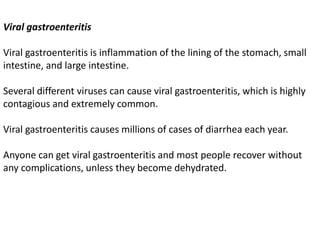
Viral gastroenteritis
Viral gastroenteritis is inflammation of the lining of the stomach, small
intestine, and large intestine.
Several different viruses can cause viral gastroenteritis, which is highly
contagious and extremely common.
Viral gastroenteritis causes millions of cases of diarrhea each year.
Anyone can get viral gastroenteritis and most people recover without
any complications, unless they become dehydrated.
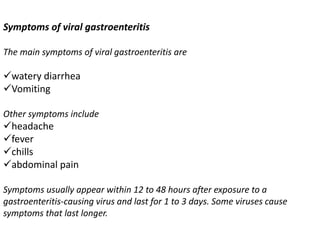
Symptoms of viral gastroenteritis
The main symptoms of viral gastroenteritis are
watery diarrhea
Vomiting
Other symptoms include
headache
fever
chills
abdominal pain
Symptoms usually appear within 12 to 48 hours after exposure to a
gastroenteritis-causing virus and last for 1 to 3 days. Some viruses cause
symptoms that last longer.
Complications of viral gastroenteritis
Dehydration is the most common complication of viral gastroenteritis.
When someone does not drink enough fluids to replace those that are
lost through vomiting and diarrhea, dehydration can result.
When dehydrated, the body does not have enough fluids to keep the
proper balance of important salts or minerals, known as electrolytes.
Infants, young children, older adults, and people with weak immune
systems have the greatest risk of becoming dehydrated.
The signs of dehydration in adults are
excessive thirst
infrequent urination
dark-colored urine
dry skin
lethargy, dizziness, or faintness
Signs of dehydration in babies and young children are
dry mouth and tongue
lack of tears when crying
no wet diapers for 3 hours or more
high fever
unusually cranky or drowsy behavior
sunken eyes, cheeks, or soft spot in the skull
Also, when people are dehydrated, their skin does not flatten back to
normal right away after being gently pinched and released.
Severe dehydration may require intravenous fluids and hospitalization.
Untreated severe dehydration can cause serious health problems such
as organ damage, shock, or coma—a sleeplike state in which a person is
not conscious.
Causes of viral gastroenteritis
Four types of viruses cause most cases of viral gastroenteritis.
Rotavirus
Rotavirus is the leading cause of gastroenteritis among infants and
young children.
Rotavirus infections are most common in infants 3 to 15 months old.
Symptoms usually appear 1 to 3 days after exposure.
Rotavirus typically causes vomiting and watery diarrhea for 3 to 7 days,
along with fever and abdominal pain.
Rotavirus can also infect adults who are in close contact with infected
children, but the symptoms in adults are milder.
Caliciviruses
Caliciviruses cause infection in people of all ages.
Norovirus is the most common calicivirus and the most common cause
of viral gastroenteritis in adults.
Norovirus is usually responsible for epidemics of viral gastroenteritis.
Norovirus outbreaks occur all year but are more frequent from October
to April.
People infected with norovirus typically experience nausea, vomiting,
diarrhea, abdominal cramps, fatigue, headache, and muscle aches.
The symptoms usually appear 1 to 2 days after exposure to the virus and
last for 1 to 3 days.
Adenovirus
Adenovirus mainly infects children younger than 2 years old.
of the 49 types of adenoviruses, one strain affects the gastrointestinal
tract, causing vomiting and diarrhea.
Symptoms typically appear 8 to 10 days after exposure and last 5 to 12
days. Adenovirus infections occur year-round.
Astrovirus
Astrovirus primarily infects infants and young children, but adults may
also be infected.
This virus causes vomiting and watery diarrhea. Symptoms usually
appear 3 to 4 days after exposure and last 2 to 7 days.
The symptoms are milder than the symptoms of norovirus or rotavirus
infections. Infections occur year-round, but the virus is most active
during the winter months.
Viral gastroenteritis is often mistakenly called “stomach flu,” but it is not
caused by the influenza virus.
Transmission of viral gastroenteritis
Viral gastroenteritis is transmitted from person to person.
Viruses are present in the stool and vomit of people who are infected.
Infected people may contaminate surfaces, objects, food, and drinks with
viruses, especially if they do not wash their hands thoroughly after using the
bathroom.
When an infected person with unwashed hands shakes hands with or touches
another person, the virus can spread. When an infected person vomits, the
virus can become airborne.
People may be infected with viruses by touching contaminated surfaces or objects and
then touching their mouths sharing food, drink, or eating utensils with infected people
eating foods that are contaminated with the virus, such as oysters from contaminated
waters swallowing airborne particles that contain viruses.
Norovirus is especially contagious. Norovirus can survive for months on surfaces that
are not thoroughly disinfected with a bleach solution.
Infected people who do not have symptoms can still transmit viruses. Viruses may be
present in the stool up to 2 weeks after a person recovers from gastroenteritis.
Outbreaks of viral gastroenteritis can occur in households, childcare settings, schools,
nursing homes, cruise ships, camps, dormitories, restaurants, and other places where
people gather in groups.
People who suspect they were exposed to a virus in one of these settings may want to
contact a local health department that tracks viral gastroenteritis outbreaks.
How is viral gastroenteritis diagnosed?
Viral gastroenteritis is usually diagnosed based on symptoms alone.
People who have symptoms that are severe or last for more than a few days
may want to see a health care provider for additional tests.
A health care provider may ask for a stool sample to test for rotavirus or
norovirus or to rule out bacteria or parasites as the cause of the
gastroenteritis.
During an epidemic of viral gastroenteritis, health care providers or public
health officials may test stool samples to find out which virus is responsible for
the outbreak.
How is viral gastroenteritis treated?
Most cases of viral gastroenteritis resolve over time without specific
treatment.
Antibiotics are not effective against viral infections.
The primary goal of treatment is to reduce symptoms and prevent
complications.
Over-the-counter medicines such as loperamide (Imodium) and bismuth
subsalicylate (Pepto-Bismol) can help relieve symptoms in adults.
These medicines are not recommended for children.

7 viral diarrhea

  • 1.
    Viral gastroenteritis Viral gastroenteritisis inflammation of the lining of the stomach, small intestine, and large intestine. Several different viruses can cause viral gastroenteritis, which is highly contagious and extremely common. Viral gastroenteritis causes millions of cases of diarrhea each year. Anyone can get viral gastroenteritis and most people recover without any complications, unless they become dehydrated.
  • 2.
    Symptoms of viralgastroenteritis The main symptoms of viral gastroenteritis are watery diarrhea Vomiting Other symptoms include headache fever chills abdominal pain Symptoms usually appear within 12 to 48 hours after exposure to a gastroenteritis-causing virus and last for 1 to 3 days. Some viruses cause symptoms that last longer.
  • 3.
    Complications of viralgastroenteritis Dehydration is the most common complication of viral gastroenteritis. When someone does not drink enough fluids to replace those that are lost through vomiting and diarrhea, dehydration can result. When dehydrated, the body does not have enough fluids to keep the proper balance of important salts or minerals, known as electrolytes. Infants, young children, older adults, and people with weak immune systems have the greatest risk of becoming dehydrated.
  • 4.
    The signs ofdehydration in adults are excessive thirst infrequent urination dark-colored urine dry skin lethargy, dizziness, or faintness
  • 5.
    Signs of dehydrationin babies and young children are dry mouth and tongue lack of tears when crying no wet diapers for 3 hours or more high fever unusually cranky or drowsy behavior sunken eyes, cheeks, or soft spot in the skull
  • 6.
    Also, when peopleare dehydrated, their skin does not flatten back to normal right away after being gently pinched and released. Severe dehydration may require intravenous fluids and hospitalization. Untreated severe dehydration can cause serious health problems such as organ damage, shock, or coma—a sleeplike state in which a person is not conscious.
  • 7.
    Causes of viralgastroenteritis Four types of viruses cause most cases of viral gastroenteritis. Rotavirus Rotavirus is the leading cause of gastroenteritis among infants and young children. Rotavirus infections are most common in infants 3 to 15 months old. Symptoms usually appear 1 to 3 days after exposure. Rotavirus typically causes vomiting and watery diarrhea for 3 to 7 days, along with fever and abdominal pain. Rotavirus can also infect adults who are in close contact with infected children, but the symptoms in adults are milder.
  • 8.
    Caliciviruses Caliciviruses cause infectionin people of all ages. Norovirus is the most common calicivirus and the most common cause of viral gastroenteritis in adults. Norovirus is usually responsible for epidemics of viral gastroenteritis. Norovirus outbreaks occur all year but are more frequent from October to April. People infected with norovirus typically experience nausea, vomiting, diarrhea, abdominal cramps, fatigue, headache, and muscle aches. The symptoms usually appear 1 to 2 days after exposure to the virus and last for 1 to 3 days.
  • 9.
    Adenovirus Adenovirus mainly infectschildren younger than 2 years old. of the 49 types of adenoviruses, one strain affects the gastrointestinal tract, causing vomiting and diarrhea. Symptoms typically appear 8 to 10 days after exposure and last 5 to 12 days. Adenovirus infections occur year-round.
  • 10.
    Astrovirus Astrovirus primarily infectsinfants and young children, but adults may also be infected. This virus causes vomiting and watery diarrhea. Symptoms usually appear 3 to 4 days after exposure and last 2 to 7 days. The symptoms are milder than the symptoms of norovirus or rotavirus infections. Infections occur year-round, but the virus is most active during the winter months. Viral gastroenteritis is often mistakenly called “stomach flu,” but it is not caused by the influenza virus.
  • 11.
    Transmission of viralgastroenteritis Viral gastroenteritis is transmitted from person to person. Viruses are present in the stool and vomit of people who are infected. Infected people may contaminate surfaces, objects, food, and drinks with viruses, especially if they do not wash their hands thoroughly after using the bathroom. When an infected person with unwashed hands shakes hands with or touches another person, the virus can spread. When an infected person vomits, the virus can become airborne.
  • 12.
    People may beinfected with viruses by touching contaminated surfaces or objects and then touching their mouths sharing food, drink, or eating utensils with infected people eating foods that are contaminated with the virus, such as oysters from contaminated waters swallowing airborne particles that contain viruses. Norovirus is especially contagious. Norovirus can survive for months on surfaces that are not thoroughly disinfected with a bleach solution. Infected people who do not have symptoms can still transmit viruses. Viruses may be present in the stool up to 2 weeks after a person recovers from gastroenteritis. Outbreaks of viral gastroenteritis can occur in households, childcare settings, schools, nursing homes, cruise ships, camps, dormitories, restaurants, and other places where people gather in groups. People who suspect they were exposed to a virus in one of these settings may want to contact a local health department that tracks viral gastroenteritis outbreaks.
  • 13.
    How is viralgastroenteritis diagnosed? Viral gastroenteritis is usually diagnosed based on symptoms alone. People who have symptoms that are severe or last for more than a few days may want to see a health care provider for additional tests. A health care provider may ask for a stool sample to test for rotavirus or norovirus or to rule out bacteria or parasites as the cause of the gastroenteritis. During an epidemic of viral gastroenteritis, health care providers or public health officials may test stool samples to find out which virus is responsible for the outbreak.
  • 14.
    How is viralgastroenteritis treated? Most cases of viral gastroenteritis resolve over time without specific treatment. Antibiotics are not effective against viral infections. The primary goal of treatment is to reduce symptoms and prevent complications. Over-the-counter medicines such as loperamide (Imodium) and bismuth subsalicylate (Pepto-Bismol) can help relieve symptoms in adults. These medicines are not recommended for children.