Presenter:- Nikhil Raut
RCOEM Nagpur
Engineeering- III Year
Email- rautnr_1@rknec.edu
MO: +919975380609
Diode
What is a diode ?
A diode is defined as a two-terminal semiconductor component
that allows to flow of current in only one direction.
• What is semiconductor ?
• Why & how it allows the
current to flow in the
only one direction ?
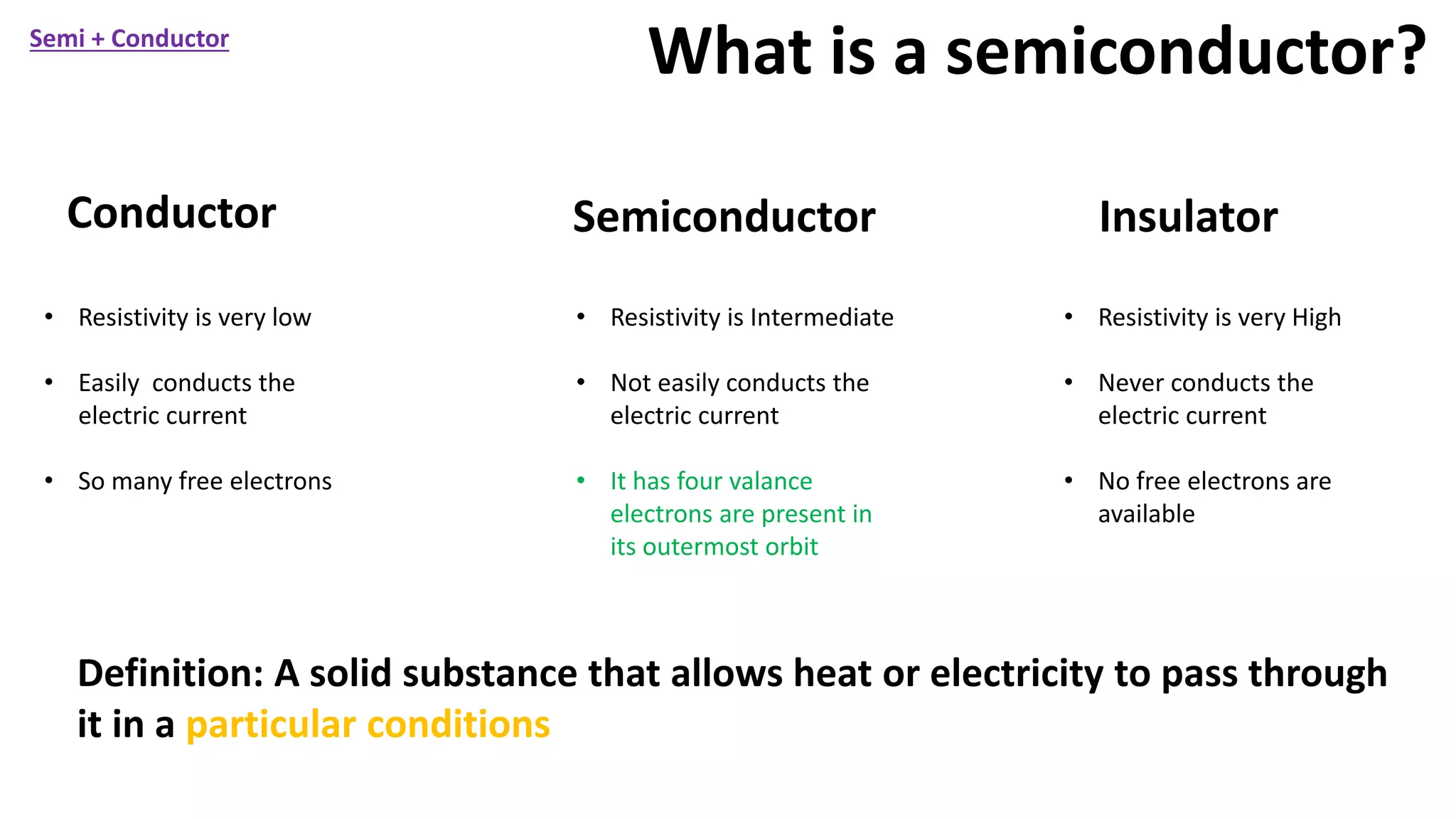
What is a semiconductor?
Conductor Insulator
• Resistivity is very low
• Easily conducts the
electric current
• So many free electrons
• Resistivity is Intermediate
• Not easily conducts the
electric current
• It has four valance
electrons are present in
its outermost orbit
• Resistivity is very High
• Never conducts the
electric current
• No free electrons are
available
Semiconductor
Definition: A solid substance that allows heat or electricity to pass through
it in a particular conditions
Semi + Conductor
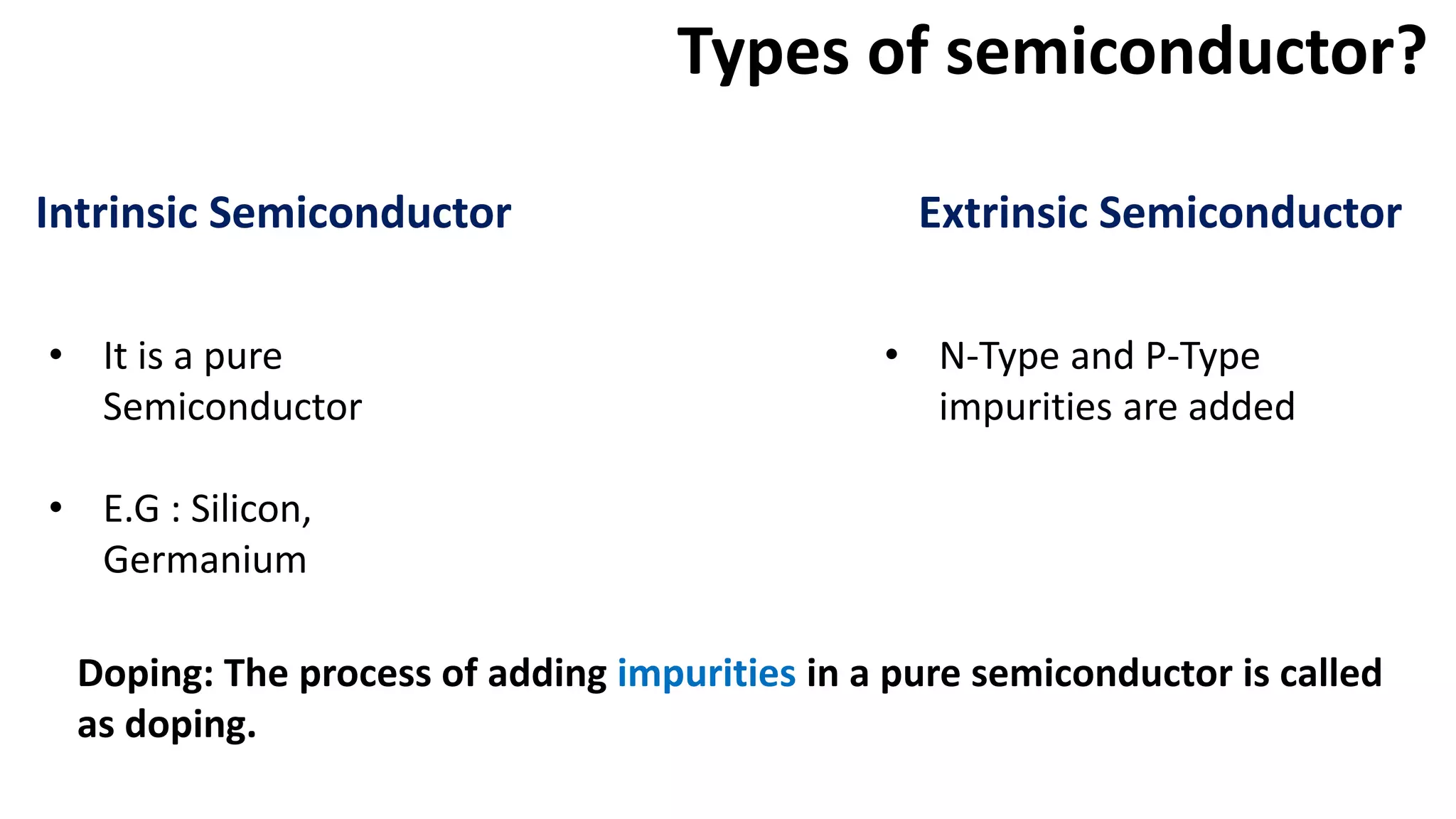
Types of semiconductor?
Intrinsic Semiconductor Extrinsic Semiconductor
• It is a pure
Semiconductor
• E.G : Silicon,
Germanium
• N-Type and P-Type
impurities are added
Doping: The process of adding impurities in a pure semiconductor is called
as doping.
P – Type Semiconductor
• Aluminum, Indium, Boron
• It is called as trivalent
Impurity
• These atoms has three
outer electrons in their
outermost orbit
• Trivalent impurities are
known as Acceptor
impurities
• Majority Charge Carriers
are holes
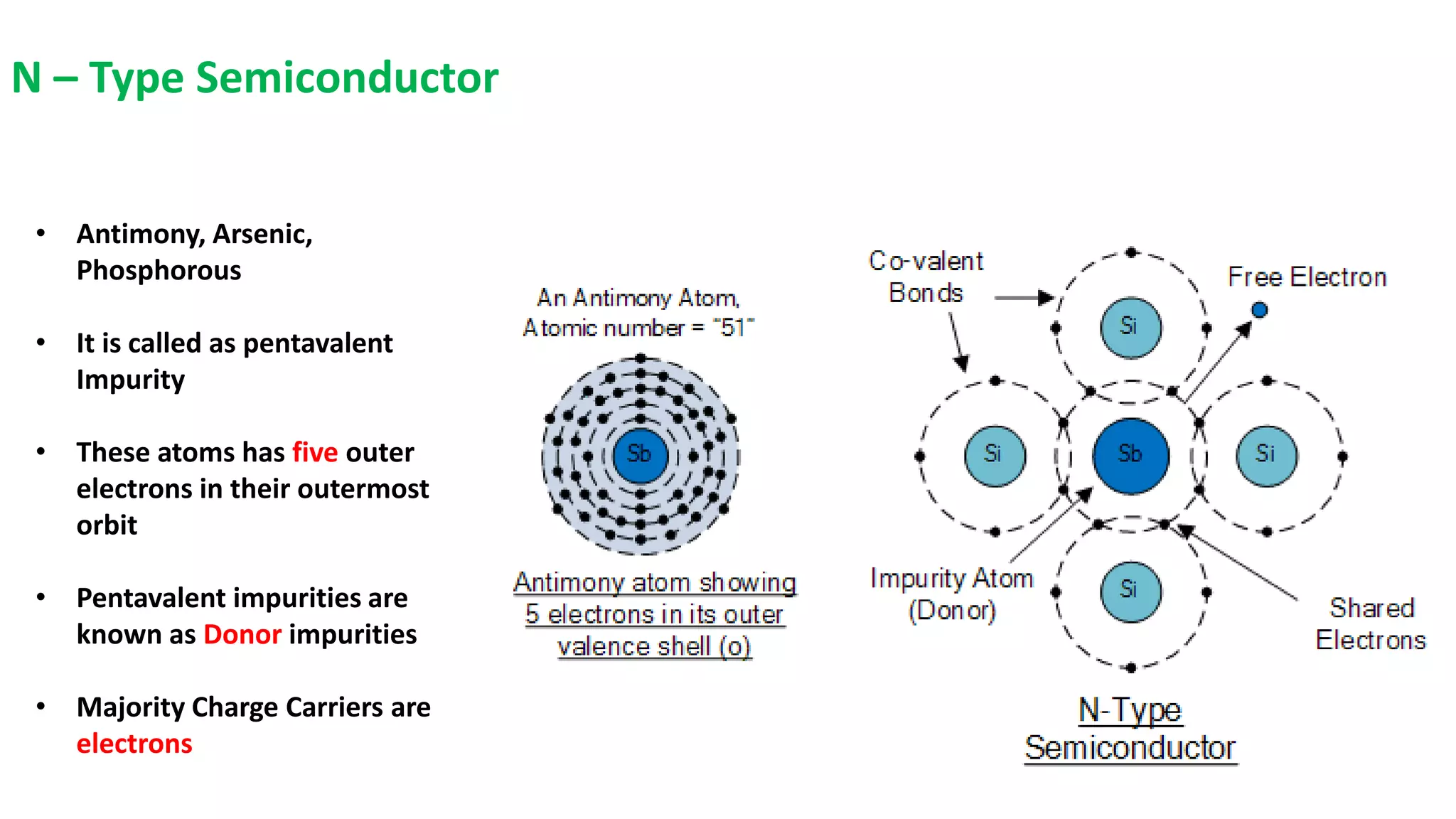
N – Type Semiconductor
• Antimony, Arsenic,
Phosphorous
• It is called as pentavalent
Impurity
• These atoms has five outer
electrons in their outermost
orbit
• Pentavalent impurities are
known as Donor impurities
• Majority Charge Carriers are
electrons
N-Type P-Type
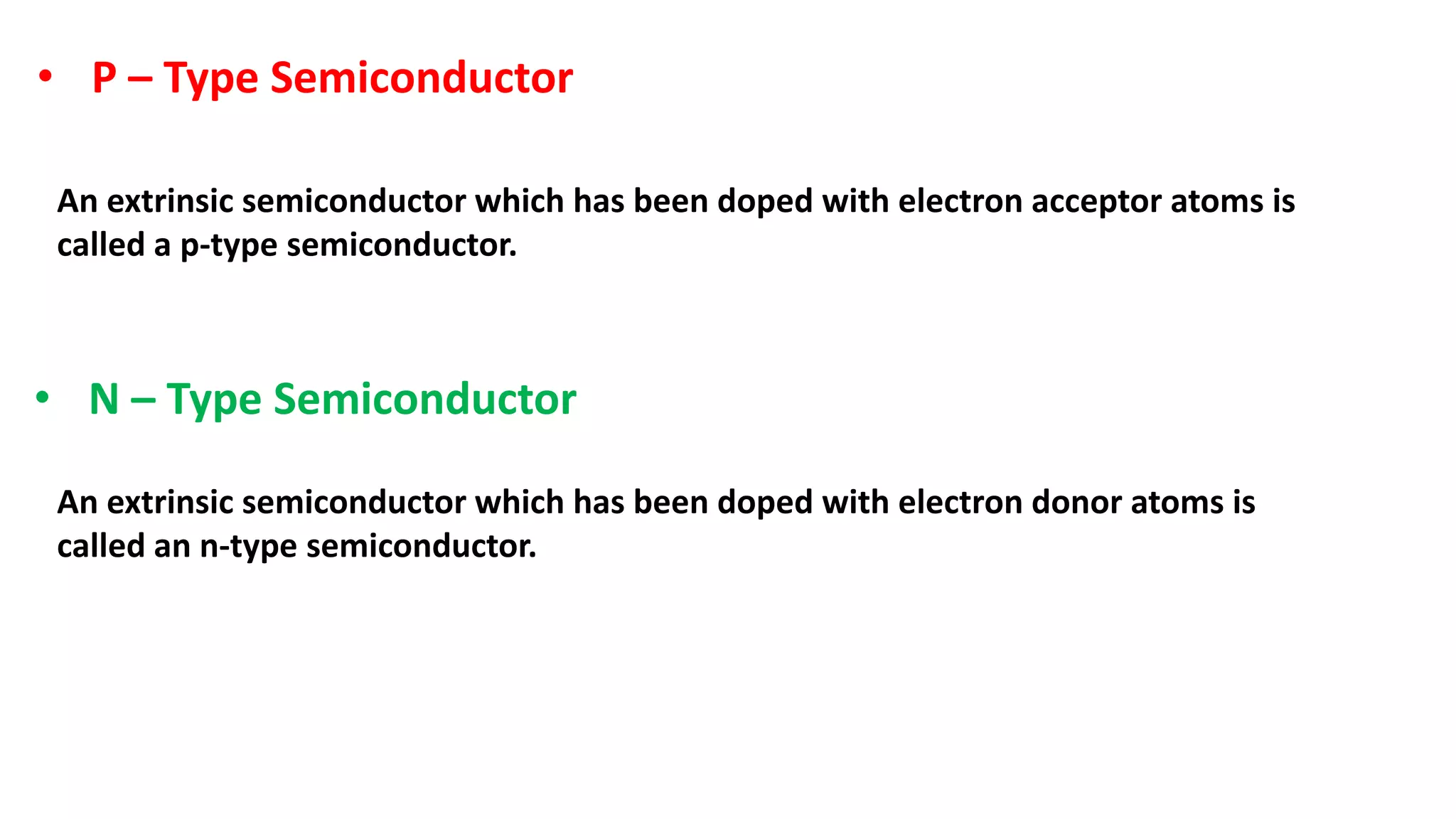
• P – Type Semiconductor
An extrinsic semiconductor which has been doped with electron acceptor atoms is
called a p-type semiconductor.
• N – Type Semiconductor
An extrinsic semiconductor which has been doped with electron donor atoms is
called an n-type semiconductor.
Quick Recap …………..
1. What is diode
2. Difference between conductor, insulator, semiconductor.
3. What is Semiconductor
4. Types of Semiconductor
5. What is Doping
6. Definitions of p-type and n-type semiconductor
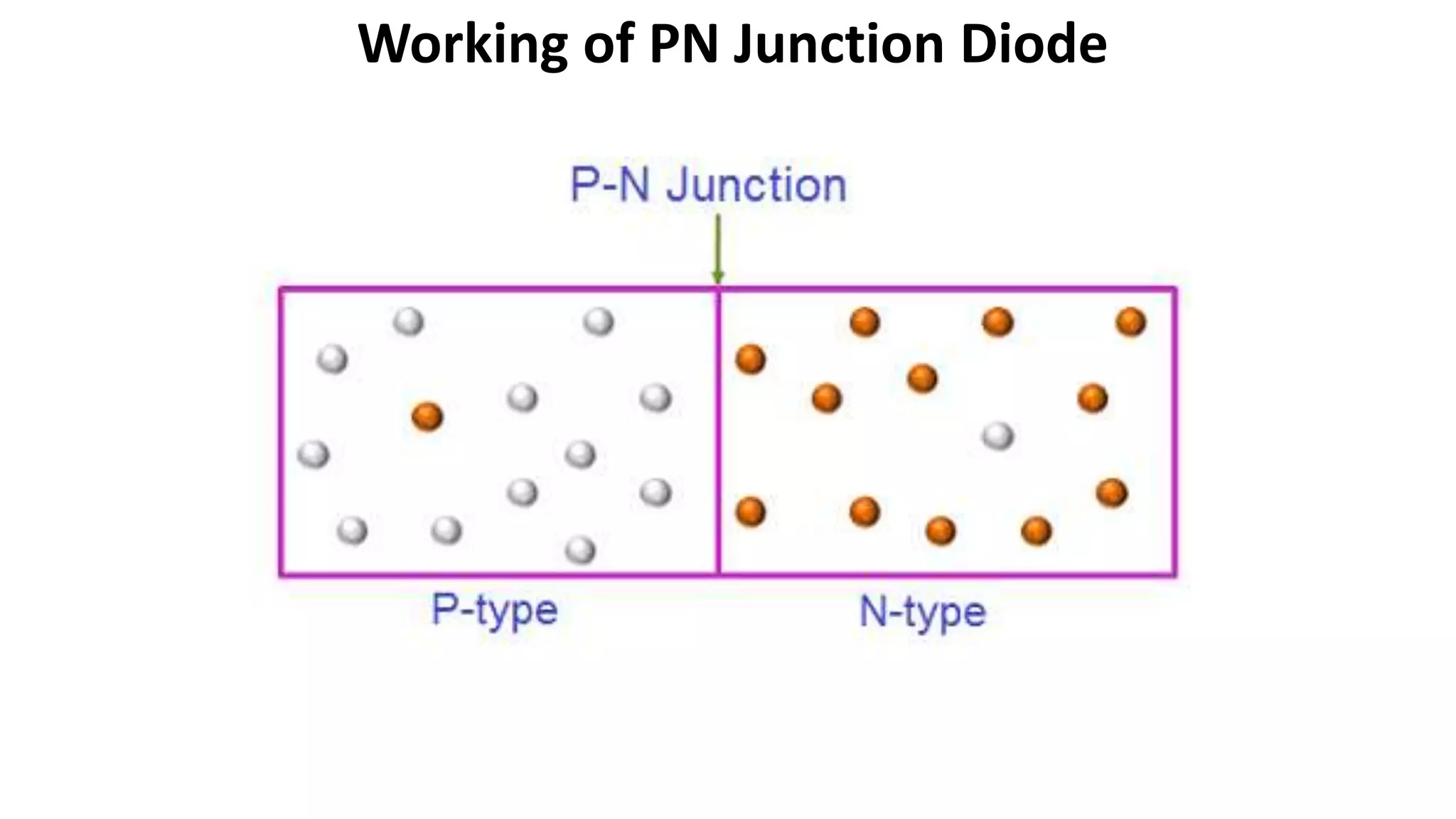
Working of PN Junction Diode
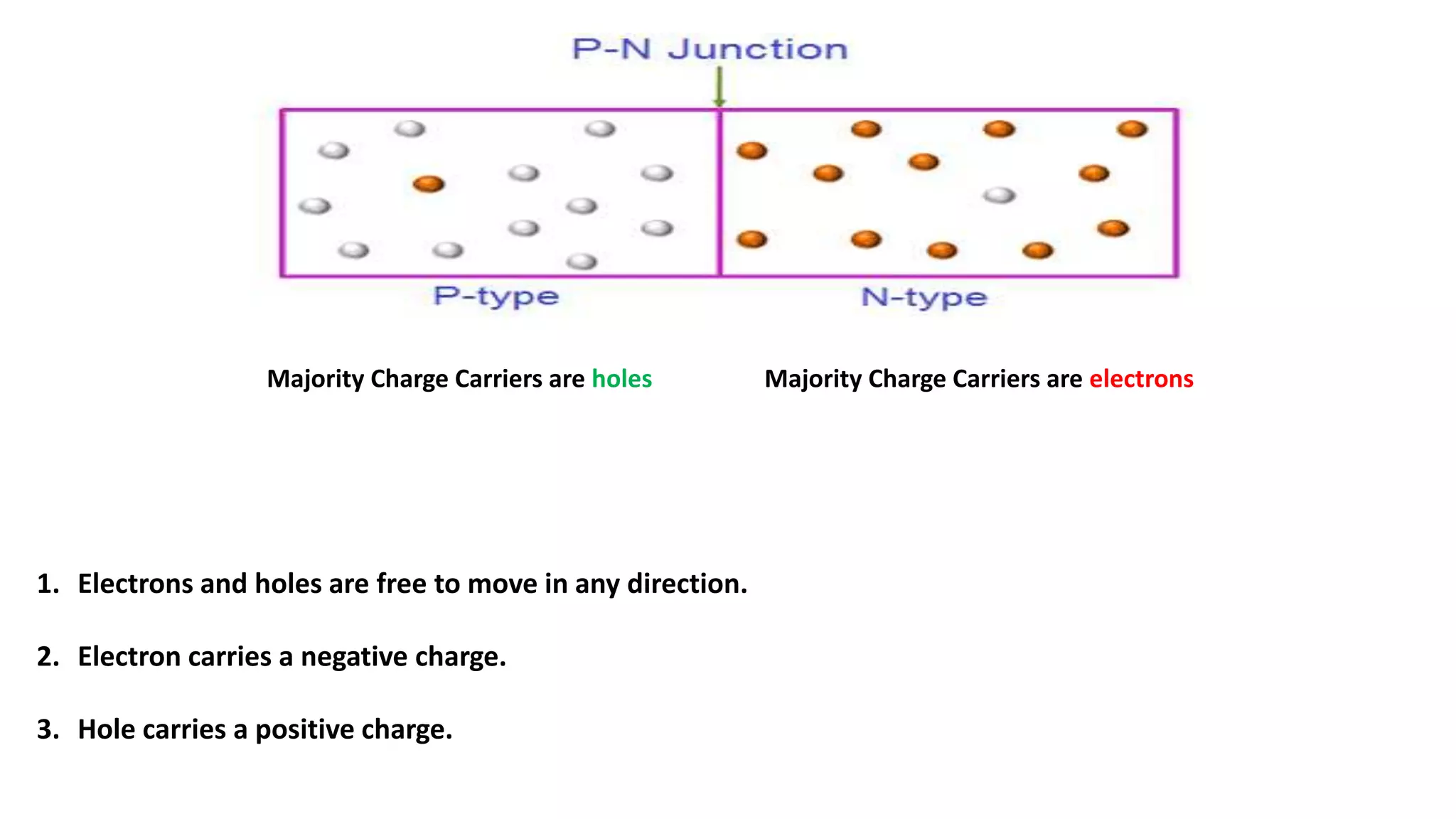
Majority Charge Carriers are holes Majority Charge Carriers are electrons
1. Electrons and holes are free to move in any direction.
2. Electron carries a negative charge.
3. Hole carries a positive charge.
1. Unbiased
2. Forward biased
3. Reverse biased
Concept of Biasing
Unbiased
And the process is continued until the p and n type region have enough charge
carrier for opposing the electrons and holes respectively
Potential Barrier
• Potential barrier in the p-n junction diode is the barrier in which the charge requires additional
force for crossing the region.
• It is also called barrier junction , Depletion region.
• The region is created because of the depleted ions hence it is called a depletion region.
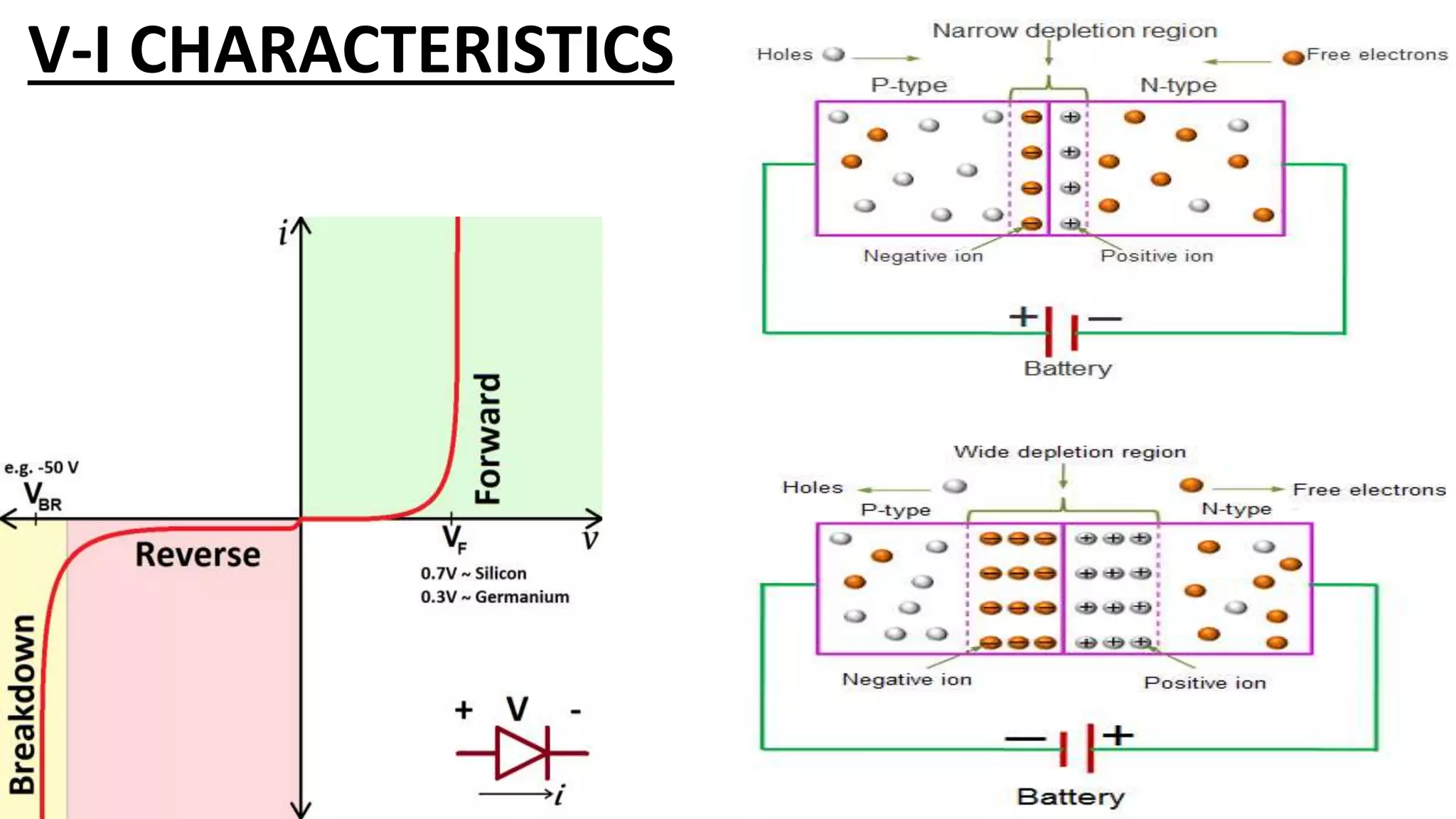
Forward biased
How it allows the current to flow in the one direction ?
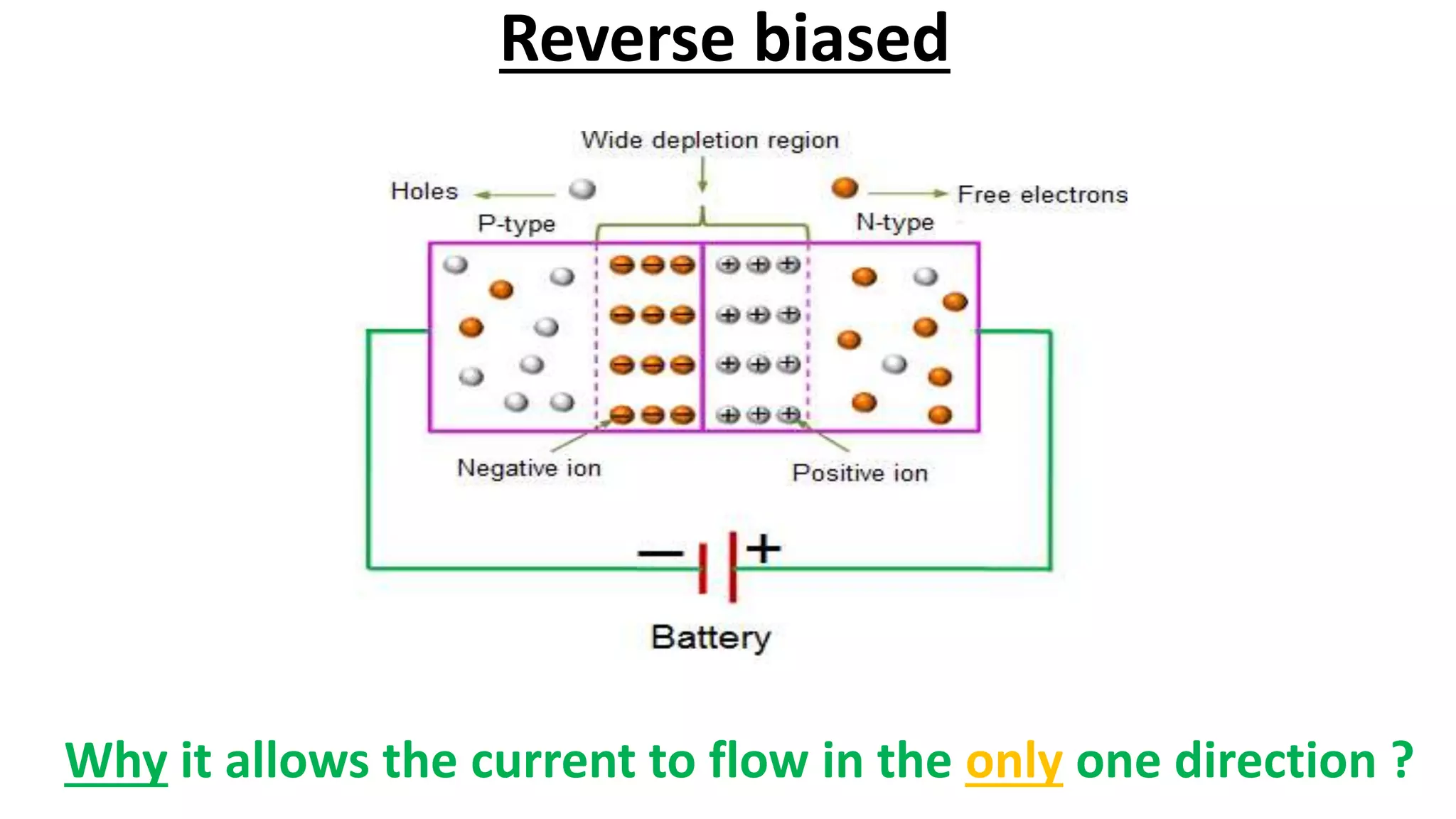
Reverse biased
Why it allows the current to flow in the only one direction ?
V-I CHARACTERISTICS
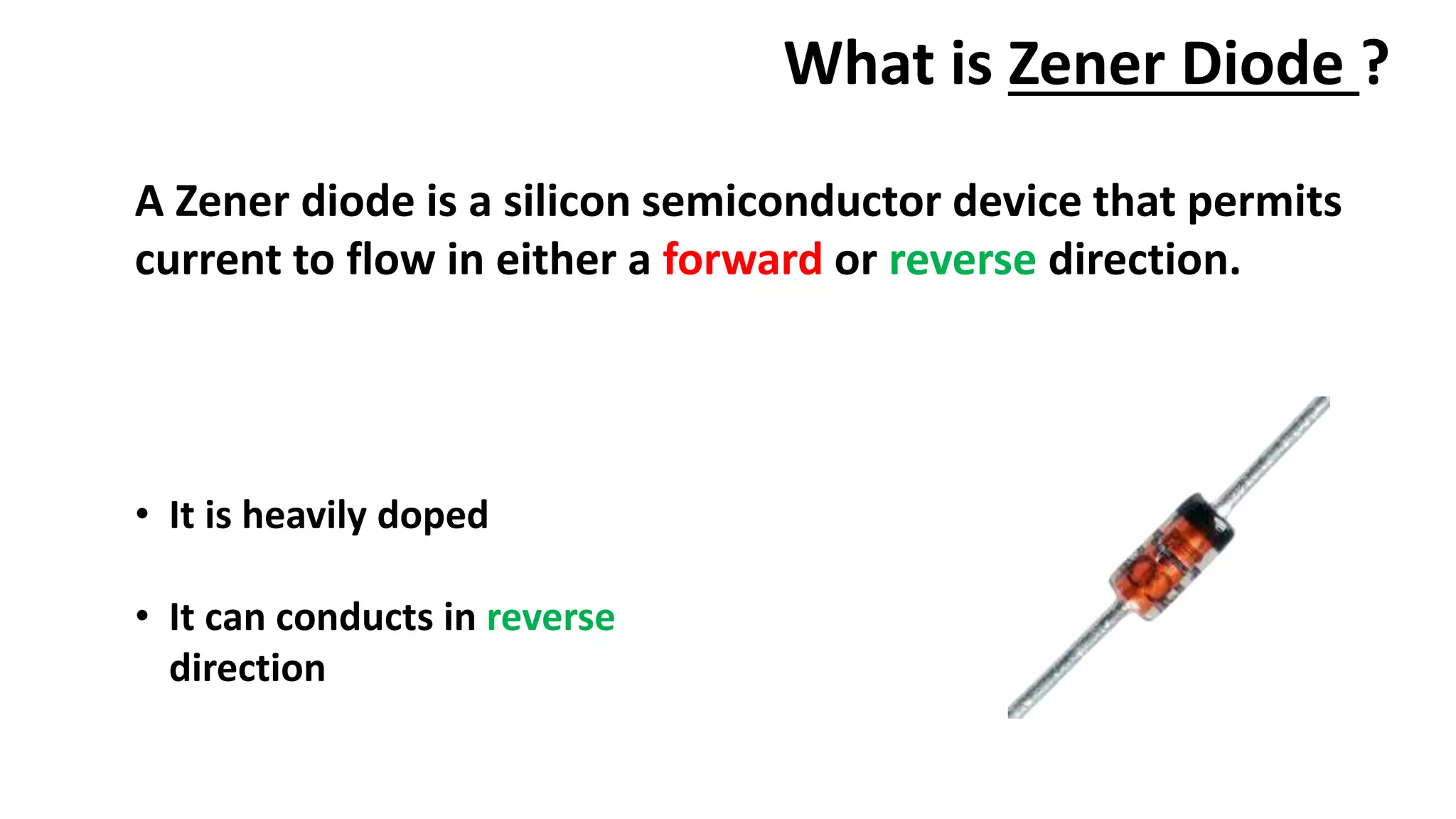
What is Zener Diode ?
A Zener diode is a silicon semiconductor device that permits
current to flow in either a forward or reverse direction.
• It is heavily doped
• It can conducts in reverse
direction
Zener Breakdown
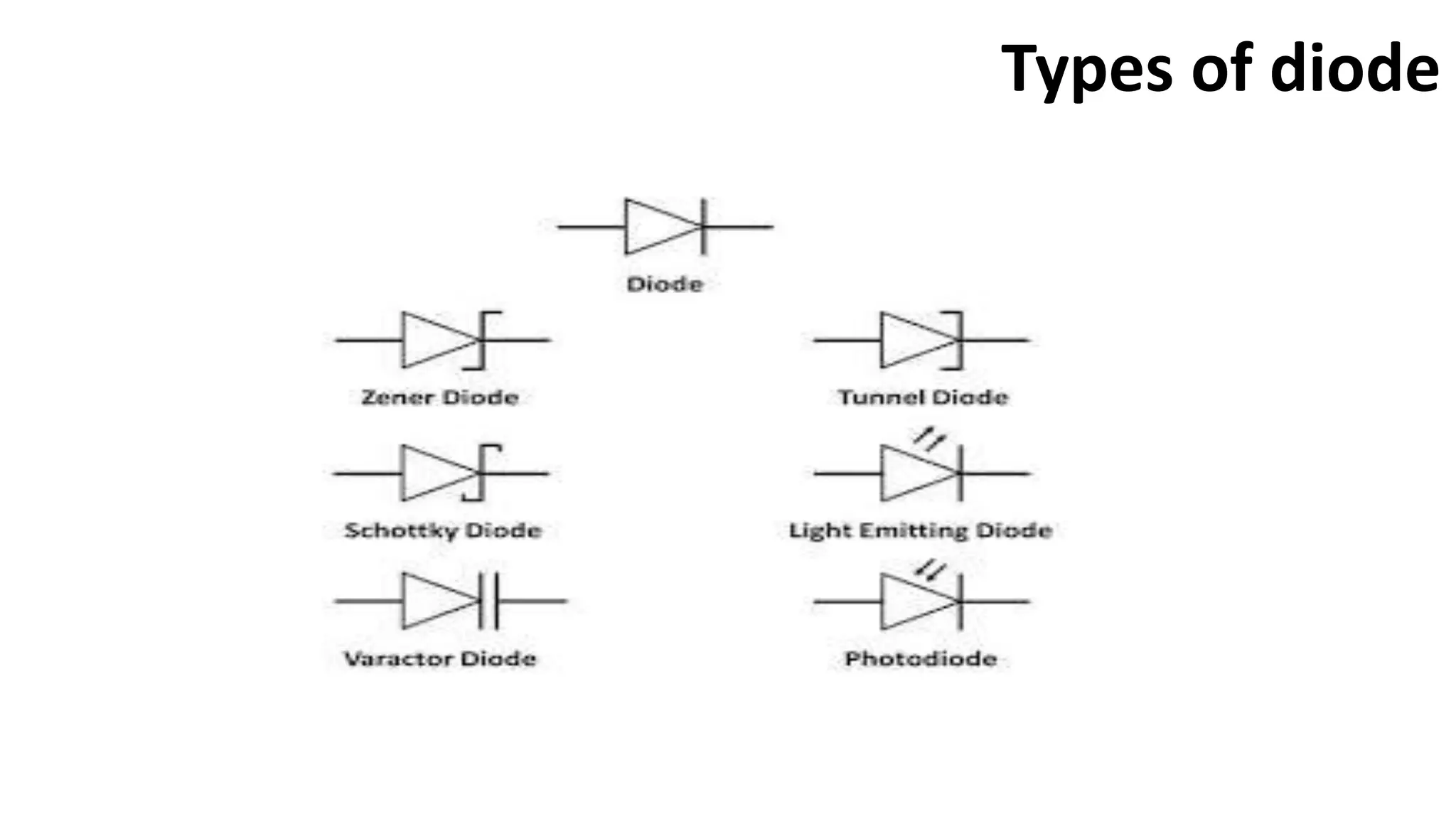
Types of diode
Tunnel diode
LED ( Light Emitting Diode)
Schottky diode
what is Diode
what is Diode

what is Diode

  • 1.
    Presenter:- Nikhil Raut RCOEMNagpur Engineeering- III Year Email- rautnr_1@rknec.edu MO: +919975380609
  • 2.
  • 3.
    What is adiode ? A diode is defined as a two-terminal semiconductor component that allows to flow of current in only one direction. • What is semiconductor ? • Why & how it allows the current to flow in the only one direction ?
  • 4.
    What is asemiconductor? Conductor Insulator • Resistivity is very low • Easily conducts the electric current • So many free electrons • Resistivity is Intermediate • Not easily conducts the electric current • It has four valance electrons are present in its outermost orbit • Resistivity is very High • Never conducts the electric current • No free electrons are available Semiconductor Definition: A solid substance that allows heat or electricity to pass through it in a particular conditions Semi + Conductor
  • 5.
    Types of semiconductor? IntrinsicSemiconductor Extrinsic Semiconductor • It is a pure Semiconductor • E.G : Silicon, Germanium • N-Type and P-Type impurities are added Doping: The process of adding impurities in a pure semiconductor is called as doping.
  • 6.
    P – TypeSemiconductor • Aluminum, Indium, Boron • It is called as trivalent Impurity • These atoms has three outer electrons in their outermost orbit • Trivalent impurities are known as Acceptor impurities • Majority Charge Carriers are holes
  • 7.
    N – TypeSemiconductor • Antimony, Arsenic, Phosphorous • It is called as pentavalent Impurity • These atoms has five outer electrons in their outermost orbit • Pentavalent impurities are known as Donor impurities • Majority Charge Carriers are electrons
  • 8.
  • 9.
    • P –Type Semiconductor An extrinsic semiconductor which has been doped with electron acceptor atoms is called a p-type semiconductor. • N – Type Semiconductor An extrinsic semiconductor which has been doped with electron donor atoms is called an n-type semiconductor.
  • 10.
    Quick Recap ………….. 1.What is diode 2. Difference between conductor, insulator, semiconductor. 3. What is Semiconductor 4. Types of Semiconductor 5. What is Doping 6. Definitions of p-type and n-type semiconductor
  • 11.
    Working of PNJunction Diode
  • 12.
    Majority Charge Carriersare holes Majority Charge Carriers are electrons 1. Electrons and holes are free to move in any direction. 2. Electron carries a negative charge. 3. Hole carries a positive charge.
  • 13.
    1. Unbiased 2. Forwardbiased 3. Reverse biased Concept of Biasing
  • 14.
    Unbiased And the processis continued until the p and n type region have enough charge carrier for opposing the electrons and holes respectively
  • 15.
    Potential Barrier • Potentialbarrier in the p-n junction diode is the barrier in which the charge requires additional force for crossing the region. • It is also called barrier junction , Depletion region. • The region is created because of the depleted ions hence it is called a depletion region.
  • 16.
    Forward biased How itallows the current to flow in the one direction ?
  • 17.
    Reverse biased Why itallows the current to flow in the only one direction ?
  • 18.
  • 19.
    What is ZenerDiode ? A Zener diode is a silicon semiconductor device that permits current to flow in either a forward or reverse direction. • It is heavily doped • It can conducts in reverse direction
  • 20.
  • 22.
  • 23.
    Tunnel diode LED (Light Emitting Diode) Schottky diode