What is a One-Sample Wilcoxon Test?
One-Sample Wilcoxon Test
Welcome to a presentation explaining the concepts
behind the use of a One-Sample Wilcoxon Test
One-Sample Wilcoxon Test
Welcome to a presentation explaining the concepts
behind the use of a One-Sample Wilcoxon Test in
determining the probability that a sample and a
population are similar to or different from one another
statistically.
One-Sample Wilcoxon Test
We will follow an example where researchers attempt
to determine if the sample they have collected is
statistically significantly similar or different from a
population.
One-Sample Wilcoxon Test
Their hope is that the sample and population are
statistically similar to one another, so they can claim
that results of experiments done to the sample are
generalizable to the population.
One-Sample Wilcoxon Test
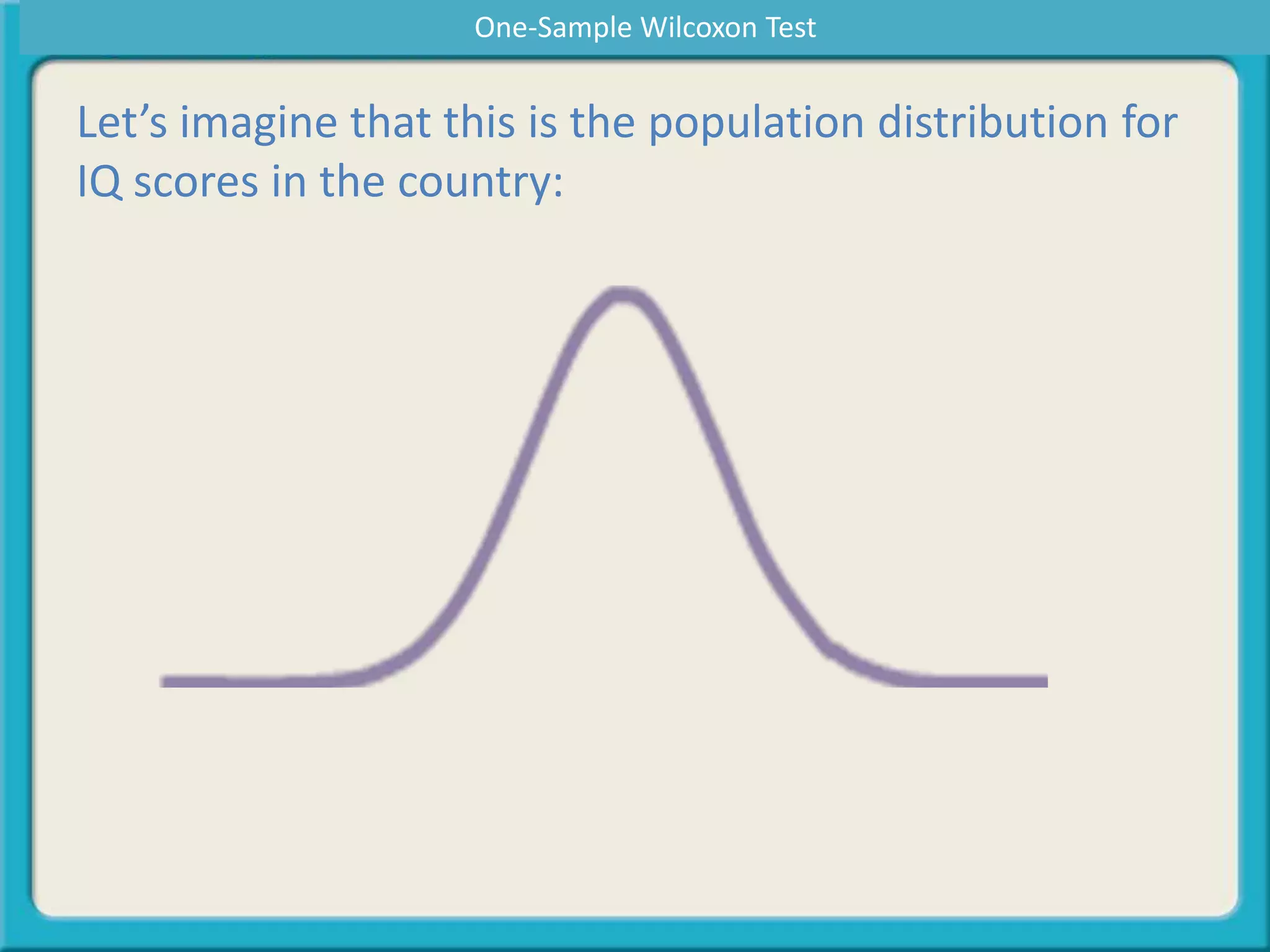
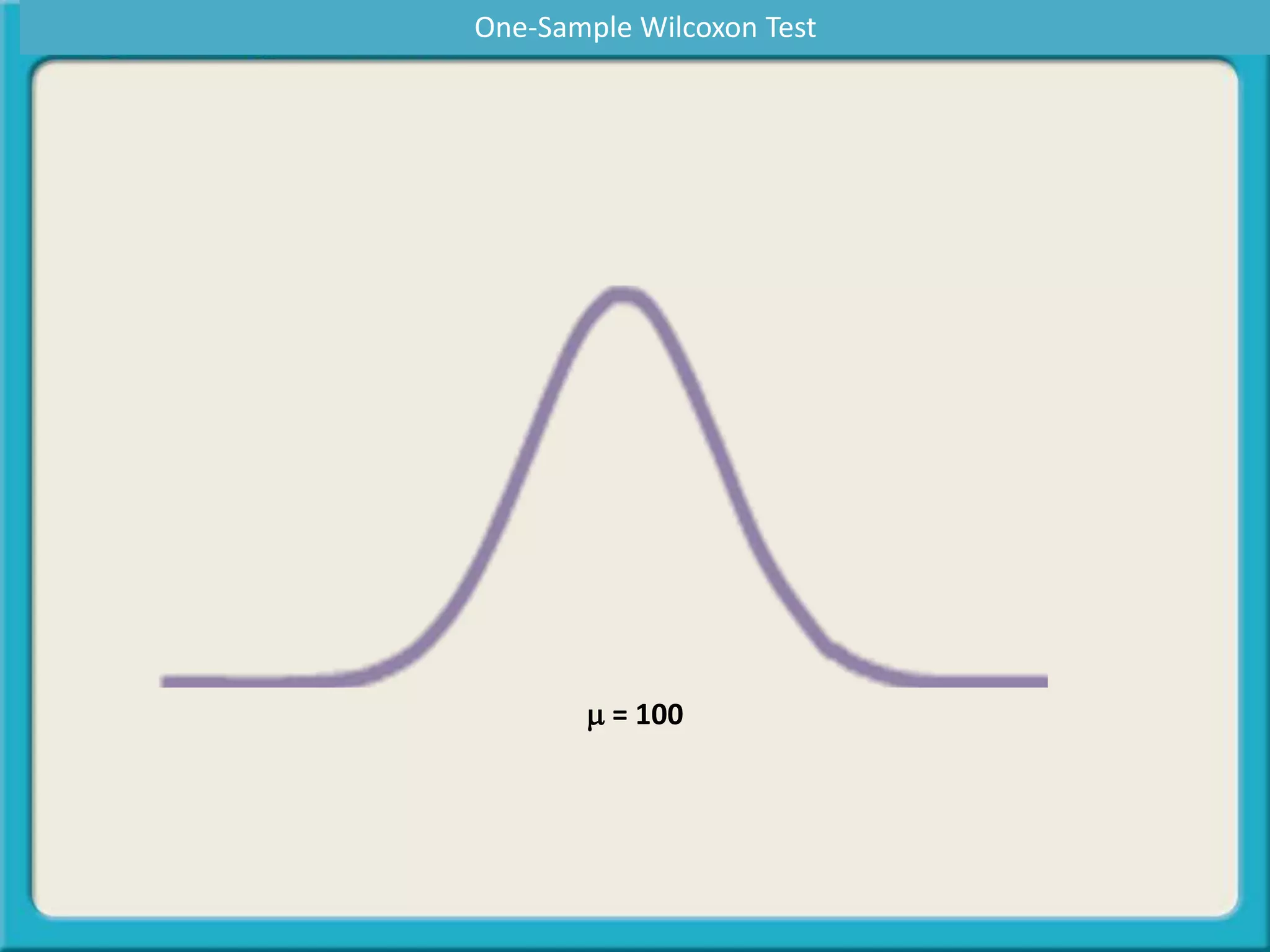
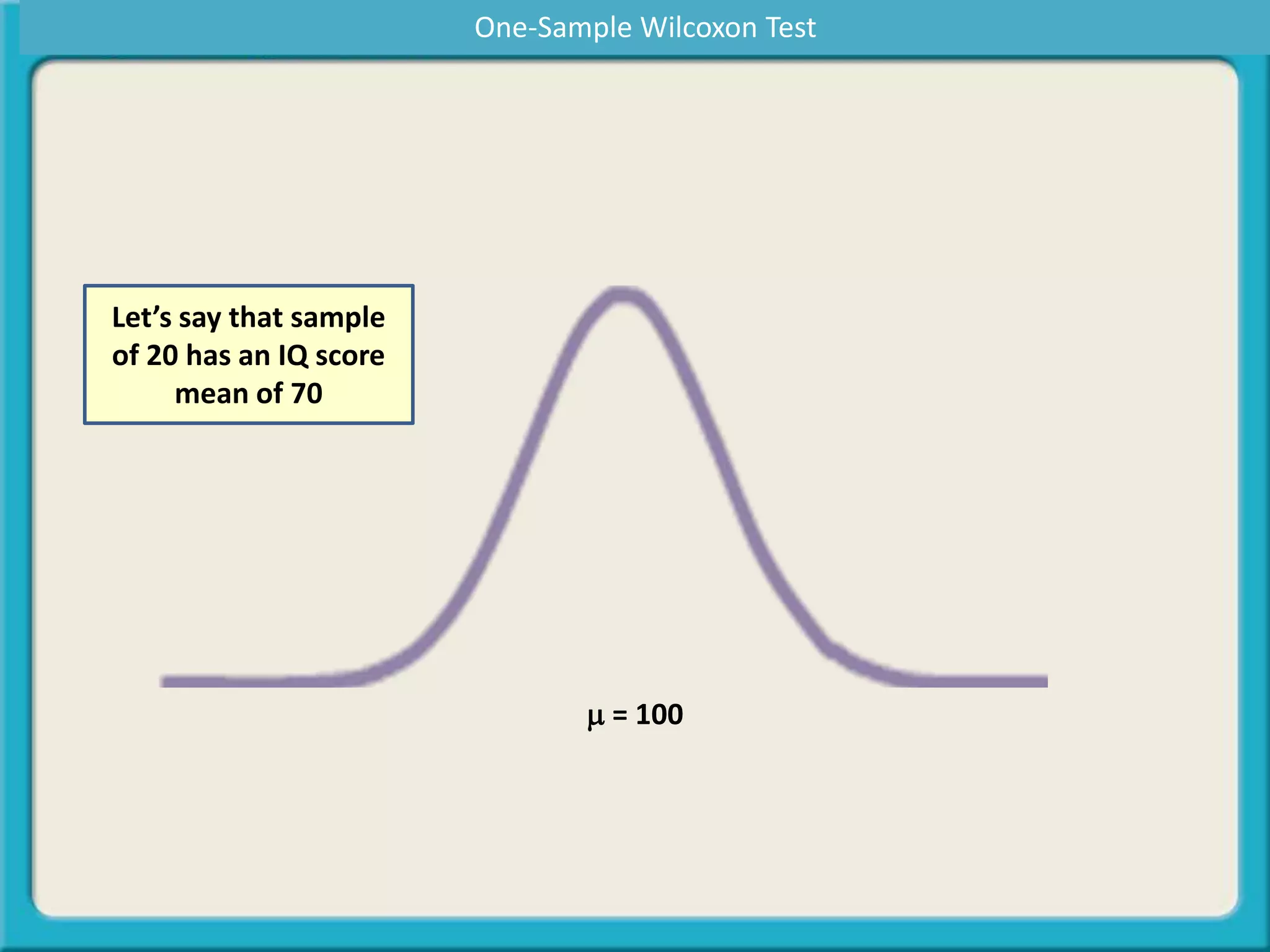
Let’s imagine that this is the population distribution for
IQ scores in the country:
One-Sample Wilcoxon Test
Let’s imagine that this is the population distribution for
IQ scores in the country:
One-Sample Wilcoxon Test
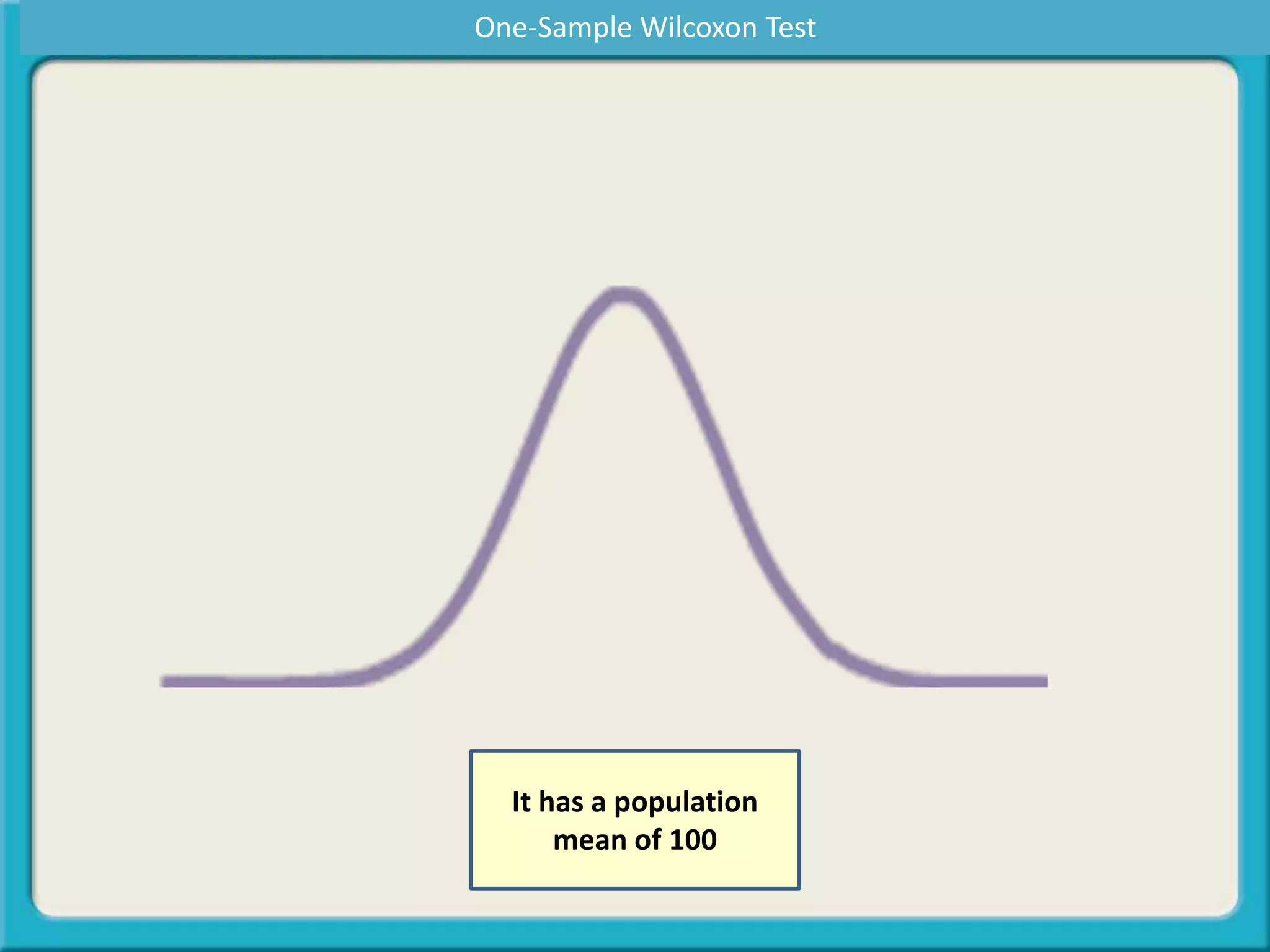
It has a population
mean of 100
One-Sample Wilcoxon Test
m = 100
One-Sample Wilcoxon Test
m = 100
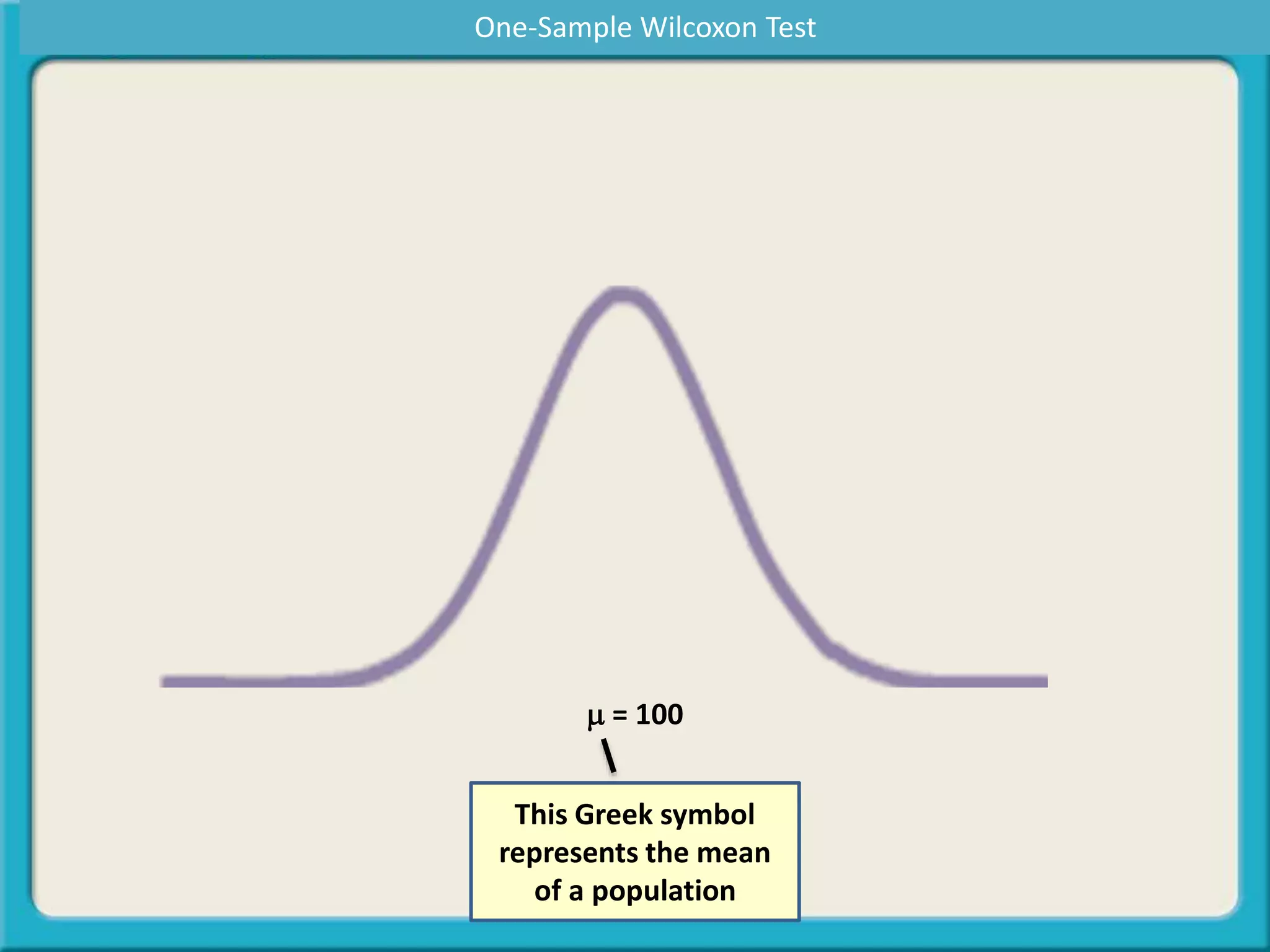
This Greek symbol
represents the mean
of a population
One-Sample Wilcoxon Test
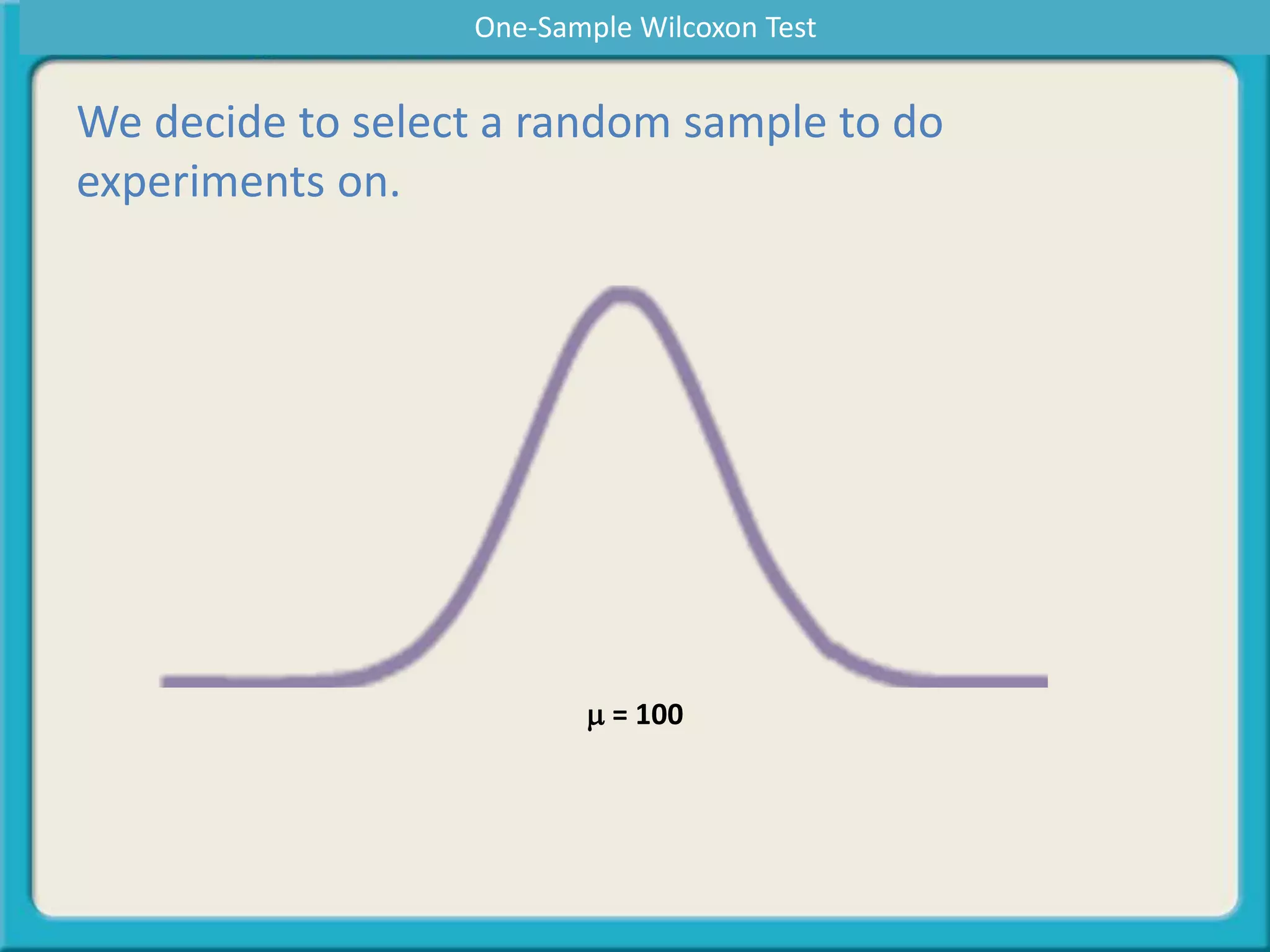
We decide to select a random sample to do
experiments on.
m = 100
One-Sample Wilcoxon Test
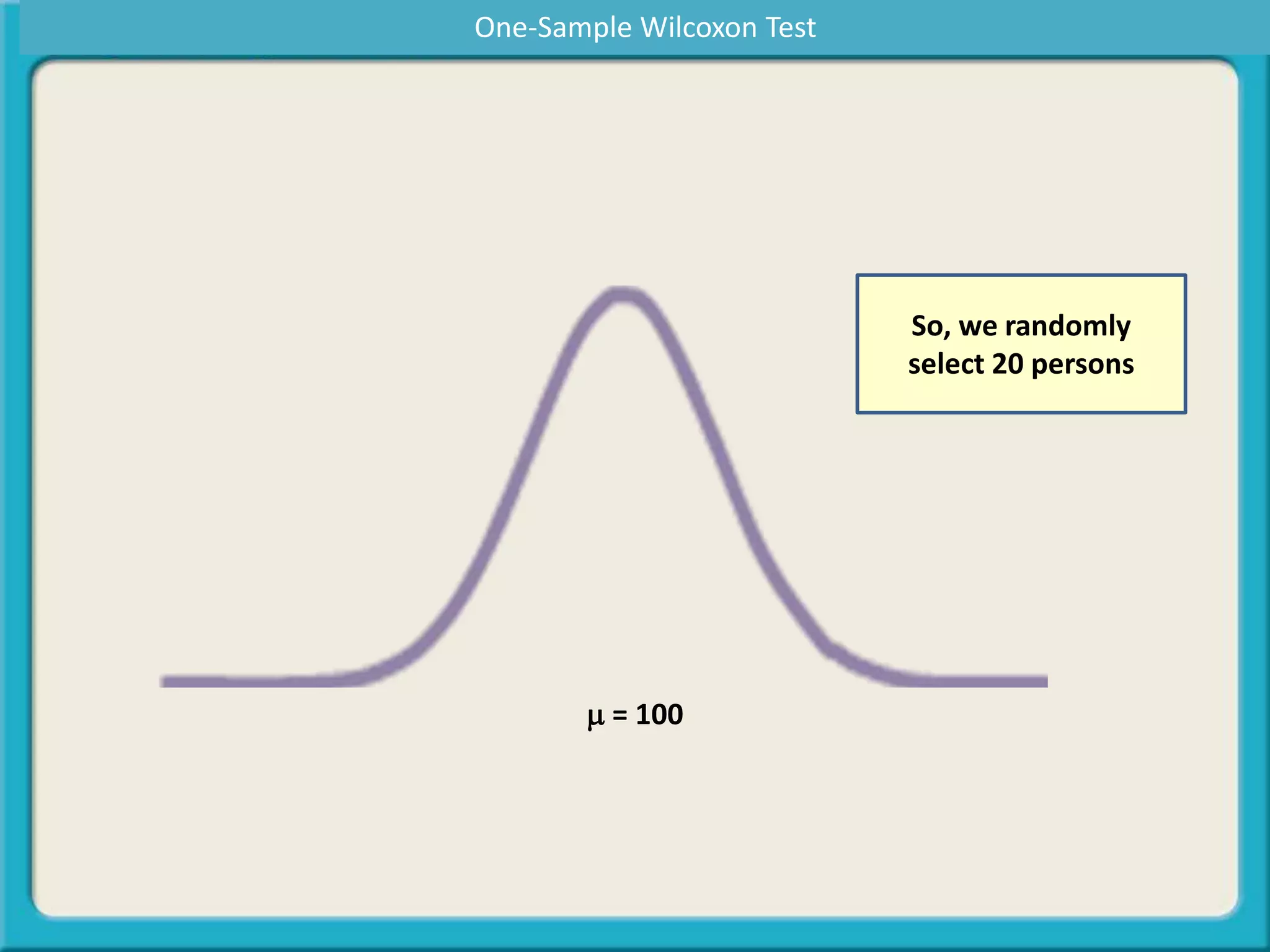
So, we randomly
select 20 persons
m = 100
One-Sample Wilcoxon Test
Let’s say that sample
of 20 has an IQ score
mean of 70
m = 100
One-Sample Wilcoxon Test
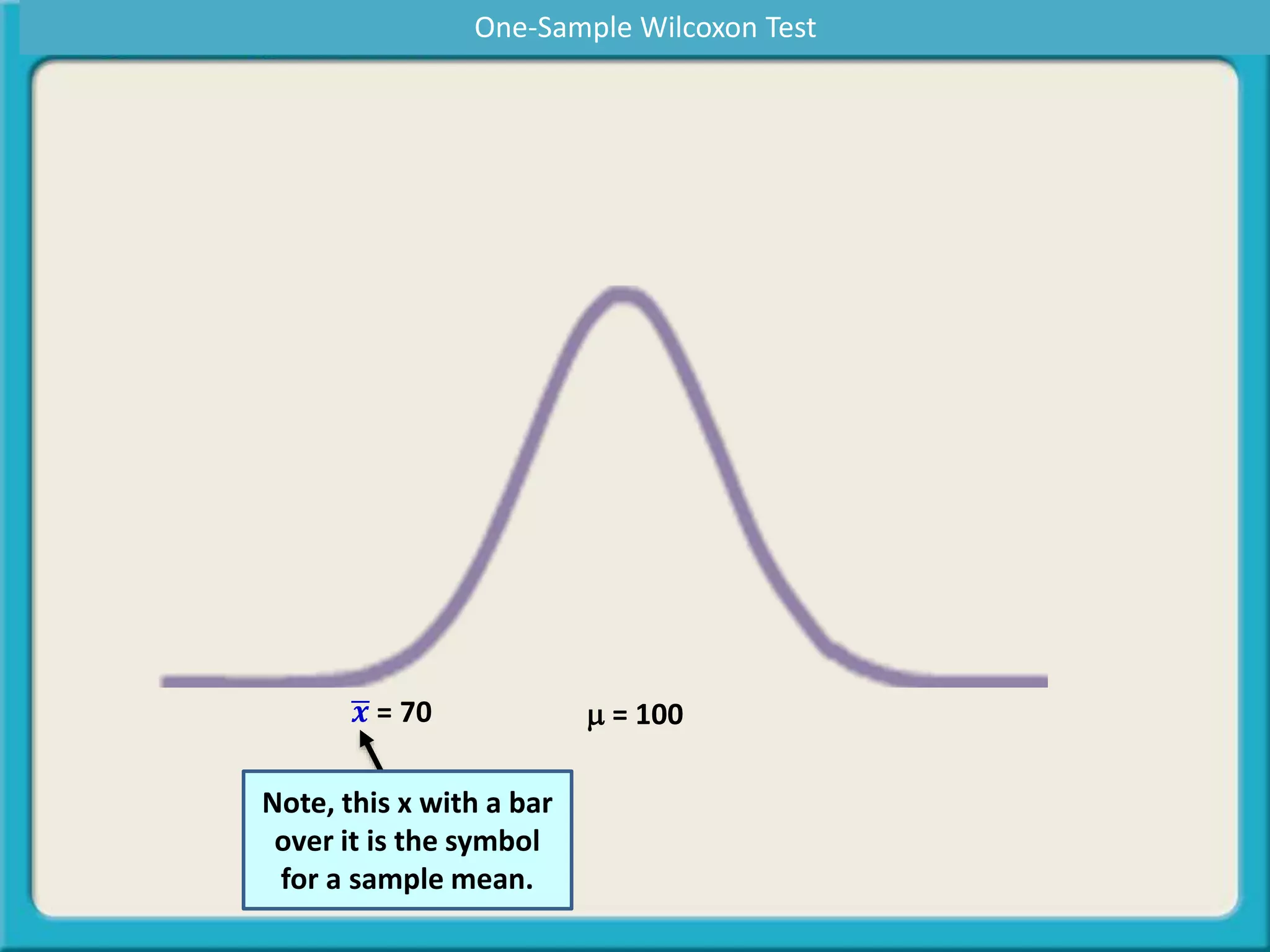
m = 100𝒙 = 70
Let’s say that sample
of 20 has an IQ score
mean of 70
One-Sample Wilcoxon Test
m = 100𝒙 = 70
Note, this x with a bar
over it is the symbol
for a sample mean.
One-Sample Wilcoxon Test
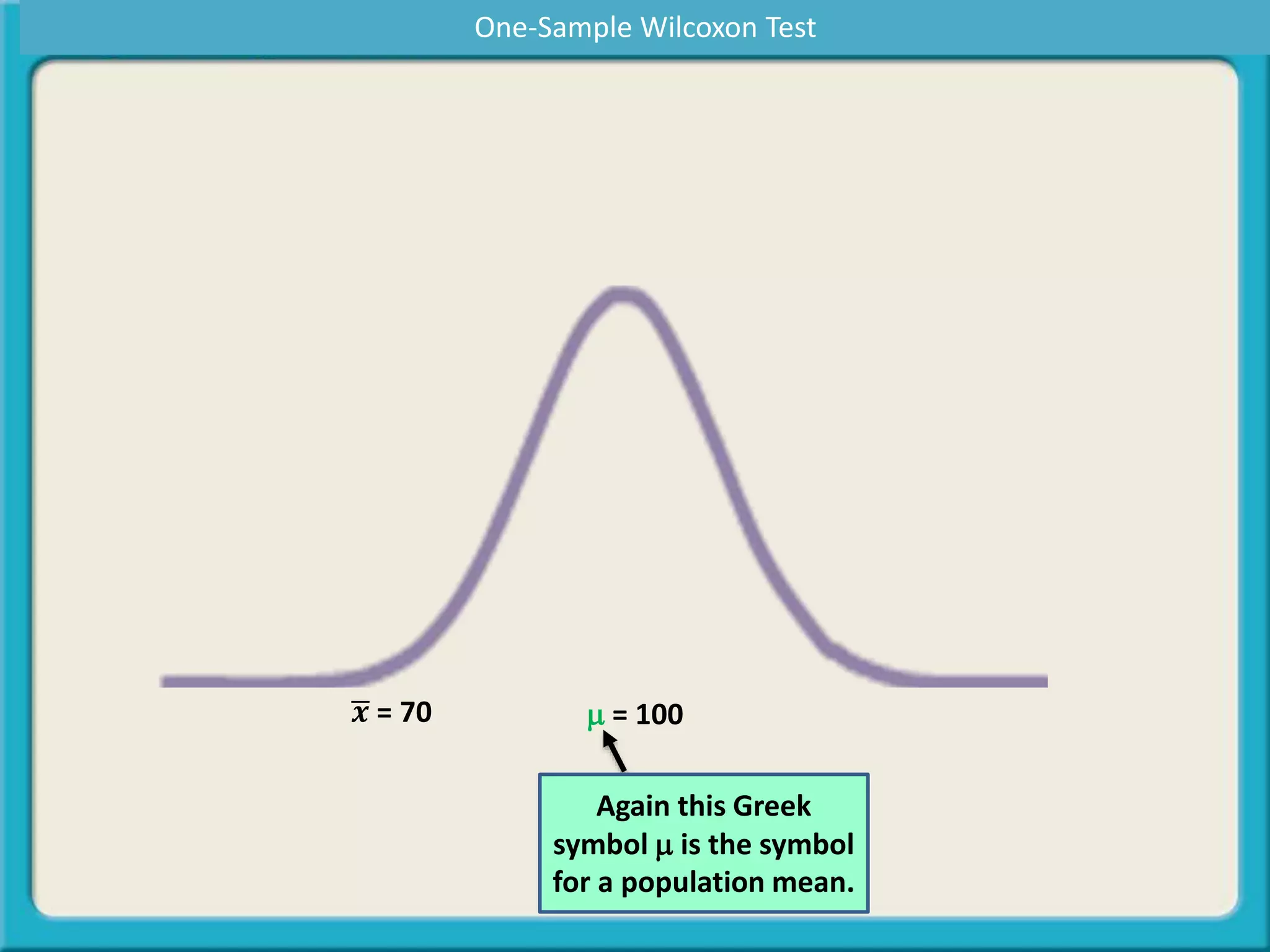
m = 100𝒙 = 70
Again this Greek
symbol m is the symbol
for a population mean.
One-Sample Wilcoxon Test
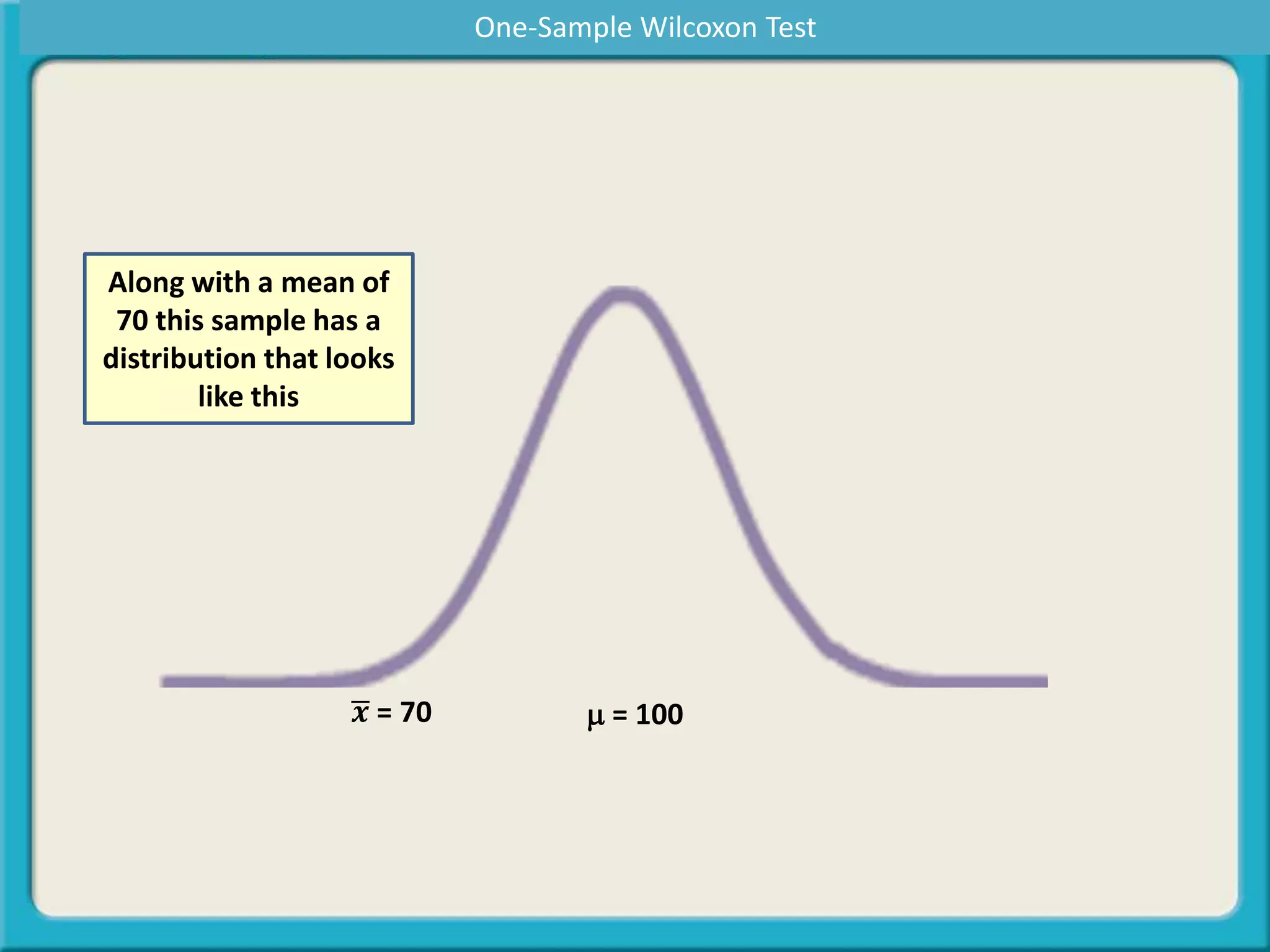
m = 100𝒙 = 70
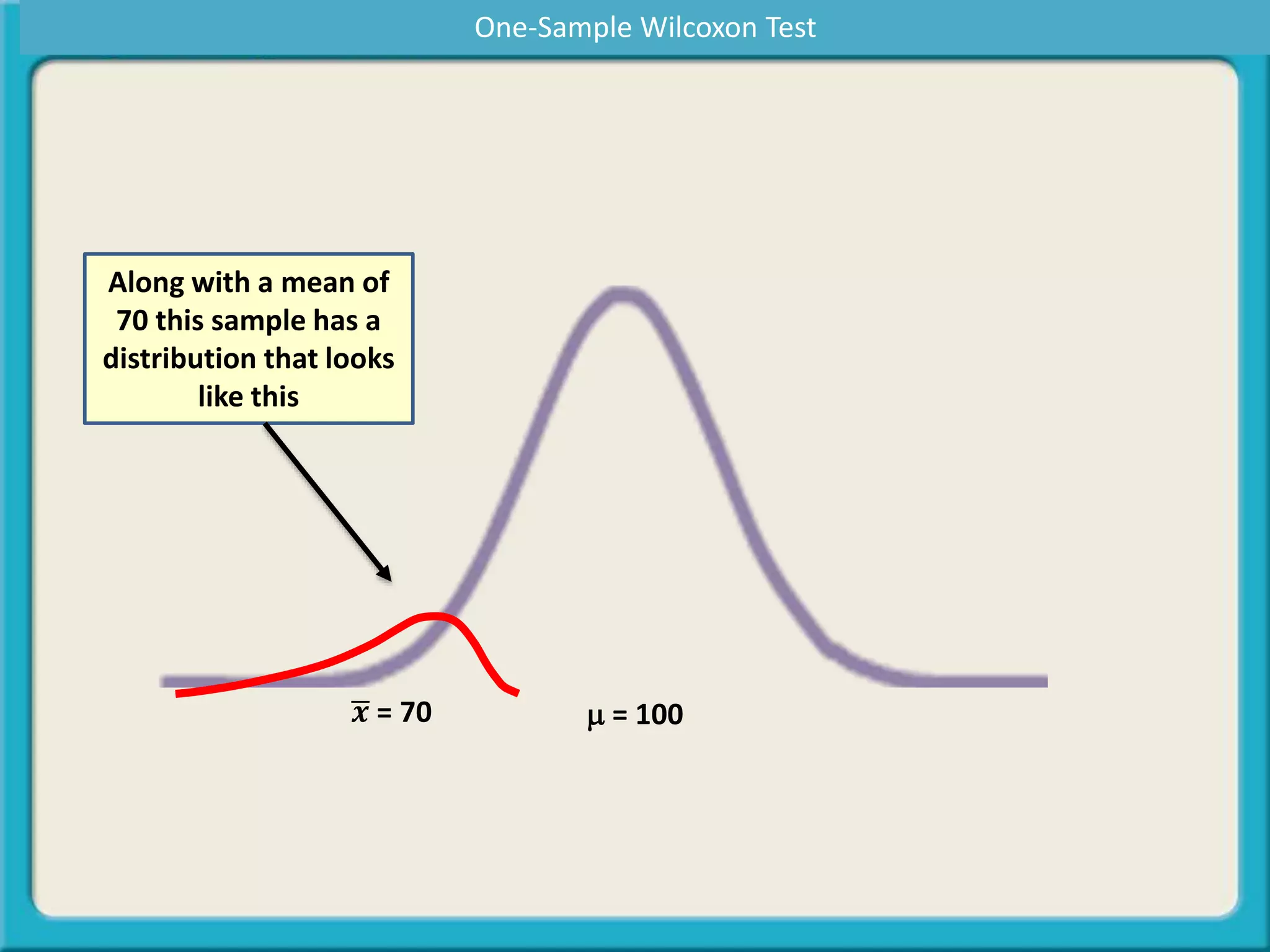
Along with a mean of
70 this sample has a
distribution that looks
like this
One-Sample Wilcoxon Test
m = 100𝒙 = 70
Along with a mean of
70 this sample has a
distribution that looks
like this
One-Sample Wilcoxon Test
m = 100𝒙 = 70
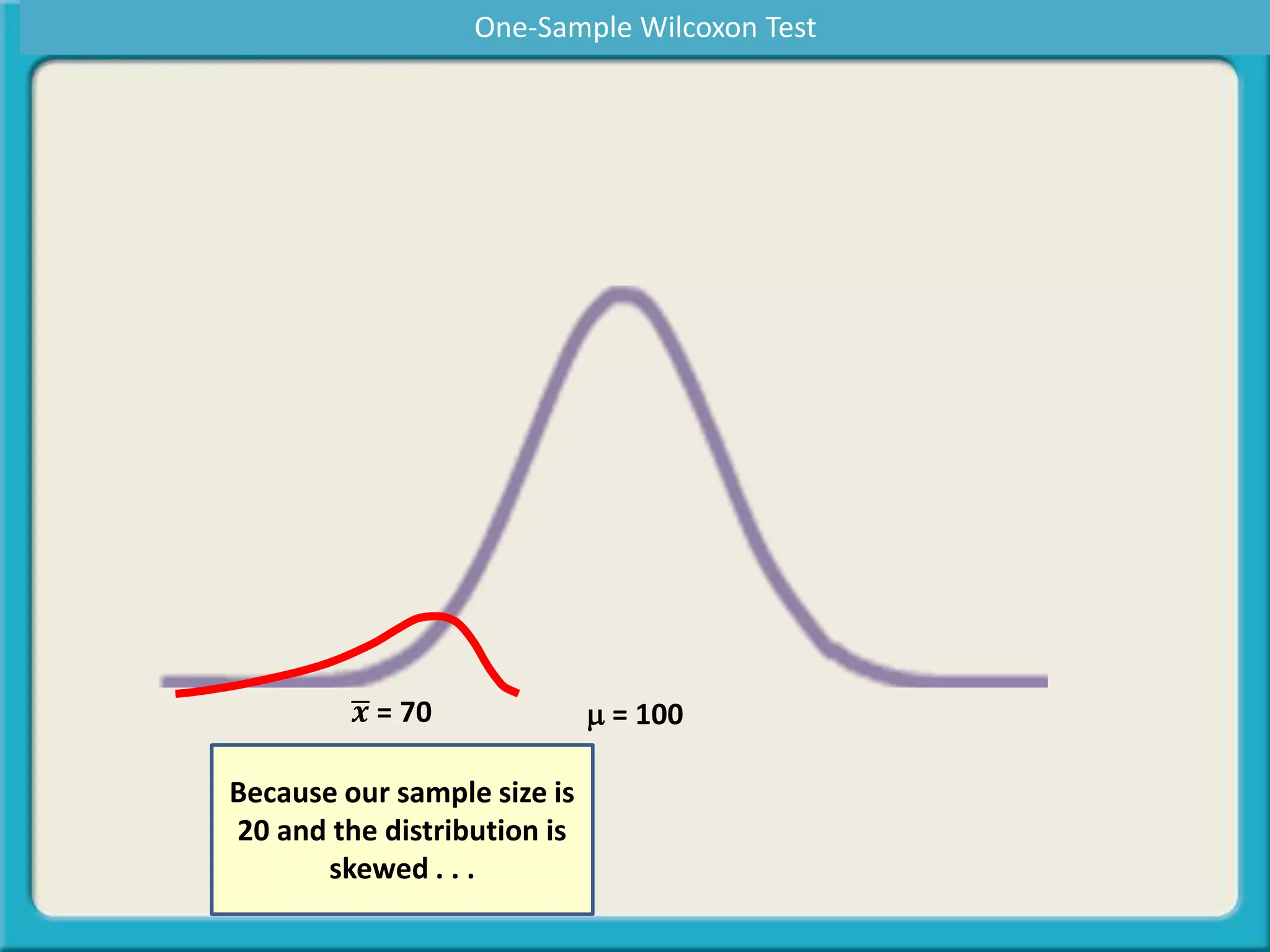
Because our sample size is
20 and the distribution is
skewed . . .
One-Sample Wilcoxon Test
m = 100𝒙 = 70
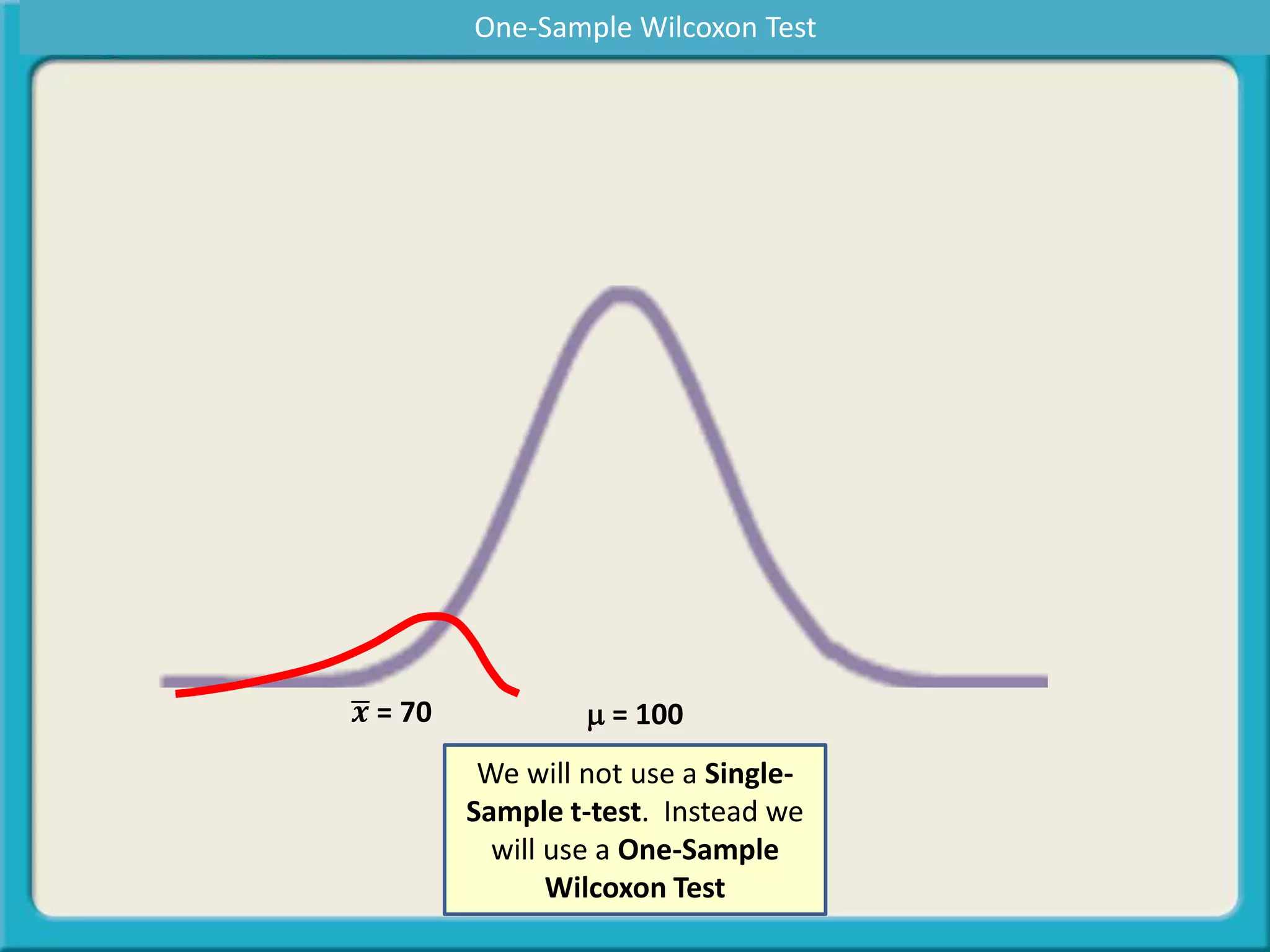
We will not use a Single-
Sample t-test. Instead we
will use a One-Sample
Wilcoxon Test
One-Sample Wilcoxon Test
m = 100𝒙 = 70
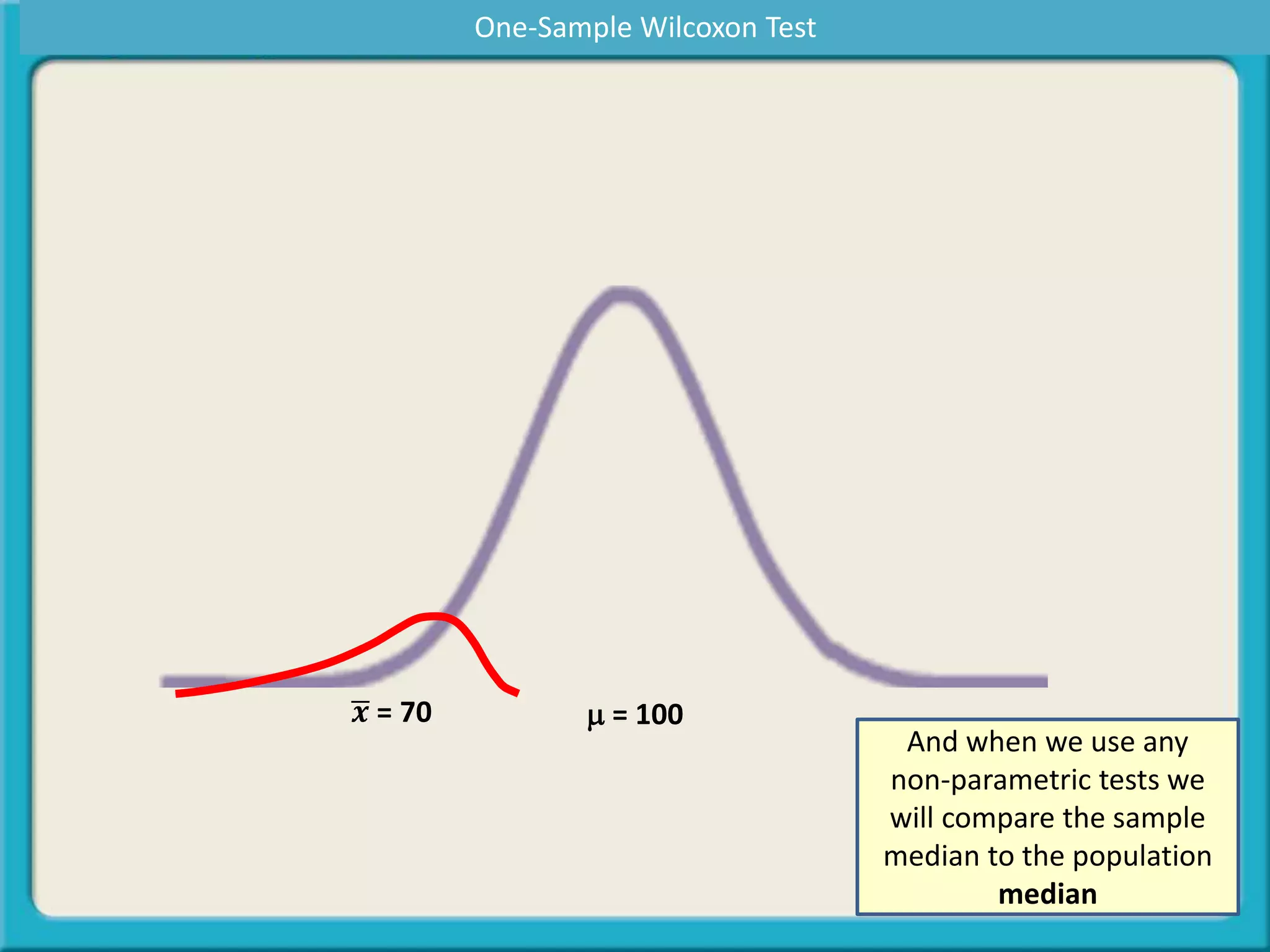
And when we use any
non-parametric tests we
will compare the sample
median to the population
median
One-Sample Wilcoxon Test
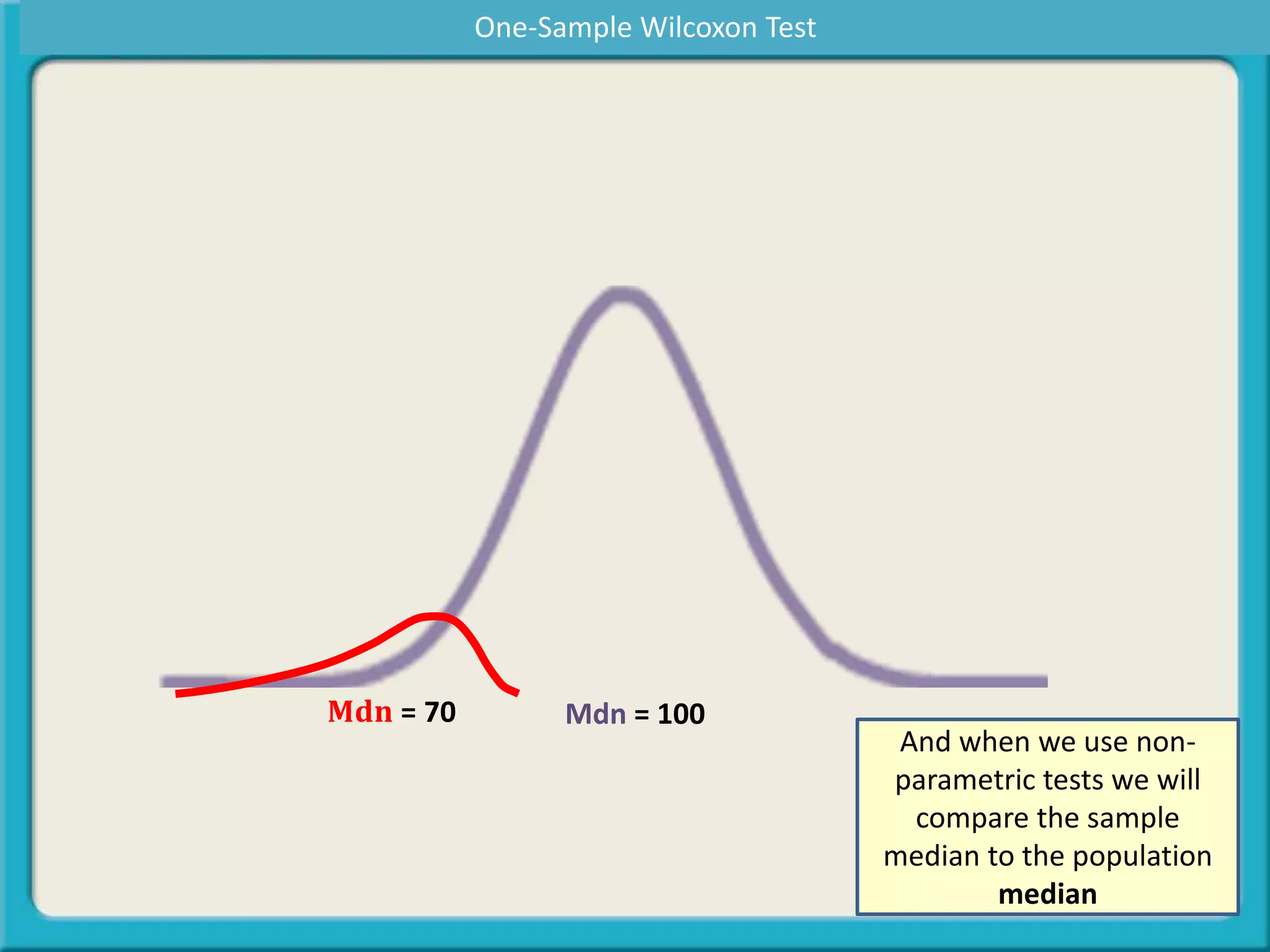
Mdn = 100𝐌𝐝𝐧 = 70
And when we use non-
parametric tests we will
compare the sample
median to the population
median
One-Sample Wilcoxon Test
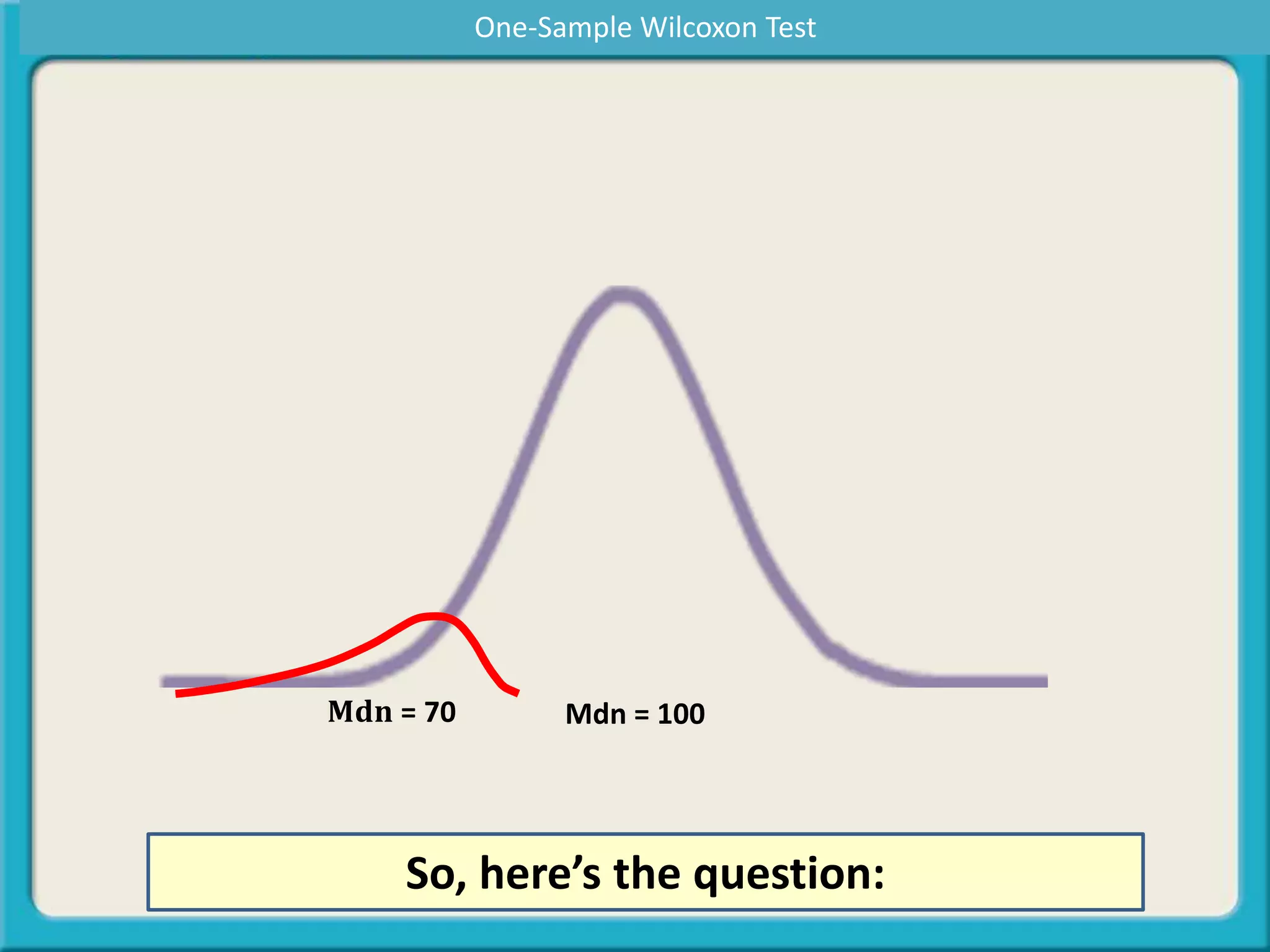
So, here’s the question:
One-Sample Wilcoxon Test
Mdn = 100𝐌𝐝𝐧 = 70
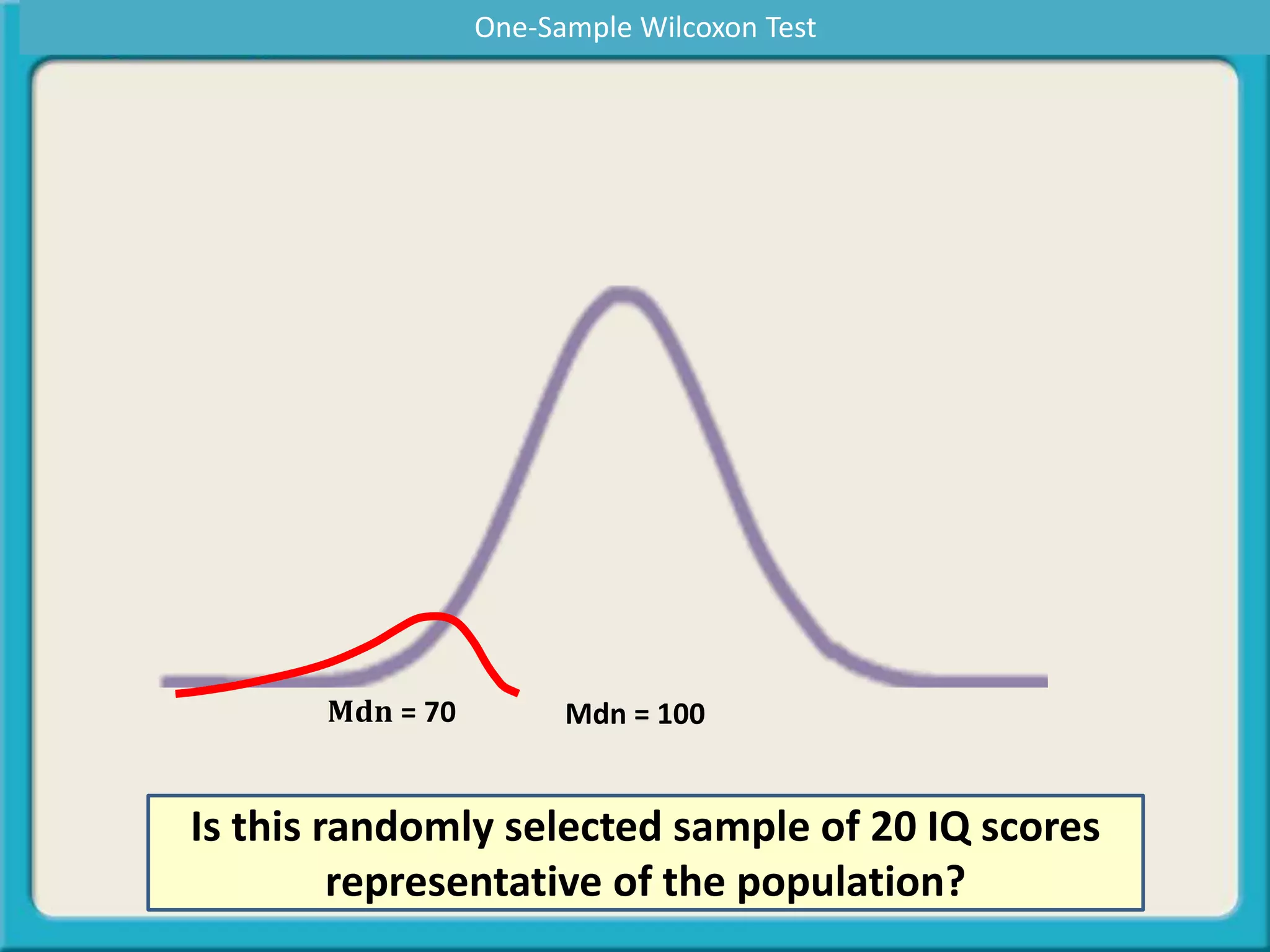
Is this randomly selected sample of 20 IQ scores
representative of the population?
Mdn = 100𝐌𝐝𝐧 = 70
One-Sample Wilcoxon Test
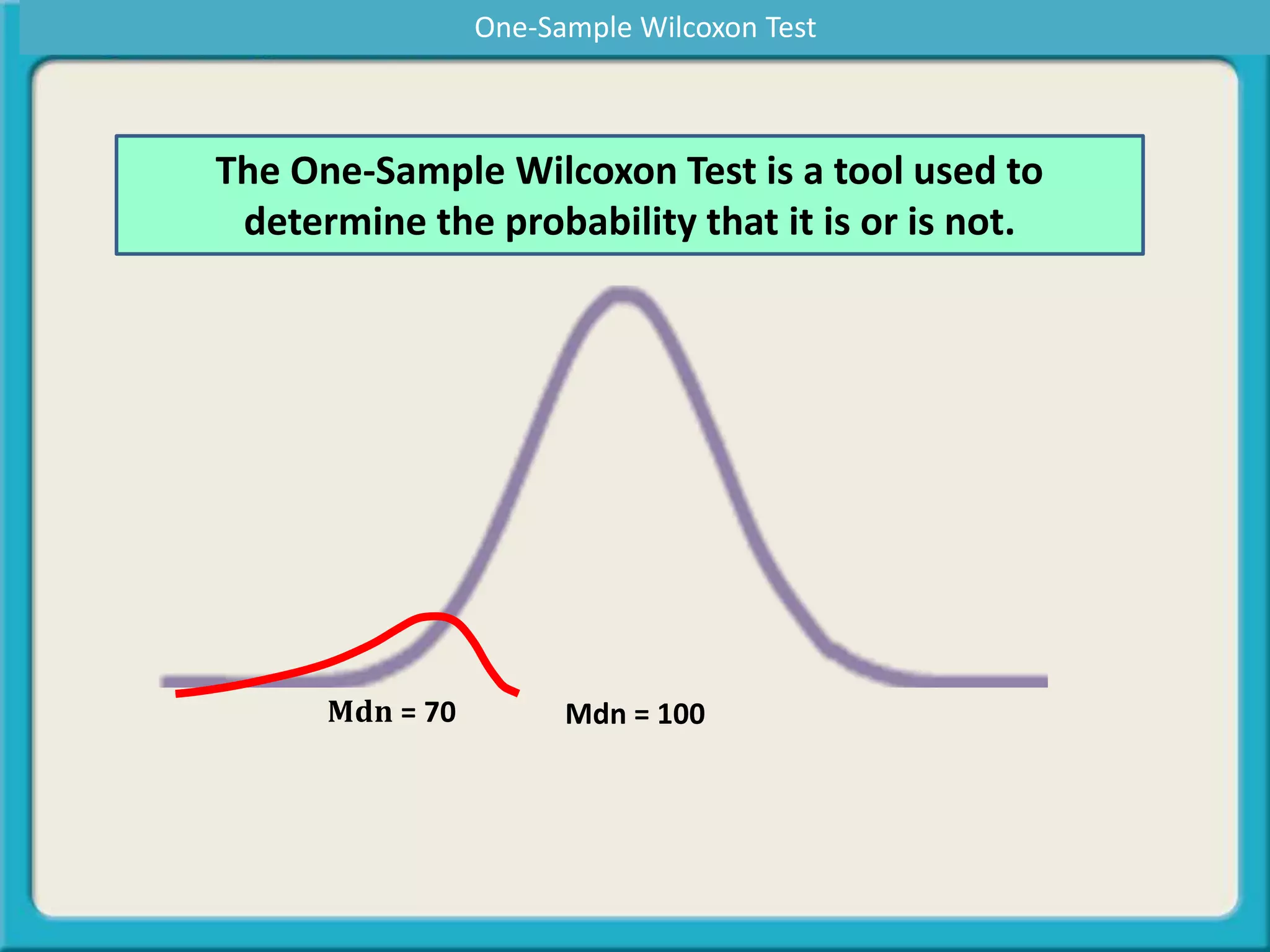
The One-Sample Wilcoxon Test is a tool used to
determine the probability that it is or is not.
Mdn = 100𝐌𝐝𝐧 = 70
One-Sample Wilcoxon Test
End of Presentation
One-Sample Wilcoxon Test

What is a one sample wilcoxon test

  • 1.
    What is aOne-Sample Wilcoxon Test? One-Sample Wilcoxon Test
  • 2.
    Welcome to apresentation explaining the concepts behind the use of a One-Sample Wilcoxon Test One-Sample Wilcoxon Test
  • 3.
    Welcome to apresentation explaining the concepts behind the use of a One-Sample Wilcoxon Test in determining the probability that a sample and a population are similar to or different from one another statistically. One-Sample Wilcoxon Test
  • 4.
    We will followan example where researchers attempt to determine if the sample they have collected is statistically significantly similar or different from a population. One-Sample Wilcoxon Test
  • 5.
    Their hope isthat the sample and population are statistically similar to one another, so they can claim that results of experiments done to the sample are generalizable to the population. One-Sample Wilcoxon Test
  • 6.
    Let’s imagine thatthis is the population distribution for IQ scores in the country: One-Sample Wilcoxon Test
  • 7.
    Let’s imagine thatthis is the population distribution for IQ scores in the country: One-Sample Wilcoxon Test
  • 8.
    It has apopulation mean of 100 One-Sample Wilcoxon Test
  • 9.
    m = 100 One-SampleWilcoxon Test
  • 10.
    m = 100 ThisGreek symbol represents the mean of a population One-Sample Wilcoxon Test
  • 11.
    We decide toselect a random sample to do experiments on. m = 100 One-Sample Wilcoxon Test
  • 12.
    So, we randomly select20 persons m = 100 One-Sample Wilcoxon Test
  • 13.
    Let’s say thatsample of 20 has an IQ score mean of 70 m = 100 One-Sample Wilcoxon Test
  • 14.
    m = 100𝒙= 70 Let’s say that sample of 20 has an IQ score mean of 70 One-Sample Wilcoxon Test
  • 15.
    m = 100𝒙= 70 Note, this x with a bar over it is the symbol for a sample mean. One-Sample Wilcoxon Test
  • 16.
    m = 100𝒙= 70 Again this Greek symbol m is the symbol for a population mean. One-Sample Wilcoxon Test
  • 17.
    m = 100𝒙= 70 Along with a mean of 70 this sample has a distribution that looks like this One-Sample Wilcoxon Test
  • 18.
    m = 100𝒙= 70 Along with a mean of 70 this sample has a distribution that looks like this One-Sample Wilcoxon Test
  • 19.
    m = 100𝒙= 70 Because our sample size is 20 and the distribution is skewed . . . One-Sample Wilcoxon Test
  • 20.
    m = 100𝒙= 70 We will not use a Single- Sample t-test. Instead we will use a One-Sample Wilcoxon Test One-Sample Wilcoxon Test
  • 21.
    m = 100𝒙= 70 And when we use any non-parametric tests we will compare the sample median to the population median One-Sample Wilcoxon Test
  • 22.
    Mdn = 100𝐌𝐝𝐧= 70 And when we use non- parametric tests we will compare the sample median to the population median One-Sample Wilcoxon Test
  • 23.
    So, here’s thequestion: One-Sample Wilcoxon Test Mdn = 100𝐌𝐝𝐧 = 70
  • 24.
    Is this randomlyselected sample of 20 IQ scores representative of the population? Mdn = 100𝐌𝐝𝐧 = 70 One-Sample Wilcoxon Test
  • 25.
    The One-Sample WilcoxonTest is a tool used to determine the probability that it is or is not. Mdn = 100𝐌𝐝𝐧 = 70 One-Sample Wilcoxon Test
  • 26.