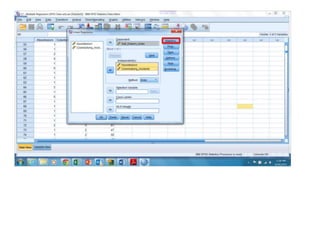
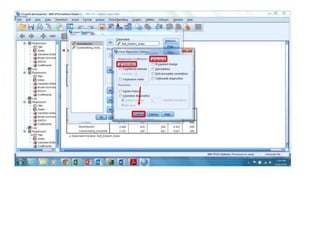
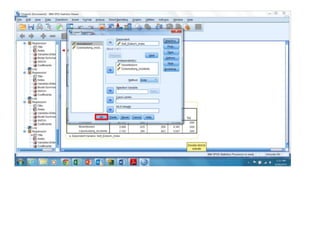
Running & Reporting a Multiple Linear Regression in SPSS - Example
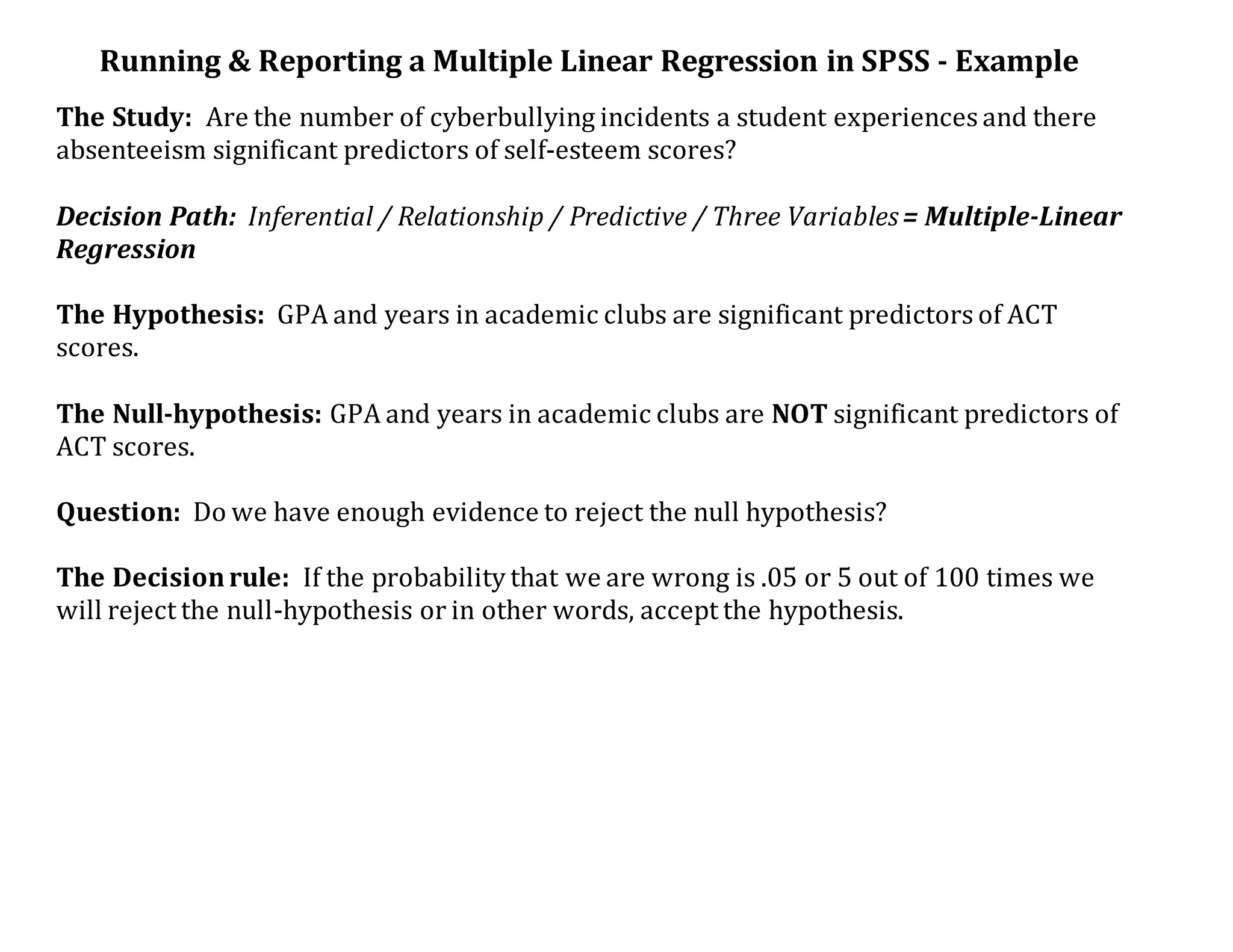
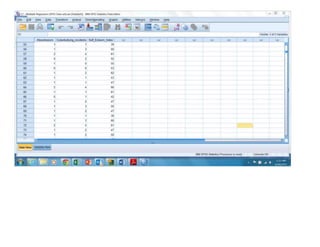
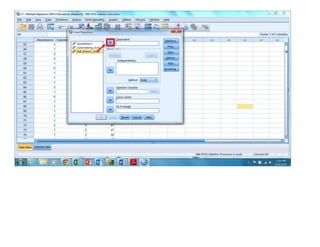
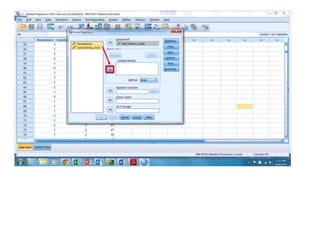
The Study: Are the number of cyberbullying incidents a student experiences and there
absenteeism significant predictors of self-esteem scores?
Decision Path: Inferential / Relationship / Predictive / Three Variables= Multiple-Linear
Regression
The Hypothesis: GPA and years in academic clubs are significant predictors of ACT
scores.
The Null-hypothesis: GPA and years in academic clubs are NOT significant predictors of
ACT scores.
Question: Do we have enough evidence to reject the null hypothesis?
The Decisionrule: If the probability that we are wrong is .05 or 5 out of 100 times we
will reject the null-hypothesis or in other words, accept the hypothesis.
Results
ANOVAa
Model
Sum of
Squares df
Mean
Square F Sig.
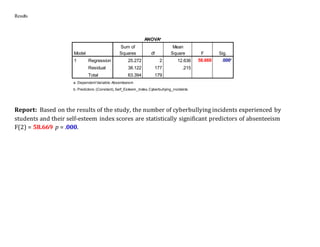
1 Regression 25.272 2 12.636 58.669 .000b
Residual 38.122 177 .215
Total 63.394 179
a. DependentVariable:Absenteeism
b. Predictors:(Constant),Self_Esteem_Index, Cyberbullying_incidents
Report: Based on the results of the study, the number of cyberbullying incidents experienced by
students and their self-esteem index scores are statistically significant predictors of absenteeism
F(2) = 58.669 p = .000.
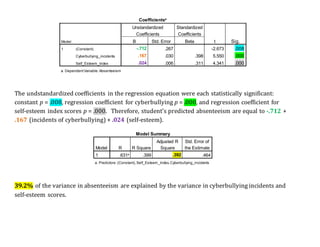
Coefficientsa
Model
Unstandardized
Coefficients
Standardized
Coefficients
t Sig.B Std. Error Beta
1 (Constant) -.712 .267 -2.673 .008
Cyberbullying_incidents .167 .030 .398 5.550 .000
Self_Esteem_Index .024 .006 .311 4.341 .000
a. Dependent Variable:Absenteeism
The undstandardized coefficients in the regression equation were each statistically significant:
constant p = .008, regression coefficient for cyberbullying p = .000, and regression coefficient for
self-esteem index scores p = .000. Therefore, student’s predicted absenteeism are equal to -.712 +
.167 (incidents of cyberbullying) + .024 (self-esteem).
Model Summary
Model R R Square
Adjusted R
Square
Std. Error of
the Estimate
1 .631a
.399 .392 .464
a. Predictors:(Constant), Self_Esteem_Index,Cyberbullying_incidents
39.2% of the variance in absenteeism are explained by the variance in cyberbullying incidents and
self-esteem scores.
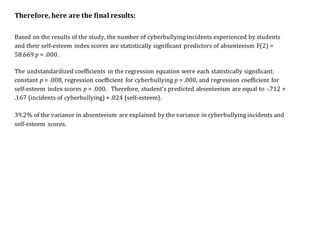
Therefore, here are the final results:
Based on the results of the study, the number of cyberbullying incidents experienced by students
and their self-esteem index scores are statistically significant predictors of absenteeism F(2) =
58.669 p = .000.
The undstandardized coefficients in the regression equation were each statistically significant:
constant p = .008, regression coefficient for cyberbullying p = .000, and regression coefficient for
self-esteem index scores p = .000. Therefore, student’s predicted absenteeism are equal to -.712 +
.167 (incidents of cyberbullying) + .024 (self-esteem).
39.2% of the variance in absenteeism are explained by the variance in cyberbullying incidents and
self-esteem scores.

17 multiple-linear regression

  • 1.
    Running & Reportinga Multiple Linear Regression in SPSS - Example The Study: Are the number of cyberbullying incidents a student experiences and there absenteeism significant predictors of self-esteem scores? Decision Path: Inferential / Relationship / Predictive / Three Variables= Multiple-Linear Regression The Hypothesis: GPA and years in academic clubs are significant predictors of ACT scores. The Null-hypothesis: GPA and years in academic clubs are NOT significant predictors of ACT scores. Question: Do we have enough evidence to reject the null hypothesis? The Decisionrule: If the probability that we are wrong is .05 or 5 out of 100 times we will reject the null-hypothesis or in other words, accept the hypothesis.
  • 9.
    Results ANOVAa Model Sum of Squares df Mean SquareF Sig. 1 Regression 25.272 2 12.636 58.669 .000b Residual 38.122 177 .215 Total 63.394 179 a. DependentVariable:Absenteeism b. Predictors:(Constant),Self_Esteem_Index, Cyberbullying_incidents Report: Based on the results of the study, the number of cyberbullying incidents experienced by students and their self-esteem index scores are statistically significant predictors of absenteeism F(2) = 58.669 p = .000.
  • 10.
    Coefficientsa Model Unstandardized Coefficients Standardized Coefficients t Sig.B Std.Error Beta 1 (Constant) -.712 .267 -2.673 .008 Cyberbullying_incidents .167 .030 .398 5.550 .000 Self_Esteem_Index .024 .006 .311 4.341 .000 a. Dependent Variable:Absenteeism The undstandardized coefficients in the regression equation were each statistically significant: constant p = .008, regression coefficient for cyberbullying p = .000, and regression coefficient for self-esteem index scores p = .000. Therefore, student’s predicted absenteeism are equal to -.712 + .167 (incidents of cyberbullying) + .024 (self-esteem). Model Summary Model R R Square Adjusted R Square Std. Error of the Estimate 1 .631a .399 .392 .464 a. Predictors:(Constant), Self_Esteem_Index,Cyberbullying_incidents 39.2% of the variance in absenteeism are explained by the variance in cyberbullying incidents and self-esteem scores.
  • 11.
    Therefore, here arethe final results: Based on the results of the study, the number of cyberbullying incidents experienced by students and their self-esteem index scores are statistically significant predictors of absenteeism F(2) = 58.669 p = .000. The undstandardized coefficients in the regression equation were each statistically significant: constant p = .008, regression coefficient for cyberbullying p = .000, and regression coefficient for self-esteem index scores p = .000. Therefore, student’s predicted absenteeism are equal to -.712 + .167 (incidents of cyberbullying) + .024 (self-esteem). 39.2% of the variance in absenteeism are explained by the variance in cyberbullying incidents and self-esteem scores.