What are Resins
• In polymer chemistry and materials science, resin is a "solid or
highly viscous substance" of plant or synthetic origin that is
typically convertible into polymers.[1] They are often mixtures
of organic compounds, principally terpenes. Many plants,
particularly woody plants, produce resin in response to injury.
The resin acts as a bandage protecting the plant from invading
insects and pathogens
Physical properties:
• Resins are transparent or translucent.
• Resins are mostly heavier than water.
• Resins are insoluble in water.
• Resins are soluble in solvents like alcohol, volatile oils, fixed oils,
organic solvents, non polar solvents.
• Resins are substances with a hard texture.
• Resins are electrically non-conductive.
• Resins get softened upon heating and undergo melting
Chemical properties:
• Resins consist of schizogeneous or schizolysegeneous cavities and
ducts in their chemical moieties.
• Resins are also composed of esters.
CLASSIFICATION OF RESINS
• Resins are divided into three major classes, namely:
• Acid resins
• Ester resins
• Resin alcohols
• ACID RESINS
• Those resins which consist of acidic moieties as their main chemical
constituents are known as acidic resins.
• Examples of acidic resins: Colophony, Myrrh, Shellac, Sandrac.
• ESTER RESINS
• Those resins which consist of ester as their chief chemical
constituents are known as ester resins.
• Examples of ester resins: Benzoin, Storax.
• RESIN ALCOHOLS
• Those resins which consist of complex alcoholic groups of high
molecular weights are known a resin alcohol.
• Examples of resin alcohols: Canada balsam, Guggul, Capsicum,
Asafoetida.
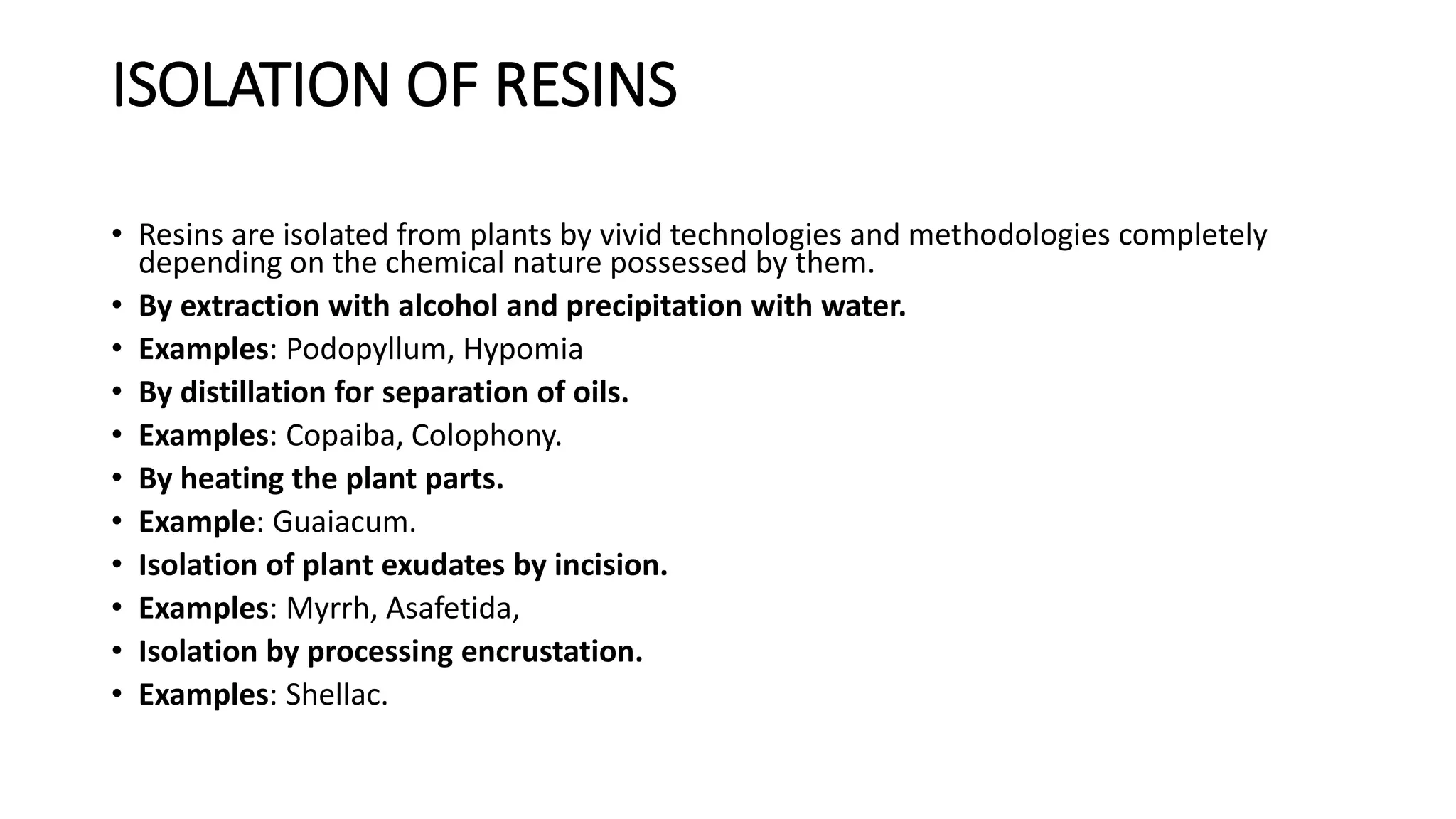
ISOLATION OF RESINS
• Resins are isolated from plants by vivid technologies and methodologies completely
depending on the chemical nature possessed by them.
• By extraction with alcohol and precipitation with water.
• Examples: Podopyllum, Hypomia
• By distillation for separation of oils.
• Examples: Copaiba, Colophony.
• By heating the plant parts.
• Example: Guaiacum.
• Isolation of plant exudates by incision.
• Examples: Myrrh, Asafetida,
• Isolation by processing encrustation.
• Examples: Shellac.
Medicinal uses of resins:
• Carminatives
• Examples: Ginger, Asafetida, Capsicum.
• Stomachics
• Examples: Capsicum, Ginger.
• Anti-inflammatory agents
• Examples: Turmeric, Guggul.
• Anti-rheumatic agents
• Examples: Guggul, Capsicum.
• Antiseptic agents
• Examples: Tolubalsam, Myrrh.
• Flavoring agents/spices /condiments
• Examples: Ginger, Turmeric, Tolubalsam, Perubalsam.
• Cathartic
• Example: Kaladana.

What are resins

  • 1.
  • 2.
    • In polymerchemistry and materials science, resin is a "solid or highly viscous substance" of plant or synthetic origin that is typically convertible into polymers.[1] They are often mixtures of organic compounds, principally terpenes. Many plants, particularly woody plants, produce resin in response to injury. The resin acts as a bandage protecting the plant from invading insects and pathogens
  • 3.
    Physical properties: • Resinsare transparent or translucent. • Resins are mostly heavier than water. • Resins are insoluble in water. • Resins are soluble in solvents like alcohol, volatile oils, fixed oils, organic solvents, non polar solvents. • Resins are substances with a hard texture. • Resins are electrically non-conductive. • Resins get softened upon heating and undergo melting
  • 4.
    Chemical properties: • Resinsconsist of schizogeneous or schizolysegeneous cavities and ducts in their chemical moieties. • Resins are also composed of esters.
  • 5.
    CLASSIFICATION OF RESINS •Resins are divided into three major classes, namely: • Acid resins • Ester resins • Resin alcohols
  • 6.
    • ACID RESINS •Those resins which consist of acidic moieties as their main chemical constituents are known as acidic resins. • Examples of acidic resins: Colophony, Myrrh, Shellac, Sandrac. • ESTER RESINS • Those resins which consist of ester as their chief chemical constituents are known as ester resins. • Examples of ester resins: Benzoin, Storax.
  • 7.
    • RESIN ALCOHOLS •Those resins which consist of complex alcoholic groups of high molecular weights are known a resin alcohol. • Examples of resin alcohols: Canada balsam, Guggul, Capsicum, Asafoetida.
  • 8.
    ISOLATION OF RESINS •Resins are isolated from plants by vivid technologies and methodologies completely depending on the chemical nature possessed by them. • By extraction with alcohol and precipitation with water. • Examples: Podopyllum, Hypomia • By distillation for separation of oils. • Examples: Copaiba, Colophony. • By heating the plant parts. • Example: Guaiacum. • Isolation of plant exudates by incision. • Examples: Myrrh, Asafetida, • Isolation by processing encrustation. • Examples: Shellac.
  • 9.
    Medicinal uses ofresins: • Carminatives • Examples: Ginger, Asafetida, Capsicum. • Stomachics • Examples: Capsicum, Ginger. • Anti-inflammatory agents • Examples: Turmeric, Guggul. • Anti-rheumatic agents
  • 10.
    • Examples: Guggul,Capsicum. • Antiseptic agents • Examples: Tolubalsam, Myrrh. • Flavoring agents/spices /condiments • Examples: Ginger, Turmeric, Tolubalsam, Perubalsam. • Cathartic • Example: Kaladana.