Monitoring insects with PHEROMONE TRAPS Dr. Ayanava Majumdar Extension Entomologist Alabama Cooperative Extension System Gulf Coast Research & Extension Center 8300 State Hwy 104, Fairhope, Alabama 36532 Cell phone: 251-331-8416 PART 3B
Objectives Introduction to trapping techniques Discuss types of pheromone traps Discuss application of pheromone traps Discuss integration with other tactics Insect trapping is easy, fun, & practical!
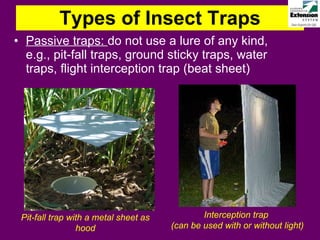
Types of Insect Traps Passive traps:  do not use a lure of any kind, e.g., pit-fall traps, ground sticky traps, water traps, flight interception trap (beat sheet) Pit-fall trap with a metal sheet as hood Interception trap  (can be used with or without light)
Types of Insect Traps Active traps:  use a lure of some kind, e.g., food, color, shape, light…PHEROMONES Dome Fly Trap with liquid bait for mass trapping fruit flies Light trap
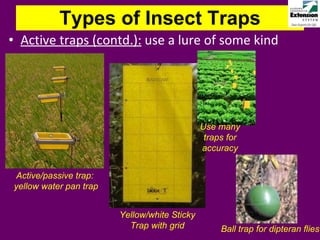
Types of Insect Traps Active traps (contd.):  use a lure of some kind Active/passive trap:  yellow water pan trap Yellow/white Sticky Trap with grid Use many traps for accuracy Ball trap for dipteran flies
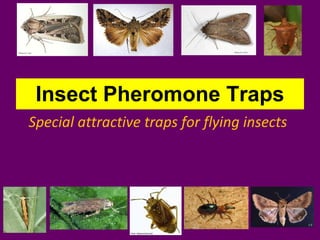
Insect Pheromone Traps Special attractive traps for flying insects
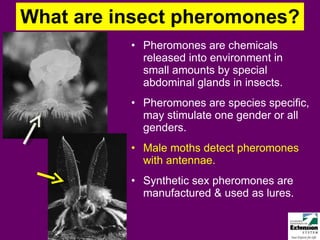
What are insect pheromones? Pheromones are chemicals released into environment in small amounts by special abdominal glands in insects. Pheromones are species specific, may stimulate one gender or all genders. Male moths detect pheromones with antennae. Synthetic sex pheromones are manufactured & used as lures.
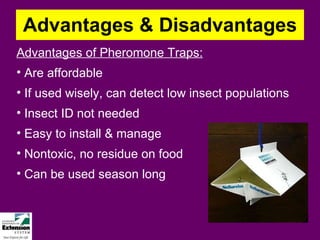
Advantages & Disadvantages Advantages of Pheromone Traps: Are affordable  If used wisely, can detect low insect populations Insect ID not needed Easy to install & manage Nontoxic, no residue on food Can be used season long
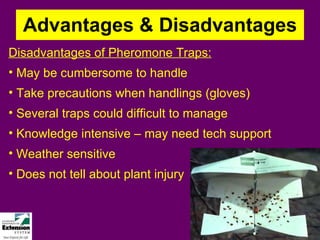
Advantages & Disadvantages Disadvantages of Pheromone Traps: May be cumbersome to handle Take precautions when handlings (gloves) Several traps could difficult to manage Knowledge intensive – may need tech support Weather sensitive Does not tell about plant injury
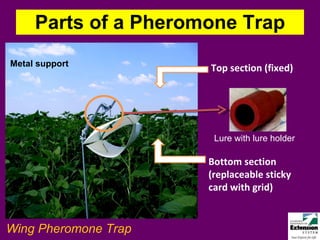
Parts of a Pheromone Trap Wing Pheromone Trap Top section (fixed)  Bottom section (replaceable sticky card with grid)  Metal support Lure with lure holder
Types of Pheromone Traps Wing Traps Lure supply:  Trece, Scentry, APTIV;  trap supply:  Great Lakes IPM, Arbico Organics, Gemplers, APTIV Simple wing trap with grid on sticky bottom Wing trap with baffles (large trap surface) These are very popular in IPM due to their easy assemblage, large trap bottom, & low cost of kits! Suitable for larger moths: armyworm, cutworm, fruitworms Problem:  change of bottom is cumbersome, weather & animals could ruin trap
Types of Pheromone Traps Lure supply:  Trece, Scentry;  trap supply:  Great Lakes IPM, Gemplers Delta Traps Delta traps with sticky insert having a printed grid. Sides fold to hold the sticky insert in place. >> These are very popular in IPM due to their easy assemblage, maintenance, less weather damage, & low cost of kits! Suitable for small moths – diamondback moth, loopers Problem:  small trapping surface
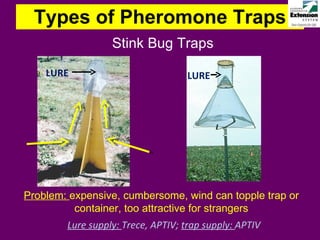
Types of Pheromone Traps Stink Bug Traps LURE LURE Lure supply:  Trece, APTIV;  trap supply:  APTIV Problem:  expensive, cumbersome, wind can topple trap or container, too attractive for strangers
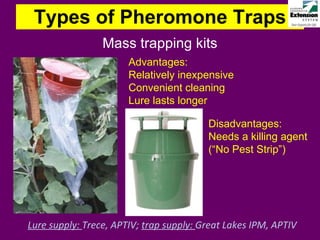
Types of Pheromone Traps Mass trapping kits Lure supply:  Trece, APTIV;  trap supply:  Great Lakes IPM, APTIV Advantages: Relatively inexpensive Convenient cleaning Lure lasts longer Disadvantages: Needs a killing agent (“No Pest Strip”)
How to choose the right pheromone traps? Goal:  monitoring? Yes, traditional use of pheromone traps mass trapping? May be for home gardeners  Insect species:  Pheromone trap for all species are not available Consult & work in a group (neighbors)  Size of the Insect:  Traps come in all sizes, choose large trap for large moths Your convenience:  Traps must be checked weekly (weather is a major issue) Don’t commit if you can’t monitor long-term
Trap & Lure Suppliers TRAPS: Great Lakes IPM (MI) Arbico Organics (AZ) Gemplers LURES: Great Lakes IPM – Scentry Biologicals (MT) & Trece, Inc. APTIV, Inc. (OR)
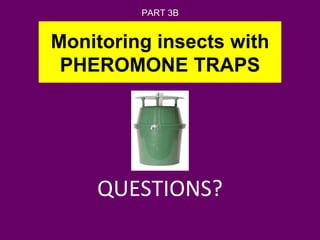
Monitoring insects with PHEROMONE TRAPS QUESTIONS? PART 3B

What are Insect Pheromone Traps

  • 1.
    Monitoring insects withPHEROMONE TRAPS Dr. Ayanava Majumdar Extension Entomologist Alabama Cooperative Extension System Gulf Coast Research & Extension Center 8300 State Hwy 104, Fairhope, Alabama 36532 Cell phone: 251-331-8416 PART 3B
  • 2.
    Objectives Introduction totrapping techniques Discuss types of pheromone traps Discuss application of pheromone traps Discuss integration with other tactics Insect trapping is easy, fun, & practical!
  • 3.
    Types of InsectTraps Passive traps: do not use a lure of any kind, e.g., pit-fall traps, ground sticky traps, water traps, flight interception trap (beat sheet) Pit-fall trap with a metal sheet as hood Interception trap (can be used with or without light)
  • 4.
    Types of InsectTraps Active traps: use a lure of some kind, e.g., food, color, shape, light…PHEROMONES Dome Fly Trap with liquid bait for mass trapping fruit flies Light trap
  • 5.
    Types of InsectTraps Active traps (contd.): use a lure of some kind Active/passive trap: yellow water pan trap Yellow/white Sticky Trap with grid Use many traps for accuracy Ball trap for dipteran flies
  • 6.
    Insect Pheromone TrapsSpecial attractive traps for flying insects
  • 7.
    What are insectpheromones? Pheromones are chemicals released into environment in small amounts by special abdominal glands in insects. Pheromones are species specific, may stimulate one gender or all genders. Male moths detect pheromones with antennae. Synthetic sex pheromones are manufactured & used as lures.
  • 8.
    Advantages & DisadvantagesAdvantages of Pheromone Traps: Are affordable If used wisely, can detect low insect populations Insect ID not needed Easy to install & manage Nontoxic, no residue on food Can be used season long
  • 9.
    Advantages & DisadvantagesDisadvantages of Pheromone Traps: May be cumbersome to handle Take precautions when handlings (gloves) Several traps could difficult to manage Knowledge intensive – may need tech support Weather sensitive Does not tell about plant injury
  • 10.
    Parts of aPheromone Trap Wing Pheromone Trap Top section (fixed) Bottom section (replaceable sticky card with grid) Metal support Lure with lure holder
  • 11.
    Types of PheromoneTraps Wing Traps Lure supply: Trece, Scentry, APTIV; trap supply: Great Lakes IPM, Arbico Organics, Gemplers, APTIV Simple wing trap with grid on sticky bottom Wing trap with baffles (large trap surface) These are very popular in IPM due to their easy assemblage, large trap bottom, & low cost of kits! Suitable for larger moths: armyworm, cutworm, fruitworms Problem: change of bottom is cumbersome, weather & animals could ruin trap
  • 12.
    Types of PheromoneTraps Lure supply: Trece, Scentry; trap supply: Great Lakes IPM, Gemplers Delta Traps Delta traps with sticky insert having a printed grid. Sides fold to hold the sticky insert in place. >> These are very popular in IPM due to their easy assemblage, maintenance, less weather damage, & low cost of kits! Suitable for small moths – diamondback moth, loopers Problem: small trapping surface
  • 13.
    Types of PheromoneTraps Stink Bug Traps LURE LURE Lure supply: Trece, APTIV; trap supply: APTIV Problem: expensive, cumbersome, wind can topple trap or container, too attractive for strangers
  • 14.
    Types of PheromoneTraps Mass trapping kits Lure supply: Trece, APTIV; trap supply: Great Lakes IPM, APTIV Advantages: Relatively inexpensive Convenient cleaning Lure lasts longer Disadvantages: Needs a killing agent (“No Pest Strip”)
  • 15.
    How to choosethe right pheromone traps? Goal: monitoring? Yes, traditional use of pheromone traps mass trapping? May be for home gardeners Insect species: Pheromone trap for all species are not available Consult & work in a group (neighbors) Size of the Insect: Traps come in all sizes, choose large trap for large moths Your convenience: Traps must be checked weekly (weather is a major issue) Don’t commit if you can’t monitor long-term
  • 16.
    Trap & LureSuppliers TRAPS: Great Lakes IPM (MI) Arbico Organics (AZ) Gemplers LURES: Great Lakes IPM – Scentry Biologicals (MT) & Trece, Inc. APTIV, Inc. (OR)
  • 17.
    Monitoring insects withPHEROMONE TRAPS QUESTIONS? PART 3B