SEMIOCHEMICAL AS COMPONANT OF BIO-RATIONAL
APPROACHES TO PEST MANAGEMENT
BY
Birjhu
karunik
Msc (Ag)
Prev. Year
Deptt. Of ENTOMOLOGY
Outline of seminar
Introduction
Biorationl approach
Semiochemical
Pheromon
Allelo chemicals
Use of pheromones
Insect sex pheromones
Potential in pest management
conclusion
The term is derived from Greek word someone
meaning a mark or a signal. Chemical which modify
behaviour in perceiving organisms at sub micro/nano
gram levels are known as semio-chemicals.
INTRODUCTION
The concept of “Integrated Management” during a time
when insect pest control was mostly based on broad-
spectrum , conventional Insecticides such as
organochlorines, organophosphates (OPs), and
carbamates ,all neurotoxin. Their work on economic
thresholds and economic injury levels implemented
within an ecological framework where chemical and
biological controls could thrive together is the basis for
the modern day Integrated Pest Management (IPM)
concept.
What is Biorational Approach??
The utilization of chemicals that
affect insect behaviour ,growth or
reproduction for supression of
insect population is often reffered
to as biorational Approach.
This Includes
Chitin Synthesis Inhibitors
Inhibitors of Chitin Degradation
Chemicals Based on Endocrine System
Brain Hormones
Moulting Hormones
CHEMICALSCALS BASED ON COMMUNICATION SYSTEM
Animal behaviour is elicited in response to
VISUAL
AUDITORY
TACTILE
OLFACTORY
GUSTATORY-SENSORY
information from the sorrounding world.
SEMIOCHEMICALS
Chemical involved in communication
are termed as Semiochemicals.
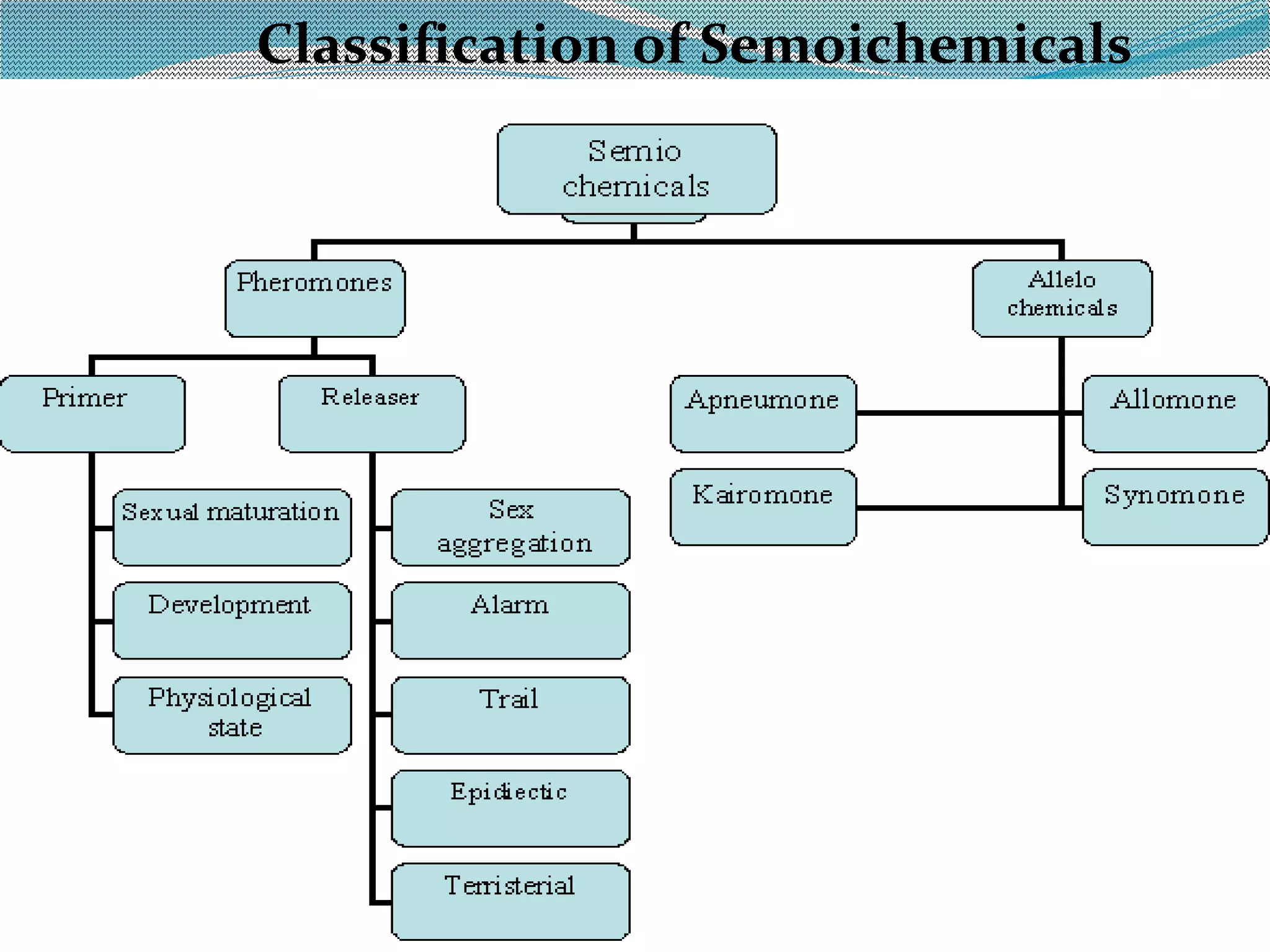
Semiochemicals are divided into two
communication channels
• Intra-specific
• Inter-specific
Classification of Semoichemicals
PRINCIPLE OF PHEROMONAL CONTROl
Aim at studying the behaviour
regulating chemicals and
exploiting them for insect pest
control.
Introduction
Pheromone Is a chemical or mixture of chemical
released by an organism to outside(environment)
that cause specific reaction in a receiving
organisms in same species.
• Karlson and Butenandt coined the term
Pheromone ,1959.
• also called as ecto hormones.
• Pheromones – Exocrine in origin.
• -volatile in nature serving as chemical means
of communication.
They are of two types;
Releaser effect pheromone- These produce an
immediate and reversible behavioural change in
the receiving insects.
Primer effect pheromones- These trigger chain
of physiological changes in the body of the insect
and operate through gustatory sensillae.
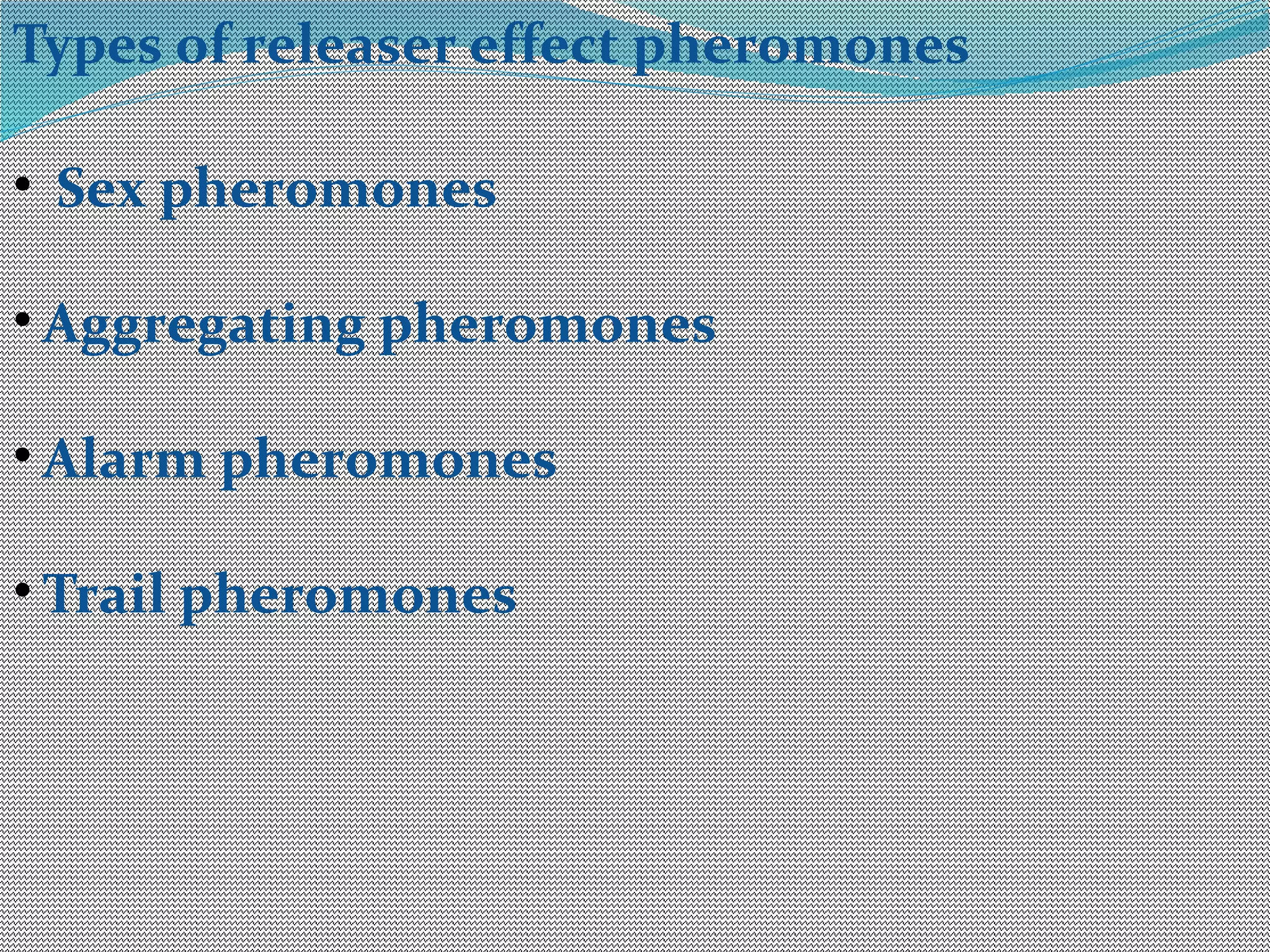
Types of releaser effect pheromones
• Sex pheromones
• Aggregating pheromones
• Alarm pheromones
• Trail pheromones
Allelo-chemicals
• Chemicals involved in inter -specific communication
were termed as allello-chemicals.
• R.H.Whitttaker coined the term allelo-chemicals in
1970
• Allelo-chemicals are defined as non–nutrient substance
originated from an organism (plant or animal) which
effect the behaviour , physiological condition or
ecological welfare of organism of another species.
ALLOMONES
Advantageous to the releaser.
EX-Defensive secretions of insects
KAIROMONES
Advantageous to recipient.
EX. Male sex pheromone in bug.
SYNOMONE
Endocrine secretion of hymenopterans frequently
functions simultaneously both as an allomone and
kairomone.
APNEUMONE
A substrate emitted by a non living material which
evokes a behavioural and physiological reaction.
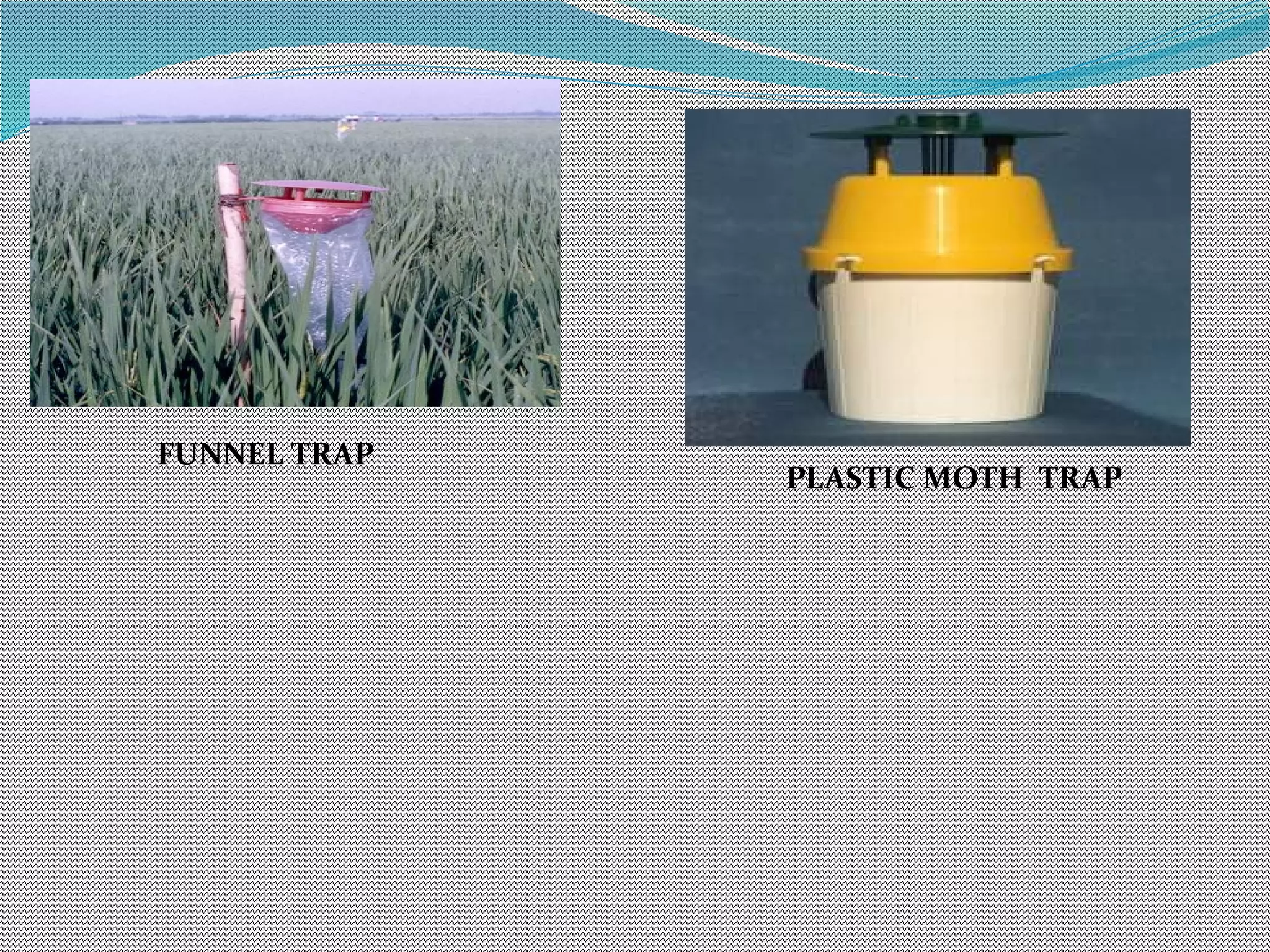
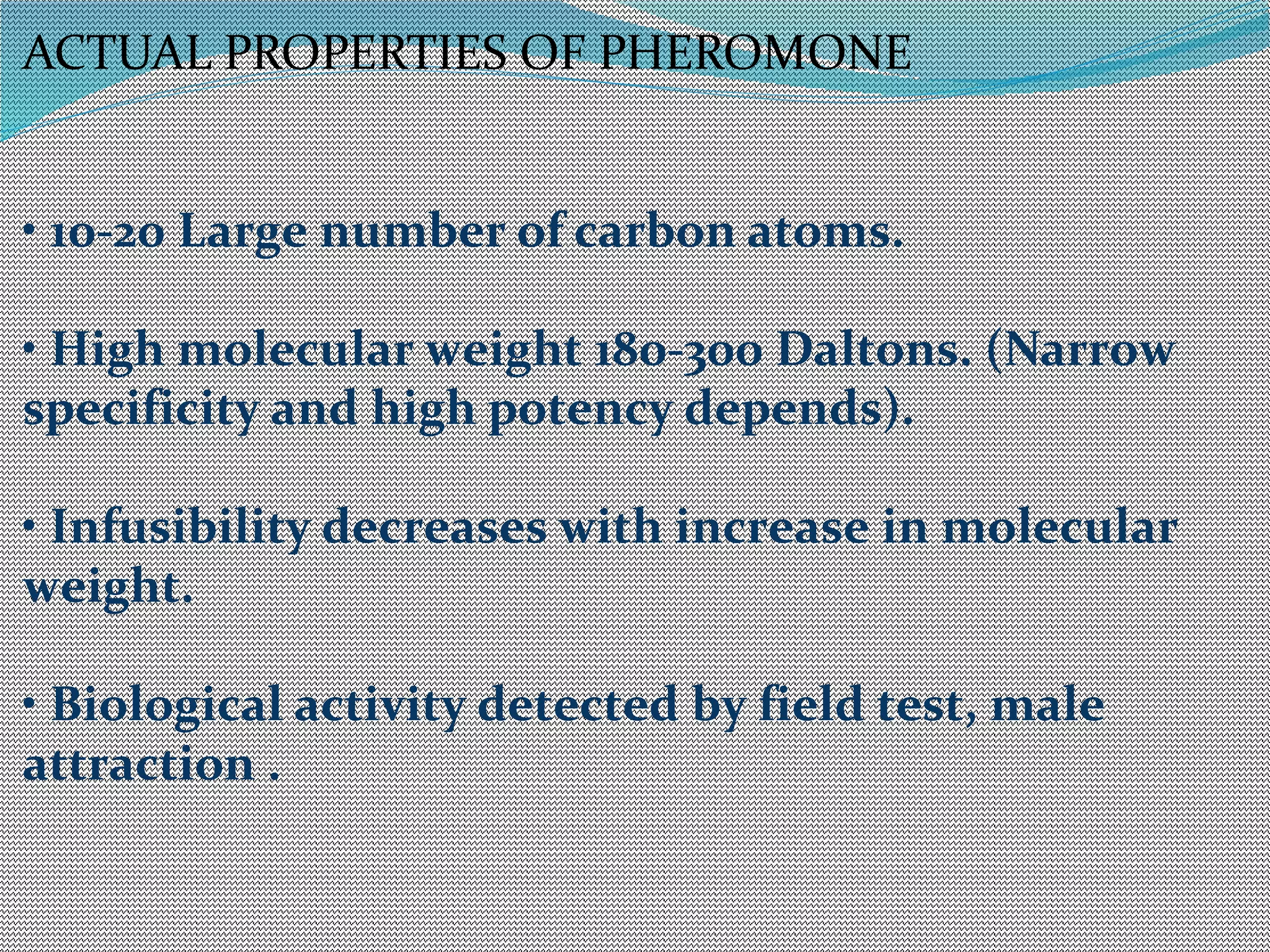
Use of pheromones in insect pest management
• Monitoring
• Mass trapping
• Mating disruption
PLASTIC MOTH TRAP
FUNNEL TRAP
To ensure the effectiveness of pheromone traps..
• Ascertain the quality of lure.
• Ascertain the quality of pheromone.
• Install the trap at right time.
• Install the trap at straight stick/log.
• Take care of the polythene sleeve.
• Replace damaged sleeve and Maintain
proper distance between traps.
• Maintain proper height of the traps.
• Replace lure timely.
ACTUAL PROPERTIES OF PHEROMONE
• 10-20 Large number of carbon atoms.
• High molecular weight 180-300 Daltons. (Narrow
specificity and high potency depends).
• Infusibility decreases with increase in molecular
weight.
• Biological activity detected by field test, male
attraction .
Mode of Pheromone Application
• A) Micro encapsulation method
• B) Hollow fibre method
• C) Pheromone baited traps
• D) Pheromone Dispensers
CONTROL WITH SEX PHEROMONES.
Can be utilized by two ways :-
A)Population survey.
B)Behavioural manipulation.
a) Stimulation of normal approach response.
b) Disruption of chemical communication.
POTENTIAL IN PEST MANAGEMENT
• These are more or less non- toxic to man and
domestic animal. Methoprine, for example, has an
acute LD50 (rat) of >34600 mgkg
• Do not persistent or accumulate
• Species specific
• Have no adverse effect on predator and parasitoid
• These compounds are active at very low
concentration
Conclusion
Semiochemicals are non pollutant and hence ecologically
acceptable. Minute quantity of chemical is required for
controlling the Insect- pests and compatible with other
control tactics. So semiochemical can be used as long
term control measures . Quick result can not be obtained
with these chemicals hence they are not suitable as short
term control measures.
THANK YOU!!

Semiochem

  • 1.
    SEMIOCHEMICAL AS COMPONANTOF BIO-RATIONAL APPROACHES TO PEST MANAGEMENT BY Birjhu karunik Msc (Ag) Prev. Year Deptt. Of ENTOMOLOGY
  • 2.
    Outline of seminar Introduction Biorationlapproach Semiochemical Pheromon Allelo chemicals Use of pheromones Insect sex pheromones Potential in pest management conclusion
  • 3.
    The term isderived from Greek word someone meaning a mark or a signal. Chemical which modify behaviour in perceiving organisms at sub micro/nano gram levels are known as semio-chemicals.
  • 4.
    INTRODUCTION The concept of“Integrated Management” during a time when insect pest control was mostly based on broad- spectrum , conventional Insecticides such as organochlorines, organophosphates (OPs), and carbamates ,all neurotoxin. Their work on economic thresholds and economic injury levels implemented within an ecological framework where chemical and biological controls could thrive together is the basis for the modern day Integrated Pest Management (IPM) concept.
  • 5.
    What is BiorationalApproach?? The utilization of chemicals that affect insect behaviour ,growth or reproduction for supression of insect population is often reffered to as biorational Approach.
  • 6.
    This Includes Chitin SynthesisInhibitors Inhibitors of Chitin Degradation Chemicals Based on Endocrine System Brain Hormones Moulting Hormones
  • 7.
    CHEMICALSCALS BASED ONCOMMUNICATION SYSTEM Animal behaviour is elicited in response to VISUAL AUDITORY TACTILE OLFACTORY GUSTATORY-SENSORY information from the sorrounding world.
  • 8.
    SEMIOCHEMICALS Chemical involved incommunication are termed as Semiochemicals. Semiochemicals are divided into two communication channels • Intra-specific • Inter-specific
  • 9.
  • 10.
    PRINCIPLE OF PHEROMONALCONTROl Aim at studying the behaviour regulating chemicals and exploiting them for insect pest control.
  • 11.
    Introduction Pheromone Is achemical or mixture of chemical released by an organism to outside(environment) that cause specific reaction in a receiving organisms in same species. • Karlson and Butenandt coined the term Pheromone ,1959. • also called as ecto hormones. • Pheromones – Exocrine in origin. • -volatile in nature serving as chemical means of communication.
  • 12.
    They are oftwo types; Releaser effect pheromone- These produce an immediate and reversible behavioural change in the receiving insects. Primer effect pheromones- These trigger chain of physiological changes in the body of the insect and operate through gustatory sensillae.
  • 13.
    Types of releasereffect pheromones • Sex pheromones • Aggregating pheromones • Alarm pheromones • Trail pheromones
  • 14.
    Allelo-chemicals • Chemicals involvedin inter -specific communication were termed as allello-chemicals. • R.H.Whitttaker coined the term allelo-chemicals in 1970 • Allelo-chemicals are defined as non–nutrient substance originated from an organism (plant or animal) which effect the behaviour , physiological condition or ecological welfare of organism of another species.
  • 15.
    ALLOMONES Advantageous to thereleaser. EX-Defensive secretions of insects KAIROMONES Advantageous to recipient. EX. Male sex pheromone in bug. SYNOMONE Endocrine secretion of hymenopterans frequently functions simultaneously both as an allomone and kairomone. APNEUMONE A substrate emitted by a non living material which evokes a behavioural and physiological reaction.
  • 16.
    Use of pheromonesin insect pest management • Monitoring • Mass trapping • Mating disruption
  • 19.
  • 20.
    To ensure theeffectiveness of pheromone traps.. • Ascertain the quality of lure. • Ascertain the quality of pheromone. • Install the trap at right time. • Install the trap at straight stick/log. • Take care of the polythene sleeve. • Replace damaged sleeve and Maintain proper distance between traps. • Maintain proper height of the traps. • Replace lure timely.
  • 21.
    ACTUAL PROPERTIES OFPHEROMONE • 10-20 Large number of carbon atoms. • High molecular weight 180-300 Daltons. (Narrow specificity and high potency depends). • Infusibility decreases with increase in molecular weight. • Biological activity detected by field test, male attraction .
  • 22.
    Mode of PheromoneApplication • A) Micro encapsulation method • B) Hollow fibre method • C) Pheromone baited traps • D) Pheromone Dispensers
  • 23.
    CONTROL WITH SEXPHEROMONES. Can be utilized by two ways :- A)Population survey. B)Behavioural manipulation. a) Stimulation of normal approach response. b) Disruption of chemical communication.
  • 27.
    POTENTIAL IN PESTMANAGEMENT • These are more or less non- toxic to man and domestic animal. Methoprine, for example, has an acute LD50 (rat) of >34600 mgkg • Do not persistent or accumulate • Species specific • Have no adverse effect on predator and parasitoid • These compounds are active at very low concentration
  • 28.
    Conclusion Semiochemicals are nonpollutant and hence ecologically acceptable. Minute quantity of chemical is required for controlling the Insect- pests and compatible with other control tactics. So semiochemical can be used as long term control measures . Quick result can not be obtained with these chemicals hence they are not suitable as short term control measures.
  • 29.

Editor's Notes

  • #2 <number>
  • #3 <number>
  • #5 <number>