Branch - Electronics Engineering & Related Branches
Microwave Engineering
UNIT – 2
Waveguide: Rectangular Waveguide and their Applications, Modes,
Propagation constant and Cut-off Frequency
Presented By
Avishisht Kumar
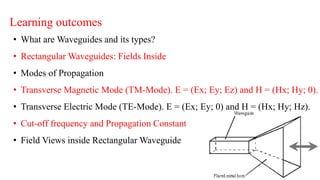
Learning outcomes
• What are Waveguides and its types?
• Rectangular Waveguides: Fields Inside
• Modes of Propagation
• Transverse Magnetic Mode (TM-Mode). E = (Ex; Ey; Ez) and H = (Hx; Hy; 0).
• Transverse Electric Mode (TE-Mode). E = (Ex; Ey; 0) and H = (Hx; Hy; Hz).
• Cut-off frequency and Propagation Constant
• Field Views inside Rectangular Waveguide
• A waveguide is a structure that guides waves, such as electromagnetic
waves or sound, with minimal loss of energy by restricting the
transmission of energy to one direction.
• A hollow metallic tube of the uniform cross section for transmitting
electromagnetic waves by successive reflections from the inner walls
of the tube is called as a Waveguide
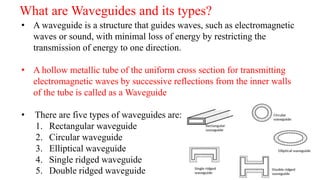
• There are five types of waveguides are:
What are Waveguides and its types?
1. Rectangular waveguide
2. Circular waveguide
3. Elliptical waveguide
4. Single ridged waveguide
5. Double ridged waveguide
Rectangular Waveguides:
Fields inside
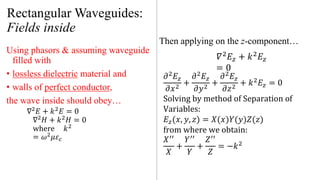
Using phasors & assuming waveguide
filled with
• lossless dielectric material and
• walls of perfect conductor,
the wave inside should obey…
∇2
𝐸 + 𝑘2
𝐸 = 0
∇2 𝐻 + 𝑘2 𝐻 = 0
where 𝑘2
= 𝜔2 𝜇𝜀 𝑐
Then applying on the z-component…
𝜕2
𝐸𝑧
𝜕𝑥2
+
𝜕2
𝐸𝑧
𝜕𝑦2
+
𝜕2
𝐸𝑧
𝜕𝑧2
+ 𝑘2 𝐸𝑧 = 0
Solving by method of Separation of
Variables:
𝐸𝑧(𝑥, 𝑦, 𝑧) = 𝑋(𝑥)𝑌(𝑦)𝑍(𝑧)
from where we obtain:
𝑋′′
𝑋
+
𝑌′′
𝑌
+
𝑍′′
𝑍
= −𝑘2
𝛻2
𝐸𝑧 + 𝑘2
𝐸𝑧
= 0
𝑋(𝑥) = 𝑐1 cos 𝑘 𝑥 𝑥 + 𝑐2 sin 𝑘 𝑥 𝑥
𝑌(𝑦) = 𝑐3 cos 𝑘 𝑦 𝑦 + 𝑐4 sin 𝑘 𝑦 𝑦
𝑍(𝑧) = 𝑐5 𝑒 𝛾𝑧
+ 𝑐6 𝑒−𝛾𝑧
ℎ2 = 𝛾2 + 𝑘2 = 𝑘 𝑥
2 + 𝑘 𝑦
2
Rectangular Waveguides: Fields inside
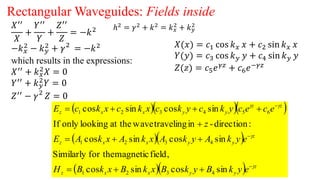
𝑋′′
𝑋
+
𝑌′′
𝑌
+
𝑍′′
𝑍
= −𝑘2
−𝑘 𝑥
2 − 𝑘 𝑦
2 + 𝛾2
= −𝑘2
which results in the expressions:
𝑋′′ + 𝑘 𝑥
2 𝑋 = 0
𝑌′′ + 𝑘 𝑦
2 𝑌 = 0
𝑍′′
− 𝛾2
𝑍 = 0
   
  
   z
yyxxz
z
yyxxz
zz
yyxxz
eykBykBxkBxkBH
eykAykAxkAxkAE
z
ececykcykcxkcxkcE










sincossincos
,fieldmagneticfor theSimilarly
sincossincos
:direction-intravelingwaveat thelookingonlyIf
sincossincos
4321
4321
654321
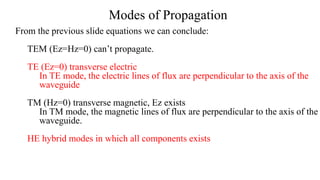
From the previous slide equations we can conclude:
TEM (Ez=Hz=0) can’t propagate.
TE (Ez=0) transverse electric
In TE mode, the electric lines of flux are perpendicular to the axis of the
waveguide
TM (Hz=0) transverse magnetic, Ez exists
In TM mode, the magnetic lines of flux are perpendicular to the axis of the
waveguide.
HE hybrid modes in which all components exists
Modes of Propagation
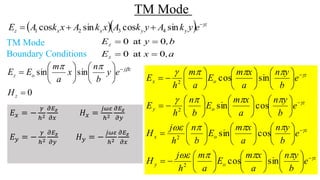
   z
yyxxz eykAykAxkAxkAE 
 sincossincos 4321
,axE
,byE
z
z
0at0
0at0

TM Mode
Boundary Conditions
z
oy
z
ox
z
oy
z
ox
e
b
yn
a
xm
E
a
m
h
j
H
e
b
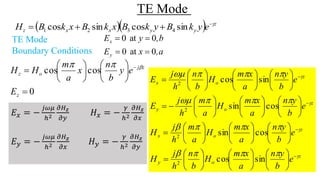
yn
a
xm
E
b
n
h
j
H
e
b
yn
a
xm
E
b
n
h
E
e
b
yn
a
xm
E
a
m
h
E
























































































sincos
cossin
cossin
sincos
2
2
2
2
0
sinsin













 
z
zj
oz
H
ey
b
n
x
a
m
EE 
𝐸 𝑥 = −
𝛾
ℎ2
𝜕𝐸 𝑧
𝜕𝑥
𝐻 𝑥 =
𝑗𝜔𝜀
ℎ2
𝜕𝐸 𝑧
𝜕𝑦
𝐸 𝑦 = −
𝛾
ℎ2
𝜕𝐸 𝑧
𝜕𝑦
𝐻 𝑦 = −
𝑗𝜔𝜀
ℎ2
𝜕𝐸 𝑧
𝜕𝑥
TM Mode
,axE
,byE
y
x
0at0
0at0


   z
yyxxz eykBykBxkBxkBH 
 sincossincos 4321
TE Mode
Boundary Conditions
z
oy
z
ox
z
oy
z
ox
e
b
yn
a
xm
H
b
n
h
j
H
e
b
yn
a
xm
H
a
m
h
j
H
e
b
yn
a
xm
H
a
m
h
j
E
e
b
yn
a
xm
H
b
n
h
j
E
























































































sincos
cossin
cossin
sincos
2
2
2
2
0
coscos













 
z
zj
oz
E
ey
b
n
x
a
m
HH 
𝐸 𝑥 = −
𝑗𝜔𝜇
ℎ2
𝜕𝐻 𝑧
𝜕𝑦
𝐻 𝑥 = −
𝛾
ℎ2
𝜕𝐻 𝑧
𝜕𝑥
𝐸 𝑦 = −
𝑗𝜔𝜇
ℎ2
𝜕𝐻 𝑧
𝜕𝑥
𝐻 𝑦 = −
𝛾
ℎ2
𝜕𝐻 𝑧
𝜕𝑦
TE Mode
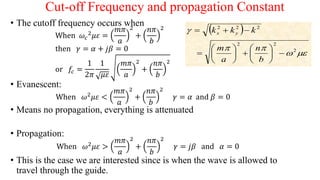
Cut-off Frequency and propagation Constant
• The cutoff frequency occurs when
• Evanescent:
• Means no propagation, everything is attenuated
• Propagation:
• This is the case we are interested since is when the wave is allowed to
travel through the guide.
 



2
22
222














b
n
a
m
kkk yx
When 𝜔𝑐
2 𝜇𝜀 =
𝑚𝜋
𝑎
2
+
𝑛𝜋
𝑏
2
then 𝛾 = 𝛼 + 𝑗𝛽 = 0
or 𝑓𝑐 =
1
2𝜋
1
𝜇𝜀
𝑚𝜋
𝑎
2
+
𝑛𝜋
𝑏
2
When 𝜔2
𝜇𝜀 <
𝑚𝜋
𝑎
2
+
𝑛𝜋
𝑏
2
𝛾 = 𝛼 and 𝛽 = 0
When 𝜔2
𝜇𝜀 >
𝑚𝜋
𝑎
2
+
𝑛𝜋
𝑏
2
𝛾 = 𝑗𝛽 and 𝛼 = 0
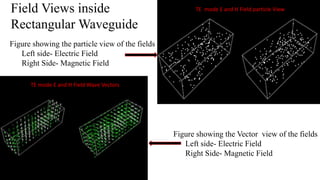
TE mode E and H Field particle View
TE mode E and H Field Wave Vectors
Figure showing the particle view of the fields
Left side- Electric Field
Right Side- Magnetic Field
Figure showing the Vector view of the fields
Left side- Electric Field
Right Side- Magnetic Field
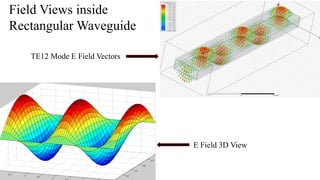
Field Views inside
Rectangular Waveguide
E Field 3D View
Field Views inside
Rectangular Waveguide
TE12 Mode E Field Vectors
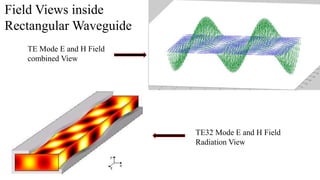
TE Mode E and H Field
combined View
TE32 Mode E and H Field
Radiation View
Field Views inside
Rectangular Waveguide
References
1- commons.wikimedia.org
2- https://www.wikipedia.org
3- documents.pub_rectangular-wave-guides
4- physics stackexchange com
5- manson.gmu.edu
6- http://www.falstad.com/embox/guide.html

Waveguides and its Types Field view and structures

  • 1.
    Branch - ElectronicsEngineering & Related Branches Microwave Engineering UNIT – 2 Waveguide: Rectangular Waveguide and their Applications, Modes, Propagation constant and Cut-off Frequency Presented By Avishisht Kumar
  • 2.
    Learning outcomes • Whatare Waveguides and its types? • Rectangular Waveguides: Fields Inside • Modes of Propagation • Transverse Magnetic Mode (TM-Mode). E = (Ex; Ey; Ez) and H = (Hx; Hy; 0). • Transverse Electric Mode (TE-Mode). E = (Ex; Ey; 0) and H = (Hx; Hy; Hz). • Cut-off frequency and Propagation Constant • Field Views inside Rectangular Waveguide
  • 3.
    • A waveguideis a structure that guides waves, such as electromagnetic waves or sound, with minimal loss of energy by restricting the transmission of energy to one direction. • A hollow metallic tube of the uniform cross section for transmitting electromagnetic waves by successive reflections from the inner walls of the tube is called as a Waveguide • There are five types of waveguides are: What are Waveguides and its types? 1. Rectangular waveguide 2. Circular waveguide 3. Elliptical waveguide 4. Single ridged waveguide 5. Double ridged waveguide
  • 4.
    Rectangular Waveguides: Fields inside Usingphasors & assuming waveguide filled with • lossless dielectric material and • walls of perfect conductor, the wave inside should obey… ∇2 𝐸 + 𝑘2 𝐸 = 0 ∇2 𝐻 + 𝑘2 𝐻 = 0 where 𝑘2 = 𝜔2 𝜇𝜀 𝑐 Then applying on the z-component… 𝜕2 𝐸𝑧 𝜕𝑥2 + 𝜕2 𝐸𝑧 𝜕𝑦2 + 𝜕2 𝐸𝑧 𝜕𝑧2 + 𝑘2 𝐸𝑧 = 0 Solving by method of Separation of Variables: 𝐸𝑧(𝑥, 𝑦, 𝑧) = 𝑋(𝑥)𝑌(𝑦)𝑍(𝑧) from where we obtain: 𝑋′′ 𝑋 + 𝑌′′ 𝑌 + 𝑍′′ 𝑍 = −𝑘2 𝛻2 𝐸𝑧 + 𝑘2 𝐸𝑧 = 0
  • 5.
    𝑋(𝑥) = 𝑐1cos 𝑘 𝑥 𝑥 + 𝑐2 sin 𝑘 𝑥 𝑥 𝑌(𝑦) = 𝑐3 cos 𝑘 𝑦 𝑦 + 𝑐4 sin 𝑘 𝑦 𝑦 𝑍(𝑧) = 𝑐5 𝑒 𝛾𝑧 + 𝑐6 𝑒−𝛾𝑧 ℎ2 = 𝛾2 + 𝑘2 = 𝑘 𝑥 2 + 𝑘 𝑦 2 Rectangular Waveguides: Fields inside 𝑋′′ 𝑋 + 𝑌′′ 𝑌 + 𝑍′′ 𝑍 = −𝑘2 −𝑘 𝑥 2 − 𝑘 𝑦 2 + 𝛾2 = −𝑘2 which results in the expressions: 𝑋′′ + 𝑘 𝑥 2 𝑋 = 0 𝑌′′ + 𝑘 𝑦 2 𝑌 = 0 𝑍′′ − 𝛾2 𝑍 = 0           z yyxxz z yyxxz zz yyxxz eykBykBxkBxkBH eykAykAxkAxkAE z ececykcykcxkcxkcE           sincossincos ,fieldmagneticfor theSimilarly sincossincos :direction-intravelingwaveat thelookingonlyIf sincossincos 4321 4321 654321
  • 6.
    From the previousslide equations we can conclude: TEM (Ez=Hz=0) can’t propagate. TE (Ez=0) transverse electric In TE mode, the electric lines of flux are perpendicular to the axis of the waveguide TM (Hz=0) transverse magnetic, Ez exists In TM mode, the magnetic lines of flux are perpendicular to the axis of the waveguide. HE hybrid modes in which all components exists Modes of Propagation
  • 7.
      z yyxxz eykAykAxkAxkAE   sincossincos 4321 ,axE ,byE z z 0at0 0at0  TM Mode Boundary Conditions z oy z ox z oy z ox e b yn a xm E a m h j H e b yn a xm E b n h j H e b yn a xm E b n h E e b yn a xm E a m h E                                                                                         sincos cossin cossin sincos 2 2 2 2 0 sinsin                z zj oz H ey b n x a m EE  𝐸 𝑥 = − 𝛾 ℎ2 𝜕𝐸 𝑧 𝜕𝑥 𝐻 𝑥 = 𝑗𝜔𝜀 ℎ2 𝜕𝐸 𝑧 𝜕𝑦 𝐸 𝑦 = − 𝛾 ℎ2 𝜕𝐸 𝑧 𝜕𝑦 𝐻 𝑦 = − 𝑗𝜔𝜀 ℎ2 𝜕𝐸 𝑧 𝜕𝑥 TM Mode
  • 8.
    ,axE ,byE y x 0at0 0at0     z yyxxz eykBykBxkBxkBH   sincossincos 4321 TE Mode Boundary Conditions z oy z ox z oy z ox e b yn a xm H b n h j H e b yn a xm H a m h j H e b yn a xm H a m h j E e b yn a xm H b n h j E                                                                                         sincos cossin cossin sincos 2 2 2 2 0 coscos                z zj oz E ey b n x a m HH  𝐸 𝑥 = − 𝑗𝜔𝜇 ℎ2 𝜕𝐻 𝑧 𝜕𝑦 𝐻 𝑥 = − 𝛾 ℎ2 𝜕𝐻 𝑧 𝜕𝑥 𝐸 𝑦 = − 𝑗𝜔𝜇 ℎ2 𝜕𝐻 𝑧 𝜕𝑥 𝐻 𝑦 = − 𝛾 ℎ2 𝜕𝐻 𝑧 𝜕𝑦 TE Mode
  • 9.
    Cut-off Frequency andpropagation Constant • The cutoff frequency occurs when • Evanescent: • Means no propagation, everything is attenuated • Propagation: • This is the case we are interested since is when the wave is allowed to travel through the guide.      2 22 222               b n a m kkk yx When 𝜔𝑐 2 𝜇𝜀 = 𝑚𝜋 𝑎 2 + 𝑛𝜋 𝑏 2 then 𝛾 = 𝛼 + 𝑗𝛽 = 0 or 𝑓𝑐 = 1 2𝜋 1 𝜇𝜀 𝑚𝜋 𝑎 2 + 𝑛𝜋 𝑏 2 When 𝜔2 𝜇𝜀 < 𝑚𝜋 𝑎 2 + 𝑛𝜋 𝑏 2 𝛾 = 𝛼 and 𝛽 = 0 When 𝜔2 𝜇𝜀 > 𝑚𝜋 𝑎 2 + 𝑛𝜋 𝑏 2 𝛾 = 𝑗𝛽 and 𝛼 = 0
  • 10.
    TE mode Eand H Field particle View TE mode E and H Field Wave Vectors Figure showing the particle view of the fields Left side- Electric Field Right Side- Magnetic Field Figure showing the Vector view of the fields Left side- Electric Field Right Side- Magnetic Field Field Views inside Rectangular Waveguide
  • 11.
    E Field 3DView Field Views inside Rectangular Waveguide TE12 Mode E Field Vectors
  • 12.
    TE Mode Eand H Field combined View TE32 Mode E and H Field Radiation View Field Views inside Rectangular Waveguide
  • 13.
    References 1- commons.wikimedia.org 2- https://www.wikipedia.org 3-documents.pub_rectangular-wave-guides 4- physics stackexchange com 5- manson.gmu.edu 6- http://www.falstad.com/embox/guide.html

Editor's Notes

  • #5 Electromagnetics, waveguides
  • #8 Electromagnetics, waveguides
  • #9 Electromagnetics, waveguides