Water purification and
pathogen control
Lecture 10
Prepared by
Samira fattah
Assis. Lec.
College of health sciences-HMU
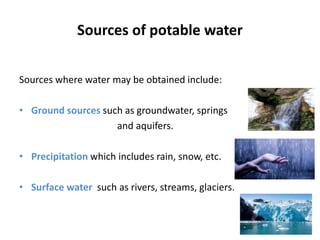
Sources of potable water
Sources where water may be obtained include:
• Ground sources such as groundwater, springs
and aquifers.
• Precipitation which includes rain, snow, etc.
• Surface water such as rivers, streams, glaciers.
Why do we need to purify water?
• There are many impurities in the raw water that can harm human
health if the water is ingested without treatment. These impurities
can be grouped into three categories:
• Physical:
materials that do not dissolve in water and make the water appear
"dirty".
• Chemical:
substances dissolved in the water from both natural and man-made
processes.
• Biological:
viruses, bacteria, algae, and other small living organisms.
• Drinking water should be essentially free of disease-causing
microbes, but a large proportion of the world’s population drinks
microbially contaminated water, especially in developing
countries.
• Using the best possible source of water for potable water supply
and protecting it from microbial and chemical contamination is
the goal
• In many places an adequate supply of water that can be
protected from contamination is not available
• The burden of providing microbially safe drinking water
supplies from contaminated natural waters rests upon water
treatment processes
• The ability of water treatment processes and systems to
reduce waterborne disease has been determined in
epidemiological studies
Water treatment methods
Purification of Water on large scale
• The method of treatment to be employed depends upon
nature of raw water and desired standards of quality.
• Components of water purification system
- Storage
- Filtration
- Disinfection
Storage
• Water is drawn out from the source and impounded in
natural or artifical reservoirs.
• Optimum period of storage : 10 – 14 days
Advantages
• Storage provides a reserve of water from which further polution is
excluded.
• By mere storage about 90% of suspended impurities settle down in
24 hours by gravity, the water becomes clear allowing penetration
of light.
• Aerobic bacteria oxidize organic matter present in the water with
the aid of dissolved oxygen. Free ammonia and nitrates drop.
• Pathogenic organisms eventually die out. Decrease in bacterial
count by 90% within 5 – 7 days.
Water Storage and Microbial Reductions
• Microbe levels reduced over time by natural antimicrobial
processes and microbial death/die-off.
• Human enteric viruses in surface water reduced 400-1,000-fold
when stored 6-7 months .
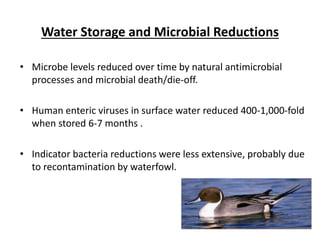
• Indicator bacteria reductions were less extensive, probably due
to recontamination by waterfowl.
• Protozoan cyst reductions by storage were 1.6 for
Cryptosporidium and 1.9 for Giardia after about 5 months.
• If water is stored for long periods there is likelihood of
development of algae which imparts foul odor and color to
water.
Filtration
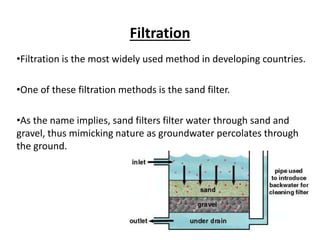
•Filtration is the most widely used method in developing countries.
•One of these filtration methods is the sand filter.
•As the name implies, sand filters filter water through sand and
gravel, thus mimicking nature as groundwater percolates through
the ground.
• There are two types of sand filters:
• a rapid sand filter
• a slow sand filter.
• Sand filters require some time to mature, usually 10-20 days
before the filtered water is safe to drink.
Microbial Reductions by Slow Sand Filtration
Effective in removing enteric microbes from water.
• high bacteria removals
― removal of E. coli bacteria.
• Virus removals >99%.
– naturally occurring enteric viruses removals
• 97 to >99.8 percent; average 98% overall;
• Parasite removals: Giardia lamblia cysts effectively removed.
Disinfection
Factors affecting disinfection effectiveness
• Time of exsposure
• Concentration of the disinfectant
• Concentration of organisms
• Nature of the disinfectant
• Nature of the organisms to be inactivated
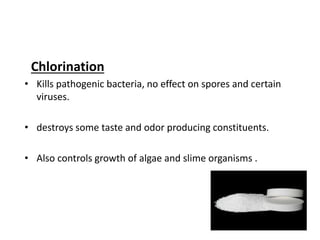
Chlorination
• Kills pathogenic bacteria, no effect on spores and certain
viruses.
• destroys some taste and odor producing constituents.
• Also controls growth of algae and slime organisms .
• Principles of Chlorination
• Contact period of at least one hour.
• Minimum recommended concentration of free chlorine :
0.5mg/L for one hour
Super chlorination
• method of choice for highly polluted waters
• high dose of chlorine is added
• after 20 minutes of contact, dechlorination
is done with sodium sulphate / sodium thiosulphate to reduce
the taste of excess chlorine
Other disinfectants
• Ozonation
• UV irradiation
Ozone
• Strong oxidizing agent
• Strong Virucidal
• unlike chlorine products, can
deactivate resistant micro-organisms.
UV Rays
• The Ultraviolet energy attacks the
genetic core of the microorganism
and rearranges the DNA /RNA
eliminating the microorganism's
ability to function and reproduce.
• The process is simple but effective,
destroying 99.99 percent of harmful
microorganisms without adding
chemicals to the water.
Purification of water on small scale
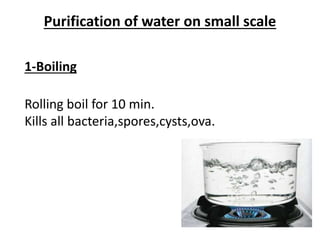
1-Boiling
Rolling boil for 10 min.
Kills all bacteria,spores,cysts,ova.
2-Chemical disinfection
-Chlorine solution
-Chlorine tablets
-Potassium permanganate
-Iodine
3-Filtration
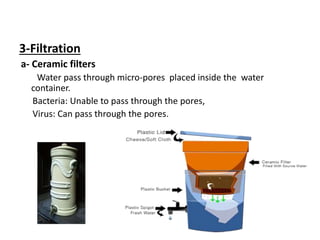
a- Ceramic filters
Water pass through micro-pores placed inside the water
container.
Bacteria: Unable to pass through the pores,
Virus: Can pass through the pores.
b-katadyn filter:
katadyn: activated form of silver, filter coated with silver
catalyst, certain metals in very small doses act as powerful
germicide.
Disinfection of wells
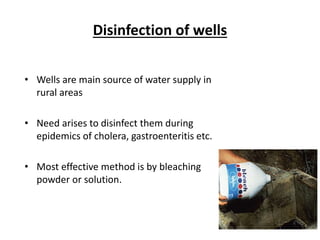
• Wells are main source of water supply in
rural areas
• Need arises to disinfect them during
epidemics of cholera, gastroenteritis etc.
• Most effective method is by bleaching
powder or solution.
Bottled Water Purification
- There are several sources to find water:
• protected underground springs
• wells
• municipal supplies.
- The next step is to filter the water through multi-barrier sources
which could included :
• source protections
• source monitoring
• ultraviolet light
• distillation
• ozonation
Water bottlers may use one or more of those processes.
• Water bottles are not very strictly required to monitor or
disinfect for parasites.
• This is mainly because the source the water is bottled from, it
is unlikely to harbor parasites or contain these dangerous
elements.

Water purification and pathogen control

  • 1.
    Water purification and pathogencontrol Lecture 10 Prepared by Samira fattah Assis. Lec. College of health sciences-HMU
  • 2.
    Sources of potablewater Sources where water may be obtained include: • Ground sources such as groundwater, springs and aquifers. • Precipitation which includes rain, snow, etc. • Surface water such as rivers, streams, glaciers.
  • 3.
    Why do weneed to purify water? • There are many impurities in the raw water that can harm human health if the water is ingested without treatment. These impurities can be grouped into three categories: • Physical: materials that do not dissolve in water and make the water appear "dirty". • Chemical: substances dissolved in the water from both natural and man-made processes. • Biological: viruses, bacteria, algae, and other small living organisms.
  • 4.
    • Drinking watershould be essentially free of disease-causing microbes, but a large proportion of the world’s population drinks microbially contaminated water, especially in developing countries. • Using the best possible source of water for potable water supply and protecting it from microbial and chemical contamination is the goal • In many places an adequate supply of water that can be protected from contamination is not available
  • 5.
    • The burdenof providing microbially safe drinking water supplies from contaminated natural waters rests upon water treatment processes • The ability of water treatment processes and systems to reduce waterborne disease has been determined in epidemiological studies
  • 6.
  • 7.
    Purification of Wateron large scale • The method of treatment to be employed depends upon nature of raw water and desired standards of quality. • Components of water purification system - Storage - Filtration - Disinfection
  • 8.
    Storage • Water isdrawn out from the source and impounded in natural or artifical reservoirs. • Optimum period of storage : 10 – 14 days
  • 9.
    Advantages • Storage providesa reserve of water from which further polution is excluded. • By mere storage about 90% of suspended impurities settle down in 24 hours by gravity, the water becomes clear allowing penetration of light. • Aerobic bacteria oxidize organic matter present in the water with the aid of dissolved oxygen. Free ammonia and nitrates drop. • Pathogenic organisms eventually die out. Decrease in bacterial count by 90% within 5 – 7 days.
  • 10.
    Water Storage andMicrobial Reductions • Microbe levels reduced over time by natural antimicrobial processes and microbial death/die-off. • Human enteric viruses in surface water reduced 400-1,000-fold when stored 6-7 months . • Indicator bacteria reductions were less extensive, probably due to recontamination by waterfowl.
  • 11.
    • Protozoan cystreductions by storage were 1.6 for Cryptosporidium and 1.9 for Giardia after about 5 months. • If water is stored for long periods there is likelihood of development of algae which imparts foul odor and color to water.
  • 12.
    Filtration •Filtration is themost widely used method in developing countries. •One of these filtration methods is the sand filter. •As the name implies, sand filters filter water through sand and gravel, thus mimicking nature as groundwater percolates through the ground.
  • 13.
    • There aretwo types of sand filters: • a rapid sand filter • a slow sand filter. • Sand filters require some time to mature, usually 10-20 days before the filtered water is safe to drink.
  • 14.
    Microbial Reductions bySlow Sand Filtration Effective in removing enteric microbes from water. • high bacteria removals ― removal of E. coli bacteria. • Virus removals >99%. – naturally occurring enteric viruses removals • 97 to >99.8 percent; average 98% overall; • Parasite removals: Giardia lamblia cysts effectively removed.
  • 15.
    Disinfection Factors affecting disinfectioneffectiveness • Time of exsposure • Concentration of the disinfectant • Concentration of organisms • Nature of the disinfectant • Nature of the organisms to be inactivated
  • 16.
    Chlorination • Kills pathogenicbacteria, no effect on spores and certain viruses. • destroys some taste and odor producing constituents. • Also controls growth of algae and slime organisms .
  • 17.
    • Principles ofChlorination • Contact period of at least one hour. • Minimum recommended concentration of free chlorine : 0.5mg/L for one hour
  • 18.
    Super chlorination • methodof choice for highly polluted waters • high dose of chlorine is added • after 20 minutes of contact, dechlorination is done with sodium sulphate / sodium thiosulphate to reduce the taste of excess chlorine
  • 19.
  • 20.
    Ozone • Strong oxidizingagent • Strong Virucidal • unlike chlorine products, can deactivate resistant micro-organisms.
  • 21.
    UV Rays • TheUltraviolet energy attacks the genetic core of the microorganism and rearranges the DNA /RNA eliminating the microorganism's ability to function and reproduce. • The process is simple but effective, destroying 99.99 percent of harmful microorganisms without adding chemicals to the water.
  • 22.
    Purification of wateron small scale 1-Boiling Rolling boil for 10 min. Kills all bacteria,spores,cysts,ova.
  • 23.
    2-Chemical disinfection -Chlorine solution -Chlorinetablets -Potassium permanganate -Iodine
  • 24.
    3-Filtration a- Ceramic filters Waterpass through micro-pores placed inside the water container. Bacteria: Unable to pass through the pores, Virus: Can pass through the pores.
  • 25.
    b-katadyn filter: katadyn: activatedform of silver, filter coated with silver catalyst, certain metals in very small doses act as powerful germicide.
  • 26.
    Disinfection of wells •Wells are main source of water supply in rural areas • Need arises to disinfect them during epidemics of cholera, gastroenteritis etc. • Most effective method is by bleaching powder or solution.
  • 27.
    Bottled Water Purification -There are several sources to find water: • protected underground springs • wells • municipal supplies. - The next step is to filter the water through multi-barrier sources which could included : • source protections • source monitoring • ultraviolet light • distillation • ozonation Water bottlers may use one or more of those processes.
  • 28.
    • Water bottlesare not very strictly required to monitor or disinfect for parasites. • This is mainly because the source the water is bottled from, it is unlikely to harbor parasites or contain these dangerous elements.