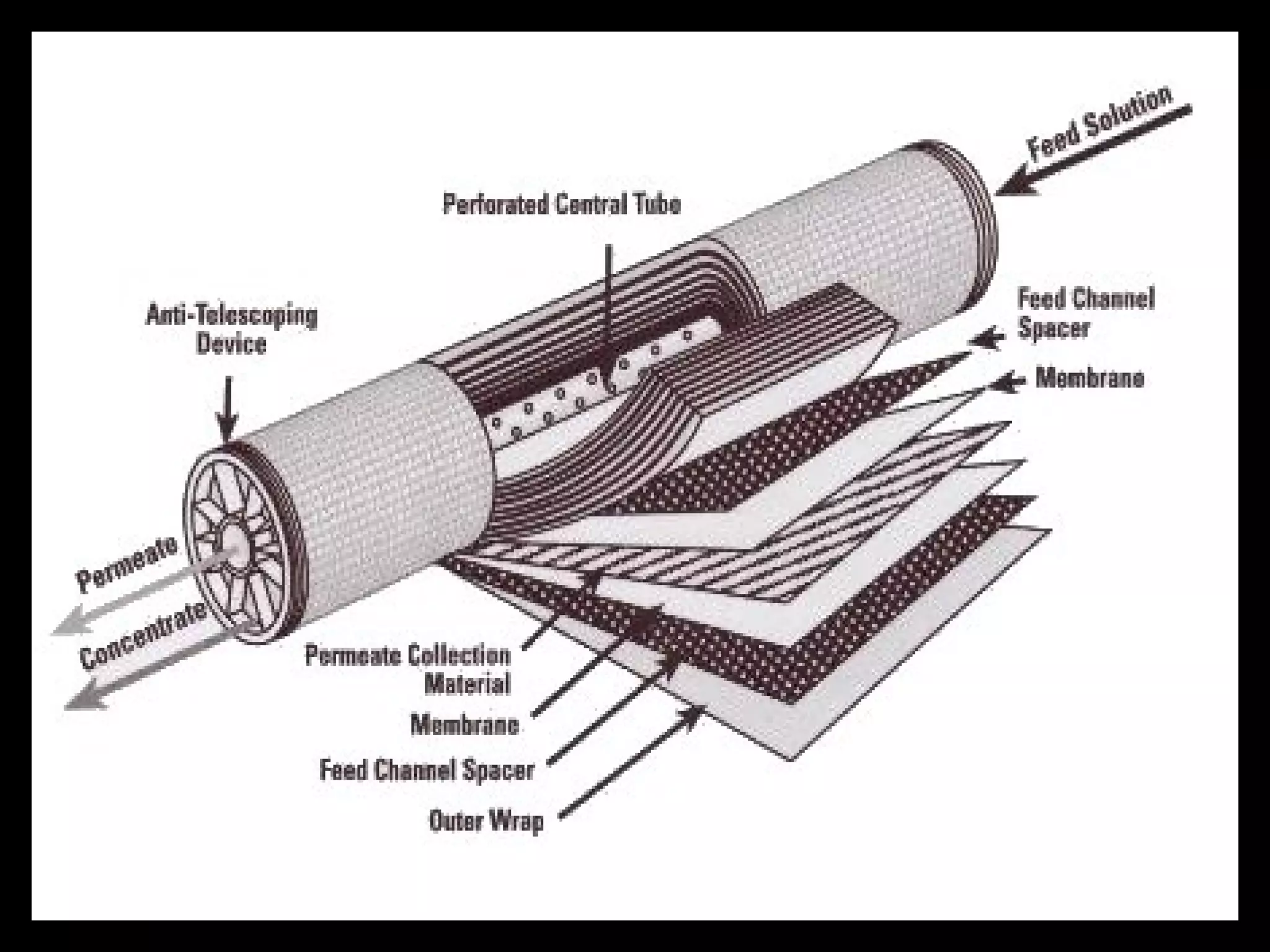
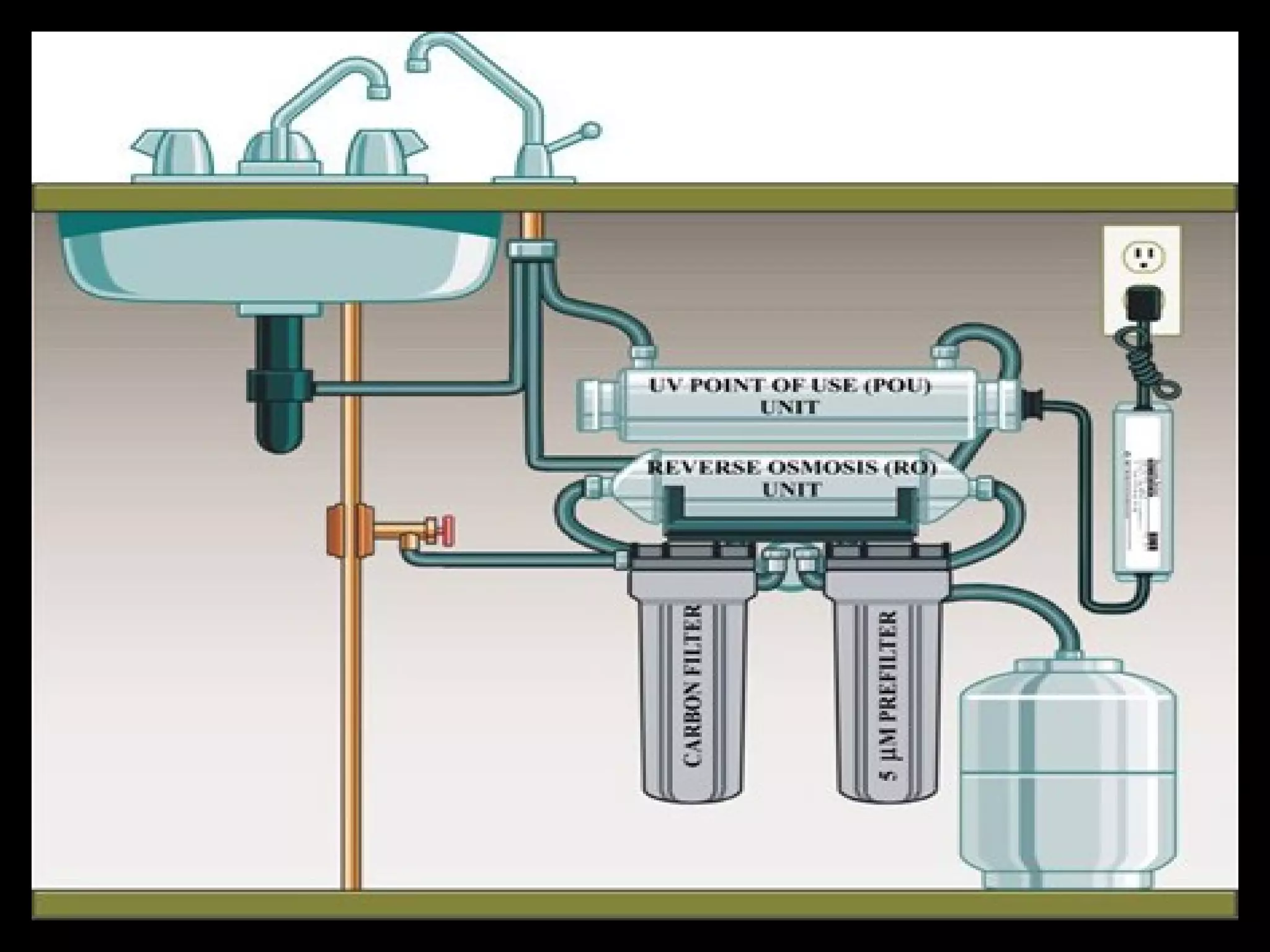
How Reverse Osmosis Water
 Purification Systems Work
http://catalogs.indiamart.com/
Reverse Osmosis


* Reverse osmosis (RO) is a purification technology that uses a semi-
permeable membrane. This membrane-technology is not properly a
filtration method.
* In RO, an applied pressure is used to overcome osmotic pressure, a
colligative properties, that is driven by chemical potential, a
thermodynamic parameter.
* RO can remove many types of molecules and ions from solutions and
is used in both industrial processes and to produce potable water.
* To be "selective," this membrane should not allow large molecules or
ions through the pores (holes), but should allow smaller components of
the solution (such as the solvent) to pass freely.
* Osmosis is a natural process. When two liquids of different
concentration are separated by a semipermeable membrane, the fluid
has a tendency to move from low to high solute concentrations for
chemical potential equilibrium.
Reverse Osmosis Water Purification Systems Work


* Reverse Osmosis is a process in which dissolved inorganic solids
(such as salts) are removed from a solution (such as water).
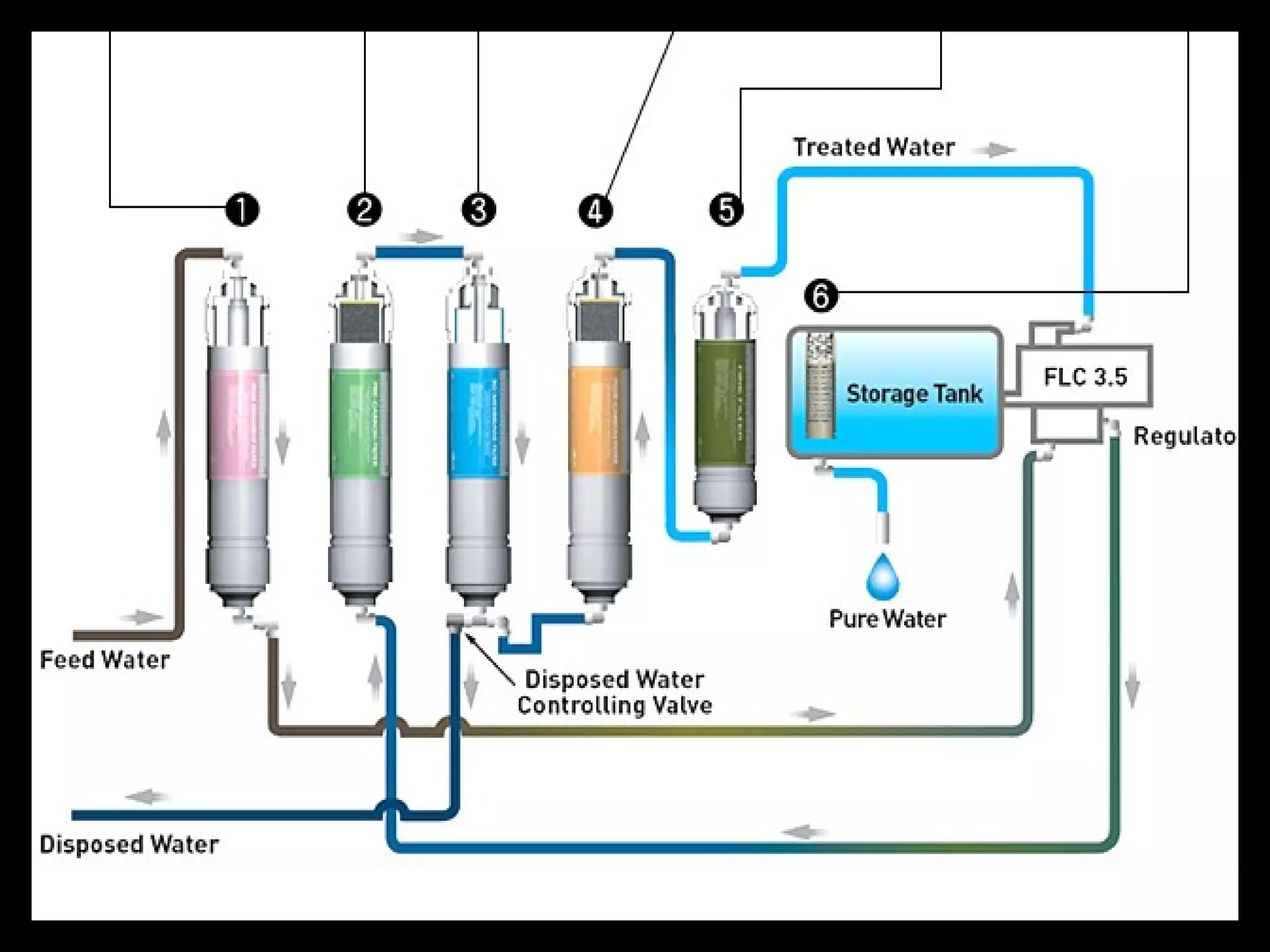
* This is accomplished by household water pressure pushing the
tap water through a semi permeable membrane.
* The membrane (which is about as thick as cellophane) allows
only the water to pass through, not the impurities or contaminates.
* These impurities and contaminates are flushed down the drain.
* Ultimately, the factors that affect the performance of a ro system
are:
   * Incoming water pressure
   * Water Temperature
   * Type and number of total dissolved solids (TDS) in the tap
water
   * The quality of the filters and membranes used in the RO System
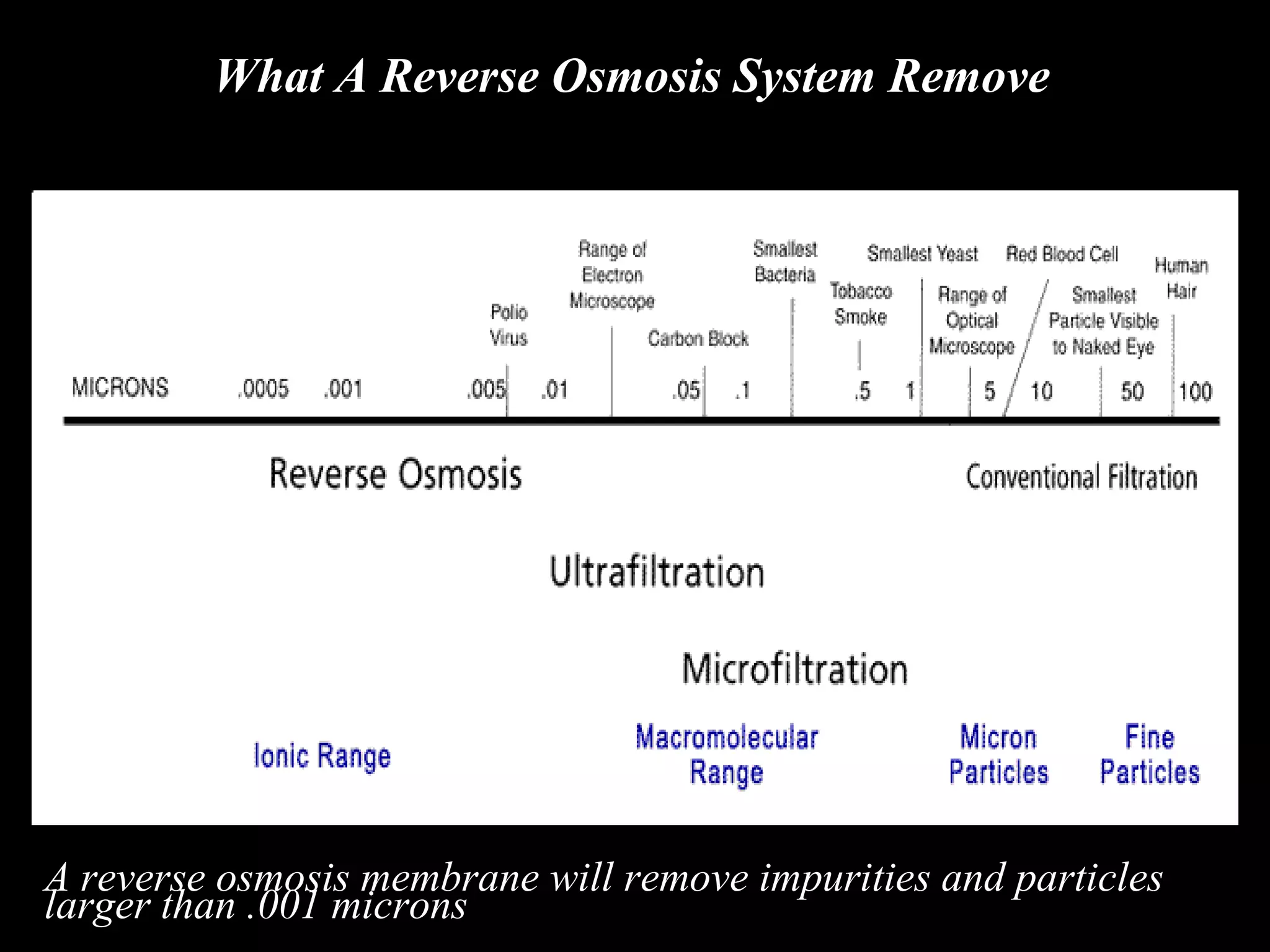
What A Reverse Osmosis System Remove


A reverse osmosis membrane will remove impurities and particles
larger than .001 microns


A reverse osmosis membrane will remove impurities and particles
larger than .001 microns
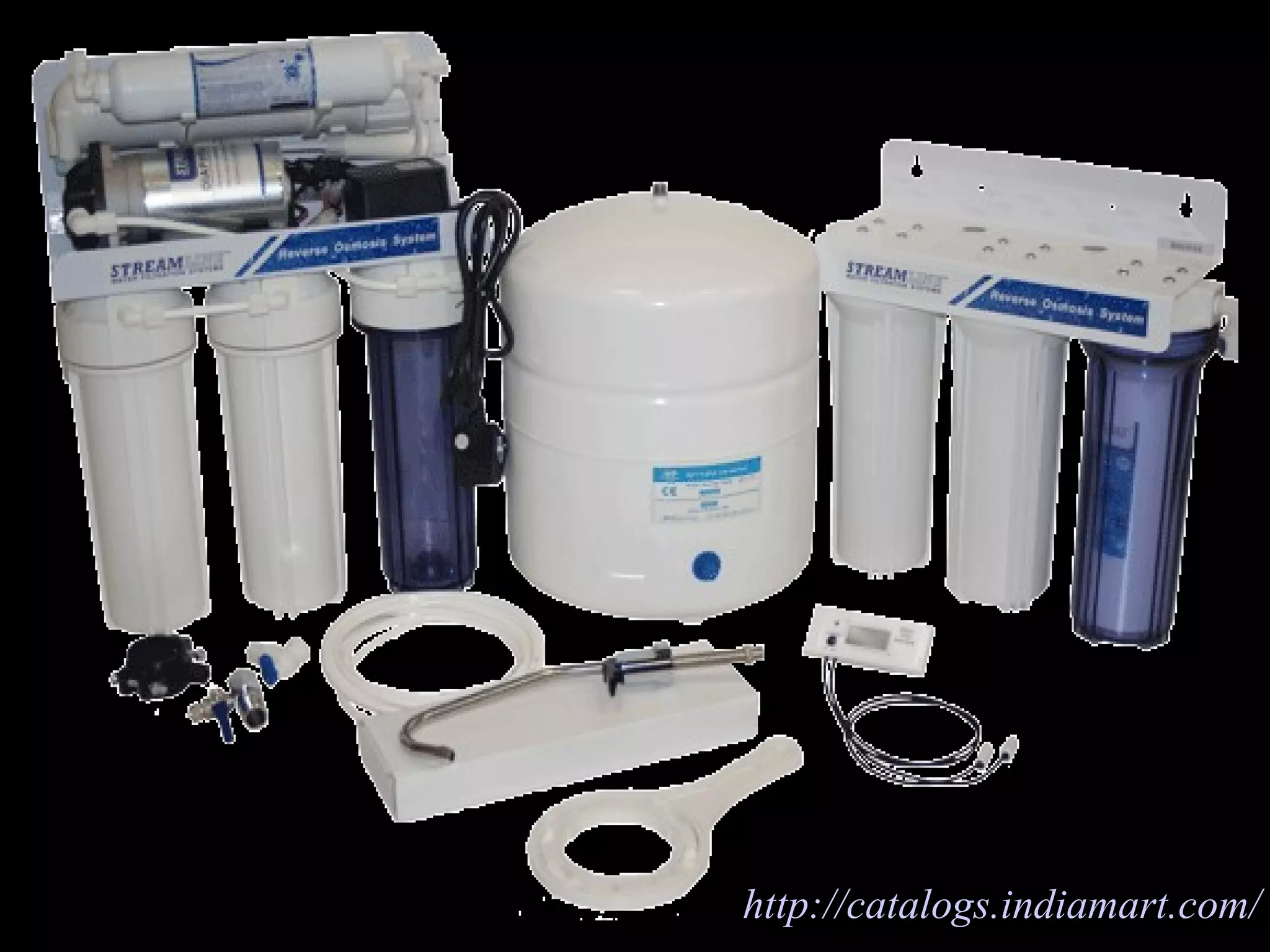
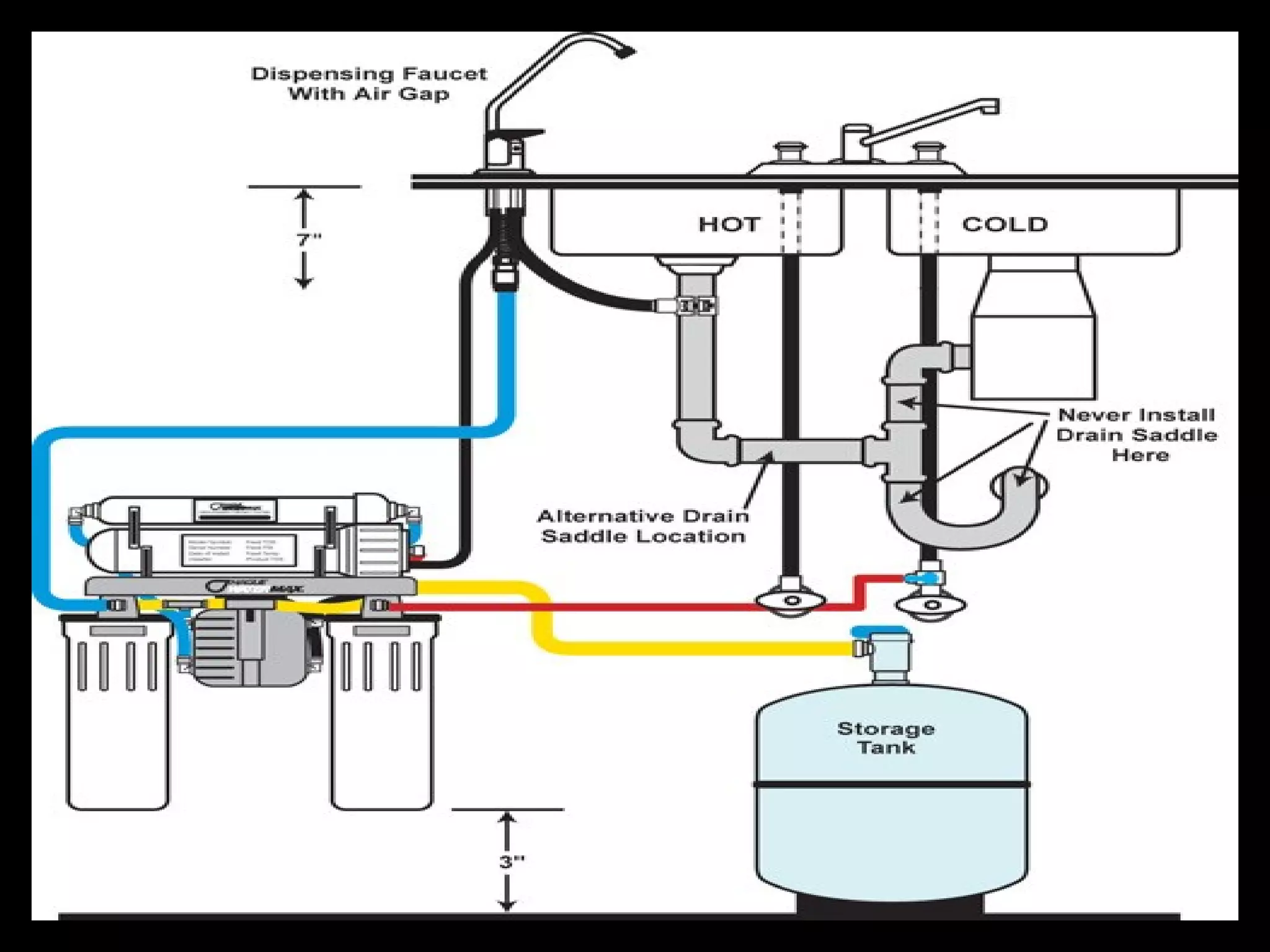
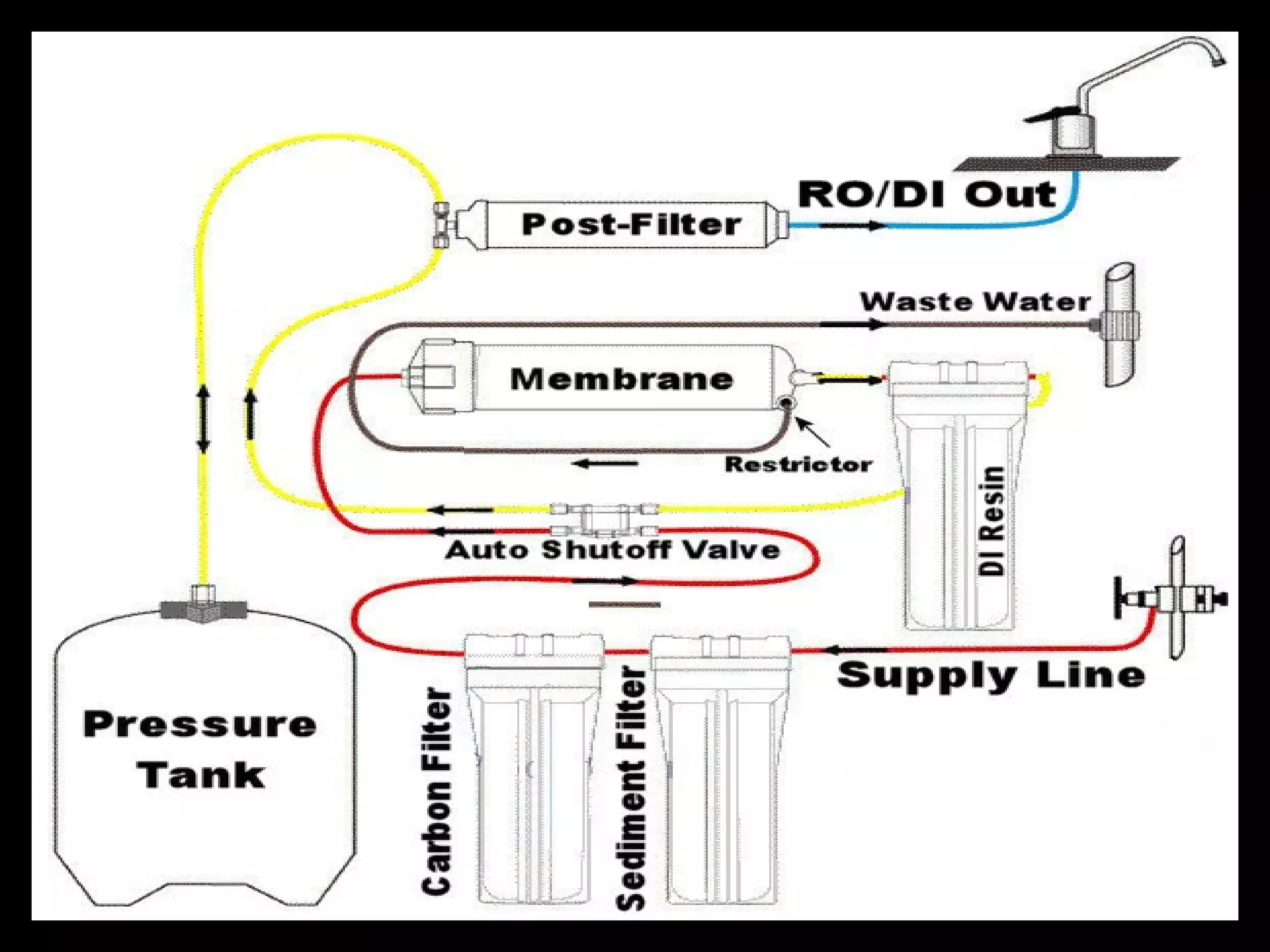
Components Common To All RO System


 * Cold Water Line Valve
 * Pre-Filter (s)
 * Reverse Osmosis Membrane
 * Post filter (s)
 * Automatic Shut Off Valve (SOV)
 * Check Valve
 * Flow Restrictor
 * Storage Tank
 * Faucet
 * Drain line
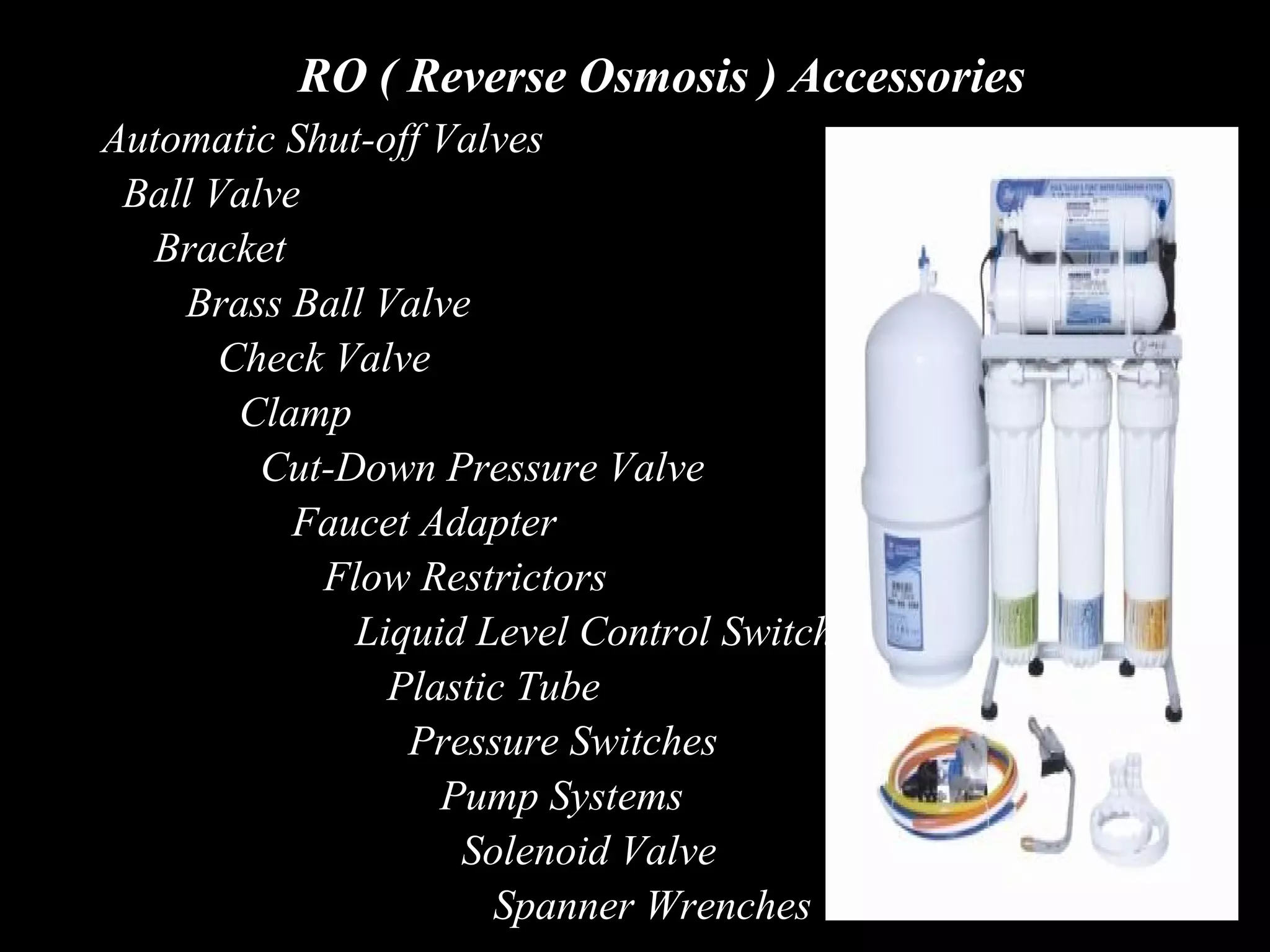
RO ( Reverse Osmosis ) Accessories
Automatic Shut-off Valves
 Ball Valve
   Bracket
    Brass Ball Valve
       Check Valve
        Clamp
         Cut-Down Pressure Valve
           Faucet Adapter
            Flow Restrictors
              Liquid Level Control Switch
                Plastic Tube
                 Pressure Switches
                   Pump Systems
                    Solenoid Valve
                      Spanner Wrenches
Reverse Osmosis (RO) Applications


 * Reverse Osmosis (RO) Applications
 * Perchlorate Removal From Drinking Water
 * Nitrate Removal From Groundwater
 * Perchlorate Removal From Groundwater
 * Raw Water Pretreatment
 * Tertiary Wastewater Treatment
Thank You!
http://catalogs.indiamart.com/

How Reverse Osmosis Water Purification Systems Work

  • 1.
    How Reverse OsmosisWater Purification Systems Work
  • 2.
  • 3.
    Reverse Osmosis * Reverseosmosis (RO) is a purification technology that uses a semi- permeable membrane. This membrane-technology is not properly a filtration method. * In RO, an applied pressure is used to overcome osmotic pressure, a colligative properties, that is driven by chemical potential, a thermodynamic parameter. * RO can remove many types of molecules and ions from solutions and is used in both industrial processes and to produce potable water. * To be "selective," this membrane should not allow large molecules or ions through the pores (holes), but should allow smaller components of the solution (such as the solvent) to pass freely. * Osmosis is a natural process. When two liquids of different concentration are separated by a semipermeable membrane, the fluid has a tendency to move from low to high solute concentrations for chemical potential equilibrium.
  • 5.
    Reverse Osmosis WaterPurification Systems Work * Reverse Osmosis is a process in which dissolved inorganic solids (such as salts) are removed from a solution (such as water). * This is accomplished by household water pressure pushing the tap water through a semi permeable membrane. * The membrane (which is about as thick as cellophane) allows only the water to pass through, not the impurities or contaminates. * These impurities and contaminates are flushed down the drain. * Ultimately, the factors that affect the performance of a ro system are: * Incoming water pressure * Water Temperature * Type and number of total dissolved solids (TDS) in the tap water * The quality of the filters and membranes used in the RO System
  • 7.
    What A ReverseOsmosis System Remove A reverse osmosis membrane will remove impurities and particles larger than .001 microns A reverse osmosis membrane will remove impurities and particles larger than .001 microns
  • 8.
    Components Common ToAll RO System * Cold Water Line Valve * Pre-Filter (s) * Reverse Osmosis Membrane * Post filter (s) * Automatic Shut Off Valve (SOV) * Check Valve * Flow Restrictor * Storage Tank * Faucet * Drain line
  • 10.
    RO ( ReverseOsmosis ) Accessories Automatic Shut-off Valves Ball Valve Bracket Brass Ball Valve Check Valve Clamp Cut-Down Pressure Valve Faucet Adapter Flow Restrictors Liquid Level Control Switch Plastic Tube Pressure Switches Pump Systems Solenoid Valve Spanner Wrenches
  • 11.
    Reverse Osmosis (RO)Applications * Reverse Osmosis (RO) Applications * Perchlorate Removal From Drinking Water * Nitrate Removal From Groundwater * Perchlorate Removal From Groundwater * Raw Water Pretreatment * Tertiary Wastewater Treatment
  • 15.