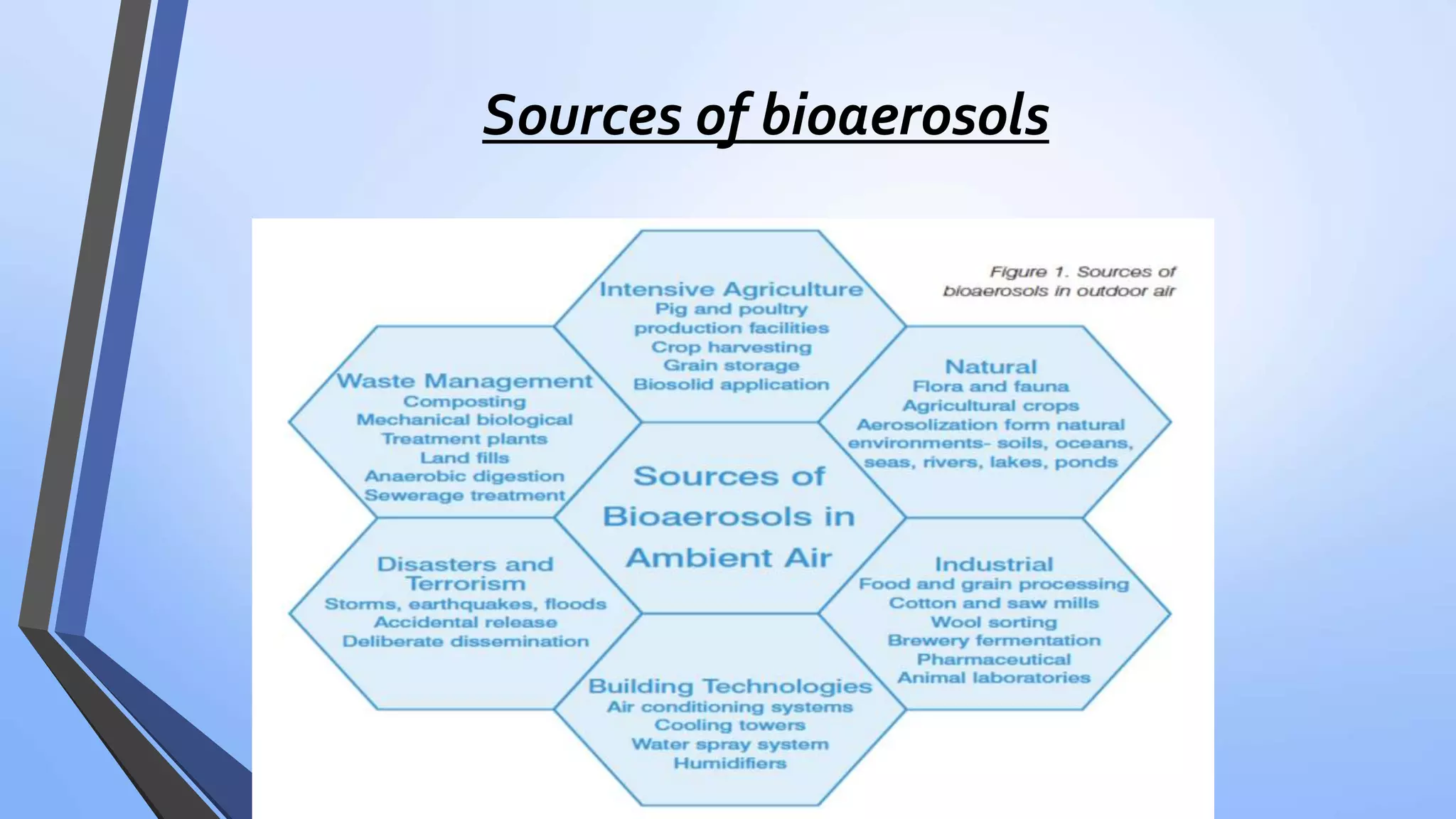
This document discusses bioaerosols and droplet nuclei. It defines bioaerosols as small airborne biological material, either attached to particulate matter or not, including microorganisms, their byproducts, and fragments. Bioaerosols can be viable, such as living bacteria and viruses, or non-viable, like toxins and proteins. Droplet nuclei are small aerosols formed from the evaporation of respiratory droplets smaller than 5 micrometers that can transmit diseases through airborne transmission. Common sources of bioaerosols include outdoor environmental sources, indoor materials and occupants, and human activities like coughing or talking. Exposure to some bioaerosols is associated with respiratory illnesses, but others may benefit immune