Downloaded 126 times
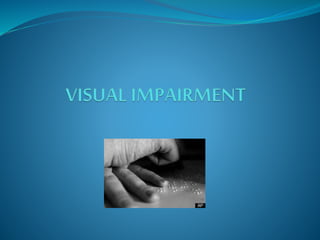
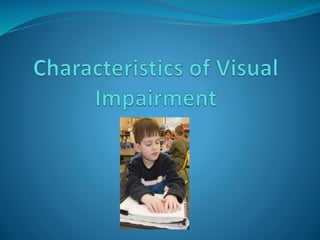

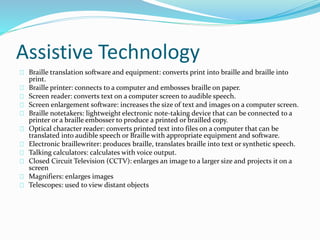

Visual impairment is defined as a functional loss of vision rather than an eye disorder itself. There are four types: partially sighted, low vision, legally blind, and totally blind. Low vision refers to severe visual impairment that affects both distance and near vision, requiring accommodations like large print or Braille. Legally blind means having 20/200 vision or less in the better eye with a limited field of view. Signs of visual impairment include sitting too close to screens, squinting, and rubbing eyes. Academic performance can suffer in areas relying on visuals like reading, diagrams, and maps. Assistive strategies include Braille materials, notes, seating near the front, verbal cues, peer assistance, and assistive


