Downloaded 72 times



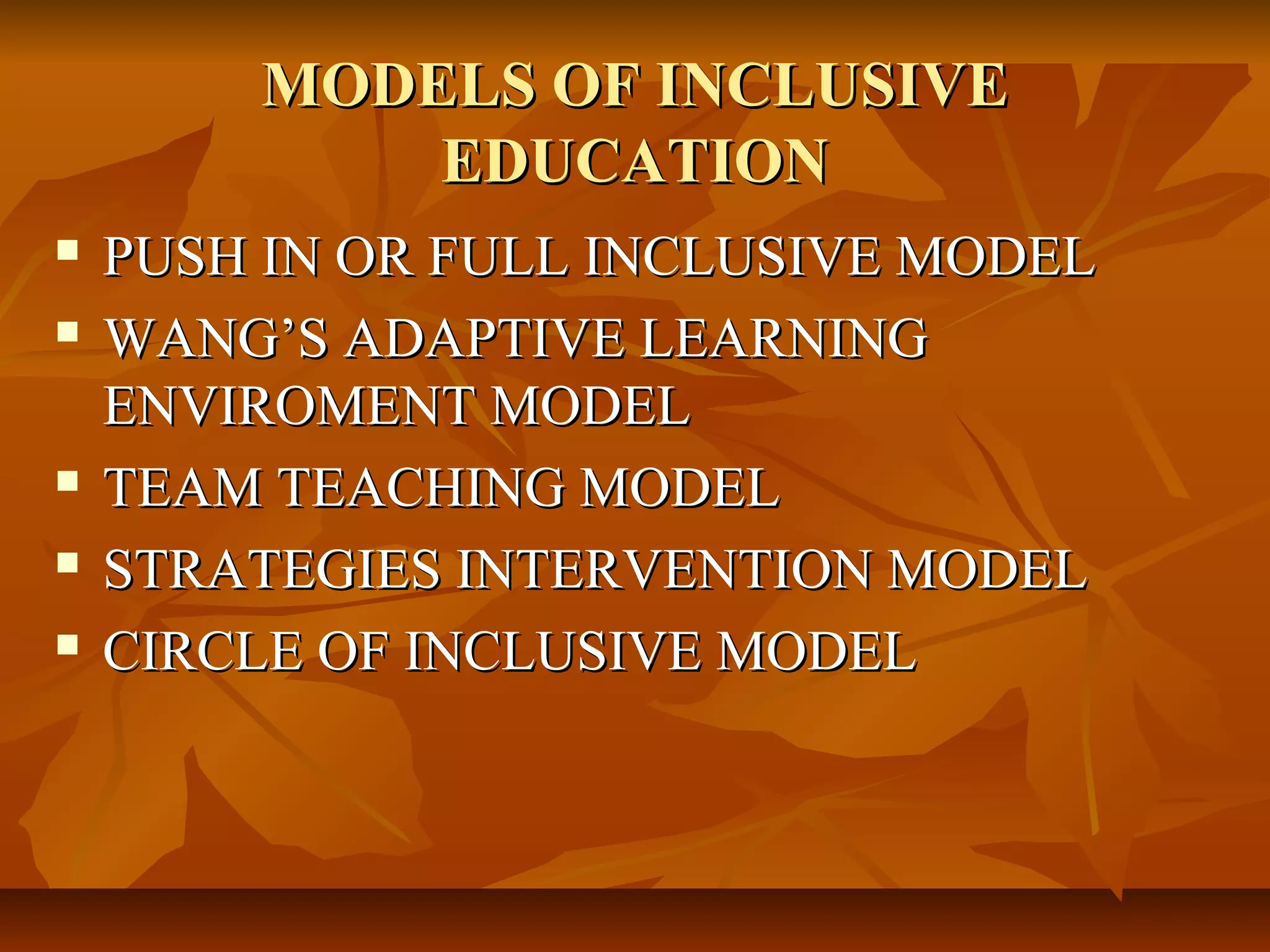





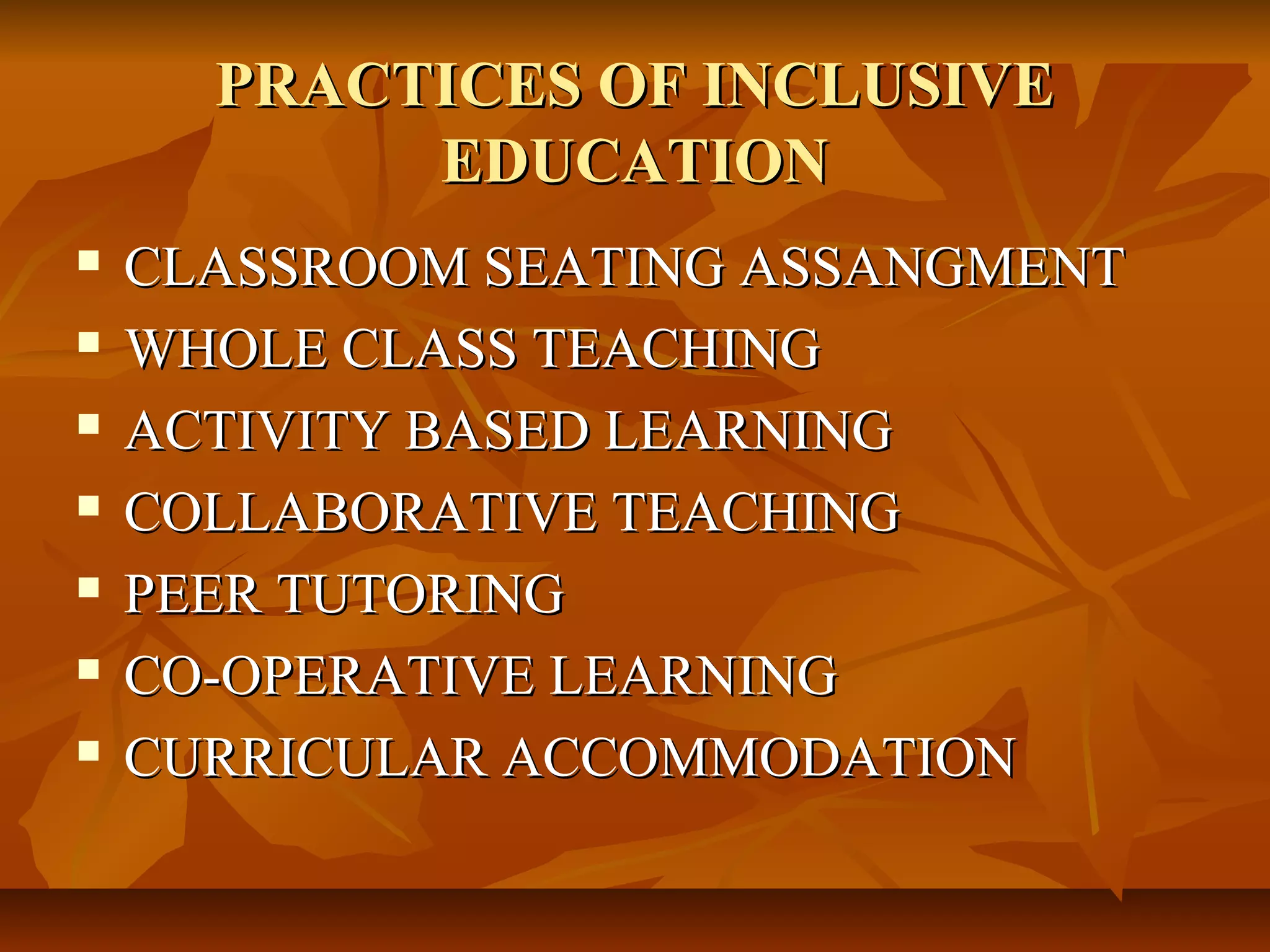









This document discusses models and practices of inclusive education. It describes five models of inclusive education: push in or full inclusion model, Wang's adaptive learning environment model, team teaching model, strategies intervention model, and circle of inclusive model. It also outlines several practices of inclusive education, including classroom seating arrangements, whole class teaching, activity based learning, collaborative teaching, peer tutoring, co-operative learning, and curricular accommodation.
Introduction to the assignment on inclusive education highlighting the models and practices.
Inclusive education welcomes all children regardless of abilities or disabilities, fostering integration.
Overview of models: Push In, Wang's Adaptive Learning, Team Teaching, Strategies Intervention, Circle of Inclusion.
Detailed exploration of the Push In or Full Inclusive Model in inclusive education.
Examination of the Team Teaching Model used in inclusive educational settings.
Insights into Wang's Adaptive Learning Environment Model for inclusive education.
Discussion on the Strategies Intervention Model to facilitate inclusive education.
Overview of the Circle of Inclusive Model applied in inclusive education frameworks.
Practical strategies in inclusive education including classroom seating and collaborative teaching.
Focus on effective classroom seating arrangements for inclusive environments.
Insights on whole class teaching as a practice in inclusive education.
Description of activity-based learning designed to include all learners.
Discussion on collaborative teaching methods for inclusive education.
Exploration of peer tutoring as a supportive practice in inclusive classrooms.
Focus on co-operative learning strategies that promote inclusion.
Strategies for curricular accommodation to support diverse learning needs.


![Inclusion Education report [Autosaved].pptx](https://cdn.slidesharecdn.com/ss_thumbnails/inclusioneducationreportautosaved-250709045750-55ff4818-thumbnail.jpg?width=640&height=640&fit=bounds)


