VIRAL
CONJUNCTIVITIS
WHAT?
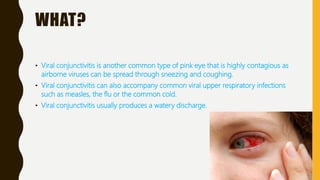
• Viral conjunctivitis is another common type of pink eye that is highly contagious as
airborne viruses can be spread through sneezing and coughing.
• Viral conjunctivitis can also accompany common viral upper respiratory infections
such as measles, the flu or the common cold.
• Viral conjunctivitis usually produces a watery discharge.
RISK FACTORS
• Exposure to someone infected with the viral form of conjunctivitis.
• Using contact lenses, especially extended-wear lenses.
CAUSES
• Enteroviruses.
• Herpes simplex virus, the cold sore virus, which usually affects only one eye.
• Herpes zoster
• Measles.
• Mumps.
• HIV
SYMPTOMS
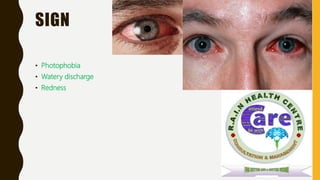
• Redness
• Burning
• Watery discharge from the eye
• Crustiness around the eyelids upon waking in the morning
• Swollen, red eyelids
• Sensitivity to bright light
• Swelling of the lymph nodes in front of the ears
• Other symptoms of viral infection, e.g. runny nose, sore throat and cough in the case
of a cold
SIGN
• Photophobia
• Watery discharge
• Redness
TREATMENT
• Generally are self-limited and treated supportively with cool or warm compresses for
comfort.
• Topical antihistamines to limit redness and itching,
• Chilled artificial tears for comfort,
• Topical antibiotics are as necessary to prevent bacterial superinfection.
PRECAUTIONS
• Use hand sanitizer and/or wash their hands thoroughly after touching
their eyes or nasal secretions
• Avoid touching the noninfected eye after touching the infected eye
• Avoid sharing towels or pillows
• Avoid swimming in pools
THANK YOU

Viral conjunctivitis

  • 1.
  • 2.
    WHAT? • Viral conjunctivitisis another common type of pink eye that is highly contagious as airborne viruses can be spread through sneezing and coughing. • Viral conjunctivitis can also accompany common viral upper respiratory infections such as measles, the flu or the common cold. • Viral conjunctivitis usually produces a watery discharge.
  • 3.
    RISK FACTORS • Exposureto someone infected with the viral form of conjunctivitis. • Using contact lenses, especially extended-wear lenses.
  • 4.
    CAUSES • Enteroviruses. • Herpessimplex virus, the cold sore virus, which usually affects only one eye. • Herpes zoster • Measles. • Mumps. • HIV
  • 5.
    SYMPTOMS • Redness • Burning •Watery discharge from the eye • Crustiness around the eyelids upon waking in the morning • Swollen, red eyelids • Sensitivity to bright light • Swelling of the lymph nodes in front of the ears • Other symptoms of viral infection, e.g. runny nose, sore throat and cough in the case of a cold
  • 6.
    SIGN • Photophobia • Waterydischarge • Redness
  • 7.
    TREATMENT • Generally areself-limited and treated supportively with cool or warm compresses for comfort. • Topical antihistamines to limit redness and itching, • Chilled artificial tears for comfort, • Topical antibiotics are as necessary to prevent bacterial superinfection.
  • 8.
    PRECAUTIONS • Use handsanitizer and/or wash their hands thoroughly after touching their eyes or nasal secretions • Avoid touching the noninfected eye after touching the infected eye • Avoid sharing towels or pillows • Avoid swimming in pools
  • 9.