INTRODUCTION
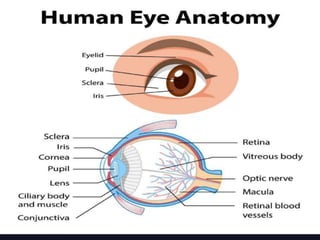
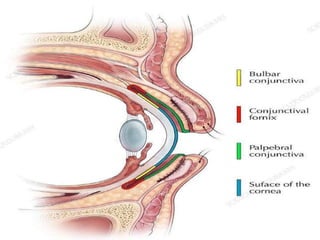
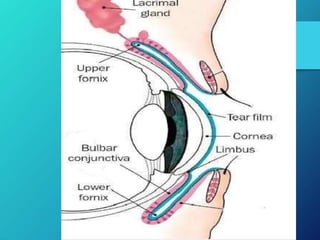
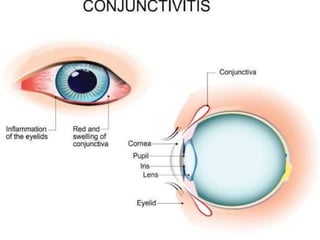
The conjunctiva is a thin membrane that covers the
inner surface of the eyelid and the white part of the
eyeball(sclera)
Conjunctivitis is the inflammation of conjunctiva
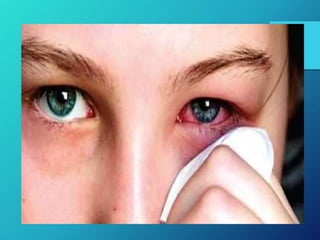
Inflammation of the conjunctiva is called
conjunctivitis, which makes the white of the eye
appear red
DEFINITION
Conjunctivitis is an inflammation or infection of the
transparent membrane (conjunctiva) that lines the
eyelid and covers the white part of the eyeball
⚫When small blood vessels in the conjunctiva
become inflamed, they're more visible. This is what
causes the white of the eyes to appear reddish or
pink
⚫Also known as “PINK EYE”
RISK FACTORS
Exposure to something for which the person have an allergy
(allergic conjunctivitis)
Exposure to someone infected with the viral or bacterial
form of conjunctivitis
Using contact lenses frequently
Microbial infection (Chlamydia), fungus etc.
CAUSES
Viral conjunctivitis –Adenovirus, HSV
Bacterial conjunctivitis – Staphylococcus aureus,
Streptococcus pneumoniae, Haemophilus influenza,
Chlamydia trachomatis
Allergic conjunctivitis - Pollen, perfumes,
cosmetics, smoke, dust
Chemical conjunctivitis - Acid or alkali's
TYPES OF CONJUNCTIVITIS
Viral and bacterial conjunctivitis:
 Viral conjunctivitis and bacterial conjunctivitis may affect one
or both eyes
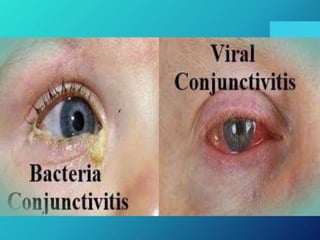
 Viral conjunctivitis usually produces a waterydischarge.
Bacterial conjunctivitis often produces a thicker, yellow-green
discharge
 Both viral and bacterial conjunctivitis can be associated with
colds or with symptoms of a respiratory infection, such as a
sore throat
Viral and bacterial conjunctivitis:
 Both viral and bacterial types are very contagious. They
are spread through direct or indirect contact with the eye
secretions of someone who's infected
 Adults and children alike can develop both of these types
of pink eye. However, bacterial conjunctivitis is more
common in children than it is in adults
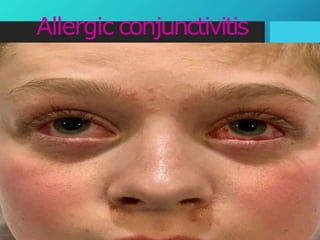
Allergic conjunctivitis
 Allergic conjunctivitis affects both eyes and is a response
to an allergy-causing substance such as pollen
 Most allergic conjunctivitis can be controlled with allergy
eyedrops
Allergic conjunctivitis
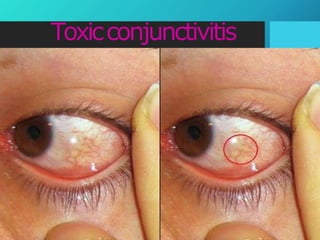
Toxic conjunctivitis
 Toxic conjunctivitis typically occurs with constant use of
topical ocular medications
 The reaction may take days to years to develop. There
also appears to be a dose-response effect with regard to
the preservative concentration and total amount of
preservative-containing medications used
 It implies direct damage to ocular tissues from an
offending agent, usually a preservative or medication
Toxicconjunctivitis
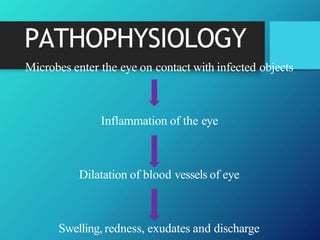
PATHOPHYSIOLOGY
Microbes enter the eye on contact with infected objects
Inflammation of the eye
Dilatation of blood vessels of eye
Swelling, redness, exudates and discharge
SIGN AND SYMPTOMS
Tenderness of the eye, or pain (which can be severe
in the cases of irritant conjunctivitis) & Swelling of
conjunctiva (chemosis)
 Itchiness
Body aches
Photophobia
(hyperemia)
Redness of the eye or inner
eyelids
Discharge and tear (epiphora)
SIGN AND SYMPTOMS
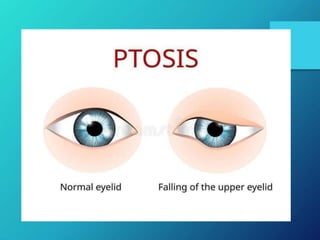
Drooping of upper eye lid
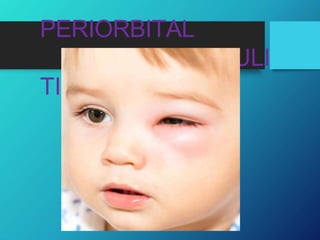
Periorbital cellulitis
Fever
Sore throat
Runny nose
 Swelling of the eyelids
 Infection usually begins with one eye, but can quickly
spread to other eye in cases of viral or bacterial conjunctivitis
PERIORBITAL
CELLULI
TIS
DIAGNOSTIC TESTS
 History collection
 Physical examination
 Culture of secretions
 Conjunctival scrapes for cytology (rarely done)
– detecting chlamydial and fungal infections
 Conjunctival incisional biopsy
MEDICAL
MANAGEMENT
MEDICAL MANAGEMENT
The management of conjunctivitis depends on the type. Most
types of mild and viral conjunctivitis are self-limiting, benign
conditions that may not require treatment and laboratory
procedures
BACTERIAL CONJUNCTIVITIS
If the infection is bacterial, the doctor may prescribe
antibiotic eye drops as pink eye treatment, and the infection
should go away within several days
Antibiotic eye ointment, in place of eye drops, issometimes
prescribed for treating bacterial pink eye in children
An ointment is often easier to administer to an infant or
young child than are eye drops, though the ointment may blur
vision for up to 20 minutes after application
BACTERIAL CONJUNCTIVITIS
With either form of medication, expect signs and
symptoms to start getting better in a fewdays
Topical antibiotics
Fluoroquinolones, sodium sulfacetamide or
trimethoprim for 7 to 10 days
VIRAL CONJUNCTIVITIS
There is no treatment for most cases of viral conjunctivitis.
Instead, the virus needs time to run its course — up to two
or three weeks
Viral conjunctivitis often begins in one eye and then infects
the other eye within a few days. The signs and symptoms
should gradually clear on their own
Antiviral medications may be an option if the doctor
determines that the viral conjunctivitis is caused by the
HERPES SIMPLEX VIRUS
ALLERGIC CONJUNCTIVITIS
If the irritation is allergic conjunctivitis, the doctor may
prescribe one of many different types of eye drops for people
with allergies
These may include medications that help control allergic
reactions, such as antihistamines or drugs that help control
inflammation, such as steroids and anti-inflammatory drops
The patient may also reduce the severity of allergic
conjunctivitis symptoms by avoiding whatever causes the
allergies when possible
LIFESTYLE AND HOME REMEDIES
Apply a hot compress to the eyes
Try eye drops
Stop wearing contact lenses
Reduce exposure to light
Prevent rubbing of the eye
Clean the eye using sterile water and cotton swabs, frominner
canthus to outer canthus
Use of dark sunglasses is advised, in presence ofphotophobia
PREVENTION
Practice good hygiene to control the spread of pink eye. For
instance:
 Don't touch your eyes with your hands
 Wash your hands often
 Use a clean towel and wash cloth daily
 Don't share towels or washcloths
 Change your pillow cases often
 Don’t use eye cosmetics
 Don't share eye cosmetics or personal eye care items
 Although pink eye symptoms may resolve in three or four
days, children with viral conjunctivitis may be contagious
for a week or more. Children may return to school when
they no longer experience tearing and redness of eyes
conjunctivitis.pptx.conjunctivitis.eye..

conjunctivitis.pptx.conjunctivitis.eye..

  • 3.
    INTRODUCTION The conjunctiva isa thin membrane that covers the inner surface of the eyelid and the white part of the eyeball(sclera) Conjunctivitis is the inflammation of conjunctiva Inflammation of the conjunctiva is called conjunctivitis, which makes the white of the eye appear red
  • 6.
    DEFINITION Conjunctivitis is aninflammation or infection of the transparent membrane (conjunctiva) that lines the eyelid and covers the white part of the eyeball ⚫When small blood vessels in the conjunctiva become inflamed, they're more visible. This is what causes the white of the eyes to appear reddish or pink ⚫Also known as “PINK EYE”
  • 9.
    RISK FACTORS Exposure tosomething for which the person have an allergy (allergic conjunctivitis) Exposure to someone infected with the viral or bacterial form of conjunctivitis Using contact lenses frequently Microbial infection (Chlamydia), fungus etc.
  • 10.
    CAUSES Viral conjunctivitis –Adenovirus,HSV Bacterial conjunctivitis – Staphylococcus aureus, Streptococcus pneumoniae, Haemophilus influenza, Chlamydia trachomatis Allergic conjunctivitis - Pollen, perfumes, cosmetics, smoke, dust Chemical conjunctivitis - Acid or alkali's
  • 11.
    TYPES OF CONJUNCTIVITIS Viraland bacterial conjunctivitis:  Viral conjunctivitis and bacterial conjunctivitis may affect one or both eyes  Viral conjunctivitis usually produces a waterydischarge. Bacterial conjunctivitis often produces a thicker, yellow-green discharge  Both viral and bacterial conjunctivitis can be associated with colds or with symptoms of a respiratory infection, such as a sore throat
  • 12.
    Viral and bacterialconjunctivitis:  Both viral and bacterial types are very contagious. They are spread through direct or indirect contact with the eye secretions of someone who's infected  Adults and children alike can develop both of these types of pink eye. However, bacterial conjunctivitis is more common in children than it is in adults
  • 14.
    Allergic conjunctivitis  Allergicconjunctivitis affects both eyes and is a response to an allergy-causing substance such as pollen  Most allergic conjunctivitis can be controlled with allergy eyedrops
  • 15.
  • 16.
    Toxic conjunctivitis  Toxicconjunctivitis typically occurs with constant use of topical ocular medications  The reaction may take days to years to develop. There also appears to be a dose-response effect with regard to the preservative concentration and total amount of preservative-containing medications used  It implies direct damage to ocular tissues from an offending agent, usually a preservative or medication
  • 17.
  • 18.
    PATHOPHYSIOLOGY Microbes enter theeye on contact with infected objects Inflammation of the eye Dilatation of blood vessels of eye Swelling, redness, exudates and discharge
  • 19.
    SIGN AND SYMPTOMS Tendernessof the eye, or pain (which can be severe in the cases of irritant conjunctivitis) & Swelling of conjunctiva (chemosis)  Itchiness Body aches Photophobia (hyperemia) Redness of the eye or inner eyelids Discharge and tear (epiphora)
  • 20.
    SIGN AND SYMPTOMS Droopingof upper eye lid Periorbital cellulitis Fever Sore throat Runny nose  Swelling of the eyelids  Infection usually begins with one eye, but can quickly spread to other eye in cases of viral or bacterial conjunctivitis
  • 22.
  • 23.
    DIAGNOSTIC TESTS  Historycollection  Physical examination  Culture of secretions  Conjunctival scrapes for cytology (rarely done) – detecting chlamydial and fungal infections  Conjunctival incisional biopsy
  • 24.
  • 25.
    MEDICAL MANAGEMENT The managementof conjunctivitis depends on the type. Most types of mild and viral conjunctivitis are self-limiting, benign conditions that may not require treatment and laboratory procedures
  • 26.
    BACTERIAL CONJUNCTIVITIS If theinfection is bacterial, the doctor may prescribe antibiotic eye drops as pink eye treatment, and the infection should go away within several days Antibiotic eye ointment, in place of eye drops, issometimes prescribed for treating bacterial pink eye in children An ointment is often easier to administer to an infant or young child than are eye drops, though the ointment may blur vision for up to 20 minutes after application
  • 27.
    BACTERIAL CONJUNCTIVITIS With eitherform of medication, expect signs and symptoms to start getting better in a fewdays Topical antibiotics Fluoroquinolones, sodium sulfacetamide or trimethoprim for 7 to 10 days
  • 28.
    VIRAL CONJUNCTIVITIS There isno treatment for most cases of viral conjunctivitis. Instead, the virus needs time to run its course — up to two or three weeks Viral conjunctivitis often begins in one eye and then infects the other eye within a few days. The signs and symptoms should gradually clear on their own Antiviral medications may be an option if the doctor determines that the viral conjunctivitis is caused by the HERPES SIMPLEX VIRUS

  • 29.
    ALLERGIC CONJUNCTIVITIS If theirritation is allergic conjunctivitis, the doctor may prescribe one of many different types of eye drops for people with allergies These may include medications that help control allergic reactions, such as antihistamines or drugs that help control inflammation, such as steroids and anti-inflammatory drops The patient may also reduce the severity of allergic conjunctivitis symptoms by avoiding whatever causes the allergies when possible
  • 30.
    LIFESTYLE AND HOMEREMEDIES Apply a hot compress to the eyes Try eye drops Stop wearing contact lenses Reduce exposure to light Prevent rubbing of the eye Clean the eye using sterile water and cotton swabs, frominner canthus to outer canthus Use of dark sunglasses is advised, in presence ofphotophobia
  • 31.
    PREVENTION Practice good hygieneto control the spread of pink eye. For instance:  Don't touch your eyes with your hands  Wash your hands often  Use a clean towel and wash cloth daily  Don't share towels or washcloths  Change your pillow cases often  Don’t use eye cosmetics  Don't share eye cosmetics or personal eye care items  Although pink eye symptoms may resolve in three or four days, children with viral conjunctivitis may be contagious for a week or more. Children may return to school when they no longer experience tearing and redness of eyes