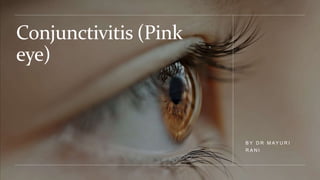
Conjunctivitis (Pink
eye)
B Y D R M AY U R I
R A N I
Symptoms of Conjunctivitis
Pink or red color in the
white of the eye(s)
Swelling of the
conjunctiva (the thin
layer that lines the white
part of the eye and the
inside of the eyelid)
and/or eyelids
Increased tear
production
Feeling like a foreign
body is in the eye(s) or
an urge to rub the eye(s)
Itching, irritation, and/or
burning
Discharge (pus or
mucus)
Crusting of eyelids or
lashes, especially in the
morning
Contact lenses that feel
uncomfortable and/or do
not stay in place on the
eye
Viral
conjunctivitis Can occur with symptoms of a cold,
flu, or other respiratory infection
Usually begins in one eye and may
spread to the other eye within days
Discharge from the eye is usually
watery rather than thick
Bacterial
conjunctivitis
More commonly associated
with discharge (pus), which
can lead to eyelids sticking
together
Sometimes occurs with an ear
infection
Allergic
conjunctivitis Usually occurs in both eyes
Can produce intense itching, tearing,
and swelling in the eyes
May occur with symptoms of allergies,
such as an itchy nose, sneezing, a
scratchy throat, or asthma
Conjunctivitis
by irritants
• Can produce watery eyes and mucus
discharge
Transmission
Close personal contact, such as
touching or shaking hands
The air by coughing and sneezing
Touching an object or surface with
germs on it, then touching your
eyes before washing your hands
Diagnosis
• The cause is likely a virus if
• conjunctivitis accompanies a
common cold or respiratory tract
infection, and
• discharge from the eye is watery
rather than thick
Viral Conjunctivitis
• conjunctivitis occurs at the same
time as an ear infection
• occurs shortly after birth
• discharge from the eye is thick
rather than watery
Bacterial
Conjunctivitis
Allergic Conjunctivitis
• The cause is likely allergic if
• conjunctivitis occurs seasonally when pollen counts are high
• the patient’s eyes itch intensely
• it occurs with other signs of allergic disease, such as hay fever,
asthma, or eczema
Consult a doctor if
conjunctivitis along with any
of the following conditions:
• pain in the eye(s)
• sensitivity to light or blurred vision that does
not improve when discharge is wiped from the
eye(s)
• intense redness in the eye(s)
• symptoms that get worse or don’t improve,
including pink eye thought to be caused by
bacteria which does not improve after 24 hours
of antibiotic use
• a weakened immune system, for example from
HIV infection, cancer treatment, or other
medical conditions or treatments
• Newborns with symptoms of conjunctivitis
should be seen by a doctor right away.
Prevention
Wash
Wash your hands
often with soap
and warm water
for at least 20
seconds. If soap
and warm water
are not available,
use an alcohol-
based hand
sanitizer that
contains at least
60% alcohol to
clean hands
Wash
Wash your hands
after contact with
an infected person
or items he or she
uses
Avoid
Avoid touching
your eyes with
unwashed hands.
Do not share
Do not share items
used by an
infected person;
for example, do
not share pillows,
washcloths,
towels, eye drops,
eye or face
makeup, makeup
brushes, contact
lenses, contact
lens storage
cases, or
eyeglasses.

Conjunctivitis( Pink eye).pptx

  • 1.
    Conjunctivitis (Pink eye) B YD R M AY U R I R A N I
  • 2.
    Symptoms of Conjunctivitis Pinkor red color in the white of the eye(s) Swelling of the conjunctiva (the thin layer that lines the white part of the eye and the inside of the eyelid) and/or eyelids Increased tear production Feeling like a foreign body is in the eye(s) or an urge to rub the eye(s) Itching, irritation, and/or burning Discharge (pus or mucus) Crusting of eyelids or lashes, especially in the morning Contact lenses that feel uncomfortable and/or do not stay in place on the eye
  • 3.
    Viral conjunctivitis Can occurwith symptoms of a cold, flu, or other respiratory infection Usually begins in one eye and may spread to the other eye within days Discharge from the eye is usually watery rather than thick
  • 4.
    Bacterial conjunctivitis More commonly associated withdischarge (pus), which can lead to eyelids sticking together Sometimes occurs with an ear infection
  • 5.
    Allergic conjunctivitis Usually occursin both eyes Can produce intense itching, tearing, and swelling in the eyes May occur with symptoms of allergies, such as an itchy nose, sneezing, a scratchy throat, or asthma
  • 6.
    Conjunctivitis by irritants • Canproduce watery eyes and mucus discharge
  • 7.
    Transmission Close personal contact,such as touching or shaking hands The air by coughing and sneezing Touching an object or surface with germs on it, then touching your eyes before washing your hands
  • 8.
    Diagnosis • The causeis likely a virus if • conjunctivitis accompanies a common cold or respiratory tract infection, and • discharge from the eye is watery rather than thick Viral Conjunctivitis • conjunctivitis occurs at the same time as an ear infection • occurs shortly after birth • discharge from the eye is thick rather than watery Bacterial Conjunctivitis Allergic Conjunctivitis • The cause is likely allergic if • conjunctivitis occurs seasonally when pollen counts are high • the patient’s eyes itch intensely • it occurs with other signs of allergic disease, such as hay fever, asthma, or eczema
  • 9.
    Consult a doctorif conjunctivitis along with any of the following conditions: • pain in the eye(s) • sensitivity to light or blurred vision that does not improve when discharge is wiped from the eye(s) • intense redness in the eye(s) • symptoms that get worse or don’t improve, including pink eye thought to be caused by bacteria which does not improve after 24 hours of antibiotic use • a weakened immune system, for example from HIV infection, cancer treatment, or other medical conditions or treatments • Newborns with symptoms of conjunctivitis should be seen by a doctor right away.
  • 10.
    Prevention Wash Wash your hands oftenwith soap and warm water for at least 20 seconds. If soap and warm water are not available, use an alcohol- based hand sanitizer that contains at least 60% alcohol to clean hands Wash Wash your hands after contact with an infected person or items he or she uses Avoid Avoid touching your eyes with unwashed hands. Do not share Do not share items used by an infected person; for example, do not share pillows, washcloths, towels, eye drops, eye or face makeup, makeup brushes, contact lenses, contact lens storage cases, or eyeglasses.