
Viral Conjunctivitis
Dr. Chavan P.R.
Pharm D
Index
• Definition
• Typewise differenciation
• Causes
• Pathophysiology
• Clinical presentations
• Diagnosis
• Preventive measures
• Treatment
Definition
• Inflammation or infection of the outer
membrane of the eyeball and the inner eyelid.
• It is also known by the name Pink eye.
• Conjunctivitis can be considered as allergic,
viral or bacterial
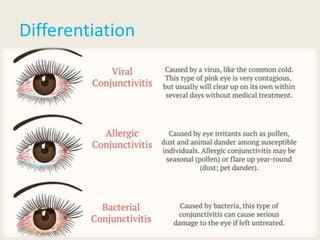
Differentiation
Causes
• Adenovirus
• Enteroviruses
• Herpes simplex virus, the cold sore virus, which usually affects
only one eye
• Herpes zoster ophthalmicus, associated with shingles
• Molluscum contagiosum, also known as water warts
• Measles
• Mumps
• Rubella, also known as German measles
• Infectious mononucleosis
• Parammyxovirus
• HIV
• ARBOR virus
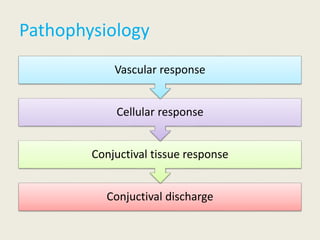
Pathophysiology
Conjuctival discharge
Conjuctival tissue response
Cellular response
Vascular response
Clinical presentations
• Pinkness or, typically, intense redness of the eye
• Burning, a sensation of grittiness or mild pain or
discomfort in the eye
• Watery discharge from the eye, sometimes with a small
amount of mucus
• Crustiness around the eyelids upon waking in the morning
• Swollen, red eyelids
• Slight sensitivity to bright light
• Swelling of the lymph nodes in front of the ears
• Other symptoms of viral infection, e.g. runny nose, sore
throat and cough in the case of a cold
Diagnosis
• Can be diagnosed at home and treated as well
• Medical history
• History of infectious contact
• In severe cases eye discharge taken for further
assessment
Complications
• Ulcers and inflammation of the cornea
(keratitis)
• Scarring of the eye and damage to vision
Prevention
• Avoiding contact with people who have pink
eye
• Maintaining good hygiene, such as washing
your hands often with soap and water, or
using hand sanitizer
• Avoiding touching your eyes when your hands
are not clean
• Maintaining good hygiene, such as washing your
hands often with soap and water, or using hand
sanitizer, especially after treating the eyes
• Cleaning your spectacles
• Avoiding touching the eyes other than when
treating them, as this can spread the virus
• Washing pillowcases and towels often and
avoiding sharing them with others
• Avoiding sharing makeup and eye drops
• When necessary, staying off school or work
until symptoms of viral conjunctivitis have
cleared; this is generally when the eyes are no
longer red and irritated
• Avoiding the use of swimming pools
Treatment
• Mild forms can be cured by own within 1-3 weeks
• Applying a cold or warm compress, a clean cloth that has
been soaked in water to the eye
• Gently cleaning discharge from the eye with a clean
cloth, sterile pad or cotton wool soaked in water
• Applying lubricating eye drops to the eye (artificial tears)
and are available without a prescription. Care must be
taken not to use the drops in the other eye if only one
eye is infected
• Applying antihistamine/decongestant eye
drops, which are often available without a
prescription; these may help to reduce
irritation
• Avoiding the use of contact lenses until the
infection has cleared
• Antibiotics not needed
Drugs used in viral conjuctivitis are mostly
• Idoxuridine
• Acyclovir
• Famciclovir
• Valacyclovir
• Ganciclovir
• Foscarnet
Mechanism of antiviral agents
Thank you

Viral conjunctivitis basic overview

  • 1.
  • 2.
    Index • Definition • Typewisedifferenciation • Causes • Pathophysiology • Clinical presentations • Diagnosis • Preventive measures • Treatment
  • 3.
    Definition • Inflammation orinfection of the outer membrane of the eyeball and the inner eyelid. • It is also known by the name Pink eye. • Conjunctivitis can be considered as allergic, viral or bacterial
  • 4.
  • 5.
    Causes • Adenovirus • Enteroviruses •Herpes simplex virus, the cold sore virus, which usually affects only one eye • Herpes zoster ophthalmicus, associated with shingles • Molluscum contagiosum, also known as water warts • Measles • Mumps • Rubella, also known as German measles • Infectious mononucleosis • Parammyxovirus • HIV • ARBOR virus
  • 6.
    Pathophysiology Conjuctival discharge Conjuctival tissueresponse Cellular response Vascular response
  • 7.
    Clinical presentations • Pinknessor, typically, intense redness of the eye • Burning, a sensation of grittiness or mild pain or discomfort in the eye • Watery discharge from the eye, sometimes with a small amount of mucus • Crustiness around the eyelids upon waking in the morning • Swollen, red eyelids • Slight sensitivity to bright light • Swelling of the lymph nodes in front of the ears • Other symptoms of viral infection, e.g. runny nose, sore throat and cough in the case of a cold
  • 8.
    Diagnosis • Can bediagnosed at home and treated as well • Medical history • History of infectious contact • In severe cases eye discharge taken for further assessment
  • 9.
    Complications • Ulcers andinflammation of the cornea (keratitis) • Scarring of the eye and damage to vision
  • 10.
    Prevention • Avoiding contactwith people who have pink eye • Maintaining good hygiene, such as washing your hands often with soap and water, or using hand sanitizer • Avoiding touching your eyes when your hands are not clean
  • 11.
    • Maintaining goodhygiene, such as washing your hands often with soap and water, or using hand sanitizer, especially after treating the eyes • Cleaning your spectacles • Avoiding touching the eyes other than when treating them, as this can spread the virus • Washing pillowcases and towels often and avoiding sharing them with others
  • 12.
    • Avoiding sharingmakeup and eye drops • When necessary, staying off school or work until symptoms of viral conjunctivitis have cleared; this is generally when the eyes are no longer red and irritated • Avoiding the use of swimming pools
  • 13.
    Treatment • Mild formscan be cured by own within 1-3 weeks • Applying a cold or warm compress, a clean cloth that has been soaked in water to the eye • Gently cleaning discharge from the eye with a clean cloth, sterile pad or cotton wool soaked in water • Applying lubricating eye drops to the eye (artificial tears) and are available without a prescription. Care must be taken not to use the drops in the other eye if only one eye is infected
  • 14.
    • Applying antihistamine/decongestanteye drops, which are often available without a prescription; these may help to reduce irritation • Avoiding the use of contact lenses until the infection has cleared • Antibiotics not needed
  • 15.
    Drugs used inviral conjuctivitis are mostly • Idoxuridine • Acyclovir • Famciclovir • Valacyclovir • Ganciclovir • Foscarnet
  • 16.
  • 17.