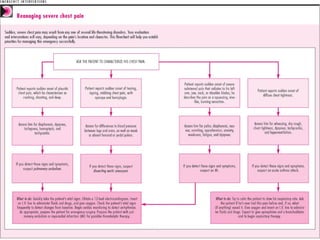

Chest Pain
- R.Malarvizhi
 Chest pain denotes any pain in the anterior
thoracic region
 When chest pain strikes it can be an alarming
situation
 It can be from any of the inner structures
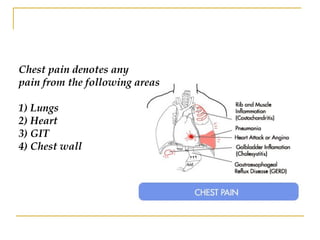
Chest pain denotes any
pain from the following areas
1) Lungs
2) Heart
3) GIT
4) Chest wall
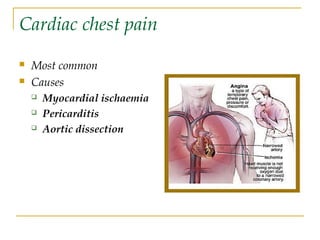
Cardiac chest pain
 Most common
 Causes
 Myocardial ischaemia
 Pericarditis
 Aortic dissection
Myocardial ishaemia
 Imbalance b/w myocardial O2 supply and
demand –pain
 Symptoms
 Retrosternal pain- radiates ro back b/w shoulder
blades or to the left arm , cresendo quality
 Dysnoea
 Sweating
 Nausea
 Heaviness or discomfort in jaw or chest
 In case of angina characterised by severe
crushing pain over the chest not relieved on
rest the symptoms are more prolonged and
severe.
 In case of long standing Diabetes , there may
be insensitization of nerves so the may only
complain of vague pain ,dizziness and
fatigue
Pericarditis
 Central chest pain
 Sharp in character
 Aggravated on deep inspiration, cough or
postural changes
 May be idiopathic or Coxsackie B infection
 Also as Cx of MI
Aortic dissection
 Severe tearing pain
 Front or back of chest
 Abrupt onset
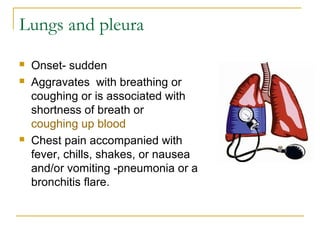
Lungs and pleura
 Onset- sudden
 Aggravates with breathing or
coughing or is associated with
shortness of breath or
coughing up blood
 Chest pain accompanied with
fever, chills, shakes, or nausea
and/or vomiting -pneumonia or a
bronchitis flare.
Due to lungs and pleura
 Pleuritic pain
 sharp and stabbing
 Aggravated on deep breathing of coughing
 Cause being inflammation
 Pneumothorax
 Pain worse on breathing
 Aching character
 Pulm tumors
 Constant pain unrelated to breathing
 Cause being local invasion of chest wall
 Pulm embolus- infarction-pleurisy-pleuritic pain
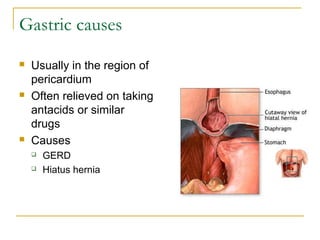
Gastric causes
 Usually in the region of
pericardium
 Often relieved on taking
antacids or similar
drugs
 Causes
 GERD
 Hiatus hernia
 In case of GERD if lying down as for sleeping within
3hrs of food , pain start from the lower chest wall
and moves to the centre
 Certain foods, substances, or conditions may predispose
you to GERD.
 Foods that cause GERD include chocolate, alcohol,
caffeine, tobacco products, fatty foods, aspirin and
Ibuprofen, and citrus fruits and tomatoes.
 GERD is usually treated with prescription, antacid
medicines such as cimetidine , ranitadine , and omeprazole
Often achieve immediate relief with over-the-counter
antacids.
 With a hiatal hernia may suffer from excessive
indigestion.
Due to Chest wall
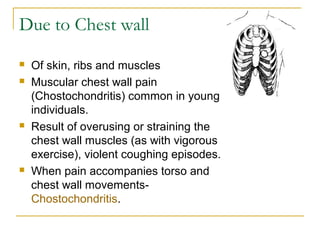
 Of skin, ribs and muscles
 Muscular chest wall pain
(Chostochondritis) common in young
individuals.
 Result of overusing or straining the
chest wall muscles (as with vigorous
exercise), violent coughing episodes.
 When pain accompanies torso and
chest wall movements-
Chostochondritis.
Stress
Anxiety , Stress
 Hyperventilation stress and panic attacks.
 hit with so much emotional power at once that they are unable to
process it and they begin to hyperventilate.
 self correcting problem,
 at the absolute worse after hyperventilating for several minutes
the person will simply pass out and regain consciousness and
their breathing will return to normal.
 The best thing to do
 is to try and relax and control your breathing.
 Concentrate on your breathing, try to be deliberate and slow.
 Remove the person from crowds that naturally gather around and
sit down.
Avoid stress
Management
 ABC
 O2 inhalation
 IV saline
 History and investigations
 Appropriate t/t
Case study
 Bob, a stressed entrepreneur with unexplained chest pain, is a
48-year-old businessman with a sedentary lifestyle .He is
increasingly troubled by chest pain that started more than a year
ago and is getting more frequent as his work stress increases.
He came to the emergency ward recently with a particularly
severe episode of chest pain. After performing the usual cardiac
tests, the emergency physician and the cardiologist concluded
that there was a low probability of symptomatic coronary artery
disease and advised Bob to visit his family doctor. Bob has made
an appointment to talk to you. He remains concerned because
he continues to experience chest pain and has not been given an
explanation for his symptoms. He suspects something is
seriously wrong, and he trusts your opinion. What will you do?
 Results of Bob’s cardiovascular disease investigations indicated
that he was unlikely to have CAD as a cause for his symptoms.
His family physician prescribed a PPI because a careful history
and physical examination failed to reveal the diagnosis. This
strategy was based on the working hypothesis that Bob could be
experiencing atypical symptoms of GERD. Two weeks later, Bob
reported nearly complete relief of his symptoms, and he was no
longer worried that his symptoms were from an impending heart
attack. Bob and his family physician discussed the health
benefits of eating a more balanced diet and taking regular
exercise, and Bob continued the course of PPI therapy. Bob and
his family doctor are pleased with the outcome and remain in
contact periodically to monitor Bob’s progress.
Thank you

Chest pain- not everything is MI

  • 1.
  • 2.
     Chest paindenotes any pain in the anterior thoracic region  When chest pain strikes it can be an alarming situation  It can be from any of the inner structures
  • 3.
    Chest pain denotesany pain from the following areas 1) Lungs 2) Heart 3) GIT 4) Chest wall
  • 4.
    Cardiac chest pain Most common  Causes  Myocardial ischaemia  Pericarditis  Aortic dissection
  • 5.
    Myocardial ishaemia  Imbalanceb/w myocardial O2 supply and demand –pain  Symptoms  Retrosternal pain- radiates ro back b/w shoulder blades or to the left arm , cresendo quality  Dysnoea  Sweating  Nausea  Heaviness or discomfort in jaw or chest
  • 6.
     In caseof angina characterised by severe crushing pain over the chest not relieved on rest the symptoms are more prolonged and severe.  In case of long standing Diabetes , there may be insensitization of nerves so the may only complain of vague pain ,dizziness and fatigue
  • 7.
    Pericarditis  Central chestpain  Sharp in character  Aggravated on deep inspiration, cough or postural changes  May be idiopathic or Coxsackie B infection  Also as Cx of MI
  • 8.
    Aortic dissection  Severetearing pain  Front or back of chest  Abrupt onset
  • 9.
    Lungs and pleura Onset- sudden  Aggravates with breathing or coughing or is associated with shortness of breath or coughing up blood  Chest pain accompanied with fever, chills, shakes, or nausea and/or vomiting -pneumonia or a bronchitis flare.
  • 10.
    Due to lungsand pleura  Pleuritic pain  sharp and stabbing  Aggravated on deep breathing of coughing  Cause being inflammation  Pneumothorax  Pain worse on breathing  Aching character  Pulm tumors  Constant pain unrelated to breathing  Cause being local invasion of chest wall  Pulm embolus- infarction-pleurisy-pleuritic pain
  • 11.
    Gastric causes  Usuallyin the region of pericardium  Often relieved on taking antacids or similar drugs  Causes  GERD  Hiatus hernia
  • 12.
     In caseof GERD if lying down as for sleeping within 3hrs of food , pain start from the lower chest wall and moves to the centre  Certain foods, substances, or conditions may predispose you to GERD.  Foods that cause GERD include chocolate, alcohol, caffeine, tobacco products, fatty foods, aspirin and Ibuprofen, and citrus fruits and tomatoes.  GERD is usually treated with prescription, antacid medicines such as cimetidine , ranitadine , and omeprazole Often achieve immediate relief with over-the-counter antacids.  With a hiatal hernia may suffer from excessive indigestion.
  • 13.
    Due to Chestwall  Of skin, ribs and muscles  Muscular chest wall pain (Chostochondritis) common in young individuals.  Result of overusing or straining the chest wall muscles (as with vigorous exercise), violent coughing episodes.  When pain accompanies torso and chest wall movements- Chostochondritis.
  • 14.
  • 15.
    Anxiety , Stress Hyperventilation stress and panic attacks.  hit with so much emotional power at once that they are unable to process it and they begin to hyperventilate.  self correcting problem,  at the absolute worse after hyperventilating for several minutes the person will simply pass out and regain consciousness and their breathing will return to normal.  The best thing to do  is to try and relax and control your breathing.  Concentrate on your breathing, try to be deliberate and slow.  Remove the person from crowds that naturally gather around and sit down.
  • 16.
  • 18.
    Management  ABC  O2inhalation  IV saline  History and investigations  Appropriate t/t
  • 19.
    Case study  Bob,a stressed entrepreneur with unexplained chest pain, is a 48-year-old businessman with a sedentary lifestyle .He is increasingly troubled by chest pain that started more than a year ago and is getting more frequent as his work stress increases. He came to the emergency ward recently with a particularly severe episode of chest pain. After performing the usual cardiac tests, the emergency physician and the cardiologist concluded that there was a low probability of symptomatic coronary artery disease and advised Bob to visit his family doctor. Bob has made an appointment to talk to you. He remains concerned because he continues to experience chest pain and has not been given an explanation for his symptoms. He suspects something is seriously wrong, and he trusts your opinion. What will you do?
  • 20.
     Results ofBob’s cardiovascular disease investigations indicated that he was unlikely to have CAD as a cause for his symptoms. His family physician prescribed a PPI because a careful history and physical examination failed to reveal the diagnosis. This strategy was based on the working hypothesis that Bob could be experiencing atypical symptoms of GERD. Two weeks later, Bob reported nearly complete relief of his symptoms, and he was no longer worried that his symptoms were from an impending heart attack. Bob and his family physician discussed the health benefits of eating a more balanced diet and taking regular exercise, and Bob continued the course of PPI therapy. Bob and his family doctor are pleased with the outcome and remain in contact periodically to monitor Bob’s progress.
  • 21.