NASAL DISCHARGE
Muhammad Wasil Khan 5-1/2018/066
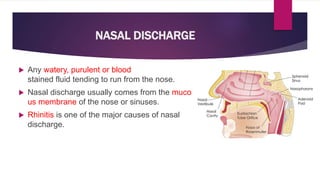
NASAL CAVITY ANATOMY
NASAL DISCHARGE
 Any watery, purulent or blood
stained fluid tending to run from the nose.
 Nasal discharge usually comes from the muco
us membrane of the nose or sinuses.
 Rhinitis is one of the major causes of nasal
discharge.
CLASSIFICATION OF RHINITIS
1. Acute Rhinitis
 Viral rhinitis
 Bacterial rhinitis
 Irritative rhinitis
2. Allergic Rhinitis
3. Vasomotor Rhinitis
4. Chronic Rhinitis
 Chronic simple rhinitis
 Hypertrophic rhinitis
 Atrophic rhinitis
ACUTE RHINITIS
Viral Rhinitis
1. Common cold (coryza)
 Etiology: adenovirus, picornavirus and its subgroups such as rhinovirus,
coxsackie virus and enteric cytopathic human orphan virus.
 Clinical symptoms:
 Burning sensation at the back of nose, nasal stuffiness, rhinorrhoea and
sneezing.
 Patient feels chilly and there is low-grade fever.
 Initially, nasal discharge is watery and profuse but may become muco-
purulent due to secondary bacterial invasion.
ACUTE VIRAL RHINITIS
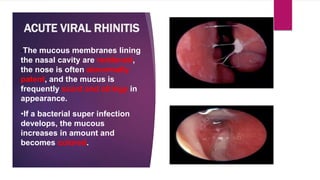
•The mucous membranes lining
the nasal cavity are reddened,
the nose is often abnormally
patent, and the mucus is
frequently scant and stringy in
appearance.
•If a bacterial super infection
develops, the mucous
increases in amount and
becomes colored.
 Bed rest and plenty of fluids are encouraged.
 Antihistamines and nasal decongestants.
 Analgesics are useful to relieve headache, fever and myalgia.
 Non aspirin containing analgesics are preferable as aspirin causes increased
shedding of virus.
 Antibiotics are required when secondary infection supervenes.
 Complications:
 Sinusitis, pharyngitis, tonsillitis, bronchitis, pneumonia and otitis media.
TREATMENT AND MANAGEMENT
 Influenzal Rhinitis:
 Influenza viruses A, B or C are responsible.
 Complications due to bacterial invasion are common.
 Rhinitis associated with exanthemas:
 Exanthemas is a widespread rash that is usually accompanied by
systemic symptoms such as fever, malaise and headache.
 Measles, rubella and chickenpox are often associated with it.
 Secondary infection and complications are more frequent and severe.
BACTERIAL RHINITIS
Non-Specific infections:
 Primary bacterial rhinitis is seen in children and is usually due to
pneumococcus, streptococcus or staphylococcus.
 A greyish white tenacious membrane may form in the nose, which
causes bleeding when removed.
 Secondary bacterial rhinitis is the result of bacterial infection
supervening acute viral rhinitis.
 Diphtheritic Rhinitis:
 Diphtheria of nose is rare these days.
 It may be primary or secondary to faucial diphtheria and may occur in
acute or chronic form.
 Treatment is isolation of the patient, systemic penicillin and diphtheria
antitoxin.
 A greyish membrane is seen covering the inferior turbinate and the floor
of nose; membrane is tenacious and its removal causes bleeding.
 Excoriation of anterior nares and upper lip may be seen.
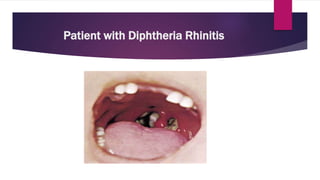
Patient with Diphtheria Rhinitis
 Caused by exposure to dust, smoke or irritating gases.
 May also result from trauma inflicted on the nasal mucosa during
intranasal manipulation, e.g. removal of a foreign body.
 There is an immediate catarrhal reaction with sneezing, rhinorrhoea and
nasal congestion.
 The symptoms may pass off rapidly with removal of the offending agent or
may persist for some days if nasal epithelium has been damaged.
 Recovery will depend on the amount of epithelial damage and the
infection that supervenes.
IRRITATIVE RHINITIS
CHRONIC RHINITIS
 CHRONIC SIMPLE RHINITIS
 Recurrent attacks of acute rhinitis in the presence of predisposing factors
leads to chronicity.
1. Persistence of nasal infection due to sinusitis, tonsillitis and adenoids.
2. Chronic irritation from dust, smoke etc.
3. Nasal obstruction due to deviated nasal septum
4. Vasomotor rhinitis.
5. Endocrinal or metabolic factors, e.g. hypothyroidism etc.
 CLINICAL FEATURES
1. Nasal obstruction.
2. Nasal discharge. It may be mucoid or mucopurulent, thick and viscid and
often trickles into the throat as postnasal drip. Patient has a constant desire
to blow the nose or clear the throat.
3. Postnasal discharge. Mucoid or mucopurulent discharge is seen on the
posterior pharyngeal wall.
4. Swollen turbinates.
5. Headache.
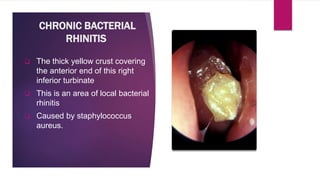
CHRONIC BACTERIAL
RHINITIS
 The thick yellow crust covering
the anterior end of this right
inferior turbinate
 This is an area of local bacterial
rhinitis
 Caused by staphylococcus
aureus.
 TREATMENT
1. Treat the cause with particular attention to sinuses, tonsils, adenoids,
allergy, personal habits, environment or work situation.
2. Nasal irrigations with alkaline solution help to keep the nose free from
viscid secretions and also remove superficial infection.
3. Nasal decongestants help to relieve nasal obstruction and improve sinus
ventilation.
4. Antibiotics help to clear nasal infection and sinusitis.
HYPERTROPHIC RHINITIS
 It is characterized by thickening of mucosa, submucosa,
seromucinous glands, periosteum and bone.
 Changes are more marked on the turbinates.
 AETIOLOGY: Recurrent nasal infections, chronic sinusitis,
chronic irritation of nasal mucosa, prolonged use of nasal
drops, vasomotor and allergic rhinitis.
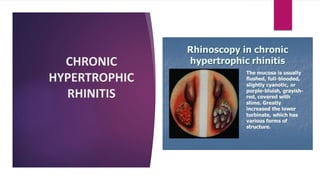
CHRONIC
HYPERTROPHIC
RHINITIS
 SYMPTOMS
 Nasal obstruction.
 Nasal Discharge: thick and sticky.
 Headache and anosmia.
 SIGNS
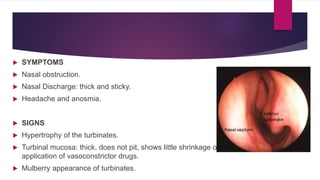
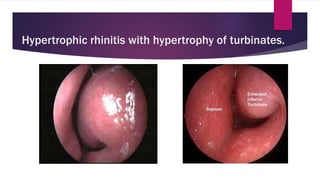
 Hypertrophy of the turbinates.
 Turbinal mucosa: thick, does not pit, shows little shrinkage on
application of vasoconstrictor drugs.
 Mulberry appearance of turbinates.
Hypertrophic rhinitis with hypertrophy of turbinates.
 TREATMENT
 Remove the underlying cause.
Nasal obstruction can be relieved by reduction of turbinates:
 Linear cauterization
 Submucosal diathermy
 Cryosurgery of turbinates
 Partial or total turbinectomy
 Submucous resection of turbinate bone
 Lasers to reduce the size of tubinates.
ATROPHIC RHINITIS
 It is a chronic inflammation of nose characterized by atrophy of nasal mucosa
and turbinate bones. The nasal cavities are roomy and full of foul-smelling
crusts.
 Etiology: (HERNIA)
 Hereditary
 Endocrinal factors
 Racial
 Nutritional deficiency
 Infective
 Autoimmune processes
CLINICAL FEATURES
 Disease is commonly seen in females and starts around
puberty.
 There is foul smell from the nose making the patient a social
outcast.
 Patient himself is unaware of the smell due to marked
anosmia (merciful anosmia)
 Nasal obstruction due to large crusts filling the nose.
 Epistaxis may occur when the crusts are removed.
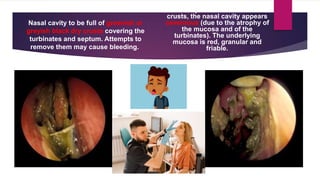
Nasal cavity to be full of greenish or
greyish black dry crusts covering the
turbinates and septum. Attempts to
remove them may cause bleeding.
After a partial removal of the
crusts, the nasal cavity appears
cavernous (due to the atrophy of
the mucosa and of the
turbinates). The underlying
mucosa is red, granular and
friable.
 Medical treatment: Aims at maintaining nasal hygiene.
 Nasal irrigation and removal of crusts: Warm normal saline or an alkaline
solution is run through one nostril and comes out from the other. It loosens the
crusts and removes thick tenacious discharge.
 25% glucose in glycerine: This inhibits the growth of proteolytic organisms which
are responsible for foul smell.
 Local antibiotic
 Estradiol spray- increases vascularity
 Systemic streptomycin
 Potassium iodide- Liquifies nasal secretions
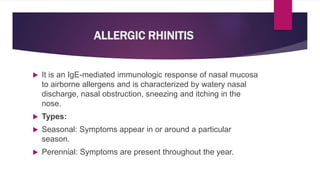
ALLERGIC RHINITIS
 It is an IgE-mediated immunologic response of nasal mucosa
to airborne allergens and is characterized by watery nasal
discharge, nasal obstruction, sneezing and itching in the
nose.
 Types:
 Seasonal: Symptoms appear in or around a particular
season.
 Perennial: Symptoms are present throughout the year.
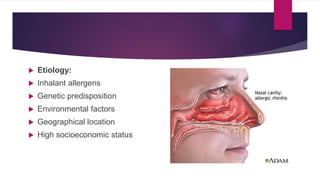
 Etiology:
 Inhalant allergens
 Genetic predisposition
 Environmental factors
 Geographical location
 High socioeconomic status
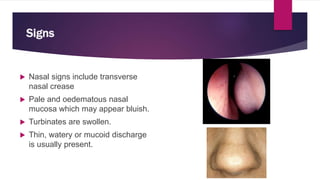
Signs
 Nasal signs include transverse
nasal crease
 Pale and oedematous nasal
mucosa which may appear bluish.
 Turbinates are swollen.
 Thin, watery or mucoid discharge
is usually present.
Symptoms
 Seasonal allergy:
 Paroxysmal sneezing, 10–20
sneezes at a time, nasal
obstruction.
 Watery nasal discharge and
itching in the nose.
 Itching and bronchospasm.
 Perennial allergy:
 Frequent colds, persistently stuffy
nose, loss of sense of smell due to
mucosal oedema.
 Postnasal drip.
 Hearing impairment due
to eustachian tube blockage
or fluid in the middle ear.
INVESTIGATIONS
 Total and differential count
 Nasal smear: Increased number of eosinophils
 Skin test: Skin prick test and IgE measurement
 Radioallergoabsorbent test (RAST)
 Nasal provocation test
TREATMENT
1. Avoidance of allergen:
 Removal of a pet from the house
 Encasing the pillow or mattress with plastic sheet
 Change of place of work or sometimes change of job may be
required.
2. Drugs:
 Antihistamine: They control rhinorrhoea, sneezing and nasal itch.
 Sympathomimetic drugs (oral or topical). Alpha-adrenergic drugs constrict
blood vessels and reduce nasal congestion and oedema.
 Corticosteroid
 Sodium cromoglycate
 Anticholinergics
 Leukotriene receptor antagonist
 Anti IgE
VASOMOTOR RHINITIS (VMR)
 It is non allergic rhinitis but clinically simulating nasal allergy
with symptoms of nasal obstruction, rhinorrhoea and
sneezing.
 Nasal allergy tests are negative.
Symptoms:
 Paraoxysmal sneezing
 Excessive rhinorrhoea
 Nasal obstruction (more marked at night)
 Post nasal drip
COMPLICATIONS:
 Nasal polyp, hypertrophic rhinitis, sinusitis
• Signs:
• Nasal mucosa over the
turbinates is congested and
hypertrophic.
• Chronic nasal congestion with
engorgement of the inferior
turbinates.
• And a troublesome profuse clear
and watery rhinorrhoea.
TREATMENT
 Medical:
 Avoidance of stimuli e.g sudden change in temperature, humidity, blasts of air or
dust.
 Antihistamine
 Topical steroid
 Systemic steroid (for severe cases)
 Tranquilizers to remove psychological factors.
 Surgical:
 Reduce the size of nasal turbinates to relieve nasal obstruction.
 Vidian nuerectomy
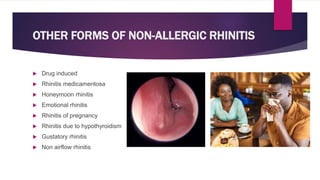
OTHER FORMS OF NON-ALLERGIC RHINITIS
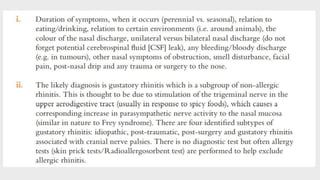
 Drug induced
 Rhinitis medicamentosa
 Honeymoon rhinitis
 Emotional rhinitis
 Rhinitis of pregnancy
 Rhinitis due to hypothyroidism
 Gustatory rhinitis
 Non airflow rhinitis
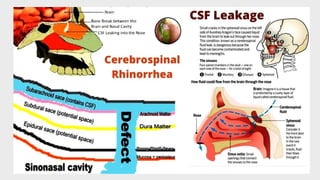
CSF RHINORRHEA
 Leakage of CSF into the nose is called CSF Rhinorrhea. It maybe clear or
mixed with blood.
 Etiology:
 Trauma: Can be surgical endoscopic sinus surgery, trans sphenoidal
hypophysectomy.
 Inflammation: Sinonasal polyposis, fungal infection of sinuses and
osteomyelitis.
 Neoplasm.
 Congenital lesions.
 Idiopathic.
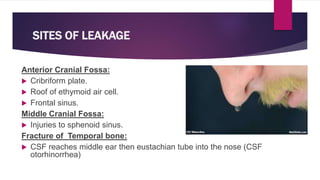
SITES OF LEAKAGE
Anterior Cranial Fossa:
 Cribriform plate.
 Roof of ethymoid air cell.
 Frontal sinus.
Middle Cranial Fossa:
 Injuries to sphenoid sinus.
Fracture of Temporal bone:
 CSF reaches middle ear then eustachian tube into the nose (CSF
otorhinorrhea)
DIAGNOSIS
 History of clear watery discharge from the nose on bending
(reservoir sign).
 After head trauma CSF is mixed with blood shows double
target sign when collected on a piece of filter paper.
 Nasal endoscopy.
 Autoscopic/Microscopic examination of the ear.
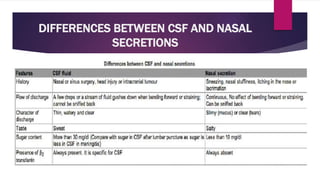
DIFFERENCES BETWEEN CSF AND NASAL
SECRETIONS
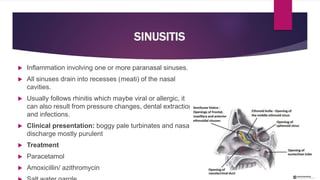
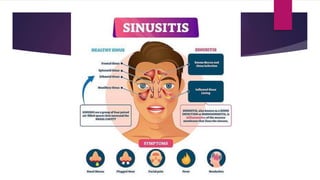
SINUSITIS
 Inflammation involving one or more paranasal sinuses.
 All sinuses drain into recesses (meati) of the nasal
cavities.
 Usually follows rhinitis which maybe viral or allergic, it
can also result from pressure changes, dental extractions
and infections.
 Clinical presentation: boggy pale turbinates and nasal
discharge mostly purulent
 Treatment
 Paracetamol
 Amoxicillin/ azithromycin
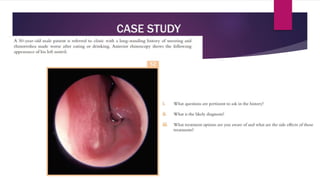
CASE STUDY
Nasal Discharge - ENT

Nasal Discharge - ENT

  • 1.
  • 2.
  • 3.
    NASAL DISCHARGE  Anywatery, purulent or blood stained fluid tending to run from the nose.  Nasal discharge usually comes from the muco us membrane of the nose or sinuses.  Rhinitis is one of the major causes of nasal discharge.
  • 5.
    CLASSIFICATION OF RHINITIS 1.Acute Rhinitis  Viral rhinitis  Bacterial rhinitis  Irritative rhinitis 2. Allergic Rhinitis 3. Vasomotor Rhinitis 4. Chronic Rhinitis  Chronic simple rhinitis  Hypertrophic rhinitis  Atrophic rhinitis
  • 6.
    ACUTE RHINITIS Viral Rhinitis 1.Common cold (coryza)  Etiology: adenovirus, picornavirus and its subgroups such as rhinovirus, coxsackie virus and enteric cytopathic human orphan virus.  Clinical symptoms:  Burning sensation at the back of nose, nasal stuffiness, rhinorrhoea and sneezing.  Patient feels chilly and there is low-grade fever.  Initially, nasal discharge is watery and profuse but may become muco- purulent due to secondary bacterial invasion.
  • 7.
    ACUTE VIRAL RHINITIS •Themucous membranes lining the nasal cavity are reddened, the nose is often abnormally patent, and the mucus is frequently scant and stringy in appearance. •If a bacterial super infection develops, the mucous increases in amount and becomes colored.
  • 8.
     Bed restand plenty of fluids are encouraged.  Antihistamines and nasal decongestants.  Analgesics are useful to relieve headache, fever and myalgia.  Non aspirin containing analgesics are preferable as aspirin causes increased shedding of virus.  Antibiotics are required when secondary infection supervenes.  Complications:  Sinusitis, pharyngitis, tonsillitis, bronchitis, pneumonia and otitis media. TREATMENT AND MANAGEMENT
  • 9.
     Influenzal Rhinitis: Influenza viruses A, B or C are responsible.  Complications due to bacterial invasion are common.  Rhinitis associated with exanthemas:  Exanthemas is a widespread rash that is usually accompanied by systemic symptoms such as fever, malaise and headache.  Measles, rubella and chickenpox are often associated with it.  Secondary infection and complications are more frequent and severe.
  • 10.
    BACTERIAL RHINITIS Non-Specific infections: Primary bacterial rhinitis is seen in children and is usually due to pneumococcus, streptococcus or staphylococcus.  A greyish white tenacious membrane may form in the nose, which causes bleeding when removed.  Secondary bacterial rhinitis is the result of bacterial infection supervening acute viral rhinitis.
  • 11.
     Diphtheritic Rhinitis: Diphtheria of nose is rare these days.  It may be primary or secondary to faucial diphtheria and may occur in acute or chronic form.  Treatment is isolation of the patient, systemic penicillin and diphtheria antitoxin.  A greyish membrane is seen covering the inferior turbinate and the floor of nose; membrane is tenacious and its removal causes bleeding.  Excoriation of anterior nares and upper lip may be seen.
  • 12.
  • 13.
     Caused byexposure to dust, smoke or irritating gases.  May also result from trauma inflicted on the nasal mucosa during intranasal manipulation, e.g. removal of a foreign body.  There is an immediate catarrhal reaction with sneezing, rhinorrhoea and nasal congestion.  The symptoms may pass off rapidly with removal of the offending agent or may persist for some days if nasal epithelium has been damaged.  Recovery will depend on the amount of epithelial damage and the infection that supervenes. IRRITATIVE RHINITIS
  • 14.
    CHRONIC RHINITIS  CHRONICSIMPLE RHINITIS  Recurrent attacks of acute rhinitis in the presence of predisposing factors leads to chronicity. 1. Persistence of nasal infection due to sinusitis, tonsillitis and adenoids. 2. Chronic irritation from dust, smoke etc. 3. Nasal obstruction due to deviated nasal septum 4. Vasomotor rhinitis. 5. Endocrinal or metabolic factors, e.g. hypothyroidism etc.
  • 15.
     CLINICAL FEATURES 1.Nasal obstruction. 2. Nasal discharge. It may be mucoid or mucopurulent, thick and viscid and often trickles into the throat as postnasal drip. Patient has a constant desire to blow the nose or clear the throat. 3. Postnasal discharge. Mucoid or mucopurulent discharge is seen on the posterior pharyngeal wall. 4. Swollen turbinates. 5. Headache.
  • 16.
    CHRONIC BACTERIAL RHINITIS  Thethick yellow crust covering the anterior end of this right inferior turbinate  This is an area of local bacterial rhinitis  Caused by staphylococcus aureus.
  • 17.
     TREATMENT 1. Treatthe cause with particular attention to sinuses, tonsils, adenoids, allergy, personal habits, environment or work situation. 2. Nasal irrigations with alkaline solution help to keep the nose free from viscid secretions and also remove superficial infection. 3. Nasal decongestants help to relieve nasal obstruction and improve sinus ventilation. 4. Antibiotics help to clear nasal infection and sinusitis.
  • 18.
    HYPERTROPHIC RHINITIS  Itis characterized by thickening of mucosa, submucosa, seromucinous glands, periosteum and bone.  Changes are more marked on the turbinates.  AETIOLOGY: Recurrent nasal infections, chronic sinusitis, chronic irritation of nasal mucosa, prolonged use of nasal drops, vasomotor and allergic rhinitis.
  • 19.
  • 20.
     SYMPTOMS  Nasalobstruction.  Nasal Discharge: thick and sticky.  Headache and anosmia.  SIGNS  Hypertrophy of the turbinates.  Turbinal mucosa: thick, does not pit, shows little shrinkage on application of vasoconstrictor drugs.  Mulberry appearance of turbinates.
  • 21.
    Hypertrophic rhinitis withhypertrophy of turbinates.
  • 22.
     TREATMENT  Removethe underlying cause. Nasal obstruction can be relieved by reduction of turbinates:  Linear cauterization  Submucosal diathermy  Cryosurgery of turbinates  Partial or total turbinectomy  Submucous resection of turbinate bone  Lasers to reduce the size of tubinates.
  • 23.
    ATROPHIC RHINITIS  Itis a chronic inflammation of nose characterized by atrophy of nasal mucosa and turbinate bones. The nasal cavities are roomy and full of foul-smelling crusts.  Etiology: (HERNIA)  Hereditary  Endocrinal factors  Racial  Nutritional deficiency  Infective  Autoimmune processes
  • 24.
    CLINICAL FEATURES  Diseaseis commonly seen in females and starts around puberty.  There is foul smell from the nose making the patient a social outcast.  Patient himself is unaware of the smell due to marked anosmia (merciful anosmia)  Nasal obstruction due to large crusts filling the nose.  Epistaxis may occur when the crusts are removed.
  • 25.
    Nasal cavity tobe full of greenish or greyish black dry crusts covering the turbinates and septum. Attempts to remove them may cause bleeding. After a partial removal of the crusts, the nasal cavity appears cavernous (due to the atrophy of the mucosa and of the turbinates). The underlying mucosa is red, granular and friable.
  • 26.
     Medical treatment:Aims at maintaining nasal hygiene.  Nasal irrigation and removal of crusts: Warm normal saline or an alkaline solution is run through one nostril and comes out from the other. It loosens the crusts and removes thick tenacious discharge.  25% glucose in glycerine: This inhibits the growth of proteolytic organisms which are responsible for foul smell.  Local antibiotic  Estradiol spray- increases vascularity  Systemic streptomycin  Potassium iodide- Liquifies nasal secretions
  • 27.
    ALLERGIC RHINITIS  Itis an IgE-mediated immunologic response of nasal mucosa to airborne allergens and is characterized by watery nasal discharge, nasal obstruction, sneezing and itching in the nose.  Types:  Seasonal: Symptoms appear in or around a particular season.  Perennial: Symptoms are present throughout the year.
  • 28.
     Etiology:  Inhalantallergens  Genetic predisposition  Environmental factors  Geographical location  High socioeconomic status
  • 29.
    Signs  Nasal signsinclude transverse nasal crease  Pale and oedematous nasal mucosa which may appear bluish.  Turbinates are swollen.  Thin, watery or mucoid discharge is usually present.
  • 30.
    Symptoms  Seasonal allergy: Paroxysmal sneezing, 10–20 sneezes at a time, nasal obstruction.  Watery nasal discharge and itching in the nose.  Itching and bronchospasm.  Perennial allergy:  Frequent colds, persistently stuffy nose, loss of sense of smell due to mucosal oedema.  Postnasal drip.  Hearing impairment due to eustachian tube blockage or fluid in the middle ear.
  • 31.
    INVESTIGATIONS  Total anddifferential count  Nasal smear: Increased number of eosinophils  Skin test: Skin prick test and IgE measurement  Radioallergoabsorbent test (RAST)  Nasal provocation test
  • 32.
    TREATMENT 1. Avoidance ofallergen:  Removal of a pet from the house  Encasing the pillow or mattress with plastic sheet  Change of place of work or sometimes change of job may be required.
  • 33.
    2. Drugs:  Antihistamine:They control rhinorrhoea, sneezing and nasal itch.  Sympathomimetic drugs (oral or topical). Alpha-adrenergic drugs constrict blood vessels and reduce nasal congestion and oedema.  Corticosteroid  Sodium cromoglycate  Anticholinergics  Leukotriene receptor antagonist  Anti IgE
  • 34.
    VASOMOTOR RHINITIS (VMR) It is non allergic rhinitis but clinically simulating nasal allergy with symptoms of nasal obstruction, rhinorrhoea and sneezing.  Nasal allergy tests are negative.
  • 35.
    Symptoms:  Paraoxysmal sneezing Excessive rhinorrhoea  Nasal obstruction (more marked at night)  Post nasal drip COMPLICATIONS:  Nasal polyp, hypertrophic rhinitis, sinusitis
  • 36.
    • Signs: • Nasalmucosa over the turbinates is congested and hypertrophic. • Chronic nasal congestion with engorgement of the inferior turbinates. • And a troublesome profuse clear and watery rhinorrhoea.
  • 37.
    TREATMENT  Medical:  Avoidanceof stimuli e.g sudden change in temperature, humidity, blasts of air or dust.  Antihistamine  Topical steroid  Systemic steroid (for severe cases)  Tranquilizers to remove psychological factors.  Surgical:  Reduce the size of nasal turbinates to relieve nasal obstruction.  Vidian nuerectomy
  • 38.
    OTHER FORMS OFNON-ALLERGIC RHINITIS  Drug induced  Rhinitis medicamentosa  Honeymoon rhinitis  Emotional rhinitis  Rhinitis of pregnancy  Rhinitis due to hypothyroidism  Gustatory rhinitis  Non airflow rhinitis
  • 39.
    CSF RHINORRHEA  Leakageof CSF into the nose is called CSF Rhinorrhea. It maybe clear or mixed with blood.  Etiology:  Trauma: Can be surgical endoscopic sinus surgery, trans sphenoidal hypophysectomy.  Inflammation: Sinonasal polyposis, fungal infection of sinuses and osteomyelitis.  Neoplasm.  Congenital lesions.  Idiopathic.
  • 40.
    SITES OF LEAKAGE AnteriorCranial Fossa:  Cribriform plate.  Roof of ethymoid air cell.  Frontal sinus. Middle Cranial Fossa:  Injuries to sphenoid sinus. Fracture of Temporal bone:  CSF reaches middle ear then eustachian tube into the nose (CSF otorhinorrhea)
  • 42.
    DIAGNOSIS  History ofclear watery discharge from the nose on bending (reservoir sign).  After head trauma CSF is mixed with blood shows double target sign when collected on a piece of filter paper.  Nasal endoscopy.  Autoscopic/Microscopic examination of the ear.
  • 43.
    DIFFERENCES BETWEEN CSFAND NASAL SECRETIONS
  • 44.
    SINUSITIS  Inflammation involvingone or more paranasal sinuses.  All sinuses drain into recesses (meati) of the nasal cavities.  Usually follows rhinitis which maybe viral or allergic, it can also result from pressure changes, dental extractions and infections.  Clinical presentation: boggy pale turbinates and nasal discharge mostly purulent  Treatment  Paracetamol  Amoxicillin/ azithromycin
  • 46.

Editor's Notes

  • #50 The Vidian nerve supplies parasympathetic fibers to the nasal mucosa, palate, and lacrimal gland via the pterygopalatine ganglion. The sacrifice of this nerve by reducing the autonomic supply to the nasal cavity is proven to improve nasal hypersecretion. This procedure, Vidian neurectomy, was first described by Golding-Wood in the 1960s to treat refractory vasomotor rhinitis. The Caldwell-Luc operation uses an external approach for surgical treatment of the severely diseased maxillary sinus. It is an alternative to middle meatal antrostomy done via endonasal endoscopic surgery and was the primary approach used for accessing the maxillary sinus before the advent of endoscopic sinus surgery.