
Download to read offline

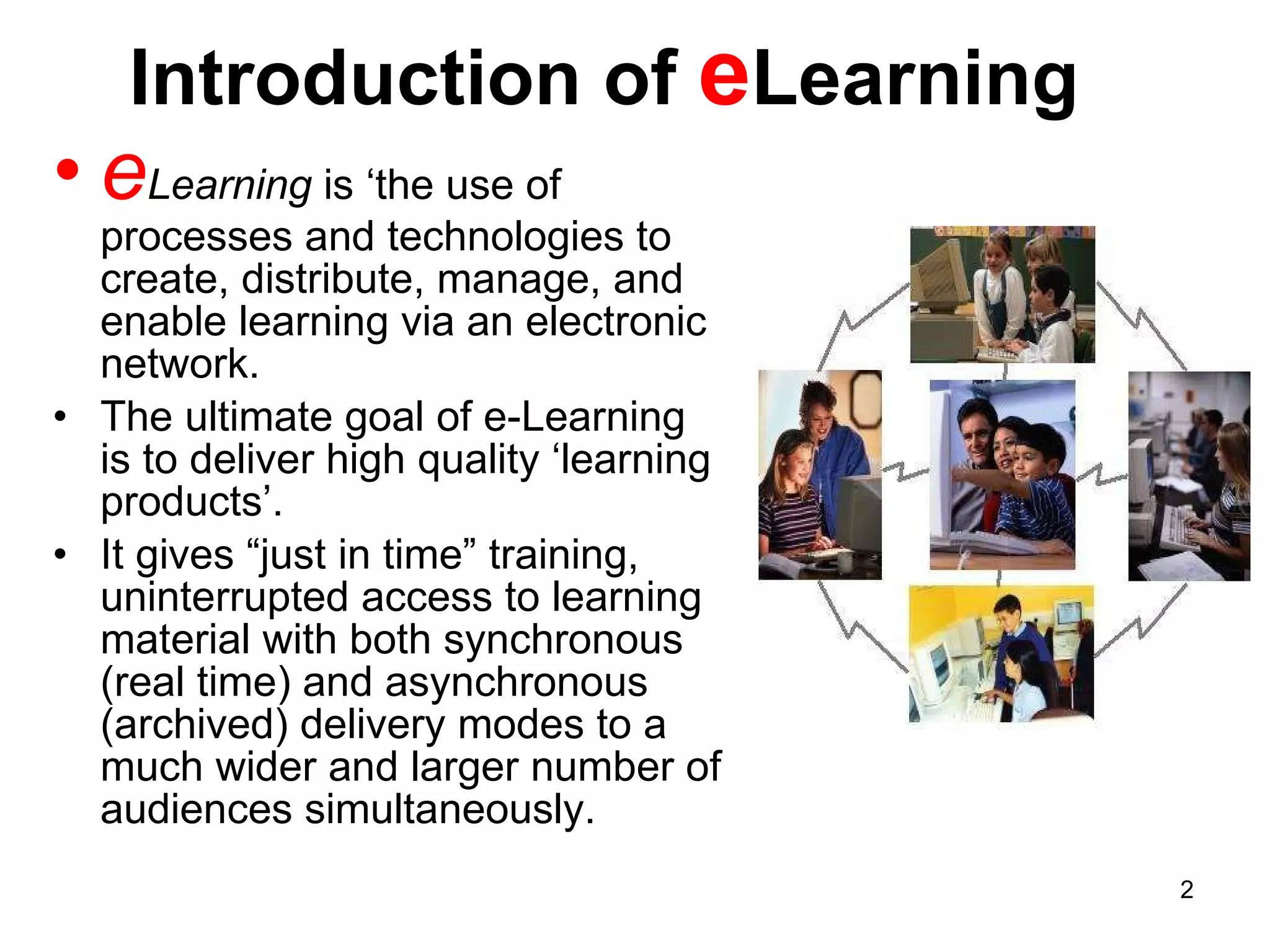
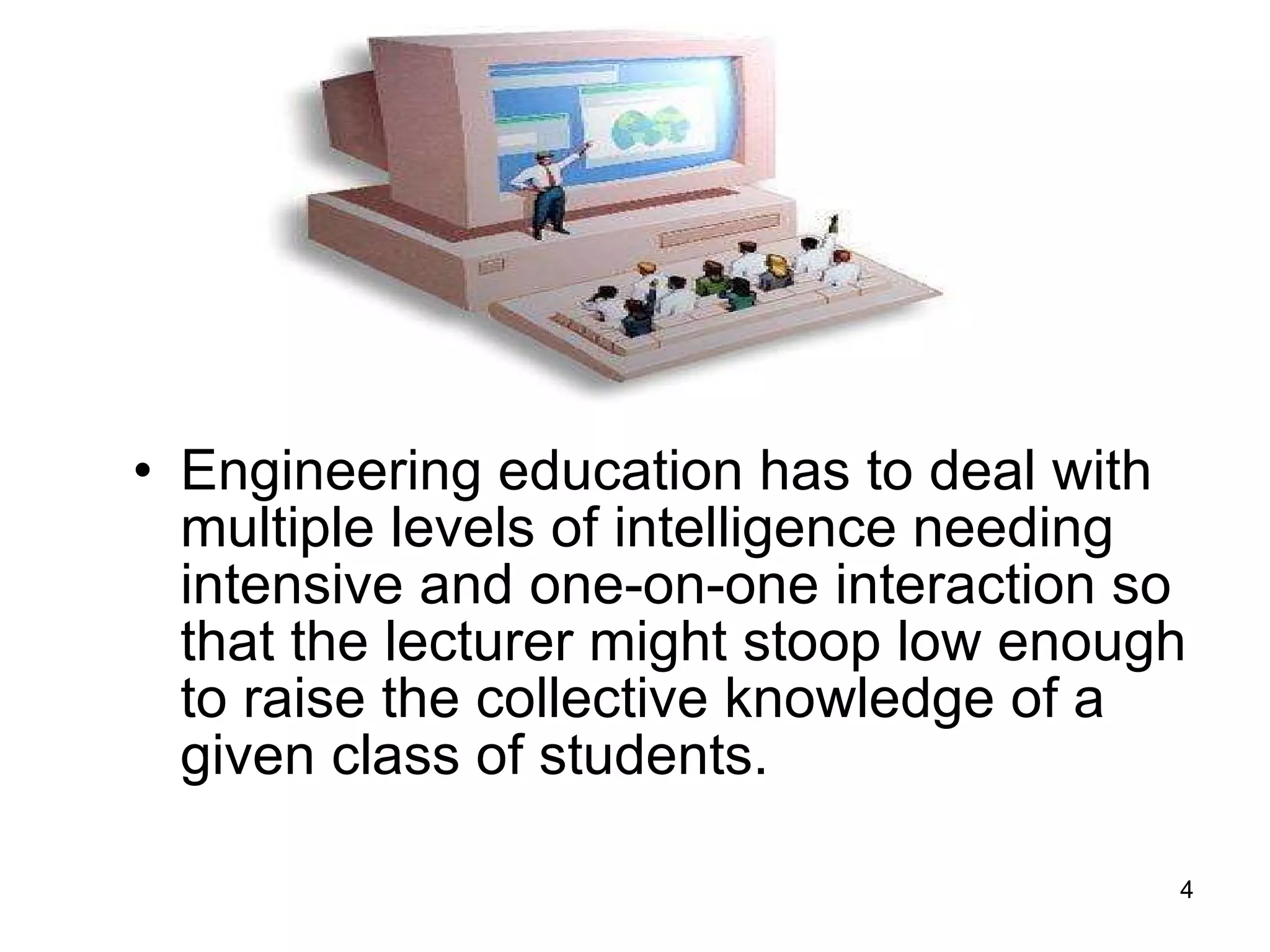
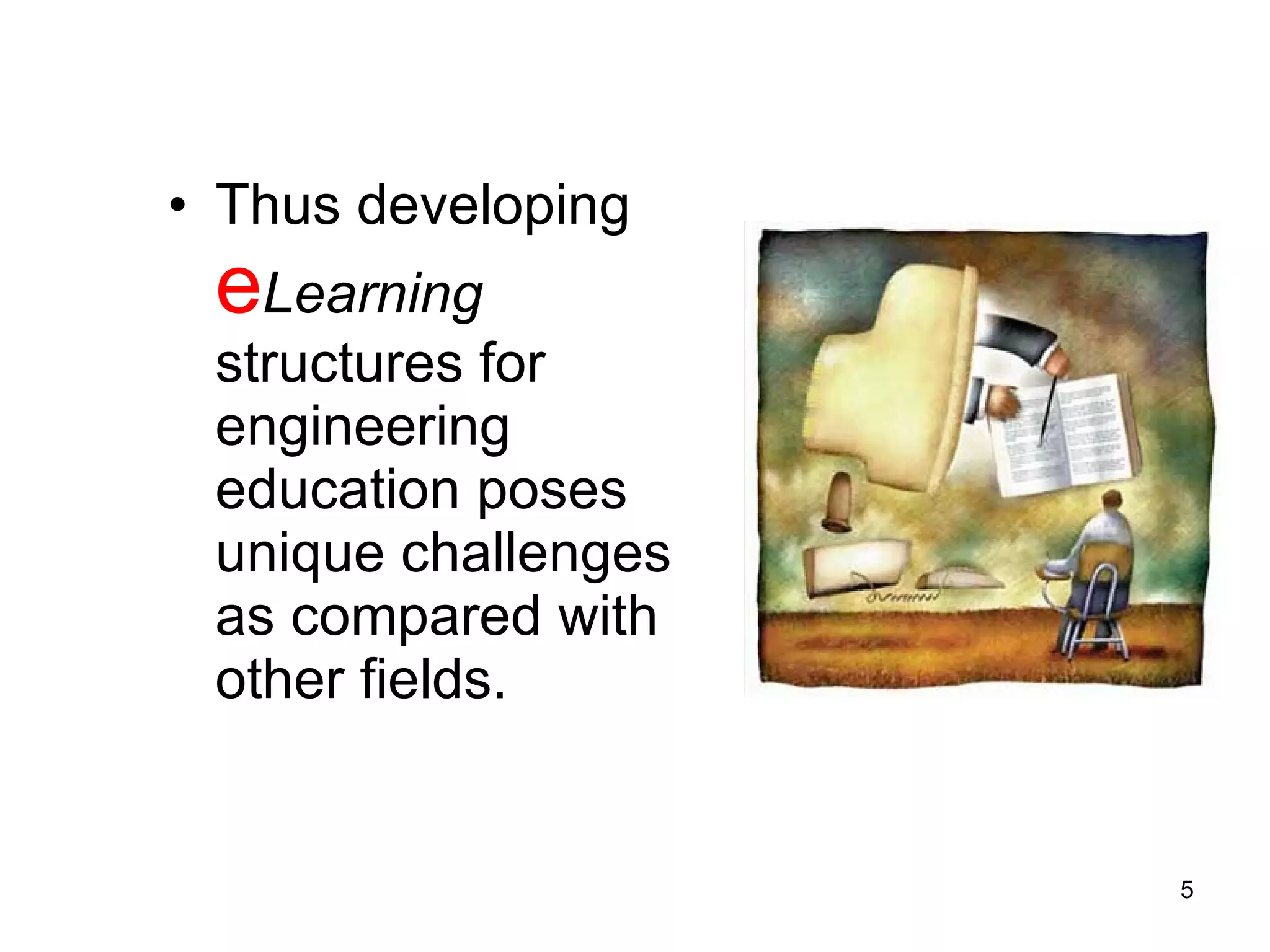
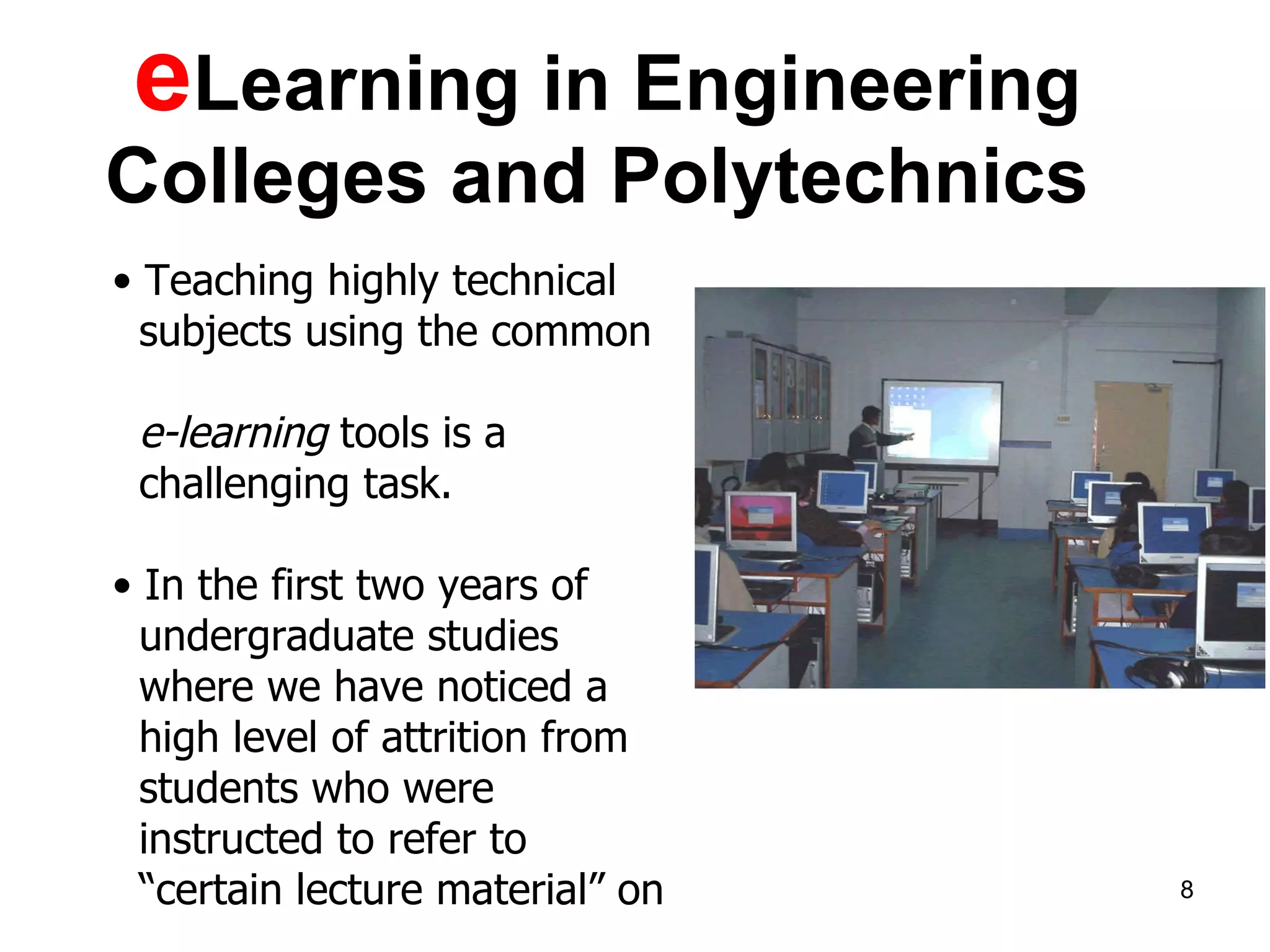
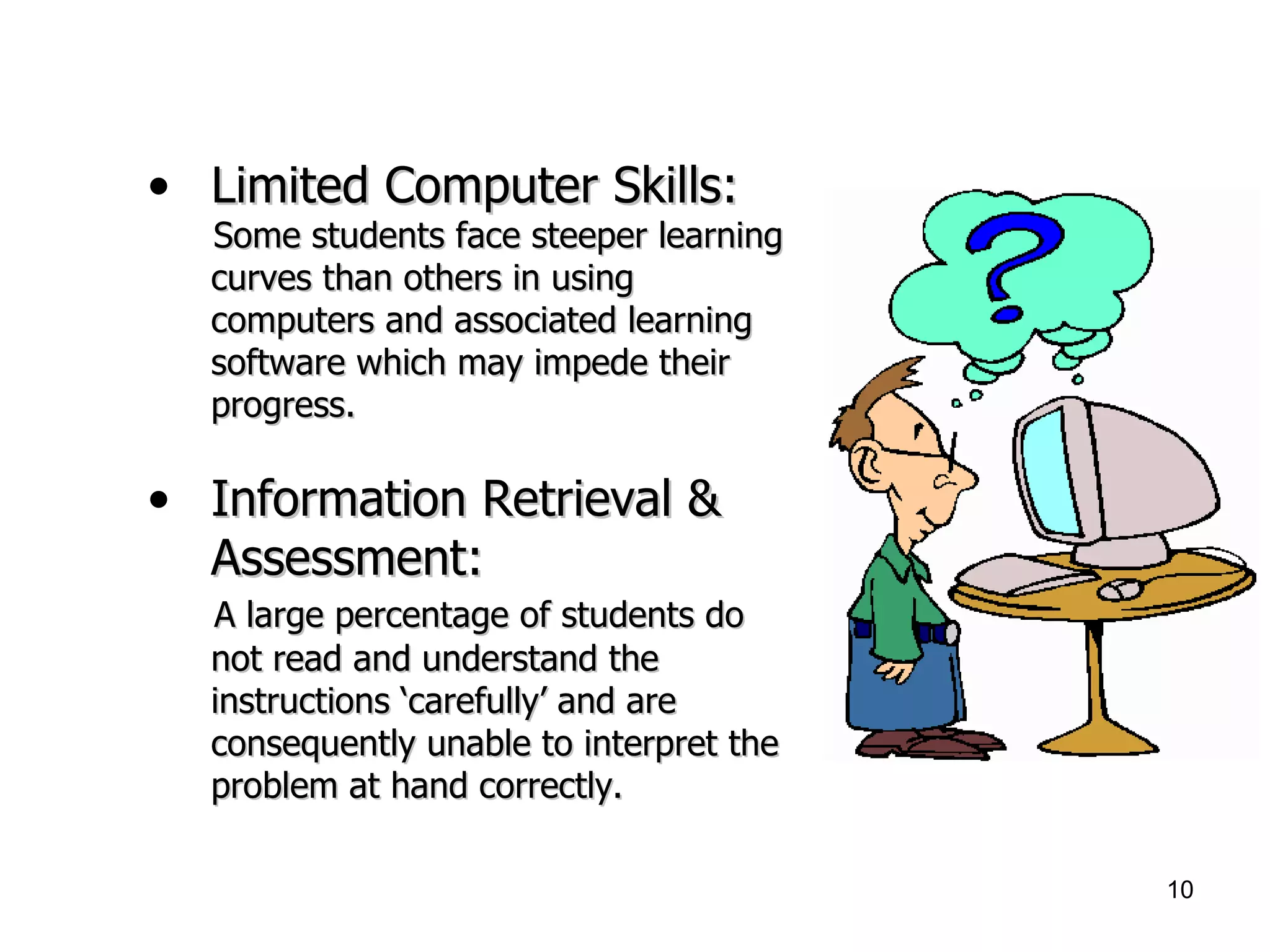

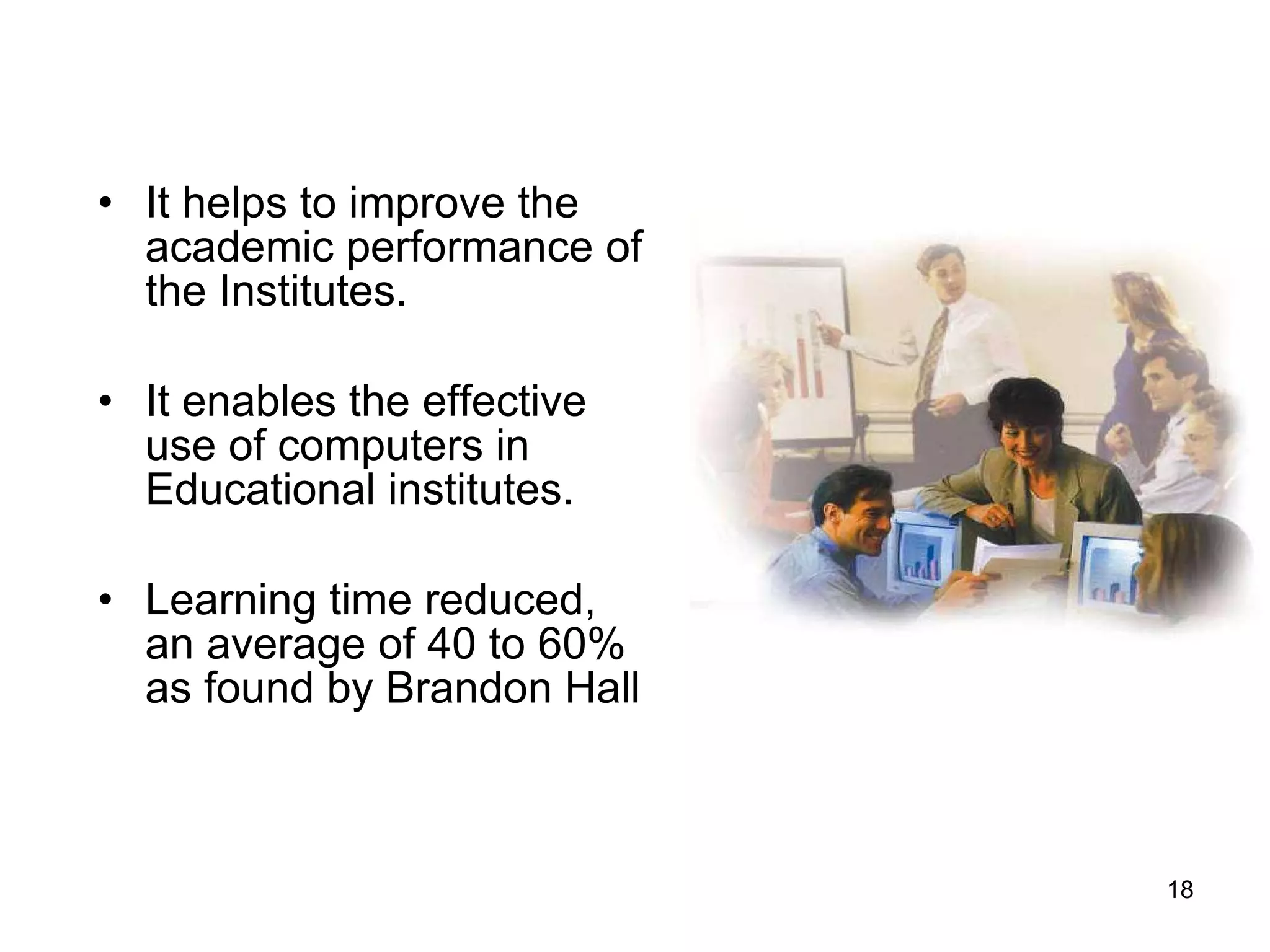

- E-learning uses electronic networks to create, distribute, and manage learning processes and technologies to deliver high-quality learning materials. It allows for just-in-time training through both synchronous and asynchronous delivery methods for large audiences. - While e-learning has been successful in other fields, it faces unique challenges for engineering education due to the need for intensive one-on-one interaction and support to effectively teach technical subjects. - For e-learning to be effective for engineering students, course design must focus on self-paced learning, capturing student interest, and incorporating interactivity to help students better understand concepts.


