E-learning is an Add-on in Classroom Teaching Pedagogy By Sharbani Bhattacharya & Sharad Kr IEC COLLEGE OF ENGINEERING & TECHNOLOGY Greater Noida [email_address] E-Learning:An Innovative Knowledge Oriented Framework  9-10 Sept2009,  INDIA INTERNATIONAL CENTER, NEW DELHI
E-Learning technology breakdown geographic , economic and social barriers that  prevents many people from accessing high-quality training.
E-learning promises people to get globally equal rights to education which was prior confined due to geographic barriers.
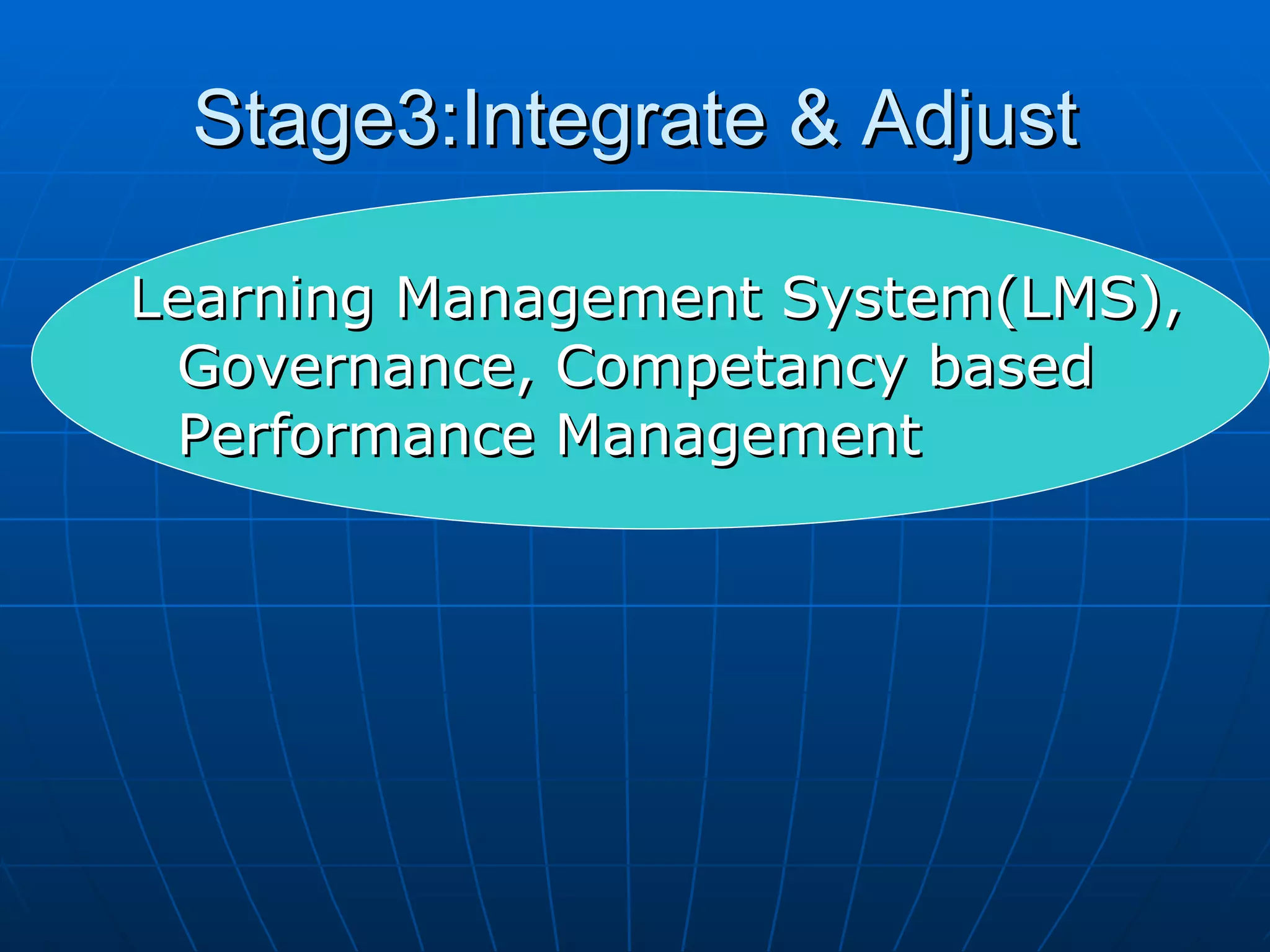
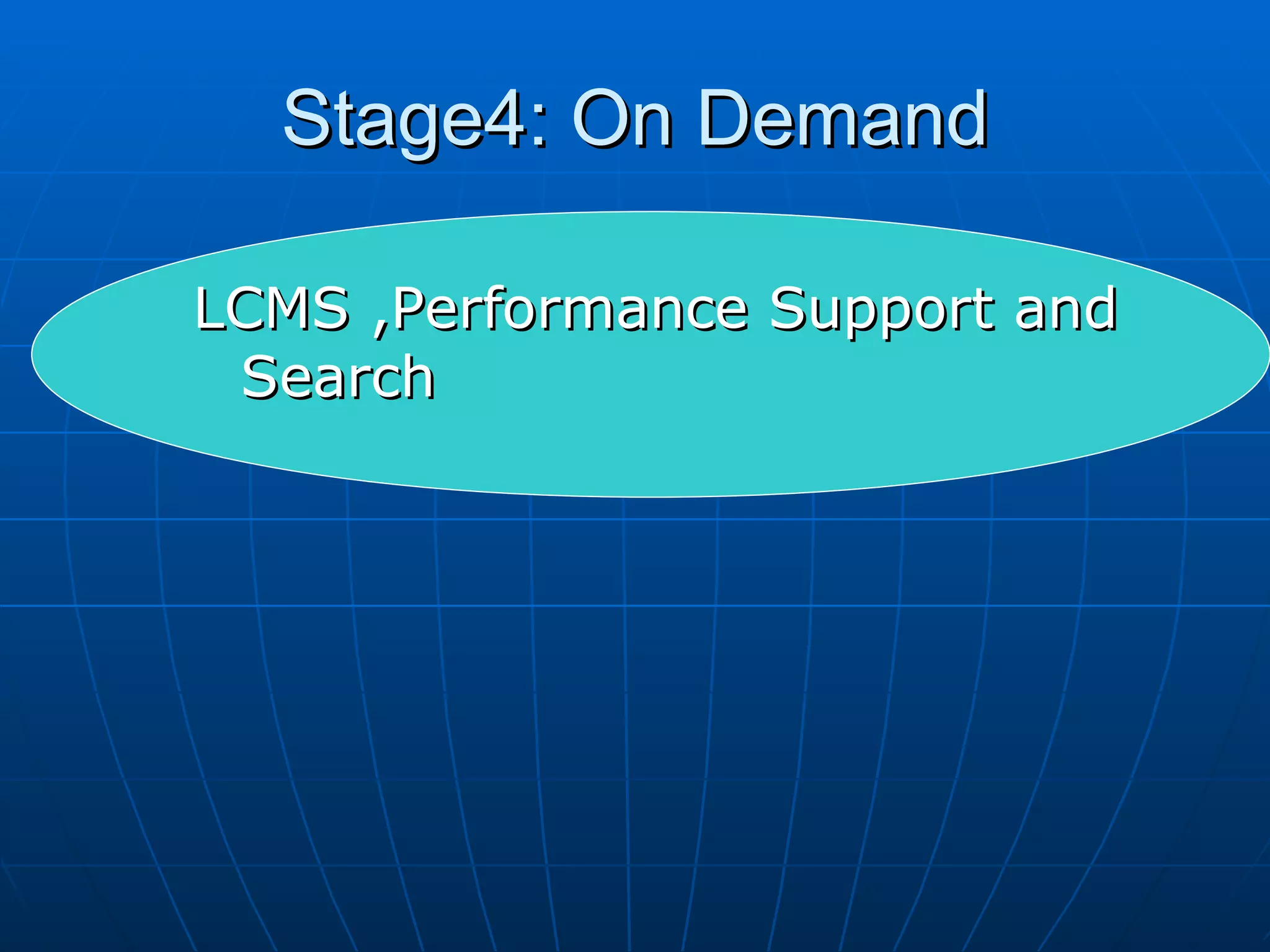
E-Learning Stages Stage1: Start off Stage2: Extension  Stage3:Integrate & Adjust Stage4: On Demand
Stage1: Start off This stage involves contents online, Buying off –the-shelf and one size fit to all
Stage2: Extensions Blended  Programs, Rapid E-Learning, outsourcing sophisticated context
Stage3:Integrate & Adjust Learning Management System(LMS), Governance, Competancy based Performance Management
Stage4: On Demand LCMS ,Performance Support and Search
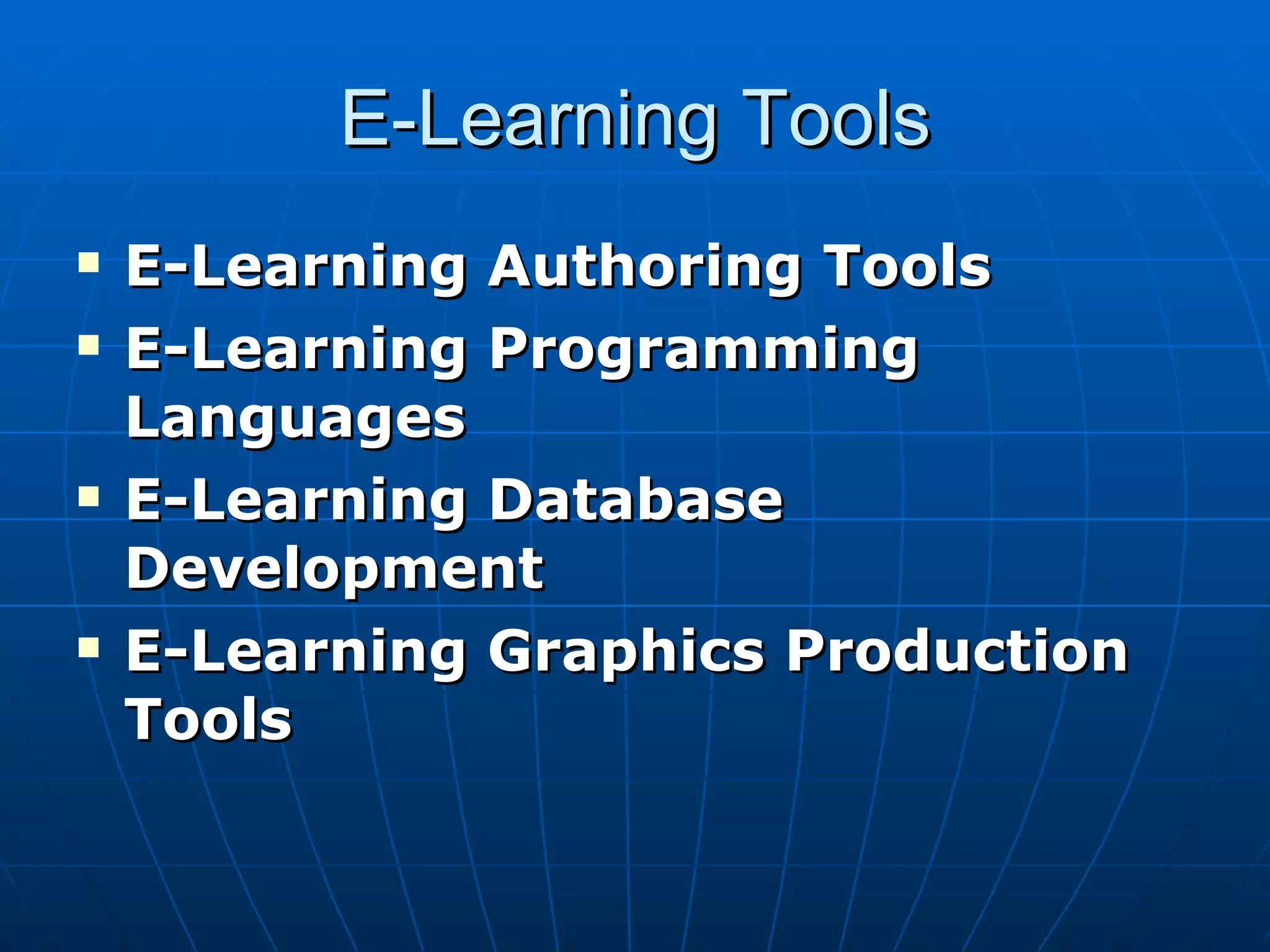
E-Learning Tools E-Learning Authoring Tools E-Learning Programming Languages E-Learning Database Development E-Learning Graphics Production Tools
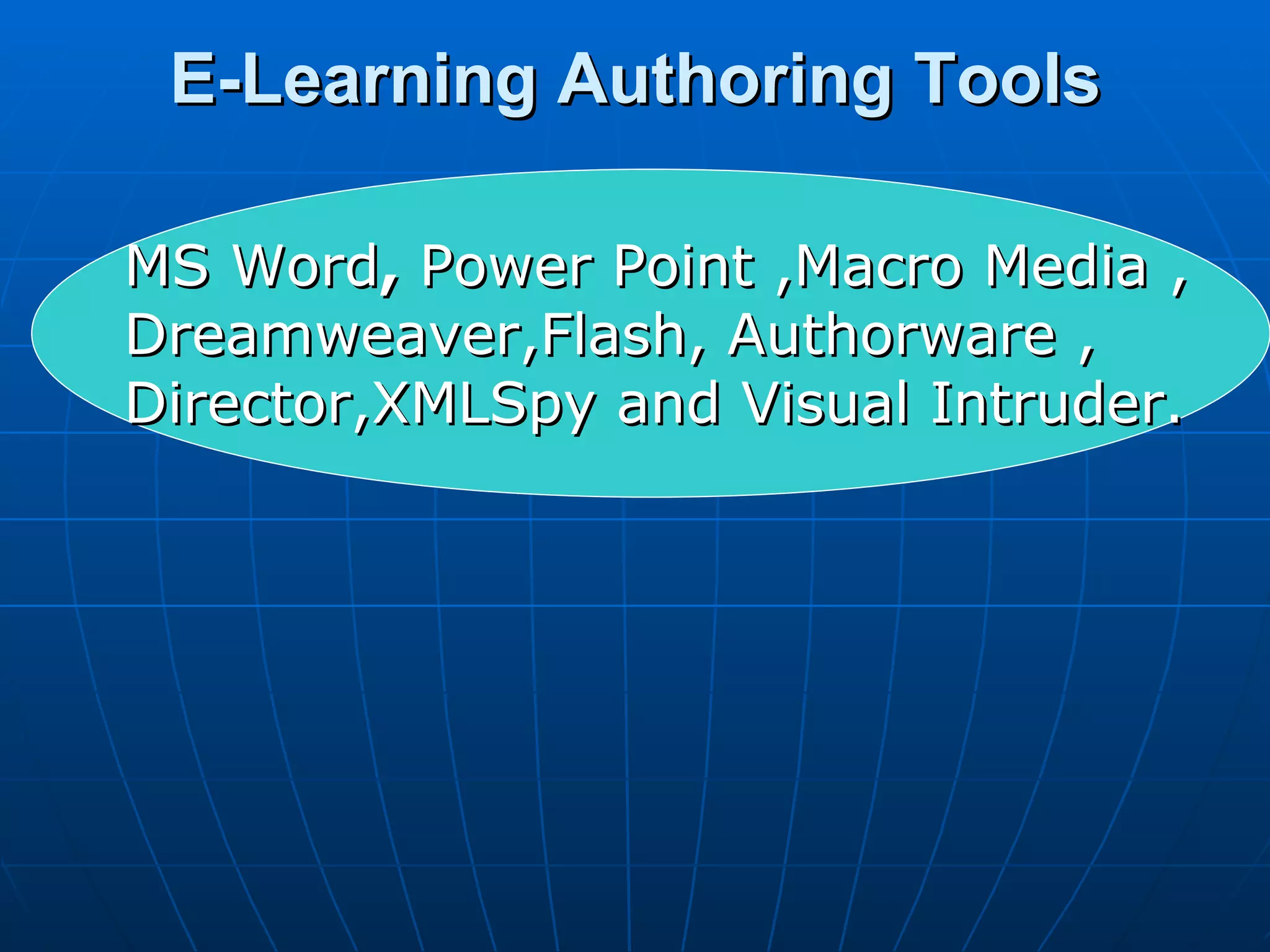
E-Learning Authoring Tools MS Word ,  Power Point ,Macro Media , Dreamweaver,Flash, Authorware , Director,XMLSpy and Visual Intruder.
E-Learning Programming Languages Java, JSP, C++, Visual Basics, VB.Net,ADO.Net,Advanced Java and mobile VB.
E-Learning Database Development Oracle,MS Access , MS SQL, SQL Server
E-Learning Graphics Production Tools Photoshop, Sound Forge, Premier, Flash, Illustrator , Coral Draw and 3D studio Max, Director MX


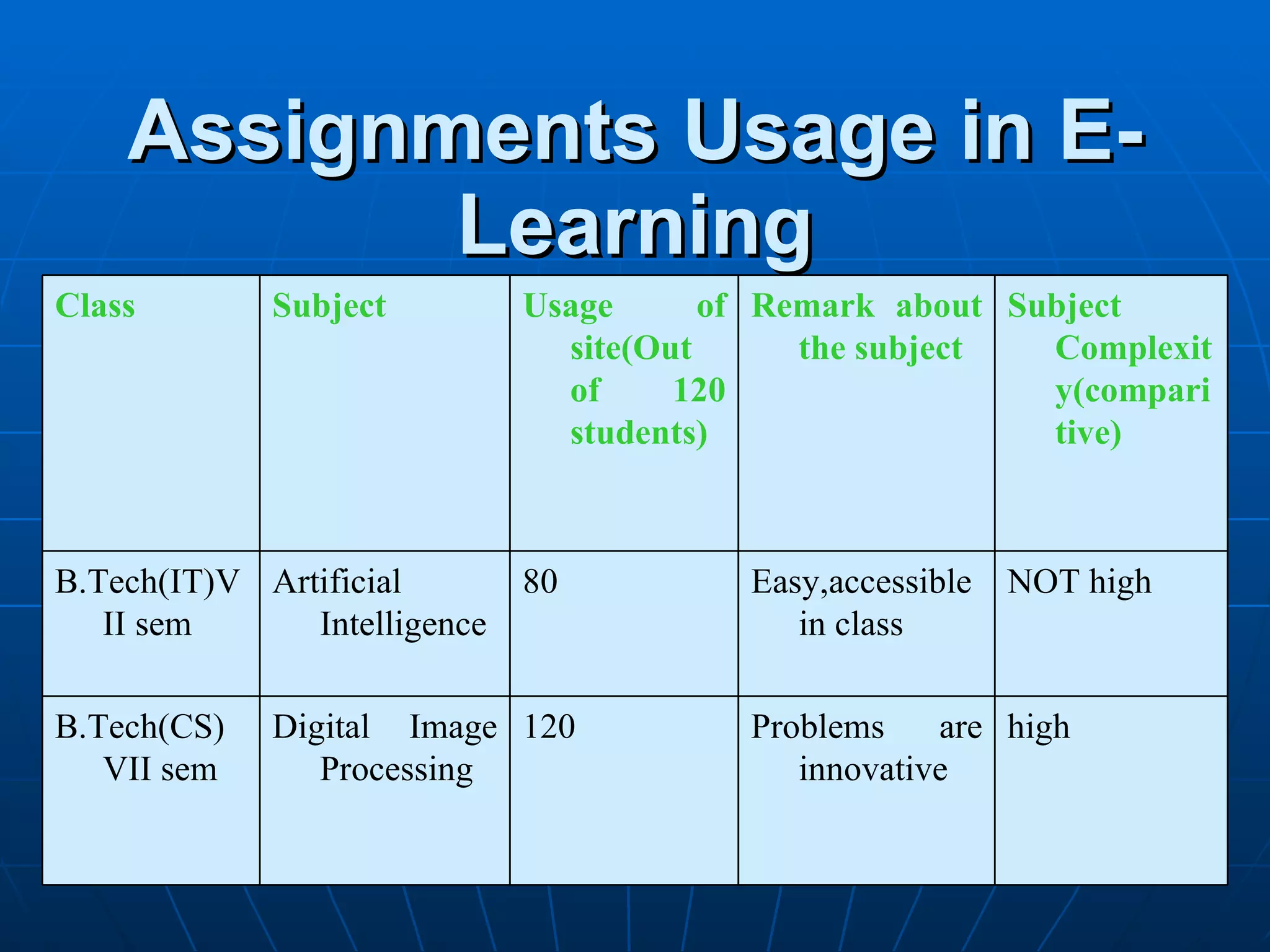
Assignments Usage in E-Learning high Problems are innovative  120 Digital Image Processing B.Tech(CS)VII sem NOT high Easy,accessible in class 80 Artificial Intelligence B.Tech(IT)VII sem Subject Complexity(comparitive) Remark about the subject Usage of site(Out of 120 students) Subject Class
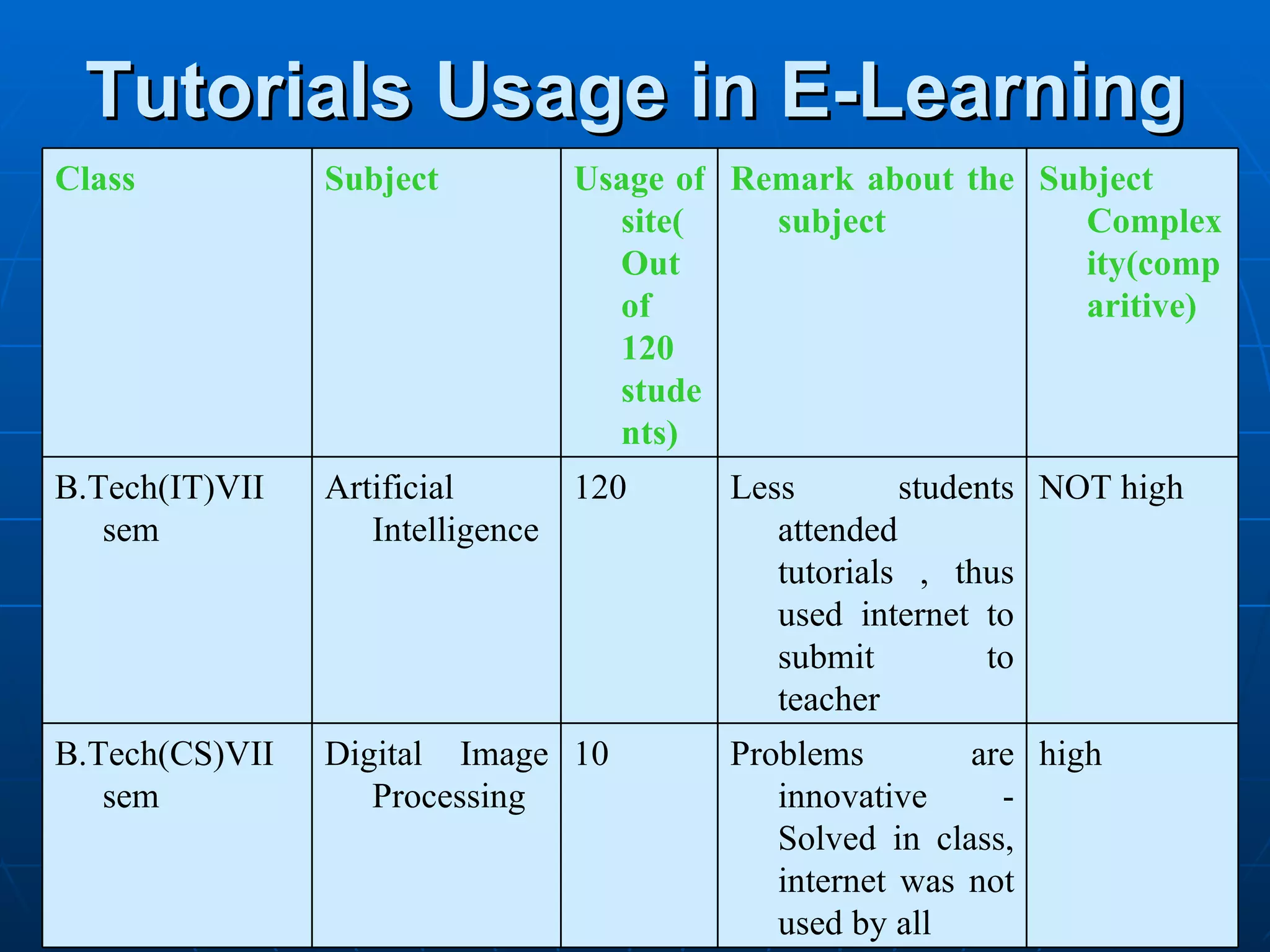
Tutorials Usage in E-Learning high Problems are innovative - Solved in class, internet was not used by all 10 Digital Image Processing B.Tech(CS)VII sem NOT high Less students attended tutorials , thus used internet to submit to teacher 120 Artificial Intelligence B.Tech(IT)VII sem Subject Complexity(comparitive) Remark about the subject Usage of site(Out of 120 students) Subject Class
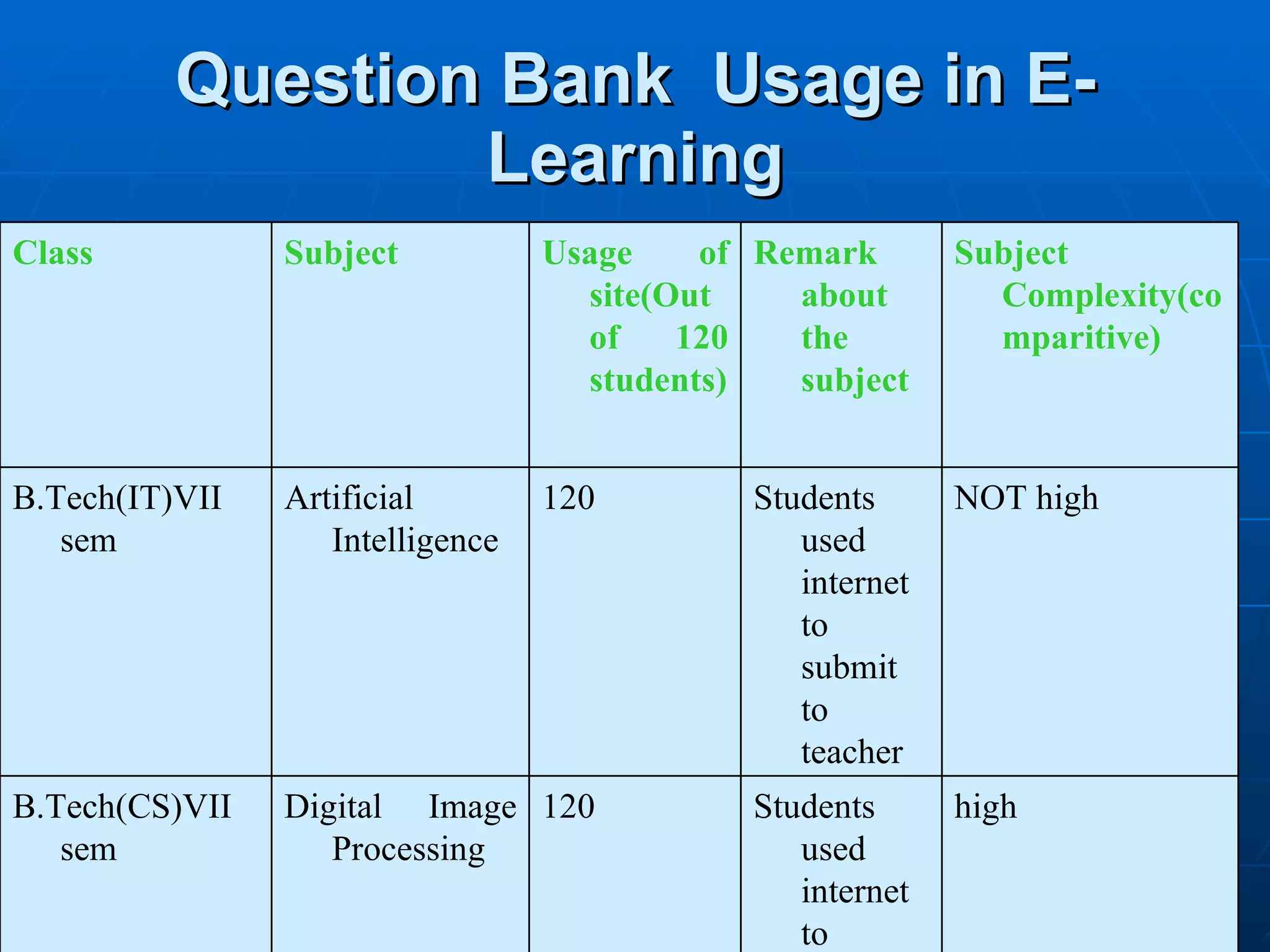
Question Bank  Usage in E-Learning high Students used internet to submit to teacher 120 Digital Image Processing B.Tech(CS)VII sem NOT high Students used internet to submit to teacher 120 Artificial Intelligence B.Tech(IT)VII sem Subject Complexity(comparitive) Remark about the subject Usage of site(Out of 120 students) Subject Class
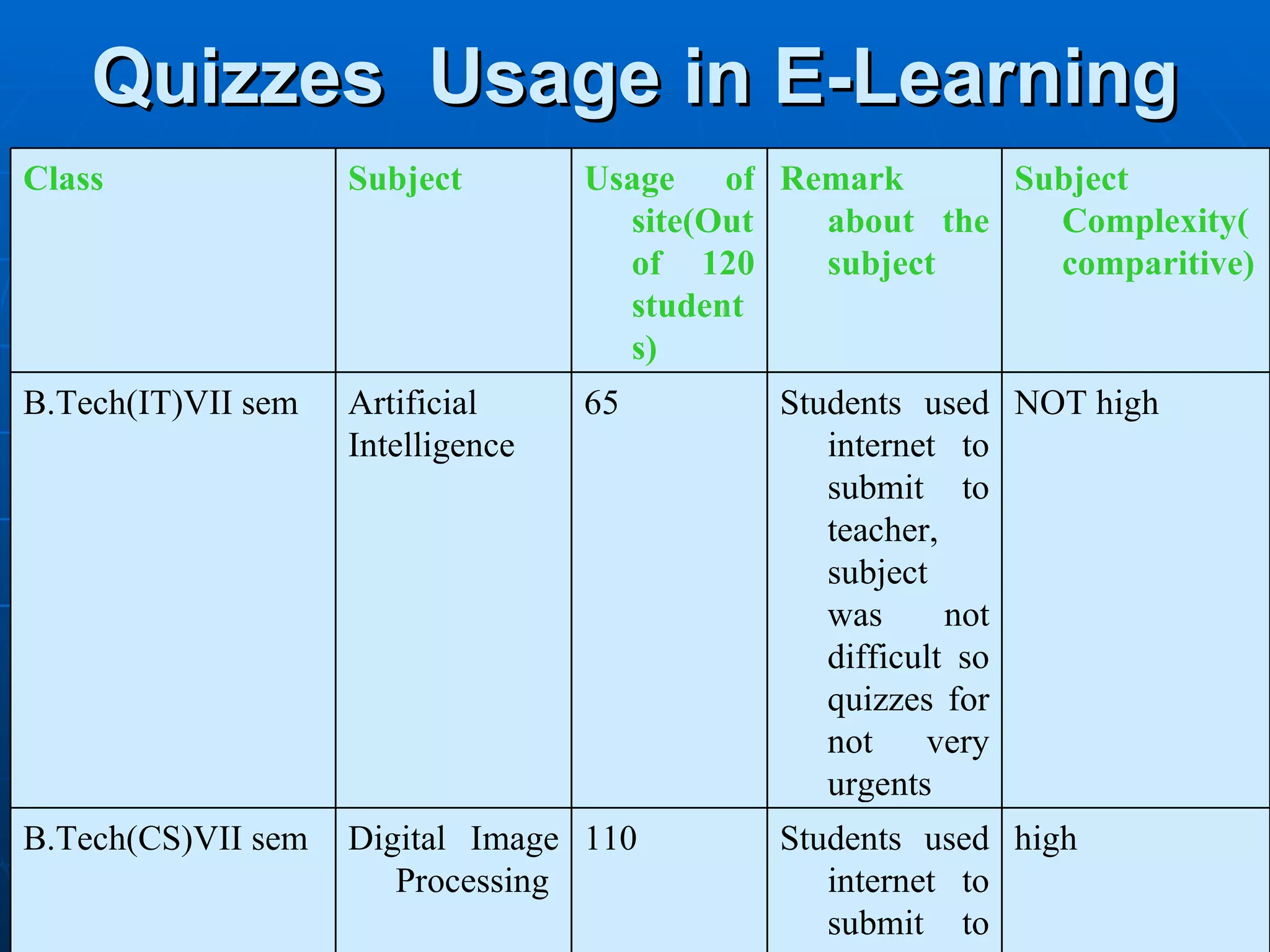
Quizzes  Usage in E-Learning high Students used internet to submit to teacher 110 Digital Image Processing B.Tech(CS)VII sem NOT high Students used internet to submit to teacher, subject was not difficult so quizzes for not very urgents 65 Artificial Intelligence B.Tech(IT)VII sem Subject Complexity(comparitive) Remark about the subject Usage of site(Out of 120 students) Subject Class
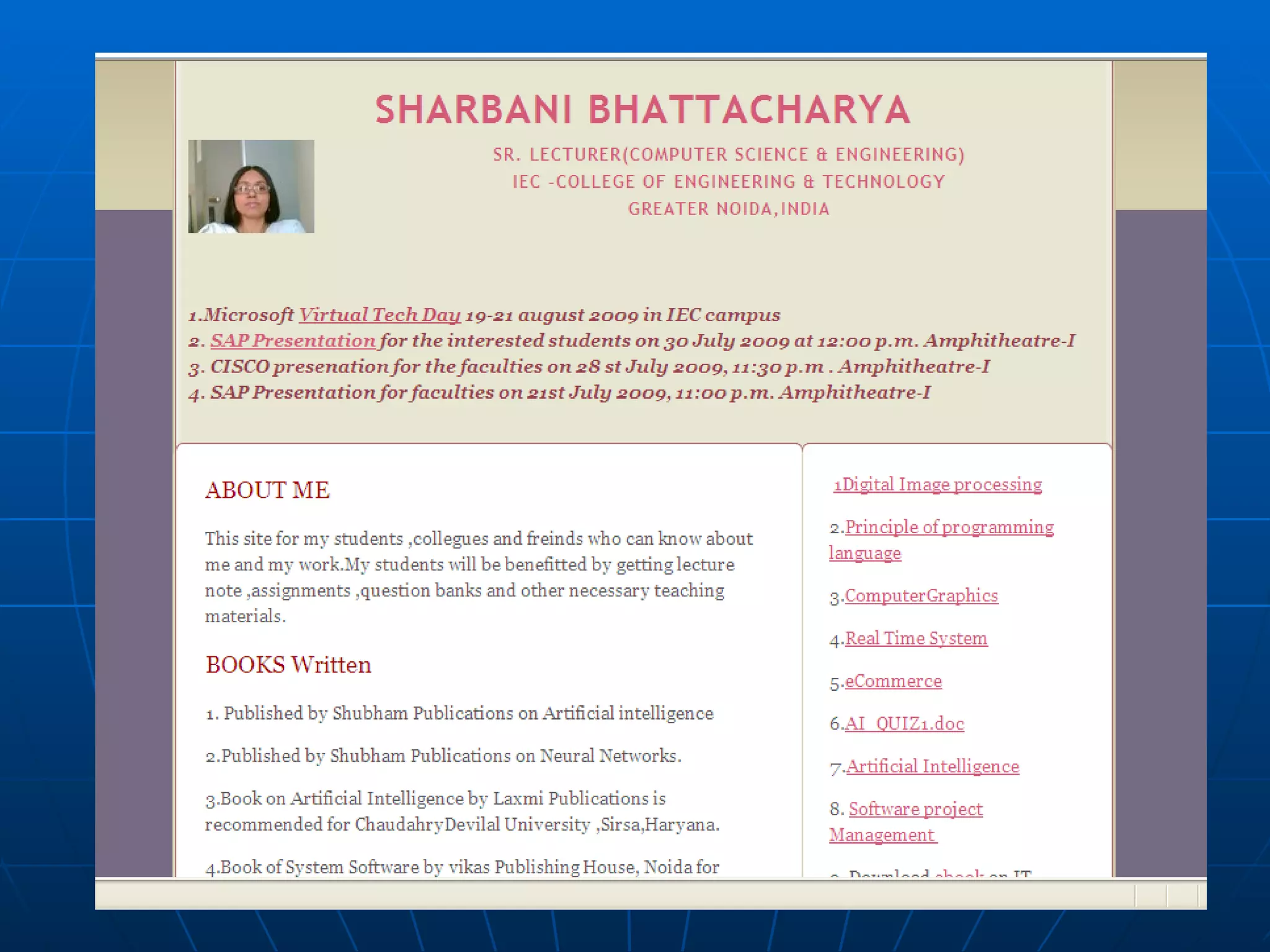
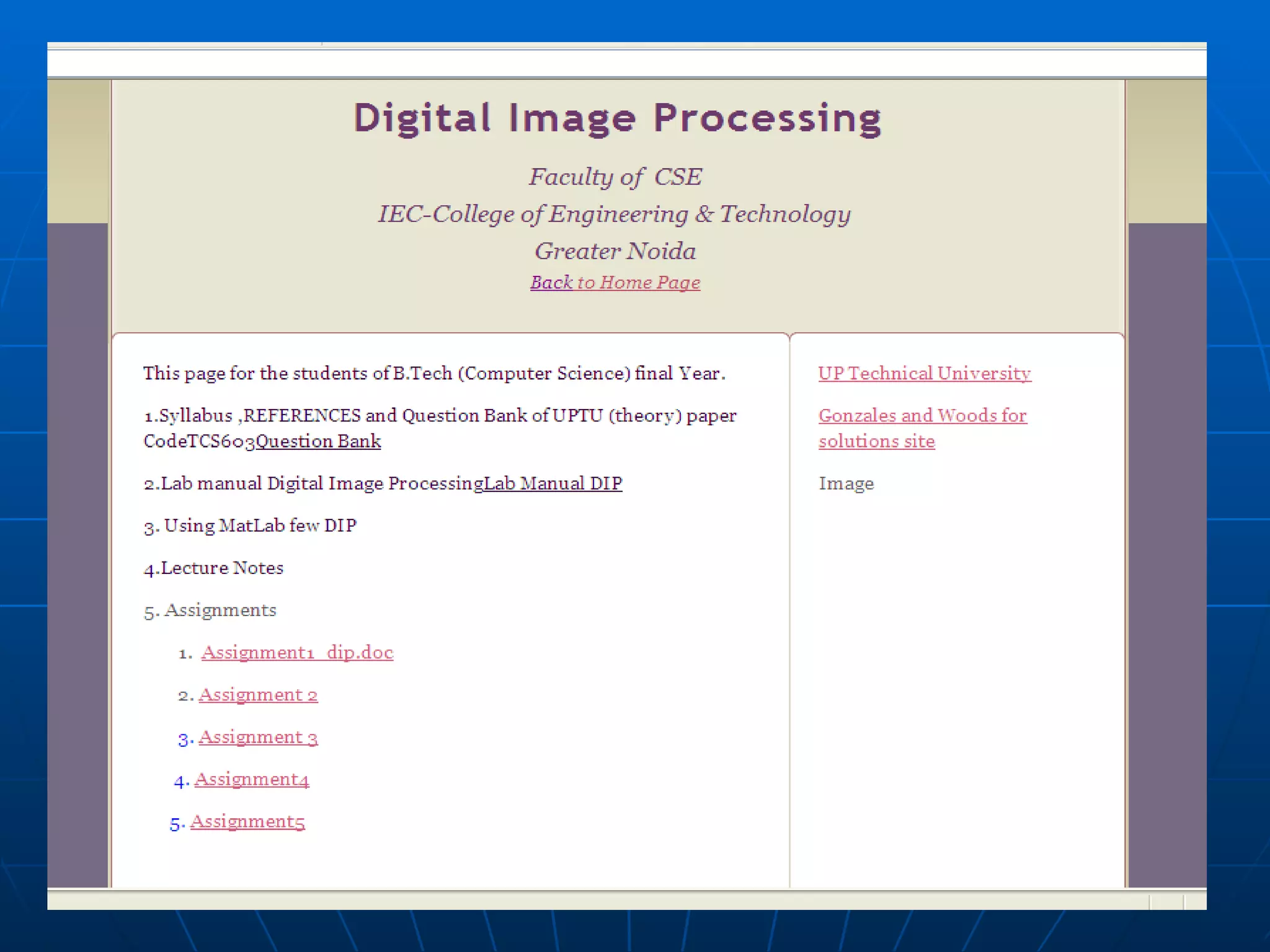
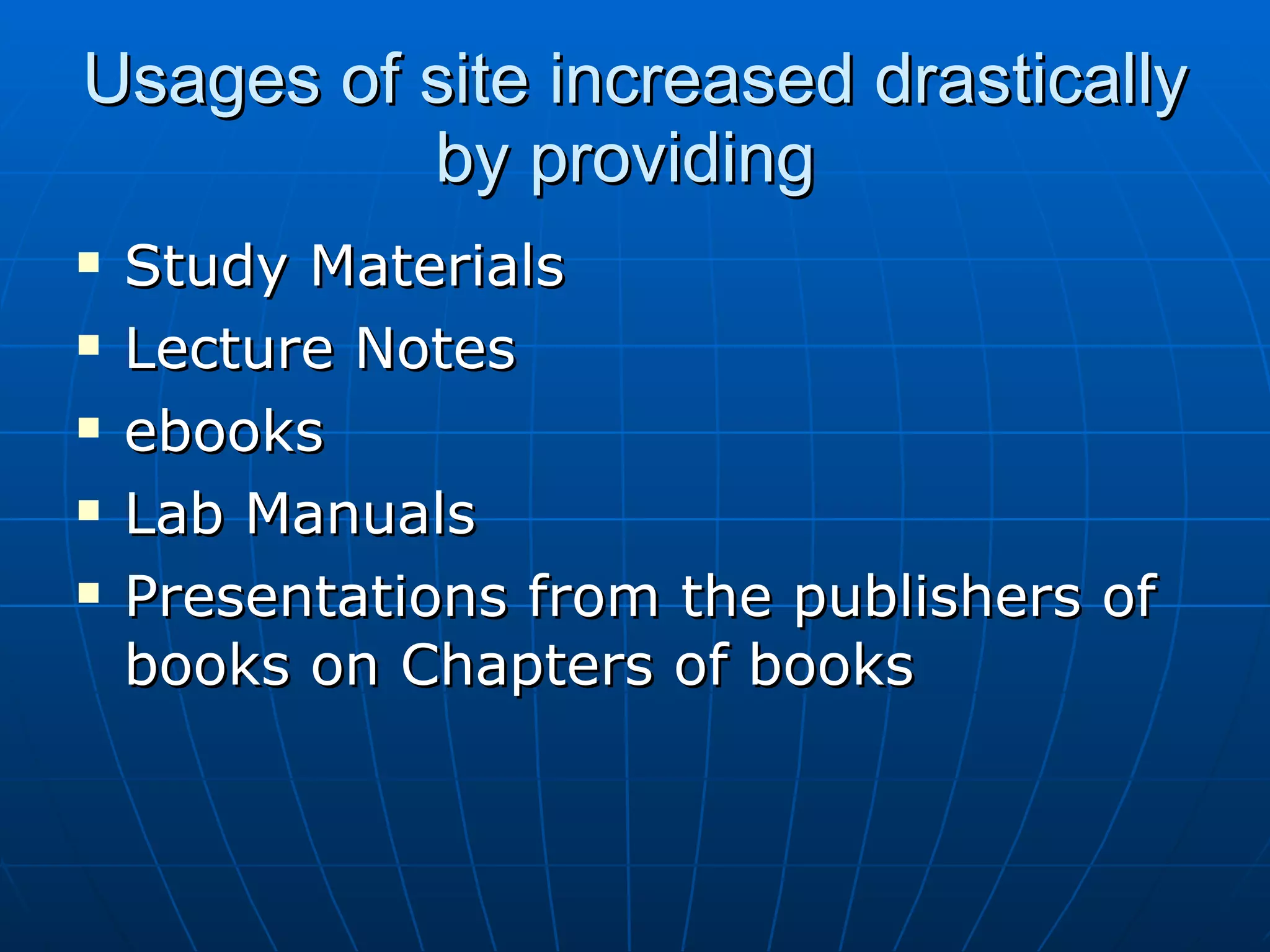
Usages of site increased drastically by providing  Study Materials Lecture Notes ebooks  Lab Manuals Presentations from the publishers of books on Chapters of books
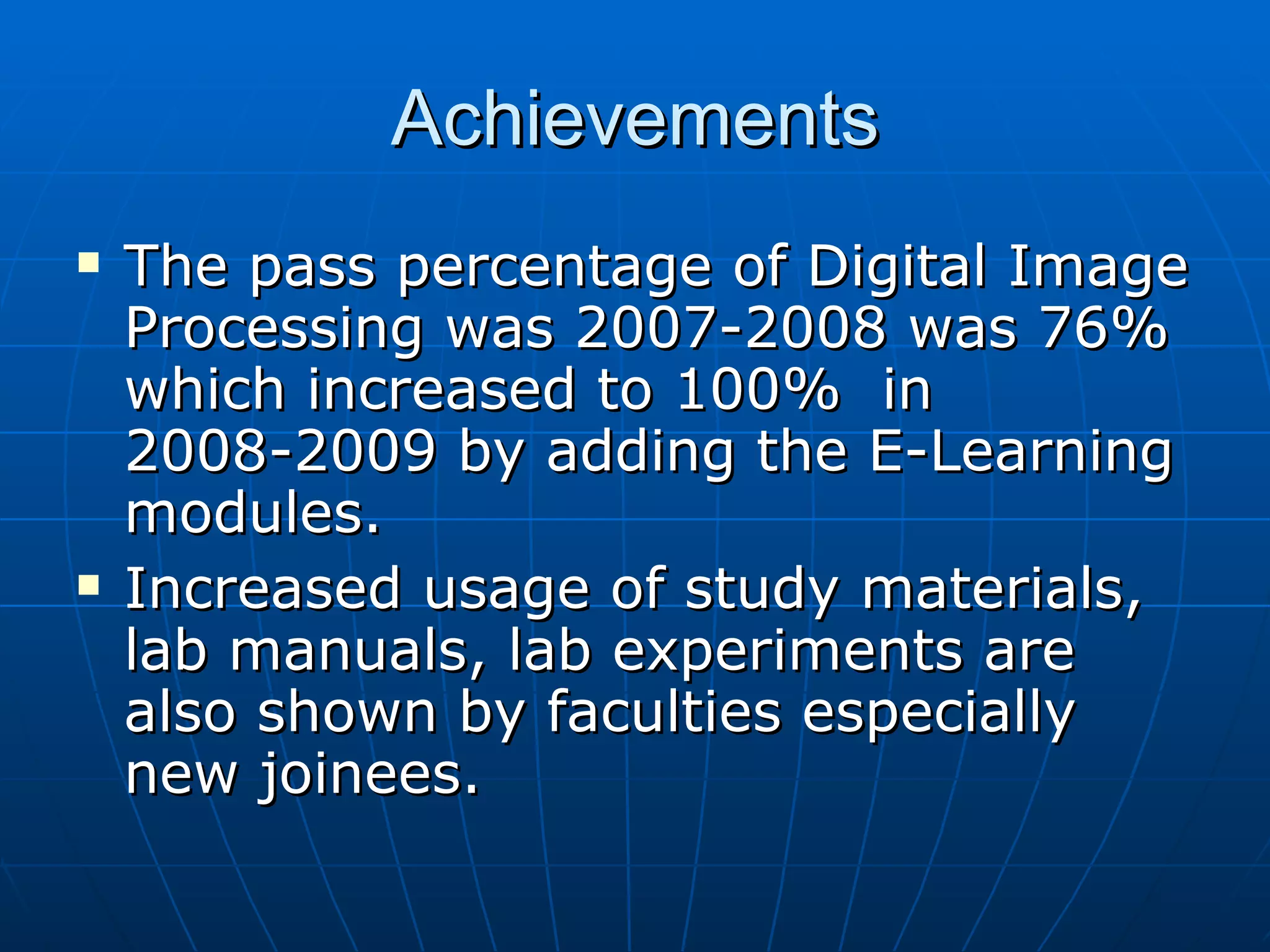
Achievements The pass percentage of Digital Image Processing was 2007-2008 was 76% which increased to 100%  in 2008-2009 by adding the E-Learning modules.  Increased usage of study materials, lab manuals, lab experiments are also shown by faculties especially new joinees.
Conclusion The site helped students to be on time and follow-up was without much effort from faculty side. Tools available on site enabled students to be more frequent to be touch with study and faculty. Missed once doesn’t mean missed forever.
REFERENCES Blog by Tony Karrer on E-Learning. Benefits_of_E-Learning_HighGrowth Companies by Chris Howards E-Learning companies making the grade by Rachel Konards www.easylearning.org When a Company Should Consider Using eLearning, CBT or WBT by Ron Kurtus (revised 4 April 2004) Root Learning digital solutions elearningtech.blogspot.com
Thank you

E Learning Addon In Pedagogy

  • 1.
    E-learning is anAdd-on in Classroom Teaching Pedagogy By Sharbani Bhattacharya & Sharad Kr IEC COLLEGE OF ENGINEERING & TECHNOLOGY Greater Noida [email_address] E-Learning:An Innovative Knowledge Oriented Framework 9-10 Sept2009, INDIA INTERNATIONAL CENTER, NEW DELHI
  • 2.
    E-Learning technology breakdowngeographic , economic and social barriers that prevents many people from accessing high-quality training.
  • 3.
    E-learning promises peopleto get globally equal rights to education which was prior confined due to geographic barriers.
  • 4.
    E-Learning Stages Stage1:Start off Stage2: Extension Stage3:Integrate & Adjust Stage4: On Demand
  • 5.
    Stage1: Start offThis stage involves contents online, Buying off –the-shelf and one size fit to all
  • 6.
    Stage2: Extensions Blended Programs, Rapid E-Learning, outsourcing sophisticated context
  • 7.
    Stage3:Integrate & AdjustLearning Management System(LMS), Governance, Competancy based Performance Management
  • 8.
    Stage4: On DemandLCMS ,Performance Support and Search
  • 9.
    E-Learning Tools E-LearningAuthoring Tools E-Learning Programming Languages E-Learning Database Development E-Learning Graphics Production Tools
  • 10.
    E-Learning Authoring ToolsMS Word , Power Point ,Macro Media , Dreamweaver,Flash, Authorware , Director,XMLSpy and Visual Intruder.
  • 11.
    E-Learning Programming LanguagesJava, JSP, C++, Visual Basics, VB.Net,ADO.Net,Advanced Java and mobile VB.
  • 12.
    E-Learning Database DevelopmentOracle,MS Access , MS SQL, SQL Server
  • 13.
    E-Learning Graphics ProductionTools Photoshop, Sound Forge, Premier, Flash, Illustrator , Coral Draw and 3D studio Max, Director MX
  • 14.
  • 15.
  • 16.
  • 17.
    Assignments Usage inE-Learning high Problems are innovative 120 Digital Image Processing B.Tech(CS)VII sem NOT high Easy,accessible in class 80 Artificial Intelligence B.Tech(IT)VII sem Subject Complexity(comparitive) Remark about the subject Usage of site(Out of 120 students) Subject Class
  • 18.
    Tutorials Usage inE-Learning high Problems are innovative - Solved in class, internet was not used by all 10 Digital Image Processing B.Tech(CS)VII sem NOT high Less students attended tutorials , thus used internet to submit to teacher 120 Artificial Intelligence B.Tech(IT)VII sem Subject Complexity(comparitive) Remark about the subject Usage of site(Out of 120 students) Subject Class
  • 19.
    Question Bank Usage in E-Learning high Students used internet to submit to teacher 120 Digital Image Processing B.Tech(CS)VII sem NOT high Students used internet to submit to teacher 120 Artificial Intelligence B.Tech(IT)VII sem Subject Complexity(comparitive) Remark about the subject Usage of site(Out of 120 students) Subject Class
  • 20.
    Quizzes Usagein E-Learning high Students used internet to submit to teacher 110 Digital Image Processing B.Tech(CS)VII sem NOT high Students used internet to submit to teacher, subject was not difficult so quizzes for not very urgents 65 Artificial Intelligence B.Tech(IT)VII sem Subject Complexity(comparitive) Remark about the subject Usage of site(Out of 120 students) Subject Class
  • 21.
    Usages of siteincreased drastically by providing Study Materials Lecture Notes ebooks Lab Manuals Presentations from the publishers of books on Chapters of books
  • 22.
    Achievements The passpercentage of Digital Image Processing was 2007-2008 was 76% which increased to 100% in 2008-2009 by adding the E-Learning modules. Increased usage of study materials, lab manuals, lab experiments are also shown by faculties especially new joinees.
  • 23.
    Conclusion The sitehelped students to be on time and follow-up was without much effort from faculty side. Tools available on site enabled students to be more frequent to be touch with study and faculty. Missed once doesn’t mean missed forever.
  • 24.
    REFERENCES Blog byTony Karrer on E-Learning. Benefits_of_E-Learning_HighGrowth Companies by Chris Howards E-Learning companies making the grade by Rachel Konards www.easylearning.org When a Company Should Consider Using eLearning, CBT or WBT by Ron Kurtus (revised 4 April 2004) Root Learning digital solutions elearningtech.blogspot.com
  • 25.