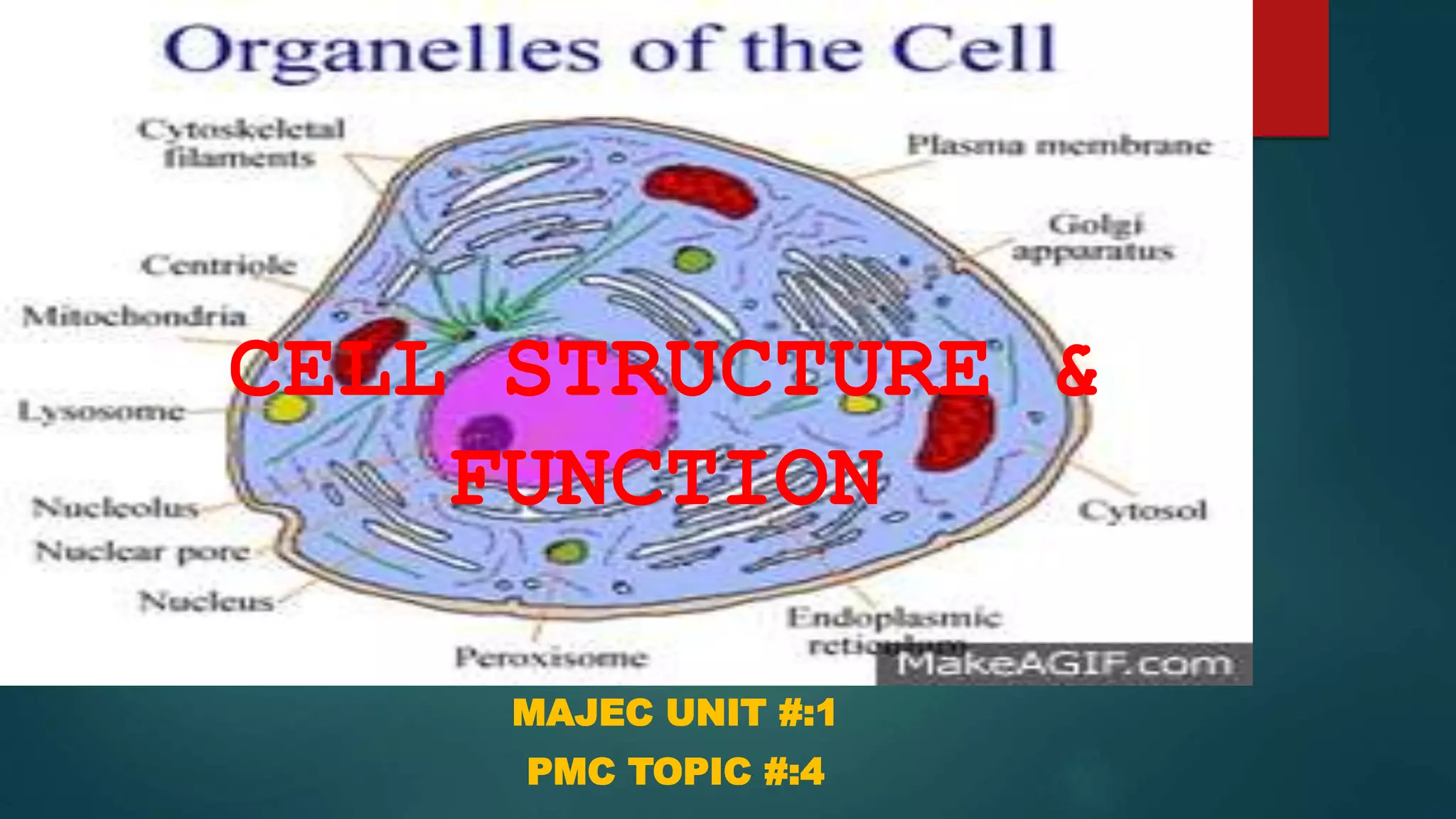
CELL STRUCTURE &
FUNCTION
MAJEC UNIT #:1
PMC TOPIC #:4
•
Course contents:
1. Comparison between Prokaryotic and
eukaryotic cell
2. Comparison between plants and animal cell
3. Cell wall
4. Fluid mosaic model of plasma membrane
5. Cytoplasm and cell organelles
Nucleus
Endoplasmic Reticulum
Golgi apparatus/Golgi complex/Golgi bodies
Lysosome
Vacuole
Mitochondria
Plastids/chloroplast
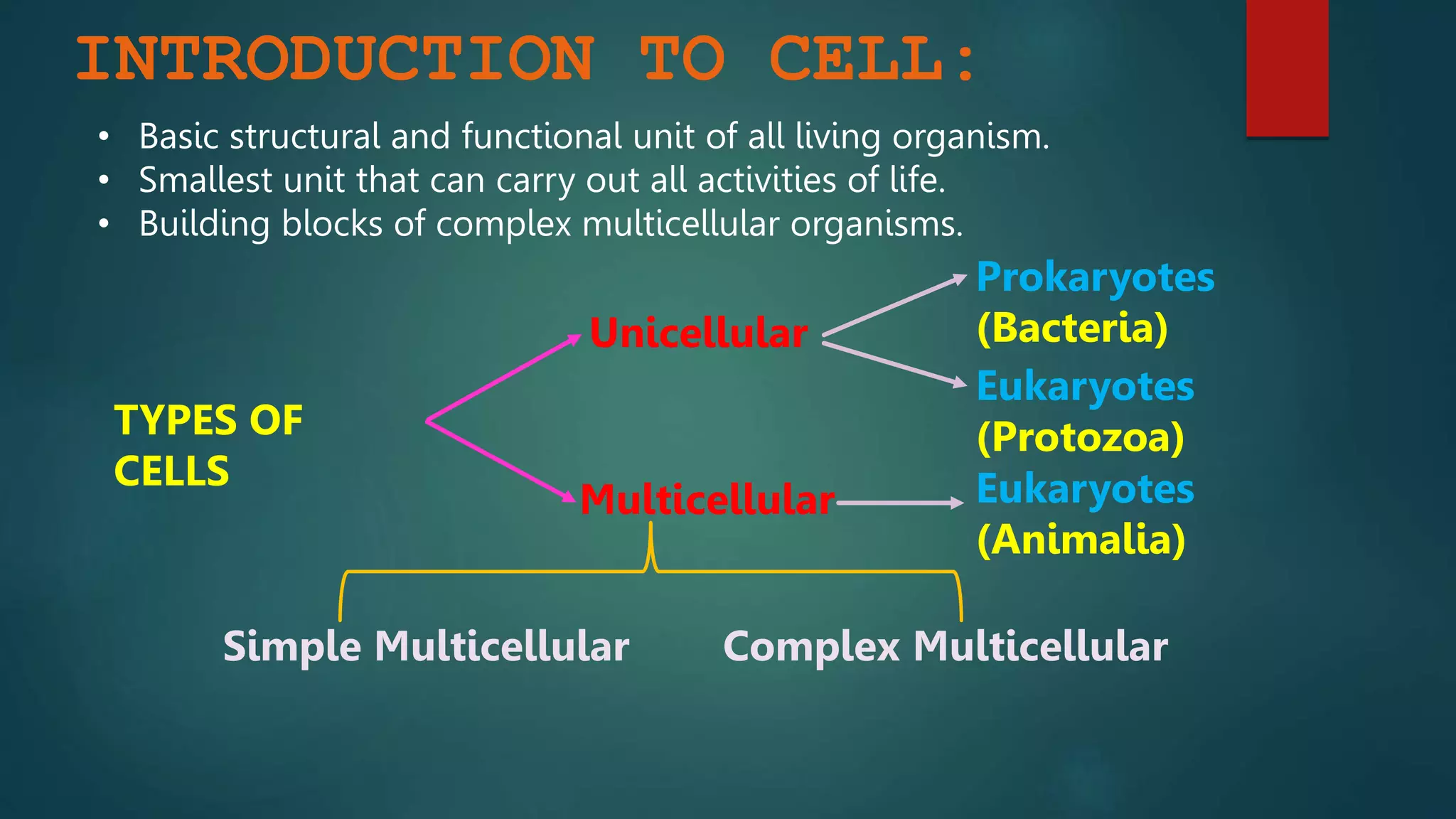
INTRODUCTION TO CELL:
• Basic structural and functional unit of all living organism.
• Smallest unit that can carry out all activities of life.
• Building blocks of complex multicellular organisms.
TYPES OF
CELLS
Multicellular
Unicellular
Eukaryotes
(Protozoa)
Prokaryotes
(Bacteria)
Eukaryotes
(Animalia)
Simple Multicellular Complex Multicellular
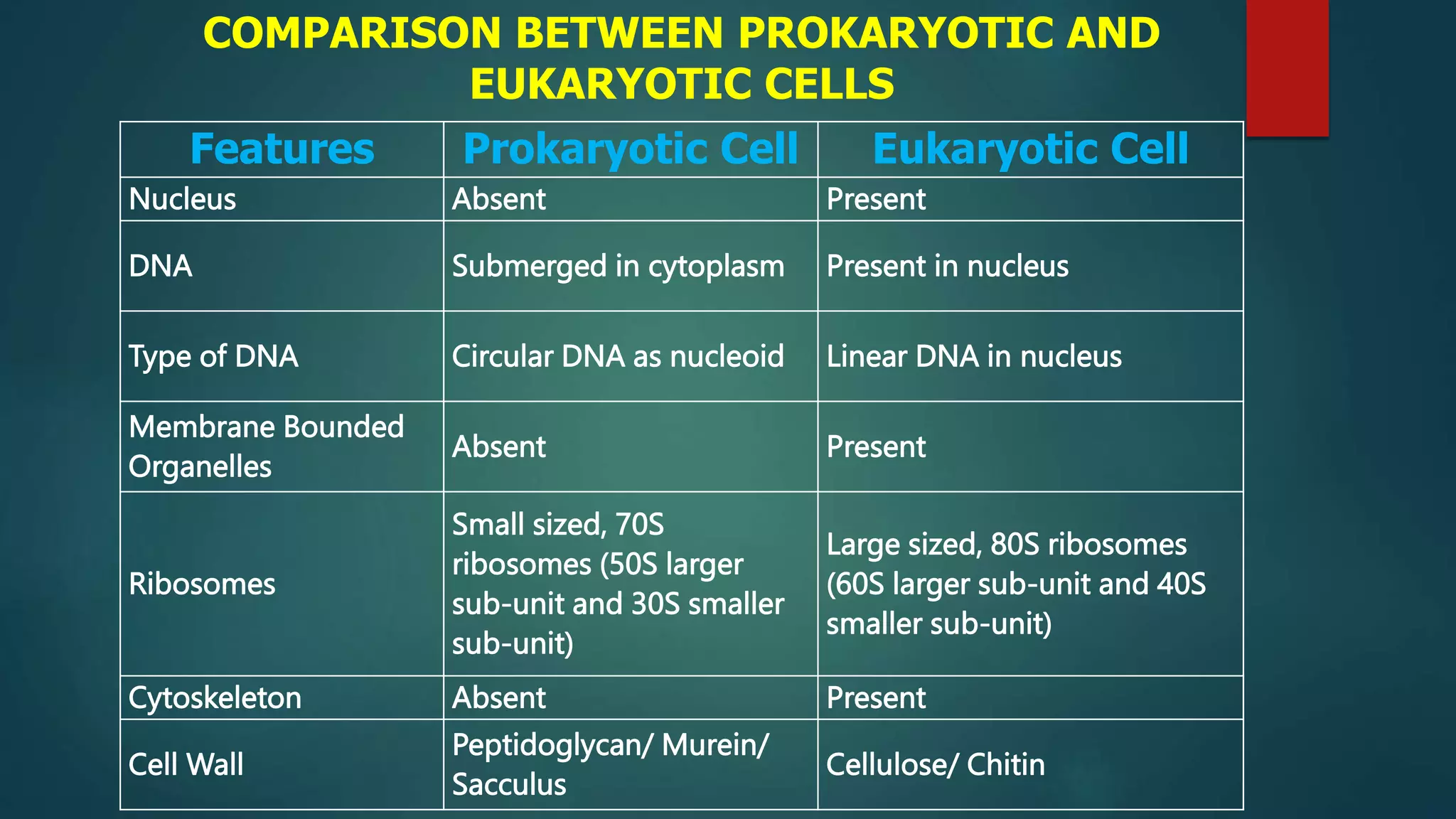
COMPARISON BETWEEN PROKARYOTIC AND
EUKARYOTIC CELLS
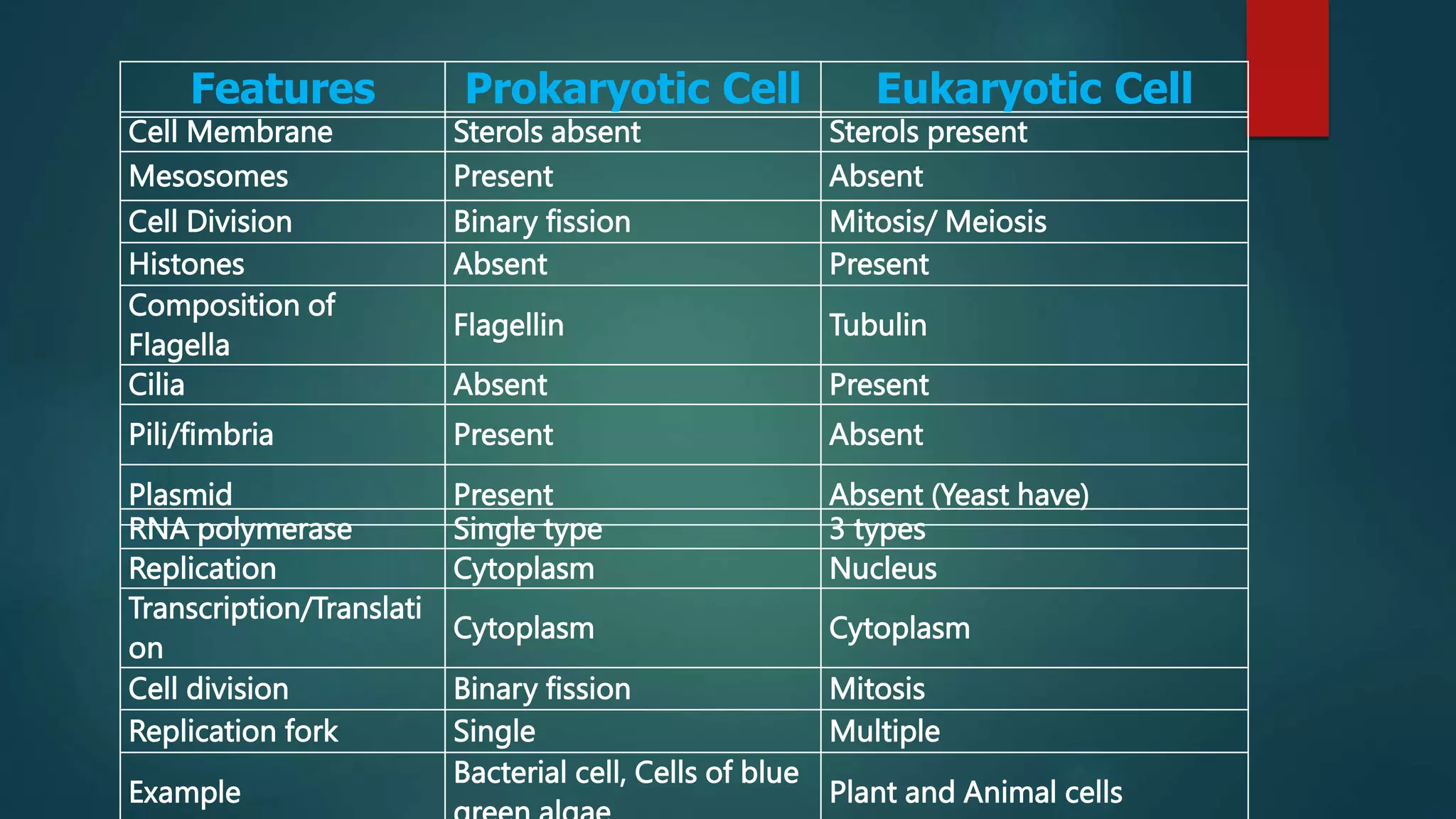
Features Prokaryotic Cell Eukaryotic Cell
Nucleus Absent Present
DNA Submerged in cytoplasm Present in nucleus
Type of DNA Circular DNA as nucleoid Linear DNA in nucleus
Membrane Bounded
Organelles
Absent Present
Ribosomes
Small sized, 70S
ribosomes (50S larger
sub-unit and 30S smaller
sub-unit)
Large sized, 80S ribosomes
(60S larger sub-unit and 40S
smaller sub-unit)
Cytoskeleton Absent Present
Cell Wall
Peptidoglycan/ Murein/
Sacculus
Cellulose/ Chitin
Cell Membrane Sterols absent Sterols present
Mesosomes Present Absent
Cell Division Binary fission Mitosis/ Meiosis
Histones Absent Present
Composition of
Flagella
Flagellin Tubulin
Cilia Absent Present
Pili/fimbria Present Absent
Plasmid Present Absent (Yeast have)
RNA polymerase Single type 3 types
Replication Cytoplasm Nucleus
Transcription/Translati
on
Cytoplasm Cytoplasm
Cell division Binary fission Mitosis
Replication fork Single Multiple
Example
Bacterial cell, Cells of blue
Plant and Animal cells
Features Prokaryotic Cell Eukaryotic Cell
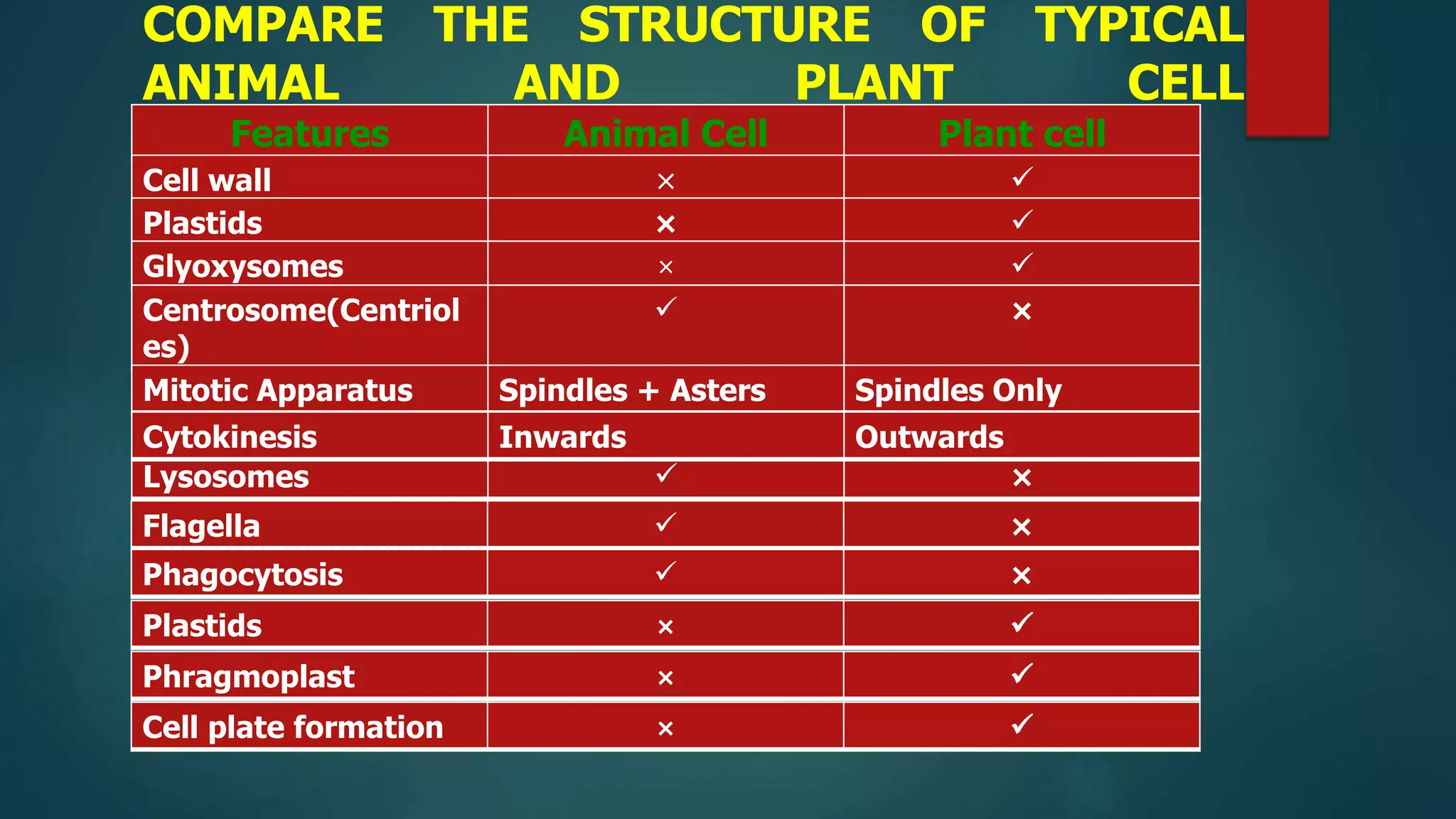
COMPARE THE STRUCTURE OF TYPICAL
ANIMAL AND PLANT CELL
Features Animal Cell Plant cell
Cell wall × 
Plastids × 
Glyoxysomes × 
Centrosome(Centriol
es)
 ×
Lysosomes  ×
Flagella  ×
Phagocytosis  ×
Mitotic Apparatus Spindles + Asters Spindles Only
Cytokinesis Inwards Outwards
Phragmoplast × 
Cell plate formation × 
Plastids × 
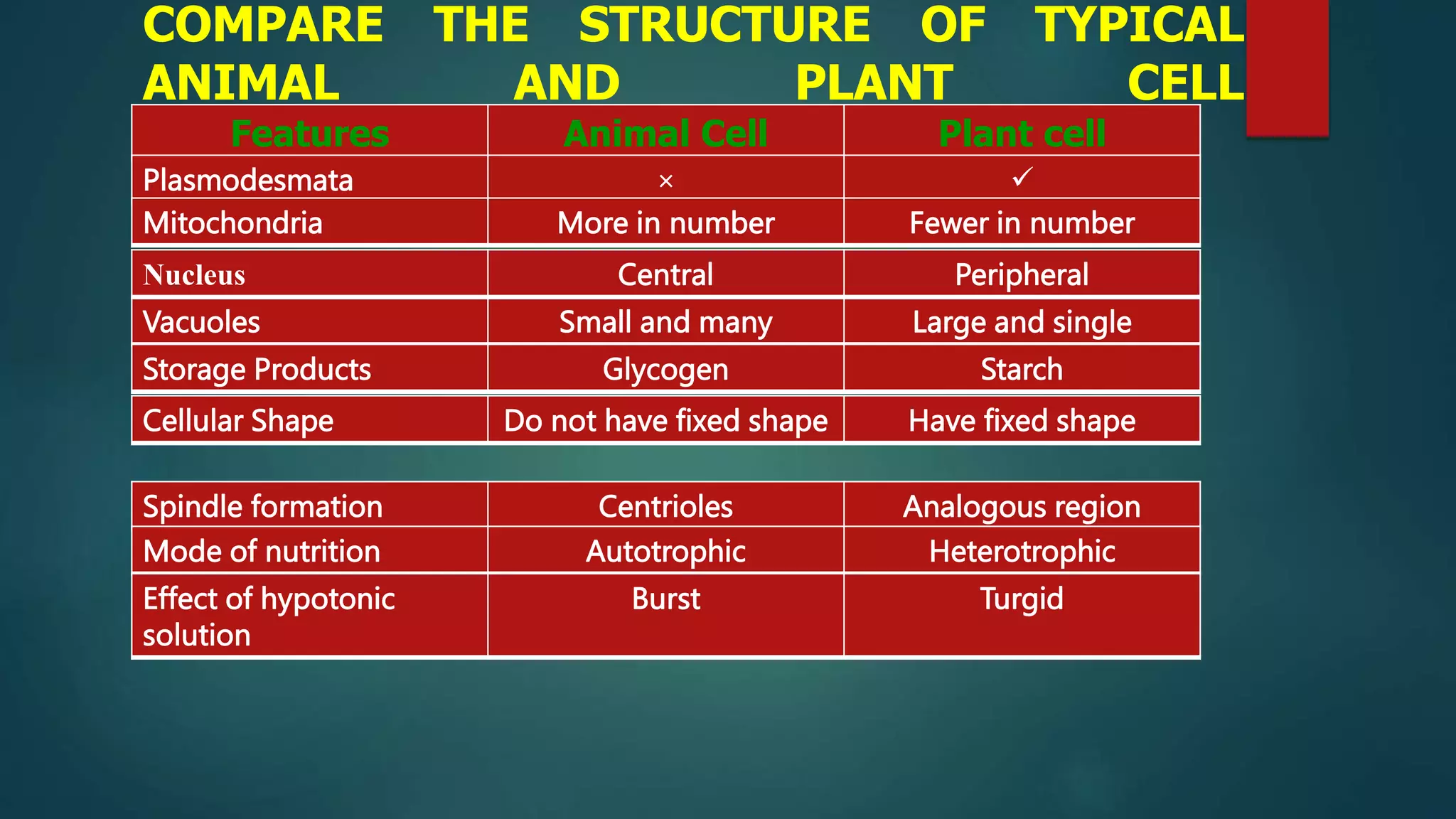
COMPARE THE STRUCTURE OF TYPICAL
ANIMAL AND PLANT CELL
Features Animal Cell Plant cell
Plasmodesmata × 
Mitochondria More in number Fewer in number
Vacuoles Small and many Large and single
Storage Products Glycogen Starch
Cellular Shape Do not have fixed shape Have fixed shape
Nucleus Central Peripheral
Spindle formation Centrioles Analogous region
Mode of nutrition Autotrophic Heterotrophic
Effect of hypotonic
solution
Burst Turgid
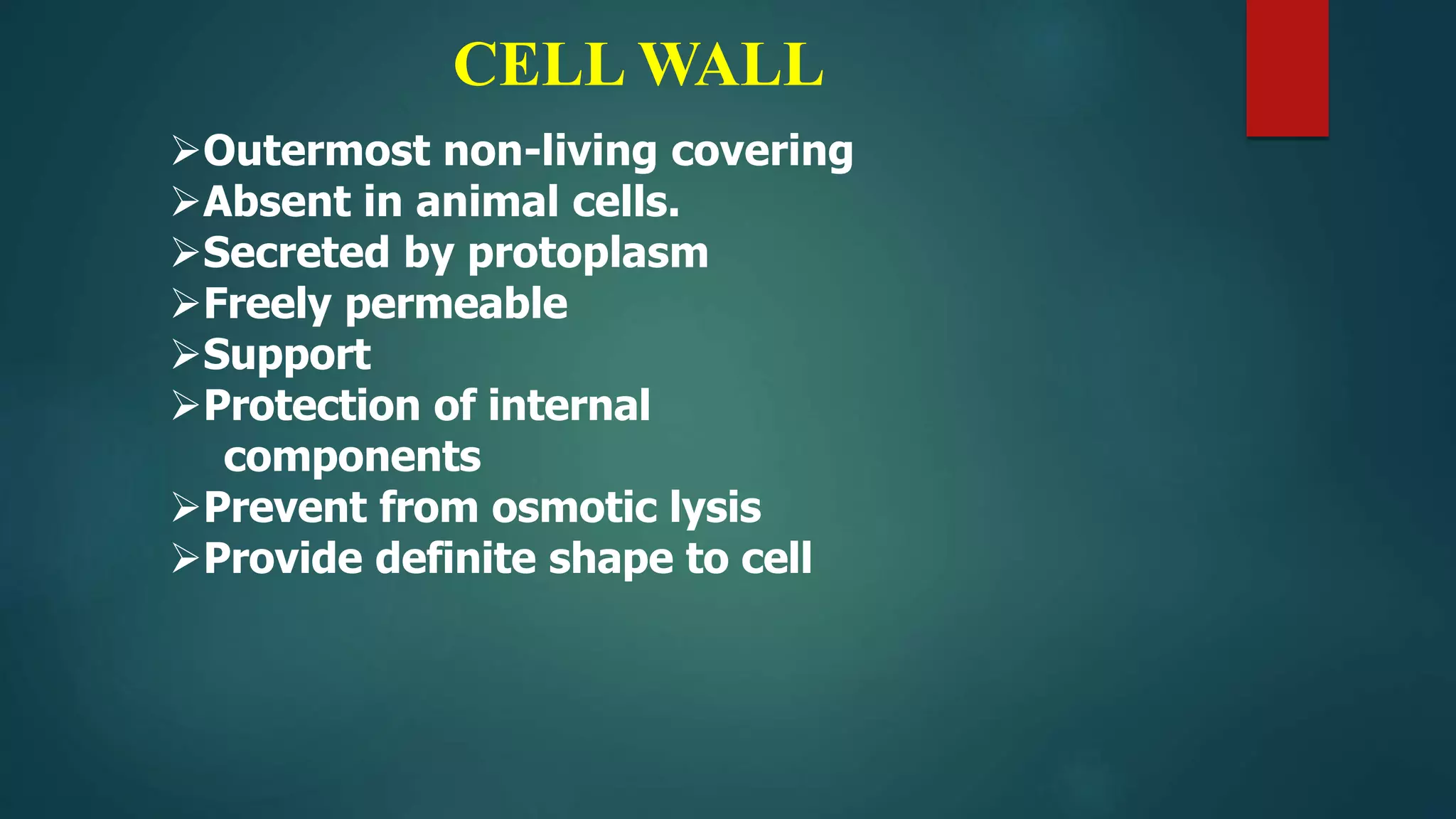
CELL WALL
Outermost non-living covering
Absent in animal cells.
Secreted by protoplasm
Freely permeable
Support
Protection of internal
components
Prevent from osmotic lysis
Provide definite shape to cell
CELL WALL
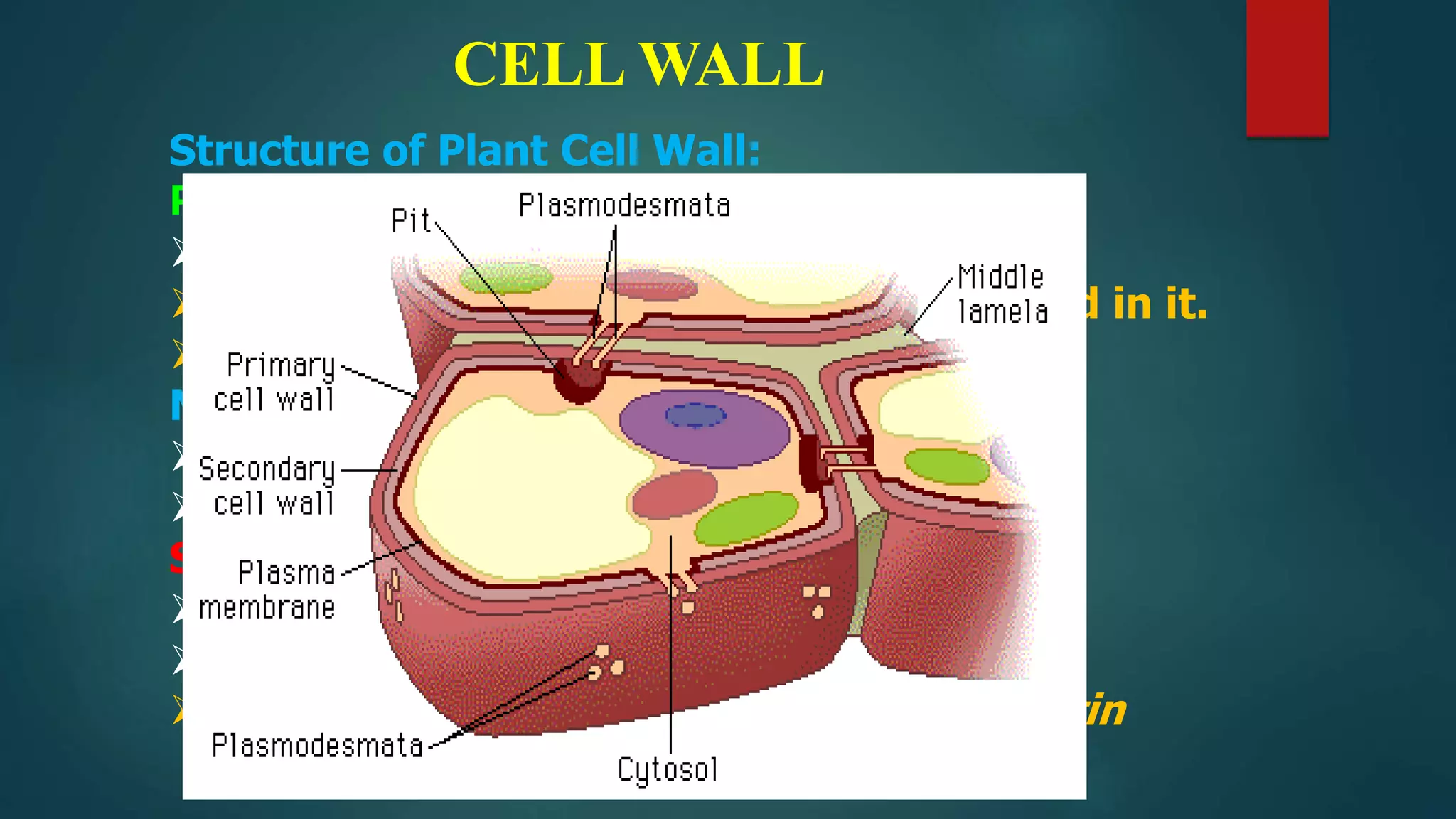
Structure of Plant Cell Wall:
Primary Wall:
True wall, Thin, Elastic
Pectin and hemicellulose is also deposited in it.
All have
Middle Lamella
In between the primary walls
Magnesium and calcium salts and pectin
Secondary Wall
 Thick and rigid, Inelastic
 Composed of
 inorganic salts, Silica, Waxes, Lignin, Cutin
PLASMA MEMBRANE
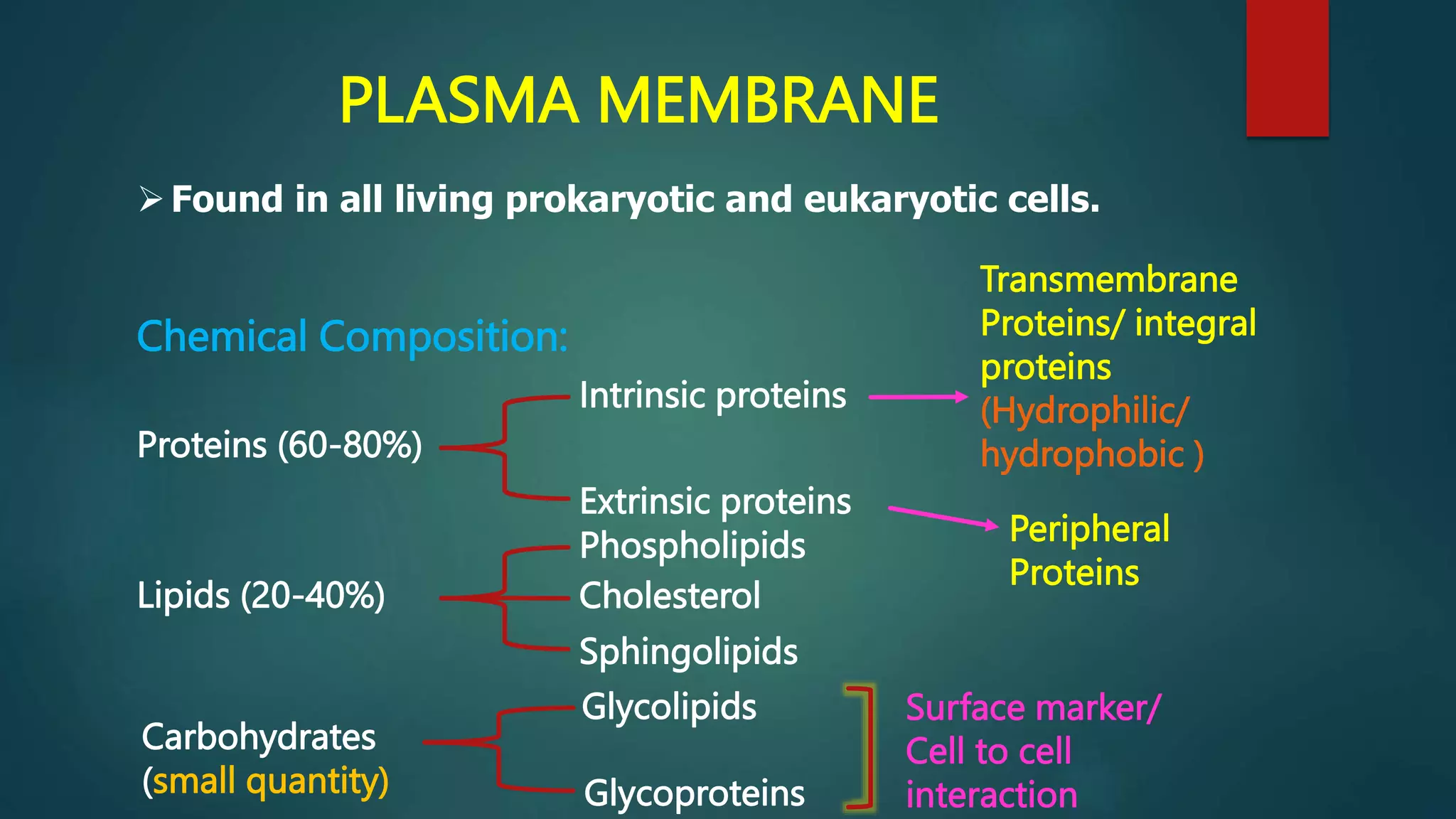
Found in all living prokaryotic and eukaryotic cells.
Proteins (60-80%)
Chemical Composition:
Extrinsic proteins
Intrinsic proteins
Lipids (20-40%)
Sphingolipids
Phospholipids
Cholesterol
Carbohydrates
(small quantity) Glycoproteins
Glycolipids
Transmembrane
Proteins/ integral
proteins
(Hydrophilic/
hydrophobic )
Peripheral
Proteins
Surface marker/
Cell to cell
interaction
PLASMA MEMBRANE
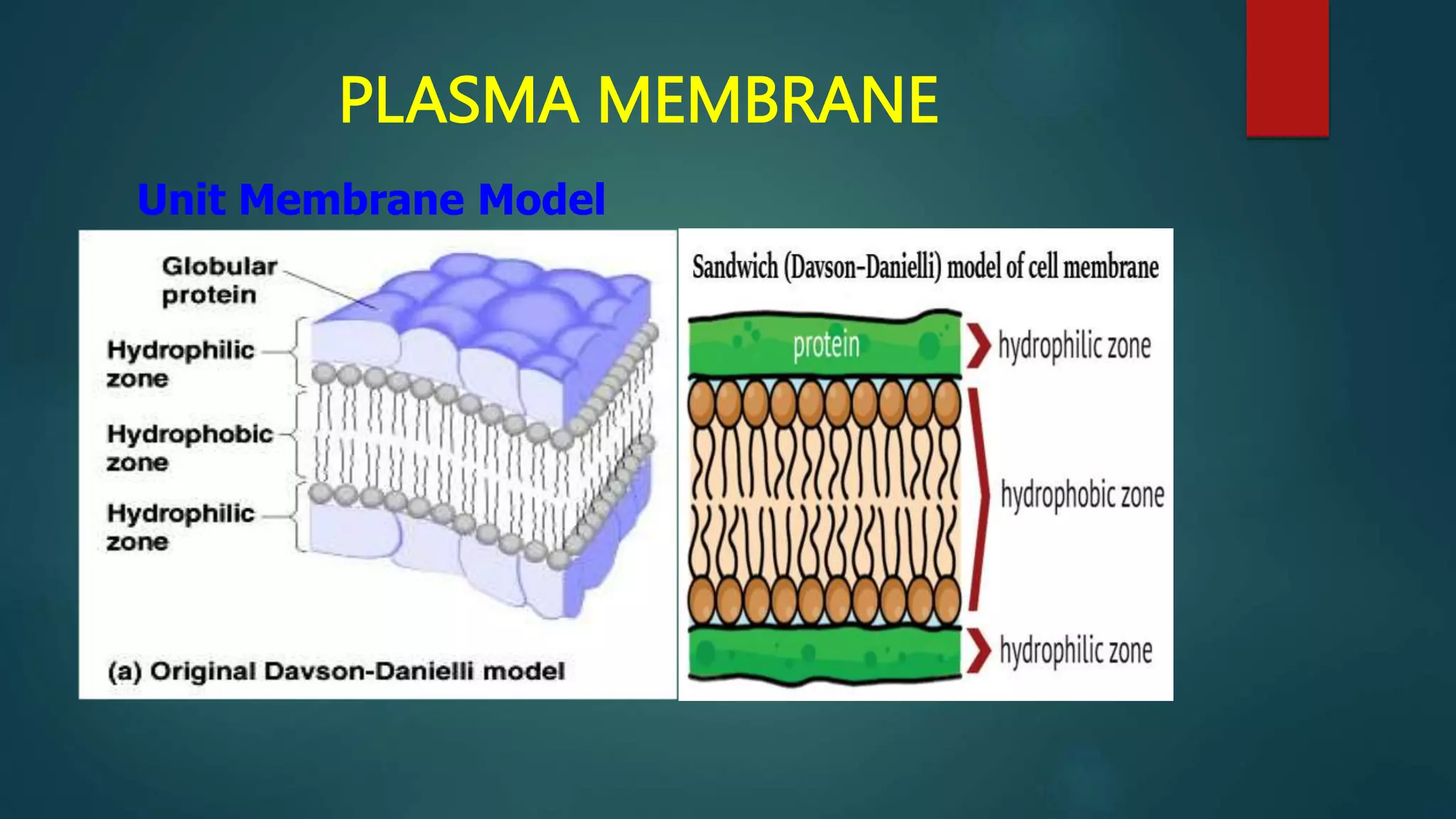
Unit Membrane Model
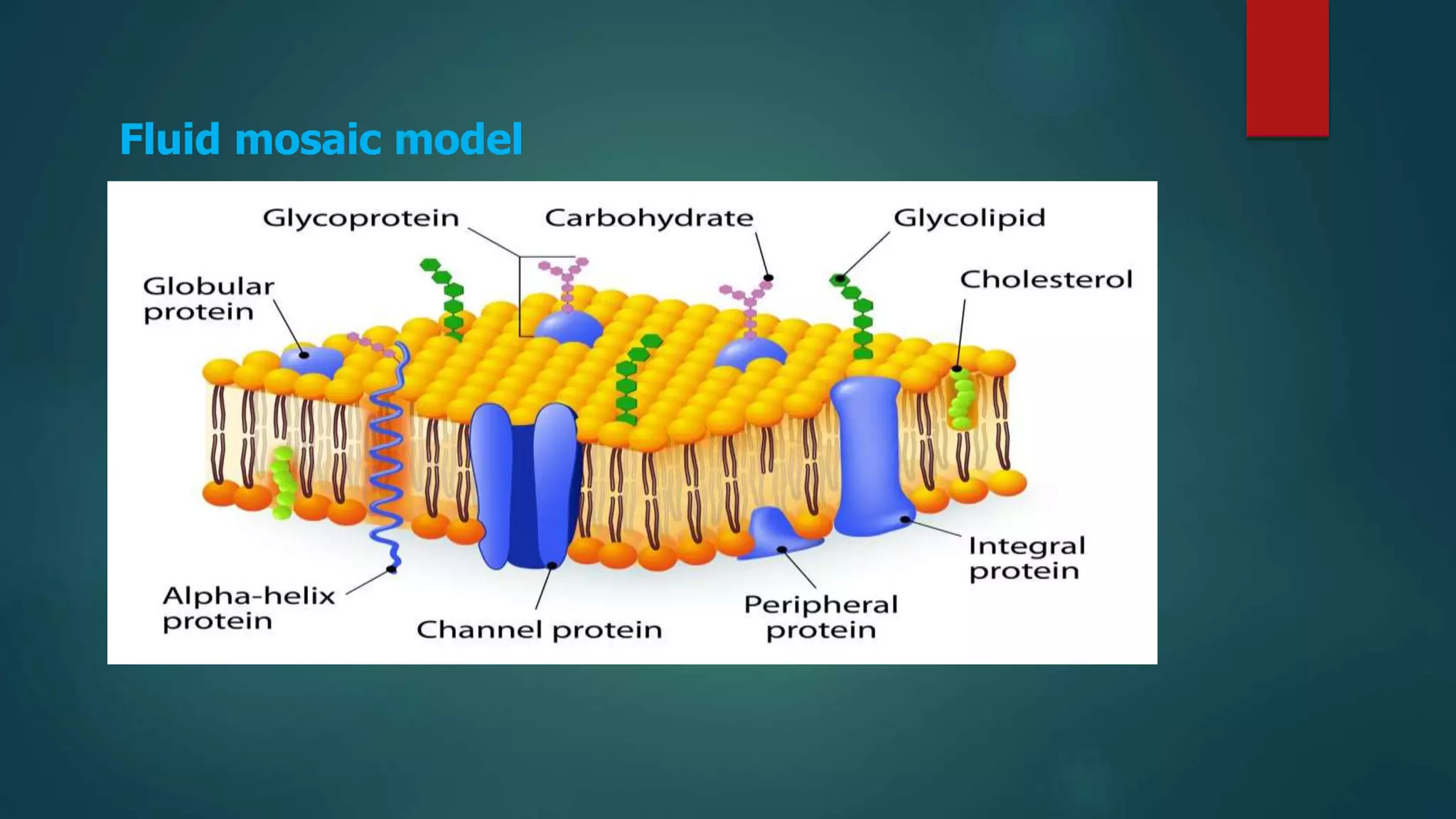
Fluid mosaic model
Role of plasma membrane:
1. Transport of materials by;
i. Passive transport
i. Simple diffusion
ii. Facilitated diffusion
iii. Osmosis
ii. Active transport
iii. Impulse transmission
iv. Endocytosis and exocytosis
v. Excrete waste
vi. Maintain ionic gradient
CYTOPLASM
• Cytosol Soluble part of cytoplasm, 90% water
and 10 % fundamental molecules
• Fundamental molecules of life
• Cell organelles
• True solution
Function of Cytoplasm
 Store house of vital chemicals
 Site of certain metabolic pathways
 Glycolysis
 Translation
 Fermentation
Between nucleus and plasma membrane
Composition
 Colloidal solutions.
 (non-viscous) or gel (viscous).
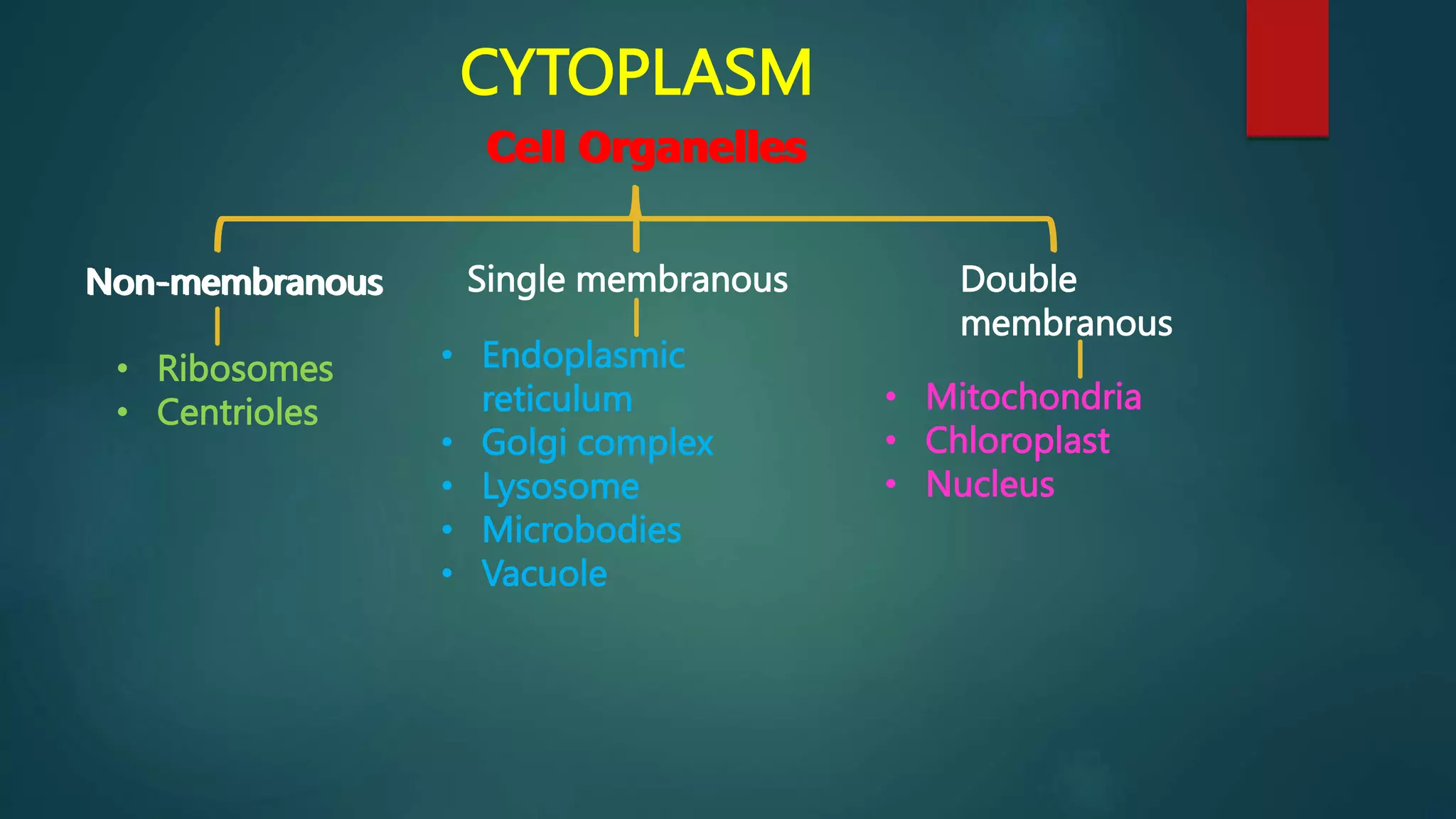
CYTOPLASM
Cell Organelles
Non-membranous Double
membranous
Single membranous
• Ribosomes
• Centrioles
• Endoplasmic
reticulum
• Golgi complex
• Lysosome
• Microbodies
• Vacuole
• Mitochondria
• Chloroplast
• Nucleus
Cell Organelles
Non-membranous
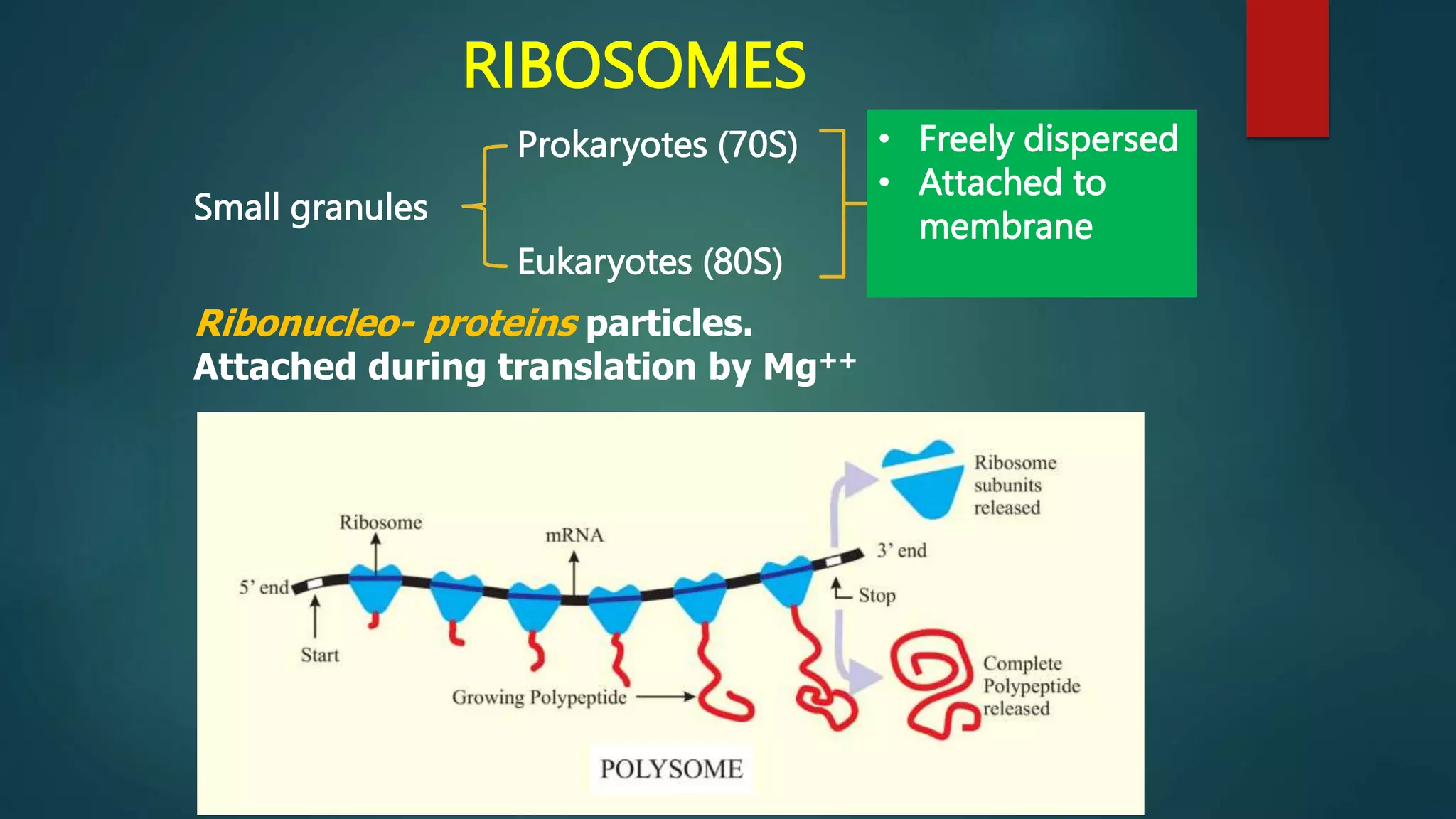
RIBOSOMES
Small granules
Eukaryotes (80S)
Prokaryotes (70S) • Freely dispersed
• Attached to
membrane
Ribonucleo- proteins particles.
Attached during translation by Mg++
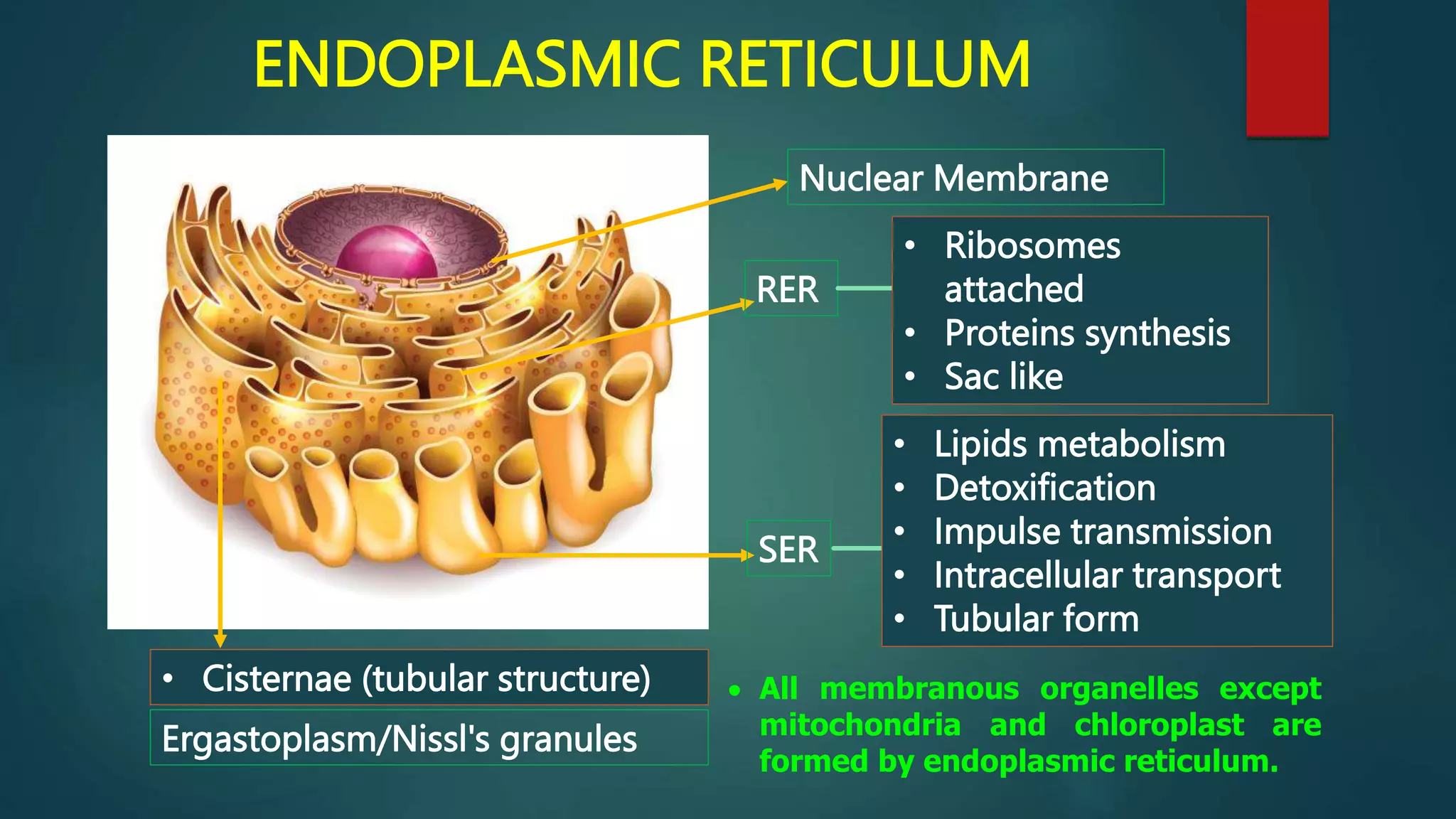
ENDOPLASMIC RETICULUM
Nuclear Membrane
SER
RER
• Ribosomes
attached
• Proteins synthesis
• Sac like
• Lipids metabolism
• Detoxification
• Impulse transmission
• Intracellular transport
• Tubular form
• Cisternae (tubular structure)
Ergastoplasm/Nissl's granules
 All membranous organelles except
mitochondria and chloroplast are
formed by endoplasmic reticulum.
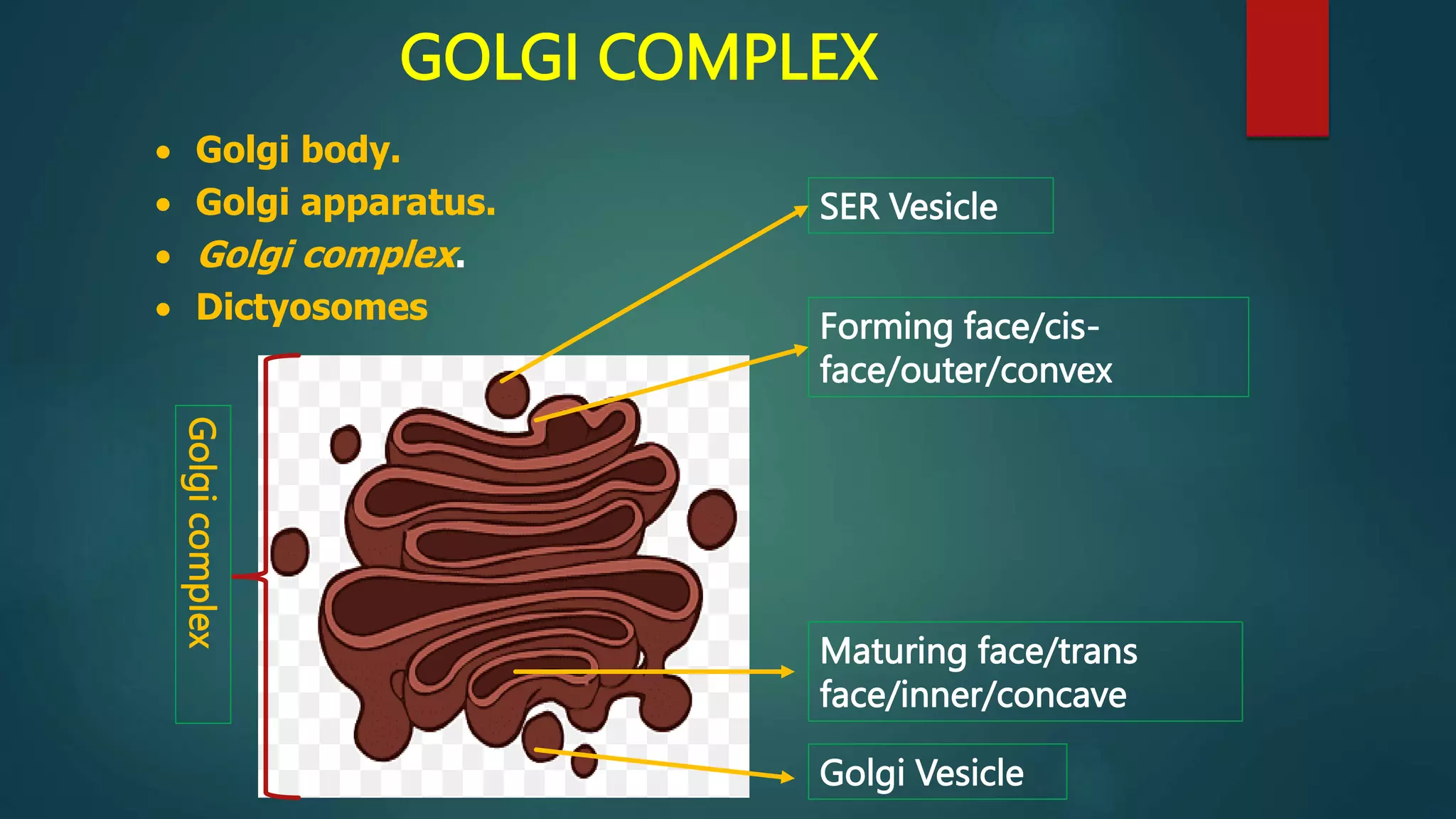
GOLGI COMPLEX
 Golgi body.
 Golgi apparatus.
 Golgi complex.
 Dictyosomes
SER Vesicle
Forming face/cis-
face/outer/convex
Maturing face/trans
face/inner/concave
Golgi Vesicle
Golgi
complex
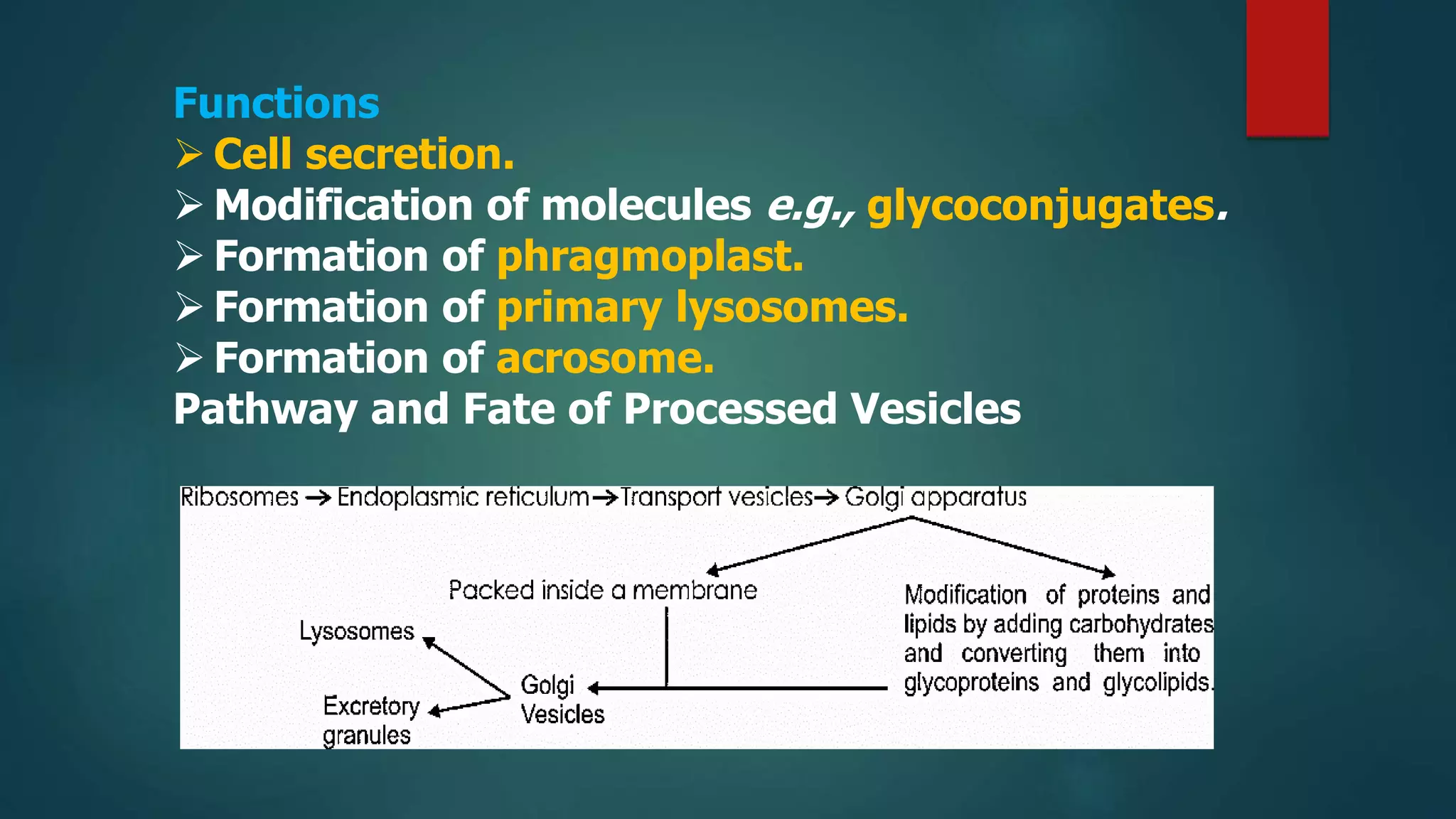
Functions
 Cell secretion.
 Modification of molecules e.g., glycoconjugates.
 Formation of phragmoplast.
 Formation of primary lysosomes.
 Formation of acrosome.
Pathway and Fate of Processed Vesicles
LYSOSOMES
• All eukaryotic cells except RBCs.
• Rich in acid phosphatase and hydrolytic enzymes
• Enzymes are synthesized on RER, golgi process
Types of lysosomes
• Primary lysosome:
• Secondary lysosomes
• Tertiary lysosomes
Functions
 Intracellular digestion
 Autophagy (starvation, routine process)
 Autolysis (a type of cell death is committed,)
 Sometimes release of extracellular enzymes
LYSOSOMES
Lysosomal Storage Diseases
 Congenital diseases
 20 such diseases have been discovered so far.
 These diseases are produced by a mutation
In glycogenosis type II disease, more glycogen
Tay-Sach’s disease
 Accumulation of lipids in brain cells leads to mental
retardation and even death.
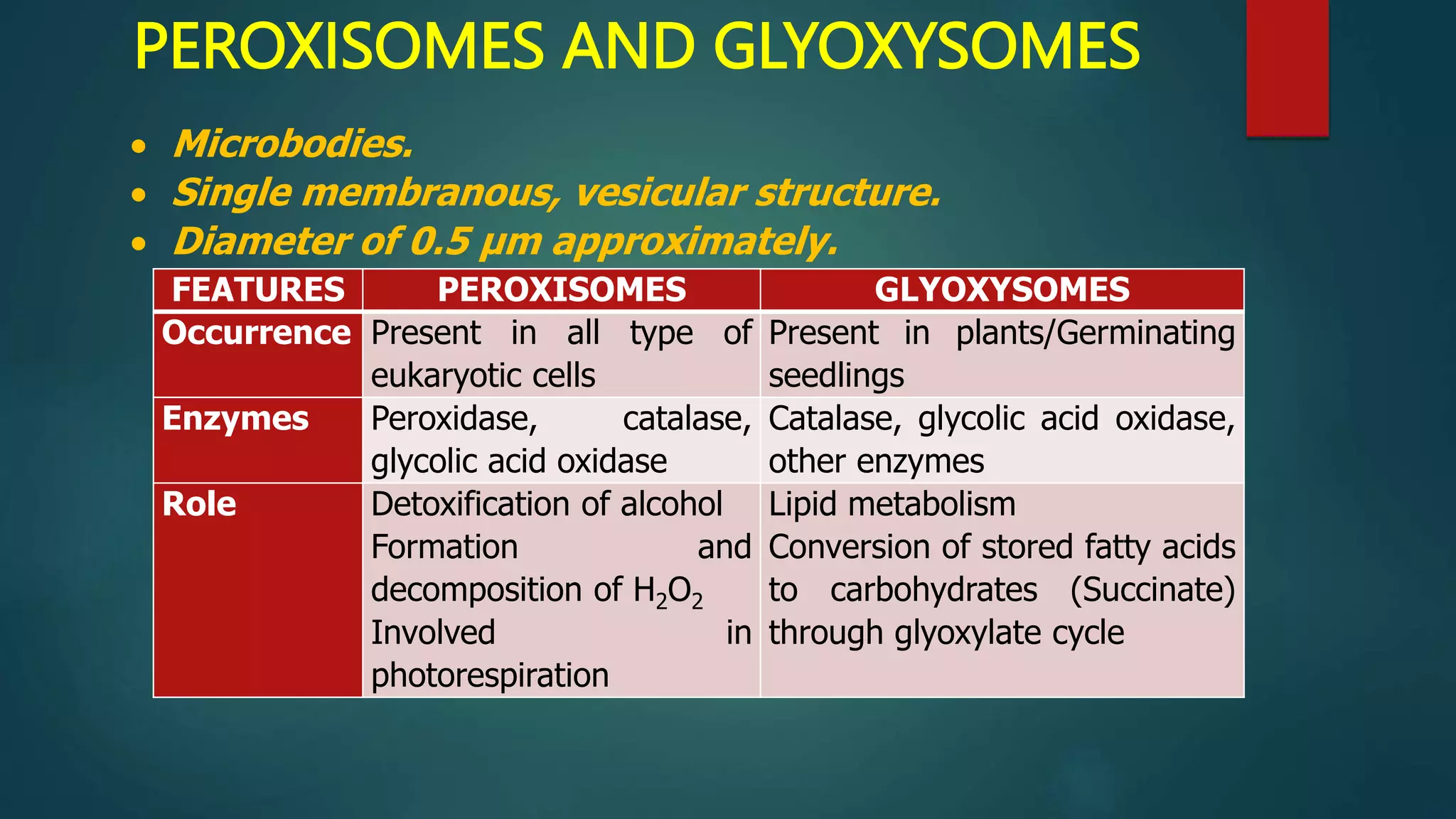
PEROXISOMES AND GLYOXYSOMES
 Microbodies.
 Single membranous, vesicular structure.
 Diameter of 0.5 µm approximately.
FEATURES PEROXISOMES GLYOXYSOMES
Occurrence Present in all type of
eukaryotic cells
Present in plants/Germinating
seedlings
Enzymes Peroxidase, catalase,
glycolic acid oxidase
Catalase, glycolic acid oxidase,
other enzymes
Role Detoxification of alcohol
Formation and
decomposition of H2O2
Involved in
photorespiration
Lipid metabolism
Conversion of stored fatty acids
to carbohydrates (Succinate)
through glyoxylate cycle
VACUOLES
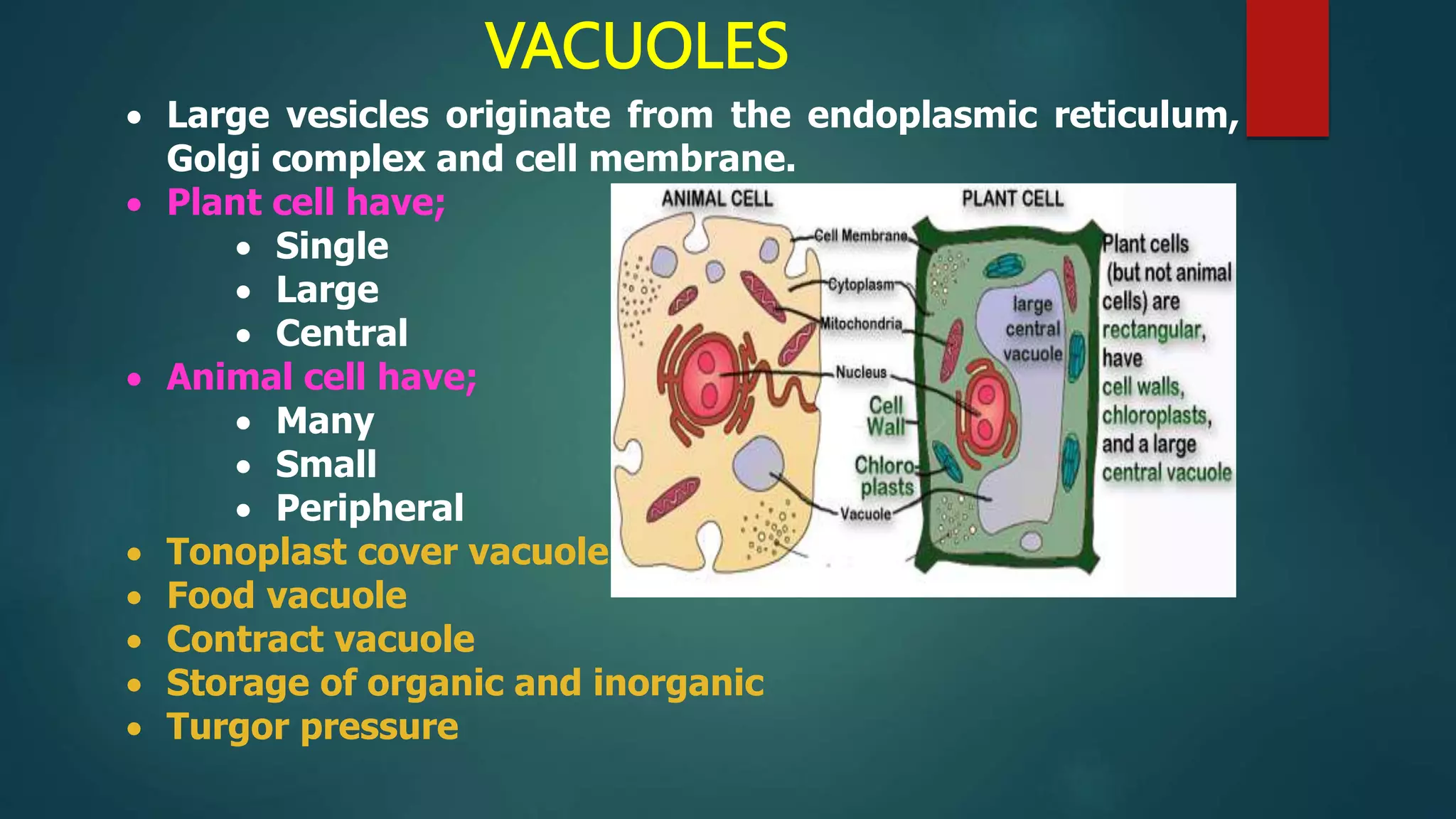
 Large vesicles originate from the endoplasmic reticulum,
Golgi complex and cell membrane.
 Plant cell have;
 Single
 Large
 Central
 Animal cell have;
 Many
 Small
 Peripheral
 Tonoplast cover vacuole
 Food vacuole
 Contract vacuole
 Storage of organic and inorganic
 Turgor pressure
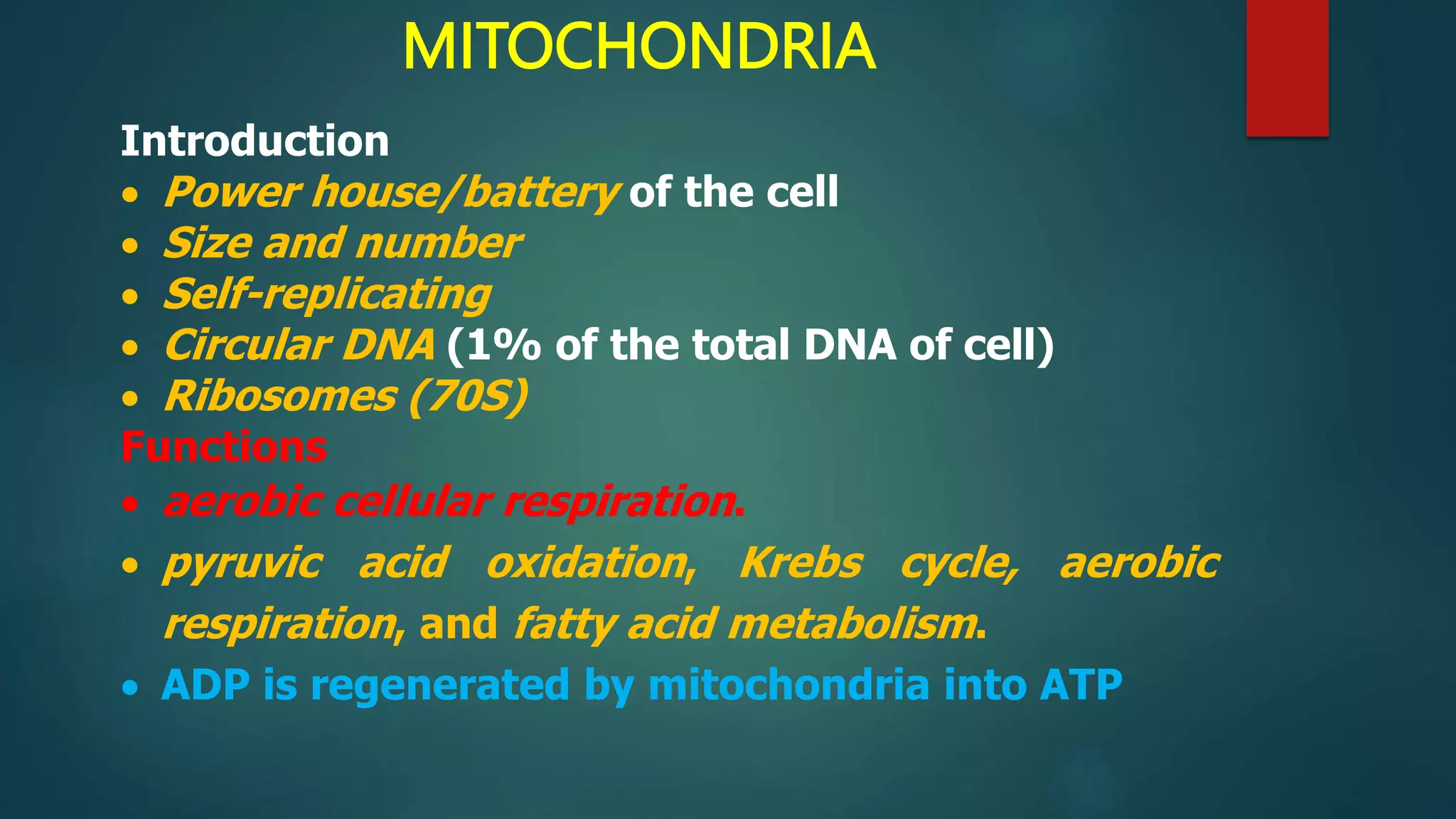
MITOCHONDRIA
Introduction
 Power house/battery of the cell
 Size and number
 Self-replicating
 Circular DNA (1% of the total DNA of cell)
 Ribosomes (70S)
Functions
 aerobic cellular respiration.
 pyruvic acid oxidation, Krebs cycle, aerobic
respiration, and fatty acid metabolism.
 ADP is regenerated by mitochondria into ATP
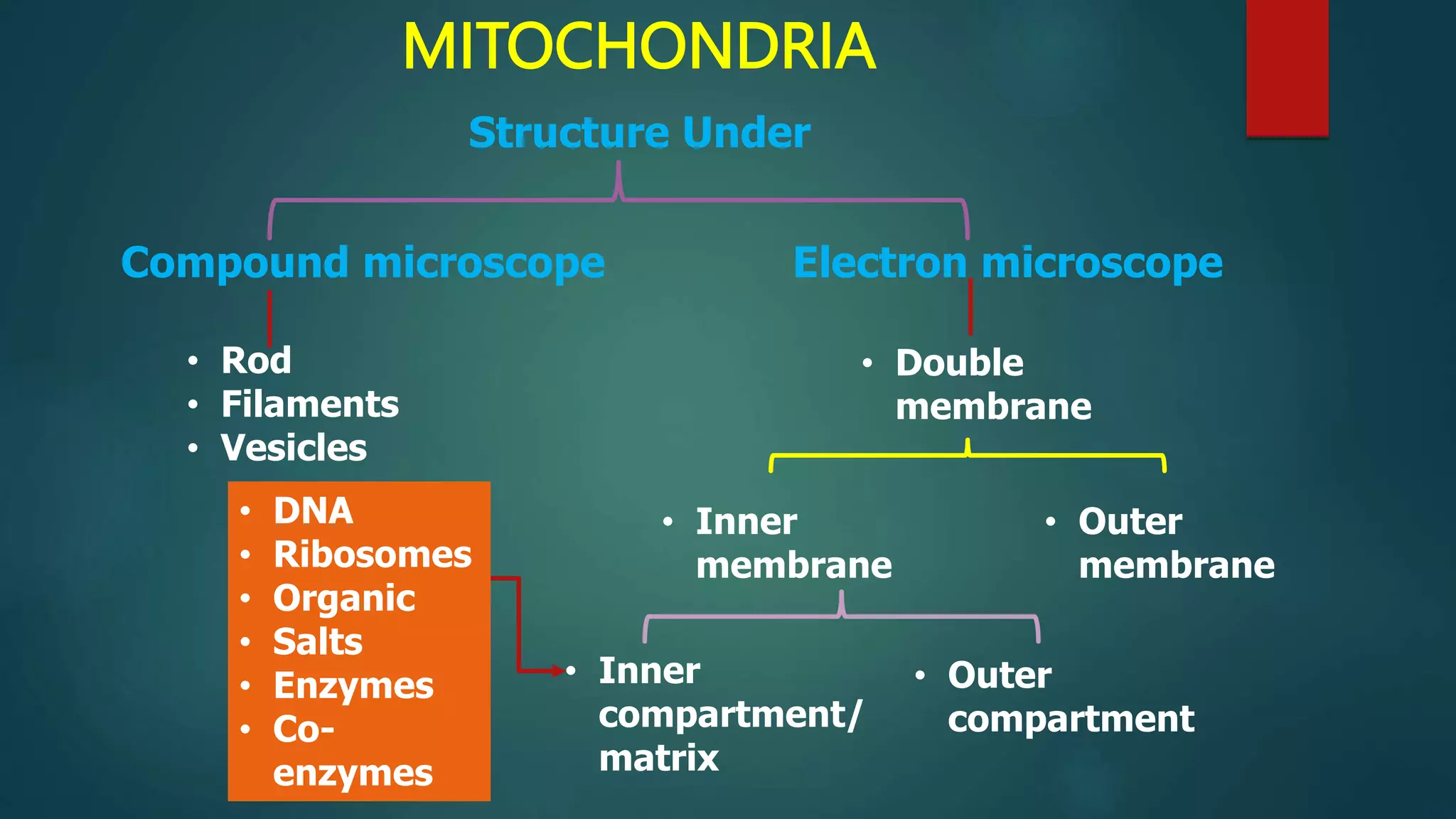
MITOCHONDRIA
Structure Under
Electron microscope
Compound microscope
• Rod
• Filaments
• Vesicles
• Double
membrane
• Outer
membrane
• Inner
membrane
• Inner
compartment/
matrix
• Outer
compartment
• DNA
• Ribosomes
• Organic
• Salts
• Enzymes
• Co-
enzymes
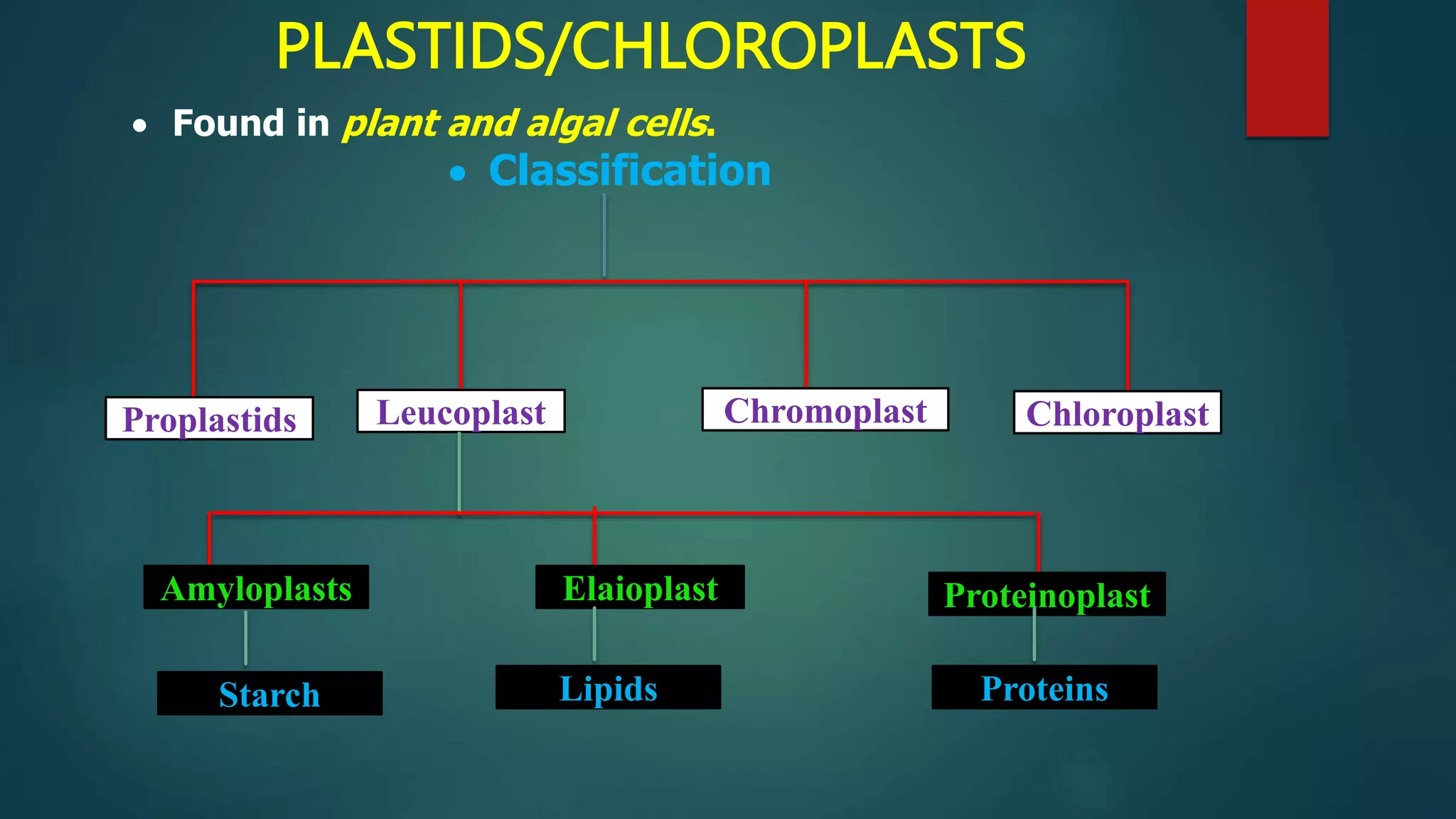
PLASTIDS/CHLOROPLASTS
 Found in plant and algal cells.
Proplastids Chromoplast
Leucoplast Chloroplast
Elaioplast Proteinoplast
Amyloplasts
Lipids
Starch Proteins
 Classification
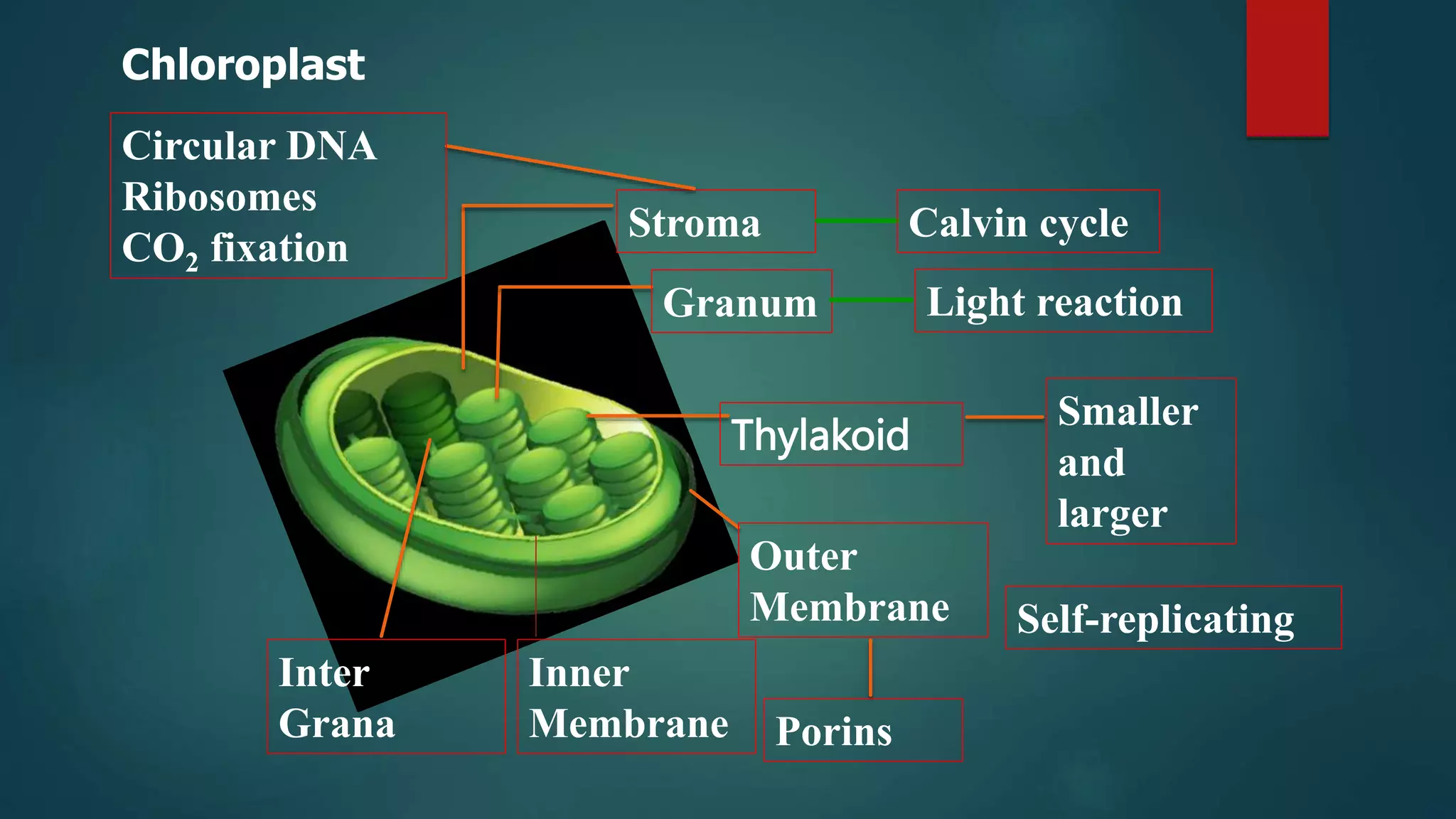
Chloroplast
Stroma
Granum
Thylakoid
Outer
Membrane
Inner
Membrane
Inter
Grana Porins
Calvin cycle
Light reaction
Circular DNA
Ribosomes
CO2 fixation
Self-replicating
Smaller
and
larger
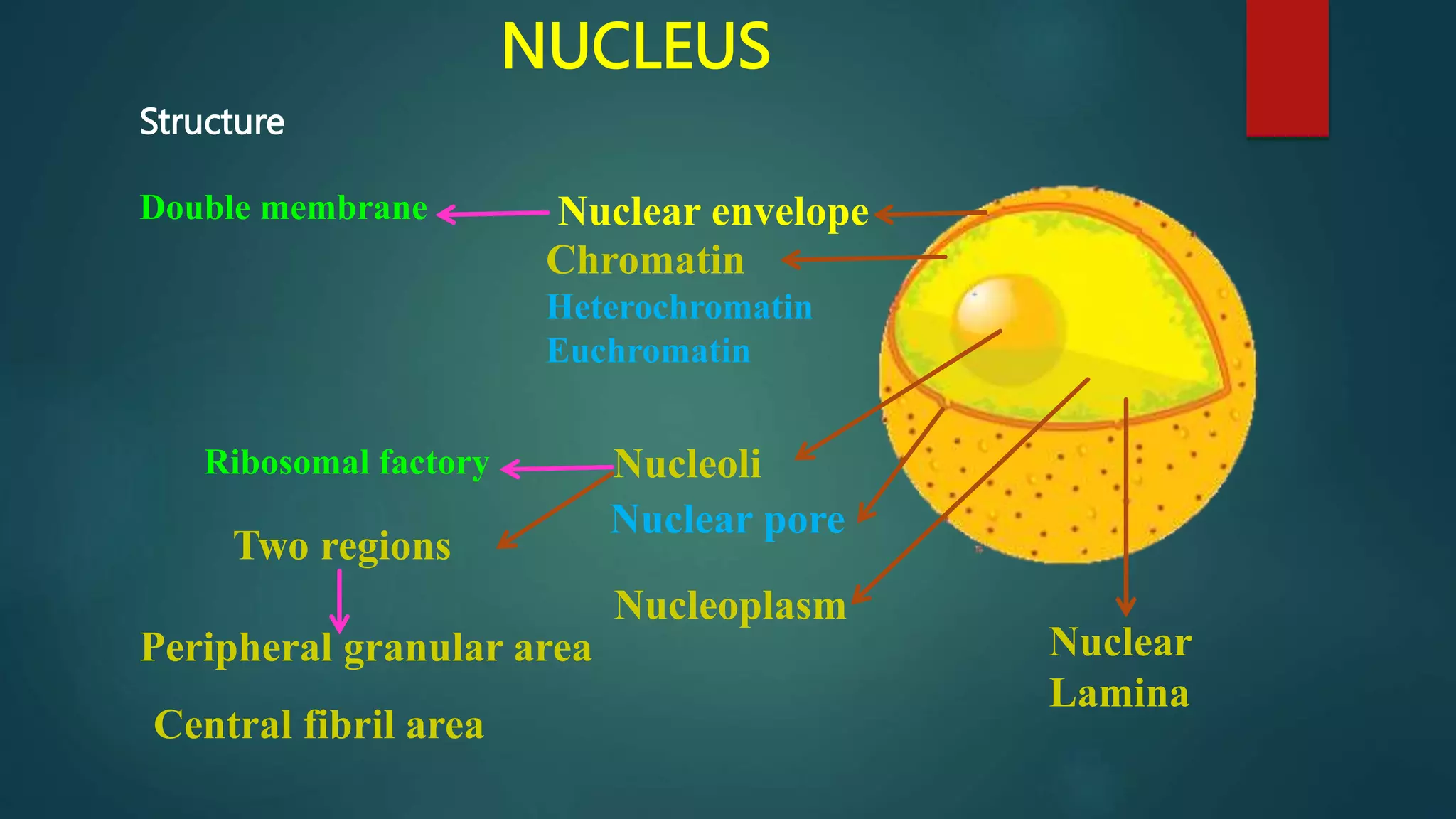
NUCLEUS
Structure
Nuclear envelope
Nuclear pore
Chromatin
Heterochromatin
Euchromatin
Nucleoli
Nuclear
Lamina
Nucleoplasm
Double membrane
Ribosomal factory
Two regions
Central fibril area
Peripheral granular area
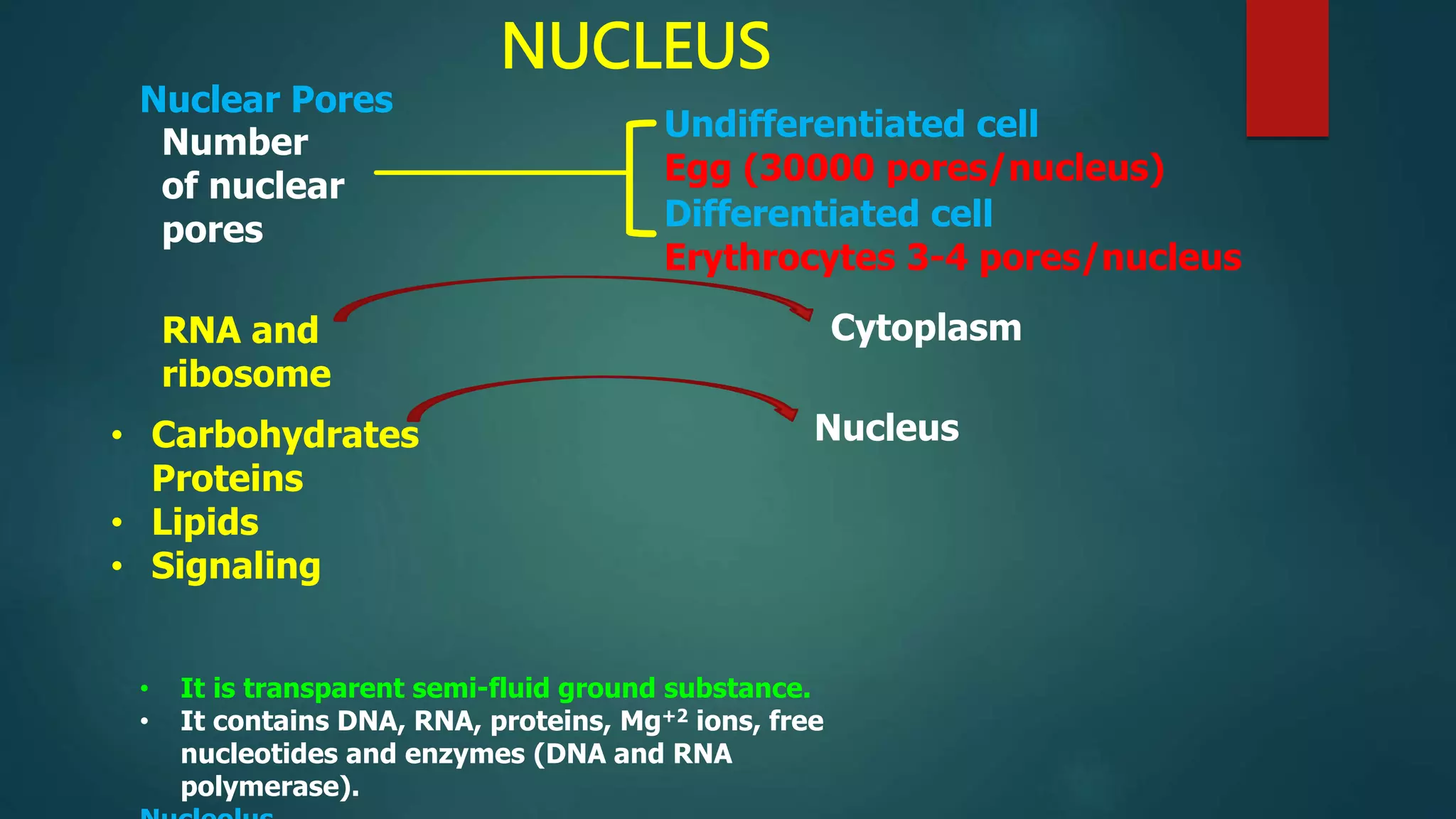
NUCLEUS
Nuclear Pores
RNA and
ribosome
Cytoplasm
• Carbohydrates
Proteins
• Lipids
• Signaling
Nucleus
Number
of nuclear
pores
Undifferentiated cell
Egg (30000 pores/nucleus)
Differentiated cell
Erythrocytes 3-4 pores/nucleus
• It is transparent semi-fluid ground substance.
• It contains DNA, RNA, proteins, Mg+2 ions, free
nucleotides and enzymes (DNA and RNA
polymerase).
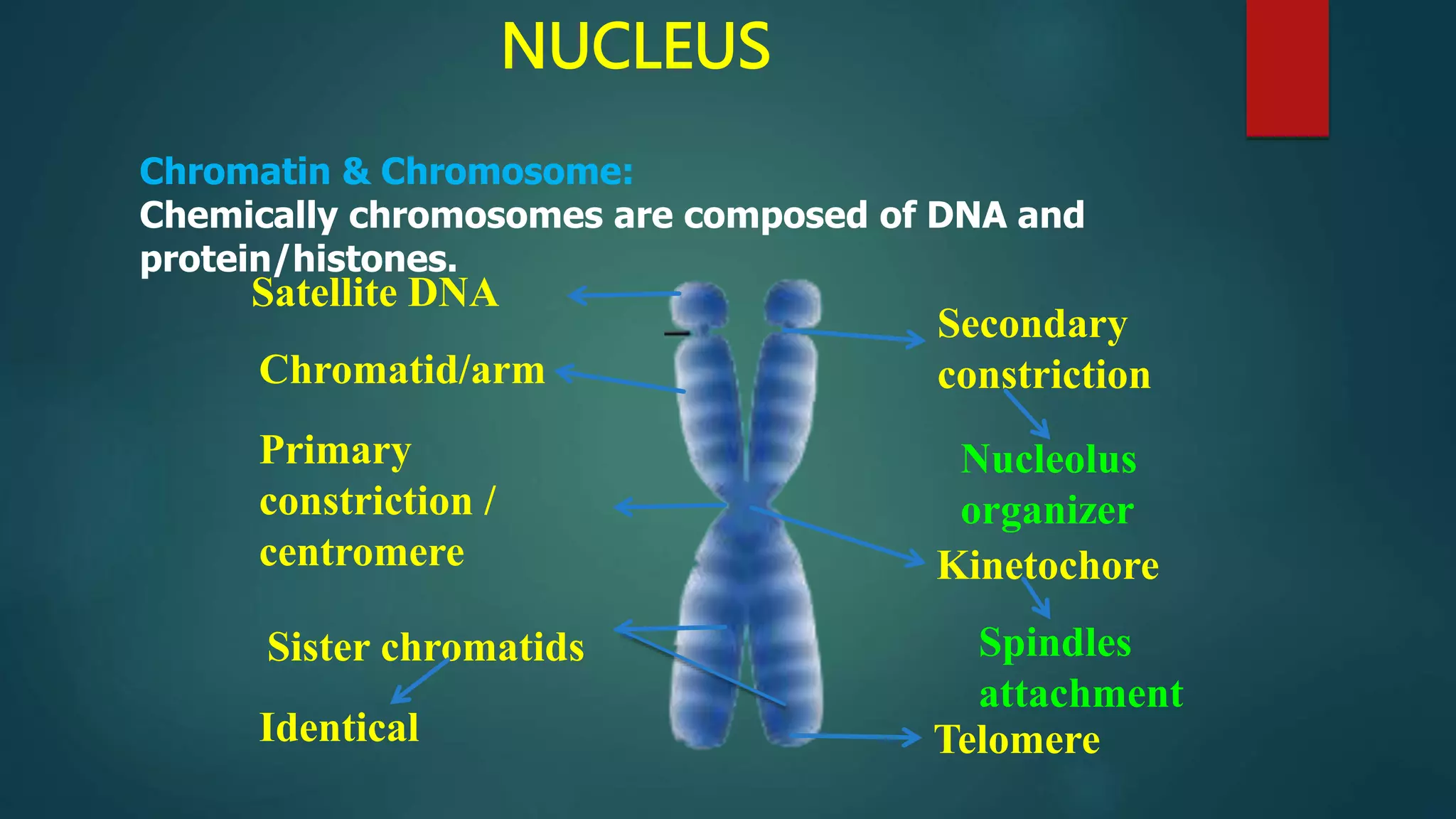
NUCLEUS
Chromatin & Chromosome:
Chemically chromosomes are composed of DNA and
protein/histones.
Satellite DNA
Secondary
constriction
Primary
constriction /
centromere Kinetochore
Telomere
Nucleolus
organizer
Sister chromatids Spindles
attachment
Identical
Chromatid/arm
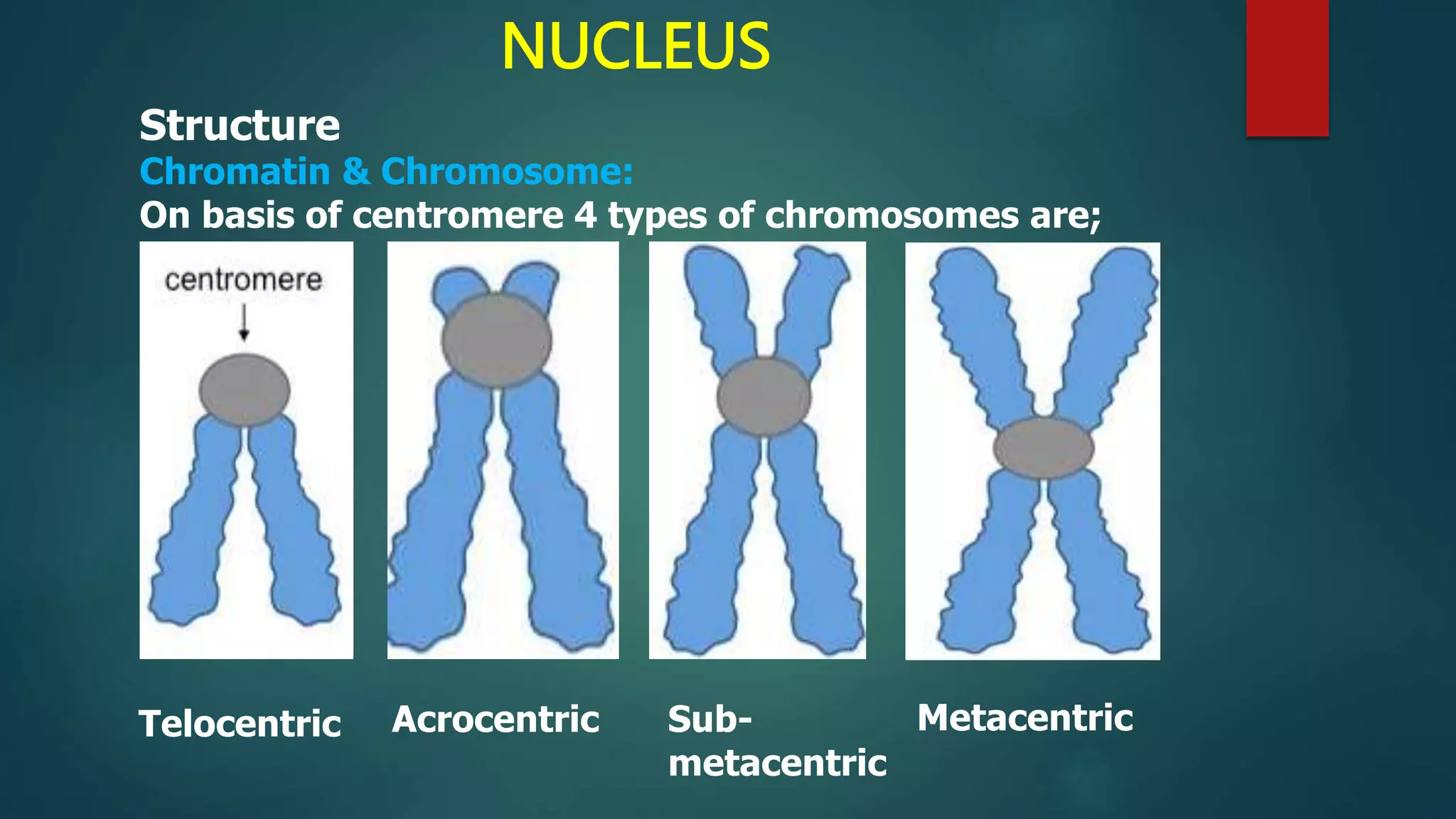
NUCLEUS
Structure
Chromatin & Chromosome:
On basis of centromere 4 types of chromosomes are;
Telocentric Acrocentric Sub-
metacentric
Metacentric
NUCLEUS
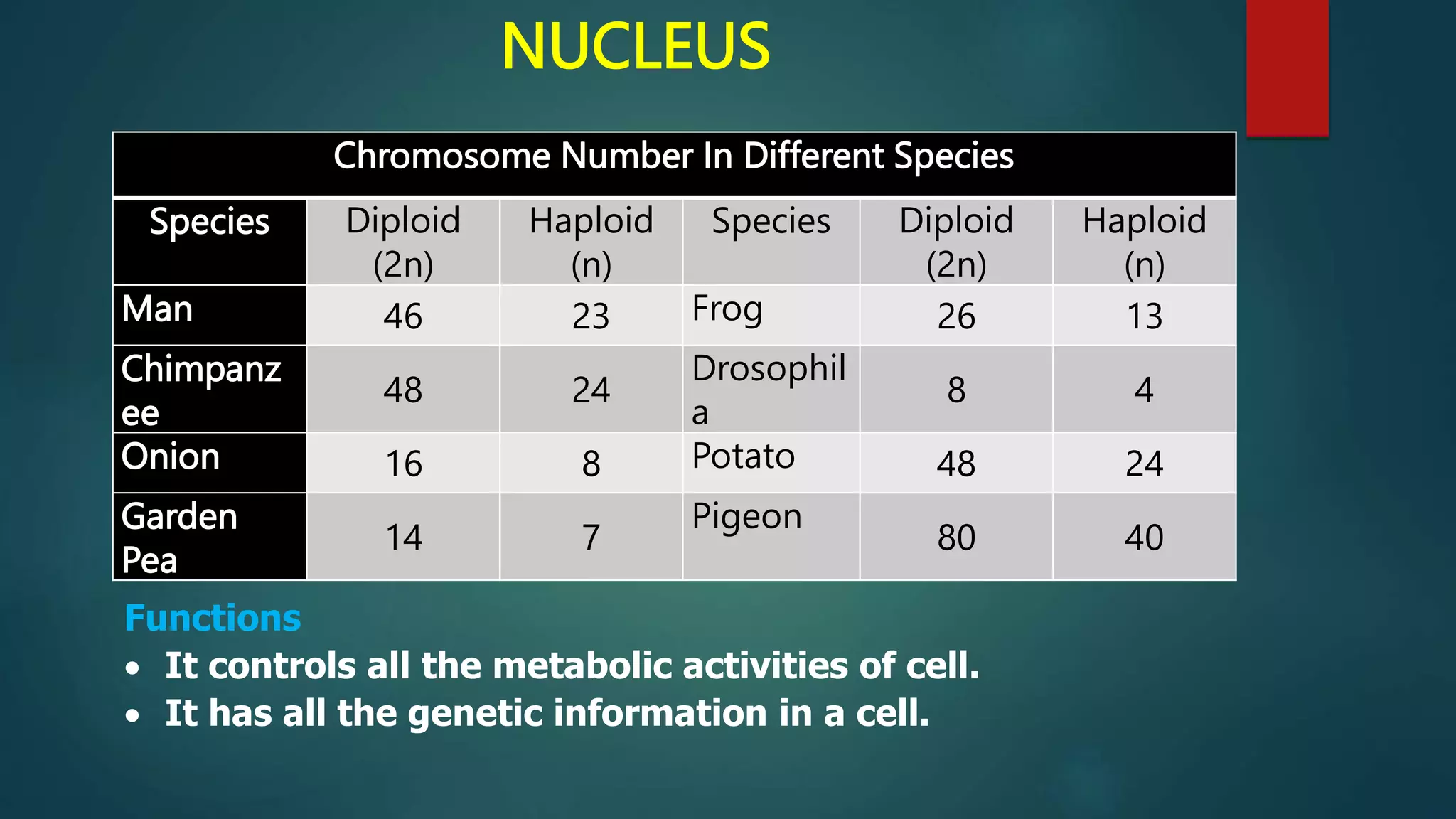
Chromosome Number In Different Species
Species Diploid
(2n)
Haploid
(n)
Species Diploid
(2n)
Haploid
(n)
Man 46 23 Frog 26 13
Chimpanz
ee
48 24
Drosophil
a
8 4
Onion 16 8 Potato 48 24
Garden
Pea
14 7
Pigeon
80 40
Functions
 It controls all the metabolic activities of cell.
 It has all the genetic information in a cell.
NUCLEUS

Review Lecture MAJEC Unit 1 (PMC).pptx

  • 1.
    CELL STRUCTURE & FUNCTION MAJECUNIT #:1 PMC TOPIC #:4
  • 2.
    • Course contents: 1. Comparisonbetween Prokaryotic and eukaryotic cell 2. Comparison between plants and animal cell 3. Cell wall 4. Fluid mosaic model of plasma membrane 5. Cytoplasm and cell organelles Nucleus Endoplasmic Reticulum Golgi apparatus/Golgi complex/Golgi bodies Lysosome Vacuole Mitochondria Plastids/chloroplast
  • 3.
    INTRODUCTION TO CELL: •Basic structural and functional unit of all living organism. • Smallest unit that can carry out all activities of life. • Building blocks of complex multicellular organisms. TYPES OF CELLS Multicellular Unicellular Eukaryotes (Protozoa) Prokaryotes (Bacteria) Eukaryotes (Animalia) Simple Multicellular Complex Multicellular
  • 4.
    COMPARISON BETWEEN PROKARYOTICAND EUKARYOTIC CELLS Features Prokaryotic Cell Eukaryotic Cell Nucleus Absent Present DNA Submerged in cytoplasm Present in nucleus Type of DNA Circular DNA as nucleoid Linear DNA in nucleus Membrane Bounded Organelles Absent Present Ribosomes Small sized, 70S ribosomes (50S larger sub-unit and 30S smaller sub-unit) Large sized, 80S ribosomes (60S larger sub-unit and 40S smaller sub-unit) Cytoskeleton Absent Present Cell Wall Peptidoglycan/ Murein/ Sacculus Cellulose/ Chitin
  • 5.
    Cell Membrane Sterolsabsent Sterols present Mesosomes Present Absent Cell Division Binary fission Mitosis/ Meiosis Histones Absent Present Composition of Flagella Flagellin Tubulin Cilia Absent Present Pili/fimbria Present Absent Plasmid Present Absent (Yeast have) RNA polymerase Single type 3 types Replication Cytoplasm Nucleus Transcription/Translati on Cytoplasm Cytoplasm Cell division Binary fission Mitosis Replication fork Single Multiple Example Bacterial cell, Cells of blue Plant and Animal cells Features Prokaryotic Cell Eukaryotic Cell
  • 6.
    COMPARE THE STRUCTUREOF TYPICAL ANIMAL AND PLANT CELL Features Animal Cell Plant cell Cell wall ×  Plastids ×  Glyoxysomes ×  Centrosome(Centriol es)  × Lysosomes  × Flagella  × Phagocytosis  × Mitotic Apparatus Spindles + Asters Spindles Only Cytokinesis Inwards Outwards Phragmoplast ×  Cell plate formation ×  Plastids × 
  • 7.
    COMPARE THE STRUCTUREOF TYPICAL ANIMAL AND PLANT CELL Features Animal Cell Plant cell Plasmodesmata ×  Mitochondria More in number Fewer in number Vacuoles Small and many Large and single Storage Products Glycogen Starch Cellular Shape Do not have fixed shape Have fixed shape Nucleus Central Peripheral Spindle formation Centrioles Analogous region Mode of nutrition Autotrophic Heterotrophic Effect of hypotonic solution Burst Turgid
  • 8.
    CELL WALL Outermost non-livingcovering Absent in animal cells. Secreted by protoplasm Freely permeable Support Protection of internal components Prevent from osmotic lysis Provide definite shape to cell
  • 9.
    CELL WALL Structure ofPlant Cell Wall: Primary Wall: True wall, Thin, Elastic Pectin and hemicellulose is also deposited in it. All have Middle Lamella In between the primary walls Magnesium and calcium salts and pectin Secondary Wall  Thick and rigid, Inelastic  Composed of  inorganic salts, Silica, Waxes, Lignin, Cutin
  • 10.
    PLASMA MEMBRANE Found inall living prokaryotic and eukaryotic cells. Proteins (60-80%) Chemical Composition: Extrinsic proteins Intrinsic proteins Lipids (20-40%) Sphingolipids Phospholipids Cholesterol Carbohydrates (small quantity) Glycoproteins Glycolipids Transmembrane Proteins/ integral proteins (Hydrophilic/ hydrophobic ) Peripheral Proteins Surface marker/ Cell to cell interaction
  • 11.
  • 12.
  • 13.
    Role of plasmamembrane: 1. Transport of materials by; i. Passive transport i. Simple diffusion ii. Facilitated diffusion iii. Osmosis ii. Active transport iii. Impulse transmission iv. Endocytosis and exocytosis v. Excrete waste vi. Maintain ionic gradient
  • 14.
    CYTOPLASM • Cytosol Solublepart of cytoplasm, 90% water and 10 % fundamental molecules • Fundamental molecules of life • Cell organelles • True solution Function of Cytoplasm  Store house of vital chemicals  Site of certain metabolic pathways  Glycolysis  Translation  Fermentation Between nucleus and plasma membrane Composition  Colloidal solutions.  (non-viscous) or gel (viscous).
  • 15.
    CYTOPLASM Cell Organelles Non-membranous Double membranous Singlemembranous • Ribosomes • Centrioles • Endoplasmic reticulum • Golgi complex • Lysosome • Microbodies • Vacuole • Mitochondria • Chloroplast • Nucleus Cell Organelles Non-membranous
  • 16.
    RIBOSOMES Small granules Eukaryotes (80S) Prokaryotes(70S) • Freely dispersed • Attached to membrane Ribonucleo- proteins particles. Attached during translation by Mg++
  • 17.
  • 18.
    ENDOPLASMIC RETICULUM Nuclear Membrane SER RER •Ribosomes attached • Proteins synthesis • Sac like • Lipids metabolism • Detoxification • Impulse transmission • Intracellular transport • Tubular form • Cisternae (tubular structure) Ergastoplasm/Nissl's granules  All membranous organelles except mitochondria and chloroplast are formed by endoplasmic reticulum.
  • 19.
    GOLGI COMPLEX  Golgibody.  Golgi apparatus.  Golgi complex.  Dictyosomes SER Vesicle Forming face/cis- face/outer/convex Maturing face/trans face/inner/concave Golgi Vesicle Golgi complex
  • 20.
    Functions  Cell secretion. Modification of molecules e.g., glycoconjugates.  Formation of phragmoplast.  Formation of primary lysosomes.  Formation of acrosome. Pathway and Fate of Processed Vesicles
  • 21.
    LYSOSOMES • All eukaryoticcells except RBCs. • Rich in acid phosphatase and hydrolytic enzymes • Enzymes are synthesized on RER, golgi process Types of lysosomes • Primary lysosome: • Secondary lysosomes • Tertiary lysosomes Functions  Intracellular digestion  Autophagy (starvation, routine process)  Autolysis (a type of cell death is committed,)  Sometimes release of extracellular enzymes
  • 22.
    LYSOSOMES Lysosomal Storage Diseases Congenital diseases  20 such diseases have been discovered so far.  These diseases are produced by a mutation In glycogenosis type II disease, more glycogen Tay-Sach’s disease  Accumulation of lipids in brain cells leads to mental retardation and even death.
  • 23.
    PEROXISOMES AND GLYOXYSOMES Microbodies.  Single membranous, vesicular structure.  Diameter of 0.5 µm approximately. FEATURES PEROXISOMES GLYOXYSOMES Occurrence Present in all type of eukaryotic cells Present in plants/Germinating seedlings Enzymes Peroxidase, catalase, glycolic acid oxidase Catalase, glycolic acid oxidase, other enzymes Role Detoxification of alcohol Formation and decomposition of H2O2 Involved in photorespiration Lipid metabolism Conversion of stored fatty acids to carbohydrates (Succinate) through glyoxylate cycle
  • 24.
    VACUOLES  Large vesiclesoriginate from the endoplasmic reticulum, Golgi complex and cell membrane.  Plant cell have;  Single  Large  Central  Animal cell have;  Many  Small  Peripheral  Tonoplast cover vacuole  Food vacuole  Contract vacuole  Storage of organic and inorganic  Turgor pressure
  • 25.
    MITOCHONDRIA Introduction  Power house/batteryof the cell  Size and number  Self-replicating  Circular DNA (1% of the total DNA of cell)  Ribosomes (70S) Functions  aerobic cellular respiration.  pyruvic acid oxidation, Krebs cycle, aerobic respiration, and fatty acid metabolism.  ADP is regenerated by mitochondria into ATP
  • 26.
    MITOCHONDRIA Structure Under Electron microscope Compoundmicroscope • Rod • Filaments • Vesicles • Double membrane • Outer membrane • Inner membrane • Inner compartment/ matrix • Outer compartment • DNA • Ribosomes • Organic • Salts • Enzymes • Co- enzymes
  • 27.
    PLASTIDS/CHLOROPLASTS  Found inplant and algal cells. Proplastids Chromoplast Leucoplast Chloroplast Elaioplast Proteinoplast Amyloplasts Lipids Starch Proteins  Classification
  • 28.
    Chloroplast Stroma Granum Thylakoid Outer Membrane Inner Membrane Inter Grana Porins Calvin cycle Lightreaction Circular DNA Ribosomes CO2 fixation Self-replicating Smaller and larger
  • 29.
  • 30.
    NUCLEUS Nuclear Pores RNA and ribosome Cytoplasm •Carbohydrates Proteins • Lipids • Signaling Nucleus Number of nuclear pores Undifferentiated cell Egg (30000 pores/nucleus) Differentiated cell Erythrocytes 3-4 pores/nucleus • It is transparent semi-fluid ground substance. • It contains DNA, RNA, proteins, Mg+2 ions, free nucleotides and enzymes (DNA and RNA polymerase).
  • 31.
    NUCLEUS Chromatin & Chromosome: Chemicallychromosomes are composed of DNA and protein/histones. Satellite DNA Secondary constriction Primary constriction / centromere Kinetochore Telomere Nucleolus organizer Sister chromatids Spindles attachment Identical Chromatid/arm
  • 32.
    NUCLEUS Structure Chromatin & Chromosome: Onbasis of centromere 4 types of chromosomes are; Telocentric Acrocentric Sub- metacentric Metacentric
  • 33.
    NUCLEUS Chromosome Number InDifferent Species Species Diploid (2n) Haploid (n) Species Diploid (2n) Haploid (n) Man 46 23 Frog 26 13 Chimpanz ee 48 24 Drosophil a 8 4 Onion 16 8 Potato 48 24 Garden Pea 14 7 Pigeon 80 40 Functions  It controls all the metabolic activities of cell.  It has all the genetic information in a cell.
  • 34.