
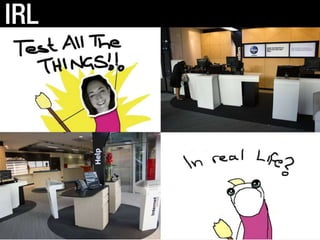

Multi-dimensional  st
Building         21
              Century experiences for
financial outcomes
Harriet Wakelam
Melbourne, Australia
Twitter: @hwakelam
eMail: Harriet.Wakelam@nab.com.au
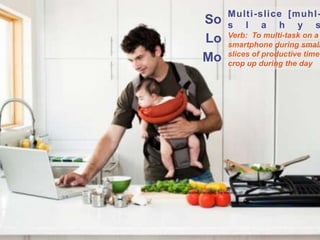
Multi-slice [muhl-
          So             s l a h y s
                         Verb: To multi-task on a
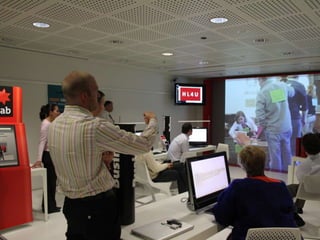
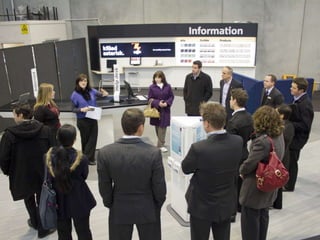
          Lo             smartphone during small
                         slices of productive time
          Mo             crop up during the day


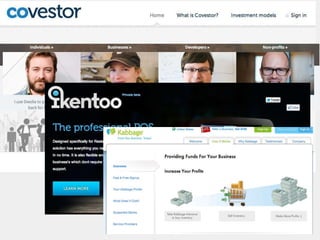
Sitecore: managing the mobile rush
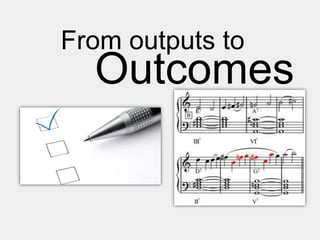
From outputs to
  Outcomes
A   customer experience team


                                              that…
              Makes complex things simple
             Creates outcomes not outputs
     Asks and shapes questions rather than
                         provide answers
       Is Enterprise-wide – hub not a spoke
         Has a design thinking approach to
                           problem solving
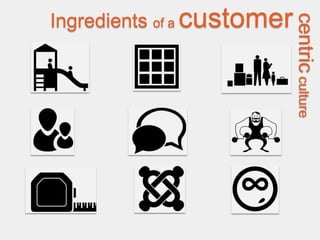
Ingredients of a customer


                            centric culture
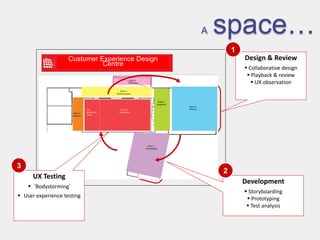
A   space…
                                                         1
                    Customer Experience Design               Design & Review
                              Centre
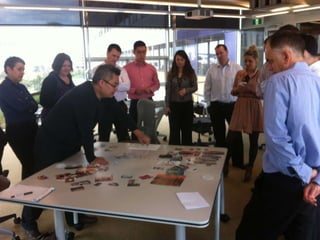
                                                              Collaborative design
                                                               Playback & review
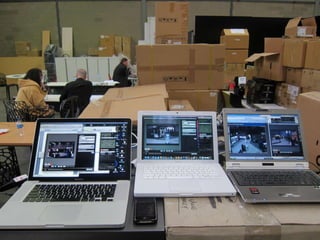
                                                                 UX observation


3
                                                     2
      UX Testing
                                                             Development
     „Bodystorming‟
                                                              Storyboarding
 User experience testing                                      Prototyping
                                                               Test analysis
a brand
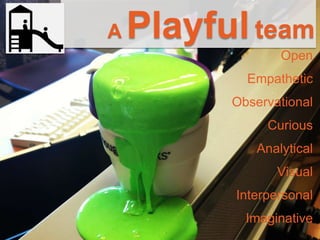
A   Playful team
                 Open
            Empathetic
          Observational
               Curious
             Analytical
                 Visual
          Interpersonal
            Imaginative
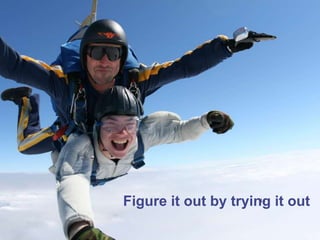
Figure it out by trying it out
                     14
Frameworks
Translate and synthesize other frameworks
                        Journey mapping
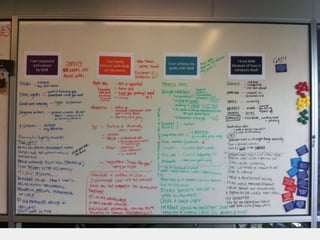
   Customer Experience design guidelines
                               Personas
           Customer impact assessments
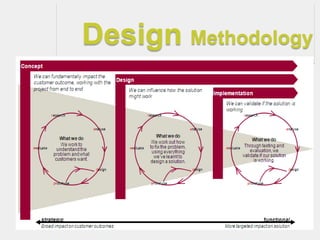
                            Methodology
Design Methodology
Customer experience
                           design guidelines

 Removed for publication
What are   customers doing?
                 Customer Tuesdays
                   Through research
                  Contextual enquiry
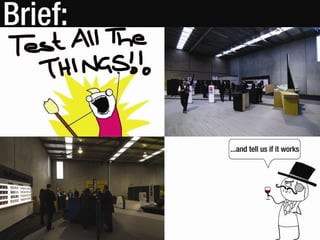
              Prototyping and testing
            Observe, watch and listen
Work with projects that
demonstrate the power of
design thinking

              “In real life only diverse
               surroundings have the
        practical power of inducing a
        natural, continuing flow of life
                              and use.”
           Jane Jacobs – the death and life of great American cities
Shift is on purpose
Tell stories
Make space for play
Create blended teams of staff and
designers
Drop in centres
Helping stakeholders look good
CX community
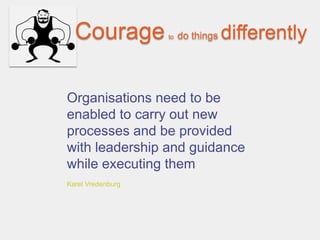
Courage          to   do things   differently


Organisations need to be
enabled to carry out new
processes and be provided
with leadership and guidance
while executing them
Karel Vredenburg
“Most design practice—is
ad hoc, performed on an
  „as-needed‟ basis and
   adapted to whatever
  context the designers
        encounter.
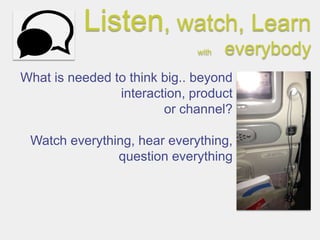
Listen, watch, Learn
                              with   everybody
What is needed to think big.. beyond
                interaction, product
                        or channel?

 Watch everything, hear everything,
               question everything
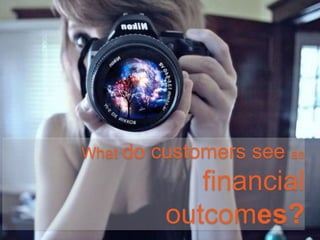
What do   customers see as
              financial
           outcomes?
What
banks see as financial outcomes
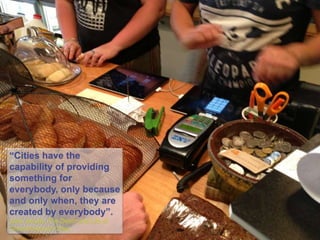
“Cities have the
capability of providing
something for
everybody, only because
and only when, they are
created by everybody”.
Jane Jacobs, The Death and Life of
Great American Cities
Radial people assume that any technological
change starts from where we are
now…..Radial people want to know, of any
change, how big a change is it from current
practice, in what direction, and at what cost.

Cartesian people assume that any
technological change lands you somewhere
Cartesian people want to know, for any
change, where you end up, and what the
characteristics of the new landscape are. They
are less interested in the cost of getting there.
                                     Clay Shirky
Measure

What if financial
We measure what we know, we research what we
expect.


outcomes were the
 What are the problems we‟re trying to solve

How do you measure something that nobody has
metric
measured yet? How does that make stakeholders feel


for success?
Partnerships
“Collaborative skills that organisations are
                        not geared towards”

   Creating “systems to identify, capture,
and build on …knowledge in an ongoing
 process, …to develop a design practice
      appropriate for an information and
                      services economy”
                                   Hugh Dubberly
Guerilla tactics
Customers “create workarounds‟
that become so familiar we may
forget we are being forced to
behave in a less than optimal
fashion”
Dorothy Leonard and Jeffrey F Rayport, HBR, Nov – Dec 1997
• Outcomes not outputs
• Trust
• Questions not answers
Each design iteration and
implementation leads to new
knowledge.
Hugh Dubberly
Thanks to…..
NAB Jess Ukotic Cong Cao Louise
Long Nicholas Ramallo Alejandro
Vajmos The Noun Project Andrew
Forrester Evan Wondolowski
Alexandrei Warnia de zarzecki Roman
Sokolov, Michael Rowe, Shreya Shakrava,
Simon Child, Damian Dab, Daniel Hickey,
Luis Henrique Bella Sera, Alejandro
Garcia Maya, Bethany LeAnne Marcus
Wong
Thank you

Harriet Wakelam
Twitter:   @hwakelam
eMail:     Harriet.Wakelam@nab.com.au
Phone:     61 413 631 662

Multi-dimensional: Building 21st Century Experiences for Financial Outcomes

  • 1.
    Multi-dimensional st Building 21 Century experiences for financial outcomes Harriet Wakelam Melbourne, Australia Twitter: @hwakelam eMail: Harriet.Wakelam@nab.com.au
  • 4.
    Multi-slice [muhl- So s l a h y s Verb: To multi-task on a Lo smartphone during small slices of productive time Mo crop up during the day Sitecore: managing the mobile rush
  • 6.
  • 8.
    A customer experience team that… Makes complex things simple Creates outcomes not outputs Asks and shapes questions rather than provide answers Is Enterprise-wide – hub not a spoke Has a design thinking approach to problem solving
  • 10.
    Ingredients of acustomer centric culture
  • 11.
    A space… 1 Customer Experience Design Design & Review Centre  Collaborative design  Playback & review  UX observation 3 2 UX Testing Development  „Bodystorming‟  Storyboarding  User experience testing  Prototyping  Test analysis
  • 12.
  • 13.
    A Playful team Open Empathetic Observational Curious Analytical Visual Interpersonal Imaginative
  • 14.
    Figure it outby trying it out 14
  • 16.
    Frameworks Translate and synthesizeother frameworks Journey mapping Customer Experience design guidelines Personas Customer impact assessments Methodology
  • 17.
  • 18.
    Customer experience design guidelines Removed for publication
  • 20.
    What are customers doing? Customer Tuesdays Through research Contextual enquiry Prototyping and testing Observe, watch and listen
  • 23.
    Work with projectsthat demonstrate the power of design thinking “In real life only diverse surroundings have the practical power of inducing a natural, continuing flow of life and use.” Jane Jacobs – the death and life of great American cities
  • 24.
    Shift is onpurpose Tell stories Make space for play Create blended teams of staff and designers Drop in centres Helping stakeholders look good CX community
  • 28.
    Courage to do things differently Organisations need to be enabled to carry out new processes and be provided with leadership and guidance while executing them Karel Vredenburg
  • 31.
    “Most design practice—is adhoc, performed on an „as-needed‟ basis and adapted to whatever context the designers encounter.
  • 32.
    Listen, watch, Learn with everybody What is needed to think big.. beyond interaction, product or channel? Watch everything, hear everything, question everything
  • 33.
    What do customers see as financial outcomes?
  • 34.
    What banks see asfinancial outcomes
  • 35.
    “Cities have the capabilityof providing something for everybody, only because and only when, they are created by everybody”. Jane Jacobs, The Death and Life of Great American Cities
  • 36.
    Radial people assumethat any technological change starts from where we are now…..Radial people want to know, of any change, how big a change is it from current practice, in what direction, and at what cost. Cartesian people assume that any technological change lands you somewhere Cartesian people want to know, for any change, where you end up, and what the characteristics of the new landscape are. They are less interested in the cost of getting there. Clay Shirky
  • 37.
    Measure What if financial Wemeasure what we know, we research what we expect. outcomes were the What are the problems we‟re trying to solve How do you measure something that nobody has metric measured yet? How does that make stakeholders feel for success?
  • 38.
    Partnerships “Collaborative skills thatorganisations are not geared towards” Creating “systems to identify, capture, and build on …knowledge in an ongoing process, …to develop a design practice appropriate for an information and services economy” Hugh Dubberly
  • 40.
    Guerilla tactics Customers “createworkarounds‟ that become so familiar we may forget we are being forced to behave in a less than optimal fashion” Dorothy Leonard and Jeffrey F Rayport, HBR, Nov – Dec 1997
  • 41.
    • Outcomes notoutputs • Trust • Questions not answers
  • 42.
    Each design iterationand implementation leads to new knowledge. Hugh Dubberly
  • 44.
    Thanks to….. NAB JessUkotic Cong Cao Louise Long Nicholas Ramallo Alejandro Vajmos The Noun Project Andrew Forrester Evan Wondolowski Alexandrei Warnia de zarzecki Roman Sokolov, Michael Rowe, Shreya Shakrava, Simon Child, Damian Dab, Daniel Hickey, Luis Henrique Bella Sera, Alejandro Garcia Maya, Bethany LeAnne Marcus Wong
  • 45.
    Thank you Harriet Wakelam Twitter: @hwakelam eMail: Harriet.Wakelam@nab.com.au Phone: 61 413 631 662

Editor's Notes

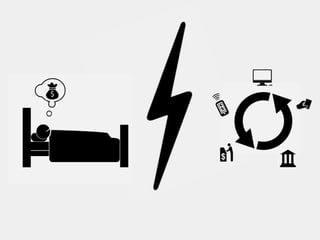
  • #2 Nicholas ramallo, alejandro vajmos the noun project, Andrew forrester, Evan Wondolowski, Alexandrei Warnia de zarzeckiTwo Worlds – a customer world and a bank world. Which is more complex, and how do we somehow make things more complexify Shareholders, kpis, channel, revenue, product, stakeholders What’
  • #3 PEOPLE - what about context – what’s his mission…. behvaiourCONTEXTWhere am I right now?What do I have with me? How do you know? How does it help me
  • #4 What are the incredients? Roman sokolov, michael rowe, shreya shakrava, simon child, damian dab, daniel hickey, luis henrique bella sera, Alejandro Garcia Maya,Customers 9empathy, frameworks, migration and shift, strength and guerilla tactics, measures, listening and chatting, partnerships with EVERYONE… SYNTHESIS with compassion = trust
  • #14 CAN you build these – yes, through yammer, through exercises to encourage people to think differently – post yammer thread on POS – and photosAlan Cooper
  • #17 And most importantly, visibility and language for the business – peole know who we are, people understad processes, and frameworks, framworks allow us to align to process – talk about journy mapping frameowkr.
  • #18 Sometimes it’s hard to explain how the messy approaches of design apply to themore rigid project management structures of a large organisation. A set of tools inculding an interaction
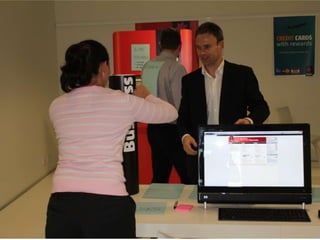
  • #20 Comms design, store design, ATM testing, bodystaorming, prototypes, walk throughs, being available, presentations, community , migration, synthesis
  • #22 And not know what the results will be
  • #23 Next gEn, BLENDED teams – Cap Gem and niche design agencies, independent contractors
  • #24 Curiosity
  • #25 A design team provides lenses – can look outside in, Haeckel 2003 – an say what if we started again, how might we.
  • #26 How do you design for both?
  • #27 Spaces: The problem with the pictures before is that they were designed by banks for people. What are people doingListening helps the blend of synthesis and analysis – Jane Darke 1968. Newkirk 1981, constant generation and regeneration o goals, solutions.
  • #28 DOES A GOOD cx team help an organisation combine radial and cartesianWe need metrics that measure both
  • #29 CX team as silo bustersInternal and external, teams, engineers, designers, restaurateursPhd students, Design agencies, libraries – went to Red bubble – the traditional part of my team thought it was a pitch, the internal team saw it as an opportunity to build brudges, the design agency is helping us build protoypes, Yammer
  • #31 Journey mapping and reflection – having the courage to play.
  • #32 Most design work still proceeds on an industrial-age model of ‘edition’ and project, in which design is ‘finished’—rather than on an information-age model of continuous improvement, multi-year beta, and organic growth, in which design is never finished. In the future, successful software and service organizations will recognize that software and service design are ongoing processes.