INNOVATION,DESIGNTHINKING

ANDCOMPETITIVEADVANTAGE
Phil Barrett

Associate director, Deloitte Digital Africa
@philbuktoo
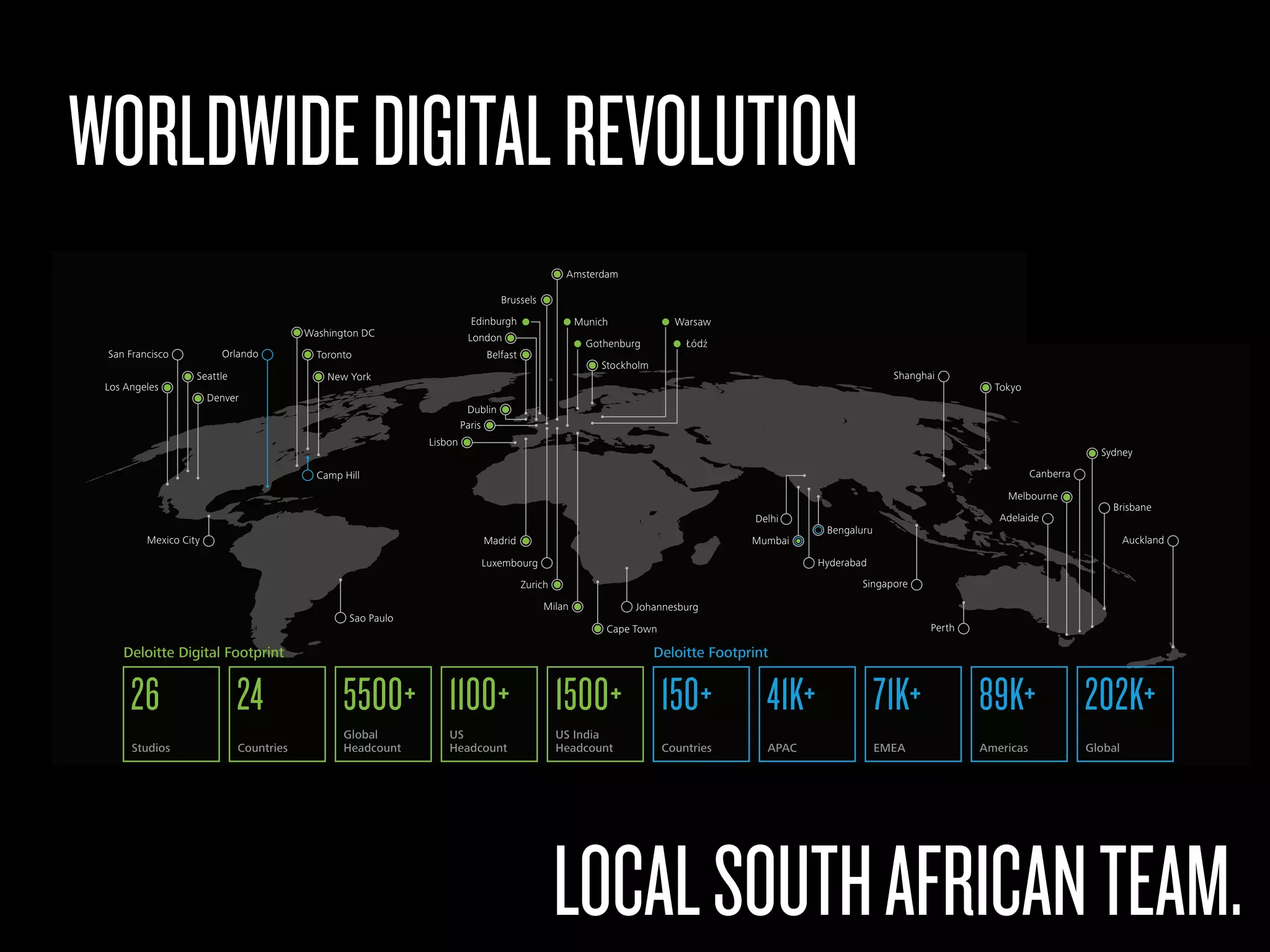
WORLDWIDEDIGITALREVOLUTION
San Francisco Orlando
Denver
Seattle
Los Angeles
Mexico City
Cape Town
Johannesburg
Washington DC
Toronto
Brussels
Amsterdam
Camp Hill
Sao Paulo
New York
Belfast
Edinburgh
Lisbon
Paris
Madrid
Zurich
Milan
Dublin
Bengaluru
Delhi
Mumbai
Hyderabad
Gothenburg
WarsawMunich
Łódź
Stockholm
London
Perth
Singapore
Luxembourg
Shanghai
Adelaide
Melbourne
Brisbane
Canberra
Auckland
Sydney
Tokyo
Studio
Delivery Center
Hub
24
Countries
26
Studios
5500+
Global
Headcount
1100+
US
Headcount
1500+
US India
Headcount
41K+
APAC
71K+
EMEA
89K+
Americas
202K+
Global
150+
Countries
Deloitte Digital Footprint Deloitte Footprint
LOCALSOUTHAFRICANTEAM.
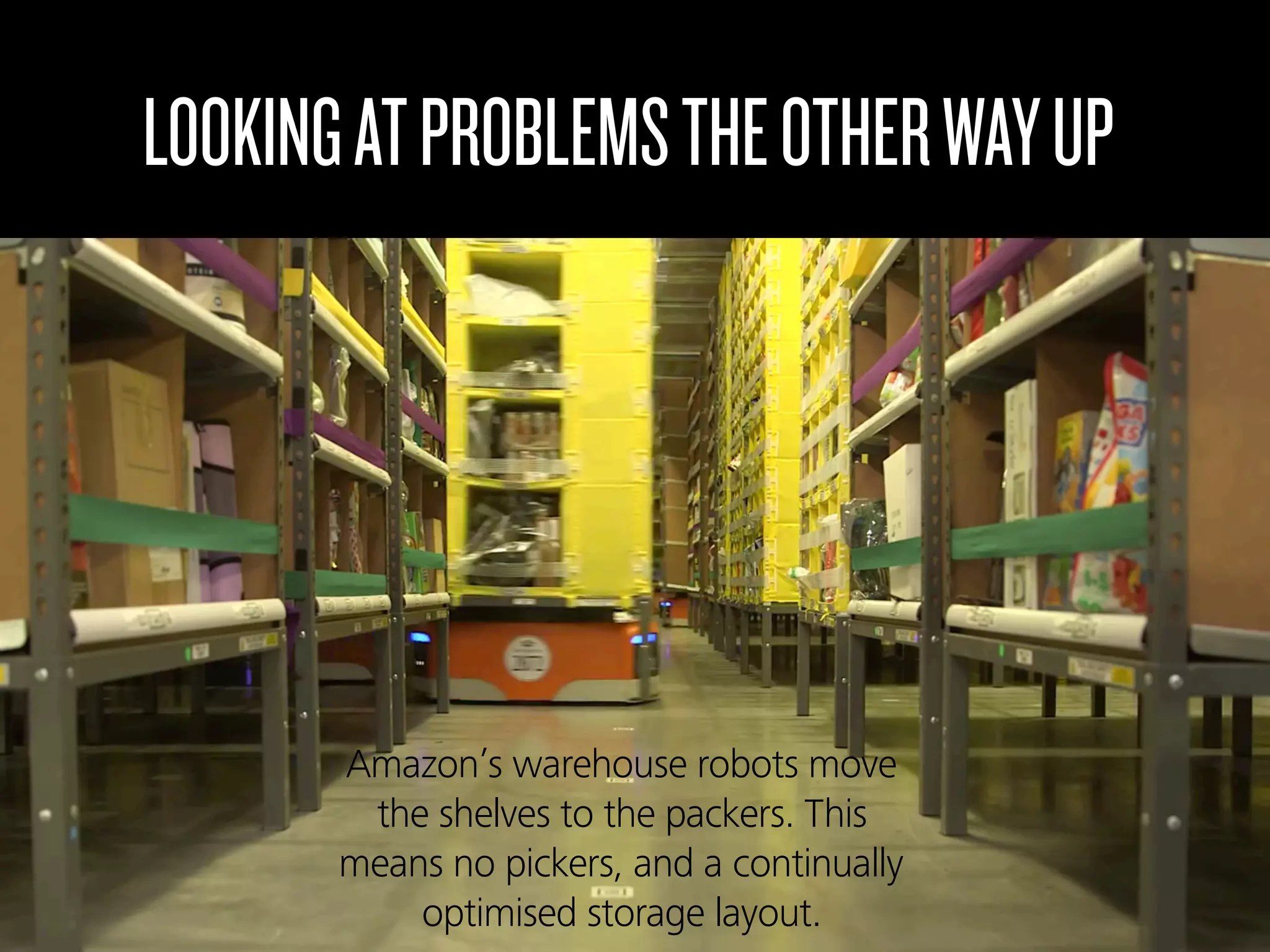
LOOKINGATPROBLEMSTHEOTHERWAYUP
Amazon’s warehouse robots move
the shelves to the packers. This
means no pickers, and a continually
optimised storage layout.
The rate of change in
technology is faster than
it has ever been.
And it is increasing more
steeply than it ever has.
IT’SEXPONENTIALCHANGE.
ORGANISATIONSDYINGOFF,CHANGING,GROWING…
FASTERTHANEVER
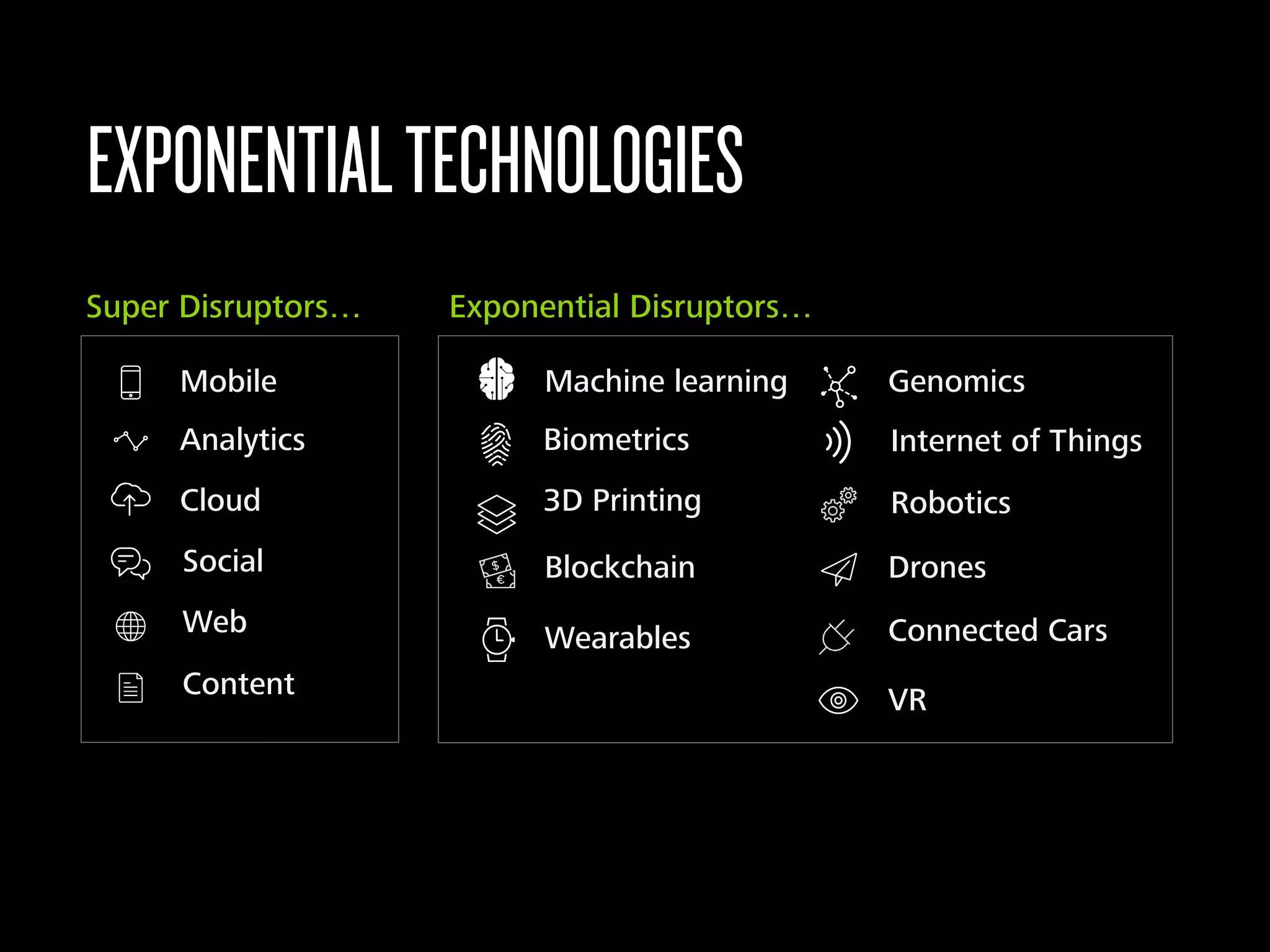
Machine learning Genomics
Biometrics Internet of Things
Blockchain
Robotics3D Printing
Drones
VR
Wearables Connected Cars
Mobile
Analytics
Social
Cloud
Web
Content
EXPONENTIALTECHNOLOGIES
Super Disruptors… Exponential Disruptors…
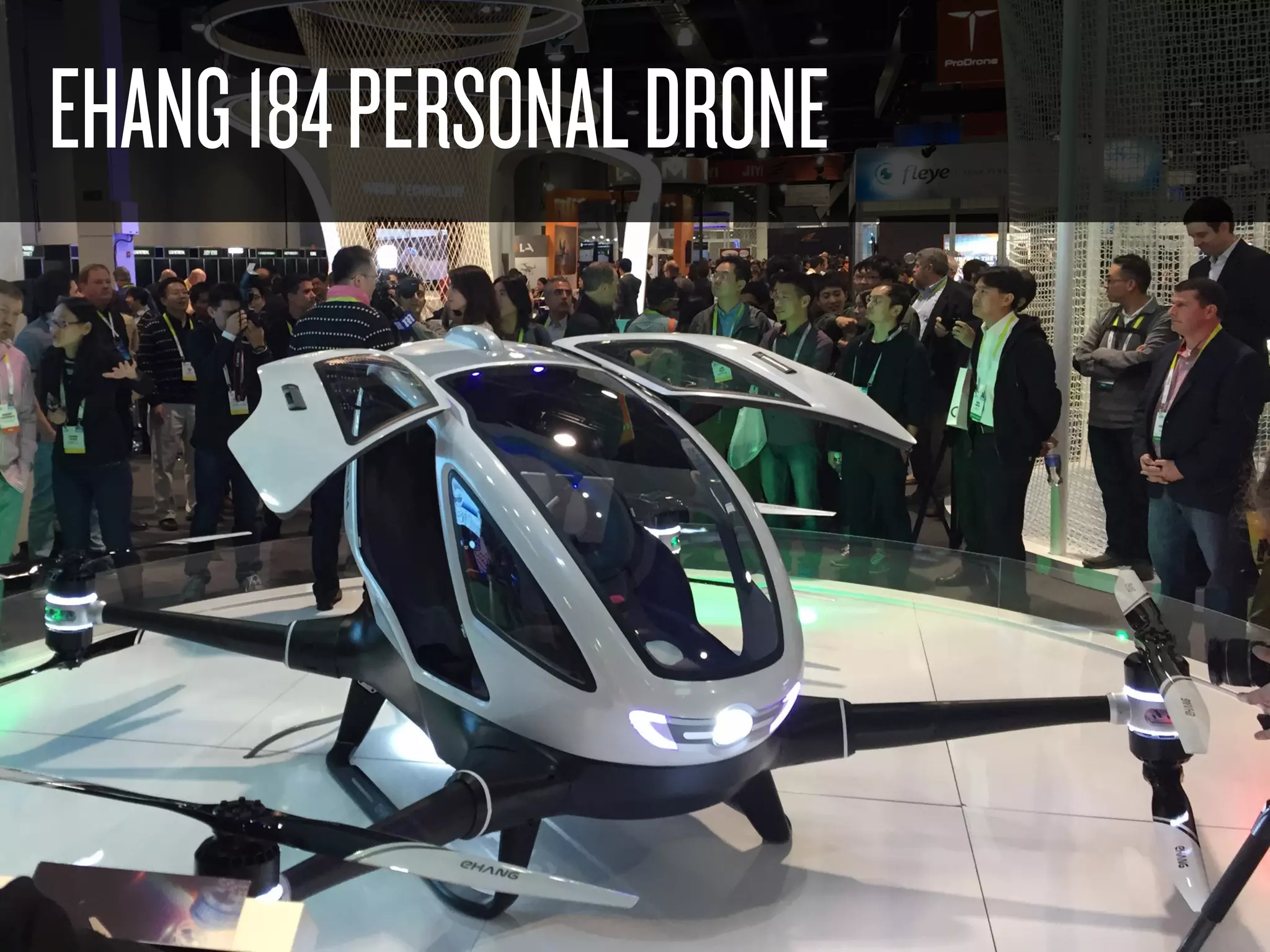
EHANG184PERSONALDRONE
“
Tim Brown, IDEO
Innovation has become
nothing less than a
survival strategy.
EXPONENTIALSDEMANDINNOVATION
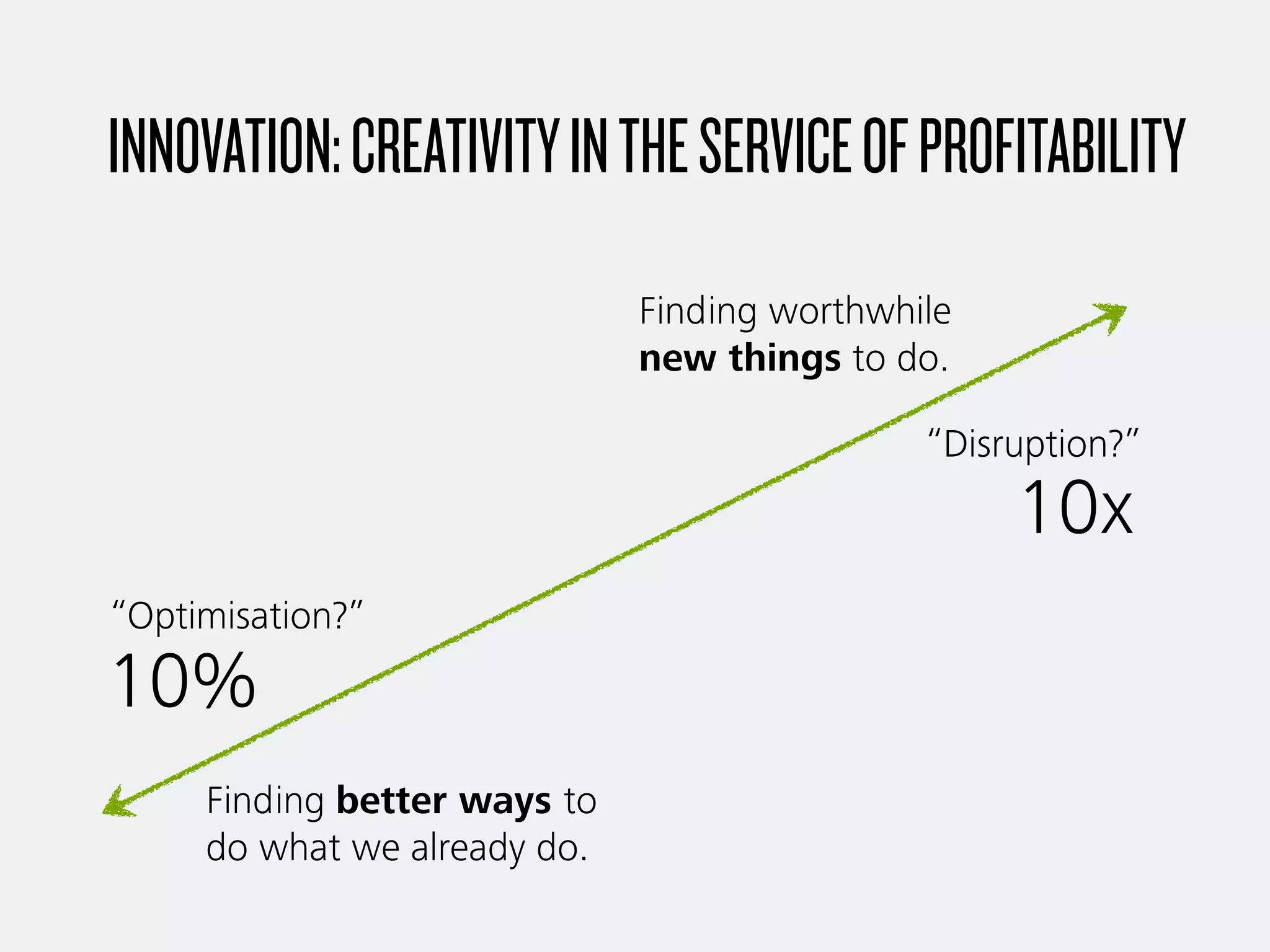
INNOVATION:CREATIVITYINTHESERVICEOFPROFITABILITY
Finding worthwhile
new things to do.
Finding better ways to
do what we already do.
10%
10x
“Optimisation?”
“Disruption?”
“
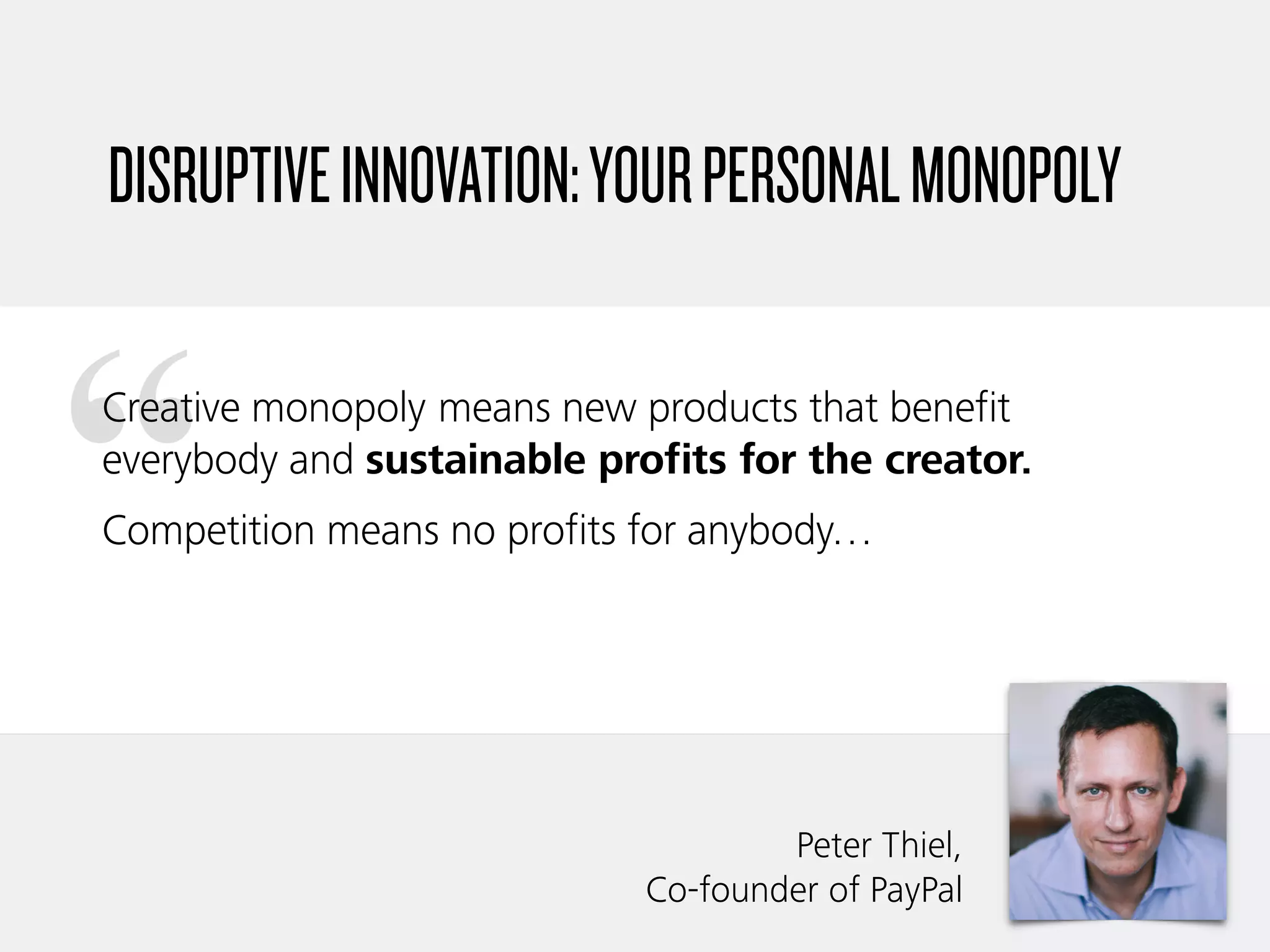
DISRUPTIVEINNOVATION:YOURPERSONALMONOPOLY
Creative monopoly means new products that benefit
everybody and sustainable profits for the creator.
Competition means no profits for anybody…
Peter Thiel, 

Co-founder of PayPal
THETROUBLEWITHINNOVATION
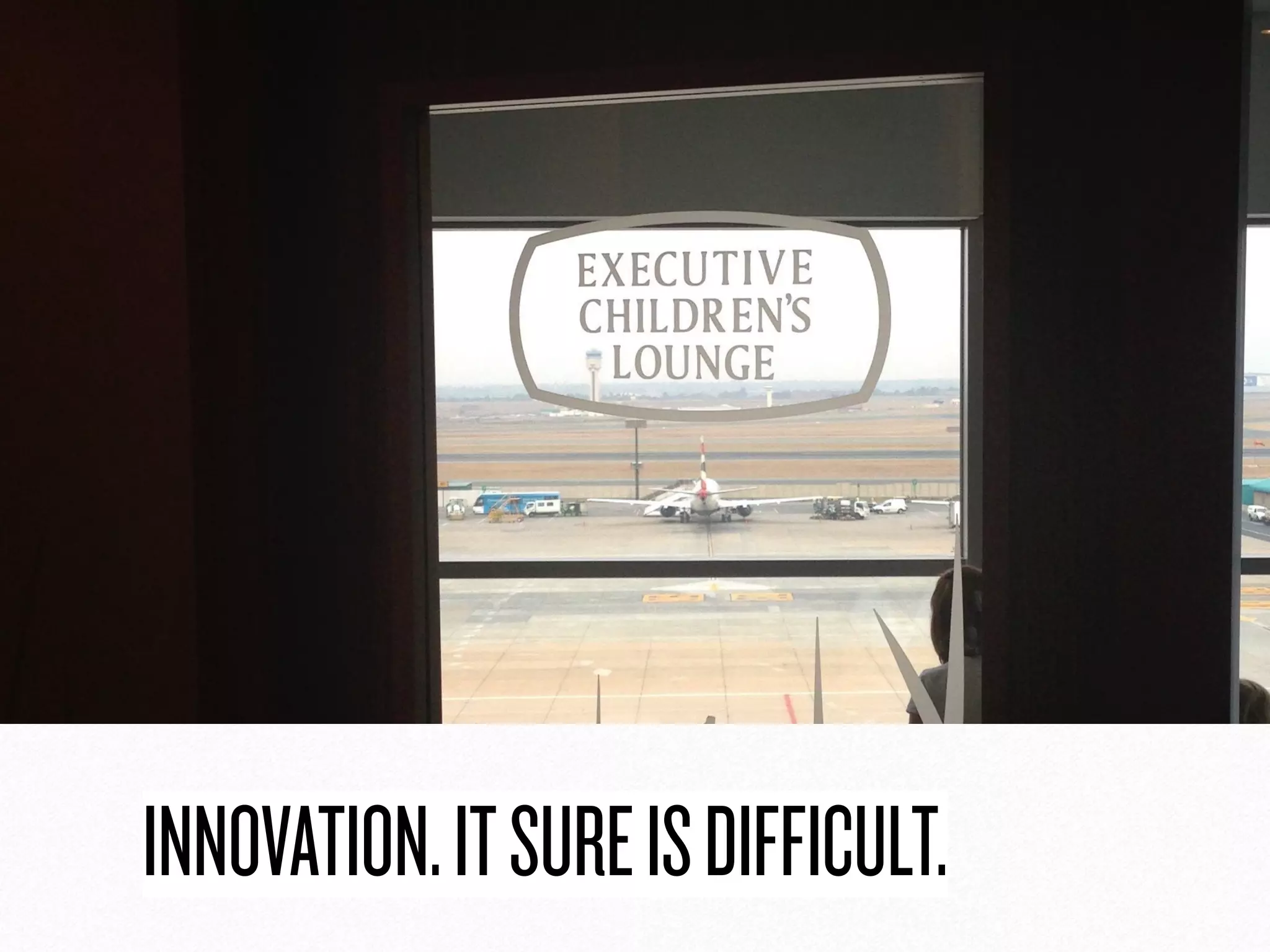
INNOVATION.ITSUREISDIFFICULT.
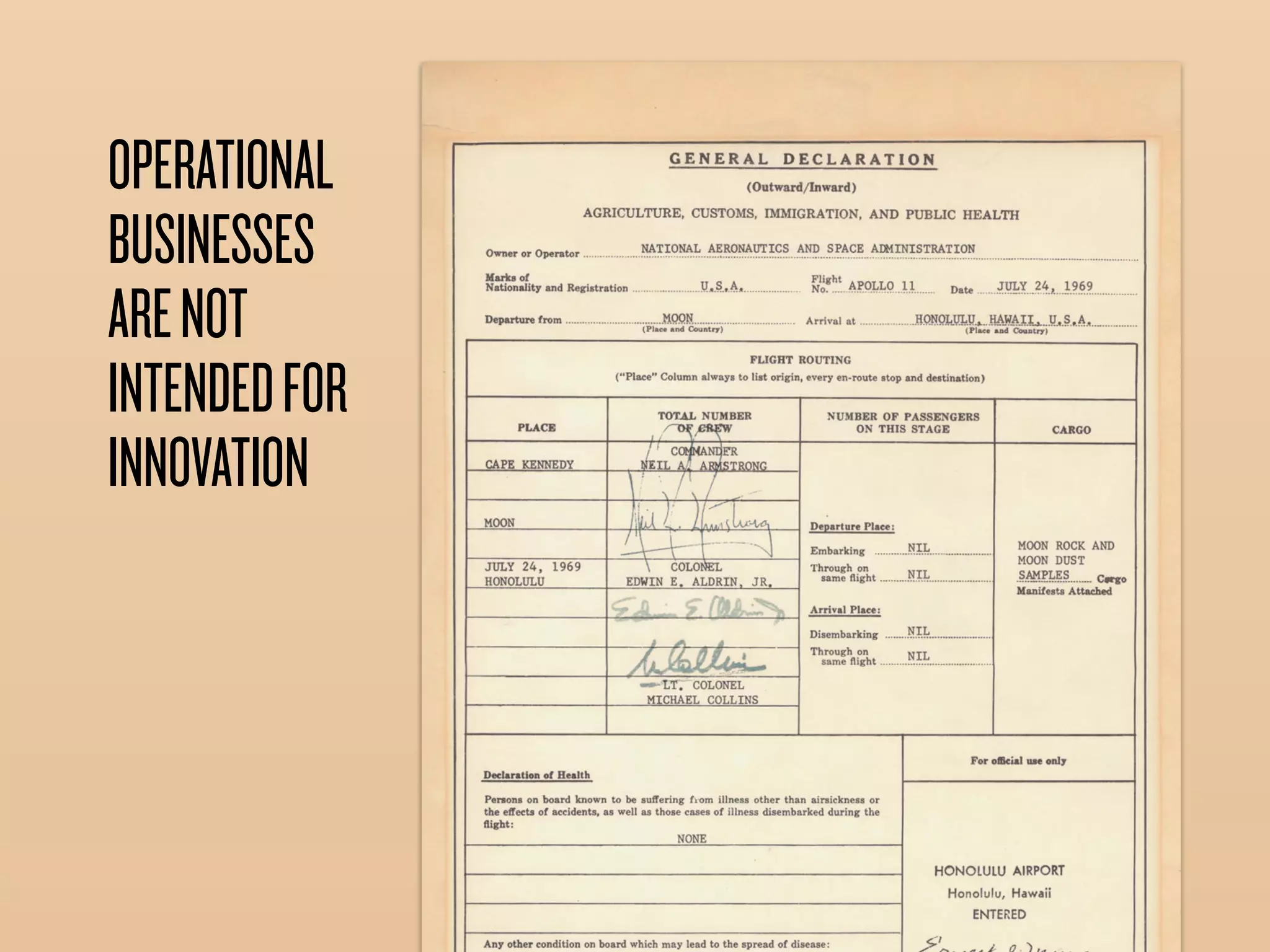
OPERATIONAL
BUSINESSES
ARENOT
INTENDEDFOR
INNOVATION
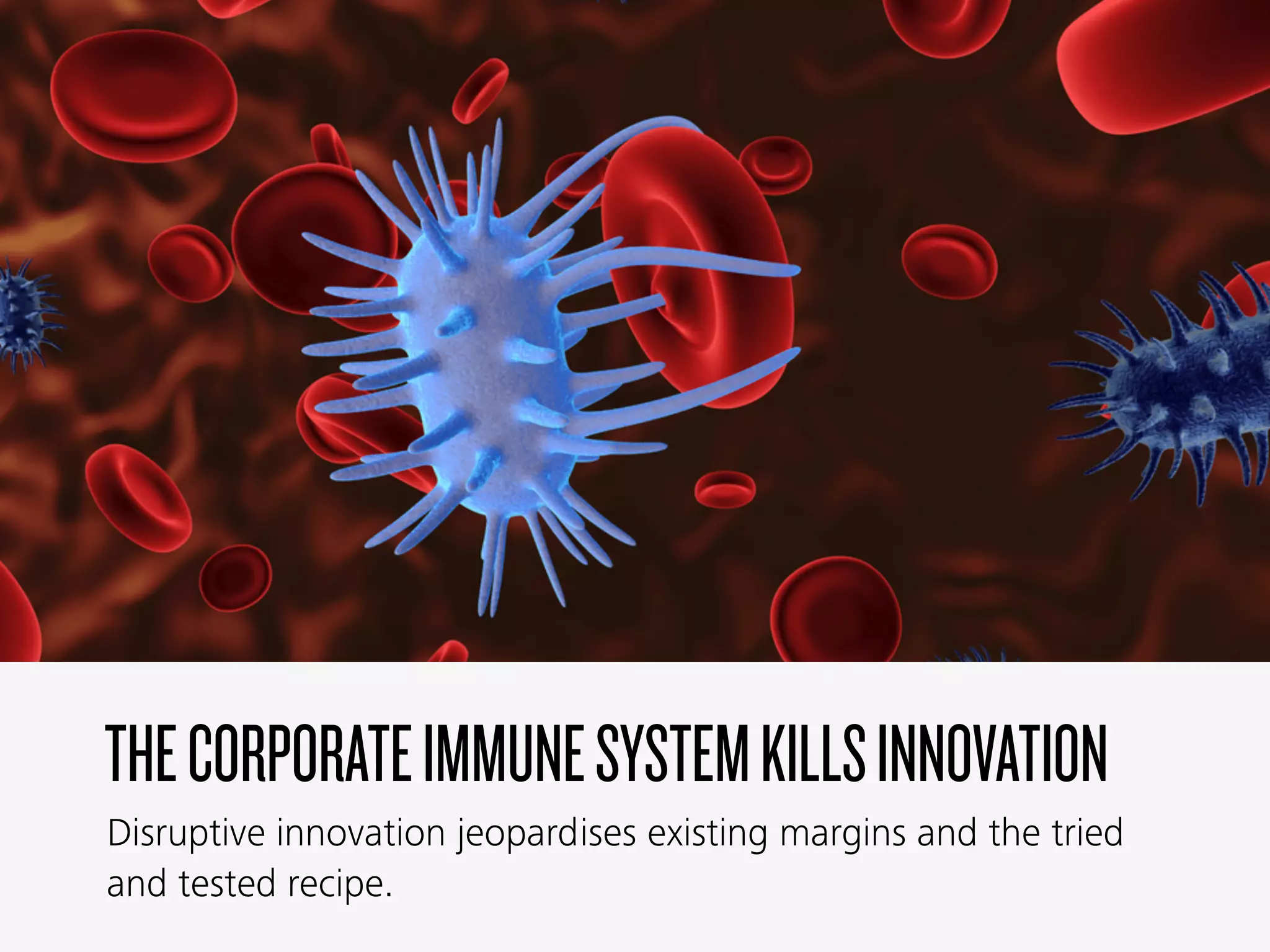
THECORPORATEIMMUNESYSTEMKILLSINNOVATION
Disruptive innovation jeopardises existing margins and the tried
and tested recipe.
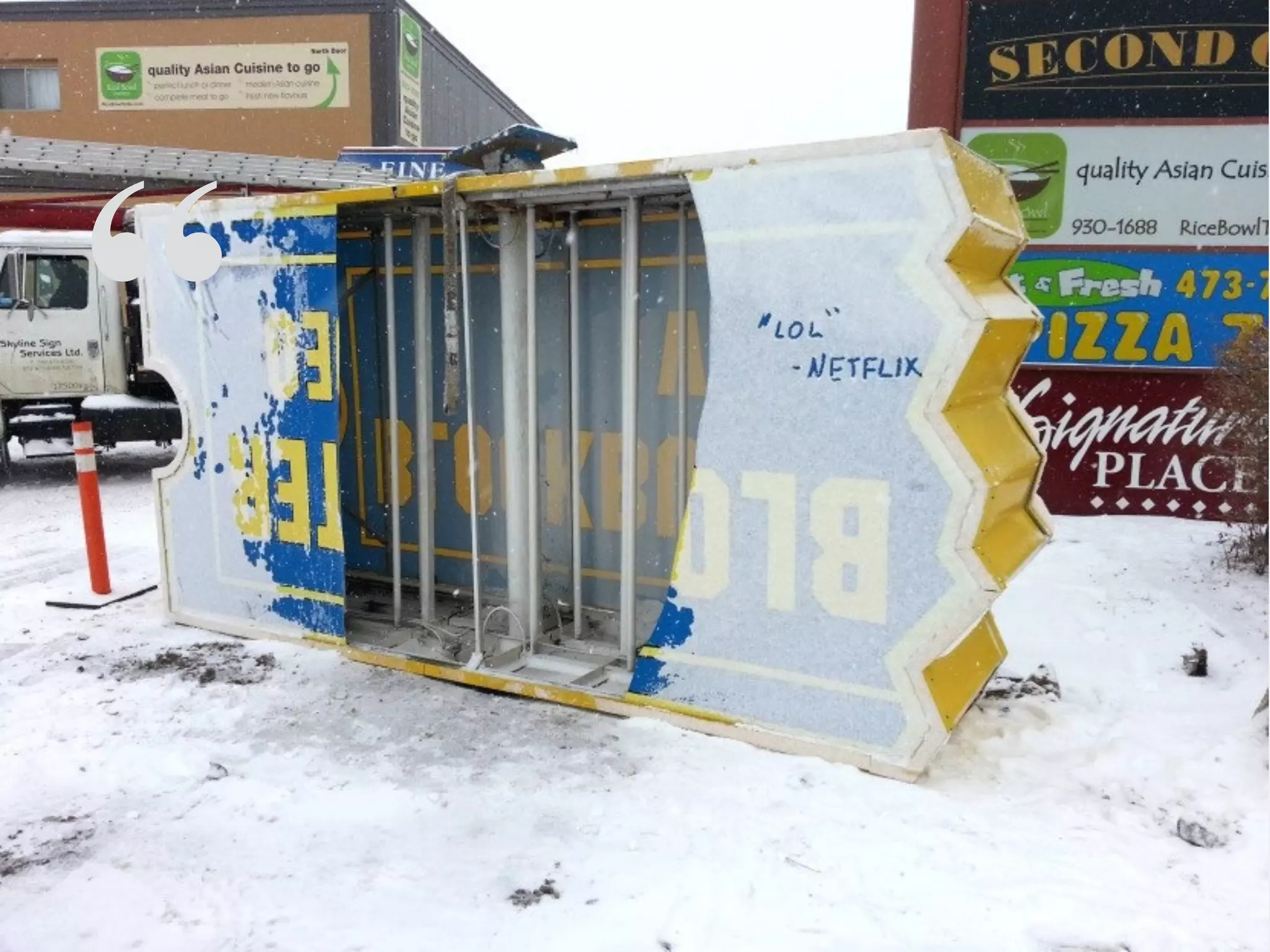
“
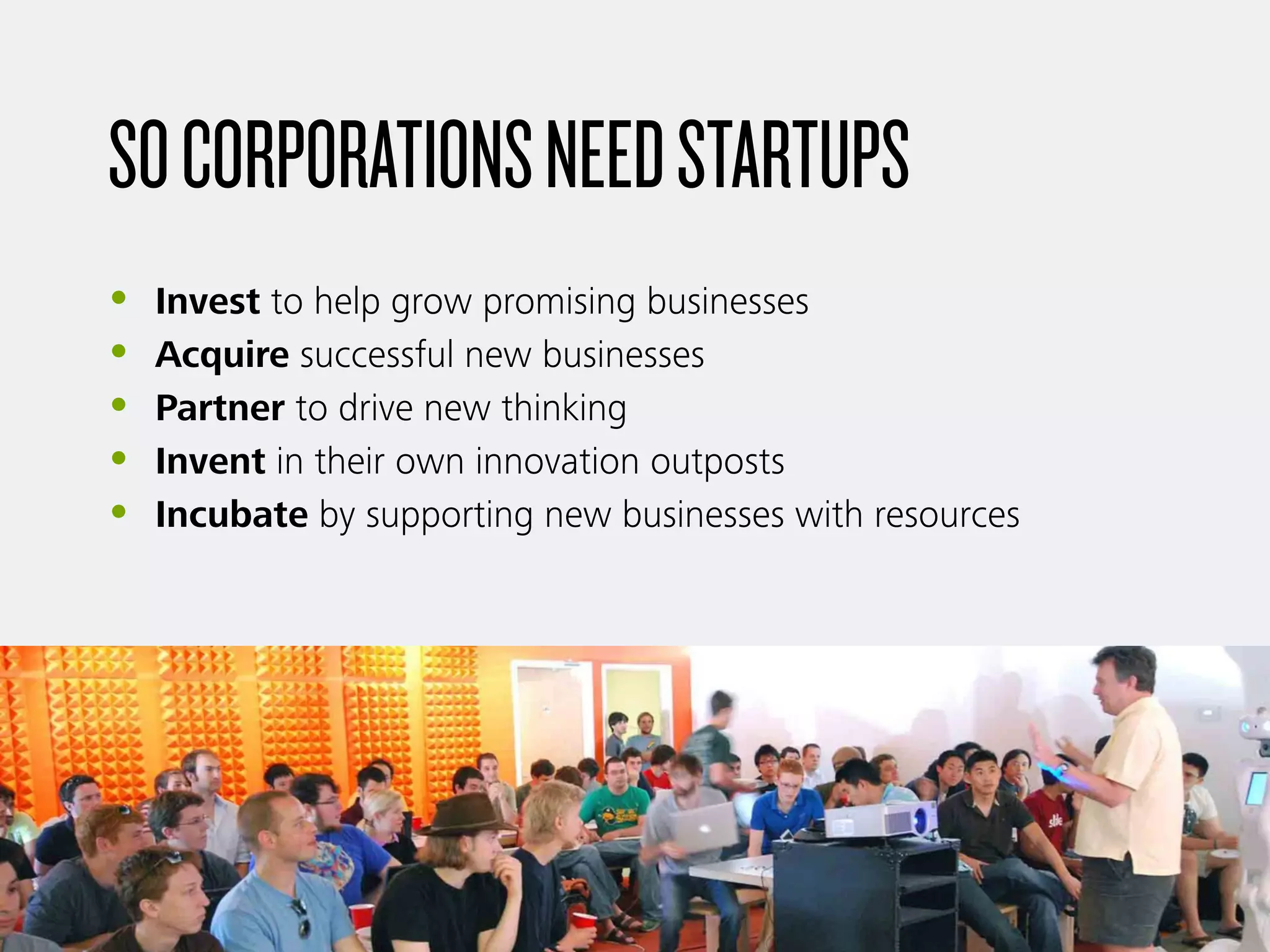
SOCORPORATIONSNEEDSTARTUPS
• Invest to help grow promising businesses
• Acquire successful new businesses
• Partner to drive new thinking
• Invent in their own innovation outposts
• Incubate by supporting new businesses with resources
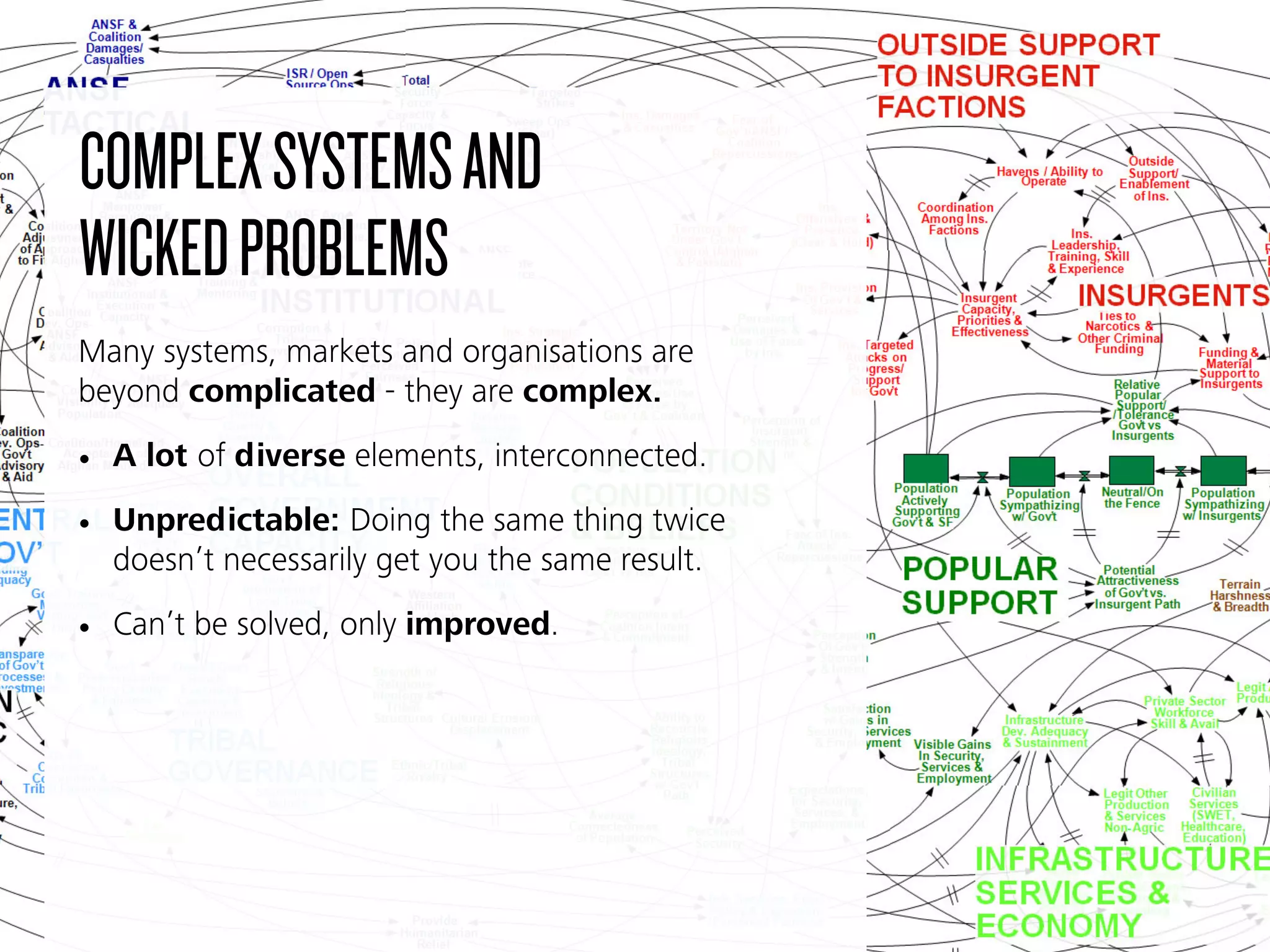
COMPLEXSYSTEMSAND

WICKEDPROBLEMS
Many systems, markets and organisations are
beyond complicated - they are complex.
• A lot of diverse elements, interconnected.
• Unpredictable: Doing the same thing twice
doesn’t necessarily get you the same result.
• Can’t be solved, only improved.
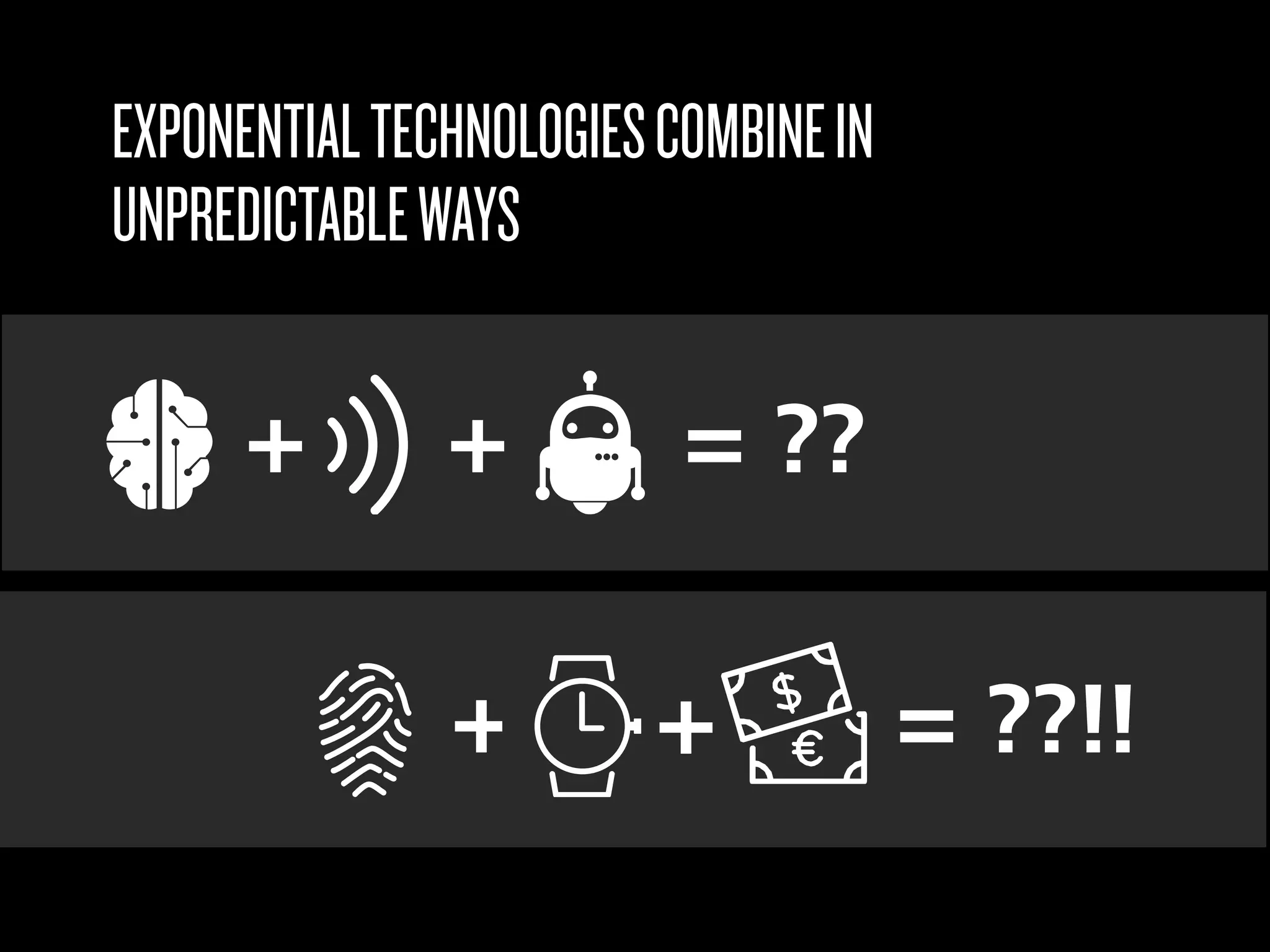
+ + = ??
+ + = ??!!
EXPONENTIALTECHNOLOGIESCOMBINEIN
UNPREDICTABLEWAYS
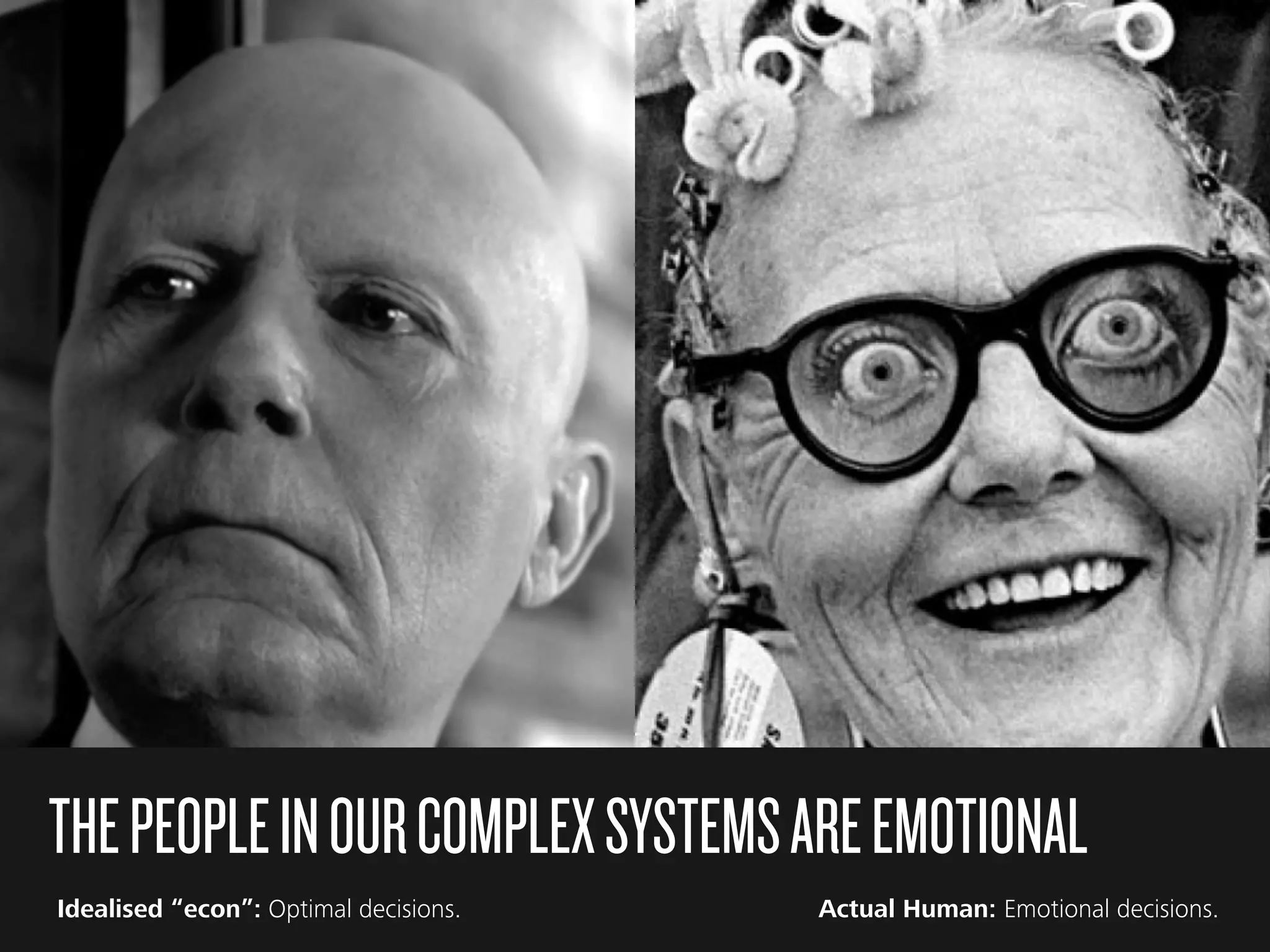
THEPEOPLEINOURCOMPLEXSYSTEMSAREEMOTIONAL
Idealised “econ”: Optimal decisions. Actual Human: Emotional decisions.
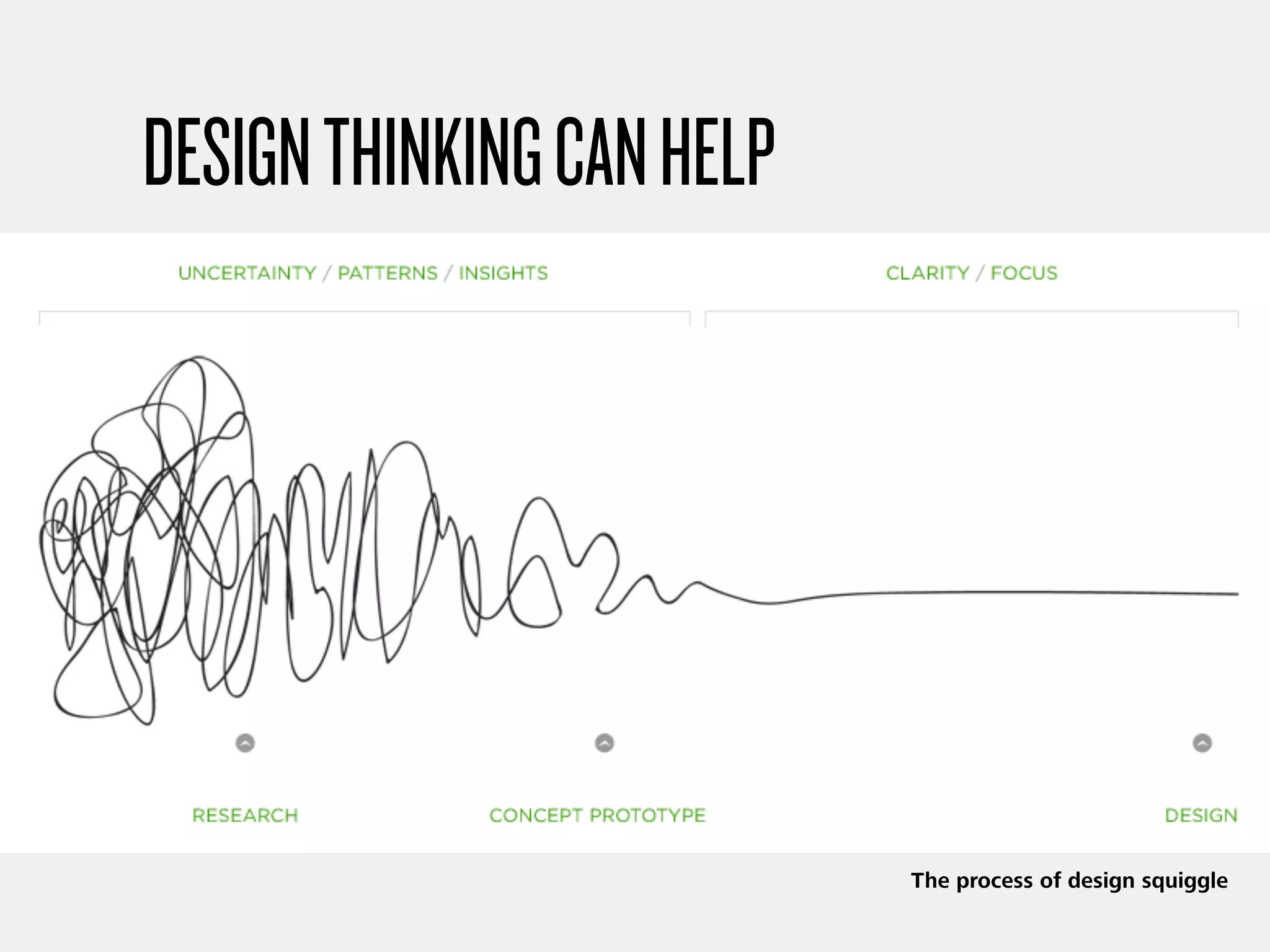
DESIGNTHINKINGCANHELP
The process of design squiggle
DESIGNTHINKING
“
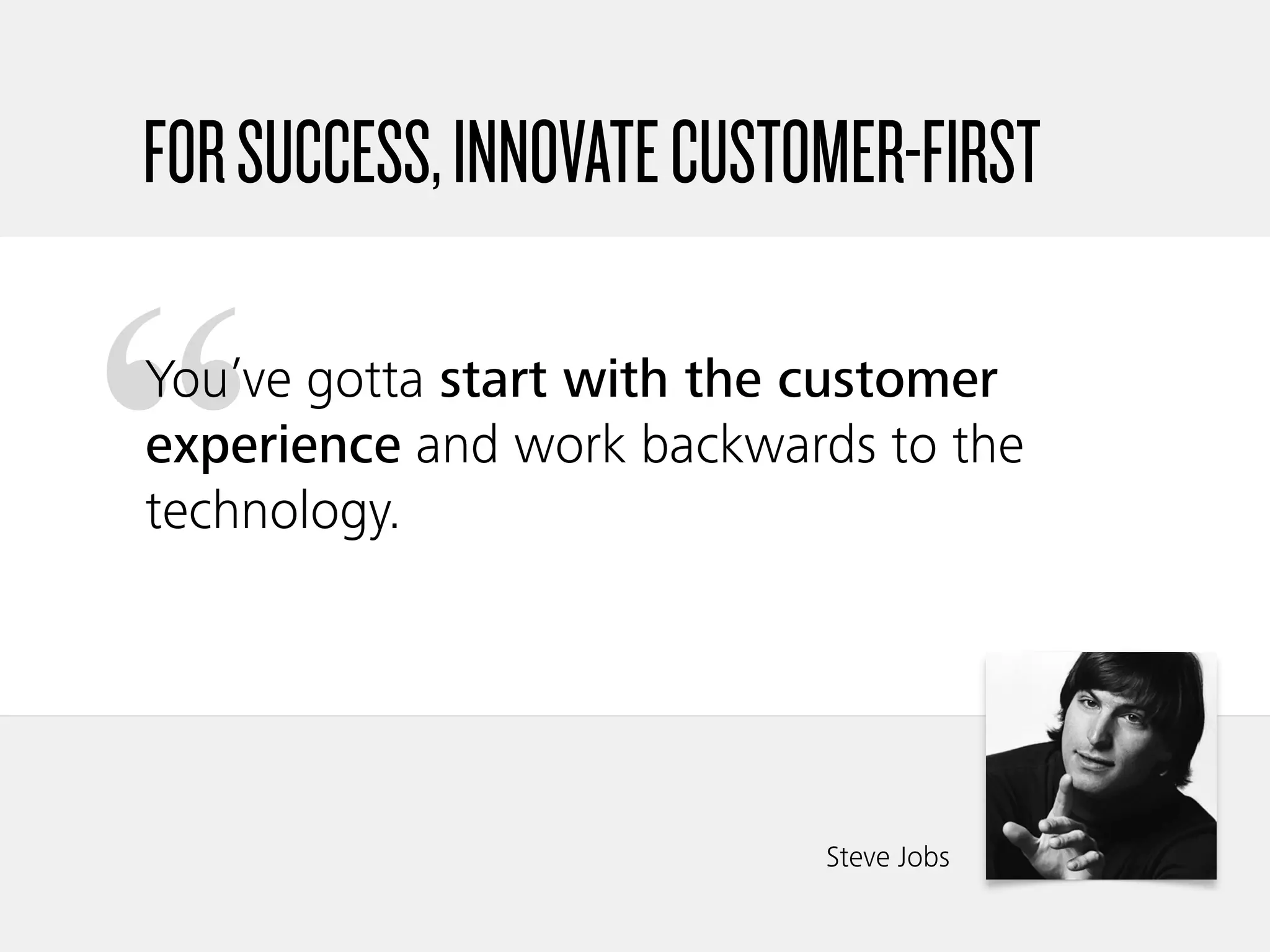
FORSUCCESS,INNOVATECUSTOMER-FIRST
You’ve gotta start with the customer
experience and work backwards to the
technology.
Steve Jobs
IFYOU’REBUNGEE
JUMPING…
…USEACORD!
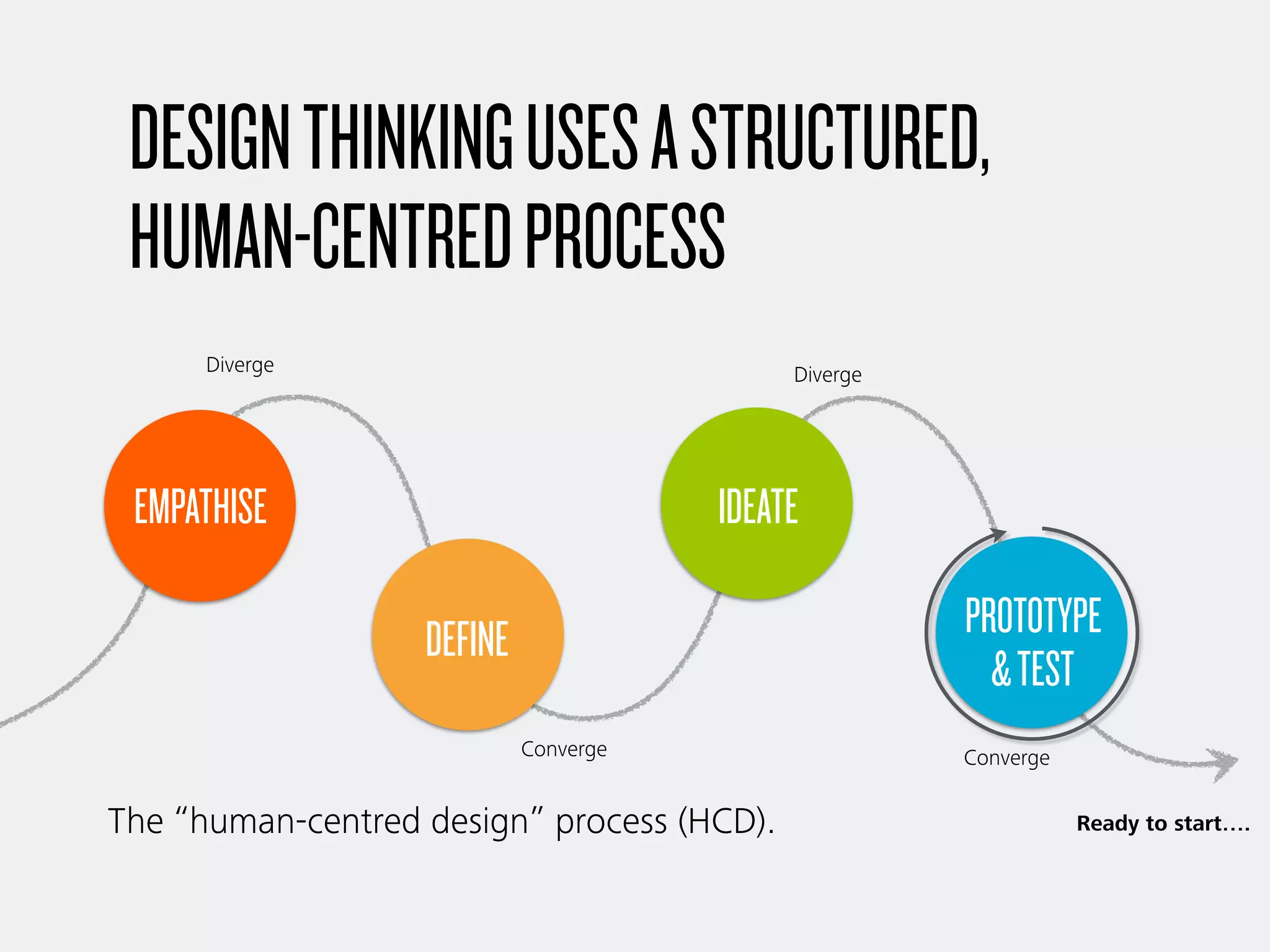
DESIGNTHINKINGUSESASTRUCTURED,

HUMAN-CENTREDPROCESS
The “human-centred design” process (HCD).
EMPATHISE
DEFINE
IDEATE
PROTOTYPE
&TEST
Diverge
Converge
Diverge
Converge
Ready to start….
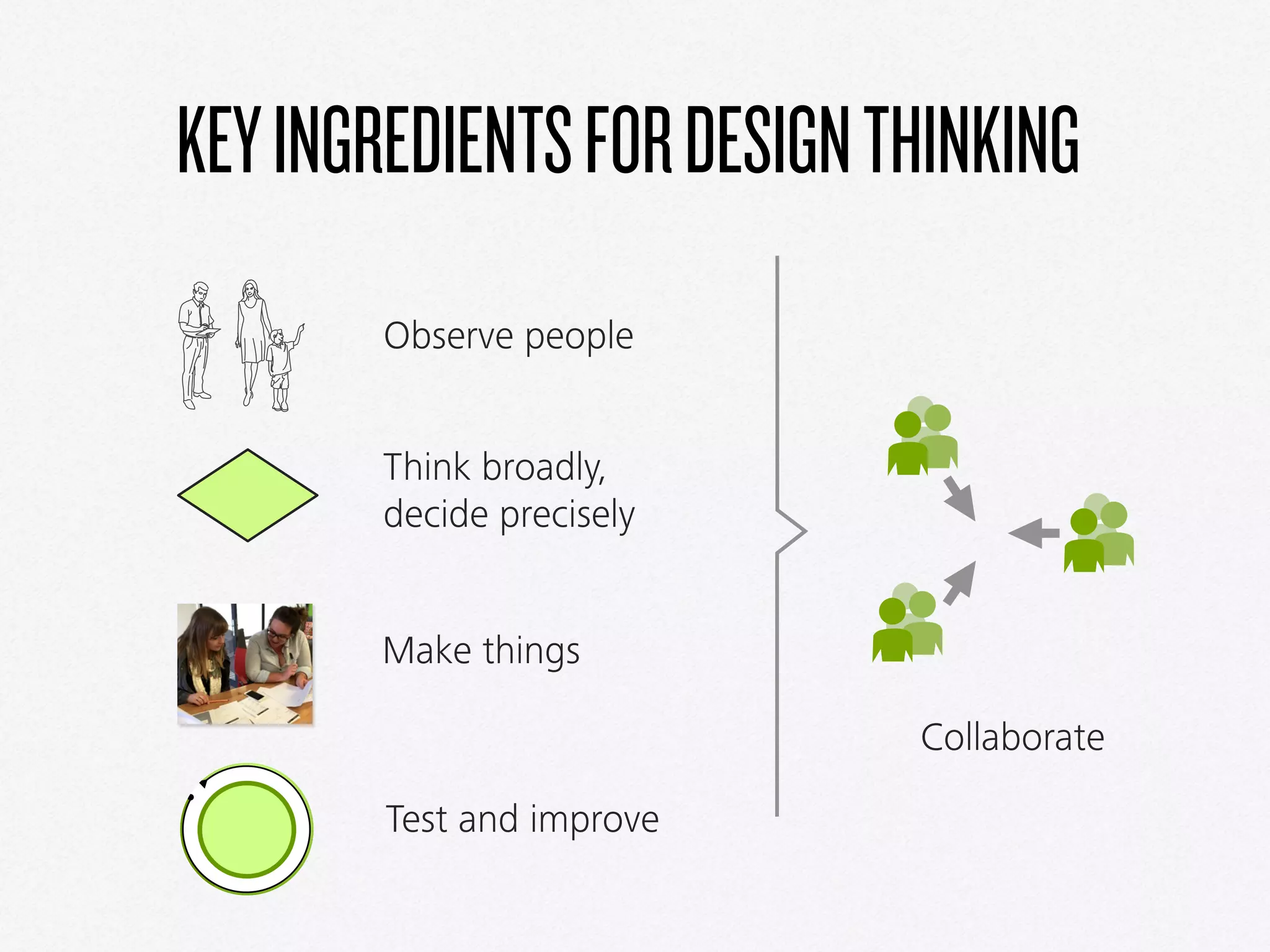
KEYINGREDIENTSFORDESIGNTHINKING
Make things
Observe people
Test and improve
Collaborate
Think broadly, 

decide precisely
“
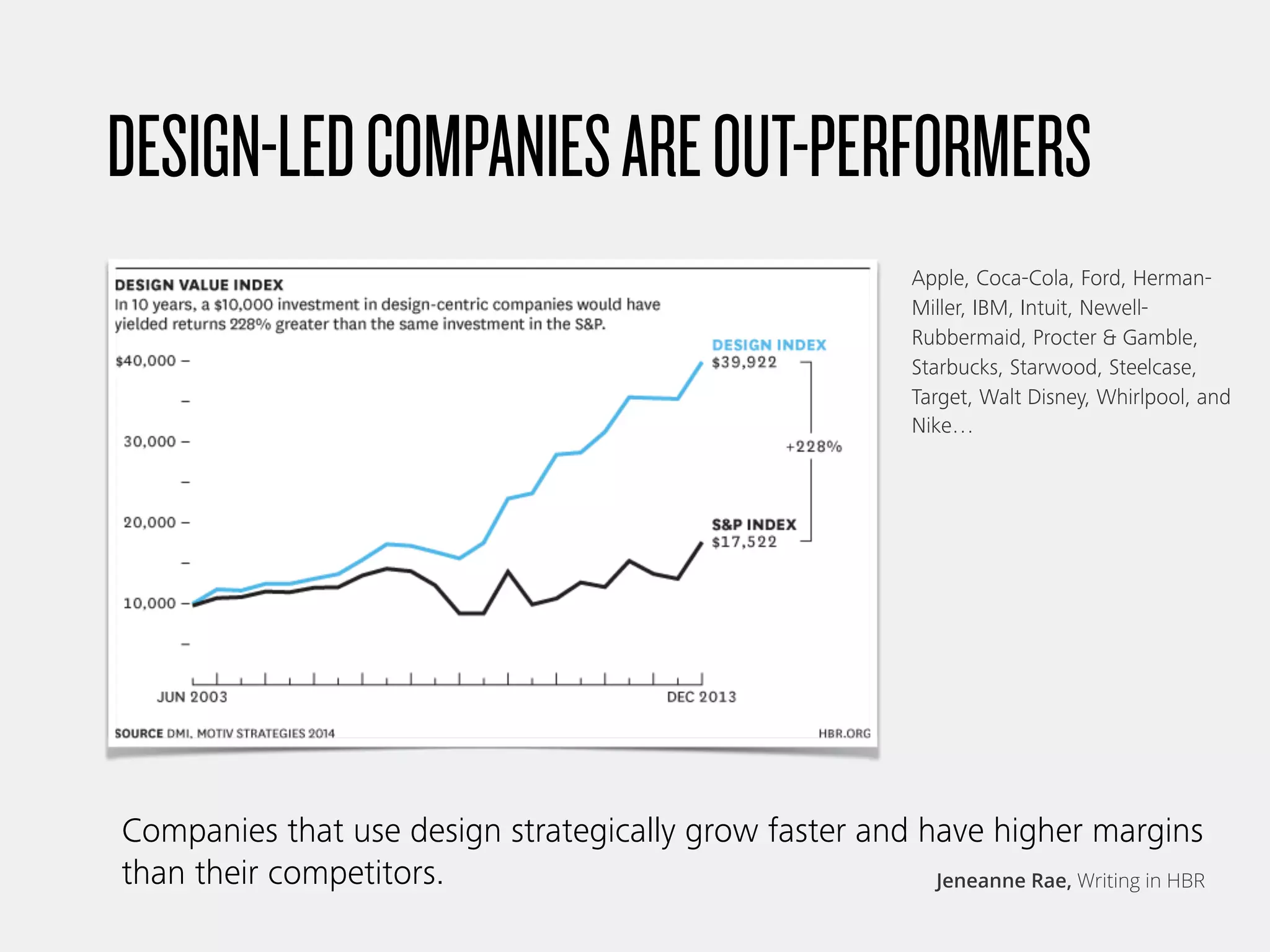
Companies that use design strategically grow faster and have higher margins
than their competitors.
Apple, Coca-Cola, Ford, Herman-
Miller, IBM, Intuit, Newell-
Rubbermaid, Procter & Gamble,
Starbucks, Starwood, Steelcase,
Target, Walt Disney, Whirlpool, and
Nike…
Jeneanne Rae, Writing in HBR
DESIGN-LEDCOMPANIESAREOUT-PERFORMERS
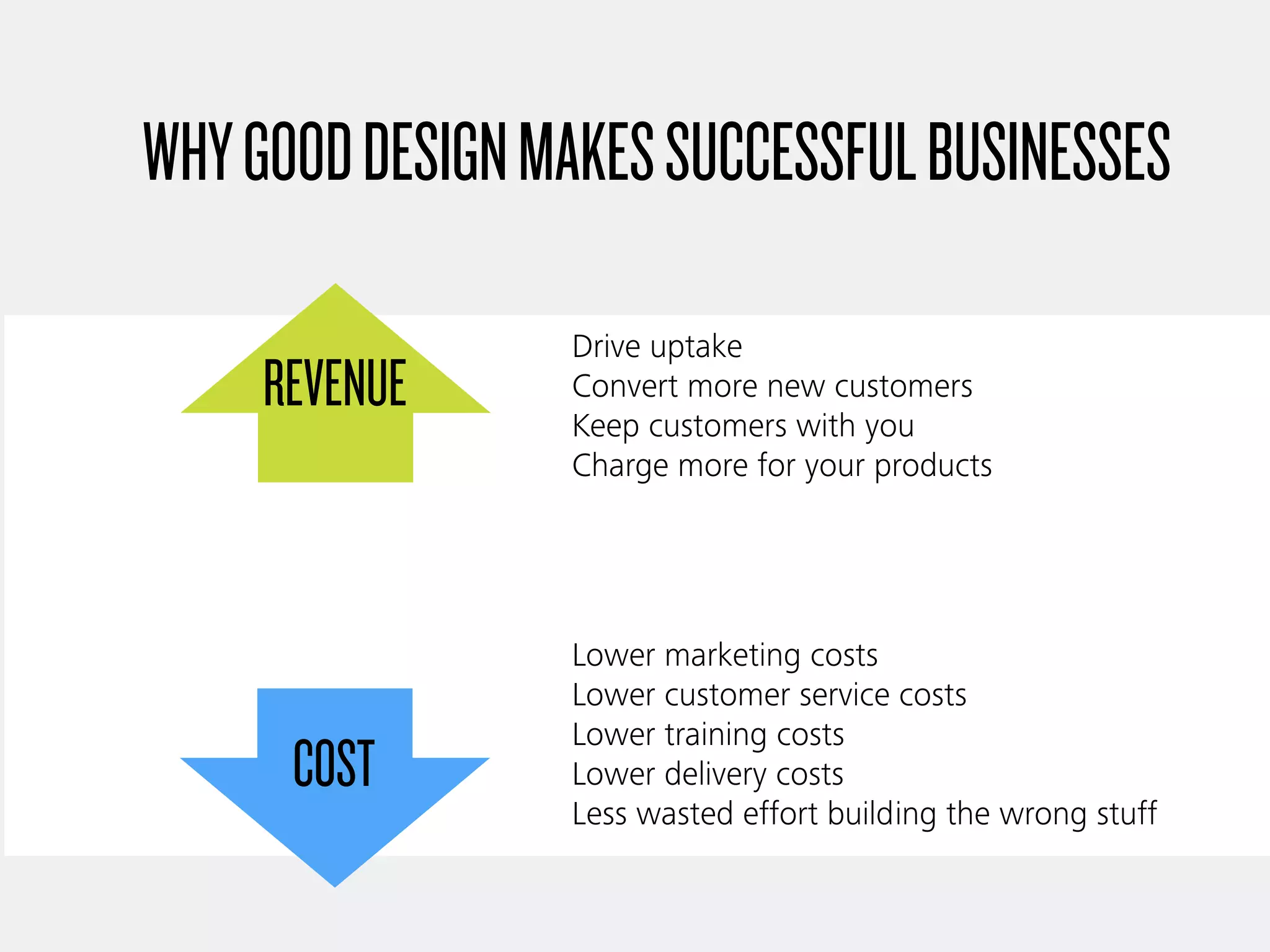
COST
WHYGOODDESIGNMAKESSUCCESSFULBUSINESSES
REVENUE
Drive uptake
Convert more new customers
Keep customers with you
Charge more for your products
Lower marketing costs
Lower customer service costs
Lower training costs
Lower delivery costs
Less wasted effort building the wrong stuff
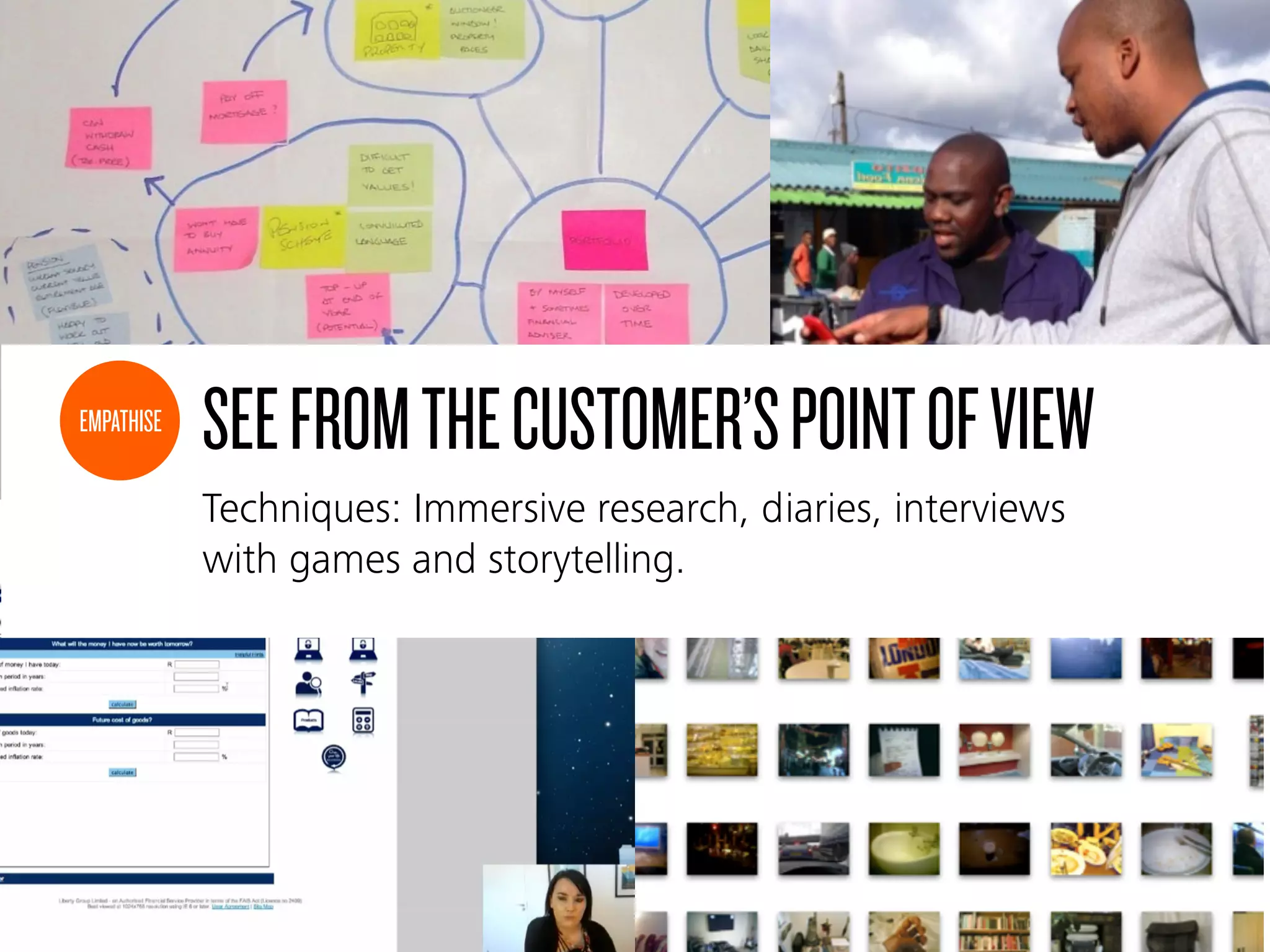
SEEFROMTHECUSTOMER’SPOINTOFVIEW
Techniques: Immersive research, diaries, interviews
with games and storytelling.
EMPATHISE
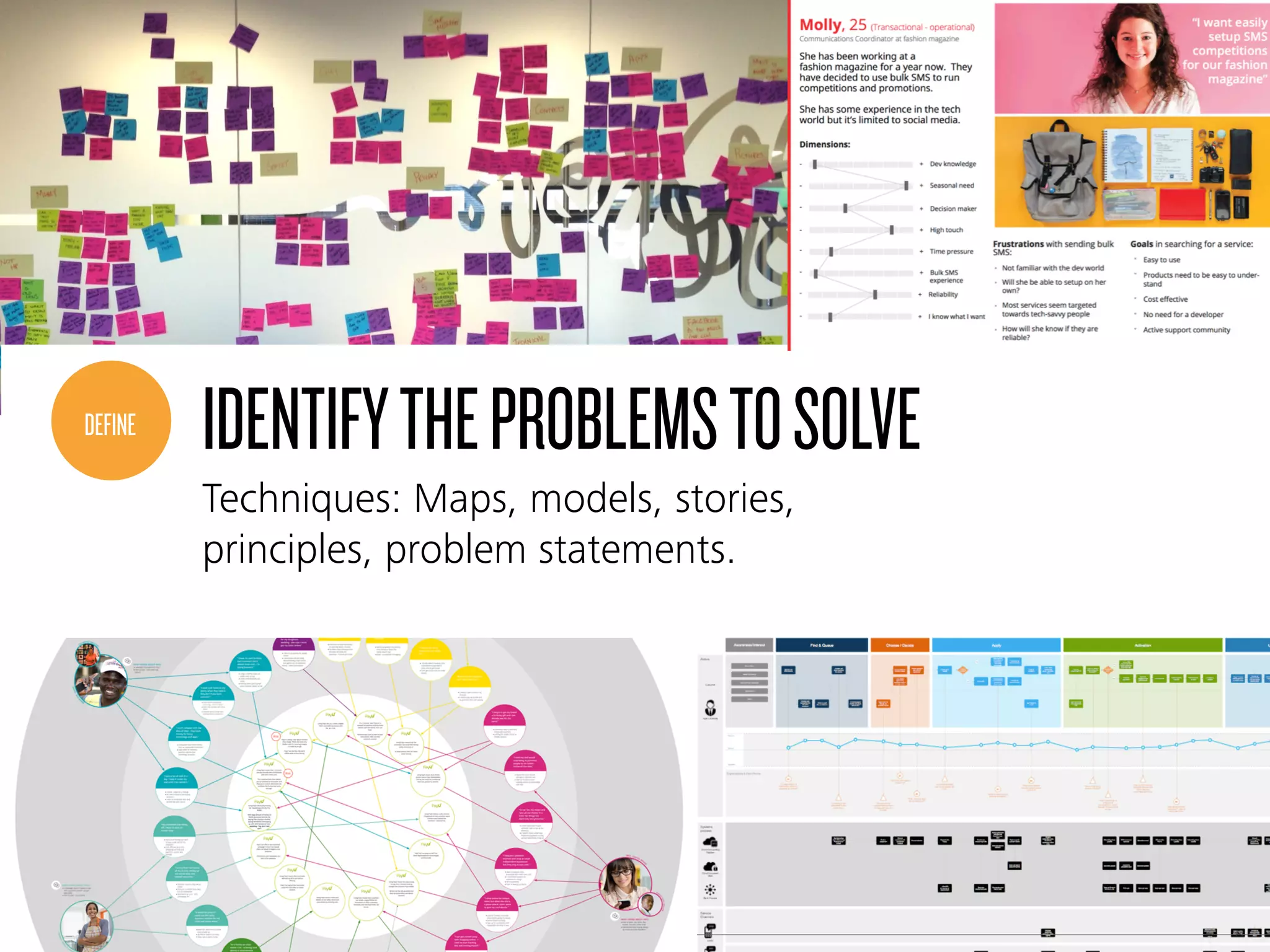
IDENTIFYTHEPROBLEMSTOSOLVE
Techniques: Maps, models, stories,
principles, problem statements.
DEFINE
THINKINGDIFFERENTTOFINDNEWSOLUTIONS
Techniques: CVP and ideation workshops, with tools
to drive lateral thinking.
IDEATE
MAKEMOCKUPSANDTRYTHEMOUT
Techniques: Mockups of interfaces, artefacts and
environments. User testing sessions.
MOCK&
TEST
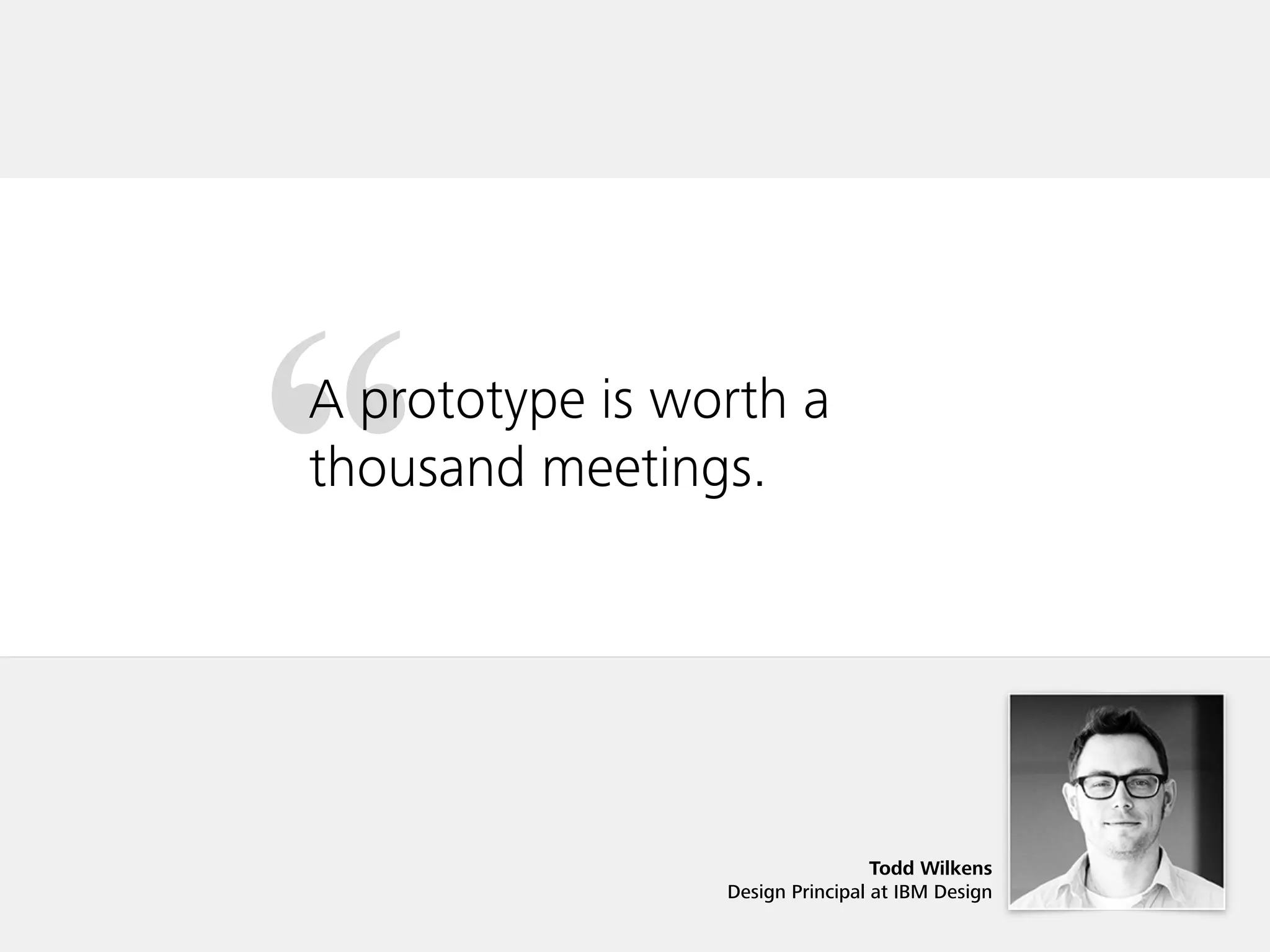
“A prototype is worth a
thousand meetings.
Todd Wilkens
Design Principal at IBM Design
YOUHAVETODOITWITH110%CONVICTION
• Immerse yourself: think in the shower.
• Face the discomfort of identifying problems with existing ideas.
• Keep practising: Just like for every new skill you want to truly master.
Flickr:RobertoTrombetta
DESIGNTHINKINGISJUSTTHESTART
Stage 3
SCALEAND
EXTEND
Build and test to prove the
right concept, target
customers, business
model…
Roll out to more users, and
roll out extended features
PRODUCT
MARKETFIT
Stage 2
Human-centred design
Lean startup
Lean UX
Stage 1
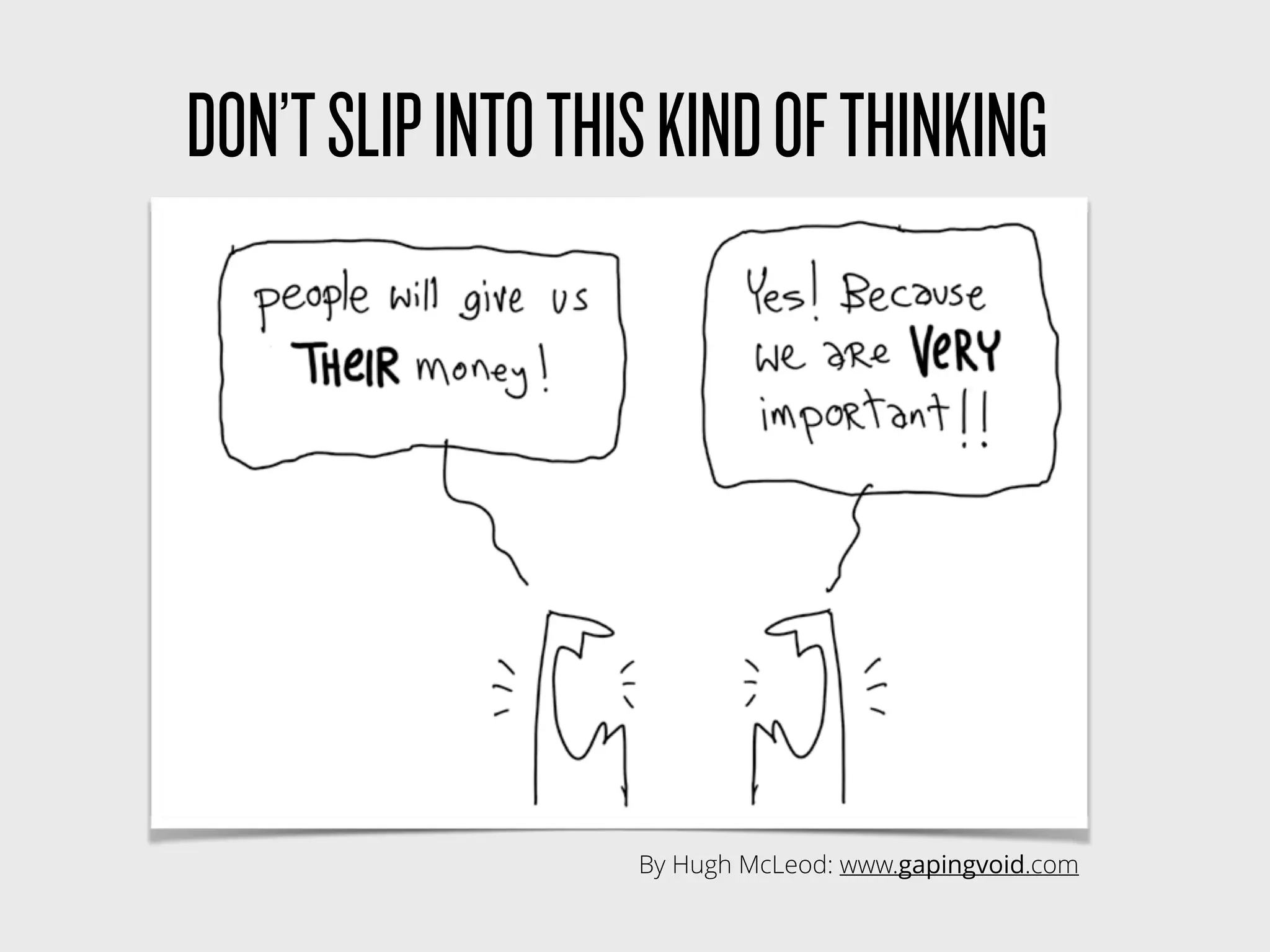
By Hugh McLeod: www.gapingvoid.com
DON’TSLIPINTOTHISKINDOFTHINKING
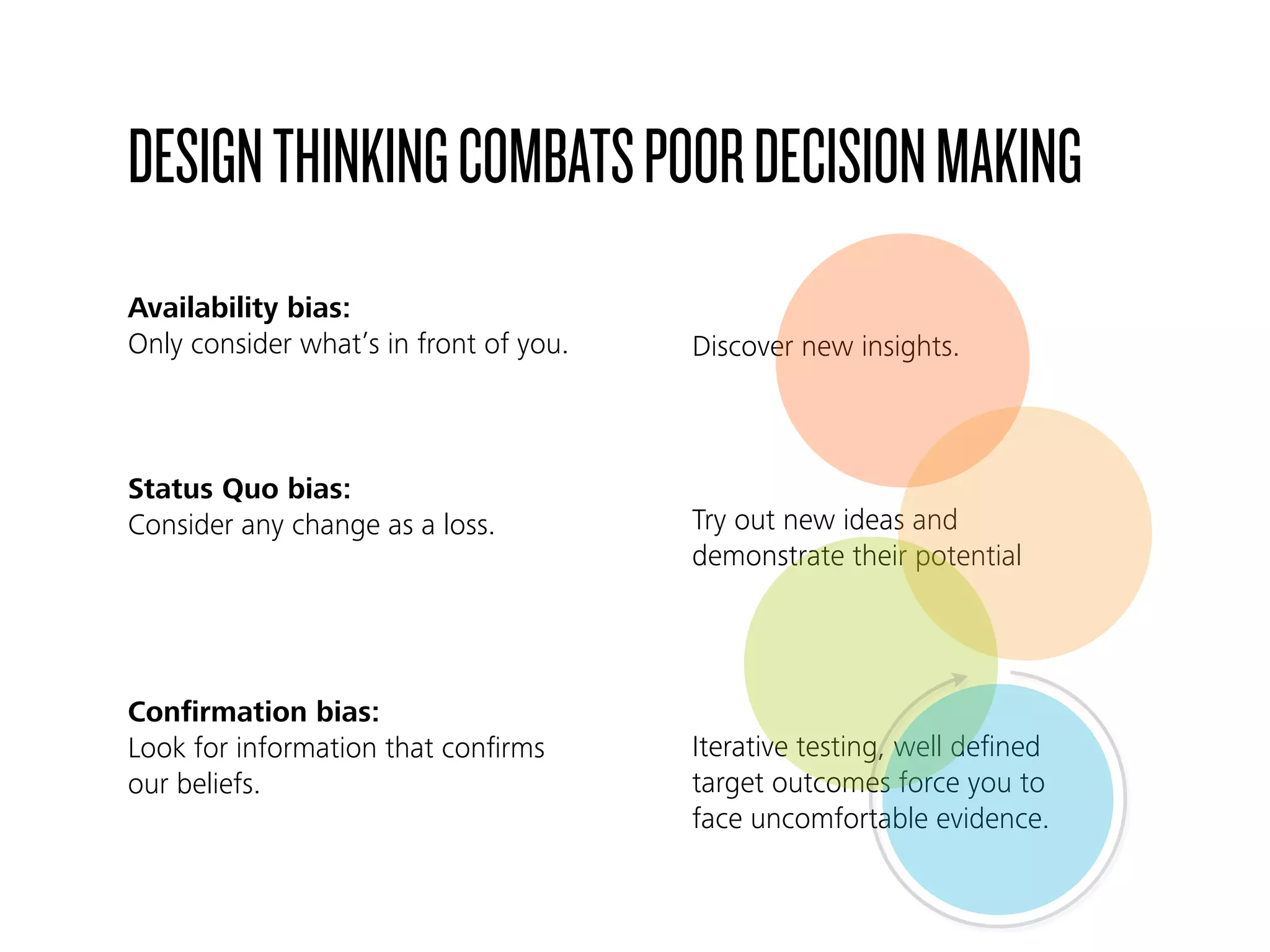
DESIGNTHINKINGCOMBATSPOORDECISIONMAKING
Availability bias: 

Only consider what’s in front of you.
Confirmation bias: 

Look for information that confirms
our beliefs.
Status Quo bias:
Consider any change as a loss.
Discover new insights.
Try out new ideas and
demonstrate their potential
Iterative testing, well defined
target outcomes force you to
face uncomfortable evidence.
“Assume that your strategy may be wrong.
Develop plans for learning what needs to be known
- a much more effective way to confront disruptive
technologies successfully.
Clayton Chistensen
The Innovator’s Dilemma
THANKS.@philbuktoo

Innovation, design thinking, and competitive advantage