Utilization of Food Processing Waste:
Innovations and Technologies
R.T. Patil
Former Director, Central Institute of Post-Harvest
Engineering and Technology, Ludhiana & Chairman,
Benevole Welfare Society for Post Harvest
Technology, Bhopal
Introduction
• Expansion of the food processing sector leads to
increased byproducts and waste.
• Common byproducts: peels, seeds, shells, bran,
trimmings, spent grains, whey, organic residues.
• Nutrient-rich waste: sources of dietary fibers, bioactive
compounds.
• Environmental risks of improper disposal: methane
emissions, water contamination, soil degradation..
Importance of Waste Utilization
•Environmental stewardship and economic sustainability
driving waste repurposing.
•Economic loss from wasted resources.
•Disposal rates: ~20% in developed nations vs. >50% in
developing regions.
•Need for effective waste management to enhance
sustainability and economic viability.
Environmental and Economic
Implications
Environmental Challenges:
Harmful leachates and greenhouse gas
emissions, Contribution to climate change.
Economic Repercussions:
High disposal costs due to limited landfill
capacity, Opportunity to reduce costs through
waste valorization.
Benefits of Utilization:
Lower disposal costs, Creation of valuable
products fostering a circular economy.
Nutritional and Health Advantages of
Byproducts
Byproducts are nutrient-dense: proteins, dietary
fibers, antioxidants, bioactive compounds.
Examples:
Mango seeds: rich in oleic acid.
Pineapple peels: high in dietary fiber.
Role in combating malnutrition and food
insecurity.
Enhancing nutritional value of products while
reducing waste.
Technological Innovations in
Waste Valorization
Fermentation and Enzymatic Processes:
Breakdown of anti-nutritional factors, Enhance nutrient
bioavailability.
Extraction of Bioactive Compounds:
Techniques like cold pressing and solvent extraction,
Isolation of flavonoids, phenolics for use in food,
nutraceuticals, cosmetics.
Development of Functional Food Ingredients:
Transformation into flour or powder, Incorporation into
foods like bread, snacks, beverages.
Tomato Processing Waste
Nutritional Composition Rich in lycopene, β-carotene, dietary
fibers, proteins, essential fatty acids.
Health benefits: reduced risk of chronic diseases, antioxidant
properties.
Technological Applications Extraction of Lycopene and β-
Carotene:
Methods: supercritical fluid extraction, solvent extraction.
Uses: dietary supplements, functional foods.
Production of Tomato Seed Oil:
Rich in linoleic acid and antioxidants.
Applications in cosmetics and healthy cooking oils.
Incorporation into Functional Foods:
Fortifying bread, pasta, snacks with tomato peel powder.
Grain Processing Waste
Byproducts: bran, germ, husk, hull from wheat,
rice, corn, etc.
Nutrient-rich: dietary fiber, proteins, vitamins,
minerals, bioactive compounds.
Examples:
Bran: high in dietary fibers, B vitamins, minerals.
Germ: rich in essential fatty acids, vitamin E,
antioxidants.
Applications of Grain Processing
Waste
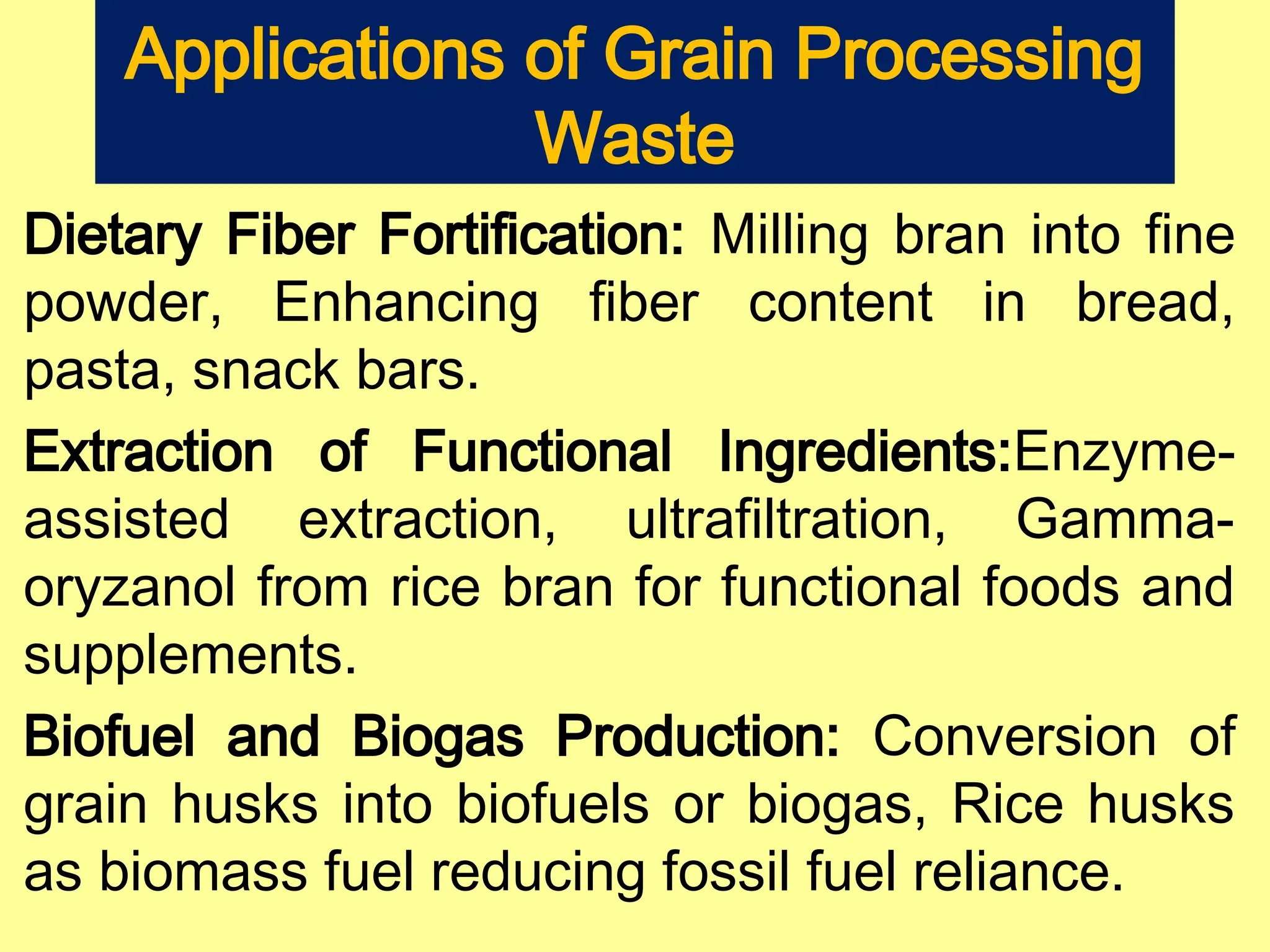
Dietary Fiber Fortification: Milling bran into fine
powder, Enhancing fiber content in bread,
pasta, snack bars.
Extraction of Functional Ingredients:Enzyme-
assisted extraction, ultrafiltration, Gamma-
oryzanol from rice bran for functional foods and
supplements.
Biofuel and Biogas Production: Conversion of
grain husks into biofuels or biogas, Rice husks
as biomass fuel reducing fossil fuel reliance.
Case Studies of Waste Utilisation
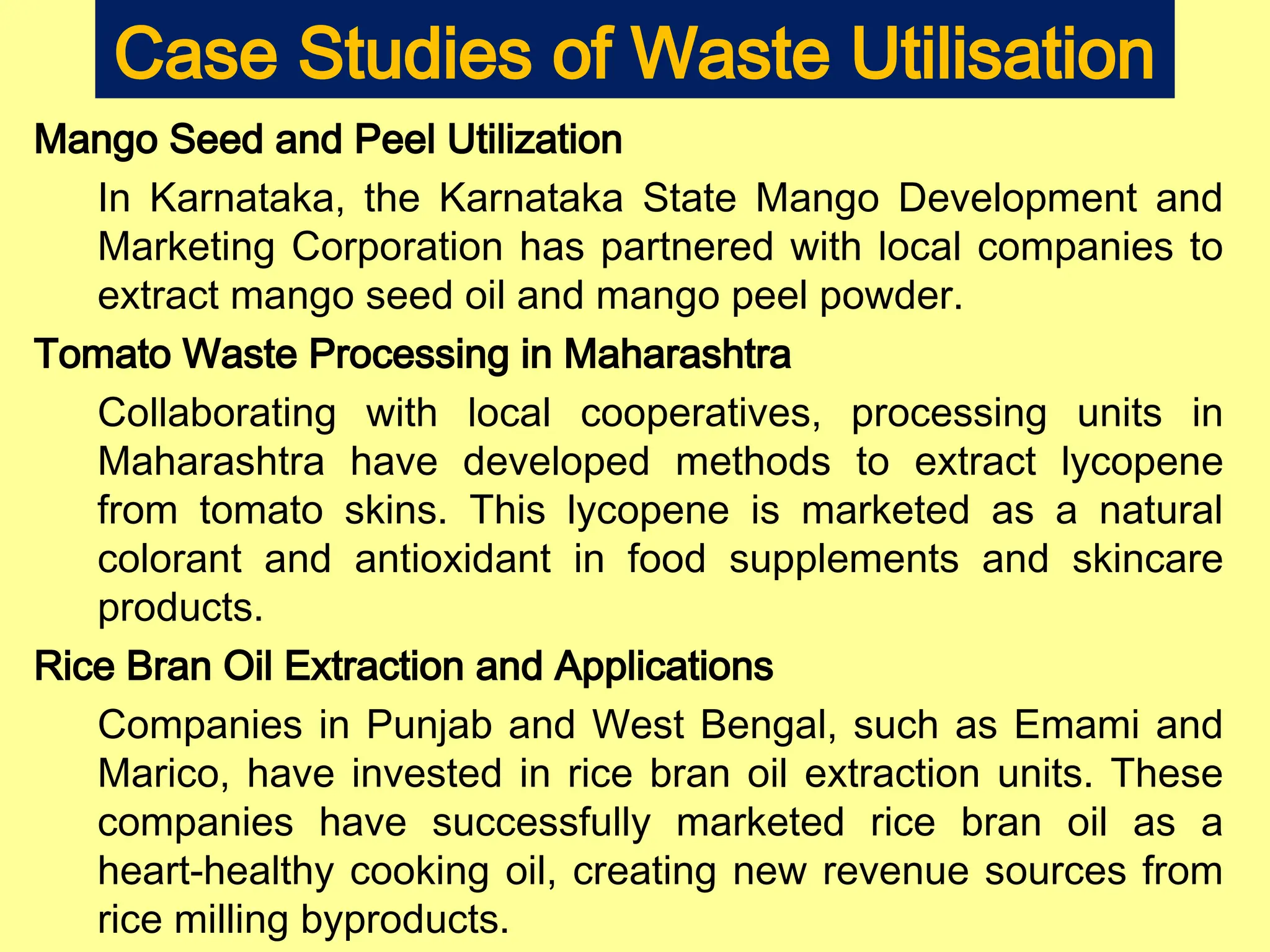
Mango Seed and Peel Utilization
In Karnataka, the Karnataka State Mango Development and
Marketing Corporation has partnered with local companies to
extract mango seed oil and mango peel powder.
Tomato Waste Processing in Maharashtra
Collaborating with local cooperatives, processing units in
Maharashtra have developed methods to extract lycopene
from tomato skins. This lycopene is marketed as a natural
colorant and antioxidant in food supplements and skincare
products.
Rice Bran Oil Extraction and Applications
Companies in Punjab and West Bengal, such as Emami and
Marico, have invested in rice bran oil extraction units. These
companies have successfully marketed rice bran oil as a
heart-healthy cooking oil, creating new revenue sources from
rice milling byproducts.
Case Studies of Waste Utilisation
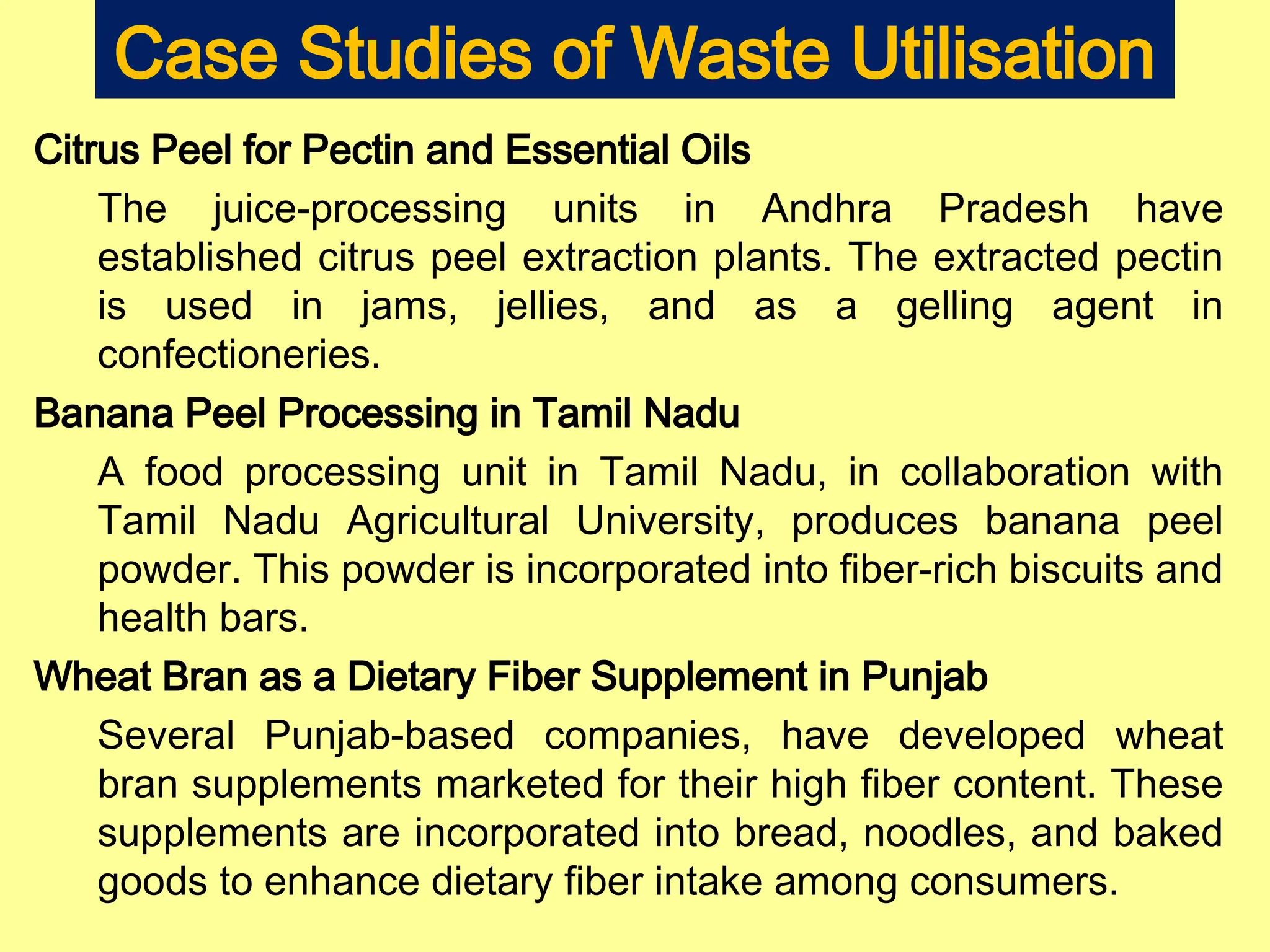
Citrus Peel for Pectin and Essential Oils
The juice-processing units in Andhra Pradesh have
established citrus peel extraction plants. The extracted pectin
is used in jams, jellies, and as a gelling agent in
confectioneries.
Banana Peel Processing in Tamil Nadu
A food processing unit in Tamil Nadu, in collaboration with
Tamil Nadu Agricultural University, produces banana peel
powder. This powder is incorporated into fiber-rich biscuits and
health bars.
Wheat Bran as a Dietary Fiber Supplement in Punjab
Several Punjab-based companies, have developed wheat
bran supplements marketed for their high fiber content. These
supplements are incorporated into bread, noodles, and baked
goods to enhance dietary fiber intake among consumers.
Insights & Future Directions
Potential to address global challenges:
hunger, malnutrition, environmental
degradation
Vast potential for utilizing food waste with
ongoing investment in research and
technology.
Need for collaboration between
government, research institutions, and
private enterprises.
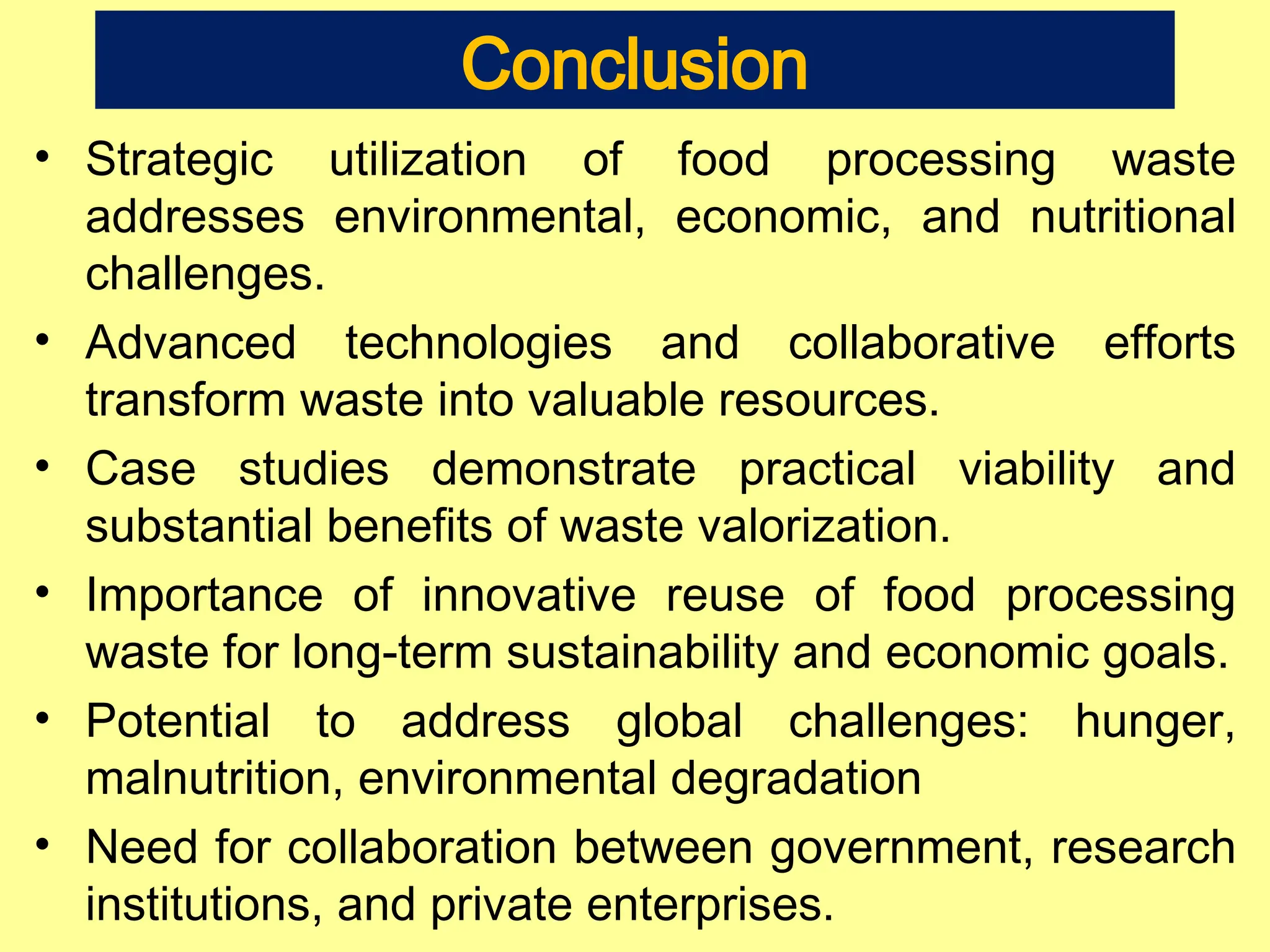
Conclusion
• Strategic utilization of food processing waste
addresses environmental, economic, and nutritional
challenges.
• Advanced technologies and collaborative efforts
transform waste into valuable resources.
• Case studies demonstrate practical viability and
substantial benefits of waste valorization.
• Importance of innovative reuse of food processing
waste for long-term sustainability and economic goals.
• Potential to address global challenges: hunger,
malnutrition, environmental degradation
• Need for collaboration between government, research
institutions, and private enterprises.
Email ID-
Email ID- ramabhau@gmail.com
WhatsApp: 8964030701

Utilisation of Food Processing Waste-Innovations and Technologies

  • 1.
    Utilization of FoodProcessing Waste: Innovations and Technologies R.T. Patil Former Director, Central Institute of Post-Harvest Engineering and Technology, Ludhiana & Chairman, Benevole Welfare Society for Post Harvest Technology, Bhopal
  • 2.
    Introduction • Expansion ofthe food processing sector leads to increased byproducts and waste. • Common byproducts: peels, seeds, shells, bran, trimmings, spent grains, whey, organic residues. • Nutrient-rich waste: sources of dietary fibers, bioactive compounds. • Environmental risks of improper disposal: methane emissions, water contamination, soil degradation..
  • 3.
    Importance of WasteUtilization •Environmental stewardship and economic sustainability driving waste repurposing. •Economic loss from wasted resources. •Disposal rates: ~20% in developed nations vs. >50% in developing regions. •Need for effective waste management to enhance sustainability and economic viability.
  • 4.
    Environmental and Economic Implications EnvironmentalChallenges: Harmful leachates and greenhouse gas emissions, Contribution to climate change. Economic Repercussions: High disposal costs due to limited landfill capacity, Opportunity to reduce costs through waste valorization. Benefits of Utilization: Lower disposal costs, Creation of valuable products fostering a circular economy.
  • 5.
    Nutritional and HealthAdvantages of Byproducts Byproducts are nutrient-dense: proteins, dietary fibers, antioxidants, bioactive compounds. Examples: Mango seeds: rich in oleic acid. Pineapple peels: high in dietary fiber. Role in combating malnutrition and food insecurity. Enhancing nutritional value of products while reducing waste.
  • 6.
    Technological Innovations in WasteValorization Fermentation and Enzymatic Processes: Breakdown of anti-nutritional factors, Enhance nutrient bioavailability. Extraction of Bioactive Compounds: Techniques like cold pressing and solvent extraction, Isolation of flavonoids, phenolics for use in food, nutraceuticals, cosmetics. Development of Functional Food Ingredients: Transformation into flour or powder, Incorporation into foods like bread, snacks, beverages.
  • 7.
    Tomato Processing Waste NutritionalComposition Rich in lycopene, β-carotene, dietary fibers, proteins, essential fatty acids. Health benefits: reduced risk of chronic diseases, antioxidant properties. Technological Applications Extraction of Lycopene and β- Carotene: Methods: supercritical fluid extraction, solvent extraction. Uses: dietary supplements, functional foods. Production of Tomato Seed Oil: Rich in linoleic acid and antioxidants. Applications in cosmetics and healthy cooking oils. Incorporation into Functional Foods: Fortifying bread, pasta, snacks with tomato peel powder.
  • 8.
    Grain Processing Waste Byproducts:bran, germ, husk, hull from wheat, rice, corn, etc. Nutrient-rich: dietary fiber, proteins, vitamins, minerals, bioactive compounds. Examples: Bran: high in dietary fibers, B vitamins, minerals. Germ: rich in essential fatty acids, vitamin E, antioxidants.
  • 9.
    Applications of GrainProcessing Waste Dietary Fiber Fortification: Milling bran into fine powder, Enhancing fiber content in bread, pasta, snack bars. Extraction of Functional Ingredients:Enzyme- assisted extraction, ultrafiltration, Gamma- oryzanol from rice bran for functional foods and supplements. Biofuel and Biogas Production: Conversion of grain husks into biofuels or biogas, Rice husks as biomass fuel reducing fossil fuel reliance.
  • 10.
    Case Studies ofWaste Utilisation Mango Seed and Peel Utilization In Karnataka, the Karnataka State Mango Development and Marketing Corporation has partnered with local companies to extract mango seed oil and mango peel powder. Tomato Waste Processing in Maharashtra Collaborating with local cooperatives, processing units in Maharashtra have developed methods to extract lycopene from tomato skins. This lycopene is marketed as a natural colorant and antioxidant in food supplements and skincare products. Rice Bran Oil Extraction and Applications Companies in Punjab and West Bengal, such as Emami and Marico, have invested in rice bran oil extraction units. These companies have successfully marketed rice bran oil as a heart-healthy cooking oil, creating new revenue sources from rice milling byproducts.
  • 11.
    Case Studies ofWaste Utilisation Citrus Peel for Pectin and Essential Oils The juice-processing units in Andhra Pradesh have established citrus peel extraction plants. The extracted pectin is used in jams, jellies, and as a gelling agent in confectioneries. Banana Peel Processing in Tamil Nadu A food processing unit in Tamil Nadu, in collaboration with Tamil Nadu Agricultural University, produces banana peel powder. This powder is incorporated into fiber-rich biscuits and health bars. Wheat Bran as a Dietary Fiber Supplement in Punjab Several Punjab-based companies, have developed wheat bran supplements marketed for their high fiber content. These supplements are incorporated into bread, noodles, and baked goods to enhance dietary fiber intake among consumers.
  • 12.
    Insights & FutureDirections Potential to address global challenges: hunger, malnutrition, environmental degradation Vast potential for utilizing food waste with ongoing investment in research and technology. Need for collaboration between government, research institutions, and private enterprises.
  • 13.
    Conclusion • Strategic utilizationof food processing waste addresses environmental, economic, and nutritional challenges. • Advanced technologies and collaborative efforts transform waste into valuable resources. • Case studies demonstrate practical viability and substantial benefits of waste valorization. • Importance of innovative reuse of food processing waste for long-term sustainability and economic goals. • Potential to address global challenges: hunger, malnutrition, environmental degradation • Need for collaboration between government, research institutions, and private enterprises.
  • 14.
    Email ID- Email ID-ramabhau@gmail.com WhatsApp: 8964030701