Incorporation of
Antimicrobial Agents
in Food Packaging
Films
Agnescia Sera | 43850565
Food Bioprocessing
Problem: Food Contamination
Antimicrobial packaging
 Integration of antimicrobials agents into packaging materials
 To kill or to inhibit the pathogenic and spoilage microorganism
Protein Damage
• Proteins are
essential for the
biological
systems of life,
any damage to
these
components
causes the failure
of essential
functions such as
energy
production.
Cell Membrane
Damage
• By disrupting the
microbes
membrane, the
structural integrity
of the microbe is
compromised,
which can cause
essential nutrients
to leak out and
catastrophic
structural failure.
Oxidative Damage
• Antimicrobials
can cause
increased levels
of reactive
oxygen species,
which can cause
damage to the
internal systems
of the microbe.
DNA Interference
• The genetic
material of the
bacteria is
disrupted.
Stopping the
bacteria being
able to replicate
by blocking the
copying of their
genetic material,
preventing
reproduction
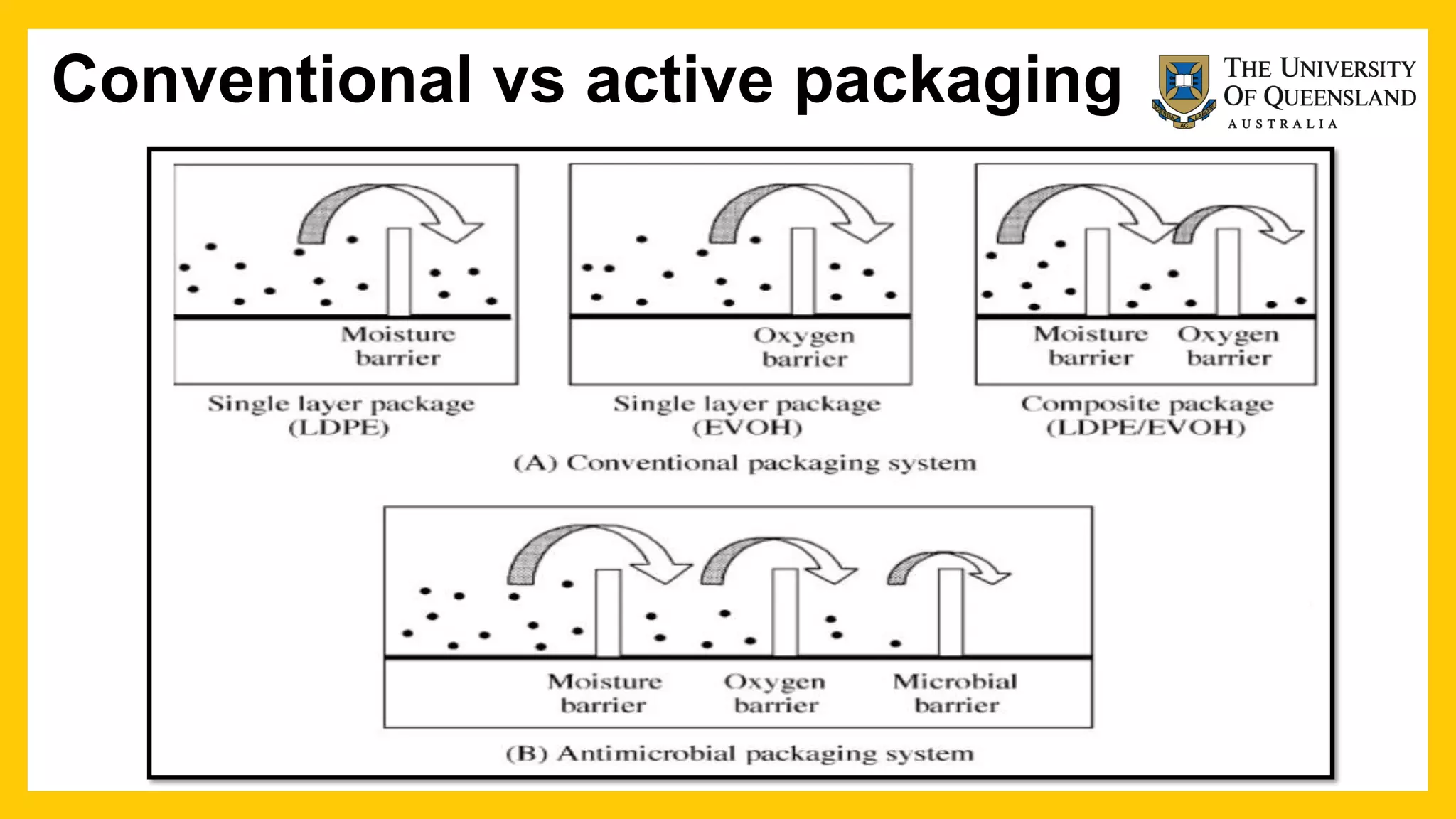
Conventional vs active packaging
Compositions
Antimicrobial agents
• Natural
• Plant source
• Animal source
• Microorganism source
• Chemical
• Benzoic acid
• Sorbic acid
Films
• LDPE, LLDPE, HDPE
• PET, Polyolefin EVA
• MC
• WPI, SPI
• Egg albumen
• Methyl cellulose
• Corn zein films
Antimicrobial agents Matrix film Microorganism References
Malic acid, nicin,
natamycin
Whey protein Penicillium aeruginosa,
Penicillium commune,
Penicillium chrysogenum,
L. monocytogenes, Y.lipolytica,
Lagaron et al., 2011
Bacteriocins Pea protein isolate,
hydroxypropylmethylcellul
ose, methylcellulose,
sodium caseinate
L. inocua Sancez-Gonzalez et
al., 2013
Grape seed extract, nisin,
EDTA
Soy protein E.Coli O175:H7, L.
monocytogenes, S. typhimurium
Perumalla and
Sunil, 2012
Potassium sorbate Wheat gluten Aspergillus niger, Fusarium
incarnatum
Ture, Gallstedt and
Hedenqvist, 2012
Propionic acid Chitosan E.coli, L. plantarum Leceta et al.,2013
Clove essential oils Clove, Cyprus, citronella Aspergillus niger, Bacillus
coagulans, Bacillus cereus
Goni et al., 2009
Edible antimicrobial packaging
Methods
Addition of sachets (pads) Incorporating directly into
the packaging films
Coating of packaging with
a matrix that acts as a
carrier for antimicrobial
agent
Examples
 99% reduction in bacteria within
2 hours
 Extending the shelf life of
products
 Effective against bacteria and
moulds
Evidences
C. Hauser and J. Wunderlich, Procedia Food
Science 1, 197-202 (2011).
http://www.biocote.com/blog/biocote-bacteria-
imaging/
Challenges
 Susceptibility to the high processing
temperature used to manufacturing
packaging polymers
 Regulation issues
 Antimicrobial packaging is a promising form
of active packaging to improve safety and
shelf life of products
 The use of packaging materials is not meant
to be a substitute for good sanitation!!
Conclusions
References
1. A.M. Bieser, Y. Thomann, J.C. Tiller, Macromol Biosci 11, 111-121 (2011).
2. B. Malhotra, A. Keshwani and H. Kharkwal, Front Microbiol 6, 611 (2015).
3. C. Hauser and J. Wunderlich, Procedia Food Science 1, 197-202 (2011).
4. H.M.C. de Azeredo, Trends FoodSci Technol 30, 56–69 (2013).
5. S.G. Bhatia, and A. Kumari, Journal of Microbiology, Biotechnology and Food Sciences
05 (02), 120-126 (2015).
6. S. Rivero, M.A. Giannuzzi, and A. Pinotti, J. FoodEng 116, 524–531 (2013).
7. S. Mangalassary, Journal of Food Processing & Technology 03 (05) (2012).
8. Y. Wang, T.D. Canady, Z.J. Zhou, Y.L. Tang, D.N. Price, D.G. Bear, E.Y. Chi, K.S.
Schanze, D.G. Whitten, ACS Appl. Mater. Interfaces 3, 2209-2214 (2011).
9. Y. Zhong, X. Song, and Y. Li, Carbohydr Polym 84, 335–342 (2011).
10. http://www.biocote.com/how-antimicrobial-technology-works/

Antimicrobial packaging

  • 1.
    Incorporation of Antimicrobial Agents inFood Packaging Films Agnescia Sera | 43850565 Food Bioprocessing
  • 2.
  • 3.
    Antimicrobial packaging  Integrationof antimicrobials agents into packaging materials  To kill or to inhibit the pathogenic and spoilage microorganism
  • 4.
    Protein Damage • Proteinsare essential for the biological systems of life, any damage to these components causes the failure of essential functions such as energy production. Cell Membrane Damage • By disrupting the microbes membrane, the structural integrity of the microbe is compromised, which can cause essential nutrients to leak out and catastrophic structural failure. Oxidative Damage • Antimicrobials can cause increased levels of reactive oxygen species, which can cause damage to the internal systems of the microbe. DNA Interference • The genetic material of the bacteria is disrupted. Stopping the bacteria being able to replicate by blocking the copying of their genetic material, preventing reproduction
  • 5.
  • 6.
    Compositions Antimicrobial agents • Natural •Plant source • Animal source • Microorganism source • Chemical • Benzoic acid • Sorbic acid Films • LDPE, LLDPE, HDPE • PET, Polyolefin EVA • MC • WPI, SPI • Egg albumen • Methyl cellulose • Corn zein films
  • 7.
    Antimicrobial agents Matrixfilm Microorganism References Malic acid, nicin, natamycin Whey protein Penicillium aeruginosa, Penicillium commune, Penicillium chrysogenum, L. monocytogenes, Y.lipolytica, Lagaron et al., 2011 Bacteriocins Pea protein isolate, hydroxypropylmethylcellul ose, methylcellulose, sodium caseinate L. inocua Sancez-Gonzalez et al., 2013 Grape seed extract, nisin, EDTA Soy protein E.Coli O175:H7, L. monocytogenes, S. typhimurium Perumalla and Sunil, 2012 Potassium sorbate Wheat gluten Aspergillus niger, Fusarium incarnatum Ture, Gallstedt and Hedenqvist, 2012 Propionic acid Chitosan E.coli, L. plantarum Leceta et al.,2013 Clove essential oils Clove, Cyprus, citronella Aspergillus niger, Bacillus coagulans, Bacillus cereus Goni et al., 2009 Edible antimicrobial packaging
  • 8.
    Methods Addition of sachets(pads) Incorporating directly into the packaging films Coating of packaging with a matrix that acts as a carrier for antimicrobial agent
  • 9.
    Examples  99% reductionin bacteria within 2 hours  Extending the shelf life of products  Effective against bacteria and moulds
  • 10.
    Evidences C. Hauser andJ. Wunderlich, Procedia Food Science 1, 197-202 (2011). http://www.biocote.com/blog/biocote-bacteria- imaging/
  • 11.
    Challenges  Susceptibility tothe high processing temperature used to manufacturing packaging polymers  Regulation issues  Antimicrobial packaging is a promising form of active packaging to improve safety and shelf life of products  The use of packaging materials is not meant to be a substitute for good sanitation!! Conclusions
  • 12.
    References 1. A.M. Bieser,Y. Thomann, J.C. Tiller, Macromol Biosci 11, 111-121 (2011). 2. B. Malhotra, A. Keshwani and H. Kharkwal, Front Microbiol 6, 611 (2015). 3. C. Hauser and J. Wunderlich, Procedia Food Science 1, 197-202 (2011). 4. H.M.C. de Azeredo, Trends FoodSci Technol 30, 56–69 (2013). 5. S.G. Bhatia, and A. Kumari, Journal of Microbiology, Biotechnology and Food Sciences 05 (02), 120-126 (2015). 6. S. Rivero, M.A. Giannuzzi, and A. Pinotti, J. FoodEng 116, 524–531 (2013). 7. S. Mangalassary, Journal of Food Processing & Technology 03 (05) (2012). 8. Y. Wang, T.D. Canady, Z.J. Zhou, Y.L. Tang, D.N. Price, D.G. Bear, E.Y. Chi, K.S. Schanze, D.G. Whitten, ACS Appl. Mater. Interfaces 3, 2209-2214 (2011). 9. Y. Zhong, X. Song, and Y. Li, Carbohydr Polym 84, 335–342 (2011). 10. http://www.biocote.com/how-antimicrobial-technology-works/