Downloaded 231 times


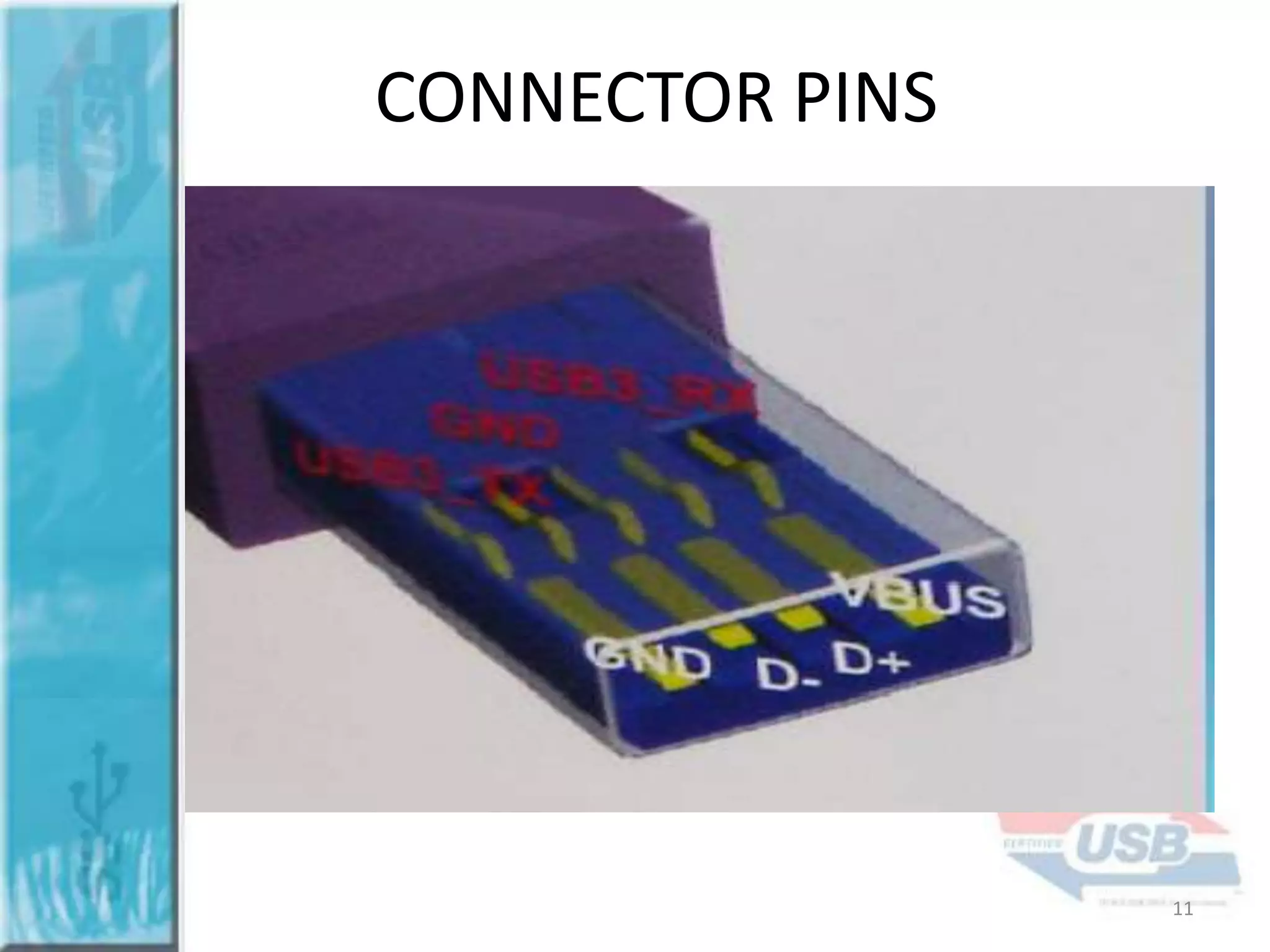
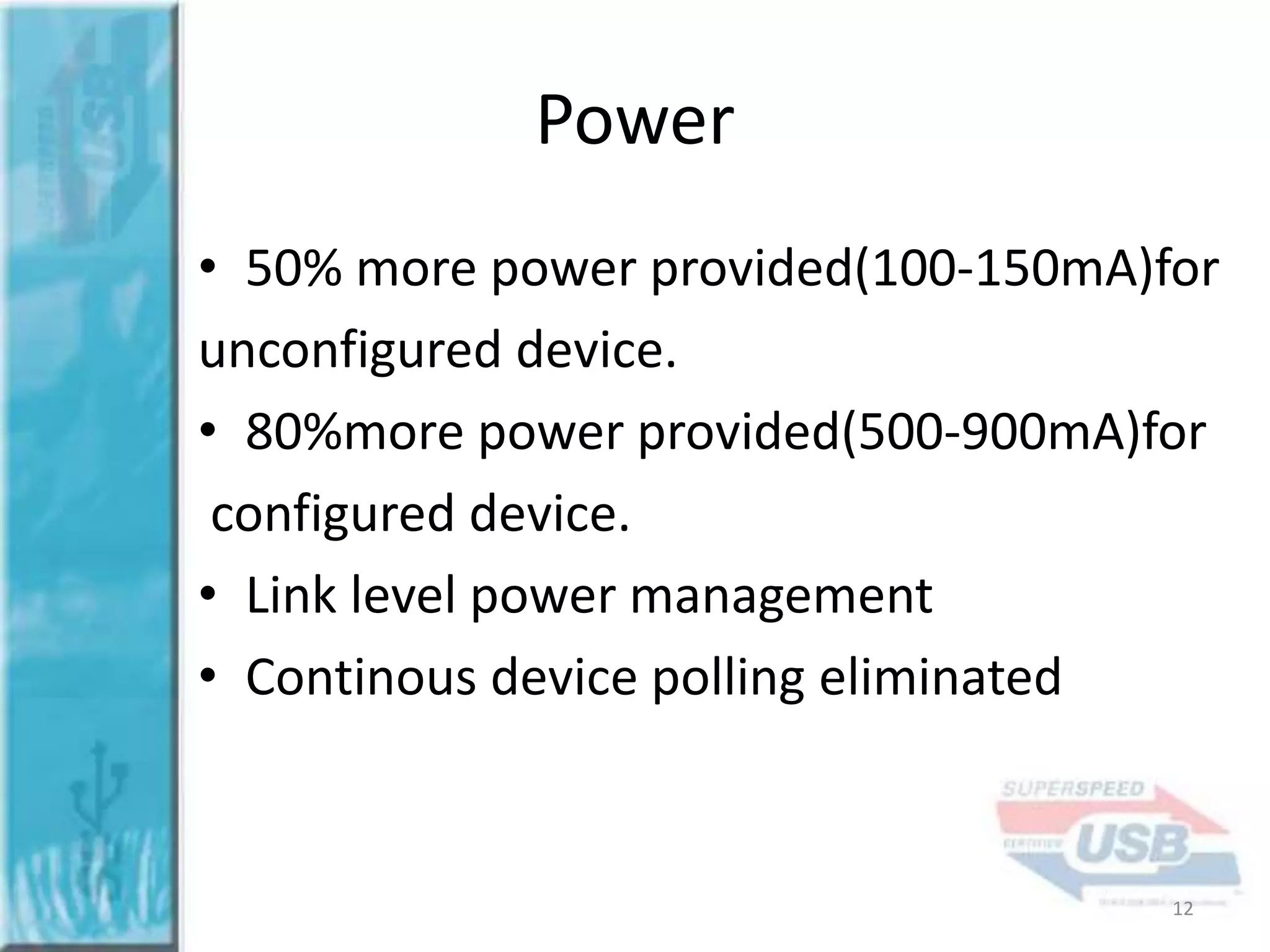
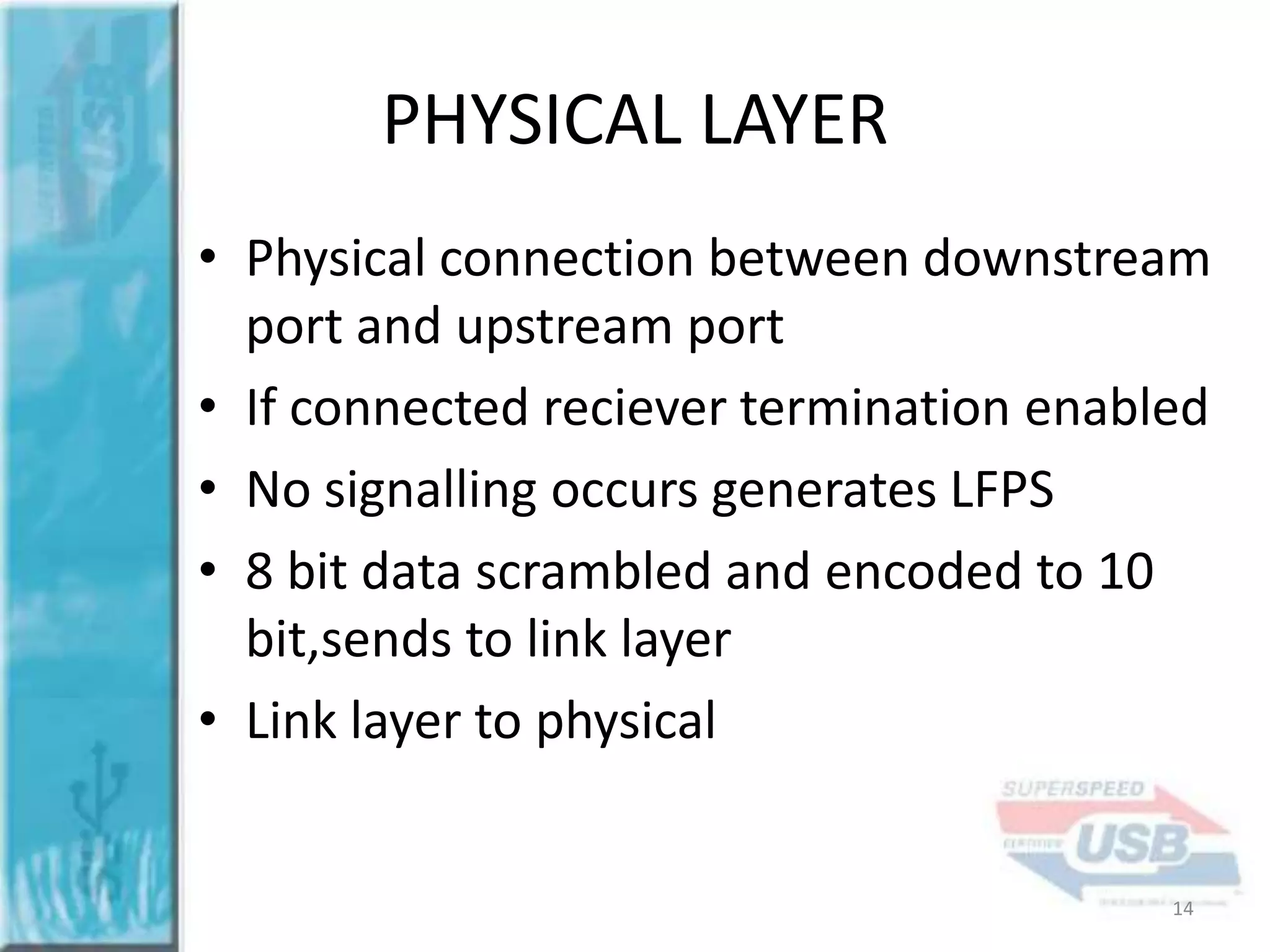





USB 3.0 provides faster data transfer speeds of up to 5 Gbps compared to USB 2.0's 480 Mbps. It uses a dual-bus architecture with separate buses for USB 3.0 and USB 2.0 to allow for backwards compatibility. The USB 3.0 standard features a new cable structure that supports full-duplex communication over two twisted signal pairs for the SuperSpeed data path. It also provides power efficiency and up to 900mA of power for configured devices. USB 3.0's advantages include faster speeds, power efficiency, and backwards compatibility, making it likely to replace other interface standards.
Introduction of USB 3.0 by the Promoter Group in 2008, first certified products in 2010.
USB allows multiple peripheral connections via a standardized interface with a tiered-star topology.
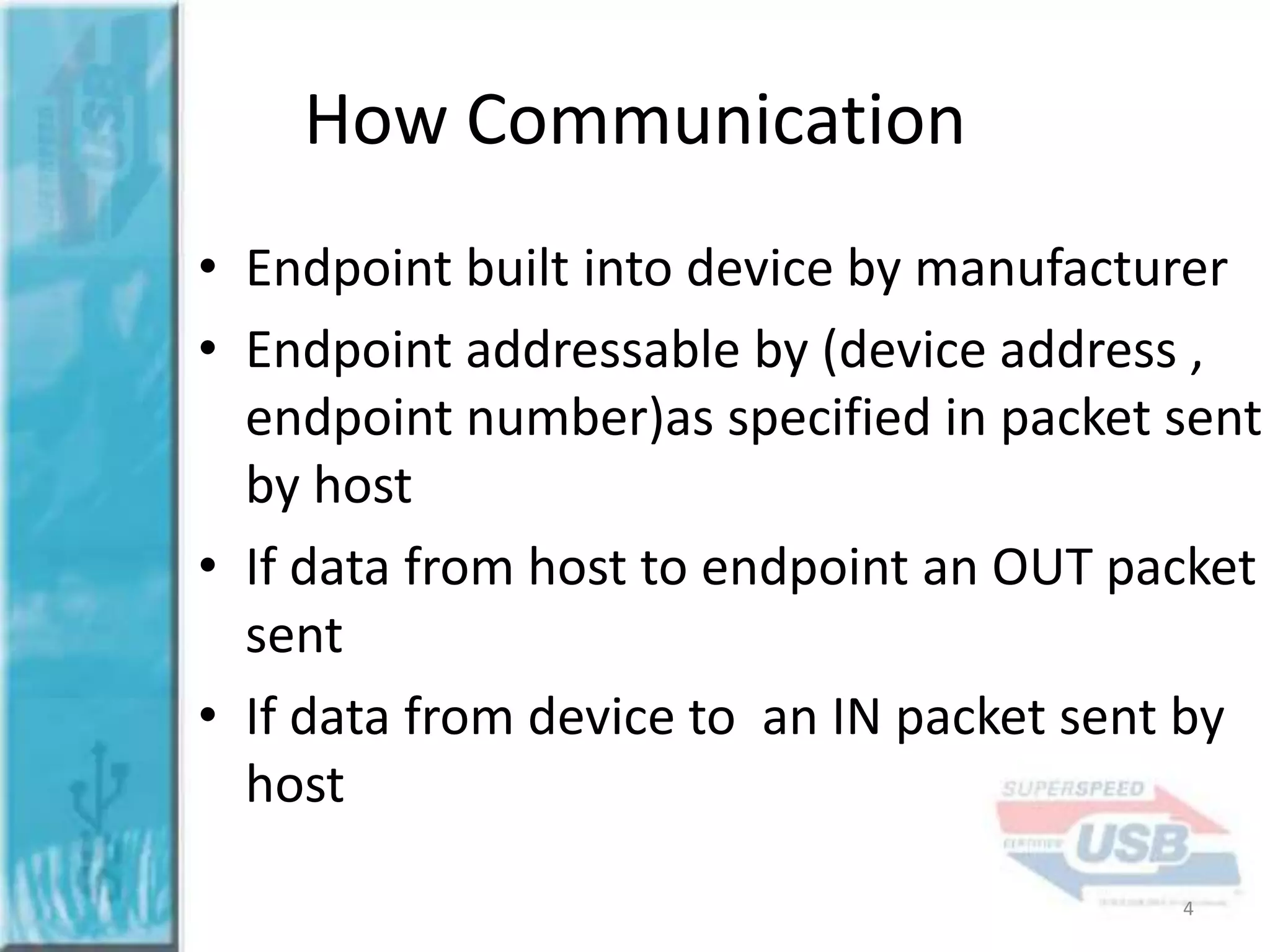
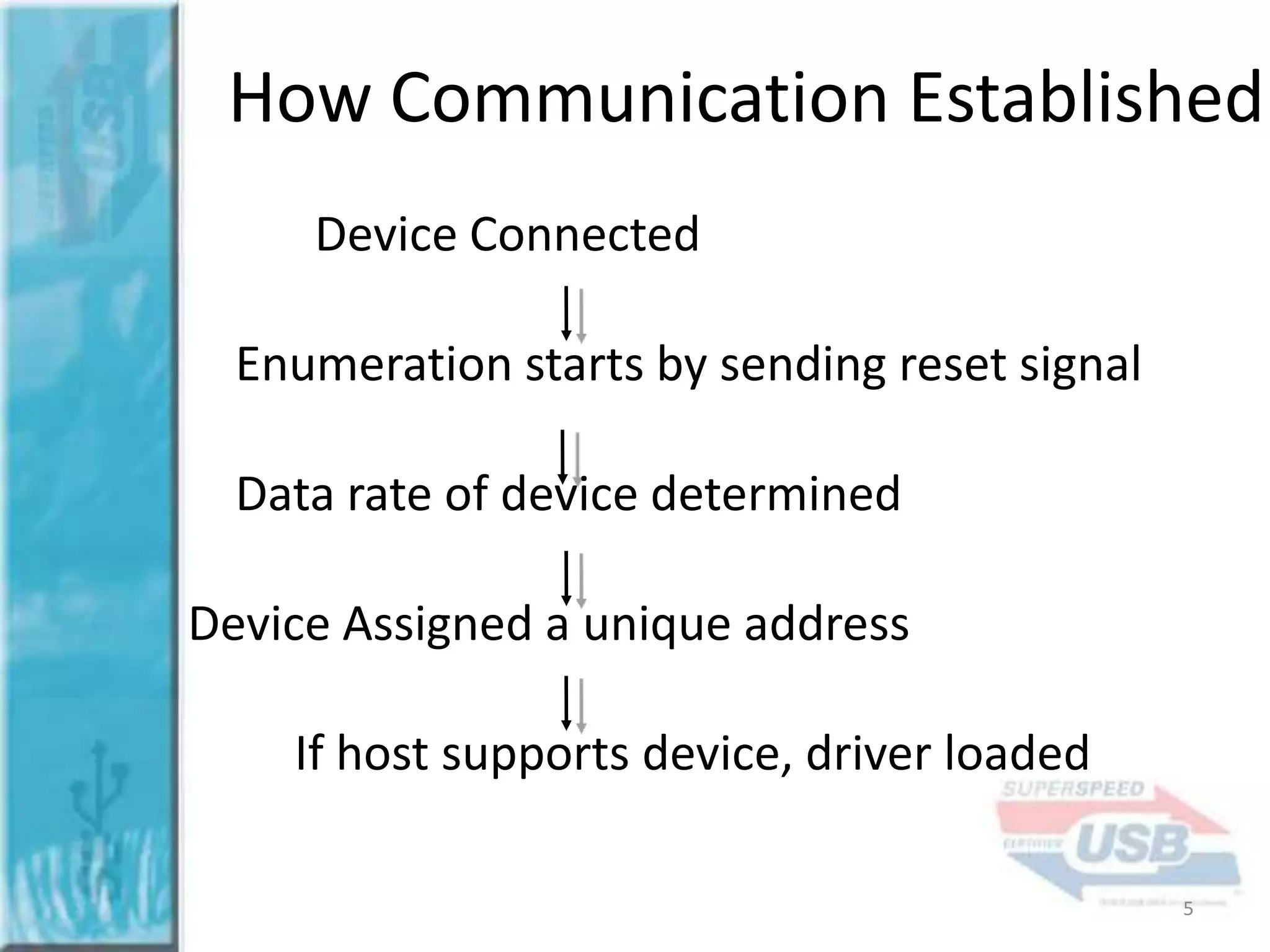
Communication established through device endpoints, packet types (IN/OUT), and device enumeration.
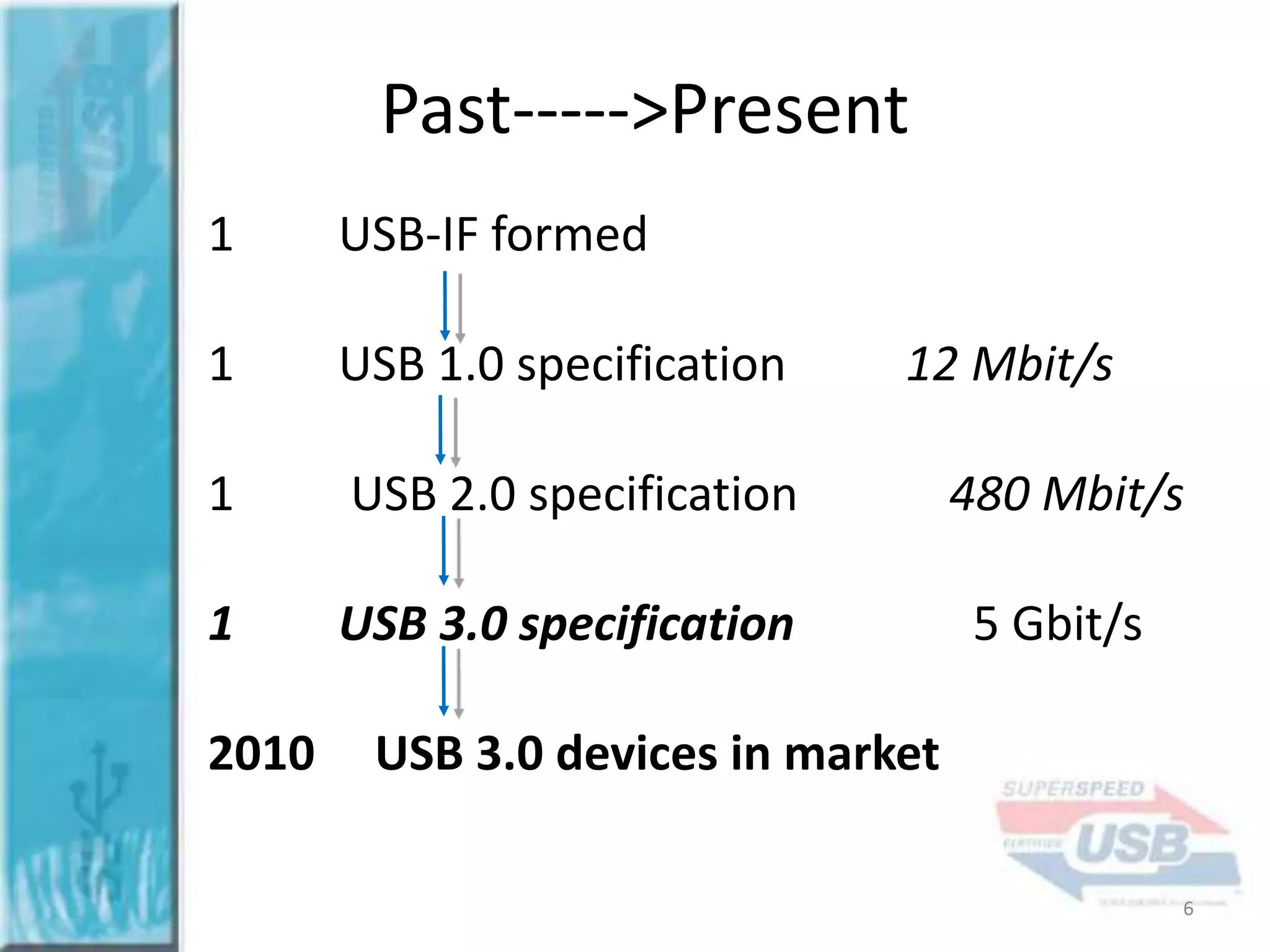
Timeline from USB 1.0 through USB 3.0, showing the advancements in speed from 12 Mbit/s to 5 Gbit/s.
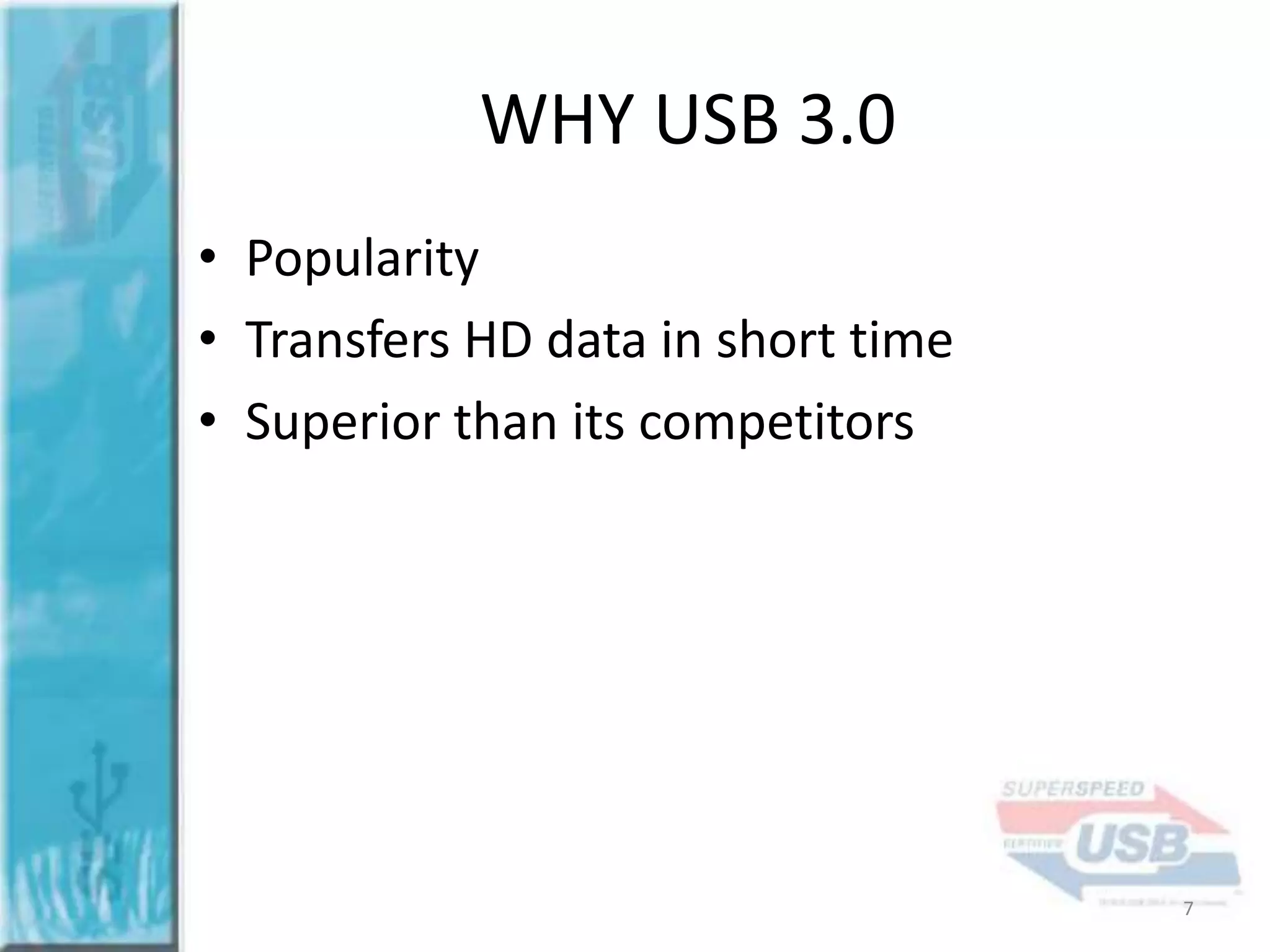
USB 3.0 offers high popularity and HD data transfer speeds, outperforming competitors.
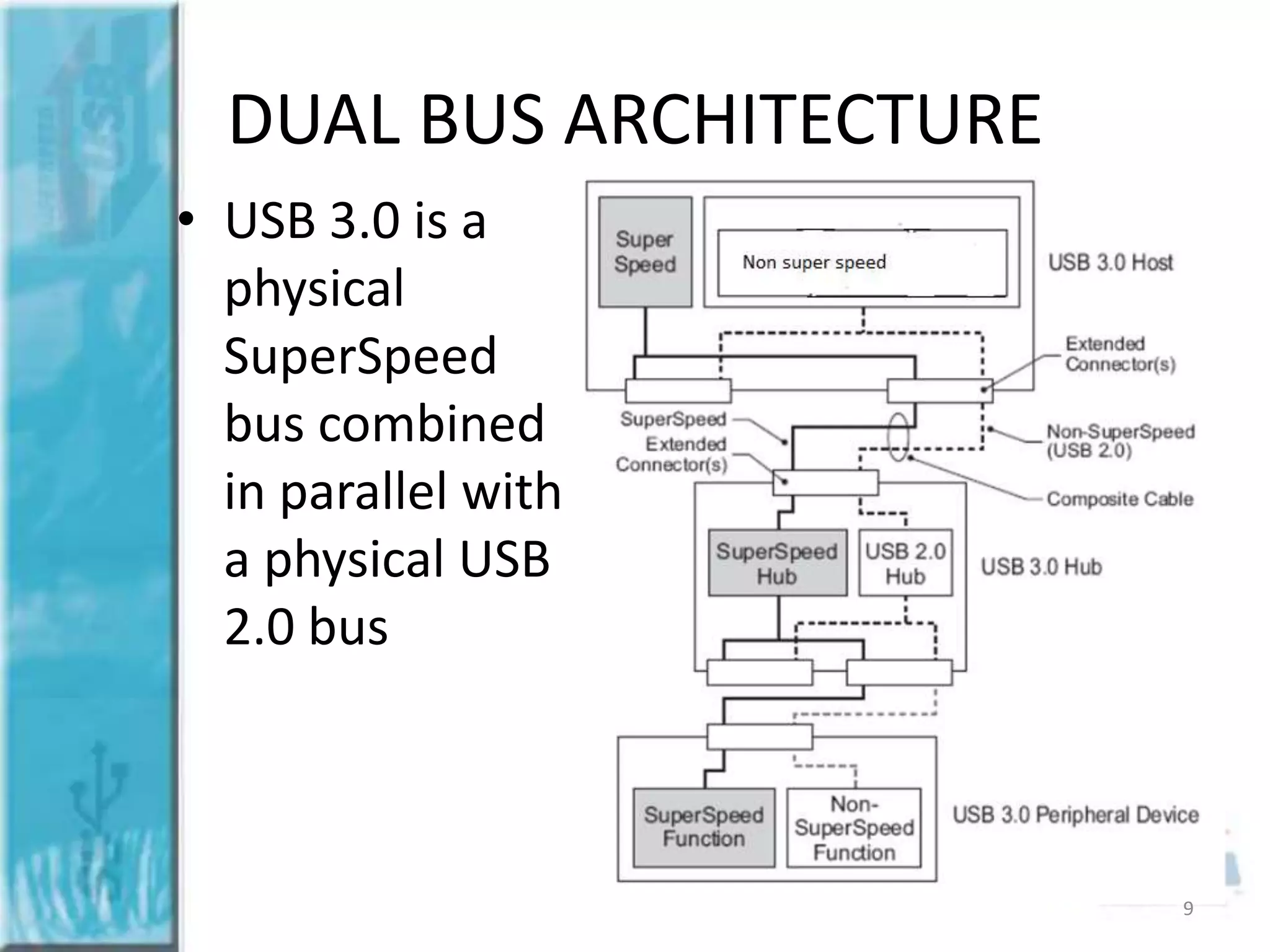
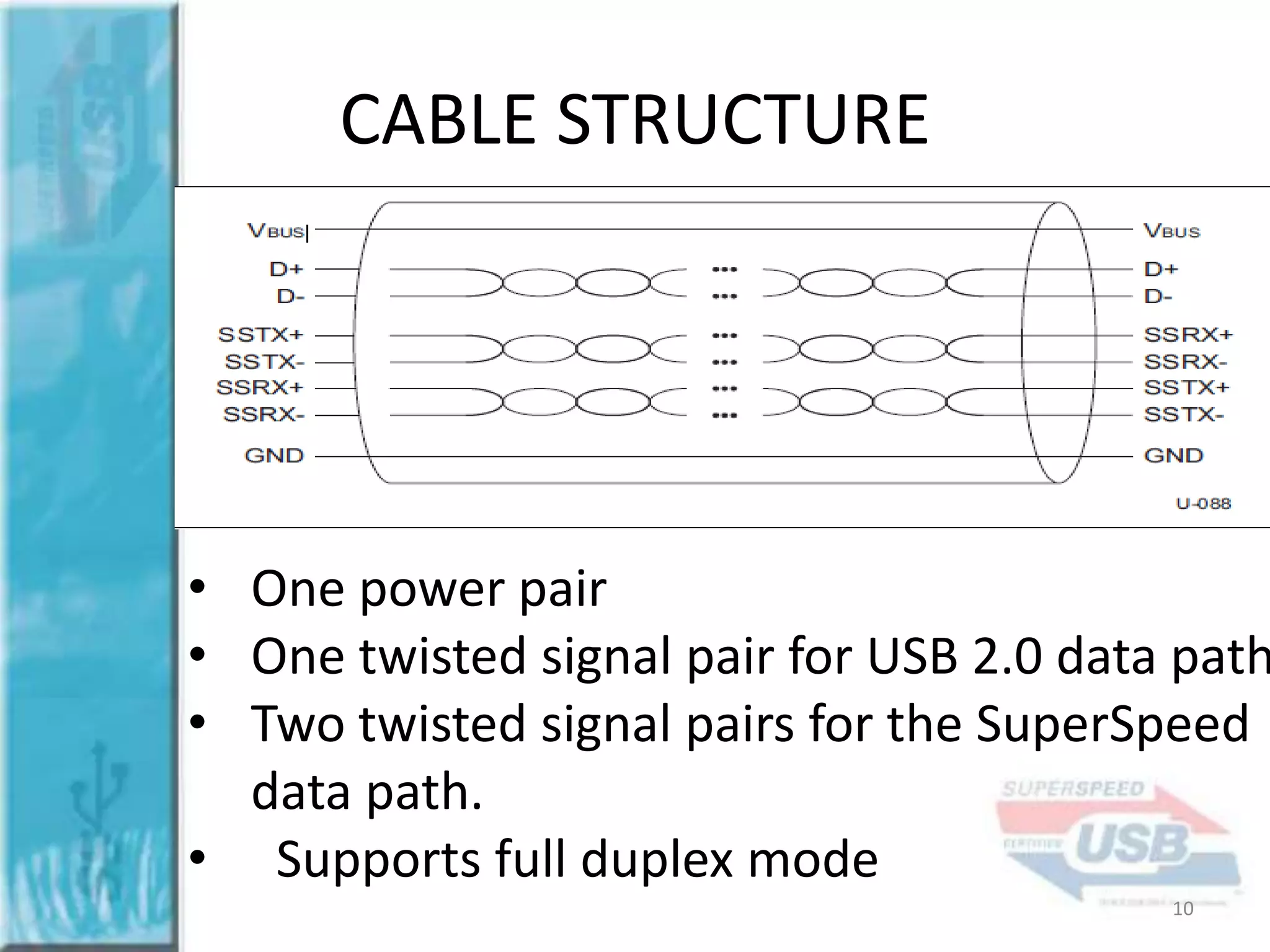
Technical features include a dual bus architecture supporting full duplex and enhanced cable structure.
Increased power supply for devices ensuring better performance and management.
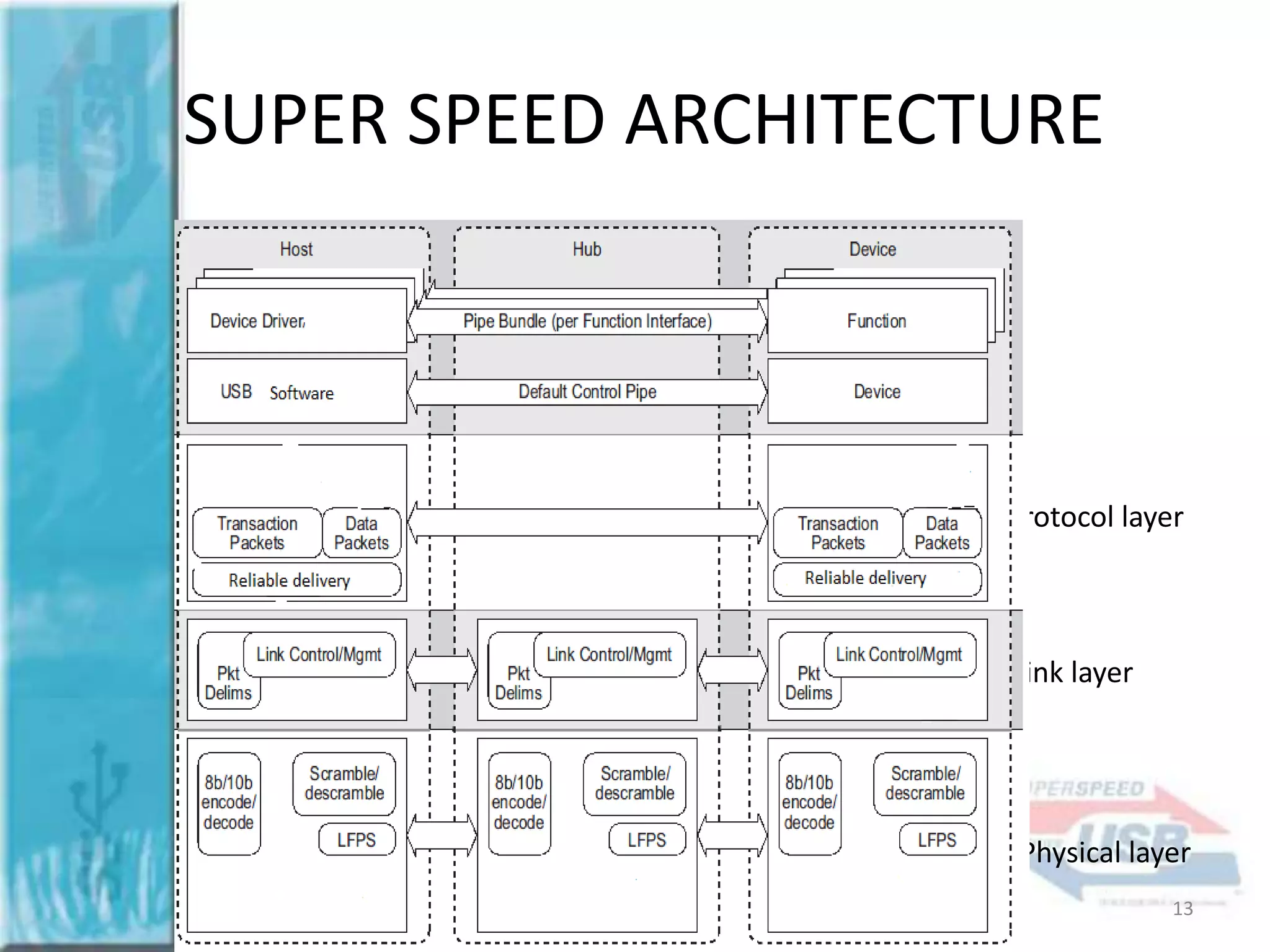
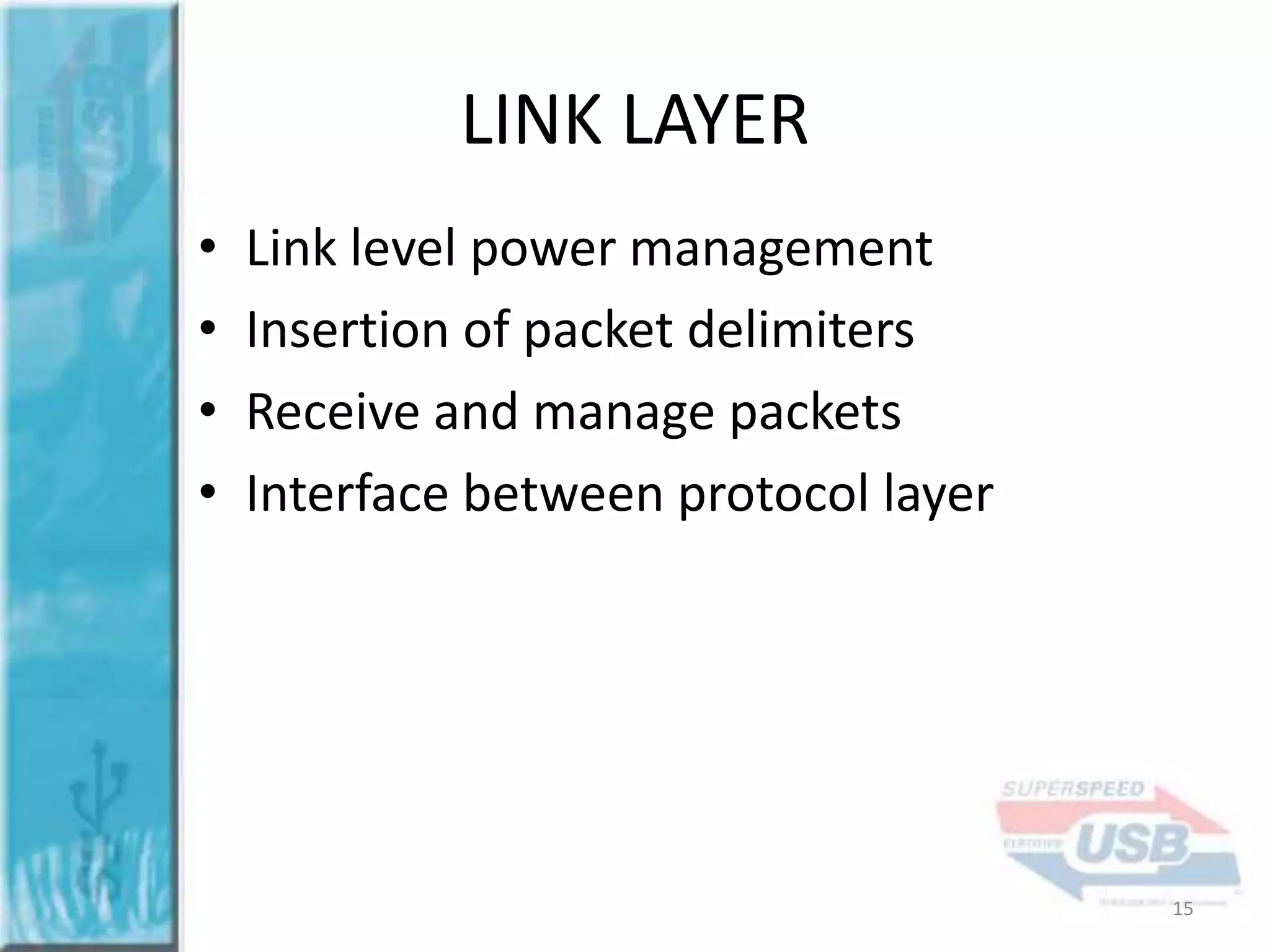
Explanation of the super speed architecture with protocol, link, and physical layers.
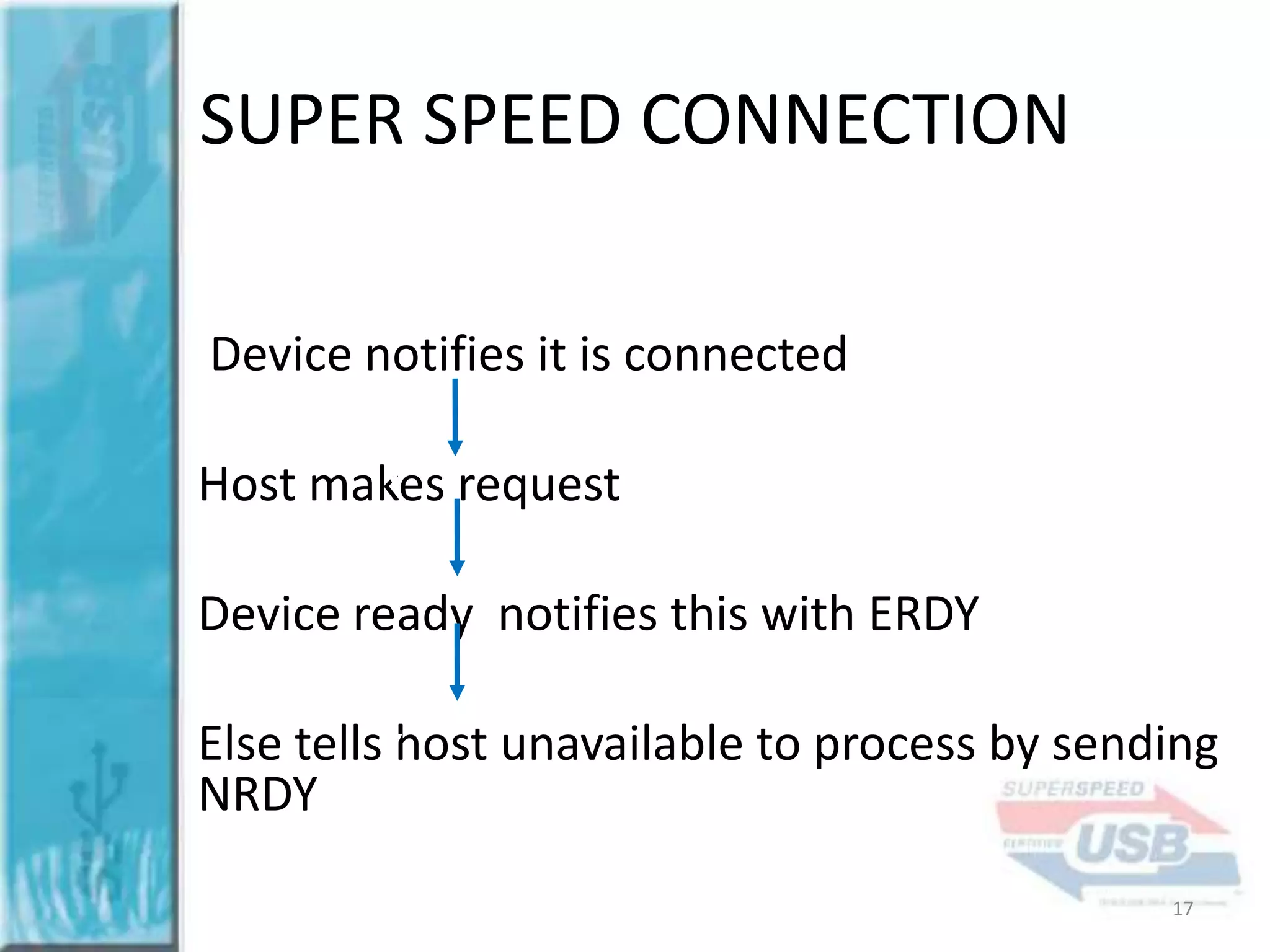
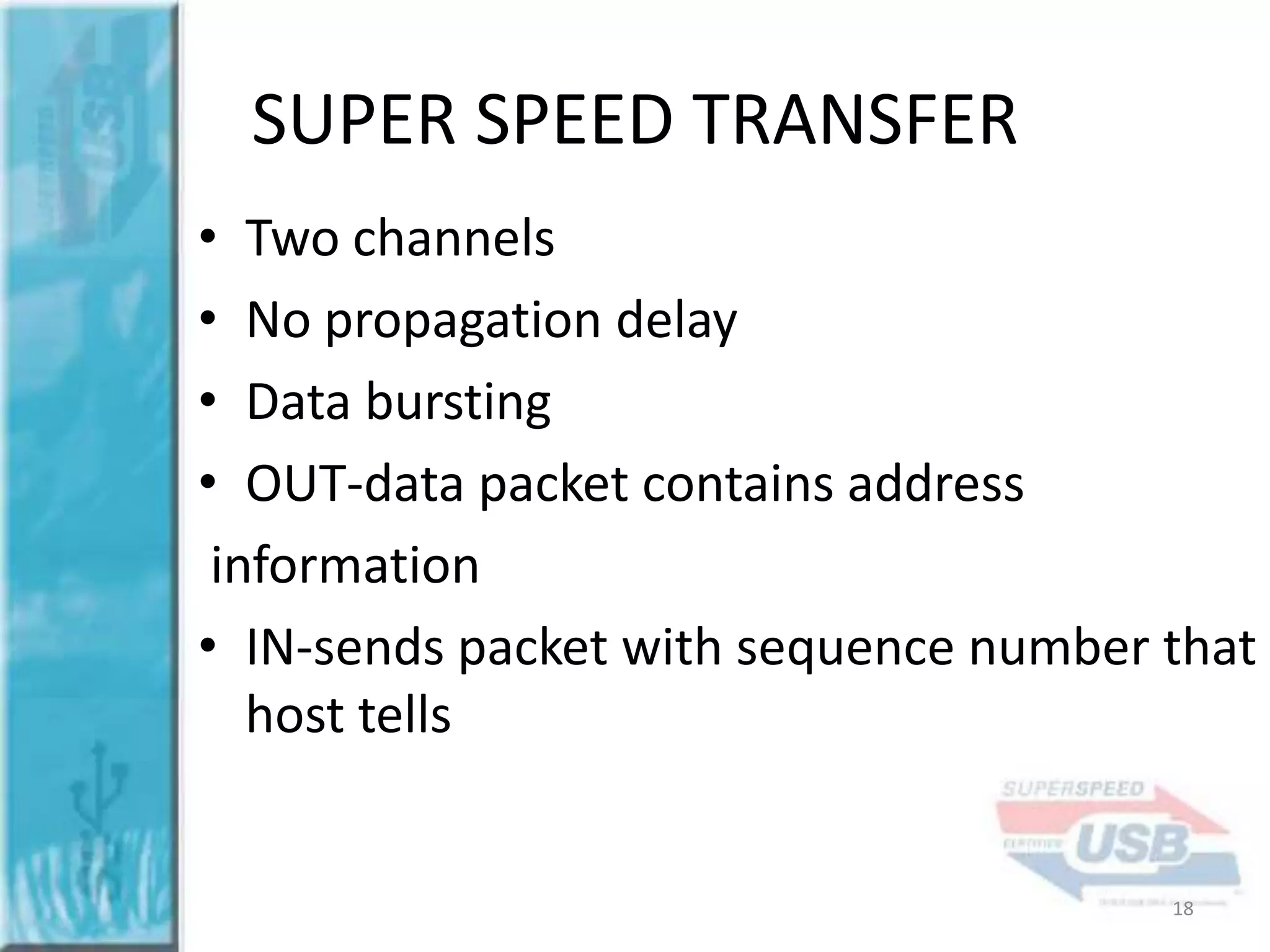
Device connection notifications and how super speed transfers occur with efficiency.
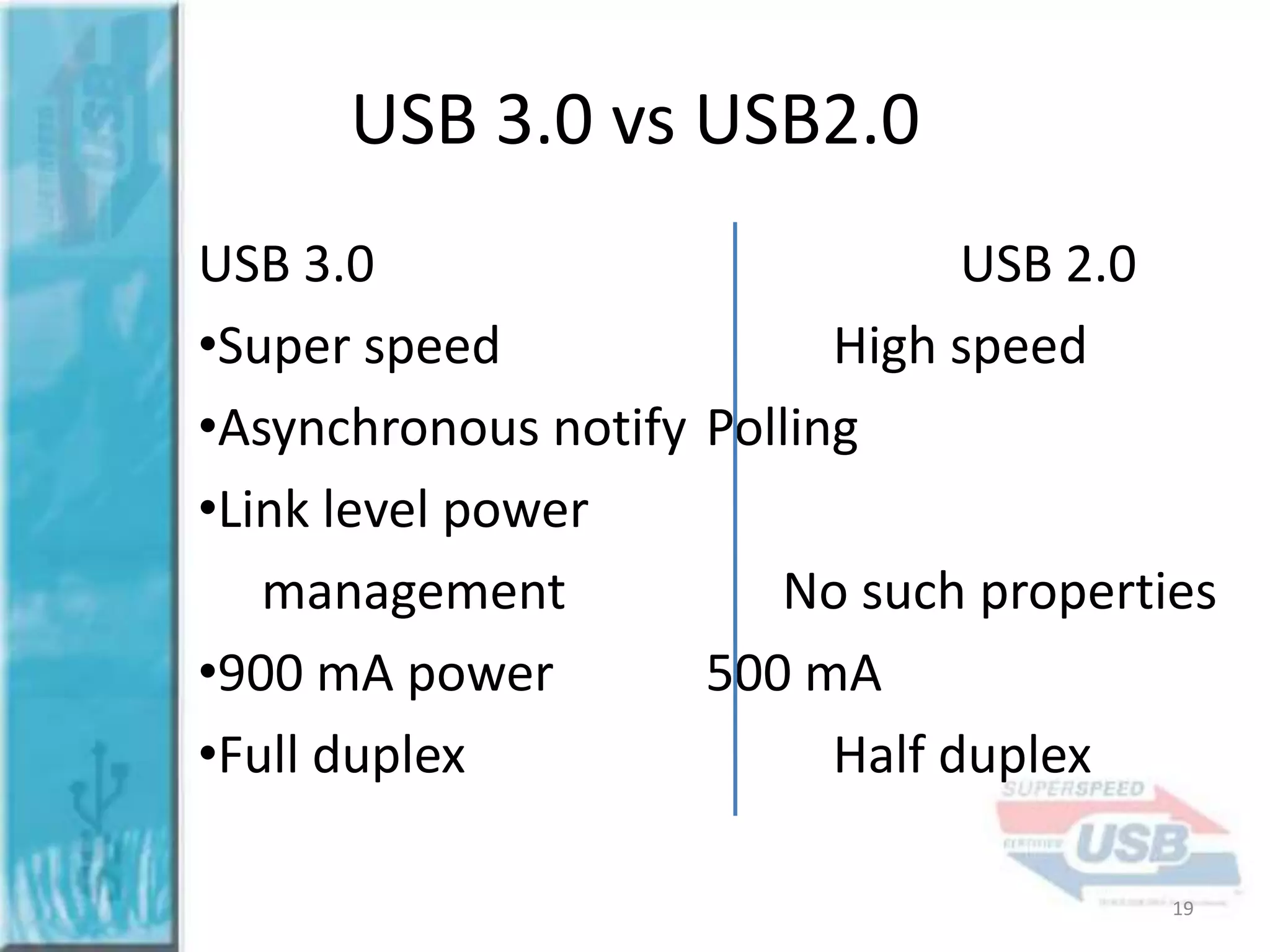
Comparison of USB 3.0 and USB 2.0 highlighting advantages like speed, power efficiency, and compatibility.
Current challenges such as cable length limitations and future potential with optical fiber.
USB 3.0 expected to replace older technologies, ensuring popularity and backward compatibility.


