by Fe Angela M. Verzosa Head, NCCA-NCLIS Understanding Library Leadership
Overview  How members of the external environment view the effectiveness of the individual library leaders What changes in the organizational domain of the library relate to the effectiveness  ratings of the library leader What activities effective library leaders perform in their relations with the library’s external environment
Definition of Management “ the exercise of responsibility for the  effective use of the human, financial and other resources available to meet an organization’s objectives.”
Definition of Leadership “ We are unable to define leadership, but we seem to know it when we see it..” Henry Mintzberg, 1982
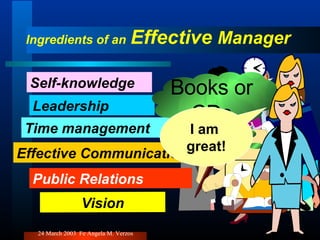
Ingredients of an   Effective  Manager Leadership Vision Time management Effective Communication Public Relations Self-knowledge I am  competent! Books or CDs I am  great!
Leadership One dimension of the manager’s work, the exercise of social influence by infusing the organization with purpose and direction  in order to achieve its goals
Library leadership  implies... Library Director seeks to influence members of the parent organization to provide resources to support expansion plans to accept the goals of the library as valid and thus deserving of support
3 dimensions used to measure library leadership Leader activity Reputational effectiveness Management of  organizational change
Leader qualities measured in terms of activity categories Managerial role activities professional activities and  involvement membership on community  committees strategies for influencing the environment
Six managerial activities supervisor Liaison environment monitor spokesperson entrepreneur resource allocator
Supervisor Role directing the work of subordinates integrating subordinates’ goals with library’s goals and objectives allocating human resources to tasks evaluating subordinate job performance resolving conflicts between subordinates providing new staff with training
Liaison Role attending social functions for contacts attending conferences and  meetings representing the library at formal / social functions staying attuned  to informal communication networks developing contacts with people outside
Environment Monitor Role initiating new ideas for services and operations keeping up with professional trends/changes keeping up with technological developments scanning the environment for new opportunities to improve services/operations gathering information about users touring facilities to observe reading reports of other units / offices
Entrepreneur Role planning and implementing changes in the library initiating controlled change in the library solving problems by instituting needed changes in the library
Spokesperson Role serving as an expert or advising people outside the library keeping others informed of the library’s plans and programs answering letters or inquiries on behalf of the library serving on committees, representing the library
Resource Allocator Role distributing budgeted resources  preventing the loss of human or capital resources deciding which programs to provide resources to allocating equipment or materials obtaining adequate resources to administer library programs and build collections
Changes in the organizational domain Changes in physical facilities Introduction of major automation Introduction of revenue-generating activities
Changes in the organizational domain Changes in relationships with other community entities Internal organizational changes
Reputational  effectiveness results from leader activities affected by the feedback that the external environment receives from the user environment
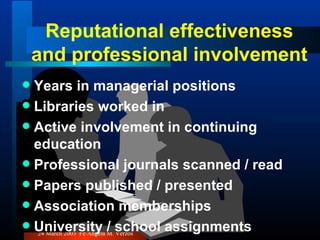
Reputational effectiveness and professional involvement Years in managerial positions Libraries worked in Active involvement in continuing education Professional journals scanned / read Papers published / presented Association memberships University / school assignments
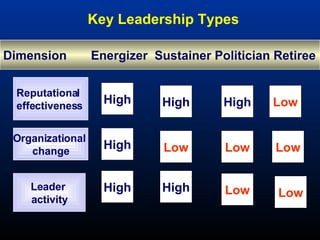
Key Leadership Types Reputational  effectiveness Organizational  change Leader  activity Dimension  Energizer  Sustainer Politician Retiree High High High High High High Low Low Low Low Low Low
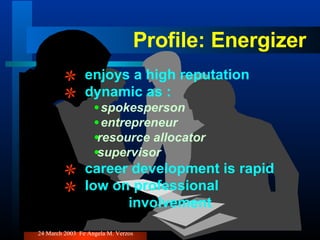
Profile: Energizer enjoys a high reputation  dynamic as : spokesperson entrepreneur resource allocator supervisor career development is rapid  low on professional  involvement
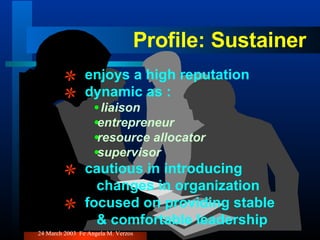
Profile: Sustainer enjoys a high reputation  dynamic as : liaison entrepreneur resource allocator supervisor cautious in introducing  changes in organization  focused on providing stable  & comfortable leadership
Profile: Politician enjoys a high visibility &  therefore reputation  dynamic only as  entrepreneur active in professional and  community involvement slow in introducing changes
Profile:Retiree engages in limited leader  activities  held in low esteem by  colleagues dynamic as  resource allocator experiences little changes  very high on professional  involvement
Understanding library leadership Innovation is a cyclical phenomenon . Periods of high innovation are followed by periods of  sustained implementation  and consolidation. Alternating cyclical behaviors may find some relevance in an organization’s life.  Thus low-change Sustainers and Politicians have a  crucial role as the ideal Energizer.
Summary What activities library leaders perform in their relations with the library’s environment to be effective How the effectiveness of the individual library leaders are perceived by members of the external environment  What changes in the organizational domain of the library relate to the effectiveness  ratings of the library leader

Understanding Library Leadership: Issues and Concerns

  • 1.
    by Fe AngelaM. Verzosa Head, NCCA-NCLIS Understanding Library Leadership
  • 2.
    Overview Howmembers of the external environment view the effectiveness of the individual library leaders What changes in the organizational domain of the library relate to the effectiveness ratings of the library leader What activities effective library leaders perform in their relations with the library’s external environment
  • 3.
    Definition of Management“ the exercise of responsibility for the effective use of the human, financial and other resources available to meet an organization’s objectives.”
  • 4.
    Definition of Leadership“ We are unable to define leadership, but we seem to know it when we see it..” Henry Mintzberg, 1982
  • 5.
    Ingredients of an Effective Manager Leadership Vision Time management Effective Communication Public Relations Self-knowledge I am competent! Books or CDs I am great!
  • 6.
    Leadership One dimensionof the manager’s work, the exercise of social influence by infusing the organization with purpose and direction in order to achieve its goals
  • 7.
    Library leadership implies... Library Director seeks to influence members of the parent organization to provide resources to support expansion plans to accept the goals of the library as valid and thus deserving of support
  • 8.
    3 dimensions usedto measure library leadership Leader activity Reputational effectiveness Management of organizational change
  • 9.
    Leader qualities measuredin terms of activity categories Managerial role activities professional activities and involvement membership on community committees strategies for influencing the environment
  • 10.
    Six managerial activitiessupervisor Liaison environment monitor spokesperson entrepreneur resource allocator
  • 11.
    Supervisor Role directingthe work of subordinates integrating subordinates’ goals with library’s goals and objectives allocating human resources to tasks evaluating subordinate job performance resolving conflicts between subordinates providing new staff with training
  • 12.
    Liaison Role attendingsocial functions for contacts attending conferences and meetings representing the library at formal / social functions staying attuned to informal communication networks developing contacts with people outside
  • 13.
    Environment Monitor Roleinitiating new ideas for services and operations keeping up with professional trends/changes keeping up with technological developments scanning the environment for new opportunities to improve services/operations gathering information about users touring facilities to observe reading reports of other units / offices
  • 14.
    Entrepreneur Role planningand implementing changes in the library initiating controlled change in the library solving problems by instituting needed changes in the library
  • 15.
    Spokesperson Role servingas an expert or advising people outside the library keeping others informed of the library’s plans and programs answering letters or inquiries on behalf of the library serving on committees, representing the library
  • 16.
    Resource Allocator Roledistributing budgeted resources preventing the loss of human or capital resources deciding which programs to provide resources to allocating equipment or materials obtaining adequate resources to administer library programs and build collections
  • 17.
    Changes in theorganizational domain Changes in physical facilities Introduction of major automation Introduction of revenue-generating activities
  • 18.
    Changes in theorganizational domain Changes in relationships with other community entities Internal organizational changes
  • 19.
    Reputational effectivenessresults from leader activities affected by the feedback that the external environment receives from the user environment
  • 20.
    Reputational effectiveness andprofessional involvement Years in managerial positions Libraries worked in Active involvement in continuing education Professional journals scanned / read Papers published / presented Association memberships University / school assignments
  • 21.
    Key Leadership TypesReputational effectiveness Organizational change Leader activity Dimension Energizer Sustainer Politician Retiree High High High High High High Low Low Low Low Low Low
  • 22.
    Profile: Energizer enjoysa high reputation dynamic as : spokesperson entrepreneur resource allocator supervisor career development is rapid low on professional involvement
  • 23.
    Profile: Sustainer enjoysa high reputation dynamic as : liaison entrepreneur resource allocator supervisor cautious in introducing changes in organization focused on providing stable & comfortable leadership
  • 24.
    Profile: Politician enjoysa high visibility & therefore reputation dynamic only as entrepreneur active in professional and community involvement slow in introducing changes
  • 25.
    Profile:Retiree engages inlimited leader activities held in low esteem by colleagues dynamic as resource allocator experiences little changes very high on professional involvement
  • 26.
    Understanding library leadershipInnovation is a cyclical phenomenon . Periods of high innovation are followed by periods of sustained implementation and consolidation. Alternating cyclical behaviors may find some relevance in an organization’s life. Thus low-change Sustainers and Politicians have a crucial role as the ideal Energizer.
  • 27.
    Summary What activitieslibrary leaders perform in their relations with the library’s environment to be effective How the effectiveness of the individual library leaders are perceived by members of the external environment What changes in the organizational domain of the library relate to the effectiveness ratings of the library leader